
Ever since close to €80 million in cash and gold was seized by Hungarian authorities from a convoy led by present and former Ukrainian military personnel, the government has been trying to figure out who the money belongs to and where it was going.
Magyar Nemzet has now written up nine questions and circumstances as to why the convoy is so suspicious.
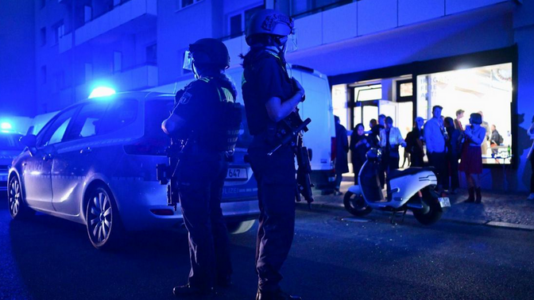
To recap, on March 5, the National Tax and Customs Administration (NAV), with the assistance of counter-terrorism (TEK) officers, stopped the Ukrainian gold convoy in the territory of Hungary.
The two armored cars were traveling from Austria to Ukraine with a total of $40 million, €35 million, and 9 kilograms of gold.
The cargo was accompanied by seven Ukrainian citizens in tactical-military clothing: The transport of money was supervised by a former general of the Ukrainian Defense Service, his deputy was a former major in the Air Force, but the others were also individuals with a military background.
NAV has already released a statement that criminal proceedings are underway on suspicion of money laundering. The seven Ukrainian money couriers were questioned as witnesses, then expelled from the country and handed over to the Ukrainian authorities in Záhony. In the meantime, the parliament amended a law to allow the seized assets to remain with the authorities until the end of the investigation, i.e., until their origin and intended purpose are clarified.
This year alone, dollars, euros, and gold bars worth a total of approximately 480 billion forints were transported through Hungary to Ukraine. Now, authorities seek to determine if these funds were possibly intended for to a local criminal organization, terrorist group, or political organization.
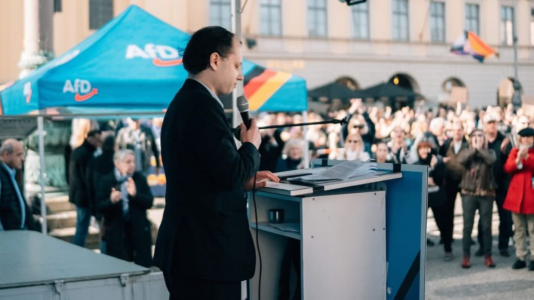
Several left-wing press pieces, partly financed from abroad, as well as propaganda from the leading opposition party, Tisza, have implied or directly stated that the money transfer was regular and regular, and that the circumstances do not raise any doubts. They also claim that the Hungarian state committed a violation of the law by stopping the shipment, which the Ukrainians are also claiming.
Hungary’s Foreign Minister Péter Szijjártó has, however, raised several issues:
1. Why didn’t the Austrian Raiffeisen transfer the huge amount to the Ukrainian Takarékbank? Two financial institutions can obviously easily transfer money to each other, MN notes.
2. Why is it necessary for the Ukrainians to transport tens of billions of forints in cash and gold by road, and through Hungary?
3. Who owns the money? The Ukrainian war mafia?
An unnamed tax office expert, previously interviewed by MN, also had a few key questions and points to consider:
4. How is it possible that gold is not being transported out of the war zone, but rather the other way around?
5. Why does a country at war need 480 billion forints of dollars, euros, and gold bars in two months, when Ukraine has unrestricted access to international financial systems and can transfer them?
6. The clients of the Ukrainian Savings Bank certainly need hryvnia, i.e., the official Ukrainian currency in Ukraine, not dollars, euros, and especially not gold bars.
7. Ukraine is mostly supplied by Western suppliers, and they almost certainly do not ask for cash. But even if that were the case, there is no reason to take the money and gold to Ukraine first and then transport it to the West. The transfer from Austria would be much simpler and risk-free.
Origo also sought the opinion of an expert in the money-transport industry. The expert began by saying that the two Ukrainian armored vehicles that were seized – but have since been returned empty – are indeed money-transporters: the windshields have been thickened, the trucks are bulletproof, and they can even survive minor explosions without any problems. However, he highlighted a curious circumstance:
8. It is unusual that the cargo, i.e., the money and gold, was kept in plastic bags, covered with rags and secured to the inside of the car with rubber bands. In official cash transports, the expert noted, cash boxes and safes are used so that robbers will not succeed even if they get inside the vehicles.
According to the expert, the careless handling of money could also indicate that someone’s private assets were being taken from Austria to Ukraine.
József Horváth, the director of the Sovereignty Protection Research Institute, explained to Magyar Nemzet that at least a third of the weapons given to the Ukrainians end up on the black market. According to him, it is conceivable that someone would have paid such a large sum of money for such a shipment. This could provide an answer to one of the most important questions surrounding the convoy:
9. Why was a former Ukrainian intelligence chief traveling with the convoy?
According to Horváth, it was to personally supervise the transportation of money and to provide security for someone.
“This is not what a normal money-transport operation looks like,” Péter Tarjányi, who calls himself an opposition member, said on ATV in connection with the Ukrainian gold convoy. The security policy expert also examined the origin and method of transportation of the money and concluded:
“It’s unbelievable that such a large amount of money, such a large amount of gold, is moving overland. And if the operation was actually supervised by a former Ukrainian intelligence general, I don’t think it would have been a proper, normal money transfer operation.”
Tarjányi added that this was “gray area” money.