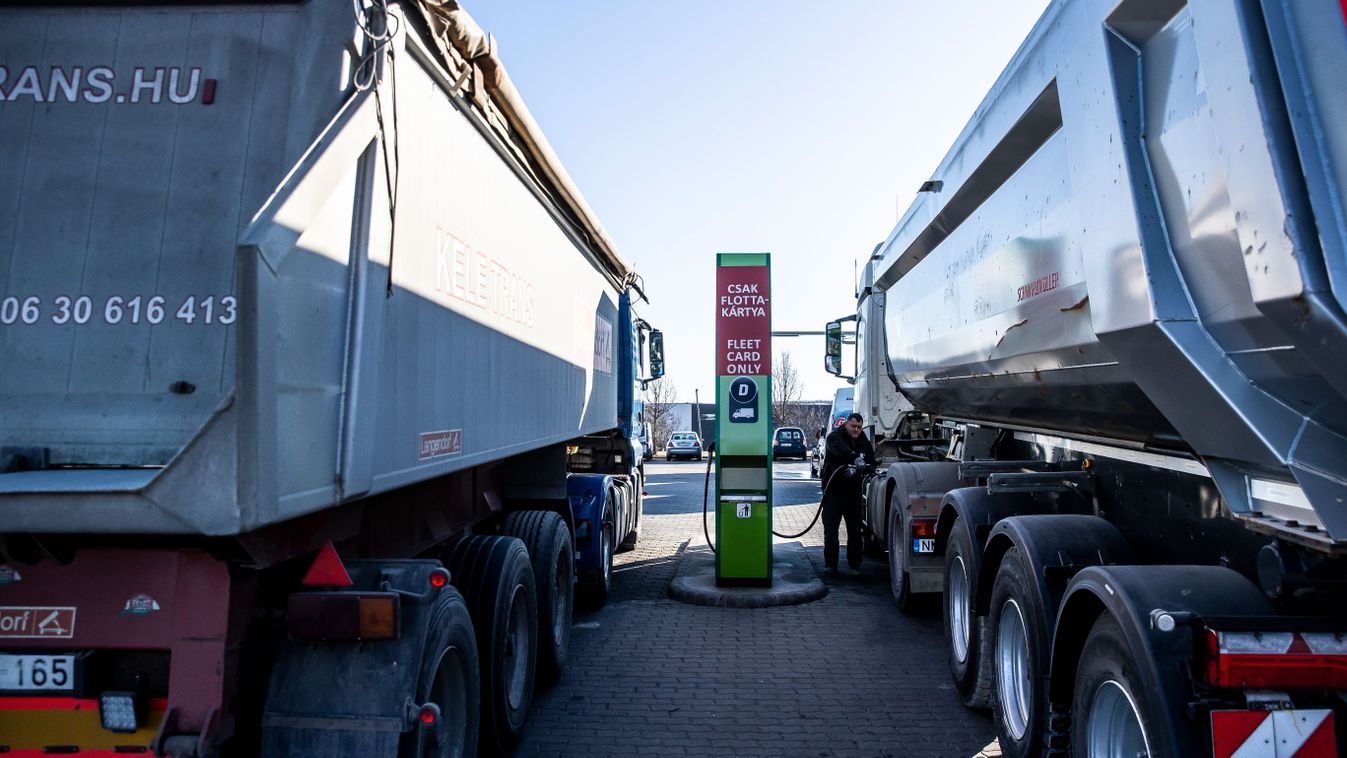
European governments are racing to blunt a fuel shock that even some analysts now refuse to forecast, as Brent crude holds near $100 a barrel and diesel prices climb across Europe.
The international oil market has been expensive for months. What has changed is the confidence of the people paid to explain it. JPMorgan told clients on Sept. 17 that, for the first time since fighting began around Iran about seven months earlier, its commodities team no longer has a baseline view of how the disruption ends.
“We simply don’t know how to model the endgame,” the bank’s analysts wrote, after several economic thresholds they once assumed would force a diplomatic off-ramp, including oil above $100 a barrel, had already been crossed.
The bank said a Brent price near $90 would have been consistent with known supply and demand in September. Futures instead traded around $100 and higher as traders priced the risk of further losses that no one can yet measure. By Monday, front-month Brent was still hovering near $99 a barrel.
Inventories are doing little to cushion the blow. The U.S. Energy Information Administration has said prices are likely to stay elevated until Middle East oil trade is restored and stocks can be rebuilt. The International Energy Agency’s September report put the scale of the drain in starker terms: observed global inventories fell another 95 million barrels in August, taking the cumulative draw since February to 507 million barrels, or about 2.8 million barrels a day. World oil supply is now projected to average 100.7 million barrels a day in 2026, down 5.7 million from a year earlier.
Diesel shortages are acute
In some countries, such as Hungary, there is a major imbalance in terms of available energy sources. Crude held in strategic storage remains ample, but diesel is quickly running out. Data from the Hungarian Hydrocarbon Stockpiling Association show gas oil stocks at 520.3 kilotons at the end of January and about 390 kilotons at the end of both July and August. That thinner diesel cushion matters in a country where more than 1.3 million passenger cars run on the fuel and the regional market is competing for the same scarce imports.
Pump prices have already moved. Official and commercial trackers put Hungarian diesel around 701 forints a liter in late September on some official series and closer to 730 forints on daily station averages — well above the roughly 593 forints recorded at the end of June. The original worry in Budapest was not whether prices would rise, but how quickly 800 forints would stop looking like a distant ceiling.
That speed is not a mystery to central bankers. Bank of Slovenia research covering euro-area data from 2005 through 2026 found that a 10% rise in Brent lifts pretax diesel and gasoline prices by about 6.5% and 6.2%, respectively, over the longer term. A large share of the increase shows up at stations within the first two weeks — faster than the physical chain of shipping, refining and wholesale delivery would suggest.
The European Central Bank has reached a similar conclusion and added an unwelcome twist: refinery margins can amplify the shock. During the spring spike, Brent briefly reached $138 a barrel while diesel at the refinery gate jumped to $197. ECB staff later estimated that refining margins were contributing about 41 euro cents a liter to euro-area retail diesel in mid-September, and they told reporters those diesel margins may not peak until October.
The way down is slower than the way up. Taxes, refining and transport costs, inventories, margins and local competition all delay relief when crude finally eases. That asymmetry is why governments are acting now, before higher fuel bills work through freight, food and services and lift broader inflation.
Europe-wide crisis
The policy dilemma is the same from Lisbon to Warsaw: protect households and trucking firms without writing a blank check for fossil-fuel consumption. Europe has answered with a patchwork rather than a single rule. Some governments cap retail prices. Others cut excise taxes, sometimes below the European Union minimum. A third group aims help at farmers, haulers and other heavy users. A few still let global prices hit consumers with no cushion at all. The result is that the same barrel of oil can produce pump prices that differ dramatically at the pump across Europe.
Here are just a few examples of what Europe looks like in this regard.
- Austria has been running a mineral-oil tax cut of 1.9 euro cents a liter into the end of September.
- Belgium has implemented an official price ceiling.
- Croatia cut diesel excise duty by another 3 cents, taking it 10 cents below the EU floor; Zagreb says the average diesel price is 1.91 euros a liter instead of 2.26 euros without the intervention.
- Cyprus is offering an 8.33-cent discount through Nov. 30.
- Luxembourg is absorbing 5 cents of the pump price from July through December.
- Malta is using direct state aid to keep prices below the euro-area average.
- Portugal decided on Sept. 17 to recycle extra value-added tax receipts from more expensive fuel into tax relief worth about 1.3 billion euros through year-end.
- Slovenia posted official maxima of 1.748 euros for gasoline and 2.012 euros for diesel in the week of Sept. 22-28.
- Spain has kept an excise cut below the EU minimum through Sept. 30.
- Italy reduced and capped diesel duty into early October.
- Montenegro and Serbia combine retail caps with lower excise taxes.
Targeted aid is running in parallel
- Greece extended a 10-cent-a-liter diesel subsidy into October and is preparing a heating-oil package.
- France steered relief to agriculture, high-mileage workers and construction rather than a blanket cut.
- Ireland is rebating duty for commercial haulers and bus operators.
- Spain added a 402 million-euro program for truckers on top of its general tax reduction.
- Italy is offering carriers a tax credit for earlier extra costs.
Larger packages are still moving through parliaments
Germany will cut energy tax by 14 cents a liter from Oct. 1 through year-end, about 17 cents once lower VAT is counted, in a 2.5 billion-euro package.
Chancellor Friedrich Merz said drivers who depend on a car every day “are reaching their breaking point.”
Berlin is also talking with the oil industry about a temporary price cap modeled on Luxembourg or Belgium, aimed at Jan. 1, 2027.
The Czech government will restore a station-margin ceiling from Oct. 1, cut diesel duty to the EU minimum and cap retail margins at 2.50 koruna a liter.
Poland has floated a 60% levy on oil companies’ extra profits to finance about 4 billion zlotys of price relief, though the plan faces parliamentary and constitutional hurdles.
The International Energy Agency has described the response as global, not merely European. In a matter of months, the number of countries applying fuel subsidies rose from 16 to 38, and the number cutting energy taxes rose from 40 to 57. Pew Research Center, drawing on IEA tallies from mid-June, counted 113 countries that had taken at least one energy-cost measure after the Iran war, including tax changes in 55 countries and fuel subsidies in 32. The agency’s own warning is implicit in those numbers: governments are treating the symptom at the pump because they cannot reopen the Strait of Hormuz from a finance ministry or end the war in Ukraine.