
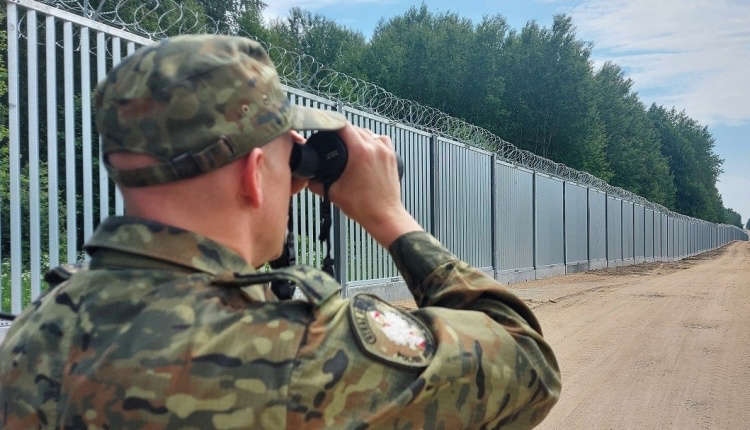
In just one year, the number of foreigners staying illegally in Poland has risen by about 40 percent. From January to the end of August 2026 alone, the Polish Border Guard identified 8,300 such people.
Many foreigners work illegally and rent apartments outside the official system; some make a living from crime. They live without documents or residence permits. It often takes the services years to identify them and establish where they are. Polish news outlet Rzeczpospolita describes a “gray zone” in which foreigners staying illegally operate. The Border Guard and other services identify people who have overstayed the permitted period of residence, work without the required permits, or use invalid documents. Inspections also turn up people who have previously been banned from entering Poland or other Schengen countries.
“From January 1 to the end of August this year, the Border Guard identified almost 8,300 foreigners who had breached Polish law on the conditions of entry and stay in the Republic of Poland. By comparison, in the same period of 2025 the figure was nearly 6,000, and for the whole of 2025 it was more than 9,300,” Major Anna Sobieska-Tekień of the Border Guard, spokesperson for Border Guard Headquarters, told the newspaper.
Ukrainians and Colombians predominate
Of those illegal migrants arrested, Ukrainians (2,200) and Colombians (1,400) dominate the figures. Also detained were 748 Georgians, 400 Belarusians and 354 Moldovans. Those who were detained did not have documents entitling them to stay in Poland.
“Everything indicates that Poland is entering a full-scale crisis in managing foreigners already present on its territory. If a state can control the border but loses the ability to determine effectively who remains after the right of residence expires, a security gap is created,” said Tomasz Safjański, a professor at WSB University in Dąbrowa Górnicza and deputy director of the Center for Research on Cross-Border Security.
Extensive networks support illegal migration
Rzeczpospolita points to an extensive support network that makes it possible to operate outside the legal system. It includes illegal employment, informal apartment rentals, and the forging of visas, work permits and other documents. The paper also recalls cases in which fictitious companies were set up and used to obtain work visas for foreigners.
Growth of the shadow economy is leading to more illegal employment, which allows employers to avoid taxes and social-security contributions. Experts also point to the risk of a rise in ordinary and organized crime, including human trafficking and document forgery.
People who remain outside the official registration system may also be harder to monitor and, according to those interviewed, may be used by foreign intelligence services for sabotage or other hostile activity.