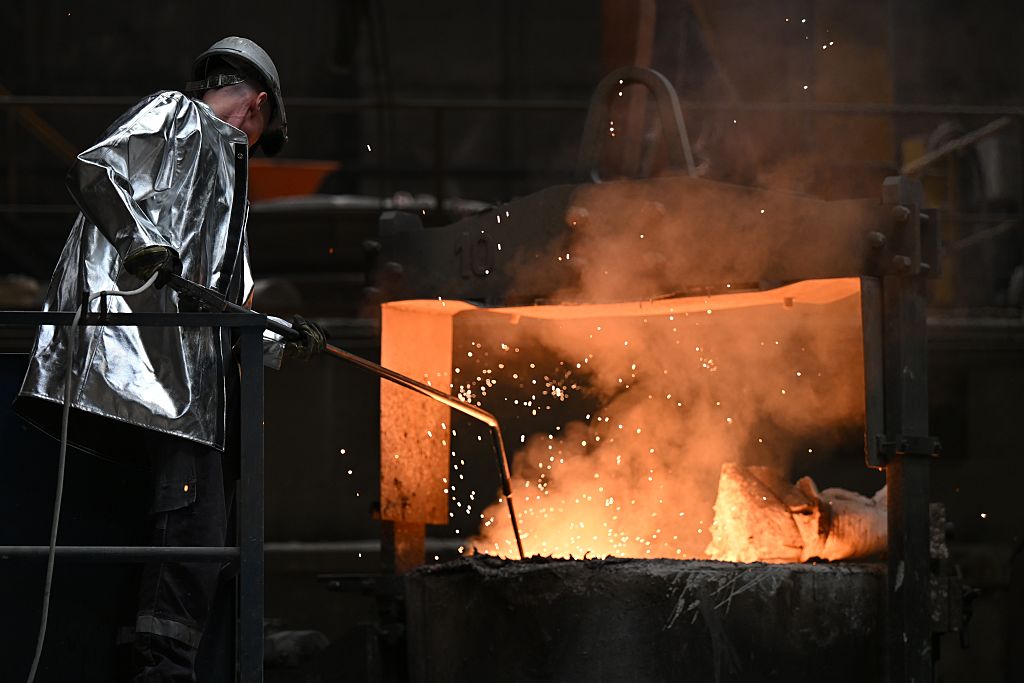
The economic outlook for the German metal and electrical industries has grown increasingly critical, with employer groups warning that the current environment is not only “dramatic“ but that 300,000 jobs are at risk of disappearing. That enormous figure already comes after 300,000 jobs were lost since 2019, leaving employment in these industrial sectors at 3.8 million workers.
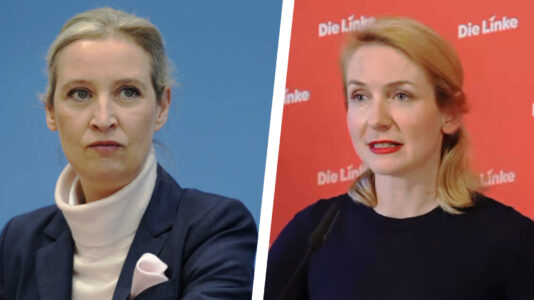
Alternative for Germany (AfD) co-leader Alice Weidel has used the disastrous economic data to go on the offensive against the government of Friedrich Merz
“According to a study by the consulting firm EY, more than 341,000 industrial jobs have been eliminated in Germany since 2019. Alone in the first quarter of 2026, employment fell by 2.3 percent. The relief measures and structural reforms announced by Federal Chancellor Friedrich Merz have thus failed to materialize,” she posted on X.
Gemäß einer Studie des Beratungsunternehmens EY sind in Deutschland seit 2019 mehr als 341.000 Industriearbeitsplätze abgebaut worden. Allein im ersten Quartal 2026 sank die Beschäftigung um 2,3 Prozent. Die von Bundeskanzler Friedrich Merz angekündigten Entlastungen und… pic.twitter.com/erE7bzagxK
— Alice Weidel (@Alice_Weidel) May 26, 2026“The ongoing loss of now over 341,000 industrial jobs is not a marginal cyclical phenomenon, but an expression of a profound failure of structural policy. While other economies are deliberately strengthening their industrial base and benefiting from global growth, Germany under the leadership of Friedrich Merz has further decoupled itself from the international upswing,” she continued.
Weidel said there were no effective reforms in the works, but instead, “growth-hostile” frameworks are in place, which are accelerating production fleeing abroad.
“While our own industrial location erodes, billions in funds are being misappropriated for projects abroad. A systematic misallocation of public resources at the expense of our own economy, which has nothing whatsoever to do with responsible economic policy anymore,” she concluded.
However, the problems may only be beginning for Merz, with his government approval rating at rock-bottom levels and the AfD polling between 28 and 29 percent, making it the most popular party in the country by far.
Gesamtmetall President Udo Dinglreiter indicated that the industrial sector is on the verge of significant workforce reductions and that hundreds of thousands more positions are at risk of being lost.
“We are in danger of losing another 300,000,” he told German newspaper Handelsblatt.
If that were to happen, it would represent the lowest employment levels in the electric and metal industrial sectors since Germany was reunited. Furthermore, these are well-paid jobs that are also fundamental to many other sectors, which could produce a domino effect.
Dinglreiter is particularly focused on China, with the labor leader describing Chinese financial investments within the European Union as “worrying“ for the domestic economy.
He noted that the bulk of these funds is being directed toward other EU member states rather than Germany, which does not foster local job creation but instead establishes new competitors operating with more favorable conditions and market access.
To address this, the Gesamtmetall leader is urging the federal government to quickly execute a policy package aimed at restoring the nation’s economic competitiveness. Without such measures, he warned that jobs will continue to be cut, more processes will be relocated, and less taxes and social security contributions will be paid, initiating a severe downward spiral.
Simultaneously, German mechanical engineering representatives are pressuring Economic Affairs Minister Katherina Reiche to adopt a firm position during her upcoming diplomatic mission to China. VDMA Chief Executive Thilo Brodtmann stated ahead of her departure that Reiche must make it unmistakably clear that Europe will no longer tolerate systematic distortions of competition.
A similar mission to China, at the EU level, ended with little to show for it, as Remix News covered in an X post. During that trip, French President Emmanuel Macron essentially begged China for help, stating that European industry is facing a “life or death” struggle to survive.
China almost completely rejected mass immigration and has about as many foreigners in the country as just one German city, Berlin.
🇨🇳All of China: 845,000 foreign nationals
🇩🇪Berlin: 860,000-870,000 foreign nationals
By the EU left-liberal establishment's own logic, China… pic.twitter.com/ADPyiaWvKi
— Remix News & Views (@RMXnews) December 9, 2025While Remix News has run numerous articles showcasing how China is pulling ahead in terms of innovation and competitiveness, German industry and labor leaders also point to unfair practices from Chinese companies.
“An artificially low currency, excessive subsidies and politically motivated export controls are not trivial offenses. They endanger Europe’s industry,” said Brodtmann.
However, these claims are not the full story. Germany and Europe also abandoned cheap energy from Russia, whereas China has had no such qualms about who its energy suppliers are. Perhaps even most importantly, China chooses to invest in its own citizens instead of importing mass amounts of mostly unskilled labor, which is the path Germany has chosen.
The head of BYD, the automobile giant in China, has stated that they are so far ahead of European and other Western automakers because of their over 100,000 engineers, who are nearly all Chinese.
“If we were to name our assets, I believe BYD’s greatest asset is its engineering team. We have 110,000 engineers, and that is BYD’s greatest asset,” Wang Chuanfu told Sina.com.
“My company’s new energy vehicles, both in terms of technology and industrial chain, are approximately three to five years ahead of the world. We should seize this window, adhere to open innovation, promote higher levels of opening up with higher-level green technologies and products, and expand overseas through complementary advantages and open cooperation,” he said, as quoted by BJNews.
Regardless of the reasons behind Germany’s ongoing industrial collapse, Merz has no easy solutions, and besides the AfD, he is also taking flak from left-wing parties.
Political figures from the Green Party have similarly demanded robust action from the government. This political pressure is arising amid intensifying competition for domestic manufacturers, a trend underscored by recent bilateral trade statistics.
During the first quarter, German imports originating from China climbed by 6.4 percent to reach €43.5 billion compared to the previous year, whereas German exports heading to China dropped by 12.5 percent to €18 billion.
“China is attacking German industry, mechanical engineering and small and medium-sized businesses head-on,” said Green Party parliamentary group deputy Andreas Audretsch.