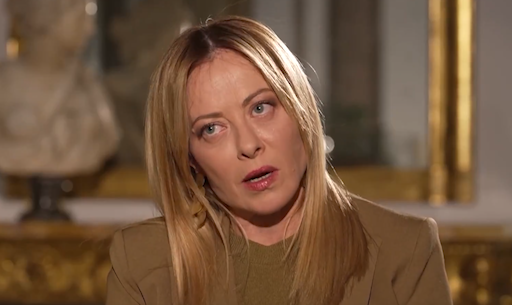
Italian Prime Minister Giorgia Meloni has responded bluntly to French President Emmanuel Macron after he suggested she should refrain from interfering in France’s domestic affairs. The exchange stems from Meloni’s public expression of solidarity following the death of Quentin Deranque, the right-wing student who died after an attack by suspected far-left militant activists.
Macron, speaking from New Delhi during an official visit to India, mocked foreign leaders who comment on events in France. “Let everyone stay at home, and the sheep will be well looked after,” he said. “I am always struck by the fact that nationalists, who do not want to be disturbed in their own country, are the first to comment on what happens elsewhere.”
Meloni had described the death of Deranque as “a wound for the whole of Europe,” writing on X that “no political idea, no ideological opposition can justify violence or turn confrontation into physical aggression. When hatred and violence replace dialogue, democracy always loses.”
Deranque, a mathematics student, died in the hospital two days after being beaten and kicked in the head by masked attackers in Lyon. The assault followed clashes linked to a far-left demonstration near the city’s Institute of Political Studies. Investigators say at least six individuals took part in the attack, and a total of 11 arrests have now been made. Suspects have been described as militants linked to La Jeune Garde, a far-left group that has since been banned by French authorities.
JUST IN: After Italian PM Meloni spoke in honor of young Quentin Deranque, murdered by Antifa in Lyon, Macron is angry:
"I am puzzled to see that people who are nationalists, who don't want anyone to bother them at home, are the first to comment on others." pic.twitter.com/LDr5uakCyt
— Remix News & Views (@RMXnews) February 19, 2026Responding directly to Macron’s rebuke, Meloni said she was “very struck” by his words and had not expected such a reaction. She insisted her comments were not an intrusion into French domestic affairs, but a broader reflection on the “growing polarization and political violence across Western democracies.”
“I see a climate that I do not like,” she said. “I see it in Italy, I see it in France, I see it in the United States. I also commented on the murder of Charlie Kirk at the time.”
Meloni rejected the charge of interference outright, drawing a sharp distinction with solidarity. “I think interference is something else,” she said. “Interference is, for example, when a leader is elected by their own citizens and hears a foreign state say, ‘We will monitor the application of the rule of law.’ That is interference.”
🇮🇹❕ Giorgia Meloni responds to Emmanuel Macron:
"Expressing solidarity with the French people on a matter that clearly concerns everyone is not interference. I am sorry that Macron did not understand that." pic.twitter.com/H6DGLAmUJq
— Remix News & Views (@RMXnews) February 19, 2026This remark is thinly veiled criticism of comments made by French officials following her election victory in 2022, when France indicated it would monitor the new Italian government’s adherence to democratic values.
Meloni also noted that France had granted political asylum “to the cream of the crop of the Red Brigades for several decades,” suggesting Paris was in no position to lecture others on sensitivity in matters of political extremism.
The Red Brigades were a far-left Italian terrorist organization that carried out kidnappings, bombings, and assassinations — most notoriously the 1978 abduction and murder of former Prime Minister Aldo Moro.
“Expressing solidarity with the French people on a matter that clearly concerns everyone is not interference. So I am sorry that Macron did not understand that,” Meloni concluded.
Beyond the Macron row, Meloni also addressed several major issues in the wide-ranging interview. She defended Italy’s upcoming justice reform referendum, insisting it is a “common sense” measure designed to improve accountability within the judiciary and should not be turned into a vote on her government.
On foreign policy, she pointed to cautious progress in efforts toward peace in Ukraine and the Middle East, stressing the need for a “just peace” and continued international coordination.
Domestically, she outlined a €5 billion energy relief package to cut household and business bills, emergency reconstruction funds exceeding €1 billion following severe storm damage in southern regions, and praised Italy’s performance and organization at the Winter Olympics, describing it as proof of the nation’s resilience and global standing.