A recent documentary on the cultural channel Arte, which is funded by French and German taxpayer license fees, has sparked controversy and raised questions about its reporting claims.
The documentary claims that following the 2006 World Cup in Germany, Germany’s victory cultivated a “toxic brand of patriotism,” which eventually gave rise to political movements like Pegida and the Alternative for Germany (AfD). However, the network cited a number of “pogroms’ against Italians that there is currently no evidence for and which the network has so far refused to verify.
In the debate about “fake news” and “misinformation,” the fact that a well-funded network with a large team of reporters and presumably fact checkers cannot defend its claims is raising serious questions, especially when the EU is seeking to throttle “problematic” but truthful content in the EU.
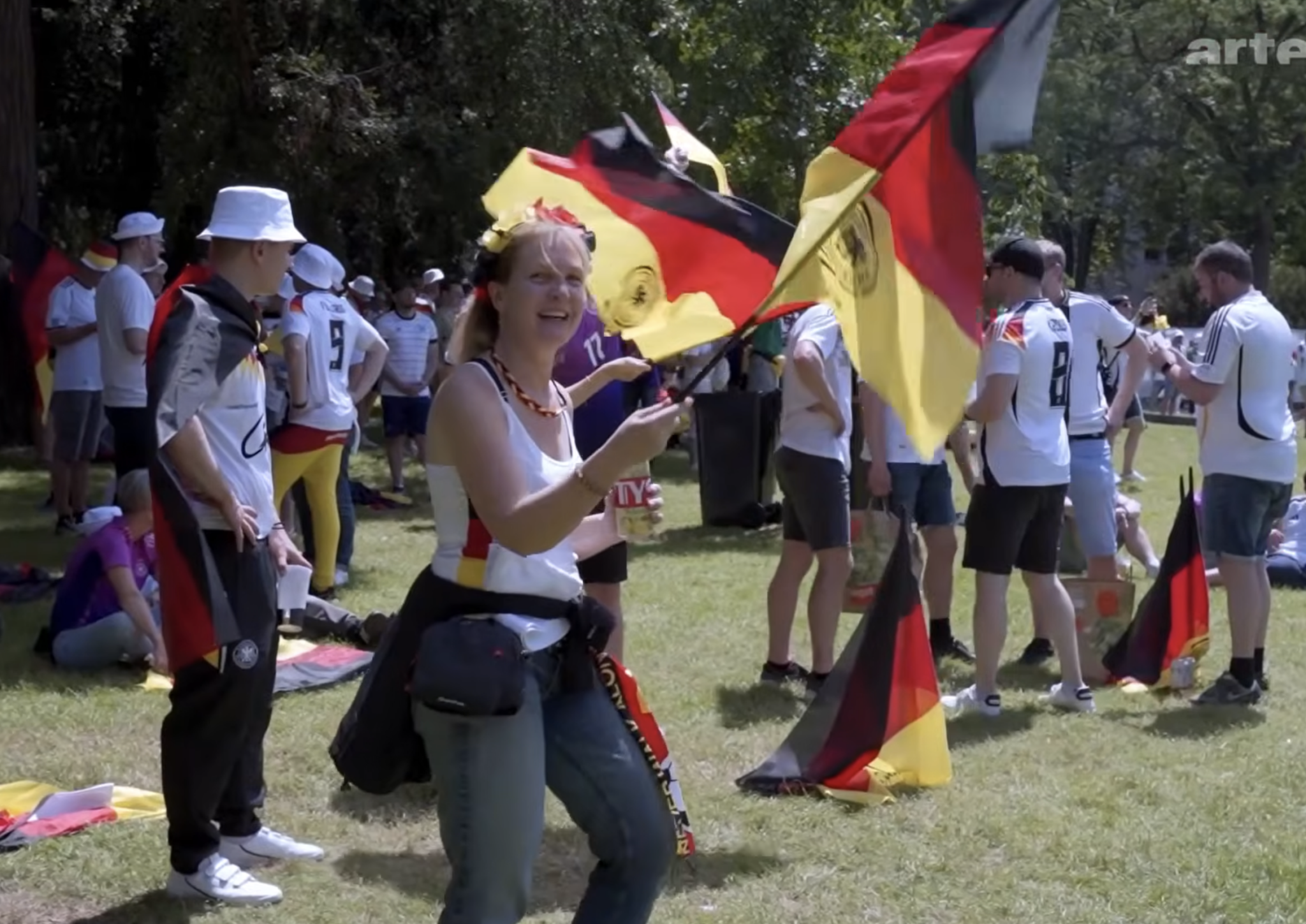
The documentary film, which as only garnered a meager 16,000 views despite its likely high production costs, is entitled “Flag on the chest – fashion or patriotism?” and it criticizes the display of national pride and the wearing of German football jerseys. To back up his argument that these public displays of national identity laid the groundwork for future right-wing movements, director Yuri Sternburg alleges that serious “pogrom-like” violence broke out following Germany’s semi-final loss to Italy.
He states: “Of course, football also connects, but there were also pogrom-like conditions in rural areas. After Germany flew out against Italy, pizzerias were attacked, and people were chased through the streets.“
Yet, government authorities have found no evidence to support these claims of widespread rioting, according to Nius news outlet.
When questioned, neither the Ministry of the Interior nor the Federal Criminal Police Office (BKA) could identify any incidents matching that description. A BKA representative stated: “The Federal Criminal Police Office has no information indicating that any ‘pogrom-like conditions’ occurred during the 2006 FIFA World Cup held in Germany in connection with Germany’s defeat against Italy.“
Remarkably, despite the questionable claims from Arte, it is not the network Arte that top politicians are discussing banning. In fact, Nius, the outlet questioning Arte’s reporting, has been the target of such discussions. Nius has been cited with no factual basis whatsoever that it is a “fake news” outlet that should potentially be banned.
Nius even reached out to Arte to confirm which “pogrom-like conditions” the network was actually referring to. Arte has so far refused to respond.
News archives from 2006 also show no record of organized assaults on Italian businesses or football fans, describing the atmosphere as overwhelmingly peaceful instead, according to Nius research.
Media coverage at the time highlighted that German fans handled the emotional elimination remarkably well after the team came in third. Photos showed disappointed locals and ecstatic Italians peacefully mingling in public fan zones. Police reported only minor, isolated incidents.
Certainly, there were no large-scale riots or “pogroms” targeted at Italian fans based on all available evidence.
The same cannot be said for European cities following football matches involving foreign teams like Morocco, which have sparked large-scale rioting for years. In cities like Paris, large contingents of almost entirely foreign youth or youths with a migration background have participated in large-scale arson attacks and property destruction, as the recent PSG victory showcased.
🇫🇷🔴A compilation of footage of what happened after the PSG match in Paris.
Complete mayhem in the New France. pic.twitter.com/qXNQwMfUs1
— Remix News & Views (@RMXnews) May 31, 2026However, the basis for the documentary, which is that Germans showcasing their national flag and wearing their national uniform colors is a problematic development, is also questionable. This is especially the case when migrants from other countries unfurl their own flags and participate in mass destruction and rioting.
The rapper Pimf is also interviewed, warning against looking back at the tournament as a positive event.
“I really don’t want any pictures of fan miles to appear where they say: ‘Yes, just look how beautiful all this can be and how peacefully the Germans can celebrate here.’ This is unpleasant and it is dangerous because we generally, but also in Germany, have a very tense political situation, and many marginalized groups are being pushed very drastically to the margins,” he claimed.
However, he describes football, football jerseys, and national flags from “rather marginalized“ countries as generally a positive development, in contrast to Germany. He said among the “marginalized” it might feel that “a strengthening takes place somehow through this community, and accordingly, such cohesion is forged under one banner.”
However, this same logic “should not apply to Germany or other dominant Western nations,” writes Nius.
The rapper states: “Why is everyone else allowed to do this, and why are only we Germans not?“
In his view, the historical context behind a symbol changes its meaning entirely. He argues that “different jerseys of course always conveyed their own vibe,” noting that comparing German colonial history to the Kurdish independence movement is a false equivalency. He concludes: “If I wear a jersey with a Kurdish flag on it, it tells a completely different story.“
Notably, Turkey itself, where many Kurds live, was a historical colonial power and occupied parts of Europe for hundreds of years. So far, there has been no documentary about “problematic” Turkish flags or jerseys, either in Turkey or in Germany itself.