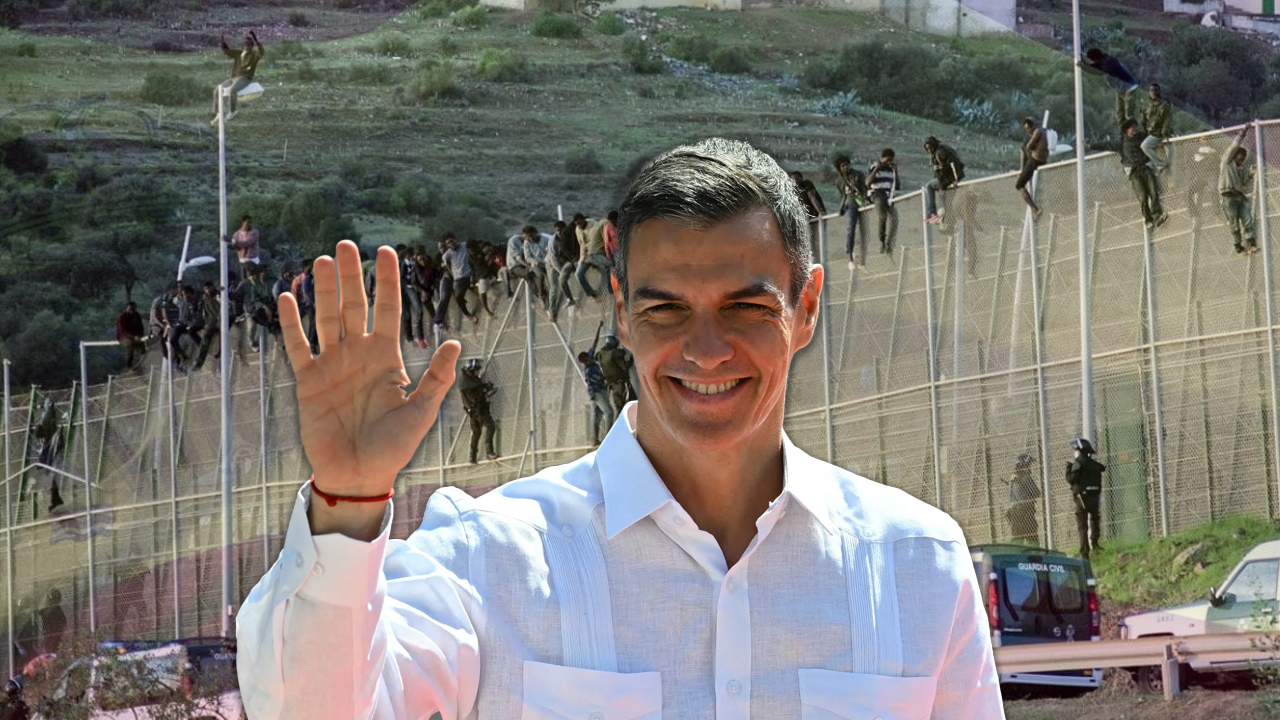
Spain’s Socialist Prime Minister Pedro Sánchez is pressing ahead with one of the most controversial migration measures in the country’s recent history, confirming that his government will approve a royal decree to begin the extraordinary regularization of hundreds of thousands of illegal immigrants.
In a letter published on Tuesday, Sánchez framed the move as both a moral duty and an economic necessity, describing it as “an act of justice” and a recognition of “the reality of nearly half a million people” already living in Spain. He insisted the policy would “recognize rights, but also demand obligations,” arguing that bringing those in the country illegally into the system would strengthen social cohesion and economic contribution.
El Consejo de Ministros aprobará hoy el Real Decreto que da inicio al proceso de regularización extraordinaria de personas en situación irregular en nuestro país.
Un acto de normalización, de reconocer la realidad de casi medio millón de personas que ya forman parte de nuestra… pic.twitter.com/Es9il0KE59
— Pedro Sánchez (@sanchezcastejon) April 14, 2026But the decision has triggered fierce criticism, not only for its substance but for the way it is being imposed. The regularization, first announced in January, was negotiated between Sánchez’s Socialist Party and the far-left Podemos and will be pushed through by royal decree, allowing the government to bypass a binding vote in parliament — despite the fact that similar proposals have stalled in Congress for over a year due to a lack of support.
Under the scheme, illegal migrants who can prove they were in Spain before Dec. 31, 2025, and have remained for at least five months will be eligible for provisional residence and work permits, provided they have no serious criminal record. Once an application is filed, deportation proceedings are suspended. Successful applicants receive a renewable one-year residence permit.
While the government continues to cite around 500,000 beneficiaries, internal police analysis suggests the true figure of regularizations could be more than triple that.
A report from Spain’s National Immigration and Borders Center estimated that between 750,000 and 1 million undocumented migrants already in the country are likely to apply, with a further 250,000 to 350,000 asylum seekers also eligible — bringing the total to between 1 million and 1.35 million people.
Separate reporting from Spain’s General Commissariat last month suggested the figure could climb even higher, with up to 1.6 million potential applicants.
These figures come against the backdrop of a sharp rise in illegal immigration. According to estimates cited from the Funcas think tank, the number of undocumented migrants in Spain has surged from around 107,000 in 2017 to nearly 840,000 in 2025 — an increase of almost 685 percent. Funcas also estimates that illegal migrants now account for 17.2 percent of the non-EU foreign population.
Within days of the amnesty announcement, pressure intensified at Spain’s external borders, particularly in Ceuta, where the Civil Guard warned that sections of the border fence were in a state of “collapse,” with migrants able to breach it in less than 30 seconds following storm damage that had not been repaired.
Opposition figures say the policy sends a clear message that illegal entry will eventually be rewarded.
Santiago Abascal, leader of Vox, said, “The Spanish people have not given permission for this. If the illegals ‘already form part of our daily life,’ it is only because you and the [center-right] PP have let them in against our laws and against our interests.”
On Tuesday, Vox announced it would appeal the passing of the royal decree to the Supreme Court, and effectively ask for an injunction on its implementation while the judicial review is being conducted.
The controversy has been further inflamed by statements from Podemos figures. Former equality minister Irene Montero described the amnesty as an “urgent measure of social justice” and pushed for the process to be made “swift,” while also calling for migrants to eventually gain full political rights. She expressed her desire for illegal immigrants to “replace” the “fascists and racists” who opposed the move, prompting U.S. billionaire Elon Musk to accuse her of “advocating genocide.”
The far-left Spanish government appears to ignore the fact that foreign nationals in the country are vastly disproportionately represented in crime stats and the prison population. A report from the CEU-CEFAS Demographic Observatory in December found that foreign nationals make up 31 percent of Spain’s prison population and, on a per capita basis, commit significantly higher rates of certain serious crimes, including 500 percent more rapes and 414 percent more murders than Spanish citizens.