Hungarian Foreign Minister Péter Szijjártó announced a major agreement with the U.S. to import 400 million cubic metres of LNG a year.
“We are interested in purchasing energy from as many sources and via as many routes as possible, ensuring the lowest prices,” he posted on X.
Today we have reached an important milestone in American-Hungarian energy cooperation by signing a contract for 400 million cubic metres of LNG a year.
This means that over the next five years, two billion cubic metres of American LNG will arrive in Hungary.
There is currently no information on the price, cost, and route of the LNG secured in the contract, notes Portfolio. Previous estimates noted a purchase of 2 billion cubic meters of U.S. LNG worth $600 million under a five-year contract.
Earlier this month, Hungary also signed a new natural gas purchase agreement with Azerbaijan for 800 million cubic meters over two years.
This latest contract with the U.S. means that, together with agreements concluded this year with Shell, Engie, and Azerbaijan’s SOCAR, the amount of non-Russian natural gas arriving in Hungary in partially liquefied form could jump to 16 percent of the country’s annual consumption (8.5 billion cubic meters in 2024).
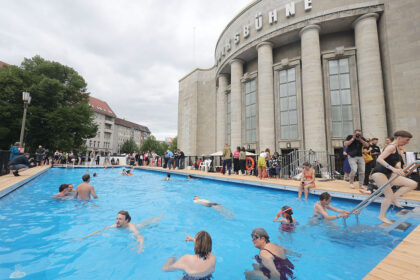
Housing migrants in Berlin has cost taxpayers dearly, and new data confirms this. Figures confirmed to the German Press Agency (dpa) by sources within the Senate, and cited by Die Welt, indicate that in 2024, the city paid €883 million for providing migrant accommodations, up from €312 million in 2020.
At the same time, Berlin is implementing major budget cuts due to budget shortfalls, with the city taking on more and more debt.
Large-scale accommodations such as Tegel and Tempelhof have even higher costs, with Tegel alone accounting for approximately €260 million of total costs in 2024.
Annual expenditures for the accommodation, care, and integration of refugees in Berlin nearly doubled between 2022 and 2025, reaching €2.24 billion. At one point, a state of emergency to secure emergency loans for financing was even considered.
According to the CDU/CSU-SPD coalition in charge, the costs can be covered by the state budget, with as much as €870 million per year earmarked in the 2026/2027 biennial budget as a reserve for potential additional funding needs.
What is also important to note is that Berlin is implementing major budget cuts across various sectors, including culture, education, and transport, to tackle a €3 billion shortfall. These cuts are a affecting universities and cultural institutions with reduced grants (around €130m cut from culture), and public services like cycling initiatives.
WATCH: 🇩🇪🇪🇺 Mass immigration is fueling the West's housing crisis.
Here's how it's happening in Germany.
In a powerful speech in the German Bundestag, @AfD politician Carolin Bachmann slams the ruling government for allowing 2 million migrants into the country while families… pic.twitter.com/DMEqiV316S
There are also questions about where cuts will land in the future, as Berlin takes on more and more debt. Once again, the promise of mass immigration proving an economic bounty is often falling far from the truth, and polling shows that at the national level, Germans are turning sharply against both legal and illegal immigration.
In one bit of good news, the number of refugees arriving in Berlin fell for the first time in 2024. Just over 21,000 refugees were taken in that year, around a third fewer than in 2023, and the downward trend has continued this year, with some 11,700 refugees arriving up to and including October.
As of mid-November, 36,851 people were living in accommodations run by the State Office for Refugee Affairs (LAF). They are housed in various emergency shelters, container housing, dormitories, rented hotels, hostels, and former office buildings. The governing coalition recently has also agreed not to create any additional accommodation facilities for the time being.
Just last June, Remix News reported that Berlin’s state government has approved the construction of a new container village to house more than 1,000 asylum seekers.
At the start of 2025, cities such as Berlin and Hamburg were also in the spotlight for prioritizing luxury housing for migrants while German citizens face a worsening housing crisis, rising homelessness, and exclusion from newly built accommodations.
The numbers in a new YouGov poll should serve as the final nail in the coffin of Germany’s so-called “Welcome Culture,” promoted during the 2015 migration crisis, which was promoted by Angela Merkel, her CDU, and the left. A decade later, Germans feature the prevailing view that the negative consequences of both legal and illegal migration vastly outweigh the positive. The new from YouGov shows a majority of Germans want an immigration moratorium and mass deportations.
Illegal migration
The polling results, which were obtained exclusively by Welt, show that Germans are — despite all the claims of “we have space” that were promoted by the left — immensely fed up with illegal immigration. The poll shows that 81 percent of Germans state that illegal immigration was “far too high” or “rather too high” over the last 10 years. Only 5 percent view the levels as appropriate.
Another 75 percent say illegal migration has been bad for Germany.
Majority also rejects legal migration
However, despite a relentless media campaign, a clear majority of Germans also appear to reject legal migration.
A majority of Germans, 57 percent, believe that too many people have entered the country legally, with only a quarter of respondents considering the numbers appropriate.
In addition, 53 percent of Germans favor a total moratorium on all new immigration, as well as the return of a large number of migrants to their homelands, otherwise known by many on the right as “remigration” or mass deportation.
Clearly, Germany’s “welcome culture” appears to be on its final death throes, as Germans become sick of soaring crime, a growing housing crisis, tens of billions spent a year on foreigners, terror threats, dangerous swimming pool conditions, and a crumbling education — all in large part due to mass immigration.
As Welt notes, exact migration figures are difficult to determine, but the Federal Statistical Office reports 6.5 million immigrants have arrived in Germany since 2015 without differentiating legal status, and the Federal Office for Migration and Refugees records 2.8 million initial asylum applications.
A majority of Germans are not happy with this development.
In fact, among the countries surveyed in the European Political Monthly (including France, Italy, Spain, and Poland), Germany displays the most pronounced opposition to migration. It is fair to note, however, that other countries, like France, have in many other polls shown far greater opposition to migrants than Germans.
Illegal immigration perception
Remarkably, 75 percent believe illegal migration has been “largely bad” for the country.
While 38 percent believe legal immigration has been bad for Germany, 31 percent say it has been mixed, while only 24 percent say it has been positive.
Integration
A whopping 80 percent of Germans believe illegal migrants have not been successfully integrated—the highest rate of dissatisfaction among the nations surveyed. Even regarding legal immigrants, a majority of 54 percent believe integration has failed.
Seventy-nine percent of Germans say that illegal immigrants do not share the German population’s values. However, a majority also say this about legal migrants, with 53 percent of Germans holding this opinion.
‘We are seeing a great deal of weariness surrounding the issue of immigration’
Frieder Schmid, a pollster for YouGov, contextualizes these findings: “We are seeing a great deal of weariness surrounding the issue of immigration,” he explains. “There is currently little acceptance, especially for irregular migration.”
Schmid notes that tangible strain on infrastructure plays a role. “As a result, some people view immigration as a whole as problematic,” said Schmid, pointing to issues in schools and housing shortages in major cities.
The result? Despite media reports that claim the Alternative for Germany (AfD) is a racist party that should be banned, there are nearly no Germans left who actually support a liberal migration policy.
In fact, only 10 percent of Germans support a “liberal immigration policy.” On the contrary, as noted above, 53 percent of Germans want a complete moratorium on immigration and mass deportations.
Support for a liberal immigration policy has collapsed to just 10 percent. Instead, a narrow majority (53 percent) now favors a scenario involving a halt to new arrivals and the return of a large number of migrants.
The poll shows overwhelming support for deporting migrants in certain scenarios, with 88 percent supporting efforts to deport individuals who immigrated primarily to receive social benefits.
Another 85 percent support asylum seekers who entered the country illegally, which is nearly all asylum seekers.
However, support for deportation drops sharply in certain areas. Seventy-four percent reject deporting doctors, 73 percent are against deporting skilled workers, tradespeople (71 percent), and foreign students (66 percent).
However, the YouGov pollster also states that when immigration questions are framed a certain way, respondents change their answers. Namely, when respondents are asked if they would accept less immigration and a weaker economy, only 27 percent accept this.
The poll shows that 46 percent would opt for improving the economic situation through immigration, compared to 27 percent who would accept a weaker economy to reduce immigration.
The problem with the question becomes apparent, implying that restricting immigration would necessarily make the economy worse. Although an imperfect comparison, it is worth noting that China has one of the most immigration restrictionst economies in the world. Now, it has Europe begging for help, as China pulls ahead in manufacturing, energy production, and innovation in a wide range of fields.
Instead of embracing mass immigration, China is rapidly replacing its workforce with robotics at an incredible pace.
Meanwhile, the pro-immigration EU is floundering. Macron was just in China calling for technology transfers, support and investment. pic.twitter.com/gmT26Udcx4
China, like other Asian countries such as Japan, has opted for automation, robotics, and “black-out” factories that require no humans to manage its population decline. Remix News covered this reality in a piece published in October.
The European Parliament has voted on a safeguard clause to the EU’s trade agreement with Mercosur countries, but this is not enough to avert disaster for Europe’s food security, food safety, and agricultural future.
“The changes voted on in the European Parliament do not eliminate the fundamental threat to the food security of EU citizens, and the safeguard clause will not prevent the destabilization of the agricultural market. A sham solution was passed, intended to create the impression of agricultural protection and facilitate political acceptance of the entire agreement,” Jadwiga Wiśniewska, a PiS MEP, commented on the EP’s vote on safeguard clauses for the agreement with Mercosur countries in an interview with wPolityce.
“The safeguards approved do not eliminate the threats to small and medium-sized farms, which constitute the backbone of Polish agriculture. For them, these mechanisms will be completely insufficient,” she adds.
The EU parliament is reacting to mass protests and fierce opposition from farmers, European activists, and grassroots initiatives aimed at protecting Europe from being flooded with cheap and unsafe food from South America. With this in mind, the parliament adopted several amendments that are supposedly intended to “allow for a faster response” from the EU in the event of a drop in prices for products like beef and eggs due to imports from the South American bloc.
However, critics say this measure is designed to stamp out opposition and will offer no real safeguard to farmers and European consumers.
“It’s worth emphasizing that the European Commission itself admits that the agreement will harm agriculture, since it proposes a billion euros in compensation, even though this is a mere drop in the ocean of needs. For Poland, this means a real risk of a decline in domestic production and increased dependence on imports. The mechanism does not rule out a massive influx of cheaper products from Mercosur countries, manufactured to lower standards,” Wiśniewska adds.
Poland is sharply split on the issue, with the left voting for Mercosur, which will harm farmers and threaten European food security. Polish MEPs from the Civic Coalition (KO), Polish People’s Party (PSL), New Left (Nowa Lewica), and Poland 2050 party (Polska 2050) supported the measure. MEPs from the conservative end of Poland, Law and Justice (PiS) and Confederation, opposed it.
Countries are awaiting a safeguard clause for a final vote on the entire trade agreement with Mercosur. Approval requires a qualified majority among capitals (15 countries representing 65 percent of the EU’s population). A minority of at least four countries representing at least 35 percent of the EU’s population can block the vote.
European Commission President Ursula von der Leyen hopes to sign the agreement at the Mercosur summit in Brazil on Dec. 20. However, due to farmers’ protests, France wants to postpone work on the agreement with Mercosur until next year.
French MEP Jordan Bardella, leader of the National Rally party, posted on X regarding the vote: “Ursula von der Leyen and her majority in the European Parliament can congratulate themselves: Everything seems to indicate that they are indeed in the process of killing off European agriculture, which, not so long ago, was the pride of our continent and the strength of France.”
Ursula von der Leyen et sa majorité au Parlement européen peuvent se féliciter : tout semble indiquer qu’ils sont bel et bien en train de tuer l’agriculture européenne qui faisait, il n’y a pas si longtemps encore, la fierté de notre continent et la puissance de la France. pic.twitter.com/iIFgnuJdjg
The deal could serve as a major blow to food quality, resulting in cheap meat and produce imports from South America, where standards are notably lax when it comes to pesticide and GMO use. Over the coming years, these products would find their way more and more often onto European shelves.
While the EU insists on the issue of climate protection and the Green Deal, this free trade deal will also turbocharge destructive agricultural practices in South America, where enforcement of environmental protection remains weak. Tens of millions of acres of rainforest have been destroyed to make way for cattle grazing and monocrop cultivation of soybeans and other cash crops, but with the lucrative EU market opened up, it could create a frenzy to destroy even more rainforest and convert it to agricultural use.
Opponents of the agreement point out that under the agreement, Germany will send its industrial products to South America, and in return, food from South American countries will flow to Europe. Unfortunately, this food will often be of poor quality, containing chemicals long banned in Europe.
The risks are enormous. Brazil alone allows the use of as many as 3,669 pesticides. With European markets open, Brazil will be able to send more and more of its food overseas. Europe’s emphasis on “eating local” to reduce carbon emissions associated with transportation will become a joke, as food from halfway around the world will often be cheaper than locally produced goods. European chemical companies will reap massive profits.
Former Prime Minister Mateusz Morawiecki addressed media reports of tensions within Law and Justice (PiS) and speculation about his political future during an an interview with Bogdan Rymanowski on the “Gość Wydarzeń” program on Polsat News.
The former prime minister vehemently denied that he was considering leaving the party or forming a new grouping.
“Law and Justice is my party,” Morawiecki emphasized, as cited in the Do Rzeczy news portal. “There’s no way we’ll split, we’re one,” he added, referring to rumors of a possible split within PiS.
The former prime minister emphasized that he only reacts when he or his associates are attacked. “Of course, I always respond if my people are treated unfairly, if I am attacked,” he said.
Morawiecki also unequivocally declared that he had no plans to form his own political party or leave PiS. The topic of leadership on the Polish right also came up during the conversation.
“The leader of the Polish right is Jarosław Kaczyński,” the former prime minister stated. “President Karol Nawrocki is, of course, already a symbolic figure,” he added, expressing satisfaction with what he called the head of state’s “assertive stance.”
Morawiecki assured that he remains in constant contact with the PiS leader. “We talk often. We are very focused on working and showing Poles what our program and our actions are,” he said.
The former prime minister also sharply criticized the current head of government, Donald Tusk. “He is a master, not to say a grandmaster, in one area – political marketing and propaganda,” Morawiecki assessed.
“I thought Jerzy Urban would be a kind of unsurpassable benchmark, but my successor has surpassed Jerzy Urban as well,” he added. When asked by the host if this comparison wasn’t exaggerated, Morawiecki replied: “A year or two ago, I would have considered it to be.”
“Today, when I see this propaganda shell, the destruction of the CPK, that they’re not building a port in Świnoujście,” he said. Referring to the government’s “Port Polska” project (formerly CPK), the former prime minister stated bluntly: “It’s a smokescreen (…) so that we don’t know what’s going on.”
Hungary is entering the space race with a new, historic preliminary agreement between Hungarian companies 4iG Space and Defense Zrt. (4iG S&D) and its subsidiary, REMRED Zrt. (REMRED) and the American leading satellite platform manufacturer Apex Technology, Inc. The goal? To develop a European satellite mass production model similar to standardized and cost-effective automobile manufacturing.
This tripartite agreement comes at a time when Europe is playing catch-up in the space race against the United States and China.
“One of the most important goals of the cooperation is to ensure that the Ford-T-like serial production logic already proven in the American space industry – led by Apex – appears on the European satellite market as well. This approach could fundamentally change the rate of development and production of satellites, as well as their cost structure, just as it revolutionized the automotive industry 100 years ago,” said istván Sárhegyi, CEO of the Hungarian 4iG Space and Defense Technologies.
“Building on the experience of Apex Space, we are investigating the development of an industry model that can bring a paradigm shift to Europe’s space industry with the active involvement of Hungarian expertise,” he continued.
The partnership will create a series production satellite manufacturing system, specially designed for cooperative multi-satellite systems. This approach significantly reduces development costs and production time, while ensuring consistent, high-quality, satellites.
The collaboration is based on the American Apex’s experience in large-scale satellite manufacturing, as well as the engineering knowledge and system integration capabilities of 4iG S&D and REMRED, which will lay the foundations for a competitive European satellite industry.
Essentially, a standardized and scalable mass production system, such as that seen in the automotive industry, will be applied to satellite production. Europe, which is lacking satellites in orbit, needs to quickly scale up production, including implementing a 12-18 month delivery cycle, to compete at the global level.
Apex provides U.S.-proven satellite platforms optimized for series production, as well as industry-efficient integration and manufacturing processes that currently enable the production of more than a hundred satellite platforms annually.
REMRED Ltd will strengthen the development and production back-up with engineering knowledge in line with European space industry standards and an integration and testing infrastructure based on the REMTECH center in Martonvásár. At the same time, “4iG S&D supports collaboration with vertical integration covering the entire satellite value chain, professional program management and extensive international market access,” according to a press release.
As part of the cooperation, the parties are also investigating the possibility of a joint satellite mission, which, based on Apex’s proven technologies, can help to gain joint technological experience and lay the foundation for the launch of subsequent multi-satellite programs.
An elderly French woman was simply trying to close the window to her apartment when an unidentified individual slipped into her home to rape and rob her in the “sensitive” Mureaux district in Yvelines, outside Paris. The neighborhood is known for its extremely high number of North African residents.
The incident, which happened on Dec. 15, involved an unidentified suspect who, according to police, “hit her and then dragged her to her room before tying her up. He pinned her to the ground, took off her clothes and penetrated her vaginally. The attacker then stole several objects from the victim’s home before leaving the scene.”
After the rape, the woman was able to call the police. Medical workers arrived on scene and found the woman, who was “traumatized” by the rape, according to Info JDD.
Police arrived on scene, and the woman was transported to the hospital, where DNA from the suspect was identified. The woman was hospitalized for several bruises across her back and shoulders, as well as several wounds she suffered on her wrists.
Police have not released a full description of the attacker, but say that his face was hidden by a surgical mask during the incident. Police continue to hunt for the suspect.
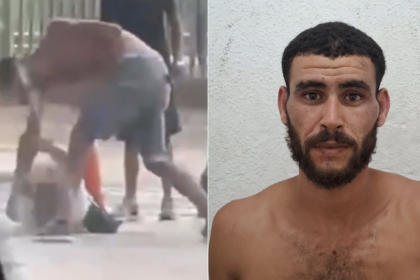
The elderly have additionally been targeted by foreigners extensively in robbery attacks. In October, an Algerian man was arrested for attacking an 81-year-old grandmother in a wheelchair, who violently resisted the man snatching her necklace. Although his accomplice managed to flee the scene, the woman’s resistance stopped the Algerian, who was tackled by witnesses. The suspect has a long criminal record and outstanding deportation orders. He was immediately sentenced to one year in prison and given yet another deportation order.
Officers from Poland’s Internal Security Agency (ABW) detained student Mateusz W., who was allegedly planning a terrorist attack at a Christmas market, on Nov. 30, with social media already abuzz about how a Polish student at a Catholic university could be involved in an Islamist-motivated attack.
“The Szczecin branch of the ABW is conducting an investigation into this matter under the supervision of the Szczecin branch of the Police Headquarters,” Jacek Dobrzyński, spokesman for the Special Services Coordinator, posted on X.
The man was remanded into custody for three months. The National Prosecutor’s Office reported that searches of premises in the Łódź and Lublin Voivodeships were also conducted, during which data storage devices and items related to the Islamic religion, which could constitute evidence, were seized.
“After receiving information from the court about his temporary arrest, his student rights were immediately suspended,” Wojciech Andrusiewicz, spokesman for the Catholic University of Lublin, said in a press briefing, reports wPolityce.
Confederation co-leader Krzysztof Bosak noted the case shows that even as the West loses its religion, Christianity, other religions are racing to fill the gap.
“A phenomenon begins that is known in Western countries: the local population’s conversion to Islam and radicalization in opposition to their own culture, which—in the perspective of the converts—has lost its value and appeal. This is a simple consequence of the spiritual crisis consuming the West. Man needs culture and needs religion,” wrote Bosak on X.
„Celem przestępstwa było zastraszenie wielu osób, a także wsparcie Państwa Islamskiego. Podczas przeprowadzonych czynności funkcjonariusze #ABW zabezpieczyli nośniki danych oraz przedmioty związane z islamem.”
Zaczyna się zjawisko znane w państwach zachodnich: konwersji lokalnej… https://t.co/uqrl4N9m6g
“The negation of Polishness and Christianity creates a group of people susceptible to all kinds of external influences: from foreign fashions, customs, and cults to radical ideologies and religious fundamentalism. Emptiness and lack of meaning hurt, and man seeks answers to his pain in the most harmful places. To avoid such problems, we need a renewal of faith, a true evangelical radicalism in the good Catholic sense,” he continued.
On X, Dobrzyński provided further details about the case, writing:
“Officers of the Internal Security Agency detained Mateusz W., a student at the Catholic University of Lublin, suspected of preparing a mass attack at one of the Christmas markets, which he planned to carry out using explosive materials. Earlier, the man had been acquiring knowledge about methods of independently producing materials that were to be used to carry out a terrorist act. He also planned to join a terrorist organization to obtain assistance in implementing the intended actions. The purpose of the crime was to intimidate many people, as well as to support the Islamic State.”
According to the National Prosecutor’s Office, Mateusz W. has been charged with preparatory actions to carry out a terrorist attack that could have resulted in the death or serious injury of many people.
The site of last year’s Christmas market massacre involving a Saudi Arabian doctor working in Germany is once again in the news, this time as the alleged target of a 21-year-old male from Central Asia. Police say he planned a significant terror attack against “large crowds” in the city which is still reeling from last year’s disaster.
Although the attack has been foiled, it will serve as yet another PR disaster not only for the German government but also the pro-migration wing of German politics, which argues we should welcome even more foreigners to Germany.
The German Interior Ministry announced the arrest was made “to prevent the execution of the attack plans he expressed against large crowds.”
A deportation order has now been launched as well: “A deportation order may be issued by the Ministry against a foreigner based on a factual prognosis to avert a particular threat to the security of the Federal Republic of Germany or a terrorist threat.“
The man entered Germany in the summer of 2024 and finished nursing training in Saxony-Anhalt. According to a security source, the man has military experience.
Notably, the latest target of an alleged attack is the same city from last year’s deadly Magdeburg Christmas market attack, which saw Saudi Arabian Taleb al-Abdulmohsen plow his vehicle into a Christmas market, killing six and wounding hundreds. His trial is ongoing, and the details of the trial, including his behavior, are truly remarkable.
Notably, Magdeburg nearly did not have its Christmas market this year due to security costs exploding, a trend seen across Germany. The city eventually stepped in to cover part of the costs after negotiations with the organizer.
The fact that the market is once again the alleged target of a terror attack will do little to assuage fears in Germany that Christmas markets, a long-cherished tradition for Germans of all ages, have now become targets for Islamists.
AfD politician Ulrich Siegmund responded to the threat that Magdeburg Christmas market may be closed earlier in December, saying: “Go to the Czech Republic, go to Poland, go to other countries that have not opened their borders, that have not sold their own security off.
🇩🇪🎄The German Christmas market in Magdeburg has been suspended over security concerns, sparking a nationwide debate.
The question: Why are Christmas markets in Germany being canceled while countries like 🇵🇱Poland and the 🇨🇿Czech Republic have no serious terror threats at their… pic.twitter.com/MUW5fofh5w
Polish President Karol Nawrocki does not intend to celebrate Hanukkah, fulfilling a campaign declaration he made before he became president.
At the time, while running for office, Nawrocki said that if he won the presidency, he would not celebrate Hanukkah.
“I take my commitment to Christian values seriously, so I celebrate holidays that are close to my heart,” he told RMF FM.
Although not a long-standing tradition, menorah candles are lit in the Polish Parliament. President Lech Kaczyński initiated the tradition of lighting Hanukkah candles at the Presidential Palace by the head of state. Andrzej Duda continued the tradition. Nawrocki, however, has no intention of continuing this practice.
On Monday, the Hanukkah menorah lighting ceremony took place in the Sejm (lower house of parliament). The ceremony was attended by Sejm Speaker Włodzimierz Czarzasty, Poland’s Chief Rabbi Michael Schudrich, Chabad-Lubavitch President Shalom Ber Stambler, Israel’s Ambassador to Poland Yaakov Finkelstein, Deputy Foreign Minister Władysław Teofil Bartoszewski, Justice Minister Waldemar Żurek, and U.S. Ambassador to Poland Thomas Rose.
Zbigniew Bogucki, head of the Chancellery of the President of the Republic of Poland, commented on Karol Nawrocki’s decision in a program on Wirtualna Polska.
“Every president has his own customs, his own approach to certain issues. I would like to make it very clear that this is not an anti-Jewish or hostile gesture,” he said.
The presidential minister estimated that over 90 percent of Poles do not know what days Hanukkah is celebrated on, and “the Jewish diaspora is small today.”
“Other presidents considered this to be appropriate. President Nawrocki decided there was no need for it. It’s no big deal,” said Bogucki.
Hanukkah is an eight-day holiday based on historical events described in the Books of Maccabees. In 2025, Hanukkah began on the evening of Dec.14 and ends on the evening of Dec. 22.
Nawrocki has had fierce disputes with Jewish and Israeli organizations in the past over their interpretation of Poland’s role in the Holocaust.
Many Israeli publications were furious once he won. For example, The Times of Israel opened its article covering Nawrocki’s inauguration, writing: “Conservative Karol Nawrocki, who made Holocaust revisionism part of his campaign, was inaugurated Wednesday as Poland’s new president, which could set the country on a more nationalist course and cast doubt on the viability of the centrist government of Prime Minister Donald Tusk.”
The portal not only took issue with the support Nawrocki received from PiS, which they say “promoted historical narratives about Polish victimhood and resistance to the Nazis, while delegitimizing research on Polish antisemitism or Poles who killed Jews.”
They also wrote that he “sought favor from Grzegorz Braun,” whom they call “a far-right candidate who came in third and made antisemitism a feature of his campaign.”
A new study highlights the outsized role of foreigners in serious crimes in Spain, which has seen worrying growth in rapes, attempted murders, and other serious crimes in just the last five to six years. The CEU-CEFAS Demographic Observatory report, titled “Demography of Crime in Spain,” examines the evolution of crime across various demographic groups and geographical areas in the country, and the researchers are warning about “imported crime” due to mass immigration.
While confirming Spain’s status as one of the safest countries globally regarding severe crimes against persons, the study highlights several trends concerning the involvement of foreigners in criminal activities.
Murder and rape
Some of the key findings indicate that foreigners, who make up 31 percent of Spain’s prison population, commit per capita 500 percent more rapes and 414 percent more murders than Spanish citizens. The highest rates are seen among Arabs and Latinos, with many of them hailing from countries in South America known for their extremely high crime rates.
🇪🇸🚨 Rapists in Spain's Catalonia are almost entirely foreigners
🔺91% of convicted rapists in Spain’s Catalonia region are migrants
🔺They make up only 17% of the region's population
🔺Spain has seen crime rise each year in tandem with growing migration numbers pic.twitter.com/Omv9vJQHXf
While the murder numbers are stable in Spain at 300 per year, there has been explosive growth in attempted murders. Between 2019 and 2023, a matter of four years, attempted murder cases nearly doubled, going from 836 to 1,507.
In just five years, penetrative rape cases also soared 143 percent, going from 2,2143 in 2019 to 5,206 in 2024.
As Remix News has reported on in the past, in many Spanish states, the crime statistics show massive overrepresentation of foreigners in serious crimes like sexual assault, including in the Basque region.
Spain is also dealing with a serious crisis involving illegal property occupation, with 170,000 cases recorded between 2010 and 2024. Of those arrested, 51.8 percent were foreigners, which is 610 percent more than Spaniards.
🇪🇸‼️ In Barcelona, North African migrants were caught on camera trying to bundle an 11-year-old girl into a car while she was on the way to the shop opposite her home.
Her mother speaks out, "She burst into the house in tears, trembling. That night, she couldn't sleep or eat. It… pic.twitter.com/9LL7lxHQUL
In cases of robbery with violence, foreigners are 440 percent more likely to commit such a crime. Many such cases have made headlines in the Spanish media.
Crime should be decreasing
The study heads indicate that Spain’s aging population should have led to a decrease in crime rates, but the influx of migrants, amounting to 3.8 million per decade, has led to an “imported crime” problem.
The report confirms a consistent pattern that violent crime is predominantly committed by young men. Specifically concerning nationality, the study indicates that foreigners have much higher crime rates than Spaniards, particularly for the most serious offenses against persons, such as homicide, rape, and robbery. This overrepresentation is noted to be especially pronounced among individuals of African and Latin American origin.
A North African migrant robs an 80-year-old woman of her gold chain as she returns home with shopping in L'Hospitalet de Llobregat.
This is happening multiple times a day in crime-ridden Catalonia — mainland Spain's migrant hub. Only this time, it was caught on camera. pic.twitter.com/wpCiTphE9q
Data on the prison population supports this finding: in 2024, 31 percent of the prison population was foreign-born (excluding naturalized or second-generation immigrants). This proportion is more than double their share of the general population in the 20-69 age group, with North Africans and Latin Americans showing significant overrepresentation.
‘Imported Crime’ and Migration
The report introduces the concept of “imported crime,” which includes violent offenses, property crimes, jihadism, Latin gangs, and drug trafficking networks. The study specifically analyzes two types of crimes.
Jihadist terrorism has been linked with Muslim immigration, predominantly Moroccan.
At the same time, Latin Gangs are a growing menace. These are associated with first- and second-generation young Hispanic immigrants, with a strong presence observed in Madrid.
The study points out that the increase in the immigrant population—a net gain of 3.8 million people in the last decade—has influenced the rise in many serious crime categories.
The report concludes by calling for the regulation of migration flows in Spain and Europe, citing public safety as a compelling reason. It also advocates for increased police and judicial resources and harsher penalties for rising crimes to preserve Spain’s overall low crime rates.
After a bizarre speech that mimicked much of the rhetorical style of Adolf Hitler at the founding congress of the Alternative for Germany (AfD) youth group, Alexander Eichwald has confessed that he joined the party as a form of provocation.
In an interview with Junge Frieheit, Jean-Pascal Hohm, who serves as the chairman of the youth group, said that: “He deliberately infiltrated the AfD and its youth organization to harm it. The incident shows once again that the political opponent does not shy away from any method, no matter how perfidious.”
🇩🇪🔴Many on the right are accusing this man of being an undercover agent.
After Alexander Eichwald went viral for his "Hitler-like" speech at the Alternative for Germany (AfD) Youth Congress, speculation is growing about who he actually is.
Eichwald’s speech, in which he used the term “party comrades” and referred to dog breeds when selecting who is allowed into Germany, drew comparisons to Hitler and his propaganda chief Joseph Goebbels.
While speaking with the Austrian newspaper Der Standard, he cited statements from Alice Weidel as the motivating factor, including Weidel’s statement in January 2025 that Joseph Stalin and Adolf Hitler were “brothers in spirit.”
“For me, as a German from Russia, this is a disgusting and blatant relativization of the war of annihilation against the Slavs, a deliberate disregard for the ‘Lebensraum’ in the East policy of the Nazis and the entire Eastern campaign against the Soviet Union and its peoples,” he said.
Eichwald said that Weidel should never become chancellor.
Stalin was also widely seen as being responsible for the deaths of millions through mass executions, forced labor, and engineered famines, including the forced displacement of various ethnic groups across the Soviet Union. Many historians and countries label his actions as genocide.
Eichwald himself appears to be an ethnic German who left Russia when he was 9 years old, as many Russians of German descent did after the fall of communism.
During the interview, he also said that he agrees with many of the AfD’s policy points.
“The AfD addresses the issues of border protection and domestic security more conscientiously than any other party,” he told Der Standard.
Eichwald also said that his speech did not differ in content from what the AfD promotes. He also said he does not understand why he is being expelled from the party.
“I did not differ in content from my previous or subsequent speaker,” he said.
He said another speaker, Kevin Dorow, used a slogan in the youth group, which he said was used by the Hitler Youth, which is: “Youth must be led by youth.”
Eichwald said regarding his speech’s style, that he wanted to attract attention to what the AfD believes.
He said that many of his statements are what “many say behind closed doors, at the regulars’ table and in the AfD.“
Eichwald’s original speech sparked frenzied speculation about whether he was a plant from Germany’s Office of the Protection of the Constitution (BfV).
Pascal Hohm also did not know who Eichwald was after his speech, telling dpa news agency: “No matter whether you’re a left-wing provocateur, an undercover agent or simply crazy – anyone who acts like that has no place in the AfD and its youth organization.”
“Alexander Eichwald’s appearance once again showed how important it is to look closely at admission interviews to see who you accept into the party and who you don’t,” he added.
The party announced Eichwald would be expelled, and he was withdrawn from the Herford city council.
Polsat News reporter Michał Stela announced “two mega important events” are happening on Thursday. in Poland.
First, the full operational readiness of Patriot batteries with the U.S. Integrated Battle Command System (IBCS), which he called a “historic moment.From that day, Warsaw will be the best-protected capital in Europe against ballistic and nuclear attacks.”
Second, Stela noted the urgent visit of NATO chief Mark Rutte to Poland, meant to demonstrate the Alliance’s commitment to the eastern flank.
The plans for the NATO Secretary General’s visit include visits to Polish and allied soldiers, as well as a meeting with Deputy Prime Minister and Minister of National Defense Władysław Kosiniak-Kamysz.
Polsat News reminded, as cited by Do Rzeczy, that a key stage in the implementation of the Patriot defense system in the Polish Army as part of Phase I of the WISŁA system began at the Toruń training ground in September 2022. The first live-fire exercise using this American equipment took place three years later as part of the “Iron Defender” exercise.
The organization of this exercise was a response to Russia’s Zapad-25 maneuvers. The defense minister emphasized at the time that Poland has the third-largest army in NATO. However, to maintain its position on the podium, he explained, it is necessary to organize exercises like the one in Ustka.
“Firing exercises, for the first time in Polish history, using the Patriot system on Polish soil. We are building a multi-layered air defense,” Kosiniak-Kamysz said. He also pointed out, at the time, that only Americans and Poles possessed the IBCS system, but the Polish Army implemented it faster.
“In the United States, such a system was only fired as part of factory tests; in Poland, the first firing took place by a line unit, which in this case is defending Warsaw, which is a game changer,” the minister pointed out.
The Polsat News journalist also posted about the urgency of Poland working with Turkey. “A new security architecture for Poland – support and cooperation with Turkey,” he wrote, adding that Defense Minister Władysław Kosiniak-Kamysz said, “There is no and will not be a common European army. It is NATO that will defend EU in case of war. The EU should invest in security with Turkey. I will advocate for this in Brussels.”
Members of the Jewish community in Rome gathered in Piazza Barberini to light the Hanukkah menorah there. The news of the bloodshed in Australia has had a strong impact on the mood of the Roman community during the holiday. The Italian interior minister has also said authorities have stepped up checks on Jewish neighborhoods, synagogues, cultural institutions and foreign missions.
Noemi Segni, president of the Union of Jewish Communities in Italy, expressed her deep shock and sadness at the terrorist attack on the Jewish community at Bondi Beach in Sydney. She expressed her condolences to the families of the victims, the injured, and the Australian Jewish community, reports Magyar Nemzet.
The Jewish leader told the press that he did not rule out that a similar attack could be carried out on members of the community in Europe or Italy. She drew attention to the fact that anti-Semitism and hatred have reached unprecedented levels in Western countries. She reported that the anti-Israel demonstrations have desperately whipped up hatred of Jews and legitimized violence against members of the community. Segni added that the press also participated in the anti-Israel hate campaign, providing one-sided information about the war in Gaza.
According to the president of the Jewish community, political leaders underestimate the anti-Semitic narrative, and the left has even made political capital out of the Palestinian cause. Segni painfully acknowledged that a possible terrorist attack could also take place in Italian cities. To prevent this, she called for the introduction of stricter measures not only in Italy, but also across Europe.
The Jewish leader stressed that their communities continue to stand for democratic values and peaceful coexistence, despite the fact that hate speech and terrorism undermine peace. She stated that no matter where they live in the world, they will not give in to intimidation.
Viktor Fadlun, the president of the Jewish Community of Rome, has warned that there is a rampant anti-Jewish sentiment not only in Australia but also in Italy, all of which is the result of what he calls Palestinian propaganda.
He warned that anti-Semitism used for political purposes will sooner or later lead to bloodshed and violence. The leader of the Jewish community stressed that an attack has been launched against democracy and Jewish-Christian roots, which should not be ignored. His group is calling on the government to introduce strict sanctions to punish anti-Semitic acts.
According to the Italian Jewish Youth Association, the terrorist attack on Hanukkah has a strong message. Lighting the lights is not a private gesture, but a visible sign of identity and freedom. The attack, carried out at the beginning of Hanukkah, sends a message that Jews do not have the right to live and practice their religion openly, without hiding.
The massacre in Sydney is proof of what happens when the warning signs of anti-Semitism are ignored or tolerated in a society, the group declares. If they are not punished and condemned firmly, hate speech, distorted narratives and prejudice become accepted, and a climate is created in which violence easily spreads. The Jewish youth group emphasizes that the fight against hatred is not only the fight of the Jewish community, but a collective responsibility.
Edit Burke, a Jewish writer of Hungarian origin and Holocaust survivor, told the press that she does not believe that the dark ages of Jewish persecution will return, but she does believe that anti-Semitism will remain forever.
The Israeli ambassador to Italy, Jonathan Peled, posted on X: “In confirming, unfortunately, that, at this moment, in Italy – as in many other parts of Europe and the world – the Jewish community lives in a condition of insecurity, I wish to express sincere thanks to the Government and Italian institutions – in particular to all the law enforcement agencies – for the daily work they carry out to ensure the protection of Jewish and Israeli targets. A difficult job, which often takes place in complex conditions.”
Following Australia’s worst terrorist attack to date, in which two gunmen killed 15 people on Sydney’s Bondi Beach, a new report details that some of the victims were Jews of Hungarian origin.
The targeted terror attack, which was allegedly perpetrated by supporters of the Islamic State, was labeled an anti-Semitic incident by Australian Prime Minister Anthony Albanese.
A Neokohn report indicates that 82-year-old Marika Pogány, who had Hungarian Jewish roots, also lost her life in the attack. The Holocaust survivor has volunteered with Meals on Wheels for decades and even won an award for his service to his community after delivering more than 12,000 kosher meals.
According to Australian 9news, an old lady was sitting in the front row of the Hanukkah event when she was fatally shot.
The newspaper added that the other victim of Hungarian origin was 78-year-old Tibor Weitzen. The news portal reported that the elderly man went to the event with his wife and grandchildren on Sunday to celebrate the first day of Hanukkah, and he died protecting a family member who also lost his life.
His grandson told 9News that his family was “broken by his death.”
“Simply devastating. Honestly, I have no words,” said the grandson.
“We had coffee with him at Bondi Junction yesterday. I didn’t know it would be the last day with him,” he was quoted in the Australian paper.
In a sign of just how fast the demographic situation is developing in Austria, Vienna has hit a major new milestone, marking the first time that more than half the first-grade population do not understand German.
The news highlights just how dramatic the demographic crisis facing Europe is, which has seen falling educational standards across the continent, in large part due to mass immigration.
“For the first time, more than half of the first-graders in Vienna’s public elementary schools do not understand German,” the Vienna People’s Party reported on Friday.
The data shows that 50.9 percent of first-graders, or 10,931 students, must be classified as special needs students in the current school year.
This already comes after reports from last year that over 75 percent of students in Vienna’s middle school system do not speak German at home, choosing another foreign language instead.
🇦🇹 Great Replacement in Austria's school system
More than 3 quarters of students in Vienna’s middle schools do not speak German at home, according to new statistics.
According to Statistics Austria's STATcube, only 8,479 of Vienna’s 26,816 middle school students use German as… pic.twitter.com/4Vf20aaLLt
However, it was already clear that it would pass the 50 percent mark last year, when it was listed at the 49.7 percent mark.
Education spokesperson and parliamentary group leader Harald Zierfuß blames the ruling left-liberal government, saying, “Because the SPÖ and NEOS are failing in Vienna, more children than ever before are unable to speak German.”
“Time is running out for our city. The children without German language skills are the welfare recipients of tomorrow in this city,” said Zierfuß, according to Austrian newspaper Heute.
Islam is now the dominant religion for school children in Vienna.
Of those enrolled at elementary, middle, and special schools for the 2024/25 academic year, 41.2% of the 112,600 students were of the Islamic faith, according to new figures from the Austrian Integration Fund… pic.twitter.com/CgpwcIgi4O
However, his ÖVP party does not propose emigration or any immigration restriction policies. Instead, they propose more language proficiency courses, mandatory kindergarten for all 3-year-olds, and hiring more staff for kindergartens.
“This means they grow up in families and closed parallel societies that simply refuse integration. Integration into our social system and our cultural fabric depends primarily on language acquisition,” he writes.
Furthermore, he points out the obvious outcome of this development for the future.
“And all those children with a migration background who only learn German with difficulty and often only at a rudimentary level in school are at risk of entering life without a qualification and with limited career prospects,” writes Mölzer.
Beyond the struggles of these students, they make up such an incredibly large share of students in Vienna that they are sure to drag down the rest of the students in their classes. The obvious outcome is that more and more White Austrians are sending their children to private schools and even protesting against schools with a high proportion of foreigners — all while continuing to vote left.
Many of these native-born ethnic Austrians either already live in wealthier neighborhoods, vote left, and live in districts where the migration percentage of children in the local schools is extremely low, or they send their children to private schools — while creating ample excuses as to why they are taking that route.
Meanwhile, poorer ethnic Austrians are stuck with the problems in the increasingly foreign neighborhoods that make up Vienna. For the wealthier, left-wing Austrians, these people not only do not overly matter, but if they complain, they are smeared as racist and bigoted.
Mölzer is open about this trend.
“Moreover, (students who cannot comprehend German) logically hinder the learning process and instruction for native-born children. No wonder, then, that in Vienna, if you can afford it, you only send your children to private schools,” he wrote.
The education situation in Austria, overall, is extremely poor. In 2025, there are 46,385 students nationwide who are unable to follow lessons, which was a slight reduction from the previous school year, when 48,450 students could not follow lessons because they lacked sufficient German. However, the overall trend line has been disastrous over the last 10 years, dating back to when Austria truly opened itself up to mass immigration.
It is not just language issues. As Remix News has long documented, teachers are dropping out of the Austrian school system in droves due to violence, disrespect, and even serious cases of rape. In one case this year, seven foreign students were found guilty of gang raping, blackmailing, and setting their teacher’s apartment on fire.
A German reporter for the Nius news outlet has shared a post on X describing how an Arab man grabbed his 12-year-old sister near a Berlin gas station and tried to grab her away. However, after a quick arrest, prosecutors have already released the perpetrator due to his “pathological mental disorder.”
Writing on X, Marc Sierzputowski shared the details of the incident.
“My little sister (12) is grabbed by the arm by an Arab at a dark gas station, and he tries to drag her away. She gets scared, bursts into tears, and runs back to the car. She had only moved a few meters away from our car and had stayed within sight. Police called, report filed,” he writes.
Absoluter BRD-Moment: Meine kleine Schwester (12) wird an einer dunklen Tankstelle von einem Araber am Arm gepackt und versucht wegzuschleifen. Sie erschrickt, bricht in Tränen aus und rennt zurück ans Auto. Sie hatte sich nur wenige Meter von unserem Auto entfernt und war in… pic.twitter.com/4OTf8jOTZJ
Then, Sierzputowski adds the incredible fact that the case has already been closed because the perpetrator has a “pathological mental disorder,” including documentation supporting his story.
“Now, the bitter pill: Investigation dropped because the perpetrator, Hodr El-M., has a ‘pathological mental disorder.’ This state does not protect its children, on the contrary. No one knows where this man is lurking now and waiting for more little children.
What might have happened if he had gotten his hands on my sister? Such incidents radicalize me so enormously, I don’t even dare to write any further. Good night.”
Regarding the contents of the letter, it reads: “Pursuant to § 20 of the Criminal Code (StGB), a perpetrator acts without guilt if, at the time of committing the offense, due to a pathological mental disorder, a profound other mental defect, or a severe other mental disorder, he is incapable of perceiving the wrongfulness of the offense or of acting in accordance with such perception. The available documents indicate that the accused was incapable of guilt at the time of the offense, such that a punishment is not legally possible.”
Whether the man will be hospitalized or not remains unclear; however, Sierzputowski is undoubtedly concerned about what the man who grabbed his sister is currently up to, and whether there will be more victims.
The case caught the attention of Dutch political activist and commentator Eva Vlaardingerbroek, who said she is friends with the NIUS reporter. She stated that it was the type of case that explains why “so many rapes and murders in Europe are committed by migrants who were already known to the police—and should have been in jail but weren’t.”
If you've ever wondered how it's possible that so many rapes and murders in Europe are committed by migrants who were already known to the police—and should have been in jail but weren't—this story is a prime example of why:
After describing the details of the case and the arrest of the suspect, Vlaardingerbroek asks: “What happened next? The investigation got dropped because the perpetrator, Hodr El-M., apparently has a ‘mental disorder’ and therefore cannot be held accountable for what he did. So now he’s back out there, on the loose, until he finds his next victim—and God forbid, actually succeeds to do what he wanted to do to Marc’s sister. A disaster waiting to happen, facilitated by the German legal system that willingly subjects its own people to genocidal violence.”
Tragedies involving young girls kidnapped, raped, assaulted, and even murdered by migrants who should never have been in Europe have become commonplace in recent years.
Last year, Remix News reported that a Syrian migrant who stabbed a 4-year-old girl in Germany had already been deported from Saudi Arabia.
Mohamed S. (34), a Syrian-born man with Dutch citizenship, stood trial in Ravensburg, Germany, for the unprovoked attack on a minor on April 4, 2024, in a small town in Bavaria’s Allgäu region.
While standing in a supermarket with her mother, little Manuela (name changed) was set upon by Mohamed S., who stabbed her four times with a 20-centimeter kitchen knife.
The child’s stomach and intestines were severely injured, requiring emergency surgery to save her life.
Remix News also detailed in a thread the threat various children have faced in a small sampling of attacks across Europe.
The murder of 3 young British victims (9, 7, and 6) is not an isolated incident.
Immigration is leading to brutal and random attacks targeting children in many cases across Europe.
Here are some of the most recent incidents, and they represent only a small share of many of… pic.twitter.com/U24er5UxI6
After two years of Poland’s ruling coalition government, made up of the Civic Coalition (KO), Poland 2050, Polish People’s Party (PSL), and the Left, former President Bronisław Komorowski (PO) told “Radio Plus” that “PiS is declining, while the Civic Coalition is growing,” but Tusk faces serious issues with his current partners.
Asked during the interview whether KO voters might feel cheated by many unfulfilled promises, the former president replied: “I think they don’t, they don’t feel as you say because the results of public opinion polls and surveys confirm this, which are incredibly favorable to the Civic Coalition, the main force in the ruling camp,” he answered, as cited by Do Rzeczy.
In terms of the drastic decline in support for the party’s coalition partners, Komorowski admitted that this is an issue and that Prime Minister Donald Tusk could be facing the same fate as Law and Justice party (PiS) leader Jarosław Kaczyński, who won the election two years ago but failed to form a coalition.
According to the former president, Donald Tusk should learn from the history of the PiS to respect his coalition partners and ensure they somehow gain support.
“The problem is that within the coalition, mechanisms for cutting corners and provoking conflict are emerging. This was the case with issues like abortion, but I have the impression that the prime minister has now clearly decided that legislative initiatives must first be agreed upon within the coalition, through an internal compromise, and only then submitted to the Sejm. Whether he will be able to consistently maintain this as a principle of the coalition’s operation – I don’t know, but I hope so, because this is precisely the manifestation of mutual respect among coalition partners,” he said.
In the meantime, the Interia website recently reported that Tusk believes that Civic Coalition will either lose power or achieve an outright majority. In other words, he is going for an outright majority in the 2027 parliamentary elections.
“It would be absurd if the leader of a given party didn’t strive to maximize profits. That’s what Donald Tusk has in mind; he wants the Civic Coalition to achieve the best possible result. Polls have shown that even 40 percent is within our reach. We are fighting,” a prominent Civic Coalition politician told the website.
A 44-year-old Syrian man living in the Austrian city of Klagenfurt is standing trial for abusing, beating, imprisoning, and threatening his 35-year-old wife and their eight children, aged 5 through 18, for years. The abuse also had religious Islamic motives, according to prosecutors.
In early November, at 1 p.m., police officers were called to the apartment in Klagenfurt due to a noise complaint regarding a family dispute. The 44-year-old husband had allegedly repeatedly punched his wife in the face several times, resulting in injury.
An investigation revealed that the man not only beat his wife that day but had been beating her for years. He had also systematically locked up his children and beat them. For example, he forced his 16-year-old daughter, under threat of assault, not to leave the apartment outside of school hours.
The man is accused of ruling his household through an Islamic code of complete control, which was based on the man upholding his honor.
Prosecutors said in Klagenfurt Regional Court that due to his Islamic interpretation, the suspect believed that as “the man, he has the right to decide about his wife.”
However, this translated into severe abuse.
It is far from the first time Remix News has reported on abusive relationships through an Islamic interpretation. In fact, it is the type of case increasingly seen throughout Europe.
Such cases have involved polygamy, murder, abused children, and vengeful husbands, some of whom are willing to murder their wives or ex-wives right in front of their children.
Last month, a Chechen man slaughtered his wife on the streets of Nice, France, while she was holding their two-year-old daughter. Despite multiple court trials for domestic violence, in which he walked free three times, he was able to come back and murder his wife, in what is being described as a complete security failure.
A potential attack on a Bavarian Christmas market near Dinggolfing-Landau has been foiled, the Munich Public Prosecutor’s Office and the police announced. The five foreign suspects allegedly planned “to kill as many people as possible.”
Security forces in Lower Bavaria arrested five men on charges of suspected terrorism.
According to information provided by law enforcement, a 56-year-old Egyptian, a 37-year-old Syrian, and three Moroccans, aged 22, 28, and 30, were detained. The Egyptian, an Islamic preacher, reportedly called for “killing or injuring as many people as possible” using a vehicle at a local mosque during the Christmas holiday season. The Moroccans were reportedly prepared to carry out an attack per these instructions, while the Syrian allegedly supported their plans.
Investigators assume the crime was motivated by Islamist motives.
🇩🇪🔴"The reality of Christmas markets in 2025"
Anti-terror security measures are costing the German Christmas market in the city of Bremen "an impressive €3 million."
This includes increased video surveillance, concrete blocks, bollards, special barriers, and patrols.… pic.twitter.com/HKc9vN3lGr
Four suspects are currently in pre-trial detention, while the fifth was placed under “preventive custody” by court order. The arrests, which took place on Friday, Dec. 12, were preceded by an intensive investigation led by the Bavarian State Central Office for Combating Extremism and Terrorism. “No foreign intelligence service was involved in this case,” the state prosecutor’s office and the police stated.
Bavarian Interior Minister Joachim Herrmann praised the state’s security services for their “excellent cooperation.” He said this impressively demonstrated their “good response capabilities and effectiveness,” proving that “we are capable of protecting our citizens!”
🇩🇪🎄Nothing says Christmas like anti-tank barriers.
A small German town, Külsheim, is using anti-tank barriers to protect its Christmas market from terror attacks — the same type of anti-tank barriers used to stop invading armies.
There have been numerous previous attacks on German Christmas markets.
In December 2016, a radicalized Islamist drove a truck into a crowd at Berlin’s Breitscheidplatz, killing 13 people. Last December, a driver deliberately drove a car into a crowd at a Christmas market in Magdeburg, killing six people and injuring over 300 others. A trial is currently underway at the Magdeburg Regional Court against the confessed perpetrator from Saudi Arabia who has been living in Germany since 2006.
Deputy Minister President of Bavaria Hubert Aiwanger posted on X: “Terror plans by Islamists, hatched in a Mosque? If a mosque is misused for plotting terror plans, then it must be closed.”
Europe has been on high alert due to a series of Islamic-inspired attacks on Christmas markets across Europe in recent years. Last year, a Saudi national working as a doctor plowed his vehicle into the Magdeburg Christmas market, killing six and wounding hundreds. His trial is currently ongoing. In that particular attack, the man may have been less motivated by Islam and more motivated by a hatred of Germans, as evidenced by his repeated threats to kill Germans. Among other reasons, he listed the German government’s refusal to take in more Saudi female refugees.
The attack not only raised questions about Germany security services and their failure to prevent it, but also the German medical establishment for allowing him to become a doctor despite a fraudulent history and repeated threats to kill Germans. Saudi intelligence services even warned German authorities on multiple occasions of the threat the man presented, yet no action was taken.
🇩🇪🔥 Saudi doctor Taleb al-Abdulmohsen is now on trial for allegedly killing 6 people during a deadly car-ramming terror attack on a German Christmas market last year.
The 51-year-old suspect faces 6 counts of murder and hundreds of counts of attempted murder and bodily harm for… pic.twitter.com/HRsaqF9kE6
In other countries, such as France, there is also a high terror threat level due to the potential for attacks. On Dec. 3, French Interior Minister Laurent Nuñez calls for even more security around Christmas markets, citing a “very high terrorist threat.” He sent a letter addressed to all French prefects, where he noted Christmas markets remain a “a target.”
In order to prevent such an attack, he called for “bans and restrictions on parking and traffic” at Christmas markets and other events. Police officers and soldiers, who are a part of “Operation Sentinelle” should ensure a “visible and deterrent presence.”
The mayor of Colmar, Éric Straumann, announced his city’s market will be policed by “flying drones” to reinforce security, according to BFMTV outlet.
This has become the norm for Western, multicultural societies, in which Christmas markets have become hyper-policed zones, with anti-tank barriers, concrete bollards, and mass surveillance.
🇩🇪🎄The German Christmas market in Magdeburg has been suspended over security concerns, sparking a nationwide debate.
The question: Why are Christmas markets in Germany being canceled while countries like 🇵🇱Poland and the 🇨🇿Czech Republic have no serious terror threats at their… pic.twitter.com/MUW5fofh5w
Ukrainian President Volodymyr Zelensky is ready to drop NATO membership to help another push for peace. In return, Ukraine will expect security guarantees from the West, according to a report out of Reuters.
U.S. President Donald Trump had sent his special envoy, Steve Whitkoff, to Berlin to continue negotiations. He officially posted on X that “a lot of progress was made,” with more news expected today, after another round of talks.
READOUT FROM U.S.-UKRAINE TALKS IN BERLIN, GERMANY:
The meeting in Berlin between President Zelenskyy, Special Envoy Witkoff, Jared Kushner, and delegations from the United States and Ukraine lasted over five hours. Representatives held in-depth discussions regarding the… pic.twitter.com/G7breh5Gab
Becoming a member of NATO has been a must for Zelensky, as he feels this will best protect his country from any further attack. For Putin, this is a red line. However, reports indicate Zelensky now may be willing to accept bilateral guarantees from the United States, including security from other allies such as Canada and Japan.
“Thus, today, bilateral security guarantees between Ukraine and the U.S., Article 5-like guarantees for us from the U.S., and security guarantees from European colleagues, as well as other countries — Canada, Japan — are an opportunity to prevent another Russian invasion,” Zelenskiy told reporters in a WhatsApp chat.
German Chancellor Merz was also present at the negotiations, posting on X clips of him greeting Zelensky and Witkoff:
“We want a lasting peace in Ukraine. Difficult questions lie ahead of us, but we are determined to move forward,’ he said.
Slovak Prime Minister Robert Fico has said he will block any European Union solution that finances Ukraine’s military expenditures, accusing Western Europe of treating Russian and Ukrainian lives as being “worth shit” and of prolonging what he described as senseless bloodshed.
In a post on X, Fico said he had held an almost hour-long phone conversation with European Council President António Costa focused on EU funding for Ukraine. “While he spoke about money for the war in Ukraine, I kept repeating the senseless daily killing of hundreds to thousands of Russians and Ukrainians,” Fico wrote. “If for Western Europe the life of a Russian or a Ukrainian is worth shit, I do not want to be part of such a Western Europe.”
Fico said he told Costa that Slovakia would not support any measure leading to EU financing of Ukraine’s military costs, regardless of how long negotiations might last. “I told A. Costa that I will not support anything, even if we have to sit in Brussels until the New Year, which would lead to support for Ukraine’s military expenditures,” he wrote.
The post accompanied the publication of a formal letter sent by Fico to Costa and to all EU prime ministers ahead of the next European Council meeting, where the European Commission’s proposals to secure Ukraine’s financial needs for 2026 and 2027, including the possible use of frozen Russian assets, are expected to be discussed.
Today I held an almost hour-long phone conversation with the President of the European Council, A. Costa. I fully respect him, but while he spoke about money for the war in Ukraine, I kept repeating the senseless daily killing of hundreds to thousands of Russians and Ukrainians.… pic.twitter.com/0f9JiitWjG
In the letter, Fico stated that Slovakia would not back any solution that includes funding Ukraine’s military expenses. “At the upcoming European Council, I am not in the position to support any solution to Ukraine’s financial needs that would include covering Ukraine’s military expenses for the coming years,” he wrote.
Fico argued that there was no military solution to the conflict and that continued arms financing was extending the war. “The policy of peace that I consistently advocate prevents me from voting in favor of prolonging military conflict, because providing tens of billions of euros for military spending is prolonging the war,” he said.
He also warned against using frozen Russian assets for military purposes, arguing this could undermine peace efforts, including those led by the United States, which he said envisaged using such assets for Ukraine’s postwar reconstruction. He recalled raising these concerns at an informal EU meeting in Angola and pointed to corruption risks in Ukraine.
While rejecting EU-funded military support, Fico said Slovakia would continue to assist Ukraine in non-military areas. He cited humanitarian aid, electricity supplies, gas delivered through reverse flow, infrastructure projects, and support for nearly 200,000 Ukrainian refugees living in Slovakia. He reiterated Slovakia’s support for Ukraine’s accession to the European Union, while noting that some member states were increasingly voicing reservations about early membership.
Fico said his position was final and would not change under pressure or prolonged negotiations. “I cannot, and will not under any pressure, endorse any solution to support Ukraine’s military expenditures in which the Slovak Republic would participate,” he wrote, while adding that he respected the right of other EU member states to pursue different approaches on a voluntary basis.
The European Council has not publicly responded to Fico’s remarks.
While negotiations for peace in Ukraine continue to start and stop, and the U.S. is reportedly tired of getting nowhere, Zelensky headed to the frontline.
Following the successful counteroffensive in the Kupyansk region, the Ukrainian president showed up to congratulate the soldiers who retook the northern part of the region from the Russians.
“Today it is extremely important to achieve successes on the front so that Ukraine can achieve successes in diplomacy,” said Zelensky, reports Portfolio.
Ukrainian intelligence services also successfully used naval drones to attack two cargo ships in the Caspian Sea, which Ukraine said were carrying weapons and other military equipment.
Another report claims that Russian air defenses have been working continuously since morning to shoot down Ukrainian drones, with Moscow still under significant pressure today.
Several Ukrainian sources reported that the massive counterattack in the Kupyansk area of Kharkiv was launched, led by the 2nd National Guard Division. The Ukrainians reportedly captured all Russian-held supply routes north of the city and surrounded the Russian troops in the settlement.
There has been no confirmation of the events from Russian and/or independent sources, with pro-Russian sources claiming that the southern outskirts of Kupyansk and the western part of Radkivka are now simply “disputed” areas.
Kupyansk was one of the first cities to be captured by Russia at the beginning of the 2022 invasion. Ukrainian forces then retook it in the fall of 2022, only for Russia to capture it again in 2025.
Meanwhile, the U.S. House has approved $800 million in military aid to Ukraine over the next two years by way of a facility that pays U.S. companies for weapons that are sent to Ukrainian forces. The bill has also given a green light to the Baltic Security Initiative, with $175 million for defense support going to Latvia, Lithuania and Estonia.
Police in Germany have arrested a suspect following a life-threatening stabbing of a 16-year-old near the Christmas market in Herford, in the state of North Rhine-Westphalia.
The suspect is a 15-year-old migrant from northern Iraq, whose citizenship status has not yet been determined, according to Bild. He is alleged to have stabbed the teenager in the back during an altercation close to the market area.
The attack occurred at around 7:30 p.m. on Thursday near Frühherrenstraße, on the outskirts of the Christmas market. According to police, the injured teenager managed to stagger into a nearby side street, where he asked several passersby near St. John’s Church for help before collapsing. Witnesses immediately called the emergency services.
The victim, a 16-year-old from Bad Salzuflen, was initially in critical condition. Radio Herford reported, “He was found yesterday evening with a knife in his back. He was initially in critical condition, but after emergency surgery, his condition is now stable,” citing a joint statement released on Friday by the authorities and public prosecutor’s office.
Investigators believe the two teenagers knew each other prior to the incident. Police said an argument broke out between them shortly before the stabbing, after which the suspect allegedly produced a sharp, piercing object and stabbed the victim in the back.
The motive for the attack remains unclear. The case is being investigated as attempted manslaughter.
Bielefeld police spokesman Michael Kötter told German media, “Measures have been taken to further clarify the crime. If there is sufficient suspicion of a crime, the suspect can be brought before a judge today or tomorrow.”
Police deployed a large number of officers to the city center on Thursday evening and cordoned off the crime scene. Because the suspect initially fled, sniffer dogs were also used in the search.
The vast majority, 83 percent, of respondents to a Mediana survey say next year’s parliamentary election in Hungary could face interference from foreign intelligence agencies.
The poll, published by the daily newspaper Nepszava, also indicates that 53 percent of respondents believe Russia might try to influence the upcoming elections, while 49 percent said it would be the European Union or the United States.
Another 25 percent fear Ukraine may try to manipulate the elections, reports Do Rzeczy.
The poll also showed that since the beginning of the war in Ukraine, the perception of Ukraine in Hungary has deteriorated significantly. “The Hungarian population now perceives the attacked Ukraine as a greater threat than Russia, although previously the situation was exactly the opposite,” Nepszava reported.
Parliamentary elections will be held in Hungary in April 2026. Fidesz has faced serious competition from the centrist TISZA party, led by Péter Magyar, a former aide to Prime Minister Viktor Orbán.
Orbán, as in the previous campaign, argues that if his party wins, it will be a guarantee that Hungary will not be embroiled in the war that, in his opinion, Europe is currently heading towards.
A poll by the think tank 21 Research Center from early December showed that the Fidesz party has come closer to the TISZA party, which still enjoys the greatest support from voters according to most polls.
Among all voters, TISZA leads Fidesz by four percentage points, and among those who know how they will vote, the advantage is seven percentage points.
Compared to the October results, a swing back to the government has begun to occur, and the gap between the two main parties has narrowed from 10 percentage points. In the latest poll, TISZA’s lead over Fidesz had been cut to seven percentage points.
Besides the war, Fidesz is also pushing its pro-family and anti-immigration agenda, which it says Tisza will abolish in line with policies favored by Brussels.
The European Commission has long withheld EU funds owed to Hungary for what it claims are rule-of-law violations, as well as its refusal to accept migrant quotas, which has fed into the narrative calling for change among the Hungarian opposition.
The lower house of the Austrian parliament on Thursday passed a bill that would ban the wearing of the Muslim headscarf in schools for girls under the age of 14. The law essentially bans “traditional Muslim” head coverings, including hijabs and burkas.
Back in 2020, the Austrian Constitutional Court overturned a similar ban on children under 10, arguing that the regulation adversely affected Muslim students and was incompatible with the state’s religious neutrality, reports Mandiner.
The proposal now put forward by the governing coalition was supported by the Freedom Party of Austria (FPÖ), which was the only one to call for the ban to be extended to teachers and other school workers. The smallest parliamentary faction, the Greens, voted against it, saying the measure was unconstitutional.
Human rights groups have also criticized the plan, warning that the ban would further reinforce prejudice against Muslims, while the Islamic Community of Austria (IGGO) said the measure violated religious freedom. IGGO added that it will be pursuing all options to overturn the law.
Claudia Plakolm, Austria’s minister for Europe, integration and family affairs and a member of the ruling coalition’s Austrian People’s Party (ÖVP), called the headscarf “a symbol of oppression.”
Yannick Shetty, parliamentary group leader of the New Austria and Liberal Forum (NEOS), commented, “This is not about restricting freedom, but about protecting the freedom of girls under 14.” According to him, the headscarf is not a simple piece of clothing, but – especially in the case of minors – a tool that seeks to hide girls from the male gaze, essentially sexualizing them before they are even women.
Christoph Wiederkehr, minister of education, science and research, highlighted that more and more young girls are under pressure from their families or boys their own age, who impose dress codes on them for religious reasons.
The Greens parliamentary group leader, Sigrid Maurer, acknowledged that such cases occur, but she believes that the problem should not be addressed with a general ban. Instead, she says interdisciplinary professional groups operating at the school level — including representatives of the Muslim community — should be used to intervene in a timely manner when “cultural tensions” arise.
The issue of sexualizing young girls is real. Child marriages are an accepted norm in Muslim societies around the world. Remix News reported last year on a marriage preparation seminar for girls as young as 13 at a mosque in Mannheim, Germany.
This past summer, we wrote about Berlin authorities having to sound the alarm ahead of school break due to Muslim families taking their girls on “vacation” back to their home countries, only to stick them into arranged marriages. At that time, Seyran Ateş, the prominent author and women’s rights advocate, warns that the problem is becoming greater due to mass immigration and the entrenchment of parallel communities within German society.
Just two months ago, Remix News reported on the house arrest of a Bangladeshi couple living in Italy who had allegedly forced their daughter into marriage in Bangladesh and subjected her to threats, abuse, and drugs intended to induce pregnancy. The family had lived in Italy since 2011. The daughter, aged 20, was put into protective custody.
Last October 2024, in Vienna, an 18-year-old Syrian man reportedly stabbed a 32-year-old man during a confrontation over the wedding plans for a 15-year-old girl.
At the time, Dominik Nepp, leader of the Freedom Party of Austria (FPÖ) in Vienna, blasted integration efforts, telling press: “The culture of the so-called refugees from the Arab region is and will never be ours!”
As it stands, a trial period for the new measure will start this coming February, with a full ban taking effect in September 2026. Schools will be asked to intervene with the families (parents or legal guardians) of girls who continue to wear Muslim head coverings, with repeated violations leading to interventions by a family welfare agency and potentially fines of up to €800.
The Trump administration’s new National Security Strategy was published last week, setting out the U.S.’s broad foreign policy direction for the remainder of his term. It focused on ending what it calls a “perpetually expanding NATO,” establishing “conditions of stability within Europe,” and encouraging European allies to “stand on [their] own feet” in security matters.
The document also warned that Europe faces “civilizational erasure,” citing migration, censorship of speech, declining birthrates, and what it described as a loss of national identity and self-confidence.
Days after the official release, however, the Defense One website reported that a longer, unreleased version of the NSS had circulated in Washington. According to the site, the unpublished version contained far more explicit political goals for reshaping Europe’s future and reducing the influence of the European Union. Defense One wrote that the extended draft urged the United States to “Make Europe Great Again,” proposing that Washington realign its attention toward a select group of governments ideologically closer to the Trump administration.
The unpublished version, Defense One reported, stated that Austria, Hungary, Italy, and Poland were countries the United States should “work more with… with the goal of pulling them away from the [European Union].” It also said the United States should support “parties, movements, and intellectual and cultural figures who seek sovereignty and preservation/restoration of traditional European ways of life… while remaining pro-American.”
There is a longer, unpublished version of the NSS in which the Trump administration sees Austria, Hungary, Italy, and Poland as core partners for the future, but the US will also attempt to pull them away from the EU.https://t.co/3jl9ZhjImwpic.twitter.com/42WLqqSngm
None of this language appears in the officially released NSS, which focuses instead on broader themes of strategic stability with Russia, the need for Europe to regain its self-confidence, and continued American support for democracy and free expression. The official document argues that Europe’s loss of confidence is particularly visible in its approach to Russia. It states, “Managing European relations with Russia will require significant U.S. diplomatic engagement, both to reestablish conditions of strategic stability across the Eurasian landmass, and to mitigate the risk of conflict between Russia and European states.” It adds that stabilizing the continent will require “an expeditious cessation of hostilities in Ukraine” to prevent escalation, restore stability, and support Ukraine’s survival as a viable state.
The text also warns that the war has increased Europe’s exposure to external dependencies, particularly Germany’s, and criticizes what it describes as unrealistic expectations held by some European officials. It concludes that despite Europe’s internal crises, the continent remains strategically and culturally vital to the United States. America, it says, “encourages its political allies in Europe to promote this revival of spirit,” asserting that the growing influence of patriotic European parties “gives cause for great optimism.”
After the Defense One report appeared, the White House moved quickly to deny the existence of any longer or alternative NSS. Spokeswoman Anna Kelly said, “No alternative, private, or classified version exists. President Trump is transparent and put his signature on one NSS that clearly instructs the U.S. government to execute on his defined principles and priorities.” She added that “any other so-called ‘versions’ are leaked by people distant from the President who, like this ‘reporter,’ have no idea what they are talking about.” Her reference to leaks suggests that other versions of the report may have been discussed, albeit not endorsed or included in the final publication.
Speaking to the American Conservative website about the strategy report, Krzysztof Bosak, a Polish MP, leader of the right-wing Confederation, and deputy speaker of the Sejm — Poland’s lower parliamentary chamber — said, “I can’t say that I disagree with anything there. It’s a continuation of Vice President J.D. Vance’s Munich [Security Conference] speech, which I agreed with completely.
“Maybe Europe needs a shock from our good old friend America to start a true debate, because there was no debate in the European mainstream. In America, you have both sides of the political spectrum. In Western Europe, there’s only one side. If you have politically incorrect views, you can find yourself in prison, because you said too much, for example, in England or sometimes in Germany,” he added.
Italian newspaper La Repubblica also reported on the Defense One findings, highlighting the claim that the United States planned to use Italy, Austria, Hungary, and Poland “as tools to dismantle the European Union” by drawing them into a broader, ideologically aligned group. It noted Defense One’s summary that the unpublished draft viewed Europe’s immigration policies as driving an “erasure of its civilization,” and that Washington should engage with European actors seeking “sovereignty” and the restoration of traditional ways of life.
La Repubblica separately noted that Matt Schlapp, chairman of the Conservative Political Action Conference (CPAC), recently expressed interest in holding a major CPAC event in Italy to promote a sovereignist agenda. While government sources suggested a lack of enthusiasm, Schlapp told the newspaper, “We will get it done.”
CPAC has grown in stature among European conservatives in recent years, most notably in Hungary, where its annual event in Budapest now attracts major players, both from Europe and across the Atlantic.
A 20-year-old Moroccan man, Mohamed Amine Elouardaoui, has been placed under a mental incompetence order after investigators concluded he was responsible for a string of violent assaults on women in Prato over a period of just over two months.
Ten women were attacked, several suffering fractures and disfigurement, but the suspect was repeatedly neither expelled nor formally arrested because he had previously been declared mentally unfit.
According to reporting by Corriere della Sera, the migrant told his psychiatrist that he was rejected by an Italian woman, which led him to wage an attack against total strangers just because they were female and Italian. The first assault occurred in late September, when a young woman shopping in a supermarket was punched in the face without warning. She sustained fractures to her jaw, cheekbone, and eye socket. The assailant fled and resurfaced weeks later at another supermarket, where he allegedly struck a woman in the back of the head. In November, he was accused of tripping a woman in the street and threatening a post office employee. Days later, he is said to have punched another woman in the ribs and crushed her hands against a checkout counter.
The violence escalated in early December. On Dec. 4, a 64-year-old woman suffered a fractured arm. The following day, a 30-year-old woman was slashed with a broken bottle in Piazza delle Carceri. A female police inspector intervened and arrested the suspect, to which the man reportedly said, “You can’t do that, you’re a woman,” in response.
🇮🇹🚨 A 30-year-old Italian woman was slashed in the face with a broken bottle on Saturday evening in Piazza delle Carceri in Prato, the latest in what authorities say is a pattern of unprovoked attacks carried out by the same 20-year-old Moroccan suspect.
Psychiatric assessments ordered by the investigating judge concluded that Elouardaoui suffers from schizophrenia and psychotic disorders. A psychiatrist told authorities the man had developed a fixation after being rejected by an Italian woman, and this had evolved into what experts described as an “ethnic hatred” toward Italian women. On that basis, the aggravating circumstance of ethnic hatred was applied.
Despite the severity of the assaults, the court ruled that the suspect was incapable of understanding his actions at the time of the offenses and unfit to stand trial. Instead of pre-trial detention, he was ordered into compulsory psychiatric care. He was initially placed in a hospital ward, from which he escaped, but was later transferred to a mental health facility in Volterra. He is reported to hold a valid residence permit.
The Prato case comes amid a similar incident reported this week in France. In Paris, a man described by police as homeless and later provided with an Afghan interpreter was arrested near Gare du Nord after two women were punched in the face in separate attacks 10 minutes apart on Tuesday morning. CCTV footage from rue du Faubourg Saint-Martin showed the first victim being struck violently and knocked to the ground before seeking refuge in a nearby café.
Moments later, the same suspect allegedly attacked a second woman on Rue de Dunkerque. Both victims were left shaken, and one required hospital treatment for facial bruising. The suspect was arrested within minutes and taken into custody.
Over the weekend, federal police arrested a 37-year-old Lebanese migrant with an incredible 28 different aliases at Aachen Central Station in Germany.
His asylum application had already been rejected, in the past and an entry and residence ban had already been imposed, as reported by the “Aachener Zeitung,” citing the Aachen police.
The man was traveling on a regional train from Belgium at around 10:30 p.m. on Dec. 6. He presented German officials with a Lebanese passport and an Italian residence permit, however, this document was not valid in the Schengen area, a hint that it may have been a forgery.
According to the Aachen police, he was registered in the police search system under 28 different aliases.
The Lebanese man was already well known to German police for his history of narcotics offenses. His asylum application in Germany was definitively rejected in April 2025.
The German Federal Police took him into custody to prepare for his renewed deportation. However, the news article does not indicate where he is being deported to. In all likelihood, it is another European state.
The case highlights not only how many migrants who have arrived in Europe over the previous years have multiple false identities, but also how police are often unable to keep them from freely traveling around Europe.
In Germany, there was a serious oil leak from the pipeline supplying the PCK Schwedt refinery, which is located on the border with Poland.
A pipeline running from Rostock to the PCK Schwedt refinery in Germany, located about 20 kilometers from the Polish border, was damaged, leading to a serious oil spill.
The causes of the outage remain unknown, and the situation is being monitored by local authorities. Luckily, no injuries have been reported so far. Despite oil reportedly gushing several meters into the air, according to the German newspaper “Maerkische Oderzeitung,” the refinery continues to operate, with some 100 firefighters and 25 employees of the PCK Schwedt refinery working on-site.
The Bild newspaper, citing the fire department, reported that at least 200,000 liters of crude oil leaked.
The exact location of the spill was the Uckermark district in northeastern Germany, the Brandenburg Environment Ministry reported, writes Do Rzeczy.
According to RMF FM, the German side has not yet communicated with Poland on this matter.
Brandenburg’s Environment Minister, Hanka Mittelstaedt, announced that she would visit the site today to assess the extent of the damage. The PC Schwedt refinery is a major fuel supplier for Brandenburg and Berlin. Schwedt is located on the Oder River.
NATO Secretary General Mark Rutte has warned that the alliance could be Russia’s next target while speaking at a security conference in Berlin.
Rutte told alliance members that they must do everything they can to prevent a war that could “bring devastation comparable to the conflicts experienced by our grandparents and great-grandparents.”
The NATO chief also told those gathered that Russia could be ready to use military force against NATO within five years, urging countries to support Ukraine in its war against Moscow to help keep the threat of a larger war waged by Putin at bay.
According to Rutte, too many NATO member states do not perceive the urgency of the threat and do not quickly increase defense spending and weapons production, even though this is necessary to prevent war.
“We are Russia’s next target. I fear too many are quietly complacent, too many lack a sense of urgency, and too many believe that time is on our side. It is not so!” he said, stressing, “Now is the time for action.”
Rutte is optimistic that the United States and Europe can develop a common position on Ukraine, but he also emphasized that the U.S. cannot be safe without a safe Europe.
He also called out China for being Putin’s “lifeline.”
On X, Rutte posted: “Always a pleasure to be in Berlin and meet Friedrich Merz. Germany makes impressive contributions to our Alliance – on the ground, in the air, and at sea. And you continue to be a driving force behind support to Ukraine.”
“We know we can count on Germany, and Germany can count on NATO,” he added.
Tensions are boiling over yet again between Moscow and Warsaw, this time in relation to a Russian archaeologist detained by Polish authorities.
Alexander Butyagin, an archaeologist at the Hermitage Museum in St. Petersburg, was arrested by Polish authorities last week at the request of Kyiv, after being accused by the Ukrainian side of conducting illegal excavations and stealing artefacts on the Crimean peninsula, which was annexed by Russia in 2014.
“We will demand the protection of our citizen’s interests through diplomatic channels. Our diplomats will, of course, work on this. (…) The most important thing now is to achieve the release of this Russian citizen,” Dmitry Peskov, the press secretary of the Russian president, told press, writes Mandiner.
Andrei Ordas, Russia’s charge d’affaires in Warsaw, also told Rossiya 24 television that Butyagin “is aware that the charges against him are absurd.”
He stressed that the Russian embassy would seek the scientist’s unconditional release and his departure from Poland.
Ordas added that Russian diplomats are in constant contact with the Warsaw district prosecutor’s office and Butyagin’s lawyer, and warned Russian citizens to only travel to Poland if absolutely necessary.
The RIA Novosti news agency, citing Polish commercial radio station RMF FM, reported that the scientist was traveling from the Netherlands to the Balkans when he was arrested in Poland. Butyagin has reportedly not confessed to any crime.
According to the BBC, the Polish prosecutor says Butyagin “illegally partially destroyed the ‘Ancient City of Myrmekion’ archaeological complex,” claiming damage close to $5 million.
The Polish side is awaiting a formal extradition request from Kyiv, and a Warsaw court has ordered that he remain in detention for 40 days in the meantime.
In November 2024, Ukrainian authorities in absentia charged a Russian archaeologist conducting excavations in Crimea, who was not officially named, but according to several Ukrainian media sources, it was Hermitage expert Alexander Butyagin, who led an archaeological expedition in Kerch. RIA Novosti, citing the Warsaw prosecutor’s office, wrote that the scientist could be sentenced to up to 10 years in prison if found guilty of the charges against him.
Back in 2021, in a piece published on Voice Crimea, one group of experts went so far as to say Russia is guilty of war crimes under the guise of “archaeological research.” The article cites activities by Hermitage, under Butyagin, between 2014 and 2019, specifically “unlawful appropriation, unlawful archeological excavations, during which archeological artifacts were seized are a violation of international humanitarian law.
“These actions of the Russian Federation, together with other actions of the Occupying Power in their entirety may constitute a war crime in the form of extensive destruction and appropriation of cultural property, not justified by military necessity, and carried out unlawfully and wantonly.”
Two women were attacked at random on Tuesday morning near Gare du Nord in Paris, struck in the face without warning by a man described by a police source as “clearly homeless” and reported by Le Parisien as needing an Afghan interpreter for questioning.
The incidents, which occurred ten minutes apart in the 10th arrondissement, left one woman injured and both deeply shaken.
According to the French newspaper, the first assault took place around 8:35 a.m. on rue du Faubourg Saint-Martin. CCTV footage showed a woman walking down the street before being hit violently in the face, knocking her to the ground. She managed to take refuge in a nearby café, where the manager intervened and alerted the authorities. The victim sustained two bruises near her right eye and was transported to Lariboisière Hospital.
Moments later, the same man allegedly continued toward Gare du Nord and attacked a second woman on Rue de Dunkerque. The Paris prosecutor’s office said the first victim, while being assisted, witnessed “the same person strike another victim on the head.” The suspect was arrested minutes later.
He was taken into custody and was provided with an Afghan interpreter during questioning.
The incident comes amid similar cases in Italy, where authorities have confronted a wave of unprovoked assaults targeting women.
🇮🇹🚨 A 30-year-old Italian woman was slashed in the face with a broken bottle on Saturday evening in Piazza delle Carceri in Prato, the latest in what authorities say is a pattern of unprovoked attacks carried out by the same 20-year-old Moroccan suspect.
In Prato, near Florence, a 30-year-old woman was slashed in the face with a broken bottle on Saturday night in Piazza delle Carceri. Prosecutors say the attack fits a pattern linked to a 20-year-old Moroccan national, Mohamed Amine Elouardaoui, who is suspected of violently assaulting 10 women in recent weeks. Some victims suffered fractures, others disfigurement.
In the most recent attack, police stopped the suspect, but because he had earlier been declared mentally unfit, an arrest was not possible. A mental incompetence order has since been confirmed, meaning he will not face trial and will instead receive hospital treatment for his mental health.
Elouardaoui is believed to hold a valid residence permit and is considered responsible for six to ten similar assaults against Italian women in the past month, Il Giornale reported.
A previous episode in Paris also sparked concern about random street violence. On Sept. 28 at Gare du Nord, Zalatgul B., a 31-year-old Afghan refugee, was arrested after threatening passers-by with scissors and shouting insults such as “Fuck the French!” and “Fuck France!”
Security personnel subdued him and recovered the weapon. He is a repeat offender with convictions for similar behaviour.
An inquiry described him as homeless, addicted to opioids, and “a social hazard,” raising questions about his continued risk to the public.
A 26-year-old Algerian man accused of molesting a 14-year-old girl in Porto Torres was beaten by a group of people on Tuesday evening in what authorities describe as a “punitive mission.”
L’Unione Sarda reported how police intervened in the city center to prevent the crowd from inflicting more serious injuries or killing the man.
According to investigators, the alleged assault occurred on Sunday around 1 p.m. CCTV footage showed the man approaching the girl, initially in a jovial way, before making more insistent advances. The girl and her parents told officers that the encounter escalated into harassment and that she was grabbed by the hair before managing to break free and run home.
The family filed a complaint with the authorities, prompting an immediate search.
The suspect was identified through images captured by local surveillance cameras.
Authorities say the same man had been stopped days earlier in the port area of the city while attempting to board a vessel using fake identity documents.
He was reported to the Sassari Prosecutor’s Office for an immigration offense, and a judge ordered him to sign in regularly and barred him from leaving the municipality without authorization.
As Remix News reported last month, foreign nationals in Italy are disproportionately represented in violent and sexual offenses. Data from Italy’s Interior Ministry for 2024 shows that foreigners commit nearly half of all rapes across the country, while only representing 9 percent of the country’s resident population. Specifically, they are arrested in 43 percent of cases.
For public street robberies, foreigners make up 60.1 percent of suspects, and for robberies in total, it is 52.3 percent. Foreigners are responsible for 61 percent of burglaries and 69 percent of pickpocketing cases, according to data analyzed by Italian newspaper Il Sole 24.
Similarly, in October, a Gambian minor was arrested in Bologna after allegedly attempting to kidnap a newborn baby from a stroller on Via Carracci, near the city’s high-speed train station. The 17-year-old suspect, who was living in a community center for unaccompanied minors, suddenly reached into the stroller and tried to take the baby, failing to do so only due to the intervention of the child’s parents and several witnesses.
Italian police rescued a young woman who was allegedly being tortured by an African migrant for hours, perhaps for an entire day, inside the suspect’s apartment. The man even allegedly recorded the various acts of torture and sent the video to the woman’s mother.
The 32-year-old man, who is from Ghana, was arrested Dec. 4 at 11:30 a.m. in Vicolo Bertolinis in the Italian city of Sassari, where police recovered video evidence of the torture.
Prosecutors are investigating the charges of kidnapping for extortion, torture, and assault.
🇮🇹🚨“I had an impulse."
A 35-year-old African man has made a full confession for beating and sexually assaulting a 53-year-old Italian woman at dawn in the city of Gallarate.
The African suspect:
🔺has lived in Italy for 11 years 🔺works as a mechanic 🔺has 3 children
Police arrived inside the apartment, but there are conflicting reports about how they first became aware of the case. The first report indicated that neighbors reported screams inside the building, while another report indicated the man filmed the torture of the woman, sent the video to the mother demanding money, and then the mother contacted the police.
The woman, who was described as “petite” and “unable to defend herself,” was in critical condition. She had a black eye and a swollen face, among other serious injuries. The African suspect also allegedly whipped the woman over and over with a belt on video.
The man was only arrested with the use of a taser.
Italian news outlet L’unione Sarda reported the torture occurred for at least several hours, but could have been carried out for an entire day.
The motive behind the kidnapping and torture of the victim still remains unclear, but the African migrant has a “significant criminal record.” It is believed the torture was carried out as punishment for the woman’s unpaid debt, which seems to be confirmed in the video the man recorded. The African also reportedly told police that the woman stole €600 and two cellphones from him.
Frontex has withdrawn its assistance in the deportation of a group of Pakistanis from Poland due to concerns raised by the tightening of refugee regulations, writes Dziennik Gazeta Prawna, as cited by the wPolityce news portal.
Poland has participated in a total of eight return operations this year, all carried out in cooperation with Frontex, with three of them involving Pakistani citizens being sent back to their homeland.
This was supposed to happen on Nov. 4 as well, but after a complaint filed by the Rule of Law Institute, the agency decided to cancel the charter flight from Radom to Frankfurt, from where the foreigners expelled from Poland were supposed to be transferred to Islamabad.
The institute, a member of the Consultative Forum at Frontex, warned the agency against participating in an operation that may violate international regulations protecting refugees.
“This includes the principle of non-refoulement, which prohibits deportation to a country where a person would be at risk of persecution,” wrote DGP.
The newspaper noted that although Frontex had not previously expressed any major reservations about the Polish asylum system and deportation procedure, including the controversial regulation on suspending the right to apply for asylum at the Polish-Belarusian border, this time it decided to cancel the flight in order to investigate all the doubts more thoroughly.
Iceland is the latest to say “no thanks” to Eurovision in response to the European Broadcasting Union (EBU) allowing Israel to take part in the event. Iceland was one of the countries that demanded a vote by the EBU regarding Israel.
“There is no peace or joy connected to this contest as things stand now. On that basis, first and foremost, we are stepping back while the situation is as it is,” said the director general of Icelandic National Broadcasting Service (RÚV), Stefan Eiriksson, in an official statement.
It also added that Israel’s participation has “created disunity among both members of the European Broadcasting Union (EBU) and the general public,” as quoted by the BBC.
The growing boycott of Israel participating in the upcoming Eurovision Song Contest now includes Ireland, Spain, Slovenia, the Netherlands, and Iceland, reports “Rozrywka.”
Israeli public broadcaster KAN (a member of the EBU) also confirmed that it will participate in the 2026 contest in Vienna.
Austria, as the organizer, appealed to these countries not to boycott the contest. Foreign Minister Beate Meinl-Reisinger stated that Eurovision and the arts in general “are not appropriate areas for imposing sanctions.”
The Dutch broadcaster AVROTROS referred back to September 2025, when it reported to the EBU “serious humanitarian suffering in the Gaza Strip,” as well as “suppression of press freedom and political interference during the last edition of the contest,” which is “incompatible with the fundamental values” of AVROTROS.
“Reliability, independence, and humanity are our compass,” the statement said. For this reason, the Netherlands will not participate in next year’s Eurovision Song Contest.
“This wasn’t an easy decision, as we didn’t make it overnight. The Eurovision Song Contest is incredibly valuable to us. Culture unites, but not at any cost. What has happened over the past year transcends our borders. Universal values such as humanity and freedom of the press have been seriously violated and are non-negotiable.
Furthermore, last year’s political interference has shown that the independence and unifying nature of the Eurovision Song Contest are no longer self-evident. We choose the fundamental values of AVROTROS, and as a public broadcaster, we have a duty to remain true to these values, even when this is complicated or difficult to accept,” commented Taco Zimmerman, Managing Director of AVROTROS, at the time.
Swedish former prime minister Carl Bildt has been criticized for remarks in a recent Göteborgs-Posten interview in which he argued that Sweden has handled mass immigration “relatively well” and described gang crime as a “marginal phenomenon.”
In the interview, Bildt maintained his long-standing view that Sweden and Europe require continued inflows of workers to offset demographic decline. He also argued that people become frightened by rapid social change but would ultimately adapt to the country’s transformation following decades of high immigration.
Referring to the immigration surge and consequent unprecedented violent gang crime, Bildt, 76, said, “I still think that we have handled it relatively well in Sweden. Something that we didn’t really foresee is this marginal phenomenon that is gang crime. A dominant marginal phenomenon, though. Shootings and such. We didn’t have that before. It has appeared on the margins of all this. We didn’t foresee that. At least, I didn’t.” He added that Sweden would “sooner or later” overcome the problem and bizarrely compared conditions in Sweden to “paradise-like conditions” relative to parts of South Chicago.
The comments prompted sharp reactions from political figures and journalists. Martin Kinnunen, an MP for the right-wing Sweden Democrats, wrote that “in an ideal world, Carl Bildt would have been a marginal phenomenon in Swedish politics,” while Göteborgs-Posten columnist Naomi Abramowicz argued that Bildt’s characterization of shootings as a fringe issue ignored those directly affected. “Tell that to everyone who lacks a voice in the debate and has themselves been affected by this ‘fringe phenomenon,’” she wrote on X.
Enligt Carl Bildt är ”gängkriminalitet” ett randfenomen. ”Skjutningar och sånt”. Säg det till alla som saknar en röst i debatten och själva har drabbats av det här ”randfenomenet”. https://t.co/dDSCaqUcin
Göteborgs-Posten political editor Adam Cwejman published an op-ed titled “Carl Bildt seems to live in a different reality,” challenging Bildt’s suggestion that gang crime is peripheral. Cwejman contrasted Bildt’s remarks with a series of high-profile explosions, shootings, and assassinations across the country, writing that organized crime has become “one of the most defining societal problems” in Sweden this decade. He noted that numerous bombings, including attacks on residential buildings and public institutions, have caused casualties and widespread fear.
Cwejman argued that immigration on the scale Sweden has experienced in recent decades inevitably brings major social change, including new challenges. He emphasized that the core of organized crime consists largely of people with foreign backgrounds, often born in Sweden, and that the issue cannot be dismissed as marginal or self-resolving. He wrote that Bildt’s comparisons to South Chicago illustrated a disconnect between elite commentary and the realities of families living near ongoing violence.
“A special form of selective viewing is required to downplay the problem of gang crime,” he added.
Recent cases across Sweden highlight the severity of the issue. Authorities recorded more than one explosion per day in January alone, with migrants in some cases returning to their home countries, citing gang violence. In an interview with Dagens Nyheter last October, Iraqi-born Amin, who arrived in Sweden back in 2003, shared his experience of running a business in Sweden for years before gang activity in his neighborhood forced him to leave. “I forgot about those times! Now I live like a king! I am developing, I feel good. It is much safer in Iraq than in Sweden,” he said, reflecting on his new life back home.
Investigations have revealed that thousands of individuals linked to criminal networks have received welfare payments for years, creating what officials call a legal-looking revenue stream for gangs.
Greek farmers set up roadblocks across Greece on Wednesday as anger deepened over stalled EU aid, high production costs, and a corruption scandal affecting subsidy disbursements.
Farmers from Thessaly drove their tractors into the major commercial port of Volos, forming one of the most visible demonstrations in the nationwide protest movement. Large crowds filled the area as farmers demanded that the government address long-standing grievances over delayed European subsidies and rising production costs.
Heavy police forces were deployed around the port, including several riot police units. Authorities kept the gates closed and maintained a perimeter to prevent tractors from reaching the terminals.
Some farmers directed their frustration personally at Prime Minister Kyriakos Mitsotakis. As cited by the Ta Nea newspaper, one speaker told the crowd, “He should come here to see what is happening, to gather us and solve the problems, just as he used to gather the farmers in bales of straw and sit and tell them about the executive state.” Another farmer added, “We are the ones who voted for him,” expressing discontent at the delays in resolving key financial and regulatory issues.
Farmers from multiple blockades across Thessaly — including Nikaia, Platykambos, Karditsa, and Trikala — coordinated their march toward Volos early in the morning. Fishermen announced that they were preparing a parallel sea blockade.
Farmers, breeders, and fishermen unite in Volos, blocking the port with tractors and boats as they intensify their call for urgent agricultural reforms in Greece https://t.co/gYyp4Ntvd4
The organizers requested that riot police cages be removed from the site, saying they intended to protest peacefully. Trade unionist Christos Pantzios told local media, “We have a lot of people with us” and insisted farmers had “no intention of creating problems.”
Police officials said similar in a de-escalation of the events. General Police Regional Director of Thessaly told participants, “We have no intention of creating problems. However, there are specific instructions that we follow, and we must protect the basic infrastructure.”
The protests came after the Supreme Court intervened to remind authorities that offenses disrupting transportation safety could be prosecuted ex officio, that is, without the need for a formal criminal complaint.
Key highways across Greece remain blockaded, while other roads have been subject to daily one-hour shutdowns. Blockades also continued at four major customs offices on the North Macedonian border. Participants said they intended to escalate further despite warnings from the Supreme Court prosecutor.
Support for the movement expanded as residents, students, shopkeepers, lawyers, and doctors joined farmers at several sites.
According to Reporter.gr, farmers argue that unresolved subsidy delays, a major corruption investigation into falsified land titles, and the spread of sheep and goat pox — which has destroyed large herds — have created severe financial pressures.
“It’s a matter of survival,” Yannis Koukoutsis, a farmer from the central rural area of Larissa, told public broadcaster ERT. “We are looking for goodwill gestures from the government, including the cessation of tax debts.”
The government has acknowledged the delays and said additional payments would be released soon, but protesters insist their mobilization will continue until solutions are delivered.
The European Union must expand legal migration channels and intensify pressure on the criminal networks behind illegal border crossings, European Commission President Ursula von der Leyen said on Wednesday at a global migration conference in Brussels.
Von der Leyen argued that creating structured, regulated routes into the EU is essential if the bloc wants to reduce reliance on smuggling networks. “We must open more safe pathways, legal pathways to Europe,” she said, urging closer cooperation between Europe and partner countries, including the G7. “We must make sure that people can find a job where their talent is needed … bring skills across our borders.”
The Commission president highlighted the EU’s new “talent partnerships” — arrangements that allow non-EU citizens to work legally in Europe — saying five countries have already joined and that Brussels hopes more will follow. She said a newly established “talent pool” would match European employers with qualified workers from outside the bloc, with a pilot “gateway office” in India launching to help jobseekers access legal routes. If successful, she said, it could become “a blueprint for partnership with other countries.”
NEW – Ursula von der Leyen says that to prevent illegal border crossings, "we must open more safe and legal pathways to Europe," and announces, as part of the new "talent partnerships," an office opening in India to connect European employers with non-European jobseekers. pic.twitter.com/UMnxqKIKSc
She portrayed these initiatives as beneficial to both Europe and partner states through developing skills, creating opportunities, and keeping young people engaged. “By working in partnerships, we have found safe alternatives to the lethal criminal smuggling networks,” she added.
Alongside legal pathways, von der Leyen announced a significant escalation in the EU’s enforcement strategy. Brussels is preparing a new sanctions regime aimed directly at migrant smugglers and the financial channels that sustain them. “We need stronger legal tools to dismantle this criminal business,” she said. “This is why Europe is developing a stringent new sanctions regime against smugglers … Our goal is simple. We want to bankrupt their businesses through all means available.”
The Commission chief said the measures could include travel bans and asset seizures, developed in coordination with G7 partners. She argued that migrants who enter the EU illegally often fall prey to “networks of modern slavery,” and said that expanding legal migration routes was essential to cutting these groups out.
The president also called for a major expansion of the EU’s border agency, Frontex, which she said should be tripled to 30,000 staff as part of wider efforts to reinforce border management and combat illegal immigration. According to von der Leyen, irregular entries have fallen by 37 percent this year, with a 26 percent decline on the most frequently used routes.
Her remarks came amid continued controversy over the EU’s recently adopted Asylum and Migration Pact, which includes faster procedures for returning people without authorization to stay and a mandatory solidarity mechanism. Under the system, member states must accept relocated migrants or make a “solidarity payment” of €20,000 per person if they refuse. Hungary, Slovakia, and Czechia have all declared their opposition, while countries such as Poland will receive temporary adjustments to their quotas due to the high number of Ukrainian refugees already hosted.
Von der Leyen acknowledged the political challenges but said the EU’s overarching principle must remain clear: “Europeans decide who crosses the borders and under what conditions, not the smugglers.”
“We all have one common goal,” she told delegates. “The common goal is to drive the smugglers out of business. To save the lives of thousands of people who dream of a better life.”
At no point in her speech did she mention the effect that illegal immigration has on European citizens. She did not refer to the disproportionate percentage of crimes committed by migrants across the bloc, nor the plummeting levels of security felt among citizens.
Instead, she told attendees, “We must create more bridges between our continents. We must make sure that people can find a job where their talent is needed, match the skills, and bring skills across our borders.”
According to the latest Opinia24 poll, Civic Coalition (KO) would receive 32.9 percent of votes in an election, 1.2 percentage points more than in the previous poll earlier in December, writes Do Reczy.
Law & Justice (PiS) would see 24.6 percent support, a drop of 0.5 percentage points, while Confederation came in at 13.2 percent, a drop of 1.4 percentage points.
A big surprise was the result for the Confederation of the Polish Crown, which got 9.6 percent of voter support, an increase of 3.4 percentage points.
Below the electoral threshold were: The Left (4.7 percent), Together (2.5 percent), PSL (2.4 percent), and Polska 2050 (1.8 percent). While 3 percent of respondents declared they would vote for another party, 5.5% of respondents did not know who they would vote for.
In a recent United Surveys by IBRiS poll for Wirtualna Polska, cited by Wiadomosci, KO received 32.8 percent of voter support, Law and Justice is in second place with 26.7 percent, and Confederation of the Polish Crown got 8.4 percent.
PiS MEP Adam Bielan stated that poor polls should motivate the party, but he doesn’t want to rely too heavily on them. He added that Grzegorz Braun’s far-right, nationalist party may not necessarily maintain its position and co-govern Poland in the future.
“I think that MP Grzegorz Braun’s group is a typical protest party, and I think that many voters who dislike this internal dispute or internal debate within Law and Justice may at some point say, ‘Okay, have your fun, I’ll vote for someone who will clean up the mess here,’ and here comes to mind the man known for running around with a fire extinguisher,” he said, adding that he hopes voters will make the right choice at the ballot box.
He also quashed the idea of Braun’s party being in a coalition. “Grzegorz Braun has little chance of co-governing the country today, of forming any kind of sensible coalition. Law and Justice has the best chance of forming a coalition that will remove the current government, which, in my opinion, is very bad,” he stated.
Dr. Anna Materska-Sosnowska, a political scientist from the University of Warsaw, comments on the poll results for the Polish Army. “The polls only show us a certain mood. They show the emotions that are present in society, and that they are shifting to the right,” she emphasizes.
According to the expert, the growing support for the Confederation of the Polish Crown is “built on the lowest levels of resentment, built on emotions, and this demonstrates deep social frustration. And this is, I would say, dangerous for us as a society.”
Meanwhile, the latest UCE Research poll commissioned by Onet showed that only 11.26 percent of Poles rated Donald Tusk’s performance as “very good,” while 21.84 percent selected the “rather good” option.
On the flip side, 17.53 percent said Tusk is doing his job “rather poorly,” and 25.07 percent rated his performance as “very poorly.”
Another 24.29 percent of respondents had no opinion on the matter.
For nearly two decades, the Denmark-based European Sperm Bank (ESB) used sperm from a donor who was later diagnosed with the deadly TP53 mutation, which is known to present an extremely high risk of cancer. At least 197 children were conceived from the single donor.
The case came to light following an international journalistic investigation reported by the German press. As the report indicates, these nearly 200 children were conceived using the sperm from the ill-fated donor in 14 countries around the world. These children may be at extremely high risk of cancer.
As the investigation describes, the first signs of the problem appeared already in 2020, when a suspicious mutation was detected in one of the children. Subsequent tests were inconclusive because the mutation was “present only in some sperm cells.”
However, instead of halting the use of his sperm, donations from this donor continued, with more families using his sperm to conceive. It was not until 2023, when cancer cases began to appear in different countries, that a common source was identified.
“Then the donation was blocked,” the report states.
Although the sperm bank is required to notify clinics of detected genetic defects, “in this case the system completely failed.”
Families in many countries, including France, Germany, and Belgium, have not received any official communications. “Many parents learned about the mutation from the media or from other families, while institutions remained silent. Some children have already fallen ill, and deaths have also been reported.”
The donor profile, cataloged as 7069, was entered into the ESB catalog in 2007. He was described as a tall economics student with light brown hair. His sperm was sold not only throughout Europe but also in places as far away as Afghanistan and Bolivia.
At the same time, the European Sperm Bank was recording record financial results. “In 2023, the company achieved over €8 million in profit.”
The case also revealed that limits on the number of families per donor were effectively ignored. “In Belgium alone, 53 children were born from donor sperm 7069, even though local regulations allow a maximum of six families.”
The European Sperm Bank attempted to explain the situation by citing “reporting errors, computer system problems and the phenomenon of reproductive tourism.”
The result, however, was a situation in which one man’s genetic material found its way to dozens of families in different countries, without real control and without ensuring basic health security.
“This case reveals the scale of chaos in European sperm donation procedures, the lack of transparency and the lack of uniform control standards.”
Families are today demanding the creation of an international donor registry and the introduction of global limits that will prevent the re-spread of single-donor DNA on such a massive scale.
A 23-year-old student was raped shortly after leaving the Jonio metro station in northern Rome in the early hours of Sunday morning, with authorities reportedly searching for three Gambian nationals in connection with the attack.
According to investigators, the woman was walking toward a night bus stop when three men approached her, restrained her, and dragged her to a secluded area near Via di Valle Melaina.
She reported being raped by one of the attackers while the other two held her down, according to La Repubblica. The three men immediately fled the scene.
The victim managed to reach a parked vehicle and asked the driver for help. She was taken to Sandro Pertini Hospital, where doctors confirmed the assault and alerted the authorities. Investigators are reconstructing the woman’s movements and examining cameras along her route.
According to Il Giornale, authorities are searching for three Gambian men, though investigators have not confirmed their identities.
The attack occurred roughly 350 meters from the Jonio station exit. Police are assessing whether the assailants followed the woman from the metro or encountered her on the street. Surveillance footage from the surrounding area is being collected.
The attack follows the arrest of three Moroccan men in the Italian capital last month, accused of dragging an 18-year-old girl out of her boyfriend’s car and gang raping her while restraining her partner and forcing him to watch.
That attack occurred on the evening of Oct. 25 after a migrant gang surrounded the couple’s parked car in Tor Tre Teste park.
The latest incident has sparked further concerns about public safety in Rome, leading opposition politicians in the city council to call for a greater police presence.
“We reiterate our request to the government for increased resources for nighttime patrols,” said Valeria Baglio, leader of the Democratic Party group in the capital. Luisa Regimenti, secretary of Forza Italia Rome, said more technology is needed to support law enforcement and argued that “Rome is not a safe city at night, especially for women.”
The attacks come at a time when the Rome city council is launching a new initiative focused on finding families willing to host single adult migrants in their homes for up to three years.
The council opened a tender until late September in search of an operator to manage the program on behalf of the municipality. It said the main objectives were to foster integration and provide “a welcoming environment geared toward inclusion and autonomy.”
A 25-year-old Romanian man severely beat two young women on a tram in a Bremen station suburb on Friday evening, with police stating the attack was due to the women’s sexual orientation. It follows a wave of attacks from foreigners against LGBT people in Germany over the last years, including cases of murder.
The two women, aged 18 and 19, entered tram line 8 at the Haferkamp station and headed towards the city’s main station. When the two kissed, a 25-year-old Romanian man approached them and insulted them based on their sexuality.
An argument ensued between the man and the women, with the Romanian suddenly punching both women in the face, according to the police report.
🇩🇪‼️ "I will beat you till you die… Look at your pig skin."
A migrant makes sexist, racist, and anti-LGBT remarks against young women in the Berlin train system near the Tempelhof stop. pic.twitter.com/LuJZCcrTsT
When the 18-year-old fell unconscious to the ground due to the blow, the Romanian man then kicked her in the stomach.
Officers patrolling the area noticed the incident and arrested the suspect, who was taken to the police station for processing.
The foreigner is now being investigated for grievous bodily harm. The State Security Service, which is responsible for hate crime cases, has taken over further investigations.
Both victims were transported to the hospital for outpatient treatment.
LGBT people have been the victims of attacks from migrants in Germany on many occasions. In one case, two lesbians in Berlin were seriously beaten by teenagers. In July of 2023, four men in the multicultural neighborhood of Kreuzberg beat two lesbians, used homophobic slurs, and fled the scene. In August 2023, in perhaps one of the most immigrant-heavy neighborhoods in Germany, Neukölln, a lesbian organization had its building burned down in an arson attack. In 2020, a Syrian migrant stabbed a gay man to death in Dresden in a targeted homophobic attack.
In 2022, a number of foreign men attacked a gay pride parade and set an LGBT flag on fire in Karlsruhe. Also in 2022, a rejected Chechen asylum seeker beat a transgender woman to death during an LGBT parade in Münster.
Middle Eastern and North African countries are known for their extreme anti-LGBT laws and incredible repression of the LGBT community. Cultural differences between Muslims and other non-European foreign national groups sometimes lead to social tensions and outright violence in multicultural European nations that take a more liberal approach to sexuality.
In 2023, a refugee center for 650 migrants opened opposite the world-famous Eastside Gallery gay bar.
The owner of the establishment has expressed major concerns about the safety of LGBT people and people partying in the area.
“The asylum home is located directly on a party mile where, in addition to young women, transgender people and many other people from the queer scene are out and about,” owner Carla Pahlau told Die Welt.
“Refugees with a Syrian, Afghan, or Turkish background come from an area where being gay is not accepted at all,” she added.
In the wake of the United States’ new security strategy, emphasizing the need for a stronger Europe, one less reliant on the U.S., former Polish Prime Minister Mateusz Morawiecki (PiS) has posted a slew of meetings he had in the U.S. with like-minded conservative leaders.
The current president of the European Conservative Reformist (ECR) Party had already spoken at CPAC in D.C. this past February 2025, but his visit this time took him to Houston, Texas. There, he engaged with policymakers, academics, and business leaders at events hosted by Texas A&M University, the Polish-American Chamber of Commerce, and Rice University.
“Strengthening transatlantic cooperation in times of change,” the ECR website called the goal of his visit.
Morawiecki’s “fireside chat” with David Satterfield, former U.S. ambassador, special envoy and current director of Rice University’s James A. Baker III Institute for Public Policy, focused on “how Europe and the United States can jointly respond to global security challenges, promote economic resilience, and support a just and lasting peace in Ukraine.”
The former prime minister also touched on the green movement, posting a video of the talk on X, with the caption, “I’d rather be safe and alive than eco. In the USA, I spoke about how we either choose ‘green madness’ or the security of Europe.”
The message of Morawiecki’s visit, according to ECR’s site, was “a strong and confident Europe, anchored in transatlantic cooperation, is vital for global stability and shared prosperity.”
There was also a wrap-up video of his meetings posted by ECR on its Facebook page.
An unofficial version cited in the media of President Trump’s NSS points specifically to Poland, as well as Hungary, Italy, and Austria, as key partners in a new Europe.
“And we should support parties, movements, and intellectual and cultural figures that strive for sovereignty and the preservation/restoration of traditional European ways of life… while remaining pro-American,” the alleged version reads.
Morawiecki also posted on X regarding a new, stronger and sovereign Poland: “The world is changing. How should Poland behave? No one will solve our problems for us. To be a credible and significant partner of the USA and a pillar of the Western world, we need a sovereign economic and defense policy. We need a Europe #PoweredbyPoland! Soon I will present my vision of this highly desirable future.”
Another interesting development, given America’s alleged retreat from Europe, and possibly even its obligations under NATO, as it demands countries step up and cover their own defense, is a report out of the Kyiv Post. The portal says the U.S. has offered to sell Poland “250 battle-tested Stryker armored fighting vehicles from the United States for a symbolic $1.”
The portal also notes that Poland has been ramping up its defenses, with the Polish Army pursuing “its largest expansion in decades.”
Remix News reported back in June 2024 on Poland’s achievement of not only meeting but surpassing the NATO mandate for defense spending, i.e., 2 percent of GDP, reaching 4.12 percent, the highest in the alliance.
At that time, Poland had the third-largest army within NATO, only surpassed by the United States and Turkey.
A young French couple’s weekend trip to Paris turned into a nightmare after a gang of youths first cornered the man at a kebab shop, forced him to strip, and later looted the couple’s rented apartment.
Alexandre and Léa, both in their early twenties and originally from Narbonne, had planned a quiet stay together while Léa was in Essonne for an internship. Alexandre, familiar with the area through family ties, had joined her for the weekend.
The couple rented a small Airbnb apartment near Parc des Coquibus in the southern Parisian suburbs.
On Friday evening, Alexandre went to eat with an old friend at a nearby kebab shop. He told Le Parisien that nothing seemed unusual until a gang of eight or nine youths gathered inside. “As soon as I got up to leave, they came up to me and said, ‘Who are you? Where are you from?’” he said. He explained that he was not from the neighborhood, but was told to follow them into a nearby building. “I tell myself there are many of them, there’s no point in trying to be a man,” he recalled.
Inside, the gang stripped him naked, searched his belongings, and took his documents and phone. They forced him to withdraw €100 — the maximum he could take out at that hour — and attempted to negotiate the sale of his iPhone online while he watched. They demanded that he unlock the device’s iCloud account to disable tracking.
When the young man was released and returned to the Airbnb, he found the apartment had been ransacked. The television, microwave, and other goods were gone. Léa, who had been inside at the time, said she unexpectedly came face-to-face with the intruders as she stepped out of the bathroom.
“They told me everything was fine, everything was calm. They were there, completely calm. One was smoking hashish, another was humming while the others took what they could,” she said.
The gang reportedly told her they would not take her belongings, “because they wouldn’t steal from girls.”
Le Parisien cited a source close to the investigation who said the neighborhood was a known hotbed for drug dealing, and tourists were regularly preyed upon.
The owner of the apartment, who has rented it out for about a year, declined to comment “for fear of reprisals” but has filed a complaint.
No arrests have yet been made; however, DNA traces are believed to have been found at the scene belonging to the perpetrators.
Last Friday’s release of President Trump’s new National Security Strategy (NSS) was seen as a bold new path for the United States, with calls for returning to strategic stability in relations with Russia, enabling Europe to assume responsibility for its own defense, and preventing further NATO enlargement.
However, a longer and unclassified version reportedly has further points being highlighted in the media, including specific mentions of Austria, Hungary, Italy, and Poland.
Beyond appealing to European NATO members to become less dependent on U.S. military support, it proposes new mechanisms for global leadership and a different way to influence Europe’s future using cultural values, writes Polish news portal Wiadomosci.
The official strategy does talk of “strong, traditional families” and “renewing America’s spiritual and cultural health,” but clearly the Trump administration seeks to take this a step further.
Based on the premise that Europe faces a “civilizational erasure” due to migration policies and “censorship of free speech,” the NSS proposes focusing U.S. relations with Europe on a few countries with similar current governments and movements.
This longer version allegedly identifies Austria, Hungary, Italy, and Poland as countries with which the U.S. should “work more closely… to steer them away from [the European Union].”
“And we should support parties, movements, and intellectual and cultural figures that strive for sovereignty and the preservation/restoration of traditional European ways of life… while remaining pro-American,” the document reads, as cited by Wiadomosci.
Last summer, President Trump made headlines when he lamented Russia’s expulsion from the G8—now the G7—as a “very big mistake.” He even hinted at adding China, creating a “G9.” His national security strategy goes a step further, calling for the creation of a new body of powers, unbound by the G7’s requirement that countries be both prosperous and “democratically governed.”
Instead of embracing mass immigration, China is rapidly replacing its workforce with robotics at an incredible pace.
Meanwhile, the pro-immigration EU is floundering. Macron was just in China calling for technology transfers, support and investment. pic.twitter.com/gmT26Udcx4
The strategy proposes a “Core 5,” or C5, composed of the United States, China, Russia, India, and Japan—several countries with populations exceeding 100 million. This format would meet regularly, like the G7, for summits devoted to specific topics. The first item on the proposed C5 agenda: Middle East security—specifically, the normalization of relations between Israel and Saudi Arabia.
This full version of the NSS notes the “failure” of American hegemony—a concept not mentioned in the official public version. “Hegemony is the wrong goal and was not achievable,” the document states.
“After the end of the Cold War, American foreign policy elites convinced themselves that continued American dominance of the entire world was in our country’s best interests,” the NSS states.
“However, the affairs of other countries are our concern only when their actions directly threaten our interests,” it added.
The administration appears to be using this logic to withdraw the U.S. from its role as Europe’s defender, shifting its focus to drug cartel groups based in Venezuela. “The Trump administration inherited a world where wars have shattered peace and stability in many countries across multiple continents. We have a natural interest in mitigating this crisis,” the NSS writes.
The document emphasizes that it is not up to the United States to do all this alone, but at the same time, China and Russia should not replace American leadership. The strategy suggests cooperation with “regional champions” to maintain stability.
“We will reward and encourage governments, political parties, and movements that broadly align with our principles and strategy. But we cannot ignore governments with different views, with whom we nevertheless share interests and who want to cooperate with us,” the document reads.
After a German citizen with a Turkish background was accused of murdering his wife in a brutal femicide in Ingolstadt, there is debate about the fact that police reported on the foreign background of the perpetrator. In fact, the city’s “integration officer” has even condemned the publication of the suspect’s background, saying it would prove divisive.
The murder made national headlines due to its brutality, which saw the man seriously injure his ex-partner with a kitchen knife in the street. The victim, a 45-year-old woman, was hospitalized and then died shortly after arriving.
Even more disturbing is the fact that the two sons tried to fight their father off and save their mother, but he kept stabbing the woman without being seriously hindered. The man had already been sentenced to prison in October, less than two months ago, for violating a restraining order.
In response to the murder, Upper Bavaria North Police headquarters sent a message on Saturday morning, mentioning the case involved a “49-year-old Turk,” which was reported by the local news outlet, the Donaukurier. Numerous media outlets repeated the information.
The publication of the man’s foreign background caught the attention of the city’s integration officer, Ingrid Gumplinger, who contacted the newspaper’s editorial team. She complained that calling the suspect a “Turk” is causing problems for the city’s Turkish community and making them feel stigmatized. She published a statement against the publication of this information, along with the city’s Equal Opportunities Commissioner Barbara Deimel, condemning the publication “on behalf of the city,” according to Welt newspaper.
In the statement, they noted that violence is a problem for all of society, regardless of the origin of any suspect.
“The origin of an offender must not lead to stigmatizing entire groups or fueling mistrust between communities,” reads the statement. They call for more efforts to prevent femicide.
There are also conflicting laws about the issue. In the Press Code, directive 12.1 warns that nationalities should only be mentioned if there is a “reasoned public interest” and there is no discriminatory motive behind it. However, as Welt notes, “In the case of serious crimes, a suspect’s biography may be relevant.”
However, at the same time, the Bavarian Ministry of the Interior also now requires police communications to mention the nationality of suspects as of Oct. 1, which is generally stated in all police reports.
The policy just recently changed in Bavaria, and follows the path of other German states, including recently North Rhine-Westphalia and Schleswig-Holstein, along with Saxony and Mecklenburg-Vorpommern, which have been publishing this information for a longer period of time.
Bavarian Interior Minister Joachim Herrmann (CSU) explained, saying there is often “discussion about the nationality of suspects on social media,“ and accusations that the nationality is “concealed.“ However, in his view, mentioning nationality is part of “honest information for the public.”
The Foreigners’ Advisory Council warned that it would encourage racism.
🇩🇪🔴The "Knappi Gang" of foreigners has been ruthlessly beating victims, including on video them film themselves, in the German city of Dortmund,
1 Syrian and 1 Eritrean were arrested by specialized SEK raid police. 3 Germans have also been arrested. However, the report from… pic.twitter.com/HqZVvKUaRf
Notably, this information will now be reported even if the individual has German citizenship but a foreign background.
The German Police Union supported the move.
“Extensive and even open information prevents speculation,” state chairman Jürgen Köhnlein told BR. Nationality is a fact, “and facts belong in every serious police report.” He said that reporting comprehensive information helps gain public trust, which occurs by being transparent.
Czech Prime Minister Andrej Babiš will enter next Thursday’s European Council summit in Brussels prepared for a confrontation over EU finances, saying the Union must first fix “huge evasions” in VAT and customs before asking member states to commit more money.
With his government formally appointed on Tuesday, Babiš will represent the Czech Republic at the next meeting of member state heads on Dec. 18.
As reported by Echo24, EU leaders pledged in October to secure Ukraine’s “urgent financial needs” for 2026 and 2027, and must decide this month how to honor that commitment. European Council President António Costa emphasized the urgency in his invitation letter, calling the issue the summit’s core priority.
Babiš, however, signalled he will push the debate beyond Ukraine and address wider financial concerns within the bloc. “The EU mainly deals with expenditures and does little with revenues, where there are huge evasions,” he said, arguing that Brussels should first address leakages and identify new resources rather than expand spending.
He added that he had already been in contact with EU leaders and intended to propose further issues for the Union to tackle, including energy, customs, and VAT fraud.
His stance places him at odds with the European Commission’s proposals for bolstering the bloc’s coffers as part of the next multiannual financial framework (MFF), which officials in Babiš’s ANO movement have criticized as shifting burdens onto national budgets.
ANO MEP Klára Dostálová said the party’s priorities include maintaining cohesion funding, protecting regional partnerships, securing transport infrastructure funds, and ensuring support for coal-transition regions. She added that several parliamentary factions shared concerns about new EU revenue mechanisms.
Despite a possible clash of ideas, European Commission President Ursula von der Leyen and European Council President Costa both congratulated Babiš on his appointment on Tuesday and said they looked forward to working with him at the summit.
The new governing coalition — ANO, the Freedom and Direct Democracy movement (SPD), and the Motorists party — is expected to oppose several flagship EU policies, including Ukraine financing, the migration pact, and the Green Deal. Coalition leaders have vowed to reject the migration pact at the cabinet’s first meeting, insisting that the EU cannot impose obligations on Czechia.
ANO deputy chairman Karel Havlíček said, “The European Union will not govern us. We will respect certain rules that apply there, but we are accountable to our voters.”
SPD leader Tomio Okamura confirmed that the parties had agreed to tighten residency-permit rules, reject ETS2 emission permits, and oppose any measures they argue increase Czech household costs, which could extend to greater financing of Ukraine and further Russian sanctions.
Adoption of the EU migration pact is a red line for all coalition parties. The plan mandates that member states either accept relocated migrants, pay €20,000 per migrant not taken, or provide operational assistance; ANO and its allies have long called it a violation of sovereignty.
The Commission has indicated that several countries — including Czechia — may receive temporary relief from full implementation due to earlier solidarity with Ukrainian refugees, an arrangement not offered to Slovakia and Hungary.
German Chancellor Friedrich Merz has been among the most legally aggressive politicians in modern German history when confronted with personal criticism, having filed hundreds of criminal complaints for defamation and insult, according to files obtained by Welt am Sonntag.
Some of these complaints – including online comments calling him a “little Nazi” or a “filthy drunk” – even resulted in police house searches for German citizens investigated under the draconian defamation law, for which the offense of insulting politicians was added back in 2021.
The documents include criminal complaints, investigation files, and correspondence from the law firm Brockmeier, Faulhaber, Rudolph, which represented Merz in the cases. Merz’s parliamentary office confirmed the broad outlines of these activities, noting that he pursued criminal proceedings during the previous legislative period and donated all damages and fines “to social causes in the Hochsauerland district.”
The scale of the effort surprised many within the CDU/CSU. “After the house search at the home of the guy who called Habeck a ‘moron,’ we found it unacceptable that Merz would do something like that,” one party figure told the German newspaper, referencing a case in which a pensioner was hounded by the authorities for an online post criticizing then-Economics Minister and Greens leader Robert Habeck. Another warned the tactic “will surely backfire on us.”
Central to Merz’s legal strategy was the agency So Done, which scoured the internet for insults on behalf of clients, filed complaints, and pursued civil claims – financing itself by taking half of any damages awarded. It reportedly promoted itself as a project against online hate, but in reality ran a productive campaign on behalf of powerful, wealthy politicians targeting ordinary citizens who dared to criticize them.
So Done counted prominent figures as supporters, including NRW Minister-President Hendrik Wüst, former Economics Minister Robert Habeck, and Bundestag President Julia Klöckner. Merz is said to have since discontinued the relationship with the agency.
The investigative files reviewed by Welt show how the system escalated. In one case, police conducted a house search after an online user called Merz a “filthy drunk.” A court later ruled the search unlawful. Another case involved an elderly, disabled woman who used a wheelchair and lived on state benefits. She had posted “little Nazi” on social media. Although she confessed immediately when police arrived, officers confiscated her mobile phone – her only means of communication with carers, doctors, and pharmacies – a measure described by her lawyer as unnecessary and potentially dangerous.
The cases raise concerns among defense lawyers about the broader role of law enforcement. Konstantin Grubwinkler, representing the man in the “filthy drunk” case, said the underlying issue was not Merz’s decision to file complaints but the state’s response. “The problem is the complete overreaction of the justice system,” he said. If police searches are deemed proportionate in such cases, he warned, “the principle of proportionality effectively ceases to exist, and there is unlawful arbitrariness.”
A similar dynamic appeared in a case involving a tweet from September 2023 stating: “Assholes are people whose verbal output is indistinguishable from their anal output. #Merz #Merzbohren.” Although Merz himself did not file a complaint, the case was picked up by “Hessen gegen Hetze,” a project under the authority of the Hessian interior ministry, and referred to the Federal Criminal Police Office (BKA). Investigators classified the matter as politically motivated extremism.
Welt reported that one police note in the file described the need to “prioritize” the over-one-year-old tweet “in time for the federal elections.” Lawyers defending accused citizens reported dozens of such investigations.
Attorney Jannik Rienhoff said he has represented around 10 people in roughly 30 cases, with only one resulting in a penalty order; many have already been dropped. However, the hounding of citizens for comments posted online raises serious questions about the freedom of speech and the ability of the electorate to lament politicians, who should expect larger exposure to criticism for the role they play in public life. “It shouldn’t be the job of the BKA to scour the internet for potential insults that politicians aren’t even aware of,” he said.
Although a spokesperson for the federal government said Merz did not file a complaint “in any” of the more than 170 contacts police and prosecutors made with him over alleged insults, a February 2025 document shows that he personally signed at least one complaint ahead of the federal election.
The Merz files form part of a broader trend: the rapid expansion of criminal proceedings for political insults under Section 188 of the Criminal Code, revised in 2021 to allow prosecution even without a complaint from the offended politician. Former Economics Minister Robert Habeck is said to have filed at least 800 complaints. In June this year, police staged a nationwide operation targeting individuals suspected of insulting politicians or spreading “hate and incitement” online, conducting morning raids and seizing electronic devices from 170 people. NRW Interior Minister Herbert Reul praised the action, saying: “Digital arsonists must not be able to hide behind their cell phones or computers.”
In one of the most striking incidents, a civil engineer in Lower Saxony served 30 days in prison after failing to properly formalize an appeal against a €3,000 fine for insulting Mecklenburg-Vorpommern Minister-President Manuela Schwesig. His angry 2022 email called her a “storyteller,” accused her of talking “stupid stuff,” and suggested she should “start working in construction instead of politics.”
Schwesig filed the complaint herself; after the man’s misfiled appeal and later failure to report for the custodial sanction, police arrested him at his workplace. He lost his job upon release.
International scrutiny intensified in February when CBS’s 60 Minutes aired footage of German police raids targeting alleged hate-speech offenders. Elon Musk reacted: “Thank the Lord that America has freedom of speech.” U.S. Vice President JD Vance called Europe’s approach “Orwellian” and warned that criminalizing speech risks straining transatlantic relations.
The mother of a 5-year-old boy, who died in April after ingesting cocaine that belonged to her Egyptian boyfriend, was sentenced this Thursday, Dec. 4. Just the day before, the 23-year-old woman was arrested for smuggling drugs into Saint-Brieuc prison to her Egyptian partner, the same man who was held found responsible for killing her child months before.
The court determined that she passed cocaine to her 20-year-old partner in the visiting room of the prison, where he was imprisoned after her 5-year-old son ingested cocaine he had brought into the house. The boy died on April 2, and her Egyptian partner was found guilty of manslaughter in the case.
The woman was arrested on Dec. 3 and sentenced the next day to 10 months of prison for smuggling in 30 grams of cocaine. She is also prohibited from contacting her partner, according to French news outlet Ouest France.
Regarding this case, the Egyptian man claimed that he asked his partner for baking yeast, and that he did not ask her to bring cocaine to the prison. Essentially, he tried to throw her under bus in this latest case.
Autopsy confirmed her son died from ingesting cocaine
During the first trial for manslaughter on May 19, 2025, the Egyptian man said that the drugs had not belonged to him and that he had found them on the street. He placed the cocaine inside his cupboard, which was within reach of the young boy.
The boy ingested the cocaine and was transported to the intensive care unit of the Rennes University Hospital, where the boy spent several days. However, doctors were unable to save his life. An autopsy confirmed the boy died due to cocaine ingestion overdose.
The convicted Egyptian had denied that he ever used drugs. However, investigators examined the man’s hair after the boy died, and found that he was a regular cocaine user.
He was found guilty and is serving a four-year prison sentence.
Czech President Petr Pavel appointed ANO leader Andrej Babiš as prime minister on Tuesday at Prague Castle, returning the billionaire-turned-politician to the helm of government less than four years after he left office.
It is his third time leading a Czech administration. Pavel is expected to appoint the remaining ministers early next week, drawn from ANO, the Freedom and Direct Democracy (SPD) movement, and the Motorists party, after the trio agreed to a coalition government following October’s elections.
Shortly after receiving the mandate, Babiš took to social media to express his gratitude. “I have been appointed prime minister. I value this greatly, as well as the trust of the citizens, which they gave us in the elections,” he wrote. “I promise to do everything to ensure we do not betray that trust and fulfill the programmatic declaration of our government. I promise to be a prime minister who defends the interests of all our citizens at home and in the world, and a prime minister who will work to make the Czech Republic the best place to live on the entire planet.”
Byl jsem jmenován premiérem. Velmi si toho vážím, stejně jako důvěry občanů, kterou nám ve volbách dali. Slibuji, že udělám vše pro to, abychom tu důvěru nezklamali a plnili programové prohlášení naší vlády. Slibuji, že budu premiérem, který hájí zájmy všech našich občanů doma i… pic.twitter.com/303u0rasLp
President Pavel, in turn, warned of a difficult term ahead. He said the Czech Republic faces “a security and economic context that is not easy,” with problems that “will not be pleasant to the public.” He added that the country would need “vision” and “courage,” while stressing that Prague must not question its commitments to the European Union and NATO.
Pavel also welcomed Babiš’s public declaration of how he plans to resolve his longstanding conflict-of-interest issue linked to ownership structures around Agrofert, the huge Czech conglomerate involved in agriculture, chemicals, food production, and media. Czech and EU conflict-of-interest rules say a prime minister cannot control companies that receive state or EU subsidies because they would be in a position to influence decisions that financially benefit their own business. Pavel said he expects the matter to be settled within 30 days.
Among the notable figures present at Tuesday’s ceremony was Tünde Bartha, a former close associate of Babiš who previously headed the Government Office and assisted in his presidential campaign. According to Echo24, Bartha is expected to return to her former senior role.
Babiš also submitted to the Czech president the proposed list of cabinet ministers. The only missing name was Motorists MP Filip Turk, whom Babiš said was currently unable to serve due to health reasons. Officials working for the president will confirm the final date of the cabinet’s formal appointment, with Babiš noting that the timeline is being expedited ahead of an important EU summit at the end of next week.
“In December, Brussels will be very active, and we would like to take part in it,” he said.
Babiš’s return is widely expected to unsettle relations with EU institutions. He has repeatedly vowed that his government will resist the EU Migration Pact, challenge the Green Deal’s climate and energy measures, and oppose continued large-scale financial support for Ukraine. His new coalition partners from SPD and Motorists share similar positions, setting up renewed clashes with Brussels just as the EU prepares major decisions on budget, energy, and migration policy for 2026 and beyond.
He is likely to find allies in fellow Visegrád nations, with both Hungarian Prime Minister Viktor Orbán and his Slovak counterpart, Robert Fico, having long been at loggerheads with the European Commission on the aforementioned issues.
According to media reports, the Alternative for Germany (AFD) is actively seeking support from power centers in Washington to influence the political situation in their country, where the party faces a potential ban.
The party is “expanding its network of contacts” with the Republican Party and associates of U.S. President Donald Trump “to persuade the U.S. to put pressure on the German government and gain Washington’s support in the face of a possible ban,” according to German weekly Der Spiegel, cited by Do Rzeczy.
Support for the “right-wing extremist organization” is steadily growing in Germany, with an October poll putting it at 27 percent, its highest result yet. That means it is the most popular party in the country, and its pool of potential voters is also growing as well, which means the party has some room to grow.
On Monday, Der Spiegel reported that since the beginning of the year, AfD politicians have been regularly traveling to the United States, where they meet with Republicans; U.S. administration officials; advisers to Trump; and conservative activists, commentators, and representatives of non-governmental organizations.
“For months, one phrase has been echoed within the party: Washington is key,” the weekly wrote, citing AfD sources.
The weekly assessed that the AfD delegation’s trips to the United States “appear to be more than just friendly visits between ideological allies.”
It also noted that the meetings are taking place during a period of “rapid deterioration in relations” between the U.S. and Europe, with the new U.S. security strategy released a few days ago sparking concern in European countries.
A Moroccan illegal migrant has been sentenced for sexually assaulting four children at the Chambly swimming pool in France. He was sentenced to 14 months in prison, of which, five months were suspended.
On Dec. 8, the court found that the 30-year-old Rafik A. sexually assaulted the different children, aged 10 to 14, on two separate occasions over the summer.
The case came to light on Aug. 8 when three children, two young girls and one boy, alerted the pool’s receptionist that the suspect was sexually assaulting them.
“A man groped us in the pool,” complained the three children, who all described the Moroccan touching their private areas and slapping them. The young boy had tried to protect the two girls, at which time Rafik A. began slapping the boy because he wanted to be alone with the girls.
The employee told authorities that the three children seemed terrified when the suspect walked past them at reception and appeared to be waiting for them by the pool.
French police arrived on scene and arrested Rafik A., who they determined was in the country illegally.
🇫🇷 A Moroccan illegal migrant has been found guilty of sexually assaulting 4 children at the Chambly swimming pool in France.
His sentence? Only 14 months, 5 suspended, and he could be out in the next 5 months.
Eventually, it also came to light during the police investigation that a similar incident occurred the day before, on Aug. 7. In that case, Rafik A. kept trying to approach different groups of children in the pool and asked them if they wanted to play with a ball he had. The game escalated quickly, with Rafik A. violently throwing balls at the children with extreme force.
Then, he jumped in the water and began touching and partaking in extreme physical contact with the children. One of the victims was identified by police.
Residents say they will now be more “vigilant” after the incident, highlighting how such incidents can radically change the sense of safety and security of locals.
“Knowing what happened, we’re even more careful with our grandchildren,” said a retiree to Le Parisien who frequents the pool.
“It’s the first time we’ve heard of anything like this,” said Marylène, another local resident.
In court, Rafik A. spoke through an interpreter, stating: “I didn’t do anything… It was they who asked me to play with them.”
The defendant’s lawyer stated: “I understand the children’s feelings, but he genuinely thought he was just playing, nothing more.” The Senlis court convicted the man, but since he has already been incarcerated since August, he could be free within the next five months.
Rafik A. is only banned from the actual swimming pool for a period of three years and he is also banned from French territory for 10 years.
Due to the fact that Rafik A. was already in prison since August, he has already served a large portion of his sentence, and could be eligible for release in just five months.
Elon Musk escalated his confrontation with Brussels on Monday, declaring on X that “the EU commissars are responsible for the murder of Europe” after the European Commission insisted it would “make sure” the social media platform pays the €120 million fine imposed last week for alleged violations of the Digital Services Act (DSA).
The Commission announced on Friday that X had breached transparency rules and used deceptive design practices under the bloc’s online-platform regulation, with specific criticism of its blue-tick verification system. The EU regulator said the system exposes people to scams, impersonation, and manipulation by malicious actors.
The move prompted a swift backlash in Washington as senior U.S. officials accused the EU of censorship, regulatory harassment, and unfair targeting of American technology firms. Secretary of State Marco Rubio said, “The European Commission’s $140 million fine isn’t just an attack on X, it’s an attack on all American tech platforms and the American people by foreign governments. The days of censoring Americans online are over.”
Brendan Carr, chairman of the Federal Communications Commission, likewise criticized the EU action, saying, “Once again, Europe is fining a successful U.S. tech company for being a successful U.S. tech company. Europe is taxing Americans to subsidize a continent held back by Europe’s own suffocating regulations.”
Today’s excessive €120M fine is the result of EU regulatory overreach targeting American innovation. The Trump Administration has been clear: we oppose censorship and will challenge burdensome regulations that target US companies abroad. We expect the EU to engage in fair, open,… https://t.co/EAld2QJaen
Howard Lutnick, the U.S. Secretary of Commerce, added that “the Digital Services Act is designed to stifle free speech and American tech companies,” while U.S. Ambassador to the EU Andrew Puzder described the penalty as “excessive” and a result of “EU regulatory overreach.”
Musk has frequently clashed with liberal Western governments, accusing them of suppressing free expression. In recent months, he has publicly backed figures on Europe’s political right, including Alice Weidel of Germany’s Alternative for Germany (AfD) and several anti-mass immigration MPs in the United Kingdom, such as Rupert Lowe.
“Remigration is the normal position,” Musk wrote on Monday, remarking on a poll indicating that seven in ten Danes support deporting foreign nationals convicted of crimes.
Over the weekend, he intensified his criticism of Brussels by calling for the “abolition” of the European Union, claiming it prioritizes bureaucracy over democracy. “Dissolve the EU and return power to the people,” he wrote while commenting on a European Court of Justice ruling last year that upheld a financial penalty against Hungary for refusing to accept migrant quotas under the EU Migration Pact. That scheme requires member states either to accept allocated asylum seekers or pay roughly €20,000 per person as a solidarity contribution.
Musk has also claimed the controversy has boosted X’s popularity. He said the platform was seeing “record-breaking downloads in many countries in Europe” following the announcement of the fine, calling X the number one news app “in every EU country.”
At the Commission’s daily briefing on Monday, spokesperson Thomas Regnier said the penalty would be enforced. “X will have to pay that fine. The €120 million will have to be paid. We will make sure that we get this money,” he told reporters.
Regnier said the Commission would continue to use X to communicate with the public despite the platform’s decision to suspend the Commission’s account for paid advertising in response to the penalty. He said the EU executive uses all its social media accounts, including those on X, “to get in touch with citizens, stakeholders, to do some outreach work, to precisely speak about what we are doing in the EU.”
X can still challenge the decision, and Regnier confirmed the company “has 90 days to get back” to the Commission on how it intends to proceed.
According to Welt, Italian Prime Minister Giorgia Meloni is pledging more support to Ukraine in the wake of what she calls “new series of indiscriminate attacks on civilian targets” by Moscow.
Meloni did not attend yesterday’s meeting in London but spoke with President Zelensky by phone ahead of it, assuring the Ukrainian leader that Italy would send further goods, including generators, to support the country’s energy infrastructure and population, and help it work towards “a lasting and just peace.”
Meanwhile, EPP leader Manfred Weber has called for Europeans to take up the task of peacekeeping once a ceasefire is reached.
“Then it would be time for European deployment structures – with soldiers under the European flag,” said the CSU politician. “Of course, Germans would also be involved,” he told “Augsburger Allgemeine.”
France, the U.K., and Germany have all indicated they are on board and will continue backing the Ukrainian president, with Merz stating, “We all know: The fate of this country is the fate of Europe.”
“We are acting in a coordinated and constructive manner, Zelensky posted on X after the meeting with European leaders, including NATO chief Mark Rutte. He previously also thanked the Netherlands’ Dick Schoof for that country’s commitment to a further €700 million in support of Ukraine.
Zelensky has continued to oppose any territorial concessions to Moscow. “We have absolutely no right to do so under the law – neither under Ukrainian law, nor our constitution, nor international law, if we are honest,” he was quoted as saying by the Interfax news agency.
The Hungarian government does not support the EU taking out a €165 billion loan, 100 percent of which would support Ukraine.
The European Commission wants the 27 EU member states to agree on a loan to support Ukraine’s struggling economy at a summit later this month, but borrowing from the EU budget requires unanimous approval.
The Ukrainian portal UNIAN blasted Hungary for once again creating obstacles to prevent the European Union from supporting Ukraine, reports Mandiner, after the Hungarian government officially rejected the EU’s joint bond issue to finance Ukraine last Friday.
This move makes it difficult for the EU to finance the €165 billion loan it seeks for Ukraine, removing its Plan B if Brussels does not find a way to use frozen Russian assets.
Both Hungary and Belgium, where the vast majority of Russian assets are held, are strictly opposed to using them, leading German Chancellor Friedrich Merz on a campaign to convince the Belgian government to change its position.
The proposed loan would provide €115 billion to finance Ukraine’s defense industry over five years and a further €50 billion to cover Kyiv’s budget needs.
Daily news headlines showing young foreigners committing violence in Germany is not just “isolated reporting,” but represents a real and growing trend. According to a new study, youth violence has not only doubled overall, but violent crimes committed by seventh graders have soared 383 percent in just a little over a decade.
The study, from the State Criminal Police Office of North Rhine-Westphalia and the University of Cologne, shows that in North Rhine-Westphalia, violent incidents among those under 14 have doubled since 2013, according to Bild.
In particular, there were 408 violent crimes by 7th graders who were born in a foreign country in 2013, which has risen 383 percent to 1,972. Meanwhile, the number of foreigners only rose 135 percent, from 40,000 to 94,000.
🇩🇪🔴The "Knappi Gang" of foreigners has been ruthlessly beating victims, including on video them film themselves, in the German city of Dortmund,
1 Syrian and 1 Eritrean were arrested by specialized SEK raid police. 3 Germans have also been arrested. However, the report from… pic.twitter.com/HqZVvKUaRf
Meanwhile, the number of German offenders rose 23 percent, from 2,902 to 3,579. However, many of these German offenders also have a foreign background, with some figures stating that 35 percent of students have a migration background in North Rhine-Westphalia.
The German state has a larger share of foreign nationals and those with an immigration background in its student body than other German states, which has led to growing stories of chaos, disrespect, and violence.
“There is an increasing loss of control in schools. Teachers are insulted, threatened and pushed. Only a third of young people believe that teachers intervene in fights,” wrote Bild about the new study.
In one school with a 98 percent migration background, one teacher reported being “spit on” and “insulted,” including by the parents of students she teaches
An Algerian woman under an order to leave French territory is standing trial in Nanterre for allegedly poisoning the food of a Jewish family who had employed her as a live-in nanny.
The case, described by investigators as without precedent in France, involves a couple and their three young children aged two, five, and seven.
As reported by Le Parisien, Leïla Y., 42, appeared before the Nanterre Criminal Court on Tuesday, accused of “administering a harmful substance resulting in incapacity exceeding eight days, committed on the grounds of race, ethnicity, nationality or religion.” Prosecutors say she used falsified documents, including a fake Belgian identity card, to obtain the job two months before the alleged events.
The investigation began after the mother of the family reported a series of alarming incidents in late January 2024. Dishes and drinks had unusual smells or tasted of cleaning products, and makeup remover had burned her eyes.
Suspecting foul play, the family reported the Algerian national to the police. Further allegations were made when the family’s 5-year-old told the authorities she had witnessed the nanny pouring a substance into a bottle of alcohol labelled “Jerusalem.”
Toxicology tests confirmed their suspicions, revealing significant traces of polyethylene glycol and other chemical agents in multiple food and drink items. The substances used were “harmful, even corrosive, and can cause serious injuries to the digestive tract,” according to the committal order.
In February, the nanny admitted in a police interview to adding a “soap-based lotion” to the family’s food and drink, describing it as a “punishment” following disputes over her pay. “I was angry; they were disrespecting me,” she added.
However, she also made remarks that suggested an anti-Semitic motive, saying she acted “because they have money and power, I should never have worked for a Jewish woman; she only brought me trouble.”
Her defense lawyer, Solange Marle, disputes the anti-Semitic motivation and says her client has since retracted parts of her confession. “The statements remain focused on a class issue and financial resentment,” she argued, noting that expert analysis did not establish an intent or attempt to kill, leading prosecutors to reduce the charge from attempted poisoning.
The defense also insists that toxic substances were found only in the parents’ drinks, not those of the children. A psychiatric assessment found the accused had no condition affecting legal responsibility and should therefore stand trial.
A security guard at the Jewish school attended by the children told investigators that the nanny frequently complained that the parents refused to pay her more. “Then she said the famous line to me: ‘But they have money, they can give it to me,”‘ he reported.
Analysis of her phone showed Google searches on the victims’ identities as well as terms such as “Berber Jewish women” and “religious practices of Judaism.” Her Facebook activity included several posts related to the Israeli-Palestinian conflict. The children also told investigators the nanny often asked them questions about their religion. One child said she had seen the nanny repeatedly tamper with the family’s mezuzah, a small tube with a prayer inside and affixed to a home’s doorframe to signal it is a Jewish household.
Prosecutors initially pursued a charge of attempted poisoning, but later reclassified the offense after expert reports concluded the substances used were not capable of causing death, a requirement for that charge under French law.
Four minors from Syria and Ukraine were arrested on Friday following a brutal hammer attack on a 13-year-old boy at the central bus station in Lindau on the German shore of Lake Constance.
According to a statement from Bavaria Police, officers responded to the incident shortly after 10 p.m. following reports that several youths had assaulted a boy using emergency hammers stolen from a city bus.
When police arrived minutes later, the victim was found injured on the ground while the assailants had already fled.
“Each of the perpetrators kicked the victim while he was lying on the ground,” the authorities said.
“After several patrols from the Federal Police, the Border Police, and the Lindau Police participated in the search, four children were eventually identified as the perpetrators. During their escape, they hid behind the Lindau Criminal Investigation Department building and were subsequently taken to the Lindau Police Station.
“It was determined that the youngest perpetrator was only 11 years old, the oldest 13. They are a pair of brothers from Syria and two Ukrainians,” they added.
All of the suspects reside in Vorarlberg, across the border in Austria. They were ultimately handed over to parents, guardians, and a family crisis unit.
The victim, an Austrian boy of the same age, was taken to a hospital in Bregenz. Police said he is expected to make a full recovery.
Investigators believe the attack followed a verbal dispute involving one of the alleged perpetrators.
Europe will inevitably need a new security arrangement with Russia after the Ukraine war — but only once Moscow accepts peace on terms that respect sovereignty, Czech President Petr Pavel has said in a recent interview with The Sunday Times.
“If we are to think about any future relations with Russia, they can only start after there is a peace agreement and during a process that would lead to a new security arrangement in Europe,” Pavel said. “I believe we cannot avoid it. There will be a moment where we will have to negotiate with Russia a new arrangement.”
Pavel said the recent U.S.-Russia peace talks proposing territorial concessions in Ukraine reminded him of the Munich Agreement that helped dismantle pre-war Czechoslovakia, drawing parallels with the appeasement strategy adopted at the time by the West. “If we allow Russia to come out of this conflict as a victor, we have all lost,” he warned, adding that Russian President Vladimir Putin’s justification for the invasion echoed the Nazi use of the Sudeten German minority as a pretext in 1938.
“For Czechoslovakia, the German minority was used as a pretext. The same narrative is being used by Vladimir Putin.”
He rejected the idea that the West was betraying Ukraine outright, but accused it of faltering in its commitment to its own principles. “What we are doing now, I wouldn’t call it a betrayal of Ukraine,” he said. “I would call it reluctance — reluctance to protect the principles we all claim to protect.”
His position appears to have changed somewhat since August, when the Czech president told the CTK news agency that Ukraine would probably have to give up territory.
“The surrender of territory would reflect the situation on the battlefield and represent the lesser evil, as opposed to continuing the war, which would result in numerous new casualties and material losses,” Pavel said at the time.
A former chair of NATO’s military committee, Pavel told The Sunday Times that Russian aircraft and drones repeatedly violating allied airspace were part of a deliberate campaign to assess NATO’s willingness to act. He argued that the alliance may soon need to respond more forcefully.
“I believe there will be a moment, if these violations continue, where we will have to use stronger measures, including potentially shooting down a Russian airplane or drones,” he said. “Russia wouldn’t allow repeated violations of its airspace. And we have to do the same.”
“These violations are deliberate, well-planned, and focused on several objectives,” he added. “One of them is to show that Russia can do it. Another is to test our air-defense system. But it is also testing our resolve to act in self-defense.”
Concerned about President Trump’s shifts in U.S. policy, Pavel said Europe must be ready to defend itself if Washington redirects resources elsewhere. “We shouldn’t dissolve in any way the power of NATO and its deterrent effect,” he said. “But if there is a situation where the United States would be busy elsewhere, Asia-Pacific, for example, and they wouldn’t have enough will or resources to support European allies … we in Europe should be able to do it on our own.”
Rather than duplicating U.S. capabilities, he proposed strengthening the “European pillar” within NATO, including shared command structures that could transfer leadership to European officers if needed. Larger states such as Germany, he said, should form the backbone of these forces, with smaller countries contributing specialized units “to create European capabilities that can replace those of the United States in Europe, which would make us finally an equal partner to the United States.”
“Democratic countries are based on the same values,” Pavel said, arguing that backing Ukraine was not transactional but essential to European security. “Not closing our eyes and ears to what is going on in Ukraine.”
He warned that allowing Russia to prevail would embolden its use of hybrid attacks, including sabotage and arson, which he said Europe is already facing. “We simply cannot let Ukraine lose this conflict,” he said. “The threat of violence, airspace violations, arson, or other hybrid attacks would only increase.”
Pavel said any post-war settlement should resemble an updated version of the 1975 Helsinki Accords, requiring Russia to recognize territorial sovereignty and abide by enforceable limits on its behavior. “Such a negotiation will have to be led with two equal sides,” he said. “Not Russia imposing on us, but rather coming to an agreement that will recreate, somehow, the situation which we had in the late 70s.”
A shocking new report detailing crime data from Germany, known as the Bundeskriminalamt’s (BKA) “situation report,” reveals once again the massive over-representation of foreigners in the violent and serious crime statistics, in particular groups like Syrians and Afghans.
The data, which was shared by Bild, reports on “crime in the context of immigration” for 2024. It shows that Syrians and Afghans are far more likely to commit violent offenses than Germans.
163 out of 100,000 German residents were recorded for a violent crime.
For Syrians, this is over 1,000 percent higher, reaching 1,740 per 100,000.
🇩🇪🔴The "Knappi Gang" of foreigners has been ruthlessly beating victims, including on video them film themselves, in the German city of Dortmund,
1 Syrian and 1 Eritrean were arrested by specialized SEK raid police. 3 Germans have also been arrested. However, the report from… pic.twitter.com/HqZVvKUaRf
Notably, both groups were welcomed to Germany under the pretext that they were fleeing war, only for a tremendous number of them to inflict violence, rape, and other serious offenses against the German populace.
A similar crime distribution is seen in sexual and drug offenses, underlining the significant crime threat from these foreign populations.
The data shows that non-German suspects now account for over 40 percent of serious crimes, despite only making up 16 percent of the population.
German Interior Minister Alexander Dobrindt (CSU) stated that the German government will enact tougher measures to combat these trends. He said that anyone who integrates, works, and follows the laws in Germany will not have issues. However, those who are criminals or classified as a danger will lose their right to stay. As a result, the interior ministry is seeking to increase deportations, including for those from Syria and Afghanistan, to reduce the rate of perpetrators.
What is even more amazing is that many of these “German” offenders are actually foreigners. There are millions of dual passport holders in Germany, and if any of them commit crimes, they are listed as “German” in the data.
Remix News has written extensively on this distorted data (here,here and here), outlining how many of the crimes listed as having been committed by a German are indeed being committed by Germans with a migration background, or in many cases, dual passport holders.
Following the Islamist terror knife attack at the “Festival of Diversity” in Solingen last year, German police union (DPoIG) deputy chairman Manuel Ostermann slammed the status quo, called the immigration problems a crime problem, and said Islam was the greatest threat to the country in terms of security.
“Yes, our country has changed. Nothing about it is positive. Germany is no longer a safe country. We have a massive problem with knife crime. The migration crisis is first and foremost a crime crisis. And the greatest danger to life and limb of people living in Germany is clearly posed by Islamists. This reality can no longer be ignored or tabooed. Now is the time to recognize reality and implement clear measures in the constitutional fight against precisely this security policy madness,” Ostermann said in a video statement.
After stopping a passenger car for a road check on Senatorska Street in Warsaw, police found equipment that could pose a threat to Poland’s national defense infrastructure.
The three men inside the vehicle were Ukrainian citizens, aged 43, 42, and 39. Although news reports have not tied these Ukrainians to any specific state actor, it is worth noting that a number of Ukrainians have been active in sabotage in Poland, allegedly on behalf of Russian services, as of late.
It was their suspicious behavior that led the police to inspect the car, whereby they discovered items that could have been used to interfere with the country’s strategic IT systems and to break into IT and telecommunications networks, according to Do Rzeczy based on a statement from the Warsaw I District Police Headquarters cited by “Super Express.”
Sergeant Kacper Wojteczko said the items seized included a spy device detector, advanced hacking equipment, antennas, laptops, a large number of SIM cards, routers, and portable hard drives.
The men admitted they were “traveling around Europe,” had arrived in Poland a few hours earlier, and were planning to travel to Lithuania. However, they were unable to explain the purpose of the seized items. They claimed to be IT specialists, but then began to avoid answering more detailed questions, pretending they did not understand English.
The materials found were sent to the Warsaw Śródmieście-Północ District Prosecutor’s Office, which is conducting the investigation into when and why the Ukrainians came to Poland.
The court has granted the prosecutor’s request and placed the suspects in preventive custody for three months.
All three have been charged with fraud, computer fraud, and obtaining devices and computer programs adapted for committing crimes, including attempting to damage computer data of particular importance to national defense.
Meanwhile, the International Cooperation Bureau of the National Police Headquarters has submitted a request to Interpol headquarters in Lyon for red notices to be issued on two other Ukrainians.
Yevhenii Ivanov and Oleksandr Kononov are suspected of committing acts of sabotage on Polish railways, acting on behalf of foreign intelligence, specifically Russia.
European Arrest Warrants had previously been issued for them, RMF FM reported, as cited by Do Rzeczy.
An Interpol Red Notice, also known as an international wanted notice, is the highest level of international alert, notifying services in 196 member countries of the search for a person suspected of a serious crime, such as murder, drug trafficking or terrorism, in order to arrest and extradite them to the requesting country.
The prosecutor’s office has charged 39-year-old Oleksandr Kononov and 41-year-old Yevheniy Ivanov with committing acts of terrorist sabotage on behalf of the Russian Federation’s intelligence service against the Republic of Poland.
The charge carries a maximum penalty of life imprisonment.
On Nov. 15 and 16, two acts of sabotage occurred on the Warsaw-Dorohusk route. In Mika (Masovian Voivodeship, Garwolin County), an explosive device destroyed a railway track. Near the Gołąb railway station (Lublin Voivodeship, Puławy County), a train carrying 475 passengers had to suddenly brake due to the damage.
Prime Minister Donald Tusk announced in the Sejm (lower house of parliament) on Nov. 18 that two Ukrainians collaborating with Russian intelligence were responsible for the railway sabotage.
Slovak Interior Minister Matúš Šutaj Eštok will travel to Brussels on Monday for a meeting of EU interior ministers, declaring that he is going with a clear and firm mandate to reject the European Union’s Migration and Asylum Pact.
“We reject illegal migration, we reject mandatory relocations, we promote border protection, and we insist on the sovereign right to decide who will live on our territory,” Šutaj Eštok said in a video posted on social media, arguing that Slovakia supports a “safe and functioning Europe” but will not accept decisions imposed from Brussels.
“I reject accepting people we know nothing about, who do not recognize our traditions or values, and who may pose a security risk to Slovakia,” he added, as cited by the TASR news agency.
The minister insisted that Slovakia has already shown substantial solidarity, pointing to the arrival of hundreds of thousands of people from Ukraine since 2022. He noted that Slovakia continues to register dozens of new applications for temporary refuge each day. “This is real solidarity,” he said, contrasting it with what he described as “artificially created mandatory mechanisms that Brussels wants to impose on us.”
In the Facebook video, Šutaj Eštok repeated his position in even sharper terms: “Slovakia will not let itself be dictated to. After my inauguration, we stopped illegal immigration at the border. We have shown that the state knows how to protect its citizens. I am going to Brussels to defend Slovakia’s sovereignty, and I reject the meaningless Migration and Asylum Pact.”
The stance comes as the European Commission set out last month how the new pact will operate in practice. In its first Annual Migration Management Cycle report, the Commission said several EU states — including Bulgaria, Czechia, Estonia, Croatia, Austria, and Poland — could apply for partial or full reductions in their required solidarity contributions in 2026 due to sustained migratory pressure. Those contributions will form part of the pact’s Solidarity Pool, which obliges member states either to relocate asylum seekers from countries under strain or pay a financial sum per migrant they refuse.
Greece, Cyprus, Spain, and Italy were formally identified as being under “migratory pressure,” while Belgium, Germany, France, Ireland, the Netherlands, and others were deemed “at risk” and will receive priority access to the EU’s migration support tools. These include funding for new border-security technologies such as drones and anti-drone systems.
Neither Slovakia nor Hungary appeared among the countries listed for possible deductions or additional support. Budapest has sharply criticized the Commission for failing to acknowledge its role in securing the EU’s external border with Serbia. The Hungarian government says it has intercepted 11,400 illegal crossings this year, up from 9,300 last year. Chief Security Advisor György Bakondi told broadcaster M1 in October that “there are no illegal migrants in Hungary because the government made the right decision in 2015 to close the border,” adding that Hungary’s measures protect not only its own citizens but the wider EU.
Czechia is also fundamentally against the pact. Andrej Babiš, widely expected to become the next prime minister, campaigned on rejecting it entirely. He described it as “the greatest betrayal of Czechia in modern history,” warning that it would undermine national control over migration.
A 21-year-old African migrant, hailing from the country of the Gambia, has been arrested for raping a 31-year-old woman who was out jogging in the city of Lille, only to be caught during a rape attempt days later.
The woman was targeted on Nov. 23 around noon at the Jardin des Plantes in northern Lille. He approached her under some pretext and tried to talk with her. When she continued her jog, he suddenly reappeared when she was in a more isolated area of the garden.
He tackled her to the ground, pinned her, and began raping her. The woman began screaming, but nobody was nearby. After the rape, he ran away, while the woman, who was in shock, returned to her home. Her boyfriend then called the police, according to French news outlet Actu17.
Police officers launched an investigation and technicians took DNA samples from the victim to test it against their database, the National Automated Fingerprint File genetics (FNAEG). However, there was no match.
This is the moment Jordanian rapist Faid A. snuck into the ER room of his 34-year-old French victim and brutally raped her in Cochin Hospital in Paris.
"Now, I am afraid when I sleep. I am afraid of what will happen to me when I wake up," the victim testified in court.
A break in the case came just days later, on Dec. 1, when in the Lille-sud district, near rue de Courtois, another victim was targeted as she left the subway. The young woman was approached in a quiet area by the Gambian man, who allegedly tried to grab her and drag her away. The woman fought the man and managed to break away.
A police unit from the anti-crime unit (BAC) immediately arrived on scene and aided the woman. Police units launched a manhunt for the suspect, and after a few minutes, a young man was spotted matching the description provided by the woman. Police officers arrested the suspect.
DNA testing has confirmed he was the individual who raped the first woman just a week before, according to prosecutors. He has been indicted for rape and placed in pre-trial detention.
A young man was stabbed on Sunday evening at the entrance to the subway at Essen’s main train station, not far from the city’s Christmas market.
According to eyewitnesses cited by Bild, he was attacked from behind and suffered multiple wounds. Police confirmed that the victim is undergoing emergency surgery.
The incident occurred shortly after a large Syrian demonstration in the city center marking the anniversary of the fall of former dictator Bashar al-Assad. Organizers of the event, registered with the authorities, had been expecting around 2,500 participants, but police later estimated attendance at more than 10,000.
Fireworks were set off, banned flags were on display, and convoys of cars moved through the city, causing considerable disruption and requiring the substantial deployment of emergency personnel, including hundreds of police officers, fire services, and ambulance crews.
“Over 10,000 Syrians were mobilized in Essen in a very short time, transforming the city center into a largely lawless zone,” claimed Jochen K. Roos, an AfD state lawmaker in neighboring Hesse.
In similar celebrations last year, hundreds of Syrian men chanted “Allahu Akbar” through the German city’s streets, and gunshots were fired.
Schüsse und Allahu Akbar Rufe – so feiern Syrer in Essen. Wahnsinn.
Similar scenes were also witnessed in Berlin as thousands of Syrians gathered in Alexanderplatz on the second Sunday of Advent.
Auch in Berlin: Syrer oktroyieren den Weihnachtsmarkt am Alexanderplatz, und nutzen unsere Traditionen als Kulisse für ihre Machtspiele. Was ist bloß aus diesem Land geworden? Und keiner kann sich rausreden. Keiner. Berlin ist überall. Aufwachen! pic.twitter.com/C5LUEBT95r
As the demonstration in Essen dispersed, the situation around the central station deteriorated. Firecrackers were thrown, scuffles broke out, and officers put on protective helmets while cordoning off surrounding streets. Amid the crowd, witnesses reported sudden screams before discovering the wounded man lying on the ground.
It remains unclear whether either the victim or any potential suspect had taken part in the demonstration. Police sealed off a wide area around the crime scene and launched a homicide investigation. Detectives began interviewing witnesses at the station, while officers checked several individuals near the scene and searched nearby bins for a weapon.
With Moscow continuing its onslaught of nighttime missile attacks on Ukrainian targets, Ukraine has been heavily relying on its German-made IRIS-T air defense system.
New footage has emerged showing the short-range infrared homing air-to-air missile system tracking and intercepting inbound Russian cruise missiles.
The IRIS-T was developed in Germany to replace the AIM-9 Sidewinder.
Intense footage of the interception of two Russian cruise missiles by German-supplied IRIS-T air defense system operated by the Armed Forces of Ukraine during a Russian aerial attack on December 6, 2025.
— Status-6 (Military & Conflict News) (@Archer83Able) December 6, 2025
The system is particularly effective against low-flying cruise missiles, drones and other military aircraft, and is currently one of the most advanced air defense weapons in the German armed forces.
Germany has so far delivered around eight complete IRIS-T systems to Ukraine, according to Portfolio. The price of a single IRIS-T missile is approximately €400,000, with the medium-range version hitting €560,000 and those with extended range costing as much as €900,000.
On Dec. 6, the Ukrainian Air Force posted on X that it had downed 585 drones, 29 cruise missiles, and one ballistic missile.
On the night of December 06, Russia launched a massive air attack targeting Ukraine’s critical infrastructure. The aggressor used 704 air attack assets: 653 Shahed-type UAVs,51 cruise and ballistic missiles. Ukrainian air defenders shot down 615 targets: ◾️585 enemy UAVs ◾️29… pic.twitter.com/Fco6lLe6nn
Meanwhile, U.S. and Ukrainian negotiating teams insisted that peace can only be achieved with a show of good faith by Moscow.
Although Russian forces continue to create logistics challenges for Kyiv in the Pokrovsk-Myrnohrad area, Kyiv insists the area is still not under Russian control. One former soldier and now supply runner for Ukrainian forces on the front says Pokrovsk remains a neutral or “gray” zone. Online accounts are busy posting numerous contradicting narratives, from Russian forces have finally surrounded the key logistics hub to Ukrainian troops are clearing out Russians from the area.
A police officer with the General Directorate for Internal Security (DGSI) took his own life “at a Ministry of the Interior site” in Essonne, the Evry prosecutor’s office announced Tuesday, marking the fourth suicide of a domestic intelligence officer in France.
Earlier in 2025, at least three DGSI officers are known to have committed suicide at the Levallois-Perret site (Hauts-de-Seine).
According to figures from the Ministry of the Interior, a total of 27 police officers and 26 gendarmes committed suicide in 2024, the lowest figure in 20 years, celebrated Le Monde back in January.
In 2022, 10 police officers and gendarmes committed suicide in less than a month, with France Bleu noting that on average, there are between 30 and 40 suicides annually. Meanwhile, 2019 saw a record 50 suicides.
The Ministry of Health established a national suicide prevention hotline, “3114,” back in October 2021, and the Operational Psychological Support Service (SSPO), created in 1996, has doubled its resources and number of clinical psychologists.
According to MFP, progress has been made, with suicides among police officers having dropped by more than 50 percent since 2019. However, suicides in the military ranks (gendarmes) have now reached a level almost equivalent to that of the police, even though their numbers are considerably smaller.
For 2024, the number of gendarmes taking their own lives increased 24 percent to 26.
“There has been no recent improvement in suicide management and prevention policies,” says David Ramos, president of GendXXI, the first professional association for military personnel in the gendarmerie created in France. There is persistent “institutional inaction” in the face of growing distress, he adds.
Ramos points to increasing workloads, as people who leave are never replaced, poor equipment, and an overall feeling of abandonment. MFP notes that “the gendarmes are on the front lines,” having to face extremely violent situations more and more as social tensions are on the rise. Officers are confronted frequently with child abuse, pornography, and terrorism — all of which take a tremendous toll, especially as they feel more and more resentment from those they seek to protect.
“The more tensions rise in society, the more we are called upon, often in violent contexts,” notes Ramos.
“(Their) work is becoming increasingly difficult because gendarmes are repeatedly confronted with particularly severe violence, whether directed at other members of the public or at other officers. The gendarmes themselves are increasingly being targeted because their actions are being questioned,” Ramos told Marianne.
“The gendarmerie increasingly feels it is losing its soul and the meaning of its mission,” he added, stating that, “given the demographic trends, areas under the jurisdiction of the gendarmerie are experiencing much greater population growth than those under the jurisdiction of the police.”
In light of this growing issue, it is important to note that French gendarmes patrol areas that are migrant-heavy and where many migrant activities occur, including border areas and crossings.
Prosecutor General Waldemar Żurek has filed charges against ECR leader Mateusz Morawiecki, former Agriculture Minister Jan Krzysztof Ardanowski, and PiS party leader Mariusz Błaszczak. Żurek is seeking to bring the opposition politicians to trial before the State Tribunal.
“The attack on me and Mariusz Błaszczak is not a settlement, but a brazen attempt to redirect Poles’ attention to something other than the gigantic gap in healthcare and planned electricity price increases,” said Mateusz Morawiecki, a PiS MP and former prime minister, in his assessment of the situation, according to wPolityce, which noted the move “seems bizarre, considering that the new prosecutor’s office had already brought charges against each of them in various cases.”
Since its efforts have continued to fail, Żurek is trying to prove himself to Civic Coalition voters by now dragging the three before the State Tribunal.
“(Prime Minister) Donald Tusk is serving us ‘Żurek with a twist’ by adding the threat of being brought before the State Tribunal to the prosecutor’s trumped-up charges,” Morawiecki wrote on X.
“The attack on me and Mariusz Błaszczak is not a settlement, but a brazen attempt to redirect Poles’ attention to something other than the gigantic hole in healthcare and the planned increases in electricity prices,” he added.
Over the past few months, Morawiecki, Błaszczak, and Ardanowski have faced charges in criminal proceedings conducted by the new prosecutor’s office. In February of this year, Morawiecki was charged with exceeding his authority and failing to fulfill his official duties regarding the organization of the 2020 postal elections, writes wPolityce.
In March of this year, Błaszczak was charged in an investigation conducted by the Military Affairs Department of the newly established District Prosecutor’s Office in Warsaw. The case concerns the declassification and subsequent public disclosure in September 2023 of part of the document concerning the deployment plan of the Polish Armed Forces “Warta.”
In August of this year, the newly established prosecutor’s office filed an indictment against the former Minister of National Defense.
Ardanowski was also charged in March. The investigation, conducted by the newly appointed Regional Prosecutor’s Office in Warsaw, involves, among other things, causing bank and loan guarantees to be granted in violation of applicable law.
Błaszczak, a former Minister of National Defense and currently head of the Law and Justice party (PiS) caucus, also told journalists that these were “people’s games” and that “baseless and trumped-up allegations” were being made. He emphasized that the prosecutor himself, in his opinion, lacked impartiality, as he claimed he had posted online that he had been persecuted by the PiS government.
“We’re dealing with a violation of the law. We’re dealing with an unprecedented situation; communism has returned,” he said.
A Renault workshop owner in Romagnieu, Isère, who defended his property against intruders with a firearm, is in police custody, as well as his son. The two Frenchmen are charged with armed violence after allegedly opening fire on four burglars, and the charges have sparked outrage in their small village.
It was in fact the second burglary in 24 hours, as the previous night, the thieves had stolen car parts.
53-year-old Didier claims he fired warning shots to scare off the intruders. While he and his 23-year-old son were held for 48 hours by police, the burglars were immediately released.
The village is not happy about the police response.
“It’s a scandal! Are we supposed to let ourselves be robbed without resistance? Drop our pants and wait? It’s disgusting! Self-defense or not – these guys have no right to break into someone else’s workshop, home, or anywhere else. There’s no reason for us to put up with it. Didier is a good guy!” – said 80-year-old Roger.
Residents are collecting signatures in defense of the detainee.
The incident took place near midnight on Dec. 1, according to BFMTV, citing a story out of Dauphiné Libéré, when four individuals broke into a garage in Romagnieu to burglarize it. Once inside, and having tripped the alarm, the owner fired on them with a shotgun, wounding two of the intruders.
One of them, a 15-year-old minor, was hit by bullets in the chest, but his life is not in danger.
A judicial investigation has been opened against the garage owner, as well as his 24-year-old son, who was present at the scene of the incident and has also been charged. They have both been placed under judicial supervision.
The four burglars, aged 15, 17, 18, and 21, are all from the Ain department, a source at the prosecutor’s office told BFMTV. Three of them have been taken into custody for “attempted burglary.” The investigation into their crime is ongoing.
According to local residents, the garage has been targeted by thieves several times in recent years, even just the day before this incident, driving the owner to finally take action to protect his business, reports L’Independant.
The French police issued a claim that “the right to necessary defense does not cover excessive use of force.”
France has been suffering from home invasions for years, with many of them leading to rapes, murders, and even torture. The four articles embedded in this piece highlight what French people, and many Europeans face, without proper self-defense options.
Sweden recorded its lowest birthrate since 2003 last year, with 99,000 babies born in 2024. The average age of first-time mothers was also over 30.
Fewer and fewer children are being born in Sweden, and the average age of women giving birth for the first time has risen to over 30, according to a report published by the government’s Health and Welfare Board, cited by wPolityce.
“The number of births per thousand women aged 15-49 fell to 41.8, which is the lowest level since 1973, when this type of data began to be collected,” said statistician Mikael Ohlin.
Meanwhile, moms are getting older, with the average age of first-time mothers 30.1 years, reaching as high as 31.5 in Stockholm, and the percentage of women who are overweight or obese has almost doubled since the early 1990s, raising concerns about how this has additionally impacted fertility and mothers’ health.
According to the Health and Welfare Council, the decline in birth rates is accompanied by an increase in risk factors for pregnant women. “This poses increasing challenges for both maternal and obstetric health care,” noted Professor Angela Mantel of the Karolinska Institutet and a consultant to the council.
In Sweden, the fertility rate in 2024 was 1.43, the lowest since 1751, despite an extensive social security system and preschool network.
Due to the alarming statistics, the government commissioned a group of experts from various fields to prepare a report. The findings of the analysis are to be presented in mid-2026, identifying obstacles and proposing specific solutions.
Anna Bjoerklund, a popular podcaster and member of this group, believes the decline in fertility may be due to people in their child-bearing years having been raised online and seeing children as a distraction and burden.
The city of Rome has awarded a new tender worth €400,000 to the “Refugees Welcome Italy” NGO for the “reception of migrants in the city.” The tender has generated “huge controversy” after it was revealed that under the proposal, families and individuals would accept migrants voluntarily into their homes, but receive no financial compensation.
Under the proposal, families will have to “bear the cost for food and accommodation,” according to Roma Today.
The funding will help the Refugees Welcome Italy NGO identify “families, mentors and social guardians” who are willing to take in the migrants for free and then assign them.
The program is expected to begin on Jan. 1 and will run until Dec. 31, 2028. The money will also be used to “promote paths of social inclusion and work autonomy.”
Remix News reported on the initial call for an operator earlier this month. Notably, the NGO was the only organization that applied for the tender.
As Remix News wrote, the city’s Department of Social Policies clarified that “social inclusion expenditures refer exclusively to interventions and measures aimed at service beneficiaries,” meaning migrants themselves.
“It follows that reimbursements to families cannot be attributed to this item or to any other type of expenditure and are therefore not eligible,” the department stated.
A number of conservative and right-wing parties have been attacking the proposal, calling it a “waste of resources.” The Italian Democratic Party defended the proposal, saying that “welcoming migrants into the family is an experience of great human, social, and cultural value.”
A few weeks back, French President Emmanuel Macron announced a new “media labeling” system, while also assuring citizens that this “media accreditation” will not include any sort of state-backed labeling.
Suffice it to say, these assurances have only stoked fears of an authoritarian creep into the media sphere.
Back in November, Macron had told La Voix du Nord that “a labeling process carried out by professionals” was in the works to highlight those media outlets that respected certain “ethical standards,” and thus also those it deems lacking.
Le Journal du Dimanche (JDD), owned by the conservative Bolloré group, denounced this development on its front page as a project for “information control,” reports France24.
Jordan Bardella, head of the right-wing National Rally, also posted on X about the news: ”The role of the State is not to “certify the truth” with an obscure label: it is to guarantee freedom of the press and freedom of expression. Let us reject Emmanuel Macron’s project, which is nothing less than to establish genuine control over information.”
Le rôle de l’État n’est pas de « certifier la vérité » avec un obscur label : il est de garantir la liberté de la presse et la liberté d’expression.
Refusons le projet d’Emmanuel Macron qui est d’instaurer, ni plus ni moins, un véritable contrôle de l’information. pic.twitter.com/ef0SnGiu1X
The Élysée posted itself in response to criticisms, with the message: “Pravda? Ministry of Truth? When talking about the fight against disinformation sparks disinformation…”
In response to this, Marion Marechal, president of Identity Liberty and niece of Marine Le Pen, noted, referencing Arcom, the French regulatory authority for audiovisual and digital communication.
“French people, rest assured, so it is therefore not the Élysée that will deliver the media truth label but a ‘Journalism Arcom,” held, once again, by socialists designated by the president?” she asked.
Bruno Retailleau, the leader of the Republicans, has now launched a petition entitled “Media: Yes to Freedom, No to Labeling!” which garnered over 40,000 signatures. Éric Ciotti, now allied with the National Rally, published his own petition shortly thereafter, reaching the same number.
The German Air Force has relocated fighter jets, the Eurofighter, to Poland to provide increased protection for NATO’s eastern flank due to the threat of Russia.
It announced that several Eurofighters took off from Nörvenich Air Base, which were set to land at the Polish military airfield in Malbork.
This stationing is a direct response to recent airspace violations by Russian fighter jets in the Baltic Sea region and the entry of kamikaze drones into NATO territory, according to German newspaper Berliner Morgenpost.
German Minister of Defense Boris Pistorius (SPD) had already announced the step in mid-October.
The Inspector of the Air Force, Lieutenant General Holger Neumann, explained the basis for the mission.
“With this mission, our soldiers are making another valuable contribution to protecting the eastern alliance area, in addition to our alarm squad that has been stationed in Romania since August. We are hereby sending another strong signal of support to our neighboring country Poland and NATO as a whole,” he said.
The German Air Force was previously present at the Polish military airfield in Malbork in August and September with fighter aircraft.
Malbork is located around 60 kilometers southeast of Gdańsk and 80 kilometers from the Russian Baltic Sea exclave of Kaliningrad.
The Bundeswehr is deploying a force of about 150 men and women alongside the aircraft. This group includes pilots, as well as technicians, logisticians, and military police.
The stationing is initially planned to last until March.
A 29-year-old Afghan migrant has been sentenced to six years in prison for stabbing a 27-year-old teacher at random on the street, in the middle of the day, in the German city of Kirchheim unter Teck.
However, despite stabbing his victim four times in the back and twice in the thigh, the fact that the Afghan stopped stabbing her once she screamed was enough to convince the court in Stuttgart to drop the attempted murder charge.
On March 14 of this year, the teacher was seriously injured while walking home from work. The 29-year-old, who did not know his victim, walked up to her from behind in a residential area and grabbed her neck. With his other hand, he began stabbing her in the back with a 9.5-centimeter knife four times. He then stabbed her twice in her thigh.
The woman began screaming, at which time, her attacker let her go and ran away.
Based on the fact that he stopped stabbing her and ran away, the court claimed this was a “withdrawal from attempted murder,” according to reporting from Yvonne Kussman for Aktuelle Informiert. Therefore, since the man could have kept stabbing her but stopped, he was only convicted of the lesser crime of previous bodily harm.
A similar legal ruling was recently applied to another controversial case in Germany involving SPD Mayor Iris Stalze, who was tortured and stabbed by her adopted daughter from Africa, to the point that she almost died. In that case as well, the ruling of a “withdrawal” was also issued, and no arrest was even made, with legal experts calling the ruling into question.
Regarding the details of this case involving the Afghan stabbing, it is worth noting that this “withdrawal” clause in the German legal system can only be invoked when there is a “genuine” withdrawal.
As Remix News cited: “If the perpetrator believes they have done everything necessary for the victim to die, they must then perform a voluntary and genuine counter-act that causes the prevention of the victim’s death.”
In other words, while the Afghan stopped, the question is what motivated his “withdrawal.” Did he truly not want to kill her? A “genuine” withdrawal, in German legal tradition, would have likely meant he stopped stabbing the woman and then began treating her wounds and called the police. Instead, he just stabbed her and ran away, raising questions about whether this should constitute a “genuine” withdrawal of attempted murder. Nevertheless, that is how the court ruled.
The 27-year-old teacher suffered serious injuries, but they were not life-threatening and she was able to leave the hospital after three days. She also did not suffer from any permanent damage.
However, she is reportedly left with serious psychological damage from the attack.
“I can no longer leave the house alone, I have no stamina, and my mobility is limited,” she said after the attack, adding, “My life has been turned upside down.”
The defendant denied that he stabbed the woman; however, DNA traces of his were found on the teacher’s clothing. He was also found with the knife used in the crime.
The Afghan man has no certificate proving he even graduated from high school nor vocational training. He left Afghanistan in 2018 and entered several European countries. He was in Germany briefly in 2023, left, and then came back again to apply for asylum.
Despite receiving social benefits, he broke into a bank branch in Kirchheim unter Teck after hours and stole a small amount of cash. While in custody, his DNA was linked to the stabbing of the teacher.
He has been sentenced to six years in prison for the stabbing attack and an additional year and a half in prison for the bank robberies.
With the November figures now available, 2025 is confirmed as the 13th consecutive year in which Germany has registered over 100,000 asylum seekers. Despite a low success rate for asylum claims, the majority remain in the country, numbering approximately 1 million.
In addition, a new ruling from Karlsruhe, the Federal Constitutional Court, is not making deportations any easier for the ruling government, which ran on a promise to reverse course on immigration.
The data presented by the Federal Office for Migration and Refugees (BAMF) on Wednesday shows that, primarily due to stricter border protection and the fall of the Assad regime in Syria, only half as many asylum seekers arrived in Germany up to the end of November this year compared to the same period last year. In that regard, the government has made progress.
Nevertheless, 106,298 initial asylum applications have already been filed in 2025. There were 8,311 in November, and monthly applications have remained at approximately this level since spring.
As a result, the goals set by Friedrich Merz (CDU) during the federal election campaign remain out of reach.
In January, the current chancellor had announced that, should he win the election, “all attempts at illegal entry, without exception” would be prevented at the borders.
Alongside this “de facto entry ban into the Federal Republic of Germany for all” persons without valid entry documents, Merz promised at the time that “the number of daily deportations” would be “significantly higher than the number of illegal daily arrivals.”
This vow has not materialized.
Only around 20,000 people had been deported by the end of October 2025, which is slightly more than in previous years. The majority of asylum seekers travel illegally from Germany’s safe neighboring countries, including Austria or Poland, but also travel through many others, such as Italy, Turkey, Greece, or Spain.
Now, these migrants are usually turned away if caught crossing the border by federal police. This central tightening of border protection has been implemented by the CDU/CSU and SPD ruling coalition since May.
While the current level of just over 100,000 applications is perceived by many observers in Germany as relatively low against the backdrop of the extreme phase since the middle of the last decade, such figures are causing alarm in other countries. For the sake of comparison, the low point of applications was in 2007, when only 19,100 applied.
Meanwhile, the British Labour government is currently pushing for a sharp asylum reform because, last year, more than 100,000 asylum seekers arrived in the U.K. for the first time in British history, over 110,000 have been registered in 2025, and Nigel Farage’s right-wing Reform party is now leading the polls by a large margin with around 30 percent.
However, the U.K. has a much smaller population, and in many ways, the standard of living is already lower than in Germany, which means 100,000 is a tremendous influx for the island nation. However, Germany’s education, healthcare, housing market, welfare, and security are all on the ropes as more and more foreigners arrive in the country.
According to BAMF, the main countries of origin for asylum seekers in Germany in the current year, in order, are: Syria, Afghanistan, Turkey, Somalia, and Iraq. Only 27 percent of asylum decisions are approved.
This rate has fallen significantly primarily because, in previous years, Syrians were almost always recognized, but since the fall of the Assad regime, they rarely receive a protection status. Despite all efforts, however, no Syrian has been deported yet, and successful deportations to other African and Asian states only occur in a few cases.
Under the EU asylum system, Germany is permitted to return many of the asylum migrants arriving back to the first European state where they were registered in the EU. Known as the Dublin Regulation, it is often not enforced.
Although the more than 100,000 asylum applicants in 2025 predominantly traveled onward illegally from safe EU states to Germany, BAMF reported only 5,112 such “Dublin transfers” by the end of November. Germany had requested the take-back of significantly more migrants, specifically 33,845, and the relevant state only agreed 22,245 times.
A drop in decorations also has to do with various court decisions related to human rights, which prohibit deportations, for example, to Greece or Bulgaria. Many affected individuals also utilize “church asylum” until the transfer deadline expires, or go into hiding on the day of the planned deportation.
Now, Germany’s top court has made it even harder. In a decision published two weeks ago, the court ruled that police officers attempting to collect a deportee who has locked himself in his room must always first apply for a court search warrant, even if they believe they have heard the person inside.
The Constitutional Court ruling referred to a Guinean who was set to be deported to Italy in 2019. When officers arrived at his asylum home in Berlin, he locked his door. The officers believed they heard him and entered without a search warrant, where they found him. The African man filed a lawsuit, and after a number of appeals, Germany’s top court now ruled in his favor.
European Commission President Ursula von der Leyen has put forward a proposal that would allow Ukraine to borrow up to €210 billion using extraordinary legal means, backed by frozen Russian state assets, the Financial Times reports, as cited by Mandiner.
The move is aimed at circumventing the blocking ability of Hungarian Prime Minister Viktor Orbán and other leaders with veto power.
According to former EU legal director Jean-Claude Piris, although the proposal raises serious legal concerns, they consider it justified in a war situation.
Von der Leyen previously sent a letter to all member states seeking €135 billion to send to Ukraine. At the time, Hungarian Prime Minister Viktor Orbán called the letter “absurd,” especially as Ukrainian President Zelensky was, and still is, facing a $100 million corruption scandal.
In that letter, using Russian assets was also proposed, the route Brussels now seems intent on taking. In an X post, Orbán had noted that this would only bring “lengthy legal wrangling, a flood of lawsuits and the collapse of the euro.”
Back in September, Remix News wrote that German Chancellor Merz was pushing to unfreeze these assets, with Poland also piling on pressure.
Some $300 billion worth of Russian assets is currently frozen across the EU, with a whopping €210 billion held in cash and bonds by the Belgian clearing house Euroclear.
Belgian Prime Minister Bart de Wever has pushed back against tapping these funds, saying, it’s not as simple as politicians claim.
“When money owned by another country’s central bank is used by another country, it will have consequences,” he warned.
De Wever remains opposed to the plan, citing the financial and legal risks.
Several EU diplomats maintain that it is a last-ditch attempt to fund Ukraine and will face steep legal challenges.
Update: A final ruling from a Hungarian court has forced the Index news portal to publish a correction to their previous report claiming that they had a leaked tax package from the Tisza camp, which they also falsely claimed would constitute the party’s economic plan.
Hungarian Prime Minister Viktor Orbán is raising the minimum wage in the country in a move widely seen as benefitting lower-income Hungarians.
“We are sweeping the Tisza austerity package off the table and instead we are signing a major agreement today,” Viktor Orbán wrote in a Facebook post this morning.
“Next year, we will raise the minimum wage by 11 percent and the guaranteed minimum wage by 7 percent. In other words, the income of a total of 700,000 families will definitely increase from January 1, and we haven’t even talked about the increased family benefits,” the Hungarian prime minister wrote, after disclosing that the deal comes after months of negotiations between employers and employees.
The prime minister added that the government’s 11-point tax reduction program is largely to thank for the move, given the decreased tax burden on SMEs, to the tune of HUF 90 billion (€240 million), which gave these companies (employers) wiggle room for wage increases.
“Thank you to everyone who contributed to this important agreement! We believe that the economy must be developed, wages must be raised, and taxes must be reduced,” he wrote.
In recent weeks, the tax proposals of the opposition leader, Tisza, led by Péter Magyar, have been leaked and heavily criticized due to their extensive austerity, from the elimination of a childcare benefit and certain corporate tax breaks to hiking inheritance taxes, privatizing healthcare, and even taxing pets.
Magyar is largely seen as at the beck and call of Brussels, with the European Parliament essentially signalling that were Magyar to come to power, the EU would finally release millions of euros owed to Hungary. And yet, Brussels will also apparently demand higher taxes and other austerity measures in return.
The Polish Supreme Court issued a groundbreaking ruling today that no court or public authority can challenge a ruling from the Supreme Court, including the European Union. The ruling marks a significant moment in the battle for legal sovereignty in Poland.
“No court or other public authority is authorized to declare a Supreme Court ruling null and void and disregard its effects. Even if this were to be done by invoking European Union law,” reads the new decision from the Supreme Court.
The ruling came during a joint chamber of Extraordinary Control and Public Affairs and of Labor and Social Security.
The ruling is a direct response to the September resolution by seven judges of the Labor and Social Security Chamber, which questioned the legality of the entire Chamber of Extraordinary Control and Public Affairs.
These judges, citing rulings of the European Court of Justice (ECJ) and the European Court of Human Rights (ECHR), found that other Supreme Court judges — dubbed “neo-judges” — have no authority to adjudicate, and that state authorities should consider their judgments null and void. This, one of the most controversial decisions, created chaos in the Polish judicial system and was abolished today as inconsistent with Polish law.
As expected, the second point of the Supreme Court resolution recalls that Poland has not transferred to the European Union or any other organization the right to establish norms regulating the activities of the Polish judiciary.
“The Republic of Poland has not transferred to the European Union or any other international organization the authority to establish norms regulating the organization and functioning of the national justice system, nor to define the scope in which they may be applied. These powers belong exclusively to the constitutional organs of the Republic of Poland and are not subject to transfer under Article 90, paragraph 1 of the Constitution,” reads the resolution of the Supreme Court, presented by the president of the Supreme Court’s Chamber of Control, Judge Krzysztof Wiak, who chaired the session of both chambers.
Legal circles expected the Supreme Court to make such a ruling. For the “Lawyers for Poland” Association, it is the obvious outcome, as it reflects applicable law.
“Today’s decision of the Supreme Court of the Republic of Poland is one of those that save Poland’s independence and sovereignty,” the association wrote.
A public prosecutor in Sweden has filed charges against 26-year-old Morteza Mirzayi, an Afghan national accused of murdering his colleague, Sharif Haidari, desecrating his remains, and committing dozens of aggravated frauds.
The case, one of the most extensive to reach Kalmar District Court in recent years, is scheduled for trial later this month.
According to the indictment cited by Petterssonsblogg, Haidari was killed on or around Jan. 2 in Oskarshamn, a coastal city to the country’s east. The prosecution alleges that Mirzayi murdered him before dismembering the body over an extended period. Investigators say parts of Haidari’s skeletal remains were damaged, internal organs removed, sections of skin cut away, and parts of the body stored in plastic bags in the suspect’s freezer. Other remains have never been found.
Prosecutors argue that the handling of the remains was “particularly reckless” and complicated efforts to determine the precise cause of death. The charge is classified as a gross violation of the peace of the grave.
The alleged motive centers on a series of financial crimes. As reported by Samnytt, while Haidari was already dead, Mirzayi is accused of using the victim’s BankID to take out a 100,000-krona loan and to carry out 47 counts of aggravated fraud and one count of aggravated fraud through document forgery. More than 200,000 kronor (€18,250) was moved to the defendant’s accounts or spent via gambling platforms. Prosecutors argue that the murder was intended to conceal these transactions.
“In my opinion, there is a clear financial motive behind this murder,” said prosecutor Emma Olsson, as cited by the Barometern news outlet.
Mirzayi denies all charges. In multiple interrogations conducted with a Persian interpreter, he has claimed that an unknown man, whom he calls “Mohammad,” was responsible for killing and dismembering Haidari. He told police that he was frightened and controlled by the unidentified individual, saying, “I went numb, couldn’t say anything,” and later, “I saw that he started with the leg, and cut.” Investigators say they have found no forensic or digital evidence of a third person.
Technical material recovered from Mirzayi’s devices includes online searches such as “What does it look like inside the body?” Confronted with this search, he denied remembering it and rejected any link to the killing. Police say the tools believed to have been used in the dismemberment carry only DNA from the defendant and the victim.
Mirzayi was arrested on April 18 at Arlanda Airport after returning from Iran via Istanbul. A brief forensic psychiatric assessment concluded that he did not suffer from a serious mental disorder at the time of the alleged offenses.
Both the victim and the defendant worked for Oskarshamn Municipality and arrived in Sweden as unaccompanied minors from Afghanistan roughly a decade ago. Authorities confirmed Haidari’s identity only after efforts to reach relatives abroad, which delayed public disclosure.
Colleagues have described both men as quiet and polite. “You were shocked when you read what happened… these are people you’ve visited,” one co-worker told investigators.
The charges include murder, aggravated violation of the peace of the grave, aggravated fraud on 47 occasions, and aggravated fraud through forgery.
Prosecutors are also seeking Mirzayi’s deportation from Sweden with a permanent re-entry ban.
Bishop Christian Stäblein, the refugee representative for the Evangelical Church in Germany (EKD), a grouping of some 20 different Protestant churches, has committed €100,00 to support Afghans seeking to secure their residency in Germany.
In a statement, the bishop announced: “We are giving €100,000 from collections to the ‘Kabul Airlift’ to support the legal proceedings of those affected and to secure their humanitarian care.”
The NGO receiving the funds, “Kabul Airlift,” was backed by then-Foreign Minister Annalena Baerbock (Greens) to identify and facilitate the transport of tens of thousands of Afghans to Germany. Set up to evacuate those Afghans who had helped the German and NATO military during operations there, the system has since been abused extensively, with many using fake background to secure passage.
So far, 36,500 Afghan migrants have already entered Germany using this service. Those flows still continue to this day. During Baerbock’s tenure as Germany’s top diplomat, Afghans began arriving in Germany under this scheme despite protests from the German embassy in Islamabad. They indicated that many of the Afghans — including Pakistani spies — received visas for Germany even with fake passports, an action reportedly pushed by the Foreign Office.
Just yesterday, Tuesday evening, another 193 Afghans landed in Erfurt, Germany.
However, another almost 2,000 people are insisting on access to Germany and plan to sue for entry into Germany with the help of “Kabul Airlift.” These Afghans are mainly staying in Pakistan.
The Bundeswehr’s mission in Afghanistan concluded four and a half years ago.
While the initial focus was on flying in local staff who worked for German soldiers, the number of arrivals broadened to include more people seen by the NGO as “particularly at risk” but who never worked for the Bundeswehr. This has ballooned to tens of thousands of people.
Protestant churches in Germany, along with the Catholic Church, are notorious for their pro-migration stances, including funding pro-migrant boats. In addition, the churches have often served as “sanctuaries” where migrants issued with deportation orders are allowed to stay in what has become a major “asylum scheme.”
Berlin Bishop Stäblein defended the use of church funds for these lawsuits, stating: “They risked their lives for our values and interests, not least for freedom and the equal dignity of everyone, as well as that of their families. The Federal Republic of Germany has therefore guaranteed them protection and given them a binding commitment to accept them.”
The EKD’s support directly counteracts the current federal government’s policy to offer financial compensation to Afghans who are supposed to be admitted. This measure is designed to encourage Afghans to voluntarily give up their plans for admission into Germany with five-figure euro amounts and benefits in kind. According to the Federal Ministry of the Interior, 62 individuals have accepted this severance offer so far.
However, the EKD is resisting this policy, Stäblein calling the offer “unworthy.”
The bishop argued: “Anyone who takes human dignity seriously cannot seriously demand that people at risk exchange their safety, even their lives, for money.” He concluded that such offers are “intolerable for those affected, and they damage our own dignity.”
The Council of the European Union and the European Parliament have agreed on a binding timetable to phase out Russian natural gas, marking one of the bloc’s most significant steps yet to cut energy ties with Moscow.
The measure, which still requires formal approval by both institutions, will introduce a gradual ban on imports of liquefied natural gas (LNG) and pipeline gas, with the final cut-off scheduled for 2027.
According to the Council, the regulation is intended to eliminate Europe’s remaining dependence on Russian gas and strengthen the EU’s energy security following Moscow’s use of energy as political leverage. The agreement includes a permanent legal framework rather than the renewable sanctions packages used since 2022.
Under the deal, imports of Russian LNG will be banned from the start of 2027 for long-term contracts and earlier for short-term deals. Pipeline gas imports must end between September and November 2027, depending on whether member states meet EU gas storage targets. Amendments to existing contracts will be permitted only for operational reasons and cannot increase gas volumes.
In its announcement on Wednesday, Brussels cited a “safety fuse” mechanism that allows for temporary, strictly limited exemptions if a member state declares a gas supply emergency. In such cases, the European Commission could authorize short-term Russian gas imports to address immediate shortages. The clause can be activated only under narrow conditions and for a limited period.
The regulation also introduces an authorization system for all gas imports to prevent circumvention of the Russian ban. Countries that exported more than 5 billion cubic metres of gas to the EU in 2024 and restrict Russian imports, as well as states without import infrastructure, will be exempt from this procedure.
Each member state will be required to submit a national diversification plan setting out how it will eliminate Russian gas from its supply mix and, where relevant, how it will phase out Russian oil imports as well. The European Commission intends to propose legislation to end imports of Russian oil by the end of 2027.
Slovakia and Hungary, the two EU states most dependent on Russian energy, opposed the regulation but cannot block its adoption. Slovak Prime Minister Robert Fico called the decision “harmful for Slovakia and the entire EU” and said his government would study whether grounds exist for a legal challenge. He also criticized Brussels for failing to deliver on commitments made to Bratislava during previous negotiations.
The agreement was announced as leaders of the Visegrád Group gathered in Esztergom, Hungary. Poland’s President Karol Nawrocki, whose visit was shortened to a single day, joined the presidents of Hungary, the Czech Republic, and Slovakia for discussions focused on economic cooperation, EU policy, and regional energy security.
Marcin Przydacz, head of the Polish president’s international policy office, said the V4 meeting would include talks on resisting further centralization within the EU, addressing the migration pact, and strengthening energy links between Central European states.
The summit took place in Esztergom, a city central to Hungarian history and close to Visegrád, the location that gave the regional alliance its name. The meeting followed renewed scrutiny of Hungary’s energy ties after Prime Minister Viktor Orbán’s recent trip to Moscow.
A Muslim lawyer in Germany, who considers the headscarf a religious obligation, has lost her case to join the judiciary in Hesse after a court ruled that the state may bar judges and public prosecutors from wearing religious garments while interacting with parties in legal proceedings.
Welt reported on Tuesday that the Darmstadt Administrative Court had dismissed the woman’s challenge to the Justice Ministry’s decision to reject her application for judicial or prosecutorial service.
Under Hesse’s rules, judges and prosecutors may not wear religiously connoted clothing in hearings or other interactions with participants in a case, a restriction the ministry argued was necessary to uphold ideological and religious neutrality.
According to court documents published on Monday, the applicant had made clear during the recruitment process that she would not remove her headscarf when appearing in court. The ministry, therefore, concluded that hiring her would conflict with both the neutrality requirement and the proper functioning of the justice system. Officials also argued that the presence of a religious symbol in court could infringe upon the negative freedom of religion of those appearing before the bench.
“From the perspective of an objective observer, the wearing of an Islamic headscarf by a judge or public prosecutor during a trial could be considered an infringement of the state’s ideological and religious neutrality,” the ruling read.
The decision effectively bars the lawyer from judicial or prosecutorial service in Hesse. The panel acknowledged the severity of that consequence but emphasized that she had applied “voluntarily and with full knowledge of the existing regulations.”
The ruling still remains subject to any potential appeal.
It follows a ruling in the German state of Saxony in October, where a lay judge was removed from office because she insisted on wearing a hijab in court. The Braunschweig Higher Regional Court also ruled on that occasion that the judge was violating the state’s requirement of neutrality.
A man with dual citizenship from Germany and Tunisia is accused of sexually assaulting a woman inside a club in Bad Kötzting in Bavaria. He later allegedly attacked a security guard and then “rioted” inside the police station.
Over the weekend, the 30-year-old suspect is said to have inappropriately touched a woman several times on Saturday night inside a club. After the incident was reported to security, they dragged the man outside and expelled him from the club. The man violently resisted the security guards, and at one point, he broke a bottle and attacked one of the employees with it.
The security guards were able to overpower the man and restrain him until police arrived, according to the Mittlebayerische newspaper.
However, his behavior did not end there. Once inside the Bad Kötzting police station, the 30-year-old Tunisian suspect began to kick and damage furniture inside the station. Officers restrained him and put him inside a holding cell.
A public prosecutor in Regensburg ordered a blood sample taken to test for alcohol and narcotics.
The suspect was released on Sunday morning. He has been charged with sexual harassment, resisting arrest, assault, and property damage.
Notably, since the man is a dual citizen, German federal rules require that all his crimes be charged as a “German.” In response to soaring foreign crime, one German state, North Rhine-Westphalia, has begun reporting on dual citizens and their crimes. The change in reporting is notable, since millions of foreigners now have dual citizenship in Germany.
However, Bavaria has yet to take this step. Notably, North Rhine-Westphalia may be reporting this crime data for dual citizens at the state level, but it must still submit all crimes committed by dual citizens to the federal government as having been committed by a “German.”
Notably, clubs have become more aggressive places in recent years, according to arguably Germany’s most famous currently serving mayor, Tübingen’s Boris Palmer. He attributed the success of the Alternative for Germany (AfD) party among young voters to the consequences of mass migration, which have transformed schools, clubs, and other locations where young people gather.
“They experience what irregular migration means on a daily basis,” Palmer wrote in a Facebook post last year.
“Above all, the young men who have arrived alone are changing the living environment of young people. In the park, in the club, on the street, on the bus, at the train station, in the schoolyard,” he added.
Notably, Palmer was once a Green party mayor, but as he became known more and more for his outspokenness against mass immigration and other political taboos, the party worked to eject him. Nevertheless, he remained so popular with the people of his city that they elected him as an unaffiliated mayor, which means he is running in Tübingen independent of any political party.
More than 1,000 teachers in the German state of Hesse have called for comprehensive changes in an incendiary letter, which has been delivered to the state’s Ministry of Culture. In the letter, they state that many elementary school children are not able to complete simple tasks such as tying their shoes or use toilet paper.
“Keeping order, recognizing and adhering to rules, using the toilet independently,“ are all listed as tasks students cannot do in the new resolution, which includes using toilet paper themselves.
Students can also no longer “cut, glue, sit (upright), or tie their shoes,“ the report reads, which was reported widely in the German media, including Welt.
Citing the letter, Junge Freiheit also reports that “independent personal hygiene is not always a given – colleagues even reported students who did not know how to use toilet paper.”
The letter also states that the children feature serious attention deficits, with the teachers writing: “Many children are no longer able to listen or follow instructions for long periods of time.”
The damning letter comes at a time when Hesse is experiencing unprecedented mass immigration, including into its school system. Already in 2022, the Ministry of Social Affairs and Integration reported that an estimated 50 percent of all children under the age of 6 were foreigners or had a foreign background. In the last three years since the report, many of these children have entered the elementary school system.
Teachers also report in the letter that they need to spend an enormous amount of time teaching children simple skills, many that were once taken for granted.
🇩🇪🔴 A young German girl spoke of the nightmare she experiences from her Muslim classmates.
"Sometimes they say to me that I’m German. And yeah, then they laugh at me, curse at me and tease me. Others are always Muslim, and they ask me why I am not a Muslim. I said I am a… pic.twitter.com/gggVOm9IPs
Furthermore, the letter states that “cutting, gluing or asking questions in class are untrained activities for many students.”
As Remix News has already outlined in dozens of pieces on the German and broader European education system, there is a rapid breakdown occurring in educational outcomes and growing chaos in the school environment. In addition, ethnic German children are increasingly the target of bullying, while many German parents retreat with their children into private schools or into wealthier neighborhoods.
These same problems are reflected in the latest letter from teachers in Hesse, although teachers do not directly address the rising tide of foreign students. They write that fundamental social challenges for many children include: “recognizing rules, maintaining order, resolving conflicts fairly or reconciling.”
As Remix News has reported in the past, teachers are “spit on” and “insulted” in schools with a high percentage of immigrants. Constant classroom chaos, different languages, clashing cultures, and violent students, are degrading Germany’s education system at an alarming rate, all while countries like China, which rejected mass immigration, continue to pull ahead in terms of innovation and educational outcomes.
Now, news that students cannot even tie their shoes or use toilet paper is further underlining the collapse in the German school system.
🇩🇪🚨German classroom nightmare
Teachers mocked, lessons disrupted, and even physical assaults.
"I am no longer in control of the situation. I feel like a failure. The children here are just 12 years old."
“Many teachers had long been working at their limits,” according to the woman who initiated the letter, Deputy Chairwoman of the GEW Heike Ackermann, who added that “students were abandoned by politicians and so were we teachers.“
She stated that the scope of work is constantly expanding, with tasks like “democracy education, digitalization, integration and inclusion” becoming almost unmanageable without a new framework.
She called for smaller classes with a maximum of 20 children, more qualified teachers and additional psychologists. However, it remains unclear who will pay for these measures or how any such policies will actually be implemented.
She also notes that the situation may only grow worse, as an additional challenge is looming with the legal right to all-day care for all families, set to arrive in the 2026/2027 school year.
The state Ministry of Culture announced that it would “examine the resolution carefully.”
Italian Prime Minister Giorgia Meloni is going head-to-head with her right-wing coalition partner and deputy, Matteo Salvini, over additional aid for Ukraine, with a previously drafted decree for additional aid now only to be placed on the agenda next year.
Salvini says more aid for Ukraine makes no sense given Zelensky’s corruption scandals and could “fuel further corruption.”
“Corruption scandals involving the Ukrainian government are coming to light, so I wouldn’t want to see Italian workers’ and pensioners’ money used to fuel further corruption,” he said in November, as cited by Do Rzeczy.
Salvini also believes more weapons and equipment is futile because Ukraine cannot win. “I think what’s been happening in recent hours, with the advance of Russian troops, shows us that it’s in everyone’s interest, and above all, in Ukraine, to end the war,” he said.
According to Reuters sources who requested anonymity, the decree on aid for Ukraine was included in the agenda of Wednesday’s government meeting, but it was ultimately dropped because the agenda turned out to be “already too full.”
Reuters has also pointed out previously that Salvini has never directly criticized Putin and has enjoyed close relations with Moscow before its invasion of Ukraine.
Italy has sent Kyiv 12 military aid packages, including the SAMP/T air defense system.
Italian law allows the government to act without requiring parliamentary approval for each new round of arms deliveries, although this will end at the end of the year.
A new decree must be ratified by parliament within 60 days.
Salvini then referred to the corruption scandal in the Ukrainian energy system, which resulted, among other things, in last week’s resignation of the head of the Ukrainian President’s office, Andriy Yermak, one of Volodymyr Zelensky’s closest associates.
Ukrainian President Volodomyr Zelensky has found himself in an ever-growing scandal involving the embezzlement of some $100 million, although he has not yet been directly implicated.
Now, a new poll shows that more than half of Ukrainians surveyed believe that Zelensky should not run for re-election.
According to a survey by the Sociopolis institute, cited by Espreso TV, versus the same poll in September, the percentage of those in favor of a single term rose from 46.6 percent to 52.2 percent, while support for a second term fell from 47.4 percent to 42.8 percent and 5 percent are undecided.
Surprisingly, trust in Zelensky has declined but is still above 50 percent. Currently, 54% of Ukrainians say they trust the president, while 41.9 percent say they distrust him. By comparison, in September 2025, 59.7 percent trusted him, while 35.8 percent expressed distrust.
A court in Ascoli Piceno has acquitted a 25-year-old Gambian national who bit off a female police officer’s finger during a frenzied attack at the San Benedetto del Tronto police station last February, ruling that he was not criminally responsible due to mental incompetence.
The decision, which sends the man to a REMS psychiatric facility rather than to trial, has triggered strong criticism from the SIULP, the Italian Union of Police Workers.
As reported by La Nuova Riviera, the man had been stopped for travelling on a train without a ticket and brought to the police station, where he lunged unexpectedly at three officers. One officer suffered a permanent injury requiring surgery after the man bit off part of her finger, while others suffered minor injuries and bruising.
Despite the seriousness of the assault, the court found him incapable of understanding or controlling his actions at the time.
In a statement following Tuesday’s judgment, SIULP Secretary General Felice Romano challenged both the ruling and the evaluation that led to it. “The Ascoli Piceno court has acquitted the 25-year-old Gambian man who bit off a female police officer’s finger last February. He was acquitted due to mental incompetence,” he said.
Romano noted that previous proceedings involving the same individual had shown no indication of mental illness. “A sort of mental incompetence that seems to arise on command and always to the detriment of those who represent the State,” he added.
Romano also linked the ruling to what he described as a wider judicial trend that undermines law enforcement. He cited a recent judgment classifying the biting of a security guard as a minor offense. “These are laws completely divorced from reality,” he said. “Let’s decide what context we want to operate in. Because this ruling that exonerates a man who bit off a woman’s finger comes just days after another damaging ruling.”
The union also raised concerns over the expert assessment that formed the basis of the acquittal. Romano questioned whether the evaluation was conducted properly, noting that the defendant had admitted to drug and alcohol addictions but had not previously been found to suffer from any mental disorder.
“The credibility of the State and, consequently, of those who represent it is slowly crumbling,” Romano warned. “What we want is real protection with clear rules that must be passed by parliament to protect those who risk their lives every day to defend the security and democracy of our country.”
In the wake of Kyiv’s decision to allow men aged 18-22 to legally leave Ukraine last August, Poland has seen one of the largest waves of young Ukrainians flooding its borders.
From Aug. 26 to Nov. 10, 49,700 Ukrainian citizens have applied for protection status (UKR), linked to a PESEL number, in Poland in recent weeks. As a comparison, for the January-February period of 2025, there were only 16,000 such applications, reports Do Rzeczy, citing data from “Rzeczpospolita.”
Asylum status for Ukrainians provides the right to legal residence (currently until March 4, 2026), work, access to education, and benefits. It is lost upon leaving Poland for more than 30 days, but can be reapplied for.
In total, over 2 million Ukrainians have applied for refugee status in Poland since 2022, but as of Nov. 12, only 964,400 had active status. Over the past few months, the share of men aged 18-65 among new applicants has increased from 16.6 percent to 17.4 percent, while the share of women has fallen from 48.3 percent to 47.7 percent.
According to Polish Border Guard data, from Aug. 29 to Nov. 24, 121,000 Ukrainians aged 18-22 entered Poland, of whom 59,000 returned to Ukraine.
This means that approximately 62,000 young men remained in Poland or departed for the EU. Experts emphasize that this is the first such large wave of young Ukrainians in this age group in Poland.
According to Kyiv, the change in regulations is intended to enable young people to study and work abroad. At the same time, men aged 18-22 are exempt from the mandatory mobilization process, which begins at age 25. However, according to data from the Polish Economic Institute, only 39 percent of young men take up employment, primarily in construction, transport, and industry. They often work in closed environments, which, as the Institute points out, hinders linguistic and social integration.
Meanwhile, crime and sabotage perpetrated by Ukrainians have become a problem.
Police indicate that in the first half of 2025, 8,994 foreigners committed crimes in Poland, of which approximately 60 percent were Ukrainians. The most common offenses were drunk driving and fraud, including cybercrime. At the same time, Polish services emphasize that some Ukrainians are being used by Russian intelligence for sabotage activities. In Ukraine alone, 2,800 investigations into espionage and sabotage are ongoing.
Calling Hungary a “hybrid regime of electoral autocracy,” the European Parliament (EP) has maintained that Hungary is in violation of the rule of law and will remain under the Article 7 procedure launched against it in 2018.
Adopting its second interim report with 415 votes in favor, 193 votes against, and 28 abstentions, the EU parliament seeks to remedy “Hungary’s persistent undermining of the rule of law and its continuous breaches of EU values.”
Highlighted were continued concerns related to judicial independence, corruption, Hungary’s abuse of its EU Council veto, “transactional use of budgetary instruments,” and violation of its EU Conditionality Regulation restrictions.
Hungary's rule of law crisis keeps getting worse.
The EU must finally act to defend democracy 🇭🇺🤝🇪🇺
The European Parliament calls on the Council and Commission to take direct action to protect European values in Hungary.
The EU parliament report also notes “systematic refusal to implement judgments of the European Court of Human Rights” and claims that the Hungarian government deliberately blocks efforts made by the country’s own anti-corruption body.
Going against the European Commission’s decision to previously release cohesion funds to Hungary, the EP rapporteurs also demand transparency on how funds are distributed.
MEP and rapporteur Tineke Strik (Greens/EFA) stated: “The lack of decisive action by the Commission and the Council against Hungary has allowed a continuous erosion of democracy and the rule of law. The EU cannot allow Hungary’s autocratisation to continue. Any further delay by the Council would violate the very values it claims to uphold.”
The European Parliament vote additionally called for action against Hungary’s “threats to academic freedom, its politically motivated business practices, and its allocation of state advertising to government-friendly outlets.”
The recent effective ban by the Hungarian National Assembly on Pride marches was also criticized, as well as citizen rights in general.
Regarding Hungary’s alleged espionage inside the EU itself, the EP has demanded direct action, “tangible consequences,” asking that the European Commission deliver its investigative findings “as soon as possible,” including any actions taken on this front by Commissioner Várhelyi, who led the Permanent Representation of Hungary during the time in question.
Addressing the upcoming Hungarian parliamentary elections to be held in April 2026, the report notes what it calls “unlabelled AI-generated political content” and “deliberate posting of deepfake videos” by groups and channels known to be Fidesz-allied.
Such content is seen as a potential violation of the EU’s Digital Services Act, data protection rules, and AI Act, with the report highlighting that any attempt “to mislead voters, discredit opponents and distort the integrity of electoral processes” goes against free and fair elections, one of the cornerstones of the EU.
In response to the report, the Patriots for Europe grouping in the EP, to which Fidesz belongs, posted that “Europe deserves solutions, not political attacks. Yet the liberal-left majority and the EPP in the European Parliament keep targeting a sovereign and proud Hungary. We will always protect its right to decide its own path.”
🇭🇺 | Europe deserves solutions, not political attacks. Yet the liberal-left majority and the EPP in the European Parliament keep targeting a sovereign and proud Hungary. We will always protect its right to decide its own path. #Patriots@KnotekOndrej 🇨🇿 @Jorgebuxade 🇪🇸 pic.twitter.com/jG1duD6i8d
The group, known for its hard stance on bringing peace to Ukraine, also posted a call to hold Brussels accountable for its own corruption:
“Qatargate. Pfizergate. NGOgate. Now EEAS fraud. Cash in suitcases | Deleted messages | €750M for NGO lobbying | Rigged tenders. The pattern is clear: Brussels has an accountability crisis. Patriots for Europe demands a full parliamentary inquiry. European taxpayers deserve answers.”
Meanwhile, as Zelensky is embroiled in a $100 million embezzlement scheme involving his closest advisors and former business partners, Brussels has asked all member states to help make sure it gets another €135 billion to continue what has been a bloody war.
The son of the deputy mayor of Kharkiv was brutally killed in Vienna last week in what investigators believe was a financially motivated attack.
The 21-year-old, who had been living in the Austrian capital, was found dead in a burning Mercedes in the city’s Donaustadt district. Two Ukrainian nationals, aged 19 and 45, have since been arrested in Ukraine on the basis of international warrants issued by Austria.
They are not expected to be extradited to Austria and will instead face prosecution in their homeland, Colonel Gerhard Winkler, the head of the Vienna State Criminal Police Office, told a press conference on Tuesday.
The victim, identified as Danil Kuzmin, was reported missing by his family on Wednesday night. According to Vienna police cited by Kronen Zeitung, he was ambushed in the underground parking garage of the luxury Sofitel hotel, overpowered by several men, beaten, and then placed on the back seat of a car and set on fire. Surveillance footage captured parts of the attack.
His father, Kharkiv deputy mayor Serhii Kuzmin, evacuated him and his family from Ukraine at the start of the Russian invasion.
Ukrainian journalist Yurii Nikolov, reporting on the incident, wrote, “21-year-old Danil Kuzmin, the son of the deputy mayor of Kharkiv, was found dead and burned in his Mercedes in Vienna. Someone cleaned out his crypto wallets. Whether it was debts or someone shaking down a rich kid — I don’t know.”
Col. Winkler revealed that a political motive had been ruled out. “It is presumably about a large sum of money,” he said. Investigators reported that a substantial amount of money had been withdrawn from the victim’s cryptocurrency wallet after the assault, and one suspect was found carrying a large quantity of U.S. dollars when detained.
Winkler said the victim sustained extensive injuries before the fire. “His body was 80 percent burned,” he noted. Evidence indicates that an accelerant was used; a melted gasoline canister was recovered from the back seat. This, along with video footage from a Vienna gas station, helped lead investigators to the suspects, who had fled to Ukraine shortly after the killing.
Investigations remain ongoing.
A spokesperson for Kharkiv Mayor Ihor Terekhov refused to comment, saying the case is “a personal matter” for Kuzmin. “This concerns him personally. I will not answer these questions at all. It is a human tragedy.”
Almost eight months after the fatal fall of a 15-year-old victim from a high-rise building in Hamburg, a trial against 10 young Syrian men has begun in Hamburg. Adding to the intense emotion of the trial is the father, Ali Ibrahim, who arrived at the trial holding a photo of his son. On top of the allegations, there are questions about how old the suspects truly are.
The birthdate Jan. 1 was assigned to all migrants who entered the country without documentation. In many cases, migrants are suspected of claiming they were under 18 and from Syria in order to hide their true age and origin, all for personal benefit and asylum protection.
In this case, five of the ten suspects with Jan. 1 birthdates may actually be older than they say. If this is true, their current “juvenile” status would be false, and they could be charged as adults. As it stands, nine out of ten of them are being tried only as minors.
In an opening statement, lawyer Patrick Purbacher says: “April 14, 2025, was the worst day of my client’s life.”
The victim is said to have tried to escape from the apartment in the Wilstorf district on the night of April 14. During his attempt to escape his attackers, he fell to his death from the balcony on the eighth floor. Before that, eight young men are said to have broken into the apartment and attacked the four people present.
The 10 Syrians are standing trial at the Grand Criminal Chamber. The public prosecutor’s office accuses seven of them of particularly serious robbery resulting in death, along with charges of grievous bodily harm. Three other adolescents are charged with “aiding and abetting.”
The trial is being conducted mostly as a juvenile court trial, as nine of the ten defendants were young people or adolescents during the crime.
The trial was closed to the public after the indictment was read out.
“Each of the defendants made a contribution to the crime, incurred great guilt and would have to bear the consequences,” said Purbacher on behalf of his client, Ali Ibrahim, and the rest of the family.
He added that the suspects would be given “the opportunity for forgiveness,” but this would only apply for those who told what really happened during the crime. Anyone who does not confess can only hope for forgiveness from God, but not from the victim’s family.
After the defense attorneys requested that the public be excluded, Purbacher followed up with a statement asking what the defendants are afraid of. He told them they should imagine what fear his client’s son had shortly before his death.
Purbacher is strictly against the exclusion of the public from the trial, and he wants the case to be open to all of Germany.
Furthermore, he said that five of the ten defendants have their birthdays on Jan. 1, which is not credible for the co-plaintiff. He argues that their ages must be checked by medical authorities. As has been shown in many other cases in Europe, bone checks on “minor” migrants have revealed that they are actually adults in the majority of cases.
The court has scheduled 32 more trial days until March 25.
Eighty percent of Milan’s predatory crimes are committed by foreigners, Police Commissioner Bruno Megale told a parliamentary inquiry on Wednesday, outlining what he described as the city’s most pressing public-order challenge.
Speaking before the commission on suburban issues, Megale said 830 arrests for predatory crimes, such as robbery, were made in the first nine months of 2025, with one in five involving minors. He described residents having “a widespread sense of insecurity,” but suggested that overall crime was down and arrests had increased so far this year.
Megale was speaking ahead of Milan’s hosting of the Winter Olympics, which begins in February.
“We’re heading towards the Olympics, an event that will draw international attention. All eyes will be on Milan, especially in the days leading up to the inaugurations, and so we’re paying very close attention, with careful monitoring and planning,” he told the inquiry, as cited by Milano Today.
The police commissioner announced that the northern Italian city will receive more than 2,000 additional law enforcement officers to reinforce security, particularly around key venues and public spaces.
Megale noted a concerning rise in youths committing offenses, including the “maranza” phenomenon, which involves youth gangs who embark on anti-social behavior that may not meet the threshold of criminality but still affects day-to-day lives.
“We’re somewhat concerned about the glorification of their activities through social media,” he added.
The remarks come as Milan once again ranked last in Italy for safety and justice, according to Il Sole 24 Ore’s latest national quality-of-life report. The city records nearly 7,000 crimes per 100,000 inhabitants — the highest rate in the country — and ranks 104th out of 107 for perceived insecurity, with over a third of families feeling unsafe in their own neighbourhoods. It is also second-to-worst for property damage.
Liberal mayor Beppe Sala has previously explained Milan’s poor performance in such surveys by suggesting that “citizens report crime more” often in the city compared to elsewhere, and therefore the statistics make the city look worse than it is.
Last November, Italian Interior Minister Matteo Piantedosi announced the deployment of 600 additional police officers to Milan, citing concerns over integration challenges and rising crime rates, particularly in areas with significant immigrant populations.
NEW: 🇮🇹‼️ A huge 65% of all crimes in Milan are committed by foreign nationals, despite representing 20% of the population, damning new stats from Italy's Interior Minister @PiantedosiM have revealed.
He noted that 65 percent of all crimes in the city are committed by foreign nationals, despite representing 20 percent of all residents, and suggested that “integration challenges must be addressed to reduce marginalization and its consequences.”
Sala, himself, said at the time, “I won’t claim Milan is a safe city, but it is making an effort to address challenges faced by all international cities.”
The city confirmed last week that it would not be holding its traditional New Year’s Eve celebration in Piazza Duomo this year, citing Olympics preparation and a lack of space as the reasons. Critics, however, suggested that the city could not afford any bad press in the lead-up to the Games, following several years of high-profile sexual assaults during New Year’s celebrations.
Present and former leaders in Poland’s political scene are calling for Poland to wake up to the reality of where Poland’s “hard-earned funds” are actually going.
Deputy Speaker of the Sejm Krzysztof Bosak, a co-leader of the Confederation party, has called out the Polish government for its aid to Ukraine, saying that such transfers are “not authorized” and a violation of the country’s constitution.
“Financial aid should not be directed from Poland to Ukraine not because of corruption, but because the Polish state is supposed to serve Polish citizens and the politicians ruling Poland are simply not authorized to transfer the flow of money to other countries as long as it is not passed in some act of parliament and placed under, for example, ‘international aid’ in the budget act,” says Confederation MP Krzysztof Bosak, according to Do Rzezcy.
“We have never passed such changes to the budget, which is why I believe that the transfer of money to Ukraine, Polish money, either by Prime Minister Morawiecki or by Foreign Minister Sikorski, is simply illegal,” he added.
Last week, the National Anti-Corruption Bureau of Ukraine (NABU) and the Special Anti-Corruption Prosecutor’s Office (SAP) conducted a search of the apartment of Andriy Yermak, head of the Ukrainian Presidential Office. The move signals that the explosive “golden toilet” corruption scandal enveloping President Volodymyr Zelensky’s inner circle is only expanding, reaching right up to Zelensky’s righthand man.
Yermak confirmed the operation and pledged full cooperation, but shortly thereafter, Zelensky announced that Yermak had resigned, just the latest figure in the Ukrainian ruling party to be dismissed in connection with the scandal.
Earlier, Energy Minister Svitlana Hrynchuk and Justice Minister Herman Halushchenko, whom the opposition claims was involved in a close personal relationship with Hrynchuk, also resigned.
According to investigators, participants in the scheme collected bribes from Enerhoatom’s contractors, amounting to 10 to 15 percent of the contract value. The illegal funds were allegedly legalized through a so-called back office in central Kyiv, through which approximately $100 million passed.
The situation in Ukraine raises questions about further financial support from Warsaw and other EU nations.
Bosak also commented on President Karol Nawrocki’s cancellation of his meeting with Hungarian PM Viktor Orbán, a staunch supporter of ending the war in Ukraine and major critic of Zelensky, especially in the wake of this scandal.
According to the Confederation politician, “it’s a bit of a theatrical move, probably unnecessary. I see much greater potential in cooperation with Prime Minister Orbán than in publicly distancing myself from him,” he said.
Nevertheless, Nawrocki still joined the V4 meeting, where Orbán was also present.
Meanwhile, former Polish Prime Minister Leszek Miller told Polsat News that Zelensky’s latest scandal will endanger the prospects for peace.
This news will have “a huge impact on the conclusion of negotiations and a possible ceasefire,” he said, adding ominously, “There’s another scandal lurking behind the scenes involving the Ukrainian Ministry of National Defense. Every piece of news like this significantly weakens Ukraine’s position and the willingness of European countries to help.”
Miller emphasized that, as a Pole, he does not want to take responsibility—and does not feel co-responsible—for the subsequent scandals erupting in Ukraine.
“I would like the Polish government to take a very close look at how the aid coming from Poland is used there, because I would not like to be a citizen of a country that is not able to check it and tell us where our hard-earned funds are going – into which pockets,” said the former prime minister, appealing to the government to change course related to its ongoing support for Kyiv and Zelensky.
A French court has declared that a perpetrator is “criminally irresponsible” after torturing and killing a father and his daughter in the French village of Villeneuve-lès-Maguelone.
The ruling, handed down on Nov. 27, 2025, means the Spanish national who killed an 80-year-old French retiree and his 56-year-old stepdaughter in December 2022 cannot be tried before a jury.
The investigating chamber of the Montpellier Court of Appeal in Hérault issued the decision, according to the Ouest France media outlet.
The news outlet indicates that a psychological examination concluded that the suspect “lacked the capacity to understand the nature of his actions” at the time of the events. He has since been transferred to a specialized psychiatric unit in Albi.
The suspect, a man of Spanish origin who regularly traveled without a ticket, was stopped and forced off a train by authorities. Suffering from a severe psychiatric crisis characterized by “hallucinations and delusions of a religious and megalomaniacal nature, according to medical evaluations,” he broke into a house. Inside, the two victims were attacked at random. The details of the case illustrate the extreme violence they suffered, with the suspect tying them up, torturing them, and slitting their throats. He also raped the woman several times before she was killed.
When arrested two days after the killings, the man, who was still at the location, said he had “obeyed voices and angels ordering him to commit the murders.”
He also told authorities he had taken marijuana and cocaine.
The court used expert reports to conclude that the suspect had a “total abolition of his discernment”—the capacity to understand his actions—at the time of the murders.
The court ordered the man be placed in a psychiatric hospital facility.
His lawyer, Majib Diab, said: “This decision is fair given his condition, and it is clear that he cannot be released for a long time.”
The victims’ family stated they had been expecting the decision and are “relieved that he cannot be released.”
He is currently hospitalized in a specialized unit in Albi.
Bargain hunters at a shopping center in Casamassima last weekend fled in panic after three boys allegedly connected a smartphone to a Bluetooth speaker and played audio consisting of gunfire and men shouting in Arabic.
The incident occurred on Saturday afternoon inside a MediaWorld electronics store in the southern Italian town, sparking chaos among shoppers.
Store staff alerted both the Carabinieri and the Guardia di Finanza, and officers from both forces attended the scene and quickly identified the perpetrators.
According to La Gazzetta del Mezzogiorno, all three were minors, two of whom were 13 years of age, and one aged 12.
They are understood to have connected their smartphone to a Bluetooth speaker on show in one of the display cabinets inside the store and opted to play sounds simulating a terror attack. Several customers had mistaken what the boys insisted was a “prank” as real gunfire and had run from the store in fear.
The minors were reported for public disorder and handed over to their parents due to their age. Authorities say further evaluation will consider the responsibility of guardians and whether store security measures were sufficient.
Juvenile authorities have also been notified and have opened inquiries.
Approximately 20,000 rounds of Bundeswehr ammunition were stolen from a civilian transport truck after the driver parked overnight in an unsecured industrial-area lot near Burg, outside Magdeburg, the German defense ministry confirmed on Monday.
The incident, first reported by the platform Meetingpoint Jerichower Land and developed by Der Spiegel, has prompted a joint investigation by the Bundeswehr and local police amid concerns the theft was not random but carried out by perpetrators who may have been monitoring the vehicle.
According to the ministry, the driver — employed by a civilian company contracted to move ammunition for the armed forces — opted to stop for the night and reportedly checked into a hotel, leaving the cargo unattended. When he arrived at a nearby barracks the following morning, soldiers immediately noticed signs of tampering and reviewed the manifests.
An initial assessment found that approximately 10,000 live 9mm pistol rounds, 9,900 blank rifle cartridges, and several smoke grenades were missing in what officials described as a serious security breach.
“A particular danger comes from 9mm cartridges: This is the most widely used caliber worldwide for pistols and submachine guns. It is live, lethal ammunition,” Meetingpoint wrote.
“We are taking the incident very seriously and are thoroughly investigating the matter. We are supporting the investigating authorities in all further steps,” a spokesperson for the Bundeswehr’s support division told the site.
According to Der Spiegel, early findings suggest the transport company violated Bundeswehr safety protocols. Contracts require that ammunition transports be staffed with two drivers, ensuring one is continuously observing the vehicle during any stop. In this case, investigators say the unplanned overnight stop was not authorized and security rules were not followed.
Bundeswehr sources believe the theft was unlikely to be opportunistic. Instead, they fear the cargo may have been targeted, with the offenders waiting for the moment the vehicle was left unattended. The police investigation is ongoing, and the ministry has not yet commented on whether organized crime or extremist groups are suspected.
The driver has not been publicly identified, and neither Germany’s federal defense ministry nor investigators have disclosed whether disciplinary or contractual measures will follow against the transport company.
A nun was stabbed in Zagreb on Friday afternoon in what early, unofficial reports describe as a possible religiously motivated attack, with the assailant allegedly a migrant who shouted “Allahu Akbar” as he struck.
The victim, Sister Marija Tatjana Zrno, 34, originally from Šujica in Bosnia and Herzegovina and a member of the Congregation of the Sisters of Charity of St. Vincent de Paul, sustained a stab wound to the abdomen but managed to return to her convent before being taken to the Sestre Milosrdnice Hospital, where doctors confirmed she is not in a life-threatening condition.
The attack occurred in Zagreb’s Malešnica district. The hospital notified the Zagreb Police Department upon admitting the victim. Police confirmed that an investigation is underway to determine all circumstances and have not released further official details about the perpetrator. Officers are also assessing the possibility of religious or ideological motivation, which the Catholic Information Agency (IKA) notes remains under investigation.
The news was first reported by journalist Marin Vlahović on social media, who wrote, “I just learned from a source I trust that a nun was admitted to a hospital in Zagreb with a stab wound, allegedly attacked by a migrant who was shouting religious slogans. I would not have published the information if it had not come from an unofficial source that has never deceived me. When I know more, I will publish that too.”
Bosnian media outlet Jabuka further reported that the attacker may have attempted to stab the nun multiple times.
“The nun was admitted to the hospital at around 3 p.m. with a sharp object injury to the abdominal wall. The patient is not in a life-threatening condition and is undergoing further medical treatment and care,” the University Hospital Center Zagreb confirmed.
Sister Marija is known publicly for her work with young people and for her enthusiasm for football — a passion that led her to occasional television appearances on Laudato TV, where she won broad popularity.
The incident has prompted a strong reaction across Croatian society. Public figures, clergy, journalists, and political representatives issued messages of support and alarm over the attack, as well as criticism directed at parts of the Croatian media for what some see as restraint or omission regarding the alleged background of the attacker.
As cited by Croatian outlet Narod, Member of the European Parliament Marijana Petir denounced the stabbing as “an attack on the values of Croatian society and Europe” and called for a rapid investigation and accountability. She wished the nun a swift recovery.
Priest Stjepan Ivan Horvat urged the public not to respond with hatred or calls for revenge, citing Christian teaching on love for others even in the face of violence. He wished the attacker a just punishment coupled with repentance and conversion.
Journalist Marin Vlahović, who first reported the stabbing, criticized what he described as double standards in Croatian media, arguing that in cases involving migrants, outlets often avoid referencing details that would otherwise be emphasized in similar incidents.
“This is not about respecting certain professional standards, but about a selective approach and false political correctness, where migrants and asylum seekers are approached with particular sensitivity, as a vulnerable group, which must be protected from all possible prejudices and possible discrimination, even though we have already had attacks and murders committed by them, and with a knife,” he wrote.
Other commentators echoed that sentiment. Ivan Pokupec stated that early reports in mainstream outlets omitted mention of the alleged “Allahu Akbar” shout, calling this “disgusting” and politically selective.
Stjepo Bartulica, Croatian MEP, warned that Croatia is following a broader European trend where “security is compromised,” and asked where human rights advocates were in the wake of such an attack.
Cleric Don Vinko Puljić characterized the stabbing as an attack on Croatia’s cultural and religious identity, arguing that the nun was targeted because she visibly represented the Catholic faith. “Marija Tatjana is guilty because she is a nun and wears a cross around her neck. In the times to come, we need a strong Church more than ever,” he wrote.
Police spokespersons have confirmed only the basic facts: a woman with a sharp-object injury was admitted to the hospital, her life is not at risk, and investigations are continuing. They have not commented on claims regarding the suspect’s nationality, religious slogans, or motive.
A Syrian kiosk owner faced life-altering injuries after two youths, a 13-year-old Syrian and a 13-year-old German-Bulgarian, robbed his kiosk on Saturday.
The two teens, who were armed with machetes, stormed into the 37-year-old’s shop and sprayed the victim with pepper spray without warning.
They then sliced the Syrian man’s head with machetes. When the man raised his hands up to protect his head, the two youths hacked off the man’s thumb and sliced off a number of the man’s fingers on his right hand, according to Focus Magazine.
The two youths then continued to hack at the man’s chest and leg, then grabbed money and other loot, and fled on foot.
The police were alerted and were able to arrest the two youths a short time later near the bloody scene.
Police found the two teens had the stolen loot, pepper spray, machetes, and a pistol on their persons.
Emergency services transported the Syrian victim to the hospital, where he faced life-threatening injuries. He underwent emergency surgery for several hours, where doctors were able to successfully reattach the man’s severed fingers. However, the man reportedly lost his thumb.
One of the 13-year-olds is known to youth services and is listed as “dangerous.” However, due to the age of the suspects, they have been handed over to their parents or grandparents. They cannot be held criminally responsible.
Former President François Hollande became a victim of yet another robbery by Algerians, with the former leader and his wife also being targeted by Algerians in 2020. The latest theft shows that even the most powerful men in the country are not immune to the foreign criminals increasingly trampling on France’s national security.
Two Algerian men, aged 30 and 31, were arrested and charged with organized robbery less than a week after allegedly breaking into the home of Hollande and his wife in Paris on Nov. 22, BFMTV reported.
Various items were stolen, according to authorities, with one watch known to have been later returned to the former president.
The Paris prosecutor’s office has confirmed that two suspects, both born in Algeria, were tracked down by 2nd district police, arrested, formally charged with organized robbery, and placed in pretrial detention on Nov. 28.
It is unclear if Hollande or his wife, actress Julie Gayet, was home at the time of the burglary.
However, it was also not the first time Hollande and his spouse were targeted in a burglary. In fact, it was also an Algerian who was arrested in an attempted robbery case in 2020. In that case, the Algerian entered the home of Gayet while Hollande was in a relationship with her, although Hollande did not own the house directly. Hollenade’s state security reported the incident to police.
France has long suffered various levels of crime and violence from its sizable Algerian community, with tensions between France and radicalized anti-French Algerians on the ground in France, as well as the government of Algeria itself, boiling over in the past year.
Just a month ago, Remix News wrote about two Macron deputies from the centrist Renaissance who called on France to abandon the Franco-Algerian agreement of 1968, given the massive benefits received by Algerians at the French taxpayer’s expense.
National Rally’s Le Pen then celebrated passing a resolution in France’s National Assembly to finally end the abuse of special immigration rules for Algerians.
Algerians are constantly in the headlines for sexual assault, rape, and even murder.
In August, a Rhône department prefect highlighted the growing problem with Algerians, telling the press that foreigners are responsible for 60 percent of crimes in his department and that out of these, “at least, if not more, than half are Algerians.”
In one recent brutal incident, a 28-year-old Algerian man was arrested on a European arrest warrant, for the murder of Iraqi Christian activist Ashur Sarnaya.
In April, an Algerian Muslim jihadist was sentenced to life in prison without parole for planting a bomb outside a bakery in Lyon. Mohamed Medjdoub told the court he “has no regrets.”
Earlier this year, Remix also reported on a list compiled by Le Figaro of Algerians in France calling on fellow Algerians to commit acts of violence against French citizens.
The German business location is currently in its “historically deepest crisis” since the founding of the Federal Republic and is in “free fall,” according to Peter Leibinger, president of the Federation of German Industries (BDI).
Leibinger issued his drastic prognosis as a new industrial report forecasts a decline in production for the fourth year in a row.
The BDI anticipates a “dramatic low point” for German industry at the end of 2025. Leibinger stated: “The business location is in its historically deepest crisis since the Federal Republic was founded, but the federal government is not reacting decisively enough.”
Leibinger’s warning comes at a time when there appears to be non-stop bad news for the German economy, fueling anger at the coalition government, especially against the Christian Democrats (CDU). The party is known for portraying itself as business friendly but is now failing to deliver on their promise of an economic turnaround. The failures have led to Chancellor Friedrich Merz experiencing rock bottom approval ratings, hovering at around 23 percent.
The BDI’s forecast expects production to fall by 2 percent this year, marking the fourth consecutive year of decline. Leibinger emphasized the severity of the situation, according to Spiegel. “This is not an economic downturn, but a structural decline.”
He warns that German industry is “continually losing substance.”
Several key sectors are struggling, in large part due to soaring energy costs and a difficult regulatory environment. However, other factors include falling demand from Asia, an aging workforce, and Germany’s high costs as a business location.
The chemical industry is in a difficult situation, with plant utilization recently at only 70 percent.
Mechanical engineering and the steel industry are also reported to be under pressure, with Remix News recently reporting how China is increasingly dominating this core industry. The automotive industry expects an increase in production and capacity utilization, but employment in the sector has come under pressure, which is a burden on the entire German economy.
Specifically, the BDI president demands that the federal government give priority to investments over consumer spending.
It should also use the government’s historic debt and spending package “transparently for additional investments.”
This recommendation comes amidst criticism that the government is shifting projects from the core budget to the special fund to free up money for financing controversial policies such as the expansion of mothers’ pensions.
He is also calling for a significant reduction in bureaucracy. While the federal government has taken initial steps, companies require far-reaching relief “that they really feel in everyday life.”