Blog

  • Eighty percent of Béziers rioters are of immigrant background, says mayor

    Eighty percent of Béziers rioters are of immigrant background, says mayor

    The mayor of Béziers, Robert Ménard, has claimed that 80 percent of thuggish youths involved in recent urban violence in the French city are from immigrant backgrounds.

    Speaking after police officers were ambushed with fireworks and an apartment block was torched in the Devèze district, Ménard pointed to what he called an “explosive cocktail” of drug trafficking, mass immigration, and judicial leniency fueling the unrest.

    “These troublemakers are getting younger and younger: 15, 14, sometimes 13. And 80 percent of them are immigrants. Just look at the surnames,” the independent Ménard told Le Journal du Dimanche. He said drug dealing has become a primary source of income not only for individual dealers but often for entire families.

    The latest wave of violence broke out on the night of Saturday, July 19, when police responding to a series of fires were lured into an ambush by around 50 masked and hooded individuals. The attackers launched fireworks at officers, set up barricades with flaming trash bins, and injured one officer, who suffered a second-degree burn.

    At the same time, a nearby apartment was deliberately set on fire with residents inside. Six people were later relocated after their homes were destroyed.

    Ménard, a long-time advocate of tougher policing and immigration controls, defended his security strategy, noting that municipal police numbers have risen from 34 to 130 under his tenure, and that they now work armed and year-round. He said the violence was in direct retaliation to recent arrests of young offenders.

    “In recent weeks, the municipal and national police have arrested and imprisoned several young people. Their response: ‘You bother us, we’ll mess you up.’ In other words, if you want peace, leave us alone. But it doesn’t work like that,” he said.

    Despite the increased policing, Ménard said the municipal force lacks key powers, such as the ability to check ID or access stolen vehicle records. “We can’t ask them to be on the frontlines without giving them the tools,” he said.

    He also criticized what he sees as an overly lenient legal framework put in place by former Minister of National Education Nicole Belloubet. “When you’re sentenced to one or three months in prison, you have to serve them. Period,” Ménard said. “I can’t stand laws like Ms. Belloubet’s that allow for automatic sentence adjustments for sentences of less than a year. The result: Offenders know perfectly well they’ll never set foot in prison. It’s absurd.”

    The mayor said he has raised the issue with both President Emmanuel Macron and Minister of Justice Gérald Darmanin, but has yet to see meaningful change.

    “I asked [Macron]: ‘Where are we?’ He replied: ‘It’s in progress.’ But what does that mean, in progress? In my administration, when people tell me that, it’s because there’s no response. And that’s unbearable.”

  • Syrian doctor in Germany jailed for 4 years for rape of 14-year-old girl at hospital

    Syrian doctor in Germany jailed for 4 years for rape of 14-year-old girl at hospital

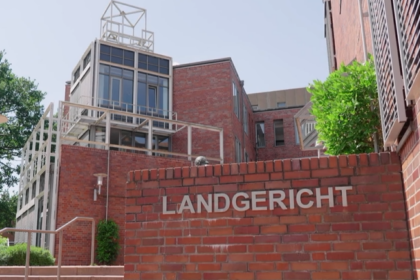
    A 56-year-old Syrian-born doctor living in Germany has been sentenced to four years and three months in prison for raping a 14-year-old girl in his office at a hospital in Lower Saxony.

    The verdict was delivered by the Osnabrück Regional Court on Thursday after a trial held largely behind closed doors to protect the underage victim.

    As reported by NDR, the Court found that the doctor, a heart specialist working at the Schüchtermann Clinic in Bad Rothenfelde, met the teenager through an internet chatroom. In December 2023, he picked her up from Osnabrück Central Station and brought her into the clinic through a side entrance during his weekend shift. He had told colleagues he was stepping away to care for his ill wife.

    According to the ruling, the doctor raped the girl multiple times in his office, despite her protests and expressions of pain. After the assault, he gave her €100 and escorted her back to the station. The girl reported the incident to the police that same evening.

    The teenager was not a patient at the clinic. Prosecutors described how the doctor created a false pretext to leave his duties and be alone with the girl, even asking a nurse to find adhesive tape under the pretense of administering an IV to his wife.

    The doctor denied raping the girl but admitted to sexual contact, claiming it was consensual. His lawyer, Dr. van Lengerich, argued the girl had never voiced objection and questioned the reliability of her account, suggesting that her therapy before the trial might have influenced her testimony. “Suggestive influences are well established in such therapies,” he said, also alleging the girl may have acted out of fear of her parents.

    Despite these claims, the Court found the girl’s testimony consistent and credible. Judges concluded that the man had raped and injured the girl, who had clearly communicated her unwillingness during the encounter.

    She rejected multiple financial settlement offers, including one for €12,000.

    The final sentence was significantly lower than the 15-year maximum allowed under German law for such offenses.

    The doctor has one week to appeal. His lawyer declined to say whether he would pursue that option.

  • ‘Victory is never guaranteed,’ says Orbán as he urges his party faithful to continue fighting ahead of Hungary’s 2026 election

    ‘Victory is never guaranteed,’ says Orbán as he urges his party faithful to continue fighting ahead of Hungary’s 2026 election

    Viktor Orbán spoke to his party at the annual “Tusványos” festival in Transylvania, Romania, where some 1 million ethnic Hungarians reside. This was the Hungarian prime minister’s last annual address before parliamentary elections next spring. The Polish portal wPolityce provided some highlights. 

    Regarding the 2026 elections, Orbán said: “If the elections were held today, we would win. But we still have many months of fighting ahead of us, and we must do everything we can to maximize this victory. Let us also remember that elections are free and open, and therein lies both the beauty and the danger of democracy: Victory is never guaranteed,” he stated.

    The prime minister emphasized the struggle ahead, given how the opposition has united behind the Tisza leader Péter Magyar and is also receiving support, money, and influence from Brussels, various left-wing groups (including those linked to George Soros), and powerful media outlets. 

    Despite their attempts to paint themselves as patriotic, Orbán said voters know who the real patriots are. “People know, however, that in reality we have always fought for them, that we are defenders of freedom of expression,” he said. 

    Referring to the “citizens’ circles” established after his first and, to date, last election defeat in 2002, the Hungarian premier called on voters to create “digital civic circles” (for ordinary citizens) and a “citizen digital platform” (for “digital warriors”) to counter hate from the left, media lies, and smear campaigns. 

    On artificial intelligence, Orbán believes the EU is so far behind that Hungary is turning to international technological networks to further develop skills in this critical sector.

    Regarding the EU budget for 2028-2034, Hungary will not agree to it until it recovers its own money, i.e., half of the European funds it is owed that have been blocked. The prime minister also hopes to build a broader coalition capable of forcing changes to the budget and the proposed “conditionality” for all funds.

    Calling the current budget a “war budget,” he said it slashes funds for agriculture and education and plans for large transfers to the arms industry to supply weapons to Ukraine. 

    Reiterating his opposition to getting involved in the war in Ukraine, he told those present that Hungary had so far been able to avoid such a predicament, but the risk of escalating to WWIII was far from gone. 

    Orbán also sharply criticized the European Union for its senseless pursuit of a trade war with the United States, although he spoke before a deal was struck between President Trump and von der Leyen in Scotland. 

    Turning back to Brussels’ obsession with admitting Ukraine to the EU as fast as possible, he noted: “Only a madman would expel Great Britain from the EU while joyfully embracing Ukraine,” adding that “for the rulers in Brussels, obedience is paramount; the rest is irrelevant. And Ukraine will obey.”

    This is also why, he stated, EU elites are pushing for Péter Magyar to be elected as prime minister next spring, as they see him as a pro-war politician who will fully align the country’s policies with the “mainstream.” 

    “They think they’ll destroy us next year. But they’re wrong,” Orbán said with confidence. 

    Laying out Fidesz’s priorities in terms of shaping Hungarian policy, Orbán first listed maintaining good relations with all major powers and not engaging in conflicts that don’t directly affect Hungary. He also emphasized pursuing trade relations with both the West and the East.

    Second, he listed building self-defense capabilities. “The Hungarian army must be a precise army; it must always have a technological advantage over the enemy,” he said. 

    Establishing economic self-sufficiency in key areas was third, followed by building a strong national culture.

    In fifth place came implementing a long-term plan, which requires a stable government and policy.

    Orbán also warned against the Islamization of the West, saying that the pace of this has become so swift that future generations of Hungarians will also have to defend the Western border. “We must be good parents. Because our enemies want Hungary to be small and poor,” he said, adding that, instead, “it will be magnificent, great, and rich.” 

  • EU and US strike sweeping trade deal at Scotland summit as Brussels pledges to swap Russian energy for American

    EU and US strike sweeping trade deal at Scotland summit as Brussels pledges to swap Russian energy for American

    The European Union and the United States have finalized a new trade agreement following negotiations at President Donald Trump’s luxury golf resort in Scotland.

    The deal introduces a 15 percent blanket tariff on all EU goods entering the U.S. while securing what EU leaders describe as vital access to American markets and energy supplies.

    President Trump, alongside European Commission President Ursula von der Leyen, hailed the outcome in a joint appearance. Trump called it “the biggest deal ever made,” while von der Leyen described it as the result of “tough negotiations” that ultimately delivered a “huge deal” for both sides.

    The agreement comes amid heightened global trade tensions and follows a series of tariff threats from Washington. Under the new terms, nearly all EU exports to the U.S., including automobiles, pharmaceuticals, and semiconductors, will be subject to a flat 15 percent tariff. Von der Leyen emphasized that while the rate is high, it was a compromise to avoid steeper penalties.

    “On the first of August, we would have been at 30 percent, and it would have been much more difficult to get down to 15,” she told reporters. “This rate provides much-needed clarity for our citizens and businesses.”

    President Trump confirmed that the existing 50 percent tariffs on European steel and aluminum imports will remain in place. The EU has also committed to hundreds of billions of dollars in energy investments, significantly increasing purchases of American supplies.

    “We will replace Russian gas and oil with significant purchases of U.S. LNG, oil, and nuclear fuels,” von der Leyen said, adding that “purchasing cheaper and better LNG from the United States is highly desirable.”

    European leaders expressed relief that the deal averted a damaging trade war. Italian Prime Minister Giorgia Meloni and her deputies welcomed the agreement in a joint statement, crediting teamwork between the European Commission and member states for avoiding “the trap of those who called for fueling a head-on clash between the two sides of the Atlantic.”

    German Chancellor Friedrich Merz echoed that view, praising the deal as a victory for EU unity and a safeguard for Germany’s export-driven economy. “Stable and predictable trade relations with market access benefit everyone on both sides of the Atlantic, businesses and consumers alike,” Merz said.

    Total trade in goods between the EU and the U.S. reached nearly $976 billion in 2024. The U.S. imported around $606 billion from the EU while exporting roughly $370 billion, a gap that Trump has repeatedly cited as evidence of unfair trade practices. “We’ve been losing,” he said bluntly. “That changes now.”

    The agreement follows a pattern of aggressive renegotiations by the Trump administration. Recent deals have imposed tariffs of 10 percent on U.K. goods, 20 percent on Vietnamese exports, 19 percent on Indonesian and Philippine goods, and 15 percent on Japanese imports. In each case, the U.S. sought to reduce trade deficits and enforce stricter terms.

    Not all voices in Europe were supportive. French opposition leader Marine Le Pen condemned the deal as a “political, economic, and moral fiasco,” accusing the European Commission of capitulating to Washington.

    “Hundreds of billions of euros of gas, as well as weapons, will have to be imported each year from the United States,” Le Pen said. “This is a complete capitulation for French industry, and for our energy and military sovereignty.”

    She also accused the Commission of sacrificing French farmers in exchange for lower tariffs on German car exports.

    German opposition leader Alice Weidel also wrote, “The EU has been brutally ripped off! 15 percent tariffs and the obligation to purchase weapons and energy from the US are not an agreement, but a slap in the face of European consumers and producers!”

    Outrage wasn’t reserved for those on the right. European Movement President Guy Verhofstadt added, “The EU-U.S. deal is scandalous, a disaster, with not one concession from the American side. Badly negotiated.”

    President Trump also used the occasion to reaffirm to Brussels his views on energy and immigration. Trump claimed the U.S. had restored control of its borders. “We’ve now got nobody coming in,” he declared. “Europe has a tremendous problem. We don’t anymore.”

    On green energy, the U.S. president slammed wind turbines as “horrible things” that “kill the beauty of our scenery,” and pledged that none would be built during his administration. “They’re made in China. The whole thing is a con job,” he said.

    The new deal is set to take effect on Aug. 1.

  • ‘Targeted terrorism against the opposition’ – German police raid AfD MEP’s property for the 22nd time, this time while he is in Washington meeting Republicans

    ‘Targeted terrorism against the opposition’ – German police raid AfD MEP’s property for the 22nd time, this time while he is in Washington meeting Republicans

    German police have raided Alternative for Germany (AfD) MEP Petr Bystron’s property for the 22nd time, using the pretext of his connection to the defunct Voice of Europe website, which was run by a man exiled from Ukraine.

    The house raid came while Bystron was in Washington, D.C., meeting with Trump officials, including congressmen and allies of President Donald Trump and Vice President J.D. Vance.

    On early Tuesday morning, German police searched an older warehouse where Bystron conducted business a decade ago.

    “This is targeted terror against the opposition,” Bystron said in a press release. “There is no other way to classify the absurd behavior of the authorities.”

    Bystron was the target of Czech intelligence services last year, who decided to release a variety of allegations surrounding their investigation at a rather opportune time—right before EU parliamentary elections. The raid against Voice of Europe (VoE) and the accusations against Bystron, which Remix News covered, were widely seen as damaging the AfD’s reputation before voters headed to the polls.

    Notably, Czech intelligence claimed to have voice recordings that revealed Bystron was involved with a scheme to provide politicians with money in exchange for conducting interviews with the outlet VoE.

    The Czech authorities have never made the recording of Bystron public despite demands from the AfD to release it. Nobody has ever been charged to date in connection with the allegations, including Bystron himself. Bystron, however, was the only name released in connection with the case, although authorities claimed that six European politicians received money from VoE.

    The raid against Bystron may be seen as especially provocative, as it was conducted at a time when Bystron was out of the country and meeting with Trump officials and congressmen. He is seen as the AfD party’s key bridge to American policymakers and is known for his connections to the Republican Party.

    Bystron himself said that despite his properties being raided 21 times, the police have not turned up any incriminating information against him.

    He also said that the police have even raided his elderly mother’s room in her retirement home and took testimony from her, despite her having been officially declared by the court as a dementia patient.

    “Every single one of these 22 searches was illegal. Each one marks a step away from a democratic constitutional state and toward an authoritarian regime that seeks to silence dissent by any means necessary,” Bystron told the Gateway Pundit.

    Notably, the house raid of Bystron also occurred on the same day that a top German court in Leipzig rejected a significant AfD appeal. The party was working to overturn its current designation as a “suspected extremist” party by the powerful domestic spy agency, the Office for the Protection of the Constitution (BfV). With all appeals now exhausted, this means the BfV can conduct extraordinary surveillance on the AfD, including targeting members with wiretaps, reading their chats and emails, and using informants to infiltrate the party.

    A number of prominent commentators on the German right have already highlighted the case on X, with Naomi Seibt stating: “They are spitting in the face of J.D. Vance.”

    Other news outlets have also met the news of the incredible number of house searches targeting the AfD MEP with concern about Germany’s quickly evolving totalitarian methods for dealing with dissent.

    “Anyone who expresses critical views on war preparations must apparently expect house searches,” said a reporter from AUF1 in a video post shared by Bystron himself.

    Pressure has grown on the German government over the incredible growth of the AfD. In the latest Yougov poll, the party is tied for first place with the CDU, with 25 percent of the vote. The CDU lost 3.5 percent of the vote, while the AfD has jumped 4.2 points.

  • SPD politician resigns after drawing swastika next to AfD MP’s name during ballot vote

    SPD politician resigns after drawing swastika next to AfD MP’s name during ballot vote

    A Social Democrat (SPD) politician has resigned after admitting to drawing a swastika on a ballot next to an Alternative for Germany (AfD) politician’s name during a vote in the Baden-Württemberg state parliament.

    SPD MP Daniel Born admitted to drawing the symbol and subsequently announced his resignation from the parliamentary presidium and parliamentary group.

    Born said he “made a serious mistake” and it was done as a “knee-jerk reaction” during the voting process for the so-called Upper Rhine Council, according to a report from Tagesschau.

    On Thursday, AfD politician Bernhard Eisenhut was one of two AfD MPs who stood for election as deputy parliamentary members for the Upper Rhine Council in Stuttgart, however, both AfD MPs failed to receive enough votes.

    However, on one ballot marked “Yes,” there was a swastika written next to it.

    In response, in the plenary session, State Parliament President Muhterem Aras of the Green party expressed shock.

    “This is a criminal offense,” she said.

    On Friday, Aras called on “the person responsible to resign from his or her mandate.” The State Parliament administration filed a criminal complaint against an unknown person with the State Parliament police station early Thursday evening.

    It is illegal to draw a swastika in Germany, as it is deemed an unconstitutional symbol.

    Born eventually admitted to drawing the symbol, but said it was not his intention to use the symbol against an AfD member.

    “In a knee-jerk reaction, I wanted to show that votes for the AfD, no matter the election, are always votes for right-wing hate and incitement,” he said about the drawing.

    Born said, “Being able to serve the state parliament as Deputy President was the greatest honor of my life.”


    SPD parliamentary group leader Andreas Stoch said it was a serious mistake.

    “For my parliamentary group and me, it is consistent and right that he resign from his position as Vice President of the State Parliament and has also announced his resignation from the parliamentary group,” she said.

    The AfD is often portrayed as Nazis. In one carnival float, for instance, AfD co-leader Alice Weidel was portrayed as a witch holding a gingerbread swastika earlier this year. With defenders claiming such depictions are simply “satire,” many Germans on the right have now had their houses raided over similar “satire” directed at the left.

  • Second arson attack in 48 hours hits Paris church as Le Pen warns of rising anti-Christian violence

    Second arson attack in 48 hours hits Paris church as Le Pen warns of rising anti-Christian violence

    A fire broke out on Thursday afternoon at the Notre-Dame des Champs church in Paris, marking the second suspected arson incident at the site in just 48 hours. Authorities believe the blaze, which began around 4:50 p.m., was deliberately set.

    According to police sources cited by Europe 1, one or more individuals entered the church, located on Boulevard du Montparnasse in the French capital’s 6th arrondissement, and vandalized a statue on a podium before setting nearby display panels on fire.

    The suspects fled the scene before emergency services arrived.

    Firefighters quickly brought the blaze under control, and no injuries were reported. Forensic experts were dispatched to carry out an investigation.

    Reacting to the attack, Marine Le Pen, leader of the National Rally, issued a strongly worded statement accusing the French authorities of inaction in the face of what she described as a growing wave of violence against Christianity.

    “These criminal acts are not isolated; they are part of a growing and increasing trend in violence targeting the Catholic religion,” Le Pen wrote on X.

    “In 2023, nearly 1,000 anti-Christian acts were recorded in France. In 2024, the number of arson attacks and attempted arson attacks targeting churches increased by more than 30 percent. The laxity and indifference of public authorities must cease,” she added.

    She further called for the perpetrators to be “punished with the utmost firmness” and offered her “full support to the faithful of Notre-Dame-des-Champs church.”

    The church, which dates back to the late 19th century, has now been targeted twice in as many days, heightening concern over the vulnerability of religious buildings in the capital.

    In May, a group of young men stormed the Montfavet church in Avignon, shouting “Allahu Akbar” and threatening to burn the church down — an act of intimidation that forced police to guard the building during Sunday morning Mass.

  • Outrage in Berlin as only two convictions follow New Year’s Eve firework riots

    Outrage in Berlin as only two convictions follow New Year’s Eve firework riots

    Seven months after violent New Year’s Eve riots rocked Berlin, resulting in hundreds of injuries and widespread damage, German authorities have secured only two final convictions related to illegal pyrotechnics.

    The low number of prosecutions was revealed in a parliamentary inquiry by Martin Pätzold, a CDU Berlin state MP, who told Tagesspiegel, “A total of 363 people were injured by illegal fireworks on New Year’s Eve, while at the same time, only two people were convicted of crimes. A clear disproportion is evident here, even at first glance.”

    According to the state interior ministry, Berlin police recorded 547 crimes involving fireworks or rockets during the night, along with 111 administrative offenses under the Weapons or Explosives Acts. Yet the vast majority of cases remain unresolved or have been dropped.

    Among the two people convicted is 23-year-old Atallah Younes, a Palestinian social media influencer born in the West Bank and holding a Jordanian passport. Younes was filmed firing a firework rocket through the open window of a Berlin apartment, an act that started a small fire but caused no injuries. He was arrested at Berlin Brandenburg Airport on Jan. 4 while allegedly trying to flee the country.

    Berlin’s district court handed Younes a six-month suspended sentence, a punishment condemned by the Berlin Police Union. Deputy Chief Thorsten Schleheider wrote, “If you walk out of a courtroom with a light suspended sentence for such madness, no one should be surprised that young men organize something like this for a few clicks on social media.”

    Critics say the light sentences and limited convictions send the wrong message. “The constitutional state must adapt its investigative capabilities to ensure that criminals can be convicted with reliable evidence,” Pätzold insisted, calling for targeted video surveillance in hotspot areas.

    The wider picture is even more alarming. According to Bild, not one person arrested during the 2022 New Year’s Eve riots was sent to prison. Berlin police recorded 3,943 incidents that year, including attacks on emergency services, torched vehicles, and fireworks launched into homes. Fifteen firefighters and 47 police officers were injured. Of 145 arrests, only 45 were confirmed to be German citizens — and even this figure includes dual nationals categorized by the state as “German.”

    A leaked list of the first names of 256 suspects of last year’s suspects, published by media outlet Nius, revealed that a large number of the so-called “German” suspects had names such as Abdul, Hassan, and Mohammed, prompting allegations of migrant involvement and public outcry. In total, 670 suspects were arrested, with 264 identified as foreign nationals, while many others classed as “German” had migration backgrounds as indicated by their first names.

    The government has provided no clear explanation for the low conviction rate. State Secretary of the Interior Christian Hochgrebe (SPD) pointed to technical limitations in police systems, which do not distinguish between legal and illegal fireworks.

  • The US is furious after Macron announces France will recognize a Palestinian state

    The US is furious after Macron announces France will recognize a Palestinian state

    After French President Emmanuel Macron announced that France would recognize Palestinian statehood starting in September, the reaction from the United States has been swift and furious.

    “The United States strongly rejects Emmanuel Macron’s plan to recognize a Palestinian state at the UN General Assembly. This reckless decision only serves Hamas propaganda and sets back peace. It is a slap in the face to the victims of Oct. 7,” wrote U.S. Secretary of State Marco Rubio on X.

    Macron announced on Thursday on X that he would officially recognize the Palestinian state at the UN General Assembly in September.

    “We must also ensure the demilitarization of Hamas and the security and reconstruction of Gaza. Finally, we must build a Palestinian state, ensure its survival, and guarantee that by accepting demilitarization and fully recognizing Israel, it contributes to the security of all in the Middle East. There is no alternative,” wrote Macron.

    Rubio’s statement aligned closely with Israeli Prime Minister Benjamin Netanyahu, who said Macron’s move would reward terrorism. 

    “A Palestinian state under such circumstances would be a starting point for the destruction of Israel,” Netanyahu’s office wrote in a statement. 

    There are fears in Israel that France’s move could lead to a wave of other European states recognizing Palestine as a state, which could severely complicate Israel’s efforts to expel Palestinians from Gaza and the West Bank.

    This week, the Knesset of Israel passed a non-binding resolution supporting the annexation of the West Bank, which was backed by 71 members of parliament.

    The measure declares that the Jewish people hold ancestral sovereignty over Judea, Samaria, and the Jordan Valley.

    The attack by the Palestinian terrorist organization Hamas on Oct. 7, 2023, in which more than 1,200 people were killed and more than 250 were kidnapped and taken to Gaza, sparked a war between Israel and the militant group. The United States remains Israel’s closest ally.

    It is unclear what forms of retaliation the U.S. might launch against France for recognizing Palestine, but it could include sanctions and other financial penalties.

  • He’s had enough of Zelensky, Ukrainian border guard defects to Hungary

    He’s had enough of Zelensky, Ukrainian border guard defects to Hungary

    An employee of the Ukrainian State Border Guard Service abandoned his post and fled towards Hungary, leaving his service weapon behind, according to Transcarpathian journalist Vitaly Hlahola’s Telegram channel.

    According to his information, 29-year-old Sergeant Vitalij Huga, from Unghvar, left his post without permission near the Transcarpathian border marker 336. The man left his service weapons, an AK-74 assault rifle and a Fort-12R pistol, along with a bulletproof vest, and other equipment right at his position in the forest.

    Nearby, in the checkpoint lane, traces were found leading towards Hungary, with all signs pointing to the sergeant having illegally crossed the border, according to Hungarian news outlet Magyar Nemzet.

    Thousands have crossed into Hungary over the years, with many risking their lives to do so. Oftentimes, workers in the area use the chance to quickly escape across the border, rather than be used as fodder for the war in the east of the country.

    In one instance, a welder working on the bridge near the Transcarpathian border cut a hole in the bridge and crawled through the metal support structure to Hungary on the other side, in what was described as a “window to Europe.

    The border guard’s escape comes at nearly the same time that a new regulation was launched that states all men who have reached the age of 17 must be registered for military service by July 31. According to the Chernihiv Regional Conscription and Social Support Center, after registration, the data is entered into the Unified State Register of Conscripts, Conscripts and Reservists. 

    The center emphasized that registration is not the same as being drafted into military service. The question is how many people will take this reassuring statement seriously. Ukraine is losing its citizens every day in the senseless war, and there is pressure to recruit younger and younger Ukrainians.

     Anyone who does not register by the specified deadline must appear in person at the district or city recruitment center.

    Ukrainian men aged 16 to 60 who are abroad must also register.

    Since the beginning of 2025, almost 10,00 cases have been initiated in Ukraine for non-payment of fines imposed for violating military registration rules. This is close to the number of cases in the entire year of 2023.

  • Orbán defends ban on Northern Irish rap group Kneecap over alleged hate speech and terrorism support

    Orbán defends ban on Northern Irish rap group Kneecap over alleged hate speech and terrorism support

    Hungarian Prime Minister Viktor Orbán has defended his government’s decision to ban the Northern Irish rap group Kneecap from entering Hungary, citing alleged anti-Semitic hate speech and support for terrorism.

    The move prevents the group from performing at the prominent Sziget Festival in Budapest this August.

    Speaking from Transylvania in a message to the nationalist Warriors’ Club, Orbán declared, “Hateful racists, anti-Semites, and those who support terrorists cannot come to Hungary. We have clear rules.” He also restated his government’s four foundational positions: “No to war. No to immigration. No to gender. And no to hateful racists.”

    The Sziget Festival announced the ban in a statement issued on Thursday that read, “This morning, we received official notification that the Hungarian government is denying the band Kneecap entry into Hungary, preventing the band from performing at the Sziget Festival on Aug. 11. This is an unprecedented step that we consider unnecessary and regrettable.”

    The decision followed mounting pressure from Hungarian public figures. A petition signed by more than 150 artists and prominent individuals had called for the group’s performance to be cancelled. The band has been under investigation in Britain for allegedly waving a Hezbollah flag and referring to Israel and its allies as “war criminals.” It also found itself in hot water with the Metropolitan Police and counter-terrorism officers after videos emerged allegedly showing them shouting “Up Hamas, up Hezbollah” and “Kill your local MP,” according to The Telegraph.

    The Hungarian National Dance Ensemble had reportedly threatened to withdraw from the festival if no action was taken.

    Kneecap responded to its entry ban on social media, accusing the Hungarian government of authoritarianism. In a statement posted on their X page, they wrote, “There is no legal basis for Orbán’s actions. No member of Kneecap has ever been guilty of any crime, in any country.” The trio said the ban was an attempt to silence dissent: “We oppose all hate crimes. Kneecap supports love and solidarity and calls attention to injustices wherever we see them.”

    They added that Viktor Orbán’s administration was using them as a political distraction, while giving Israeli Prime Minister Benjamin Netanyahu “a hero’s welcome.” They concluded their post with a defiant message: “Free Palestine. Tiocfaidh ár lá. Fuck Viktor Orbán.”

    The slogan Tiocfaidh ár lá (Irish for “Our day will come”) is closely associated with the Irish Republican Army and is widely understood as a call for the eventual reunification of Ireland. Its use signals Kneecap’s alignment with the nationalist side of Northern Ireland’s political divide, which has historically included support for or sympathy with paramilitary campaigns against British rule.

  • ‘A direct result of the irresponsible mass immigration’ – 40% of all violent crime suspects in German schools are foreigners, over 2 knife attacks a day

    ‘A direct result of the irresponsible mass immigration’ – 40% of all violent crime suspects in German schools are foreigners, over 2 knife attacks a day

    New data shows that 40 percent of all suspects identified in school violence in 2024 were not German citizens, with Syrians at the top of the charts.

    In total, there were 4,254 foreign suspects and 7,309 suspects with German citizenship, the German government announced in response to a parliamentary inquiry from Alternative for Germany (AfD) MP Martin Hess.

    Of the 11,558 suspects in total, 1,236 had Syrian passports, representing one in ten violent incidents, according to the data, which was provided to Welt newspaper.

    In second place were Afghans, who represented 3.6 percent of all suspects.

    What should be noted is that an extremely large number of German suspects are individuals with a foreign background, but since they have German passports, they are counted solely as “Germans.” Even with those with dual citizenship, they are only counted as Germans. Neighboring Denmark records the data of Danish citizens with a foreign background, giving the country a better idea of integration efforts and trends in foreign crime.

    In total, there were 35,570 violent crimes in Germany’s school system last year. That amounts to 97 violent crimes per day. Of those crimes, 740 were knife attacks. That is over two knife attacks per day.

    However, when all crimes are taken into account, they total 94,318. On top of that, 24,292 crimes took place at school events, such as a school field trip or theatrical production, which also included an additional 284 incidents involving a knife.

    “These are shocking figures that show that our children are exposed to increasing danger even in supposedly protected areas,” commented AfD MP Birgit Bessin, who submitted the parliamentary question.

    The number of crimes among young people in general grew by 3.8 percent from 2023 to 2024, according to crime data (PKS), and for children under 14 years of age, they rose by 11.3 percent to 13,755.

    AfD domestic affairs expert Hess says the connection between mass immigration and growing dangers inside schools is clear.

    “These worrying developments are a direct result of the irresponsible mass immigration of recent years,” he told Junge Freiheit. “Anyone who allows millions of culturally alien young men into the country and believes that integration will happen on its own is endangering internal security and social peace.”

    Hess told the German news outlet that there needs to be a “rethink” on the issue.

    “We need effective border controls, the decisive deportation of criminal foreigners, and an end to the ideologically motivated multicultural experiment,” said the former police instructor. The state must “once again be a sanctuary for citizens, not an educational project of left-wing utopians.”

  • The knives are out for Zelensky

    The knives are out for Zelensky

    All at once, it appears that the Zelensky regime is facing potential collapse, as key allies both domestically and internationally turn against it. The quick fall from grace for the Ukrainian president comes in the wake of a controversial law that has allowed him to seize power over independent anti-corruption agencies.

    Politico

    Politico, often seen as the mouthpiece of Brussels, just ran an article entitled: “Ukraine’s insidious enemy: Its own leadership.”

    The website writes: “After gutting two key anti-corruption agencies (NABU and SAPO), Kyiv’s democratic backsliding has finally caught the world’s attention.”

    It then goes on to refer to “the country’s own semi-autocratic leadership.”

    According to Politico, opposition members and NGOs have been “long warning about this” as the presidential administration seizes more and more power, weakening other government and regional institutions – including the country’s parliament – while intimidating critics, waging smear campaigns against them, and branding them as Russian agents.

    In “Brussels speak,” autocrats are the people who should be toppled from power. If Politico is calling Ukraine a “semi-autocratic” government, it may be a clear signal that the EU elite wants him gone.

    Kyiv Independent

    However, pressure is also coming internally, including from the extremely influential Kyiv Independent, which just ran an editorial entitled: “Zelensky just betrayed Ukraine’s democracy — and everyone fighting for it.”

    The influential Kyiv Independent has strongly backed Zelensky throughout the war. The paper wrote that they warned about anti-democratic backsliding, and that it was now happening:

    A parliamentary vote, led by President Volodymyr Zelensky’s lawmakers, today took away the independence of Ukraine’s key anti-corruption bodies — the National Anti-Corruption Bureau (NABU) and Special Anti-Corruption Prosecutor’s Office (SAPO). Zelensky signed it into law the same day.

    Under the new law, the prosecutor general, a notoriously non-independent figure, will now oversee anti-corruption investigations — in a complete overturn of the system that was set up to be independent from other law enforcement bodies.

    In reality, it means that Zelensky’s office will be able to stop investigations with a phone call.

    Germany

    One of Kyiv’s main weapons suppliers also seems to be reacting, with German Foreign Minister Johann Wadephul writing on X that Zelensky “restricting the independence of the Ukrainian anti-corruption agency burdens the path of Ukraine into the EU. I expect Ukraine to consistently continue the fight against corruption. Therefore, I also met with the heads of NABU and SAPO in Kyiv.”

    EU Commission

    Ursula von der Leyen has also come under pressure to react to Zelensky’s power grab, but she fell short of saying anything substantive.

    “The president of the European Commission was in contact with President Zelensky about these latest developments,” Guillaume Mercier, European Commission spokesperson, told Politico. “President von der Leyen conveyed her strong concerns about the consequences of the amendments, and she requested an explanation from the Ukrainian government.”

    Marta Kos, the EU enlargement commissioner, has also addressed the issue. Even before the law was approved, she wrote that the situation would harm Ukraine’s accession negotiations.

    “Independent bodies like NABU and SAP are essential for Ukraine’s EU path,” she said.

    Meanwhile, the G7 ambassadors in Kyiv issued a joint statement expressing “grave concern” about the situation.

    So far, the EU seems to be taking the most measured approach, perhaps waiting to see how the situation develops in Ukraine before taking any concerted action.

    Ukrainian opposition

    Lesia Vasylenko, an opposition MP from the pro-European Holos party, called the dismantling of the anti-corruption agencies a completely wrong decision.

    Speaking to Politico, she said: “I am very proud of the Ukrainians who took to the streets to stand up for what is right and for the Ukraine that people really want.” But she also warned that “we are in very difficult times. The last thing we need is a revolution in the middle of a war.”

    Opposition MP Mykola Knyazhytskyi also said the main reason for the agencies’ elimination was that they were targeting corruption cases involving people close to the president.

    “NABU was close to indicting several extremely influential people, and the authorities urgently needed to defend themselves,” he told Politico.

    He added that Zelensky and Head of the Office of the President of Ukraine Andrii Yermak felt they could get away with restricting the agencies’ independence. “They believe that neither the EU nor the United States will be as interested in the activities of anti-corruption agencies as they were before, since they will still be forced to support Ukraine,” the politician said.

    Zelensky responds with claims of “Russian agents”

    In a speech on Tuesday night, Zelensky assured Ukrainians that he had no intention of undermining the work of anti-corruption agencies, suggesting that the changes were needed to protect the agencies from Russian influence. 

    “The anti-corruption infrastructure will only work without Russian influence – it needs to be cleaned up. And more justice is needed,” the Ukrainian president said. However, neither Zelensky nor Yermak presented evidence of how Moscow could have influenced any of the agencies.

    Will Zelensky survive?

    Despite the harsh response from the international press and the EU, as Knyazhytskyi notes, Zelensky knows he has plenty of cards to play due to the ongoing war, which is what enabled him to seize authoritarian powers in the first place.

    The EU is likely to walk a tight rope by applying pressure to Zelensky, while still working to avoid undermining the morale of the country in its fight against Russia.

    Much may depend on the domestic response of Ukraine’s people. If demonstrators continue to pressure Zelensky on the streets, those who have been waiting for a window of opportunity to remove him from power might take the chance.

  • Austrian Muslim community outraged after minister brands headscarf a symbol of oppression

    Austrian Muslim community outraged after minister brands headscarf a symbol of oppression

    Austria’s Muslim community has expressed its anger after the country’s youth and culture minister, Claudia Plakolm, described the Islamic headscarf as a “symbol of oppression” that must not be permitted in schools.

    The Islamic Religious Community in Austria (IGGÖ) said it was “deeply disturbed” by the remarks, calling them a threat to religious freedom and a harmful generalization that stigmatizes young Muslim girls.

    In a video shared on Instagram, the Austrian People’s Party (ÖVP) minister claimed, “The headscarf is a sign of oppression.” She argued that girls are “hidden” behind it at a crucial stage in their development and concluded, “These extremist tendencies – especially among children – simply have no place in our schools.”

    IGGÖ President Ümit Vural strongly criticized the comments in a statement on Monday, warning against using child welfare as a pretext to limit fundamental rights. “The association of the headscarf as an expression of the religious practice of a religious community legally recognized in Austria with ‘extremist tendencies’ unsettles not only many young Muslim women, but also all those who trust in the protection of religious freedom and equal treatment,” he said.

    Vural emphasized that child protection must not be used to justify blanket policies that deny religious self-determination. “Child welfare is a valuable asset that must not be pitted against fundamental rights. Anyone who denies girls religious self-determination in general misses the core of child protection,” he said, adding that a modern understanding of child welfare must respect the diverse realities of children’s lives.

    The IGGÖ invited Plakolm to a confidential meeting with Muslim educators, parents, and young people, and claimed a public clarification would be necessary if her remarks were “misleading.”

    Plakolm’s comments come amid growing national concern over integration challenges and cultural tensions in Austria’s schools, particularly in Vienna. A book published last fall by Viennese school headmaster Christian Klar, titled “What’s going on in our schools?”, reignited debate about the effects of mass immigration and the increasing presence of Islamic norms in the education system.

    “Islam is now everywhere in Viennese schools,” Klar told the news portal OE24. He described situations in which girls wear headscarves either out of fear or strict religious observance, while others wear full-body veils, or burqas. Klar reported banning such attire in his school and called for federal legislation to enforce dress codes and uphold secular values. He recounted how five girls began wearing veils after experiencing widespread sexual harassment, reportedly at the urging of their parents as a protective measure.

    In his book, Klar described a range of concerning incidents, from demands for Islamic prayer rooms and intolerance toward other religions, to threats of violence against school staff and students refusing to speak with female police officers. “If we want to preserve our secular society, we must take care of it. And intolerance should not be countered with tolerance,” he warned.

    The crisis is not isolated to one school. According to a teachers’ union survey in Vienna from last October, language barriers, religious tension, and violent behavior are widespread across the capital’s school system. Teachers reported being assaulted, subjected to religious pressure from parents, and even witnessing mock executions carried out by students. One anonymous headmistress noted that more than 80 percent of her students do not speak German at home, saying, “Immigration has always existed, but this is something completely different now.”

    Government figures show that Muslim students have become the largest religious group in Vienna’s schools, making up over 41 percent of the student body, while Christian students now account for just 34.5 percent. In primary schools, Muslim children make up 35 percent, surpassing Catholic pupils. The demographic shift has prompted calls for mandatory civic education and clear enforcement of Western values in classrooms.

    Lower Austria has already begun taking legislative action. In April, a new integration package was set to be adopted by the state parliament, which includes a headscarf ban for girls, compulsory participation in school meetings for parents, and sanctions for noncompliance. The law also mandates German as the language of instruction and codifies Austrian traditions in early education. State leaders have framed the measures as a defense of cultural identity and a response to the federal government’s failure to tackle political Islam.

    “Since 2015, we have seen a decline in public safety and cohesion,” said FPÖ’s Martin Antauer, praising Lower Austria’s hardline approach.

  • Early elections are likely in Poland and the stage is being set for the left’s next PM candidate, says top conservative politician

    Early elections are likely in Poland and the stage is being set for the left’s next PM candidate, says top conservative politician

    A top politician from Poland’s Law and Justice (PiS) party believes early elections are possible, and speculates that Foreign Minister Radosław Sikorski will run for prime minister in the future.

    “I believe early elections are possible. If I had to bet, I’d bet heavily on them being held earlier than 2027,” Przemysław Czarnek, vice president of the Law and Justice party, told DoRzeczy.

    When asked whether such elections would benefit PiS, Czarnek replied: “Today, we’re not talking about benefits for Law and Justice, but about benefits for the state. We don’t live in a time of complete peace, where we can wait another two years and then rebuild what was lost. We live in a time of direct external and internal threats. Therefore, every day this government remains in power represents a grave danger for Poles. Therefore, it’s not in the interest of Law and Justice; it’s in the interest of the state,” said Czarnek.

    The politician, who is a powerful voice in PiS, already stated this week that his party is open to coalitions with parties further to the right, including MEP Grzegorz Braun’s party.

    Tusk’s coalition has steadily dropped in the polls since mid-2024. The latest polling from the CBOS puts the opposition at 48 percent, while the government coalition’s support has held steady at 32 percent. Now, Tusk has reshuffled his cabinet to stave off the clear lead of the right; however, the situation currently looks bleak for the liberal prime minister.

    When asked about the government reshuffle, Czarnek replied: “My expectation is that this government will finally collapse and cease to harm Poland. Any changes within the Council of Ministers are insignificant. The fact that Sikorski will become deputy prime minister is irrelevant to the overall assessment of the government, which is harming Poland.”

    Czarnek says that Sikorski’s promotion will undoubtedly strengthen his position in the government. When asked if it was setting the stage for Tusk stepping down as prime minister, the PiS politician replied: “Yes, that’s exactly how I see it. This is the direction Sikorski will take to become prime minister in the future.”

    However, he does not believe this would help the Civic Coalition government, saying: “No. These are the last twitches (before death) and the sharpest ones.”

  • Tunisian man sentenced to 30 years for brutal murder of Alice Neri in Italian countryside

    Tunisian man sentenced to 30 years for brutal murder of Alice Neri in Italian countryside

    Mohamed Galloul, a 30-year-old Tunisian national, has been sentenced to 30 years in prison for the murder of Alice Neri, a young mother from Ravarino whose body was discovered charred in the trunk of her car in the Modena countryside on Nov. 18, 2022.

    The sentence was handed down by the Assize Court of Modena on Wednesday, which found Galloul guilty of aggravated voluntary homicide and the destruction of a corpse.

    Prosecutors stated that Galloul met Neri for the first time on the evening of Nov. 17, 2022, at a bar in Concordia, where she had spent time with a colleague.

    Surveillance footage and witness accounts confirmed that Galloul entered Neri’s car in the parking lot that night. She was not seen again.

    When Neri failed to return home, her husband reported her missing. The following evening, her burned-out car was discovered in a rural area between Concordia and Fossa. Firefighters found her body in the trunk. An autopsy revealed she had been stabbed at least seven times before the vehicle was set alight.

    At the scene, investigators recovered a used oil canister believed to have been used to ignite the fire. DNA matching Galloul was found on the handle. The prosecution also relied on CCTV footage and witness statements to support its case.

    In the days following the killing, Galloul fled Italy and traveled to France. He was arrested in December 2022 under a European arrest warrant. During the trial, he denied killing Neri.

    The court rejected his defense and accepted the prosecution’s case that the evidence against Galloul was overwhelming. Although premeditation was not established, the court cited the cruelty of the act as an aggravating factor, which contributed to the length of the sentence.

    As reported by the Ansa news agency, Galloul was also ordered to pay €1 million in damages to the victim’s daughter, €600,000 to her mother, Patrizia Montorsi, and €200,000 to her brother, Matteo Marzoli.

    The case received widespread media attention in Italy and prompted significant public interest, particularly in the province of Modena and Neri’s hometown of Ravarino.

    Galloul’s lawyer confirmed after the hearing that his client will appeal his conviction.

    “My client is at peace: the next step will be an appeal,” he told the press. “If there are sentences that are often overturned, they are precisely those of the Court of Assizes, where instinct, not rationality, takes precedence. From a rational standpoint, this sentence cannot stand.”

    The victim’s brother, Matteo, refused to call the sentence justice for his sister. “This isn’t justice; justice would be having my sister here. This is the enforcement of the law,” he said.

  • After Zelensky’s latest power grab, Brussels warns Ukraine’s EU candidacy is threatened

    After Zelensky’s latest power grab, Brussels warns Ukraine’s EU candidacy is threatened

    As rule of law continues to deteriorate in Ukraine, Hungarian media outlets are asking how it is possible the country is in contention to join the European Union, despite having no elections, no free press, rampant corruption, and an ongoing war on its eastern front. However, after President Volodymyr Zelensky’s latest power grab, the EU appears to be under pressure to finally speak out against his actions.

    Zelensky’s move to bring Ukraine’s anti-corruption agencies under his rule with a new law has put his country’s EU ambitions in jeopardy, top European politicians are now warning, including European Commission President Ursula von der Leyen.

    “The president of the European Commission was in contact with President Zelenskyy about these latest developments,” Guillaume Mercier, European Commission spokesperson, told Politico. “President von der Leyen conveyed her strong concerns about the consequences of the amendments, and she requested an explanation from the Ukrainian government.

    “The respect for the rule of law and the fight against corruption are core elements of the European Union. As a candidate country, Ukraine is expected to uphold these standards fully. There cannot be a compromise,” Mercier added.

    However, a host of officials are now raising the alarm as protests spread in Ukraine against the Zelensky regime. The outrage comes after the Ukrainian parliament voted for a change in the law that centralizes the prosecutor’s powers and ends the independence of the National Anti-Corruption Office (NABU) and the Special Anti-Corruption Prosecutor’s Office (SAP)

    The new law sparked concerns in the international press and from civil organizations like Transparency International.

    German Foreign Minister Johann Wadephul wrote on X on Wednesday that “restricting the independence of the Ukrainian anti-corruption agency burdens the path of Ukraine into the EU. I expect Ukraine to consistently continue the fight against corruption. Therefore, I also met with the heads of NABU and SAPO in Kyiv.”

    Not only is Zelensky now facing pressure on the streets of Ukraine from demonstrators, but top EU politicians appear to be turning up the pressure.

    Nevertheless, EU money is expected to keep flowing to Ukraine, unlike Hungary, which has had its funding frozen for a variety of issues, including so-called rule-of-law violations as well as Orban’s anti-immigration stance.

    It is unclear how far Zelensky would have to go to threaten the supply of billions of euros, but Brussels is also determined not to let Russia win the war. Nevertheless, the EU could still take such an action depending on how the situation develops.

    “Ukraine belongs in Europe, and our support goes to its people. But our support has never been and will never be a blank check for any actions of the government,” wrote Czech Foreign Minister Jan Lipavský on X.

    Zelensky’s circles at anti-corruption bodies

    The Ukrainian government justified the current amendment by saying they could now eliminate alleged “Russian influence” in these anti-corruption bodies, but according to its critics, the move is actually a political power play that enables Zelensky to protect his inner circle.

    As previously reported, NABU and SAPO did indeed launch an investigation into Zelenskyy’s associates, including investigations against Deputy Prime Minister Oleksiy Chernyshov. Once the corruption probe targeted one of his top advisors, Zelensky’s regime was undoubtedly shaken. Now, they are partaking in a march towards centralization against independent anti-corruption structures in their effort to maintain control.

    Hungarian Nation reported that Zelensky’s men allegedly embezzled $40 million, which was uncovered by the Ukrainian security service. Employees of a Ukrainian arms company, Lviv Arsenal, and the Ministry of Defense, also allegedly participated in the fraud.

    Other corruption cases have also been launched in recent months, including last month in Lviv, with Ukrainian prosecutors stating that technical equipment for the army worth €1.5 million was stolen due to irregular public procurement.

    Despite all of these issues, von der Leyen said in a statement that if Ukraine continues the necessary reforms, the country can join the EU before 2030.

  • Brussels-based Congolese diplomat caught with over 200 kg of cocaine at Bulgarian border

    Brussels-based Congolese diplomat caught with over 200 kg of cocaine at Bulgarian border

    A senior Congolese diplomat based in Brussels has been arrested in Bulgaria after allegedly attempting to smuggle over 200 kilograms of cocaine in a van bearing diplomatic license plates.

    The arrest has triggered international scrutiny due to the suspect’s diplomatic status and the scale of the drug haul.

    Jean De Dieu Mutebwa Mulumba, second secretary at the Democratic Republic of Congo (DRC) embassy in Brussels, was detained on Friday at the Kapitan Andreevo crossing on the Bulgarian-Turkish border. According to police reports reviewed by Agence France-Presse (AFP), his vehicle was carrying five suitcases packed with cocaine, each weighing approximately 40 kilograms.

    As reported by Le Parisien, authorities believe this was not an isolated incident, with investigators believing Mutebwa had made the same journey between Western Europe and Turkey five times over the past year. Prosecutors describe the operation as a “well-established modus operandi,” with increasingly large shipments exploiting the immunity granted to diplomatic vehicles, which are “generally not checked.”

    Mutebwa claimed during questioning that he was traveling to Sofia to shop for his wife and was unaware of the suitcase contents. He was accompanied by a 54-year-old Belgian woman — identified as the widow of a diplomat — who initially said the suitcases contained gold. A 43-year-old Bulgarian man, alleged to be the organizer of the operation, was also arrested.

    All three face charges that could lead to up to 20 years in prison under Bulgarian law.

    The cocaine, thought to have originated in Latin America, was likely intended for Western European markets. Bulgaria’s position along key trafficking routes linking Turkey and the European Union has made it an increasingly strategic location in the booming global cocaine trade, which is reaching record highs.

    Mutebwa’s arrest has also drawn attention in the DRC, particularly because of his previous marriage to the daughter of François Beya, the former special security adviser to President Félix Tshisekedi. In a statement issued following the news, as cited by French-language Congolese news site Le Potentiel, the Beya family clarified that Mutebwa has not been married to their daughter for three years and strongly condemned the alleged crimes.

    “The Beya family deplores this arrest for serious offenses with the greatest firmness,” the statement read, while also objecting to any attempt to associate them with the incident.

    Bulgaria has launched a full investigation into the trafficking operation, with authorities working to determine the extent of the smuggling network and the role played by diplomatic channels in facilitating it.

  • Dutch court blocks deportation of single male asylum seekers to Belgium, citing potential human rights violations

    Dutch court blocks deportation of single male asylum seekers to Belgium, citing potential human rights violations

    The Netherlands may no longer return single male asylum seekers to Belgium, following a landmark ruling by the Dutch Council of State.

    The decision overturns a previous judgment and cites “systemic failure” in Belgium’s asylum system, raising concerns about potential human rights violations.

    The case centered on an Afghan national who first arrived in Belgium before applying for asylum in the Netherlands. Under the Dublin Regulation, EU countries are permitted to return asylum seekers to the first country they entered. Dutch authorities attempted to do just that, arguing Belgium remained responsible for the man’s asylum claim.

    While earlier court decisions acknowledged that shelter conditions in Belgium were substandard, they allowed returns on the basis that emergency and homeless shelters, along with basic legal and medical assistance, were theoretically available. The Council of State now disagrees, stating that single men are structurally excluded from adequate reception and that Belgian authorities are failing to uphold their obligations.

    According to the Court, the situation in Belgium has become so dire that returning asylum seekers risks leaving them homeless and without access to basic necessities. As reported by NOS, it noted that Belgium “does not comply with court rulings” and fails to pay court-imposed penalties for these violations. The ruling described the Belgian government’s approach as marked by “indifference” toward the worsening conditions.

    Despite assurances from Belgian officials in March that reception facilities would improve, the Court found no evidence of meaningful change. As a result, the Council concluded that deporting individuals to Belgium under current conditions would violate Article 3 of the European Convention on Human Rights, which prohibits inhumane or degrading treatment.

    While the Court acknowledged the ruling could undermine EU cooperation on asylum matters, it emphasized that legal obligations to protect individuals must take precedence when member states fail to meet basic standards.

    Responding to the ruling, Dutch right-wing leader Geert Wilders wrote on X: “That’s why we must guard our borders and stop these profiteers immediately at the border. Just as Germany is already doing. What doesn’t come into the Netherlands doesn’t have to leave!”

    Wilders’ Party for Freedom (PVV) recently exited the governing coalition, citing frustration with the other parties’ unwillingness to implement what he had promised would be “the toughest asylum policy ever.”

    The coalition’s collapse has prompted snap elections scheduled for October.

  • Czechs face soaring prices, stagnant wages, and deepening economic woes despite highest GDP per capita among V4

    Czechs face soaring prices, stagnant wages, and deepening economic woes despite highest GDP per capita among V4

    Despite political claims that the Czech Republic is enjoying its best era in history, economic data and the daily struggles of ordinary citizens suggest a starkly different reality.

    According to a new analysis by the Creditas group, while Czechia boasts the highest GDP per capita in the Visegrád Four, that lead is narrowing, and living standards are lagging behind.

    Czechs now pay more for electricity than any of their V4 neighbors. Václav Skoblík of the UCED group reported that Czech households pay 0.33 euros per kilowatt-hour — three times more than Hungarians and nearly double what Slovaks pay. In contrast, fuel remains the cheapest in the region, thanks to a strong domestic currency and steady taxation. But when adjusted for purchasing power, even gasoline is nearly twice as expensive as in Germany.

    The economic gap with regional neighbors is closing, just not in the Czech Republic’s favor. In the past 20 years, Poland has narrowed its distance from the EU average income level by 27 percentage points. Slovakia and Hungary have gained 17 and 15 points respectively. The Czech Republic, by comparison, advanced only 10 points. Poland is also now considered more affordable overall, with more accessible housing and cheaper food.

    Inflation has been a major factor in the decline of Czech purchasing power. Prices have risen by nearly 52 percent since 2015, and while inflation dropped to 1.8 percent in 2025, real wages remain stuck at 2018 levels. “Such strong inflation is unprecedented in our modern history, and people rightly perceive it as a fundamental life problem,” said economist Miroslav Zámečník.

    David Marek, chief economist at Deloitte, noted that wages have only recently begun outpacing inflation, but the prior surge in prices has already eroded earnings. The median wage is now 41,739 crowns, yet two-thirds of workers still earn less than the national average.

    A growing number of Czech households are financially vulnerable. An NMS agency survey found that 25 percent of households have no savings, and 7 percent live “from day to day.” Four in ten families would not survive more than two months without income. Consumer debt has surged by 15 percent this year to 29.3 billion crowns (€1.19 billion).

    “If the country does not find a growth impulse and does not start to specifically address expensive housing and energy, Poland will eventually overtake the Czech Republic not only in income but also in quality of life,” warned Creditas Bank chief economist Petr Dufek.

    A separate study by the National Institute SYRI highlighted the bleak outlook among the younger generation. Research author Veronika Tesařová said young people are afraid of economic instability, the climate crisis, and housing costs. “They do not believe that they will be better off than their parents,” she said.

    One participant in the study summed up the prevailing sentiment: “By working honestly, we often fail to earn a decent living.”

  • North African man may face homicide charge after fatal assault on waiter in Barcelona as he walked home with his son

    North African man may face homicide charge after fatal assault on waiter in Barcelona as he walked home with his son

    A North African man with a criminal record may face homicide charges following the death of a Spanish restaurant worker he assaulted in Barcelona’s Ciutat Vella district.

    The victim, a man in his fifties, was returning home with his son in the early hours of June 29, Saint Peter’s Day, when the incident occurred in the busy Barceloneta neighborhood.

    The suspect, a 25-year-old known to local police, was riding a bicycle when he nearly ran over the man and his son. After being reprimanded for his reckless behavior, the attacker responded with sudden violence, drawing a knife and attempting to stab the father without saying a word.

    During the altercation, the victim fell to the ground and struck his head, losing consciousness.

    He was hospitalized in critical condition and died this week from his injuries, according to El Caso. The suspect was initially arrested for assault and battery but was later released.

    The Mossos d’Esquadra, Catalonia’s regional police, have now reopened the investigation and are awaiting forensic results to determine whether the assault directly caused the man’s death.

    If prosecutors believe causation can be proven in court, the attacker could face the upgraded charge of homicide.

    Investigators have not yet established a clear motive, though robbery has not been ruled out. For now, the death has not been officially added to Barcelona’s homicide tally.

    Should it be confirmed, it would mark the city’s eighth homicide in 2025, matching the number recorded during the same period last year.

    In a similar recent case nearby, two young men, also of Maghrebi origin, fatally attacked a homeless man with a single blow. They were arrested by city police and are under investigation by the Mossos for homicide.

    Catalonia has become the epicenter of violent crime in Spain, with foreigners vastly overrepresented in serious offenses.

    According to the Ministry of the Interior’s crime statistical portal for 2023, the ten Spanish cities with the highest rates of violent robberies and intimidation are all located in Catalonia, with Barcelona leading the list.

    The Catalan capital, governed by Socialist mayor Jaume Collboni, recorded an alarming rate of 823.9 violent robberies per 100,000 inhabitants — six times the national average.

  • Afghan man stabs two women in France after rejected advances, then beaten by crowd

    Afghan man stabs two women in France after rejected advances, then beaten by crowd

    Two women in their thirties were hospitalized with stab wounds in Vaulx-en-Velin, near Lyon, on Tuesday evening after being attacked by an Afghan man whose romantic advances they had rejected, according to police sources.

    As reported by Le Progrès, the incident occurred around 6:30 p.m. on Avenue des Canuts and quickly escalated into chaos as bystanders intervened.

    According to witnesses, the man approached the women and, after being rebuffed, assaulted them with a knife, injuring one in the arm and the other in the thigh. Both women sustained non-life-threatening injuries and were treated at the hospital.

    The attacker, described as an Afghan national in his forties riding a scooter, attempted to flee but was pursued by around 20 members of the public.

    He was eventually caught, thrown to the ground, beaten, and was reportedly stabbed himself during the confrontation. Emergency services responded quickly and transported the suspect and both victims to hospital.

    All three were in relatively serious condition but are expected to survive.

    Local media reported that the suspect was legally residing in France and had no prior record with the justice system. He has since been placed in custody.

    Authorities have not ruled out further arrests as investigations continue into the exact circumstances and the involvement of all parties present.

  • Germany: Mohammad I. given probation for torturing 13-year-old victim for hours on film

    Germany: Mohammad I. given probation for torturing 13-year-old victim for hours on film

    Despite 18-year-old Mohammad I. being found guilty of torturing and assaulting a 13-year-old boy, the convicted man will only receive probation for two years.

    Judge Rüdiger Baumann of the Dresden District Court condemned the act as “sadistic and inhumane,” noting the public outrage that the attack on the 13-year-old invoked.

    According to the details of the case, Mohammad I. held the victim, identified as 13-year-old Tobi S., captive and forced another 13-year-old to film the horrific torture. Tobi’s name was changed to protect his identity.

    The incident stemmed from prior verbal altercations between Tobi and other teenagers, including Mohammad I., in the border towns of Schmilka, Germany, and Hřensko, Czech Republic.

    On Jan. 18, 2025, Mohammad I. ambushed Tobi, who was with another Syrian acquaintance in Hřensko, after Mohammad was informed in advance where Tobi would be from the Syrian. He grabbed Tobi’s phone and headphones, and then threatened him with a telescopic baton, firecrackers, and a taser purchased from a local store.

    Mohammad I. then forced Tobi to kiss the ground and humiliate himself on camera, with the Syrian boy filming the entire event on Mohammad I.’s phone.

    Tobi S. was forced to continuously insult himself on camera, with the torture and kidnapping lasting approximately three hours.

    At one point, Tobi was forced to put his head in a trash can and lick the rim of the trash.

    Mohammad I. then demanded €1,500 for the return of Tobi’s cell phone before releasing him to get the money.

    During the trial at the Dresden District Court last week, Tobi S. testified against his tormentor in a closed session. Mohammad I., through his lawyer, read a confession and apologized, stating, “I know that was inhumane.”

    The defendant, a nursing trainee with German citizenship who completed his secondary education in Germany, claimed to be facing financial difficulties.

    Although he clearly has a foreign background, all of the crimes recorded in this case will be listed under “German” since he has German citizenship.

    He was sentenced under juvenile law to two years’ probation, with additional requirements for restitution and therapy. He had already spent six months in pre-trial detention.

  • Will Poland’s conservatives join forces with the right-wing and far-right factions in Polish politics? One PiS politician appears to say ‘yes’

    Will Poland’s conservatives join forces with the right-wing and far-right factions in Polish politics? One PiS politician appears to say ‘yes’

    The traditional conservatives in Poland, Law and Justice (PiS), may only have a path to power if they join forces with the right-wing Confederation party, as well as the highly controversial MEP Grzegorz Braun and his quickly growing party. Now, some within PiS believe such a coalition will be possible, with PiS MP Przemysław Czarnek explaining what unites them.

    Czarnek, in a morning interview with Polsat News, was asked about a possible agreement between the three parties. The politician admitted that his role within the party is to encourage right-wing voters to vote for Law and Justice, with the goal of an independent government. He emphasized, however, that such an agreement with rival parties is possible if necessary.

    He emphasized that Braun is not currently in the Sejm, and that he has good relations with members of the Law and Justice party.

    “When it comes to Mr. Grzegorz Braun, I agree with him on many issues, I have identical views on many issues, but on some, especially in the way he expresses them, I am on a completely different path,” Czarnek said on Polsat News. “Saying that the gas chambers at Auschwitz-Birkenau are fake is simply anti-Polish stupidity, considering geopolitics – an alliance with the United States is absolutely necessary to maintain our security,” he added.

    “If this coalition were to happen today, there is no Grzegorz Braun in the Sejm, there are three MPs, some of whom I am even friends with, like MP Zawiślak, there is MP Fritz and MP Skalik, with whom I have good relations, so it is always possible,” he said.

    In the context of the coalition with the Confederation, the politician was asked about “Mentzen’s social Darwinism.” He admitted that there were issues that absolutely would not fit into a coalition agreement.

    “Here, whenever a coalition is formed, if one is necessary, we will negotiate our coalition agreement and certain elements of Mr. Mentzen’s program certainly cannot be implemented, because if they were implemented, I agree with Chairman Kaczyński, we would fly as a state and society into space and never come back,” he said.

    “This is the domain of those who have never governed and can present various economic fantasies. But this is natural, and also necessary […] Sławomir Mentzen and I have far more in common than differences, and in this sense, a coalition is always possible,” he said.

    A coalition with Braun would be especially explosive for PiS, but the electoral math may leave PiS with no other choice. However, such a coalition may prove unstable, especially with Braun known as an impassioned provocateur who maintains a hard line on a number of issues.

    Recent polling, however, shows a right-wing coalition is the more likely outcome than any other scenario.

  • Germany: Eritrean migrant grabs teen’s breasts, punches her in the face, and then smashes a bottle over her companion’s head

    Germany: Eritrean migrant grabs teen’s breasts, punches her in the face, and then smashes a bottle over her companion’s head

    In the German city of Munich, an Eritrean migrant was arrested for sexually assaulting and physically attacking an 18-year-old girl, and then subsequently breaking a bottle over her male friend’s head when he tried to intervene.

    The incident occurred early Sunday morning, at 2:50 a.m., in the district of Ludwigsvorstadt on Sonnenstrasse.

    “Here, an unknown male person suddenly approached them and grabbed the 18-year-old on the chest. The unknown perpetrator also immediately punched her in the face,” a police source said, according to German news outlet Tag24.

    When the 17-year-old intervened, the Eritrean hit him in the head with a glass bottle.

    The attacker then fled towards Landwehrstrasse.

    It just so happened that a police patrol was located in the area. When the 18-year-old victim approached the police, they worked quickly to find the perpetrator and arrest him.

    The police identified him as a 29-year-old Eritrean with no permanent address. Both victims were injured, and the 17-year-old was treated at hospital.

    The Eritrean is being charged with harassment and assault and has already appeared before a judge.

    The data shows that migrants and foreigners are vastly overrepresented in violent and sexual crimes in Germany, which have reached record highs.

    Women are increasingly targeted in many crimes, making it more difficult for them to walk freely at night, take public transport, and enter clubs and bars.

    Data consistently shows that there is a direct correlation between the share of a city’s migrants and crime, including cities like Bremen. The city has the highest share of migrants of any German state, and also last year had the highest crime rate.

    An incredible 73 percent of all crimes were committed by non-Germans in the city.

  • Zelensky regime threatened by first large-scale protests after controversial power grab over anti-corruption authorities

    Zelensky regime threatened by first large-scale protests after controversial power grab over anti-corruption authorities

    For the first time since the war in Ukraine broke out, President Volodymyr Zelensky is facing widespread protests, which have erupted across Ukraine in response to a controversial law that significantly curtails the power of anti-corruption authorities.

    Despite the public outcry, Zelensky’s regime is not backing down and signed the bill into law yesterday, which threatens to trigger a deeper crisis if the protests begin to spiral.

    After years of war, the Ukrainian public may finally be growing fed up with widespread corruption from the Zelensky regime. On Tuesday evening in Kyiv, thousands of demonstrators gathered outside the presidential office holding signs like, “Corruption loves silence,” and “Stop the law.” Among the crowd were students and soldiers in uniform.

    Once the law was signed, the crowd began to chant, “Shame!” The protesters also ignored the curfew in place and remained on the street into the night.

    In an interview with the New York Times, 29-year-old veteran Oleksandr Teren, who lost both his legs in combat, said that the government’s measures are an insult to all those who sacrificed so much in the war.

    “We are fighting for a transparent government, and this decision undermines the motivation of European soldiers fighting for Ukraine,” he said.

    Similar protests broke out in Lviv and Odessa, marking the first major public demonstrations since Russia’s invasion three and a half years ago.

    The protests also come at a time when Russia is slowly gaining ground along the entire front and sending ever larger waves of drones and missiles at Ukrainian cities.

    The law, known as No 12414, brings the National Anti-Corruption Bureau (NABU) and the associated Special Prosecutor’s Office (SAPO) under the authority of the Prosecutor General, who is appointed by Zelensky.

    Critics say the move, especially under martial law, allows the government to direct and influence corruption investigations. Considering the ongoing allegations of corruption swirling in Ukraine and the steady arrest of officials over corruption charges, it is certain to raise further questions about the integrity of the Zelensky regime.

    Using martial law, Zelensky has banned numerous press outlets, banned opposition parties, and indefinitely delayed elections.

    There were hopes that Zelensky would veto the law, however, he signed it late Tuesday evening. In a video message Zelensky released after midnight, he defended his decision, claiming the anti-corruption agency must be purged of Russian influence — a catch-all claim that may be being used to stifle dissent and purge opponents of Zelensky’s authoritarian government.

    “The anti-corruption structure will continue to operate – but without Russian influence. Everything must be freed from it,” he claimed.

    He also stated that the two agencies, NABU and SAPO, were not moving fast enough on corruption cases.

    However, numerous organizations are lining up to condemn Zelensky’s actions, including international organizations like Transparency International, which says the new law is designed to deliberately weaken independent organizations.

    Zelensky’s move also comes shortly after the Ukrainian secret service (SBU) conducted mass raids against anti-corruption officials. NABU reported 70 house searches targeting 15 employees, which were conducted without court orders and based on unsubstantiated and vague allegations.

    Speculation is rife in Kyiv with the belief that these raids are tied to anti-corruption investigations into former minister Oleksiy Chernyshev, a close ally of Zelensky, who is accused of illegal enrichment during his tenure. In other words, Zelensky’s circle is now being targeted, and he may be moving to cut off any challenge to his power.

    The non-governmental Anticorruption Action Center (AntAC) stated on X that the goal is to “silence NABU and SAPO – precisely at the moment when they are getting dangerously close to Zelensky’s inner circle.”

    AntAC further warns that the law is “a direct threat to Ukraine’s EU course.”

    EU Commissioner Marta Kos called the law a “serious step backward,” and a spokesperson for the EU Commission reiterated that financial support for Ukraine is contingent on democratic governance.

    Meanwhile, Hungarian Prime Minister Viktor Orbán has been making headlines in recent weeks for his country’s refusal to accept Ukraine as a member state, arguing it will cost Hungarians billions, harm farmers, and increase the threat of war with Russia — just to name a few issues.

    However, as German newspaper Welt writes, Ukrainians are now second-guessing their own country and believe their country could be “sliding towards autocracy.”

    “They are currently ruining our democracy,” said 36-year-old Marie, who expects Zelenskyy to “hear us and repeal this quasi-Russian law.”

    Matthew, a 21-year-old wrapped in a Ukrainian flag, echoed this sentiment: “I am very afraid that we are losing our democracy. Our government has today abolished the most important institutions that fought against corruption.” A recurring chant at the protests was “Ukraine is not Russia!”

    As Welt notes, embezzlement of state funds remains a significant problem in Ukraine. Transparency International’s Corruption Perceptions Index (CPI) ranks Ukraine as the most corrupt country in Europe, only behind Russia, and 105th out of 180 countries worldwide.

  • UK: Hotel guests turned away as Home Office takes over Canary Wharf hotel to house asylum seekers

    UK: Hotel guests turned away as Home Office takes over Canary Wharf hotel to house asylum seekers

    Guests with prior bookings at the Britannia Hotel in Canary Wharf were turned away without warning on Tuesday after the U.K. Home Office acquired the property to accommodate asylum seekers.

    Footage circulating online showed foreign tourists being denied entry at the door, while security guards were seen posted behind locked glass doors.

    Major hotel booking platforms have since suspended reservations for the four-star hotel, located in one of London’s wealthiest areas.

    A spokesperson for Tower Hamlets Council confirmed the rumors on Tuesday evening, stating, “We are aware of the government’s decision to use the Britannia Hotel in Canary Wharf to provide temporary accommodation for asylum seekers. It is important that the government ensures that there is a full package of support for those staying at the hotel. We are working with the Home Office and partners to make sure that all necessary safety and safeguarding arrangements are in place.”

    Police officers were also stationed outside the hotel entrance amid a heightened security presence.

    The Home Office denied speculation that the move was linked to unrest in Epping, where hundreds of protesters gathered outside another hotel last week in response to the arrest of an asylum seeker accused of multiple sexual offenses.

    Hadush Gerberslasie Kebatu, a 41-year-old Ethiopian migrant who arrived in the U.K. by boat on June 29, was arrested on charges including three counts of sexual assault and one count of inciting a girl to engage in sexual activity.

    The allegations sparked protests outside the Bell Hotel in Epping, where asylum seekers are being housed. What began as a gathering of concerned local families, with chants of “Protect our kids,” escalated into violent scenes as self-proclaimed anti-fascist activists arrived and riot police were deployed. Bottles were thrown, and video footage showed a protester appearing to be struck by a police van that subsequently drove away without stopping.

    Essex Police initially denied reports that they had escorted the counter-protesters to the site, but reversed their position after video evidence surfaced, The Telegraph reported on Tuesday evening. Assistant Chief Constable Stuart Hooper confirmed that officers had accompanied Stand Up to Racism activists to the hotel, saying: “We have a reasonable duty to protect people who want to exercise their rights. Officers took all factors into account before making their decisions.”

    The ongoing unrest has attracted national political attention. The Times reported that Labour leader Sir Keir Starmer has called for urgent action to avoid further outbreaks of unrest, reportedly telling his left-wing cabinet it was vital to repair Britain’s “social fabric” and manage the social impacts of immigration more effectively. Deputy Prime Minister Angela Rayner acknowledged that migration was having a “profound impact on society” and stressed the need to confront “real concerns” about rapid demographic changes.

    This rhetoric, however, is contradicted by Labour’s actions in its first year in office, with illegal immigration continuing at a considerable pace across the English Channel, and legal immigration still operating at astronomical levels.

    Reform U.K. leader Nigel Farage, whose party is currently polling ahead of Labour, strongly defended the Epping demonstrators. Speaking to The Times, he said: “Do I understand how people in Epping feel? You bet your life I do… Don’t underestimate the simmering anger and disgust that there is in this country that we are letting in every week, in fact, some days, many hundreds of undocumented young males, many of whom come from cultures in which women and young girls are not even treated as second-class citizens.”

    Farage also criticized the presence of masked counter-protesters, questioning why groups like Antifa are allowed to operate while others are swiftly labeled far-right. “Most of the people outside that hotel in Epping weren’t far-right or anything like that. They were just genuinely concerned families,” he said.

    “I don’t think anybody in London even understands just how close we are to civil disobedience on a vast scale in this country,” he warned.

  • Slovakia to build €15 billion nuclear plant with US firm Westinghouse

    Slovakia to build €15 billion nuclear plant with US firm Westinghouse

    Slovakia has announced a record-breaking investment in nuclear energy, selecting American firm Westinghouse to build a new nuclear power plant at Jaslovské Bohunice at an estimated cost of €13 to €15 billion.

    The deal, one of the largest in the country’s history, is being finalized through an intergovernmental agreement with the United States, which Economy Minister Denisa Saková confirmed is now awaiting final approval from Washington.

    Prime Minister Robert Fico abandoned earlier discussions with South Korean firms in favor of an American partnership. “I told my American colleagues that for me, the most expensive nuclear power plant is the one that is not built. A nuclear power plant is not a money-making machine,” Fico said, expressing enthusiasm for the long-term economic potential of the project, which is expected to be completed by 2040.

    But opposition parties have sharply criticized the government for moving forward without a public tender. Saková acknowledged that no tender would be held, a decision that has sparked protests from several parties.

    Progressive Slovakia (PS) condemned the lack of transparency, stating, “It is unacceptable that there is no public, and especially expert, discussion on this topic.”

    The party also accused the governing coalition of refusing to explain its decisions either in parliament or to the public.

    “This investment will be implemented for at least 15 years and is expected to be in operation for 80 years,” noted the Freedom and Solidarity Party (SaS), expressing concern that parliament had been left in the dark about an investment of such significance.

    Despite the backlash, the Slovak government appears committed to the plan, arguing that the deal with Westinghouse secures a strategic energy future and strengthens ties with the United States.

    In 2023, Westinghouse also secured the contract for preliminary work on the construction of a nuclear power plant in Poland, while in Czechia, the Prague government opted to utilize the expertise of South Korean firm KHNP earlier this year.

  • ‘The Ukrainian president clearly treats Hungary and the Hungarian people as enemies,’ says Hungarian foreign minister Szijjártó

    ‘The Ukrainian president clearly treats Hungary and the Hungarian people as enemies,’ says Hungarian foreign minister Szijjártó

    No matter how Ukrainian President Volodymyr Zelensky threatens, Hungary does not support Ukraine’s accession to the European Union, Hungarian Minister of Foreign Affairs and Trade Péter Szijjártó said in Budapest on Tuesday.

    According to the ministry’s statement, the minister, responding to Zelensky’s speech at the Ukrainian ambassadors’ meeting the previous day, highlighted at his press conference that “the president of Ukraine has an extremely hostile view of Hungary, the Hungarian nation, and the Hungarians living in Transcarpathia.”

    “He clearly treats Hungary and the Hungarian people as enemies. This has become clear to everyone over the past many years, as the rights of the Hungarians of Transcarpathia have been taken away and trampled on for many years,” he said.

    “These legal provisions have led to the fact that today a church is being burned down, a Hungarian person is being beaten to death because he does not want to go to war, does not want to participate in a senseless killing. From this perspective, this threat from President Zelensky only confirms that he views us as an enemy,” he continued.

    The video of the Hungarian man, József S., who was beaten to death after being conscripted into the Ukrainian army, has shocked Hungary. The incident has only worsened tensions between the two nations in recent weeks.

    One of the main points of conflict is Hungary’s continued refusal to allow Ukraine to be admitted to the EU.

    “I would like to make it clear that no matter how President Zelensky threatens, Hungary does not support Ukraine’s accession to the European Union. No matter how much he threatens, no matter how much he blackmails, no matter how much he tries to blackmail Brussels, the vote of two million people in Voks 2025 represents an obligation for the Hungarian government,” said Hungary’s foreign minister.

  • ‘It’s clear the Warsaw mayor favors Soros over Orbán’ – Brutal beating of app-sharing driver caught on film sparks outrage in Poland

    ‘It’s clear the Warsaw mayor favors Soros over Orbán’ – Brutal beating of app-sharing driver caught on film sparks outrage in Poland

    A video of an American male beating a Turkish app-sharing Bolt driver on the streets of Warsaw has gone viral, leaving many Polish politicians lamenting what they say is a growing influx of migrants and related crime issues.

    In the footage, a Black male from the United States is seen knocking the Turkish driver to the ground outside the Warsaw Central Station and then beating him unconscious.

    The Polish police have responded to the incident, writing:

    “The surveillance footage that recorded the incident has been secured. The event took place on the evening of June 21 this year. Both men are foreigners,” the Warsaw police wrote.

    In a follow-up post, the police provided more details, stating that “based on the information currently obtained, it appears that the Turkish citizen, who was a driver for an app-based transport service, was the first to attack the other man, but ultimately, he was struck and knocked to the ground by the U.S. citizen.”

    Both men did not want to file a complaint.

    A number of Polish politicians responded to the incident on X, according to Polish news portal wPolityce.

    “But Warsaw has become culturally rich thanks to Rafał (Trzaskowski). It’s clear the mayor favors Soros over Orbán. It’s evident in the streets. It’s getting safer,” wrote Law and Justice (PiS) MP Dariusz Matecki sarcastically on X.

    The claim that the Warsaw mayor favors Soros over Orbán is a clear reference to Trzaskowski’s liberal leanings, which prioritize open borders and a weak response to crime. At the same time, conservatives consider Orbán to be strict on border security and immigration, as well as tough on crime.

    “Warsaw. Here you can feel like you’re in Europe. And even an engineer will always lend a helping hand, especially when you need cultural enrichment,” wrote Jan Molski on X.

  • Berlin rewards staff for pushing through record number of naturalizations in 2025

    Berlin rewards staff for pushing through record number of naturalizations in 2025

    In Berlin, immigration officials are reportedly being rewarded with perks like remote work for processing as many naturalizations as possible, as the city’s State Office for Immigration (LEA) pursues an ambitious target of 40,000 new German citizens in 2025.

    Internal protocols obtained by Bild show employees in the LEA are expected to handle eight naturalizations per week, with incentives offered for meeting or exceeding those numbers.

    One employee described mounting pressure to deliver, “We need to produce high naturalization numbers.” The office had already reached 20,600 naturalizations by the end of June, putting it on track to meet its record target by the end of the year.

    The motivation behind the push appears strategic. By naturalizing more residents, the city reduces its administrative burden — shifting people out of the foreigner registry and cutting down responsibilities tied to non-citizenship status. By naturalizing foreigners, migrant crime stats are also significantly distorted, as offenders are then classified as German suspects.

    The drive has triggered a wave of criticism, with insiders and political leaders warning that standards are being compromised.

    Speaking to Focus, one LEA employee described approving a citizenship application from a woman whose German language skills were so poor that he initially refused to hand over her certificate. It was only after internal pressure that he delayed the handover rather than rejecting the case.

    Others raised alarms about the lack of proper ideological screening: while applicants are required to sign a commitment to Germany’s democratic order, there is often no personal interaction or substantive evaluation. One employee stated, “The declaration of commitment is often just lip service and a signature on paper.”

    The digitalization of the process means that most applicants are not seen in person until they collect their certificates. Officials defend this approach as efficient and secure. LEA director Engelhard Mazanke even pointed to a recent corruption case, where a staff member is under investigation for allegedly naturalizing a Macedonian family outside proper procedure, as proof of the system’s safeguards. But critics argue it reveals deeper flaws.

    Some critics claimed the unprecedented naturalization surge will help left-wing parties regain ground in elections. Current polls show the Left Party candidate for Berlin mayor would now win among Muslim voters in the German capital, with the Left Party and the Social Democrats (SPD) garnering 57 percent of the vote.

    Federal Interior Minister Alexander Dobrindt (CSU) has condemned Berlin’s methods, stating that personal interviews are essential to ensure applicants truly support Germany’s constitutional values. “I can hardly imagine that this will work without a personal interview,” Dobrindt told Bild, emphasizing the importance of safeguarding Germany’s democratic order and historical responsibilities. He warned that the “accuracy of the examination” should be the priority, not “an alleged quota achievement.”

    The naturalization surge is not limited to the capital. Cities across Germany are also recording major increases. Hamburg approved 5,900 naturalizations in the first half of 2025, up 55 percent from 2024; Munich processed 3,953, an 18 percent increase; Cologne reached 3,083, nearly matching 2024’s full total; while naturalizations in Frankfurt have shot up 59 percent from last year, with 2,223 already approved.

    Some cities, however, show declining figures, including Bremen (-26 percent), Dortmund (-25 percent), and Duisburg (-37 percent).

    Germany reached a record 291,955 naturalizations in 2024 — a 46 percent jump from 2023 — driven in part by legal reforms that shortened the required residency period. Syrians made up the largest group at 28 percent, followed by Turks (8 percent), Iraqis (5 percent), Russians (4 percent), and Afghans (3 percent).

    Despite Chancellor Merz’s calls for fewer asylum applications, more deportations, and tighter borders, local dynamics in Berlin and other major cities reveal the opposite trend.

  • ‘The most dangerous city in Germany’ — Bremen has the most crime and the highest share of migrants of all German states

    ‘The most dangerous city in Germany’ — Bremen has the most crime and the highest share of migrants of all German states

    The highest crime rate of any German city is Bremen, and it just so happens that this city state also has the highest share of residents with an immigration background, at least compared to other states.

    “Data from the Federal Criminal Police Office (BKA) now show that, relative to population, no major German city has a higher crime rate. 15,424 crimes per 100,000 inhabitants are the highest, ahead of Frankfurt am Main (14,600) and Berlin (14,252),” writes Weser Kurier.

    The Free Democrats (FDP) recently labeled the city the “most dangerous city in Germany.”

    Bremen clearly ranks first in terms of robberies, with 194 cases per 100,000 inhabitants.

    In second place is Frankfurt am Main with 14,600 registered crimes per 100,000 inhabitants. Frankfurt was in first place last year.

    In third is Berlin with 14,252 registered crimes per 100,000 inhabitants.

    Bremen also tops the charts with theft statistics, with shoplifting and theft from vehicles also extremely high.

    However, it should be noted that all of this data is for 2024, and already Bremen is seeing a decrease in some crimes this year, including a 20 percent drop in robbery so far in 2025. Critics also contend that Bremen’s crime rate, while still extremely high, is not actually the highest due to a backlog of cases being included in the 2024 statistics. Even if that backlog is removed, Bremen remains at the top of the list for a broad range of crimes.

    No matter which way the data is analyzed, the share of migrants involved in crimes in Bremen still remains incredibly high.

    In fact, non-German suspects are responsible for 73 percent of all crime in Bremen in 2024, compared to 57 percent in 2023. As Buten an Binnen notes, “Young men from Morocco, Algeria, Tunisia, Libya, and Syria stand out as suspected perpetrators. This group of people continues to be kept in mind, and many of the perpetrators have been imprisoned.”

    What all Germany’s cities with the highest crime rates have in common is that they all have the highest shares of migrants in the country.

    According to bpb, “the proportion of migrants in Bremen is very high, at 45.1 percent of the population. This makes Bremen the most migrant of all German states.”

    Berlin and Bremen are unique in Germany, as they are both states and cities. However, among cities, Bremen still tops the list of one of the cities with the most foreigners as a percentage of the population, in close competition with Frankfurt.

    There may be arguments that Bremen, Berlin, and Frankfurt are dangerous merely because they are cities. However, in Germany, there are some useful reference points. For example, Bremen and Dresden have nearly the same population size of around 500,000 people. Meanwhile, Dresden only features residents with a migrant background, numbering only 10 to 12 percent. The crime rate is drastically lower in Dresden, despite Dresden being in the much poorer eastern part of Germany.

  • President-elect Nawrocki warns of threats to Polish identity under Tusk government

    President-elect Nawrocki warns of threats to Polish identity under Tusk government

    Polish President-elect Karol Nawrocki has expressed alarm at growing threats to Poland’s cultural heritage and historical memory under the government of Prime Minister Donald Tusk.

    In a live broadcast on Telewizja Trwam and Radio Maryja, Nawrocki thanked his supporters and promised to stand as a firm counterweight to ideological pressure on Polish institutions, while also warning of growing dangers to national sovereignty.

    “I am concerned about what is happening in Polish institutions and museums under Donald Tusk’s government,” Nawrocki said. “Historical pressure remains a crucial front in the defense of our sovereignty as a state.”

    He strongly criticized recent developments at the Pilecki Institute and the Museum of the Second World War, accusing them of erasing Polish heroes and attempting to rewrite historical truth. In particular, he condemned the controversial description of Poles conscripted into the Wehrmacht as “our boys,” calling it a disgraceful distortion. In contrast, he praised the Museum of Poles Saving Jews as an example of proper remembrance.

    “I will not allow Polish cultural heritage to be forgotten,” Nawrocki declared. “I will be a counterweight to many of the things that outrage public opinion, including in the context of artistic life and historical memory. A reinterpretation of historical truth is emerging, and I will safeguard Polish culture and national memory.”

    As reported by wPolityce, Nawrocki also reaffirmed the president’s role as a guardian of the national community and Poland’s cultural legacy, which he said had been built over centuries and is now under ideological pressure. “Without our language and our cultural heritage, we would not exist as a nation,” he said.

    In response to questions from viewers and listeners, including Poles living abroad, he thanked them for their prayers and support. “I am glad that Poles abroad feel responsibility for their homeland,” he said. “Thank you for praying for the filling of the Holy Spirit.”

    He further promised to address the mounting problems faced by Polish farmers, who have been hit hard by rising costs, foreign competition, and European Union environmental regulations. “We need a broad package of solutions for Polish farmers, who are under pressure from the Green Deal,” Nawrocki said. “My office will review all agricultural-related legislation.”

    The rhetoric cements concerns expressed by Tusk that his liberal coalition government will face stiff opposition from the presidency, which has considerable power in Poland to veto legislation that can only be overturned by a super parliamentary majority, a majority Tusk does not have.

    Beyond cultural and agricultural issues, Nawrocki pointed to a growing concern among ordinary Poles: mass illegal immigration, increasingly spilling over from Western Europe. In recent months, local citizens’ initiatives have sprung up along Poland’s western border with Germany. These self-organized groups are now patrolling border areas, claiming to act in defense of national security and cultural identity amid a perceived vacuum of state response.

    The Tusk government has responded with hostility, accusing the volunteers of promoting extremism and warning of legal consequences. Some officials have even suggested these groups could face prosecution. However, supporters of the patrols argue they are filling a critical gap, as Poland becomes increasingly exposed to the consequences of what they describe as Western Europe’s failed migration model.

    Critics warn that the Tusk administration’s failure to act — and its apparent crackdown on citizen-led responses — signals a broader erosion of national sovereignty.

    Nawrocki did not mention the patrols directly but spoke to the broader sense of civic responsibility among his supporters. “Thank you for being with me, for supporting me during the campaign. Thank you again for your prayers, your votes, and for the issues you raised during nearly 400 campaign meetings,” he said. “Be with your president on Aug. 6, if you can — and throughout the next five years as I serve Poland and the Polish people.”

  • Germany: Incredible 99% of serious terror cases were foreigners and Islamic extremists

    Germany: Incredible 99% of serious terror cases were foreigners and Islamic extremists

    Despite claims of the alleged grave threat of “right-wing extremism” presented by the media and the political left in Germany, the data tells another story. In the first half of 2025, a staggering 99 percent of new proceedings initiated by the German Federal Prosecutor General targeted Islamist or foreign-related extremism.

    As for right-wing extremism, there were only two cases, and for left-wing extremism, there were zero.

    The German Federal Prosecutor General tends to handle high-level cases involving “state security,” and according to the office, “this includes criminal acts of terrorism and espionage, as well as crimes under the German International Criminal Code.”

    From Jan. 1 to June 30, 2025, a total of 146 proceedings were opened, reported German media outlet Nius. Of these, 144 had a migration-related background. The extremist perpetrators are mostly Syrians, Iraqis, and Afghans.

    Specifically, 84 investigations focused on Islamist terrorism, and 60 cases involved foreign-related extremism. In stark contrast, only two cases were initiated for right-wing extremism in the same period.

    The data was made available in response to a parliamentary inquiry by AfD interior politician Martin Hess. He said he views these figures as confirmation that “imported terrorism and imported extremism continue to pose by far the greatest threat to our internal security.” He criticized what he termed an “ideologically driven debate” that he believes disproportionately focuses on right-wing extremism while downplaying or ignoring Islamist and foreign-related extremism.

    Hess advocates for a significant shift in migration policy, prioritizing Islamism as the top security threat and implementing a zero-tolerance approach, including the consistent deportation of criminal foreigners and foreign threats.

    The cases are primarily linked to terrorist organizations like the Islamic State and the Taliban, with connections to extremist elements in Syria, Iraq, and Afghanistan.

    In other words, despite making up only a tiny fraction of the population, foreigners are responsible for nearly all the serious state security prosecutions in the country.

    The media often portrays right-wing extremism as the most severe threat facing Germany, and former Interior Minister Nancy Faeser said right-wing extremism was the gravest threat facing the country.

    Compared to the first half of 2024, these serious cases have increased. During that time, between Jan. 1 and June 14, 2024, the Federal Prosecutor General initiated 56 investigations related to foreign-related extremism and 51 related to Islamist terrorism. During that period, there were two left-wing extremism cases and no right-wing extremism cases.

  • ‘It’s a shame that more people didn’t die’ — Islamist Amhed A. is hiding from German police after saying more should’ve died at Christmas market attack

    ‘It’s a shame that more people didn’t die’ — Islamist Amhed A. is hiding from German police after saying more should’ve died at Christmas market attack

    Self-proclaimed Islamist, 24-year-old Saudi national Ahmad A., has shocked Germany after he expressed glee in an interview with public media outlet MDR over the horrific Magdeburg Christmas market attack and openly laments that “more people didn’t die.”

    Ahmad A. is not just anybody, but an actual friend of the 50-year-old Saudi Taleb Al-Abdulmohsen, who killed six people and wounded 300 during the Christmas market attack in Magdeburg on Dec. 20, 2024. Like Al-Abdulmohsen, Ahmad A. came from Saudi Arabia to live in Germany, and like his friend, he worked in clinical psychology.

    MDR was so startled by Ahmad A.’s comments and later reported them to the police. Now, the suspect is in hiding since the interview.

    He also told MDR the attack was “completely OK.”

    Ahmad A. told the MDR team that “if you feel persecuted by the authorities, by society,” then what options did Al-Abdulmohsen have left?

    Ahmad A. also made baseless claims that German authorities were waging a “war against Saudis.” He announced his intention to the MDR team to extract revenge because his asylum application was rejected.

    Ahmad A. and Al-Abdulmohsen met via X all the way back in 2016, and both resided in Halberstadt.

    The MDR team expressed “shock” about the comments and informed the Erfurt police, but police say the man has already vanished.

    The threats follow a pattern seen with Al-Abdulmohsen, who threatened terror attacks for years, all while maintaining his medical license and facing little in terms of law enforcement action. Due to police and government failures, the terror attack happened.

    Ahmad A. is apparently also known to police, and even left-wing politicians are lamenting the situation. SPD politician Rüdiger Erben said his “mouth was open” with shock when he saw the parallels between Ahmad A. and Al-Abdulmohsen, who both seem to be open to promoting their terror ideas to the public. However, instead of blaming the open borders policies of his own party, he is blaming a “lack of awareness” from police.

    “It is not enough to address threats and then tick the box,” he stated.

    Other players in the open borders political sphere, who have allowed thousands of Islamic extremists into Germany and Europe, are also now feigning surprise at the case of Ahmad A.

    Konstantin von Notz of the Greens said that the situation is “completely crazy when you look at this at the European level.” He claimed the bureaucratic danger is “unacceptable.”

    This week, it was announced that nearly every single terror case in the first half of 2025 involved Islamic extremists. How many right-wing extremist cases were prosecuted? Zero.

  • Nîmes becomes latest French city to impose youth curfew as gang violence escalates across immigrant-heavy neighborhoods

    Nîmes becomes latest French city to impose youth curfew as gang violence escalates across immigrant-heavy neighborhoods

    The city of Nîmes has become the first major French city to implement a nightly curfew for minors under the age of 16, as authorities scramble to respond to an intensifying wave of gang violence, largely linked to drug trafficking in the city’s poorer districts.

    The curfew, which comes into effect on the evening of Monday, July 21, runs from 9 p.m. to 6 a.m. for an initial two-week period, with the option to renew it for another 15 days.

    This move follows a growing trend in France, where at least ten municipalities, including Béziers, Triel-sur-Seine, and Saint-Ouen, have implemented similar measures in recent weeks. In Nîmes, the curfew specifically targets six districts hit hardest by drug violence: Pissevin, Valdegour, Mas de Mingue, Vistre, Clos d’Orville, and Chemin Bas.

    Announcing the curfew on Friday, the city cited “a succession of shootings, score-settling, and gang tensions” as justification for the draconian measure. One such incident occurred just days earlier in Place Léonard de Vinci, where another shooting left local residents shaken. “The fear is there,” said 63-year-old caretaker Mohamed Ali Bedja, cited by L’Independant, who lamented the lack of visible police patrols.

    The community center Les Mille Couleurs shut its doors out of concern for staff and children. “Even after the death of little Fayed, I hadn’t felt so much tension,” said director Raouf Azzouz, referring to the 10-year-old killed in August 2023 by a stray bullet in a gang shooting.

    Fear among locals has grown further by threats from gangsters circulated on social media, warning, “We’re going to kill even 5-year-olds,” and promising to gun down anyone who crosses a man in black. Videos posted online show armed men sprinting through Pissevin with Kalashnikov rifles in broad daylight.

    Despite the curfew, many residents and community leaders remain skeptical. A local grocer, originally from Pissevin, recalled better times when the youth had access to leisure centers and summer programs. “Rather than a curfew, we need more money for neighborhood associations,” he said.

    Deputy mayor for security Richard Schieven defended the curfew as a necessary measure: “It aims to protect minors who have nothing to do with trafficking, but also those, sometimes as young as 12 or 13, who are used by drug traffickers.” The Prefect of Gard has promised around 60 additional police officers to bolster local security efforts.

    The underlying crisis, however, is far from over. In recent months, violence typically associated with Marseille has spread to smaller cities like Nîmes and Avignon. Last Tuesday, a 19-year-old man from Seine-Saint-Denis near Paris was found partially burned and murdered in a village outside the city — a killing linked to the drug wars in Nîmes, according to prosecutors. In 2023, a teenager and a 10-year-old were killed in similar contexts.

    According to police union Unité, while the curfew might be “useful,” it’s not a solution. “Young offenders are shooting people with impunity, in broad daylight,” said union official Wissem Guesmi. “A curfew is certainly not going to stop them.”

    “For me, a child needs to be with his parents. This avoids spiralling into delinquency,” said police officer Stéphane Brigadier in a France 24 report on the issue.

    “What’s changed is the scope of the drug trafficking. It’s across the nation, and not just in the projects of big cities,” added Nicolas Prisse, head of MILDECA, the French state’s anti-drugs mission.

    France 24 reported the French interior ministry’s estimation that there are over 10,000 French minors involved in drug trafficking.

  • ISIS teen to walk free in three months despite plotting machete terror attack in Vienna

    ISIS teen to walk free in three months despite plotting machete terror attack in Vienna

    A 15-year-old boy who plotted a terrorist attack at Vienna’s Westbahnhof train station will be released in just three months, despite being convicted of preparing a jihadist terror attack to kill “Kuffah” (“unbelievers”).

    The Vienna Regional Court sentenced him on Monday to 24 months in prison, with 16 months suspended. But, he is likely to be released far earlier than the eight-month custodial sentence, subject to conditions.

    The teenager, who had drawn up plans to murder as many “unbelievers” as possible using a machete, was found with detailed sketches of the station, ISIS propaganda, bomb-making instructions, and several knives in his bedroom. His crude drawings showed stick figures being stabbed, labeled “Kuffar.”

    As reported by Heute, the judge said the partial suspension of the sentence took into account the boy’s confession and the fact that the attack had not been carried out. “You still need some time to win the fight against your ideology,” the judge said. “That’s why we’re keeping you here for another three months,” adding that the court wanted to respond appropriately rather than punitively.

    Conditions have been imposed for his release, including mandatory participation in a deradicalization program, a ban on using TikTok, compulsory schooling or vocational training, and probation. “We want you to be occupied, and to stop having stupid ideas,” the judge said bluntly.

    In court, the teen claimed he had abandoned his violent intentions after encountering kindness from psychologists and probation officers. “I planned a bloodbath, but they were good to me,” he said. “I never felt accepted before. Now I am.” He expressed a desire to pursue an apprenticeship in electrical engineering and said he wanted to regain the trust of his disappointed parents.

    The Court heard that his radicalization began via TikTok and was deepened by watching extremist preachers online, including German-language sermons that praised Osama bin Laden.

    The prosecutor warned that youth and size should not obscure the risk: “He may be slight, small, and young, but precisely such people can be very dangerous under the influence of IS.”

    Defense attorney Anna Mair insisted that the boy was not a monster but a manipulated child. “It’s not just about punishment, but about his future,” she said.

    The teen was convicted of participating in a terrorist organization, preparing a terrorist offense, and assault. He was acquitted of threatening a teacher due to a lack of evidence.

    The verdict is not final and may be appealed by either side.

  • Hungary and Serbia to build new oil pipeline in defiance of EU energy policy

    Hungary and Serbia to build new oil pipeline in defiance of EU energy policy

    Hungary announced plans to build a new crude oil pipeline linking it with Serbia, bypassing European Union restrictions on Russian energy and challenging Brussels’ energy strategy.

    The project, unveiled on Monday by Hungarian Minister of Foreign Affairs and Trade Péter Szijjártó, is being carried out in cooperation with Serbian and Russian partners and is expected to be operational by 2027.

    “A series of wrong decisions made in Brussels has put Europe in a very difficult position on the international energy market,” Szijjártó said.

    “Today, energy prices in Europe have increased several times more than in the rest of the world. This is not a miracle, as Brussels forcibly disconnects energy connections, bans the use of Russian energy carriers, and shuts down transport routes.”

    The new pipeline is planned to carry 5 million tons of crude oil annually and will span 180 kilometers on the Hungarian side. According to the minister, the aim is to secure stable, affordable energy supplies and to resist what he described as harmful EU policies that have led to higher costs for households.

    “This situation can be solved by attracting more energy sources and developing more transport routes,” Szijjártó said, calling the project a way to protect Hungary’s energy sovereignty.

    Zoltán Kovács, the Secretary of State for International Communication and spokesman for Prime Minister Viktor Orbán, reinforced the government’s position on social media, declaring: “Brussels wants to cut us off from Russian oil and gas, forcing Hungarian families to pay 2–4 times more. We won’t allow it.”

    He added that Hungary is committed to “building new sources, not shutting them down,” and that the pipeline would safeguard the country’s decade-long policy of utility cost reductions.

    The move sets up another confrontation between Budapest and Brussels, as Hungary continues to resist the EU’s sanctions on Russian energy and pursues bilateral infrastructure deals with countries outside the bloc’s common strategy.

    Energy security in Central and Eastern Europe has been jeopardized by its reliance on pipelines running through Ukraine. On Jan 1., Kyiv halted the transit of gas from a major Russian pipeline, sparking criticism from both Hungary and Slovakia.

    Slovak Prime Minister Robert Fico invited Ukrainian President Volodymyr Zelensky to negotiations over the matter. However, Kyiv’s refusal to play ball led to Fico accusing Zelensky of “begging and blackmailing” European nations for financial aid while simultaneously cutting off gas supplies.

    Slovakia has also sought alternative energy supplies this month, meeting with the Croatian government over the potential use of its LNG terminal on the island of Krk to offset the loss of Russian gas.

    Slovak President Peter Pellegrini met with his Croatian counterpart, Zoran Milanovic, at the beginning of the month, and confirmed discussions with Croatian officials are underway.

    “We are trying to find solutions to buy gas as cheaply as possible,” Slovak Economy Minister Denisa Saková stated, noting that Slovakia is now relying on a mix of Russian supplies and imports from other European partners, prioritizing price above all.

  • ‘Young men in particular carry knives everywhere’ – Mass brawls in Berlin neighborhood lead to murder and stabbing victims over weekend

    ‘Young men in particular carry knives everywhere’ – Mass brawls in Berlin neighborhood lead to murder and stabbing victims over weekend

    In Berlin’s multicultural Wedding neighborhood, violence broke out over the weekend from Saturday into Sunday, with one large-scale brawl leading to a murder.

    There were three separate incidents near Gesundbrunnen, but police believe the incidents could all be connected. The incidents produced one murder, a shooting, and a stabbing attack.

    At 8:00 p.m. there were several shots fired at Prinzenallee, with an unknown perpetrator firing several times, who struck a man in his legs. The victim suffered serious injuries and was transported to the hospital for emergency surgery, according to Welt newspaper.

    An hour later, a 9:00 p.m. on Saturday, 40 to 60 people began brawling in the street as Bastianstrasse, when one man suffered life-threatening stab wounds and was transported to the hospital, where he died shortly afterward. Police believe that the fight began people who did not know each other beforehand.

    These are apparently members of certain criminal circles,” a police spokesperson said about the incidents.

    “Young men in particular carry knives everywhere these days because they are prepared to use them and thus seriously injure or kill others,” Stephan Weh, Berlin state chairman of the German Police Union (GdP), warned. “The fact that knives are repeatedly used as an extension of the arm in group confrontations is a development that has grown over the years, and the rule of law must finally set a clear and transparent limit for everyone.”

    Police secured the area and a homicide unit has taken over the investigation.

    A police spokesperson said: “We are currently investigating a connection between the two incidents.”

    Berlin police are asking for witnesses to come forrward.

    Two hours later, at 11:00 p.m., a man with multiple stab wounds was discovered by police at Brunnenstrasse, who was then transported to the hospital for surgery. The attacker had already fled the scene.

    Reports indicate the man was walking with his girlfriend near Humboldthain Par when he was attacked, but police are working to clarify the circumstances of the stabbing.

    Wedding is known as a hotbed for crime and violence.

    Two weeks ago, a 29-year-old German-Turkish man was stabbed by a 37-year-old Cameroonian migrant with a knife right near Gesundbrunnen during an argument, resulting in a death of the victim.

    The two were apparently arguing over a parking spot. After the murder, friends and family of the victim clashed with police at the scene.

  • ‘It would be a safe path to a civil war’ – Majority of Germans against an AfD ban

    ‘It would be a safe path to a civil war’ – Majority of Germans against an AfD ban

    New polling shows that Germans are firmly against a ban of the Alternative for Germany (AfD), with one historian even warning in the wake of the results that a ban of the AfD would lead to a civil war.

    The poll, which was conducted by the prestigious Allensbach Institute for Frankfurter Allgemeine Zeitung (FAZ), is sure to come as a shock for the liberal wing of the German elite promoting a ban of the party.

    It shows that 52 percent of Germans are against a ban of the AfD, while only 27 percent are in favor. Among East Germans, two-thirds are opposed to a ban, while in the West, 49 percent are opposed to a ban.

    There are now even warnings that a ban could lead to a civil war, and not from an AfD politician.
    CDU member and historian Andreas Rödder told Euronews that an AfD ban represents a serious threat.

    “A ban procedure that leads to the loss of all votes for the AfD and thus to red-red-green parliamentary majorities across the board would be the sure path to civil war,” he warned.

    The Allensbach poll results also come despite a concerted media and government spy campaign to demonize the party. The Federal Office for the Protection of the Constitution (BfV) has already labeled the AfD as having “right-wing extremist elements.” In some German states, the AfD is “confirmed right-wing extremist.”

    One of the main reasons why Germans are against an AfD ban is that many Germans know an AfD supporter in their social circle. The poll shows that 67 percent of West Germans say they know an AfD supporter, and 88 percent of East Germans say they know an AfD supporter. These acquaintances are viewed differently from the party itself. While 54 percent of Germans believe the AfD is right-wing extremist, only 5 percent believe their AfD supporter friends and family are also right-wing extremist.

    Another reason is that many Germans view the banning of the AfD as anti-democratic. They hold the belief that parties advocating for a ban are looking to eliminate the political opposition.

    In fact, these were the words of the chancellor of Germany, with Friedrich Merz stating that efforts to ban the AfD are essentially undemocratic.

    Speaking to Die Zeit in May, Merz said, “Working ‘aggressively and militantly’ against the free democratic basic order must be proven. And the burden of proof lies solely with the state. That is a classic task of the executive branch. And I have always internally resisted initiating ban proceedings from within the Bundestag. That smacks too much of political competition elimination to me.”

    The poll also shows that banning the party in Germany would not solve the country’s political problems, with 54 percent saying that the AfD party would just reform under a different name with the same ideology.

    However, the poll results are not deterring the left. In fact, they may only serve to hasten the left’s anti-democratic efforts as the AfD grows in popularity. A number of recent polls show the AfD is supported by 25 percent of the population, including a YouGov poll from last week.

    Minister President of Rhineland-Palatinate Alexander Schweitzer (SPD) said he remains in favor of preparing a ban procedure against the AfD. He told Welt am Sonntag, “I’m for preparing ban proceedings against the AfD, and I am against quick fixes, so I hope that it is well prepared and not set in motion too quickly.”

    He emphasized that “our state must be able to defend itself against those who want to abolish it,” and that AfD approval ratings are not an argument against a ban, but rather about “consolidating and protecting our democracy. You can’t say there are many, so we’d rather leave it alone.”

    So far, the CDU, the SPD’s coalition partner, is against the ban. In fact, the CDU may have good reason to be against such a dramatic move. For one thing, with the AfD eliminated, the left will then set its sights on the CDU, potentially even labeling the CDU the “new right.” Furthermore, the CDU may want to leave the door open to future cooperation with the AfD, or at least keep the threat open against left-wing parties like the SPD, which helps the CDU drive its own agenda.

  • French seaside town shocked after knife attack on restaurateur by gang of ‘youths’

    French seaside town shocked after knife attack on restaurateur by gang of ‘youths’

    A normally tranquil seaside town on France’s Normandy coast was rocked by scenes of shocking violence last week after a gang of around 30 teenagers attacked a family-run restaurant in the middle of the night.

    The owner, 60-year-old chef Elie Lebaïf, was stabbed in the buttocks and his wife, Isabelle, assaulted as they tried to defend their establishment, “La Promenade,” from the rampaging gang.

    The incident took place shortly after midnight on July 16 in Jullouville, a popular resort town on the English Channel. According to Lebaïf, he was alerted by the sound of banging and breaking glass. Outside, dozens of teenagers — described as drunk, armed with knives, and between 15 and 18 years old — were hurling stones and attacking the restaurant’s windows and doors.

    No further description of the attackers has been published.

    “They broke everything: doors, tables, windows, chairs, menu racks,” the restaurant later wrote on its Facebook page. “They tried to destroy what years of labor had built.”

    When the couple attempted to intervene, Isabelle was slapped in the face, and Elie was stabbed with a knife, resulting in a 10-centimeter-deep wound. “What hurts me the most are the kicks to the ribs and the head,” Elie told TF1 news, standing visibly wounded but back at work just three days after the attack.

    Photos later showed bloodstained clothing and extensive damage to the premises.

    According to the restaurant, the attack may have been an act of retaliation. Just days earlier, Elie had confronted the same group for throwing tables and chairs onto the nearby seawall. When he told them to leave, they fled upon the arrival of the police.

    The gang returned in force on the night of July 16, “in packs,” the restaurant noted. “Because alone, they immediately feel less strong.”

    The restaurant condemned the attackers and the broader social context that allowed the violence to unfold:

    “They stabbed a man defending his restaurant. It happened in Jullouville, and it will not go unpunished.
    This message has nothing to say. It is a scream. A cry of anger, of pain, but above all of dignity. An act of resistance against cowardice and the destruction of what is built with honesty and sweat, at a small beach resort in Normandy.”

    The statement went on to describe how the chef, bleeding and injured, fought alone for 30 minutes until his son and son-in-law arrived to help him. The gang then reportedly fled. The couple later barricaded themselves inside until police arrived — though according to witnesses, the assailants even briefly confronted officers before escaping.

    The post sharply criticized the French justice system, the sale of alcohol to minors, absentee parenting, and the failure of authorities to prevent such violence. “They are not worth the sidewalk they stomp on,” the restaurant wrote. “Not one is working. Spectres without purpose or honor, who spend their days hanging around, their nights getting drunk, and their frustration hitting those braver than them.”

    Local mayor Alain Brière assured residents that the town’s 14 CCTV cameras, along with personal video footage taken that night, would help police identify those responsible. “The police will know the truth quite quickly,” he told TF1.

    Despite the attack, the couple has returned to work, receiving an outpouring of support from residents, tourists, and fellow business owners. The restaurant remains open.

    “The view of the sea is still so beautiful, even through a few broken windows, which will be replaced very soon. And our resolve is intact,” the statement concluded. We will not give in.”

    The prosecutor’s office in Coutances has opened an investigation. As of now, no arrests have been made.

  • Greece detains 247 migrants from Libya as new crackdown begins

    Greece detains 247 migrants from Libya as new crackdown begins

    Greece has launched a sweeping crackdown on illegal migration from North Africa, detaining 247 migrants intercepted at sea and vowing to jail future arrivals as part of a sweeping overhaul of its asylum and border policies.

    At 10 a.m. on Sunday, a Coast Guard vessel carrying the migrants — apprehended off the coast of Crete and Gavdos — docked at Lavrio, where the individuals were handed over to police and transferred directly to detention facilities.

    One person among the group reportedly died in hospital after suffering injuries during the crossing, according to public broadcaster ERT.

    In a statement posted on X, Greek Migration Minister Thanos Plevris declared that the group “do not have the right to apply for asylum and they will not be taken to reception centers.” Instead, he said they would be held in custody until deportation procedures are initiated. “We arrest them, put them in detention in closed structures, we start the process of their return,” Plevris said. “The message is clear.”

    Earlier this month, the Greek government suspended asylum application processing for all migrants arriving by sea from North Africa for the next three months. The decision, which mirrors emergency measures invoked in March 2020 during a similar crisis, was announced by Prime Minister Kyriakos Mitsotakis in a speech to parliament.

    “The path to Greece is closing,” Mitsotakis said. “It sends this message to all traffickers and all their potential customers, that the money they spend may well be entirely wasted.”

    He described the recent influx — more than 2,000 people intercepted in just a few days — as a “surge” that required immediate and decisive action. “These are events that clearly highlight the European dimension of the problem. Soon, there will also be a reaction from Brussels,” he added.

    The new legislation goes even further. The Ministry of Migration has confirmed that migrants who refuse to leave voluntarily will face prison sentences of at least two years, and repeat offenders could face up to five years behind bars. Additional police facilities have already been converted into closed detention centers to accommodate the new policy.

    Greek officials say the government’s stance is clear: illegal entry will no longer lead to processing in reception centers or access to asylum procedures. The measures aim to deter both traffickers and would-be migrants by removing incentives and tightening legal consequences.

    Mitsotakis said a formal notification had been sent to the European Commission.

  • ‘Historic moment’ — Poland discovers largest oil deposit in country’s history

    ‘Historic moment’ — Poland discovers largest oil deposit in country’s history

    Will Poland become the new Norway of Europe, enjoying billions in oil proceeds? At least, that is the hope after Central European Petroleum discovered the largest oil deposit in the nation’s history.

    “This is a historic moment for the Polish energy sector,” said Rolf G. Skaar, CEO of Central European Petroleum, while announcing the new discovery.

    The company discovered the oil deposit approximately 6 kilometers off the coast from Świnoujście, using the Wola East 1 (WE1) well drilled in the Baltic Sea.

    The announcement stated that the discovered field could contain 22 million tonnes of recoverable hydrocarbons in the form of crude oil and condensate and 5 billion cubic meters of commercial-grade gas.

    According to estimates, the total resources of the Wolin concession include over 33 million tonnes of recoverable crude oil and condensate and 27 billion cubic meters of commercial-quality gas.

    The company noted that this is the largest conventional oil discovery in Polish history, and at the same time one of the largest in Europe in the last decade.

    The CEO emphasized that his company views this discovery as a foundation for the long-term, responsible development of Polish marine resources.

    “Wolin East is more than just a promising deposit—it’s a shared opportunity to unlock the full geological and energy potential of the Baltic Sea,” said Skaar,.

    Krzysztof Galos, Undersecretary of State at the Ministry of Climate and Environment and Chief National Geologist, believes that the Wolin East discovery could prove to be a breakthrough in the history of hydrocarbon exploration in Poland.

    “If this discovery is ultimately confirmed, the Wolin East field could become the largest deposit of crude oil and associated natural gas ever discovered in Poland,” he pointed out.

    According to Galos, the future development of this deposit could significantly contribute to strengthening Poland’s energy security and reducing its dependence on external hydrocarbon suppliers. However, he emphasized that this is conditional upon the prior fulfillment of all necessary formal requirements for its exploitation.

    The Wolin concession was issued by the Ministry of Climate and Environment. It covers an area of 593 square kilometers.

  • Weidel slams Merz over ‘show’ deportation flight to Kabul as over 11,000 Afghans earmarked for deportation remain in Germany

    Weidel slams Merz over ‘show’ deportation flight to Kabul as over 11,000 Afghans earmarked for deportation remain in Germany

    Alternative for Germany (AfD) co-leader Alice Weidel has accused German Chancellor Friedrich Merz’s government of political theater after just 81 Afghan nationals were deported to Kabul, despite over 11,000 Afghans still officially required to leave Germany.

    At 8:35 a.m. on Friday, a Qatar Airways Airbus A330-200 took off from Leipzig Airport carrying 81 Afghan men convicted of crimes including theft, drug dealing, and assault.

    According to Bild, the flight was quietly organized by the federal government and departed under tight secrecy to avoid disruption by left-wing protesters. Passengers were brought in from multiple deportation centers across Germany.

    Federal Interior Minister Alexander Dobrindt declared the operation a success and described it as part of the governing coalition’s shift in migration policy. “There is no right of residence for serious criminals in our country,” he said. Deportations to Afghanistan, he added, must be able to “take place safely” in the future.

    But critics were quick to denounce the move as inadequate. AfD co-chair Alice Weidel wrote on X: “Every year again: 81 criminals are deported to Kabul in a show of deportation, while 11,000 other Afghans who are required to leave the country remain there for the time being. And Merz spouts empty phrases at the summer press conference. Migration turnaround? Only with the AfD!”

    According to the Central Register of Foreigners, as of June 30, 2025, 11,172 Afghan nationals who are under orders to leave remain in Germany, including 9,462 whose deportations are temporarily suspended. While this is a decline from 29,245 in 2020, critics argue that progress is cosmetic and far too slow.

    Further complicating the picture is a recent ruling by the Berlin Administrative Court, which requires the government to uphold its commitments under the federal admission program for Afghans stranded in the Pakistani capital of Islamabad. The ruling effectively means that those being deported may soon be replaced by others brought in under humanitarian schemes.

    In theory, these new arrivals are meant to be thoroughly vetted. In practice, they are not. Reports from earlier this year revealed that only one in eight Afghans who entered Germany through special protection programs — such as those for local staff and human rights activists — were fully vetted by German security authorities prior to arrival. More than 31,000 Afghans, including family members, reportedly entered without full security checks.

    “The current procedure, in which, despite the identity not being determined without any doubt, travel ID cards are issued for foreigners, is highly risky and irresponsible,” warned Germany’s federal police union (DPolG) president Heiko Teggatz in an open letter to then-Chancellor Olaf Scholz in March. “Against the background of the currently highly tense security situation in relation to Islamist terrorism, I think such a procedure is unacceptable.”

    The deportation ban to Afghanistan had been in place since August 2021, when the Taliban seized power. It was lifted in mid-2024 under then-Interior Minister Nancy Faeser when a flight saw 28 criminals and potential threats returned to Kabul.

    Friday’s flight marked the first such removal under the Merz administration.

  • Foreign inmate surge linked to prison overcrowding in Western Europe, Council of Europe report finds

    Foreign inmate surge linked to prison overcrowding in Western Europe, Council of Europe report finds

    A new Council of Europe report has revealed mounting pressure on prison systems in Western Europe, where overcrowding is increasingly tied to the presence of large numbers of foreign nationals.

    The 2024 SPACE I survey, which collects prison data from 51 prison administrations across 46 European countries, found that one in three European prison systems is now officially overcrowded, with Western countries bearing the brunt.

    As of Jan. 31, 2024, the average prison population density in Europe stood at 92 inmates per 100 available places. However, the report notes that this average masks wide disparities. A total of 16 prison systems were operating above full capacity. Among the most overcrowded were Cyprus (166 inmates per 100 places), Romania (120), France (119), Belgium (115), and Italy (112).

    While immigration is naturally not the sole cause of overcrowding, with each administration experiencing its own issues in relation to infrastructure and capacity, it draws a clear connection between overcrowding and high shares of foreign inmates, particularly in Western Europe.

    “At one end of the spectrum, prison administrations like Switzerland (72 percent), Greece (54 percent), Austria (53 percent), Catalonia (50 percent), and Germany (49 percent) report extremely high proportions of foreign inmates. In contrast, several prison administrations in Eastern Europe — such as Romania (1.1 percent), the Republic of Moldova (1.3 percent), and Azerbaijan (2 percent) — register some of the lowest shares of foreign prisoners,” the report notes.

    “This geographic pattern broadly mirrors European demographic shifts since the early 2000s: Western European countries have seen immigration-fuelled population growth, while Eastern European nations often face population decline through emigration.”

    Across Europe as a whole, foreign nationals make up 25 percent of the prison population on average, but the median figure is only 16 percent, indicating a heavy skew toward certain Western jurisdictions. The Council of Europe report caveats this figure by noting that not all foreign prisoners are long-term immigrants but include asylum seekers, undocumented migrants, tourists, and individuals linked to cross-border criminal networks. Most prison data, however, does not distinguish between legal statuses.

    The SPACE I findings strongly suggest that the overcrowding crisis in Western European prisons cannot be addressed without considering the role of immigration and foreign inmate populations. The efficiency of infrastructure cannot be guaranteed without knowing the number of individuals it must cater to, and prisons are no exception.

    As the proportion of foreign nationals behind bars continues to rise in several countries, the pressure on infrastructure, staffing, and public services is set to intensify.

    Several European nations are now exploring alternative measures to address overcrowding. Remix News reported last month how Sweden had struck a deal with Estonia to rent 600 prison places in the Baltic state to ease pressure on its domestic operation.

    Some facilities in Sweden are operating at over 140 percent capacity following a spike in crime in recent years.

    Italy, on the other hand, revealed this week it was exploring the early release of more than 10,000 prisoners as a response to severe overcrowding — an unprecedented move for the Meloni government, which has until now opposed any so-called “prison-emptying” measures.

    “There are 10,105 inmates who, by law, could be serving their remaining sentence outside prison,” Justice Minister Carlo Nordio said in a statement, acknowledging that while this right is enshrined in law, it has not been respected in practice due to the lack of adequate housing and support structures for released inmates.

    In May, the U.K. announced sweeping prison reforms that could see prisoners in England and Wales, including some serious offenders, eligible for release after serving just one-third of their sentence, subject to approval by the Parole Board.

  • Polish youth unemployment grows at fastest rate in the entire EU

    Polish youth unemployment grows at fastest rate in the entire EU

    Poland is grappling with a significant rise in youth unemployment, prompting a national discussion among experts about the rapid escalation of this trend.

    Poland saw the highest increase in youth unemployment in the entire EU, even though Poland enjoys some of the lowest unemployment rates in the entire bloc.

    Eurostat data from May 2025 reveals that the unemployment rate for individuals under 25 in Poland hit 13.5 percent, marking a staggering 27.4 percent year-on-year increase.

    There are at least three factors, according to the analysts at ManpowerGroup, that are driving this trend.

    The first is the shifting labor market, heavily influenced by the economic slowdown impacting many countries, especially Poland’s key trading partners. Tied to this is the second reason, which has to do with growing geopolitical tensions, such as tariffs and trade conflicts with China. These global pressures are translating into reduced demand for staff.

    The other factor is the accelerating pace of automation and digitalization, including the rise of artificial intelligence. This technological shift is diminishing the need for routine and simple tasks, which are often seen in entry-level jobs. As a chorus of headlines out of the United States demonstrates, young people are increasingly struggling to find work. As the New York Times reports, “For Some Recent Graduates, the A.I. Job Apocalypse May Already Be Here.

    Piotr Skierkowski, a labor market expert at ManpowerGroup, highlighted to Bankier.pl that the primary challenge is a mismatch between the requirements and expectations of both employers and young job seekers. This discrepancy extends to salary levels, preferred working methods, and the nature of tasks.

    Zuzanna Ilków, an analyst at Useme, emphasizes that young individuals are entering a job market that demands skills they haven’t yet had the chance to acquire. Even entry-level positions frequently require prior experience. Simultaneously, Poland’s education system is struggling to adequately develop practical skills and prepare students for collaborative or project-based work. This deficiency is leading more young people to consider freelancing as an alternative career path.

    Ilków, quoted in an article by Katarzyna Wiązowska in Bankier.pl, stated, “According to our report ‘Freelancing After Hours 2025,’ people aged 18-25 most often work in the IT, design, and multimedia industries. For many, this is an alternative way to enter the job market. However, its growing popularity among this age group may signal a deeper problem: the difficulty in finding a first job within traditional forms of work.”

    Analysts from Personnel Service are urging proactive measures to prevent a repeat of two decades ago, when a lack of domestic opportunities forced young Poles to seek employment abroad, resulting in a significant talent drain. They note that younger generations, Generation Z and Alphas, are ambitious and eager for professional development.

    However, this optimism is clashing with genuine concerns about career progression, securing suitable employment, and even competition from foreign workers. Personnel Service analysts caution that if Poland fails to provide concrete development paths and accessible entry points into the job market, these young workers will not hesitate to seek opportunities elsewhere.

    Piotr Skierkowski of Personnel Service suggests that a crucial solution involves increased investment in education and vocational training to equip young people with the necessary skills. He believes this is a critical area for government and non-governmental organizations to address.

    Zuzanna Ilków adds that to improve the situation for the youngest adults in the labor market, there’s a need for entry-level positions that incorporate a learning phase, rather than expecting immediate proficiency. She also advocates for “real career counseling, mentoring, and a new approach by employers—one more open to potential than to a ready-made CV.”

  • EU adopts 18th sanctions package against Russia after Slovakia drops opposition

    EU adopts 18th sanctions package against Russia after Slovakia drops opposition

    The European Union has adopted its 18th sanctions package against Russia following a last-minute deal with Slovakia, which lifted its opposition after receiving energy-related guarantees from the European Commission.

    The agreement was reached during an emergency meeting of EU ambassadors in Brussels on Friday morning, clearing the way for what EU officials hailed as the bloc’s toughest sanctions yet.

    EU foreign policy chief Kaja Kallas described the new measures as “one of the strongest sanctions packages against Russia to date,” saying it would “cut the Kremlin’s war budget further” by targeting more than 100 additional shadow fleet vessels, Russian banks, military-industrial suppliers, and Chinese institutions involved in sanctions evasion. The sanctions also introduce a stricter cap on Russian oil and extend export bans on dual-use technology and drone components.

    “We’re going after 105 more shadow fleet ships, their enablers, and limiting Russian banks’ access to funding,” Kallas said. “For the first time, we’re designating a flag registry and the biggest Rosneft refinery in India. Our sanctions also hit those indoctrinating Ukrainian children. We will keep raising the costs, so stopping the aggression becomes the only path forward for Moscow.”

    European Commission President Ursula von der Leyen echoed that sentiment, declaring, “We are striking at the heart of Russia’s war machine. The pressure is on. It will stay on until Putin ends this war.”

    Slovakia had previously blocked the package due to its opposition to a separate Commission proposal, REPowerEU, that would phase out Russian gas imports by 2028. Slovak Prime Minister Robert Fico announced Thursday evening that he had received sufficient assurances from von der Leyen regarding Slovakia’s energy needs and the economic impact of phasing out Russian gas.

    “The confirmed guarantees relate to the price of gas and its potential shortage, transportation fees, as well as the possibility of triggering a crisis situation,” Fico said in a video address, calling the Commission’s initial gas proposal “imbecile.” While allowing the sanctions vote to proceed, he made clear that Slovakia would now enter a new phase of resistance to the REPowerEU gas plan.

    “The second stage of our fight with the European Commission on the issue of Russian gas begins immediately after that,” he said.

    Fico’s decision to lift the veto came after a series of negotiations with EU leaders and a personal letter from von der Leyen, offering cooperation on energy security, reduced gas prices, legal protections, and potential compensation from European funds.

    In a post on Facebook, he insisted his opposition was not “extortion,” but a “defense of Slovak interests.”

    Ukrainian President Volodymyr Zelensky welcomed the sanctions and thanked EU leaders for their determination in pushing them through.

    “This decision is essential and timely, especially now, as a response to the fact that Russia has intensified the brutality of the strikes on our cities and villages,” he said, emphasizing that the updated oil price cap would reduce Russia’s revenues and praised the ban on all transactions related to the Nord Stream pipeline system, which he said had been a critical part of Moscow’s long-term preparations for war.

    He added that Ukraine was working to synchronize its own sanctions regime with the new EU measures and would introduce additional penalties under Ukrainian jurisdiction.

  • Orbán: 20% of EU’s new 7-year budget would go to Ukraine, 10-12% goes to debt repayments

    Orbán: 20% of EU’s new 7-year budget would go to Ukraine, 10-12% goes to debt repayments

    The European Commission’s seven-year budget is already facing backlash, with Ursula von der Leyen’s request for €2 trillion from member states being slapped down by German Chancellor Friedrich Merz and other leaders.

    One of the main voices against the budget is Hungarian Prime Minister Viktor Orbán, who says it is designed to bring Ukraine into the EU as a member and hand Kyiv billions of euros.

    “If we look only at financial aspects, we should see that in addition to the 20-25 percent of budget resources allocated to Ukraine, 10-12 percent of previously taken out loans go to loan repayments,” said Orbán in an interview with Kossuth Radio’s “Good Morning, Hungary” program.

    Adding up money to Ukraine and debt repayments, 30 percent of the budget goes to areas that were not included in the previous seven-year budget, said the Hungarian prime minister.

    “That’s why everyone in the European Union is shouting,” he added.

    “The budget is a great science to understand, you have to be able to read not only what is written in it, but also what is hidden behind the lines,” Orbán said.

    The Hungarian prime minister said the problem with the budget is that it does not have a clear strategic basis.

    “If we do not know what it is for, then it cannot be good, because we must first answer what goals we want to achieve with it,” he said.

    As far as Orbán is concerned, the main goal of the budget is to admit Ukraine into the EU.

    “The EU budget has only one obvious purpose: to bring Ukraine into the EU, and these funds are transferred to Ukraine,” he said.

    According to the prime minister, the right move would be not to accept the Ukrainians but to instead develop a kind of cooperative relationship with them.

    He also said that not only is there uncertainty about Ukraine, but money is also being lost for agriculture. The prime minister asked the question: “What will happen to farmers if the EU does not support them in the future?”

    The budget will not survive

    According to Orbán, this budget will not survive, with EU countries lining up to reject it. This may be much more than bravado, as it is widely reported at the moment that a number of key EU leaders are coming out against the budget, most notably German Chancellor Friedrich Merz.

    “A comprehensive increase in the EU budget is unacceptable at a time when all member states are making considerable efforts to consolidate their national budgets,” said Stefan Kornelius, spokesperson for Merz’s government. “We will therefore not be able to accept the Commission’s proposal.”

    A path forward will not be easy, as Orbán notes that any EU budget agreement requires unanimous approval from all member states.

    Given that the Commission is trying to tie rule-of-law sanctions to a variety of expanded areas, which countries like Hungary, Poland, and Slovakia are certain to reject, negotiations are expected to be intense.

    During the last seven-year budget, many conservatives and those on the right criticized the previous Orbán government and their then Polish conservative allies for agreeing to the rule-of-law sanctions in exchange for signing off on the budget. The move turned out to be a bad one for Hungary, Poland, and other sovereignist-minded political parties. The EU froze tens of billions for both nations, and for Poland, only unfroze the money once the left-liberal Tusk government came to power. For Hungary, approximately €10 billion still remains frozen.

  • Protests erupt at UK migrant hotel after asylum seeker charged with sex offenses against girl and woman

    Protests erupt at UK migrant hotel after asylum seeker charged with sex offenses against girl and woman

    Violent scenes unfolded in the Essex town of Epping on Thursday evening as hundreds of residents and anti-mass migration protesters demonstrated outside a hotel housing asylum seekers. The protest, initially described as peaceful and involving local families, escalated when masked counter-protesters arrived, prompting the deployment of riot police.

    The protests were triggered by the arrest earlier in the week of Hadush Gerberslasie Kebatu, a 41-year-old Ethiopian asylum seeker, on multiple charges, including three counts of sexual assault and one count of inciting a girl to engage in sexual activity. The incidents allegedly occurred in Epping town center on July 7 and 8, just days after Kebatu arrived in the UK by boat on June 29.

    Kebatu had his first hearing at Chelmsford Magistrates’ Court on Thursday. According to prosecutors, Kebatu tried to kiss a schoolgirl eating pizza near Epping High Street, and the next day approached her again and allegedly attempted to kiss her. He is also accused of touching a woman near a fish and chip shop and calling her “pretty.”

    Kebatu, who gave his address as High Road, Epping — home to The Bell Hotel where he had been housed — denied all charges. He has been remanded in custody pending a two-day trial scheduled for Aug. 26.

    News of his arrest ignited public anger. On Thursday evening, demonstrators gathered outside The Bell Hotel, chanting “Protect our kids.” Among the crowd were parents, grandparents, and children, joined by anti-immigration campaigners with banners and loudspeakers.

    However, tensions flared when self-proclaimed anti-fascist activists arrived, resulting in confrontations and a heavy police presence. Bottles were reportedly thrown at police vans, and video footage circulated online showing officers clashing with protesters. One protester appeared to be struck by a police van, which then left the scene without checking on his welfare.

    Essex Police confirmed one person had been arrested on suspicion of affray and that one officer suffered minor neck injuries. The force also confirmed it had requested support from the Metropolitan Police and British Transport Police to manage the unrest.

    Epping Forest District Council leader Chris Whitbread echoed local frustration about the use of the hotel as an asylum center, telling GB News: “It’s an inappropriate location… just around the corner from a school. We were never consulted; it was dumped on us by the Home Office.”

    Adam Brooks, a broadcaster and GB News commentator who attended the protest, wrote on X: “I’ve now left the scene, absolute chaos in Epping. This started as a peaceful demonstration with parents, grandparents, and school kids, but then the so-called ‘anti-fascists’ turned up in masks, and it all kicked off. A sad day for this area. These migrant hotels must be closed.”

    Local MPs Neil Hudson and Alex Burghart have also called for the closure of the hotel, citing community safety concerns and the proximity to local schools.

    Chief Superintendent Simon Anslow said: “Disruption and offending is never an appropriate response, no matter the strength of feeling in this case, and on this issue. People protesting peacefully, lawfully, and responsibly cause us – and the wider public – no concern. However, we can never and will never tolerate criminal behavior of any sort.

    Essex Police said their response would continue in the days ahead, and that anyone involved in criminal conduct during the protests would be identified and prosecuted “robustly.”

  • Moroccan illegal immigrant sets 17-year-old girlfriend on fire in Gran Canaria attack

    Moroccan illegal immigrant sets 17-year-old girlfriend on fire in Gran Canaria attack

    A 17-year-old girl is in critical condition after being doused in fuel and set alight by her 20-year-old boyfriend, a Moroccan illegal immigrant, in the early hours of Wednesday morning in the La Isleta neighborhood of Las Palmas, Gran Canaria.

    The teenager, who is under the guardianship of the Canary Islands Government, suffered burns to 95 percent of her body and remains in intensive care at a specialist burn unit in Seville.

    As reported by Canarias7, the suspect, identified as Abarrafia Hader, arrived in Spain approximately six weeks ago aboard a migrant boat and was picked up by Salvamento Marítimo, the Spanish search and rescue agency, near Arrecife. He lacked legal documentation and was placed under a deportation order, with instructions to be returned to Morocco.

    While awaiting deportation, he was housed in temporary accommodation at the Canarias 50 military facility, just a short distance from the scene of the attack.

    The incident occurred around 4:00 a.m. on Tuesday on Angostura Street. Forensic officers and national police remained at the scene into the morning, inspecting the fire-damaged building, which the suspect and victim had reportedly been squatting in together.

    Authorities say the girl frequently absconded from her state care center to spend time with Hader, despite the center having filed missing person reports in the days prior to the attack. The full nature of their relationship is still under investigation, and police are exploring whether a third person may have been involved.

    “The Canary Islands government claims to have no evidence that the two were a couple, although they have detected signs of it,” a Spanish government spokesperson said, as cited by El País. “The focus must be on the despicable act of what appears to be gender-based violence, regardless of whether the boy was her partner or not.”

    After setting the girl alight, Hader reportedly suffered from smoke inhalation and was taken to the hospital under police supervision. He remains in custody as the investigation continues.

    The attack has shocked the local community. “It’s a shame that the neighborhood is remembered for events like this,” one café owner told local media.

    Another local shopkeeper said: “They showed me images of the girl while she was being treated… it was terrible; I felt so sorry for her.”

  • ‘Now, I have to secure everything; my shop has become a small fortress’ – Hamburg district shows the dark side of multiculturalism

    ‘Now, I have to secure everything; my shop has become a small fortress’ – Hamburg district shows the dark side of multiculturalism

    The infamous Phoenix district in south Hamburg is grappling with a multitude of issues, including drug trafficking, illegal gambling, and frequent violence, with mass immigration transforming the neighborhood in recent decades.

    It is not a right-wing conspiracy theory that the district is crime-ridden. German state media outlet NDR recently reported a surge of police in the area, writing: “A fatal balcony fall, mass brawls, knife stabbings, and repeated drug incidents: the Phoenix district in Hamburg-Harburg has often been in the headlines in recent weeks. Now, the police want to show an increased presence there.”

    However, the neighborhood was not always a cesspit of crime. An interview conducted by Welt involving a kiosk owner in the area shows the deleterious and slow-motion disaster that multiculturalism and mass immigration all too often bring about.

    “Everyone comes to me,” says Marlies Kurtz, a Thuringian native who opened her convenience kiosk shop on Maretstrasse 35 years ago. “The nice people, the junkies, and even those I usually avoid – they still show me respect.” As Welt reports, her kiosk sits at the western edge of the Phoenix district, below an old cemetery now transformed into a park where children play among tombstones.

    However, the testimony of this working-class member of the community shows that the changes in her neighborhood have been far from good. It is a story that has played out in countless neighborhoods and cities in Europe.

    Kurtz says she has seen it all. “My house was broken into. I was attacked, threatened with firearms.” Despite the welcoming atmosphere of her shop, her hospitality has strict limits.

    Nobody is allowed in anymore; instead, she serves customers through a narrow window. If danger rears its head, she is forced to barricade herself inside the shop.

    Welt writes that Kurtz has witnessed the neighborhood’s evolution for nearly four decades.

    “In the beginning, it was quiet and pleasant. Many older people lived here, and I was able to build my shop in peace.” Since then, she’s observed a “wave of crime activity,” with positive developments becoming increasingly rare. “Now, I have to secure everything; my shop has become a small fortress.”

    In other words, the high-trust and safe neighborhood she once belonged to has given way to mistrust and fear.

    Despite being a neighborhood institution, she avoids going out alone in the evenings due to safety concerns. “More order needs to be restored,” Kurtz insists, “but the police are understaffed, and politicians are doing too little. This is making people increasingly dissatisfied.”

    Welt writes that the kiosk is a microcosm of the problems seen in the neighborhood.

    “The kiosk represents the contradictions that define the district: Kurtz and the many people who want to make it a more livable place. And the social conditions that are difficult to break down. Each problem alone would be a challenge. In the district, they combine to form a critical mass: illegal gambling in cultural clubs and betting shops, drug trafficking, excessive rents, youth gangs, illegal waste disposal. Many negative manifestations are converging in the Phoenix district – the victims are the residents, who can do little to counteract the negative spiral.”

    A 2022 analysis reported 9,500 residents in the small neighborhood, making it one of Hamburg’s most densely populated neighborhoods. Thirty-one percent of residents are under 18, and 86 percent have a migration background.

    Seventeen percent of households have three or more children, with a disproportionate number relying on state support. Nearly a quarter of residents received basic social security benefits (now called a citizen’s allowance) in 2022, with almost half of children under 15 receiving it.

    The report also mentions that the population may be much larger than official reports, as many of the apartments are full of tenants who are not legally registered. In fact, the number of residents may have doubled since 2019. Many of these children do not attend daycare, and trust in German authorities is low.

    Harburg CDU city council member Birgit Stöver says the area has become increasingly multicultural since the 1960s.

    “The owners, many of whom no longer lived in the neighborhood, took advantage of this: properties with density increasing, narrow backyards filled with apartments, and too small, unrenovated apartments rented out to many people at high prices. Money was extracted but not reinvested.”

    She adds that “at some point, certain nationalities gained a sort of dominance and began to dominate the neighborhood.” This began with Albanians, then Romanians, and now perhaps Bulgarians. Today, 26 nations are reportedly represented here, but many people come and go in the neighborhood, adding a transient nature to the district.

    If the Phoenix district was just one neighborhood in Germany — or even just one neighborhood in Hamburg — the problems would be manageable, but the record-breaking violent crime surge seen in Germany, growing organized crime, and the growing sense that Germany is no longer a safe country are all country-wide trends.

    The Phoenix neighborhood, and even the simple kiosk of Marlies Kurtz, are representative of a situation that has developed across the Western world.

  • UK to lower voting age to 16, but could plans to garner ‘socialist fodder’ end up backfiring?

    UK to lower voting age to 16, but could plans to garner ‘socialist fodder’ end up backfiring?

    Britain’s left-wing Labour government has announced plans to lower the voting age in time for the next U.K. general election, allowing 16- and 17-year-olds to vote in what it described as sweeping electoral reforms to “modernize democracy.”

    Ministers say the move is designed to rebuild public trust, but critics have accused the government of trying to tilt the electoral playing field in its favor, with recent polling suggesting Labour would benefit from a third of the votes.

    The voting age reform is part of a broader Elections Bill that will also ease voter ID rules by allowing bank cards as accepted identification and introduce tougher regulations on foreign donations, campaigner abuse, and digital voter registration.

    Deputy Prime Minister Angela Rayner said the plan would “break down barriers to participation” and deliver on Labour’s manifesto promise to extend the vote to young people who already “work, pay taxes, and serve in the military.” Minister for Democracy Rushanara Ali called it a “generational step forward.”

    But Nigel Farage, leader of Reform U.K., responded: “I’m not in favor of it, but I’m really encouraged by the number of young people that are coming towards us. It’s an attempt to rig the political system, but we intend to give them a nasty surprise.”

    Polling by Merlin Strategy suggests the issue is divisive even among teenagers. Of 500 16- and 17-year-olds surveyed, 49 percent said they did not believe they should be allowed to vote, while 51 percent supported the move. When asked how they would vote, 33 percent backed Labour, but Reform U.K. came in second with 20 percent. Only 10 percent of respondents said they would vote Conservative.

    Shadow Communities Secretary Kevin Hollinrake told the Daily Mail the move risks undermining democracy: “Even 16- and 17-year-olds don’t think they’re ready to vote. With only 18 percent saying they’d definitely take part in an election, it’s clear this is more about politics than principle.”

    Former editor of The Sun, Kelvin MacKenzie, was blunter: “In a desperate attempt to find anybody to vote Labour, Angela Rayner has announced 16-year-olds can vote. At 16, they know nothing of life and finance and therefore make great socialist fodder.”

    In a European context, the U.K. now joins Austria and Malta in allowing 16-year-olds to vote in all elections. Germany, Wales, and Scotland permit voting at 16 for local or regional elections, but most European countries still set the national voting age at 18.

    The move could backfire for the Labour government. Just 43 percent of young people are supportive of the two legacy parties in Britain, Labour and the Conservatives, with the data suggesting they are sympathetic to left and right-wing causes.

    With talk of a potential splinter party from Labour in the pipeline being set up by far-left MPs Zarah Sultana and former Labour leader Jeremy Corbyn, and the indisputable success Reform U.K. had at the last general election through its use of social media targeting young people, Keir Starmer’s party could find itself being squeezed from both sides.

  • Germans race towards minority status as birth rate crashes, best-selling author predicts 80% of all births will be to non-German mothers by 2070

    Germans race towards minority status as birth rate crashes, best-selling author predicts 80% of all births will be to non-German mothers by 2070

    Ethnic Germans are having fewer and fewer children, with new data showing that predictions of German minority status could become true much sooner than originally predicted.

    Germany’s birth rate is plummeting, reaching a concerning 1.35 children per woman in 2023; however, the situation is even more critical for women with German citizenship, whose fertility rate has hit a 30-year low. The new data closely aligns with new predictions from Thilo Sarrazin, the former Bundesbank board member who authored the 2010 book “Deutschland schafft sich ab” (“Germany Is Abolishing Itself”). He now predicts that by 2070, 80 percent of births will be to non-German mothers.

    The Federal Statistical Office’s data shows that only 677,117 children were born in Germany last year, a 2 percent drop from the previous year. This ongoing decline paints a stark picture for Germany’s future demographics, especially for German citizens.

    For women with German citizenship, the fertility rate now stands at just 1.23 children, a level not seen since 1996.

    Meanwhile, for women with foreign citizenship, the fertility rate is 1.84, which is close to replacement. However, there is a continued decrease for foreign women as well, which has been consistent since 2017.

    Despite the falling birth rate and record deaths, Germany is seeing its population continuously increase due to mass immigration, which is radically shifting the demographic situation.

    Ethnic Germans account for only about 40% of births, by 2070, 80% of births will be non-German

    Thilo Sarrazin, the author of “Deutschland schafft sich ab” (“Germany Is Abolishing Itself”) sparked controversy this month with a revised edition of his bestseller.

    As reported by Remix News, Sarrazin reflected on his earlier work in an interview with Czech media, noting that while he was broadly right in his projections, the scale and pace of immigration — particularly since the 2015 crisis — have outstripped his original calculations.

    He noted that his demographic model had assumed annual net immigration of between 50,000 and 100,000 people, based on official forecasts at the time. In the decade since, however, Germany has averaged 500,000 new arrivals per year, a majority of whom come from outside the European Union and from predominantly Muslim-majority countries.

    “Back then, I predicted that within a few decades, Germans would become a minority in their own homeland,” Sarrazin said. “But it will come much sooner.”

    “While in the group of people over 65, 15 percent have a migration background, among 15-year-olds it is 45 percent, and among newborns it is over 50 percent,” Sarrazin said. “Ethnic Germans account for only about 40 percent of births. I quote from the 2020 yearbook of the statistical office. These are the figures that are decisive for what the German population will look like in 2070, given that we are only about two generations away from it.”

    He predicts that by 2070, roughly 80 percent of all births will be to non-German mothers, with the majority being Muslim. “That is my estimate today, but… the situation could get even worse. For example, if another sudden wave of mass immigration comes,” he warned.

    Policies to boost the birthrate?

    Those living in Germany still want more children than they are having. Researchers have a variety of policy proposals and prescriptions to boost the birthrate, but falling birthrates are seen across the globe, not just in rich Western countries.

    “The desire to have children remains constant at just under two, but the framework conditions for starting or expanding a family are not right for many,” Martin Bujard, research director at the Institute for Population Research, told Bild newspaper, while discussing the current figures.

    “Uncertainty is poison for family planning – be it political or economic. Or, as is currently the case, both,” said Bujard.

    Since 2022, many citizens put off family planning, “but from a certain age, too often postponement is no longer an option,” he warned.

    The researcher said, “more support for families is needed – such as reliable childcare, all-day schools, and more housing for families. Simply paying more money, on the other hand, hardly leads to more births.

    Regarding housing, there are many factors at work, including financial speculation and institutional investors, but one of the main factors is mass immigration, which has driven up housing and apartment prices, as well as rental costs due to the sheer number of people arriving.

    In the new data release, regional differences highlight the severity of the issue, with Lower Saxony having the highest birth rate (1.42) and Berlin the lowest (1.21).

    While the pace of this annual decline of births in Germany has somewhat slowed, the long-term trend remains deeply troubling.

    The total fertility rate serves as a key indicator of demographic health, showing the average number of children a woman would have based on current fertility patterns. The latest figures suggest a significant challenge for Germany’s population sustainability.

  • Islamist influencer jailed in Germany for defrauding followers of nearly €500,000 earmarked ‘for Palestine’

    Islamist influencer jailed in Germany for defrauding followers of nearly €500,000 earmarked ‘for Palestine’

    A prominent German Salafist influencer who preached a strict interpretation of Islam online has been sentenced to three years in prison after a Düsseldorf court found he had systematically defrauded his followers out of nearly half a million euros in donations.

    Dehran Asanov, known to his followers as “Abdelhamid,” was convicted on Wednesday of more than 30 counts of serious fraud. The 34-year-old had amassed a large following on Instagram, TikTok, and Spotify by promoting a lifestyle of religious discipline and self-purification, often dressed in casual sportswear and speaking directly to younger audiences.

    As reported by the Frankfurter Allgemeine Zeitung, authorities found that he had diverted at least €496,000 from dozens of donation campaigns to finance an extravagant lifestyle that included luxury cars, designer handbags, and expensive watches. A single campaign advertised as raising funds “for Palestine” brought in €78,000, which Asanov used to purchase a sports car.

    https://twitter.com/spaceloop23/status/1937660404467216421

    In their ruling, judges described his actions as a “betrayal of the community and his faith,” and noted that many victims still believed their donations went to charitable causes.

    Investigators initially suspected the funds may have been funneled to terrorist groups, but instead discovered a scheme of self-enrichment. The court ruled the fraud was “particularly serious” and committed commercially over a long period, though prosecutors’ claims of gang-related activity were not upheld.

    At the time of his arrest, Asanov had amassed 600,000 followers on TikTok and, according to Welt, had been calling for donations on Instagram since 2021.

    He had been known to authorities since 2018 for his fundamentalist preaching at mosques across Germany, and had been an active member of Ansaar International — an organization that presented itself as an Islamic relief charity but was shut down by the German government in May 2021 over suspicions that it had diverted donations to Islamist terrorist groups including Hamas and the al-Nusra Front.

    Asanov’s Islamic-law wife and accomplice, Gjulten I., appeared in court alongside him and confessed to helping manage the fraudulent accounts. Though deemed to have played a lesser role, she was sentenced to a suspended prison term of one year and nine months. The court also ordered the full confiscation of the €496,000 in proceeds.

    Asanov had previously claimed in his sermons to have left behind a troubled past on “the street” and used this narrative to justify his transformation into a moral guide.

  • ‘This isn’t the Netherlands anymore’ — Teacher stabbed during Dutch school musical in Alblasserdam

    ‘This isn’t the Netherlands anymore’ — Teacher stabbed during Dutch school musical in Alblasserdam

    A 53-year-old teacher from Dordrecht was seriously injured in a stabbing on Wednesday evening during a school musical for eighth graders at Het Palet elementary school in Alblasserdam, the Netherlands.

    The attack took place as children and parents gathered at the De Haven Cultural Center, where the performance was being held.

    According to De Telegraaf, citing eyewitness accounts, the teacher was trying to calm an escalating argument between three men when one of them pulled a knife and stabbed him. Witnesses say the teacher was not involved in the dispute and was likely acting to prevent violence.

    Emergency responders rushed him to the hospital with serious injuries. An air ambulance was also at the scene.

    “He wasn’t the target,” said one person at the scene. “He came between two men who were about to fight.” Another described the alleged attacker as “not right in the head” and known for being aggressive. Sources also said another man involved had a criminal background.

    One man sitting near the victim told Algemeen Dagblad, “I didn’t realize it at first. Suddenly, there was blood all over the hallway, and the teacher was lying on the floor. This was premeditated; otherwise, you wouldn’t bring a knife to a musical.”

    Another eyewitness told Alblasserdams Nieuws, “I saw two men enter. One of them buttoned up his jacket. I thought that was strange, because you’d expect to take your jacket off on a night like this. They walked away to the front, and then suddenly there was a blow. Those two came in deliberately to grab a father. They must have been alerted by another parent, I think. They knew exactly where he was. One man immediately punched the father in the audience. The other guy was still standing next to me, and he stayed put. He suddenly grabbed a big pot and threw it.”

    The stabbing occurred at around 8:40 p.m. during the school’s end-of-year celebration. In addition to the school musical, other events such as a bingo night were taking place in the building at the time. One woman recounted seeing police outside while playing bingo. “This isn’t the Netherlands anymore,” she said.

    After the stabbing, police locked down the building and questioned witnesses. Attendees were only allowed to leave in groups. An ambulance and multiple police units were seen at the scene, and a section of the road was closed off.

    Police initially arrested one man who walked out of the building calmly in handcuffs. Later in the evening, two more men were taken into custody. Authorities confirmed that all three are adults who were involved in the original dispute and are now under investigation to determine their roles in the incident.

    Dutch police posted on X: “Tonight, one person was seriously injured in a stabbing incident in Alblasserdam during a performance at De Haven. He was rushed to the hospital. Police are investigating the incident.” In a later update, they confirmed that three suspects had been arrested.

    In a statement on their website, police wrote: “A school’s end-of-year musical was taking place at the cultural center. It’s suspected that an argument broke out between three men. A teacher got involved, possibly to calm things down. He was stabbed in the process.”

    Alblasserdam Mayor Jan Willem Boersma offered his thoughts and condolences to the victim and his family. “This is also terrible for all the children, parents, family, colleagues at school, and staff at the cultural center where the musical was performed. An evening like this should be a celebration. It is deeply saddening that this happened. Arrests have been made, and the police investigation is ongoing.”

  • ‘Now it’s quiet, we can swim’ – After foreigners banned from Swiss pool, season ticket sales surge and police incidents stop

    ‘Now it’s quiet, we can swim’ – After foreigners banned from Swiss pool, season ticket sales surge and police incidents stop

    After all foreigners were banned from a Swiss swimming pool in Porrentruy over violence, sexual harassment and constant disturbances, Swiss visitors to the pool and employees are generally expressing happiness with the move.

    The ban, which came about after “French youths with a migration background” continuously caused problems at the pool and in pool bathrooms, including sexual harassment of young girls. The situation even sparked international headlines.

    However, the Swiss paper 20 Minuten reported a surge in season ticket sales after the ban was put in place.

    “It went very well. Citizens have rediscovered the bathing establishment with the peace and quiet that comes with it,“ said Lionel Maître, the municipal councilor for tourism and leisure in Porrentruy. “We have seen an increase in season ticket sales as citizens have finally regained the long-awaited sense of security. There have been no problems and no new bathing bans since then.”

    Maître said that it had become increasingly noticeable that the perpetrators had Arabic names.

    Apollo News also reported that the need for security has suddenly disappeared since the ban on foreigners.

    “People were climbing over the fence. They didn’t respect us – not even the security guards,” said Luna Lando, a lifeguard at the Porrentruy outdoor pool. She said her daily routine is now transformed.

    “It’s much quieter now,” said Luna in an interview. “There’s no need for security anymore.”

    “We wouldn’t have been able to come here anymore if the measures hadn’t been introduced,” Vieira da Silva Aurelie, a swimming instructor from another pool in Switzerland, told German newspaper Welt.

    According to Welt, there were repeated thefts at the location, women were whistled at, and boys and men touched girls inappropriately. One mother stated she had forbidden her daughter from visiting the pool due to safety fears.

    Even Bild sent a reporter to the pool to cover the reaction to the ban, highlighting just how far-reaching the story has become.

    Before the ban, the pool itself had already issued 20 “house bans” on specific individuals from entering the pool area, but this proved insufficient to keep the peace. The problem? The pool is located only a few kilometers from the French border and the city of Belfort. Although the town itself is described as a classic Swiss village, complete with rolling hills filled with grazing cows, the suburbs of Belfort feature troubled foreign youth who consistently cause problems in the neighboring Swiss village.

    One 17-year-old student, Alexi, told Bild it is now quiet and thefts have ended.

    “It’s better this way. Sometimes we Swiss couldn’t get in at all. Now, it’s quieter, you can swim and there are no more thefts, it couldn’t go on like this, that we Swiss couldn’t go into our own swimming pool anymore,” he said.

    A 68-year-old pensioner, Chantalle, agreed, saying: “There were a lot of problems with 15-year-olds that caused stress. The police were there almost every day.“

    Foreigners can still enter the pool, but only if they have a work permit in Switzerland or if they are guests at a local hotel that provides pool cards to its guests. However, they have to pay double the price as Swiss citizens, which also serves to restrict the number of foreign guests.

    Although the ban targets all foreigners, Bild indicates the true target was the French youths who ruined the peaceful atmosphere at the pool and participated in various crimes.

    A 51-year-old teacher, Melanie (51), told Bild: “The problem is that people are simply afraid of large groups that don’t follow the rules in the swimming pool. They come from the suburbs of Belfort in France. These are people who cause problems there, too. Of course, that’s a shame for everyone else who can’t get in anymore, who aren’t criminals.“

    However, a cleaning specialist, 38-year-old Said, who has a migrant background, said: “This discriminates against our families. They’re stereotyping all the French now. This is a minority that has sometimes made a bit of a splash here. That’s not good. I’ve been here a lot, and I’ve never experienced much stress here.“

    One Swiss woman, Marie, said she did not like the ban. “I go to the swimming pool every day and regret the decision. I saw a lot of French people here and never noticed any problems. I think the decision was made because it was often very crowded here. Maybe too crowded. But you shouldn’t solve this problem like that,” she told Bild.

    However, the police in Porrentruy tell a different story, telling Bild that since the start of the season in mid-May, they have been called to the pool several times, including in instances where they had to come “sometimes two or three times an hour.”


    There were no criminal complaints ever recorded, only oral complaints. But since the ban came into place, the police have not been called once, although it has only been in place for a short time.

    The police would not comment on allegations from the community that French migrant youth were harassing girls. “We’re not allowed to talk about it.” He told the reporter that the media attention to the subject had grown too large, and there were efforts to “muzzle the community.”

    Could this type of ban work elsewhere?

    The reality is that German newspapers are so interested in this swimming ban due to the crisis at German swimming pools, which have seen young girls sexually assaulted and harassed in large numbers over the years. In addition, thefts, assaults, and general disorder have been prevalent, as Remix News has reported numerous times.

    However, while some swimming pools with the unique issue seen in Porrentruy could implement such a ban on foreigners, the widespread issue seen in Germany will not vanish with such a ban. This is due to the fact that the crime and harassment problem presented by foreigners is coming from those who live in the cities and towns already, not from outsiders.

    In many cases, these are youths born to foreign parents, and many of them already have German citizenship.

    However, an end to the problems involving swimming pools would mean fewer security staff are required, which would lower ticket prices and contribute to a peaceful and relaxed atmosphere within swimming pools. In addition, the appearance of police crisis teams at swimming pools, such as seen in Berlin, would also disappear. Police would then be freed up to handle crime in other areas of the cities of Germany.

    Only fundamental changes at the federal level in regards to immigration and crime enforcement will make European swimming pools peaceful and family-friendly places once again.

  • Austrian government to fight cybercriminals targeting universities

    Austrian government to fight cybercriminals targeting universities

    With the continuously increasing risk of cyberattacks against its higher education institutions, the Austrian government is allocating €45 million to develop cybersecurity. The program will include the introduction of new protocols, training and simulations by 2027.  

    Media reports have highlighted attacks on the universities of Innsbruck and Salzburg, but authorities say the actual number and scope of attacks are far larger. Some 22 state universities are participating in the program to develop a common defense, writes Magyar Nemzet, based on a report out of Express.

    “Universities are extremely attractive to hacking attacks because there’s so much data available, and new data is added every semester,” Science Minister Eva-Maria Holzleitner (SPÖ) told APA. 

    Security can also get complicated, especially when a student goes abroad and will be accessing their online curriculum from, say, China. And yet, universities pride themselves on being open to the world. This makes providing regular access and secure global data flow one of the biggest cybersecurity challenges in education.

    The key will be for universities to act in a joint, coordinated manner. 

    Each institution involved has been assigned a specific task: some are responsible for education, others for software development or security testing. 

    Holzleitner emphasized that, unfortunately, despite being popular targets for malicious actors, “these attacks, of course, don’t stop at the lecture halls.”

  • Russia unveils new drone tech, and it may be a game changer

    Russia unveils new drone tech, and it may be a game changer

    The Russian weapons manufacturing company, Kalashnikov Concern, has developed a new satellite-independent navigation system for drones, with Moscow planning to test the new system in Ukraine.

    According to Hungarian press, the optical navigation system allows unmanned vehicles, i.e., drones, to accurately navigate and reach their targets even if there is signal interference, meaning, without satellite communication. 

    Two types of navigation systems (satellite and BONSZ) will be installed on the attack drones. If satellite signal is available, the drones will operate as normal. However, if signal is lost, the BONSZ system will kick in and help a drone find its way.

    The goal of the development is to enable the drone to determine its own geographical coordinates from the surface image. 

    Ukraine’s drone production capacity has increased dramatically, several times over the past year, with drone warfare taking center stage in the war for both Russia and Ukraine. 

    Both sides have also excelled at interfering with the satellite communications of attacking drones, making Moscow’s development a key advantage that could change the course of the war. 

  • ‘This is not Europe’ – Italian farmers demand immediate resignation of von der Leyen

    ‘This is not Europe’ – Italian farmers demand immediate resignation of von der Leyen

    Italian farmers demanding the immediate resignation of EU Commission President Ursula von der Leyen have taken to the streets in Rome and Brussels. Their protests center on Brussels’ failed agricultural policy.

    Italy’s largest farmers’ association and lobbying group, Coldiretti, organized the actions, saying that the European Commission’s decisions have caused ten times more damage to the EU’s agriculture than the U.S. tariff threats. The protesters say leadership in Brussels is building “an empire of its own” while ignoring member states and their citizens, reports Hungairan news outlet Origo.

    The farmers also say that while Accusing von der Leyen of creating her own “Vonderland,” the farmers held pictures of von der Leyen, alongside banners declaring her responsible for the collapse of European agriculture and food production, while also disregarding the democratic rights of the member states, their governments and their citizens. 

    Farmers protested not only in Rome, but also in Brussels, a few steps from the European Commission.

    “Welcome to Vonderland. This is not Europe,” read a massive banner with VdL’s image hung on the front of the Farm Europe headquarters. The statement was repeated on numerous signs held by protesters in Brussels and multiple spots in Rome, as well as the message: “Don’t turn off democracy. Don’t turn off health. Don’t turn off food safety. Don’t turn off agriculture.”

    One speaker at the demonstrations, Ettore Pandini, accused the EU commission president of “trampling on European farmers and democracy, humiliating the member states, and ignoring the opinions of European citizens and the future of the continent.”

    He further accused Brussels of using agricultural funds on weapons and opening the European market to poor-quality, primarily Chinese, goods. 

    He even blamed von der Leyen for President Trump’s threat of a 30 percent tariff on European products, saying his move came as a result of her “incompetence.”

    “European farmers are not asking for privileges, but for respect for the daily work they do to ensure food safety, protect the environment and preserve the land,” Pandini said.

    Vincenzo Gesmundo, secretary general of Coldiretti, also harshly criticized von der Leyen’s policies, saying the commission had betrayed Europe.

    “A blind and arrogant technocracy operates behind the closed walls of the commission,” he said, adding that it distorts the original spirit of the European Union, which was originally created to unite peoples, not to oppress them.

    “It ignores the positions of the European Parliament, the member states and its own commissioners. It makes decisions that are contrary to the interests of European farmers and businesses.Without free agriculture there is no sovereignty, and without food there is no peace – only war. We will use all means to prevent Europe from becoming a Vonderland,” Gesmundo said. 

  • ‘I don’t want to die!’ — American tourist stabbed by North African gang on Milan train during robbery attempt

    ‘I don’t want to die!’ — American tourist stabbed by North African gang on Milan train during robbery attempt

    An American tourist was stabbed in the chest while traveling on a regional train from Melegnano to Milan, in the latest of over 260 violent incidents reported on Italy’s rail network so far this year.

    The 27-year-old victim was attacked on Tuesday morning near San Giuliano Milanese train station by a group of three or four young men described as of North African origin, who reportedly attempted to steal his gold necklace before fleeing the scene.

    The attackers, armed with a knife, stabbed the tourist in the neck and chest before escaping at the next station. Footage from the San Giuliano platform shows the victim, covered in blood, crying out, “I don’t want to die.” Emergency services transported him to Melegnano Hospital, where he is understood to be in a stable condition.

    The attack, reported by Il Giorno, comes amid an alarming rise in violence on Lombardy’s public transport. According to figures reported by Open, 267 violent assaults have been recorded so far this year on trains and in stations — more than one per day. Of the 113 cases where arrests have been made, 122 suspects were foreign nationals and just 32 Italian, further fueling concerns about migrant-linked violence in the region.

    Local officials expressed outrage at the growing insecurity. Marco Ballarini, mayor of Corbetta near Milan, reshared a video of the incident and wrote: “This is no longer an isolated incident. Boarding a train today could mean risking your life. This is no longer unsafe: it’s an emergency!”

    The San Giuliano attack is one of a series of high-profile cases to occur in Milan in recent times. In April last year, a 21-year-old woman was raped by an Egyptian man on a commuter train. More recently, a 16-year-old Italian boy was stabbed by a North African gang outside a shopping center, and a 19-year-old woman was allegedly gang-raped by 10 men, also identified as North Africans, after leaving a Milan nightclub.

    Data from Milan reveals a stark reality: The city reports 128 robberies per 100,000 inhabitants — nearly triple the national average. It leads the country in reported crimes, thefts, robberies, and drug trafficking, and ranks second nationally for sexual assaults, muggings, and property damage.

    Interior Minister Matteo Piantedosi acknowledged the scale of the issue last November, revealing that 65 percent of crimes in Milan are committed by foreign nationals, who make up only 20 percent of the population. While denying that Milan faces a Paris-style urban breakdown, he admitted to deep integration failures.

    Mayor Beppe Sala, a figure of Italy’s political left, also conceded the capital of Lombardy can no longer be called safe. “I won’t claim Milan is a safe city,” he said, while maintaining it is “making an effort” like other international metropolises.

    Other recent incidents include the murder of 82-year-old Emma Teresa Meneghetti, allegedly killed by a 15-year-old Dominican boy; the fatal stabbing of a Filipino housekeeper by an African migrant during a burglary; and the mass sexual assault of Belgian students on New Year’s Eve in Piazza Duomo by a group reportedly carrying Middle Eastern and North African flags.

    Investigations into Tuesday’s stabbing continue, with railway police reviewing surveillance footage to identify the assailants.

  • Anti-immigration protests continue in Torre Pacheco following arrests of Moroccan migrants for brutal assault of Spanish pensioner

    Anti-immigration protests continue in Torre Pacheco following arrests of Moroccan migrants for brutal assault of Spanish pensioner

    Protests against mass migration have intensified in the Spanish town of Torre Pacheco following the arrest of three Moroccan men accused of brutally attacking a 68-year-old local resident last Wednesday.

    The victim, named as Domingo Tomás Domínguez, was walking near the town cemetery when he was thrown to the ground and beaten. He suffered extensive injuries, as seen in images circulating widely on social media.

    One of the suspects, believed to be the main perpetrator, was arrested while trying to flee to France and has been placed in custody. Authorities confirmed he is a resident of Barcelona. Police say the motive for the attack is still unknown, and Domínguez reported that the men did not attempt to rob him and spoke in a language he did not understand.

    The assault has ignited protests in the town, some of which have escalated into violence. Over the weekend, groups of hooded youths attacked vehicles and businesses, and confrontations were reported between nationalist demonstrators and residents of North African origin. On Sunday night, journalists saw dozens of young men hurling bottles and other projectiles at riot police. CCTV footage also showed masked individuals vandalizing a kebab shop with bats and sticks. Several arrests were made on both sides, including Spaniards and foreign nationals.

    Mayor Pedro Ángel Roca urged migrants not to leave their homes and to avoid confrontation. Prime Minister Pedro Sánchez condemned the violence, posting on X: “What we are seeing in Torre-Pacheco challenges us all. We must speak out, act firmly, and defend the values that unite us. Spain is a country of rights, not hate.”

    While mainstream media such as El Mundo and El País described the events as far-right riots targeting migrant communities, others framed the protests as a response to rising crime and an increasingly volatile situation tied to Spain’s immigration policy. A group called “Deport Them Now” organized Thursday’s protest, urging its followers to carry out a “hunt” to find the attackers and deliver what it called “direct justice to reunite them with Allah.”

    Videos circulating on social media painted a more visceral picture of public anger than mainstream reports, including one clip in which a woman said, “This will end when I walk out into the street with peace of mind… when my daughter comes out and I’m not afraid of being raped.”

    Other footage showed TV reporters being heckled and accused of siding with the government. During a live broadcast, a journalist from La 2’s Malas Lenguas program was surrounded by protesters shouting, “manipulator,” “bitch,” and “sellout to the government.” Another reporter was asked, “Aren’t you ashamed?” as protestors criticized her employer’s framing of the narrative.

    Santiago Abascal, leader of the right-wing Vox party, denied any responsibility for the violence but stood by his party’s hardline stance. “I don’t know if we’re bringing tension or not. If the truth brings tension, there will be tension,” he told the media, insisting that Spain’s immigration model is to blame for recent incidents. He has called for a referendum on mass deportations, arguing that all other parties support the regularization of migrants and that only Vox reflects the will of the Spanish people.

    Abascal accused Interior Minister Fernando Grande-Marlaska of bearing political responsibility for violent crimes by immigrants, saying his policies “bring these things.” He denounced the minister as “miserable” for deflecting blame after a recent rape case and said, “It’s a majority position in defense of our security… we’re not talking about Torre Pacheco; that’s an example of what’s happening all over Spain — it’s a real plague.”

    MADRID, SPAIN – JULY 14: The president of VOX, Santiago Abascal, shows an image of the aggression to an elderly man in Torre-Pacheco (Murcia) during a press conference, at VOX headquarters, on 14 July, 2025 in Madrid, Spain. (Photo By Alejandro Martinez Velez/Europa Press via Getty Images)

    The Murcia branch of the Socialist Workers’ Party (PSRM) has filed a legal complaint against regional Vox leader José Ángel Antelo, accusing him of inciting hatred. PSRM-PSOE spokesperson Isabel Gadea said the far right has spent years “criminalizing and dehumanizing migrants with the support of the PP.”

    Public opinion, however, is changing rapidly in favor of the hardline approach advocated by Abascal’s Vox. According to polling by Sigma Dos for El Mundo, 70 percent of Spaniards support deporting illegal immigrants.

    The party has now launched a petition for a national referendum on immigration, asking citizens: “Do you want illegal immigrants, criminals, violent people, and fundamentalists in your neighborhoods?”

  • Italy considers early release for over 10,000 prisoners to ease prison overcrowding

    Italy considers early release for over 10,000 prisoners to ease prison overcrowding

    The Italian government is weighing the early release of more than 10,000 prisoners as a response to severe overcrowding in the country’s prison system — an unprecedented move for the Meloni government, which has until now opposed any so-called “prison-emptying” measures.

    According to Il Giornale, Justice Minister Carlo Nordio has launched a task force to address a long-standing failure to apply existing legal provisions that allow certain prisoners to serve the remainder of their sentences outside prison.

    These provisions apply to inmates with less than 24 months left to serve, convicted of non-violent offenses, and who have maintained good behavior while incarcerated.

    “There are 10,105 inmates who, by law, could be serving their remaining sentence outside prison,” Nordio said in a statement, acknowledging that while this right is enshrined in law, it has not been respected in practice due to the lack of adequate housing and support structures for released inmates.

    If all eligible individuals were transferred to alternative measures, Italy’s prison population — currently at 62,728 — would fall close to the maximum capacity of around 51,000, significantly easing overcrowding.

    While stopping short of calling it a new policy, Nordio emphasized that “no exceptional measures are being proposed,” only the enforcement of regulations that already exist but are routinely ignored. The ministry has already begun coordination with supervisory judges and penitentiary officials and expects the task force to conclude its work by September.

    The Nordio initiative marks a significant departure from the Italian right’s traditional approach to penal policy and its principle of incarceration as a punitive measure.

    Prison overcrowding is a growing problem across much of Europe, with the Council of Europe’s Annual Penal Statistics on Prison Populations’ latest report revealing that 12 nations had more inmates than places available in January 2023.

    Cyprus heads those struggling to find room with 166 inmates per 100 places available, followed by Romania (120), France (119), Belgium (115), Hungary (112), Italy (109), and Slovenia (107).

    Other nations with more inmates than permitted places available included Greece (103), Sweden (102), North Macedonia (101), and Croatia (101), while Turkey, Ireland, Portugal, Finland, Denmark, and England and Wales are all close to full capacity.

    Earlier this year, Sweden sought to address the saturation of its own penal system by striking a deal with Estonia to rent 600 prison places amid reports that its overcrowding issue has soared to over 140 percent capacity in many facilities following a spike in crime in recent years.

  • Kidnapping in Stuttgart: German and Polish police arrest 3 migrants who grabbed Syrian man off the streets

    Kidnapping in Stuttgart: German and Polish police arrest 3 migrants who grabbed Syrian man off the streets

    Three men, two from Palestine and one from Lebanon, have been arrested for kidnapping a Syrian man off the streets of Stuttgart in Germany. In a joint operation between Polish and German police, the three men were arrested on Polish territory after a three-day manhunt.

    The suspects are accused of beating the 25-year-old victim, dragging him to a car, and fleeing the scene in Stuttgart on July 6 at 12:45 p.m. in the Bad Cannstatt district.

    Shortly after the incident, a friend of the victim reported him missing.

    “The kidnappers demanded a ransom of several hundred thousand euros from the victim’s family. They threatened to inflict serious injuries and kill the 25-year-old,” said Daniela Treude, a police spokesperson.

    A Lebanese man (24) was also arrested in the apartment in Warsaw
    A Lebanese man (24) was arrested in the apartment in Warsaw, photo source: Centralne Biuro Śledcze Policji – Policja.pl.

    Stuttgart police determined that the perpetrators were following the Syrian before they kidnapped him and brought him to Poland.

    “In a police operation lasting approximately 75 hours under the direction of the Stuttgart Police Headquarters, officers from a Polish special unit arrested three men, aged 24, 28, and 39, on Wednesday evening, July 9, 2025, on suspicion of involvement in the kidnapping of a 25-year-old,” wrote the police in a press release.

    In Katowice, the Polish police caught the third kidnapper, a Palestinian (28)
    In Katowice, a third kidnapper, a Palestinian, was arrested by Polish police, Source: CBsup – Centralne Biuro Śledcze Policji – Policja.pl

    “The background to the kidnapping is still unclear. According to initial findings, the perpetrator and victim knew each other,” said police spokeswoman Treude.

    German police operations manager Carsten Höfler praised Polish police forces.

    “We dovetailed all our forces in a special operation lasting several days. This is how we were able to save a human life,” he said.

    “The violence caused by the most serious crime of kidnapping is unbearable for the victim and undermines trust in our security. I am all the more pleased that we were able to interlink all of our forces in a goal-oriented manner at the European level in a special operation lasting several days in order to successfully save a human life. We are keeping pace in the fight against serious crime and doing so successfully across borders,” added Höfler.

    The victim was recovered without injuries.

  • Ukrainian arrested in Dnipro over school bomb threats in Czechia and Slovakia

    Ukrainian arrested in Dnipro over school bomb threats in Czechia and Slovakia

    A Ukrainian national has been detained in the city of Dnipro, Ukraine, in connection with a wave of bomb threats that disrupted schools across the Czech Republic and Slovakia last September.

    The arrest was part of a joint investigation involving Slovak, Czech, and Ukrainian police forces.

    On Wednesday, Slovak police announced via social media that the man was taken into custody during coordinated raids, during which computer and mobile equipment were also seized. The arrest was carried out in collaboration with the Czech National Headquarters against Terrorism, Extremism and Cybercrime (NCTEKK) and Ukrainian authorities.

    “We do not care about the nationality of the perpetrator, we care that the perpetrator is brought to justice and held accountable for his actions,” the Slovak police stated. They also thanked their Czech and Ukrainian counterparts for their cooperation in what they called a serious threat to public safety.

    Czech counterintelligence service BIS confirmed the arrest and said the suspect is believed to have sent threatening emails not only to Czech schools but also to targets in other European countries. According to BIS, “the activities of the detainee were most likely financed by an actor from Russia,” though it did not elaborate or provide evidence to support this claim.

    The threats, received at the start of the last academic year, prompted evacuations and major police responses across hundreds of schools in both countries.

    The emails falsely claimed that bombs had been planted in the buildings. Slovak authorities treated the incidents as acts of terrorism, a charge which can carry a life sentence under Slovak law.

    It is believed that up to 270 schools in Slovakia were targeted with threats in addition to other educational facilities in neighboring Czechia.

    Investigations are ongoing, and authorities in all three countries are continuing to analyze the suspect’s digital equipment.

    No further details have been released about the individual’s identity or the potential Russian involvement.

  • ‘The situation has become intolerable!’ Nice is restricting access to city center streets due to spiraling drug crisis

    ‘The situation has become intolerable!’ Nice is restricting access to city center streets due to spiraling drug crisis

    Rue Tiranty in the heart of Nice will be closed to the general public between 8 a.m. and 8 p.m., as authorities attempt to regain control of a street increasingly described as an open-air drug zone.

    As of Tuesday, July 15, access will be permitted only to residents, customers of shops, and those with medical appointments, under a new municipal decree enacted for reasons of “sanitation and public order.”

    Mayor Christian Estrosi, of the centrist Horizons party, justified the unprecedented measure by citing a situation that had become “intolerable,” with the street overrun by drug addicts injecting in public view and leaving syringes strewn across the pavement. “Public order disturbances” and “proven health risks” were among the reasons listed in the city’s official statement.

    “We will be uncompromising with those who do not respect the laws of the Republic, who cause disturbances to public order, and who impose, by their behavior, proven health risks,” he added on X.

    The first deputy for security, Anthony Borré, who personally supervised the measure’s first day of implementation, described the situation as one of “major health risks” and “omnipresent insecurity,” adding, “The local residents are right. This is unacceptable.”

    Rue Tiranty is a small street just steps from the Notre-Dame Basilica and Place Masséna, but in recent years, it has come to symbolize the chronic failure of public authorities to address France’s worsening drug crisis. Residents report years of violence, threats, open drug use, and trafficking in plain sight. “We’ve been fighting these people since 2008,” one resident told Le Figaro. “They’re untouchable and insolvent, and we just have to take it,” his wife added.

    Images shared by city officials show emaciated individuals lying across the sidewalk with syringes in hand or slumped against walls surrounded by suitcases, blankets, and makeshift bedding — a scene that residents say has become part of daily life.

    Despite the street’s prime location, many locals now go out of their way to avoid it. Shopkeepers say they are losing customers, and hotel owners report growing concern from tourists. A planned drug support center intended to provide sterile equipment and safe-use services was scrapped in 2022 after strong opposition from the town hall and local residents, who rejected the possibility of “cohabitation” between drug users and families.

    Éric Ciotti, UDR MP for Alpes-Maritimes and former leader of the center-right Les Républicains, called the move a “PR stunt” that will do nothing to fix the underlying problems. “It penalizes local residents even more. For years, the town hall has done absolutely nothing, other than making announcements and cosmetic changes. It doesn’t address anything. It simply moves the problem a few meters away.”

  • German-Iranian pedophile arrested for driving 8 children to self-harm and suicide for sexual pleasure as leader of cyber sadist criminal gang

    German-Iranian pedophile arrested for driving 8 children to self-harm and suicide for sexual pleasure as leader of cyber sadist criminal gang

    A German citizen with an Iranian migration background was arrested last month for leading an alleged cyber-sadist gang while operating under the username “White Tiger.” Now, other parents are coming forward stating they feared their children were also victims of the 20-year-old.

    The suspect was arrested at his parents’ home in Hamburg in June and was charged with murder and various other serious crimes while leading a group of cybercriminals. Based on sexual motivations, the group forced eight children between the ages of 11 and 15 to self-harm, and in some cases, even commit suicide online.

    Investigators state the victims are from the United States, Germany, Canada, and England. Two victims are from Hamburg and one in Lower Saxony, according Welt newspaper.

    The cyber sadist group, an international group known as “764” reportedly has other members, but prosecutors say there is no evidence anyone else from the group is operating out of Hamburg.

    A 13-year-old American reportedly committed suicide because of the group, while the 14-year-old victim from Canada attempted suicide, according to the Hamburg Public Prosecutor’s Office

    The case has been met with shock in Germany, and highlights the growing threats young children and teens face online, where sadists and sexual abusers operate with little oversight.

    Now, other parents are coming forward, although details remain murky about how many children may have been targeted.

    “We can confirm that parents have reported the incident as a result of the arrest,” said Senior Public Prosecutor Mia Sperling-Karstens. Investigations are ongoing.

    The German-Iranian has been charged with murder, attempted murder, previous bodily harm, sexual abuse of children, and possession of child pornography.

    It is unclear from media reports how the gang operated, but often cybersadists preying on children use blackmail and intimidation to convince children to get nude or perform other sexual acts on the web. Once these criminals record video of the act, they then tell their victims they plan to spread the material to friends and family members if they do not perform more depraved acts. In some cases, they can also threaten to release the videos if the victim does not harm themselves, driving the young victims into a psychological state that can quickly push them towards suicide.

    The 20-year-old suspect studied medicine at a private university for a certain period of time, but reportedly stopped his studies. He denies being the leader of the ring of pedophiles.

    He is currently incarcerated at the youth prison on Elbe Island of Hahnöfersand, which is located in Lower Saxony.

    Investigators are still going through evidence seized during the arrest.

    “This includes the evaluation of seized evidence and the examination of the accused,” said Sperling-Karstens.

    Since the suspect is a German citizen, all of these criminal acts will simply be recorded as a “German” suspect, including murder and sexual offense charges. The Alternative for Germany (AfD) party argues that the migration background of suspects must be recorded as well in order for Germany to gain a clearer picture of the suspects in serious crime cases, as well as ascertain how integration efforts are proceeding.

    In neighboring Denmark, this data is recorded, and it shows that second-generation Danish citizens with a migration background have higher rates of criminality than the first generation of migrants.

  • Hungary would be forced to accept mass immigration if the opposition wins, warns analyst

    Hungary would be forced to accept mass immigration if the opposition wins, warns analyst

    According to Fanni Lajkó, analyst at the Center for Fundamental Rights, Hungary would lose its national sovereignty and simply take orders from Brussels were Péter Magyar’s Tisza Party to govern Hungary. 

    In regard to immigration, Péter Magyar has come out strongly against illegal immigration, but Tisza Party’s MEPs have recently supported EU measures that help implement the EU’s new migration pact, thus directly aiding illegal immigration.

    “Péter Magyar consciously avoids openly addressing the issue of migration, and it was not even mentioned at his weekend congress,” Lajkó, a lawyer and member of the National Resistance Movement, told Magyar Nemzet.

    However, according to Lajkó, the Tisza Party MEPs’ votes in the European Parliament reflect the party’s true stance: They support the mandatory resettlement quotas, reject the financing of the border fence, and do not stand by Hungary when the European Court of Justice unfairly imposes heavy fines on Hungary.

    “While Péter Magyar is trying to avoid strong positions at home, based on his party’s actions, they are clearly carrying out the political orders of Brussels — just as the Brussels elite expects,” she said. 

    “One of the pillars of political credibility is consistency: What a politician represents publicly should be consistent with his party’s actions, votes and strategy,” she added. 

    While conceding it is a key topic that has been the basis of political debates about national sovereignty and security for years, Magyar has consistently remained silent about it. 

    The analyst also drew attention to the fact that international lawyer Boldizsár Nagy, who has helped shape the migration policy of the Tisza Party, urged a borderless Europe and fundamental migration rights in a presentation.

    “When a Tisza Party insider makes statements that migration is a fundamental right and rejects that it poses any security risk, it clearly shows the direction the party’s thinking is heading,” Lajkó told MN.

    “While the majority of Hungarians want security, stability and increased border protection, the Tisza Party aims for the exact opposite,” she emphasized, adding that the views of Nagy are exactly in line with the will of the political mainstream in Brussels, which has been trying to force millions of migrants on the member states for years.

    Under a Tisza government, Hungary’s immigration policy would change radically towards open borders and serving Brussels’ expectations, the analyst reiterated, pointing out that in October 2024, the party’s MEPs supported the budget proposal aimed at implementing the EU migration pact as soon as possible. 

    That proposal includes a mandatory resettlement quota and would impose financial penalties on countries that refuse to accept migrants.

    She added that Tisza MEP Dóra Dávid openly stated in an interview that “we should welcome everyone,” and in her opinion, it is not the protection of the borders that should be changed, but the attitude of the people.

    “This approach is nothing more than an echo of the ideology of the open society — precisely what the Hungarian people have repeatedly and clearly rejected,” Lajkó said. 

    Given the risk to Hungary’s national sovereignty, “voters need to know: it is not irrelevant who represents the country’s interests when it comes to borders, security and our future,” Fanni Lajkó stated.

  • PM Orbán reacts to leaked farming report from Brussels: ‘The situation is serious’ 

    PM Orbán reacts to leaked farming report from Brussels: ‘The situation is serious’ 

    The European Commission’s proposal to be made public this week would radically transform the agricultural support system, eliminating area-based support for larger farms and favoring smaller, young, and family farmers, according to a leaked report obtained by Agrarsektor, whose editor-in-chief was invited onto Portfolio’s Checklist broadcast.

    “The material is stricter than any proposal so far: Area-based support would essentially cease above 450 hectares, but would begin to decrease gradually and significantly at around 90 hectares,” Lajos Braunmüller said. 

    After the news broke, figures from the Hungarian government, including Prime Minister Viktor Orbán, took to social media to express their shock. 

    “Brussels would be putting farmers and consumers at risk with an irresponsible step. The previously leaked information about the European Commission’s budget proposal for the 2028-2034 period, which also includes the rules on the Common Agricultural Policy (CAP), is outrageous and disheartening,” Agriculture Minister István Nagy posted.

    “They’ve caught the farmers off guard. The situation is serious. Details coming soon!” Orbán wrote on his Facebook page.

    The president of the National Chamber of Agriculture (NAK), Zsolt Papp, was more direct, telling MTI that “the European Commission’s new package of proposals could destroy Hungarian agriculture” and warning the leaked EU plans could represent a turning point in the future of agriculture.

    Papp further detailed that the measures would put Hungary’s processing industry at risk, endanger consumers, and allow products of dubious origin to be placed on families’ tables.

  • High Court lifts UK government’s super-injunction concealing £7 billion Afghan resettlement scheme due to ‘data leak’

    High Court lifts UK government’s super-injunction concealing £7 billion Afghan resettlement scheme due to ‘data leak’

    The High Court has lifted a super-injunction obtained by the UK government that had concealed a massive £7 billion secret resettlement program for thousands of Afghan nationals, following a damning judgment that accused ministers of suppressing democratic accountability and misleading Parliament.

    The injunction, originally imposed in September 2023, blocked not only media reporting on a major data breach involving thousands of Afghan collaborators with British forces, but also the very existence of the injunction itself. Now, nearly two years later, Mr. Justice Chamberlain ruled that the order must be discharged, citing “serious interference” with press freedom and a failure to justify continued secrecy.

    The leak, which occurred in early 2022, exposed personal details of tens of thousands of Afghans who had applied to relocate to the UK following the Taliban takeover. The Ministry of Defence (MoD) learned of the breach more than a year later, in August 2023, when names appeared on Facebook. Instead of acknowledging the error, the government initiated a covert admissions scheme to bring thousands of affected individuals — and their families — to Britain, while silencing any media inquiry under the cover of national security.

    With the approval of family reunification for all those affected, the true number of Afghans imported into Britain could be significantly higher than the number directly affected by the data breach.

    During closed hearings, Mr. Justice Chamberlain expressed alarm over the scale of the deception. At a behind-closed-doors hearing in November 2024, reported on Tuesday by The Telegraph, he remarked, “When you are dealing with public expenditure of that magnitude — £7 billion — it’s not possible to lose that amount of money down the back of the sofa.” He went on to highlight internal communications in which government officials discussed using a statement to Parliament as “cover” for the scheme, rather than providing full disclosure.

    “Am I going bonkers? This is a very, very striking thing,” the judge said. “The statement to Parliament will ‘provide cover’. It is a completely unprecedented situation.”

    The judge condemned the use of the courts to facilitate what barrister Jude Bunting KC called a deliberate effort “to mislead the public.” The super-injunction, Bunting argued, prevented public scrutiny on key political issues such as immigration and public spending: “It is corrosive of democracy. It prevents the public from being informed about the reason for billions of expenditure, at a time when immigration is at the forefront of debate.”

    Mr. Justice Chamberlain echoed this concern, saying the order had “the effect of completely shutting down the ordinary mechanisms of accountability which operate in a democracy.” He added: “It not only prevents public discussion of the full reasons for the government’s policy. It prevents the public from knowing of the very existence of the policy.”

    As reported by The Times, he told the government’s barrister at one of the secret hearings, “You’re going to have to say something about all of this, because you’re spending £7 billion and you’re letting in many thousands of people that you wouldn’t have been letting in before.”

    The U.K. newspaper noted: “Almost 24,000 Afghans affected by the breach have been brought to the UK already or will be in the future.”

    Despite the magnitude, the government had not informed the public, Parliament, or even many of the individuals whose data was leaked until now.

    The judgment published on Tuesday also criticized the way intelligence assessments had been used to justify the injunction. In a review that ultimately led to the order’s lifting, a retired civil servant concluded that the leaked dataset posed only marginal risk to individuals and that the Taliban were unlikely to use it to identify targets. The judge found this “fundamentally undermines the evidential basis” for continued secrecy.

    Super-injunctions, usually associated with celebrities, were never intended to shield vast immigration schemes from public oversight. “When the government obtains one,” Chamberlain said, “it is likely to give rise to understandable suspicion that the Court’s processes are being used for the purposes of censorship.”

    In the wake of the judgment, the government has been forced to admit that the data leak occurred in 2022 but was not publicly acknowledged until now; that it included a database of 33,000 records; that a new secret relocation program was launched in response, moving thousands of foreign nationals to Britain; and that the individual responsible for the leak has not been publicly identified or disciplined.

    In Parliament on Tuesday, Defence Secretary John Healey offered a “sincere apology” and confirmed that affected individuals were only informed this week, over three years after their data had been exposed.

    While the government has now applied for a narrower injunction to prevent publication of sensitive personal data, the broader secrecy has been irreversibly broken. As Mr. Justice Chamberlain concluded, “There is no tenable basis for the continuation of the super-injunction. This is particularly so given the serious interference it involves with the rights of the media defendants to freedom of expression and the correlative right of the public to receive the information they wish to impart.”

  • Vox demands national referendum on immigration amid surge in migrant-linked violence

    Vox demands national referendum on immigration amid surge in migrant-linked violence

    The Spanish political party VOX has launched a national campaign demanding a referendum on immigration policy, citing a series of violent incidents involving foreign nationals as evidence of what it calls a “failed and suicidal” immigration model imposed by Spain’s main parties.

    Party leader Santiago Abascal declared, “Let them ask in the neighborhoods, in the towns, and in the nation if they want illegal immigrants in Spain,” as he called for Spaniards to sign a petition for a direct vote on mass deportations and migration controls.

    The campaign, promoted through the party’s website, calls on citizens to take a stand: “Enough of letting them decide for you. Do you want illegal immigrants, criminals, violent people, and fundamentalists in your neighborhoods?”

    “If you want to live in peace in your neighborhood… If you don’t want your family to pay the consequences of illegal and maladjusted immigration… If you do not want to live in fear of those who want to impose their law… Sign here!” it adds.

    The demand comes amid a string of high-profile violent incidents across Spain in just the past few days, fueling public anger and renewed scrutiny of immigration policy.

    In Torre Pacheco, Murcia, several Spaniards — including a local police officer — were injured in a second consecutive night of riots reportedly sparked by North African immigrants. The unrest follows the brutal beating of an elderly man named Domingo, allegedly by an illegal Moroccan migrant, in what some witnesses described as part of a so-called “challenge.” Neighborhood protests erupted into violence involving stone-throwing, knives, and property damage.

    In Benamargosa, Málaga, a kiosk owner filed a complaint after being threatened with a knife by a North African resident, following an earlier act of vandalism on the man’s vehicle. The suspect reportedly accused the kiosk owner of racism.

    In Lérida, residents have called a demonstration on July 17 to protest growing sexual violence in public spaces. The protest follows the sexual assault of a 20-year-old woman by a Moroccan man at a public swimming pool in the Balàfia neighborhood. The assailant was arrested after reportedly resisting police.

    In Madrid’s Montecarmelo district, a 27-year-old Colombian Amazon delivery driver was arrested and brought to court after allegedly sexually assaulting two young girls, aged four and eight, in an elevator during a delivery route.

    These incidents, according to VOX, reflect a broader collapse of public safety and social cohesion caused by years of unchecked immigration. Abascal directly blamed Spain’s dominant political establishment — the Pedro Sánchez-led Socialist government and the center-right People’s Party opposition — for implementing Brussels-backed migration policies that he claims have led to “degradation in our neighborhoods, collapse in our social services, and fear on our streets.”

    The link between mass immigration and rising crime is indisputable.

    Government data reported in February revealed a dramatic rise in crimes involving foreign nationals. Between 2013 and 2023, homicides involving foreign suspects rose by 69 percent, compared to a 28 percent rise overall. In Catalonia, foreigners make up over 50 percent of the prison population, and 91 percent of those convicted of rape.

    A recent Sigma Dos poll published in El Mundo found that 70 percent of Spaniards support VOX’s proposal to deport all illegal immigrants. The policy even garnered majority support among voters of the Socialist Party (57 percent), with backing reaching 92 percent among PP voters.

    Despite growing public pressure, the Sánchez government continues its current migration approach. Data released earlier this month showed that the number of immigrants in Spain under family reunification permits has increased by more than 650 percent in five years — from 43,848 in March 2020 to 328,841 in March 2025.

  • Poland: Donald Tusk’s resignation could be close

    Poland: Donald Tusk’s resignation could be close

    With disagreements and infighting brewing inside Poland’s ruling coalition in the midst of its planned restructuring, the word is that Polish Prime Minister Donald Tusk may resign before next year’s parliamentary elections, writes Do Rzeczy, citing a report out of “Rzeczpospolita.”

    According to Rzeczpospolita’s sources, Tusk himself is increasingly considering a scenario in which he hands over the reins of government to his successor next year. The current changes would be a prelude to a larger reshuffle in 2026 – the new prime minister would ensure a “fresh start” for the election campaign, the portal claims.

    Meanwhile, public sentiment remains skeptical. An IBRiS poll shows that only 31.3 percent of Poles believe the planned restructuring will help the government overcome the crisis, while 59.3 percent believe it will not bring any improvement. 

    Only among voters of the ruling coalition is moderate optimism prevalent.

    Experts cited by “Rz” emphasize that personnel changes alone won’t be enough.

    “The government must demonstrate the specifics and direction of change. Poles are waiting for results, not just new faces,” said Adam Traczyk of the More in Common Polska foundation.

    The ruling coalition is also said to have expressed concerns about the appointment of Włodzimierz Czarzasty (Left) as speaker of the Sejm, with reports now suggesting that PiS, the Confederation, and Poland 2050 may support Szymon Hołownia remaining in the position.

    The matter is complicated by a series of unclear and secret meetings between Hołownia and politicians, including Adam Bielan. Civic Platform politician Bartosz Arłukowicz sharply criticized these contacts, declaring that he would never have agreed to such a meeting and warning of the consequences of collaborating with a PiS politician.

  • Hungarian astronaut Tibor Kapu has returned from space

    Hungarian astronaut Tibor Kapu has returned from space

    The SpaceX Dragon capsule with the Axiom Mission 4 crew landed in the Pacific Ocean off the coast of California at 11:31 a.m. Hungarian time on July 15, according to Magyar Nemzet

    All astronauts were allowed to leave the capsule after being checked on by a doctor, a mandatory requirement, even if all passengers indicated they were fine. 

    American commander Peggy Whitson left the capsule first, followed by Indian Shubhanshu Shukla and Polish Sławosz Uznański-Wiśniewski, and finally Hungarian Tibor Kapu.

    During the broadcast of their return, NASA and HUNOR (Hungarian Astronaut Program) experts emphasized that the re-entry was a tightly controlled, multi-stage operation from atmospheric entry to parachute deployment. The capsule first separated from the service module and then decelerated in the atmosphere, creating a plasma plume. 

    Radio contact was lost during the most critical phase of atmospheric entry, then restored, by which time the main parachutes had deployed and the capsule had made a slow, safe splash into the water, the experts explained.

    Rescue teams were already waiting in the pre-determined zone and quickly began extracting the astronauts. The crew will then travel from California to Houston, Texas, for further medical examination and rehabilitation. 

    The crew spent 18 days at the International Space Station where they conducted 60 scientific experiments.

    Hungarian Foreign Minister Péter Szijjártó posted on X, “Welcome back on Earth, Tibor!”

    Kapu is expected to return home to Hungary in early August. 

    PM Orbán had praised the Hungarian’s mission and especially his statement about seeking out his homeland upon reaching space, “I was looking for where Hungary is.” 

    In a conversation with the prime minister, Kapu recalled: “During that live check-in we were flying or orbiting over Hungary – which, if I remember correctly, showed in my speech, because I was quite emotional and not really prepared for those moments. So for months and years, I’ve been talking about what it will probably feel like and what feelings will probably come over me when I see the Carpathian Basin from above. Now I can proudly say that these are truly emotional moments.”

    “In these past few weeks, Hungary has made its way back onto the map of space, and believe me, it’s clearly visible from up here,” Telex reported Kapu as saying in his last message from space.

  • Is Easter canceled in France? Le Pen threatens to topple government after aggressive new budget cancels two public holidays

    Is Easter canceled in France? Le Pen threatens to topple government after aggressive new budget cancels two public holidays

    French Prime Minister François Bayrou has unveiled a comprehensive plan for sweeping financial reforms designed to tackle the nation’s burgeoning budget deficit. However, the National Rally’s Marine Le Pen is already threatening to topple the government after the details were announced.

    A key component of these reforms involves the elimination of two public holidays: Easter Monday and Victory Day (May 8th). Additionally, the government plans to introduce a new solidarity contribution for its wealthiest citizens.

    “We must as a nation work more,” Bayrou said. 

    Le Pen has been propping up Macron’s minority government over the last weeks, which requires at least one party to vote alongside it to pass laws. However, she was quick to trash the budget proposals, noting that there are no cuts to the billions flowing to France’s exploding foreign population.

    “After seven years of catastrophic mismanagement, Emmanuel Macron and François Bayrou are incapable of making real savings and present yet another bill to the French: nearly 20 billion euros in taxes and deprivations. No savings on the cost of immigration, subsidies for uncontrolled intermittent energies, seven billion in increased contributions to the European Union, nothing on bureaucracy in hospitals or education,’ she wrote.

    “This government prefers to go after the French, workers and retirees, rather than hunt down waste. As for boosting production, apart from eliminating regulations in collaboration with grassroots stakeholders, as proposed by the National Rally, these are mere pious wishes. If François Bayrou does not revise his approach, we will censure him,” she added.

    During his announcement, Prime Minister Bayrou issued a stark warning about the nation’s rapidly growing debt, stating it was increasing at a rate of €5,000 per second. He described the current financial situation as “the last stop before the abyss,” stressing the urgent need for France to curb its public spending, which he believes has become excessive.

    The government’s austerity measures are projected to generate a total of €44 billion. This will be achieved through various initiatives, including reducing public employment as well as implementing spending and cuts across numerous sectors.

    In 2024, France’s public deficit reached 5.8 percent of GDP, significantly surpassing EU limits. The government’s objective is to progressively reduce this deficit to 5.4 percent in 2025, 4.6 percent in 2026, and ultimately below 3 percent of GDP in subsequent years.

    However, the implementation of these reforms faces potential obstacles due to a divided parliament. The National Rally has already voiced its opposition to Bayrou’s proposals and is calling for another no-confidence motion against his administration. The prime minister has successfully survived eight such votes to date.

    President Emmanuel Macron is urging parliament to take responsibility and support increased defense spending by at least €6 billion. These changes are expected to be incorporated into the draft budget for 2026. This initiative likely stems from France’s defense and security doctrine, which anticipates the possibility of a large-scale armed conflict in Europe by 2030, namely over claims that Russia could invade further into Europe. France, however, acknowledges that a full-scale war with Russia on its own territory is unlikely.

  • Poland’s left celebrates as the center-right PiS loses more and more votes to parties further to the right

    Poland’s left celebrates as the center-right PiS loses more and more votes to parties further to the right

    A new poll has just been released, and like many others, it shows that a conservative Polish government would win power, but only if Law and Justice (PiS) created an alliance with the right-wing Confederation party. The left is celebrating the PiS’ large drop in support in the polls, but that celebration could prove short-lived if the left loses power in the upcoming national elections next year.

    The new poll from National Research Group shows that Law and Justice (PiS) actually saw a massive drop in support, falling to 26.9 percent, amounting to a 6.9 percent drop since the last poll.

    However, PiS would still have enough voters to form a government if it joined with Confederation, which stands at 16.7 percent.

    Meanwhile, the Civic Coalition, at 31.7 percent, is in first place, but would not have enough votes to stay in power with other existing parties, namely the Left.

    The poll also shows another massive development bubbling under the surface of Polish politics, which is the rapid rise of Polish MEP Grzegorz Braun’s party, The Confederation of the Polish Crown (KKP), which would currently receive 7.3 percent of the vote. That means Braun would be a serious power player in Polish politics. His anti-Semitic statements, headline-grabbing stunts, and strict immigration policy seem to only be endearing him to more and more Poles, even if this remains a small share of the population.

    Numerous parties fell below the 5 percent threshold, namely the Razem party, at 4.4 percent, Poland 2050 at 3.4 percent, and PSL at 3.1 percent.

    In the distribution of seats, the Polish parliament would look like the following. Civic Coalition would receive 175, PIS would receive 153, Confederation 84, KKP 28, and the Left Party 20.

    Poland’s left senses a growing crisis for PiS. Roman Giertych, the MP from Donald Tusk’s party, expressed joy on social media with the poll results.

    “The Law and Justice party (PiS) has already welcomed the goose, and now it’s slowly becoming clear that the far right is consuming PiS. The electorate is evenly matched. If the right wing goes in three blocs and we in two, we’ll win the election,” he said.

    However, based on the math, PiS and Confederation would have enough votes to secure a majority without Braun’s party. That, however, could change if Braun grows in popularity and begins siphoning more votes from rival conservative parties. The chance of a splintering of the right remains a serious prospect.

    Even without the ultra-right Braun, a PiS and Confederation government could bring major changes to Poland, including a stringent anti-immigration program and even more conflict with Brussels.

  • EU commissioner says ‘drone wall’ is needed to deter Russia

    EU commissioner says ‘drone wall’ is needed to deter Russia

    EU Defence Commissioner Andrius Kubilius has called on the Baltic countries to build a “drone wall,” but this should not come as a surprise after last week’s bomb scare. 

    Lithuania’s Speaker of the Seimas Saulius Skvernelis and Prime Minister Gintautas Paluckas were evacuated to bomb shelters following Belarus’s violation of Lithuanian airspace last week.

    While it was originally suspected that a Russian Shahed kamikaze drone had flown into Lithuanian airspace, writes Do Rzeczy, it turned out that a small, home-built aircraft had crossed over from Belarus, according to the State Border Protection Service (VSAT).

    The investigation is ongoing, but the aircraft crashed near a closed border checkpoint in Shumsk, about a kilometer from the Belarusian border. 

    “This incident demonstrates that such a drone is capable of violating Lithuanian airspace. It remains an open question whether Lithuania is ready to defend itself against such threats and whether it has the necessary capabilities,” said Kubilius, Lithuania’s representative to the European Commission, on LRT television. 

    “Therefore, I appeal to Lithuania and other countries in the region to work on the Eastern Border Defense Plan: a physical defense plan, primarily consisting of installing a series of physical barriers on the ground, but encompassing not only a physical wall but also the creation of a drone wall.”

    The EU defense commissioner emphasized that there is “little evidence” that Lithuania and the other Baltic states are well-prepared to respond to potential drone attacks from Russia.

    “Right now, it’s not so much about producing and storing drones, but about educating and training teams of people who would be able to produce drones very quickly, at any time, in the numbers required for a drone wall,” he said. 

  • ‘Don’t expect a bail out’ – German paper warns Poland of looming economic crisis

    ‘Don’t expect a bail out’ – German paper warns Poland of looming economic crisis

    According to one German newspaper, Poland is facing a financial crisis similar to the one that rocked Greece 15 years ago.

    In an article highlighting points made by Berliner Zeitung, the Polish news outlet Do Rzeczy writes that the German warning of a potential economic crisis is real, despite Poland’s rapid economic growth, low unemployment, high military spending, and a pro-European image. 

    In addition, Berliner Zeitung warns that Poland should not think it will simply be bailed out, as it is not in the eurozone, the paper adds. 

    In his piece, Klaus Bachmann places blame squarely on excessive state debt created by PiS’ social programs, especially its flagship “500 plus,” which handed out PLN 500 per month for every Polish child. This later became the “800 plus” program, with PLN 800 handed out. 

    Bachmann stresses that this was a mistake, with or without the increase, as benefits should be limited to families that actually need support.

    “From the point of view of society as a whole, the decision was disastrous – instead of providing more and better public services, which would help bridge the gap between the poor and the rich, the state distributed cash,” he wrote in Berliner Zeitung, adding that the current prime minister, Donald Tusk, took over a government with zero money in its treasury. 

    Meanwhile, Poland had been heavily boosting its military budget to build the strongest army in Europe and increase defense spending to 5 percent of GDP. Bachmann argues that, unfortunately, “something else was quietly growing even faster – social spending, the budget deficit, and the national debt.”

    Economist Sławomir Dudek, quoted in the BZ article, says that in Poland “we have expenses as if we were Scandinavia, and we have taxes like Ireland.”

    The paper notes that Poland is not a member of the eurozone, which means that “nobody will save it,” as was the case with Greece, because other countries were “afraid of a domino effect.”

    “No one will bail out Poland to prevent a domino effect, as Angela Merkel did with Greece. Less than 13 percent of Polish debt is in foreign hands, so in the event of a crisis, banks will not be afraid of bankruptcy,” the paper warns.

  • Russian politician says Trump is threatening the wrong country

    Russian politician says Trump is threatening the wrong country

    Russian officials say that President Donald Trump should not be threatening Russia but instead turn its attention to Ukraine, which Moscow blames for prolonging the war.

    “If Trump really wants to make progress in resolving the situation in Ukraine, he should be warning the Zelensky regime rather than threatening Russia with secondary sanctions,” said Leonid Slutsky, leader of the Liberal Democratic Party of Russia (LDPR) and chairman of the international committee of the Russian parliament, during an interview with TASS news agency.

    He also recalled that the Russian side has repeatedly made it clear that it is open to ending the conflict.

    “All of Moscow’s proposals are on the table. Now, we are waiting for Ukraine to accept the date for the third round of talks in Istanbul,” he said.

    President Trump has announced he is fed up with Putin’s empty promises, saying the United States will be imposing 100 percent tariffs on countries that continue to purchase Russian goods if a peace agreement is not reached within 50 days. 

    The U.S. will also be sending Ukraine more  “top-of-the-line” weapons, to be reimbursed by NATO, including Patriot air defense missiles. 

    Trump’s announcement came after his meeting with NATO head Mark Rutte, which was followed by a press conference in the Oval Office. 

    Ukrainian President ​​Volodymyr Zelensky expressed his appreciation on X, saying he had also spoken with Rutte, who updated him on his meeting with Trump and how the Allies would continue their support for Ukraine.  

    “We appreciate the readiness to provide additional Patriots, and the U.S., Germany, and Norway are already working together on this. There will also be deliveries of other weapons to protect lives of our people and repel Russian assaults,” he posted, also directly thanking Rutte.

    In another post, Zelensky directly thanked Trump and the U.S., noting that “the Alliance countries are working to increase defense spending” and assuring that Ukraine and NATO countries “are ready to work as productively as possible to achieve peace.”

    “We agreed to catch up more often by phone and coordinate our steps in the future as well. Thank you, Mr. President! Thank you, America!” he ended his post. 

  • Spain: 70% want mass deportation of illegal immigrants, majority of Socialist Party supporters also want mass deportations

    Spain: 70% want mass deportation of illegal immigrants, majority of Socialist Party supporters also want mass deportations

    The vast majority of Spain’s citizens want mass deportation of illegal immigrants, and there are even majorities for this policy amongst left-wing voters, according to a new poll.

    This time, Sigma Dos, which conducted its poll for Spanish newspaper El Mundo, found that 70 percent of Spaniards support the deportations of illegal immigrants from Spain. The pollsters referenced the “flagship” Vox party proposal which called for mass deportation of all illegal immigrants, with the pollsters asking respondents whether they would support such a proposal.

    For voters of the conservative PP party, 92 percent supported the proposal, which shockingly, is even higher than amongst Vox supporters, who support the proposal at a rate of 89 percent. Even among Socialist party (PSOE) supporters, 57 percent said they backed mass deportations.

    However, for the far-left Sumar party, 67 percent reject the proposal, the only party which saw majority support against mass deportations. However, the party is far smaller than the other major parties in Spain.

    In recent years, Spain has become a gateway for mass immigration. The country is no longer primarily a transit country, and on many Spanish streets, the impact of mass immigration has become apparent. The demographic profile of Spain is also shifting rapidly. As Remix News reported, Spain has seen a 650 percent increase in family reunification visas since 2020.

    In 1991, Spain’s foreign-born population was still under 1 percent, but this has jumped to 20 percent in 2025. While 75 percent of Spain is still made up of ethnic Spaniards, by 2039, this is expected to drop to 60 percent unless immigration restrictions policies are implemented.

    El Mundo writes that the issue has become a flashpoint for Spain:

    “The enormous complexity of immigration policy and the failure of the formulas implemented to try to regulate it have become a major problem for countries like Spain, which are gateways to the EU. Citizens are revolting against illegal immigration, viewing it as a source of inconvenience rather than a potential driver of opportunity. So much so that an overwhelming 70% of Spanish voters support the proposal of far-right parties, in Spain’s case championed so far solely by Vox: mass deportations of undocumented immigrants and all those who, despite having them, commit crimes.”

    The paper further writes that the most striking aspect of the poll is that traditional conservative and center-right voters, along with more left-leaning socialist voters, appear to be rapidly shifting towards the ideas usually presented as “far right,” namely mass deportations and a strict immigration policy.

    “This is the most striking conclusion emerging from the survey conducted by Sigma Dos for El Mundo, which highlights how citizens, at least on paper, seem to prioritize negative consequences over positive ones, and criminal cases, even if they are a minority, over the arguments of solidarity and humanity that, paradoxically, the population does apply when faced face-to-face and in person with the problem.

    The migration phenomenon and its lack of regulation have thus become a powerful electoral issue that the far right has been quick to champion.”

    As a result, the center-right PP party is looking to shift towards a strict immigration policy in order to head off Vox. A year ago, Vox was at 10 percent in the polling, and now is averaging 15 percent. Meanwhile, PP’s support has remained steady, going from 35 percent to 34 percent within a year.

    However, voters are growing disillusioned with the left, with constant headlines showing migrant crime rising and the border crisis worsening. The Canary Islands have seen a record number of illegal migrants arriving by the thousands in the Canary Islands, which has led to a 400 percent jump in violent crime in 2025.

    Across Europe, poll after poll shows a desire for mass deportations of illegal immigrants and immigration restriction, yet the political class and the court systems remain either powerless to implement this desire or actively working against it.

    In France, 48 percent want zero immigration, including a halt to all legal immigration. Another poll found 67 percent want stricter immigration policies, including ramped-up deportations. Yet another poll found that 64 percent of French are against non-European immigration.

    Almost three-quarters of Germans consider immigration from Islamic countries to be a high security risk, according to an Insa poll commissioned by Bild newspaper.

    The poll found that 71.1 percent of respondents believe immigrants from countries with a strong Islamic influence pose a “security risk for Germany.” On the contrary, only 9.1 percent answered in the negative. Another 19.8 percent gave no answer.

    According to the 2022 Europe Project poll conducted by the Századvég Foundation based in Budapest, almost four in five respondents (78 percent) are concerned about the continuous influx of illegal immigrants into Europe, while a smaller majority of 56 percent think it’s important to preserve Europe’s Christian heritage.

  • France: Moroccan migrant walks free despite setting fire to 4 acres of forest and numerous convictions for arson, terror promotion, and sexual offenses

    France: Moroccan migrant walks free despite setting fire to 4 acres of forest and numerous convictions for arson, terror promotion, and sexual offenses

    A 51-year-old Moroccan migrant has been convicted for an arson attack that destroyed four acres of forest last week, on July 8, in Saint-Gilles. However, despite the severe arson attack and a lengthy criminal record, he was only given a suspended sentence and will serve no jail time unless he reoffends.

    At 1:45 p.m., four villas in the area were evacuated as flames spread, and the fire department attempted to put out the fire. News reports indicate that the homes came dangerously close to catching on fire. Notably, the arson attack occurred during a heatwave and the area was experiencing drought. As the New York Times notes, wildfires have been blazing across Europe due to the ongoing heatwave.

    However, in this case, the convicted Moroccan claimed he was only trying to put out the fire.

    “I was trying to put it out,” the Moroccan migrant told the Nîmes Criminal Court on Friday, July 11.. “I went into the forest to sleep, and I saw the flames, the fire had barely moved, so I approached. I threw my water bottle and tried to block it with branches.”


    However, according to a witness, the man was not acting in a heroic manner, as reported in French news paper Midi Libre.

    “He explains that he saw you fanning the flames with branches and, when he shouted, you ran away,” said judge Alexia Bouchon to the suspect.


    The Moroccan man responded: “I didn’t see anyone,” adding he was “traumatized by the fire.”

    The fire department determined the flames were man-made and intentional.

    The witness who spotted the suspect said he was wearing a blue T-shirt, crouching near a fire he had started and moving planks over it to build up the flames.

    The 51-year-old Moroccan was at the scene of the fire when it started and lives in Saint-Gilles. In November 2024, he was already arrested for starting an illegal fire. At the time, he was prosecuted for “destruction of other people’s property.”

    The prosecutor in the case wanted jail time, deportation, and a ban from French territory for the suspect.

    “According to the report, it was a deliberate fire. And the only person closest to the fire was the gentleman. I ask you to sentence him to one year in prison with continued detention. I think it’s right that he’s incarcerated during this period of red alert and heatwave,” the public prosecutor, Stéphane Bertrand, said.

    “I am also requesting a 10-year ban from French territory,” he added.

    However, the judge declined those requests and instead gave the man a one-year suspended prison sentence, with a mandatory requirement for treatment and work.

    The man has been convicted three times between 2018 and 2020, including a fire set last November, “which was quickly extinguished by the request of the police.”

    The person stated that he “made a small fire to warm myself. It’s my way of life.”

    The public prosecutor said the man represents a threat to public health and has numerous convictions for assault with a weapon, indecent exposure, contempt, sympathizing with terrorists, and disorderly conduct.

    However, this is far from the only arson attack involving a foreigner in France. In fact, in one case, a Sudanese migrant burned down 16 apartments, multiple cars, and part of a church, and was still never deported. He also seriously injured one student.

  • German Antifa extremist and alleged Hammer Gang member should have better prison conditions in Hungary, says German foreign minister

    German Antifa extremist and alleged Hammer Gang member should have better prison conditions in Hungary, says German foreign minister

    German Foreign Minister Johann Wadephul is advocating for improved prison conditions for Simeon T., a German citizen accused of left-wing extremist violence in Hungary’s Budapest. However, calls to bring Simeon T. to Germany are not going to happen, notes Wadephul in a new interview with Redaktionsnetzwerk Deutschland.

    The German foreign minister notes that the German citizen faces “the most serious charges” in Hungary and that Hungary intends to proceed with its own prosecution. Wadephul stated that even if Simeon T. were brought back to Germany, he would still face criminal proceedings.

    However, the foreign minister stated that the German government is participating in “intensive efforts” to “achieve improvements in the detention situation.” He plans to “appear again in Hungary” and discuss this matter in the coming weeks.

    Simeon T., who identifies as nonbinary and uses the name Maja, was extradited to Hungary in June 2024 to face charges related to a series of violent attacks in Budapest in February 2023. These attacks, allegedly perpetrated by masked individuals from the left-wing extremist scene, targeted perceived political opponents and resulted in serious injuries.

    Known as the Hammer Gang, some of the brutal attacks were caught on camera.

    During the attacks, masked individuals attacked eight people from behind. Victims suffered concussions, fractured noses, broken bones, and other serious wounds.

    The suspects are from the left-wing extremist scene, predominantly from Germany, but also from Hungary and Italy. They apparently identified their victims simply by the clothing they were wearing, which they associated with the right-wing scene, such as camouflage pants and black boots. However, Hungarian authorities stated that a number of innocent victims were beaten and suffered “life-changing” injuries.

    Germany’s top court, the Constitutional Court, eventually ruled that the extradition of Simeon T. from Germany to Hungary was unlawful; however, Simeon T. had already been extradited.

    Simeon T. has conducted a hunger strike over the allegedly poor conditions in Hungarian prison, which has since ended. Hungarian authorities contend that the prisoner is being afforded all rights and necessities required under the law. Simeon T. has since identified as “non-binary” while in Hungarian prison and changed his name to “Maja.”

    Other German politicians, including Green Party MP Katrin Göring-Eckardt, have also lobbied on behalf of Simeon T.

    There is growing radicalization among supporters of Simeon T. in Germany, according to some German security experts.

    “In my opinion, the goal of the campaign is to reverse the perpetrator-victim role,” stated Denis Kuhne of the Saxon State Criminal Police Office in an interview with the Saxon newspaper Leipziger Volksstimme.

    “Simeon T. is “a projection screen for many different current political issues,” he added.

  • Euro adoption unlikely in Czechia as election favorites and public opinion align against common currency

    Euro adoption unlikely in Czechia as election favorites and public opinion align against common currency

    Czechia’s possible adoption of the euro in the future may emerge as an issue in the upcoming parliamentary elections this October. While most parties in the current governing coalition have expressed support for adopting the common European currency, the opposition ANO movement — widely expected to win the largest share of the vote — remains firmly opposed.

    ANO leader Andrej Babiš has repeatedly dismissed the euro as economically dangerous and politically unwise. “I do not support it,” he said bluntly, warning that if the current coalition retained power, “they will introduce the euro.”

    He argued that adopting the euro would lead to higher prices and force Czechia to take on the financial liabilities of heavily indebted eurozone members. Instead, he advocates keeping the Czech crown, following the example of wealthy non-euro EU states such as Denmark and Sweden.

    Czechia committed to adopting the euro when it joined the European Union in 2004, but remains one of only three countries from that enlargement round — alongside Poland and Hungary — that have yet to join.

    Other opposition parties are similarly critical. Kateřina Konečná of the far-left STAČILO! movement said, “The euro means higher prices,” citing Croatia’s experience. “I am against giving up the Czech crown, which would, among other things, give up another part of our sovereignty.” Her party has called for any future decision to be made by referendum.

    The populist Motorists, led by Petr Macinka, and the right-wing SPD under Tomio Okamura also reject euro adoption. “We would be giving up another part of our sovereignty and submitting even more to Brussels,” said Macinka. Okamura’s SPD warned of a forced sharing of debt burdens with large Western states and added, “The Czech crown is also a national symbol.”

    The fledgling Motorists are seen as a possible coalition partner for Babiš’s ANO should the parliamentary arithmetic not allow it to govern on its own; however, such an alliance would be subject to the party reaching the threshold to enter parliament. Okamura’s SPD is less likely to be seen as a viable partner, given its more hardline approach, but it is not impossible.

    While political resistance remains strong among right-leaning and nationalist parties, much of the current government coalition takes the opposite view. STAN leader and Deputy Prime Minister Vít Rakušan has declared, “The Czech Republic should adopt the euro as soon as possible,” calling for a parallel public education campaign to dispel what he termed myths about the currency. Pirates vice-chairman Zdeněk Hřib also supports swift adoption, claiming it would boost economic stability, strengthen Europe, and save the state up to 30 billion crowns annually in debt servicing costs.

    Prime Minister Petr Fiala has struck a more cautious tone, acknowledging that the Czech Republic now meets key Maastricht criteria but warning that public opposition remains too high. “Majority public support is key to the decision to launch the process of adopting the euro,” he said. “This condition has not yet been met.”

    A Median poll from early 2024 found that more than two-thirds of Czechs believed adopting the euro would not be beneficial, with three in five wanting a referendum on the issue. Students and entrepreneurs were somewhat more supportive, with 45 percent and 40 percent backing the euro, respectively.

    This heavily contrasts with support among businesses, with a PwC survey showing nearly 70 percent of CEOs see euro adoption as beneficial to their companies, citing savings on transaction costs, elimination of exchange rate risks, and greater investor confidence. “Seven out of ten bosses convinced of the positive impact of the euro on their company is already a very strong signal sent to the new government,” said PwC partner Jan Brázda.

  • Western agribusiness companies are colonizing Ukraine, says Hungarian news portal

    Western agribusiness companies are colonizing Ukraine, says Hungarian news portal

    With money, political influence, thousands of lobbyists, and the help of Ukraine’s own land reform laws, Western giants have acquired a huge portion of Ukraine’s farmland since the fall of the Soviet Union, Mandiner writes in the first of a series of articles on the topic.

    Ukraine is known for top-quality farmland, cheap production costs (labor, energy), and a very favorable regulatory environment.

    Almost all of Ukraine’s 42 million hectares of arable land is covered by so-called “black earth,” known in Russian as chernozem. This soil is extremely rich in humus, phosphorus, and nitrogen, with a very high moisture retention capacity, making it the best quality soil for growing agricultural crops. 

    Ukraine is home to one quarter of the world’s best-quality chernozem soil, making the country one of the world’s largest grain producers and exporters — fifth in terms of the volume of grain exported before the war. And with the opening of European and sea transport routes, grain exports continued unabated. 

    In Ukraine, labor is significantly cheaper than in EU countries. In comparison, the Hungarian minimum wage is more than four times higher, and the average salary is more than three times higher than in Ukraine. The energy required for production in the country is also cheaper. 

    In terms of the regulatory environment, while the European Union features the strictest laws in the world, pretty much anything goes in Ukraine. 

    As András Tibor Cseh, secretary general of the National Association of Hungarian Farmers’ Circles and Cooperatives (MAGOSZ), told Mandiner, 

    In Ukraine, there are essentially no animal welfare or phytosanitary regulations. 

    The agricultural expert said that half of the fertilizers used in Ukrainian agriculture have already been banned in the EU, while no one knows the composition of the other half. In addition, the country allows the cultivation of genetically modified crops for both human consumption and animal feed. 

    The Oakland Institute, an American think tank, published a detailed report on the Western expansion of Ukrainian agricultural lands in 2023. The authors say that back in 1991, when independent Ukraine was established, corrupt governance and privatization led to the concentration of huge amounts of agricultural land in the hands of a new oligarchy.

    Ukraine’s total agricultural area is 42 million hectares. Of this, 33 million hectares are arable land. For comparison, according to KSH 2022 data, the total Hungarian agricultural area is just over 5 million hectares, and 45 percent of this, approximately 2.3 million hectares, is arable land. 

    In Ukraine, large-scale agriculture is practiced on more than 4.3 million hectares, and most of this – 3 million hectares – is in the hands of just a dozen large agribusiness companies. 

    According to the government, about 5 million hectares – an area the size of two Crimean peninsulas – have been “stolen” from the Ukrainian state by private interests. But according to the U.S. report, the total area controlled by oligarchs and large foreign agribusiness corporations is more than 9 million hectares in size—more than 28 percent of the country’s arable land. The remaining area is used by more than 8 million Ukrainian farmers. 

    Foreign interests in Ukrainian farmland are mostly European and North American, including a U.S.-based private equity fund and the Saudi Arabian state fund. All but one of the ten largest land-owning companies are registered abroad, mostly based in tax havens such as Cyprus or Luxembourg. But many agricultural companies run by Ukrainian oligarchs were also floated on the stock exchange, and Western banks and investment funds acquired ownership stakes in these shares.

    The Oakland Institute report highlights several major investors, including Vanguard Group, Kopernik Global Investors, BNP Asset Management Holding, Goldman Sachs-owned NN Investment Partners Holdings, and Norges Bank Investment Management, which manages Norway’s sovereign wealth fund. The fifth-largest landowner in Ukraine is NCH Capital, a U.S.-based private equity fund through which several large U.S. pension funds, foundations, and university endowments invest in Ukrainian land. 

    In March 2020, under pressure from the International Monetary Fund (IMF) and as a condition for a loan, Ukraine adopted a land reform amendment, lifting a 19-year moratorium on the sale of agricultural land from July 2021. Some 64 percent of the Ukrainian population rejected this law amendment, with the adoption of the law taking place right when the curfew was imposed due to the coronavirus pandemic. This prevented major protests, although many actions still did take place across the country. 

    The goal of the land reform is to push “less productive farmers” out of agriculture and promote further concentration of land, Mandiner cites the report as stating. The largest agribusinesses are taking advantage of this to further increase the areas they own. 

    In the first year alone, thousands of agricultural plots of land changed hands, and after the outbreak of war, the number of transactions increased further.

    The Oakland Institute report details cases where land ownership changed due to the war, including areas allegedly seized by Russian agricultural companies. As land could only be bought and sold between private individuals, agricultural companies had often previously “encouraged” their employees to buy land and then “rent” it from them. 

    The latest amendment to the law, effective from January 2024, brought further changes. According to the new law, not only individuals but also legal entities can purchase Ukrainian agricultural land from January 1 last year. The amendment increased the upper limit of 100 hectares for individuals to 10,000 hectares and prohibited Ukrainian companies whose participants/founders or beneficiaries are not Ukrainian citizens from purchasing land. 

    Although there are countless ways to circumvent this new ban (for example, by granting someone Ukrainian citizenship by presidential decree), another loophole has been added to the law: According to this, if deemed acceptable via a local referendum, companies with founders or beneficial owners who are not Ukrainian citizens can still purchase agricultural land. 

    It is in the fundamental interest of these giants that Ukraine becomes a member of the EU as quickly as possible to not only consolidate their ownership rights, but also to gain access to a huge duty-free market for their products. 

    In an answer to a question submitted to the European Commission last November about increased U.S. interests in Ukrainian farmland, it noted that “large agricultural companies working in Ukraine operate on leased land,” citing the law against foreign purchase. They also stressed the importance of these companies in “providing food security for about 400 million people around the world” and that accession for Ukraine to the EU includes conditions that its agricultural regulations fall “in line with EU standards.”

    These producers would have a major competitive advantage over other agricultural companies operating in the EU. In addition to not being restricted by the strict EU agricultural regulation system due to the moratorium, which is likely to last at least seven years, they would be able to produce their products on better quality land, at lower costs, and in larger quantities than their European competitors. 

    The authors note that if Ukraine were to become a member of the EU, due to its size and population, it would require a much larger amount than any other member state from the European Union’s cohesion and structural funds, meaning huge sums from agricultural subsidies would go to these landowners in Ukraine. 

    This is why these ag companies employ thousands of lobbyists in Brussels to make sure any accession process is favorable to them, both in terms of regulation and speed. 

    The consequences for Hungarian agriculture would be severe, writes Mandiner, noting that the next part in its series will explore specifics, including the largest companies established in Ukraine and how they are getting Ukrainian farmland into foreign hands. 

  • Viral claims that German media was hiding Afghan origins of 11-year-old German high school grad turn out to be false

    Viral claims that German media was hiding Afghan origins of 11-year-old German high school grad turn out to be false

    Claims that were spread across social media that an 11-year-old German student, who already graduated from high school, was actually from Afghanistan have turned out to be false.

    The claims received millions of views on social media, with a number of influencers stating that the girl, Lina Heider, was actually from Afghanistan. These influencers claimed that out of racism and envy, her origins were concealed.

    Now, a report from German public news, ZDF Heute, shows that these influencers were spreading false information.

    The young girl graduated from high school in the German city of Bonn, but when the story broke in German media, claims started circulating on Instagram and other platforms that the German media was keeping her true origins a secret.

    ZDF notes that it spoke with the parents and there is no truth to the claims that she is from Afghanistan. Her family has no refugee background, and Heider was born in Germany. They asked for the family’s privacy to be respected.

    It is unclear how the rumor first spread, but Islam influencer Tarek Baé, who has approximately 400,000 followers, certainly helped popularize the theory.

    ZDF reports that on July 6, he published an Instagram post where he stated: “Her parents fled from Afghanistan to Germany. No media outlet mentions this.”

    The post generated 50,000 likes, and afterwards, numerous channels began sharing similar claims. The news then spread to an international audience, wtih English-language channels dedicated to Afghanistan reporting on the news, helping spread the information to hundreds of thousands of more people outside of Germany. The accounts celebrated the belief that the girl was Afghan and criticized the German media.

    After ZDF contacted Baé, he did not answer, but adjusted the description of the post. It now reads “Correction: The parents did not flee Afghanistan. I apologized to the family for re-posting this post.”

    However, the post remains up. Other outlets that reported on the girl being from Afghanistan have not corrected their posts. The account “SOS Balkan Route” had written: “The European media shouts the name Afghanistan whenever an Afghan makes a mistake. But when an Afghan girl like this one graduates from high school at 11, they don’t even mention her country of origin.”

    In fact, TikTok is full of posts from the Muslim and Afghan community mocking Germans for hiding the girl’s “true background.”

    @yunuspeace_ #abitur #afghanistan #schule #rekord #dielinke #afd ♬ home – .diedlonely & Jay Karin

    Under the original ZDF post covering the girl’s graduation, which received over 2 million views, many negative comments are present.

    As ZDF notes, they include: “Lina Heider is a Hazara girl from Afghanistan!”

    Another one reads: “If there are negative headlines or agitation against migrants, you from public broadcasting don’t hesitate to point out the origin.”

    One user stated: “Sure, you can’t stir up hatred with that…because the German media bursts with envy when they find out that a foreigner is better than them.”

  • Slovak PM Robert Fico rebuffs Czechia’s call to back EU sanctions without gas guarantees

    Slovak PM Robert Fico rebuffs Czechia’s call to back EU sanctions without gas guarantees

    Slovak Prime Minister Robert Fico has firmly rejected a request from his Czech counterpart, Petr Fiala, to unconditionally support the European Union’s 18th sanctions package against Russia, citing Slovakia’s national interest and energy security.

    In a formal letter dated July 14, Fico acknowledged receiving Fiala’s appeal, but noted that Slovakia would only agree to the new sanctions if the European Commission provides concrete guarantees that the country will continue to receive sufficient supplies of natural gas at reasonable prices after Jan. 1, 2028.

    “We have linked the proposal of the 18th sanctions package with the European Commission’s proposal to halt all deliveries of Russian gas starting from Jan. 1, 2028,” Fico wrote. “We are requesting that the relevant stakeholders provide the Slovak Republic with the necessary guarantees… This is a matter of Slovak national interest. I ask that you respect this.”

    Slovakia and Hungary have long frustrated the majority of EU member states’ desire to hit Moscow with fresh sanctions in response to its continued aggression against Ukraine, and while the Czech government has pushed for unwavering alignment with Brussels, Fico has taken a more pragmatic line, balancing opposition to Russian aggression with economic self-preservation.

    Energy security for Central and Eastern European nations was threatened at the beginning of this year when Ukraine ceased the gas flow following the expiration of a contract with Russia, leaving Slovakia and other European nations scrambling to secure supplies.

    “The resumption of gas flow through Ukraine should be in the interest of the entire European Union, including Slovakia, of course,” Fico said at a press conference in Croatia back in April, during a visit to Zagreb to seek alternative energy sources.

    On Monday, Fico acknowledged the Czech Republic’s importance to Slovakia and proposed a bilateral government meeting to de-escalate tensions. “The best response to the unnecessary tension in the international arena would be a joint meeting of the governments of the Slovak Republic and the Czech Republic,” he wrote, inviting Fiala to Slovakia for direct talks.

  • Time’s up! Pakistan detains Afghan migrants bound for Germany as row escalates over resettlement delays

    Time’s up! Pakistan detains Afghan migrants bound for Germany as row escalates over resettlement delays

    Pakistan has begun detaining Afghan nationals who were supposed to be resettled in Germany under a controversial federal admission scheme, Welt am Sonntag has reported.

    Around 2,500 Afghans were left in legal limbo in Islamabad after Berlin failed to process their cases within the agreed time limits, prompting Pakistani authorities to begin arresting them en masse.

    According to the German newspaper, Pakistan had warned Germany repeatedly since late 2023 that it could no longer tolerate the presence of Afghans with expired visas awaiting resettlement. Germany had promised asylum to tens of thousands of Afghans since the Taliban’s takeover in 2021, but instead of flying them directly to Europe, had them wait in Pakistan while the German authorities conducted background checks.

    Berlin claims these security and visa procedures have taken far longer than expected — often up to eight months — while the Pakistani visas granted to the Afghans are valid for only three. The effectiveness of such vetting procedures has already been scrutinized in Germany amid reports from April this year that just one in eight Afghans who have arrived through the process were fully checked.

    Islamabad initially gave Berlin until March 31 to resolve the issue and vacate the reception centers used to house the Afghans. That deadline was extended to June 30, but with no resolution in sight, Pakistani authorities began arresting migrants days before the second deadline passed.

    German officials have reportedly attempted to prevent deportations, and in some cases were able to return detainees to their temporary accommodation. Still, according to Welt am Sonntag, around 150 Afghans with legal assurances of German asylum have been taken to deportation camps. Their current whereabouts are unknown in many cases.

    On July 2, the German Foreign Office acknowledged that at least two Afghan families were arrested. The ministry is now in “close, high-level contact” with Pakistani counterparts to try to stop deportations of individuals who had already been promised asylum in Germany.

    Germany’s diplomatic staff have reportedly resorted to extraordinary measures to protect those caught up in the chaos — such as having couriers deliver passports to the Afghan side of the Pakistan border, where deported Afghans can be formally re-processed and sent back to Islamabad, effectively restarting their wait for German visas.

    Germany’s new CDU-led coalition pledged to shut down the admission programs entirely during February’s election campaign, though courts have ruled that previously issued guarantees must be honored.

    The Berlin Administrative Court held last week that the government must issue visas to Afghans who had received written assurances of resettlement. Foreign Minister Johann Wadephul stated that Germany would stand by legally binding commitments already made.

    For Pakistan, however, the patience has run out. In October 2023, Islamabad tied the mass deportation campaign to national security, citing data that 14 of the 24 suicide bombings that year had been carried out by Afghan nationals. The Pakistani government ordered the estimated 1.73 million Afghans living in the country illegally to leave or face forced removal.

    Then-Interior Minister Sarfraz Bugti justified the crackdown, saying at the time, “There are no two opinions that we are attacked from within Afghanistan and Afghan nationals are involved in attacks on us. We have evidence.”

    AfD co-leader Alice Weidel praised Pakistan’s actions, saying on X, “Pakistan is deporting Afghans to their homeland, whom the conservative coalition government wanted to bring to Germany, thus thwarting these plans. A good thing! The German government must finally end the voluntary admission of Afghans.”

  • One Polish employer is demanding his workforce speak in English

    One Polish employer is demanding his workforce speak in English

    Polish companies increasingly want employees to have a solid command of English, with one owner saying it’s a must for their clients. 

    Cezary Bielecki employs only Poles in his company, but he has established a culture of communicating exclusively in English.

    “That helps a lot because we only have foreign clients,” he explains. Although he never formally studied English nor worked abroad, he tries to encourage his employees to use the language.

    Still, “he doesn’t beat anyone over the head for speaking Polish,” he tells Polish Business Insider.

    Bielecki’s company, Digital Forms, is a Warsaw-based software house that has been supporting digital transformation, primarily for mid-sized service companies, for over a decade. It also advises other companies on boldly entering the world of technology and leveraging it to support their businesses.

    According to its website, Digital Forms “creates high-quality IT solutions for businesses and introduces them to the digital world” and has major clients including Audi and Virgin Atlantic. 

    The company’s workforce of around 55 people are “all Poles, including those living abroad,”  Bielecki says.

    But six months ago, he made a strategic decision: English became the official language at his company, and whenever possible, meetings are held exclusively in that language.

    Polish employers often prefer English due to the country’s strong international business presence and the prevalence of English as a global language. This preference is particularly strong in sectors like IT, finance, and shared services, which frequently deal with international clients and partners. 

    One report in 2024 concluded that employees increasingly need to flexibly adapt their skills to real-world conditions. According to the report “Trends in people development 2024” by House of Skills, this is largely related to tech, specifically AI, as that field continues to boom, but foreign languages are also key.

    To stay on top of emerging software, the latest research, or even taking part in an international conference, another language is often a must, and that language is usually always English. 

  • As Russia swarms Ukraine with drones, one German expert warns ‘Ukraine’s military resistance will collapse’

    As Russia swarms Ukraine with drones, one German expert warns ‘Ukraine’s military resistance will collapse’

    Ukrainian officials and military analysts are urgently calling for a radical shift in Western support, warning that Russia’s intensified air strikes involving mass-produced drones could lead to a critical turning point in the war.

    The continued strikes on Ukraine’s industrial heartland are hindering its domestic arms production, making Western support even more critical, especially given Europe’s relatively low stock of arms and ammunition. German military analyst Gustav Gressel stresses that hits on Ukrainian industrial facilities are “crucial for the situation on the front,” warning that without immediate action, Ukraine’s “organized military resistance will collapse.”

    In recent weeks, Russia has significantly escalated its aerial attacks on Ukraine, deploying an unprecedented number of long-range drones and missiles, according to German newspaper Welt.

    Last Wednesday, Russia launched 728 long-range drones, followed by 597 more on Saturday night. These “mopeds,” as they’re known in Ukraine due to their distinctive whirring sound, are Shahed (Geran-2) kamikaze drones carrying up to 90 kilograms of explosives. With a range exceeding 1,500 kilometers, these drones can strike targets anywhere in Ukraine, from Kyiv to Odesa and even into western regions.

    That being said, these drones are not particularly advanced technology. Instead, military analysts like Colonel Markus Reisner, head of the Institute for Officer Training at the Theresian Military Academy, note that Russia’s strategy involves overwhelming Ukraine’s anti-aircraft defenses with swarms of drones, combined with ballistic and cruise missiles. The aim, according to Russian calculations, is to cripple Ukraine’s energy supply, armaments industry, and civilian morale.

    Now, experts are emphasizing the need for Ukraine to obtain both advanced defensive systems and long-range offensive capabilities to avert a collapse of its military resistance.

    Russia is successfully targeting Ukrainian industrial facilities and residential buildings, and while Germany, led by Chancellor Friedrich Merz, is in discussions with the U.S. to acquire additional Patriot anti-aircraft systems for Ukraine, confirmation is still pending.

    “We are approaching a multi-stage agreement on new ones Patriot (anti-aircraft) systems and the associated rockets,” said Zelensky in a video message.

    However, the relentless attacks are already having tangible effects on the ground. Russian forces have been making slow but steady advances, capturing approximately 550 square kilometers of Ukrainian territory in June, the highest monthly gain this year, according to the “Deep State” open-source platform. To put this in perspective, Munich is about 300 square kilometers in size.

    The effectiveness of Russia’s current air campaign is underpinned by its significantly expanded production of long-range weapons. Estimates suggest Russia is now manufacturing around 2,500 long-range kamikaze drones per month, with each Geran-2 drone costing between €30,000 and €60,000. The faster and longer-range Geran-3 model is already in production.

    Russia’s success is also bolstered by strong support from its allies. The Geran attack drones are evolutions of Iranian Shahed models, and most components for Russia’s drones come from China. North Korea is reportedly sending thousands of workers to Russia to assist with arms production and, according to Ukrainian intelligence, could soon send up to 30,000 more soldiers. North Korean leader Kim Jong-un has reaffirmed his unconditional support for Russia.

    Russian drone tactics are evolving, with some drones now navigating at altitudes over 2,000 meters, beyond the reach of many mobile fire units Ukraine has relied on. Additionally, swarm attacks from multiple directions are designed to bypass defenders. Gustav Gressel warns that even Europe and Germany are unprepared for such concentrated attacks.

    The core issue remains that existing Western weapon systems and their ammunition, such as Patriot defense missiles and German Iris-T systems, are too expensive and scarce to effectively counter Russia’s mass production of cheap drones in a war of attrition. For example, an Iris-T SLM short-range missile, costing several hundred thousand euros, can only engage targets up to 40 kilometers away, and only a few hundred are produced annually for both systems.

    Despite these challenges, new defensive measures are emerging. Interceptor drones, like those from Ukrainian companies such as “Wild Hornets,” have shown initial success against Shahed kamikaze drones. Andriy Yermak, head of Ukraine’s presidential office, recently highlighted Ukrainian “AI” interceptor drones on X.

    There are also new systems being designed, such as Germany’s Skynex, which is already shooting down high numbers of combat drones in recent days. The system can fire up to 1,000 30mm programmable rounds a minute. These systems do not use expensive interceptor missiles but instead rely on cheaper rounds, which release a spiral pattern of tungsten shrapnel upon explosion.

    Experts like Colonel Reisner suggest that “massive disruptive measures (e.g., spoofing navigation systems with fake GPS signals) and cheap but effective interceptor drones seem more promising than anti-aircraft tanks and expensive defensive missiles.”

    Analyst Nico Lange adds that Western support with radar systems, acoustic, and optical sensors, along with the rapid expansion of combat capabilities in the electromagnetic spectrum, could significantly aid in defending against drone swarms, as 40-50 percent of drones are already electronically repelled.

    Beyond defense, there’s a growing consensus that Ukraine needs the means to strike offensively. Colonel Reisner emphasizes that key production facilities, such as the Geran-2 plant in Alabuga, 1,000 kilometers from Moscow, need to be disrupted through widespread attacks. However, Gustav Gressel believes the chances of such strikes are slim, as Russia has moved many production facilities beyond the reach of current Western weapon systems.

    Military analyst Fabian Hoffmann advocates for a fundamental shift in Europe’s approach, arguing that “Western missile defense cannot keep pace with Russian missile production in all categories.” He suggests that Europe should adopt a “conventional, ‘countervalue’ strategy” by enabling Ukraine to target thousands of cruise and ballistic missiles at high-value targets deep within Russia.

  • As tourism to CEE booms, Hungary prepares to benefit

    As tourism to CEE booms, Hungary prepares to benefit

    In the first quarter of this year, the number of inbound tourists in Europe increased by 2 percent year-over-year, while the Central and Eastern European (CEE) region experienced growth of 8 percent.

    “In Budapest, weekend and holiday demand is particularly strong, and the increasingly popular pre-season and post-season will also contribute to balancing visitor numbers in 2025. Our capital could reach or even exceed the 2019 visitor level by the end of the year,” Gábor Borbély, CBRE’s chief market analyst for Central Europe and Hungary, told Portfolio.

    The CBRE survey found that the largest increases in 2024 were seen in tourists from the U.S. (+18 percent), Austria (+17 percent), and Spain (+14 percent), but there were decreases in visitors from North-East Asia (-43 percent) and the Asia-Pacific region (-33 percent). 

    Meanwhile, the proportion of visitors returning to the Central and South-Eastern European regions varies depending on the country of origin. Visitors from Western European countries, especially Germany, Austria, and Italy, have increased significantly, as have those from the U.K. and France. The notable increase in tourists from the U.S. is seen as a result of long-haul travel resuming post-Covid. 

    Another emerging trend is the increase in visitors from the Gulf countries, who are increasingly interested in premium and wellness-based accommodation. 

    The average hotel occupancy in Budapest reached 71 percent in 2024, an increase of 4 percentage points compared to the previous year. The ADR (daily room rate) in 2024 was already around 123 euros on average, while RevPAR (revenue per available room) increased by 22 percent compared to 2019.

    “Budapest’s hotel market had a strong year in 2024 and faces new growth opportunities as demand continues to pick up. New, quality hotels appear on the market every year, which not only contribute to the increase in average hotel prices, but also further increase the tourist appeal of the capital,” added Balázs Csörget, CBRE Hungary’s leading hotel consultant.

    The total hotel capacity in Hungary amounts to around 60,000 rooms, a significant part of which is concentrated in Budapest, with the premium category gaining importance: the proportion of four-star hotels now exceeds 50 percent, and the five-star offer is expanding most in the city center of Budapest, especially in the form of the conversion of historic buildings. 

    In the rest of the country, the three-star offer is dominant, but demand is gradually shifting towards higher categories as well. Visitors are looking more for longer stays, meaning apartment hotels are expected to continue to expand, especially in Budapest.

    Last year, the investment volume in the entire Hungarian hotel market increased by 15 percent year-over-year. Budapest also took a significant share of the €417 million worth of hotel transactions registered in the CEE region, mainly in the form of sales of existing city hotels and further new developments.

    “From an investor perspective, Budapest stands out in the region, characterized by constantly growing demand, developed infrastructure, and rising average prices. Currently, nearly two dozen new hotel projects are in the preparation or construction phase, most of which will be realized by transforming existing hotels or properties with other functions,” Csörget emphasized.

    Despite economic difficulties and geopolitical risks, the tourism sector remains one of the driving forces of the Hungarian economy, as evidenced by the continuously growing airport passenger traffic and the ongoing hotel developments. Mixed-function real estate developments, where a hotel function is also included in addition to office or apartment development, are also becoming more common.

    “Budapest’s hotel industry has strong fundamentals, supported by continuously growing demand and room rates, as well as the ability to increase occupancy. These dynamics create favorable conditions for further market expansion and underline the city’s attractiveness as a prime destination for hotel investments,” CBRE’s hotel consultant concluded.

  • ‘Demographic shift in Germany is accelerating faster than predicted,’ says former Bundesbank official and best-selling author Thilo Sarrazin

    ‘Demographic shift in Germany is accelerating faster than predicted,’ says former Bundesbank official and best-selling author Thilo Sarrazin

    Thilo Sarrazin, the former Bundesbank board member whose 2010 book “Deutschland schafft sich ab” (“Germany Is Abolishing Itself”) sparked controversy, has returned to the spotlight with a revised edition of his bestseller — arguing that his original predictions about mass migration and demographic transformation in Germany have been dramatically surpassed by reality.

    In an interview with Czech news outlet Echo24, Sarrazin reflected on his earlier work, noting that while he was broadly right in his projections, the scale and pace of immigration — particularly since the 2015 crisis — have outstripped his original calculations.

    He noted that his demographic model had assumed annual net immigration of between 50,000 and 100,000 people, based on official forecasts at the time. In the decade since, however, Germany has averaged 500,000 new arrivals per year, a majority of whom come from outside the European Union and from predominantly Muslim-majority countries.

    “Back then, I predicted that within a few decades, Germans would become a minority in their own homeland,” Sarrazin said. “But it will come much sooner.”

    Originally a member of the center-left Social Democratic Party, Sarrazin was forced out of both the Bundesbank and the SPD after his book’s publication. Though accused by critics of xenophobia and fearmongering, he now argues that the data vindicates his warnings. Germany, he said, now has more foreign-born residents as a proportion of the population than even the United States. But the raw number, he claims, is less important than the age distribution.

    “While in the group of people over 65, 15 percent have a migration background, among 15-year-olds it is 45 percent, and among newborns it is over 50 percent,” Sarrazin said. “Ethnic Germans account for only about 40 percent of births. I quote from the 2020 yearbook of the statistical office. These are the figures that are decisive for what the German population will look like in 2070, given that we are only about two generations away from it.”

    He predicts that by 2070, roughly 80 percent of all births will be to non-German mothers, with the majority being Muslim. “That is my estimate today, but… the situation could get even worse. For example, if another sudden wave of mass immigration comes,” he warned.

    Sarrazin also claimed his predictions of educational decline have proven accurate. He argued that international benchmarks such as PISA now show a marked drop in student performance across the board, a trend he attributes largely to immigration-related demographic changes. While acknowledging that digital distractions like mobile phones also play a role, he maintained that the growing share of students from lower-performing backgrounds is the primary driver.

    “The fact is not only that the decline of primary education has progressed much further than I expected, but also that there remain roughly the same differences in performance between groups of pupils based on their background,” he said.

  • Poland: Conservative MEP calls for criminal proceedings against PM Donald Tusk for allegedly planning coup d’état

    Poland: Conservative MEP calls for criminal proceedings against PM Donald Tusk for allegedly planning coup d’état

    Polish PM Donald Tusk has been accused of trying to pressure Speaker of the Sejm Szymon Hołownia to postpone Karol Nawrocki’s swearing-in ceremony as president, in a move labeled a coup d’état by one Law & Justice (PiS) MEP.

    According to Interia journalists on the “Polityczny WF” podcast, cited by Do Rzeczy, despite the prime minister’s alleged blackmail efforts, Hołownia has called for the National Assembly to assemble for Nawrocki to take his oath on Aug. 6, leading to further tensions among the coalition partners. 

    Journalist Marcin Fijołek reported that the Speaker of the Sejm received a “very clear proposal, offer, or suggestion from the head of government to postpone Karol Nawrocki’s swearing-in.” 

    He then gave an alternative take according to Professor Andrzej Zoll, whereby Hołownia opens the session but calls for a recess after two minutes for some indeterminate amount of time, weeks even, in order to “count the votes.”

    “What they were preparing was the very definition of a coup d’état. I have no doubt about it,” MEP Patryk Jaki told Polsat News. The Law and Justice deputy chairman said the prime minister added that Tusk backed away from the idea due to his party’s decline in the polls.

    “Democracy means that whoever gets the most votes wins. However, what they were planning is the standard definition of a coup d’état. If they wanted to undermine the election of Poles by, excuse me, prostituting their lawyers, that’s the classic definition of Article 127 of the Penal Code, meaning a coup d’état,” said the MEP.

    The politician noted that criminal proceedings for such intimidation will be necessary in the future, “once the prosecutor’s office is in legal hands.”

    “All the circumstances will need to be investigated. However, there is an overwhelming number of facts that indicate that such an operation was indeed being prepared,” concluded the PiS vice-president.

  • France: Far-left LGBT activist allegedly ran pedophile ring, preying on children in his care

    France: Far-left LGBT activist allegedly ran pedophile ring, preying on children in his care

    Further harrowing details have emerged from French media about Pierre-Alain Cottineau, a 32-year-old far-left LGBT activist and former candidate for Jean-Luc Mélenchon’s La France Insoumise party, who was indicted last year on charges of raping and torturing a disabled toddler placed in his care.

    According to an investigation published by Le Parisien, authorities believe Cottineau may have operated at the center of a sadistic pedophile ring for years, one that exploited his position as a foster caregiver in the Loire-Atlantique department.

    The case, described by investigators as pushing “all the limits of horror,” first came to light in September 2024 when Dutch police discovered an appalling video depicting serious child sexual abuse of a very young child on the darknet. The child, who was believed to be around three years old, appeared to be disabled and reliant on a gastric feeding tube.

    The discovery prompted an emergency alert by France’s Office for Minors (OFMIN), which circulated a photo of the girl’s face to nursery schools across the country in a bid to identify the victim. Just over a week later, a headmistress in Couffé, near Nantes, recognized the child as one under state care who had been placed with Cottineau.

    Although Cottineau had no prior criminal record and passed standard background checks before being approved as a foster caregiver in December 2023, police now suspect he had a long history of predatory behavior. Upon learning that authorities were closing in, he briefly fled to Tunisia, but returned to France and was arrested at Nantes airport. He was charged with rape accompanied by acts of torture or barbarity.

    Subsequent digital forensics led police to additional footage posted in a Telegram group allegedly administered by Cottineau. One video reportedly showed the abuse of a five-month-old baby boy, identified as the first foster child placed in his care. Other footage featured multiple men participating in the abuse of a toddler, with one scene showing the child crawling on all fours, wearing a collar and leash.

    Investigators identified two men, Guillaume (37) from Cholet and Frédéric (38) from Seine-Saint-Denis, who had stayed at Cottineau’s house on at least two occasions and were allegedly involved in the abuse. Frédéric, a web designer, had previously been reported for downloading child pornography. A third man, Kevin (32), a Belgian national with a prior conviction for child rape, was also later arrested and charged.

    According to Le Parisien, one of the accused claimed that Cottineau sedated the children using Xanax, sleeping pills, and poppers hidden in yogurt before the abuse took place.

    In online forums, Cottineau reportedly lured abusers by stating, “I have children available.” He allegedly coordinated visits from accomplices, including trips to local restaurants with victims shortly before suspected abuse took place.

    Cottineau had previously run as a La France Insoumise (LFI) candidate in 2021 and was involved in LGBTQ+ and domestic violence prevention activism. His carefully maintained public image shocked investigators, who later learned from his own mother — also a child caregiver — that he had allegedly subjected a four-year-old child to a serious sexual assault when he was in his teens, shortly after coming out to his parents as a homosexual.

    Remix News previously reported how LFI sought to distance itself from Cottineau following his arrest last year.

    Manuel Bompard, the national coordinator of LFI, announced Cottineau’s immediate expulsion from the movement following news of his alleged depravity. “We discovered this with horror. This person has been excluded from La France Insoumise,” Bompard told AFP.

    All references to Cottineau’s affiliation with the left-wing party were swiftly deleted from several social media accounts and political websites.

    “We are deeply saddened and shocked,” said Andy Kerbrat, an LFI MP from Nantes. “We support the victims and are all the more affected as child protection is a priority of our movement.”

    “I feel a deep disgust because this horror affects me most deeply,” he added.

  • Austrian diocese forced to sell church, as fewer and fewer attend Mass

    Austrian diocese forced to sell church, as fewer and fewer attend Mass

    A crisis of faith and rising costs are forcing the Catholic Church in Austria to make radical decisions. Now, a church and former rectory are up for sale in Hirschwang an der Rax, Lower Austria, in yet another case of church authorities disposing of properties they can no longer maintain, writes the Do Rzeczy news portal. 

    According to the Archdiocese of Vienna, the decision to sell the property was made jointly with the parish of Edlach an der Rax. The building being sold is a branch of the Church where, until recently, Masses were attended by just a few people. In recent years, the rectory building housed a kindergarten and a club.

    “For 380 Catholics in the parish, there are as many as five churches within a 10-kilometer radius,” explains Deacon Norbert Manga. Father Heimo Sitter adds that attendance at Sunday services has dropped to four or six faithful. Maintaining the church under such conditions has simply become impossible, he added.

    The appraiser reportedly valued the church and former rectory at €240,000, but emphasized that both buildings require extensive renovation. The archdiocese is also considering transferring the property to another Christian community if the need arises.

    In recent years, a Baroque church and monastery complex in Korneuburg, near Vienna, was sold to an Italian developer, while a church in Rudolfsheim-Fünfhaus, Vienna, was donated to the Orthodox Church.

    Data for 2023 shows that over 85,000 people left the Catholic Church in Austria, with only 4,575 new members joining. This means that the scale of the outflow of faithful continues to grow, and more churches may share the fate of the church in Hirschwang.

    In the Czech Republic, the Catholic Church is also experiencing a crisis. In early July, Archbishop Jozef Nuzík of Olomouc issued a temporary dispensation from mandatory Sunday Mass attendance in the Olomouc Archdiocese due to difficulties resulting from a shortage of priests.

    The faithful who do not have access to Mass in their parish may participate in services in neighboring parishes, the Liturgy of the Word led by a deacon, or Saturday evening Masses. In exceptional circumstances, Mass may be replaced by personal or family prayer, listening to Mass on radio, television, or online. The dispensation is valid until the end of 2025.

  • ‘Nothing is okay’ on Polish borders, says Polish parliament’s Deputy Speaker Bosak

    ‘Nothing is okay’ on Polish borders, says Polish parliament’s Deputy Speaker Bosak

    Deputy Speaker of the Sejm Krzysztof Bosak (Confederation) criticized the government’s handling of border controls in parliament. 

    “The so-called reintroduction of border controls is incomplete and will be ineffective. Unfortunately, Poland is not prepared in terms of personnel to defend its borders or address the escalating migration crisis. The disproportion between the number of officers on the German and Polish sides is between several thousand and several hundred,” he told members of the Sejm, according to Do Rzeczy.

    Bosak noted that border controls are highly random, quoting one border guard: “A random check is no check at all.”

    Poland, he reminded those present, does not have readmission agreements with many of the countries from which migrants are sent. “Either Poland starts taking border controls seriously, including its eastern borders, through which immigration continues to enter Poland, or the problem of illegal immigration in Poland will intensify,” the leader of the National Movement emphasized.

    The deputy marshal emphasized that, unfortunately, NGOs still operate on the border with Belarus, aiding smugglers and immigrants, while border controls with the Czech Republic, Slovakia, and Lithuania have not been sufficiently monitored to date. The Polish-Ukrainian border is also excessively open. 

    “What the government is talking about, namely returning them to their countries of origin, is also not fully effective,” he added, citing interventions at Border Guard stations, which provided such information.

    “The only remedy for this situation is to start taking our borders seriously. This doesn’t have to mean hindering border traffic for EU citizens, but it does mean controls on green borders, controls on the movement of foreigners from outside the EU, which are rigorous enough to discourage people from using Poland as a route for illegal immigration,” he said.

    “We are currently dealing with an operation – to some extent social engineering – to create the impression that everything is okay, while nothing is okay,” Bosak added.

    On July 19, anti-immigration pickets organized by the Confederation will take place in cities across Poland.

    Confederation politicians are encouraging people to participate in demonstrations to express their opposition to the admission of immigrants from Muslim, African, and other culturally alien regions into Poland, who are being expelled to neighboring countries, including Poland, by German intelligence services. The event was marked with the hashtag “We want to live safely.”

    According to the Confederation, the Polish side should always demand from the German side clear documentation that a given migrant is being “returned” because he was previously in Poland, and not rely on the principle of trust in the German side.

  • Germany: Yemeni migrant murders mother of 6 by stabbing her in the back in ‘cowardly attack’

    Germany: Yemeni migrant murders mother of 6 by stabbing her in the back in ‘cowardly attack’

    In the German city of Krailling, located in Bavaria, a migrant out of Yemen stabbed his wife to death, the mother of six children. The family had only recently arrived in Germany when the murder took place, all because the woman wanted a divorce.

    The suspect, 36-year-old Danon G., came to Germany in 2022 and managed to get his entire family into Bavaria two months ago. However, it was not long before he was arrested for the murder of his wife. It remains unclear from the reports if any of the children were his or not.

    Police say he repeatedly stabbed her in the back and delivered fatal neck wounds inside their home on June 15, according to Bild newspaper, which described it as a “cowardly attack..”

    Now, the suspect is standing trial.

    The victim, Hezam S., had already frequently contacted the police regarding her husband’s violence since she arrived in Germany.

    Despite a police restraining order and a subsequent court order, Danon G. reportedly continued to appear at the family’s address. Hezam S. had decided to pursue a divorce.

    Danon G. then showed up at the family home and one of the woman’s sons opened the door for him. Once inside, he stabbed his wife to death. After the murder, Danon G. ran out onto the street covered in the woman’s blood.

    The other five children were not present at the scene of the murder. They were at an apartment in Munich, where Danon G. had been staying with his brother.


  • Germany: In Bavaria, foreigners responsible for nearly half of all robberies, sexual offenses, and violent crimes

    Germany: In Bavaria, foreigners responsible for nearly half of all robberies, sexual offenses, and violent crimes

    Foreign nationals are significantly more likely to be identified as suspects in Bavaria than German citizens, according to a report from the Bavarian state government in response to a parliamentary inquiry by AfD member Martin Böhm.

    The suspect burden number (TVBZ), a key metric, indicates the number of suspects per 100,000 people within a population group aged eight and over. This figure allows for a comparison of crime levels across different demographic segments.

    Overall, despite making up approximately 18 percent of Bavaria’s population, which amounts to 2.4 million people, foreign nationals accounted for almost half of all suspects in criminal cases in 2024.

    When it comes to sexual offenses, foreigners account for 43 percent (532 out of 1,223) of the alleged perpetrators were non-German nationals.

    For robbery, they make up 49 percent of all suspects.

    For serious bodily harm and violent crime, they make up 47 percent of all suspects.

    For murder and manslaughter, they make up 40 percent of all suspects.

    Certain populations were extremely problematic.

    For violent crimes, individuals of Turkish, Ukrainian, or Romanian nationalities were about four times more likely to be suspected than Germans.


    AfD parliament member Böhm noted that these trends were consistent across various crime categories.

    The Bavarian state government did not provide suspect figures for all nationalities, citing potential inaccuracies if the population group was under 100,000. This meant that Syrians (93,360), Afghans (61,656), and Iraqis (34,478) were all kept out of the report.

    However, Böhm highlighted that data for Poles and Italians were also withheld, despite their populations exceeding 100,000.

    Böhm did his own calculations and found the Syrians and Afghans were 13 times more likely to commit a violent crime than a German citizen.

    For sexual offenses, Afghans were 18 times more likely and Syrians seven times more likely to be suspects than Germans.

    For murder and manslaughter, Afghans were almost five times and Syrians almost 10 times more likely to be suspects than Germans.

    In cases of dangerous and serious physical injuries, both Afghans and Syrians were 13 times more likely to be suspects than Germans.

    It should be noted that German citizens with a foreign background are not counted separately in the statistics, as neighboring Denmark does. Foreigners who received German citizenship, or migrants who had parents or grandparents who were migrants, are counted in the statistics as Germans. In cases where suspects have a dual passport, they are always counted as only “German” in the crime statistics. This is also no small number, amounting to approximately 3 million people in Germany, and this group may account for a substantial share of criminality.

    Remix News recently reported on TVBZ numbers nationwide, which showed that foreign youths are massively overrepresented in the crime statistics compared to German youths.

    Violent crime hit record highs last year, with foreigners accounting for 39 percent of all crimes and nearly six in ten cases of violent crime.

    It should also be no surprise that foreigners are vastly overrepresented regarding crime in Bavaria. Just last year, the state’s Interior Minister Joachim Herrmann said an increasing migrant population has contributed significantly to a spike in crime across Bavaria.

    “We will not accept the increase in crime, even if it is a nationwide trend for which foreigners and immigrants are particularly responsible,” Herrmann said in a press release on Monday.

    “We have commissioned the State Criminal Police Office and our police headquarters to analyze crime developments in detail in order to adapt operational concepts and police presence if necessary,” he added.

    “The crime statistics make it clear that uncontrolled immigration also has a negative impact on the security situation,” Herrmann said.

    Despite all of Hermann’s calls for action, however, the crime crisis shows no signs of slowing down.

  • Cameroonian migrant suspected in European ‘concrete slab attacks’ to be prosecuted in France

    Cameroonian migrant suspected in European ‘concrete slab attacks’ to be prosecuted in France

    A Cameroonian migrant accused of carrying out a series of brutal attacks across Europe, where he would slam heavy concrete slabs onto the heads of his unsuspecting victims, will face prosecution in France, Dutch prosecutors have confirmed.

    A spokesperson for the Public Prosecution Service confirmed that the investigation into a case from Rotterdam, amplified considerably by CCTV footage of the gruesome attack that went viral on social media, has been completed and that the proceedings will be transferred to France, where the suspect is already facing serious charges for similar crimes.

    “The suspect is also being prosecuted there for a number of capital crimes. It would be more efficient if France handled all the cases together,” they said, as cited by RTL Nieuws.

    The suspect, identified as Levis E., is accused of attacking at least seven people in France, the Netherlands, and Switzerland over the past year. In each case, the victims were struck with paving stones or concrete blocks, often while they were sleeping or unaware of the danger. Many of the victims were homeless individuals, but others included passersby and even a nurse. Several of the attacks resulted in serious injuries, and at least one man was killed.

    The attack in Rotterdam took place on the night of Nov. 5, 2024. Benjamin, a 37-year-old homeless man, was sleeping outside near a museum when he was attacked without warning. A paving stone was slammed on his head, leaving him in a coma and requiring major facial reconstruction surgery.

    The suspect was arrested just one week later, on Nov. 12, in the French city of Toulon. He had allegedly attacked a woman aboard a train, leading to his arrest by French transport police. DNA samples collected following his arrest linked him to several other unsolved attacks.

    Following his arrest, authorities uncovered a pattern of similar assaults. French media began referring to him as “the murderer with the cobblestone.”

    One of the earliest cases linked to the suspect occurred in July 2024 in Dijon, France, where a nurse was struck on the head with a large concrete stone. Despite being identified as a suspect in that case, he remained at large and continued to move freely across Europe, even though he had previously been served with a formal deportation order in France.

    In October 2024, the suspect allegedly committed a series of attacks in Switzerland and France. On Oct. 8, a man named Marco was seriously injured in Bern, Switzerland, after a 10-kilogram concrete slab was dropped on his head from a height of over six meters. Later in October, two homeless men were attacked in separate incidents in Évry and Strasbourg, both suffering serious injuries after being struck with concrete blocks while sleeping.

    The Rotterdam attack occurred less than two weeks later, followed by the murder of a Moldovan homeless man in Lyon on Nov. 10, who was also killed with a concrete block. French investigators believe the same suspect may also be connected to a 2020 murder case in Colmar, where an 80-year-old homeless man was beaten to death with a stone. New forensic evidence reportedly links the suspect to that unsolved crime.

    Dutch prosecutors said that transferring the Rotterdam case to France is the most efficient option, given the serious charges the suspect already faces there.

  • Is mass immigration leading to the death of Germany’s breweries?

    Is mass immigration leading to the death of Germany’s breweries?

    Beer consumption in Germany has dropped to its lowest level since reunification, prompting concerns about the future of the country’s brewing industry.

    According to data from the Federal Statistical Office, German breweries sold 34.5 million hectoliters of beer between January and May 2025. This marks a decrease of nearly 7 percent compared to the same period last year.

    The decline continues a long-term trend, with consumption falling consistently over the past decade. In 2013, Germans drank an average of 107 liters of beer per person annually. By 2023, that figure had dropped to 88 liters.

    Industry leaders warn that the current drop poses a serious threat to breweries. Volker Kuhl, CEO of the Veltins brewery, told Welt newspaper, “This is a historic fact. It’s worrying and means a real struggle for survival for many breweries.” Germany currently has around 1,500 breweries, but this figure could drop drastically over the next decade.

    “Lots of sun, warm, and dry — the weather in the first half of the year should have helped brewers and the restaurant industry. But it didn’t,” he noted.

    “As with the restaurant and retail sectors, the poor consumer sentiment is having a major impact on breweries’ business,” added Holger Eichele, CEO of the German Brewers’ Association.

    Even large-scale events such as the 2024 European Football Championship, which had been expected to boost sales, failed to reverse the decline.

    Eichele suggests that health concerns and an aging population are major factors behind the shift in drinking habits. He notes that young people are drinking less as well, supported by a 2023 Statista survey that found just 24 percent of Germans aged 18 to 28 regularly drink beer, compared to 38 percent of the previous generation.

    Industry leaders make no note, however, of the changing demographic in the country due to mass immigration.

    Among people aged 20 to 39, more than one in three (34 percent) had a migration background in 2024. Among children, that figure is even higher. In 2021, the percentage of school children in Hamburg who have a migration background surpassed half (51.4 percent) for the first time.

    Nearly 6.5 million people living in Germany in 2024 immigrated after 2015, many of whom arrived from predominantly Muslim nations where alcohol consumption is actively discouraged or considered haram.

    Brewers say traditional drinking customs are fading. Veltins sales director Rainer Emig told Welt that while beer with meals remains common, people are no longer drinking additional rounds during social events.

    Non-alcoholic beer sales have increased sharply, but not enough to arrest the slide. Deutsche Welle reported that production of alcohol-free beer in Germany has more than doubled in the past decade. However, attempts to replace traditional beer culture with alcohol-free alternatives have had limited success. In 2023, Munich’s first alcohol-free beer garden, Die Null, opened but closed at the end of the summer and did not reopen.

  • ‘A country where this could happen cannot be a member of the EU’ – Orbán slams Ukraine after Hungarian citizen is beaten to death

    ‘A country where this could happen cannot be a member of the EU’ – Orbán slams Ukraine after Hungarian citizen is beaten to death

    Prime Minister Viktor Orbán has forcefully condemned forced conscription in Ukraine, citing the recent death of a Hungarian citizen from Transcarpathia who was reportedly beaten by Ukrainian recruiters

    Speaking on Kossuth Radio, Orbán linked the tragic incident directly to the ongoing war, asserting that a country where such events occur due to forced conscription is unfit for European Union membership.

    “A country where this could happen cannot be a member of the EU,” said Orbán, referring to the beating death of József Sebestyén, a 45-year-old ethnic Hungarian from Transcarpathia,

    “We are talking about a Hungarian-Ukrainian dual citizen. This entitles us to avoid using cautious language. They beat a Hungarian citizen to death, that’s the situation. And this is a case that we need to investigate, as this cannot happen,” Orbán stated, emphasizing the gravity of the situation. He highlighted that while the front lines might seem distant to many Hungarians, “the war is taking place in our neighboring country. The threat is directly here.”

    A video post on this topic from Remix News was immediately flagged by X and censored, meaning that EU censors may be jumping on this report due to its sensitive nature.

    Other X accounts, however, appear to be hosting the video without problems.

    Regarding the man beaten to death, Orbán said that Hungary is working to aid the family, as the man left behind two children.

    “Citizenship means that if you are a citizen of a country, you are protected by your own state. You have obligations that you have to fulfil to your community, and the community has an obligation to protect you. So we have to take care of the family, it’s ongoing, we have to look into what happened, it’s ongoing, and we have to ask the Ukrainian authorities. It happens, so it has to be taken seriously, because the one who is beaten is one of us. Clearly, the root of the matter lies in the war,” Orbán said.

    Orbán reiterated his belief that “Voks 2025,” a reference to Hungary’s domestic referendum on whether Ukraine should join the EU, was a justified step, arguing that admitting Ukraine into the EU would mean “taking the war and all its consequences.”

    He described the conflict as a “devastating war” and a “bloodbath,” drawing parallels to World War I, where “this type of war has no solution on the battlefield.”

    Hungary’s prime minister stressed the urgent need for a ceasefire and peace talks, asserting that the war “cannot be won on the front lines.”

    Orbán also dismissed the notion that Ukraine has met the conditions for EU membership, particularly regarding corruption and the rule of law. He called claims of Ukraine’s readiness “utter nonsense,” given the ongoing conscription, widespread deaths, lack of a modern economy, and absence of any clear intention to end the war.

    “If we take Ukraine, we take war,” he concluded, advocating for an end to the conflict rather than its continued support.

    Hungary’s leader framed Hungary’s domestic political landscape around two opposing views on the war. He identified “war parties” in Hungary, such as DK and Tisza, as supporters of the “Brussels war coalition,” while positioning his own party, Fidesz, as an “anti-war, peace party.”

    He also voiced strong opposition to proposals for European member states to jointly borrow money to aid Ukraine, arguing that Europe should instead focus on investing in its own economy. 

  • Knife attacker with ‘southern appearance’ still at large after Hamburg stabbing

    Knife attacker with ‘southern appearance’ still at large after Hamburg stabbing

    Police in Germany are searching for a man described as having a “southern appearance” after a brutal knife attack in Hamburg on Wednesday evening.

    The stabbing took place around 8:10 p.m. on Thursday at Hamburg’s Jungfernstieg, a well-known affluent shopping area in the port city.

    According to police, an argument broke out between two groups of about eight youths before the situation escalated. The 31-year-old victim was left with severe stab wounds and cuts to his upper body and left arm.

    Bild newspaper reported that a brawl preceded the stabbing, during which the attacker suddenly pulled out a knife and inflicted serious injuries before fleeing.

    Emergency services responded quickly, and several police patrols secured the scene. The bleeding victim was treated by paramedics and rushed to the hospital. Although he was seriously injured, police later confirmed that his life was not in danger.

    Authorities detained several men at the scene on suspicion of grievous bodily harm. However, the primary suspect remains on the run despite an extensive manhunt.

    The suspect is believed to be between 33 and 37 years old, approximately 1.75 meters tall, with what police described as a “southern appearance.” The term is commonly used in German media to indicate individuals of African or Middle Eastern descent.

    Police have urged witnesses or anyone with information about the incident to come forward immediately.

  • Germany: In panic mode, CDU retreats from far-left judge who backs AfD ban, mandatory vaccinations, and potentially even late-term abortions

    Germany: In panic mode, CDU retreats from far-left judge who backs AfD ban, mandatory vaccinations, and potentially even late-term abortions

    The Christian Democratic Union (CDU) has long been known to sell out every last so-called value the party is supposed to represent, but it appears that backing controversial far-left candidate Frauke Brosius-Gersdorf is now a bridge too far.

    The CDU/CSU has now decided that a special session on the election of Brosius-Gersdorf should now be removed from the Bundestag agenda. The reason? Civil war in the CDU/CSU is causing serious chaos in the party over her candidacy.

    However, the party is stating that the reason is not her stance on abortion — which her detractors claim show she allegedly backs until the last moment of pregnancy — but instead allegations of plagiarism. Notably, Brosius-Gersdorf said that human dignity only applies at the moment after birth.

    During an ongoing meeting, sources within parliament revealed that the parliamentary group executive and Chancellor Friedrich Merz (CDU) informed the SPD that plagiarism allegations against the candidate compromised her professional expertise. This was allegedly problematic because her expertise was the primary justification for her election as a constitutional judge, a role that demands individuals be beyond reproach.

    However, the real reason might have to do with Merz’s historic answer in the Bundestag less than 48 hours ago. Responding to a question from AfD MP Beatrix von Storch, he said he has no moral qualms about backing a candidate who believes human dignity only applies after birth, which may lead to a rewriting of Germany’s abortion laws.

    “Can you reconcile it with your conscience to vote for Mrs. Brosius Gersdorff, for whom the dignity of a human being does not apply if he is not yet born? Mrs. Brosius Gersdorff has said that a child that is 9 months old — 2 minutes before birth — has no human dignity. Can you reconcile it with your conscience to vote for this woman, knowing that presumably this lady will shortly be voting on the abolition of Article 218 (of the criminal code)?” asked von Storch in parliament.

    “The scope and extent of Article 1, sentence 1 of our Basic Law, Mrs. von Storch, is something I would like to discuss with you on another occasion. But my very simple answer to your question is: yes,” replied Merz.

    His answer was like a stick of dynamite being thrown into his parliamentary group. The CDU has historically been opposed to abortion due to its Christian roots. Not only did the AfD go on the attack following Merz’s answer, but CDU MPs came out against Merz, which has shaken the party’s foundations.

    “Friedrich Merz offered me yesterday to discuss Article 1 of the Basic Law with him: “The dignity of man is inviolable.” I gladly accept this offer, Mr. Merz. I will therefore gladly await your proposed date. Deporting rejected asylum seekers and warning against Islamization does not violate human dignity. Frauke Brosius Gersdorff, on the other hand, wants to suspend Article 1 of the Basic Law for an entire category of people, namely all unborn humans. If someone like that becomes a constitutional judge, it threatens the core of the value system of the Basic Law, and you bear the responsibility for that.”

    According to former Karlsruhe court judge Peter M. Huber, Brosius-Gersdorf’s election could damage the institution’s reputation.

    “Such a polarizing personnel proposal poses a risk to the court’s reputation,” Huber told Focus magazine. “The positions that Ms. Brosius-Gersdorf has raised and are hotly debated do not command majority support, either in society or among constitutional lawyers.”.

    “Karlsruhe has always stood for balance and reliability – including in the selection of constitutional judges,” he said. Unlike in the United States, judicial appointments in Germany “have never been so personalized, so that the Federal Constitutional Court is generally perceived as a single entity.” He said that the debate around the candidate could radically transform Germany’s views on the courts.

    The influential editor of NIUS and the former top editor of Bild newspaper, Juilan Riechelt, predicted on X that Merz’s answer would have historic implications for the CDU.

    “Prognosis: This thoughtless, unequivocally revealing answer is a turning point in the history of the CDU. No CDU member should ever answer such a question so decisively with ‘Yes!’ Merz could have talked his way out, he could have said he understood or interpreted the left-wing activist Brosius-Gersdorf differently. But he goes All-In AGAINST the core brand of his party,” he wrote.

    As Remix News previously reported, the election of Brosius-Gersdorf represents a serious threat to democracy in Germany, as the activist lawyer has called for a ban on the AfD.

    (Editor’s correction: The original text of this article indicated that Brosius-Gersdorf backed abolition until the last moment of abortion. However, her exact words were that she only believes that human dignity applies until after birth for the child. In a new article, she states that this does not mean she supports late-term abortion, however, she does not clarify at what point she believes abortion applies and at what point in the pregnancy it should be restricted.)