Blog

  • ‘This could overthrow the government coalition’ – Early elections in Poland may be inevitable as Polish-German border crisis intensifies

    ‘This could overthrow the government coalition’ – Early elections in Poland may be inevitable as Polish-German border crisis intensifies

    Poland’s government is in turmoil following the loss of the presidency to the conservative candidate Karol Nawrocki, but the growing border crisis with Germany may be the final straw.

    According to sociologist Marcin Palade, the situation on the border with Germany is a significant and escalating problem that could potentially lead to the collapse of the current ruling coalition. Palade’s comments come amid concerns over German authorities allegedly bringing illegal migrants into Poland, which has prompted the formation of a citizen patrol at the Lubieszyn-Linken border crossing.

    He concluded by stating that the migration issue could be the factor that “could overthrow the current government coalition and even cause early parliamentary elections.”

    Speaking on Polsat News, Palade connected the border issue to a recent poll that showed the Civic Coalition losing over seven percentage points, a result that, if reflected in an election, would see them lose power. He explained that polls are a reflection of current politics, and beyond the dispute over the legality of the presidential elections, the situation on the Polish-German border is another equally important factor.

    “There is also a second factor, equally important, which will somehow — after the inauguration of President Karol Nawrocki — replace the one related to the elections. This is a question of security, of what is happening on the Polish-German border,” he noted.

    Videos at the border between Poland and Germany are trending across social media and show how fast tensions have grown. A major incident, such as police officer attacking a Pole at the border, could lead to a serious crisis for the government, which has been accused of looking the other way as Germany dumps migrants on Polish territory.

    Palade believes that the border situation is just the beginning of a process that will continue until the new EU pact on migration fully takes effect. The pact is expected to dramatically boost the number of migrants being sent to Poland from other member states, and the EU is already preparing the groundwork with migration integration centers throughout the country.

    “This is the beginning of a certain process that awaits us until the migration pact enters into full force. This is next year,” said Palade.

    He noted that the current events are beneficial for political groups that have consistently opposed the European Union’s migration policy, as there is growing evidence of a lack of control over what is happening. As a result, right-wing groups, both in Poland and elsewhere, are gaining strength while more liberal parties are weakening.

    The sociologist predicted that the primary beneficiary of this crisis would not be the Law and Justice Party, which he believes lacks credibility on the issue after its previous term in power.

    “At the moment, what we are seeing is certainly very beneficial for those political groups that have opposed the current migration policy of the European Union from the very beginning, with more and more evidence of a de facto lack of control over what is happening. It is therefore no wonder that right-wing groups are growing stronger, and not only in Poland, while those with a more liberal approach are weakening,” he stated.

    Palade warned that the longer the government delays introducing controls on the German border, the worse it will be for the ruling coalition’s approval ratings. He argued that as more migrants are transferred, residents in other regions of Poland will begin to feel the impact, which will affect public perceptions of security.

  • Hungary exports solar power during the day, but must still import at night

    Hungary exports solar power during the day, but must still import at night

    The longest, mostly cloudless days have arrived, and Hungary’s domestic solar power capacity is now large enough to produce a significant amount of electricity. It may even be exported, but after dusk, Hungary is still forced to import. However, the long-term sustainability of the energy system requires, in addition to green energy, stable nuclear power plants, flexible gas power plants, expanding storage and a reliable network background.

    Solar peak and evening shortage

    “On Monday afternoon, around 1:15 p.m., thanks to the significant production of solar power plants, exports amounted to about 1,700 MW. In contrast, around 8:15 p.m., industrial solar power plants had already ‘gone to sleep,’ so they could only provide about 3 MW of capacity out of the installed 4,609 MW, so imports had already increased to 3,400 MW at this time,” nuclear energy expert Zsolt Hárfás noted in his Facebook post, and the numbers were similar in the following days.

    As a basis for comparison, it is worth considering the country’s largest electricity producer, the 2,000 MW Paks nuclear power plant. From this perspective, exports account for 85 percent of Paks’ capacity, while imports account for 170 percent.

    According to the expert, these figures also support the need for a further extension of the operating life of the Paks nuclear power plant and the Paks II investment. In addition to new gas power plant investments, the development of energy storage and the electricity grid is also important. All of the listed items are under implementation.

    Large and stable nuclear power plant capacities

    The operating life of the existing units of the Paks nuclear power plant is planned to be extended by another 20 years, after the current licenses of the four units expire between 2052 and 2057. The necessary legislation has already been adopted by parliament; the operating life extension process has begun and is expected to last a decade.

    The investment costs exceed €1.5 billion, or about HUF 600 billion, as the renovation list of the facility, which was put into operation in the first half of the 1980s, includes approximately 250 items, including the modernization of the electrical and control systems.

    Meanwhile, the Paks II investment continues, with units 5 and 6 of the Paks nuclear power plant, each with 1,200 MW, scheduled to start generating electricity at the beginning of the next decade. The role of these units in the electricity system is to continuously and stably produce large amounts of electricity.

    Fossil flexibility for the green transition

    There is also a need for gas-fired power plants that can be regulated quickly, even in a fraction of a second, to ensure flexibility. When solar power plants go out of production, something else must immediately take their place, and gas power plants are suitable for this. The greater the installed renewable energy capacity of a country, the more extreme production situations can develop. These can be partly managed by integrating gas power plants into the system, which play a balancing role.

    There are currently two gas power plant projects underway in Hungary: 650 MW in the Mátra Power Plant and 1,000 MW in Tiszaújváros, which will be put into production within a few years.

    Storage instead of export

    When renewables produce so much electricity that we don’t use it domestically, there is an opportunity to export it. However, excessive overproduction can sometimes lead to negative prices on the stock exchange, which is obviously not ideal. It is better to store the excess electricity locally, which we can use when domestic consumption picks up. Prices also jump at this time, but we are not exposed to this if we can access the electricity in storage.

    There is currently 100 MW of storage capacity available, which the Ministry of Energy plans to increase tenfold by the end of the decade, partly with the 50 billion forint support of the Jedlik Ányos energy program.

    In addition, large companies are also known for their energy storage investments. Mavir, the Hungarian Electricity Transmission System Operator, recently handed over its first 20 MW/60 MWh capacity electricity storage facility in Szolnok.

    Alteo already has three (in Budapest, Győr and Sopron), and E.On is now building a new one in Soroksár after Zánka.

    The growing power plant and storage park, as well as the ever-increasing consumption, are increasingly using the transmission network, which, if it cannot cope, can easily lead to power outages. Mavir and the three network distribution companies (E.On , MVM, Opus Titász) have the responsibility to serve consumer needs with a transmission infrastructure of adequate capacity. Mavir is planning investments worth HUF 88 billion this year, and the distributors are also reporting continuous developments.

  • Damning EU report on Israel’s Gaza offensive leaked but no action so far, with most agreeing none expected

    Damning EU report on Israel’s Gaza offensive leaked but no action so far, with most agreeing none expected

    A leaked report from the European Union makes several accusations against Israel, which both the international Jewish organization B’nai B’rith and the Israeli government reject.

    Last week, the European External Action Service distributed its conclusions to EU member states on the situation in Gaza, finding that Israel had violated human rights and international law. 

    Some countries were outraged that Brussels did not suspend a trade deal with Israel. Ireland and Spain wanted the deal stopped outright, with Spanish Prime Minister Pedro Sanchez calling the events in Gaza a “catastrophic situation of genocide,” reported DW.

    The portal noted that no such deal-blocker is bound to succeed given the need for unanimity, with Greece, Germany, Hungary, Austria, Czechia, and Bulgaria all close allies of Israel.  Belgium, France and Sweden have all seemed willing to up the pressure on Netanyahu via sanctions, but all 27 member states must also vote unanimously on this as well.

    The Israeli government protested the report via official channels, especially for failing to mention the Oct. 7 terrorist attack by Hamas and Iran’s support for the terror group.  

    The CEO of B’nai B’rith International called the report biased.  

    “In its one-sided account of Israel’s actions in Gaza, the report entirely omits Hamas persecution of Palestinian civilians, including violent beatings and executions of perceived opponents, large-scale theft of humanitarian aid and the use of Palestinian civilian infrastructure as human shields,” he said. 

    The report was originally meant to be a confidential EU report for internal use only but was leaked over a week ago. A total of 19 of the EU’s 27 member states, commissioned the report and is primarily based on data from the UN.

    The document relies heavily on the UN, which the Jewish organization took issue with.

    “The report bases its findings on UN reports and allegations that are backed by the same organization whose aid agency, UNRWA, participated in the massacre on October 7th,” wrote B’nai B’rith.

    As noted by JNS, some EU member states are adamant that Israel face the consequences for violating the human rights commitments in Article 2 of the EU-Israel Association Agreement.

    Kaja Kallas, the European Commission’s High Representative for Foreign Affairs and Security Policy, said: “Our primary goal is to change the situation,” promising action in July if Israel fails to change course in Gaza.  

    However, B’nai B’rith says Israel cannot stop hurting civilians if Hamas insists on putting them in harm’s way.

    “Hamas has used Palestinian civilians as human shields in a deliberate attempt to maximize the number of civilian casualties, actually hiding terrorists under occupied hospital beds, to cite just one example,” they wrote. 

  • Israeli security expert said NATO summit ‘was a lot of flattery towards Trump’ while producing nothing ‘concrete’

    Israeli security expert said NATO summit ‘was a lot of flattery towards Trump’ while producing nothing ‘concrete’

    “There is a NATO unit as long as they don’t talk about the really important things,” was how Robert C. Castel, a senior contributor to Magyar Nemzet and security policy advisor to the Center for Fundamental Rights, summed up the recent NATO summit on Magyar Nemzet’s Front broadcast.

    Stressing the extremely short duration of both the summit and the joint statement released at its conclusion, which he called “a janky thing,” he told viewers that anything of note, “the most interesting things,” were blatantly excluded. 

    “First of all, we didn’t see Zelensky, there was no Zelensky at the NATO summit and there was little talk about Russia, almost nothing was said about Russia as an enemy or China as an enemy,” aside from “a vague reference to Russia as a long-term threat, and long-term support for Ukraine.”

    Criticizing the lack of anything concrete related to Russia and Ukraine, he commented that what was overwhelmingly present “was a lot of flattery towards Trump.” 

    “We saw that the NATO Secretary General was completely servile towards Trump, and the other NATO member states surrendered to Donald Trump,” at least on the surface, for appearances during what was one of the shortest ever gatherings of alliance members — and one of the most expensive, some  €1 million a minute, according to the Times. 

    “The entire NATO summit left a bitter taste in the mouth, because on the one hand we see this hypocrisy, that behind Donald Trump’s back or when they are playing for their home turf, they are slandering the American president, attacking him, criticizing him. But when they are sitting there face to face with him, they don’t dare say it to his face.”

    According to Robert C. Castel, who received his PhD in Military Innovation at the University of Haifa and was an instructor at the Israel Defense Forces military college (Israel National Defense College) and Israel’s National Police Academy, the brief summary of the NATO summit says it all.

  • Nine girls sexually assaulted at swimming pool in Germany by Syrian men, fueling national anger over migrant crime

    Nine girls sexually assaulted at swimming pool in Germany by Syrian men, fueling national anger over migrant crime

    A group of Syrian migrants has been arrested in Germany, suspected of sexually assaulting at least nine underage girls, aged between 11 and 17, at the Barbarossabad swimming pool in Gelnhausen, Hesse, on Saturday, according to police.

    The suspects allegedly groped the girls in the whirlpool area, touching them on their thighs, chests, and other parts of their bodies and refusing to stop even after being told to.

    The assaults reportedly began around 5 p.m. when several girls approached pool staff to report that they had been “touched all over the body.” However, rather than acting immediately, staff sent the girls back into the water, saying they could not verify what had occurred. More victims later came forward, prompting the eventual intervention of the police.

    Police have since identified four suspects between the ages of 18 and 28, all of Syrian origin. One of them fled before officers arrived, while the others were located on site. All four have been banned from the pool. According to Gelnhausen’s mayor Christian Litzinger, the suspects belong to one extended family residing in the Main-Kinzig district.

    The mother of one of the victims accused both the staff and bystanders of failing to protect the girls. She said early pleas for help were ignored, and criticized witnesses for not stepping in.

    The incident has drawn sharp national attention, with Alternative for Germany (AfD) co-leader Alice Weidel demanding the immediate deportation of the suspects. “Sexual harassment of girls: As many as nine victims reported sexual assaults, a group of Syrian nationals allegedly committed the acts in a public pool in CDU-governed Hesse. Immediate deportation of the perpetrators must be initiated!” she wrote on X.

    This is far from the first case of migrant-linked sexual assaults in German swimming pools. In June 2023, a 23-year-old Syrian migrant was arrested in Stuttgart after allegedly groping several girls at an outdoor pool over Pentecost weekend. Seven young females, aged between 12 and 18, reported being assaulted in three separate incidents.

    Just a month later, Berlin’s Columbiabad swimming pool was shut down following repeated cases of violence and sexual harassment, prompting a nationwide discussion. In a letter to the newspaper Tagesspiegel, pool employees described chaotic conditions involving “Arab migrants and Chechens,” who reportedly vandalized facilities, smeared feces on walls, physically attacked staff, and ripped off girls’ bikinis. The letter painted a grim picture of fear and disorder inside the complex.

    In Cologne in September 2023, eight foreign nationals were arrested for surrounding and sexually assaulting a 13-year-old girl in a swimming pool. The girl managed to break free and alert police, who detained the suspects shortly after.

    To combat these patterns of violence, Berlin introduced a “call for help” app in early 2024, aimed at enabling swift alerts to authorities in cases of assault or emergency at public pools. Despite such initiatives, critics argue that these measures fail to address the root cause—uncontrolled migration and the lack of consequences for offenders.

    Peter Harzheim, president of the Federal Association of German Swimming Champions, has repeatedly raised concerns over the growing danger in public pools. After a violent mass brawl in Berlin in 2022, he warned families against visiting pools on weekends and lamented the lack of respect shown by perpetrators. “It cannot go on like that,” he said. “Politicians turn a blind eye to the problems and let us down.”

    Following the Gelnhausen assaults, city authorities deployed local police to support pool staff, promising greater security. Mayor Litzinger insisted the city will not tolerate such behavior, describing the event as unprecedented for the area.

  • Ivorian illegal on trial in France after 10-year-old boy sent to strangers by African mother to be ‘reeducated’ died from brutal belt beating

    Ivorian illegal on trial in France after 10-year-old boy sent to strangers by African mother to be ‘reeducated’ died from brutal belt beating

    A 10-year-old boy died in France after being sent by his African mother to live with strangers in a bid to be “reeducated,” only to be fatally beaten with a belt.

    The man accused of delivering the blows, a 40-year-old Ivorian national named Gouassouh who was living in France illegally, is now standing trial at the Seine-et-Marne Assize Court in Melun for “violence resulting in death without intent” on a minor by a person in authority. If convicted, he faces up to 30 years in prison.

    As reported by Le Parisien, the boy, Aboubakar, had been living with his parents in Bondy, Seine-Saint-Denis. Concerned that he was becoming involved in drug-related activity, his mother decided to remove him from the environment and sent him to stay with a couple in Saint-Germain-Laval, over 100 kilometers away. The couple were not family members, although during the investigation, the mother falsely claimed they were Aboubakar’s uncle and aunt. She reportedly instructed them not to hesitate to physically punish her son if necessary.

    Gouassouh, the man now on trial, had been living with the couple since 2012. He has no legal immigration status, no income, and no job. The presiding judge, Charles-Andor Fogarassy, expressed incredulity at the defendant’s situation, remarking: “You are welcomed by a family you vaguely know… You don’t work, you don’t have resources, you don’t have a diploma, and you’re in an irregular situation.”

    Aboubakar arrived at the house on Aug. 30, 2017. On the first day of school, he reportedly told false stories about filming rap videos, dealing drugs, and engaging in sexual activity. His schoolteacher later confirmed that none of these claims were credible. Nevertheless, the adults convened a “family council,” including the boy’s mother by phone, and decided he would be punished. Initially, he was forced to bend and kneel. When the behavior continued the next day, Gouassouh took him to a garage while the couple were out shopping and beat him with a belt. He later admitted to hitting the child “from the shoulders to the ankles, always from the back.”

    The abuse continued. On Sept. 6, 2017, the boy reportedly began banging his head in the bathroom. Gouassouh said he tried to soothe him with cream and gave him paracetamol, but the boy became unresponsive. The couple and Gouassouh rushed him to a hospital in Montereau-Fault-Yonne, where he was pronounced dead less than an hour after admission.

    An autopsy revealed extensive bruising up to 25 centimeters in size. The belt used in the beating was allegedly thrown away and never recovered.

    During the trial, Gouassouh’s defense attorney, Romuald Sayagh, requested further documentation, including the criminal records of Aboubakar’s biological parents, implying that others may have shared responsibility for the child’s fate.

    Gouassouh was released during initial police investigations into the boy’s death, but has since spent a year in pre-trial detention.

    The trial is expected to conclude on Friday.

  • Coalition infighting as Slovak nationalist party leader scolds Fico for support of Ukraine’s EU membership

    Coalition infighting as Slovak nationalist party leader scolds Fico for support of Ukraine’s EU membership

    Tensions have erupted within Slovakia’s ruling coalition after a public clash between Prime Minister Robert Fico and Slovak National Party (SNS) chairman Andrej Danko over Ukraine’s bid to join the European Union.

    The disagreement, which played out on social media and in public statements, reflects growing divisions on foreign policy as political momentum appears to shift, with parliamentary elections set to take place in 2027.

    Danko attacked first, criticizing Fico’s endorsement of European Council conclusions supporting Ukraine’s European integration. “Ukraine is a security risk. It cannot join the EU now or in the future. If it joins the European Union, it will also want to join NATO,” Danko wrote on Facebook. He claimed that most Slovaks oppose Ukraine’s accession: “The nation does not want Ukraine in the EU, you can be sure of that.”

    Fico, leader of the dominant Smer-SD party, hit back: “SNS Chairman Danko criticized me on social networks today for supporting the conclusions of the European Council on Ukraine. He said he didn’t understand it because the only ones against it were the Hungarians. I don’t understand what A. Danko is trying to do,” Fico said.

    Emphasizing that 26 of 27 EU member states backed the conclusions, including Slovakia, he asked Danko: “What is shocking or incomprehensible, Mr. Chairman, or damaging to the national and state interests of Slovakia?”

    Fico accused Danko of undermining the coalition and seeking enemies within the government rather than in the opposition. “It is sad that my coalition partner has shamed me instead of supporting me for no reason,” he added.

    The SNS has long opposed Ukraine’s accession to both the EU and NATO. Fico’s Smer party, while traditionally critical of Western foreign policy, has backed Ukraine’s EU aspirations — though it remains opposed to Ukraine joining NATO. The dispute exposes the fragile balance within the coalition, already strained by differing views on migration, defense, and foreign alliances.

    This is not the first time Fico has stirred controversy regarding global affairs and security. Earlier this month, he suggested the country might benefit from declaring neutrality, hinting at a possible future outside NATO.

    “Wouldn’t Slovakia’s neutrality be good in this crazy period?” he asked publicly, later criticizing the EU’s push for increased defense spending. “What are we all being dragged into? What kind of war are you talking about?” he questioned, denouncing the “senseless times of armaments.”

    Such issues could play a key role in parliamentary elections to be held within the next two years. The latest Ipsos poll for Denník N, conducted between June 16 and 19, shows Progressive Slovakia (PS) narrowly leading with 21.7 percent, ahead of Fico’s Smer-SD at 19.7 percent.

    Support for Danko’s SNS stands at just 2.5 percent, down from 5.6 percent in the 2023 election.

  • With the Pride Parade ban, tensions with the EU will only increase for Hungary

    With the Pride Parade ban, tensions with the EU will only increase for Hungary

    Hungary has every right, as a sovereign state, to block what it views as harmful to children. However, the ban on the Pride Parade could prove a headache that is not worth the risk for the Hungarian government.

    Remix News often takes the position that the government in Hungary is making the right move in a variety of areas, including seeking peace in Ukraine, and above all, its principled stance in 2015/2016 that helped stem the migration crisis. Orbán was far ahead of his time, with EU leaders across the bloc increasingly coming around to his view on the issue — in many cases out of sheer political survival rather than any principled reevaluation of their damaging open borders policies.

    The issue of the Pride Parade may play well with many Hungarians, but Hungary, even if it views itself as being in the right, must also always pick its battles. It just, for example, vetoed the accession of Ukraine into the EU, which was not only the right move for Hungary, but the right move for all of Europe. Nevertheless, Hungary’s fighting a multi-front war on many issues.

    It is also fair to say, and Viktor Orbán has said this many times, that Hungary is a small power in the European Union, even if it does punch well above its weight. Focusing on handling the migration crisis, which has proven a threat to LGBT people due to an influx of people from cultures that are hostile to this community, should be tantamount — along with ending the war in Ukraine.

    The law has only created a lose-lose situation for the government. Enforce the law and look “authoritarian” or back down and let the march happen and look weak. Hungary is setting itself up for what could be some ugly images if the Budapest Pride Parade moves forward, as the mayor of Budapest is looking to do. Are the police going to block the parade? Are protesters going to push through? The left would love to see a confrontation of some sort. The best solution may be to simply allow the parade to move forward, noting it was conducted illegally, and it will all be forgotten in a week anyway on both sides.

    There is a reason the government takes issue with the parade though, and the EU should recognize the government’s concerns. Pride Parades have become a spectacle featuring some very disturbing, overly sexualized displays in the last 10 to 20 years. In many cases, actual naked men and also women have walked directly in front of children. This is not the behavior typically seen at any other parade, so why this one? In addition, there are people dressed in BDSM bondage gear, and other extremely sexualized displays have been put forward as “totally normal.” These are not exceptions, but routine displays at many Pride Parades. The LGBT community should be policing these kinds of sexualized displays themselves, as it only alienates people who see these images. In Budapest itself, there have also been some questionable displays in the past.

    Orbán should move to ban all overtly sexual behavior at the parade, as this is perfectly in line with public ordinances seen across Europe. People cannot walk around naked on the streets of most European capitals, just as they cannot walk up to children on a playground and display themselves naked. The same rules should apply in Budapest as well. Orbán’s government could make a point that such displays will not be tolerated, while allowing for the Parade to move forward otherwise.

    Orbán has often proven a maverick, and even the left respects him from a purely political point of view. Domestically, he remains the most popular ruling politician in Europe, and the longest-serving current prime minister. His political instincts have served him well, and much of the decision-making process that drives his Fidesz party is based on relentless polling to gauge what the Hungarian people want. As much as the European elite scream about a lack of democracy in Hungary, Orbán is a populist, which means that he generally follows what his people want on nearly all the biggest issues. That is probably a large reason he is so hated by the politicians in Europe, who do the exact opposite on many of the biggest issues, including immigration.

    Europe should also meet Hungary halfway to some extent. There needs to be an understanding that in the East of Europe, not everyone is receptive to a certain brand of LGBT in their face, especially in the form of Pride Parade BDSM costumes. Even in the West of Europe, such displays are not welcome. It was also not so long ago that the West was conservative on these issues as well.

    It is also important to note that Fidesz is not the only party ruling Hungary, but has a junior partner, the Christian Democratic People’s Party (KDNP). For that party, the issue of the Pride Parade may be even more relevant for its voting base.

    Ultimately, LGBT people in Hungary live, almost universally, in peace. There is LGBT nightlife and culture, and LGBT people can walk the streets far more freely in Hungary than they can in many neighborhoods across the most “progressive” liberal capitals.

    Although it remains a point of contention among the European right, many within the Western right see right-wing policies, such as immigration restriction, as a bulwark that will openly protect gays and lesbians in European countries. Alice Weidel, the lesbian co-leader of the AfD, who Orbán has a warm relationship with, is a case in point. We cannot say whether Weidel’s stance towards what she deems “LGBT ideology” is the view of a “silent majority” in the LGBT community, but it certainly represents a fair amount of people.

    Orbán himself may estimate that, as the leader of Hungary, political opinions from all the newspapers and politicians aligned against him anyway do not matter anymore. He is now forging ahead, and only time will tell if he is once again proven right. However, tension between Hungary and Brussels seems to be only on one trend line — towards more conflict — unless there is a major change of power at the top.

    It is too late to phase out this ban on Pride this year, but next year offers a new opportunity to abolish it and start anew.

  • Denmark to protect individuals from deepfakes with new legislation

    Denmark to protect individuals from deepfakes with new legislation

    Denmark is battling deepfakes with new legislation targeting AI-generated imitations of people’s images, often running counter to a given person’s character, sometimes grotesquely so, and which can go viral on the web. 

    The Scandinavian country said it will be the first in Europe to introduce such a change to its copyright law to guarantee individuals have the legal tools needed to protect their physical looks, including facial features, and voice and demand the removal of any such content imitating them without their consent from online platforms. In its current form, violators will face fines, i.e., compensation, to be paid to the individual affected. 

    “Foreign media have discovered that Denmark is the first country in the EU to secure the right to own body and vote. Necessary in a time when it has never been easier to AI-copy and plant dis- and misinformation,” Culture Minister Jakob Engel-Schmidt posted on X, attaching an article out of the Guardian. 

    He added that he will discuss the proposal with his EU colleagues when Denmark takes over the presidency of the Council of the European Union this July. 

    According to the Guardian, the new law defines a deepfake “as a very realistic digital representation of a person, including their appearance and voice.”

    Engel-Schmidt was adamant that Denmark will not allow people to “be run through the digital copy machine and be misused for all sorts of purposes.” He told the Guardian: “In the bill we agree and are sending an unequivocal message that everybody has the right to their own body, their own voice and their own facial features, which is apparently not how the current law is protecting people against generative AI.”

    Last year, a slew of celebrities (and their families) have had to speak up and even sue over fake likenesses being disseminated online. There was a “new” comedy routine by George Carlin, who had died back in 2008, a promotional video for Lisa AI using Scarlett Johansson’s image and voice, and dental services promoted by none other than Tom Hanks. 

    But it’s more than just celebrities. AI-generated images and videos are being used to generate sympathy and hype political messaging, like in the aftermath of Hurricane Helene. And just this month, Disney and Universal sued Midjourney for piracy over images — from Spiderman to Darth Vader — that belong to these studios, calling it a “bottomless pit of plagiarism.”

    Exempted from the draft legislation are parodies and satire. The new amendment is expected to be voted on this autumn. 

  • Germany: Bundestag suspends family reunification for some migrants, but AfD says ‘nothing changes’

    Germany: Bundestag suspends family reunification for some migrants, but AfD says ‘nothing changes’

    The German Bundestag has voted to suspend family reunification rights for a specific category of migrants — those with so-called subsidiary protection — for an initial period of two years.

    The decision, supported by the ruling CDU/CSU-SPD coalition, and also the opposition Alternative for Germany (AfD), affects an estimated 380,000 people, primarily Syrians, who are not granted full refugee status but remain in Germany due to risks in their home countries.

    Interior Minister Alexander Dobrindt (CSU), who championed the bill, called it a “turning point” in migration policy.

    “We are thus setting the migration policy headline for this election period,” he declared, citing strains on the housing market, schools, and social systems as justification. The measure is also intended as a deterrent to human traffickers, countering what Dobrindt described as the belief that “all you have to do is make it to Germany, then the whole family can follow suit.”

    The SPD agreed to the policy as part of a compromise, despite some of its lawmakers expressing unease over the plans. The AfD, however, offered cautious support. “It is a small step in the right direction,” said AfD interior affairs spokesman Christian Wirth, but he warned the impact would be negligible.

    “What the black-red coalition is doing in migration policy is a drop in the ocean. We must finally talk about the basic problem, the complete overburdening of our country by a misguided, uncontrolled, and partly self-destructive asylum policy!” Wirth added.

    His party’s co-leader Alice Weidel echoed this sentiment in a post on X after the vote, calling the federal government’s family reunification stop “only a smokescreen.”

    “Ninety percent of the ‘refugees’ living in Germany can continue to bring their families with them. So, in fact, nothing changes!” Weidel noted.

    The law targets only those under subsidiary protection, a status offering temporary safety without granting full refugee rights. Until now, family reunification for this group was capped at 1,000 people per month.

    Critics on the left condemned the move. Clara Bünger of the Left Party denounced what she called a “misanthropic deterrence policy,” while the Greens’ Marcel Emmerich said the change was “merciless,” noting that separated families lack the emotional support crucial for integration.

    CDU domestic spokesman Alexander Throm defended the bill against left-wing criticism, arguing that it merely restricts benefits for those who had originally entered Germany illegally.

    The move follows neighboring Austria’s decision to halt family reunification for asylum seekers in March.

  • Austria: FPÖ demands deportation of migrant bullies after brutal school abuse case in Upper Austria

    Austria: FPÖ demands deportation of migrant bullies after brutal school abuse case in Upper Austria

    Austria’s Freedom Party (FPÖ) is demanding the immediate deportation of five migrant-background students following a shocking case of prolonged school violence at the HTL Vöcklabruck in Upper Austria.

    The party says the brutal abuse of a 15-year-old boy over several months by five older classmates — all aged 20 and reportedly of Afghan, Turkish, and Albanian origin — represents “systematic abuse” and a failure of the state to protect its citizens, in particular minors in Austrian schools.

    “What happened at an Upper Austrian school is not a triviality, but systematic abuse,” said FPÖ education spokesman Hermann Brückl. “This is pure violence.” He condemned the initial handling of the case by school staff, particularly the German teacher who reportedly assigned the perpetrators to write an essay on violence as punishment. “Instead of justice for the affected student, an essay was decreed,” Brückl added.

    “If it turns out that the migrant perpetrators of violence do not have Austrian citizenship, they must be sent back to their country of origin,” he declared.

    The party’s youth spokesman Maximilian Weinzierl added: “If 20-year-old men with belts attack a 15-year-old, push him out of the window, then they have forfeited any right to education in our country.” He said the incident is not isolated but a consequence of “unbounded integration romanticism,” and called for a “clear line against migrant violence.”

    The case, first reported by the Kronen Zeitung, involves five migrant-background students who allegedly harassed, humiliated, beat, and even choked the 15-year-old for months, with some of the assaults filmed and circulated. In one particularly disturbing episode, the boy was pushed from a mezzanine window. He narrowly avoided serious injury but has since been placed on medical leave due to psychological trauma.

    “Physically, he’s doing better,” an anonymous source told reporters. “But psychologically, he’s very weak. He won’t go back to school. He just can’t finish the year after what happened.”

    The abuse, which reportedly lasted for more than half a year, came to light after an anonymous whistleblower alerted the media. A subsequent police investigation was launched, and the Upper Austrian Directorate of Education confirmed that all five suspects were suspended and have now been expelled.

    Police have confirmed multiple individuals are under investigation for assault. Given the age of the victim and the seriousness of the allegations, officials have withheld further personal details. Teachers at the school have handed over video evidence of the assaults to investigators.

  • ‘True Pole’ — Survey shows why Poles voted the way they did in presidential election

    ‘True Pole’ — Survey shows why Poles voted the way they did in presidential election

    After the first round of the Polish presidential election, Poles had the chance to explain the reasons behind their vote. 

    According to official results, in the first round of the election, the top results were garnered by Rafał Trzaskowski (31.36 percent), Karol Nawrocki (29.54 percent), Sławomir Mentzen (14.80 percent), Grzegorz Braun (6.34 percent), and Szymon Hołownia (4.99 percent).

    In the second round between Karol Nawrocki and Rafał Trzaskowski, Nawrocki won the post of president with 50.89 percent versus the Warsaw mayor’s 49.11. 

    The Public Opinion Research Center (CBOS) conducted a survey May 26-28 on a sample of 1,000 respondents, reports Do Rzeczy, shedding light on Poles’ motivations for voting for one candidate over another. 

    Some 20 percent of PiS-backed Karol Nawrocki’s voters cited ideological and programmatic considerations, 14 percent said he was a “patriot,” “true Pole,” and “loves Poland,” another 8 percent cited his right-wing, conservative worldview, and 7 percent voted for him due to his Catholicism.

    As for voters of the liberal, KO-backed Rafał Trzaskowski, 21 percent indicated that they were motivated by sharing similar views as the candidate. For 28 percent, competence, education and worldly experience were key, while 12 percent cited the KO candidate’s credibility and honesty.

    For 39 percent of voters of Sławomir Mentzen (New Hope), the similarity of views was important, with 17 percent citing his economic program, and 21 percent saying he was a candidate outside the duopoly, a “true third way.”

    Some 32 percent of far-right Grzegorz Braun’s voters supported him due to having similar views. For 24 percent. fighting for Polish issues was key, 7 percent indicated support for agriculture, and 4 percent gave him their vote due to his Christian values. 

    Another 18 percent called him a brave and truthful candidate (“not afraid to say what he thinks”), 11 percent said he was credible, 8 percent indicated various attributes (intelligent, reasonable, eloquent), 7 percent called him tough and decisive, and 12 percent said he represented the “Polish Donald Trump.”

    For Poland 2050’s Szymon Hołownia, 36 percent of voters were motivated by similar views, with 8 percent attracted by his Christian values. Some 15 percent said he was moderate and balanced, 11 percent called him a likeable candidate, and 10 percent liked the fact that he was young and ambitious.

  • Migrant couples accused of exploiting illegal migrants in suburban Paris for years

    Migrant couples accused of exploiting illegal migrants in suburban Paris for years

    Two migrant couples are facing serious allegations of modern slavery and exploitation in France after authorities uncovered what they describe as a long-running operation to profit from the vulnerability of illegal migrants.

    The suspects — two couples aged between 35 and 61, reported by Le Parisien as being of Indian and Mauritian origin — are accused of employing and housing illegal migrants in degrading conditions in the Val-d’Oise towns of Pontoise and Cormeilles-en-Parisis.

    They were arrested on Monday and subsequently charged with concealed work, employing foreigners without legal status, and providing substandard accommodation to vulnerable individuals. The four are due to appear at the Pontoise courthouse on July 3, with the case involving seizures amounting to €800,000.

    The investigation was triggered by a complaint filed on Oct. 5 last year, when a Mauritian woman living illegally in France came forward to report what she called unbearable conditions. Having arrived in the country in 2023 to work as a nanny for a Mauritian family, she alleges to have been exploited, housed in substandard living quarters, and regularly humiliated by her employers.

    According to investigators, multiple illegal migrants were being housed and employed by the two families involved. Profits generated from this activity are believed to have been invested in real estate back in Mauritius.

    On Feb. 10, police raids on the two properties uncovered nearly €9,000 in cash and various employment contracts. One of the suspects later turned himself in and reportedly confessed, though his wife attempted to justify their actions as an effort to “help” her compatriots.

    Authorities allege that one of the couples rented out the ground floor and an annex of their home in Cormeilles-en-Parisis to illegal migrants, often without the proper paperwork. The address was allegedly used by some of the tenants as a way to gain residency status or an official domicile, while none of the rent income was declared to the French tax authorities.

    “This money received over 10 years was used to repay their mortgage and settle debts,” a source with knowledge of the case told the French newspaper.

    The second couple, based in Pontoise, denied exploiting their domestic worker during their most recent police interview.

    All four individuals have been released pending a decision by the Pontoise prosecutor’s office and have had their assets provisionally seized.

  • Fico rejects deal from Brussels to get behind 18th Russian sanctions package after meeting with VdL

    Fico rejects deal from Brussels to get behind 18th Russian sanctions package after meeting with VdL

    Slovakia has vetoed Brussels’ latest sanctions package against Russia, unconvinced by the guarantees offered on the energy front. 

    Just days ago, Remix wrote that Slovak Foreign Minister Juraj Blanár indicated that his country was ready to support the EU’s 18th package of sanctions, as it did not threaten the Slovak economy. The only stipulation was that compensation would be needed to counter price increases and shortages as well as arbitration risk, given its contracts with Russia, to the tune of €20 billion.

    However, after Slovakk Prime Minister Robert Fico met with EU commission President Ursula von der Leyen, the country has decided it would still be at risk of Putin suing Slovakia for billions over breaking its long-term gas contract with Gazprom. Von der Leyen, for her part, had sought to convince Fico that Slovakia would be able to avoid any damages since the bans would essentially serve as a “force majeure” in court. 

    “This issue must be resolved first: let’s define the solution, and only then can we discuss further sanctions packages,” Fico posted on Facebook. “If our proposal to postpone the vote is not accommodated, the Slovak ambassador will receive a clear instruction to veto the adoption of the 18th sanctions package,” he added.

    Both Slovakia and Hungary have long been opposed to cutting Russian oil and gas off, as the two countries are highly dependent. Brussels had been confident it would have attractive proposals for both countries, but so far nothing has convinced either side.

    The TASS news agency reported yesterday that there was a “very good” offer on the table for Hungary, according to PM Orbán. “No doubt. This is true,” he told reporters, adding that “it is necessary to work a bit more on it.”

    In the meantime, the EU’s current sanctions have been extended for six months. 

  • With Denis Villeneuve tapped to direct the next James Bond film, some are wondering: Will any of it be filmed in Hungary?

    With Denis Villeneuve tapped to direct the next James Bond film, some are wondering: Will any of it be filmed in Hungary?

    Blade Runner 2049 (which took home two Oscars), Dune (winner of six Oscars), and Dune: Part Two (two Oscars), all directed by Denis Villeneuve, were all filmed in large part in Hungary. But will the director push Amazon to set up production there for the next Bond film?

    According to the studio’s site, Villeneuve has praised “the cultural legacy of Budapest, its beauty, and world-class film crews.” He also apparently wanted either London to Budapest for Blade Runner 2049, but bemoaned the fact that London has “no more stage space” and is “like a Star Wars empire.” The film also used Korda Studios, just outside of Budapest.

    We already know that Dune: Messiah is set to begin filming at Budapest’s Origo Studios this autumn.

    “As the Dune franchise expands, Budapest solidifies its reputation as a major player in global cinema, showcasing the city’s capacity to support large-scale, visually stunning productions,” writes Budapest Reporter

    As production designer Judy Becker told Elle Decor: “You get a lot more for your money in Eastern Europe,” Becker says. “It’s the only place the movie could have been done.” 

    Budapest has been a top choice for studios due to its experienced crews, post-editing talent, costume designers and makeup artists, period architecture and diverse locations, and, perhaps most importantly, its generous tax rebates. 

    But sometimes it’s the little things that really count. “Luckily, it was easy to find Art Deco furniture in Hungary,” Becker also noted when describing preparations for one space.  

    There is no word yet from Amazon MGM if Budapest will be chosen for the next installment of James Bond. Only GoldenEye (1995) was partially filmed in the CEE country, but perhaps others are talking up the possibility that Villeneuve will choose it for this new venture, as he clearly has had positive experiences in the past. 

    Amazon MGM did shoot some scenes from G20 there, and The Terminal List: Dark Wolf also filmed in the Hungarian capital last year. 

  • Germany: Afghan asylum seeker shot dead after stabbing police officer in Wangen

    Germany: Afghan asylum seeker shot dead after stabbing police officer in Wangen

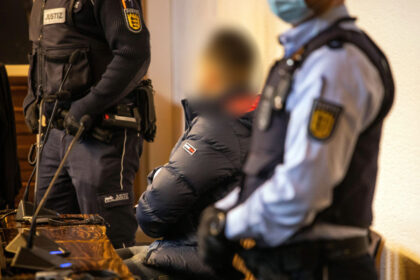
    In Wangen, a village east of Stuttgart, a 27-year-old Afghan asylum seeker was fatally shot by police after he attacked officers with a knife, leaving one officer seriously wounded.

    The incident occurred during an operation to execute a warrant for the man’s arrest for a past assault offense.

    Police reported that when they arrived at the man’s home to serve the warrant, he suddenly pulled out a knife and attacked them without warning. One officer suffered multiple cuts in the attack and was seriously injured, though his life is not in danger.

    In response, officers fired their weapons, hitting the man multiple times. Despite immediate resuscitation efforts, he died at the scene.

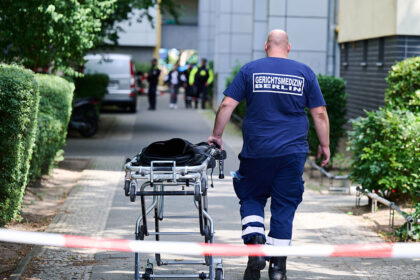
    The area around the crime scene has been cordoned off, and authorities have stated there is no further danger to the public. The Ulm Public Prosecutor’s Office is leading the investigation.

    Witnesses, like 78-year-old local resident Josefine Prell, reported hearing more than five shots, initially mistaking them for firecrackers.

    Thomas Strobl, Baden-Württemberg’s interior minister, condemned the attack, stating, “In this country, you don’t attack a police officer with a knife.. Anyone who attacks a police officer with a knife risks their life.”

    According to the German Police Union, this is the seventh time police in Baden-Württemberg have used firearms this year. Recent similar incidents include the shooting of a man who attacked officers with an axe in mid-April in the city of Hilzingen and another who pointed a gun at police just days earlier.

    Just last month, Remix News reported on a wave of knife attacks involving foreigners, which showed that there are 79 knife attacks per day now recorded. A German criminal lawyer warns that Germany has “imported knife violence,” in response to growing blade crimes.

    “We have imported knife violence. In other cultures, the knife is a kind of status symbol. This is changing the social climate here in the country,” stated criminal attorney Udo Vetter. He further notes that “knives have become an everyday companion for many people. And the barrier to using them is low.”

    Afghans are especially involved in knife crime, and have also been involved in a number of high-profile attacks on police, including the stabbing murder of Officer Rouven L. in Mannheim last year by an Afghan Islamist. Just days after that incident, an Afghan migrant attacked an officer with a long knife in Stralsund.

  • Afghans, Turks, and Albanians face police probe for brutal months-long bullying of student in Austria

    Afghans, Turks, and Albanians face police probe for brutal months-long bullying of student in Austria

    A severe case of bullying at a school in Vöcklabruck, Austria, has prompted police investigations and led to the expulsion of five students with immigrant backgrounds after a 15-year-old boy was violently abused over several months.

    The victim, whose name has been withheld, is a student at HTL Vöcklabruck, and was reportedly harassed, beaten, choked, and humiliated by five classmates — all 20 years old and of Afghan, Turkish, and Albanian origin. According to multiple sources who spoke with Kronen Zeitung, the abuse lasted for over half a year and included being whipped with belts and filmed while being subjected to degrading treatment.

    One of the more shocking incidents was captured on video: Peter was pushed out of a window from a mezzanine floor. While he escaped serious physical injury on that occasion, the psychological damage has led to Peter being unable to return to school. He is now on medical leave, reportedly too traumatized to complete the academic year.

    “Physically, he’s doing better,” said the anonymous source who brought the case to light. “But psychologically, he’s very weak. He won’t go back to school. He just can’t finish the year after what happened.”

    The abuse only came to light two weeks ago after an anonymous whistleblower contacted the press. That source claimed the violence was not only frequent but escalated without intervention, even as students circulated videos of the assaults.

    A German teacher reportedly responded to the abuse by having the perpetrators write an essay titled “Violence and its effects.”

    After media pressure and direct inquiries to the school board and principal, the situation rapidly changed. On Wednesday, it was confirmed that the five accused students had been expelled. The Upper Austrian Directorate of Education stated that the school had filed a police report and suspended the individuals. A formal decision on permanent expulsion is expected following a conference scheduled for Thursday.

    The Upper Austria State Police Directorate confirmed that several individuals had been reported for assault and that investigations are ongoing. Due to the sensitivity of the case and the age of those involved, further details have not been released.

    Teachers at the school have collected the disturbing video evidence and handed it over to authorities.

    A national conversation in Austria about violence in schools was sparked earlier this month after one of the deadliest school shootings in the country’s history occurred at a school in Graz. On June 10, a 21-year-old former student of the BORG Dreierschützengasse opened fire, killing 10 people and injuring dozens of others before taking his own life in a school restroom.

  • German government cuts funding to NGO rescue boats in the Mediterranean

    German government cuts funding to NGO rescue boats in the Mediterranean

    The German government has decided to end taxpayer support of NGOs involved in civilian rescue in the Mediterranean, with critics long arguing these boats serve as a pull factor for migrants seeking to enter Europe.

    Sources at the German Foreign Ministry stated Wednesday: “The federal government no longer plans to provide subsidies to NGOs involved in civilian rescue.”

    The decision marks a sharp reversal from the last German left-liberal government, which provided €2 million to these NGOs in 2024, followed by €900,000 in the first quarter of 2025. Money was disbursed to a variety of NGOs such as SOS Humanity, SOS Méditerranée, Sea-Eye, and Sant’Egidio.

    The new government coalition, between the Christian Democrats (CDU) and the Social Democrats (SPD), is looking to take action against illegal immigration, while making efforts to increase legal immigration at the same time.

    The decision was sharply criticized by the left-wing opposition Green Party, with MP Britta Haßelmann, calling it a “dramatic decision.”

    Sea-Eye President Gorden Isler called it a “catastrophic signal.” He said that it could mean that ships are docked during emergencies at sea, which could cost the lives of migrants.

    Chancellor Friedrich Merz is looking to push a “very restrictive” immigration policy in order to curb the rise of the Alternative for Germany (AfD), which argues that the CDU’s immigration restrictionist policies are a mirage.

    While Merz has implemented some policies, such a tightening border controls, the AfD argues for remigration policies and a complete closure of the border. Nevertheless, even the token gestures from the CDU may be paying off in the polls, helping reduce support for the AfD from 25 percent down to 23 percent.

    The question is now how far the SPD will go along with immigration-related proposals from the CDU without alienating its own left-wing base. All signs point to the SPD willing to play ball for now. For one, there is a great desire, even among SPD voters, to bring illegal immigration under control. Furthermore, the SPD is also acutely aware of the growing popularity of the AfD in the country, and there is a push within the establishment to turbocharge legal immigration while cutting illegal immigration.

    NGO rescue boats have been credited with saving the lives of thousands of people; however, critics say the boats have turned into a “ferry” service for migrants headed to Europe. They argue that the boats often work in tandem with the smugglers, who know they only have to bring their customers a certain distance before they will be rescued, or sometimes even picked up, by the NGO boats. The presence of the boats also leads to feelings of security for many migrants, which encourages more crossings.

    Governments that have enacted strict border control policies, such as the United States under the Trump administration, have seen migrant border crossings plummet up to 95 percent. As a result, fewer people are being trafficked and there are fewer deaths at the dangerous desert border of the United States. In effect, stricter enforcement is saving lives and reducing trafficking immensely.

    The NGO rescue boats operating in the Mediterranean are not expected to cease operations, despite the cuts in funding. For one, these NGOs could find new funders. However, more importantly, they already have ample funding from a variety of sources, including German churches, which have sent generous donations to the NGO boats for a number of years.

  • Orbán says Hungary will block Ukraine’s EU accession after 95 percent vote against it

    Orbán says Hungary will block Ukraine’s EU accession after 95 percent vote against it

    Hungarian Prime Minister Viktor Orbán has declared that Hungary will not support Ukraine’s accession to the European Union, citing an overwhelming mandate from a national vote in which 95 percent of participants opposed Ukrainian membership.

    Speaking in Brussels, Orbán revealed that 2,168,431 Hungarian citizens voted against Ukraine joining the EU, out of a total of 2,278,000 valid votes cast. Just 5 percent supported the idea.

    “I came here with a strong mandate. My voice has grown deeper — after all, I will speak today in the voice of more than 2 million Hungarians when I say during negotiations that Hungary does not support Ukraine’s EU membership. These are the stark facts,” he said.

    Orbán stressed that Hungary cannot be circumvented in this process, noting that EU accession requires unanimous approval from all member states. “Even to open a negotiation cluster, unanimity is required — and that’s not there. So, this won’t happen. Nothing can happen today that would have any legal effect on Ukraine’s accession to the EU,” he said. “People can make statements and talk, but the EU will not have a common position, because Hungary does not support it. Those who disagree with us — 26 or however many there are — can say what they want, that’s also freedom.”

    The Hungarian leader also warned that admitting Ukraine into the bloc would mean importing the conflict with Russia into the heart of Europe. “The problem is the war. If we were to integrate Ukraine into the European Union, we would be integrating the war along with it. And we don’t want to be in a community with a country that is at war, which poses an imminent danger to us,” he said. “Because if the EU includes a country at war, then the EU is at war, and we don’t want that.”

    Hungary is one of the few EU member states whose government appears to be acting on the popular opinion of its voters when it comes to Ukraine’s EU membership.

    A survey published this week from Poland showed just 35 percent of Poles support Ukraine’s accession to the EU, with 42 percent opposing its membership, yet Poland’s liberal government under Donald Tusk continues to adhere to the will of Brussels and Kyiv.

    Similarly, polling conducted last year in Germany found 52 percent of citizens were not in favor, with an EU-wide average of 60 percent opposing Kyiv’s accession to the bloc.

    Even Slovakia, which is frequently aligned with Hungary on matters related to Ukraine — in particular its opposition to arms sales and its support for immediate peace talks — has green-lighted talks on EU membership.

    Speaking earlier this month, Prime Minister Robert Fico told journalists, “The Slovak government wishes Ukraine European development. If Ukraine wants to join the EU, this is its sovereign decision, and we support this decision.”

    While he indicated that Kyiv was not yet ready to join, he expressed his support for preliminary accession talks to commence.

  • Poland’s election result unlikely to be overturned

    Poland’s election result unlikely to be overturned

    The National Prosecutor’s Office is dashing the hopes of those who expected its investigations to change the outcome of the presidential election, which saw conservative Karol Nawrocki eke out a narrow victory.

    Currently, two parallel trials are underway. On the one hand, the Supreme Court is considering election protests, of which approximately 54,000 have been filed. On the other hand, the prosecutor’s office is conducting its activities, initiating proceedings regarding irregularities in individual commissions.

    The Supreme Court announced that it will pass a resolution on the validity of the presidential elections at a public session on July 1.

    No chance of reversing the election result

    According to information from the National Prosecutor’s Office, quoted by the Money.pl portal, individual prosecutor’s offices in Poland have already initiated seven such investigations, but there could potentially be many more.

    Prosecutor General Minister Adam Bodnar has filed applications to inspect ballots in 1,472 commissions.

    “What can be the effect of the prosecutor’s actions? At most, criminal charges will be brought against members of the commission who committed the irregularities that have come to light. Contrary to what some supporters of a nationwide recount of votes are counting on, the prosecutor’s actions will not translate into a possible correction of the election result,” the report from Money.pl reads.

    “The prosecutor’s office is not the body that counts votes and determines the election result. It is our responsibility to conduct proceedings when there is a reasonable suspicion that a crime has been committed. This does not have to have an impact on the final election result on a national scale,” indicates prosecutor Przemysław Nowak, press spokesman for the National Prosecutor’s Office.

    Furthermore, Money.pl writes: “These two parallel processes – in the Supreme Court and the prosecutor’s office – generate specific risks regarding the possible outcome of the entire case. The Supreme Court can only move within the scope of the considered – and admitted – election protests. This means that the sample on which it will operate will be limited, and there is certainly no question of recounting the votes in all of the 32,000 commissions, because there are no formal grounds for this.”

  • German police detain Poles guarding border against illegal migration amid rising migrant handovers

    German police detain Poles guarding border against illegal migration amid rising migrant handovers

    Two Polish citizens were detained by German police at the Lubieszyn border crossing after participating in a volunteer patrol aiming to block illegal migrants from entering Poland.

    The arrests have sparked outrage among Polish conservatives, who accuse German authorities of deliberately undermining local efforts to secure the border.

    The incident was first reported by journalist Tomasz Duklanowski, who shared footage and photos showing around 30 men stationed near the Lubieszyn crossing. “This is the beginning, we will be here every day, and there will be hundreds of us!” he quoted the group as saying.

    The self-organized border patrol, which they called the start of regular citizen-led operations, was interrupted by German police. According to Duklanowski, two members of the patrol were detained and held for over half an hour.

    Conservative Law and Justice (PiS) politician Dariusz Matecki confirmed the detention and condemned the German response. “It is clear that the issue of defending the border by Polish citizens alone arouses great anger of the German services,” he said. “Poles can thwart their plans!”

    A day prior, Matecki released disturbing claims about coordinated migrant handovers between Germany and Poland. Referring to a video from June 24, he alleged that German vehicles dropped off African migrants at the Lubieszyn-Linken border crossing, where Polish Border Guard officers then loaded them into a bus and drove away.

    “In the shadows, there is a mass smuggling of migrants from Germany to Poland,” Matecki said. He claimed his sources within the Border Guard report 50 to 60 individuals being brought across daily in the Szczecin district alone.

    The nationalist Confederation party echoed these concerns, accusing Prime Minister Donald Tusk’s government of pretending to control the western border while quietly enabling migration. Confederation MP Krzysztof Bosak pointed out that under current asylum law, applications are only suspended for those stopped at the state border. Once someone crosses, even illegally, they can immediately request asylum — effectively circumventing any ban.

    Videos circulating on social media appear to show increasing numbers of asylum seekers in Polish towns. In Zielona Góra, footage shows groups of African men loitering outside a school, with residents and parents expressing growing unease. Similar scenes were recorded in Szczecin, where Matecki confronted several undocumented migrants who identified themselves as Somali. Under current EU regulations, such individuals cannot be deported due to conditions in their home country.

    Matecki also claimed that these individuals had been given documents by German border guards before being sent across into Poland.

    This growing pattern is not limited to the Polish border. A recent video from the Dutch city of Venlo, just four miles from Germany, shows German police at 4 a.m. dropping off a man with a brown envelope and suitcase, without informing local authorities. The footage, captured by a florist’s security camera, has sparked questions in the Netherlands.

    The Dutch Ministry of Asylum acknowledged that such transfers do occur, calling them “routine” as long as they follow EU rules. However, the local mayor, Antoin Scholten, stated he was unaware of the event and admitted the municipality had no role or authority in such matters.

  • Missing Czech businessman presumed murdered in Croatia

    Missing Czech businessman presumed murdered in Croatia

    Alex Burkov, a 38-year-old Czech businessman with Ukrainian roots, had gone missing in Croatia but is now reported as having been murdered. The suspect is a 51-year-old Slovak who is also the victim’s business partner, reports Echo24.

    According to Croatian media, the Slovak suspect set off on a boat to the island of Molat with his business partner, the 38-year-old Czech citizen, on Sunday, June 22, at around 10:00 a.m. He allegedly planned to kill the businessman.

    “The man was detained. However, the body of the missing person has not yet been found,” wrote the Novinky.cz.

    The Czech police have not yet confirmed the information about the businessman’s murder. “We do not have any new information yet, the Croatian police are handling it. However, it is still true that our Directorate for International Police Cooperation is communicating with our Croatian colleagues,” Jozef Bocan, a spokesman for the Czech Police Presidium, told Seznam Zprávám.

    According to Zpráv, the last person to see Burkov before his disappearance was another businessman living in the Czech Republic, Anton Fischer. He is a long-time diving instructor and was on the boat with Burkov on Sunday.

    According to Czech media, Fischer, his son and his partner were charged by South Bohemian police last year with several crimes related to illegal billboards. The police are prosecuting them for, among other things, blackmail, intimidation and assaulting politicians and activists who spoke out against the illegal advertising offered by the Eurobillboard company along roads. 

    Fischer, who was previously given a suspended sentence for blackmail, has pleaded not guilty.

  • Hungary’s pro-Ukrainian opposition urges Hungarian farmers to adapt to Ukrainians

    Hungary’s pro-Ukrainian opposition urges Hungarian farmers to adapt to Ukrainians

    Hungarian farmers are being warned by Hungary’s opposition party in a very instructive tone to prepare for Ukraine’s EU membership. Orbán’s top electoral rival, Péter Magyar, featured his party’s agricultural expert, Lőrinc Varga, at a forum.

    On Friday, June 20, a Tisza forum was held in Bonyhád, at which the party’s vice-chairman Márk Radnai, the party’s law enforcement expert Ruthenian-Szendi Romulus, and Lőrinc Varga also spoke.

    “What is very important from a policy perspective is that this kind of Ukrainian influence can only be overcome from an efficiency of scale perspective,” said Lőrinc Varga in Bonyhád. The Tisza expert was barely veiledly criticizing Hungarian farmers with this, and spoke in an instructive tone about how they would change their operations in the event of Ukraine’s accession. Meanwhile, Romulusz Ruszin-Szendi laughed, causing some to question why he would be laughing over what will clearly be a struggle for Hungarian farmers.

    At Friday’s forum, Lőrinc Varga discussed at length what Hungarian farmers should do if Ukraine joins the EU:

    “What is very important from a policy perspective is that this kind of Ukrainian influence can only be overcome from an efficiency of scale perspective. Imagine, we are talking about 500 hectares of fields in Ukraine, on average, not a farm, a field that the machine pulls out to collect, does the operation lines and goes on to the next one. In Hungary, the average farm size at the moment – ​​if I remember correctly – is 22 hectares, a farm, not a field. Let’s compare. We can only compete with Ukrainian agricultural production capacity if we think in terms of added value,” he said.

    Varga, in his delivery, appeared to practically treat Ukraine’s EU accession as a fait accompli, and neither Ruszin-Szendi nor Radnai contradicted him on this issue. This is not surprising, because Vice President Márk Radnai himself announced the results of the Tisza Party’s opinion poll, according to which 58 percent of the participants were in favor of Ukrainian membership.

    It is true that the turnout at the Tisza consultation did not reach half of the votes cast in the government’s opinion referendum, but it still serves as a reference point in Zelensky’s circles.

    Moreover, Lőrinc Varga and his family are not far from public appearances and scandal. The agricultural expert’s mother, Zsuzsanna László-Varga, was the director general of the Tolna County Government Office. The former director general made headlines in 2015 when he assaulted Kálmán Horváth, the then government commissioner of Tolna County, at a gas station. The case was covered in the press, and the county daily newspaper also reported on it:

    According to information, Zsuzsanna László-Varga got into a conflict with the Tolna County government commissioner at a gas station in Paks. A fight and shouting match occurred, which an eyewitness recalled, Teol.hu wrote.

    Lőrinc Varga first appeared in the Tisza Party this year, as an agricultural expert in addition to organizing events. For example, at the first congress of the Tisza Party, agricultural engineer Szabolcs Bóna, soil renewal consultant Attila Kökény, and farmer Lőrinc Varga from Bonyhád sat next to Péter Magyar at the agricultural policy roundtable.

    It is worth noting that another advisor to Péter Magyar, György Raskó, previously argued in favor of Ukraine joining the EU. According to the Tisza Party agricultural expert, “Ukraine’s successful resistance against the barbaric eastern hordes represents the hope, future, and renaissance of Europe.”

    In his post, György Raskó directly wrote, “Ukraine will be Europe’s eastern bulwark.”

    If Ukraine does indeed join the EU, it poses a significant challenge not just for Hungarian farmers, but also for all of the bloc’s farmers. Ukraine has tremendously larger plots of land, which has led it to traditionally be called the “breadbasket of Europe.” That includes 41.3 million hectares of land being used for farm production, including 32.7 million hectares of arable land.

    There are massive economies of scale in Ukraine that are not available, for instance, in Hungary, which features more family farms and smaller plots of land.

    If Ukraine obtains EU membership, it will also dramatically alter its market and allow for international institutions to buy up farmland. These corporations could consolidate farmland and create even more efficient operations, which would harm EU farmers further due to a glut of exports.

  • Orbán rebukes von der Leyen for interference over banned Budapest Pride march

    Orbán rebukes von der Leyen for interference over banned Budapest Pride march

    Hungarian Prime Minister Viktor Orbán has criticized European Commission President Ursula von der Leyen for what he called “interference” in Hungary’s internal affairs, following her public demand that Budapest allow a banned pro-LGBT Pride march to proceed this Saturday.

    Von der Leyen made the appeal in a video posted to social media, calling on Hungarian authorities to reverse their ban on the parade and to ensure no penalties are imposed on organizers or participants. “I call on the Hungarian authorities to allow the Budapest Pride to go ahead, without fear of any criminal or administrative sanctions against the organisers or participants,” she said, adding, “To the LGBTIQ+ community in Hungary and beyond: I will always be your ally.”

    Orbán responded in kind with a post on X, warning the European Commission to respect national sovereignty and focus on its own responsibilities. “Dear Madam President,” he wrote, “I urge the European Commission to refrain from interfering in the law enforcement affairs of Member States, where it has no role to play.” He further accused the Commission of failing in its core duties, citing “serious mistakes in recent years, such as the energy crisis and the erosion of European competitiveness.”

    The clash comes amid escalating tensions between Hungary and the European Union over legislation passed in March by Hungary’s National Assembly. The new law prohibits the promotion of pornography, gender reassignment content, and material considered inappropriate for minors. It also grants the government the authority to ban public events deemed in violation of these provisions. As a result, this year’s Budapest Pride parade was officially blocked, with organizers potentially facing fines of up to 200,000 forints — around €503 — for non-compliance.

    Despite the prohibition, Budapest mayor Gergely Karácsony has vowed to go ahead with the parade as a city-sponsored event. “Budapest city hall will organize the Budapest Pride march on June 28 as a city event. Period. This ban has no value,” he declared, accusing the government of using the LGBT issue to distract from Hungary’s worsening economic situation.

    Domestically, the child-protection law has garnered strong support, with the ruling Fidesz party passing it by a wide margin — 136 votes to 27. Earlier this year, opposition lawmakers staged a protest against the legislation by igniting smoke bombs in parliament, leading to hospitalizations and potential criminal charges.

    International criticism of Hungary’s policies has also intensified. Last week, Spain’s Minister of Equality Ana Redondo, a member of the Socialist government under Prime Minister Pedro Sánchez, announced plans to attend the parade in Budapest.

    “We are looking at the agenda, the government is going to be there,” Redondo said. “If I am not there in person, people from the team and probably the director general will be.”

  • Incoming Polish president to visit White House, Trump assures U.S. support for NATO is strong at summit

    Incoming Polish president to visit White House, Trump assures U.S. support for NATO is strong at summit

    At the NATO summit in the Hague, outgoing Polish President Andrzej Duda talked to President of the United States Donald Trump, after which he announced that Karol Nawrocki will soon visit the White House himself. 

    “I believe that we can soon expect a visit of the new Polish president to the White House and a visit of the president of the United States to Warsaw. Of course, the dates will be set, but I assume that it will happen soon,” said Duda, as quoted by wPolityce.

    Duda added that Trump may visit Warsaw soon as well. 

    In response to a journalist’s question as to what Duda may have told Nawrocki about the office of president, he said he told him the “obvious” thing, that “the duty of every president of the Republic is to strengthen Polish-American ties.”

    Lauding the efforts he and others have made to reach what are considered the best Polish-U.S. relations in history, he said, “We have been doing this for years. I have been doing this for 10 years,” adding that what they have achieved fills him with pride.

    Duda also thanked Trump for his efforts in defense and his leadership. 

    “Thank you, President Donald Trump, for your great leadership and key support for the initiative to increase defense spending. I am delighted that I have been part of the process when I proposed this solution at Trump Tower last year, “ the Chancellery of the President of the Republic of Poland quoted Duda on X.

    “I’m glad that the decision on increasing defense spending across all NATO member states has been taken unanimously! The Hague NATO Summit is truly historic. It makes the transatlantic bond stronger!” he added. 

    The 32 NATO countries at the summit discussed, among other things, the planned commitment of member states to spend 5 percent of GDP on security, comprised of 3.5 percent on defense and 1.5 percent on related issues, including civil defense and infrastructure.

    Regarding the oft-mentioned Article 5 provision, Trump was also asked about this and expressed support. “We are with them until the end, NATO will be strong,“ he said when asked if the U.S. would in fact get involved if a NATO ally were to be attacked.

  • Berlin to build new asylum complex for over 1,000 migrants while locals face housing crisis

    Berlin to build new asylum complex for over 1,000 migrants while locals face housing crisis

    Amid a continuing housing shortage for locals, Berlin’s state government has approved the construction of a new container village to house more than 1,000 asylum seekers on Tempelhofer Feld.

    The site, once a Nazi labor camp and later an airport, has long been protected by a 2014 law banning new construction, but that law is now being overridden for migrant housing.

    According to Senator Cansel Kiziltepe of the left-wing Social Democrats (SPD), the facility will open in the second half of 2028, offering between 1,000 and 1,100 beds. The justification, she says, is that Berlin’s regular shelters for migrants are still overflowing.

    Sports and leisure areas are expected to remain intact, though minor amenities like a mini-golf course and barbecue lawn will be relocated. Officials were keen to stress that historically sensitive parts of the former forced labor camp will be left untouched.

    Meanwhile, discussions about using Tempelhofer Feld for urgently needed housing for Berliners remain on the back burner. As reported by Junge Freiheit, six proposals for the future of the field are being reviewed, but no decisions will be made until at least September, and a public referendum may be required.

    The planned asylum facility will go ahead regardless of what Berliners decide.

    This decision follows a pattern of prioritizing asylum seekers over local residents. In 2023, Remix News reported that a new social housing complex in the Spandau district would be reserved exclusively for refugees. The complex, consisting of 128 apartments built by the city-owned WBM housing association, was to house 570 asylum seekers indefinitely, despite the long wait for Berliners seeking social housing.

    The financial burden of migration continues to mount for the city. In 2023, Berlin spent at least €2.1 billion on asylum-related costs, accounting for 5 percent of its entire budget.

    The state government, facing rising expenses, has turned to emergency borrowing. In March, Economics Senator Franziska Giffey confirmed that Berlin will take on new debt to cover refugee-related spending, taking advantage of relaxed rules under the so-called debt brake introduced by the new Grand Coalition federal government. This allows the city to borrow approximately €670 million annually, totaling €1.3 billion for the 2026 and 2027 budgets.

    While money is being poured into housing for migrants, Berliners are facing a severe housing shortage. Germany’s largest cities are short an estimated 800,000 apartments. At the same time, office vacancy rates are at record highs, with enough empty office space to create around 152,000 homes nationwide.

    However, the conversion of offices into apartments is being stifled by a raft of 20,000 building regulations, high interest rates, and spiraling construction costs.

    Despite these challenges, Berlin’s government continues to rent out office space for migrant housing at rates well above market value. In one case, the State Office for Refugees is paying €40 per square meter for a building that was initially offered at €25.80. Other examples include €165 million for housing 1,500 people in Kreuzberg over 10 years, €143 million for 1,200 people in Lichtenberg, and €118 million for 950 people in Westend.

  • ‘A very white, elitist, and academic party’ – Germany’s Greens in turmoil after local leader with Moroccan background resigns

    ‘A very white, elitist, and academic party’ – Germany’s Greens in turmoil after local leader with Moroccan background resigns

    Germany’s Green Party is in turmoil after local leader Ikram Chemlal, who has a Moroccan background, resigned from the party in the city of Bielefeld after serving as leader for only three months. Among her criticisms, which she told Welt, are sure to be felt on a national level, with her labeling the party too White, as well as an “elitist and academic party.”

    The Greens have long been labeled all of those things, but coming from one of its own politicians and a local leader, the criticisms have national implications.

    “The Greens in Bielefeld are a very white, elitist, and academic party. I felt like I was just a figurehead for migrants,” said Chemlal while speaking with Welt newspaper.

    When making the statement, she was pointing to a specific incident involving how her party in Bielefeld treated former co-chair Cim Kartal, a city council member with a Kurdish-Yazidi background. He resigned from the party in mid-May after 23 years of serving, and complained of bullying.

    Chemlal condemned how the party treated him, saying it reinforced views of the party that it is elitist, too White, and merely an academic party.

    The Greens are notorious for having a party made up almost entirely of White people, and a voting base heavily geared towards wealthy and academic Whites, while promoting diversity and open borders. The latest resignation will only reinforce these views. It also appears that many of the Whites in the Green Party may promote diversity, but they do not necessarily want it in their party, and they do not necessarily want to give up their own positions and places of power to make way for people of color, which reeks of hypocrisy to many voters.

    However, as Chemlal said, she is the second person of color who resigned in her own city, and Welt spoke with the first one, Kartal. What he had to say about the Green Party was not much better.

    “You asked about diversity,” he told Welt on the phone, “then just look at the names and faces on the Green Party’s council list for the local elections in Bielefeld. The 35 seats are filled exclusively by White people. And that’s in a city where about 25 percent of the people are of BIPoC background.” He is referring to Black, Indigenous and People of Color. Notably, his use of indigenous does not apply to ethnic Germans, the indigenous people of Germany, as they do not count in his eyes.

    Despite Kartal helping the party grow from six to 16 percent in the state elections, he said he felt they squeezed him out of power. “But I myself was not empowered internally, not strengthened, but constantly thwarted. In the end, there was bullying and personal attacks against me,” said Kartal.

    Speaking to the paper in previous months, Chemlal, a former integration officer at the Bielefeld-Brackwede correctional, said that the Greens have traditionally focused on places where the Greens were already strong, usually areas with well-educated and wealthy White people. However, the party neglected districts with high migrant populations and districts with higher AfD voter shares. Her belief was to reach out to these voters.

    Although being elected to her position with a large majority, her strategy was not welcome inside the party, she says.

    “Even as an assessor on the board, I had already reached the point where I didn’t want to continue. This had already become apparent in November and December, after Dominic Hallau became a mayoral candidate. Something changed in the atmosphere. I felt like I wasn’t even part of the board,” Chemlal told Welt newspaper.

    She was then offered a chance to join the party’s leadership.

    “I thought things would get better and that a change of mindset was taking place when I was asked to take over as co-chair. But after I was elected, it became even more unpleasant,” she said, describing “hostile networks” that “actively supported my exclusion.”

    She claims that she was sidelined, had press releases that were released with her name signed to them without approving them, and was belittled by party leaders.

    “Decisions were made over my head without consultation. Press releases were published in my name without my knowledge, and invitations to campaign events were not forwarded to me,” Chemlal said. She also said she was “actively denied” access to the district office with her own key, among other complaints.

    Notably, one of the minorities that achieved the most power in the Green Party as the former Agricultural Minister, Cem Özdemir, wrote about how youths with a migrant background treated his daughter in Berlin, including sexual harassment. He came under fierce criticism from the left, including within his own party.

    “When she is out and about in the city, she or her friends are often unpleasantly stared at or sexualized by men with a migrant background,” he wrote in FAZ newspaper in an op-ed.

  • ‘Ukraine is not in NATO, my job is to keep it that way,’ Orbán tells press outside NATO summit

    ‘Ukraine is not in NATO, my job is to keep it that way,’ Orbán tells press outside NATO summit

    Hungarian Prime Minister Viktor Orbán voiced skepticism over proposed NATO plans to raise defense spending to 5 percent of member states’ GDP, calling the target unworkable under existing EU budgetary constraints and warning of economic consequences if Brussels doesn’t radically change its fiscal framework.

    “We are able to do it, it is not easy,” Orbán said at the NATO summit in The Hague on Wednesday. “But the whole calculation of budget regulation of the European Union must be changed. So if we keep the regulations as it is, nobody in the European Union can fulfill 5 percent, whatever they say. We have to recalculate everything in a different method; in that case, we can do it.”

    Orbán’s comments reflect his broader concern that NATO is drifting into dangerous territory — both financially and geopolitically. Rather than supporting yet another push toward militarization, the Hungarian leader emphasized that Europe’s real threat is not military in nature but economic.

    “The real threat is not security-wise, it is economic and losing our competitiveness in global trade,” he said. “That’s our problem.”

    He also reiterated his long-standing opposition to NATO involvement in Ukraine, restating Hungary’s commitment to keeping the alliance out of the war. “NATO has no business in Ukraine,” Orbán said plainly. “Ukraine is not a member of NATO, nor is Russia. And my job is to keep it as it is.”

    Orbán has repeatedly argued that escalating military aid and deepening Western involvement risk prolonging the war and damaging European interests. His administration has opposed further sanctions on Russia and has long expressed concern over the possibility of NATO and EU membership for Kyiv in the current climate.

    On Tuesday, the Hungarian prime minister hit back at thinly veiled criticism of his administration from Ukrainian President Volodymyr Zelensky — an honorary guest at the summit in the Netherlands.

    Zelensky suggested that it is “unfair when a single party blocks the Union’s decision,” referencing Hungarian opposition to further negotiations with Kyiv on EU membership.

    In response, Orbán wrote on X, “President, with all due respect: the European Union was founded to bring peace and prosperity to its member states. Accepting a country that is at war with Russia would immediately drag the EU into a direct conflict. It is unfair to expect any member state to take this risk.”

    In other remarks in The Hague, Orbán further highlighted his alignment with U.S. President Donald Trump, praising what he called Trump’s “common sense” approach to foreign policy and suggesting that a shift in Washington’s leadership is already having a stabilizing effect on global conflicts.

    “The international order is more based on common sense,” Orbán said. “And the president of the United States is a man of common sense, as you have seen, just recently, to manage the conflict between Iran and Israel. So, he is the man of common sense, which means that the new wars are getting shorter and the old wars are running out of fuel, which is the consequence of his activity.”

  • Could Canada ultimately join the EU? Maybe not, but Brussels and Ottawa are getting cozy

    Could Canada ultimately join the EU? Maybe not, but Brussels and Ottawa are getting cozy

    Canada joining the EU is becoming less and less unthinkable, writes Portfolio.hu in the wake of a deal signed by ​​Canadian Prime Minister Mark Carney signed a deal with the EU on Monday. 

    The deal centers around shifting Canada’s defense and security ties away from the United States, although clean energy initiatives and trade were also front and center. 

    On defense, Canada will significantly increase its defense spending in tandem with European NATO countries, in line with the 5 percent defense budget initiative at the ongoing summit in The Hague.

    The agreement also states that Canada can participate in the EU’s new defense spending increase programs under the hundreds of billions of euros ReArm Europe initiative. 

    According to the joint statement released Monday evening, Ottawa will cooperate with Brussels on the EU’s €150 billion Security Action for Europe (SAFE ) plan, but it does not specify what specific rights the country will have.

    European Council President António Costa said that while NATO remains the “cornerstone” of collective defense, the agreement with Canada will significantly accelerate greater military preparedness.

    Commission President Ursula von der Leyen said: “This is just the beginning. It will be good for our industries, it will be good for our people, and it will be good for transatlantic security capabilities.”

    The signed agreement also mentions Canada participating in the Permanent Structured Cooperation ( PESCO ), which ensures cooperation between the national militaries of the member states.

    Trade in goods between the two has increased significantly, by around 63 percent, in the past 7-8 years, after the CETA agreement came into force in 2017, which has now eliminated 99 percent of tariffs between the two countries. However, not all member states have ratified CETA: Belgium, Bulgaria, Cyprus, France, Greece, Hungary, Ireland, Italy, Poland, and Slovenia. 

    strengthening and securing supply chains, as well as investments in the procurement of critical assets (e.g. semiconductors) and raw material extraction. 

    Canada has significant reserves of metals and oil, and its advanced machinery and pharmaceutical industries complement the EU’s needs well, notes Portfolio. 

    On green energy, the goal was to triple the world’s renewable energy production capacity by 2030 and double the annual volume growth of energy efficiency developments. Continued cooperation on nuclear initiatives was also a key focus. 

    Other areas of collaboration include removing regulatory barriers to food trade and labor migration, diversifying the energy supply chain, strengthening and securing supply chains, and investing in the procurement of critical assets (e.g., semiconductors) and raw material extraction.

    Further areas covered were AI, cybersecurity, academic freedom, and judicial policy, as well as Canada’s possible participation in the Horizon and Erasmus+ programs.

    In the long term, says Portfolio, Canada’s formal accession in some form cannot be ruled out, although it is a long and possibly unrealistic process. 

    A poll conducted by Abacus in March clearly shows that the Canadian population is increasingly open to the European Union, with 44 percent of those surveyed saying they “definitely” or “probably” should join the EU, and only 20 percent categorically against it. 

  • More and more seniors are working in Poland

    More and more seniors are working in Poland

    More and more Poles are deciding to work after reaching retirement age, with women dominating among employed seniors.

    Poland’s Social Insurance Institution (ZUS) has released the latest data, which shows that there are around 6.4 million retirees in Poland, and the number of working seniors is systematically growing. 

    Poles who decide to continue working after retiring benefit from both their retirement benefit and income from their job. Furthermore, by continuing to work, seniors actually can get a higher pension down the road, reports Do Rzeczy. Delaying retirement by just one year increases the amount of the benefit by 8 percent.

    The number of working seniors is growing by several percent every year, while the percentage of those who decide to delay receiving their pension is increasing at a rate of one percent. Most take advantage of the right to a pension immediately after reaching the appropriate age.

    Data from ZUS indicates that nearly four times more people of retirement age are deciding to work and receive benefits at the same time, instead of simply working without applying for a pension. 

    At the end of last year, 872,600 people with an established right to a pension and almost 53,000 people of retirement age who received various pensions (e.g., disability benefits) were legally gainfully employed. 

    Last year, almost 68 percent of those entitled applied for a pension immediately when they were entitled to it. In 2023, it was 69 percent, and in 2022, 70 percent.

    Women in Poland can retire at the age of 60, and men at the age of 65, with women dominating among employed seniors. In the last five years, every 11th or 12th woman has received her first pension when she is at least 62 years old. Only 4 percent of men wait two years before doing so. 

    The government wants to encourage retirees to stay in the job market longer. One idea is a bonus of PLN 20,000. The amount would be added to retirement capital every year or paid with the first pension to seniors who decide to continue working after reaching retirement age.

  • German police launch nationwide house raids against 170 citizens over ‘hate speech’ and ‘insults’ against politicians

    German police launch nationwide house raids against 170 citizens over ‘hate speech’ and ‘insults’ against politicians

    On Wednesday morning at 6 a.m., a large-scale police operation was launched across Germany, targeting hundreds of individuals suspected of insulting politicians or spreading “hate and incitement” online.

    The massive crackdown saw police launch morning raids against 170 individuals, which saw police seize computers, cell phones, and tablets, and conduct searches in multiple locations across the country.

    The action, which was conducted by the Federal Criminal Police Office (BKA), uses the new Criminal Code Paragraph 188 to target individuals accused of racism and hate speech.

    North Rhine-Westphalia’s Interior Minister, Herbert Reul (CDU), who has overseen a massive increase in crime in his state in recent years — including violent crimes and knife crimes committed by foreigners — celebrated the police raids.

    “Digital arsonists must not be able to hide behind their cell phones or computers,” he said.

    His state conducted 14 of the approximately 130 nationwide cases in a “day of action” against so-called hate postings.

    In fact, even as the number of such raids has exploded in recent years, violent crime has also reached record highs in Germany, in large part due to mass immigration, which is a statistical fact. However, police resources have shifted towards targeting hate speech violations, including those complaining about rising crime in relation to mass immigration, with even politicians, such as Alternative for Germany’s (AfD) Marie-Thérèse Kaiser, being targeted in such cases.

    Germany now routinely has these “days of action” against citizens who commit “violations” against new and more draconian speech laws in Germany. In some cases, a national scandal has erupted when the details of the cases became public, such as the case of a pensioner, Stefan Niehoff, having his house raided over calling former Economic Minister Robert Habeck an “idiot.”

    As the details of the case show, Niehoff became a major target for speaking out against the raid, with the state eventually dropping the “idiot” charge, the one they raided his house for, and pursuing other ones. He was eventually convicted for a variety of retweets despite these retweets being explicitly anti-Nazi posts that targeted left-wing politicians.


    In another case, someone criticized CDU leader Friedrich Merz as “drunken.”

    It is unclear who was targeted in the latest raids and what statements they made. Most cases allegedly involve right-wing extremist statements, but a small number of cases involve extremist religious or left-wing extremist content. It should also be noted that Alternative for Germany (AfD) co-leader Alice Weidel has also filed a number of such complaints, a point she has been criticized for. However, it is unclear if anyone’s house was raided over any of her complaints. So far, there have been no reports of such raids based on any complaints Weidel has filed.

    CDU Interior Minister Reul said there needs to be a clear distinction between opinion and hate speech.

    “What you don’t do in the real world isn’t appropriate digitally either. It’s time for more attitude, both offline and online,” he said.

    However, the federal interior ministry made a similar argument last year while conducting raids against multiple homes of Compact Magazine journalists, as well as the magazine’s publisher. The raids were followed by a ban on Compact Magazine and its erasure from the internet. A top federal court has now ruled this week that the ban was not constitutional and constituted a violation of freedom of the press in a major blow to the federal interior ministry.

    These house raids are conducted with the support of various reporting centers run by left-leaning organizations. Essentially, a center reports a post, which then forwards this to the federal police for action.

    Last year, there were 10,732 such cases recorded, which is quadruple the number of 2021.

    As an example of the type of raids going on, last year, a 14-year-old German boy had his house raided for posting a banned hashtag on TikTok, which translated to “Everything for Germany.”

  • ‘Drag the EU into a direct conflict’ – Orbán confronts Zelensky on X, tells him the EU was created for peace, not war

    ‘Drag the EU into a direct conflict’ – Orbán confronts Zelensky on X, tells him the EU was created for peace, not war

    Hungarian Prime Minister Viktor Orbán is leading an effort to ensure Ukraine, which is currently at war with Russia, does not join the European Union due to the high potential for a conflict that could spread to all of Europe. In this regard, he is now confronting Ukrainian President Volodymyr Zelensky directly on X on the issue.

    “President (Zelensky), with all due respect: the European Union was founded to bring peace and prosperity to its member states. Accepting a country that is at war with Russia would immediately drag the EU into a direct conflict. It is unfair to expect any member state to take this risk,” wrote Orbán.

    Orbán had responded to a post from Zelensky, in which the Ukrainian leader thanked EU leadership after a meeting, stating that they discussed, among other things, Ukraine’s ascension into the EU.

    Citing his meeting with EU commission President Ursula von der Leyen, NATO Secretary General Mark Rutte, and European Council President António Costa, Zelensky called out Hungary.

    “It is important that the leaders of the member states reach a common decision to open the first negotiation cluster. It is unfair when a single party blocks the Union’s decision. We also discussed in detail additional sanctions against the Russian Federation and the preparation of the EU’s 18th sanctions package. This package must significantly increase pressure on Russia’s energy and banking sectors, as well as on the shadow fleet. The key element here must be a strong price cap on Russian oil, and we count on the appropriate decisions. I thank the leaders for their support. Every step of assistance means lives saved,” he wrote.

    Zelensky desires an accelerated process to gain EU membership, despite his country being the most corrupt country in Europe — a finding noted even before the war. The rebuilding of Ukraine is expected to cost hundreds of billions of euros. Currently, the country has no democracy or free press, as all elections have been suspended during the war.

    Perhaps of greatest concern is that even if Ukraine is admitted to the EU during a ceasefire, hostilities could start again, which could drag Europe further into a new war.

  • France: 9-year-old brought knives to school in Vendôme, allegedly planned to kill teacher

    France: 9-year-old brought knives to school in Vendôme, allegedly planned to kill teacher

    Three round-tipped table knives were found in the schoolbag of a 9-year-old student during a surprise bag inspection at the Jules Ferry primary school in Vendôme, Loir-et-Cher, on Monday.

    As reported by Europe 1, the child is said to have told the teaching team that he had “planned with two of his classmates to kill their teacher.”

    The teaching team carried out the search as part of a broader security response following recent violent incidents in schools across France.

    The Blois prosecutor’s office confirmed the discovery, and said the knives were found in the bag of a CE2 (third-grade) student.

    The prosecutor ruled out criminal prosecution, citing the child’s age and the fact that no attempt had been made.

    “There was no act or attempt, and the knives were round-tipped,” the prosecutor told Le Figaro. The parents of the child will be interviewed, and a social assessment will be carried out by child protection services in the Loir-et-Cher department. The teachers involved have indicated they may pursue legal action.

    The inspection at the school followed the killing of a 17-year-old in front of a high school in Essonne in March, and the murder of a 31-year-old teaching assistant in Haute-Marne earlier this month. Such incidents have prompted an increase in bag checks and other preventive measures in schools.

    The discovery in Vendôme comes amid a series of similar cases. In December 2023, a 12-year-old schoolgirl of Mongolian origin in Rennes brought a knife to school and threatened her English teacher. She was restrained by staff and later taken into custody. Witnesses said she had previously made comments referencing the killing of teacher Dominique Bernard in Arras in October.

    In another incident in June last year, an unaccompanied migrant minor was arrested in La Tour, Alpes-Maritimes, after stabbing a teacher and attempting to set fire to his reception center.

    The mayor of Marignane, Éric le Dissès, called last year for primary school teachers to be equipped with tear gas grenades and personal alarms, citing what he described as an increasing risk of violence in schools.

    “Providing them with defense spray is the least we can do in the short term. One in two teachers has already asked me to be equipped with one,” he said.

  • A Hungarian and Pole fly to the stars once again

    A Hungarian and Pole fly to the stars once again

    After more than 40 years, a Hungarian astronaut, Tibor Kapu, traveled to space again as part of the Axiom-4 mission. Also on board was Polish astronaut, Sławosz Uznański-Wiśniewski, who became the second Pole in history to fly into space.

    The Axiom 4 mission to the International Space Station (ISS) began on Wednesday, June 25, at 8:31 a.m. Polish and Hungarian time. A Falcon 9 rocket and Dragon capsule lifted off from Launch Complex 39A at NASA’s Kennedy Space Center in Cape Canaveral, Florida.

    The astronauts are scheduled to reach the ISS at around 1:00 p.m. Central European Time on Thursday, June 26. Also on board are the American Peggy Whitson and Indian Shubhanshu Shukla.

    The astronauts will travel to the ISS in a newly developed Dragon space capsule and will all participate as mission experts.

    Prime Minister Viktor Orbán also brought the historic moment to the attention of his followers. He wrote the following caption during a live broadcast:

    “The stars are the limit. A Hungarian in space again. Go, Tibor Kapu!”

    Sławosz Uznański-Wiśniewski is the second Pole, after Mirosław Hermaszewski, to take part in a space mission. The IGNIS mission, carried out jointly with ESA and partners from the private sector, is the first such large research project conducted by Poles in space. The team, consisting of hundreds of engineers and scientists, worked on experiments in the field of medicine, biology, AI and space technologies. Uznański-Wiśniewski and his fellow astronauts are to spend 14 days in space.

    During their stay on the International Space Station, the astronauts will perform about 60 scientific experiments.

    Before the launch, Kapu posted to social media: “My name, my father’s name, and my flag are on my spacesuit.”

  • Migrant teenagers jailed in Denmark for brutal ambush attacks on gay men in Odense

    Migrant teenagers jailed in Denmark for brutal ambush attacks on gay men in Odense

    Two migrant teenage boys, aged 15 and 16, have been sentenced to prison in Denmark for a series of violent and humiliating assaults on gay men in Odense.

    The pair, both reported as being of non-Danish ethnic background, were found guilty of luring victims via a gay dating app before ambushing them, filming the attacks, and sharing the videos online.

    As reported by broadcaster TV2 Fyn, the attacks were carried out in rapid succession on the evening of Sept. 17, 2024. The first took place at 7:25 p.m. at Assistens Cemetery, the second at 7:50 p.m. at Hunderup School, and the third at 8:25 p.m. near the Odense Boldklub football training ground in Ådalen.

    Prosecutors described the assaults as “particularly crude and brutal” and emphasized that they were premeditated and coordinated.

    The boys used the gay dating app Romeo, posing under the username “ledereftersex” — which translates to “looking for sex” — and pretended to be a 24-year-old man. Once victims arranged to meet, they were met instead by the young attackers, who beat them, shouted homophobic slurs, and accused them of being pedophiles.

    During the trial, it emerged that the victims had believed they were meeting an adult, not a minor, and that in at least one case, consensual sex had been discussed. Nonetheless, the teens justified their attacks by claiming they were confronting would-be pedophiles. The court found no basis for that claim and ruled that the accusations were used as a pretext for planned humiliation and violence.

    One victim was left with several minor brain hemorrhages and required multiple stitches after being kicked in the head, struck with a metal club and belt, and shot in the head with an airgun. Another was made to lie down on asphalt before being punched, kicked, and stomped on. All three victims were subjected to verbal abuse including terms like “pedophile”, “homo”, and “gay”.

    The 15-year-old was sentenced to eight months in prison and the 16-year-old to seven months. Each must serve one month immediately, with the remainder suspended for two years on the condition of good behavior. They will also forfeit their mobile phones and are required to pay compensation to the victims. Two other boys, also aged 15 and 16, were acquitted by a 2-to-1 decision from the judges.

    Although prosecutors had pushed for a two-year juvenile sanction involving detention in a secure facility, the court opted for shorter custodial sentences.

    Several boys under the age of criminal responsibility also took part in the ambushes. One of these minors, who cannot be prosecuted, was reportedly the individual responsible for operating the fake dating profile and arranging the meetings.

    While the convicted teens were acquitted of hate crime charges, the court acknowledged the “humiliating nature” of the attacks. Throughout the proceedings, the defense claimed the violence was not motivated by the victims’ sexual orientation. However, the repeated use of homophobic slurs and the choice of a gay dating app as a lure contradicted those claims.

    The case has also reignited debate in Denmark over cultural integration. In October last year, data published by the Danish Ministry of Justice revealed that foreign-born and second-generation non-Western immigrants, who comprise 10.6 percent of the Danish population, commit 29.6 percent of the country’s serious violent crimes and 32.4 percent of rapes.

    “It infuriates me beyond words that people we invite to our country return our hospitality by committing rape and serious violence that destroys other people’s lives here in Denmark,” Justice Minister Peter Hummelgaard told Danish news outlet Berlingske at the time.

    In December last year, the Danish government announced plans to abolish the so-called ladder system, a framework that limits the deportation of criminal foreigners based on the severity of their crimes and their length of stay in the country.

    The move was part of an effort to streamline deportations for all foreigners sentenced to unconditional prison terms, ensuring stricter measures against those who commit crimes in Denmark.

    “Unfortunately, foreigners in Denmark are overrepresented in the crime statistics and too often commit serious crimes — such as those related to gang activity. We don’t have to deal with that.
    The hammer must fall even harder,” noted Integration Minister Kaare Dybvad Bek.

    Last week, a mainstream Danish newspaper, Berlingske Tidende, published an editorial in favor of remigration, signifying the turning of public opinion across the country.

    “They should not be integrated. They should go home. Remigration is necessary. A complete stop to immigration from the Middle East and full speed ahead in sending people from the Middle East without Danish citizenship out of Denmark,” it wrote.

  • France: Violent French-Arab inmate accused of torturing his cellmate to death over a period of 2 weeks in extremely overcrowded prison

    France: Violent French-Arab inmate accused of torturing his cellmate to death over a period of 2 weeks in extremely overcrowded prison

    A French inmate with an extremely violent history, Lofti H., is accused of torturing his cellmate to death over two weeks in the Vezin prison near Rennes.

    On June 16, Lofti H. was charged with “murder aggravated by acts of torture or barbarity” against his fellow inmate, Alexis B., a 25-year-old man suffering from significant “fecal incontinence problems” and psychological problems.

    Alexis B. was discovered unconscious early Saturday, June 14, by prison guards.

    An investigation has determined that the man was subjected to extreme torture over the course of two weeks. An autopsy was conducted on the body.

    According to preliminary findings of the investigation, “acts of torture and barbarity” were allegedly inflicted on the victim, with “injuries of various ages” discovered on his body, including burns. 

    During his appearance before the Rennes investigating judge, Lotfi H. admitted to inflicting “extremely severe” blows on his cellmate, rating their intensity at “nine” on a scale of one to 10. However, his lawyer, Me Sobieslaw Bemmoussat, stated that Lotfi H. denies any intent to kill Alexis B. or any acts of torture.

    Sources told Le Parisien, Alexis B. was alone in a cell with his fellow inmate, Lotfi H., a 26-year-old from Nantes whose criminal record includes 22 mentions for acts committed between 2013 and 2025, including a number of violent acts.

    Lofti H. was transferred to Rennes from Lorient prison (Morbihan) at the end of April.

    Right before his cellmate was found dead, Lofti H. reportedly “asked for help” from the guards because he could “no longer stand the smells in the cell” coming from Alexis B. However, he claimed that no guards came to help him.


    The prison where the murder happened has an occupancy rate of 123 percent.

    The name Lotfi is a male name of Arabic origin, meaning “kindness,” “grace,” or “gentleness.”

  • Poland’s Constitutional Tribunal rules EU emissions trading system directive unconstitutional

    Poland’s Constitutional Tribunal rules EU emissions trading system directive unconstitutional

    This article is published courtesy of Poland’s Ordo Iuris Centre for Research and Analysis

    • The Polish Constitutional Tribunal ruled on June 10 that the EU Directive establishing the European Emissions Trading System (ETS) is incompatible with the Polish Constitution, as it was adopted beyond the powers granted to the European Union by Poland.

    • The Tribunal’s reasoning fully aligns with the proposal of the Ordo Iuris Institute in this regard, presented in its report on the possibility for Poland to withdraw from the European Green Deal.

    • The effects of the ruling remain an open question. On the one hand, repealing the act implementing the ETS Directive may expose Poland to penalties imposed by the European Commission and the Court of Justice of the EU (CJEU); on the other hand, it may serve as a clear signal, potentially inspiring representatives of other Member States to oppose the Green Deal.

    Ordo Iuris report proposing to repeal the Green Deal through the Constitutional Tribunal

    In early April, the Ordo Iuris Institute published a report indicating the legal means by which Poland could free itself from the European Green Deal (here in Polish). One of the proposals in the report was for the Constitutional Tribunal to declare the Green Deal incompatible with the Constitution of the Republic of Poland. However, since the Constitutional Tribunal does not have competence to directly review secondary EU law, Ordo Iuris proposed that the ruling should formally take the form of a so-called “scope judgment.” In other words, according to the authors, the Tribunal could rule that the relevant EU Treaty is incompatible with the Constitution to the extent that it serves as the legal basis for a given legal act (regulation or directive). The Polish Constitutional Tribunal is undoubtedly competent to review the compliance of international agreements with the Polish Constitution – this follows directly from Article 188(1) of the Polish Constitution.

    Substantively, the incompatibility with the Constitution would lie in the fact that these legal acts were issued in violation of the principles under which Poland conferred powers on the European Union. It should be emphasized that the European Union holds no powers other than those conferred on it by the Member States through its founding treaties (this is the “principle of conferral”). What, specifically, would the violation of these principles consist of in this case?

    It is a matter of having issued secondary legislation without achieving unanimity in the Council of the European Union – the body composed of representatives of Member States’ governments, whose consent is required for the adoption of EU regulations and directives. According to Article 192(2) of the Treaty on the Functioning of the European Unionthe adoption of EU legal acts in the field of the environment that primarily have fiscal implications or significantly affect a Member State’s choice between different energy sources and the general structure of its energy supply requires unanimity in the Council. However, none of the acts falling within the scope of the Green Deal were adopted in this manner, but rather through the ordinary legislative procedure, requiring a 55% majority in the Council.

    Constitutional Tribunal ruling K 10/24 in line with Ordo Iuris’ argumention

    The Ordo Iuris Institute’s proposal was undoubtedly bold, and it was uncertain whether Poland’s Constitutional Tribunal would adopt it and thereby risk confrontation with EU institutions. However, on June 10, the Tribunal decided to adopt it in full.

    Specifically, in case K 10/24, the Constitutional Tribunal ruled: “Article 192(1) in conjunction with Article 192(2)(c) of the Treaty on the Functioning of the European Union (OJ 2004 No. 90, item 864/2, as amended), interpreted in such a way that the unanimity requirement of the Council is limited to measures whose primary intended result—arising from their purpose or content—is to significantly affect the Republic of Poland’s choice between different energy sources and the general structure of its energy supply, is incompatible with Article 2, Article 7, Article 8(1), Article 90(1) in conjunction with Article 4(1) of the Constitution of the Republic of Poland.”

    The essence of this ruling can be summarized as follows: adopting the Directive establishing the European Emissions Trading System (ETS) without achieving unanimity in the EU Council is incompatible with the Polish Constitution. The Tribunal further emphasized that: “It is not possible […] to adopt a pro-constitutional interpretation of primary EU law that negates the fundamental principles of this organization: the principle of conferred powers, the principle of loyalty and mutual cooperation, or the principle of subsidiarity.” In other words, the Tribunal indicated that Poland, by transferring (under Article 90 of the Constitution) certain competences of state authority to the European Union, did not agree for EU bodies to unilaterally expand the scope of those competences without any control by Poland. The Tribunal also stressed that transferring any competences to the European Union cannot result in Poland losing its sovereign status—including energy sovereignty.

    Effects of the ruling – what next?

    The effects of the ruling require clarification. First, it should be recalled that EU directives require implementation, meaning that in Poland, the ETS functions not directly on the basis of the directive but on the basis of the Act of 12 June 2015 on the Greenhouse Gas Emissions Trading Scheme.

    Regarding this act, the Tribunal noted: “The ruling does not apply to the provisions of the Act of 12 June 2015 on the Greenhouse Gas Emissions Trading Scheme and the executive acts to this Act, as these were not indicated as the subject of review in this case.” At the same time, however, the Tribunal called on the legislative authority, i.e., the Sejm, to take appropriate action to implement the ruling—in practice, to repeal the said act.

    What, then, will be the consequences of the ruling under EU law, which is, understandably, not bound by decisions of the Polish Constitutional Tribunal? As the Ordo Institute indicated in its report, Poland essentially has three options.

    The first and most far-reaching—hence the least likely—is to leave the European Union.

    The second is to remain in the Union, repeal the implementing act, and accept the possibility of penalties being imposed on Poland by the European Commission and the Court of Justice of the EU for non-implementation. This would require calculating which would be more costly for Polish citizens—paying penalties or applying harmful EU solutions that fundamentally contribute to rising energy prices.

    Finally, the third option would be to work towards repealing the directive at the EU level—either through the legislative process or via proceedings before the CJEU. This would undoubtedly be the most advantageous solution. Its success, however, depends on decisions by external actors, beyond Poland’s control.

    In any case, the fact remains that the Constitutional Tribunal has sent both EU institutions and citizens and politicians in other Member States a clear signal that opposition to the Green Deal is both possible and legally justified. If this ruling is followed by actions from the Polish political class, both domestically and at the EU level, aimed at implementing it, one can hope—as the Ordo Iuris Institute expressed in its report—that this signal will not be isolated but will inspire similar actions in other countriesThe emergence of an international coalition opposing the Green Deal, particularly one supported by the current US administration, could force EU institutions to review their stance and revise the adopted measures, particularly by abandoning the utopian goal of making the economy climate-neutral by 2050.

  • Will Poland do a vote recount? Conservative MP says the goal is to discredit Nawrocki and potentially even refuse to validate his victory

    Will Poland do a vote recount? Conservative MP says the goal is to discredit Nawrocki and potentially even refuse to validate his victory

    Following the victory of conservative candidate Karol Nawrocki in the Polish elections, there are concerns that the election losers are trying to implement a vote recount that could flip the election. However, Law and Justice MP Kazimierz Smoliński, in an interview with news outlet DoRzeczy, says the vote recount is designed to sow doubt about Nawrocki’s victory.

    He also notably says that there may be certain “legal loopholes” that enable the government to refuse to certify the vote.

    DoRzeczy.pl: How would you comment on Donald Tusk’s posts and actions from recent days? Are we dealing with an attempt to undermine the results of the presidential elections?

    Kazimierz Smoliński: This is a strange tactic, because on the one hand, in various speeches, the prime minister says that it is not true and that the results are fixed, and so on. On the other hand, Donald Tusk’s posts on social media contradict what he says publicly. It seems to me that this is building a certain narrative. Of course, the elections will be recognized, but at the same time, an atmosphere of doubt is being created on the basis that if Karol Nawrocki becomes president, his actions will always be questionable.

    There will probably be disputes about the outcome, as we know from history, from the times of the late Lech Kaczyński, over how he died in a plane crash. I think this is an attempt to build such a narrative, so that later there will be points of reference — so that the elections can be questioned not only in Poland, but also abroad. So that we can say: “Look, there were doubts, we still have them, this choice was not entirely right, so maybe he should not represent Poland on the international stage, but someone else should go – the prime minister or the minister of foreign affairs.”

    I would rather interpret it this way.

    Does Donald Tusk have any legal basis for such actions?

    There are none. He did when the case was in the hands of the National Electoral Commission. After all, it is a commission controlled by the parliamentary majority, the government majority, and it was they who had the ability to count votes in accordance with the electoral code. They could do so based on all the protests that were filed. They deemed most of these protests unfounded and ended the electoral process at that stage.

    Then, the case went to the Supreme Court. However, the Supreme Court no longer has the ability to count votes. It can only consider each protest and assess whether it had an impact on the election result. However, practice shows that the Supreme Court has never invalidated an election so far.

    Can you imagine a situation where someone decides to recount these votes? The opposition could question this counting and claim that it is not certain whether someone did not add something to these votes.

    There is no legal possibility of recounting the votes. The law does not allow it at this stage. In addition, most of the ballots are in commissions, in local government offices, often controlled by the current government, and they lie there until they are destroyed, in basements or warehouses.

    And now there would be reservations: whether these votes were stored correctly, whether the seals are original, whether someone changed something, whether there were any irregularities in transport. That is why the law does not provide for such a procedure at this stage, because there would be too many doubts.

    However, what can they do? The court will issue a decision recognizing the validity of the elections. This decision must be published in the Polish Monitor, and the government is responsible for this. And they can try not to publish this ruling, claiming that since it was not published, the elections were not formally recognized as valid. And then further legal speculations can begin — what next? Will the Speaker of the Sejm take any steps? Hołownia now says absolutely not, but this is a declaration for today. We will see what he will do. They can also try to open new legal loopholes.

  • Slovakia may support 18th sanctions package against Russia, but only with energy guarantees

    Slovakia may support 18th sanctions package against Russia, but only with energy guarantees

    Slovakia is ready to support the EU’s 18th package of sanctions against Russia, although it has conditions, including energy security guarantees due to being cut off from Russian oil.

    Slovak Foreign Minister Juraj Blanár indicated that the package does not threaten the Slovak economy. However, he did state that arbitration risks do exist to the tune of as much as €20 billion, which is why certain conditions must be met. 

    On June 22, Blanár came out condemning the U.S. attack on Iran, calling for the UN to get involved and stating: “It is unacceptable for any state to conduct military operations on the territory of another sovereign state.” The foreign minister called it “a violation of international law” and urged for all parties to come to the table for a peaceful solution. 

    Meanwhile, Hungarian Foreign Minister Péter Szijjártó announced yesterday that Budapest and Bratislava would block the sanctions package together, precisely over Brussels’ plan to end all energy imports from Russia. “We did this because the European Union… wants to ban member states, including Hungary and Slovakia, from buying cheap Russian gas and cheap Russian oil,” Szijjártó had said. 

    According to Maninder, he called for the issue should be brought to the European Council and linked to the RePowerEU proposal.

    However, it now looks like Slovakia may take a deal, as long as it gets the guarantees it wants.

    According to unnamed diplomatic sources from ČTK, proposals for both countries may be forthcoming at the summit of EU presidents and prime ministers this Thursday.

  • BREAKING: In major free speech victory, Germany’s ban on right-wing Compact Magazine is overturned by federal court

    BREAKING: In major free speech victory, Germany’s ban on right-wing Compact Magazine is overturned by federal court

    In a major win for press freedom, Germany’s Federal Administrative Court has lifted the Interior Ministry’s ban on Compact Magazine, which is published by Jürgen Elsässer. The magazine can now resume publication after dramatic police raids led to the entire publication being shutdown last year.

    Presiding Judge Ingo Kraft stated, “The Basic Law guarantees freedom of expression and association even to its enemies.”

    In a move that may have broad and far-reaching consequences, the court ruled that the magazine’s position against immigration is compatible with free speech and freedom of the press rights enshrined in the constitution.

    “Many of the anti-immigration or anti-immigration statements cited by the defendant as evidence for the ban can therefore also be interpreted as exaggerated criticism of migration policy, but ultimately permissible in light of fundamental rights of communication,” the court further stated.

    Kraft stated that the publication’s “exaggerated criticism of migration policy” is permissible as a fundamental right.

    Furthermore, Compact’s demands for stricter naturalization requirements and higher integration standards in citizenship law are not inherently incompatible with human dignity or democratic principles.

    The court noted that Compact’s “polemically pointed criticism of power,” conspiracy theories, and historical revisionist views are protected under Article 5, Paragraph 1 of the Basic Law.

    The ban on Compact first came about in 2024 when former Federal Minister of the Interior Nancy Faeser ordered house raids against Compact magazine, including the home of the publisher, Jürgen Elsässer, along with various employees of the outlet. She had the entire publication banned, scrubbed from the internet, and its property seized.

    Footage of the dramatic house raids went viral on social media.

    The German interior ministry justified the ban by saying it was a “central mouthpiece of the right-wing extremist scene.” According to the ministry, “Compact” Magazine GmbH has long been under the scrutiny of the Federal Office for the Protection of the Constitution (BfV). It was classified as a “confirmed” right-wing extremist organization and has been under surveillance since 2021.

    However, there were already signs early on that a ban on the magazine would not be upheld in court, according to Welt newspaper.

    The federal judges had already overturned the ban during an expedited procedure last year in August, writing that “given the largely unobjectionable contributions… with regard to freedom of expression and freedom of the press, the passages violating Article 1, Paragraph 1 of the Basic Law are [not] so influential on the organization’s overall orientation that the ban is justified on the grounds of proportionality.” Now, the 6th Senate, which is responsible for the case, has made its final decision in the main proceedings.

    The Leipzig judges have the final say in the case, as they do with all cases regarding lawsuits on bans on associations.

    The outcome fo the case is a serious black eye for the German security services that sought to erase a press outlet from existence, even one they found objectionable. Their heavy-handed tactics involving morning raids of homes involving officers in SWAT gear will likely be scrutinized in light of the court’s overturning of their ban and property seizure efforts.

    Founded in 2010, the Compact Magazine’s publishing company was formerly based in Falkensee, Brandenburg, but shifted to Stößen, Saxony-Anhalt. The magazine has 40,000 subscribers for its physical product, and 460,000 subscribers on Youtube.

  • Thousands of companies set up by foreigners in Poland, 80% of foreign companies run by Ukrainians

    Thousands of companies set up by foreigners in Poland, 80% of foreign companies run by Ukrainians

    Poland has become an attractive place for Ukrainian citizens to do business. In 2024 alone, they have already registered several thousand new companies, writes the Do Rzeczy news portal. 

    From January to April 2025, foreigners established 13,700 sole proprietorships in Poland. This has been an increasing trend, with Belarusians, Germans, Russians, and Romanians often being among those setting up shop. 

    However, the highest percentage goes to Ukrainians, with some 80 percent of active businesses registered by foreigners in Poland from January to the end of April 2025 run by Ukrainians.

    Foreigners most often try their hand at construction (22 percent of companies registered for this in 2025), telecommunications services and information service activities (15 percent) and service activities (11 percent). In 2024, the most common sectors were information and communication (23 percent), construction (19 percent) and other service activities (10 percent). 

    Ukrainians (22 percent) and Romanians (32 percent) are most likely to try their hand at construction. Belarusian, German, Russian, Italian, British, American and French companies are focused on professional, scientific and technical activities.

    Ukrainian companies also often engage in service activities in the field of telecommunications and information, according to an analysis by the Polish Economic Institute.

    Nevertheless, Ukrainians by and large do not want to stay in Poland, with one recent study confirming that just 13.2 percent want to stay permanently.

    According to the Gremi Personal report, 45.3 percent of Ukrainians do not know whether they will stay in Poland, 17.9 percent want to return to their homeland as soon as the war is over, and 10.4 percent said their stay in Poland is temporary.

    At stake, as noted by Do Rzeczy, is the Polish economy, which has come to rely on these laborers. However, recent data shows this is maybe less and less the case.

    In April, Remix News reported on a labor survey indicating that although workers from Ukraine and Belarus were still largely in demand, 36 percent of companies are now considering candidates from India, Nepal, the Philippines, and Bangladesh.

    In November 2024, 1.2 million foreigners were registered in the social insurance system, of which the largest groups, right after Ukrainians, were citizens of Belarus (135,600) and Georgia (26,500). But the number of workers from Asia is clearly growing, with 22,600 Indians, 14,600 Filipinos, 9,300 Nepalese, and 10,500 Vietnamese registered as working in Poland, according to data from Poland’s Social Insurance Institution (ZUS).

  • Will Germany initiate compulsory military service?

    Will Germany initiate compulsory military service?

    Bavarian Prime Minister Markus Söder has come out with an aggressive plan to prep Germany for war. Support for Ukraine, defense against Russia, and efforts to prevent terrorists from getting their hands on nuclear weapons are the priorities. 

    “Compulsory military and civilian service is the future,” said Bavarian Prime Minister Markus Söder, according to Magyar Nemzet. “It is not enough to simply send out questionnaires to young people asking if they would be willing to serve; more decisive steps are needed,” he added. 

    Germany suspended compulsory military service in 2011, but the service could be reactivated via a parliamentary ruling. The German government’s coalition agreement currently only allows for voluntary military service. However, Defense Minister Boris Pistorius has already indicated that a much more ambitious bill is in the works, which would allow for the introduction of compulsory military service if necessary. 

    In addition to the issue of conscription, Söder also urged the maximum deployment of the Bundeswehr —the German army — and again called for the development of a national missile defense system. 

    “This also requires technology – an Iron Dome system is absolutely necessary to protect not only Berlin, but all of Germany,” he said, emphasizing that urgent action, including more sanctions, is needed to deter Russia. 

    Söder also called for full support for Ukraine, including supplying the country with arms. Thorsten Frei, the head of the German Chancellery, warned on Monday that the threat to U.S. military bases in Germany had increased significantly after the U.S. air strikes on Iran. 

    “We stand with the United States and Israel,” Frei stated, adding that German security agencies are doing everything they can to protect American facilities. 

    Regarding the attacks on Iran, the politician highlighted: “The fact is that it was not only Israel that was in serious danger. If a terrorist regime were to obtain nuclear weapons, it would also pose a serious threat to world peace.”

  • Poland seeks to ‘engage’ with Europe via Berlin arts festival, featuring one artist nearly stripping naked and dancing on a dumpster

    Poland seeks to ‘engage’ with Europe via Berlin arts festival, featuring one artist nearly stripping naked and dancing on a dumpster

    Poland’s Ministry of Culture and National Heritage held a week-long arts festival in honor of the Polish Presidency of the Council of the European Union. The Polish Institute in Berlin advertised it as “a week of contemporary Polish art in Berlin – music, exhibitions, debates and more,” writes Do Rzeczy.

    From June 16 to 23, visitors could enjoy the “interdisciplinary cultural event” featuring Polish contemporary and avant-garde art — from exhibits, audiovisual installations and performance art to debates and lectures — in multiple venues across the city, 

    The institute’s website said the event sought “to engage audiences and foster critical reflection on the role of culture in a rapidly developing Europe” as well as “foster lasting connections between artists and institutions from Poland and Berlin, while actively promoting Poland’s engagement in the broader European cultural dialogue.”

    The program included four exhibitions, one of which was “Our Touch is the Touch of Feminists” by Ewa Partum and Mehtap Baydu.

    On the opening day of the exhibition, in front of the Polish Institute in the very center of Berlin, artist Krzysztof Leon Dziemiaszkiewicz presented his performance during which he cut off his men’s suit, markered himself up, wrapped himself in tape with something stuck in his mouth, symbolically cut off a long-haired wig, and then, practically naked, he donned super high red platform heels. All of this was presented on top of a trash dumpster. 

    Dziemaszkiewicz’ Insta bio reads: “Berlin-based visual artist, using tape and body as basic material,” followed by a tribute to Thierry Mugler: “You stay forever in my heart.”

    In one photo on his Instagram account, with Berlin Cathedral in the background, he captioned himself “This is Berlin #me in #dialogue #with Berlin Cathedral Dom.”

  • Free speech travesty: German pensioner who called Green Economic Minister Habeck an ‘idiot’ has been convicted

    Free speech travesty: German pensioner who called Green Economic Minister Habeck an ‘idiot’ has been convicted

    The case of German pensioner Stefan Niehoff became a major international story after police raided his home for calling Robert Habeck an “idiot” while Habeck was serving as Germany’s economy minister at the time. Now that Niehoff has been convicted — for sepearte offneses — it has become clear how far the German media has gone to create the perception that Niehoff is a Nazi to smear his name, when the exact opposite was true all along.

    Elon Musk tweeted about the case. The Economist included the incident in a long list of items showing Germany was walking all over free speech, and Niehoff was publicly outspoken over what happened to him.

    Niehoff suffered a house raid early in the morning at his home in Burgpreppach, while his disabled daughter was home, all because Habeck filed a complaint against him for Niehoff calling him an “idiot” in an internet post.

    The case looked exceedingly bad, so the German establishment went into damage control.

    Numerous news outlets started publishing articles that the main focus of the investigation against Niehoff — the “idiot” comment — had quietly been sidelined. Now, the courts were focusing on “unconstitutional” symbols that Niehoff shared. In other words, after the Niehoff case blew up in their faces, they needed to find an ad hoc justification after the fact to justify their witch hunt against him.

    In Germany, any kind of “unconstitutional symbol” basically means you were sharing swastikas or other symbols associated with the Nazi regime. Most people suddenly thought Niehoff was some kind pro-Nazi activist.

    The reality is that he was comparing the left-liberal traffic light government, which was in power at the time, to the era of National Socialism. In other words, he was criticizing the Nazis, not praising them.

    Now that the trial ended last week, it has come to light that these charges were related nearly entirely to retweets — specifically, five retweets and one actual tweet. Given what was actually in those tweets, it is clear that the German media lied through omission, leaving out the exact context of how these tweets were used.

    In one case, he retweeted Bavaria’s Green Group leader Katharina Schulze in a Nazi salute with her arm raised upwards. It contained the line: “The Green Empire.”

    In another post, he retweeted a photo of Hitler shaking hands with a Church official, which he used to criticize the positions of the church — again, not a post in support of Nazism.

    In the end, he was found guilty for four out of six tweets and now has to pay a fine, with the judge’s reasoning that it was not immediately clear he had used the meme of Schulze in a negative manner rather than a “glorifying” manner, according to reporting from Janina Lionello.

    Amazingly, the media did not end their misleading headlines with a conviction. Instead, as German media outlet NIUS reports, major newspapers all ran headlines that largely suggested Niehoff was convicted for sharing pro-Nazi content.

    “Pensioner convicted of Hitler salute on the Internet,” wrote Bild newspaper, while FAZ wrote: “64-year-old receives fine for X posts with ‘Hitler salute’.“ The Süddeutsche Zeitung wrote: “Pensioner sentenced to a fine for Hitler salute posts on X.”

    Double standard

    Following the verdict, free speech advocates, lawyers, and organizations reacted with outrage. Many pointed out that the left routinely uses “unconstitutional symbols” to attack its critics.

    “‘Our democracy’ is now also being defended on ‘our internet,’ and the greatest threat to ‘our internet’ are citizens like Stefan Niehoff who criticize the Green Party. This is then ‘use of symbols of unconstitutional organizations’ and costs €825 plus legal costs. While below, you also see the use of symbols of unconstitutional organizations, which is legitimate because it is directed not against the Greens, but against the right. This is how ‘our democracy’ works, and anyone who doesn’t understand that is a Nazi,” Pauline Voss wrote on X.

    During the trial, the judge in the case stated: “I realize that our internet is full of this kind of thing, and we can’t control it. The internet is not a lawless space. We will continue to pursue such cases.”

    Lawyer Marcus Pretzell responded to the judge by also pointing to the media’s extensive use of swastikas on their magazine covers. “This is an abstract endangerment offense, dear Bamberg Public Prosecutor’s Office. We don’t want this to become normalized! Editorial offices are not a lawless space!”

    Other constitutional experts chimed in, noting that the judge’s ruling was a twisted departure from what many expect to be a society founded on free speech and the acceptance of satire.

    “Sections 86 and 86a of the German Criminal Code (especially the use of symbols of banned organizations) lead to sometimes grotesque results in criminal law practice, which, in my view, are untenable in a free state. For example, expressions of opinion that are clearly critical or satirical in nature and reveal that the author is distancing themselves from the symbolism by criticizing a current issue are classified as punishable use of Nazi symbolism. It is evident that such convictions violate the fundamental right to freedom of expression. The criminal law norms urgently require revision, specifically one that narrows the scope of criminal liability,” wrote Josef Franz Lindner, who writes on constitutional law.

    It is also worth mentioning that Alice Weidel was graphically portrayed with a swastika at a Carnival event. The image of Weidel was circulated across the entire country, all the way from newspapers to the main public news television stations. The organizers behind the float were never charged with “unconstitutional symbols.”

    Notably, Niehoff had little power and reach, while these magazine covers and news outlets have infinitely more reach. The court still had to make an example out of Niehoff.

    Ultimately, only the tiniest minority of people are actually promoting any kind of Nazi ideology with their political memes, and in Germany, the number of people doing this is almost zero, as it is illegal to openly promote National Socialism or any type of symbol associated with it.

    Niehoff is far from the only victim of this double standard, though. During the coronavirus crisis, for example, one American journalist, C.J. Hopkins, learned the hard way that only the left can use these symbols to attack opponents. He was convicted for putting a swastika in a surgical mask on the cover of a book in order to criticize Covid-19 policy. He details his insane journey through Germany’s legal system, which resulted in his conviction despite numerous appeals.

    It remains clear that Germany’s establishment will continue to punish political opponents through the courts while turning a blind eye when their opponents are being attacked.

  • As tourism booms in Hungary, Budapest is outgrowing its airport

    As tourism booms in Hungary, Budapest is outgrowing its airport

    Budapest Liszt Ferenc International Airport was partially returned to state control a year ago. After more than a year of negotiations, the government agreed on a purchase price of €3.1 billion, 80 percent of which was paid by the state-owned company Corvinus International Investment Co., Ltd., and the remaining part by the market-leading operator Vinci Airports. The French company is present in 13 countries. 

    Tourism is a key segment of the Hungarian economy, and visitors to Budapest primarily arrive by plane. The sector’s contribution to the national economy is constantly growing, as is the number of guests. In 2022, tourism accounted for 12 percent of gross domestic product. Its share has since increased to 13 percent, and the government wants it to account for 16 percent of GDP by 2030, with 50 million guest nights expected. 

    Flying start in traffic 

    According to data from Budapest Airport Zrt., air passenger traffic recovered with the end of the coronavirus pandemic, with 12.2 million arriving in Hungary by plane in 2022. A year later, the number of passengers jumped to 14.7 million, and then to a record 17.5 million in 2024. This year, record results are continuously being broken. 

    In January, 1.3 million passengers were registered at Ferihegy. There were 1.2 million in February, 1.5 million in March, and 1.7 million in April. The increase in traffic is also due to the fact that so many destinations have never been available from Budapest, as passengers can now choose from 200 destinations from 40 airlines. This generates significant revenue. By 2030, the number of passengers could reach 20 million per year, and by 2040, 35 million. 

    Minister of National Economy Márton Nagy announced on June 1 that the airport will pay a dividend of more than 100 billion forints to its owners this year, the largest ever, to its owners. That means the Hungarian nation, which now owns the airport, will reap the profits. When announcing the news, the minister made a strong statement regarding the investment. According to him, the repurchase of the airport was an excellent deal for Hungary. Later, when asked by our newspaper, he revealed that “the incoming dividend will improve the budget balance.”

    The government can reduce the deficit with this revenue. According to the ministry’s expectations, the state will be able to extract 20-30 billion forints (€49 million to €75 million) in dividends from the airport in the coming years. 

    This also shows why the state takeover of the airport was so urgent, and it was a key investment not only in increasing state revenue, but also so that the infrastructure could finally begin to be developed. 

    Márton Nagy called the press together in early June to present the plans. They seem to be on a grand scale, as not only will the long-delayed rail connection between Budapest Airport and the city center be completed, but the expressway will also be renovated and widened, and a new airport will be built. Let’s take a look at what the government is planning. 

    There is a rail, but no track yet. 

    The idea of ​​an airport express train arose many years ago, and the need for it has been felt especially since the opening of the SkyCourt, the joint building of Terminals 2A and 2B, in 2011. It can now accommodate many more passengers, and their transportation cannot be conveniently solved by public road due to the limited number of parking spaces — not to mention the fact that the airport access road is also quite outdated. 

    The bus services providing direct connections to the city center serve only as a cosmetic touch, and there are regular scenes of crowds at the airport. Unsurprisingly, in most foreign cities, direct rail transport is the solution for mass travel, and this is already greatly needed in Hungary.

    The government’s plan is to connect Terminal 2 with the Nyugati Railway Station. This does not mean that trains would run on a new track to the city center: The airport railway would connect to the national and regional network via the existing branch lines at the Kőbánya-Kispest station. Therefore, the track would have to be laid through the airport area up to the stop known as Köki, where pairs of tracks already run, as Márton Nagy pointed out to our newspaper. 

    The investment is estimated at €1 billion, or 400 billion forints. This is a significant amount, and the state does not currently have it at its disposal, so the project would not be implemented from budgetary resources, but through a concession procedure. This means that the concessionaire would cover the construction costs – and presumably also take care of the operation – in return for which it would receive an annual fee from the state. 

    “The railway is faster, greener and more predictable, and there are no traffic jams,” Márton Nagy emphasized. Environmental pollution could indeed be reduced and greater energy efficiency could be achieved. He added that the railway would also expand the airport’s catchment area. This is currently 150-250 kilometers, and with the expansion, it could increase to 300 kilometers. 

    The project is open to applicants from both Hungary and abroad, and once the selection process and plans have been completed, details will be available, such as where and how the branch line will connect to the railway network. The question arises: can the current railway system handle the additional load if there is no direct track between the railway station and the airport? Márton Nagy said in this regard: it has been suggested that, for example, a train from Szolnok or Debrecen could stop at the airport. 

    All this could further increase the airport’s passenger traffic, which raises a pleasant problem from an economic perspective. At the current rate of growth, passengers could soon crowd out cargo from Liszt Ferenc Airport. Ferihegy is not a non-stop airport; landings and takeoffs at night are prohibited, and the increasing number of passenger carriers is taking flight times and runways away from cargo traffic. 

    However, air cargo is big business for the country. Hungary is the number one hub for freight transport in the Central European region. 

    In 2024, air cargo traffic exceeded 237,000 tons, and the airport could very soon reach its maximum capacity of 400,000 to 450,000 tons. Most goods arrive from Asia, with China accounting for 43 percent, followed by Qatar, Kazakhstan, and the United States. It is telling that most people from neighboring countries also order Chinese goods through Hungary on the most popular trading sites. In order for Budapest to continue to be ahead of Bratislava and Vienna in this competition, the infrastructure must be developed, all without any disruption to passenger traffic, which is good for the economy. 

    So the task is clear: We need a new airport, more suitable for freight transport, the implementation of which requires several considerations. On the one hand, it cannot be near a residential area, as it must be non-stop. Connection points are of particular importance, so it must be close to a railway and an expressway. The government will coordinate the location with the investor selected during the concession procedure. Incidentally, the project may be of interest to the countries that transport the most here, so it is possible that investors from China, the Middle East or Central Asia will arrive. 

    Based on the conditions, however, it is clear that Budapest is not really an option, although there are locations in the agglomeration worth considering. A large rural city like Kecskemét or Debrecen would be much more suitable. According to press reports, the latter may be the target, but Sármellék and Pécs have also been mentioned. Of course, it will still take many years for the construction and operation to begin.

  • ‘The government will be there’ — Spanish socialists confirm attendance at ‘banned’ Pride march in Budapest

    ‘The government will be there’ — Spanish socialists confirm attendance at ‘banned’ Pride march in Budapest

    Spain’s Minister of Equality has sparked accusations of foreign interference after she revealed plans to attend an alternative LGBT Pride event in Budapest and indicated that her ministry is considering legal action against Hungarian-style reforms in Spain’s own conservative-led regions.

    Ana Redondo, a Socialist politician and member of Pedro Sánchez’s government, confirmed in an interview with Europa Press that Spain will be officially represented at the Budapest demonstration planned for June 28, despite the event being banned by Hungarian authorities under new legislation protecting minors from explicit and gender-ideological content.

    “We are looking at the agenda, the government is going to be there,” Redondo said. “If I am not there in person, people from the team and probably the director general will be.”

    The announcement comes amid rising tensions between Hungary and the European Union over LGBT-related laws. In March, Hungary’s National Assembly passed legislation prohibiting pornography, gender reassignment propaganda, and other content deemed inappropriate for minors. The law also allows authorities to ban public events that breach these rules, effectively outlawing Budapest’s annual Pride parade. Violators can face fines of up to 200,000 forints (€503), and penalties cannot be converted into community service.

    Despite this, the mayor of Budapest, Gergely Karácsony, has vowed to press ahead with the parade, claiming it will be organized as a municipal event. “Budapest city hall will organize the Budapest Pride march on 28 June as a city event. Period. This ban has no value,” he claimed, calling the law a smokescreen to distract from Hungary’s economic situation.

    However, critics have pointed out that Hungary’s financial challenges stem largely from the European Commission’s decision to freeze critical funding, a move many in Hungary see as politically motivated.

    The Hungarian government has defended its laws as necessary to protect children and safeguard national values, and has received strong support domestically. Earlier this year, opposition politicians protested the law by setting off smoke bombs in parliament, resulting in hospitalizations and possible criminal charges. Yet the ruling Fidesz party passed the law with a resounding majority of 136 votes to 27.

    In addition to showing support for the banned event in Budapest, Redondo has pledged to challenge right-wing reforms in Spain that mirror aspects of Hungary’s law. Her ministry is already planning to appeal to Spain’s Constitutional Court over amendments to the Valencian Community’s 2017 Trans Law, passed with support from the center-right Partido Popular and the populist Vox party.

    Redondo previously succeeded in overturning similar changes in Madrid, and said she would now seek to do the same in Valencia. “We appealed for unconstitutionality to the Madrid law, the Court found in our favor, and we are now studying the appeal of unconstitutionality against the Valencian law,” she stated.

  • 145 French women targeted with needle attacks during Festival of Music 2025 across France

    145 French women targeted with needle attacks during Festival of Music 2025 across France

    At least 145 women across France were targeted in syringe attacks at the Festival of Music 2025 (Fête de la Musique), which offers free concerts in cities across the country.

    Before the festival, there were reportedly calls on social media to jab women with syringes during the festivities. In many such attacks, women are injected with the date rape drug GHB, but attackers also use other substances. However, French authorities have not yet indicated what, if any substances, were involved in these specific attacks.

    Many of the women in these recent attacks reported feeling unwell and experiencing other symptoms. In total, 12 suspects were arrested across France.

    Although this list is not exhaustive, Remix News has compiled information on some of the cities that were most affected by the attacks.

    Chambéry

    In the French city of Chambéry, the 2025 edition of the Fête de la Musique, known as the Festival of Music, saw several women attacked with syringes, notably in front of the electro stage at Carré Curial. A suspect was arrested and handed over to the police by security guards, according to Dauphiné Libéré.

    “We had up to five people come forward, all young girls, for injections. Some went to the emergency room, others didn’t, in particular to carry out toxicological analyses,” said the national police in Chambéry. “No victim apparently felt any physical effects, loss of consciousness, or tingling, following the injections.”

    The first attacks allegedly took place near the Rue du Théâtre before moving into the Carré Curial. A number of girls were injected near the crowd near the “Podium Electro Dance” stage from 6:00 p.m. to 1:00 a.m.

    One woman, who had photographed her attacker, confronted him during the event. She told Dauphiné Libéré: “We were filming in the pit and I happened to stumble upon him. I showed him the photo and told him it was him, and he denied it. Then he tried to punch me, which I dodged, before I swung at him,” said Sonia Meghouche. Her friend rushed to restrain the man. “He punched a security guard and kicked another, and he was struggling. He was saying to me in Arabic, ‘Let me go,’ but that was out of the question. He showed me a card and said, ‘I’m a doctor,’ but that wasn’t the point.”

    Paris

    In Paris, 24 people—including 23 women and a 15-year-old girl—have filed complaints with the police after they were illegally injected with syringes in various neighborhoods of Paris duiring the Music Festival 2025. Among the neighborhoods where the incidents took place were Asnières (Hauts-de-Seine) and Brunoy (Essonne).

    A 36-year-old man with autism was arrested in Paris on suspicion of also jabbing a woman, according to Le Parisien.

    Montpellier

    A young woman said she was the victim of a brutal syringe attack during the Fête de la Musique in Montpellier on Saturday, June 21, in the Comédie district.

    A 28-year-old Bangladeshi man was arrested, with police finding an empty syringe in his possession. An investigation is underway to determine the exact circumstances of the incident.

    The suspect has a deportation order (OQTF), according to French news outlet Midi Libre.

    Metz

    According to Le Républicain Lorrain, around 10 young girls, most of whom are minors, were victims of syringe pricks in the city center of Metz during the Fête de la Musique. Large crowds gathered during the festival, numbering approximately 50,000 people.

    The girls were treated by emergency technicians and then taken to the hospital for tests. Mayor François Grosdidier, who was present at the scene, confirmed the arrest of one individual.

    During the evening, nine women approached first-aid tents and explained that they had felt a sharp pain characteristic of a needle jab. However, no woman suffered from any cognitive issues, indicating that GHB was likely not used.

    Grenoble

    There were also a number of victims in Grenoble, with some transported to Grenoble Alpes University Hospital to undergo medical tests. Toxicology reports were also ordered.

    Reports indicate that around 8:00 p.m., a young woman claimed to have been the victim of an injection attack while she was at Place du Docteur-Léon-Martin. The suspect’s description was circulated on social media.

    Several people then reported seeing one or more men who could match the description given by the young woman. However, no suspects were arrested by the police, according to news outlet Dauphiné Libéré.

    In total, over 370 suspects were detained across France during the Music Festival 2025, with at least six stabbings reported in Paris. Brawls and widespread violence took place, including battles with the police. Approximately 50 vehicle arsons also occurred.

  • German police caught dropping off migrant in Dutch border city

    German police caught dropping off migrant in Dutch border city

    German federal police were filmed quietly dropping off a migrant in the Dutch city of Venlo in the early hours of the morning in what appears to be a cross-border expulsion carried out without the knowledge of local Dutch authorities.

    The incident, which took place in May, came to light after local florist Masha Verstappen’s security camera captured the scene, and she later shared her concerns publicly.

    The footage shows a police van arriving at around 4:00 a.m., parking briefly as a man is handed a suitcase and a large brown envelope, then left behind as the vehicle drives away. “He sat outside for a few more hours and used my power to charge his phone,” she told Dutch outlet L1 Nieuws. “We are less than 100 meters from the border here.”

    The Dutch Ministry of Asylum and Migration confirmed to L1 Nieuws it was aware of such incidents and admitted they have been occurring for years. A spokesperson said there are two types of transfers of foreign nationals between Germany and the Netherlands: so-called “hot transfers,” where a migrant is physically handed over between authorities, and “cold transfers,” in which no coordination takes place. The May incident is categorized as a cold transfer.

    The ministry defended the legality of the practice, stating that such returns are not classified as illegal “pushback” because they occur within the Schengen Area, not at an external European border.

    This assessment, however, is a moot point. There have been multiple instances in which courts have intervened to rule the return of migrants from one EU country to another to be unlawful, including between Germany and Poland.

    A German judge ruled in early June that such expulsions are unlawful, affirming that all individuals have the right to a fair asylum procedure. The Bundespolizei, however, maintains that it is acting within its rights.

    That particular case concerned three Somali nationals who had arrived in Frankfurt (Oder) on May 9 by train, only to be removed back to Poland by the German authorities despite having declared their intention to seek asylum.

    The Berlin Administrative Court ruled the German government could not bypass the Dublin Regulation by invoking emergency clauses under the EU treaties where there was “a lack of sufficient demonstration of a danger to public safety or order.”

    The drop-off in Venlo appears to be a byproduct of increased German border checks under the new CDU-led federal government. When those individuals are believed to have come from the Netherlands, they are sometimes returned without formal coordination, as in the case of the Venlo incident.

    The municipality of Venlo, however, said it had no prior knowledge of the incident and reiterated that it has no jurisdiction over border control or immigration enforcement. “The police and the Royal Netherlands Marechaussee are responsible for supervising the lawful residence of foreign nationals. Furthermore, it is up to the national governments to make mutual agreements about this,” a spokesperson for Mayor Scholten said.

    The Dutch coalition government collapsed recently over the insistence of Geert Wilders, leader of the Party for Freedom (PVV), for a stricter asylum policy.

    With fresh elections on the horizon, Wilders has remained committed to defending the Dutch border, potentially putting any future Dutch government on a collision course with Berlin over such practices.

  • Babiš pledges populist spending spree in Czech election campaign

    Babiš pledges populist spending spree in Czech election campaign

    Andrej Babiš’s ANO opposition movement has unveiled a raft of populist pledges for the upcoming Czech elections, including reinstating kindergarten tax deductions, boosting pensions for the elderly, and restoring 75 percent fare discounts for students and seniors.

    ANO also wants to halt the planned rise in social contributions for the self-employed, reintroduce spousal tax breaks, and repurchase minority stakes in the energy giant ČEZ.

    Babiš, the former prime minister and leader of ANO, claims he can fund these initiatives through a combination of austerity and more efficient tax collection. “If I were prime minister, on day one, I’d fire 300 people at the Government Office. I would save money everywhere,” Babiš said on the TV program “Partie,” arguing that much of the state bureaucracy is bloated and wasteful.

    He added that he would slash procurement costs and criticized ministries for overspending. “They buy unnecessary things,” he said, singling out the Ministry of Labour and the Ministry of Defense as the main culprits.

    One of Babiš’s main ideas is to aggressively target the so-called shadow economy, which he claims contains upwards of €40 billion a year. He argues that simply by enhancing tax enforcement, the government could recover as much as €4 billion annually. “They [the current government] raised corporate taxes and ended up collecting 11 billion [Czech crowns] less,” he said.

    Despite the costly promises, Babiš admitted that a balanced budget is out of reach. “We won’t promise a balanced budget — it’s not realistic. We need to invest: in healthcare, in people, in security,” he said.

    Karel Havlíček, Babiš’s right-hand man in the Czech opposition, echoed this stance, telling Echo24 that achieving a balanced budget in the short term is a fantasy. “Let’s forget about reaching a balanced budget in a year or two. That was this government’s dream, and they’ve only made things worse,” Havlíček said. According to him, the Fiala government has focused on deficit reduction at the expense of economic growth.

    Havlíček revealed that ANO is working on a new economic strategy with input from around 50 figures from business, academia, and science. He said the goal is to put economic revitalization in the hands of the private sector. “We’ll create an environment where employers, workers, and entrepreneurs generate profits, pay taxes, and those taxes will fund investment and pensions,” he explained, drawing comparisons to 1980s Reaganomics.

    He sharply criticized the current administration for its borrowing practices. “This government is doing exactly the opposite, borrowing money for it, creating imaginary funds somewhere in the European Union,” he said, referring to Prime Minister Petr Fiala as “nothing more than Ursula von der Leyen in trousers.”

    Acknowledging the tension between investment and debt reduction, Havlíček said, “We’re in a schizophrenic situation. Everyone wants to raise spending, and yet warns of dangerous indebtedness. But our debt level is still only half the EU average.” He also defended ANO’s pledge to raise pensions for seniors, saying, “We’re not as antisocial as this government. We will not take money from pensioners.”

    ANO’s full election manifesto will be published on Sept. 4, just weeks before Czechs go to the polls in early October.

    The party is currently expected to become the largest in the next parliament, but will likely not be able to govern alone.

  • Vienna police investigate four Syrian men after teen found unconscious with signs of overdose and injuries

    Vienna police investigate four Syrian men after teen found unconscious with signs of overdose and injuries

    A 17-year-old girl found unconscious in a Vienna apartment alongside four Syrian migrants on Sunday, June 15, is now in stable condition and no longer in an induced coma, according to Vienna General Hospital.

    As first reported by Der Standard, the teenager was resuscitated at the scene by emergency services after one of the men called for help, and was later diagnosed with signs of a drug overdose and injuries to her body.

    Due to the nature of the injuries, police say sexual assault cannot be ruled out. Investigations have been launched against the four men, all Syrian nationals between the ages of 21 and 35, on suspicion of rape.

    Vienna police spokesman Philipp Haßlinger confirmed to the Austrian newspaper that all four suspects have denied any criminal behavior during questioning.

    According to their statements, the men told police that they encountered the teenager on the street in Vienna’s Simmering district shortly before the emergency call and offered her a place to sleep.

    No arrests have been made.

    “At the moment, everything is still open,” Haßlinger stated. The authorities are currently analyzing the men’s mobile phones, and the public prosecutor’s office has yet to order any detentions.

    The teenager, who lives with her family in Lower Austria, had been reported missing by her parents on Friday. She has reportedly previously come to the attention of police in connection with drug-related offenses.

    Another Austrian news outlet, Krone, reported how the girl had previously confided in a friend two days before the incident that she had been raped in a bush. This was later relayed to the victim’s mother after she was treated by the emergency services.

    It is not currently known whether this incident relates to the suspects in question.

  • Hungarian minority party will be part of ruling coalition in Romania

    Hungarian minority party will be part of ruling coalition in Romania

    Hunor Kelemen, the chairman of the Democratic Alliance of Hungarians in Romania (RMDSZ), said the party will also have ministers in the four-party coalition set to rule the country.

    In May, the independent mayor of Bucharest, Nicusor Dan, won the second round of the presidential election with 53.82 percent of the vote, while far-right nationalist George Simion came in at 46.18 percent. 

    Romania’s new ruling coalition will include the Social Democratic Party (PSD), the National Liberal Party (PNL), RMDSZ, and the Save Romania Alliance (USR), which has been in opposition until now. 

    RMDSZ has been represented in Romania’s parliament since the 1990s and has served as a junior coalition member in several governments. In the European Parliament, the party has two MEPs, who are part of the European People’s Party grouping.

    PNL’s president, Ilie Bolojan, has been nominated for prime minister by President Dan, who called him “the best person” for the job, including dealing with the budget crisis.

    “It is in Romania’s interest that the government has the support of a solid majority, and the parties have understood this. Romania’s urgent priority is economic recovery, but it needs solid foundations,” Dan told press.

    The parliamentary faction of non-Hungarian national minorities will also participate in the coalition, providing parliamentary support to the four-party government.

  • US billionaire encourages American tech companies to set up shop in Hungary after visit to Budapest

    US billionaire encourages American tech companies to set up shop in Hungary after visit to Budapest

    Tech billionaire and cryptocurrency expert David O. Sacks, chair of U.S. President Trump’s Council of Advisors on Science and Technology, is calling for American businesses to enter the Hungarian market.

    Sack made the comments about Hungary after meeting with Balázs Orbán, Prime Minister Viktor Orbán’s political director, to discuss technology and innovation cooperation between the two countries.

    Sacks posted on X about the “great meeting,” calling on American tech companies to set up shop in Hungary. “More U.S. tech companies should be looking at Hungary as a potential base for their European operations. It is a friendly political environment,” he wrote. 

    Balázs Orbán, who has no relation to Viktor Orbán, also talked up Sacks in a post.

    “For the first time, I had the opportunity to meet in person with David O. Sacks, who is the chairman of the Trump administration’s science and technology advisory board and the U.S. president’s envoy for artificial intelligence and cryptocurrencies, the highest-ranking American official in this field,” Orbán posted on Facebook.

    Calling Sacks “one of Silicon Valley’s most successful entrepreneurs, a former head of PayPal, and a founder and supporter of many innovative tech companies,” the Hungarian prime minister’s advisor wrote: “We have found that Hungarian-American relations are excellent: We will continue to build on this and work to strengthen innovation and technology cooperation between our two countries!”

    On X, Orbán also posted about his “great conversation with ‘AI & Crypto Czar.’” 

    “It was inspiring to meet someone who not only has a deep understanding of how AI is shaping our world, but also offers thoughtful insights into political philosophy and foreign policy. At a time when U.S.-Hungarian relations are stronger than ever, I look forward to deepening our cooperation in tech & policy.

    “Building on this, we will continue to work on strengthening innovation and technological cooperation between the two countries!” he wrote. 

  • Iran’s parliament approves closing Strait of Hormuz, Supreme National Security Council must make final ruling

    Iran’s parliament approves closing Strait of Hormuz, Supreme National Security Council must make final ruling

    Iran’s parliament voted to close the Strait of Hormuz, which comes after the United States dropped 14 bunker-busting bombs on three nuclear facilities in Iran in a surprise B-2 bombing raid, codenamed “Operation Midnight Hammer,” on June 21. 

    Iran’s Mehr news agency, citing Behnam Saidi of the Iranian parliament’s security committee, reported last Thursday that Tehran was considering closing the strait due to Israeli attacks on its territory in the week leading up to the U.S. strike. Israel is given credit for destroying a large part of Iran’s air defenses, paving the way for a smooth run by the 125-plane strong American offensive. 

    Tehran has repeatedly threatened to close the strait many times in the past, but has never done so. The passageway is one of the world’s most important maritime trade routes, carrying some 20 percent of global oil supplies, or 18 million barrels of oil per day.

    The Strait connects the Persian Gulf with the Arabian Sea and further with the ocean, allowing oil exports not only from Iran but also from countries such as Saudi Arabia, Iraq, Kuwait and the United Arab Emirates.

    Experts say a potential blockade could immediately increase oil prices by 30 to 50 percent and fuel prices by up to $5 per gallon worldwide, reports Magyar Nemzet

    Although this vote by parliament is not final, it sends a message to the country’s top leadership that lawmakers support a strategic response. The final decision rests with Iran’s Supreme National Security Council and Supreme Leader Ali Khamenei.

    The Strait connects the Persian Gulf with the Arabian Sea and further with the ocean, allowing oil exports not only from Iran but also from countries such as Saudi Arabia, Iraq, Kuwait and the United Arab Emirates. Any disruption in the passage of ships through Hormuz will translate into an increase in the price of oil on world markets.

    The rising risk of war in the Middle East has more than doubled the price of chartering large tankers through Hormuz, according to data from Clarksons Research, cited by Do Rzeczy. The daily cost of chartering a ship carrying two million barrels of oil from the Persian Gulf to China, for example, has risen from about $20,000 two days before Israel attacked Iran to more than $47,600 on Wednesday.

    According to the Guardian, the UK Maritime Trade Operations (UKMTO) has assessed the threat to US commercial shipping in the Red Sea and Gulf of Aden, near Iran, as “high.”

  • Somali brothers to be evicted from Dutch asylum center after rejecting offered housing

    Somali brothers to be evicted from Dutch asylum center after rejecting offered housing

    Two Somali brothers who arrived in the Netherlands in 2021 are facing eviction from an asylum seekers’ center after refusing an apartment arranged for them by the Dutch authorities.

    The court ruled in favor of the Central Agency for the Reception of Asylum Seekers (COA), which sought their removal after what it described as repeated refusals to accept suitable accommodation.

    According to De Telegraaf, the men, aged 20 and 21, were offered a 55-square-meter flat in Utrecht in mid-February. The apartment included a kitchen, a bathroom, a living room, and a bedroom, at a subsidized €683 per month.

    Though the brothers have already been granted residence permits — a status that typically ends eligibility for shelter and weekly benefits — they rejected the offer. According to a court judgment, they insisted on either two separate flats or a single apartment with multiple bedrooms.

    The COA, which is responsible for finding housing for status holders leaving asylum centers, documented several attempts to convince the men to accept the flat. In one case, staff used an interpreter to explain the offer in detail, but the brothers reportedly responded, “We don’t sign, this house is not suitable for us. We don’t want to be together, it’s for one person. We did not request this.”

    Their lawyer argued that the men were adults with different lifestyles and needed a larger home. The lawyer also said they should have a home big enough for guests, citing the presence of younger siblings also living in the Netherlands who should be able to stay with them.

    The COA cited the pressure it is under, given the social housing shortage, and insisted that, while not perfect, the accommodation was perfectly suitable for the migrants to get on their feet away from living on the taxpayer.

    “Because of the housing crisis, they could also have been given a shared home with strangers. This offer was a significant improvement of their living situation in the asylum seekers’ center,” it said, as cited by BN DeStem.

    It added that the brothers had been warned of pending legal action multiple times ahead of the hearing, being informed six times what the consequences would be should they continue to reject what the authorities deemed suitable alternative accommodation.

    The court sided with the COA, noting that the offered flat met municipal standards and included two rooms, which would have allowed the brothers to sleep separately.

    “The fact that the defendants preferred to have two separate houses or a larger house does not alter this,” the judge said. “After all, these are housing requirements, and not placement criteria.”

    The apartment has since become occupied.

    The court granted the COA permission to evict the brothers from the shelter and ordered the Somali nationals to pay €2,145 in legal costs.

    Geert Wilders, leader of the Netherlands’ largest parliamentary party, Party for Freedom (PVV), criticized the brothers’ refusal of the accommodation and called for their deportation from the country.

    “Insanity! Somali profiteers refuse offered house because ‘too little space for guests.’ Set an example and immediately expel those ungrateful!” he wrote on X.

  • Belgian conservative dissident Dries Van Langenhove handed one-year suspended prison term and hefty fine in latest sign of growing EU oppression

    Belgian conservative dissident Dries Van Langenhove handed one-year suspended prison term and hefty fine in latest sign of growing EU oppression

    Belgian conservative-nationalist Dries Van Langenhove has again been sentenced on appeal to one year in prison as a suspended sentence for what the judge said were violations of the Racism and Negationism Act.

    The sentence stems from racist memes that were not even posted by him, but by members of a group chat he administrated seven years ago.

    The sentence was delivered today by the Court of Appeal in Ghent, although Van Langenhove does not accept the sentence, and the case now goes into cassation.

    On X, Van Langenhove simply wrote, “Guilty. 12 months in jail. Madness.”


    He later clarified upon receipt of the written verdict that the custodial sentence “appears to be a suspended sentence,” which he suspects is “most likely because the prisons in Belgium are literally full of illegal migrants.”

    “Most people don’t realize that the end result of such a sentence is the same. One politically incorrect tweet can now put me in jail. One meme sent by someone else in a group chat I am in can turn the suspended sentence into an effective one. This suspended sentence is the gravest form of censorship they could pursue and an effective way to kill activism,” he added.

    Last year, Van Langenhove was sentenced to a one-year prison sentence and a fine of €16,000. He would also be sentenced to be deprived of his right to stand for election for a maximum term of 10 years, but he appealed this verdict in a lower court.

    Van Langenhove ran a chat in 2018, but a broadcast from Pano news outlet showed how members exchanged thousands of potentially racist and sexist messages. This included several hundred memes or internet cartoons.

    Van Langenhove contended they were jokes and indicated he did not post anything himself. Seven members of the group chat faced criminal prosecution.

    Notably, the case in a country like the United States would have never gone to trial due to freedom of expression enshrined in the constitution. However, Belgium and a range of EU countries have not only beefed up hate speech laws but are also using them to prosecute political dissidents and anti-immigration activists, with Van Langenhove now one of the most high-profile targets.

    After several delays, the Court of Appeal in Ghent delivered its sentence today.

    Van Langenhove was convicted of violations of the Racism and Negationism Act, but the court argued that since the facts date from seven years ago, they merit a lighter sentence. The one-year prison sentence is fully postponed, and the fine is still €16,000. Van Langenhove will also not be deprived of his civil rights.

    “It is a black day for free speech, for Flanders, and for Europe,” said Van Langenhove when he came out. “Me, my family, and my environment have been terrorized for humor in a private chat group for seven years. Unfortunately, the court never wanted to listen to me, even now.”

    The court, however, found that Van Langenhove cannot use humor as a defense “if the real intention is to incite hatred.”

    “In the private Facebook and Discord group, by the way, not only jokes and cartoons were sent, but also many other, ordinary messages that show that Shield & Friends (the chat group’s name) apparently and repeatedly proclaimed discrimination and racism.”

    The court argued that even though Van Langenhove did not send the messages, he was responsible.

    “He didn’t have it removed, even though he had the option to do so,” said the Court.

    It rejected that VRT journalists manipulated the content of the messages, which Van Langenhove claimed.

    The Court of Cassation will now review the legality of the judicial decisions, but will not examine the facts themselves. In most cases, the court determines whether the trial should be repeated.

    “If necessary, I will then go to the European Court,” said Van Langenhove. “I certainly don’t give up the fight.”

    Van Langenhove was on trial with five other defendants, who will receive 80 hours of work and fines of €1,600. However, two others will be sentenced to three years in prison with deferment.

    One defendant who expressed regret was convicted, but his term will be suspended under separate conditions.

    The case has been broadly watched as a litmus test on free speech conditions in Europe, with the European model focusing less on freedom of speech and more on controlled speech, especially on issues related to race, sex, and immigration.

    Furthermore, questions have been raised about how access was obtained to the chat group in the first place, with allegations that a hack attack was conducted.

  • Hungary increases domestic energy production to boost sovereignty, security of supply

    Hungary increases domestic energy production to boost sovereignty, security of supply

    Hungary is pursuing an energy policy focused on energy sovereignty and supply security based on the resources available in Hungary to the greatest extent possible. Along these lines, to increase domestic production, the Ministry of Energy (ME) announced new mining concessions last fall after a five-year hiatus, with concession contracts already concluded in various areas.

    Last year, more than a fifth of annual consumption, nearly 1.9 billion cubic meters of natural gas, was brought to the surface from Hungarian fields. Crude oil production exceeded 1 million tons again in 2024 for the first time in 20 years. In the first quarter of 2025, production was the same as last year, with a slight increase in the case of natural gas, while crude oil increased from less than 250,000 tons to almost 300,000 tons. 

    The Minister of Energy decided at the end of March to grant new hydrocarbon concessions for a period of at least 20 years, according to Magyar Nemzet.  In the Hatvan and Kiskőrös areas, Mol Plc. is the sole applicant, while Mol and Turkish Petroleum Overseas Company Ltd. are joint applicants in the Buzsák and Tamási areas. HHE Group Ltd. has applied in Csongrád, and CanCambria Hungary Kft. in Kiskunhalas.

    According to the ministry, the predecessor ministry conducted seven similar procedures between 2013 and 2019. The previously concluded hydrocarbon and geothermal energy contracts covered more than 30 areas in total. 

    The budget received tens of billions of forints in revenue from concession fees and mining royalties, and the tender opportunity significantly stimulated industry investments while lowering dependence on energy imports.

    Earlier this year, MOL announced a new oil field in Transdanubia, western Hungary, expected to produce 1,200 barrels per day, which will be refined at the Danube Refinery in Százhalombatta.

    At the time, MOL’s press release stated: “MOL has ambitious investment plans in Exploration and Production. Over the next five years, the company plans to invest approximately HUF 150 billion in oil and natural gas production in Hungary.”

  • Hungary prioritizing families and wages in 2026 budget

    Hungary prioritizing families and wages in 2026 budget

    The Hungarian government’s budget for 2026 seeks to boost the economy and create jobs. It will focus on families, young people starting their lives, and pensioners. It will also include Europe’s largest family tax cut program, writes Magyar Nemzet.

    Minister of National Economy Márton Nagy previously told press, “The budget shows that there is money for family tax cuts, for paying retirees’ 13th-month pensions, and more goes to education, more goes to healthcare, and public security.”

    The government is allocating over HUF 5 trillion (€12 billion) for economic development next year. Of this, HUF 2.2 trillion will be covered from EU sources and approximately HUF 2.9 trillion from domestic.

    The pillars of its New Economic Policy Action Plan are increasing the purchasing power of incomes, ensuring affordable housing, and supporting domestic small and medium-sized enterprises as part of the Sándor Demján program. 

    The previously announced 100 new factory program was expanded to 150 as well. From Jan. 1, 2025, employers have had the opportunity to provide support in the form of fringe benefits to their employees under the age of 35 in the form of a housing subsidy, which can be used to pay rent or repay a home loan. A 5 percent VAT rate will also apply to the sale of new residential properties until Dec. 31, 2026. In the case of properties whose building permits are issued or notified by the end of 2026, the preferential tax rate can be applied until the end of 2030. 

    Among the hundreds of investments to be launched, continued or completed next year, are the reconstruction of the Palace of Justice and the Ministry of Agriculture building on Kossuth Lajos Square; church renovation sub-program implemented as part of the Hungarian Village program; complex renovation of the Frankel Leó út premises of the Mercy Hospital of the Mercy Hospital of Buda; and the road renovation related to the Szeged industrial park.

    Money will also go toward modernizing irrigation systems, as well as for developing vocational training centers and expressways.

  • Chinese student given life sentence in UK for drugging, raping, and filming women across two continents

    Chinese student given life sentence in UK for drugging, raping, and filming women across two continents

    A Chinese postgraduate student has been sentenced to life imprisonment for a catalog of rapes, voyeurism, and possession of extreme pornography, in what police and prosecutors described as one of the most prolific sexual predator cases ever uncovered in Britain.

    Zhenhao Zou, 28, was convicted on Thursday of 28 offenses, including 11 rapes of 10 women, after a trial at Inner London Crown Court. He targeted women in the U.K. and China between 2019 and 2023, spiking their drinks with sedatives such as butanediol before raping them while they were unconscious or semi-conscious — all while filming the attacks for his own gratification.

    The tapes of the multiple sexual assaults would ultimately be the smoking gun that led to his downfall.

    “You appeared to the world to be well-to-do, ambitious, and charming,” said Judge Rosina Cottage KC during Zou’s sentencing hearing, noting that he originated from an affluent family back in his homeland. “In fact, that charming mask hid the fact that you are also a sexual predator.”

    You met women socially or on social media apps in this country and in China, and organized to meet them in person. You would groom them with cheerful conversation over social media and perhaps one or two meetings that may not have involved sex, and then plan to stupefy them with drugs and alcohol. Once they were unable physically to resist you would rape them. Not only would you rape them, but you would film yourself doing so. This, on your evidence, heightened your sexual pleasure and gave you a trophy to remember each woman completely under your control. Sometimes they would try to resist — you would tell them that resistance was futile. You calmly and inexorably ignored their pleas for you to stop, that you were hurting them. Sometimes you would be begged to stop. Occasionally, that would irritate you, and you would tell them that they had no choice but to comply.

    Zou will serve a minimum of 22 years and 227 days before he can even be considered for release. Even then, the Parole Board will only authorize his release if it deems he no longer poses a risk. If released, he will remain on a lifetime license. “Your offense is so serious that a sentence of life imprisonment is required,” Judge Cottage told him. “There is a high level of danger because of your distorted thinking and sexual preoccupation with rape.”

    According to The Times, Zou studied mechanical engineering at University College London after earlier completing a degree in Belfast.

    He used hidden cameras to record the sexual assaults at his apartments in London’s Bloomsbury and Elephant and Castle, as well as during trips to China. Some victims only learned of their abuse after waking up disoriented, naked, or after seeing social media posts from other women.

    After an initial complaint was made against him in 2023, Zou fled to China for several months. Upon his return to the U.K. in January 2024, he was arrested and his properties were searched. Police found evidence of over 50 potential victims on his seized devices.

    Several women testified against him during his trial. In a victim impact statement, one woman said, as quoted by the presiding judge, “The humiliation of being stripped of dignity, treated as nothing more than an object for your gratification haunts her. The thought of what happened makes her feel physically ill, and words cannot express her pain.”

    Another victim was raped after Zou plied her with vodka laced with sedatives. When she tried to leave his flat, he physically prevented her. He later photographed himself lying beside her unconscious body as if they were lovers. “She has been so damaged by your behavior that it has rocked her to her very core,” the judge said. “She sadly feels guilt for your behavior — yet, you feel no shame.”

    The court heard how Zou had stockpiled bottles of butanediol in his bedroom and searched online forums that glorified drug-assisted rape.

    “You sought power over them and wielded it without any thought of their wishes, their feelings. These women you treated callously as sex toys for your pleasure,” she said. “They were simply pieces in an elaborate game for you.”

    The jury reportedly wept as they watched distressing video footage of some of the assaults. In one case, a woman cried for her mother as she was pinned down; in another, Zou mocked a victim for begging him to stop in English.

    Although Zou maintained that the encounters were “rape role-play,” the court categorically rejected this claim. “Having watched you give evidence, it is clear that you are a highly manipulative and intelligent young man who gave no thought at all to the wishes and feelings of the women that you penetrated and filmed,” said the judge.

    The Metropolitan Police has continued to urge additional victims to come forward despite the convictions, with 24 more women having contacted the authorities post-trial. According to The Times, Chinese media outlets avoided naming him or mentioning his family background — Zou told the court that his father worked in a “state-owned enterprise” in China — and discussion of the case has reportedly been censored on Chinese social media platforms such as Weibo and WeChat.

    “Neither a determinate sentence nor an extended sentence would provide sufficient protection to the public,” Judge Cottage concluded. “Your desire to assert power and control over women means that you are a risk for an indefinite period.”

    In an interview with The New York Times, Kevin Southworth, the senior investigating officer, lamented the fact that dozens of women will likely not get justice. “The sad fact is that there may well be some women on those videos who we may never identify, either because the images are too poor or we just can’t find them.”

  • Poland: Two naked Ethiopian men found running through Lubin spark police investigation

    Poland: Two naked Ethiopian men found running through Lubin spark police investigation

    Two naked men, later identified as Ethiopian nationals, were found running through the streets of Lubin, Poland, early last Saturday morning, prompting a police investigation.

    The men were spotted near Legnicka Street and Przemysłowa Street with visible markings on their wrists, indicating they had previously been restrained.

    Footage recorded by local residents soon went viral, showing the pair emerging from a wooded area before running through traffic and eventually lying on the roadside.

    Lubin is about a 100-kilometer drive into Poland from the German border.

    According to Sylwia Serafin, press officer for the District Police Headquarters in Lubin, officers were dispatched after a call came in shortly after 5 a.m. on June 14. “We received information about two men without clothes running near the railway crossing on Legnicka Street in Lubin,” she said, as cited by Lubin.pl. “The prevention patrol, which immediately went to the site, confirmed this fact.”

    “The men were without clothes, they did not have documents with them. The officers called an ambulance. At the same time, they determined that the men were Ethiopian citizens. In accordance with the applicable regulations, an expert translator was appointed in the language used by both men,” Serafin continued.

    With the help of an interpreter, the police interviewed the men. “They did not report that anyone had done them any harm or that they had been victims of any crime,” she said. The men were subsequently handed over to the Border Guard.

    “Police officers are explaining the circumstances of this incident. Due to the ongoing proceedings, we do not provide detailed information,” Serafin added.

  • Polish historian says hatred is at an all-time high, warns presidential vote recount would ‘destroy Poland’

    Polish historian says hatred is at an all-time high, warns presidential vote recount would ‘destroy Poland’

    Asked about the attempts by Donald Tusk’s camp to invalidate the presidential elections, Polish historian Andrzej Nowak told wPolsce24 TV that Karol Nawrocki should be “physically protected.”

    “The temperature of hatred, which is built up by people like Roman Giertych, as well as other instruments and tools of this campaign of hatred, which Donald Tusk is conducting with the help of other people, has indeed reached an intensity that I have never experienced in my entire life,” wPolityce quotes him as saying. 

    Roman Giertych, a right-wing nationalist and founder of the League of Polish Families party, previously served as deputy prime minister and education minister under a PiS-led coalition until its collapse in 2007. He then became an outspoken opponent of Law & Justice and presently serves as a member of the Sejm for the left-liberal Civic Coalition, Tusk’s party.

    When asked by Michał Karnowski whether Roman Giertych is taking on the role that Janusz Palikot (former member of Sejm known for controversial publicity stunts) played in the past, Prof. Nowak replied:

    “Palikot was an extremely brutal tool of Donald Tusk. Now such a role, but probably even more brutal than Janusz Palikot, is played by Roman Giertych, but he is not the only one,” he replied, adding that he believes Nawrocki needs physical protection. 

    “What we are dealing with now is a pogrom atmosphere that led to the assassination of President Narutowicz,” he told viewers. 

    Claiming any vote recount was merely an attempt to destroy Poland, the historian said: “What Donald Tusk’s team is aiming at is not to scrutinize the elections, because the scenario I mentioned earlier is the worst and I hope it doesn’t come true, but the real scenario is to destroy Poland, destroy it through an increasingly deepening division, in which we will not be able to sit down at one table with each other. 

    “Deep divisions within the Republic of Poland, in a sense of an oligarchic nature, are used, created, and inflated by neighbors in order to dismantle Poland. This is a current conclusion,” Nowak said.

    “A Poland divided even more deeply than it is now will be an ineffective Poland on the international stage. And that is what those who create this program are all about,” explained the historian, further claiming that Tusk wants to replace democracy in Poland “with a dictatorship of emotions and hatred.”

  • Poland’s left is pushing for a vote recount after the ‘wrong’ candidate won the presidency

    Poland’s left is pushing for a vote recount after the ‘wrong’ candidate won the presidency

    As the incoming head of the new president’s cabinet, Paweł Szefernaker, head of Karol Nawrocki’s election campaign, is taking a strong stand against anyone who tries to take Nawrocki’s victory away.  Currently, there are efforts to move ahead with a recount, which many Polish conservatives believe the left it partaking in election denialism and conspiracy theories to invalidate the election.

    “They illegally took away funds for the #Nawrocki2025 campaign and attacked every day using the entire state apparatus. Despite this, thanks to the votes of millions of Poles, Karol Nawrocki won the election by a landslide,” he wrote on social media, as cited by wPolityce.

    “We will not allow frustrated politicians to heal their complexes to destroy the state and undermine the will of the Nation! We will fight! Until the end!”

    President Andrzej Duda also posted on X in response to Prime Minister Donald Tusk promising to review all votes, stating that “someone clearly does not like the choice made by Poles recently.” 

    “Prime Minister Tusk thundered today at a government meeting that even a single voice cannot be disregarded,’” he wrote, cautioning Poles to be wary. 

    “I advise you – take good care of your votes cast in the elections! Today, a really serious team is taking on the choice you have made. I assure you that as a voter, and currently additionally still a guardian of the continuity of state power, I will watch together with you.”

    Claiming that Donald Tusk and his party have become paranoid, electoral law expert Prof. Jarosław Flis stated that the idea of ​​recounting all votes is unfounded. 

    “In my opinion, this is complete paranoia. If someone demands this, they do not realize what it would mean. This is the involvement of hundreds of thousands of people, who would have to be paid hundreds of millions of złoty in total. An army of people who had been prepared for this for many months were responsible for conducting the elections. These people believed that their work made sense, so bringing them in now to recount over 20 million votes would be the work of a fool,” he told Wirtualna Polska.

    PM Tusk made his own appeal on X earlier this month, calling for calm while also trumpeting positive news for the Polish economy, namely, inflation dropping to 4 percent and double-digit wage growth.

    “Every reported case of irregularities in vote counting is checked and analyzed. Possible frauds are investigated and will be punished. Protests will go to the Supreme Court. I understand the emotions, but assuming in advance that the elections were rigged does not serve the Polish state,” he wrote. 

  • Germany’s CDU party spokesperson questions controversial church asylum

    Germany’s CDU party spokesperson questions controversial church asylum

    A member of the ruling Christian Democrats (CDU) is now criticizing the practice of “church asylum,” which he says is a violation of European law.

    Alexander Throm, the domestic policy spokesperson for the CDU/CSU parliamentary group, said that in these cases, the migrants in question are not even being deported back to their home countries, but are instead headed to the EU countries where these migrants were first registered.

    “What’s remarkable is that almost all of these church asylum cases—there were around 2,300 or 2,400 such cases across Germany last year—are so-called Dublin cases,” Throm told RTL/ntv’s Frühstart program on Wednesday. He said they are not being sent home, but “returned to the EU country actually responsible for their asylum procedure, i.e., a safe country where a proper asylum procedure is guaranteed.”

    Church asylum is the controversial practice where churches shelter migrants from deportation on church grounds; however, nearly all of the migrants who arrived in Germany passed through many safe countries on their way. As a result, Germany has the right to deport many of them back, including to countries like Poland, Italy, and Greece, under the Dublin rules.

    “I believe the churches are taking the wrong side here,” Throm said. He said they were undermining EU law “by keeping people in church asylum so long that the time limits have expired, then they are also undermining European law.”

    Now, he is calling for the state’s handling of church asylum cases to be rethought, “especially in Dublin cases.”

    There is no actual law preventing the state from removing the migrants who are under deportation violations, but there is a “tacit agreement,” according to Welt, that protects these migrants.

    The Church has increasingly resorted to using church asylum to shield migrants. The Federal Office for Migration and Refugees (Bamf) reported that in 2024, there were 2,386 cases, a jump of 300 compared to 2023.

  • DNA match leads to rape charges in France against Algerian man 15 years after initial assault

    DNA match leads to rape charges in France against Algerian man 15 years after initial assault

    A 36-year-old Algerian man living in Montpellier is facing multiple rape charges after being linked by DNA to two sexual assaults in the Hérault region of France, one committed in 2010 and another in 2024.

    The accused, who has no prior criminal record, was arrested and imprisoned in March 2025. His request for release upon appeal was heard this week by the Montpellier Court of Appeal, but the public prosecutor strongly opposed any leniency.

    As Midi Libre reported, the case came to light when a woman named Nelly, aged 39, reported to police that she was sexually assaulted on the night of March 30, 2024, after a village party near Lunel. She told French police that a security guard blocked her path as she was leaving the venue and forced her to perform oral sex. Though she initially misidentified her attacker, DNA collected from her jacket and blouse later matched a second security guard who had been working that evening.

    That same DNA also matched evidence from a cold case dating back to Sept. 14, 2010, when a 16-year-old girl reported being raped in a forest near Hérépian after accepting a ride while hitchhiking from a man driving a van. Forensic technicians managed to extract semen from an ivy leaf found near the girl’s belt, which had been left at the scene.

    The DNA remained in the national database until it was matched to the Algerian national in November 2024.

    The suspect was not in France when authorities first connected the DNA samples — he had flown to Algeria. He was arrested upon his return to Montpellier in March and has been held at Villeneuve-lès-Maguelone prison since then.

    During questioning, he claimed Nelly had entered his car uninvited and initiated sexual activity, which he did not consent to, and accused her of falsely reporting the assault because he refused to kiss her. Regarding the 2010 assault, he told investigators that he masturbated in the forest after the teenage girl allegedly declined to kiss him and that she later returned to the scene to drop her belt.

    The presiding judge rejected what he described as an implausible version of events. “He explains that the minor came back to drop her belt on the spot,” the judge remarked in disbelief.

    Lawyers for the two women emphasized the distress caused by the long delay in arresting the suspect. “Nelly remains very anxious that it took more than a year to arrest him,” said the second victim’s lawyer. The other victim has yet to testify in court due to work commitments but has indicated she will be available in October.

    The suspect’s defense counsel, Marc Gallix, raised doubts about the credibility of both complainants. He pointed to Nelly’s intoxication on the night of the village party and the second victim’s absence from the hearings as factors undermining the accusations. “When you have been a victim of rape, you come before the judge, you don’t wait until October,” he argued.

    Prosecutors, however, rejected any suggestion that the man should be released, pointing to the seriousness of the accusations and the risk of flight.

    A decision on the suspect’s request for release is expected on June 23.

  • Sweden: 3 men allegedly rape teen girl when she asked them for help after falling off her e-bike

    Sweden: 3 men allegedly rape teen girl when she asked them for help after falling off her e-bike

    According to Swedish media, a young Swedish girl is suspected of having been raped in Vallentuna after falling down on her e-scooter, according to Swedish newspaper Aftonbladet

    The girl reportedly asked three men for help after she fell from her e-bike during the night, as she could not get it started again. Instead of helping her, three men pulled her into a forest area, where they are suspected of having raped her. Other reports indicate they dragged her into a car.

    No description of the suspects has been provided and so far no suspect has been arrested, according to Swedish outlet Omni.

    Following the alleged rape, a police operation was launched in the area, with police sealing off various areas near the forest area in Brottby in Vallentuna, north of Stockholm, with the rape reportedly taking place on Sunday.

    Police crime scene technicians were working in the area, while dog patrols were also conducted.

    Roadblocks were expanded at 8:30 p.m.

    “It is a sensitive investigative situation,” says Sylvia Oldin, a duty officer who spoke to Aftonbladet

    She refused to provide further details due to the ongoing investigation.

  • With violent crime on the rise, Hungary’s special ops units are ready for anything

    With violent crime on the rise, Hungary’s special ops units are ready for anything

    Violent attacks and other crimes are becoming more prevalent, multi-pronged, and less costly to carry out, and despite avoiding the headline-worthy mass casualty incidents seen elsewhere in Europe, Hungary has had its fair share of underworld activity — from white collar criminals to drug dealers, Islamists, and spies. 

    So, who does the dirty work of countering these threats? Mandiner has written up an exposé on Hungary’s special forces, units deployed to “take down” armed criminals and terrorists. 

    The country’s counter-terrorism, law enforcement professionals, government actors, representatives of the security sector, and the private sector all collaborate to improve the efficiency of responses, preventive protection measures, and risk analysis. This is especially important in a new era of organized crime and a surge in cybercrime. 

    Mass migration, human trafficking, and drugs/arms smuggling have all contributed to an especially dangerous and challenging environment.

    In addition to hierarchical criminal organizations, international networks are increasingly appearing on the continent, which have built close ties with South American, Balkan, Ukrainian, Russian, Asian, and African criminal groups, Mandiner notes. This makes international cooperation a must.

    Hungary’s Counter-Terrorism Center (TEK) was only established under the second Orbán government in 2010. Its task is to combat terrorism, protect high-profile individuals, and carry out special operations to capture armed criminals and stop other extremely dangerous individuals.

    Members of TEK operational units undergo a rigorous physical, psychological, and professional selection process, the portal writes. During their training, they acquire special combat, tactical, and technical skills, including close combat, sniper shooting, diving, and parachuting.

    Hungary also has the MERKUR Deployment Unit, an elite squad of the Criminal Directorate General of the National Tax and Customs Administration (NAV), which specializes in combating economic crimes. Its main task is to prevent and interrupt crimes within the jurisdiction of the tax and customs office and to apprehend persons caught in the act or reasonably suspected of committing a crime. 

    MERKUR also guards and accompanies highly dangerous people who have been detained and are at risk for violent behavior or escape. The commandos of this NAV unit participate in regular physical and shooting exercises, as well as special tactical training. Members must pass rigorous requirements for physical and psychological fitness.

    Although it does not participate in domestic raids, the elite unit of the Hungarian Defence Forces is among the best in Hungary. The Árpád Bertalan Special Operations Brigade is the main, active special operations unit of the Hungarian army. It is headquartered in Szolnok and is named after the Árpád Bertalan Parachute Battalion, the commander of the first Hungarian Parachute Team.

    Their main tasks are to carry out infiltration into enemy territory, hostage rescues, reconnaissance, and other military operations in crisis zones.

    Hungarian special forces have participated in numerous international missions as well, primarily in Afghanistan and Iraq. Hungary served as the lead nation of the third Afghan rotation, leading the special forces in the eastern region of Afghanistan for half a year. Both NATO and the United States have rated the capabilities of the Hungarian special operations force as excellent.

  • Iran’s collapse is embarrassing for Putin too

    Iran’s collapse is embarrassing for Putin too

    Iran’s air defense infrastructure has performed much worse than expected during the military conflict that has been going on since June 13, an article from Telegraph points out. The newspaper notes that the unexpected failure of the Russian-provided systems could cause serious headaches for Moscow, and may be putting pressure on Russian President Vladimir Putin to hold talks with Ukraine and push for diplomacy in the Middle East.

    “We need to find a way to reach an agreement in the Middle East and ensure the interests of both Iran and Israel,” Putin said. He also said he was ready to meet with Zelensky, but said the legitimacy of his power was questionable.

    According to the analysis, Israeli military actions, using combined tactics – ground sabotage, ballistic missiles, and the deployment of around 200 fighter jets (F-35s, F-16s, F-15s) – neutralized Iran’s air defense infrastructure much faster and more effectively than expected.

    It also became clear that Russian air defense stood virtually no chance. Iran’s Russian S-300 and S-400 systems have proven completely ineffective against the Israeli Air Force.

    Independent security policy expert Francis Tusa commented on this: “Israel essentially has complete air superiority, and Iran has no means to stop what they want to do from the air.”

    According to Tusa, the last time a similar level of air superiority occurred was during the Six-Day War in 1967, in favor of Israel, and in 1944-1945, the Allies who brought the Third Reich to its knees enjoyed a similar advantage over Germany.

    The poor performance of Russian defense systems raises the question once again of how effective these weapons really are.

    According to the Financial Times, Israel has so far destroyed three S-300 missile sites, and the Jewish state’s aircraft have managed to seriously damage a fourth.

    Russia transferred the technology to Tehran in 2016, who deployed the missiles to protect targets of high strategic value. In addition to the fixed systems, a mobile S-300 unit also formed the permanent escort of the Iranian supreme leader.

    The Financial Times also noted that Russian defense technology did not perform as well as the most modern Western attack missiles in the Russia-Ukraine conflict.

    Moscow fell behind

    In a Telegraph article, Justin Crump, founder of the consultancy Sibylline and a former British general, highlighted that the weakness of Russian systems not only poses a military-political crisis for Moscow, but also could give China a serious trump card: other countries may prefer to buy Chinese air defense systems in the future.

    Especially in light of the fact that the Chinese military industry has already proven itself against Western technology in the recent conflict between India and Pakistan.

    Americans are feverishly monitoring the performance of China’s leading fighter jet against its Western rival.

    The expert also highlighted the role of drones in effective strike action: “Traditional air defense systems can be disabled by anyone who has a drone nearby that they can guide into the launch pad’s radar or into the cockpit,” he said.

    At the same time, he asked the question: “Is NATO ready for such a shift?”

    Tusa pointed out that previous air operations were much lower in intensity than what Israel has now managed to accomplish by combining drones and conventional means.

    However, he believes that anyone who undertakes a similar operation needs to be ready to see it through. “You have to press the gas all the way to the floor from start to finish.”

    According to the analysis, Russia must reassess its current situation in light of the events in Iran, and Israel has turned modern air warfare upside down in a matter of days.

  • Vienna stabbing victim attacked after asking migrant teens to lower music

    Vienna stabbing victim attacked after asking migrant teens to lower music

    A 43-year-old man was stabbed in the back on Tuesday afternoon in Vienna’s Donaustadt district after asking a group of migrant teenagers to turn down their loud music on the subway, according to Austrian police.

    As reported by Exxpress, the attackers, aged between 13 and 18 and of Syrian and Iraqi citizenship, allegedly harassed, spat on, and physically assaulted the man before one of them stabbed him with a knife.

    The victim was treated by emergency services and taken to the hospital. His injuries are not considered life-threatening.

    Police say the attack occurred after the man asked the group to lower the volume of a loudspeaker they were using on public transport. After following him off the train, the youths are said to have insulted him, beaten him in front of Wangari Maathai Square station, and then fled toward Seepark.

    Police quickly launched a manhunt and apprehended the six suspects near Lake Aspern. A folding knife hidden inside a cigarette pack was discovered at the scene and seized as evidence.

    All six suspects were reported on suspicion of serious bodily harm. The group initially gave conflicting statements, but ultimately claimed that the stabbing had been committed by the youngest member — a 13-year-old. Authorities noted that the older suspects are already known to police for a range of offenses, including assault and property crimes.

    The 13-year-old was handed over to a legal guardian at a youth facility, while the others were released but remain under investigation.

  • Czech opposition slams EU’s ETS 2 carbon scheme, warns of soaring fuel and heating costs

    Czech opposition slams EU’s ETS 2 carbon scheme, warns of soaring fuel and heating costs

    A dispute over the European Union’s revised emissions trading scheme, known as ETS 2, is likely to play a part in the upcoming parliamentary elections in Czechia, where opposition figures are accusing Brussels of driving up the cost of living and bypassing national sovereignty.

    ETS 2, part of the EU’s broader “Fit for 55” climate package designed to cut greenhouse gas emissions across the bloc by 55 percent by 2030, extends the carbon emissions pricing mechanism to sectors previously untouched, including road transport and household heating.

    Under the new system, fuel suppliers will be required to purchase allowances for the carbon emissions generated by their products, a cost likely to be passed directly onto consumers.

    Karel Havlíček, deputy leader of the Czech opposition ANO party, which is currently topping national polls, has sounded the alarm about the scheme’s consequences. “We will have the balls to stand up to ETS 2 allowances. It will be a crucial thing for us,” Havlíček said in an interview with Echo24. He argued that the public is only now beginning to understand the true impact: significantly higher heating and fuel bills in the years ahead.

    According to Havlíček, the trading of ETS 2 allowances has already begun, with prices currently hovering between €70 and €80 per ton — nearly double what the European Commission initially projected. Citing estimates from Bloomberg, he warned that by 2030, the cost of gas heating could rise by 41 percent and fuel by 30 percent, with carbon prices potentially climbing to €149 per ton. “If the allowance were to reach €150 by 2029 — a completely realistic option in my opinion — it would make another 7.50 crowns on top of the 3.50 per liter [of fuel],” he said. “That is, 11 crowns (€0.44) per liter more.”

    The ANO party blames the ruling government led by Petr Fiala for supporting the scheme during the Czech Republic’s presidency of the EU Council, even though previous governments had expressed formal opposition to the inclusion of households in the emissions market. While the Fiala government claims it managed to secure caps on the allowance prices, Havlíček dismissed this as “technically nonsense,” accusing the prime minister of misunderstanding the mechanism entirely.

    Beyond the cost implications, ETS 2 is also fueling deeper political rifts between national governments and the European Commission. Opponents argue that the scheme represents a top-down imposition from Brussels, forcing EU member states to adopt costly reforms with little room for democratic debate or national discretion.

    Despite an EU deadline for member states to implement the scheme into national law by June 2024, Havlíček claims the current Czech government has attempted to delay enforcement through legal maneuvering. But, he warns, “every future government after Fiala will be left with a gift in the form of the obligation to transpose ETS 2 into Czech legislation.”

    He described the Fiala administration as leaving a “minefield” regarding energy policy for the next government, but insisted the ANO would “not allow the disaster of emission allowances for households, which were baked during the Czech EU Presidency.”

  • Former Thatcher aide says Polish PM Tusk taking a page ‘out of the Putin playbook’

    Former Thatcher aide says Polish PM Tusk taking a page ‘out of the Putin playbook’

    With accusations flying that politicians from Donald Tusk’s Civic Platform and their allies are seeking to undermine the results of the recent presidential election, one U.K. figure has taken to X to render his judgment: 

    “Outrageous developments in Poland. Straight out of the Putin playbook from Donald Tusk,” commented former Margaret Thatcher aide Nile Gardiner, who was responding to a scathing post by Polish Conservative MP Michał Moskal.

    “Poland just had a presidential election—and the liberal-left lost. Now the Justice Minister, Tusk’s ally, hints the result might be ‘invalid’. State media echo claims of a ‘stolen vote’. This isn’t post-election analysis. It’s pre-coup propaganda. When elites deny reality, they’re not defending democracy. They’re paving the road to autocracy” Moskal posted on X.

    In another repost, Gardiner commented: “I am in no doubt that my former boss Margaret Thatcher would have been appalled and greatly saddened by the dangerous developments in Poland right now, where left-wing elites led by Donald Tusk are actively undermining and destroying the hard won freedoms of the Polish people.”

    In a response to an entry by Telewizja Republika journalist Michał Rachoń, the former Thatcher aide called out all of Brussels as well: “The arrogant and dictatorial EU elites do not believe in democracy. Donald Tusk is a prime example.”

    In a further blow to Tusk’s credibility, audio recordings of Tusk discussing his party’s candidate list for the 2019 parliamentary elections—despite his mandate to remain neutral as European Council president at the time—have been leaked by opposition portals. The recordings of Tusk speaking with his attorney were made under the previous PiS government, with Tusk’s counsel claiming they were illegal and the conversation is protected under attorney-client privilege. 

  • AfD demands parliamentary inquiry into €600 million German state loan handed to now-bankrupt Northvolt

    AfD demands parliamentary inquiry into €600 million German state loan handed to now-bankrupt Northvolt

    The German Federal Audit Office (BRH) has delivered a scathing assessment of former Greens Economics Minister Robert Habeck over his handling of a €600 million loan to the Swedish battery manufacturer Northvolt, which has since filed for bankruptcy.

    In a classified 50-page report, the auditors accuse Habeck and his ministry of grave failures in risk assessment and oversight, warning that taxpayers could now face a total loss.

    As reported by Bild, the 2023 state loan was intended to help Northvolt establish a major battery factory in Heide, Schleswig-Holstein, with support from additional German subsidies. But the BRH now alleges that Habeck’s ministry “systematically underestimated the risks” involved and approved the funding without sufficient scrutiny.

    Earlier this year, Northvolt filed for bankruptcy, and the chances of German taxpayers recouping even a percentage of the funds handed over are slim to none.

    The report highlights that the usual checks and balances were ignored. Instead, Habeck’s officials assessed the risks of the massive convertible bond unilaterally, without independent or interdepartmental review. The auditors accuse the ministry of acting “largely according to the principle of hope.”

    Adding to the scandal, the BRH said that essential decision-making steps were poorly documented or not recorded at all, especially in video calls with the auditing firm PwC. This lack of documentation, it warned, means key actions “elude traceability and external control.” The report also noted that these omissions are particularly serious given the size and political sensitivity of the case.

    Criticism from across the political spectrum is now piling up. CDU budget spokesman Andreas Mattfeldt said the revelations go beyond negligence: “One gets the impression that not only gross negligence is at play here. It seems that it was presumably intentional.” He called the affair “one of the major financial affairs of the republic” and warned of its explosive political potential.

    The right-wing Alternative for Germany (AfD), now the main opposition to the Grand Coalition government in the Bundestag, has called for a full parliamentary inquiry into the dealings.

    “Habeck is said to have single-handedly approved €600 million of taxpayers’ money for Northvolt. Especially in view of the fact that the CDU continues Habeck’s policy identically, the citizens have a right to transparent clarification — so that such a scenario is not repeated!” she wrote on X.

    Michael Espendiller, the budget spokesman of the AfD parliamentary group, added, “A committee of inquiry is unavoidable here, and we call on the Union to make this possible together with us.” The politician criticized “burning millions of euros of taxpayers’ money,” “conflicts of interest,” sloppy file management,” and state action “without adequate risk assessment.”

  • Hungary’s last-ditch effort against the €1 million fine per day for refusing illegal immigration is a long shot

    Hungary’s last-ditch effort against the €1 million fine per day for refusing illegal immigration is a long shot

    In response to the €1 million daily fine imposed on it for its strict migration policy, Hungary is filing a suit against the decision of the Court of Justice of the European Union (CJEU).

    György Bakondi, the prime minister’s chief advisor on internal security, has criticized the CJEU’s ruling, which Hungary is in violation of, stating: “If applications were to be assessed after entry, nothing would prevent migrants from being absorbed into the EU without waiting for the outcome,” further calling the ruling “a clear call to allow illegal immigrants in.”

    The suit has its detractors, with attorney Tamás Hoffman saying on Klubrádio that the idea was legally absurd, and that he believed it was probably just a political action, writes Mandiner

    Meanwhile, constitutional lawyer Zoltán Lomnici Jr. told the portal that Hungary was essentially left with no other choice. “The judgments of the Court of Justice of the European Union are final and cannot be challenged by direct legal remedy before the General Court of the European Union or any other forum,” he said, adding that no appeal or annulment is possible per the EU Treaties. 

    However, Hungary can file a lawsuit for damages against the European Union. That is, it can’t sue the CJEU, but it can sue the EU “as a legal entity, for compensation for alleged damage caused in connection with the activities of the EU institutions,” Lomnici says. 

    According to him, Lomnici, Article 268 of the Treaty on the Functioning of the European Union states that the CJEU has jurisdiction in disputes over damages, and the EU can be ordered to compensate for damage caused by its institutions or servants, including the CJEU.  

    Still, even if the EU accepts the claim, “the European Commission can significantly influence the course and outcome of the trial through political means,” says the constitutional lawyer. 

    In the EU court system, the institutional weight and the negotiating, legal and political resources of the Commission are an advantage over a Member State claimant. “The Commission has the ability to provide a framework, both formally and informally, for the court to interpret the situation,” says Lomnici. 

    As an example, Lomnici cites how the EC called on Warsaw to comply with the migration pact’s provisions as early as March 2025, threatening to otherwise initiate proceedings against it. 

    “This case clearly illustrates that the Commission is able to formally set a precedent and provide a political framework for a potential court case. This indirectly influences the narrative and decision-making context perceived by the CJEU,” he said. 

  • Czechia: Fiala’s cabinet survives no-confidence vote following Bitcoin donation scandal

    Czechia: Fiala’s cabinet survives no-confidence vote following Bitcoin donation scandal

    The Czech government, led by Prime Minister Petr Fiala (ODS), survived a no-confidence vote in the Chamber of Deputies on Wednesday, but the political fallout from an ongoing scandal involving a Bitcoin donation shows no signs of fading.

    The opposition has focused its fire on Finance Minister Zbyněk Stanjura, accusing him of either incompetence or active complicity in a transaction that critics say could amount to money laundering.

    The no-confidence vote was supported by 94 MPs from ANO, SPD, and the Pirates, while 98 MPs from the ruling coalition parties ODS, TOP 09, KDU-ČSL, and STAN voted to keep the government in place. Some MPs from STAN, however, distanced themselves by walking out of the chamber during the vote. The result leaves the government intact, but hobbling along toward the parliamentary elections scheduled for early October.

    The Bitcoin scandal erupted last month when news broke that the Czech Ministry of Justice had accepted a significant cache of cryptocurrency donated by Tomáš Jiřikovský, who served time for embezzlement, drug trafficking, and arms violations. Jiřikovský, who previously operated an online drug marketplace, transferred around 30 percent of the bitcoins from a police-confiscated wallet to the Ministry of Justice following his release from prison in 2021.

    The ministry later auctioned the digital assets for nearly CZK 957 million, around €38.5 million.

    Justice Minister Pavel Blažek, insisted he was not aware of any illegal conduct but resigned over the matter. The scandal, however, also led to calls for Finance Minister Zbyněk Stanjura to step down, with the opposition claiming he also knew about the donation.

    ANO opposition leader Andrej Babiš shared a letter on X on Wednesday, dated Jan. 30, 2025, from Justice Minister Pavel Blažek to Finance Minister Stanjura, referencing an earlier oral conversation and enclosing materials related to a court ruling and the Bitcoin donation. The letter, marked “high priority,” has become central to opposition claims that Stanjura knew about the controversial gift long before he claims to have been made aware of it on March 25.

    “According to our information, the legal department of the Ministry of Finance issued a negative opinion and warned that the transaction could be used to legalize Bitcoins,” Babiš said in parliament on Wednesday. “If that is true, then you had a reporting obligation that you did not fulfill. It should be immediately investigated by the police and the state prosecutor.”

    Babiš also ridiculed the notion that Blažek and Stanjura merely planned to meet in person to discuss the matter. “They sit next to each other every Wednesday,” he said, accusing the two ministers of orchestrating the affair together.

    Tomio Okamura, leader of the right-wing Freedom and Direct Democracy party (SPD), accused the government of attempting to launder untaxed money from organized crime. Pirate MP Olga Richterová stated bluntly: “Money laundering must be consistently combated, not aided in any way, which is why the resignation of the finance minister is necessary.”

    Former finance minister Miroslav Kalousek has also weighed in, calling Stanjura’s defense “sad.” He offered three possible explanations: “Either the finance minister is lying, or he doesn’t manage his ministry, or both.”

    For his part, Stanjura has denied wrongdoing, saying he only received the legal department’s opinion in late March and saw no reason at the time to escalate the matter. Stanjura claimed he advised Blažek against accepting the Bitcoins but was told it was already too late.

    Prime Minister Fiala defended Stanjura, stating that the minister was informed only after the donation was accepted, which he said was entirely within the Justice Ministry’s remit. “Where else should people be able to assess whether the funds are not from illegal activities than at the Ministry of Justice?” Fiala asked. He admitted the ministry had made a poor decision but rejected calls for Stanjura’s removal.

    The opposition remained unconvinced. “You have laundered the money,” Babiš declared.

    At a press conference following the vote, ANO deputy leader Karel Havlíček said the government’s survival proved nothing. “The coalition held on. Despite the scandal, they are said to share ‘common values’. The result of its values policy is that people have definitively stopped trusting the state and that the Czech Republic’s reputation abroad has suffered.”

    Fiala, meanwhile, claimed the opposition was only using the affair for political theater. “The opposition used the session as always — for throwing dirt, insults, and lies,” he said. “I’m glad the session is behind us, and the coalition continues to work for the Czech Republic.”

  • Czech government approves €2.6 billion loan from EU bank for rail and road development

    Czech government approves €2.6 billion loan from EU bank for rail and road development

    The Czech government has approved a 65 billion CZK (€2.6 billion) loan from the European Investment Bank (EIB) to support the country’s transport infrastructure, with the bulk of the funds allocated to railway development.

    Transport Minister Martin Kupka (ODS) announced the decision on Wednesday following a cabinet meeting, calling the loan a cost-effective way to meet urgent investment needs.

    According to Kupka, 55 billion crowns will be used for railway projects across the country, while 10 billion will go toward the construction of a key section of the Prague Ring Road, known as segment 511. This section will link the D1 and D11 motorways and is currently under construction, with completion expected in 2027.

    “The Czech Republic needs the money to repay its infrastructure debt as quickly as possible,” Kupka said, adding that the EIB loan terms are favorable compared to other financing options. “For each tranche, the Ministry of Finance decides whether it can obtain cheaper financing or whether to opt for an EIB loan. Today, the government has assessed that this loan is currently the best choice.”

    While specific railway projects funded by the loan were not named, Kupka highlighted the need to modernize and expand the country’s rail network. The EIB, whose shareholders are the EU member states, provides long-term loans to support strategic projects that align with EU policy objectives.

    The infrastructure investment drive is well-timed, ahead of crucial parliamentary elections in October, the polls for which make grim reading for the governing parties.

    The SPOLU alliance, comprising Prime Minister Petr Fiala’s Civic Democratic Party (ODS), is trailing former Prime Minister Andrej Babiš’s ANO opposition movement by around 10 percentage points.

    With recent controversies, including the recent resignation of Justice Minister Pavel Blažek over a hefty Bitcoin donation by a convicted drug smuggler, hitting the government’s credibility, it needs to offer the electorate as much good news as it can.

  • France: Irregular migrant baker convicted of exchanging candy for teens’ phone numbers in order to send sexual messages

    France: Irregular migrant baker convicted of exchanging candy for teens’ phone numbers in order to send sexual messages

    A 35-year-old man who arrived illegally in France in 2018 has been convicted of sending sexual messages to two young girls during his trial on June 13.

    The man did not deny the charges of sending sexual messages to the teenagers, both aged 16, telling the court: “I don’t know what came over me. I apologize to them and their families.”

    Jamel, which is not his real name, stood trial in the Évry-Courcouronnes Criminal Court.

    Described as a “friendly and generous employee,” the man, employed at a bakery in Mennecy, was known for giving gifts to young customers who came into the shop. However, he also exchanged phone numbers with some of these customers. Prosecutors argued he used candy and gifts as a form of leverage to extract phone numbers and speak to the girls, according to French news outlet ACTU Essone.

    The man, who regularly consumed alcohol and cannabis, sent sexual messages to two 16-year-old customers.

    “I wasn’t in my normal state,” he said in the court after being questioned by the judge.

    “You hide behind your addiction to explain your behavior. But your repeated maneuvers are anything but trivial,” the judge stated.

    He was sentenced to one year in prison, of which six months are suspended. He will serve a portion of his prison sentence under house arrest.

    It remains unclear what country the man is originally from or whether the case could result in any consequences for the man’s status in France, such as deportation.

  • ‘You are a traitor!’ — Abascal unleashes furious attack on Sánchez in Spanish parliament before storming out

    ‘You are a traitor!’ — Abascal unleashes furious attack on Sánchez in Spanish parliament before storming out

    Vox party leader Santiago Abascal launched a blistering tirade against Spanish Prime Minister Pedro Sánchez in parliament on Wednesday, accusing him of presiding over a web of corruption, impoverishing Spaniards, and selling out the country to illegal migrants and his political cronies.

    Abascal delivered his speech directly to Sánchez’s face before walking out of the chamber without waiting for a reply.

    “Mr. Sánchez, are you well? Did you have breakfast this morning?” Abascal began sarcastically. He then demanded to know “how much Spanish taxpayers’ money has gone to your brother, your wife, the Peugeot clan, your party, and corrupt businessmen.”

    He accused Sánchez’s political circle of systemic looting while ordinary Spaniards “pay very high taxes,” claiming his circle spends their money on prostitutes. He pointed out that the public are currently filing their tax returns while struggling to afford housing and make ends meet. “It has never been so difficult to access housing in the past 50 years as under your government,” Abascal declared.

    He claimed that “more and more Spaniards are at risk of extreme poverty” while electricity is cut off due to government policies, with some dying as a result. What was not stolen by Sánchez’s alleged allies, he said, was “handed over to illegal immigrants and the NGOs that bring them here to rob us of our security and peace in the streets — especially Spanish women.”

    Abascal accused the prime minister of “destroying what remains of Spanish democracy” in exchange for staying in power through deals with “corrupt clans,” including those whom Sánchez had “amnestied and pardoned for theft and worse crimes.”

    “You sit on the blue bench [of government] only because of a pact among the corrupt,” he said. “You will not laugh at us any longer.”

    Abascal concluded by denouncing Sánchez as “indecent,” “corrupt,” and a “traitor,” before exiting the chamber without listening to the prime minister’s response.

    The criticism follows growing controversy surrounding Sánchez’s government, which has been rocked by allegations of nepotism and corruption involving members of his family, including his wife Begoña Gómez and brother David Sánchez. While no formal charges have been filed, the opposition has accused the prime minister of using public institutions to benefit his inner circle.

    These concerns have been compounded by Sánchez’s deeply unpopular pact with Catalan separatists, which included granting amnesties to figures involved in the 2017 independence bid in exchange for political support, which many Spaniards view as a betrayal of the rule of law and national unity.

    The latest scandal relates to the publication of a police report that included recordings of a key ally, Santos Cerdan, appearing to discuss golden handshakes in exchange for awarding public work contracts — an allegation Cerdan has denied.

    Nonetheless, Sánchez distanced himself from the fellow socialist lawmaker last week in a televised press conference in which he admitted he should “never have trusted” Cerdan and vowed to root out any corruption within his own party.

    “Our intolerance of corruption is absolute,” Sánchez said on Wednesday, adding that he had agreed to an external audit to be conducted on his party’s finances.

  • Should Germany’s AfD voters be refused organ donations? A Green Party politician launches a controversial survey on X

    Should Germany’s AfD voters be refused organ donations? A Green Party politician launches a controversial survey on X

    A Green Party councilor, Julia Probst from the city of Weißenhorn, publicly asked in a survey whether her followers would agree to an organ donation if the potential recipient was an Alternative for Germany (AfD) voter.

    The survey, taken by nearly 4,000 users, saw about a quarter say they would not agree to an organ donation; however, the vast majority said they would, amounting to 76 percent.

    Her post was met with severe criticism from many users, with some accusing her of linking organ donation to political leanings.

    One user, who wrote he was an “AfD opponent,” argued that as a first responder, he “first helps a person and not a ‘party affiliation.” He noted that linking organ donation to political affiliation was “inconceivable.”

    The user also said: The wording of the question is very confusing to me? Do I have left-wing or right-wing blood?”

    Many users with green hearts in their profiles, indicating their support for the Green Party, also took offense at the question. The majority of posters said that organ donation should not be linked to voting intention.

    Probst has since locked her X account.

    Legally speaking, organ donation cannot be linked to political affiliation. Organ donation allocation is directed by the Eurotransplant agency, with most considerations going towards waiting times, tissue compatibility, and how urgent the need is. In addition, factors such as the geographical distance between the organ and the recipient are important. Political views play no role in such decisions, and even if a donor did not want to provide an organ to a certain type of voter, this preference would not be permitted.

    However, politics and medical treatment have already been mixing in Germany, with one doctor refusing to treat an AfD politician who had attended his practice for years.

  • EU moves to drop Russian energy, but Brussels may be ready to cut Hungary and Slovakia some slack

    EU moves to drop Russian energy, but Brussels may be ready to cut Hungary and Slovakia some slack

    The European Commission presented a legislative proposal on Tuesday to “gradually and effectively” phase out pipeline gas and liquefied natural gas (LNG) originating from, and directly or indirectly imported from, Russia in the European Union by the end of 2027.

    According to the proposal, “the conclusion of new contracts for Russian natural gas would be prohibited from the beginning of 2026;”

    The proposal notes that short-term, existing contracts will only run until the summer of 2026, while long-term contracts can remain in force until the end of 2027, at the latest.

    However, the proposal also includes exceptions, especially for landlocked countries, such as Hungary and Slovakia. Under the proposal, Hungary and Slovakia are given one year more time to prepare for the period after Russian natural gas. 

    Although it may not amount to much, one more year buys both countries some time to find alternative sources, but may also prove problematic over the long-term.

    If the draft is adopted in this form, the Russian long-term gas supply contract (4.5 billion cubic meters) signed in 2021 will remain valid until December 31, 2027. In addition to Russian pipeline gas imports, the use of LNG terminals would also be restricted: 

    From 2028, Russian companies would be prohibited from using EU LNG terminals in the long term.

    It is worth noting that although crude oil was mentioned in the preliminary plans, no specific deadlines have been set yet. For now, the EU commission is asking member states to eliminate all remaining Russian oil imports by the end of 2027, as well as to tighten controls and crack down on the Russian shadow fleet.

  • Police searching for Eritrean migrant accused of fatal stabbing in Switzerland

    Police searching for Eritrean migrant accused of fatal stabbing in Switzerland

    Swiss police are searching for a 27-year-old Eritrean migrant accused of fatally stabbing an 18-year-old compatriot in an apartment in Oberglatt, Zurich, on Saturday night.

    The suspect, who is reportedly in the country illegally, fled the scene and remains at large.

    Authorities say the victim was found seriously injured in the shared apartment and could not be revived despite emergency resuscitation efforts. A homicide investigation is now underway, and the suspect is wanted for murder.

    A roommate of the victim told 20 Minuten that she had heard a heated argument shortly before the incident. “I heard a violent argument between him and another person in the communal kitchen,” she said. As the two spoke in their native language, she did not understand the content. After about 10 minutes, the other man reportedly left the flat.

    When she emerged from her room, she noticed blood on the floor near the kitchen door. “I wanted to go in, but the door was closed. I knocked, but no one opened. I received no response,” she said. Looking through the window from outside, she saw the victim lying motionless on the floor amid a pool of blood and immediately called the police.

    Forensic investigators recovered traces at the scene and have seized what is believed to be the murder weapon, though police have not yet specified what kind of weapon it was. The motive for the killing remains unclear.

    The neighborhood, usually described as quiet and close-knit, has been left shaken by the violence. “When you know that the perpetrator of the crime is still at large, you can’t walk around with peace of mind,” one concerned resident told the Swiss news outlet. Another added, “Here, everyone knows each other, everyone greets each other,” noting that nothing had seemed unusual before the attack.

    The Zurich cantonal police have confirmed the investigation is ongoing and are continuing their search for the fugitive.

  • Germany seeks to tie cohesion funds for EU member states to mandated reforms

    Germany seeks to tie cohesion funds for EU member states to mandated reforms

    According to a report out of Euractiv, Germany has proposed that the 2028-2034 budget for the European Union should include “milestones” that must be met by member states before they receive a good part of any funding. A final framework for the next budget will be presented by the European Commission in July. 

    Despite its recent economic woes, Germany is still the EU’s largest economy and contributes around a quarter of the EU budget, the portal notes. 

    Brussels has long used cohesion funds as a means to help certain member states “catch up” with richer countries. However, Germany feels that incentives must be used more aggressively to force those countries receiving these funds to pass needed reforms. 

    Hungary has been subject to having its funds withheld for years due to alleged rule-of-law violations under Article 7, including opposition to the migrant relocation scheme and refusal to abide by the gender ideology pushed by Brussels on its own territory.

    Such a comprehensive reform being pushed by Berlin is a more direct approach to imposing change on member states and is sure to create ire. Euractiv notes it is similar to the EU’s €648 billion post-pandemic recovery fund, where member states had to present a recovery plan and demonstrate reforms to receive money due. 

    The European Commission has already signaled it is on board with the plan. “Each tranche of funding will be distributed when the agreed targets have been met (…) this is the strongest incentive we can provide to get things done,” Commission President Ursula von der Leyen said last month about the budget. 

    Germany will also not increase its contribution to the Multiannual Financial Framework (MFF) for the next budget cycle. “There is no reason to increase the size of the MFF relative to economic strength,” the position paper, seen by Euractiv, states.

    Germany does, however, recognize the need for greater security, stating that all member states “must assume more responsibility for security and defence” and suggests implementing better “incentives for collective development, production and purchasing.”

    Regarding the Common Agricultural Policy (CAP), Germany now wants it to “remain an independent policy area,” with one-third of funds given to farmers “target- and result-oriented,” as well as stronger incentives for “climate, environment and animal welfare” purposes. 

  • Germany: Apolda knife attack suspect was flagged as dangerous a year ago, but deportation stalled due to lack of passport

    Germany: Apolda knife attack suspect was flagged as dangerous a year ago, but deportation stalled due to lack of passport

    A 21-year-old asylum seeker is in custody in Germany following a brutal knife attack on a pensioner in Apolda, Thuringia.

    The suspect, who was living in a shared asylum accommodation on Lessingstraße, allegedly stabbed a 68-year-old semi-retired district office employee without warning on Monday morning as he walked past the facility.

    The victim remains in hospital in critical condition.

    Despite numerous media inquiries, the Erfurt public prosecutor’s office did not comment until more than 30 hours after the attack, releasing only a brief statement confirming the arrest and that the suspect is being investigated for attempted manslaughter.

    Speaking on Tuesday, the head of the Thuringian State Chancellery, Stefan Gruhner, said the first priority was the victim’s recovery, but stressed that the incident underlined the necessity for a “change of direction in migration policy.”

    According to Thüringer Allgemeine, he referred to state government plans for a deportation detention center in Arnstadt and a central immigration office to streamline procedures such as obtaining passport replacement papers. “Consular measures would not have brought the necessary success,” he said, implying that the suspect had deliberately frustrated deportation efforts.

    According to earlier warnings from District Administrator Christiane Schmidt-Rose, the suspect had already been reported as a dangerous individual over a year ago. He is also reportedly under investigation for property damage. Nonetheless, he remained in Germany because he lacked valid identification.

    The suspect’s identity is not conclusively verified, though reports from both Thüringer Allgemeine and Bild say authorities believe he is Turkish.

    Attempts to deport him failed when the Turkish embassy in Berlin declined to issue a passport. Refugee aid workers are said to have advised the man to remain silent during this process, which reportedly hindered verification of his identity.

    The proposed deportation center in Arnstadt would not have made a difference in this case, authorities acknowledged, since deportation is impossible without valid travel documents.

    On Tuesday, local media reported how neighbors of the accommodation had recalled hearing a police operation but remained largely unaware of what had occurred. Residents inside the accommodation declined to speak.

    The public prosecutor’s office insisted its investigation is ongoing but provided no further details.

  • Germany pushes Poland’s government to back disastrous Mercosur free trade agreement, warns former Polish MEP

    Germany pushes Poland’s government to back disastrous Mercosur free trade agreement, warns former Polish MEP

    Most Europeans remain unaware that a looming free trade agreement could flood Europe with unsafe and environmentally damaging food from South American countries. However, the EU is on the cusp of reaching an agreement to secure the EU-Mercosur free trade agreement if action is not taken now, especially from Polish, French, and other EU farmers.

    Those in Poland seeking to protect the interest of farmers are raising the alarm, including former Law and Justice MEP Jacek Saryusz-Wolski, who wrote on X: “Fear of a French farmers’ revolt has hung over Brussels in the final stretch before the ratification of the EU-Mercosur free trade agreement,” he wrote while quoting the European Conservative article.

    Polish farmers protest outside the European Union Commission representation office, against the planned trade deal between the EU and South American nations within Mercosur and Green Deal policy, on the official opening day of the Polish presidency of the Council of the European Union, in Warsaw, Poland, Friday, Jan. 3, 2025. (AP Photo/Czarek Sokolowski)

    Citing a report from press outlet European Conservative, which details the headaches Emmanuel Macron could face from French farmers if the trade deal passes, Saryusz-Wolski writes that Poland could also play a pivotal role in the free trade agreement. He believes the ruling government should reject the agreement.

    “The position of the Polish government may be crucial for the final decision, due to Poland’s population weight in the double voting system in the EU Council. Germany, whose industry is to be the main beneficiary of the agreement, wants support from Tusk’s government. The Sejm should prevent and exclude such support by means of an appropriate act,” Saryusz-Wolski further wrote.

    The deal could serve as a severe blow to farmers across Europe, resulting in cheap meat and produce imports from South America, where standards are notably lax when it comes to pesticide and GMO use.

    While the EU insists on the issue of climate protection, the deal will also turbocharge destructive agricultural practices in South America, where enforcement of environmental protection remains weak. Tens of millions of acres of rainforest have been destroyed to make way for cattle grazing and monocrop cultivation of soybeans and other cash crops, but with the lucrative EU market opened up, it could create a frenzy to destroy even more rainforest and convert it to agricultural use.

    In contrast, European farmers are already struggling under high costs, regulations, and standards that ensure quality food products, but which are increasingly leading to bankruptcy due to unfair competition from low-cost countries like Ukraine, among other reasons. Cynics also argue that many of these bankruptcies are encouraged, as it allows big agribusiness players to buy up European farms for cheap, consolidate, degrade standards, and reap record profits.

    Jacek Saryusz-Wolski notes that the ratification of the EU-Mercosur agreement requires the consent of at least 15 member states, representing 65 percent of the EU population.

    “This ratification requires the support of at least 15 Member States = 55%, representing over 65% of the EU population. The EC is pushing for a quick ratification of the agreement with Mercosur. It is expected that the final legally verified text of the agreement signed in Uruguay in December 2024 by von der Leyen will be ready before July!”

    Saryusz-Wolski notes that without France, there are doubts whether the agreement can pass, as France already scuttled the deal in 2019.

  • Russia slams Israel’s ‘accomplices’ as it calls for talks to resume to eradicate any ‘groundless suspicions and prejudices’ against Iran

    Russia slams Israel’s ‘accomplices’ as it calls for talks to resume to eradicate any ‘groundless suspicions and prejudices’ against Iran

    A statement from the Russian Defense Ministry says Israel’s attacks on Iran are illegal under international law and pose an unacceptable threat to international security 

    “Russia calls on the Israeli leadership to come to its senses and immediately cease attacks on nuclear facilities and installations,” it reads, adding that these attacks on “peaceful nuclear facilities in Iran” will lead to a nuclear catastrophe, reports Do Rzeczy.

    The ministry further noted that Israel risks destabilizing the entire region, including Israel itself. It also called those countries supporting Netanyahu’s aggressive offensive “accomplices” of Israel and “opportunistic.”

    “The harsh and uncompromising reaction of most countries in the world to Israeli attacks on Iranian territory, including on nuclear energy infrastructure, combined with the results of the emergency meeting of the UN Security Council on June 13 and the special session of the IAEA Board of Governors on June 16 indicate that the confrontational course and destructive actions of the Israeli leadership are understood and supported only by those countries that are its actual accomplices and act for opportunistic reasons,” the document reads.

    According to the Russian Defense Ministry, these “sympathizers” forced the International Atomic Energy Agency’s leadership to prepare a “comprehensive assessment” of the Iranian nuclear program, the shortcomings of which they exploited to “force through” on June 12 a biased anti-Iran resolution of the IAEA Board of Governors, which untied Jerusalem’s hands and led to the tragedy.

    “It is clear that attempts to manipulate the global nuclear non-proliferation system and use it to resolve political disputes with undesirable states are very costly to the international community and are completely unacceptable,” the statement said.

    In the document, the ministry also expressed its expectation that “the Agency’s management will soon prepare a detailed written report for consideration by the IAEA Investigative Committee and the UN Security Council, containing objective and ‘impartial’ assessments of the damage caused by the Israeli military to the security of the Iranian nuclear complex, as well as the application of IAEA safeguards in Iran, including the intimidation of local inspectors whose lives were mortally threatened.”

    The ministry also commented on Iran’s commitment to the Non-Proliferation Treaty (NPT). “Russia notes the clear statements of the Iranian side about its continued commitment to fulfilling its obligations under the NPT and its readiness to resume contacts with the United States in order to develop possible solutions that will remove all groundless suspicions and prejudices regarding Tehran’s nuclear program, provided that Israeli attacks cease,” the statement continued. 

    Making a push for diplomatic talks to resume, the ministry concluded by saying: “Moscow supports this position and strongly believes that the desired solution can be reliably achieved only through diplomacy and negotiations. The goals of non-proliferation of nuclear weapons, the fundamental basis of which is the NPT, cannot be achieved through aggression and at the cost of innocent victims.” 

  • Polish political alliance calls it quits, will run independently in 2027

    Polish political alliance calls it quits, will run independently in 2027

    The Third Way project is over after the Polish People’s Party (PSL) announced it will run independently in the 2027 elections, writes Do Rzeczy, citing sources who spoke to Gazeta Wyborcza.

    Third Way had been an alliance between PSL and Szymon Hołownia’s Poland 2050.

    “The parliamentary elections are only two years away. We don’t know what will happen before that. But we have to start preparing now,” a PSL politician told GW, adding that “party leaders have decided that we will go to the next elections under our own banner.”

    Speaker of the Sejm and leader of Poland 2050 Szymon Hołownia confirmed: “We accept the decision of the Supreme Council of our coalition partner PSL on the actual end of the Third Way project with understanding and gratitude. Understanding, because we agreed on a series of four elections. Gratitude, because we have both kept our mutual obligations, and loyalty and trust are fundamental things in politics,” he wrote on X.

    Just yesterday, Chair of PSL Władysław Kosiniak-Kamysz, who also serves as the deputy prime minister of Poland and defense minister, posted on X upon receiving the first of 96 U.S. AH-64D Apache in Poland, which will strengthen the Polish military.

    “This is not just modernization – it is a real change in Poland’s position in NATO. We are becoming a key pillar of security in the region,” he wrote.

    For his part, Hołownia has also announced that the Poland 2050 party council will take place at the end of June and that the party remains committed to “working constructively with our partners in the fight for the ‘recovery’ of companies, the repair of public media, affordable and accessible housing, and the digital security of our children. 

    Commenting further on their alliance with the current ruling government under PM Donald Tusk, he said: “In the renewed government of the 15.10 Coalition, we will be advocates of bold development. And the prospect of running independently in the next elections gives us a sense of sincere political joy today.”

    A couple of weeks ago, after Tusk’s candidate for president lost to the conservatives, Hołownia warned that the coalition is set to lose the Polish electorate by the fall if action is not taken and that the government could collapse.

  • France: Serial Pakistani rapist who targeted French men in Paris has been arrested

    France: Serial Pakistani rapist who targeted French men in Paris has been arrested

    A serial Pakistani rapist who targeted young men in Paris’s Bois de Boulogne has been arrested and jailed after being identified through DNA evidence. The 33-year-old suspect is believed to be responsible for multiple assaults over the past year.

    The assailant, Shahzad K., a 33-year-old born in Pakistan and previously unknown to the police, committed his last known rape on the evening of Friday, May 23. On that day, a 23-year-old man was on his way to a jazz concert at the Louis Vuitton Foundation, located in the Bois de Boulogne, when he was targeted.

    Around 7:00 p.m., as the victim walked from his bus stop towards the venue, a man suddenly attacked him, forcing him to perform oral sex under the threat of violence.

    After the assault, the victim fled to the Louis Vuitton Foundation and immediately contacted the police. Although officers arrived, the attacker had already disappeared. Unbeknownst to the Pakistani migrant, this would be his final act before being taken into custody by the police.

    The rapist used the same method in this case and others, which involved knocking his victims down and dragging them to a secluded spot. Then, a police source told Le Parisien, that the suspect would say he was carrying a knife as a form of a threat. After he finished raping his victim, he would steal their bank cards.

    On Saturday, June 7, law enforcement, acting on a detailed description of their target, conducted a security operation led by the 16th arrondissement police station. During the operation, they successfully arrested Shahzad K.

    While in custody, a DNA match also linked the suspect to a similar rape case from a year prior. The Paris prosecutor’s office has confirmed two victims, aged 21 and 23, with the incidents dating back to June 7, 2024, and May 23, 2025, respectively. However, a police source suggests there may be a third victim, attacked on March 18.

    Currently, his known victims stand at three alleged cases, but Shahzad K. may have had other victims who did not come forward.

    Shahzad K. was brought to stand trial in Paris on Monday. He has since been charged and placed in pre-trial detention.

    The investigation, managed by the first judicial police district, is ongoing under the supervision of a Parisian investigating judge.

    There have been many sexual crime cases involving Pakistani nationals in France. In one case from last year, an illegal Pakistani migrant was caught watching porn at his own trial in France, where he was convicted of charges of sexual assault.

    During the trial, his lawyer also deployed a legal tactic used more and more frequently to reduce sentences, claiming that the homeless migrant acted due to his “patriarchal culture.”

    Mr. M, whose full name has not been released, was brought before judges of the Créteil judicial court for sexually assaulting a woman in Choisy Park and assaulting her husband. He had no record before the incident, but due to his illegal status, he was considered a high flight risk.

    The rape of young boys is a mass phenomenon in Pakistan and Afghanistan; it is so common that there is a word for it, Bacha bazi. It is most prevalent in northwestern Pakistan. Despite laws against homosexuality, these laws are rarely enforced and the practice of boy rape is seen as a “cultural tradition.” In some cases, massive scandals have arisen, such as the Kasur child rape scandal, which involved hundreds of children being raped. Videos of sodomy and forced sex acts were filmed with approximately 300 children, resulting in political upheaval. Organized crime rings, some with political connections, were filming the acts and selling the videos online.

    Pakistan is ranked as one of the worst countries in the world for women’s rights, ranking 151st in terms of gender inequality according to the World Economic Forum.

    In an article detailing the huge rape problem in Pakistan for the Toronto Star, Farzana Hassan writes:

    “Whereas boys are assaulted and sexually abused through institutions such as bacha bazi — the practice of chiefs and landlords owning male sexual slaves — girls are victimized for a host of reasons, but most often the primitive urges of powerful and predatory men…

    While the public in Pakistan is outraged at this murder, it should be noted that rape is often used as a weapon against girls and women to settle family feuds. It is inflicted with impunity. Punishments for rape and sexual assault are negligible and culprits often go scot-free.

    Rapes are under-reported by women because the law often treats rape as adultery and women who report such crimes can end up in jail. The testimony requirements in a rape case can also make it impossible to punish the rapist.

    These judicial anomalies indicate a fundamental lack of acknowledgement of the humanity of women. Yet the issue transcends mere law enforcement; it is bound up with sexist attitudes toward women and girls that are rampant in society. That such incidents occur daily and usually go unnoticed shows Pakistani society’s comprehensive failure of gender awareness.”


  • Fico questions NATO membership, sparks backlash over call for Slovak neutrality

    Fico questions NATO membership, sparks backlash over call for Slovak neutrality

    Slovak Prime Minister Robert Fico has sparked a political debate after publicly suggesting that Slovakia might benefit from adopting a neutral stance in foreign policy — an idea that would mean withdrawal from the NATO alliance.

    Speaking during a visit to the Ministry of Economy, Fico asked, “Wouldn’t Slovakia’s neutrality be good in this crazy period? I put this question very officially, very clearly.”

    Though he admitted the decision was not in his hands, he added, “What are we all dragged into? What kind of war are you talking about? Who on earth wants to fight with whom? I still don’t know.”

    As reported by Denník Postoj, the Slovak premier also denounced plans by the European Union to increase defense spending, criticizing what he called the “senseless times of armaments” and comparing weapons manufacturers to pharmaceutical firms profiting during the COVID-19 pandemic. “How do you want to spend the €800 billion that the Union is talking about? That’s impossible,” he said.

    His remarks sparked outrage among his political opposition.

    Michal Šimečka, leader of Progressive Slovakia (PS), described Fico’s remarks as “absolutely scandalous,” saying, “He is questioning our entire foreign policy anchorage, breaking our relations with key partners and throwing us to Putin.”

    Karol Galek of the center-right Freedom and Solidarity (SaS) party, pointed to Ukraine’s experience as a warning, noting that its neutrality was supposedly guaranteed by Russia — until it was invaded. “If there is a war in our country, there is only a threat from Russia,” Galek said, adding that neutrality would place the full financial burden of national defense on Slovakia.

    “The Baltics and Poland are already at 5 percent [in defense spending] because they are aware that the threat is already behind their gates. The threat is Russia,” added Milan Majerský of the Christian Democratic Movement (KDH), who warned neutrality would result in an overwhelming and unsustainable hike in Slovakia’s defense budget.

    Slovak President Peter Pellegrini also responded to Fico’s remarks. “I respect his opinion. Maybe he really thinks that Slovakia should be a neutral country, but in this way, a general discussion can be provoked, which can again result in some kind of petition action,” he said.

    “A statesman can never question the security of the state. Neutrality does not mean that you are friends with everyone around you and no one can hurt you, but that you have to guarantee everything yourself,” he warned.

    The Slovak president did, however, acknowledge the political nature of Fico’s comments, which he suggested have been made to spark a political discussion.

    “I consider it a provocative idea, for which the prime minister is an expert – to overwhelm the public space with a topic that we will all discuss, but nothing will come of it anyway,” Pellegrini said. “At the moment, it is unnecessary and risky.”

  • Brussels warns Slovakia over constitutional change aimed at overriding EU law

    Brussels warns Slovakia over constitutional change aimed at overriding EU law

    The European Commission has issued a warning to Slovakia, declaring that proposed constitutional changes backed by Prime Minister Robert Fico’s government would breach European Union law by attempting to deny the supremacy of EU rules over national legislation.

    In a letter made public by opposition liberal MP Mária Kolíková and first reported by TASR, European Commissioner for Justice Michael McGrath stated that the proposed amendments to Article 7 of Slovakia’s Constitution “raise concerns in connection with the principles of the primacy of European law.”

    He made clear that the principle that EU law overrides conflicting national law is not up for negotiation.

    Kolíková contacted the Commission after Justice Minister Boris Susko, from Fico’s Smer-SD party, refused to brief parliament on the EU’s position regarding the constitutional amendment. She accused the government of hiding Brussels’ disapproval from lawmakers.

    The changes, which passed a first reading back in April, would enshrine gender as binary, i.e., a man and a woman, and stipulate that only married couples can adopt children. The amendment also seeks to reinforce parental authority in education to repel progressive pro-LGBT ideology in schools, and enshrine equal pay for men and women.

    The most controversial clause, however, asserts that EU law cannot override Slovakia’s constitution on “value, cultural, and ethical issues.”

    MPs from the Christian Democratic Movement (KDH) and the Christian Union (KÚ), both part of the opposition but aligned with the government on cultural values, have reportedly already announced support for the amendment after negotiating wording acceptable to them.

    Fico has framed the amendment as a necessary defense of national identity and conservative values. Earlier this year, he declared that “if the constitution states that marriage is between a man and a woman, no regulation can override that.”

    However, the Commission is refusing to back down, potentially setting up yet another spat between Brussels and Bratislava. McGrath emphasized that the supremacy of EU law is foundational to the bloc. “The primacy of EU law is not open for debate,” he said.

  • German Youtuber says anti-immigration Hungary is a top destination for young online entrepreneurs

    German Youtuber says anti-immigration Hungary is a top destination for young online entrepreneurs

    It may seem like a contradiction, but Hungary, which rejects mass immigration overall, is a great place to head to if you are a self-sufficient entrepreneur, says the German online entrepreneur and digital nomad Alexander Schreiner. He breaks down why Hungary is a great destination spot for online entrepreneurs in a video profiled by Mandiner news portal.

    “No matter how much the news can complain about Hungary, more and more Germans are being drawn to the country of Prime Minister Viktor Orbán. Why is that? Probably because Hungary is making policies, especially with refugees and the like, that many Germans want from their home country, but which is not happening. And that’s why they head to Hungary. But Hungary has many more advantages, which is why emigrating to Hungary makes perfect sense, but also requires some preparation,” he said during the introduction to his video.

    Schreiner regularly recommends emigration destinations for young, wealthy Germans working online, according to the portal, but this time singles out Viktor Orbán’s Hungary for those who are “independent and economically strong.” 

    As he notes, “Hungary is pursuing exactly the policy on refugees and other issues that many Germans would expect from their country.”

    At the top of his list of reasons for moving to Hungary is the country’s clear stance against wokeism and “mind-numbing LGBTQ things.”

    “In Hungary, there are clear values such as family, nation and tradition. And of course many Germans appreciate that. Because let’s be honest, many Germans like this Western European culture and traditions that are in Hungary, you can still find them in Hungarian form, of course. But that’s something you can be proud of as a Hungarian. And of course many Germans appreciate that in a country where they go. That you don’t have this multiculturalism, this wokeness, this wokeness like in Germany, France and the like,” he adds.

    He also cites how Orbán’s opposition to mass immigration began in 2015 and 2016, and that this opposition has inadvertently made life better for legal immigrants from other EU countries

    “And of course, if you go there as a self-employed, economically strong, independent person, for example, that’s a huge advantage for you, because you come to a country where there are clear borders, clear laws and so on,” he said.

    “Everyone knows what the facts are. And you don’t have to be afraid that you’ll be overrun by some North African rental nomads the day after tomorrow. To put it bluntly. That’s a huge advantage. And, of course, this also receives a great deal of support from conservative and liberal-oriented circles, which is why those conservative Germans and liberal-oriented Germans are also increasingly going in the right direction, and logically choosing Hungary,” he added.

    He also notes a high degree of personal freedom, saying that even during the Covid crisis, there was “relatively little state re-education.”

    He also says taxes in Hungary are low and far simpler compared to the multi-rate system in Germany, with corporate and personal income tax rates of 9 and 15 percent, respectively. Starting a business is also easier, he says, taking just three days. Schreiner also claims the cost of living is 40-50 percent lower than in Germany, with Budapest featuring low rents despite being “one of the top 100 innovation locations in the world.”

    “A lot of people don’t even know about this, because on Tagesschau they constantly bash Orbán for being evil and racist – but Hungary knows a lot,” the Youtuber says, adding that he would definitely pick Hungary over Switzerland.

    For those who want to start a business in Hungary, he points to the radically fast process.

    “And when we talk about the next point, which is also going well in Hungary, when we talk about registering companies, it’s very simple. On average, you only need three days to set up a company if you do it properly. That’s what they do in Germany. The tax officer might have just picked up the phone and said Hello, what can I do for you? In other words, you can do this much, much faster in Hungary and there are also many tax incentives for entrepreneurs, for online business operators. If you want to be such a company, you can also take advantage of tax exemptions on license income, capital gains, various other incentives and so on. So there are tax options that are not familiar from Germany,” he says.

    Listing some disadvantages, Schreiner calls into question the sustainability of some Hungarian policies, presumably lower taxes and state support schemes, given its dependency on EU funds. Also, he asks if such policies would continue were Orbán not the prime minister. 

    “The fact that you are a huge net beneficiary of EU funds, but you criticize pretty much everything that the EU does, is a contradiction in itself, and this will lead to a rupture at some point,” believes Alexander Schreiner.

    He also bemoans the fact that employees in Hungary receive their salaries in the highly inflationary forint. And yet, for those working online and being paid in euros (which they then convert to forints), this can be an advantage. 

    Schreiner also admits that despite a terrible public media situation in his home country of Germany, people express the concern in Hungary that too much of its media is tied to the government.

  • ‘Rat emergency’ declared in Berlin as infestation overwhelms Hermannplatz

    ‘Rat emergency’ declared in Berlin as infestation overwhelms Hermannplatz

    Authorities in the multicultural Berlin district of Neukölln have issued an emergency decree to combat a worsening rat infestation at Hermannplatz, declaring the situation a serious health threat and warning that violations of new anti-rodent rules could result in fines of up to €25,000.

    The general decree, published in the official gazette on Friday and coming into force on July 1, bans the feeding of animals in any way that could attract rats. “The feeding of rats as well as the laying out of feed, food, or other edible items that are suitable for luring or feeding rats is prohibited,” the order states.

    Feeding birds or pets is only permitted if it can be ensured that rats have no access to the food or leftovers. Any food remnants must be removed immediately.

    Additionally, all waste must be promptly disposed of in sealed containers, and food must be stored in such a way that rats cannot access it. “Waste must be disposed of promptly and regularly in such a way that it is inaccessible to rats,” the decree reads.

    The urgent action follows persistent reports from residents and the discovery of extensive rat burrows across the plaza. The public health office confirmed that “a severe rat infestation has been identified at Hermannplatz.” Officials cited repeated complaints from locals and visual evidence of numerous rats and holes throughout the square.

    The official justification emphasizes the health risks posed by the infestation. “In Berlin, brown rats are predominantly widespread. They can transmit over 100 infectious diseases to humans,” the district warned. “Rats are health pests within the meaning of § 2 No. 12 of the Infection Protection Act. They are animals that can transmit pathogens to humans.”

    Among the diseases mentioned are hepatitis, tuberculosis, cholera, and salmonella. The animals also pose a risk to livestock, with officials warning that they can spread foot-and-mouth disease, swine fever, and bird flu. Their urine and feces have been found to contaminate food and animal feed, jeopardizing the operation of the busy weekday market on the square.

    Despite earlier pest control efforts, such as laying down poison, the rat population has surged. Officials now concede that these attempts have failed due to the area’s abundant food supply. “The measures have proven ineffective because the food supply for the rats is too large,” the decree notes.

    Authorities say these new regulations are necessary and proportionate, stating that “a violation of this general decree may be punished with a fine of up to €25,000.” The order will remain in force until the end of 2025 and is legally enforceable immediately.

  • Czech mayor resigns due to impending prison term for violating probation

    Czech mayor resigns due to impending prison term for violating probation

    A city mayor in the Czech capital of Prague has resigned after confirming that he will serve a three-month prison sentence for violating his probation over disorderly conduct and harassment charges.

    Pavel Novotný stepped down as mayor of the Řeporyje district in southwestern Prague on Monday during a city council meeting, where his successor, deputy mayor David Roznětinský, was elected to lead the district until the next local elections.

    Novotný, a member of Prime Minister Petr Fiala’s Civic Democratic Party (ODS), is set to serve time for violating the terms of a suspended sentence previously handed down for disorderly conduct, incitement to commit a crime, and the harassment of a businessman.

    On May 7, a court ruled that his suspended sentence would be upgraded to a custodial sentence following the breach of his probation conditions.

    Novotný initially filed a complaint against the decision that was later rescinded.

    “I have decided to take responsibility,” said Novotný, who also suspended his membership of ODS amid criticism from party leadership.

    Roznětinský praised his predecessor’s efforts, stating, “Our common interest is Řeporyje so that the projects we started and for which both of us worked up a sweat in some way are completed.” He acknowledged that Novotný was a polarizing figure but said his work for the district was significant. “We made a school, we made a kindergarten, we made a skatepark,” he noted, crediting Novotný’s drive for securing city funds for local projects. “Pavel simply had the courage. Maybe I would say that he put his neck on the line a bit too generously.”

    Řeporyje is a small district with fewer than 5,000 residents, according to the 2021 census.

    Novotný had served as mayor since 2018.

  • Poland: Left-liberal Tusk party promises to cut 50% of migration visas from Asia and Africa

    Poland: Left-liberal Tusk party promises to cut 50% of migration visas from Asia and Africa

    Polish Prime Minister Donald Tusk is declaring that his government would reduce the number of visas issued to citizens of African and Asian countries by half compared to last year. He emphasized that in 2024 Poland allocated 67 percent more for defense than in the last year of the rule of Law and Justice.

    “In 2025 we will issue 50 percent fewer visas for those looking for a place in Poland or Europe, from African and Asian countries,” said the prime minister. “Why do I talk about it with such satisfaction? Because we are talking about hundreds of thousands of visas issued, in the corruption mechanism, [about] what has happened in recent years of the PiS government.”

    Other members of the govermnet, such as MP Patryk Jaskulski, trumpeted the new poliicy.

    “End of uncontrolled migration! Every visa application is now carefully checked, and the number of visas for citizens of African and Asian countries has already been reduced by 50%. We act decisively and responsibly,” wrote the MP on X.

    Tusk is referring to a visa scandal that rocked the previous conservative government, which PiS argued only involved an isolated number of officials within the party and which ultimately resulted in the suicide of one of the main suspects. Nonetheless, the optics of the visa scandal hurt PiS; it also came on top of the party’s clear efforts to ramp up legal immigration, which resulted in a record number of Africans and Asians arriving in the country.

    Tusk and his coalition parties are still reeling from the victory of the conservative candidate for president, Karol Nawrocki, in the presidential election at the beginning of this month. Nawrocki ran on a platform of controlling immigration and accused Tusk’s government of playing ball with the EU on the EU’s migration pact, which is slated to add hundreds of thousands of migrants to Poland over the coming years.

    Notably, under Tusk’s government, 49 integration centers have been constructed in order to prepare Poland for mass immigration. The Foreigners’ Integration Centres (CICs) are, aimed at helping newly arrived migrants integrate into Polish society, the European Commission announced last year.

    The centers, designed as “one-stop shops,” will provide standardized services, including language courses, legal assistance, and psychological care, and will work with NGOs to cater to a large influx of immigration from outside the European Union under the left-liberal coalition government.

    However, Tusk may be realizing that mass immigration continues to be a losing policy issue, and he has upcoming national elections to worry about. He is now looking to frame PiS as the pro-immigration party in an effort to win back voters.

    While a 50 percent reduction in immigration would represent a significant drop in visas, this cut is already coming from an elevated level of such immigration.

    Paweł Lisicki, the influential editor of Polish media outlet Do Rzezcy, said just a few months ago that Poland is rapidly changing, with the country seeing a crash in birthrates while simultaneously embracing mass immigration.

    “Poland is following the path of the West, i.e., France, Italy and other countries. Everything is happening the same way. Mass migration of Muslims in Poland is a fact,” said Lisicki in a conversation on the “Anti-System” media program with Wojciech Cejrowski. ”We are following the West into the abyss.”

    A report from French newspaper Le Monde before the presidential election detailed how the European Union was giving Poland leeway on the issue of immigration in order to ensure a liberal candidate won the presidential election. However, Nawrocki’s victory spoiled this scheme, leaving the EU elite with questions about their next move. The main question is whether Brussels will continue to provide Tusk with leeway on the issue going forward, as his coalition now is threatened with losing power.

    Poland remains a highly homogenous society, and only in the last few years has mass immigration truly accelerated. Unlike Germany and other Western European countries, Poland’s populace and political establishment may be ready to push back much harder on the issue, complicating matters for the pro-migration elite that run Europe. In addition, the right-wing Confederation party is growing in popularity, hitting 20 percent in polls for the first time following the election.

    Tusk is not only relying on the issue of immigration to tackle his political rivals. He is also trying to portray himself as strong on defense, an issue typically ceded to the conservatives. He said that in 2024, his government spent 67 percent more on defense than the government of Law and Justice a year earlier.

    “How much do you think expenses increased, that is, real money spent to defend Polish territory?” Tusk asked. “What do you think? Six percent? Or maybe you think 16 percent? No, we spent 67 percent more on the Polish army in one year.”

  • Germany’s mildly restrictive immigration policies are paying off

    Germany’s mildly restrictive immigration policies are paying off

    For the first time in almost two decades, Germany has a negative net immigration rate, according to a new graph out of Statista, based on data from the UN Department of Economic and Social Affairs (UN DESA).

    Economist Géza Sebestyén, who heads up the Economic Policy Workshop at MCC in Budapest, took to Facebook to spell out how recent policy changes by the German government are behind the improvement, namely, significantly tightened border controls, suspended family reunification in several places, and stricter conditions for obtaining citizenship.

    “Many are being refused before they can even apply,” he added

    His post went on to state that the number of asylum applications has fallen by more than 30 percent. “New rules and faster border crossings have made Germany less accessible — even for those fleeing war and persecution.”

    Refugees from Ukraine dropped by 75 percent in 2024, from over 1 million in 2023. 

    For migrants, rising housing costs, lack of space, and an overloaded bureaucracy also pose serious obstacles to building a new life. 

    Meanwhile, public sentiment is shifting fast and anti-immigration parties like the Alternative for Germany (AfD) are becoming more and more popular, putting increased pressure on the ruling coalition to change policy. 

    And yet, it is exactly its popularity that is also creating continued animosity against the party. Despite the AfD being the largest opposition party in Germany and leading in some polls after taking just under 21 percent of the vote in the February election, many are still pushing to ban it while also implementing some of its anti-immigration proposals. 

    The concern is that without the AfD maintaining its presence on the political chess board, the ruling coalition under Merz will once again cave to those advocating for more immigration. 

    However, these restrictions on immigration will do little to reverse overall demographic trends unless more sustained action is taken. Just this year, official data showed that one in four Germans now has a migration background.

    The demographic changes are most pronounced amongst the youth, and the result is most acutely felt in Germany’s troubled school system, which features a soaring number of foreign children.

    In Berlin, 40 percent of students do not speak German as their native language, and in cities like Hamburg, the majority of students have a migrant background. Overall, an astounding 38 percent of all children in elementary schools in Germany have migrant backgrounds.

    Mayor of Tübingen Boris Palmer, a highly influential politician who left the Green Party to run as an independent, said last year that young people are dealing with the consequences of mass immigration, which is making them turn to right-wing parties.

    “They experience what irregular migration means on a daily basis,” Palmer, who formerly served with the Greens but has since become independent, wrote on Facebook.

    “Above all, the young men who have arrived alone are changing the living environment of young people. In the park, in the club, on the street, on the bus, at the train station, in the schoolyard,” he added.

    His points are reflected in the data made available from the education system. Teachers in Berlin, for instance, required police intervention in the school system 5 times a day in 2023, with police interventions rising dramatically.

    Palmer’s comments reveal that the demographic transformation are hitting the youth hardest of all, and it is not only the AfD raising concerns.

  • Elderly man has throat slit in random knife attack on Antwerp bus, two others injured

    Elderly man has throat slit in random knife attack on Antwerp bus, two others injured

    A 76-year-old man was killed in a brutal knife attack aboard a De Lijn bus in Antwerp, Belgium, on Monday afternoon. The suspect, a 38-year-old man whose identity has not yet been released, is believed to have targeted the victim at random.

    Two other people were injured in the attack, including a 63-year-old passenger who attempted to intervene and the bus driver, who was left in a state of shock.

    The stabbing occurred at around 2:30 p.m. on line 36 near Ernest Claes Street. According to eyewitnesses, the attacker suddenly brandished a knife and slit the victim’s throat in front of the other passengers. When another man tried to stop him, he was stabbed in the leg. The bus driver was also hurt during the chaos and was later taken to the hospital along with the injured passenger. Neither of their injuries is considered life-threatening.

    Witnesses reported seeing the suspect exit the bus holding a knife before surrendering to police, who arrived swiftly. In mobile phone footage taken by a passerby, someone can be heard shouting, “He has a knife!” as officers approach. The man dropped the weapon and lay down on the pavement to be arrested.

    One witness, an employee of a housing company nearby, said he initially thought the bus had broken down until he heard the driver screaming for help. “Local residents and people from the service center immediately came to see what was going on,” he said, as reported by De Standaard.

    Authorities say there is no evidence at this stage to suggest the attack was terror-related. “For the moment, everything indicates that he targeted the victims at random,” a spokesperson for the Antwerp public prosecutor’s office confirmed. A full investigation is now underway.

    The ABVV trade union has strongly condemned the incident, pointing out that line 36 has long had a reputation for violence and disorder. “It is a low point in a whole series of incidents. Buses have already been shot at and pelted with stones, and benches in a bus have been set on fire,” said union official Tom Peeters, as cited by VRT. He criticized local authorities for failing to act, adding, “The city council knows about this, but does nothing.”

    “Today’s fatal assault is the sad culmination of a spiral of violence that has been ignored for far too long,” the unions added.

    Peeters called for immediate security upgrades, including permanent security staff on problematic lines and better protection for drivers. “Closed board cabins can also help. They are being installed, but that has to be accelerated,” he said. The union also wants dispatchers to have live access to bus camera footage and audio feeds.

    In a joint statement, De Lijn and the main transport unions (ACOD Tram-Bus-Metro, ACV, and ACLVB) expressed condolences and condemned the attack as an “extreme act of aggression.” They pledged to support the driver and all those affected. “Our thoughts go out to the victims and their loved ones, to the driver, and to everyone else involved,” the statement said. “We also call on the rest of society to stand up with us against any unacceptable form of aggression.”

    The suspect remains in custody.

  • Former Georgian president pushes EU ‘to kill the Georgian economy’ to remove populists from power

    Former Georgian president pushes EU ‘to kill the Georgian economy’ to remove populists from power

    Salome Zourabichvili, the former president of Georgia who stepped down six months ago, gave a speech at the recent GLOBSEC international conference in Prague in which she called on the EU to keep up the pressure against her country to oust the current government. 

    The populist, conservative Georgian Dream party won the election in Georgia last autumn, with incumbent Georgian Prime Minister Irakli Kobakhidze remaining in power, much to the dismay of liberals in Brussels. 

    “European sanctions against Georgia need to be stepped up. We need more and stronger European sanctions. Why? Because sanctions work against a small country like Georgia. They cause damage. They hurt. They kill the Georgian economy and private sector. In other words, in the long run, they will bring down the Georgian government,” Mandiner quotes her as saying.

    Salome Zourabichvili continued: “The EU must continue to do what it has been doing towards Georgia for the past year: not to recognize the Georgian government and (its) rule and to stop their European accession as long as the Georgian Dream party is in power.”

    Calling attention to her comments on social media, Anton Bendarjevskiy, director of the Oeconomus Institute, commented: “So the former Georgian president, who only left office six months ago, goes to an international forum and demands that as many and stronger sanctions be imposed on her country as possible, because that will kill the Georgian economy, and then she and the political forces that support him can take power in the country.”

    Hungary has faced a similar situation, with the opposition Tisza Party MEP Kinga Kollár celebrating the fact that sanctions have hurt her country by way of withholding needed funds and thus helped increase the chances of her party ousting Prime Minister Viktor Orbán from power. 

    The Georgian Dream party has long been under scrutiny for its close ties to and preference for Russia, accusations of helping Putin evade sanctions, and its anti-Western stances, including Irakli Kobakhidze’s battle against what he has called a “Global War Party.”

    Despite his apparent closeness with Orbán, Kobakhidze even accused former EU Neighbourhood and Enlargement Commissioner Olivér Várhelyi, a Hungarian appointed by Orbán, last year of essentially threatening him with assassination, a la Slovakia’s Robert Fico, over Georgia’s anti-foreign interference law. Várhelyi denied any such threat was made, stating it was only “a reference to where such high levels of polarization can lead in a society, even in Europe.”

  • Polish liberal MP warns of ‘another world war’ as Israel and Iran trade blows

    Polish liberal MP warns of ‘another world war’ as Israel and Iran trade blows

    After Israel’s initial attacks on Iran last Friday and Iran’s counterstrikes, tensions have been rising around the world, with some worried that the conflict, along with the war in Ukraine, will result in a third world war.

    In an interview with RMF FM, cited by Do Rzeczy, Paweł Kowal, MP of the liberal Civic Coalition and chairman of the Foreign Affairs Committee, said: “What is happening in the world today is very close to every Polish home. We are on the threshold of another world war. I have no doubt about it.”

    The former secretary of state at the Ministry of Foreign Affairs agreed with the opinion of Prime Minister Donald Tusk, who stated that since World War II we have not been as close to a global conflict as we are today.

    “Never since 1944 have we been so close to the end of this peaceful political system. We see it every day,” said Kowal.

    “These wars that we are observing are of a very large scale, very high intensity. We are observing the end of this international system that operated under the slogan of ‘globalization.’ I am talking about attempts to manage the world order peacefully,” he noted.

    The KO MP also tied Iran’s actions, its military capabilities, directly to Putin, thereby linking it to the war in Ukraine as well. “If we are talking about Iran in its current political form, we are talking about Russia’s military support — let’s not have any illusions about this,” he said. 

    “Iran is part of the axis of evil, a very dangerous element of international relations. All this is closer to us than we think,” he added.

    Although the U.S. had warned Israel against such an attack, pushing for diplomacy with Iran to deter its nuclear ambitions and denying any involvement in Israel’s plan, President Donald Trump has clearly warned Tehran not to target American forces in the Middle East. He said that America will respond “at levels never seen before.” He has also most recently reiterated that Iran cannot be allowed to have a nuclear weapon and warned people in Tehran to “immediately evacuate.”

    An official statement out of the G7 meeting affirmed Israel’s right to defend itself, reading in part: “Iran is the principal source of regional instability and terror. We have been consistently clear that Iran can never have a nuclear weapon. We urge that the resolution of the Iranian crisis leads to a broader de-escalation of hostilities in the Middle East, including a ceasefire in Gaza.”

    In terms of America’s regional positioning in response to the Israel-Iran conflict, U.S. Defense Secretary Pete Hegseth posted to X that additional deployments “are intended to enhance our defensive posture in the region.” It has also been reported that the U.S. has helped Israel shoot down incoming missiles from Iran.

  • Germany: 2 young teen girls drugged, raped, and left close to death by 2 Afghan migrants

    Germany: 2 young teen girls drugged, raped, and left close to death by 2 Afghan migrants

    Two girls, aged 13 and 15, allegedly endured horrific abuse, including be drugged and left close to death. Two Afghans, 21-year-old Mustafa M. and 22-year-old Amanola N. are now standing trial in Heilbronn Regional Court.

    According to the indictment, in November 2024, Mustafa M. allegedly gave the two girls various drugs, including ecstasy and amphetamine, before driving them by taxi to his friend’s apartment in Zabergäu, Baden-Württemberg. Once there, the teenagers were fed more drugs, which were secretly mixed into their drinks, with the two suspects intending to rape the girls.

    The prosecution claims multiple crimes occurred in the apartment, according to Bild newspaper.

    Mustafa M. is accused of raping the 13-year-old, who then fell into a deep, drug-induced sleep that lasted until the following afternoon.

    Amanola N., who has a prior conviction for sexual harassment, allegedly took advantage of the girl’s incapacitated state to also sexually abuse her.

    The indictment further states that Amanola N. then raped the 15-year-old victim, who was in the same room.

    The 15-year-old reportedly resisted and was choked by Amanola N. In order to calm her down, she was reportedly allowed to use her cell phone at some point during the assault, but she used this opportunity to text her mother. Her mother immediately contacted the police, leading to the arrest of the suspects inside the apartment. They have been detained ever since.

    Prosecutor Bettina Jörg argued in court that the 13-year-old was in mortal danger due to severe drug intoxication, a fact she says the two Afghans were indifferent to. Consequently, the two asylum seekers, whose asylum proceedings are ongoing, are charged with both rape and attempted manslaughter.

    Both defendants have largely denied the charges, claiming any sexual acts were consensual and no drugs were involved. The court has scheduled five more days of proceedings, with a verdict anticipated on July 23.

    Since Germany embarked on a policy of mass immigration, in particular from countries like Syria, Algeria, and Morocco, rapes have soared. Foreigners, for example, commit 59 percent of all violent crime in train stations and public transport despite making up only between 14 and 16 percent of the population. Sex crimes on public transport have doubled since 2019. Overall, foreigners are responsible for 42 percent of all sexual violence cases in the country.

    Afghanistan, in particular, has been a source of extreme physical and sexual violence in Germany, with the rates of Afghan offenders incredibly high.

    Not only ave women been targeted, but also males, such as the case involving an Afghan migrant who raped an 18-year-old Polish man in Munich in 2023.

    In response to the attack, the Polish minister at that time, Mateusz Morawiecki, wrote in a Facebook post that “a young Pole in Munich was raped by an Afghan immigrant. These are the effects of the open border policy pushed by the European Union, (head of the European People’s Party) Mr. Manfred Weber, and his representative in Poland, Donald Tusk. Do we want such a Europe in Poland?”


  • ‘In bed with Kyiv’ – Hungarian FM slams EU plan that could quadruple energy prices for Central Europeans

    ‘In bed with Kyiv’ – Hungarian FM slams EU plan that could quadruple energy prices for Central Europeans

    Hungarian Minister of Foreign Affairs and Trade Péter Szijjártó gave a live update from Luxembourg, where the European Union’s Energy Council was holding a meeting. The council’s agenda, according to the Hungarian minister, includes the von der Leyen-Zelensky plan, which aims to radically transform Brussels’ energy policy.

    Stating that “Brussels is in bed with Kyiv,” he claimed a significant number of member states support cutting off cheap energy sources, which would drive up utility prices, hitting those living in Central Europe, including Hungary, particularly hard. 

    Hungary’s foreign minister said the plan aims to make it impossible for European countries to purchase cheap natural gas and crude oil.

    “Hungarian people and Hungarian families will have to pay double, triple, or even quadruple the current utility costs,” Szijjártó warned.

    Specifically, he claimed that the von der Leyen-Zelensky plan would force the Hungarian economy to face an annual additional expenditure of HUF 800 billion (€2 billion).

    “All this means that the utility bills of Hungarian families will increase by two to four times. That is why we must do everything we can to prevent the von der Leyen-Zelensky plan from being pushed through,” the Hungarian foreign minister said. 

    Further calling the council meeting “a demagogic debate,” the foreign minister said it is clear that “not only the European Commission but also many member states view the issue of energy supply as a political issue.” Meanwhile, for Hungary, he said it is purely a physical reality.

    At a press conference following the EU Council meeting, Szijjártó noted that more and more member states are, nevertheless, expressing serious reservations about the von der Leyen-Zelensky plan, partly for economic reasons and partly over legal concerns.

    “Geography matters. Unfortunately, not everyone here understands this, especially those countries with coastlines,” he said, noting that countries in Central and Eastern Europe face a completely different situation.

    The von der Leyen-Zelensky plan, Szijjártó said, would “seriously violate our sovereignty, as the Treaty on the Functioning of the European Union, the highest level of legislation of the European Union, states that energy policy decisions are a national competence.” 

    In other words, “it is everyone’s own business who they buy from, from what energy source, when and for how much. And no one has a say in that,” he added. Other countries may have decided to stop importing Russian energy, but according to him, this does not give them the authority to force other member states to do the same.

    According to Szijjártó, Brussels argues that the von der Leyen-Zelensky plan serves to eliminate dependence, but in the case of Hungary, the exact opposite would happen. 

    “Mainly because preventing the use of energy sources from Russia means that Hungary’s energy supply is seriously endangered,” he warned.

    “If the von der Leyen-Zelensky plan passes, Hungary will find itself in a serious situation of dependence,” he stated. As he detailed, oil transportation currently takes place via two routes, but the draft proposal discussed would block one of them, leaving only one pipeline. 

    “It is obvious that if one of the two remains, then we will depend on that one, then we will depend on the Croats,” he said, reminding listeners that Croatia has already increased transit fees fivefold, becoming a monopoly and charging even more. 

    The situation is similar with natural gas. The pipeline through Ukraine was blocked last year, and the largest currently operating pipeline, the Turkish Stream, would now also be targeted by the plan. 

    “This means that they want to close the two largest natural gas pipelines leading to Hungary within practically a year,” Szijjártó said, stressing that the proposal on the table would eliminate Hungary’s sovereignty and create a unilateral energy dependence that “endangers humanity.”

    The minister also criticized EU leaders’ claims of solidarity, which he said were not supported by their actions. He cited as an example that when Ukraine blocked the gas pipeline to Hungary, “no one said anything.” The same thing happened when they partially blocked oil shipments, or when Croatia raised transit fees to an extreme level.

    The Minister of Foreign Affairs and Trade pointed out that the European Commission now wants to put forward proposals that would fundamentally rewrite EU energy policy, while tensions are growing on the global market. 

    The foreign minister also pointed to the new Israeli-Iranian conflict as increasing uncertainty and market prices. Hungary, together with Slovakia, vetoed an EU Council resolution that would have called on the EU commission to make further progress on implementing the von der Leyen-Zelensky plan this month.

    “The veto is a clear signal: We cannot allow Hungary to be exposed to serious energy supply risks,” he said, adding that Brussels is nevertheless preparing to push the legislation through quickly.

    “Brussels has clearly fallen behind Kyiv on this issue,” he said. And yet they ignore another inconvenient truth: Ukraine’s dependence on Hungarian electricity. 

    “Today, 40-42 percent of Ukraine’s electricity imports come from Hungary,” he said. “If our country’s supply becomes uncertain, it would not only pose a danger to Hungarian families, but would also fundamentally shake Ukraine’s energy security.”

    “Together with Viktor Orbán, we are ready to fight for as long as necessary,” he concluded.

    At the press conference held after the Luxembourg Council meeting, Szijjártó was questioned by journalists on several issues. Both M1 and Hír TV staff were curious about the current level of EU resistance to the plan to phase out Russian energy sources, and whether Hungary can really count on any exemption or reprieve.

    In his response, the Minister of Foreign Affairs and Trade confirmed that more and more member states are expressing serious reservations about the von der Leyen-Zelensky plan. These are partly economic and partly legal, but the issue of the nuclear industry is a particularly sensitive point.

  • Italy: Woman raped by alleged North African man is saved by her loyal dog, other women warn of serial rapist on the loose

    Italy: Woman raped by alleged North African man is saved by her loyal dog, other women warn of serial rapist on the loose

    A 40-year-old Italian woman was raped by a man, reportedly a North African male, while out walking on a nature trail with her dog in Legnago near the Adige River. A manhunt is currently underway for the suspect, with other women also describing a North African male attempting to rape them in the area.

    The incident, which happened last Friday at 7 p.m., occurred on the right bank of the river, and is a popular spot for walkers and runners in the summer.

    The woman was dragged into a bush by the stranger, described as “Maghreb and in his 30s,” who proceeded to rape the woman. However, the woman’s dog would not stop barking, which alerted two strangers in the vicinity who noticed what was happening and came to the woman’s aid. When they approached the woman, the attacker fled, leaving the woman half-naked in the bush. The woman was reportedly described as being in shock, according to Italian newspaper Larena.

    The witnesses immediately called the police. The victim was then transported to the Mater salutis emergency room and subsequently transferred to a Verona hospital for necessary treatment and examinations following sexual violence. Authorities have launched a comprehensive investigation to locate the perpetrator, who witnesses say fled on foot towards Ponte Principe Umberto.

    News of the attack spread across social media over the weekend, with locals in the area calling for action to find the perpetrator.

    Legnago Mayor Paolo Longhi addressed the public’s concern in a social media post, stating: “I am saddened. I say this without rhetoric and without filters. Saddened as a man, and as a mayor. I know the person who suffered this brutal violence. In these difficult hours, Legnago cannot and must not react with useless phrases but with absolute firmness.”

    He assured citizens that law enforcement is working diligently to identify and apprehend the assailant. The mayor also confirmed he is personally overseeing the matter and has requested increased patrols in sensitive areas of the city, starting with the riverbanks.

    The city’s mayor acknowledged that police cannot be everywhere but affirmed he would deploy police resources to fight the rapist.

    However, this may not have been the first time the alleged North African has struck. In recent weeks, a North African suspect has been described as having tried to rape a number of women in the area.

    One young woman recounted a terrifying experience the previous Friday north of Vigo, where she narrowly escaped an attempted assault by a seemingly 30-year-old North African man who grabbed her arm while she was running.

    She managed to escape into the vegetation with only scratches and then called her mother. A similar incident reportedly happened to another woman around the same time, leading the police to believe there’s a connection between her experience and the violent attack on Friday evening.

  • Hungarian motorcyclist detained for espionage in Iran

    Hungarian motorcyclist detained for espionage in Iran

    A Hungarian motorcyclist from Győr has been banned from Iran for 10 years after unknowingly passing through a zone where an experimental nuclear reactor is operating. Tensions are high in the ongoing Israel-Iran conflict, and Csaba Gáti, according to Telex, was detained, searched, and interrogated after being found in the area. 

    The Hungarian citizen had been on a 15,000-kilometer motorcycle tour in the Middle East and chronicling his journey through Iran on Facebook. Citing RTL, the portal stated that Gati’s detention actually occurred weeks before the outbreak of the current armed conflict between Iran and Israel.

    Iranian authorities flagged Gáti due to his use of a drone, camera, and satellite navigation device. Thinking he was a spy conducting reconnaissance on their nuclear facilities, the authorities kept him under constant surveillance for days and searched his belongings every three hours at night.

    Gáti somehow managed to get word to his wife that he had been detained, and an escape was being planned through the Hungarian embassy in Tehran. However, the authorities released him after the fourth day on the condition that he travel directly to the United Arab Emirates. To do so, he had to drive his motorcycle more than 1,300 kilometers without any break and get on a ferry to the UAE. 

    The Ministry of Foreign Affairs and Trade has not answered any questions from the press on the matter nor offered up any statement. 

    Upon returning home to Hungary, Gáti was hit by a car, destroying his motorcycle but suffering only minor injuries himself. 

  • 200 Poles prepared for evacuation as Israel and Iran war rages

    200 Poles prepared for evacuation as Israel and Iran war rages

    Poland is working to evacuate approximately 200 citizens from the territory of Israel due to the conflict between Israel and Iran, according to the Polish Foreign Ministry, making it the first country to take this step.

    “We have implemented the scenario of evacuation of Polish citizens through Amman,” said Deputy Minister of Foreign Affairs Henryka Mościcka-Dendys, referring to the capital of Jordan. She added that the evacuation concerns “exclusively the territory of Israel,” and not the entire region. MFA spokesman Paweł Wroński emphasized that the operation coordinated by the ministry will be free of charge.

    “We plan to carry out the evacuation as soon as we manage to coordinate all the services,” the deputy minister emphasized at a press conference. She added that the situation is “logistically complicated.”

    The deputy minister informed that due to the closure of the airspace over Israel, the evacuation will be a two-stage process. The Poles are being transported to the capital of Jordan, from where the plane to Warsaw will take off, by bus.

    “We assume that we will be ready within several dozen hours,” noted Henryka Mościcka-Dendys.

    The deputy minister noted that so far, no EU country, nor any other European country, has evacuated its citizens.

    “Poland will be the first. We are trying very hard not to cause a snowball effect, not to cause tensions. The situation is very tense,” she explained.

    “The air raids on Israel are more serious than in the first phase, we assume that they will continue. In connection with this, we decided to evacuate,” emphasized Mościcka-Dendys.

    As the deputy minister noted, about 200 people will be evacuated.

    “We assume that the evacuation will concern citizens who are stuck in Israel as tourists or on short-term stays,’ said Mościcka-Dendys, who assured that the convoy will have all possible diplomatic permissions to efficiently cross the border with Jordan.

    “It will be a bus convoy to the border with Jordan. We assume that there will be some escort, but not military. The flight to Poland will most likely take place on a government plane,” explained the deputy minister.

    Deputy Minister Mościcka-Dendys appealed to Poles who have the opportunity to leave Israel on their own to leave the country as soon as possible.

    “We would like to finish the evacuation this week. If we can’t do it within 72 hours, then hopefully by Thursday,” she said.

  • Senior citizens moved out of housing complex in Germany to make way for refugees

    Senior citizens moved out of housing complex in Germany to make way for refugees

    The German city of Bargteheide has scrapped plans to demolish a senior citizens’ residential complex on Nelkenweg after vacating all residents, opting instead to house asylum seekers in the building.

    Former residents had been told the building was uninhabitable and were forced to relocate. However, following an inspection, just five units will undergo renovation, while the remainder will be used as-is by the new arrivals.

    As reported by Abendblatt, Mayor Gabriele Hettwer defended the decision, saying all cost-related issues had been resolved and that a full renovation was unnecessary. “The costs for the removal of mold and other renovation measures are manageable,” she said, noting that a preliminary building application would determine whether the entire complex could eventually be used.

    The move, however, has drawn sharp criticism from members of the SPD parliamentary group, who had supported the original eviction of elderly residents on the grounds that the buildings were unfit for habitation. “I have seen for myself what a bad condition the buildings are in,” said SPD council member Andreas Bäuerle. His colleague Jörg Rehder added, “The decision has an unpleasant taste.”

    He pointed out that while the city directly financed the relocations of elderly tenants, it now appeared eager to move refugees into the same housing it had deemed unsuitable.

    CDU council member Sven Meding dismissed the SPD’s concerns as political posturing. “I sometimes wonder if it’s election campaign again. Should we accommodate the refugees in tents?” he asked. “The apartments on Nelkenweg are well habitable.”

    It would appear that no one on the municipal council had an issue with the fact that the elderly residents were not welcomed to return to their homes following the building’s inspection, and it would now hold asylum seekers.

    Many former residents had expressed their desire to remain in their homes.

    “I feel very comfortable here and have lived here for 20 years,” senior citizen Frieda Miller told SHZ previously. “I’m good here, here I have my home, my flowers, a nice apartment that I can pay for.”

    “The apartment is really well designed, everything can be reached from here, and there is also a lot of nature. I would like to stay here,” added fellow resident Dagmar Pardubitzki.

    Mayor Hettwer stated that the use of the complex is temporary but refused to give a timeframe. She added that the city was deliberately creating more refugee housing than currently needed, to prepare for potential increases in migration. “The developments are currently declining because the regulations at the borders are stricter,” she said. “But it is like looking into a crystal ball to estimate the flows of the day after tomorrow.”

    Although only 40 additional places were technically required, the Nelkenweg complex provides 104. According to the mayor, this allows the city to better absorb any unexpected influxes.

    Supporters of the plan also point to challenges with other housing providers, who resist open-ended rental agreements and frequently let leases expire to retain flexibility over their properties. In contrast, the Nelkenweg site offers immediate and potential long-term availability.

    The city council ultimately voted in favor of the measure, with support from the CDU, Greens, and WfB. The SPD cast the only three votes against.

    Relocation or eviction of elderly tenants to make room for migrants is not new across Germany. In 2023, Remix News reported how a Berlin nursing home had closed its doors to its residents after signing a new contract to accommodate refugees.

    Similarly, in Lörrach, the city’s municipal housing association evicted dozens of long-term residents , many of them senior citizens, to accommodate migrants.

    When the public protested against the decision, the city’s council published a statement claiming that demonstrations were led by right-wing extremists and called for a “fight against the right.”