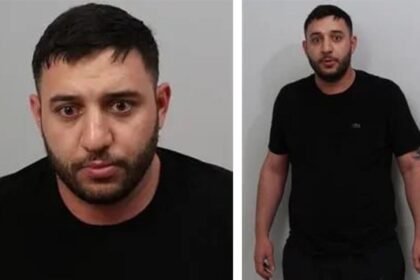
A 65-year-old man and former asylum seeker, Taghi B., posed as a therapist for years, even though he had no degree or qualifications. In fact, his one degree from Russia, has now been determined to be a forgery. Now, several minors reported sexual abuse during psychotherapy sessions, including a 9-year-old girl who said she was groped and molested by the man.
The suspect, who has since obtained German citizenship, worked at an adolescent psychiatric practice in Nordhausen, Germany, for months. There, he gained access to minors despite not having any legitimate credentials. Now, he is facing a string of serious allegations, including sexual assault, manipulation and financial fraud. The case has since exposed alarming failures across multiple institutions charged with protecting children.
The investigation by German public news outlet MDR INVESTIGATIV began with an anonymous tip. Parents from Nordhausen reported alleged fraud and sexual abuse involving a man posing as a therapist: Taghi B. The MDR team indicated that research revealed how a man with no verified credentials had been given access to vulnerable young patients.
The most serious allegation involves a 9-year-old girl, who was allegedly sexually abused during therapy sessions.
Her parents permitted the gynecologist who examined the child victim to speak to MDR outside the normal confidentiality clauses. Gynecologist Dr. Patricia Michaelis from Nordhausen recounted to MDR that the child reported Taghi B. had touched her chest and genitals during a session and attempted to penetrate her with his finger. The family filed complaints with the police, the Association of Statutory Health Insurance Physicians, and the Medical Association. Other families did the same.
In June 2025, the Mühlhausen public prosecutor’s office opened multiple investigations against Taghi B. for sexual harassment and serious sexual abuse. Neither Taghi B. nor Franziska S., the person who originally opened the practice, responded to requests for comment.
Notably, different parents had already become suspicious, as Taghi B.’s name appeared nowhere on the practice website or on the door sign. When the mothers contacted the Medical Association and the Association of Statutory Health Insurance Physicians by phone, they were told that he was not registered with either body as a doctor or psychologist.
Two mothers also told MDR that Taghi B. took over treatment of their sons in the practice. Both mothers quickly became unsettled. According to them, he made exaggerated boasts about himself, downplayed their sons’ medical diagnoses, and intimidated the children. One of the boys, an eight-year-old, cried after every session and refused to return.
Other children come forward
Further victims came forward during the course of the investigation. A 15-year-old, referred to here as Lisa, had urgently sought a therapy place following a hospital stay for severe depression after experiencing sexual abuse. She turned to the practice of Franziska S. From the second appointment onwards, she was treated by Taghi B. alone. Since Franziska S. had introduced him as a colleague, Lisa had assumed he was a qualified psychotherapist.
Lisa described how his compliments made her uncomfortable and his physical contact felt inappropriate. Following a relapse involving self-harm, he is alleged to have stroked her arm for several minutes and repeatedly attempted to view intimate parts of her body. He then began sending her personal messages — among them: “Vacation with Lisa (heart emoji) First, we’ll fix you up a bit.”
He is also said to have requested meetings outside the practice. Other young people who spoke to MDR regarding Taghi B. said that he had sent them similar messages and asked to meet them.
Taghi B. did not even apply for a medical license until the end of that month — a requirement for any therapeutic work in a child and adolescent psychiatric practice. When he eventually submitted the necessary certificates months later, the responsible authority found that the alleged Russian qualifications were forged. The Central Office for Foreign Education confirmed this upon request to MDR.
According to MDR, the defendant arrived in Thuringia from Iran in the 1990s as an asylum seeker with his wife and two children. His name means “pious” in Arabic.
Franziska S. herself is now under investigation for billing fraud and violation of the alternative practitioner law. She is alleged to have billed Taghi B.’s treatments under her own name. The Association of Statutory Health Insurance Physicians has revoked her statutory health insurance license, and the State Office of Administration has suspended her license to practice medicine.
To understand how Franziska S. came to employ an unqualified man with a forged CV, investigators followed the trail back to a martial arts club Taghi B. had quietly dominated for over a decade. He arrived in Thuringia in the 1990s from Iran as an asylum seeker and has since obtained German citizenship. Over the years he built a dojo in Nordhausen — unregistered, unaffiliated — where he taught karate and aikido, predominantly to children. On paper he barely existed within the club; in practice, according to multiple former members, he ran everything.
Those same former members describe a pattern of psychological control: long private conversations, probing personal questions, an absolute intolerance of dissent, and a habit of enlisting followers for his own purposes.
Heidrun Sander, once among his closest associates, says she spent years being slowly manipulated. The group’s ethos encouraged detachment from material wealth — a convenient philosophy, it turned out, when Taghi B. asked her to fund the purchase of a permanent dojo. She handed over €140,000. The repayments came for a while, then stopped entirely. She sued. The Jena Higher Regional Court ruled in February 2026 that he still owes her more than €91,000. Looking back, she said: “I just hope no one is hurt and exempted by him like this anymore.”
This was not, it emerged, the first time he had been investigated. Thuringian prosecutors had looked into allegations of sexual harassment at the martial arts club as far back as 2021. That case was dropped. So were two earlier investigations into suspected child sexual abuse. Nothing was ever proven.
MDR now questions whether there was a systemic failure from authorities. The man has now been charged with sexual harassment and an investigation into serious sexual abuse is ongoing. In addition, the Meiningen public prosecutor’s office is investigating allegations of unauthorized medical activity and fraud.
It is important to note that there is a long-standing pattern of German authorities allowing migrants to obtain important roles in the health establishment despite clear cases of fraud in their background. In one of the most notable examples, the Saudi national Taleb al-Abdulmohsen, who became a high-level psychiatrist in the German health system, despite a history of fraud and death threats. Nicknamed “Dr. Google” due to his lack of medical knowledge, he would go on to ram his car into a Christmas market, killing six and wounding hundreds in a major terror attack. His case has cost millions of euros and remains ongoing.
An Austrian-born economist who has spent decades studying the intersection of artificial intelligence and economic transformation is sounding a stark warning: Within a few years, AI will be capable of performing virtually every intellectual task humans currently do for a living — and the consequences for the labor market could be unlike anything in recorded history.
Anton Korinek, born in 1978 in Reichenau an der Rax and now a professor at the University of Virginia, has been working on the topic of artificial intelligence since the 1990s. In a wide-ranging interview with German newspaper Welt, she wades into a dark realm, including “a risk of mass misery” for humanity.
Asked how many people will lose their jobs to AI in the coming years, Korinek was careful but unsparing.
“There is a tremendous amount of uncertainty about this. There are no models for this because something like this has never happened before,” he said. “But what we can be sure about is that in a few years AI will be able to perform virtually all intellectual activities.”
Korinek is of course far from the only one sounding the alarm, with even the heads of the top AI labs in the world stating that the implications for the global labor market are dire. For example, Anthropic CEO Dario Amodei recently warned that AI could “wipe out” jobs across industries, while stating that “unusually painful” job cuts are ahead.
As has been seen almost ad nauseam since the rise of AI, the debate is whether AI will create new jobs or lead to a permanent replacement of human labor and input. Korinek appears to side with the latter view. He pushed back against the commonly held reassurance that new technologies always create new jobs to replace the ones they destroy.
“First of all, new technologies have not ‘always’ created new jobs, but in the past 250 years, i.e., since the industrial revolution, it is not the technologies that have created new jobs,” he said. “Work was always valuable and irreplaceable. At the same time, our economy continued to grow, and the population continued to grow. That’s why there were more and more jobs — not because of any technology.”
And when his interviewer pointed out that technologies have not yet led to mass unemployment, Korinek offered a pointed historical corrective: “The spinners and weavers who became unemployed as a result of the industrial revolution would disagree with you.”
Anthropic CEO Amodei would likely agree with this take, as he recently stated that the technology is not replacing a single job but “acting as a general labor substitute for humans.”
The fundamental question AI poses, he argues, is one that previous waves of automation never truly raised.
“Will the value of work as a whole continue to rise or will it fall if AI and later robots can perform all work?” he asked. “Until now, the answer has always been that automation only destroys a small portion of jobs. In the next few years, however, there is a risk that all the jobs that can be done in front of a laptop will be lost.”
He added that from there, robotics will disrupt nearly every other job.
When asked by the Welt journalist, Korinek said that AI could likely do his job, including the entire interview, to a reasonably satisfactory degree. Even if shortcomings remain, he noted that the models are quickly advancing every three months.
When the journalist asked how he would “buy vegetables for my family?” stating that”food won’t suddenly be free,” Korinek said that the cost of vegetables would even increase, since AI has such high energy demands.
Korinek said that the question about how people get by in such a scenario has dominated his thoughts.
“That’s exactly what I’ve been thinking about for 10 years,” he said. “There is a risk of mass misery.”
Korinek says he maintains a list of 10 to 12 professional areas that will remain after AI has transformed the economy — though he concedes that half of those are only temporary refuges. What survives in the long run, he argues, comes down to one thing: human presence and personality.
“In the long term, all that remains are all performative professions. Athletes, actors, and so on. Because personality matters — no one is impressed when a robot runs faster than an athlete.” Religious personnel — priests, rabbis — also make his list, as do people whose job it is to monitor AI systems. “If — but that’s a big ‘If’! — people keep control,” he added.
On the question of artistic creativity, Korinek offered one of the interview’s most provocative exchanges. Asked whether AI could write something like King Lear, he reframed the question entirely: “Can a neural network of neurons write ‘King Lear’? The answer is obviously yes, because a neural network wrote ‘King Lear’.”
Essentially, Korinek was implying that Shakespeare was himself a biological neural network. The implication, that the distinction between human and machine creativity may be less absolute than we assume, was not pursued further by the interviewer.
Finally, the conversation turned darker when Korinek addressed the risk of AI systems that surpass human intelligence entirely. Drawing on a vivid analogy, he noted that “no one has the slightest clue what happens when we create something significantly smarter than us.”
He compared the challenge of humans controlling superintelligent AI to toddlers in a kindergarten trying to control an adult: “How well will this work?”
When his interviewer pushed back on the metaphor — suggesting the adult should guide the children, not the other way around — Korinek turned the question back on them: “So you’re in favor of AI taking over in a few years?”
The Welt journalist responds: “I’m just trying to think your metaphor through further. The adult should please take the children by the hand, not the other way around. Unless the adult is a psychopath.”
The researcher then responded: “This is precisely what the dispute between utopians and apocalypticists revolves around. Some believe that the adult will be kind to human beings; others think his values may be radically different from ours. The children in kindergarten are not always happy. Sometimes they don’t like what the adult tells them, even though it’s for their own good. We may soon find ourselves in this situation.”
Italian Prime Minister Giorgia Meloni has sharply criticized judicial decisions blocking the detention of migrants transferred to Albania, citing the case of a Moroccan rapist with a long criminal record whom authorities say they cannot detain or deport after he applied for international protection.
Speaking to RTL 102.5, Meloni said some court rulings preventing the continued detention of migrants transferred to Italian processing centers in Albania were “surreal” and undermined public safety.
“I also wonder where the feminists are in the face of these events,” Meloni said during the interview, referring to the case of one of the migrants, Moroccan national Fathallah Ouardi, who had been transferred to Albania but was later returned to Italy after judges refused to validate his detention.
Meloni said the man had a lengthy criminal record. “The record of one of these migrants includes convictions for drug dealing, resisting a public official, conspiracy to commit sexual assault, and gang rape,” she said, as cited by Secolo d’Italia.
According to the prime minister, the court rejected the detention order after the migrant applied for international protection.
“This is someone who entered Italy illegally, started dealing drugs, and gang-raped a woman — we can’t detain him, we can’t send him to Albania, we can’t repatriate him, and we’re almost forced to grant him international protection,” she said, adding that such decisions raise serious questions about the protection of victims and public confidence in the justice system.
“How can we guarantee the safety of citizens like this?” she asked. “These decisions are surreal; they affect not the government’s work but citizens’ rights, first and foremost, the right to safety.”
“What trust can a woman who has been gang-raped have in the system if her rapist can’t even be deported?” she added. “I also wonder where the feminists of ‘Non una di meno’ are on these issues.”
The Italian leader also defended her government’s migration policies, including the controversial use of offshore migrant processing centers in Albania.
“I am determined to do what the citizens have asked me to do: a tough policy on irregular immigration, including with new tools like the centers in Albania,” Meloni said. “Even though some are trying everything they can to prevent it, I am determined on this and am willing to work three times, four times, ten times harder if necessary.”
Remix News provided reporting this week on another Moroccan national accused of raping a 26-year-old woman in Bottanuco in what was a sustained attack over the course of an evening. The suspect was born in 1987 and has accumulated a series of criminal charges and convictions in Italy over more than a decade.
Authorities say he was investigated for drug trafficking between 2014 and 2015 and charged with illegal immigration in 2015. Records also list illegal entry and residence in Trentino in 2016 and theft in 2017.
Court documents further list convictions including resisting a public official and drug trafficking in 2014, as well as participation in sexual assault and gang sexual assault in 2018. A further drug trafficking conviction was recorded in 2025.
Escalating conflict in the Middle East and surging global oil prices have reignited divisions within Europe over energy policy, with Hungary urging the European Union to immediately lift sanctions on Russian oil and gas imports.
Hungarian Minister for Foreign Affairs and Trade Péter Szijjártó argued that Europe has placed itself in a vulnerable position by cutting off Russian energy supplies just as instability in the Middle East threatens global oil shipments.
“The EU should immediately lift its ban on Russian oil and gas imports,” Szijjártó wrote in a social media post on Monday. “With the war in the Middle East escalating and the Strait of Hormuz closed, a major share of global energy supply is now at risk.”
The EU should immediately lift its ban on Russian oil and gas imports. With the war in the Middle East escalating and the Strait of Hormuz closed, a major share of global energy supply is now at risk.
Europe is especially exposed because the EU had already banned Russian energy…
He said the continent now faces a dual supply shock. “Europe is especially exposed because the EU had already banned Russian energy imports. Now, the conflict in the Middle East is cutting global supply as well,” he said. “When supply shrinks, prices rise. Europe is therefore facing the risk of dramatic price increases.”
“If Brussels keeps the sanctions in place, it will cause serious harm to the European people and the European economy. The focus should be on protecting the interests of Europeans, not ideology,” he added.
The warning comes as global oil prices surged above $100 per barrel on March 8 as fighting between Israel, Iran, and the United States intensified in the Middle East. It is the first time prices have crossed that threshold since 2022, when Russia’s invasion of Ukraine triggered a global energy crisis.
The spike followed military operations by the United States and Israel on February 28 that struck Iranian oil facilities, while other refineries across the Middle East came under attack in retaliatory strikes from Tehran.
Iran responded by closing the Strait of Hormuz, a strategic waterway through which roughly 20 percent of the world’s oil shipments normally pass.
Benchmark Brent crude — one of the main indicators of global oil prices — rose sharply and was expected to climb roughly 16 percent on March 8, approaching $108 per barrel. U.S. crude futures rose about 18 percent, briefly touching $110, the highest level recorded since July 2022.
U.S. President Donald Trump played down the significance of the price increase in a post on his Truth Social platform, calling it a temporary consequence of the confrontation with Iran. “Short term oil prices, which will drop rapidly when the destruction of the Iran nuclear threat is over, is a very small price to pay for U.S.A., and World, Safety and Peace,” Trump wrote.
In Germany, the price surge is already producing knock-on effects at the local level. Customs authorities have stepped up checks on so-called “fuel tourists” crossing the border from neighboring countries to take advantage of lower gas prices.
Customs officials in the eastern state of Brandenburg have begun random checks at border crossings with Poland as price differences between the two countries widen. As reported by Welt, customs spokeswoman Lisa Pörschmann said that authorities are focusing on motorists returning from Poland and the Czech Republic with undeclared fuel purchases.
According to customs officials, petrol prices in Poland and the Czech Republic are currently between 30 and 60 cents per liter cheaper than in Germany. The East Brandenburg Chamber of Industry and Commerce said the price gap has already led to long queues at filling stations on the Polish side of the border, putting additional pressure on German fuel retailers in border regions.
The ongoing crisis in Central and Eastern Europe over the future of the Druzhba, or Friendship, pipeline still remains. The pipeline transports Russian crude through Ukraine to refineries in countries such as Hungary and Slovakia, but Kyiv has turned off the taps, insisting that the infrastructure is damaged without allowing independent experts to verify its claims.
Slovak Prime Minister Robert Fico said he would meet European Commission President Ursula von der Leyen on Tuesday to press for the restoration of oil flows through the pipeline. Speaking in a Facebook video on Sunday, Fico warned that Slovakia could join Hungary in blocking the EU’s €90 billion loan earmarked for Ukraine if the dispute over Russian oil deliveries is not resolved.
“Slovakia is ready to take over the baton from Hungary, if necessary,” he said, as cited by Reuters. “Blocking this huge military gift to Ukraine is a legitimate tool to achieve the restoration of oil supplies.”
Hungary has already vetoed new EU sanctions on Russia and the multi-billion loan package for Ukraine, tying the dispute to broader disagreements within the bloc over energy policy and support for Kyiv.
As uncertainty over Russian supply grows, Hungary is also exploring alternative routes for crude imports. The country’s oil and gas company MOL announced earlier this month that capacity tests on the Adria pipeline from Croatia will begin on March 11 and continue for approximately 10 months.
Market indicators suggest energy traders are scrambling to secure alternative supplies as uncertainty spreads across global markets. According to Marhelm Data, the Baltic LNG index surged by 543 percent this week, the largest percentage increase on record, as buyers rushed to secure supplies from the United States, Russia, and other suppliers after the apparent loss of Qatari volumes.
543% increase in the Baltic LNG index this week – the largest % increase in history – on a rush to secure US, Russian, and LNG cargoes after the complete loss of Qatari volumes
At the same time, the global energy disruption could benefit Russia as higher prices increase the value of its exports. On March 6, the United States granted India a temporary waiver allowing it to continue purchasing Russian oil, while officials in Washington suggested that certain restrictions on Russian energy exports could potentially be eased if needed to stabilize global supply.
Meanwhile, Moscow has signaled that it may accelerate its own shift away from European energy markets. Russian President Vladimir Putin said in a recent interview with journalist Pavel Zarubin that Russia could redirect gas exports to other buyers rather than continue supplying a market that plans to phase out Russian energy imports anyway.
“Now, other markets are opening up,” Putin said. “And it might be more profitable for us to stop supplies to the European market right now. To move to those markets that are opening up and gain a foothold there.”
Residents in western Ukraine have physically intervened to stop a recruitment center vehicle from transporting a man earmarked for military service, in an incident that highlights growing resistance to mobilization across the country.
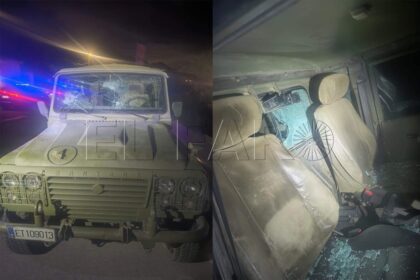
The confrontation took place near the village of Ozera in the Volyn region. According to the regional recruiting and auxiliary command, a convoy of around seven civilian cars pursued a minibus operated by the territorial recruitment center. The pursuing vehicles began blocking the road and created a dangerous situation, forcing the minibus into a roadside ditch — as reported by the Ukrainian news portal Strana.ua. It is important to note that the publication is often considered to have a pro-Russian stance.
According to the news outlet, the locals then broke a window of the service vehicle and pulled the man free before he could be taken to the recruitment center.
The recruitment center confirmed that the freed individual is a resident of the Zaporizhzhia region. An investigation has been launched, and the identities of those involved in the interception are still being established.
The incident is not an isolated one. In the Lviv region, a mobilization minibus was previously fired upon, and in the city of Lviv itself, a woman discharged a weapon at a vehicle carrying police officers and military recruiters.
Taken together, these episodes reflect a broader and intensifying trend: In recent months, resistance to military mobilization across Ukraine has been steadily growing.
A 43-year-old Moroccan man residing in Bottanuco has been arrested following a violent attack on a 26-year-old woman that included assault with a saber and repeated cases of rape over the course of a single night.
The victim, who was reportedly drugged by the suspect, regained consciousness on the Saturday afternoon following the attack. She woke up on the man’s bed without clothing on her lower body, suffering pain throughout her body, a bruise on one temple, a hot wax burn on one hand, lower back pain, scratches and swelling. With no memory of what had happened in the preceding hours, she immediately fled.
She grabbed the first clothes she could find, picked up an old Motorola phone she spotted, went out into the street and called emergency services.
She then told medical workers at the Pope John XXIII Hospital what she could remember. Staff identified traces of sexual violence and kept her hospitalized for several days. The Carabinieri of Osio Sotto, who had arrived alongside the ambulance, also took her account — including her recollection of having seen large quantities of drugs on the premises, according to Italian news outlet Corriere del Sera.
Investigators were able to piece together what happened to the woman on the evening of Feb. 27, when the woman went with an acquaintance to visit the Moroccan man. His full role in arranging the encounter is still being investigated.
The suspect, identified as H.M., initially appeared friendly, but his demeanor changed abruptly when the woman declined his requests — to drink green tea, take drugs, and take a shower with him. He threw a glass object at her, struck her in the side with an iron object, and dragged her to the bathroom, where he attempted to persuade her to shower with him. It is at this point that the woman’s memory went completely blank.
Investigators believe she was given a substance without her knowledge. It was during this period that she was repeatedly raped.
On Saturday evening, officers visited the suspect’s home in Bottanuco and found him there along with 82 grams of cocaine, 10 grams of hashish, packaging materials, and €730 in cash believed to be proceeds from drug dealing. Also recovered were two sabers, each approximately one meter long, one of which is believed to have been used to beat the victim. The woman’s jeans and leather jacket were still on the floor — the trousers bore biological traces consistent with semen. The man was arrested on the spot.
The man has a long criminal history. In fact, he had been arrested just five months earlier in the Milan area on an identical sexual assault charge and features a lengthy criminal record, including drug offenses, threats, receiving stolen goods, and weapons possession.
The suspect denied all charges. He claimed to have no connection to the drugs, suggesting someone had planted them in his home to set him up. On the question of sexual violence, he initially stated he had taken pity on the woman because she had already arrived with injuries. When confronted with the forensic evidence found on her clothing, he conceded that he had given the woman only “a few kisses and hugs.”
Investigating judge Luca Bonifacio found this account entirely unconvincing and ordered pretrial detention. The judge cited “concrete danger of repetition of the crime.” The suspect’s profile was described as “alarming not only for the manner of the violence, but also for the presence of a recent police precedent for similar events.”
The judge noted that detention was the only answer for the defendant’s “irrepressible antisocial impulses.”
In the wake of a Fidesz candidate winning the Kazincbarcika by-election, Hungarian Prime Minister Viktor Orbán and other politicians from the ruling party celebrated the victory ahead of the country’s hotly contested parliamentary election next month.
A key aspect of this election was that Fidesz has not won in Kazincbarcika, previously an opposition stronghold, in over 15 years. It was also the second by-election won by Fidesz in just a short time, notes Magyar Nemzet, as the ruling coalition won a district in Balmazújváros just a month ago.
In both elections, the left-liberal opposition had predicted a Fidesz defeat.
“Huge victory in Kazincbarcika in the by-election. Reality vs. Tisza: 2:0. In this settlement, we won a single local government district after 16 years,” Orbán posted on Facebook.
Foreign Minister Péter Szijjártó posted: “Something happened yesterday that hasn’t happened in sixteen years: we won a local government election in Kazincbarcika! Attila Kaló, the Fidesz candidate, confidently dismissed the opposition candidate and won the district. So much for the relationship between reality and ‘opinion polls’… Bravo!”
Fidesz MP and communications director Tamás Menczer also posted: “Another success, Fidesz won the by-election in Kazincbarcika! After 16 years, we won an individual local government district! The local Tisza-sziget member, who ran as a civilian, came third,” he wrote, emphasizing the poor showing for the Tisza party, led by opposition leader Péter Magyar.
In Balmazújváros last month, Zoltán Nagy, the ruling party candidate, received 47 percent of the votes. His opponent, the candidate of the local opposition association supported by the opposition parties, was Péter Molnár, a Tisza sympathizer, who received 43 percent of the votes. A third, independent candidate received 9 percent. Thus, the ruling parties gained a majority in the council of representatives.
Fidesz also regained the Balmazújváros mayor’s office in 2024 from the local opposition, who had held that post for five years. Now, Fidesz has a majority of representatives, as the candidate of the governing parties has now won in a district where it was unable to do so in 2024.
Péter Magyar and his Tisza party have come under increasing scrutiny for supporting Brussels’ agenda, including money and weapons for Ukraine, over the interests of Hungarian sovereignty and citizens.
Just last week, a convoy of Ukrainian military and ex-military personnel was detained by Hungarian authorities, and later expelled from the country, carrying close to €80 million in cash and gold. The men detained were represented by a law firm associated with Tisza.
Slovak Prime Minister Robert Fico stated that Ukrainian President Volodymyr Zelensky could order the destruction of the Druzhba oil pipeline, criticizing the European Commission’s lack of action to get Kyiv to change its mind.
Fico slammed what he called the “ruthless, brutal violation” of international law by large and powerful states in a video posted on Facebook, quoted by Do Rzeczy, apparently referring to the Ukrainian president, saying it “pushes others into cowboy-style behavior.”
“What Ukrainian President Zelensky showed by threatening Hungarian Prime Minister Viktor Orbán crossed all boundaries,” he said.
Zelensky issues dire threat to Hungarian PM Orbán if he continues to block €90 billion in loans to Ukraine.
"We hope this one person [Orban] in the EU will not block €90 billion aid. Otherwise, we will give this person's address to our armed forces."pic.twitter.com/ayoSJlDCEs
Fico also said that Volodymyr Zelensky “constantly harms us and believes he can force us to abandon our peaceful stance in favor of a war stance.”
“He’s completely wrong. He doesn’t know me… Oil deliveries through Ukrainian territory are essential for us. But it’s clear that the Ukrainian president has no intention of continuing them, which would mean huge losses for us,” he said.
The Slovak prime minister also criticized the European Commission, accusing it of putting the interests of Ukraine, which is not an EU member, above the “vital national interests of Slovakia and Hungary as EU member states.”
“I will continue to propose that the European Commission compel the president of Ukraine, who has all the resources to do so, to allow a visit to the site where the pipeline was allegedly damaged. Our information and satellite images confirm that nothing has happened to the pipeline. If we delay, I have no doubt that the president of Ukraine is capable of destroying the pipeline,” he stated.
Robert Fico announced earlier on Sunday that he would meet with Ursula von der Leyen in Paris and would press for experts to visit the Friendship pipeline.
The Slovak prime minister warned that he could block a €90 billion EU loan to Kyiv.
“But the most important message will be that Slovakia is ready to take over from Hungary if necessary,” he said, referring to an April election result in which Orbán lost power. “Blocking this massive military donation to Ukraine is a legitimate tool to restore oil supplies.”
The transport of Russian crude oil via the Druzhba pipeline through Ukraine was suspended at the end of January due to large-scale Russian attacks on Ukrainian energy infrastructure, which Kyiv says will take time to repair.
On Feb. 23, Robert Fico announced that “from today on, the rule is that if the Ukrainian side asks Slovakia for help in stabilizing the energy grid, it will not receive such assistance.”
Due to problems with transit through the Druzhba oil pipeline, Hungarian Foreign Minister Péter Szijjártó subsequently announced that Hungary would suspend diesel fuel supplies to Ukraine until the pipeline resumes operation.
A few days later, Szijjarto announced on the X platform that “Hungary will block the EU’s 90 billion loan to Ukraine until the transit of oil to Hungary via the Druzhba pipeline is resumed.” Hungary also did not support the 20th package of EU sanctions against Russia.
On March 2, Orbán announced that satellite imagery and operational information confirmed that the Druzhba pipeline, which transports Russian oil via Ukraine to Hungary and Slovakia, was operational. He called on Volodymyr Zelensky to immediately resume oil deliveries.
A Fidesz volunteer has been shot at with a gas pistol while knocking on doors during these final weeks before Hungary’s election in Szentendre, government spokesperson Eszter Vitályos, the region’s MP, said in a Facebook post.
“I just received the incredibly outrageous and shocking call that one of our volunteers, who knocks on houses in Szentendre, was shot at from a window,” said Eszter Vitályos, as quoted by Magyar Nemzet.
According to the government spokesperson, behind such cases lies political aggression and hatred, which she believes has intensified recently, placing the blame for such escalation squarely on Péter Magyar’s Tisza party.
“This is where Péter Magyar and the aggression and hatred that the Tisza Party has brought with it since its appearance lead,” Vitályos said.
“Enough of the violence! That’s it and no more!” her video post reads.
In another video, Vitályos called the activist in question, who reported that he had rung the bell of an apartment to collect signatures. After introducing himself, the owner of the apartment asked him to wait one moment.
He then leaned out the window and fired a shot with a gas pistol at the Fidesz volunteer.
Fortunately, he managed to escape and was not injured in any way. The ruling party politician asked the young man to file a police report.
Vitályos also posted a message to Péter Magyar: “A Fidesz activist was shot at today. According to Péter Magyar, it was just ‘a game.’” Vitályos went on to claim that Magyar said no one will believe this, that the incident was essentially a nothing burger. “Péter! Enough! This is where your months-long campaign of incitement and hatred is leading,” the Fidesz politician wrote.
According to Telex, Magyar also reacted, intimating that the incident was a lie or implicating Tisza in it was a lie. “Don’t lie, because Tisza is the party of peace. (…) We will not give in to your provocation,” he reportedly said.
Hungarian Prime Minister Viktor Orbán took time to phone the young man, after hearing about the incident and speaking to Vitályos. He also posted a video of his calls on Facebook, with the caption, “We cannot allow hatred and fear mongering to take hold in Hungary. This must end urgently!”
The National Tax and Customs Administration (NAV) announced on Friday that it had stopped two armored cash-transport vehicles and seven Ukrainian citizens, including a former Ukrainian intelligence general, on March 5. The vehicles were traveling from Austria to Ukraine, carrying $40 million, €35 million and 9 kilograms of gold.
“Who did the Ukrainian money transporters transport 480 billion forints of wealth through our country in two months?” asks Magyar Nemzet.
NAV, which is conducting criminal proceedings on suspicion of money laundering, also announced that this year alone, more than $900 million, €420 million and 146 kilograms of gold bars have been transported to Ukraine through Hungarian territory.
The Ukrainians detained have been expelled from Hungary, with Kyiv confirming they are back in Ukraine. There has been no indication of what has happened to the money and gold seized.
Budapest’s investigation focuses on yet more corruption at the hands of Zelensky’s government. Foreign Minister Péter Szijjártó asked on Friday “if this is not the money of the Ukrainian war mafia,” demanding an immediate explanation from Ukraine regarding the huge amount of cash and gold.
The Ukrainian Foreign Ministry has stated that the seven Ukrainian citizens are employees of the state-owned Oschadbank, i.e., Takarékbank. They were driving two bank vehicles transporting cash as part of a regular service between state-owned banks, from Austria to Ukraine. However, the money transport was supervised by a former general of the Ukrainian Defense Service, his deputy was a major in the air force, and the others also have a military past.
A Ukrainian YouTuber, Anatolij Sharij, quoted by MN, had this to say: “I was convinced that the money belonged to Zelensky. Some kind of abuse. However, today I received information that the money did not belong to Zelensky, but to his European colleagues. The story is completely fantastic, and yesterday it seemed unrealistic to me. But today, numerous sources are reporting that Orbán did not strike in Kyiv, but in Brussels. It is about 80 million euros and about 10 kilograms of gold. In Brussels, they know whose money it is. […] Orbán acted very precisely and hit where it hurt.”
Corruption has been an ongoing issue for Kyiv and has involved people close to Zelensky. One now-famous case featuring a golden toilet and allegedly $100 million of stolen money has led to international warrants against Ukrainian-Israeli Timur Mindich, known as Zelensky’s “cash wallet,” and his business partner Alexander Zuckerman, who also reportedly holds Israeli citizenship. Both have been reported to be hiding out in Israel.
Former Justice Minister German Galushchenko was arrested attempting to leave Ukraine, while yet another Zelensky official, former Deputy Prime Minister Oleksiy Chernyshov, was also arrested.
Meanwhile, the Mandiner news portal also revealed that Lóránt Horváth, the lawyer representing the Ukrainian money transporters captured by the Counter-Terrorism Center (TEK), works at the same firm as Adrienn Laczó, who is a member of and fervent supporter of the opposition Tisza Party, led by Péter Magyar.
“It is a fact that I firmly believe that Hungary is in dire need of a new regime change, and at the moment I see the only custodian of this – along with my multi-millionaire self – in the Tisza Party,” Mandiner quoted Laczó’s post.
It was previously revealed that Laczó regularly met with Zoltán Tarr, the vice-chairman of the Tisza Party, and Tarr himself boasted about this, saying that he was working with the “outcast judge” on a “judicial restoration plan,” which means that if they come to power, they will attack the entire judicial system.
“I can tell you, because it’s no secret now: This week I met Adrien Laczó, who is a judge (…), and they have an association (…) where they are dealing with how to restore the country, the judiciary, to what the country has been diverted from with very serious work, with the investment of a lot of smart people and a lot of energy. This is very good because we are preparing for the fact that if there is an election and we manage to achieve such a result, then we will have to touch on those spoiled, consciously dismantled things that represent the country, and a very important element of this is putting the judiciary in order, restoring the independence of the judiciary,” said the Tisza politician.
Tensions have been boiling over between Ukraine and Hungary regarding Zelensky’s refusal to restart the Friendship oil pipeline, which carries Russian oil to both Hungary and Slovakia. In the wake of the Iran War and closure of the Strait of Hormuz, there were some indications that Brussels would be inclined to change course and force Kyiv to restart that energy supply.
But yesterday, FM Péter Szijjártó posted the letter Hungary sent to the European Commission, led by staunch Ukraine ally Ursula von der Leyen.
“The @EU_Commission did not stand up for Hungary and Slovakia. Instead, it claims our countries face no supply difficulties and is defending Ukraine rather than supporting two member states. Moreover, Brussels is cooperating with Croatia to block Russian oil deliveries to Hungary and Slovakia by sea, despite the EU decision allowing this when pipeline transport is not possible. This is shameful and outrageous,” Szijjártó wrote on X.
EU Energy Commissioner Dan Jørgensen, meanwhile, wrote on X about Brussels’ drive for more coordinated, secure and cleaner energy: “One thing is clear: reliance on imported fossil fuels brings too many risks. We need to double down on the energy transition. We must continue to expand our clean, homegrown renewable energy & energy efficiency, while modernising and increasing our energy infrastructure.”
Ukraine has also decided to double down on the threats against Hungary. Just a day after Zelensky decided to threaten PM Viktor Orbán, well-known political analyst Aleksei Zhulavsky posted a YouTube video in which he said that 120,000 Ukrainian “recruiting officers” would be sent to Hungary to abduct (“pack up”) Hungarian men to preumably be sent to the front, reports Ellenpont.
“Orbán believes in himself and said that he will force Ukraine to repair the Friendship oil pipeline. Orbán, I will explain to you how this will all happen. Listen to this: We will send our TCKs to you in Hungary with Ukraine. How many soldiers do you have, forty thousand? We have three times as many TCKs. Not a single shot will be fired. They will simply arrive, ‘pack up’ all the men, and that will be the end of it. Well, something like this,” the portal quotes Zhulavsky as saying, adding that the analyst believes Kyiv seeks to interfere in Hungary’s April parliamentary election to get pro-Ukraine and Brussels-aligned Péter Magyar into power.
The ongoing Iran War and the closure of the Strait of Hormuz are pushing oil prices higher, and a new study warns that Germany could face severe economic consequences if the trend persists.
The German Economic Institute (IW) has sounded the alarm over the potential damage to German economic output.
“If the price of oil were to rise to 150 U.S. dollars per barrel, the costs for the German economy would amount to 0.5 percent of gross domestic product in 2026 and 1.3 percent in 2027,” according to the institute’s economists.
“In absolute terms, this corresponds to a real loss of economic output of over 80 billion euros in two years.”
Oil is currently trading at between $76 and $82 per barrel on global markets. While the U.S. and Israel could gain control of the strait, there are fears that a closure could last for weeks or even months, according to the study.
The study shows that an even more modest but sustained rise to $100 per barrel would carry a significant price tag. At that level, Germany would forfeit 0.3 percent of economic output this year and 0.6 percent in 2027.
“Overall, this would be a loss of economic output of about 40 billion euros over two years,” write the authors.
A prolonged surge in oil prices would also feed through to consumer prices. Should oil reach $100, inflation would run approximately 0.8 percent higher in 2026 and 1.0 percent higher in 2027. At $150 per barrel, Germans could face consumer prices roughly 1.6 percent higher in 2026 and around 1.9 percent higher in 2027.
The institute noted that while the United States remains the world’s largest oil producer, the nations directly or indirectly caught up in the Iran conflict account for “almost a third of global oil production, with Saudi Arabia alone accounting for one-tenth.”
Despite Germany’s shift to renewables, the researchers were unambiguous about Germany’s ongoing reliance on fossil fuels, describing oil and natural gas as “indispensable” for the country. Germany’s industrial producers, including the chemical, machine tools, and automobile industries, have already suffered due to Germany’s high energy costs. Soaring prices for oil and natural gas could lead to unpredictable and disastrous scenarios.
“Despite declining oil intensity over the past decades, Germany still accounts for approximately two percent of global oil consumption.” For private households, spending on fuels and heating oil represents “around four percent of their consumption budget.”
In addition, many products in Germany rely on oil to make, including car tires, fertilizers, and cosmetics.
At this stage, however, it is difficult to predict what oil costing $150 a barrel or more would do to the global economy.
On Friday, Qatari Energy Minister Saad al-Kaabi told the Financial Times that the war could lead to a supply shock, with Gulf energy exporters cutting output to the point that oil reaches beyond $150.
“Everybody who has not called for force majeure we expect will do so in the next few days if this continues. All exporters in the Gulf region will have to call a force majeure,” Kaabi said. “If they don’t, they are at some point going to pay the liability for that legally, and that’s their choice.”
“This will bring down the economies of the world… if this war continues for a few weeks, GDP growth around the world will be impacted. Everybody’s energy price is going to go higher. There will be shortages of some products, and there will be a chain reaction of factories that cannot supply,” he said.
The German police have waited nearly a year to release a composite sketch of a man accused of ripping a 13-year-old girl off her bicycle in Rheine, North Rhine-Westphalia, and sexually assaulting her after her school day was finished.
The girl was riding her bicycle on May 6, when the man attacked her at 1:30 p.m., not far from her school, the Copernicus Gymnasium.
Local police described the incident as follows: “The unknown man stood in a small alley. He pulled the girl off her bike.” Although police have not disclosed exactly what happened to the girl, they describe the man sexually assaulting her in the alleyway.
After the incident, “he then threatened her with death if she told anyone about the crime.”
The student was able to break free from the pedophile and flee. She provided a very detailed description of the man, describing him as 40 years old, 1.90 meters tall, and slim. He has dark eyes and dark brown hair, which has curls down to the ears. He was wearing black pants and a blue t-shirt.
Bild indicated that the police did not disclose why the composite sketch was not created and published the sketch right after the crime instead of waiting nearly a year.
However, even when German police have an actual photo of a suspect, it can sometimes take months for judges to approve the release of such photos.
Hungarian authorities have detained seven Ukrainian citizens and seized tens of millions of dollars, euros, and gold that were being transported through the country in armored vehicles, triggering the latest diplomatic dispute between Budapest and Kyiv.
Hungary’s National Tax and Customs Administration (NAV) confirmed on Friday that criminal proceedings had been launched on suspicion of money laundering following an operation carried out on March 5. Authorities intercepted two armored cash-transport vehicles traveling through Hungary from Austria toward Ukraine.
According to the Hungarian authorities, the vehicles were carrying approximately $40 million, €35 million in cash, and 9 kilograms of gold.
Hungarian Foreign Minister Péter Szijjártó said the case raised serious questions about the movement of large quantities of physical cash through the country.
“Since January, a total of $900 million and €420 million in cash has been transported through Hungary, and 146 kilograms of gold bars have also been transported through the country,” he said, as cited by Magyar Hírlap.
“We have a number of serious questions about this. First of all, this is a huge amount of cash, and we wonder why Ukrainians need to transport such a large amount of cash. If it is true that this is a transaction between banks, then the question rightly arises as to why the banks do not settle this between themselves by bank transfer, why it is necessary to transport such a large amount of cash, and why it has to be transported through Hungary,” Szijjártó added.
“These questions arise mainly because these cash shipments are accompanied by people who have clear ties to Ukrainian secret services.”
🇭🇺Hungary confirms detaining seven people in an alleged money-laundering probe. Authorities say the case involves $40m, €35m and 9 kg of gold. 🤡 Kiev calls it “hostage-taking.” Western media repeat it. Funny how anti-Orbán headlines appear just weeks before Hungary’s… pic.twitter.com/AkTHHsMbrA
Hungarian Prime Minister Viktor Orbán’s political director, Balázs Orbán, also commented on the case, raising concerns about the purpose of the funds.
“Hundreds of millions in cash and gold moving through Hungary toward Ukraine — escorted by people linked to Ukrainian intelligence. Armored vehicles, suitcases full of money, staggering sums,” he wrote on X.
‼️💵 💰 Hundreds of millions in cash and gold moving through 🇭🇺 Hungary toward Ukraine — escorted by people linked to Ukrainian intelligence. Armored vehicles, suitcases full of money, staggering sums.
“Whose money is this? What was it meant to finance? Who benefits from it? And why must such enormous amounts of cash travel across our country instead of being transferred through normal banking channels?”
He added that authorities would conduct a full investigation and argued that the Hungarian public had a right to know where such funds were coming from and what they were intended for.
Ukraine, however, has strongly rejected the allegations and accused Hungary of illegally detaining its citizens and confiscating bank property.
Ukrainian Foreign Minister Andrii Sybiha said the seven individuals were employees of the state-owned Oschadbank who were conducting a routine cash transfer between financial institutions.
“Today in Budapest, Hungarian authorities took seven Ukrainian citizens hostage. The reasons are still unknown, as well as their current well-being, or the possibility of contacting them,” Sybiha said in a social media post cited by Ukrinform.
According to Kyiv, the vehicles were transporting currency and precious metals between Raiffeisen Bank Austria and Oschadbank Ukraine as part of standard banking operations.
Sybiha accused Hungary of acting unlawfully. “If this is the ‘force’ announced earlier today by Mr. Orban, then this is the force of a criminal gang. This is state terrorism and racketeering,” he said.
Oschadbank also confirmed that two of its armored vehicles and a seven-member transport team had been detained in Hungary while carrying out what it described as a routine transfer of funds and banking metals.
“The value of the assets in the seized vehicles amounted to $40 million, EUR 35 million, and 9 kg of gold,” the bank said in a statement, adding that the transport had been documented in accordance with international banking and customs procedures.
According to GPS tracking data cited by the bank, the vehicles were last located in central Budapest near one of Hungary’s law enforcement agencies. Ukrainian officials said the whereabouts of the bank employees were not immediately known.
Ukraine’s foreign ministry has also issued a warning advising Ukrainian citizens to avoid traveling through Hungary following what it described as the “kidnapping” of the bank employees and seizure of state bank assets.
The incident marks the latest escalation in already strained relations between the two countries.
Zelensky issues dire threat to Hungarian PM Orbán if he continues to block €90 billion in loans to Ukraine.
"We hope this one person [Orban] in the EU will not block €90 billion aid. Otherwise, we will give this person's address to our armed forces."pic.twitter.com/ayoSJlDCEs
On Thursday, Ukrainian President Volodymyr Zelensky sparked outrage among European nationalist politicians by suggesting that Hungarian Prime Minister Viktor Orbán’s address could be given to Ukrainian armed forces so they could “speak to him in their own language.”
Hungarian officials interpreted the remark as a threat directed at Orbán amid ongoing disputes over Hungary’s opposition to a proposed €90 billion EU loan package for Ukraine.
An asylum-seeking family in Austria has been ordered to repay €66,457 in welfare benefits after authorities discovered the family possessed significant assets back home in Turkey, including a large vineyard, an apartment in Istanbul, and a significant amount of cryptocurrency.
The case emerged following an inspection at an asylum facility in the Upper Austrian town of Braunau last summer. Officials found that the 37-year-old father of the family owned prime real estate back in Turkey.
As reported by Kronen Zeitung, investigators also uncovered a cryptocurrency wallet containing 1.5 Bitcoins, which were valued at approximately €150,000 at the time.
Upper Austrian authorities responded by immediately terminating the family’s eligibility for basic services. Their accommodation was also revoked, and on July 20, the state issued a formal demand for repayment totaling €66,457. The sum covered basic welfare services, food allowances, health insurance, and accommodation costs provided to the family.
However, the family has contested the repayment demand, and the case is now pending before a court.
“We use all legal means to hold those responsible accountable in cases of social welfare fraud. In this way, we were able to recover approximately €900,000 in misused welfare funds last year — the case is still pending in court, and we are pursuing it rigorously,” said Upper Austrian State Councillor for Integration Christian Dörfel.
The case comes amid broader concerns about welfare fraud in Austria. Last year, it was reported that authorities recorded 4,865 cases of social benefits fraud pertaining to 2024, according to figures from the Social Benefits Fraud Task Force (SOLBE).
Since the agency was established in 2018, investigators say they have uncovered fraudulent claims totaling €135.6 million. Officials estimate that around 70 percent of suspects in these cases are foreign nationals.
“More than 70 percent of the suspects are not Austrian citizens,” said Gerald Tatzgern, head of the department responsible for combating welfare fraud.
One common scheme uncovered by investigators involves couples registering at separate addresses in order to receive higher benefit payments while continuing to live together.
Authorities have cited several high-profile cases. In one example, a Bosnian national received €1,250 per month in Austrian social benefits while simultaneously earning income by renting out multiple properties in his home country. The scheme reportedly cost Austrian taxpayers around €100,000.
In November 2024, a 62-year-old Syrian man went on trial, accused of fraudulently receiving nearly €200,000 in social benefits over a decade.
Prosecutors allege that between August 2014 and January 2024, the man received up to €1,400 per month in minimum income support and health insurance benefits despite allegedly holding Turkish citizenship, which could have affected his eligibility for assistance.
Most welfare fraud cases have been recorded in Vienna, where authorities uncovered 2,626 cases, followed by Lower Austria with 508 cases. Since 2018, the task force has investigated a total of 25,156 suspected cases.
Ukrainian President Volodymyr Zelensky’s thinly veiled threat to send soldiers to Hungarian Prime Minister Viktor Orbán’s home address has elicited a reaction from a variety of European politicians, including Alternative for Germany (AfD) co-leader Alice Weidel and Slovak Prime Minister Robert Fico, who both condemned Zelensky’s statement.
Zelensky’s threatening statement prompted outrage from the Hungarian government yesterday, with the Ukrainian leader stating: “We hope that not a single person in the European Union will block the 90 billion, or the first tranche of the 90 billion [euros], and that the Ukrainian soldiers will have weapons,” Zelensky said during the briefing.
He then added a remark that Hungarian officials interpreted as a threat directed at Orbán.
“Otherwise, we will give this person’s address to our armed forces, and then they will call him and speak to him in their own language,” Zelensky said.
In response, Weidel wrote on X: “Zelensky—the premium partner of the German federal government and the EU—openly threatens the head of state of Hungary, Viktor Orbán, with a ‘visit’ from his soldiers to Orbán’s private address. A dam has burst.”
Selensky – der Premiumpartner der deutschen Bundesregierung und der EU – droht dem Staatsoberhaupt Ungarns Viktor Orban offen mit dem „Besuch“ seiner Soldaten an Orbans Privatadresse. Ein Dammbruch. https://t.co/DnmJY2zct2
In turn, Slovak leader Fico also addressed the threat, stating: “About five minutes ago I saw a shocking video of the Ukrainian President Volodymyr Zelensky. A video in which he directly threatens the Prime Minister of Hungary, Viktor Orbán, because the Hungarian government is currently blocking a 90 billion euro military loan for Ukraine.”
He referred to this as “blackmailing behavior” from Zelensky and stated that it was “unacceptable to think we are his servants.” He said that regardless of the war in Ukraine, the threat against Orbán is something “we all must reject.”
He called on the leaders of the European Union, directly referencing Ursula von der Leyen, to “distance themselves from these outrageous blackmailing statements” from Zelensky.
REACTION OF THE PRIME MINISTER OF THE SLOVAK REPUBLIC, ROBERT FICO, TO THE BLACKMAILING BEHAVIOR OF UKRAINIAN PRESIDENT ZELENSKYY
I express full solidarity with the Prime Minister of Hungary, @PM_ViktorOrban. If the Ukrainian president continues like this, it may happen that… pic.twitter.com/NLKfyZPZ1j
Orbán also responded to the threat of violence, stating: “President @ZelenskyyUa’s threats are not about me. He is threatening Hungary. Unfortunately for him, he cannot stop me from protecting Hungarian families.”
President @ZelenskyyUa's threats are not about me. He is threatening Hungary.
Unfortunately for him, he cannot stop me from protecting Hungarian families. 🇭🇺🇭🇺🇭🇺 pic.twitter.com/7bPSeBjexn
Zelensky’s threat has only escalated tensions between the two governments amid a widening dispute over energy supplies and military funding right before national elections in Hungary.
Speaking about the state of Ukraine’s armed forces on Thursday, Zelensky expressed frustration to a Ukrainian parliamentary committee that Hungary has blocked a proposed €90 billion joint European loan intended to finance weapons for Ukraine. Budapest has withheld support for the measure amid an ongoing dispute triggered by the shutdown of the Druzhba, or Friendship, oil pipeline that carries Russian crude oil through Ukraine to Hungary and Slovakia.
Hungarian newspaper Magyar Nemzet argued that the phrase “speak to him in their own language” strongly implies the use of force. The Ukrainian expression Zelensky used — спілкуватися своєю мовою — is widely understood as a colloquial phrase suggesting a harsher response rather than diplomatic dialogue.
Hungarian Foreign Minister Péter Szijjártó also responded to Zelensky’s comment, saying: “It goes beyond all boundaries that Ukrainian President Volodymyr Zelensky has practically threatened Prime Minister Viktor Orbán with death.”
“This is a completely new situation in Europe, where the president of a European country is threatening the prime minister of a NATO and EU member state with murder,” he added.
In a short film encouraging prayer for the Pope’s intention for March 2026, Leo XIV recalled that God created us all in his image and likeness, for community and brotherhood, not for war and destruction. “You who greeted your disciples with the words ‘peace be with you,’ grant us the gift of your peace and the strength to realize it in history,” the Holy Father prayed.
His prayer intention focuses on “effective disarmament, especially nuclear disarmament,” as well as peace, so that “world leaders choose the path of dialogue and diplomacy over violence,” as cited by Do Rzeczy.
“Today we raise a prayer to God for peace in the world, asking that nations renounce weapons and choose the path of dialogue and diplomacy,” said Pope Leo XIV.
Pope Leo XIV emphasized that each of us must “disarm” our hearts of hatred, anger and indifference in order to become “an instrument of reconciliation.”
Leo XIV asked God to help us understand that true security does not come from control fueled by fear, but from trust, justice, and solidarity among nations. “Lord, enlighten the leaders of nations so that they may have the courage to abandon ‘projects of death,’ halt the arms race, and place the most defenseless at the center of their lives. May the nuclear threat never again dictate the future of humanity,” the Pope said.
The Holy Father also emphasized that building peace is the task for each of us. “Holy Spirit, make us faithful and creative builders of daily peace: in our hearts, our families, our communities, and our cities. May every kind word, every gesture of reconciliation, and every choice of dialogue be the seed of a new world,” he said.
Leo XIV also presented his official position on the American-Israeli attack on Iran. “Faced with the threat of a tragedy of enormous proportions, I make a heartfelt appeal to the parties involved to assume their moral responsibility to stop the spiral of violence before it becomes an irreversible abyss!”
“May diplomacy recover its role and may the good of peoples be promoted, peoples who long for peaceful coexistence founded on justice,” he said. “And let us continue to pray for peace,” the statement read.
On the morning of Feb. 28, 2026, a 28-year-old Colombian migrant brutally assaulted Ania, a 49-year-old Polish woman on her way to work in Kutno. The assault came after Ania ignored the Colombian man’s verbal abuse. He beat the woman so badly that she had to be taken to the hospital.
Despite initially fleeing the scene of his crime, police were able to use surveillance footage to arrest the man on March 2, writes wPolityce, based on a report from wPolsce24 TV by Stanisław Pyrzanowski.
The Colombian man, charged with, among other things, bodily harm and endangering the life of 49-year-old Ania, had just returned from the front line in Ukraine.
“Ms. Ania is an incredibly brave woman. What we heard from her son is chilling, but Ms. Ania’s family wants to talk about it. They want our society to hear her voice, a warning about what could happen to us,” the journalist noted. He also provided further disturbing details from the scene of the crime.
“There’s still blood on the sidewalk here in the very center of Kutno. (…) There are traces of blood everywhere on the sidewalk. The foreigner attacked her from behind, punched her. Then, as she lay on the ground, she tried to cover her face, put her hands over her head. The man, however, pulled her hands away and continued to hit her, only on the head and face. There’s blood everywhere on the marble in the very center of Kutno. We’re near St. Lawrence Church in the very center of the city. It didn’t happen at night; in the morning, Mrs. Ania was walking to work, taking the same route as every day. She was walking and was attacked in broad daylight. It was early, 4:30 a.m., but in the past, when we spoke with Kutno residents, such things simply didn’t happen. Residents say everyone warned each other, locked their doors. There wasn’t such a need in the past,” reported Pyrzanowski.
He additionally outlined the terrible physical condition of the beaten woman.
“Ania has already been released from the hospital. We received photos from her son showing her current condition. Her face is swollen, with stitches visible. She’s swollen all over, her eyes are black, terrifying. I’m shocked, and the fundamental question is: where is the Women’s Strike now? Where are the protests? ‘You will not walk alone.’ I’m waiting, I want to see a very strong opposition, especially from women and women’s support groups,” he said.
The report out of wPolsce24 TV also featured Ania’s own son.
“My mother was walking to work this morning. (…) A stranger approached her and grabbed her hand. My mother told him to step aside. She didn’t shout or say anything that might have provoked him. She kept walking, picking up speed. The man approached her again, grabbed her hand, and as if he wanted to touch her cheek with his. So my mother raised her voice, because that was touching. She told him to step aside. She picked up speed and continued walking towards her work. And then the man ran up and punched her in the back of the head. My mother fell, and the torture began, because you can hardly call it a beating,” said Ania’s son.
“This case has so many different threads, demonstrating the level of aggression we may soon encounter regularly when Ukrainian soldiers return from the trenches,” Pyrzanowski said during his report.
Hungarian Foreign Minister Péter Szijjártó has condemned remarks by Ukrainian President Volodymyr Zelensky that Budapest says amounted to a threat against Prime Minister Viktor Orbán.
Responding to comments made during a press briefing in Kyiv on Thursday, Szijjártó said the statement was “beyond every limit” and reflected what he described as “the kind of ‘culture’ coming from Kyiv.”
“This is the man Brussels admires and the country they want to fast-track into the European Union,” Szijjártó said. “No one can threaten Hungary or its prime minister. No one can blackmail us just because we refuse to pay the price of Ukraine’s war and refuse to accept higher energy prices because of Ukraine.”
Zelensky had been speaking to compatriots about the proposed €90 billion European funding package for Ukraine, and warned that a single EU leader should not block the measure, widely interpreted as meaning Viktor Orbán.
Zelensky issues dire threat to Hungarian PM Orbán if he continues to block €90 billion in loans to Ukraine.
"We hope this one person [Orban] in the EU will not block €90 billion aid. Otherwise, we will give this person's address to our armed forces."pic.twitter.com/ayoSJlDCEs
“We hope that in the European Union, one person will not block the 90 billion [euros]. Otherwise, we will give this person’s address to the armed forces, to our guys, let them call him and talk to him in their own language,” Zelensky said.
The Patriots for Europe group in the European Parliament also criticized the comments, saying that “statements suggesting intimidation or threats of violence are incompatible with democratic principles and with the spirit of mutual respect that should guide relations between partners.”
The group noted that EU member states have already provided approximately €200 billion in support to Ukraine and said such rhetoric was difficult to reconcile with Ukraine’s ambition to join the European Union.
Tensions escalated further after Orbán responded on social media, declaring that Hungary would restore energy flows through the Druzhba oil pipeline by force, if necessary.
“There will be no deals, no compromise. We will break the Ukrainian oil blockade by force. Hungary’s energy will soon flow again through the Friendship pipeline,” Orbán wrote.
“President Zelensky’s threats are not about me. He is threatening Hungary. Unfortunately for him, he cannot stop me from protecting Hungarian families,” he added.
Several Members of the European Parliament stood in support of Hungary following the remarks.
“Let me remind you that Hungary decided to take this step not out of some whim or bad mood, but in response to Ukraine halting the transit of oil to Hungary via the Druzhba pipeline,” noted Polish MEP Ewa Zajączkowska-Hernik, affiliated with the right-wing Confederation. “Because of this, fuel prices in Hungary have risen, and Prime Minister Orbán is simply standing firm in defense of his citizens.”
“Not another euro for Zelensky and his corrupt gang! We stand with Hungary,” added Austrian Freedom Party MEP Harald Vilimsky.
REACTION OF THE PRIME MINISTER OF THE SLOVAK REPUBLIC, ROBERT FICO, TO THE BLACKMAILING BEHAVIOR OF UKRAINIAN PRESIDENT ZELENSKYY
I express full solidarity with the Prime Minister of Hungary, @PM_ViktorOrban. If the Ukrainian president continues like this, it may happen that… pic.twitter.com/NLKfyZPZ1j
“Zelensky has long been making a mistake by allowing himself to be used by the European Union to cooperate with Von der Leyen and the Brussels troop in the massive interference in the Hungarian election campaign,” added Spain’s Vox MEP Hermann Tertsch. “It’s very likely that their plan will backfire.”
Slovak Prime Minister Robert Fico also weighed in late on Thursday. In a video posted on social media, Fico expressed “full solidarity” with his Hungarian counterpart, and intimated that “if the Ukrainian president continues like this, it may be that other EU member states will also block the €90 billion loan.”
He further urged key members of the European Commission and European Parliament to “distance themselves” from what he called Zelensky’s “outrageous blackmailing statements.”
Hungarian officials have accused Ukrainian President Volodymyr Zelensky of issuing a veiled threat against Prime Minister Viktor Orbán during a press conference at the Ukrainian presidential office, escalating tensions between the two governments amid a widening dispute over energy supplies and military funding.
Speaking about the state of Ukraine’s armed forces on Thursday, Zelensky expressed frustration to a Ukrainian parliamentary committee that Hungary has blocked a proposed €90 billion joint European loan intended to finance weapons for Ukraine. Budapest has withheld support for the measure amid an ongoing dispute triggered by the shutdown of the Druzhba, or Friendship, oil pipeline that carries Russian crude oil through Ukraine to Hungary and Slovakia.
“We hope that not a single person in the European Union will block the 90 billion, or the first tranche of the 90 billion [euros], and that the Ukrainian soldiers will have weapons,” Zelensky said during the briefing.
Zelenskyy: Hopefully no one in the EU [Orban] will block the €90B tranche to arm Ukrainian soldiers.
Otherwise, we’ll give our troops that person’s phone number and let them speak to him in their own language. pic.twitter.com/JvIgLlyVZZ
He then added a remark that Hungarian officials interpreted as a threat directed at Orbán.
“Otherwise, we will give this person’s address to our armed forces, and then they will call him and speak to him in their own language,” Zelensky said.
Hungarian newspaper Magyar Nemzet argued that the phrase “speak to him in their own language” strongly implies the use of force. The Ukrainian expression Zelensky used — спілкуватися своєю мовою — is widely understood as a colloquial phrase suggesting a harsher response rather than diplomatic dialogue.
While the wording stops short of an explicit threat, Hungarian officials said the remark was clearly intended as intimidation.
Hungarian government international spokesperson Zoltán Kovács condemned the comment in a statement posted on social media. “These threats and blackmail from Zelensky have gone far beyond every acceptable limit,” Kovács said.
“When someone threatens to give a person’s address to Ukrainian soldiers simply because they do not support another €90 billion weapons package, that is not diplomacy, it is an open threat.
“This is outrageous. Personal emotions have no place in matters like this. Hungary cannot be intimidated, and we will not yield to blackmail,” he added.
How dare President Zelensky threaten 🇭🇺 Hungary’s Prime Minister?
‼️ABSOLUTELY UNACCEPTABLE‼️
While asking the European Union for money and weapons, Kyiv now resorts to threats — even saying “we will give @PM_ViktorOrban’s address to our armed forces.”
Balázs Orbán, the Hungarian prime minister’s political director, also criticized the remarks, calling them unacceptable.
“How dare President Zelensky threaten Hungary’s Prime Minister?” he wrote on social media.
“While asking the European Union for money and weapons, Kyiv now resorts to threats — even saying ‘we will give Viktor Orbán’s address to our armed forces.’ Hungary will not be intimidated.
“We will not give our money, we will not send our young people to war, and Hungarian families will not pay higher energy prices for this conflict. Blackmail and threats against Hungary are intolerable. We will stand firm and defend our sovereignty and national interests,” he added.
Orbán himself intensified the rhetoric on Thursday, declaring that Hungary would act to restore the flow of Russian oil through the Druzhba pipeline.
There will be no deals, no compromise. We will break the Ukrainian oil blockade by force. Hungary’s energy will soon flow again through the Friendship pipeline. 🇭🇺 pic.twitter.com/FZc8CcK0Ei
“There will be no deals, no compromise. We will break the Ukrainian oil blockade by force,” Orbán wrote on social media. “Hungary’s energy will soon flow again through the Friendship pipeline.”
Relations between Kyiv and Budapest have deteriorated sharply since the start of the war between Russia and Ukraine. Hungary has repeatedly broken with the broader European Union consensus by opposing military aid to Ukraine, resisting sanctions that could increase energy costs for European consumers, and rejecting Ukraine’s ambitions to join both the EU and NATO.
The current dispute centers on the Druzhba pipeline, which carries Russian crude across Ukrainian territory to Central Europe. Ukraine halted flows through the line earlier this year, triggering a major dispute with Hungary and Slovakia, the two countries most dependent on the route.
The Eritrean migrant accused of dismembering his partner and the mother of his daughter was once held up as a “model migrant” 10 years ago in a variety of German newspapers. These papers reported that he was an example of how “integration” could work.
Today, 41-year-old Asmerom G. is accused of butchering his own wife. In fact, authorities have still not found her head.
German media were still singing his praises in 2016. The man from Eritrea had landed a job as an electrical assistant at a firm in Rheinbach, in North Rhine-Westphalia, and gave interviews about leaving his homeland three years earlier to escape political persecution.
He wanted German citizenship, he said. His boss at the time was quick to describe Asmerom G. as talented, reliable, and “capable of anything,” according to Bild newspaper.
However, then reality arrived. Within a year, Asmerom G. was in trouble with the law. A brawl led to a conviction for grievous bodily harm at Siegburg District Court, earning him a six-month suspended sentence.
He moved on from Rheinbach and took up work behind the wheel of a freight truck. Somewhere along the way, he made a trip back to his home country — for reasons that remain unclear — and returned to Germany with a woman named Weghata A., who was 31, his wife under Eritrean law. On July 26, 2025, she delivered their daughter.
What happened next garnered headlines across Germany.
On Nov. 17, on Autobahn 45 near Olpe on Nov. 17, a driver said she spotted something on the side of the road. When officers investigated, they found two severed women’s hands. Forensic teams matched the fingerprints to Weghata A., who had already been reported missing from her asylum accommodation in Bonn, where she had been living alone with her infant daughter.
Days later, Weghata A.’s torso was recovered, but her head remains missing.
The baby was found the day before, alive and unharmed, abandoned in a stroller in Hesse outside the Kröffelbach monastery in Waldsolms. A monk found the child and two handwritten notes giving only her name and date of birth.
While investigators quickly identified Asmerom G. as the prime suspect, he had already boarded a flight to Ethiopia. He was arrested there in late November.
In early February, he was extradited back to Germany, where he is now in pre-trial detention.
An Italian court has blocked the extradition of a Pakistani man accused of murder in Greece, ruling that transferring him could expose him to “inhuman or degrading treatment” in Greek prisons — a decision that has allowed the suspect to walk free in Italy despite an active European arrest warrant.
As reported by La Verita, the Florence Court of Appeal ordered the release of the 26-year-old Pakistani national, who had been arrested in Siena last December after Greek authorities requested his surrender to face trial for murder and migrant-smuggling offenses.
Greek prosecutors allege the man shot an African migrant dead in cold blood in the northern region of Kilkis. According to the arrest warrant issued by an investigating judge in Kilkis, the victim had paid to be smuggled out of Greece without undergoing border checks.
When the attempt to leave the country failed, the victim demanded his money back. Investigators say the suspect tracked him down to a hotel courtyard in the village of Evzoni and shot him three times.
Despite the seriousness of the charges, the Italian court refused to extradite the man, arguing that prison conditions in Greece could violate protections guaranteed under European human rights law.
Judges said the execution of a European arrest warrant cannot proceed if there is a risk the suspect could face detention conditions that breach Article 3 of the European Convention on Human Rights, which prohibits inhuman or degrading treatment.
During the hearing, the man’s lawyer opposed extradition, claiming there was insufficient evidence of guilt and arguing that prison conditions in Greece were incompatible with basic rights protections.
The Florence court asked Greek authorities to specify where the suspect would be held if extradited. Athens responded that he would likely be detained either in Nigrita prison or in a facility in Thessaloniki.
However, the Italian judges said the information provided did not sufficiently guarantee acceptable conditions, noting the current overpopulation of the prisons specified.
“In the absence of sufficient information to exclude the risk of inhuman or degrading treatment in the requesting state,” the court wrote, “the continuation of the restriction of personal liberty would be incompatible with the absolute protection guaranteed by Article 3 of the European Convention on Human Rights.”
The ruling also noted that the suspect had already been held in pre-trial detention in Italy since December and that the legal time limit for such detention was approaching.
As a result, the court ordered his release while leaving open the theoretical possibility that extradition proceedings could be reopened if Greece provides additional guarantees about prison conditions.
The Italian judiciary has come under strong criticism from the current government for what has been perceived as undue leniency and a left-wing bias that undermines Prime Minister Giorgia Meloni’s administration.
In November 2024, a Rome court halted the transfer of illegal migrants to offshore processing centers in Albania. The court ordered the return of seven migrants who had already been moved to a facility in the port of Shëngjin and referred key aspects of the policy to the European Court of Justice, questioning whether the government could unilaterally designate certain countries as “safe” for deportations.
Deputy Prime Minister Matteo Salvini sharply criticized the decision at the time, describing it as “a political sentence against Italians and their security.”
“Yet another decision by the judges that prevents illegal immigrants from being removed from Italian territory is not a slap in the face to the government, but rather a choice that endangers the safety and wallets of Italians,” Salvini wrote on X at the time.
Earlier the same month, Salvini again attacked the judiciary after a Catania judge overturned the detention of an Egyptian asylum seeker scheduled for deportation, despite Egypt being listed by the government as a “safe country” for repatriation.
“Due to some Communist judges who don’t implement laws, the unsafe country at this point is Italy,” Salvini wrote in a social media post.
In March last year, Italy’s Court of Cassation even ruled that the government must compensate migrants who had been prevented from disembarking from the Italian coast guard vessel Diciotti in 2018 under a policy introduced by Salvini during his time as interior minister.
Prime Minister Giorgia Meloni criticized the ruling, arguing that it created a “highly questionable principle of compensation” that would require taxpayers to compensate individuals who had attempted to enter Italy illegally.
“I don’t think these are the decisions that bring citizens closer to institutions,” she added. “Having to spend money for this, when we do not have enough resources to do everything that would be right to do, is very frustrating.”
Serious crime in a number of categories, including murder, has jumped in the German state of North Rhine-Westphalia, the country’s largest state by population. Foreigners make up a worrying share of suspects in these serious crimes as well.
Overall, crime fell modestly in 2025, with police registering around 1.36 million offenses — roughly 3 percent fewer than the 1.4 million recorded the previous year. However, serious crimes remain highly elevated, including knife murders, which actually rose in 2025.
Homicides and intentional homicides rose to 508 cases, representing a 6.1 percent increase, the highest level in 10 years. Incredibly, 49.9 percent of suspects are foreigners for this crime, with a population share of 16 percent. Similar data is seen in other states, such as Berlin. On a nationwide scale, the proportion of foreigners is rising in tandem with growing violence.
Overall, violent crime inched lower, but it is lower from a highly elevated position. In 2024, there was a sharp spike in violent crime, rising 21 percent from 2023.
Other serious crimes, however, saw a jump. Sexual offenses rose to 32,144 cases, a 5.2 percent increase, including rapes jumping 8.5 percent with 3,784 victims. Since 2016, the number of sexual offenses has tripled, with 27.3 percent of suspects listed as foreigners.
North Rhine-Westphalia indicated last year that it would begin publishing nationality data on suspects who have dual passports, as these suspects were previously only counted as Germans. However, those of foreign background and German citizenship are still not counted in the data, making it hard to discern their overall role in the German crime category.
Police counted 7,200 knife-related incidents in 2025, a reduction of 1.5 percent from the year before, according to official police statistics. The toll in human terms, however, barely changed: 49 people were killed in knife attacks compared to 48 in 2024, and 9,099 people were victims overall, of whom 2,928 sustained injuries.
Knife crime has been rising for years
North Rhine-Westphalia Interior Minister Herbert Reul of the CDU has for years stated that he would work to crack down on knife crime and violence, but so far, his record has seen the problem only grow for the most part under his tenure.
New data shows that foreigners are responsible for 43.9% of all crimes in Berlin in 2024.
Murders and manslaughter also jumped over 50% compared to 2023!
"What should not be ignored is that 30% of foreign suspects are not registered in Berlin," said a police union rep. pic.twitter.com/5r3nwUEzMz
It is worth noting that Remix News was already covering the state’s knife crime crisis for years. In 2023, for instance, Reul said while responding to rising knife crime that “a knife is not a status symbol, but a weapon. And weapons don’t belong in your pocket.”
“An unprecedented, incomprehensible trail of blood runs through the country,” Reul said in 2023, speaking of “knife madness” and “rapidly increasing” knife attacks.
However, that year, he was only referring to 4,191 knife attacks per year in the state. Since then, the number of knife attacks has come close to doubling.
At the time, Marc Lürbke, then the spokesman for the domestic policy of the Free Democrats (FDP) parliamentary group, pointed out the knife crime crisis.
“That’s 12 (knife attackers) per day,” he said. “The number is an indictment in itself.” He called no-weapon zones a “helpless attempt” to counter knife crime.
Lürbke called for a “prevention offensive” in schools “and yes, also in shelters for refugees.”
Violence falls slightly but murder and manslaughter rise
Across all categories, police recorded 159,000 violent crimes, a fall of 1.8 percent, including approximately 105,000 cases of simple assault. Murder and manslaughter accounted for 508 cases, 29 more than in 2024.
The picture for juvenile delinquency was mixed. The number of children recorded as suspects held steady at just over 21,000, while the figure for young people fell by nearly eight percent, from 44,000 to around 40,000. Cases involving at least one suspect under 21 also dropped by 7 percent. Typical offences in this category include shoplifting, assault, property damage, and insult.
Despite the improvement, Reul cautioned against complacency. “For the second year in a row, the numbers for child and youth crime are falling. That’s no reason to breathe a sigh of relief. We repeatedly see serious acts of violence by very young people.”
The national picture adds context. Germany-wide statistics for 2024 recorded 5,837,445 crimes, a fall of 1.7 percent, but violent crime rose 1.5 percent to 217,277 cases — the highest level since 2007. Most striking were the figures for younger offenders: violent crime among children increased by 11.3 percent and among young people by 3.8 percent. National figures for 2025 are expected in April.
Sexual offences against children continued to rise in North Rhine-Westphalia. More than 4,500 cases of child sexual abuse were registered in 2025, an increase of 2.7 percent, with a clearance rate of around 83 percent. Cases involving the distribution of child sexual abuse material rose nine percent to more than 9,800. Minister Reul attributed part of that increase to more intensive investigative activity.
Sweden’s highest prosecutor has declined to pursue a final appeal in the case of a foreign-born teenage gunman who shot dead a father outside a restaurant in Uppsala, confirming that the convicted killer will not be deported despite the gravity of the crime.
As reported by UNT, the decision by the Prosecutor-General means the ruling of the lower courts now stands, bringing to an end the legal battle over whether the boy, who was 15 at the time of the killing, could be expelled from Sweden.
The case stems from a fatal shooting on May 13, 2025, in the Boländerna district of Uppsala, where a 52-year-old father was gunned down outside a restaurant. The victim had stepped outside the premises before being shot multiple times and later died from his injuries.
Police arrested the teenage suspect minutes later after he fled the scene on an e-scooter. Investigators said he attempted to dispose of the murder weapon, as well as a hand grenade, in the Fyris River while trying to escape.
During the investigation and trial, prosecutors said the killing had been carried out as part of a contract murder arranged through encrypted messaging services. According to evidence presented in court, the teenager had agreed to carry out the shooting for payment, with messages referencing a sum of around 200,000 Swedish kronor (€18,700).
The Uppsala District Court convicted the boy of murder and sentenced him to three years of closed youth detention, which was increased to three years and six months on appeal, as reported by SVT.
A 17-year-old accomplice was also convicted for assisting the crime, including helping to supply the firearm used in the shooting.
Prosecutors requested that the court order the teenager’s deportation from Sweden. However, the judges rejected the request, ruling that expulsion would be disproportionate given the boy’s personal circumstances.
The court noted that the teenager had moved to Sweden when he was approximately 3 years old, had only limited ties to his country of origin, and spoke little of the language. The country of origin was not publicly disclosed.
Prosecutors sought to challenge the decision through the appeals process, but Sweden’s Prosecutor-General has now decided not to take the case to the Supreme Court. As a result, the earlier judgment remains in force, and the deportation request will not be reconsidered.
After a meeting at the White House between German Chancellor Merz and U.S. President Trump, Merz posted a message of solidarity on X. However, Merz’s conduct during the meeting was widely panned by the German media, which is widely seen as anti-Trump.
“We are on the same page: This terrible regime in Tehran must go. We will talk about the day after. And we must talk about Ukraine. We want an end to these wars,” he wrote, accompanying a video of the two leaders welcoming each other cordially.
We are on the same page: This terrible regime in Tehran must go. We will talk about the day after. And we must talk about Ukraine. We want an end to these wars. pic.twitter.com/s3rwcIL1fh
— Bundeskanzler Friedrich Merz (@bundeskanzler) March 3, 2026
Some German media, however, were displeased with Merz for failing to defend Spain in the face of Trump’s criticism for Madrid’s lack of support for the attacks on Iran.
According to Der Spiegel, as cited by Do Rzeczy, Merz remained silent as Trump criticized Spain. When finally questioned by a journalist, Merz stated that the government in Madrid should present “convincing arguments” on the matter.
According to the German weekly, this was a serious political blunder.
“Merz went to Washington to please Trump – and he succeeded. However, in the eyes of world public opinion, he disappointed Spain, a partner in the European Union,” wrote Der Spiegel. The newspaper emphasized that the chancellor could have at least tried to change the subject or made it clear that economic threats against one EU country were a blow to the entire community. Instead, according to the newspaper, he gave the impression of a politician unwilling to oppose the American president.
Trump also announced the possibility of cutting trade ties with Spain after Madrid refused to use joint military bases for operations against Iran. Spain condemned the military actions by the United States and Israel, pointing to the need to respect international law.
Spanish Foreign Minister José Manuel Albares stated that bases located on Spanish territory cannot be used for activities inconsistent with the UN Charter. The European Commission responded to Washington’s threats, with spokesman Olof Gill assuring that Brussels is ready to defend the interests of member states.
“The Commission will ensure the full protection of the European Union’s interests. We stand in full solidarity with all member states and their citizens,” Gill said.
The proceedings against the Saudi-born alleged mass murderer, Taleb al-Abdulmohsen, accused of carrying out the deadly Magdeburg Christmas market attack, have been extended by several months after victims refused to shorten the trial, meaning Germany’s justice system will incur at least €1.2 million in additional costs.
The 51-year-old psychiatrist is accused of driving a car through the crowded Christmas market on Dec. 20, 2024. The attack killed five women and a nine-year-old boy, and injured more than 300 people, some of them critically.
Court hearings had originally been scheduled only until mid-March, raising the possibility that a verdict could have been delivered within weeks. Much of the evidence had already been presented, including testimony from witnesses and experts and a psychiatric risk assessment of the defendant.
However, the proceedings were extended after the majority of the roughly 180 co-plaintiffs rejected a proposal from the court to streamline the case. Presiding judge Dirk Sternberg had asked the victims’ lawyers whether they would agree to limit parts of the trial to speed up the process.
While around 60 victims accepted the proposal, most insisted that their cases be heard individually.
For many victims, the trial represents more than a criminal proceeding against the perpetrator. They are seeking official recognition of the psychological harm they suffered during the attack. If victims want these invisible injuries formally acknowledged in court, they must testify separately during the proceedings.
As a result, the court has now scheduled additional hearing dates until June 23 and appointed two further psychiatric experts to assess the psychological consequences suffered by those affected.
The extension is expected to significantly increase costs. The trial is being held in a specially rented, extra-large courtroom complex at Jerichower Platz in Saxony-Anhalt, which costs around €390,000 per month. Extending the proceedings will add at least €1.2 million to the overall cost, according to reporting by Bild.
On Tuesday, the trial continued with the court assessing the long-term psychological effects experienced by witnesses and survivors of the attack.
Many eyewitnesses who were not physically injured have reported suffering severe trauma. Some described panic attacks, flashbacks, sleep disorders, and an inability to return to normal life.
A 26-year-old engineer told the court she saw the attacker drive past her at close range. “I could see him in the car. He had both hands firmly on the steering wheel,” she said.
Although she escaped physical injury, she said the attack fundamentally altered her life. “I can no longer drive a car myself. I suffer from sleep disorders and stress-related tremors in my hand. I cannot even hold scissors and cut with them anymore.”
Another witness, a 58-year-old postal worker who attended the market with her granddaughter, said certain everyday sounds now trigger panic. “I suddenly panic at certain car noises. If I hear a helicopter, I am retraumatized,” she told the court.
Her 11-year-old granddaughter, who also witnessed the attack, now wakes frequently at night and draws pictures of war scenes, she said.
Experts are now examining whether such psychological trauma can also be legally classified as bodily harm if it produces physical symptoms.
According to the indictment from the Naumburg public prosecutor’s office, as cited by the German Press Agency, al-Abdulmohsen drove a car weighing more than two tons and capable of 340 horsepower roughly 350 meters through the crowded Christmas market at speeds of up to 48 kilometers per hour.
Prosecutors have charged him with six counts of murder and 338 counts of attempted murder.
The court will continue hearing testimony from witnesses and victims in the coming weeks.
The Russian government, along with domestic energy companies, is examining whether or not to immediately withdraw from the European market, Russian President Vladimir Putin said in a statement to Rossiya 1 television on Wednesday evening.
Putin appears to be reacting to the indication from Brussels that Russian energy may, after all, be needed in the short term, due to the war in Iran and closure of the Strait of Hormuz. However, Putin may just decide to pull the plug now and start transitioning to other countries and regions that are not threatening a ban, reports Hirado.
“They (…) plan to introduce restrictions on the purchase of Russian gas, including liquefied gas, starting in a month, (March) 25. A year later, in (20)27, further restrictions will come into effect, up to a complete ban. Now other markets are opening up. And perhaps it would be more beneficial for us to stop deliveries to the European market now. To move to those markets that are opening up and gain a foothold there,” he said. The move comes at time when gas prices are surging across Europe, leaving the EU vulnerable to a further supply shock.
Putin made clear that no decision has been made in the case. “We will see what will happen in this area,” he said, “but this is a very dangerous game, especially today.”
“According to the data available to our services, just as they once blew up the Nord Streams, now in Kyiv, with the support of some Western services, they are preparing to blow up the Blue Stream and the Turkish Stream. We have informed our Turkish friends about this matter,” he said.
The Russian president also called the attack on a Russian gas tanker in the Mediterranean Sea an act of terrorism.
Putin additionally called Russia a reliable supplier, explaining that the increase in European gas prices is not directly related to supplies, because they have not decreased overall, but rather the result of the general situation on the world market.
A 22-year-old Moroccan asylum seeker, who was staying at a taxpayer-funded Dutch asylum center, has been arrested in connection with a violent assault and attempted rape of a 19-year-old woman in the Rotterdam district of Schiebroek. The man, who was staying at a reception centre in Hendrik-Ido-Ambacht, was apprehended at Dordrecht station on Wednesday after police released his photograph earlier that afternoon.
A Rotterdam police spokeswoman confirmed the suspect’s status as an asylum seeker. According to sources cited by De Telegraaf, he is what is known as a “safe lander” — someone who applies for asylum despite coming from a country considered safe and who has no realistic prospect of being granted leave to remain in the Netherlands.
🇳🇱🇩🇪 Women in the Netherlands and Germany are now trying to defend themselves with "Smurf spray" after an asylum seeker raped and murdered 17-year-old Lisa.
"Since Lisa’s death, many of (self-defense) products have been sold out, including the Smurf spray."
Rotterdam Mayor Carola Schouten, who is known for promoting Rotterdam as a “dynamic and diverse global city,” had this to say about the crime:”I learned with horror of a serious crime that took place in Rotterdam-Schiebroek. It is terrible what the victim has experienced; it is also terrible for her loved ones.”
She also praised the swiftness of the police response, saying it “has led to the early arrest of a suspect.”
The attack took place in the early hours of Saturday morning, shortly before 5 a.m., on Secretariestraat. The young student had travelled from Rotterdam Central Station on the back of a friend’s bicycle before choosing to walk the final stretch home alone from the Gordelweg. Along the way, she passed a man cycling a cargo bike carrying a brown box. Moments later, she noticed the same man on foot behind her, while the cargo bike was nowhere to be seen. He seized her from behind and threatened her with a knife.
She managed to break free and fled into Secretariestraat, but the man caught up with her, assaulted her, and attempted to rape her. The attack only ended when a local resident was roused by the noise and came outside to investigate. Seeing the student being assaulted, he called out, causing the attacker to flee. The young woman was taken to the hospital immediately afterwards.
Police later examined a driveway on the street as part of their investigation. Neighbors said they had been unaware of what was unfolding outside.
“I heard screams, but had no idea why that was,” one resident said.
In January this year, the victim of a Somali suspect stormed out of court when the attempted murder charge against the man was dropped by a Dutch court, despite the victim stating that she was strangled for several minutes by the man. The judge sentenced the man to three and a half years in prison for attempted sexual assault in the case.
Hungarian Prime Minister Viktor Orbán and Foreign Minister Péter Szijjártó have successfully negotiated with Russian President Vladimir Putin for the release of two ethnic Hungarian prisoners of war being held in Russia.
Szijjártó posted on social media, explaining that both men, appearing to be advanced in age, had been forcibly conscripted to the front by Ukrainian recruiters against their will.
“Two Hungarian prisoners of war from Transcarpathia have been released following our talks in Moscow with President Putin. The two men reportedly hold both Ukrainian and Hungarian citizenship and had been forcibly conscripted before being sent to the front. Many ethnic Hungarians from Transcarpathia have been forcibly drafted into the Ukrainian army. Many have fallen, many are missing, and some have ended up in Russian captivity. We will continue our efforts to assist those affected.”
Two Hungarian prisoners of war from Transcarpathia have been released following our talks in Moscow with President Putin. The two men reportedly hold both Ukrainian and Hungarian citizenship and had been forcibly conscripted before being sent to the front.
He also published videos on his Facebook account, with one showing the foreign minister greeting the two men, asking how they were, promising them they would be home soon, and that they would talk more during the flight.
Péter Szijjártó Facebook account
“Perfect,” one of the men responded, after being told on the plane that they would be home in five or.six hours. The foreign minister then informed them that they would be served something delicious to eat, and they would be home soon after that.
“Great! Sir, thank you very much!” the man replied, shaking hands with Szijjártó.
In a separate video after landing, the foreign minister made it clear that Putin had asked for nothing in return. Instead, this was a gesture by Putin as a result of over a decade of “rational” foreign policy formulated with “two feet on the ground.”
Slovak Prime Minister Robert Fico accused Ukrainian President Volodymyr Zelensky on Wednesday of falsely claiming that the Druzhba oil pipeline had been severely damaged, arguing that Kyiv is deliberately blocking oil supplies vital to Central Europe.
Speaking to reporters, Fico said Zelensky was mistaken if he believed that Slovakia viewed the conflict in Ukraine as its own war.
“President Zelensky mistakenly believes that the war in Ukraine is Slovakia’s war. Slovakia has nothing to do with the war in Ukraine,” Fico said. “I told President Zelensky in a telephone conversation that I do not understand why he is trying our patience and why he thinks that we will endlessly agree with everything he puts forward.”
The dispute centers on the Druzhba pipeline — known as the “Friendship” pipeline — a major oil route transporting crude through Ukraine to Central European countries, including Slovakia and Hungary.
WE HAVE NOWHERE TO TURN! If Zelensky doesn’t allow oil to flow to Europe, he is asking for the €90 billion loan to be stopped. pic.twitter.com/PARZzU0OJl
Fico said the issue had grown from a bilateral disagreement into a wider European energy concern, particularly amid volatility in global energy markets in the aftermath of ongoing U.S. and Israeli strikes on Iran.
“It was enough that Qatar shut off the supply of liquefied gas. It’s bad enough that there’s nervousness in the Upper Straits,” Fico said. “And all of a sudden, everyone is looking hopefully at the Druzhba pipeline.”
The Slovak leader argued that the pipeline represents a critical supply route capable of delivering oil not only to Slovakia and Hungary but to a broader part of Europe.
Fico said satellite imagery available to his government shows the pipeline infrastructure remains largely intact, contradicting Ukrainian claims that damage has made shipments impossible.
“From these images that I have, it is absolutely confirmed that there is nothing damaged to the extent that would prevent Ukraine from supplying oil to Slovakia and Hungary and to Europe,” he said.
He also criticized Ukraine for refusing repeated requests to inspect the site. According to Fico, Slovakia first attempted to send its ambassador to the location but was denied access. Requests from the European Union’s ambassador to Ukraine and proposals for a joint inspection team were also rejected.
“What is President Zelensky afraid of, the truth?” Fico asked.
Hungary’s government echoed the criticism. Prime Minister Viktor Orbán said excluding Russian oil and gas from Europe during the current global energy crisis would amount to “economic suicide.”
🛢️ @PM_ViktorOrban: Excluding cheaper Russian oil and gas from Europe during a global energy crisis is economic suicide. Hungary will not commit suicide. There is no technical obstacle to the Friendship pipeline, only political blackmail from Kyiv. We will resist the oil blockade… pic.twitter.com/jnFU136wfw
“Hungary will not commit suicide. There is no technical obstacle to the Friendship pipeline, only political blackmail from Kyiv. We will resist the oil blockade and ensure our energy reaches Hungary,” he said on Wednesday.
‼️🇭🇺 @PM_ViktorOrban and the Hungarian government have been fully vindicated — AGAIN‼️
While the Brussels elite lined up behind Kyiv and dismissed Hungary’s warnings, the facts now emerging, including in the @FT, confirm it: the Druzhba shutdown is political blackmail, not… https://t.co/CFWSWaE7ro
Orbán’s political director, Balázs Orbán, also weighed in on the dispute in a post on X, citing reporting by the Financial Times and arguing that Hungary’s warnings about the pipeline had been vindicated.
“While the Brussels elite lined up behind Kyiv and dismissed Hungary’s warnings, the facts now emerging, including in the Financial Times, confirm it: the Druzhba shutdown is political blackmail, not technical damage,” he wrote.
Balázs Orbán said Ukrainian pipeline operators had previously indicated to Hungary’s MOL energy company that there were no operational obstacles to oil flows and noted that shipments had continued briefly earlier this year following a strike and fire near the pipeline.
“Satellite imagery shows the infrastructure is not damaged to the extent claimed and remains capable of operation,” he wrote, echoing Fico’s concerns that inspection requests from Hungary, Slovakia, and EU officials had been refused.
The Slovak prime minister said he plans to meet with the European Commission in the coming days to coordinate a response before holding any potential talks with Zelensky.
A transgender asylum seeker from Syria was stabbed and left unconscious at an asylum reception center in the Dutch city of Leiden after allegedly being chased for half an hour by another resident armed with a knife.
As reported by Gelderlander, the attack took place last weekend at the Leiden asylum seekers’ center, where the 24-year-old victim, identified as Danial, was stabbed multiple times, including in the face.
Danial, described by the advocacy group LGBT Asylum Support as an “extremely vulnerable” transgender asylum seeker, had allegedly been pursued by another resident holding a knife before the attack unfolded.
According to Sandro Kortekaas, chairman of LGBT Asylum Support, the suspect followed the victim for roughly 30 minutes before the confrontation escalated. Danial reportedly attempted to take refuge in a room where a woman and three young children were present, but the attacker continued the assault, striking her repeatedly and leaving her unconscious with a bloodied face.
Kortekaas claimed that while the woman in the room cried out for help, other residents and security personnel failed to intervene. Only after the injured victim managed to reach the reception area, leaving a trail of blood, did security staff contact police.
According to the Geenstijl news outlet, the perpetrator allegedly shouted abuse at the victim, including, “You filthy faggot, you pig. You’re worthless. I’ll show you something. You’ll pay for this. You’re filthy and unclean.”
Police arrested a suspect on Sunday evening, although it remains unclear whether he is still in custody.
According to Kortekaas, the incident came just two days after the victim had reported the same man to security staff and the Dutch Central Agency for the Reception of Asylum Seekers (COA) for allegedly sexually assaulting her in an elevator. The suspect had allegedly been harassing the victim for several days.
Kortekaas claimed security personnel warned that confronting the suspect could increase his aggression. The COA declined to comment on the allegation but said it takes all complaints from residents seriously and acts when necessary.
“We do not recognize the criticism that complaints from residents and incidents at this location are not taken seriously,” a spokesperson said. “We take all reports from asylum seekers seriously and take action if necessary.”
The Leiden facility is located in a converted office building and houses a small number of LGBT asylum seekers, who advocates say frequently feel unsafe in shared accommodations.
Kortekaas said that discrimination against LGBT residents at the facility is widespread.
“There is structural verbal and non-verbal discrimination by a vast majority of fellow residents, such as spitting on the floor at the few queer residents,” he said.
The Iranian Islamic Revolutionary Guard Corps issued a threat against Albania, according to Polish outlet Do Rzeczy, suggesting that Tehran may target the Ashraf-3 base, which has been the headquarters of the People’s Mujahedin Organization of Iran, an opposition to the Ayatollahs’ regime, since 2013. It is estimated that up to 3,000 Persians have found refuge in Albania.
The published statement indicates that Albania could be the target of Iranian retaliation, similar to the British military base in Cyprus, which was targeted at Akrotiri a few days ago. This is a clear statement from Tehran that it possesses the military capabilities to extend its military operations beyond the Middle East.
In a post on X on March 1, Albanian President Bajram Begaj stated: “Albania stands with our strategic allies in efforts to eliminate any terrorist threat and to confront the Ayatollah regime of Iran. We express our full support for Qatar, the United Arab Emirates, the Kingdom of Saudi Arabia, Jordan, Kuwait, and Bahrain — whose citizens are facing aggressive attacks from the Ayatollah regime. We pray for peace, security, and the restoration of stability in the region.”
“Europe should definitely expect that exactly what happened in the Gulf could happen and should happen in Europe,” Gil Messing, chief of staff at Israeli cyber firm Check Point, told Politico, with attacks reportedly already having hit Cyprus, where a U.K. military base also suffered a drone attack.
Cypriot media reported that the British Akrotiri base was hit by a “small drone.” This information was later confirmed by Cypriot President Nikos Christodoulides, who specified that the drone was an Iranian Shahed drone. Fortunately, the incident resulted in no casualties but caused “minor damage.”
“I want to make it clear: our country is not participating in any military operation and does not intend to participate in any military operation,” the Cypriot president said in a statement, quoted by Reuters.
French President Emmanuel Macron, while initially supporting the war in line with Germany and the United Kingdom, has since declared the attacks outside of international law while also committing to support Cyprus and increase its own nuclear arsenal.
“The United States of America and Israel decided to launch military operations. They were carried out outside the framework of international law, which we cannot approve of,” Macron said as he was addressing the French nation about the U.S.-Israeli bombing campaign against Iran.
He called for an end to airstrikes against Iran and a return to diplomatic negotiations. However, Macorn emphasized that French military bases in the region, as well as embassies, are secure.
“We must, of course, ensure security on our national soil as well. At my request, the government has strengthened the Sentinel military protection system and increased vigilance around the most exposed locations and individuals,” Macron added.
Macron’s statement comes at a time when the U.S. has exerted extreme pressure on Spain over its refusal to allow the U.S. military use Spanish bases
“The position of the Government of Spain in the face of this situation is clear and consistent. The same one we have maintained in Ukraine and Gaza. No to the collapse of an international law that protects us all, especially the civilian population. No to assuming that the world can only solve its problems through bombs. Let us not repeat the mistakes of the past. NO TO WAR,” wrote Sánchez today on social media.
La posición del Gobierno de España ante esta coyuntura es clara y consistente. La misma que hemos mantenido en Ucrania y Gaza.
No a la quiebra de un derecho internacional que nos protege a todos, especialmente a la población civil.
The Socialist president has received vocal support from the far-left.
“Between Trump and Spain, Abascal and Feijóo choose Trump. Traitors and cowards. We must act in the face of the threats from this criminal. Cap energy and food prices, kick the US out of the military bases, and leave NATO. If Trump sows terror, let’s make Spain a refuge,” far-left Podemos MEP Irene Montero wrote on X.
Meanwhile, right-wing Vox leader Santiago Abascal took to social media to condemn Sánchez’s post and call for immediate election. “Sanchez does not represent Spain, only a corrupt mafia that is trying to cling to power and avoid prison. We Spaniards are hostages to his corruption and his betrayal, and we feel shame for the damage he is capable of doing to the image and interests of Spain. Spain wants ELECTIONS NOW,” he posted.
EU Law professor at HEC Paris Alberto Alemanno chimed in. “France joins Spain in condemning the US-Israeli attack to Iran leaving Merz and von der Leyen look outliers. Merz’ silence on Trump’s boycott threat to Spain is unforgettable especially as it was easy to challenge: no boycott can actually exist against a custom union and internal market such as the EU,” he posted on X.
“The Iran war has revealed something Europeans had forgotten: the US depends on Europe as much as Europe depends on the US. In denying the Pentagon use of its bases, Spanish PM Sánchez revealed a strategic leverage Europe never thought to use. A coordinated EU stance on military base would be a game changer What are you waiting for EU ‘leaders’ in #EUCO?”
The Iran war has revealed something Europeans had forgotten: the US depends on Europe as much as Europe depends on the US.
In denying the Pentagon use of its bases, Spanish PM @sanchezcastejon revealed a strategic leverage Europe never thought to use
Regardless of his recommendation, it is highly unlikely European leaders will take a unified approach to block U.S. forces. France has nevertheless sent its nuclear-powered aircraft carrier Charles de Gaulle to the Mediterranean and reaffirmed its commitment to defend Cyprus, a member of the EU with which it has just recently signed a cooperation agreement. The U.K. has also deployed warhships and helicopters to help protect the island, after its military base was attacked.
Two foreign men have been convicted of manslaughter after mowing down 32-year-old Estelle Roaux while the two were racing each other on a narrow bridge. The two men will not serve any prison time, as they were given a three-year prison sentence, with two years suspended. In addition, they may be back on the road in just two years, or even sooner, given their history of driving without a license.
Due to the judge’s sentence, French outlet Sud Ouest claimed the men would not serve prison time, since the one year in prison is “adjustable.”
On June 15, 2022, the two men, Mamadou D., originally from Mali, and Zidane Junior NM, were treating the stretch of road between Saint-Pierre-d’Oléron and Dolus like a racetrack. Their reckless driving, which saw them speeding at110 km/h in a zone set at 70 km/h, ended on a bridge near the Oléron Island viaduct. The two were swerving from lane to lane on the narrow bridge, trying to overtake each other, according to witnesses, when Estelle Roaux was struck by Mamadou D. on her motorcycle while driving in the opposite lane.
“They took my only child, my princess… They ruined my life,” said Brigitte Roaux, who has been devastated by grief for almost four years since her daughter’s death.
Mamadou D. had his license suspended and will not be able to apply for a new one for two years. Zidane Junior NM did not even have his license when Estelle Roaux was killed. He will also have to wait two years before he can apply for a new one. Despite their repeated traffic violations, including after the death of Estelle Roaux, they will be allowed to be on the road in just two years.
The pair had been friends since the age of 16, and both worked at a fiber optic installation company. They were at a worksite on the day of the accident.
Witnesses described them “driving like crazy” and weaving in and out of traffic, while drivers coming from the opposite direction were forced to swerve to avoid a collision. Video surveillance confirmed what witnesses had described.
In court, the two defendants showed little remorse. Their behavior after the accident only compounded matters — both committed further traffic offenses during their judicial supervision, despite being prohibited from driving. One of them had seven speeding offenses alone since the time of Estelle Roaux’s death.
The prosecution was unsparing. Philippe Courtois, lawyer for the victim’s in-laws, called them “irresponsible” and “imbeciles.”While acknowledging that neither man set out to cause a death, the Public Prosecutor’s Office argued that they had “intentionally adopted extremely dangerous behavior towards other road users.” The fact that the driver without a valid French license was not the one who struck the victim did not absolve him — it takes two to race. This reasoning led prosecutor Lucile Babin to request the same 3-year prison sentence for both men, with a deferred committal warrant.
The defense urged the magistrates “not to judge with the heart.” The court ultimately handed down sentences of three years in prison, including two years suspended with probation for three years, along with obligations to seek treatment and maintain employment.
The light sentence for this type of street racing stands in stark contrast to similar cases in other countries, such as one in Germany, where Faraz A. was given a life sentence for killing 22-year-old Janine W.
In 2019, Berlin prosecutor at the time, Andreas Winkelmann, was interviewed by Welt after a deadly illegal street race and the introduction of a new law to combat the growing wave of such deadly accidents.
“Most of the perpetrators are male, in their early 20s, and have a migration background,” he said.
An opinion piece by Berliner Zeitung author Thomas Fasbender addresses the massive demographic shifts taking place in Germany, while referring to how ethnic Germans will become a minority in the near future. His piece certainly explores some areas that are extremely sensitive among the German mainstream, all while he takes efforts to lambast terms like “Great Replacement,” which he claims only stir up hatred.
Fasbender does not seem like a bad person or writer by any means, but his piece, entitled “Demographics in Germany: Multiculturalism is coming faster than expected,” has some glaring problems. For one, there is nothing really all that novel about it besides the fact that it was published in a mainstream German outlet. The political right has been warning about the demographic transformation for years. Thilo Sarrazin, who originally hailed from the political left SPD, famously wrote an entire book about it. Just last year, Sarrazin basically said that the situation was even worse than he predicted.
The second not-so-novel aspect of Fasbender’s piece is his fatalistic outlook regarding the whole issue, which is more or less commonplace among Western society and its political class. His repeated adage can be summed up as: nothing can change or reverse this trend. It is simply the course of nature. Anyone who stands in the way is a fool and even a loser.
In other words, it has nothing to do with European or German policy. It is a view that seems almost designed to absolve all the policy choices that were already made along the way.
Describing the demographic transformation
First, it is worth exploring Fasbender’s description of the problem, and he does indeed recognize it as a huge problem with no easy solutions. The projections are very stark for a society that has been more or less homogeneous for many centuries.
“Migration does something with society. It brings experiences of loss, both for the immigrants and for the people in the host country. Familiarity is lost there, especially in a society that has been largely ethnically homogeneous for a long time, such as Germany. The shift to heterogeneity causes collective stress.
And this change is happening rapidly. Bio-German homogeneity still exists only at election campaign events of the Greens and the AfD, or at readings by former Chancellor Angela Merkel. Beyond such shelters, society throws bubbles. A fermentation process is underway that promises upheaval.
This can be supported quantitatively. By the middle of the century, between 17 and 20 million Germans without a migration background would die; almost the entire Boomer generation would leave. At the same time, Germans without a migration background (birth rate 1.3) would give birth to only six to seven million children, and even fewer if the birth rate continued to decline. This reduced the proportion of native Germans in the population by at least ten million.
Among the population with a migrant background, the higher proportion of women of childbearing age means that the number of births by 2050 will also be around seven million. Here too, a birth rate of 1.3 is assumed – which contradicts reality, as it averages just over 1.8 for mothers with a migration background. If the effects of the higher birth rate and continued immigration of up to 400,000 people annually are added together, the number of births with a migration background will reach up to nine million by 2050.
Even today, 40 or more percent of newborns in Germany have a migration background; some sources speak of half. A tie in births –with and without a migration background– will be achieved after 2030 at the latest.”
The piece goes on without really saying anything that could be classified as particularly interesting. He does start lobbing shots at the right for its “hatred” and the left for its naivety.
“This description is about changes that are inevitable. The right-wingers who are now calling for ‘remigration’ have no idea what is feasible. Your jump will fail at the start. And for the leftists who color their Bullerbü, it will fall like scales from their eyes when the street burns like in France,” he writes
The author concludes that ideas of “remigration” promoted by the right will never happen. Instead, Germany may just likely fall into civil war.
As a result, the question should be asked as to why Fasbender offers zero solutions. He essentially claims that Germany should not be surprised if it sees French-style riots and car burnings in the future, while warning of looming civil war. He literally ends his piece writing this: “Looking to France, where you might be ten years ahead of the Germans on their way to civil war, should give you pause.”
If Fasbender’s belief is truly that civil war is a realistic scenario for Germany in the coming years, while demonizing the right for efforts to fight back against this scenario, then Fasbender comes off as naive as the leftists he mocks. There is not even an effort to call for an immigration moratorium or even a less chaotic immigration system. Unfortunately, there are really no solutions offered by Fasbender at all, and that appears to be exactly how he wants you to walk away from his piece.
Solutions abound
Despite what Fasbender claims, there are solutions that can at least be considered. That is why it is worth looking at other countries and how their policies and actions specifically have avoided these problems and reversed course on mass immigration.
Notably, remigration happens all the time in our wide, wide world. Pakistan, for instance, deported a staggering 2 million Afghans back to their country between September 2023 and January 2026. There were an estimated 3.8 million Afghans in Pakistan at the time the deportation order was announced, with Pakistani authorities believing the number to be as high as 4.4 million. Afghans accounted for 98 percent of the foreign nationals in Pakistan.
In 2013, almost a million migrants were deported from Saudi Arabia in order to boost the employment of Saudi nationals and protect national security.
The Middle East is notorious for expelling foreigners whenever it deems fit. These countries, which arguably lack the operational efficiency of a country like Germany, still manage to send home millions of people when they decide they want to.
Of course, these countries are not Germany, but it shows that there are different political systems, and these political systems can enact rather large-scale deportations. Notably, Germany cannot legally deport naturalized citizens from foreign countries, but it can, in theory, stop further non-EU immigration. It can also deport many of the individuals who are not legally in the country, for starters.
Not everyone decided on inviting civil war conditions
It is important to note that this was all decided on, and just as it was decided that millions of migrants would come, it can also be decided that efforts must be made to reverse this trend. Countries like Japan, South Korea, China, Taiwan, and even Hungary took a different path.
The existence of nations that have chosen, quite deliberately and with considerable success, to maintain strict control over immigration and preserve their demographic character presents a direct challenge to the fatalist framing that runs through much of Western demographic commentary, including this Berliner Zeitung piece. The inexorable tide of more immigrants and demographic change turns out to be a policy choice.
Japan is the example Fasbender himself concedes, almost dismissively, as an exception — referring to only the “remote islands” of Japan where prevention is possible. But this framing understates both the deliberateness and the sophistication of Japanese policy. Japan is the world’s third-largest economy. It is deeply integrated into global trade, finance, and culture. Even if the country has embraced very limited migration, it has decided as a matter of democratic consensus, that mass immigration was not the answer to its demographic challenges.
Japan’s foreign-born population sits at roughly 3 percent. Net migration runs in the tens of thousands annually for a nation of 125 million. The government has experimented cautiously with guest worker programs to address labor shortages in specific sectors, but these are structured specifically to avoid permanent settlement. Naturalization is possible but demanding, requiring genuine cultural and linguistic integration. The result is a society that remains overwhelmingly Japanese in character, language, custom, and civic identity — by design, not by accident.
Crucially, Japan has not collapsed as a consequence. It faces real economic headwinds from an aging population, but it has addressed these through automation, robotics, productivity gains, and a dramatic increase in female workforce participation. The social fabric remains intact. Crime rates are among the lowest in the developed world. Public trust in institutions is comparatively high. The streets of Tokyo are not burning. Japan is not speaking of civil war. When the boomers die off, there may even be opportunities for the Japanese population to have more children, including with more space available for larger families in dense urban areas like Tokyo.
Other Westerners have noticed the growing difference between Japan and the rest of the West. Japan features a shared ethnicity, language, cultural reference points, and civic norms, which reduces friction in ways that are difficult to quantify but easy to observe. That might be why Western female journalists now like to write articles about Japan’s superior living situation and “respect” seen within the Japanese population.
In Welt, Christina zur Nedden writes that Japan is “the better Germany.” She notes that between Germany and Japan, both countries show that “dealing with the demographic crisis also reveals fundamental differences in thinking. Both countries are aging rapidly, but the reactions to them are contradictory – and seem like a mirror of the respective mentality. Germany relies on immigration, struggles with integration, and discusses upper limits. In Japan, however, society remains largely ethnically homogeneous and seeks the solution in technology, discipline and self-restraint: robots, artificial intelligence, social consensus instead of migration.”
Notably, she points to all the small examples that highlight the differences between the countries. “There is hardly any honking or bumping in Tokyo, for example. The 14 million inhabitants of the metropolitan area alone (38 million people live in the greater Tokyo area) would have good reason to do so. As I walk through the bustling Ginza shopping district and across the famous Shibuya intersection over the weekend, I feel safe despite the crowds – no one bumps me, no one seems to want to steal or grope me. You pay attention to each other. Even when I ride the subway during rush hour, the passengers ‘mindfully squeeze’ – I can’t describe it any other way – to make even more room for boarders.”
China also shows the way
China presents an even starker case. With 1.4 billion people, it is hardly a remote “Japanese island” insulated from global forces by geography. Yet its foreign-born population is negligible — well under one percent. Some studies have indicated that China has fewer foreigners living in it than in just one German city, Berlin.
China has never entertained the notion that mass immigration is a legitimate response to economic or demographic needs. Naturalization is extraordinarily rare, requiring decades of residence and offering no guarantee even then.
This basically comes down to a deliberate civilizational stance. The Chinese state views demographic continuity as inseparable from social stability and national sovereignty. Whether one agrees with that posture politically, its effectiveness is not in serious dispute. China is not experiencing the identity fractures, the parallel societies, or the cultural friction that characterizes contemporary France, Germany, or Sweden.
It is also worth noting, as Remix News has frequently reported, that China is pulling ahead of Europe in educational outcomes to an extreme degree. Furthermore, China is dominating Europe in various economic areas, such as automobile manufacturing, machine tools, green energy, and artificial intelligence.
There are virtually no unassimilated foreigners in China, but if 5 million showed up tomorrow, China would likely have no problem with “remigration.” It would just do whatever needs to be done to maintain social harmony. To top it off, much of the global left probably would treat it with a shrug, much the same way they have had virtually no substantive reaction to mass deportations in Pakistan or Saudi Arabia.
South Korea and Taiwan further dispel the notion that mass migration is inevitable
South Korea and Taiwan, both vibrant democracies deeply embedded in the global economy, tell similar stories. South Korea’s foreign-born population is around 4 percent, dominated by ethnic Koreans from China and short-term workers. Taiwan’s is comparable. Both nations have faced labor shortages and aging populations — the same pressures used in the West to justify mass immigration — and both have chosen managed, limited, and largely temporary migration as their response.
Neither country shows signs of democratic collapse, economic failure, or social breakdown as a consequence of this choice. Both consistently rank among the world’s most innovative, educated, and stable societies.
The flaw in Fasbender’s fatalism
The deeper problem with the framing Fasbender and many Western commentators adopt is that it presents a specific policy choice — the decision to accept large-scale, permanent, culturally diverse immigration — as if it were a natural law rather than a decision made by governments, courts, and international agreements. Europe’s demographic transformation is real, but it did not happen because geography demanded it. It happened because of specific choices made over specific decades regarding asylum law, family reunification policy, labor migration, and border enforcement.
In some cases, reversing course would just be a matter of enforcing laws that are already there. There has been plenty of research done on this issue already. Taking just a few of these steps would go a long way to at least stopping the flow of migration. In fact, without even discussing a so-called “remigration” program, efforts could be made to remove migrants with serious criminal records, and those who fail to properly integrate or earn an income after years in European countries. In addition, an immigration moratorium, except for the few workers who can be argued fulfill a critical function to German security and its economy, would go a long way to reversing course.
Of course, there are many migrants that should be deported, and in turn, many migrants already have citizenship in many of the host nations. Many of them are well-integrated into Western society, and some are even opposed to further mass immigration. However, there is no doubt that there will always be risks in a society in which numerous ethnic and religious groups live together. When times are good, people tend to get along and cooperate. However, as many conflicts and civil wars have shown throughout history, there is always a risk when ethnic and religious groups live alongside one another. When pressure grows — sometimes over resource competition, sometimes over other issues — the situation can explode.
Many Western countries are already seeing extreme Balkanization, parallel societies, and other security issues, and times are still arguably “good.” If, for example, a real crisis hit, the question is how the situation would develop from there. That is an incredible risk, and as the Berliner Zeitung author predicts, Western nations could even be headed to civil war. It is not acceptable to just stand back and let this risk grow. Again, as history has shown, this is not mere jingoistic and xenophobic alarmism, but a legitimate fear grounded in reality and history.
Asian countries are not immune to crises, but those crises will not likely come from ethnic enclaves warring with each other over cultural dominance or economic power. For the Asians, that eliminates one of the potentially major problems that can face any multicultural society.
Furthermore, the Asian examples demonstrate that stable, prosperous, globally connected nations can maintain demographic continuity when their governments treat it as a legitimate policy objective rather than an embarrassing atavism — something racist and hate-filled. The social harmony these countries exhibit is not incidental to their demographic stability. It is, at least in part, a product of it.
Fasbender is correct that the debate in Europe is poorly conducted at times, including from the right, especially when it veers into pure hateful narratives and slurs without context about other ethnic and religious groups. Any policies that restrict immigration and emphasize deportation should not be conducted through hate, but through a policy of preserving social cohesion, order, and harmony.
The Asian experience suggests there is a legitimate position that goes largely unexamined in Western discourse: calm, consistent, democratically mandated immigration control as a tool for preserving social cohesion and cultural similarity. This is not done out of fear or hate, but out of a considered judgment that the pace of change matters enormously for a society’s ability to absorb this change.
The tide, it turns out, can be managed. Some countries simply decided they would. Will Germany and the rest of Europe even consider this option? If the road leads to more societal strife, polarization, insecurity, and even civil war, then we can only hope so.
According to a new IBRiS poll for “Rzeczpospolita,” PM Donald Tusk’s Civic Coalition (KO) and conservative Law and Justice (PiS), led by Jarosław Kaczyński, are losing support, although KO would still win an election held today. Meanwhile, the right-wing libertarian Confederation, a coalition of Sławomir Mentzen’s New Hope and Krzysztof Bosak’s National Movement, and Grzegorz Braun’s far-right Confederation of the Polish Crown are gaining strength.
Donald Tusk’s party received 30.1%, up 1.3 points over last month, PiS received 22%, a drop of 1.2 points, support for Confederation increased 1.2 points to 13.8%, and 9.2% said they would vote for Braun’s party, up two points.
The Left, which received 6.8% of the vote (-1.3), would also gain entry to the Sejm, while the Polish People’s Party (PSL) (4.2%), Razem (Together) (3.4%), and Polska 2050 (1.5%) would fall below the electoral threshold.
Nearly 10% (8.9%) of respondents did not know who they would vote for in a parliamentary election, while 60.7% expressed an intention to vote, including 38.6% “definitely” and 22.1% “probably.” Another 38.8% of survey participants indicated they would not vote, including 14.4% “probably” and 22.4% “definitely.”
The poll results show that the current government coalition would not win a majority after the next elections. The vote count, conducted by Jarosław Flis, a sociologist at the Jagiellonian University, indicates that the Civic Coalition would have 186 seats, while the Left would have 26. This represents a total of 212 seats in the Sejm.
A coalition of Law and Justice (PiS) (131 seats), Confederation (74), and Braun’s party (43) could rule, garnering 248 seats in the Sejm.
The survey was conducted on Feb. 27-28, 2026, using the CATI method (telephone interview) on a group of 1,073 people.
Ukrainian President Volodymyr Zelensky is raising concerns in Brussels as he continues to refuse to reopen the Druzhba oil pipeline and has now rejected requests from EU officials to personally inspect the damage.
A senior EU diplomat says that Ukraine scored an “own goal” by not providing proof of the damage they say cannot be easily repaired and giving Hungary an excuse to block EU loans. “There are very easy ways to document this and prove that they are working hard to restore it. They haven’t,” he told the Financial Times, as quoted by Hirado.
According to the paper, during a recent visit to Kyiv, European Commission President Ursula von der Leyen and President of the European Council António Costa asked the Ukrainian leadership to allow an independent assessment of the damage to the pipeline. The Ukrainian government reportedly refused, citing security reasons.
The article also said that senior EU officials are urging Ukraine to allow inspections, with the urgency of their requests most likely now coming in the wake of the war in the Middle East and Iran’s closure of the Strait of Hormuz, effectively halting all oil and gas exports from the region.
Citing EU diplomats and officials, the newspaper said that the European Commission and the governments of several EU member states, which traditionally side with Ukraine, have asked Kyiv to allow the inspection visit.
Hungarian Prime Minister Viktor Orbán, whose country, along with Slovakia, is directly impacted by losing oil and gas shipments via the Druzhba posted a letter to the European Commission President von der Leyen on X. In it, he reiterated that Kyiv is deliberately causing an energy crisis for Hungarians and interfering in the upcoming April parliamentary elections, with the aim of removing Orbán and Fidesz from power and ensuring a more Brussels-aligned leadership under Péter Magyar.
“As confirmed by recently published satellite evidence, there is no technical or operational reason that would prevent the pipeline from reverting to normal operations immediately. The lack of willingness on the side of Ukraine to reopen the Druzhba pipeline is due to purely political reasons, with the intention to interfere in the ongoing Hungarian election campaign,” Orbán wrote.
His letter went on to note that diplomatic solutions have failed, despite efforts by both Hungary and Slovakia, and that Ukraine continues to violate EU rules with the continued closure.
“Therefore, I call on the European Commission to support Hungary in neutralizing the energy weapon used by Ukraine,” he emphasized, while also asking the Commission “to enforce relevant provisions of the EU – Ukraine Association Agreement” to counter “foreign interference in our democratic processes.
“Until Ukraine returns to normality, I am not in a position to support any decision in the European Union that favours Ukraine,” Orbán concluded.
A few hours after Orbán posted his letter, von der Leyen posted on X that she had spoken with Zelensky regarding the latest loan package and sanctions against Russia, noting they had “also discussed the wider impact of the developments in the Middle East on energy prices, on energy security and on availability of badly needed defence materials.”
A 24-year-old man of Pakistani origin has been sentenced to four years and nine months in prison for the attempted rape of a 13-year-old boy in an Italian park in Campogalliano, in the province of Modena
The case dates back to the evening of July 8, 2023, when the teenage victim was in a public park in the town. According to the reconstruction of events, the suspect approached him and, after grabbing him by the wrists, attempted to rape the boy. The minor managed to free himself and flee, according to Gazzetta Dimodena.
🇮🇹Italy
A 24-year-old man of Pakistani origin has been convicted of attempting to rape a 13-year-old boy in a park in Campogalliano, in the province of Modena.
He has been sentenced to nearly 5 years in prison.
The following morning, July 9, an Italian citizen filed a complaint at the Campogalliano Carabinieri station on behalf of the child. Investigators, working under the direction of the Modena Public Prosecutor’s Office, launched an immediate inquiry that gathered sufficient evidence to identify the suspect and attribute the crime to him. By Aug. 11, 2023, a preliminary investigations judge at the Modena court had ordered him placed under house arrest, a measure that remained in force until the conclusion of criminal proceedings, which ended in a final conviction.
On Feb. 28, Italian police from Campogalliano and Soliera stations carried out the prison order issued by the Attorney General’s Office at the Bologna Court of Appeal, sending the man to serve his sentence at Modena prison.
The Carabinieri described the operation as reflecting their ongoing commitment to protecting minors and combating serious crime under the coordination of the Modena Public Prosecutor’s Office.
A total of 501 Afghan nationals are currently suing the German government after previously granted commitments to admit them into the country were withdrawn.
The cases are directed against Germany’s Federal Office for Migration and Refugees (BAMF), which revoked earlier pledges by the previous federal government to allow the individuals to resettle in Germany. The total number of legal cases was revealed following a parliamentary inquiry by the Left Party.
Despite the growing number of legal challenges, the Federal Ministry of the Interior has stated that a change in policy is “not intended,” Welt reported.
Most of the plaintiffs are currently in Pakistan, where authorities have called on Afghan nationals without long-term status to leave the country immediately. Many of those affected had previously received assurances of admission under resettlement programs introduced following the Taliban’s return to power in August 2021.
The legal action is being backed by left-wing NGOs as well as politicians from The Left. Clara Bünger, the party’s asylum spokesperson, described it as “shameful” that Afghans must sue to enforce what she said were firm pledges made by Berlin, and demanded that all original commitments be implemented without delay.
Their situation has deteriorated significantly in recent months. In July 2025, Pakistan began detaining Afghan nationals who had been earmarked for relocation to Germany but remained stuck in Islamabad after German authorities failed to complete their cases within the agreed timeframes. Around 2,500 Afghans were left in legal limbo as German background checks and visa procedures dragged on far beyond the three-month validity of Pakistani visas — often taking up to eight months.
Islamabad had repeatedly warned Berlin that it could no longer tolerate the presence of thousands of Afghans with expired documents awaiting onward travel. With no resolution forthcoming, Pakistani authorities began arresting those whose status had lapsed and initiated deportation proceedings.
Alternative for Germany (AfD) co-leader Alice Weidel praised Islamabad last year for doing what the German government wouldn’t. “Pakistan is deporting Afghans to their homeland, whom the conservative coalition government wanted to bring to Germany, thus thwarting these plans. A good thing! The German government must finally end the voluntary admission of Afghans,” she said.
The vetting procedures had already been exposed as deeply flawed. Last year, Bild reported that only one in eight Afghans who entered Germany through special protection programs had been fully vetted by security authorities beforehand. More than 31,000 Afghans, including family members, were said to have arrived without complete background checks.
Berlin has insisted that those flown in were primarily former local staff who had supported the German military during its deployment in Afghanistan. However, reports indicated that only a small proportion of passengers on recent charter flights were former employees of the Bundeswehr or their close relatives.
Security concerns were also raised by the German Police Union, which repeatedly called for Afghan relocation flights from Pakistan to be suspended, citing identity verification problems and potential risks. The union last year urged then-Chancellor Olaf Scholz to halt the program altogether.
In January of this year, it emerged that the federal government had attempted to reduce the backlog by offering financial compensation to Afghans willing to relinquish their resettlement pledges and drop litigation proceedings. According to a report cited by Die Zeit, around 700 individuals were contacted and offered several thousand euros to permanently withdraw from the admission schemes. By the end of the year, only 167 had accepted, while 357 rejected the proposal outright, leaving the majority still awaiting a decision on their future.
A Paris court of appeal has reduced the prison sentences of three men convicted over their roles in the jihadist terror attack that claimed the life of French schoolteacher Samuel Paty, a decision that has reignited anger among his family and drawn condemnation from conservative politicians.
Paty, 47, was beheaded on Oct. 16, 2020, outside his secondary school in Éragny-sur-Oise by 18-year-old Abdoullakh Anzorov, a Russian Islamist refugee of Chechen origin. The attacker, who carried out the killing after an online campaign of outrage over a classroom lesson on freedom of expression, was shot dead by police shortly after the attack.
In December 2024, a court sentenced seven men and one woman to prison for helping Anzorov obtain weapons or for spreading false accusations and inflammatory content that contributed to the climate that led to the murder.
Following an appeal, the court has now reduced the sentences of three of the convicted men.
Naim Boudaoud and Azim Epsirkhanov, who were found guilty of assisting Anzorov in acquiring the weapons used in the attack, will now serve six and seven years in prison, respectively, down from their initial 16-year sentence. It means they will effectively be released within months.
Brahim Chnina, the Moroccan father of a schoolgirl whose false claims about Paty circulated widely online prior to the attack, saw his sentence reduced from 13 years to 10 years. His daughter had alleged that Paty asked Muslim students to leave the classroom before showing caricatures of the Prophet Mohammed during a civics lesson, claims later shown to be untrue after it emerged the girl had not even been present in the class at the time.
Another defendant, Islamist activist Abdelhakim Sefrioui, received no reduction. His 15-year sentence was upheld in full.
The ruling prompted sharp criticism from figures on the French right. Marion Maréchal, a Member of the European Parliament, wrote on X, “Not a day goes by without the Justice system issuing an incomprehensible ruling. The collapse on appeal of the sentences for those who led to the beheading of Samuel Paty by the jihadist Anzorov is a catastrophe. All French people sympathize with the professor’s family, once again put to the test.”
NEW: 🇫🇷 Bernadette, the mother of the French teacher Samuel Paty, who was beheaded in a jihadist terror attack in 2020, slams the Paris appeal court for reducing the sentences of those involved in her son's murder.
Paty’s mother, Bernadette, spoke to RTL France after the appeal decision, describing the lasting psychological toll on the family.
“We’re not coping well. We’re coping with medication, antidepressants, anti-anxiety drugs, and sleeping pills. You see, for more than five years now, I feel that my husband and I have been dragging a ball and chain, one that is crushing us. And that ball and chain, instead of wearing down, is getting heavier and heavier,” she said.
“This morning, since last night, I feel as though a lead weight has fallen on our heads. I am angry at this judgment. Very angry. They did not take responsibility. And that is something I will never understand,” Bernadette added.
The wave of police searches and prosecutions in Germany may be facing a new hurdle after Germany’s top court, the Constitutional Court, issued two landmark rulings strengthening freedom of expression. However, Fatina Keilani, editor in Welt’s freedom of expression department, said that these two decisions have gone largely unnoticed by the public, an oversight that she finds remarkable.
Writing in Welt, Keilani reports that the Federal Constitutional Court in Karlsruhe handed down two resolutions in December that push back against what she describes as hasty convictions for insults. The rulings stem from two separate cases in which individuals used sharp, even offensive language against public officials and medical staff — and were criminally sentenced for it.
As Remix News has extensively reported, there have been hundreds, if not thousands, of such cases in recent years. Some of these cases have even attracted international attention and led to questions about freedom of speech and growing repression in Germany.
Now, Germany’s top court is strengthening freedom of expression at a worrying time.
The first case involved a retired police officer whose son attended a high school during the Covid pandemic. Angered by the school’s testing requirements, the father sent the headmaster a series of emails accusing him of serving a “fascist system and its henchmen” and of “fascist cadre obedience.” The Göppingen District Court sentenced him to a fine of 70 daily rates of €80 each for insult. He lost every appeal before taking his case to Karlsruhe — where he finally prevailed.
The Constitutional Court found that his right to freedom of expression had been violated, ruling that the lower courts had not examined the meaning of his statements carefully enough, nor struck an adequate balance between free expression and the protection of personality.
Keilani quotes the court directly: “Part of this freedom is that citizens can attack officials they consider responsible in an accusatory and personalized way for their way of exercising power, without having to fear that the personal elements of such statements are removed from this context and form the basis for drastic judicial sanctions.”
The second case involved a man who had been placed in a psychiatric hospital on multiple occasions and subjected to coercive measures. In a letter to his lawyer in 2023, he described hospital staff as a “psychiatric mob.” When he applied to have the letter formally served, a senior bailiff refused on the grounds that its content was punishable. The Stuttgart Higher Regional Court upheld that refusal — but Karlsruhe disagreed.
The Constitutional Court was pointed in its criticism, noting that the Higher Regional Court’s entire reasoning had been reduced to just two sentences, and that it had made no real weighing of the fundamental right to free expression at all. The case has been sent back for reconsideration.
For Keilani, both rulings carry a significance that extends beyond the individual cases. She situates them within a broader climate of concern, noting that “numerous decisions against freedom of expression have recently raised doubts in Germany about the rule of law and about the stability of the courts with regard to this crucial fundamental right.”
In particular, the wave of politicians weaponizing comments on the internet to launch police raids and drag social media users to court. Against that backdrop, she finds the Karlsruhe decisions reassuring — while also reading them as a firm instruction to lower courts about the standard they must meet when judging speech.
These rulings do not necessarily mean, however, that internet users are now able to freely insult politicians without consequence. For one, prosecutors and politicians still have incentive to pursue such cases, both in order to stifle dissent and to intimidate the populace. Social media users may be able to defend themselves in court, but it will likely take years and cost them substantial amounts of money. Furthermore, outright insults without context are still likely to be prosecutable offenses under current German law. For example, insulting a politician’s physical appearance or simply calling them a slur could land social media users in hot water.
Regardless, the country’s top court has drawn a line in the sand, according to Keilani.
She also cited the “urgent decision of the Cologne Administrative Court regarding the classification of the AfD” as also a welcome sign that rule of law still stands in Germany. In that ruling, the Cologne court found that the designation of the AfD as a “confirmed” case of right-wing extremism was not constitutionally sound.
A 30-year-old French-African man, who was born in the country of Guinea, has been sentenced to eight years in prison by the Dordogne criminal court for the rape of a woman in her fifties. The two had met each other at a wedding celebration in Périgueux in December 2023 before the defendant Ibrahima C. kidnapped her and raped her at her apartment.
After more than two years of denial, he finally broke on the first day of proceedings, acknowledging what he had done. “It happened I admit it and I apologize to the victim,” he told the court.
The two had crossed paths that same evening, where Ibrahima C. was working as a DJ at the wedding. Their initial conversation was not threatening, and simply revolved around discussing a song. However, once guests left the wedding, the intoxicated woman had entered into a friend’s car when the accused — himself drunk — pulled her out and forced her into his own vehicle despite attempts by bystanders to stop him. He then drove her to his residence in the Toulon neighborhood of Périgueux, according to French news outlet Dordogne Libre.
During the trial, the victim described the rape which involved two non-consensual acts. “I asked him to be nice to me, not to hurt me because I was in danger,” she told the court in accented French that revealed her Brazilian roots.
When pressed to recall further details, she broke down. “The memory I have is the painful penetration,” she said.
For Ibrahima C.’s part, he said in court: “Everyone got out of the car on their own. We came home, she sat down, I took off her panties,” he said. While describing what happened after he had sex with her, he said in court: “She told me she was in pain. As I finished, I realized that I had done something wrong that I shouldn’t have.”
The accused had initially painted an entirely different picture, claiming the encounter was consensual and that she had been the one to initiate it.
“The report came from her, I don’t force women and I avoid problems,” he had told an expert during earlier proceedings. A psychologist described this to the five magistrates as “a classic accusatory inversion,” typical of “immature” personalities.
People close to Ibrahima C. struggled to reconcile the charges with the man they knew, describing this Guinean acrobat and single father of two as “responsible” and “respectful,” while stopping short of disputing the victim’s account.
Ibrahima C. had three counts on his criminal history, including driving without a license and theft. The man comes from a family of eight children, including seven boys and one girl.
“My parents educated me well,” Ibrahima C. stated in court.
Following the rape, the woman was found wandering the streets half-naked, where she then flagged down a passing motorist who brought her to the police. Officers found her visibly shaken but lucid. During a later photo lineup, she identified her attacker immediately, leaping to her feet with an expression of unmistakable terror.
She said during the trial that she still lives in fear. She no longer feels safe going out at night, has lost faith in herself, and weeps at the mere thought of one day trusting someone romantically again.
Polish diplomat Robert Pszczel is warning that the Iranian Revolutionary Guards is still operational and that the globe will all feel the consequences of the U.S.-Israeli attacks on Iran.
Former director of the NATO Information Office in Moscow, Robert Pszczel, pointed out on Monday on Polsat News, as cited by Do Rzeczy, that a new war could have consequences that will be felt in various corners of the world. He cited oil prices as an example.
“If this situation persists, we will suffer at gas stations,” he noted.
While gas prices are soaring, the conflict has also already spread throughout the region, including Lebanon, Iraq, Qatar, Dubai, Kuwait, UAE, and Saudi Arabia.
“This is inevitable in a sense,” Pszczel said. “But the key question is how long it would last, and everyone, let’s say experts and others, is wondering how long the military operation would last, but if this were combined with some form of quasi-disintegration or great chaos in Iran itself, the consequences would be disastrous, much longer-term.”
The expert also commented on reports of numerous victims of the Israeli-American attack among representatives of the Iranian authorities.
“It seems very likely, as there’s a lot of evidence from sources confirming that they were waiting, regardless of this large military grouping, for the moment when these people, who until recently, just a few days ago, constituted the absolute core of power in Iran, would actually meet in one place. Of course, they made a huge mistake; they didn’t learn anything from experience, right? Because there have been similar situations before, and they were decapitated. So, basically, practically the entire leadership was killed,” Pszczel said.
At the same time, the diplomat stressed that it was impossible to talk about the destruction of the entire regime.
“The regime is already a very large group of people, and many questions concern, for example, the role that its own state structures will play, the Ministry of Defense, the headquarters, and the like. There is a guard that is essentially the backbone of this regime,” he said, referring to the Islamic Revolutionary Guard Corps (IRGC). “They continue to operate (…) Internet access is currently limited, but information from the inside seems to be reaching them,” emphasized Pszczel.
He also added that it is difficult to assess what may be possible at this stage in terms of regime change. “I believe that those who claim that it will definitely not be possible to bring about a regime change in this situation do not have such strong arguments because we simply do not know,” he said.
The migration crisis for Europe brought on by the war in Syria could repeat itself with Iran, but with Iran’s population dwarfing Syria’s, the crisis could be much worse, warns Hungarian Prime Minister Viktor Orbán.
Ahead of Hungary’s April elections, Orbán has campaigned on peace, specifically staying out of the war in Ukraine, as well as preserving Hungary’s ability to say no to migration. However, he is now warning of further escalating dangers in the Middle East, including the risk of another wave of mass migration, similar to the masses of migrants seen in the capital of Budapest back in the 2015-2016 refugee crisis.
Speaking at a forum in Sopron, he told those gathered that the world is becoming increasingly unstable, and Hungary must also prepare for the consequences.
“There is also a war in the Middle East now. No one knows what immigration problems the prolonged military conflict will cause. Iran is a country of 90 million. If they start from there, Turkey is next, and they are already here in the Balkans, and they are here at our fence,” the prime minister said in his latest video posted to X. “We need to be sensible. This is not a time for taking risks,” he added.
“War in the Middle East brings rising risks. A prolonged conflict may trigger new waves of mass migration, flowing from Iran to Turkey, through the Balkans, to our border. At the same time, LNG deliveries from Qatar are halted and energy prices are rising. These are testing times. Hungary must prepare and make sure the dam holds,” Orbán captioned his video on X, showing clips from the crisis in 2015.
⚠️ War in the Middle East brings rising risks. A prolonged conflict may trigger new waves of mass migration, flowing from Iran to Turkey, through the Balkans, to our border. At the same time, LNG deliveries from Qatar are halted and energy prices are rising. These are testing… pic.twitter.com/4Iw8jvrG77
Another key area of uncertainty is Hungary’s energy supply, already at risk due to Ukrainian President Zelensky’s refusal to reopen the Druzhba pipeline. According to Orbán, in the wake of the attacks on Iran, Qatar has now temporarily stopped the delivery of some of its liquefied natural gas, with prices spiking as much as 50 percent. Similar price moves are foreseen in the oil market as well.
War and its consequences, from mass migration to higher energy prices, is what faces the Hungarian nation today.
“It kills people, it shakes the economy, it can cause big problems, and we need to be there to stop it in its tracks to curb its effects,” Orbán said.
Notably, other European right-wing parties have taken a similar stance, while expressing fears that the Iran war could spark another refugee crisis.
The parliamentary faction of the Alternative for Germany (AfD) published a message on social media, stating that they “share the expectation that de-escalation must now be the top priority. For the danger is great that further military escalation could plunge the country into civil war and increase tensions across the entire region. We are therefore following the current developments with great concern. The federal government must now take all necessary precautions to prevent possible terrorist attacks in Germany and ensure that there is no repeat of uncontrolled migration to Germany. Germany’s primary interest lies in protecting our internal security, preventing further export of terror to Germany, and consistently countering new waves of migration.”
In the wake of Monday’s stabbing spree by a suspect reported by one national newspaper to have been a Somali immigrant, the leader of City of Edinburgh Council has praised the capital’s diversity and said she wants the city to “stay that way.”
Cllr. Jane Meagher spoke out after a man was arrested in connection with Monday morning’s violence, which saw armed officers swarm a block of flats and nearby streets following reports of a suspect carrying two large knives.
Footage of the suspect circulated widely on social media, showing a Black man wielding large blades in both hands.
🏴‼️ A knifeman has reportedly stabbed multiple people in Edinburgh, Scotland.
He is believed to have smashed up a convenience store before entering an apartment block.
Schools have been placed in lockdown and armed police descended on the Calders area of the city.
The suspect’s nationality has not yet been confirmed by Police Scotland.
At least two people were injured during the attack, with one man suffering injuries “consistent with being stabbed” and a woman sustaining a head wound. Both were taken to hospital in the Scottish capital.
In a statement issued after the suspect was taken into custody, Meagher said she was “deeply shocked” by what had happened and paid tribute to emergency responders and council staff.
“Moments like this remind us of the need to stand together – and of the importance of community spirit and tolerance,” she said.
The response from Edinburgh City Council to Monday's stabbing spree that left two people in the hospital has been to praise diversity, calling it the city's "biggest strength."
Council leader Jane Meagher said everyone has a part to play in making sure it remains welcoming and… pic.twitter.com/ZkYm9GvruQ
“Edinburgh is a proud, welcoming, and diverse city. Our biggest strength lies in those who live here – people from all walks of life, cultures, and backgrounds – and we all have a part to play in making sure it stays that way,” she added.
The attack prompted a major police response, with firearms officers deployed and a large cordon placed around flats near Calder Gardens. Local schools were also locked down.
Two men told BBC Scotland they saw a man holding what appeared to be two blood-stained knives outside a shop. One said, “I got out of my car, and the guy came up to me with his hands behind his back. He said, ‘Can I speak to you?’ He had the two knives behind his back, covered in blood.”
“He started going towards the school, so I was just trying to chase him back. He was coming towards me the whole time. He walked away up to the flats,” the witness added.
The man filmed walking around Edinburgh with two large knives amid reports of multiple stabbings has holed up in an apartment block, surrounded by police.
At a nearby supermarket, staff and customers hid in a back room after a worker raised the alarm. Shopkeeper Asif Hussain told the Scottish Sun newspaper that an employee phoned him to report that “a guy with a knife” had entered the premises.
“I told them, ‘Keep yourself barricaded in the back,’” he said. “That’s our procedure if anything like that happens. You barricade yourself in the back of the store.
“The guy tried to force open the door but couldn’t get in. He went behind the counter and started to smash up anything he could get his hands on.”
The suspect then headed towards a nearby primary school before holing up in a high-rise apartment block.
Video footage showed him grinning at locals as they hurled abuse at him, telling him to jump.
After several hours, the man was eventually apprehended and remains in custody.
Hungarian Foreign Minister Péter Szijjártó has weighed in on the current war in the Middle East, tying Iran’s closure of the Strait of Hormuz to Ukraine’s blocking the Friendship Oil Pipeline, calling Zelensky’s decision an “assassination attempt” on Hungary.
“At today’s national security briefing, we reviewed satellite images of the Druzhba oil pipeline. The images clearly show there is no technical reason for the shutdown. Zelensky is not telling the truth,” Szijjártó posted on X.
“At a time when maritime oil transport is uncertain due to the closure of the Strait of Hormuz, blocking a functioning land supply route is a direct attack against Hungary. By halting the Druzhba pipeline in this international crisis, Ukraine is deliberately undermining Hungary’s energy security,” Szijjártó continued.
Remix News has just reported that European natural gas futures have soared 50 percent to a one-year high. QatarEnergy has suspended liquified natural gas production at the Ras Laffan and Mesaieed complexes. The sites produce 20 percent of the world’s LNG supply.
Szijjártó also posted a video message on Facebook, in which he clearly accused Kyiv of attacking Hungary: “As maritime oil transport has become uncertain due to the closure of the Strait of Hormuz, blocking a well-functioning land pipeline oil transport route in this situation is an attack on Hungary. By blocking the operation of the Friendship oil pipeline in this period of international crisis, President Zelensky is committing an attack on Hungary.”
The Hungarian foreign minister also pointed out that opposition leader Péter Magyar, whose Tisza party is neck and neck with the ruling Fidesz, led by Prime Minister Viktor Orbán, is an “accomplice” in this act of aggression against Hungary, given Magyar’s continuous support for Ukraine and Brussels’ agenda for continuing the war and allowing Ukraine into the EU.
“And in this assassination, the Tisza Party is the accomplice of President Zelensky and Ukraine, as we all know that the agreements that led to the Ukrainians blocking the operation of the Friendship pipeline were made in Munich,” he concluded, referencing the recent Munich Security Conference.
‼️ Satellite images prove that there is no technical obstacle to restarting the Friendship oil pipeline.
Orbán also posted yet another message on X, calling on Zelensky to resume transit of oil and gas to Hungary via the Druzhba pipeline. “Satellite images prove that there is no technical obstacle to restarting the Friendship oil pipeline. I call on President Zelensky to immediately resume oil deliveries!”
Hungary will hold parliamentary elections this April and has openly called election interference by Zelensky for attempting to create an energy crisis. Now, with the war in Iran and energy prices soaring, tensions are boiling over due to Kyiv’s continued refusal to allow land-based transit of oil and gas to the landlocked country of Hungary.
Natural gas markets across Europe experienced a violent price surge on Monday following news that Qatar has suspended operations at the world’s premier liquefied natural gas facility, which accounts for 20 percent of global output. EU leaders are reportedly preparing for a crisis scenario if the war drags on due to already low gas reserves in the biggest member states, particularly Germany and France.
Prices went as high as 50 percent before settling back down to the current level of 45 percent at the time of publication, resulting in the current price of €46 per megawatt-hour. Similar price jumps were seen in the United Kingdom’s NBP benchmark index.
Adding to a potential crisis, EU storage levels have dropped below 30 percent capacity at the end of the winter season, significantly lower than the 40 percent recorded at this time last year. However, some of the biggest countries are facing the lowest levels of gas. Gas Infrastructure Europe shows German storage at 20.5 percent and French reserves at 21 percent. These low inventories leave the bloc increasingly susceptible to price swings and supply shortages if an LNG crunch worsens.
Now, the EU is already considering scenarios where the war could drag on for a long period of time, including up to years. While President Donald Trump has cited the figure of “four weeks” in regard to wrapping up the war, it remains unclear how long the war could go on.
Politico reports that the EU’s efforts to wean itself off of Russian gas and oil have created a “panic moment.”
“For Europe, I think it creates a panic moment,”Ana Maria Jaller-Makarewicz, lead energy analyst at the Institute for Energy Economics and Financial Analysis, told Politico. “Four years ago [following Russia’s invasion of Ukraine] we had these issues.” But this time, she said, “We are not just now concerned about Russia, but about Qatar, the U.S. … so I think now since we have increased dependencies on other sources, we have also increased our vulnerability.”
JUST IN: The Omani oil tanker, MKD Fium, hit by an Iranian drone 52 miles of the Omani Coast, in the Muscat governorate.
A sign on the boat reads: "No smoking."
Some reports indicate the attack was launched from a drone boat.
Noting Qatar’s role as the second-largest supplier of LNG in the world, she noted that if Qatar cannot deliver natural gas efficiently and on time, “Russia could be the big beneficiary.”
“We could also see Russian energy flowing to other countries. There could be an opportunity for Russia if this Qatar LNG is stopped,” said the analyst.
QatarEnergy has not disclosed extent of damage
The energy crisis intensified after U.S. and Israeli military strikes on Iran escalated regional instability. In response to an attack on its infrastructure, QatarEnergy confirmed it had halted production linked to the North Field gas reservoir. While the company acknowledged the suspension, it gave no further details about the state of the fields and the company’s operations.
The world is currently focusing its attention on the Strait of Hormuz, a vital maritime chokepoint largely under Iranian influence.
Following the recent strikes, Iran has moved to obstruct traffic through the narrow passage, which serves as a primary artery for Qatari LNG and global oil, the vast majority of which is destined for Asian markets. However, energy is a global market, and a bottleneck in one location leads to a surge in prices everywhere.
The price surge may be only temporary, but experts warn that any prolonged closure of the strait could lead to a long-term surge in energy prices. Some have even warned of oil surging to $120 a barrel, while most believe prices within the range of $80 to $90 are a realistic possibility.
The Bonn Regional Court in Germany has sentenced two teenagers who left a paramedic in a coma during an assault at a school graduation ceremony in Troisdorf. While prosecution originally sought convictions for attempted manslaughter, the court determined the defendants did not intend to kill, stating in the sentencing that “they didn’t really want him to die.”
The 18-year-old and 19-year-old defendants were sentenced to youth terms of three and two years, respectively, for dangerous bodily harm. While the older defendant received a suspended sentence due to a clean criminal record, the younger man was ordered to serve his time in prison.
The incident occurred on the evening of July 4, 2025, when the two friends entered a town hall through a back door following a graduation event. When a doorman blocked their entry, the younger defendant reportedly insulted him and threatened him by saying, “I’ll kill you,” before attacking him.
The paramedic, a father of two and volunteer firefighter, intervened by bringing the younger attacker to the ground. In response, the elder defendant took a running start and kicked the paramedic in the face with full force, leaving him motionless. The younger defendant then allegedly continued to assault the unconscious man with further kicks. A witness stated that the teens were kicking the victim in the head with “full force.”
The victim required intensive care for life-threatening injuries, including brain damage and massive memory loss. He also spent several days in the ICU. It also remains unclear whether he can resume his work as a paramedic.
An ethnic Hungarian man described by relatives as mentally unwell was allegedly seized from outside his home in Transcarpathia and sent to the Ukrainian front line, where he is now listed as missing, according to his family.
As reported by Mandiner, the case of Hungarian-born Balázs Veres, who lived in the village of Szernye near Berehove, began two months ago with a desperate message to his father. “My father, they dragged me away from the gate, they shoved me into a car and took me to the army,” he wrote.
According to relatives, Veres was first taken to Lviv and later transferred to Kharkiv. The last contact the family received indicated that his unit had been deployed on a reconnaissance mission and that soldiers were not allowed to carry mobile phones for fear of being tracked by Russian forces. Since then, there has been no direct communication.
The family is concerned for his welfare and told Hungarian media that he suffers from poor mental health. His father, Attila Veres, who has lived in Hungary for three decades, and his aunt, Krisztina Bence, both told reporters that Balázs had long struggled with psychological problems. He was described as withdrawn and quiet, and barely able to speak Ukrainian beyond a few basic words.
‼️ @FM_Szijjarto announced that Hungary has summoned Ukraine’s ambassador over the ongoing forced conscription in the neighboring country, after two more ethnic Hungarian young men fell victim to it.
🚨 An open manhunt is underway on the streets in order to sustain the war, FM… pic.twitter.com/cyyHluUTYU
According to his aunt, he may not even have understood what officers were demanding from him at the time of his detention. She said the family had previously taken him to a doctor, but his condition had not been formally documented in a way that would have guaranteed exemption from military service.
Veres was born in Nyíregyháza but did not hold Hungarian citizenship. His relatives argue that, given his health, he should have been exempt from conscription. “They should not have taken him away — they just took him,” his aunt said.
The family has since been informed that the army has registered him as missing. They say no further details have been provided about his whereabouts or fate.
Adding to their distress, Attila Veres said he later received a message from his son’s phone claiming that securing his release would cost $14,000. The message reportedly included details of where the money should be transferred. The father said he did not have that sum and would not have trusted the demand in any case. He claimed to know of another instance in which money was paid, yet the individual was allegedly intercepted at the border and returned, leaving both “the boy and the money lost.”
Sources in Transcarpathia told Mandiner that recruitment officers from the enlistment centers are frequently accused of soliciting bribes. According to these accounts, officers may demand payments to avoid conscription — unless they are under pressure to fulfil daily recruitment quotas. In such cases, sources allege, individuals are sent onward regardless. When quotas are met, they claim, enforcement operations intensify in the hope of extracting further payments.
Tensions have simmered for some time between Kyiv and Budapest over the treatment and mobilization of ethnic Hungarians in Ukraine’s Transcarpathia region.
In July last year, Hungary summoned Ukraine’s ambassador following the death of József Sebestyén, a 45-year-old ethnic Hungarian from Transcarpathia who was allegedly beaten during a forced conscription attempt.
According to family members, Sebestyén was reportedly ambushed by recruiters near the Kossuth Lajos Lyceum in Beregszász after attempting to avoid capture. Witnesses claimed he was apprehended, beaten, and transported to a recruitment center before being drafted into military service. He was allegedly beaten again in Munkács with iron rods, then transferred to a training camp, where he later collapsed.
A video circulated online showing Sebestyén crawling across the ground in a military facility, visibly injured, as others mocked him. In the footage, one officer can be heard saying, “The lizard is crawling.” He was later hospitalized and subsequently died after reportedly being transferred to a mental institution used to treat wounded soldiers.
Prime Minister Viktor Orbán forcefully condemned forced conscription practices in Ukraine, directly linking Sebestyén’s death to the ongoing war.
“A country where this could happen cannot be a member of the EU,” Orbán said at the time. “We are talking about a Hungarian-Ukrainian dual citizen. This entitles us to avoid using cautious language. They beat a Hungarian citizen to death, that’s the situation. And this is a case that we need to investigate, as this cannot happen.”
He added that while the front lines may seem distant to many Hungarians, “the war is taking place in our neighboring country. The threat is directly here.”
Last month, Orbán announced that the Hungarian government would assist ethnic Hungarians allegedly being forced to the front lines in Ukraine. In a video message shared on Facebook, he said a government meeting had reviewed developments in the war after “another Hungarian compatriot fell victim to the forced conscription of the Ukrainian authorities.”
“We will immediately expel the persons participating in the forced conscription, Ukrainian persons, from the territory of Hungary,” he said.
A group of thieves, reportedly of South American origin from a nearby Roma camp, were fleeing from Italian police in Rome when they rammed their vehicle into an Italian family traveling in another vehicle on Via Collatina, claiming the lives of the entire family.
The tragedy, involving the death of a mother, father and son in the Quarticciolo neighborhood, occurred just hours after Pope Leo XIV visited the area to meet with residents and “listened to the mothers of drug addicts” in a neighborhood characterized as a “kingdom of the gangs of pushers” currently “waiting for redevelopment.”
Authorities say the incident began at 10:00 p.m. when three men of South American origin, described as specialists in residential and vehicle thefts, failed to comply with a police stop. The suspects fled at “full throttle” in a Toyota Yaris. During the chase, the vehicle crossed into the oncoming lane and struck a Fiat Punto traveling in the opposite direction.
The occupants of the Fiat Punto — 70-year-old Giovanni Battista Ardovini, 64-year-old Patrizia Capraro, and their 42-year-old son, Alessio — were killed. The crash impact was so strong that it reportedly killed the parents instantly, according to Italian news outlet Il Messaggero. Officials stated “the family was exterminated,” noting the parents died at the scene while their son died shortly after being transported to a hospital.
Two of the suspects were injured and remain under guard in the emergency room, while a third accomplice was “handcuffed and immediately arrested by the police.” All three face charges of conspiracy to commit vehicular homicide, resisting a public official, and possession of burglary tools. Investigators discovered screwdrivers and “jammers to neutralize anti-theft devices” inside the suspects’ car.
The crash took place on the eastern outskirts of Rome, near the site of a 2021 pursuit that killed 14-year-old Sheena Lossetto.
Addressing the conduct of the pursuit, the Police Headquarters specified that while one Carabinieri patrol car “lost contact with the fleeing vehicle,” the primary police car remained in pursuit, “albeit at a distance, so as not to generate risks.”
Investigators from the Flying Squad and forensic teams are continuing their inspection of the site. Preliminary findings suggest that “probably due to excessive speed, the driver of the criminals’ car lost control” before driving the wrong way into the path of the victims.
Update: This article now reflects an update from the German government, which denied initial reports it was considering joining the war against Iran.
The German government has now denied a report it is reportedly “seriously considering” joining the war against Iran, which was launched by the United States and Israel. Among the military actions Germany was considering was joining the bombing campaign against Iran, according to a report from Times of Israel.
According to various German news media reports, however, this report was not accurate. Germany’s foreign ministry has denied that it will join the war, with the German government citing a lack of resources.
According to the Times of Israel, claims that Germany would join in were obtained from German political and military sources from the foreign ministry and the Bundestag’s Foreign Affairs Committee, who spoke with Israel’s Army Radio.
The German sources indicated that planning was already underway to join the conflict if Iran does not stop bombing targets across the region, which include U.S. military and naval bases in various Middle East countries, but also targets like oil refineries in Saudi Arabia.
The Times of Israel stated that the German embassy did not immediately respond to a request for comment.
The involvement of Germany in the war would be a major step for Berlin, with potentially unforeseen consequences. There are already heightened terror alerts due to the war, with fears that Islamist cells could activate in response to the war against Iran.
According to the Times of Israel, “France, Germany, and the United Kingdom issued a joint statement condemning Iran’s strikes in the region, warning that they are ready to defend their interests and those of their allies in the Gulf if necessary by taking ‘defensive action’ against Iran.”
Belgium’s armed forces have seized an oil tanker belonging to Russia’s shadow fleet, with dramatic footage posted by Visegrád 24. The vessel is now in the port of Zeebrugge. The capture is part of ongoing efforts to cut off Moscow’s revenues from oil sales that fund its war of aggression in Ukraine. French forces also participated in the operation.
BREAKING:
A video has been released of Belgian forces boarding & seizing the Russian shadow fleet oil tanker MV Ethera
Belgiam Minister of Defense and Foreign Trade Theo Franken took to social media to praise the country’s military, stating, “Our army was treated with too much ridicule and pity for too long.”
“Due to decades of budget cuts, inadequate societal recognition, a poor self-image, negative image-framing like that of Xavier Waterslaegers, and too passive and risk-averse leadership, I inherited a department lacking in self-respect and pride. I swore to myself that I would turn that tide,” read his post on X.
“Our armed forces would become strong and proud again. Respect is earned by demanding respect. Nothing in life comes for free. You have to work your ass off for everything. Tonight’s operation shows what we’re capable of again. It proves that our armed forces and our soldiers deserve respect from the population. And we will get it too. This is just the beginning. Semper fi.”
France also gave a major assist in the operation, with President Manuel Macron also posted about the event.
A major blow to the shadow fleet: in the North Sea, our French Navy helicopters helped last night in the boarding by Belgian forces of an oil tanker under international sanctions.
Europeans are determined to cut off the sources of funding for Russia’s war of aggression… pic.twitter.com/CnoxyND7BB
“A major blow to the shadow fleet: in the North Sea, our French Navy helicopters helped last night in the boarding by Belgian forces of an oil tanker under international sanctions,” Macron wrote.
Differing opinions on the U.S.-Israel strikes against Iran have emerged in Europe, with key Western allies standing strong with the United States, despite some voices bemoaning the escalation and calling for restraint.
Alice Weidel and Tino Chrupalla, joint chairs of the AfD parliamentary group in the German Bundestag, issued the following statement:
“We have noted with great concern the attacks by Israel and the USA on Iran. We call on all warring parties to exercise absolute restraint. The civilian population and civilian infrastructure must be protected. International law and international humanitarian law must be fully respected. The renewed destabilization of the Middle East is not in Germany’s interest and must be stopped,” wrote the party in a statement.
The AfD’s stance on Israel, one of the two main actors currently attacking Iran, has been at odds with many other European conservative parties, which are often extremely pro-Israel.
Last year, in a speech to the Bundestag, Alternative for Germany (AfD) leader Tino Chrupalla called for an end to arms exports to both Israel and Ukraine, and said that Germany needs to put a stop to its “one-sided partisanship” when it comes to Israel. The move caused a sharp split within the AfD itself at the time, just as the most recent statement from Weidel and Chrupalla has sparked ample debate.
Meanwhile, other German parties have released statements about the conflict.
Green Party politician and former Foreign Minister Annalena Baerbock condemned the violence and any further military escalation in the region, calling it “extremely dangerous.” Baerbock is currently serving as president of the 80th session of the UN General Assembly.
“The UN Charter is clear: all Member States must settle their international disputes by peaceful means in such a manner that international peace and security, and justice, are not endangered. They must also refrain in their international relations from the threat or use of force against the territorial integrity or political independence of any state, or in any other manner inconsistent with the purposes of the United Nations,” she posted on X, calling on all parties to return to diplomacy and negotiations, as well as international law, to address issues such as Iran’s nuclear program and human rights violations.
Meanwhile, the CSU, which governs Germany in alliance with the CDU, has come out with a different stance. “The death of Ali Khamenei and other leaders of the Tehran terror regime is good news for the security of Germany and Europe,” CSU parliamentary group leader Alexander Hoffmann told Merkur.
“The American-Israeli military strikes did not come out of the blue, but were a determined response to the mullahs’ ongoing pursuit of the atomic bomb and the brutal terror against the Iranian population,” he continued.
Germany’s chancellor, Friedrich Merz ( CDU), issued a joint statement with French President Emmanuel Macron and British Prime Minister Keir Starmer. “We did not participate in these strikes, but are in close contact with our international partners, including the United States, Israel, and partners in the region. We reiterate our commitment to regional stability and to the protection of civilian life,” it reads. The statement also condemns Iran’s counterattacks and urges Iranian leadership to come back to the negotiating table, adding, “Ultimately, the Iranian people must be allowed to determine their future.”
Merz also posted to X: “This is not the moment to lecture our allies, but to stand together in unity.”
Poles have been left stranded across the Middle East, with the government deciding that it is too risky to attempt any direct extractions, for now. Poland has also addressed its security of supply for oil and gas due to Iran’s closure of the Strait of Hormuz.
Foreign Ministry spokesman Maciej Wewiór said Poland will not send planes to pick up Poles stranded in the Middle East. Missile attacks by Israel, the U.S., and Iran continue in the region. Tehran is attacking not only targets in Israel but also U.S. military bases and diplomatic missions.
“When the hostilities end, when the missiles and drones stop flying, when it is safe, our citizens will return to Poland,” said the spokesman, according to Do Rzezcy, adding that other countries have also made similar decisions.
Wewiór pointed out that it’s possible to travel from Israel to Egypt by land, and flights are still flying from there. He also recalled that in recent weeks, the Ministry of Internal Affairs has repeatedly warned about a possible escalation of the situation in the Middle East and advised against travel to the region.
The spokesman stressed that Polish services are doing everything they can to help Poles who cannot leave Dubai in the United Arab Emirates.
“We are doing everything possible to help our citizens on the ground. There is no way to organize any other assistance. This is a global issue. We are talking about thousands of people stranded in the region, with connecting flights. We are focused on ensuring the safety of our citizens on the ground,” he said.
Wewiór also announced that an additional hotline for Poles was launched — 523 88 80 — to get up-to-date information on the situation in the region.
Iran has also closed the Strait of Hormuz, which carries approximately 20 percent of the world’s oil supplies and a significant portion of the global LNG trade.
All vessels en route to the strait reportedly received radio messages from Iran’s Islamic Revolutionary Guard Corps warning that “no ship is permitted to pass through the Strait of Hormuz.” International missions and Western navies are urging extreme caution, notes Do Rzeczy.
“The logistics system is operating stably, and deliveries are being made on schedule. The country’s energy security in the oil sector remains assured,” reads a statement from PERN, which handles logistics for the secure transport of oil and gas in Poland.
The company emphasized that Poland currently has “extensive crude oil and finished fuel storage infrastructure” that provides “operational flexibility.” All of this “enables the maintenance of supply stability and system continuity.”
The Netherlands’ housing shortage has risen to 410,000 homes, even as 44 percent of all social housing in the country is occupied by households with a migration background — a figure more than double the size of the current deficit.
An annual report from consultancy Capital Value, as cited by De Telegraaf last month, found that the housing shortage has grown from nearly 400,000 to 410,000 homes, equivalent to 4.8 percent of the total housing stock. Previous governments had aimed to reduce the shortage to 2.1 percent by 2031, but it is now projected to stand at 3.9 percent by that date.
At the same time, data compiled by the platform Nederland In Beeld shows that of the Netherlands’ estimated 2.2 million social housing units, 44 percent — approximately 972,000 homes — are occupied by households with a migration background.
“While 8 percent of the annual allocations go to status holders, the total occupancy by households with a migration background is ~44 percent and growing,” the platform states.
Migration background is defined as first and second-generation immigrants. Third-generation households are not included in the 44 percent figure. When third-generation households are factored in, the estimate rises to 1.2 million units, or 55 percent of the entire social housing stock.
The platform notes that “Statistics Netherlands (CBS) does not publish a total figure for ‘social housing occupancy by migration background.’ This calculation combines several CBS datasets: home ownership by origin, household size, and status holder statistics. Percentages are estimates with a confidence margin of ±5 percent.”
Status holders — asylum seekers who have been granted temporary residence permits, typically valid for five years — account for 7.9 percent of annual social housing allocations. However, that percentage includes all allocations, such as transfers between social housing properties where a family is freeing up another home.
When the figures are limited to first-time allocations, the share of status holders rises sharply to 28 percent, according to the data cited.
The 44 percent figure of social housing units occupied by first or second-generation immigrants has doubled from 22 percent in 2000, and is forecast to rise to 51 percent by 2030.
A total of 92 percent of Syrian first-generation immigrants reside in social housing, in addition to 90 percent of those born in Somalia, Afghanistan, and Eritrea.
Security agencies across Germany have stepped up protective measures following the U.S. and Israeli weekend military strikes on Iran, amid warnings that Tehran could seek reprisals on European soil.
According to Bild, state security services and domestic intelligence officials are now reviewing the threat to national security on an hourly basis. Particular attention is being paid to U.S. and Jewish institutions, which authorities believe could become potential targets for those seeking retribution.
“Due to the escalating conflict, the risk of attacks by so-called Islamist sleeper cells, who could carry out acts of sabotage or even attacks in the name of the mullah regime, is now increasing,” a senior state security official told the German tabloid.
The source stressed that such individuals would not necessarily be Iranian nationals. Tehran’s longstanding support for groups including Hamas, through “money, weapons, and logistics,” could prompt affiliated extremists to act in Iran’s name. In recent years, authorities have uncovered Hamas-linked cells and weapons stockpiles in Germany and elsewhere in Europe. “This clearly demonstrates that there are contingency plans in place to strike,” the official added.
Germany’s domestic intelligence agency, the Federal Office for the Protection of the Constitution, has also indicated that Iran’s Islamic Revolutionary Guard Corps (IRGC) could potentially draw on Shiite networks from Lebanon, Pakistan, or Afghanistan already present in Germany. Officials are additionally bracing for unrest linked to anti-Israel demonstrations, similar to scenes witnessed after the Hamas attacks on Israel. At the same time, jubilant Iranian opposition supporters could themselves become targets for smaller extremist groups.
JUST IN: 🇩🇪During a protest against the Iran's Islamist government in Germany, two individuals were stabbed in the city of Hamburg.
In comments reported by Tagesspiegel and Süddeutsche Zeitung, Marc Henrichmann, chairman of the parliamentary control committee overseeing Germany’s intelligence services, warned of a response by Tehran. “Retaliatory measures, including by Iranian sleeper cells in Europe, cannot be ruled out,” the CDU politician said. He added that the Iranian regime has “repeatedly demonstrated in the past that it carries out its terror beyond its own borders,” describing the leadership in Tehran as being in an “absolute fight for survival.”
Felix Klein, the German government’s commissioner for combating antisemitism, also cautioned that heightened tensions in the Middle East often coincide with increased threats to Jewish life in Europe. He told the Funke media group that it was to be expected “that Iran will use its networks in this country for terrorist attacks against Jewish and Israeli institutions.”
“We have repeatedly seen the mechanism between increased tensions in the Middle East and intensified attacks on Jewish life in Europe in the past,” he added.
The Iranian people have the right to determine their own future. Germany is coordinating closely with the United States, Israel and partners in the region. We remain committed to peace and security in the region and to Israel’s security.
Chancellor Friedrich Merz has convened Germany’s National Security Council to assess the domestic implications of the crisis. In a statement issued after calls with Israeli Prime Minister Benjamin Netanyahu and consultations with British Prime Minister Keir Starmer and French President Emmanuel Macron, Merz stressed that Germany was not involved in the military strikes. At the same time, he strongly condemned Iranian attacks on Israel and other regional partners.
“The German government strongly calls on Iran to immediately cease its military strikes against Israel and our other partners in the region. It condemns these strikes in the strongest terms,” Merz declared. He also noted that the United States had sought a negotiated solution over Iran’s nuclear programme for weeks, but that Tehran “did not agree to any comprehensive, reliable, and verifiable agreement to end its military nuclear program.”
Security authorities believe Iranian intelligence services remain active in Germany, particularly in monitoring opposition figures, and the Federal Office for the Protection of the Constitution has warned that individuals associated with the Iranian opposition abroad are “persistently targeted” by Iranian services.
Annalena Baerbock verurteilt den Angriff auf die Mullahs und fordert die USA und Israel auf, die Angriffe einzustellen. Wie kann es sein, dass eine CDU-Regierung diese Frau zur UN geschickt hat? Wie kann es sein, dass wir für diese "Völkerrechtlerin" bezahlen müssen? Und wie kann… pic.twitter.com/tmAl9z4mG7
While the current government criticized Iranian strikes on neighboring nations in the Middle East, former Greens foreign minister Annalena Baerbock, condemned the military action initiated by the United States and Israel.
In a statement on social media, Baerbock, who now serves as president of the United Nations General Assembly, said that “serious concerns regarding Iran’s nuclear program, regional activities, and human rights violations must be addressed in accordance with the U.N. Charter and international law.”
Kobili Traoré, who was ruled not criminally responsible for the 2017 killing of Sarah Halimi, has been taken into police custody on suspicion of armed robbery and kidnapping after being granted leave from a psychiatric hospital.
As reported by Le Journal du Dimanche, the 36-year-old was among four suspects arrested on Wednesday in connection with a violent home invasion that took place on Jan. 27 in Paris’ 16th arrondissement.
A man in his forties was reportedly attacked in his apartment by intruders who sprayed him with tear gas before beating and kicking him. He was then dragged through the property as the assailants searched the premises.
The victim was tied to a chair, gagged, and burned with a cigarette, investigators said. Watches, jewelry, and other valuables were stolen, with the estimated loss put at nearly €100,000. The other suspects detained in the case were described as already known to the authorities.
Traoré had been hospitalized in a psychiatric ward in Val-de-Marne following a court ruling that he could not be held criminally responsible for the killing of Halimi. On the night of April 4, 2017, he broke into the apartment of the 65-year-old Jewish woman in Paris’ 11th arrondissement, beat her, and threw her from her balcony while shouting “Allahu Akbar” and calling her “sheitan,” meaning devil in Arabic.
In 2019, judges concluded that his criminal responsibility had been abolished at the time of the attack due to an acute psychotic episode linked to heavy cannabis consumption. In April 2021, the Court of Cassation upheld that decision, confirming that he could not be tried because his judgment had been deemed legally abolished during the events.
The ruling sparked widespread controversy in France and prompted legislative changes clarifying criminal responsibility in cases involving voluntary intoxication.
Kobili Traoré avait assassiné sa voisine Sarah Halimi. Ce meurtrier antisémite avait été déclaré pénalement irresponsable pour avoir fumé du cannabis avant son crime. Il serait en garde à vue pour vol à main armée et aurait séquestré un homme.
Following news of his latest arrest, senior figures on the nationalist right renewed criticism of the justice system. National Rally grandee Marine Le Pen wrote on X, “Kobili Traoré murdered his neighbor Sarah Halimi. This antisemitic killer was declared criminally irresponsible for having smoked cannabis before his crime. He is reportedly in police custody for armed robbery and allegedly kidnapping a man. This impunity is unbearable, shameful, and revolting.”
Marion Maréchal also reacted, stating: “Kobili Traoré, the antisemitic murderer of Sarah Halimi, had been deemed criminally irresponsible in a highly questionable manner. Result: He regained his freedom and has just been arrested again for theft and kidnapping.
“The French no longer want a justice system that fails to protect and no longer deters. This issue enjoys broad consensus in society. We are waiting for action.”
Czech Interior Minister Lubomír Metnar has called for a debate on tightening conditions for Ukrainian refugees, warning that around 6,000 new arrivals are still entering Czechia every month.
Speaking after a meeting on Wednesday with his German counterpart Alexander Dobrindt, Metnar said Prague believes it is time to reconsider the scope of temporary protection. According to Interior Ministry spokeswoman Ivana Nguyenová, the Czech side informed Germany that “it is necessary to open a debate on adjusting the further setting of temporary protection.”
She added that the Czech Republic considers it necessary to examine “limiting its scope, for example in terms of geographical origin or other criteria,” while stressing the need for coordination with other states.
As reported by Echo24, 612,953 Ukrainians with registered residence were living in the Czech Republic at the end of last year, according to Interior Ministry data. The figure represents an increase of 37,000 compared to the previous year. Ukrainians now account for more than half of all foreigners in the country. In total, 1,131,197 foreigners with residence permits were living legally in the Czech Republic, representing 10.38 percent of the population. Ukrainian citizens make up 54 percent of that group, followed by Slovaks, Vietnamese, and Russians.
The number of people under temporary protection in connection with the war in Ukraine stood at 400,083 as of Monday midnight, surpassing the 400,000 mark for the first time since 2023. Officials say the increase accelerated last autumn after Ukraine relaxed travel restrictions for men aged 18 to 22.
According to sources cited by Echo24, there is also discussion within government circles about aligning stricter conditions with the wishes of Ukrainian President Volodymyr Zelensky, who has expressed interest in seeing as many Ukrainians as possible return home once the war ends.
At the same time, Metnar has announced plans for tougher measures against foreign nationals who commit crimes. A new bill on the residence of foreigners aims to strengthen the state’s ability to revoke residence permits for criminals and improve oversight of who is present in the country. “There is no complete overview of who we have here, foreigners in general, so we are introducing a mandatory registration from the voluntary registration of EU citizens,” Metnar said.
He added that the government’s objective is to establish “clear, understandable, and enforceable rules that will protect the safety of citizens and ensure a fair and functional system for those residing in the Czech Republic.”
A young French teen, Auriane Laisne, was murdered near an abandoned church near La Salle in Italy’s Aosta Valley in 2024. The case spread across the international media over claims that she was “hunting for ghosts” and that all of the blood from her body was drained.
A verdict in the case is expected within the next 40 days. Her partner, Teima Sohaib, a 23-year-old Italian citizen whose family is originally from Morocco, is on trial for the murder. So far, the sensational details of the case, such as all of her blood being drained, have not been confirmed by any of the evidence, but prosecutors say that the two had a turbulent relationship. They accuse Sohaib of murdering the girl at the end of March.
After her body was discovered, an autopsy showed that the girl’s blood had such high levels of benzodiazepines that she was likely in a semi-conscious state at the time of the murder, according to Italian newspaper Il Resto del Carlino. He is accused of stabbing her to death inside the small church and later moving her body.
DNA evidence connecting Sohaib was found on the girls’ pants and her smartphone, which was missing from the crime scene. Instead, it was found in possession of the 23-year-old suspect when he was arrested.
According to investigators, the two traveled together to the Aosta Valley to address their relationship issues. Mobile phone records indicate they were together for three days between March 23 and March 25, 2024, the day they crossed into Italy from France.
Authorities believe Laisne was killed between March 26 and March 27, 2024. A passerby discovered her body in the abandoned church on April 5, and Sohaib was arrested five days later in France, where he had been living for his studies. During the trial, defense lawyers Lucia Lupi and Tommaso Calabrò highlighted evidence that the victim’s body was moved between 12 and 16 hours after her death, a detail they argue is significant to the case.
In court, psychiatrist Francesco Cargioli, a specialist of the Local Health Authority, said the man has a serious personality disorder, including severe narcissism, but this does not reach a level that would absolve him from legal responsibility for the murder.
Cargioli acknowledged that the 23-year-old, who has maintained his innocence, had episodes of aggression while in prison. “A picture of mixed personality disorder emerged, but I did not detect any elements that interfere with his ability to stand trial,” the psychiatrist explained. “There is no loss of reality. Personality disorder affects imputability when there is a loss of contact with reality or a severe psychotic disorder.”
The prosecution’s closing argument and the intervention of the civil party representing the victim’s parents are scheduled for March 18. The defense is expected to deliver its final arguments on March 25. The court is scheduled to announce its verdict on April 8, exactly two years after Laisne’s body was discovered.
What was billed as a tight three-way contest in the Gorton and Denton by-election ended in a decisive win for the Green Party, which captured the seat from Labour with a majority of around 4,500 votes.
The result marks the first time in decades that Labour has lost territory in this part of Greater Manchester. Before recent boundary changes, the party had held the predecessor seats stretching back generations — Manchester Gorton since 1910 and Denton and Reddish since its inception in 1979. The defeat adds to unease within Labour’s parliamentary ranks, where some MPs have already voiced concerns about the party’s direction under Sir Keir Starmer.
For Reform UK, the by-election was an opportunity to entrench itself as Labour’s principal challenger in northern seats with a significant ethnic minority electorate. Instead, it was the Greens who made the breakthrough, securing their first seat in the north of England and reshaping the political conversation.
Demographics played a central role in the campaign. The constituency, on the outskirts of Manchester, has a Muslim population of roughly 30 percent, with wards such as Levenshulme and Longsight significantly higher at 51 percent and 60 percent, respectively. That reality posed a strategic dilemma for Reform candidate Matt Goodwin: attempt to appeal to parts of that vote and risk alienating his core supporters, or consolidate backing among traditionally Labour-voting White working-class communities. In the end, he failed to fully achieve either.
Reform’s campaign unfolded under intense scrutiny, particularly amid the emergence of former Reform MP Rupert Lowe’s Restore Britain movement — though it did not stand in this election. With the national spotlight fixed on the party, any overt repositioning risked accusations of ideological retreat from its populist base.
The Greens, by contrast, focused heavily on issues resonating with Muslim voters, particularly Gaza. Campaign materials were circulated in Urdu, the national language of Pakistan, and the party leaned into its outspoken stance on the Israel-Palestine conflict. In September 2024, the Greens became the first major UK party to describe Israel as an “apartheid” state and to formally accuse it of genocide in Palestine — positions that appear to have paid dividends by strengthening their appeal in constituencies with large Muslim electorates.
The candidate herself — Hannah Spencer, ironically, a White female plumber — was almost incidental to the broader message. The campaign suggested that party positioning, rather than personal profile, was decisive. Previous election results for the Greens in the region emphasize the scale of the shift: in 2019, the party secured just 2.5 percent of the vote in the area; in 2024, 13.2 percent. This time, they won outright.
👀The Electoral Commission give Democracy Volunteers access to polling stations at election time. Only they and the police can go inside. They’ve just issued this report about “family voting” in Gorton and Denton:
Democracy Volunteers deployed four accredited election observers…
Polling day was not without controversy. Democracy Volunteers, an accredited election observation group, deployed teams to 22 of the constituency’s 45 polling stations. According to its director, John Ault, observers recorded what he described as the highest levels of “family voting” the organization had seen in its history
Of 545 voters observed, 12 percent were involved in or affected by family voting — a practice in which individuals accompany others into polling booths and potentially influence their choice, in breach of ballot secrecy rules. Observers reported instances in 15 of the 22 polling stations visited, with nine cases recorded at one station alone.
Ault said the data was sufficiently concerning that the group issued a report on election night — an unusual step. By comparison, in a recent by-election in Runcorn and Helsby, family voting had been observed in 12 percent of polling stations and affected around 1 percent of voters.
Other irregularities noted included voters photographing ballot papers and one case in which a person was authorized to vote despite having already been marked as having done so earlier in the day. Democracy Volunteers said it had informed Manchester City Council of its findings.
An impressive result for @reformparty_uk today. We more than doubled our vote and beat Labour in their own backyard. Huge credit to @GoodwinMJ and the thousands of volunteers.
The wider campaign, however, should be a wake up call.
Reform figures reacted angrily to the outcome. Robert Jenrick, the party’s economic spokesman, described the result as “an impressive” performance for Reform, claiming it had more than doubled its vote and overtaken Labour in parts of the constituency. But he also warned of what he called “appalling sectarianism,” citing reports of men instructing women how to vote and accusing the Greens of campaigning “under a foreign flag and in foreign languages to exploit a foreign conflict.”
This election was a victory for sectarian voting and cheating.
Matt Goodwin was a great candidate for us.
Roll on the elections on May 7th.
It will be goodbye Starmer and goodbye to the Tory party.
Yet tensions within Reform quickly surfaced. Appearing on Sky News, party chairman David Bull distanced the leadership from comments Goodwin had made about British identity. When asked about Goodwin’s remark that “being British is more than a piece of paper,” Bull responded that the statement was “not Reform Party policy.” Pressed further, he said he “completely” disowned it, insisting that “anyone born in Britain or holding a British passport is British.”
That exchange hints at a broader strategic question confronting Reform. To win seats in demographically diverse constituencies, should it soften its rhetoric on identity and immigration? Any such recalibration risks alienating core supporters — some of whom may be drawn to harder-line alternatives such as Restore Britain.
The reality is that a victory for Reform in this by-election would have been a seismic result. Gorton and Denton won’t even be in the top half of target seats for Farage’s party when the next general election is called.
However, there exists a paradox facing right-wing challengers under Britain’s first-past-the-post system. To secure majorities, they may feel compelled to broaden their appeal beyond a committed base, even if that means tempering language or softening policy, at least publicly. Nationalists argue that such a move would be a sell-out of its principles and would fuel further accusations of the party becoming Tory 2.0.
Instead, they would much rather Reform stay true to its principles, cut its losses in seats like Gorton and Denton, and campaign with its chest across the rest of the country.
For now, the Greens have demonstrated a willingness to pivot from traditional environmental campaigning toward highly targeted cultural and foreign policy messaging. If that strategy continues to deliver results in urban seats with significant Muslim populations, they may prove a more immediate electoral threat to Labour in ethnic minority areas than Reform at the next general election.
British politics is splintering from its long-standing two-party system, and its electoral system of first-past-the-post is yet to catch up. The next general election could see three and even four-horse races in many areas, with MPs elected on under 30 percent of the vote.
Many would call this a democratic deficit, but it will certainly make for a fascinating election night.
The leaders of Slovakia and Hungary have agreed to set up joint investigative committee to reopen Druzhba pipeline, as Ukraine’s move to disrupt Russian oil supplies to the two countries now serves as a major threat to energy security.
“We are setting up a Hungarian-Slovak investigation committee to clarify the condition of the Friendship oil pipeline. I call on President Zelensky to allow Hungarian and Slovak inspectors in and restart the Friendship oil pipeline,” Hungarian Prime Minister Viktor Orbán wrote, accompanying a video post on Facebook.
“I spoke on the phone with Robert Fico, the prime minister of Slovakia. Not only Hungary is under an oil blockade, but Slovakia as well,” his message began after a joint call with the Slovakian prime minister to discuss options to get the Druzhba (Friendship) oil pipeline from Russia restarted after it was damaged back in late January by a Russian attack.
Despite weeks since that attack and no evidence it could not be restarted, the two countries have blamed Ukrainian President Zelensky for refusing to do so simply to hurt Hungary, specifically Orbán, ahead of parliamentary elections in April.
“The Friendship oil pipeline is being blocked by Zelensky and Ukraine. This is dangerous not only for Hungary but also for Slovakia. The Zelenskys claim that there is a technical obstacle to restarting the oil pipeline. According to the knowledge of Slovakia and Hungary, this does not correspond to reality; there are no technical obstacles, the pipeline was closed solely for political reasons,” the Hungarian prime minister said.
“That is why I agreed with Robert Fico that we will set up a joint investigative committee. And the task of this investigative committee will be to go to the scene and see for itself the reality. That is why I call on President Zelensky to allow this investigative committee in and to ensure the necessary conditions for its work,” Orbán concluded.
In a preliminary decision, the Cologne Administrative Court has ruled that the powerful domestic spy agency, the Office for the Protection of the Constitution (BfV), is temporarily prohibited from classifying the German political party Alternative for Germany (AfD) as right-wing extremist.
“The AfD’s urgent application was largely granted,” writes Welt. The main proceedings are still pending, with appeal now possible to the next higher court, the Higher Administrative Court for North Rhine-Westphalia in Münster.
The AfD is celebrating the decision.
“Not only is the Federal Office for the Protection of the Constitution no longer allowed to classify the AfD as “confirmed right-wing extremist,” but the Cologne Administrative Court has also indirectly thrown a spanner in the works for the ban fanatics with its ruling. A major victory not only for the AfD, but also for democracy and the rule of law!” AfD leader Alice Weidel posted to X.
Nicht nur darf der Bundesverfassungsschutz die AfD nicht mehr als "gesichert rechtsextrem" führen, das Verwaltungsgericht Köln schob mit seinem Beschluss auch den Verbotsfanatikern indirekt einen Riegel vor. Ein großer Sieg nicht nur für die AfD, sondern auch für Demokratie und… pic.twitter.com/Ppddsok8go
Welt further quotes the official ruling as stating that although it is “convinced that there remains a strong suspicion that the applicant is pursuing anti-constitutional aims, (AfD) is not characterized by these aims in such a way as to lead to the conclusion that, overall, an anti-constitutional tendency can be established.”
The proposed ban against the right-wing AfD has been seen by many as controversial and a form of political persecution to smother the party’s stance against mass immigration and other left-wing policies and preferred dogma.
Last July, Remix News published a piece detailing that a ban so opposed to open democracy was in no way favored by a majority of Germans. In a poll, 52 percent of Germans said they were against a ban of the AfD, while only 27 percent were in favor.
Just last November, German Federal President Frank-Walter Steinmeier, of the far-left Social Democrats (SPD), implied they must ban the AfD during a speech in which he called upon Germany to “act.” Although he did not name the party outright, most inferred he was targeting AfD.
“Never has a Federal President abused his office so much,” said Bernd Baumann, the AfD parliamentary group’s chief whip.
Welt even lambasted the speech in a column, stating, “The Federal President wants to defend democracy – and declares war on the AfD without naming it.”
Meanwhile, the leader of the “left-conservative” Reason and Justice alliance (BSW), Sahra Wagenknecht, congratulated AfD while slamming the Office for the Protection of the Constitution on X. “What a slap in the face for Dobrindt, Faeser, and the Constitutional Protection Agency! You don’t have to like the #AfD to take pleasure in the fact that the rule of law in Germany is still functioning,” she wrote, naming Federal Minister of the Interior Alexander Dobrindt (CSU) and his predecessor, Nancy Faeser (SPD).
While on the opposite side of the political spectrum, Wagenknecht and Weidel have agreed on various topics, including arms for Ukraine, immigration, and sanctions on Russia.
“That the court decision is now turning into an election campaign gift for the AfD is the responsibility of those parties that have tried to combat their political competition with a commissioned favor-currying expert opinion, instead of finally realizing that their own lousy policies are what make the AfD ever stronger,” the BSW head concluded.
A growing number of Austrian parents who can afford it are withdrawing their children from public schools over concerns that insufficient German language proficiency in classrooms is undermining academic standards.
As reported by Heute, Sabine G., a mother of three from Vienna, made that decision after two years at a primary school in the capital’s Rudolfsheim-Fünfhaus district, in which just four children from her daughter Lena’s class spoke German fluently.
Teachers, she said, spent large portions of lesson time translating instructions and managing basic communication, leaving limited scope for structured teaching. By the end of the first school year, she claims, her daughter was still unable to recite the alphabet, while several classmates were required to repeat the grade.
The situation did not improve in the second year. Sabine described significant age and developmental gaps within the same classroom, with older pupils who had repeated multiple years learning alongside younger children. She attributed many of the academic delays to weak German language skills.
Concerns extended beyond performance in core subjects. Sabine said her daughter began expressing views she had picked up from classmates, including refusing to eat pork after being told it was “unclean.” She also declined to wear certain summer clothing. “I felt my child was being strongly influenced,” Sabine said.
After completing second grade, the family transferred the girl to a private school in Vienna at a cost of €560 per month. “I didn’t want to watch my daughter fall behind,” Sabine said. “It’s about her future.”
Educators elsewhere in Austria describe similar pressures. In Graz, the head of Bertha von Suttner Elementary School in the Gries district told local media that German is now a minority first language among her pupils.
“We have four or five out of 170 children with German as their first language,” the principal said late last year. Around 80 percent of students at the school are Muslim. She said tensions frequently arise over religious and cultural issues, including objections from some parents to sex education classes and complaints about Christian symbols such as Christmas trees. At the same time, she reported that some families remove children from school for several days during religious holidays without formal notice.
“When one in four students now speaks a language other than German at home, and the number of students with special educational needs due to insufficient German skills is exploding, then we are no longer talking about a challenge, but a full-blown educational emergency,” said Freedom Party of Austria (FPÖ) education spokesman Hermann Brückl. He warned that “German is becoming a foreign language in our own classrooms.”
Brückl described conditions in Vienna as “particularly dramatic,” citing figures showing that 41.2 percent of pupils in the capital’s elementary, middle, and special schools in the 2024/2025 academic year were registered as Muslim, according to the Austrian Integration Fund.
Similar concerns about language proficiency have surfaced elsewhere in Europe. In France, national assessments in November 2024 found fewer than half of final-year primary pupils demonstrated competence in key grammar skills.
Just 46.7 percent of these students showed proficiency in “conjugated verb agreement,” and more than 50 percent struggle to “recognize the main components of a sentence.”
The demise of proficiency in European languages is now having an impact on job recruitment. In Germany last month, Berlin’s police chief told lawmakers that most failed recruitment exams could be traced to inadequate German language ability.
Appearing before the Interior Committee of Berlin’s House of Representatives, Slowik Meisel said, “We have a very serious problem with German language skills, regardless of nationality. I don’t want to criticize schools, but there is a problem with the educational levels young people are leaving school with.”
Ukrainian analyst Valery Savchuk spoke in a video about Ukraine’s geopolitical pressure on Hungary by shutting down the Friendship oil pipeline, calling it a correct strategy. He added that drones should also be used to strike at the “Russian-Hungarian-Slovak friendship,” writes Hirado, based on a video the analyst published.
“I personally like this Ukrainian position: the position of a serious player who uses all opportunities to achieve his goals. Blackmail? Yes, geopolitics. It’s time for us to play these games too — on the condition that this game leads to the desired result for us.”
He then went on to say that Ukraine should also use drones against the Hungarians and Slovaks. “Now we will wait for the decision of the European Union. We will wait for the effective work of our diplomats, and most importantly: We will wait for new devastating blows of our drones to this Russian-Hungarian-Slovak friendship,” he said, presumably referring to the Friendship oil pipeline.
Ukraine has been blamed for various attacks on the Friendship pipeline and Russian energy producers, including a massive wave of drone strikes in Russia territory that destroyed the Kaleykino pumping station.
Meanwhile, Parliamentary State Secretary Balázs Hidvéghi posted his own video message on the importance of a new national petition, where Hungarians can say “no” to financing the Russian-Ukrainian war, 10 years of support for Ukraine, and a rise in utility costs.
The Fidesz politician stressed that “Brussels is planning €1.5 trillion in aid for Ukraine and wants its membership by 2027. Given the events of recent days, it is especially important now for Hungarians to make their voices heard: Ukraine has not resumed oil shipments to Hungary for political reasons, while the Brussels leadership has sided with Ukraine.”
“Hungary has become the target of serious threats and pressure, and therefore it cannot remain silent now. He added that the government is calling on Hungarians to stand up against the Brussels-Ukraine-Tisza Pact and join the national petition,” he added.
The petition can be filled out until March 23, and according to estimates, the number of returned forms could exceed one million.
A 22-year-old Pakistani national has been handed the maximum life sentence by the Vienna Regional Court after targeting a random victim, beating him to death, and filming the fatal blows. However, the Pakistani will not serve his sentence in a prison. Instead, because the man was diagnosed as a “sadist,” the judge ordered the man to spend his time in a “forensic therapeutic center,” which features better living conditions than a high-security prison, including sports activities, educational opportunities, and better housing accommodations.
The case dates back to May 2024, when the defendant encountered a 27-year-old man from Bangladesh who, according to the prosecutor, “suffered from schizophrenia and was often outside at night to take walks“ in the Vienna-Favoriten district. Without provocation, the defendant pushed the mentally ill victim against a fence and beat him until he lay motionless on the asphalt.
During the trial, attendees reacted with visible distress as mobile phone footage was played showing the defendant kicking the blood-soaked victim in the face. When confronted with the evidence of his actions, the 22-year-old said without emotion: “I can’t say anything about that.“
The victim, who was described as being in the wrong place at the wrong time, passed away in the hospital two days after the assault.
In addition to the fatal attack, the court viewed videos of the defendant assaulting homeless individuals and other people on the street, which were also found on his phone.
Hofmann suggested these recordings served as trophies and indicated a desire for the exercise of power and murder. Regarding the defendant’s emotional state, the psychiatrist stated, “There is zero empathy for the victims.”
Remarkably, the suspect filmed the murder himself, with even his own legal representation finding the evidence difficult to address.
Lawyer Werner Tomanek noted that “this exceeds some limits, even for us as criminal defense attorneys. To sugarcoat or downplay a defense in the sense of anything is completely inappropriate here.“
Throughout the questioning, the defendant remained uncommunicative, repeatedly stating, “I can’t explain any of this to myself.“
Forensic psychiatrist Peter Hofmann provided a professional analysis of the perpetrator, diagnosing a combined narcissistic-sadistic personality disorder and labeling him a serial offender. This psychological profile, which labeled him a “sadist” and a “narcissist,” is what enabled the man to escape a high-security prison.
Due to the extreme level of danger the defendant poses, Hofmann recommended placement in a forensic therapeutic center.
The presiding judge agreed, handing down a sentence of life imprisonment along with the therapeutic placement.
In the justification for the ruling, the judge remarked, “There can be no other punishment for this act,“ further adding that “we have a debt level here that is so high that the mitigating factors are not sufficient to deviate from life imprisonment. This is an act whose level of aggression leaves one stunned and at a loss for words.“
The judgment is not yet final.
Forensic centers feature a number of advantages over high-security prisons in Austria. Inmates often live in residential groups rather than isolated cells. These units frequently have communal kitchens, living areas with sofas, and dining tables to foster a more “normal” social environment.
Due to a much higher staff-to-patient ratio, these patients often enjoy extra support, including from psychologists, social workers, occupational therapists, and psychiatric nurses.
Furthermore, the endless hours spent in cells typically seen in prisons are much reduced. There is a much heavier emphasis on therapy, sports, and educational courses. The goal is to keep the patient constantly engaged in a “structured daily routine” to stabilize their mental state.
A 25-year-old Sudanese national has been arrested, accused of launching a sudden and violent attack on a couple relaxing on a park bench in Vienna’s Märzpark on Wednesday evening.
According to police, cited by Kronen Zeitung, the incident occurred at around 6 p.m. in the Rudolfsheim-Fünfhaus district. A 35-year-old man and his girlfriend were sitting on a bench when the suspect approached and stood in front of them.
The couple reportedly asked him several times what he wanted, but received no response.
Instead, the man allegedly struck the 35-year-old without warning, triggering a physical altercation. During the struggle, the suspect is said to have pulled a pair of scissors from his waistband and used them to stab the victim multiple times.
Emergency responders treated the victim at the scene. “The injured person was treated by Vienna’s professional rescue service and taken to a hospital. His injuries are not life-threatening,” read the police report.
The suspect then reportedly removed his clothing shortly before officers arrived and attempted to flee the area completely naked. He was apprehended by responding officers, who also seized the scissors believed to have been used in the assault.
The suspect remains in custody, and the investigation into the incident is ongoing.
Also from Vienna this week, a 14-year-old Austrian girl, described as goth and “emo-like” by witnesses, was accused of murdering a 64-year-old woman in a Vienna cemetery. She later confessed to the killing at a police interview.
The case dates back to May 2024, when the defendant encountered a 27-year-old man from Bangladesh who, according to the prosecutor, “suffered from schizophrenia and was often outside at night to take walks” in the Vienna-Favoriten district. Without provocation, the defendant pushed the mentally ill victim against a fence and beat him until he lay motionless on the asphalt.
A series of violent cases involving foreign nationals has intensified Spain’s national debate over immigration and public safety amid government plans to regularize hundreds of thousands of undocumented migrants.
A 26-year-old Senegalese man has avoided prison after admitting to raping a 14-year-old girl he met on Instagram, in a case that has provoked widespread outrage in Palma.
The rape occurred on Feb. 23, 2020, when the then 20-year-old met the schoolgirl through Instagram. He invited her back to his home in the Son Gotleu district of the Mallorca capital, and quickly demanded that she remove her clothing. When she refused, he raped her multiple times, knowing that she was a minor.
The girl filed a complaint with the local police, and he was arrested shortly after.
According to OKdiario, the defendant reached an agreement with the Prosecutor’s Office under which he will not serve jail time, provided he does not commit any crimes over the next three years, completes 60 days of community service, and pays compensation totaling €7,500.
The defendant admitted in court that he forced the minor to have full sexual intercourse with penetration and pleaded guilty to sexual assault. The Public Prosecutor’s Office had initially requested that he be sentenced to nine years in prison and ordered to pay €5,000 in compensation.
In a separate incident, a 22-year-old Colombian national, living illegally in Madrid and already with a criminal record, was arrested after allegedly raping, beating, and robbing a 20-year-old woman in gardens in the Retiro area of the capital. According to El Mundo, the suspect attacked the victim in a public park before being detained by police.
Colombiano, ilegal y con antecedentes.
Y tan tranquilo por Madrid violando españolas.
Las fronteras abiertas han convertido nuestras calles en un refugio para delincuentes de todo el mundo en donde se sienten impunes.
Responding to the Retiro case, Isabel Pérez Moñino, spokesperson for VOX in Madrid, said, “Colombian, undocumented, and with a criminal record. And so calmly walking around Madrid, raping Spanish women. Open borders have turned our streets into a haven for criminals from all over the world, where they feel they can act with impunity. VOX will rid Madrid of criminals. Let them be clear about that.”
Further incidents reported earlier this month added to the controversy. In Xilxes, Valencia, a 39-year-old Algerian man was arrested by the Civil Guard after allegedly breaking a restraining order and slashing the throats of his wife and her 12-year-old child. The woman had been registered in the Viogen gender-violence monitoring system and was classified as “medium risk.” The restraining order against the suspect was due to remain in force until 2027.
In Calella, in the province of Barcelona, a 24-year-old Moroccan man was arrested after allegedly attacking his partner with a blunt object, leaving her in a state of brain death, and critically injuring her mother. He had been the subject of a search and arrest warrant for double attempted murder before being located and detained.
In Barakaldo, near Bilbao, a 27-year-old man of Moroccan origin has been placed in provisional prison after being accused of raping and murdering 54-year-old Josune M.D. in her apartment. According to preliminary autopsy findings, the probable cause of death was strangulation, and investigators identified head trauma and genital injuries. Police allege the suspect returned to the apartment after the killing to retrieve his mobile phone and later reported a lost wallet without mentioning the incident. VOX leader Santiago Abascal wrote on X in response: “Regularization… a crime against Spaniards.”
This remark referenced Spain’s Socialist government’s announcement of a broad regularization of illegal migrants. While officials have said around 500,000 people are expected to benefit, a leaked police risk analysis from the National Center for Immigration and Borders suggested the true figure could range between 1 million and 1.35 million, including between 250,000 and 350,000 asylum seekers.
Crime data has further fueled political debate. An internal report from the Navarre Regional Police, cited by El Español, found that foreign nationals accounted for 62.96 percent of arrests for sexual offenses, 73.3 percent of arrests for homicide and attempted homicide, and 71.77 percent of arrests for robbery-related crimes in 2024 and up to Nov. 25 of last year, despite foreigners making up around 13.2 percent of the region’s population.
Similarly, in the Basque Country, the Ertzaintza reported that 64 percent of detainees between January and September 2024 were foreign nationals, while foreigners represent approximately 14.1 percent of the population.
Saskia Ludwig, the Christian Democrat (CDU) member of the Bundestag from Brandenburg, is stirring the political pot by questioning the “firewall” aimed at isolating the Alternative for Germany (AfD). Her view breaks with the mainstream of the party, but is also a view increasingly shared in the east of Germany, where the AfD is strongest.
While Ludwig remains firm against a formal coalition, she suggests a CDU-led minority government in Saxony-Anhalt should be pragmatic enough to accept AfD support on a case-by-case basis.
The electoral math may be forcing Ludwig to take this stance. The latest polling has the AfD at 39 percent in Saxony-Anhalt, while the CDU is only at 26 percent. If such a vote comes to pass, the AfD will be the strongest party in the German state by a wide margin, making it nearly impossible for the state to function without the AfD’s votes.
Ludwig argued that a minority government should be able to pass legislation regardless of where the supporting votes come from, provided the policy is sound. Speaking to Spiegel, she emphasized her respect for the electorate, noting: “Personally, I think that a voter’s vote should be taken very seriously.“
When pushed on whether a CDU government should rely on AfD votes, she said she was focused on the quality of the policy: “If you submit good, sensible proposals that are good for the country, then you must also use those who have been given the mandate to vote.”
In other words, Ludwig may be preparing for a reality where a vote can only go through with the AfD’s support.
Ludwig’s core argument is that government policy needs to align with how people actually vote. She believes that if the majority leans right, the policy should follow suit:
“If 50 percent or more than 50 percent vote center-right, then there must also be center-right politics,” she said.
Much to the CDU’s detriment, the party’s inability to form an alliance with the AfD has led it to embrace more and more left-wing politics, including on the issue of migration. However, the CDU’s leftward shift was already in place under former Chancellor Angela Merkel, who famously opened her country to mass illegal immigration.
The CDU leadership, at least up until now, has had a very different view. Chancellor Friedrich Merz vowed no more cooperation with the AfD after his party voted one time on the issue of migration in the Bundestag. There are even some within the CDU party who have proposed banning the AfD entirely.
Other high-profile CDU members have harshly condemned the AfD.
“The AfD only knows opposition and division,” said Kai Wegner, the CDU mayor of Berlin. “The CDU cannot and will not work with a party whose business model is hatred, division and exclusion,” he added.
Despite this openness to cooperation, Ludwig drew a hard line at formalizing any partnership, stating: “I stand by the fact that a coalition with the AfD is not feasible.“
The MP is vocal about her belief that current tactics to sideline the AfD are actually fueling their rise. She views the current political climate as a failure of pluralism: “Democracy means balance and not exclusion, and I believe what we are seeing is the result of an exclusion strategy.“
Furthermore, she argues the very concept of a “firewall” is the problem, not the solution: “I think this firewall discussion is wrong. In my opinion, the firewall is to blame for these percentages growing –and they help the AfD and they help the left.“
A European Parliament fact-finding mission to the Canary Islands has revealed that around half of migrants who claimed to be unaccompanied minors upon arrival were ultimately determined to be adults.
The Committee on Petitions conducted the visit in September 2025 to assess the impact of illegal immigration on the Spanish archipelago. According to a draft report from earlier this month, prosecutors informed MEPs that “among approximately 1,500 unaccompanied minors whose age was not clear and who were subjected to age-assessment procedures at their arrival to the adult reception centers, around half of them were ultimately determined to be adults.”
The report also acknowledged systemic weaknesses in the initial screening process, stating that “initial assessments by police are often inaccurate, leading to some being misplaced in the wrong center before their age is confirmed.”
The scale of arrivals remains significant. By Aug. 31, 2025, 201 boats had reached the Canary Islands in that year carrying 12,249 migrants, including 9,955 men, 782 women, 192 minors traveling with parents, and 1,320 unaccompanied minors. Authorities recorded 629 individuals whose age was in doubt, and officials noted that 92 percent of arrivals were male.
This aligns with the findings from across Europe. In 2023, Frontex data indicated that exactly 92 percent of illegal migrants were males, with that number being remarkably stable over the years.
Crime and public safety were repeatedly raised during the mission. MEP Sebastian Kruis questioned why migrants appear statistically overrepresented in prison figures, asking “the reasons why, in proportionate terms, an immigrant has a 1.5 times higher chance of being in prison,” as in the Canary Islands, migrants represent 31 percent of inmates but they only account for 22 percent of the total population.
“There has been an increase in criminality following the arrival of unaccompanied minors, with offenses committed mainly against them,” the report states. However, it continues to explain that these offenses are predominantly “fights, insults, and sexual assaults, occurring mainly within reception centers,” meaning that while offenses may be committed against migrants, they are also being committed by them.
Neighborhood representatives in La Isleta, near the Canarias 50 reception center in Las Palmas, told MEPs they had experienced a growing “feeling of insecurity.”
The report also detailed the difficulty of prosecuting smuggling networks. In 2024, 282 preliminary investigations were opened in relation to boat arrivals, yet 97 percent were provisionally suspended due to a lack of identified perpetrators.
On returns, authorities said expulsions to Morocco are limited because many arrivals lack documentation, and Morocco does not process papers for undocumented nationals. It was noted that 92 percent of repatriation requests by Spain are rejected by Rabat.
Maritime Rescue representatives stated they “did not carry out interceptions of vessels” and were limited to search-and-rescue operations within Spain’s area of responsibility, which often results in migrants being brought ashore in Spain even when their point of departure is known.
In the report, Dutch MEP Sebastian Kruis of the Patriots for Europe (PfE) group argued that he had experienced a “big difference between the presentations given by official representatives and NGOs and what the people from the districts close to the reception centers and the news are saying about incidents concerning migrants.”
In March 2025, Le Pen was convicted on charges dating back years ago, in a move that was widely contested and seen as a highly political attempt to keep her from running in next year’s presidential election. Now, she says she has no intention of running if her ban from running is lifted, if it means she must wear an electronic tag, i.e., ankle monitor. She is also ready to place full trust in Jordan Bardella, current leader of the National Rally (RN).
Le Pen’s comments came during an interview with French television station BFMTV, her first since French prosecutors asked a court to uphold her five-year ban. A ruling on her case is expected on July 7.
“You cannot campaign under these conditions. Can you campaign without going out in the evenings to meet your constituents at rallies?” she asked, referring to the idea of having to campaign while wearing a monitor and under house arrest.
BREAKING:
Today marks the day democracy died in France.
A judge ruled Marine Le Pen is ineligible to run for president in 2027.
She is the frontrunner.
8 MEPs from her party are also barred from participating in elections.
Prosecutors had asked for Le Pen to be sentenced to four years in prison (three of which were suspended) and a fine of €100,000. In France, shorter prison sentences are often commuted, meaning that if the court follows the prosecutor’s request, Le Pen could spend anywhere from a few months to a year under house arrest, wearing an anklet. However, Le Pen has said she would not campaign under such circumstances.
Le Pen says she will be present in court on July 7 to hear the Court of Appeal’s decision. “Of course I will go, as I went every day to the trial in the first instance and on appeal because I respect justice,” she told BFMTV.
Regarding the 2027 election, Le Pen said regarding RN leader Jordan Bardella: “The best-case scenario is that I am elected president of the Republic and he is my prime minister.” However, if she cannot run, then “Jordan will find himself a prime minister,” and she will take whatever “role he wants me to have.”
Emphasizing that Bardella will be free to make his own choices, Le Pen told listeners, “If I cannot be a candidate, he will determine at what level he needs my presence, my advice and my experience.”
Polish President Karol Nawrocki spoke at a briefing at the Polish Army Museum at the Warsaw Citadel, outlining clear goals for the development and mobilization of the Polish Armed Forces. As commander-in-chief of Poland’s military, he emphasized that Poland must modernize to tackle current and future threats, contribute more to NATO (along with all other European Allies), and be ready for Moscow to pursue its ambitions, which do not stop at Ukraine. Nawrocki also furthered the notion that the China-Russia axis is real and growing.
“As we know, Russia is increasingly cooperating with China, creating a broader bloc of states challenging the Western model of international order. Unfortunately, Europe is becoming one of the key theaters of this rivalry. Therefore, today I clearly see this trend, seeing the real prospect of continued negative impact on the security environment, of the situation developing in a negative direction for Poland, towards confrontation,” he said.
During the briefing, Nawrocki announced that he plans to hold similar briefings on a regular basis with the Ministry of National Defense, including both management staff and generals, writes wPolityce.
“To develop the best solutions that will serve Poland, a pro-state consensus is essential. I do not rule out that, within my legislative powers, I may propose an initiative to add a new dimension to the Enhanced Defense Cooperation Agreement, aligned with the assumptions of the Polish National Security Strategy, the Polish Constitution, as well as the American National Security Strategy and the National Defense Strategy,” he said, adding that increasing American troops is also envisioned as “crucial.”
Nawrocki also addressed the country’s NATO contributions, stating that Poland will increase defense expenses “to maintain the government’s defense spending at 5 percent of GDP.”
“Just like we in Poland, our partners must be aware that the era of cheap security within NATO, guaranteed solely by the United States, has definitively ended. Americans expect their European allies to shoulder a significant share of the responsibilities arising from collective defense,” he told those gathered.
The president also welcomed a greater U.S. troop presence. “Today’s security situation indicates that it is necessary to consider increasing the presence of U.S. forces in Poland. I see that there is still room for expanding military cooperation in the context of my arrangements last year with President Trump and subsequent consultations conducted by the presidential ministers. I consider the involvement of the Ministry of National Defense in negotiations regarding increasing the U.S. military presence in Poland, especially on a permanent basis, to be crucial.”
Emphasizing the need for greater use of drones in the military, he stressed, “The urgency and importance of developing this field are confirmed by ongoing armed conflicts.”
Addressing the EU’s controversial SAFE loan, Nawrocki expressed clear concerns regarding Poland’s sovereignty. “Yes, the Polish army needs the substantial funds provided by the SAFE loan. However, the sovereignty aspect, which is particularly important to me as the President of Poland, raises doubts. To what extent does the SAFE program allow us to freely spend money in the context of the principle of conditionality? The fundamental principle of building security is certainty. We must be certain that these funds will not be withheld or suspended.”
“Certainty is security, uncertainty is danger,” he added. “This is a huge debt that will be repaid by the Polish state for decades. Therefore, Poles have the right to know the true cost of the debt incurred and the terms on which it will be granted.”
Calling the continued development of the Polish Armed Forces a priority, Nawrocki focused on Russia as the primary threat, on both a regional and global level.
“Today’s security environment, both globally and regionally, clearly indicates that Russia still poses and will continue to pose a real threat to the world and to Europe in the near future. This threat is both structural and multi-vector. This is because for centuries, Russia’s strategic aspiration has been to subordinate other states to its interests, impose its anti-values on them, and destabilize the international order. Today’s Russia, like all its previous incarnations, often at the expense of its neighbors, ruthlessly strives to rebuild and expand its sphere of influence.”
Turning to the immediate conflict in Ukraine, Nawrocki told those gathered, “The war against Ukraine is a clear element of a return to imperial policy. However, this is not a regional incident. For Russia, it serves, in its view, to secure its interests in the long term, while generating negative consequences for us for many years, perhaps decades, to come.”
NATO is Putin’s primary enemy, and the goal is sow chaos and destabilize the Alliance.
“Russia sees NATO as its main enemy in the civilizational war it is waging against the West. This is how it continues to perceive Poland and NATO as a whole. To weaken the Alliance, it is taking actions aimed at undermining the credibility of the Article 5 mechanism and will continue to intimidate countries across the eastern flank. This is accompanied by a large-scale hybrid operation and influence operations across Europe. Their goal, of course, is to further polarize societies, strengthen anti-establishment parties and those skeptical of democracy, aimed at undermining the purposefulness of mutual support and the protection of values.”
Although this cooperation is seen most clearly in the war in Ukraine, Nawrocki warns that “the entire eastern flank” of NATO is in Moscow’s crosshairs, and Putin will continue to play games to weaken Western allies. “In such a scenario, even if the conflict in Ukraine changes in intensity, we will have to face its consequences across the entire eastern flank. We must reckon with the need to respond to a series of events, incidents below the threshold of war, which will test our resilience. Their aim will also be to attempt to break NATO cohesion. A false de-escalation, a freeze in the conflict, and a partial recognition of the current course of the front as a state of control over eastern Ukraine could lead to a permanent dividing line in Europe. In such a scenario, Russia will remain even more revisionist, seemingly weakened, but in reality, unfortunately, still ready for war.”
Against this backdrop, the Polish head of state called for the Polish Armed Forces to not serve any political group or ideology but instead serve as “an instrument of policy of the Polish state, the Republic of Poland.”
Detailing some of Poland’s new national security strategy, to be submiited to the government soon, Nawrocki stated: “The assumptions and plans for the use of armed forces must include the defense of every part of the territory of the Republic of Poland. The prospect of shifting defense deep into the country is, in my opinion, unacceptable. This must be achieved through organizational and dislocation changes, the creation of new military units east of the Vistula River in garrisons, from which the mobilized deployment of armed forces will ensure a timely, appropriate response to threats.”
Nawrocki highlighted the need for “technologically advanced armed forces with high combat capabilities,” with the goal of military capabilities “that will give our army an advantage on the modern battlefield even in five or 15 years.”
As commander-in-chief of the armed forces, he emphasized the need for “modern solutions, artificial intelligence, breakthrough technologies in the cyber and space domains, command, reconnaissance, and strike systems, as well as unmanned systems.” Development on all fronts, he said, “must be made more realistic, practical, and accelerated to ensure the ability to conduct deterrence operations in all operational domains.”
Residents living near the large-scale asylum seekers’ center (AZC) in Harderwijk, the Netherlands, have described what they say is a sharp deterioration in safety and quality of life.
Tom de Nooijer, party leader and municipal council member of the Christian Association Oldebroek (CVO), canvassed opinion ahead of a potential asylum accommodation debate in the neighboring town of Oldebroek.
In a video published on social media, De Nooijer said he had crossed the municipal border to ask residents directly about their experiences. “What is it like to have a large-scale AZC in your municipality?” he asked, explaining that Oldebroek does not currently host such a facility but is discussing asylum accommodation.
Several residents revealed a considerable decline in public safety. One elderly lady said, “I won’t walk my dog here at night after nine o’clock. So that says it all.” A mother added, “Fights, shots were fired here on the premises.”
NU ONLINE: AZC-terreur in Harderwijk.
De buurt doet een boekje open: steekpartijen in je voortuin, schoten, jonge kinderen lastigvallen, en zelfs hevig geweld tegen omwonenden.
Others alleged frequent disturbances, with one resident stating, “Lots of crime, aggressiveness, police, ambulances. Every week there is something.”
Some described several incidents involving knives. “One stabbing to another stabbing. And then again that fuss, fights with people in the street,” one local said. Another added, “They stab each other. Just in the middle of the street with the children walking by.” A resident living opposite the center, who uses a mobility scooter, said, “If you see how often the police stand there. Surely that says it all.”
Claims of theft were also raised. “There is a lot of theft, so you can’t leave your bike open for a while,” one man said, adding that a local supermarket “had to take extra security because people also steal everything.” A teen boy told De Nooijer, “Just last month, someone broke into a neighbor’s car.”
One man said he had suffered a “broken nose” by one of the residents and described the ongoing situation as “one big mess.”
When asked what advice they would give to Oldebroek if it proceeds with asylum reception plans, the responses were overwhelmingly negative. “I advise against it to every municipality,” one resident said. Another added, “Oh no, please let them never get into it.” A third stated, “I would not advise that, as it only brings a bit of insecurity indeed.”
Harderwijk authorities have not responded publicly within the context of this video to the allegations made by residents. The AZC system in the Netherlands is managed nationally, with municipalities often tasked with hosting facilities under central government agreements.
Harderwijk is not the only Dutch municipality where asylum reception centers have come under scrutiny. In November 2025, serious unrest was again reported at a controversial center for unaccompanied minors on the Soestdijk Palace estate in Baarn, near Utrecht. Local reporting revealed that with around 90 asylum seekers housed there last year, the facility recorded 309 incidents in 2024, including roughly 100 cases involving physical or verbal violence.
An earlier investigation found vulnerable minors had allegedly been beaten, threatened, and forced to shoplift for older boys, with some assaults said to have taken place in nearby woods.
Tensions have also flared elsewhere. In October 2025, residents of Uithoorn protested plans to build a 250-person asylum center in their town alongside a 280-person facility just across the border in Amstelveen, less than two kilometers away. Demonstrations escalated into clashes with police, leading to arrests, as local politicians warned of growing division within the community.
High-profile criminal cases have further intensified debate. In February 2026, a Nigerian asylum seeker accused of murdering 17-year-old Lisa in Amsterdam confessed in court to the killing and to multiple sexual assaults. Lisa was murdered as she cycled home on Aug. 20 last year.
In another case, prosecutors alleged that three Syrian asylum seekers raped an 18-year-old student in Maastricht, with one suspect also accused of sexually assaulting a 15-year-old girl.
Dutch authorities maintain that asylum reception remains a national responsibility, with municipalities required to accommodate asylum seekers under government allocation rules.
The full report by the Christian Association Oldebroek can be viewed here.
The crude oil shipment destined for MOL Group is already being loaded at the state-owned Janaf’s Omišalj terminal, the Croatian oil company announced on Wednesday, per a report from HVG. According to the statement, this will not be the only shipment, as seven more tankers will arrive by the beginning of April.
Janaf emphasized in its statement that it is not Russian crude oil that is being supplied to Hungarians, and yet, the company is ready to meet the entire annual demand of refineries in both Slovakia and Hungary.
This is crucial, as the Croatian and Hungarian governments have been arguing for months about whether the Adria oil pipeline can meet Hungary’s full needs, which MOL has stated it cannot. In addition, the Hungarian government has insisted that Russian oil be delivered, as they say their exemption from Russian sanctions is valid for oil transported by sea as well as land.
Croatia, however, has insisted that it can fully relieve the geographical limitations Hungary has cited in the past for its continued reliance on Russian energy. “The Adriatic pipeline is reliable, safe, cost-competitive, and has sufficient capacity to meet the needs of our Hungarian and Slovak friends. It will help to distance Europe from Russian energy pressure. It was built for this purpose. And it still serves this purpose today. Croatia is ready to act responsibly and constructively – fully within the framework of EU and OFAC regulations – to protect security of supply,” Croatian Economy Minister Ante Šušnjar posted to X earlier this month, although Hungary has also maintained it must use only Russian energy to keep utility prices low.
Back on Jan. 27, Russia bombedthe Friendship oil pipeline in Ukraine, and supplies to Hungary and Slovakia have not resumed since, with the Hungarian government calling foul, as they say repairs have been made and the pipeline is fully operational. Instead, Hungary has said Kyiv is creating an energy crisis to hurt Fidesz ahead of the country’s April election. Ukraine has also since attacked energy infrastructure for the pipeline in Russia as well.
Due to the suspension of the Friendship pipeline, Hungary and Slovakia blocked the 20th sanctions package against Russia in Brussels and also stated they will not take part in the joint €90 billion loan for Ukraine.
During an interview at the Megafon Center in Budapest, Prime Minister Viktor Orbán said he never expected Ukraine to threaten Hungary with an oil crisis by disrupting the Friendship pipeline and refusing to reopen it. He had thought the attacks ahead of the April election would remain in the territory of “dirty talk” and other personal attacks.
Nevertheless, any attempts by Kyiv to put Hungary at a disadvantage in terms of energy have failed, Orbán told the audience, as cited by Hirado, since the country “has accumulated sufficient reserves.”
“The Ukrainians cannot achieve the goal of having a gasoline price of 1,000 forints or chaos and supply uncertainty in Hungary, so that it can be said: the government cannot protect the interests of the country, cannot ensure the normal functioning of the economy,” Orbán noted.
When asked whether the Ukrainians could take further, tougher steps than they have taken so far, in the future, according to his information, this was a possibility, but he could not reveal anything further about this for now.
The Hungarian prime minister did reveal that the Defense Council had to be convened on Wednesday morning to take further measures to protect Hungarian energy facilities. “Don’t be surprised if you see more police patrolling (…) or if military units appear near energy facilities,” he said.
“The situation is not easy. The Ukrainians can put pressure on us, but we can also put pressure on them.”
He said that what is coming is European soldiers in Ukraine, and said this was already a deal signed between the French and the British. According to him, in the next one to two years, “the European war will knock on our door” and there will be a situation when the Europeans will send real, equipped, fully armed military units to the territory of Ukraine.
The government that will be elected in upcoming national elections will decide whether Hungary wants and can stay out of a European-Russian war.
“I believe that the election before us now will be the last election before the war between the Europeans and the Russians,” the prime minister added. He said that the government Hungarians elect now and the parliamentary majority created will now decide whether Hungary wants to and can survive in such a situation.
In his opinion, during the past four years of the Russian-Ukrainian war, “we have never been as close to war as we are now.”
He continued that the United States had withdrawn from the operational part of the war, and “if something miraculous doesn’t happen here, the Americans will withdraw from the diplomatic settlement of the matter as well.”
The prime minister noted that “somehow it is not settled in Hungarian minds that Ukraine’s membership in the European Union immediately means mandatory military actions for Hungary as well.” He highlighted that the European Union (EU) Charter “speaks very clearly” that if a third country attacks an EU member state, military support and assistance must be provided there.
“In the risky situation that has arisen, in a war situation, many things influence whether there will be a war. And in a war situation, the Hungarian prime minister must decide on the issue of war and peace, on whether his nation will participate in this war or stay out of it, on whether he has enough strength to resist pressure, which is often blackmail. This situation has arisen,” he said.
“Security is at stake in this election, because there will be situations where the direction of Hungary’s fate and future depends on the decision of Hungary’s leader, government, and parliamentary majority. The most important thing is security,” the prime minister emphasized.
“If there is no peace, if our money is taken to Ukraine, if utility bills skyrocket, then everyone will be worse off,” added Orbán.
The prime minister also spoke about how high energy bills are dooming European industry, as it “does not have the efficiency or management skills to compensate for the three to four times difference in energy prices.”
According to his assessment, Europe is condemning its own industry to death. He noted that 140,000 to 150,000 industrial jobs have been lost in Poland, and 124,000 in Germany, and entire industries have collapsed, while “the European aluminum industry has run its course, the European chemical industry is coming to an end.”
He stressed that high energy prices would bring the economy of a country stronger than Hungary to its knees, and if this energy price were to enter the country and the government were unable to protect companies and households from it, then the elimination of jobs would also begin in the Hungarian economy.
Orbán highlighted that the Hungarian government had protected these jobs in the recent period, creating more jobs during the four years of the war than were lost. According to him, this was only possible because the government was able to maintain a cheap energy supply, “if we don’t have that, then we will stumble into the same river as the Western Europeans.”
Orbán said he would not like to see his country in the situation that many Western European countries are in. They are “busy managing the decline,” without a plan to reverse the trends, and they only care that it does not get much worse.
“No matter how we look at it, in the end everything leads us to security, which is why the decision for Fidesz to go into the election with the slogan ‘Secure Election’ was the right one,” said Viktor Orbán.
When asked by viewers whether Hungarians would vote for a calm construction process in April or for an authorization that would continue to keep the country on the front lines, he replied: “There are three options, the first is to fight with hope, the second is to assume that there is a force greater than us and continuously, with varying success, defend our interests, and the third is to say, ‘We win, they lose.’”
The prime minister emphasized that there is a clear plan for how conservatives will win in Brussels, the Patriots of Europe group in the European Parliament was established, which has built a strong alliance.
“If one of the candidates from the patriotic forces wins the 2027 French election, at that moment, there will be a complete turnaround because the Americans are with us in transatlantic relations, the V4 has been restored in Central Europe, and the Italian government has not been overthrown,” he said.
When asked whether Hungary should go to war as a NATO member, he replied: “NATO is a military defense alliance, so its members have no obligation to participate in any military action outside the territory of the member states. Therefore, Hungary does not have to go to a Ukrainian-Russian war, but if Ukraine becomes a NATO member, it must go. This is why the government is also fighting against Ukraine’s NATO and European Union membership.”
When asked whether a possible change of government would jeopardize the achievements of the past 16 years, he replied that war and “disconnection” from cheap energy were an immediate threat, because the Tisza Party “made a pact with Brussels and Zelensky that it would accept support in order to establish a pro-Ukrainian government, and promise to let Ukrainians into the EU and disconnect Hungary from Russian energy.”
Orbán said that, according to his interpretation, there are two systems in Europe, the Hungarian and the Brussels system, and a Brussels system would enact desired changes in Hungary if the opposition were to win.
Swedish police officer Kristian Youssef has been sentenced to five years in prison by the Södertörn district court for sexually abusing boys through Snapchat, with the court convicting him for 48 different sexual crimes.
Most of the crimes involved him demanding — sometimes through the use of extreme threats — that the boys send him nudes and videos where they performed sexual acts. In turn, he also sent sexual videos and photos of himself to his victims.
”I thought he would kill me otherwise,” one of the children told police about his fear of not sending the man nude photographs.
Youssef has worked as a police officer in the Stockholm region since 2019, but he lost his job after a court determined he sexually abused multiple children. He was also found guilty on 12 cases of child sexual abuse, six cases of child sexual misconduct, 10 cases of child exploitation, and 18 cases of child pornography offenses, according to Expressen.
All 10 victims are boys, and most of them are 12 years old, with Youssef identifying his victims through Snapchat, according to Swedish outlet SVT.
Several of the boys informed investigators that they told Youssef how old they were, making it clear that they were minors.
The convicted man used coercion to get what he wanted from the boys, including threatening them with pictures of weapons he had in his possession. Under this threat, he urged them to send nude photographs while performing acts on themselves that can be classified as rape and sexual assault under Swedish law, according to the court ruling.
Youssef, using up to five Snapchat accounts, including on his police-issued telephone, also led some boys to believe that he would send them money for nude photographs, which he never did. He saved some of the videos and photographs of the boys on the cloud as well.
The case was only discovered when the father of one of the 12-year-old victims sent sexual pictures to an unknown Snapchat user, who had also sent the boy sexual photos of himself. The father documented the chats and sent the evidence to the police.
Swedish police then tracked down Youssef, including his IP address, telephone number, and email address. Police also raided his house, secured his electronic devices, and used the data on them to track down other victims Youssef had targeted.
During his trial, Youssef said he was not guilty and that he blamed the boys for the exchange of nude photos.
Youssef received a six-month reduction on his sentence because he has been in custody for an extended period of time and because he was fired from his job.
”Because of these factors, the sentence must be reduced by a total of six months,” stated a judge in the case.
The educational foundation of Germany’s youth is showing significant cracks as data reveals a sharp rise in students being forced to repeat the first grade. This trend is most pronounced from those with a migration background, where language barriers and a lack of early childhood preparation are prevalent.
At the Nordmarkt elementary school in Dortmund, an alarming 97 percent of first-graders are forced to repeat the first grade, Focus Magazine reports. The primary drivers for this delay include a lack of basic skills and the fact that many children “hardly speak German.”
🇩🇪🔴Germany's school system is a major disaster due to mass immigration.
"More than 41,000 children across Germany had to repeat 1st grade last school year… Many of these children have a migrant background and hardly speak any German when they start school."
While Germany could always absorb a certain number of non-German speakers, the numbers have grown beyond the ability of educators. Now, nationwide, the statistics are stark and breaking records. Over 41,000 first graders across Germany are repeating their first year. Children with a migrant background — particularly those who did not attend daycare — are the most heavily affected.
Regional disparity is also high; in North Rhine-Westphalia (NRW), 22,894 students, equalling 6 percent of all students, repeated the grade last year, while states like Bavaria and Baden-Württemberg see rates as low as 1 to 2 percent. However, as states like Bavaria become more diverse, the future may also present increasing challenges for these states as well. Currently, native German speakers are a minority in 1 in 5 classrooms across Bavaria.
Concerns about classroom safety and language proficiency have been amplified by recent high-profile incidents reported elsewhere in Germany. In Ludwigshafen, teachers at the Karolina-Burger-Realschule Plus wrote a 10-page letter to authorities describing violence, threats, and severe disciplinary problems. “Ms. XY, aren’t you afraid that someone will stab you from behind when you stand with your back to the class?” one passage read, while another student allegedly shouted, “I’ll shoot you all.”
Police recorded 121 incidents at the school between 2022 and 2024, 118 of which resulted in criminal complaints, according to local reporting.
In some schools, religious conflict is now commonplace. In Berlin, a primary school teacher said he endured months of abuse, including “Gay is disgusting,” and reported that some Muslim students told him he was a “disgrace to the family” who would “end up in hell,” with one student declaring, “Islam is in charge here.”
States are attempting to bridge the gap with language issues through various interventions, such as mandatory language tests aimed at 4-year-olds to identify needs early and specialized preschool classes used in Hamburg and Bavaria. North Rhine-Westphalia is also planning “ABC classes” designed to provide support prior to official school enrollment.
Despite these approaches, implementation is frequently hamstrung by the same staff shortages affecting the daycare sector. Educators warn of long-term consequences for education and society if the system continues to allow children to move forward without a solid grasp of basic knowledge.
China pulls ahead while Germany crashes
European countries like Germany continue their education downfall, with students now performing worse and worse in key subject areas, according to a new study. The fact that so many first graders are being left back illustrates that already concerning problems will likely grow in the future.
According to the “IQB Education Trend 2024,” which Humboldt University in Berlin presented and which was leaked to Bild newspaper, “fewer and fewer of the 48,000 students tested are achieving the standard standards and are failing the minimum requirements more often than in 2012 and 2018.”
These tests focus on math, biology, chemistry, and physics, considered key areas that underpin Germany’s technology and industrial edge.
Although there are a number of factors driving this collapse in the German education system, mass migration continues to be a major factor, if not the most definitive factor.
The study from Humboldt notes that the children of foreign nationals and refugees continue to perform worse in all subjects, including math, chemistry and physics, than classmates without a migration background.
Last year, the new education monitor from the German Economic Institute (IW) and the New Social Market Economy Initiative (INSM) documented the increasingly dire state of the education system. The study’s author, Axel Plünnecke, said the already bad situation has “further deteriorated slightly compared to 2024“ and noted the “situation in Germany’s schools remains bad.“
Plünnecke’s study found that there have been massive drops in the quality of the education system since 2013 compared to 2025. His large-scale study found that “integration and educational opportunities” saw a 43.7-point drop, while school quality saw a 28.2-point drop, and educational poverty rose by 26 points.
He points to 2015, the same year that Angela Merkel opened the border to mass immigration, as the turning point, describing it as a “watershed.”
The main reason? “Excessive demands due to high migration,” wrote Plünnecke.
He noted that many more children arrived in schools than the education ministers thought would be coming.
“In 2015, the school system was overwhelmed, and no quick answers were found to the challenges of increased refugee migration,” he wrote.
🇩🇪🚨German classroom nightmare
Teachers mocked, lessons disrupted, and even physical assaults.
"I am no longer in control of the situation. I feel like a failure. The children here are just 12 years old."
The decline in test scores and educational achievement has long been predicted by figures like Thilo Sarrazin, the former Bundesbank board member, who wrote in his 2010 book “Deutschland schafft sich ab” (“Germany Is Abolishing Itself”) that test scores, including in PISA, would continue to fall due to mass immigration.
Recently, Sarrazin stated that his predictions of educational decline have proven accurate, arguing that international benchmarks such as PISA now show a marked drop in student performance across the board, a trend he attributes largely to immigration-related demographic changes. While acknowledging that digital distractions like mobile phones also play a role, he maintained that the growing share of students from lower-performing backgrounds is the primary driver.
“The fact is not only that the decline of primary education has progressed much further than I expected, but also that there remain roughly the same differences in performance between groups of pupils based on their background,” he said.
Meanwhile, other Asian countries like Japan, Singapore, and Taiwan – all known for ultra-restrictionist immigration policies – are dominating the top spots. Notably, China has fewer migrants in the entire country than just one German city, Berlin.
China also happened to score the top spot in all three PISA categories in 2018. Beijing did not provide enough data to be counted in the 2022 survey due to pandemic-related school closures, but the country continues to pull ahead of Germany economically in many sectors, including the machine tools industry, renewable technology, AI, and automobile production.
Following a meeting of the Hungarian Defense Council, Viktor Orbán posted a video to Facebook regarding the recent shutdown of the Friendship oil pipeline, stating that Ukraine is preparing further actions to disrupt Hungary’s energy system. In response, he has ordered the reinforcement of critical energy infrastructure and implemented a drone flight ban in Szabolcs-Szatmár-Bereg County.
The Hungarian prime minister noted that no oil has reached Hungary via the Friendship pipeline since Jan. 27. He asserted that “it is clear from the data that there are political rather than technical reasons for this unprecedented shutdown.”
While Orbán has provided no evidence that Ukraine could work to further disrupt oil supplies to Hungary, Kyiv has also already cut all Russian oil through the Friendship pipeline, including through a series of drone attacks on critical energy facilities within Russia. According to German publication Berliner Zeitung, “a Ukrainian drone attack on the Kaleykino pumping station hits the Druzhba pipeline – with possible consequences for Europe’s energy policy…This was reported by the Kyiv Independent and Reuters, citing an unnamed official from the Ukrainian Security Service (SBU). According to the report, the attack caused a fire at the facility, which is located more than 1,200 kilometers from the Russian-Ukrainian border.”
Zelensky has since claimed that Russia attacked its own pipeline, despite independent Western outlets referring to sources inside the Ukrainian government who openly stated Ukraine launched the massive drone assault itself.
“The pipeline system supplies, among other things, refineries in Hungary and Slovakia. The attack is likely to further escalate tensions between Kyiv and its EU neighbors. Budapest and Bratislava accuse Ukraine of jeopardizing the oil supply to their refineries,” reads the Berliner Zeitung article.
Orbán believes that more disruptions may be on the way.
“Ukraine is preparing for further actions in order to disrupt the operation of the Hungarian energy system. That’s why I ordered the strengthening of the protection of critical energy infrastructure,” the prime minister stated.
Orbán’s measure involves deploying soldiers and necessary defense tools to priority energy facilities. Additionally, police will increase patrols around designated power plants, distribution stations, and control centers, according to Hungarian outlet Hirado.
“And in the county of Szabolcs-Szatmár-Bereg, I ordered a drone flight ban! Hungary cannot be blackmailed,” Orbán added.
Following Ukraine’s halt of shipments via the Friendship Crude Oil Pipeline, which Orbán alleged was intended to interfere in the 2026 parliamentary elections, Hungary responded by cutting off diesel supplies to Ukraine. Foreign Minister Péter Szijjártó added that Hungary will withhold support for new European Union decisions regarding Ukraine until oil transit is restored for Hungary and Slovakia.
Szijjártó stressed that the security of energy supplies should not be a matter of political debate. Although European Council President António Costa requested that Hungary unblock a €90 billion loan for Ukraine, Orbán stated: “Ukraine is creating an energy emergency in Hungary, and you’re asking me to pretend nothing happened. That’s not possible.”
Orbán stated he believes Ukraine’s ultimate goal is to create a fuel shortage in Hungary prior to the elections.
While Hungarian PM Orbán has remained adamant that Hungary will not allow through the EU’s 20th sanctions package, nor the joint €90 billion loan, Germany’s chief diplomat says otherwise. Meanwhile, Ukrainian President Zelensky says that if Orbán wants the Druzhba oil pipeline operational again, he should talk to Putin, adding a claim that Ukraine has proof Russia is behind the damage.
During an interview with RBB Inforadio, Germany’s foreign minister, Johann Wadephul, expressed his opinion that Hungary will ultimately vote for Brussels’ 20th sanctions package. Wadephul reportedly believes that PM Orbán’s hesitation was more of a message on the fourth anniversary of the outbreak of the war in Ukraine, writes Hirado.
The head of German diplomacy also accused Hungary of betraying its own history, recalling that the country played a key role in the collapse of the Iron Curtain in the late 1980s.
Wadephul additionally criticized Orbán, whose 2024 visit to Moscow, according to the minister, caused outrage in Europe due to the visit’s “pro-Russian nature.” “Sometimes I have the feeling that he is more interested in what benefits Vladimir Putin than what serves the interests of Europe,” he told RBB.
“We shouldn’t let this irritate us,” Wadephul said, adding that in the case of Slovakia, “the blockade is not so dramatic and less principled; the problems and issues that arise there can be resolved.”
Notably, Hungary only blocked the loan after Ukraine halted flows of oil right before a national election.
Meanwhile, Hungarian Foreign Minister Péter Szijjártó has reiterated that Hungary will not contribute to the implementation of the €90 billion loan intended for Ukraine, which had previously been approved at the political level, and would also block new anti-Russian sanctions until the transportation of crude oil to Hungary and Slovakia via the Friendship pipeline is restored.
No oil has been flowing through the Friendship pipeline to Hungary and Slovakia since Jan. 27. According to Kyiv, the shutdown was caused by a Russian attack on the system and subsequent technical problems, but the Hungarian and Slovak leaderships state the Ukrainian side is delaying repairs for political reasons.
Kyiv has maintained that the Friendship oil pipeline was destroyed by Russia, not Ukraine, and they can claim to be able to be able to prove this with satellite images and footage from their partners, reports Mandiner. However, no such evidence has been released. Zelensky stated this is not the first time, and probably not the last, that Russia has destroyed such an infrastructure element.
“It is impossible to accept a situation in which Russia destroys something, Ukraine repairs it, and then Russia strikes again – this time killing the repair crews,” Zelensky insisted.
Notably, a wave of drone and missile strikes against key energy sites along the pipeline were widely reported as stemming from Ukraine. Pro-Ukrainian accounts across X celebrated the strikes and widely mocked Fico and Orbán in response.
According to Szijjártó, Ukraine has not provided sufficient information about the condition of the Friendship oil pipeline and is obstructing on-site inspections. He added that Hungary will continue to veto any steps that endanger the country’s energy supply. Slovakia’s foreign minister has said the same. Slovakia is calling for an investigation into the damage to the pipeline and claims that Ukraine is not allowing Slovak experts to visit the site of the attack.
Earlier this week, Orbán wrote a letter to President of the European Council António Costa, who called on the Hungarian government to no longer veto the €90 billion loan intended for Ukraine, telling him that a vote in favor of sanctions was not possible as long as Kyiv chose not to reopen the Friendship pipeline for political reasons.
The SAFE mechanism could paralyze the modernization of the Polish army and become a tool of German pressure on Warsaw, warns Professor Piotr Grochmalski.
Political scientist and foreign policy expert Professor Piotr Grochmalski, in an interview with Łukasz Jankowski on Radio Wnet, cited by Do Rzeczy, assessed that the €44 billion loan under the SAFE mechanism is a trap that could paralyze the modernization of the Polish army and become a tool for Berlin to exert pressure on Warsaw.
“Everything was clear when the German ambassador appeared in the Polish parliament. Germany is literally trying to force this loan on Poland. However, this loan is being criticized by Germany itself,” he said.
“The secret report for the Bundestag not only pointed out that this structure violates the foundations of the European Union’s legal system, but is also a dangerous tool for EU centralization,” the expert added.
Poland is facing an internal dispute over the EU’s Security Action for Europe (SAFE) program. Launched in 2025, SAFE is meant to provide €150 billion in long-term, low-interest loans through 2030 for joint purchases of weapons and other military equipment to help boost the bloc’s defense capabilities and military sector. Poland is expected to be its largest beneficiary, receiving over €40 billion.
There are some requirements tied to the use of the loan. Equipment purchased must be made in Europe, while the money can be withdrawn over violations of a conditionality mechanism, e.g., rule of law concerns.
While Prime Minister Tusk has been pushing hard for the loan, President Nawrocki is urging caution, not only the terms of the loan but also because he and his constituents feel it is mostly favorable to Germany.
Confederation politician and deputy speaker of the Sejm, Krzysztof Bosak, also weighed in on the matter on X, wrtiing: “As in the case of the KPO, the European Commission has absolute power here, and if the Brussels oligarchs do not like, for example, the government elected by Poles in the next elections, the SAFE funds can be immediately blocked. This alone is reason enough not to fall into this trap,” Bosak wrote.
Meanwhile, Grochmalski stated that “only an idiot would build their security system on something that is already being questioned, even by Germany itself. At any moment, when the Germans see that the Poles aren’t listening to them, that they’re pursuing their own interests, not Germany’s, the Germans will be able to derail our entire Polish army modernization project, and we’ll be back where we started.”
“SAFE, through the outcry it has caused, has already caused a secondary paralysis of various projects, and that’s essentially the point,” he continued, claiming that SAFE “will provide a pretext for the Tusk government to demolish the entire current project of modernizing the Polish army, to blow it up.”
Grochmalski also noted that a growing Polish army is not in Germany’s interest, as it constitutes a serious political argument and gives Warsaw a certain level of independence, which in turn contradicts Berlin’s vision of a centralized Europe governed by Germany.
Halid S., the 23-year-old who claimed a man’s life with a single punch at Augsburg’s Königsplatz in 2019, has returned to the courtroom just months after spending years in prison. This time, he stands accused alongside four other defendants for a brutal assault allegedly fueled by homophobia.
A German-Turkish man, Halid S. already served a four-and-a-half-year sentence in a youth prison for punching a family man during a heated argument. The blow resulted in a cerebral hemorrhage that killed the victim. Halid S. was only free for a few months before this latest incident occurred.
The prosecution alleges that nearly a year ago, a night of partying on Augsburg’s Maximilianstraße turned violent. Halid S. and his group, all of whom are men with a migration background and none of whom have even completed vocational training, consumed a three-liter bottle of vodka and cocaine before they went out. Once on the streets, they encountered a homosexual couple at an ATM. The indictment suggests the victims were targeted specifically because they were recognizable as a gay couple, according to the Augsburger Allgemeine media outlet.
According to the Munich Public Prosecutor’s Office, the confrontation escalated rapidly. After sexual insults were hurled, one victim reportedly grabbed a defendant by the collar. Four of the five friends are then accused of punching and kicking the couple.
Witnesses described the attackers taking run-ups to kick the men in the head and torso while they were already defenseless on the ground.
During the opening of the trial at the Regional Court, Halid S. appeared shackled and expressed regret through his attorney, David Mühlberger. While he admitted to delivering blows, he denied kicking the victims in the head.
“I am truly sorry about the matter and will express this if requested by the injured parties,” he said.
The defense emphasized that the 23-year-old is willing to pay restitution and claims to have turned a corner regarding his substance abuse:
“I am not and will not use alcohol or drugs again,” said Halid S.
🇩🇪‼️ "I will beat you till you die… Look at your pig skin."
A migrant makes sexist, racist, and anti-LGBT remarks against young women in the Berlin train system near the Tempelhof stop. pic.twitter.com/LuJZCcrTsT
This case has reignited a fierce debate in Augsburg regarding the efficacy of the penal system. During his first trial, judges noted Halid S. had an aggression problem requiring intensive treatment. His swift return to violent crime suggests that rehabilitation efforts appear to have failed.
The trial involves five men between the ages of 23 and 25 facing charges of grievous bodily harm, insults, and threats with a hate-crime designation. Eleven trial days have been scheduled to reach a verdict.
A court in Pavia has sentenced Massimo Adriatici, a former security councillor in Voghera, to 12 years in prison for the fatal shooting of Younes El Boussettaoui, a 39-year-old Moroccan national, during an altercation in July 2021.
The ruling was issued following a trial held behind closed doors, with the sentence slightly harsher than the 11 years and four months requested by the public prosecutor.
El Boussettaoui was shot on the evening of July 20, 2021, in Piazza Meardi, the central square of Voghera, a town in northern Italy’s Lombardy region. According to court findings, Adriatici fired a single shot during a confrontation outside a bar.
At the time of the incident, Adriatici — a lawyer by profession with a background in policing — was serving as the municipality’s councillor for security. He was affiliated with Deputy Prime Minister Matteo Salvini’s right-wing League party.
As reported by Il Giornale, Adriatici admitted discharging the firearm but maintained that he acted in self-defense. His legal team argued that El Boussettaoui, who was homeless at the time of his death, had approached the councillor and slapped him. The politician’s defense was that he briefly lost consciousness and was in a state of what they described as “natural incapacity.” His lawyers claimed the gun went off accidentally when he fell.
Prosecutors rejected that account, arguing that the evidence supported a charge of voluntary manslaughter. The case was initially framed as excessive self-defense during the early stages of the investigation, but a judge later ordered the charge to be upgraded.
In addition to the prison term, the court ordered Adriatici to pay €380,000 in provisional compensation to the victim’s family. The victim’s parents were each awarded €90,000, while his two brothers and two sisters will receive €50,000 each. All had been plaintiffs in a concurrent civil suit.
Outside the courthouse, one of El Boussettaoui’s sisters said the family was satisfied with the outcome.
“We are delighted,” said Bahija El Boussettaoui, one of Younes’s sisters, as cited by L’Unione Sarda. “I didn’t expect a sentence higher than the prosecutor’s request. But we won’t be truly happy until we see Adriatici in prison in handcuffs. Compensation? That’s not an issue for us right now. We’re just asking for justice for my brother.”
“With this ruling, the judge has demonstrated that we must all be treated equally before the law,” added the lawyers for the family in a joint statement.
A German woman pretended to play dead so her “dark-skinned” rapist would leave her alone and flee the scene at a train station in Pfaffenhofen an der Ilm in Bavaria on Tuesday evening. The rapist remains on the run.
The 42-year-old woman was stalked, beaten, and raped. During the rape, she decided to play dead, and it was only then that the rapist decided to end the attack and flee the scene. Her decision to “play dead” may have saved her life.
The woman was reportedly already harassed and groped on the train ride. Once she got off at the station, he followed her and raped her near a bicycle parking spot, according to Bild newspaper.
After the rape, the woman stopped a passing car, and the driver of the car immediately phoned the police.
The Ingolstadt Criminal Investigation Department said the man is dark-skinned and was wearing a hoodie with a dark print at the chest level.
Police have also released a description of the man. He is described as a dark-skinned male with a white hoodie with a dark print on the chest. He was also wearing black sweatpants, white sneakers, and a gray and orange baseball cap.
A description of the female victim was also provided. She had red, very curly hair. She was wearing an orange top during the attack, along with a dark leather jacket with inner fur. She also had on black jeans and ankle boots.
Due to the fact that the incident occurred on a train, it is remarkable that police have not released any video footage or camera stills of the perpetrator. However, even in cases where a wanted rapist was on the run, German courts have hesitated for months before releasing an image of a suspect.
A 50-year-old Italian woman in Syracuse, who is only described by her initials R.P., has been hunted by a Nigerian man for months. Despite the man attempting to attack her, climbing up the facade of her house with a screwdriver, and his claims that R.P.’s house belongs to him, he has been continuously released from psychiatric care, only to show up back at her house sometimes hours after being detained.
“For a few months, I have been stalked by a Nigerian homeless man who camps out in my neighborhood and is in an evident psychotic state. In the grip of strong delusions, he believes himself to be God, and he convinced himself that my house is his, that his son lives here, who is Jesus, and that he must install a window in the house to allow the child [Jesus] to look out.”
For six months, the neighborhood has reportedly dealt with thefts and vandalism from the Nigerian man. The woman recounts that on Jan. 6, the situation sharply escalated.
“On Jan. 6, the man told me at 9 in the morning he was coming to install this ‘phantom window.’ Having ignored his request, he continued to ring the doorbell and broke a plate on my door,” said R.P. while speaking to Italian newspaper La Sicilia.
Police arrived and transferred the man to a psychiatric hospital, but they also told her that because of the man’s mental state, they “cannot place him in prison.”
The situation worsened on Jan. 15 when the woman heard a “persistent tapping” coming from her bedroom wall.
“Looking out over the balcony, I saw five police patrols under the house and a handful of people screaming at me from the street telling me that there was a Nigerian climber who was trying to break through the facade with a screwdriver,” she said.
Once he was detained for another psychiatric evaluation, the man allegedly returned at 3:30 a.m. that very same night, striking the external wall with such force that the woman fled her apartment.
“The man continued to strike and. Hearing the sound of falling debris, and when help did not arrive, I was terrified. I abandoned my house and ran away into the street,” she told La Sicilia.
She claims that after police initially returned him to his camp, he appeared 30 minutes later with an iron bar.
Police eventually took him into custody and hospitalized him in a psychiatric ward, but only after the woman contacted a friend at the hospital.
R.P. says she lives in a state of anxiety, and the man has posted her home on social media. He also tells medical staff that he intends to return to R.P.’s home.
“The black man has a Facebook profile; he posted photos of my house the day before he embarked on the crazy plan. He told the nurses he had to come back to put on that damn window. Someone is underestimating the situation or not doing their job well,” said R.P.
Sweden’s public broadcaster Sveriges Television (SVT) has been reprimanded by the country’s media watchdog after one of its correspondents referred to migrants crossing the English Channel as “illegal migrants” during a news segment.
The ruling was issued by the Review Board, following complaints about a report broadcast on SVT’s flagship news program “Rapport” in September 2025.
The feature covered anti-immigration protests in the United Kingdom against hotels housing asylum seekers. During the segment, SVT’s U.K. correspondent Anna-Maja Persson stated, “So far this year, a record number of illegal migrants have crossed the English Channel to the U.K., where asylum seekers are being placed in hotels, among other things.”
As Samnytt reported, two viewers reported the broadcast, arguing that the expression “illegal migrants” was evaluative and created the impression that people seeking asylum had committed crimes.
In its response to the Review Board, SVT maintained that the wording was intended to reflect the legal classification under British law of the method of entry — not to describe the individuals concerned as criminals. The broadcaster argued that those arriving via irregular routes lack valid entry permits and that this form of entry is described as illegal migration in UK legislation, including under the Illegal Migration Act 2023.
Under the legislation, a migrant is considered to be “in breach of immigration control” if they enter “without leave where leave is required,” enter “via irregular routes such as small boats,” or arrive “without valid entry clearance.”
While some argue that irregular entry is the only way that some believe they can claim asylum, the reality is that it is not, with multiple programs running in conflict zones where genuine asylum requests are considered. All arrivals have also passed through multiple “safe” countries where they are expected to claim asylum at the first opportunity.
Also, while the vast majority of those arriving illegally claim asylum, not all do, and therefore remain living in Britain illegally.
Despite the legal definition, Sweden’s Review Board rejected that defense. In its decision, it stated that even if British authorities classify the phenomenon as illegal migration, that “does not legitimize the use of the term illegal migrant for individuals who arrive in the country in this way.”
“In the opinion of the committee, this designation was both misleading in violation of the requirement for objectivity and evaluative in violation of the requirement for impartiality,” the board wrote, as cited by Journalisten.
The ruling was not unanimous. Vice-chairman Ulrik von Essen and board member Staffan Rosell dissented, arguing that SVT should have been acquitted.
A 14-year-old Austrian girl, described as goth and “emo-like” by witnesses, is accused of murdering a 64-year-old woman in a Vienna cemetery. The girl, who was described as wearing all black, having “black dyed “jet-black hair,” piercings, and looking “emo,” was reportedly covered in blood after the stabbing attack.
Arthur Altbart, a junior undertaker at the Altbart family funeral home, who witnessed the aftermath, provided a more detailed description of the suspect. He noted that her appearance did not initially suggest someone capable of such a deed:
“I went over immediately after hearing that something had happened,” says Altbart. “She was extremely unremarkable, emo-like, jet-black hair, piercings on her face, all in black. An absolutely unassuming girl. That anyone could think she could do something like that? Never.”
Altbart said, “The young woman had an extreme amount of blood on her hands.”
The murder allegedly took place on a Monday at 4:00 p.m. in Vienna-Penzing. A bystander stumbled upon the body of a 64-year-old woman lying motionless between graves at the Baumgarten cemetery.
The witness immediately ran to the Altbart family funeral home, with the operators of the funeral home immediately calling police.
Despite the rapid arrival of emergency services and immediate attempts at resuscitation, the woman could not be saved.
“It’s really terrible. The woman was apparently in the wrong place at the wrong time,” said Heini Altbart, an owner of the funeral home.
Officers began searching for a suspect at the supervised living facility located near the cemetery. There, they took a 14-year-old girl into custody based on her behavior, her description, and the fact that she was covered in blood.
Witnesses described the young girl as being “completely emotionless” throughout the ordeal.
“She was completely emotionless; she apparently didn’t care,” said Albert Altbart.
While in handcuffs, the girl reportedly made a casual request to the officers: “Can I have a cigarette?”
When the 14-year-old girl was interrogated, she confessed to the killing.
Preliminary investigations suggest that there was no prior relationship with the elderly victim, meaning there is currently no motive for the crime.
The Vienna State Criminal Police Office is continuing its investigation in cooperation with the public prosecutor’s office. An autopsy of the victim is scheduled for Tuesday.
Sweden’s migration reforms are facing an emotionally charged test after an 8-month-old boy, Emanuel, was issued a deportation order to Iran while the rest of his family is permitted to remain in the country.
The case has sparked outrage among the Swedish commentariat and opposition parties, yet the government’s parliamentary backers, the right-wing Sweden Democrats, said that stricter rules, designed to restore order after years of mass migration, inevitably produce individual cases that may seem uncomfortable.
As reported earlier this month by SVT, Emanuel’s mother works at a Swedish hospital and secured residency under a previous migration measure that previously allowed rejected asylum seekers to obtain residence permits on the basis of employment. However, that pathway was abolished last year as part of a package of reforms aimed at tightening the system and reducing incentives for misuse.
Because Emanuel was born shortly after the law was changed, he falls outside the revised framework and does not automatically qualify for a residence permit. The Swedish Migration Agency has stated that the law leaves no room for discretionary exceptions and has pointed out that it warned policymakers about potential unintended consequences when the reform was introduced.
Prime Minister Ulf Kristersson and Migration Minister Johan Forssell have both described the outcome as “unreasonable” on a personal level, while emphasizing that the courts must now determine the legal outcome.
The family has appealed, and deportations to Iran are currently halted due to the security situation, meaning Emanuel will remain in Sweden for the time being.
Forssell told Swedish Radio: “I personally think it sounds as unreasonable as everyone else, of course.” At the same time, he has defended the broader reform agenda, arguing that Sweden cannot return to previous migration levels.
“We can’t continue as before, with hundreds of thousands coming. But, it must be done fairly,” he said.
Emanuel’s father appealed publicly for compassion, telling TV4 Nyheterna, “An 8-month-old child cannot be deported alone. You cannot separate a baby from its family. We pray for that. We hope that God will perform a miracle. We hope that everything goes well.”
The baby’s case comes amid broader scrutiny of so-called “teenage deportations.” Under Sweden’s increasingly temporary permit system, young people who have grown up in the country can face removal once they turn 18 if they lack independent grounds for residence. At that point, they are no longer legally treated as dependent children within the migration framework.
The governing coalition relies on parliamentary support from the Sweden Democrats, who have pushed for some of the toughest measures. Party leader Jimmie Åkesson has acknowledged that difficult cases can arise but insists the broader direction must hold.
“Of course, immigration policy should be reasonable and accurate. It is crucial for legitimacy that the reforms that are implemented are in accordance with the general perception of law. But we must not let ideologically driven immigration liberals shift focus from the big picture. Tough reforms are no less necessary because a relatively few – more or less unfairly – end up between the chairs when new rules are implemented,” Åkesson said, as cited by Samnytt.
He predicted that immigration would once again dominate the debate in the lead-up to elections later this year.
“The election this fall will therefore be another immigration election. It is important to resist any attempt to undermine the necessary reforms we have put in place during this term of office,” he added.
Opponents of Brussels’ deal with Latin American countries to import agricultural products are being proven right, unfortunately. Meat containing a banned growth hormone has shown up in the EU, a Dutch authority has reported, leading Polish authorities to order urgent inspections by the relevant inspectorates.
EU farmers and multiple groups warned that the lack of safety regulations in use across the Mercosur countries would lead to such outcomes.
The Dutch Food and Consumer Product Safety Authority announced that it had detected Brazilian beef contaminated with estradiol, a growth hormone used to stimulate estrus in cattle that is banned in the European Union, writes Do Rzezcy.
Four contaminated shipments, containing a total of 62,781 kilograms of meat, were imported by two European companies. A significant portion of the meat was distributed to several buyers and introduced into the EU market. Two remaining shipments of beef from Brazil (each containing approximately 25 tons of frozen meat) were blocked by Dutch authorities from being released for distribution, the Farmer.pl website reported on Monday.
The website stressed that the detection of contaminated beef imports could become another argument for opponents of the EU trade agreement with Mercosur, a bloc of South American countries.
According to the RMF FM radio station, EU member states, including Poland, were informed by the European Commission about the distribution of contaminated meat from Brazil as early as November 11 of last year. The European Commission detected the irregularities during an audit at the end of October 2025. By Jan. 21, contaminated beef had been detected in approximately 10 countries, including the Czech Republic, Germany, and Italy.
And yet, that same day, on Jan. 21, despite the European Parliament voting to have the ECJ review the legality of the Mercosur deal, leaders in Brussels were urging for the deal to be formalized, including the German president of the European Commission, Ursula von der Leyen, and German Chancellor Friedrich Merz as well.
“We are convinced of the agreement’s legality. No more delays. The agreement must now be applied provisionally,” Merz posted on X at the time.
The Polish Ministry of Agriculture and Rural Development has ordered inspections of beef imported from Brazil. “Due to reports of estradiol (a growth hormone) being detected in batches of Brazilian beef imported to the EU, we have ordered urgent inspections by the relevant authorities. We are monitoring the inflow of products into Poland and verifying all signals.
“At this time, there is no information that the indicated batches have reached the Polish market. We are taking preventive measures to ensure full food safety,” Deputy Minister Małgorzata Gromadzka announced on X.
An Afghan man accused of rape in Austria jumped bail and fled to Britain, where he was granted asylum and lived freely for over six years.
It is the second such case to be exposed this month after a similar incident involving a Syrian convicted of sexually assaulting a teenager in Germany, who failed to attend his probation hearings and illegally entered the U.K.
As revealed by The Sun newspaper, Omar Ali Noori, 31, arrived illegally in Britain in 2019 after fleeing Austria. He had been arrested in connection with the rape of a woman in Linz in 2018, but absconded while on bail before proceedings concluded. Despite this, he was granted indefinite leave to remain for five years by the Home Office in 2023. His 23-year-old wife joined him in Britain last year.
Court records cited during an extradition hearing revealed that Noori had used four identities and five different dates of birth on official documents.
At Westminster Magistrates’ Court, Judge Neeta Minhas ordered that Noori, currently held at Wandsworth Prison in south-west London, be returned to Austria to serve a three-year prison sentence for absconding, in addition to facing the rape charge.
Judge Minhas said, “Noori was directly asked if he had committed or been accused of an offence in any country or whether he had been detained in any country. His response to both questions was in the negative. This was clearly not accurate. I find that Noori is a fugitive.”
Noori is now appealing his extradition back to Austria.
An almost mirror case was reported earlier this month after it emerged that Syrian national Azizadeen Alsheikh Suliman, 34, was convicted in Germany of sexually assaulting a 15-year-old girl in Osnabrück in 2022. According to German media reports, he approached the victim in the city center, under the pretext of asking for a cigarette, before attempting to kiss her and later sexually assaulting her in a nearby courtyard. He was also convicted of supplying drugs to a minor.
German courts handed Suliman a two-year suspended custodial sentence, conditional on probation, and ordered him to pay €3,000 in compensation to the victim. He later breached the terms of his probation and left Germany, prompting the issuance of a European arrest warrant.
Suliman subsequently travelled to Britain via a small boat across the English Channel. He applied for asylum using a different spelling of his name, enabling him to avoid detection for several years. He was housed in taxpayer-funded accommodation in the Greater Manchester area, where he lived with his wife and child before being identified by authorities.
An extradition request was upheld earlier this month, but has been appealed by Suliman. His legal team argues that he faces a risk to his life if returned to Germany because of a feud originating in Syria involving his cousin, and that extradition would breach Article 8 of the European Convention on Human Rights by separating him from his wife and child.
It is likely that Noori’s appeal will also focus on human rights legislation.
Hungarian Foreign Minister Péter Szijjártó said after Monday’s EU Foreign Affairs Council that proposals had been raised which would see Hungarian and Slovak soldiers sent to Ukraine.
In a Facebook post following the meeting, Szijjártó wrote, “Two shocking details from today’s Foreign Affairs Council. 1. They want Hungarian and Slovak soldiers to go to Ukraine. 2. The European Commission is really joining forces with Ukraine to block oil shipments.”
The leaders of both countries have long opposed the ongoing funding of the war in Ukraine, and have categorically dismissed the notion of sending troops or ammunition to assist the war effort.
Szijjártó’s remarks come amid heightened tensions between Budapest, Bratislava, Brussels, and Kyiv over the transit of Russian crude oil through the Druzhba, or Friendship, pipeline, which passes through Ukraine and remains a crucial supply route for Hungary and Slovakia.
Speaking to reporters in Brussels, Szijjártó accused the European Commission of “behaving like the Ukraine Commission” by siding with Kyiv over EU member states.
He said Ukraine was putting Hungary’s energy security at risk by failing to restart oil deliveries.
“It is our sovereign right to decide where we buy the energy sources from, and what kind of energy sources we buy. We are not ready to buy more expensive energy than the current, and we are not ready to buy from less reliable sources than the current ones,” he said.
🇭🇺🇪🇺 "The European Commission is behaving like the Ukraine Commission!"
Hungarian Foreign Minister @FM_Szijjarto slams Brussels for siding with Kyiv over Ukraine's refusal to restart oil deliveries.
He insists that it is Hungary's "sovereign right" to purchase energy supplies… pic.twitter.com/cMDGvsZriP
“I understand that there are some advices and ideas to us about how to do it, but I never give advice or ideas to other countries on how to put together their national energy mix. Ukraine does not have the right to put our energy security at risk, and we want them to restart the oil deliveries to Hungary immediately, because there are neither any technical nor physical reasons why they do not restart the deliveries to Hungary.
“Here in Brussels, they usually stand on the side of non-EU states, rather than the EU states. This is unbelievable,” he added.
The dispute comes amid the backdrop of Hungary’s governing Fidesz facing a closely fought general election campaign in which relations with Ukraine have become a central issue. Fidesz argues that Ukraine cannot join the European Union while it is at war and warns that accession would “bring war to Europe.”
The opposition Tisza Party, led by Péter Magyar, has been portrayed by Fidesz as more receptive to Brussels’ approach toward Kyiv. Magyar maintains that Ukrainian EU membership is not currently on the table.
Also on Monday, Slovak Prime Minister Robert Fico announced that Slovakia would halt electricity supplies to Ukraine in response to the continued suspension of oil deliveries.
STATEMENT OF THE PRIME MINISTER OF THE SLOVAK REPUBLIC 🇸🇰
I have fulfilled what I declared on Saturday: “If oil supplies to Slovakia are not restored by Monday, I will ask SEPS, the state-owned joint-stock company, to halt emergency electricity supplies to Ukraine. In January… pic.twitter.com/EyjfEgmple
Fico said Kyiv had been given 48 hours to restart the oil flow but had failed to do so. He added that Ukrainian President Volodymyr Zelensky had offered to speak with him later, but not within the requested timeframe.
“Given the gravity of the situation and the declared state of emergency in Slovakia, we are compelled under these measures to adopt the first reciprocal measure immediately,” Fico said in a video message posted on social media.
“It will be cancelled as soon as the transit of oil to Slovakia has resumed,” he added. “Otherwise, we will proceed with further measures.”
In the digital age, even a wooden fairy tale character can trigger a police investigation, at least in Germany. A pensioner from Heilbronn is currently finding himself in the crosshairs of the law after a social media comment regarding Federal Chancellor Friedrich Merz and Baden-Württemberg Prime Minister Winfried Kretschmann in which he allegedly referred to them as “Pinocchio.” The eyebrow-raising move has already led one constitutional lawyer to describe the investigation as “hysterical madness.”
Last October, Chancellor Merz and Prime Minister Kretschmann visited Heilbronn for the groundbreaking ceremony of the Innovation Park Artificial Intelligence (IPAI). To ensure security, the Heilbronn police posted on Facebook about a temporary local flight ban.
Underneath that post, the local pensioner left a brief remark, writing, “Pinocchio is coming to HN,” followed by a long-nose emoji.
The man who wrote the “Pinocchio” comment said he viewed it as a harmless jab, but the authorities did not see the humor. Three months later, he received a letter from the criminal police informing him that he was under investigation for a suspected insult under Section 188 of the Criminal Code.
The pensioner’s reaction was one of complete disbelief:
“It’s a joke and completely disproportionate. When I told friends and acquaintances about the letter, everyone thought I was trying to make a joke,” he said.
After a request from Nius news outlet, police also revealed that 30 comments were under investigation, with many of them referring to Merz as being untrustworthy.
“The Baron of Lies was traveling with Kretsche” read one comment. Another read: “Nobody needs the liar here.” Another stated: “Is Munchausen coming with the cannonball?“ The last comment refers to the story of Baron von Münchhausen, who is portrayed as the “baron of lies.”
Politicians, with the help of law firms running artificial intelligence searches, are often filing these complaints directly and earning money every time they win a case. However, this investigation was not actually launched by Merz. The Heilbronn police headquarters reportedly has a dedicated social media team that monitors comments for potential criminal content.
Police spokesman Andreas Blind explained the protocol: “If we come across criminal behavior in individual cases as part of the social media monitoring of our channels, this will be reported or submitted to the public prosecutor’s office for review.”
The police then refer the matter to a public prosecutor who can determine whether an investigation is justified.
The suspect has since commented on the allegations in a statement to local paper Heilbronner Stimme:
“The comment ’Pinocchio comes to Heilbronn’ does not constitute a deliberate insult to a specific person.“ He stated that no name was mentioned. He added it was “an ambiguous, symbolic and satirical expression of opinion in a political context“ that is protected by freedom of expression. He requested authorities “to lift the investigation,” in response.
The pensioner is hardly the first person to compare Merz to the famous puppet created by Carlo Collodi in 1883. The chancellor has faced similar criticisms, with other politicians directly referring to the Pinocchio character.
Notably, Franziska Brantner, of the Greens, accused Merz of breaking promises regarding electricity tax reductions, warning him not to become a “Pinocchio Chancellor.”
Meanwhile, Stephan Brandner of the AfD called Merz “Pinocchio Fritze” regarding debt brake debates and even shared a photo montage of Merz with a long nose.
Merz famously said during his campaign for chancellor that the debt brake would not be lifted. However, almost immediately after his victory, he completely backtracked on his promise and took on hundreds of billions of new debt. The move was seen as a major betrayal of his campaign promises.
Legal experts suggest the pensioner likely has little to fear and some are deeply critical of the move.
“This is hysterical madness,” said constitutional lawyer Prof. Volker Boehme-Neßler in an interview with Apollo News.
Dr. Moritz Ott, a lawyer from Berlin, argues that calling a politician “Pinocchio” is a matter of free speech, according to German newspaper Stimme.
“Of course you can call Friedrich Merz, for example, Pinocchio,” Ott told Stimme. “This falls within the area of expression of opinion and is covered by Article 5 of the Basic Law.”
Because “Pinocchio” is a literary figure rather than a traditional swear word, Ott argues it doesn’t constitute a formal insult to honor. Instead, it serves as a critique of political consistency.
“For me, this Pinocchio post is in no way punishable. A Federal Chancellor has to endure something like that,” he stated.
Dr. Michael Rath-Glawatz shares this sentiment, noting that the term functions as a subjective assessment rather than a false claim of fact:
“I consider the term ‘Pinocchio’ to be a value judgment, not an (untrue) statement of fact. People who are in public life have to accept being criticized, even disparagingly. I don’t see any defamation,” he said.
Germany’s worrying assault on free speech
While the investigation may be a headache for the Heilbronn local, legal precedent suggests that in the arena of political debate, even a “long-nosed” comparison is protected by the right to an opinion. Still, the fact that any investigation was launched may illustrate the cooling effect such investigations are meant to have on free speech. In other cases, police have raided people’s homes over what many would consider to be insults that fall into the realm of justified criticism and free speech.
The case has even garnered international attention.
“It isn’t just Holocaust denial that spurs police crackdowns in Germany. This criminal investigation (against a retiree over the term “Pinocchio”) feels like a case of lèse-majesté. Most Germans I’ve talked to don’t want their laws applied this way. But vague, broad prohibitions on speech invariably produce edge-case abuses and chilling effects. When you’re regulating speech at scale, on platforms based in America (whose American users, especially, deserve First Amendment protection), this creates problems worth solving,” wrote U.S. Under Secretary of State Sarah B. Rogers on X.
It isn’t just Holocaust denial that spurs police crackdowns in Germany. This criminal investigation (against a retiree over the term “Pinocchio”) feels like a case of lèse-majesté.
Most Germans I’ve talked to don’t want their laws applied this way. But vague, broad… https://t.co/qq0R1b2AZm
— Under Secretary of State Sarah B. Rogers (@UnderSecPD) February 23, 2026
One of the most famous past cases involved a 64-year-old pensioner, who retweeted a meme of Green Economy Minister Robert Habeck, in which Habeck was described as an “idiot.” Bavarian police raided the man’s house and arrested him. The crime has even been recorded as a “politically motivated right-wing crime.”
🇩🇪🚨German police raided the house of this pensioner, pictured with his daughter Alexandra, for calling Green Economics Minister Robert Habeck an "idiot."
Habeck personally filed the criminal complaint against Stefan Niehoff.
In another remarkable case, a civil engineer was imprisoned for 30 days after he failed to properly appeal a fine he received for insulting a prominent Social Democrat (SPD) politician.
The incident began when a civil engineer living in Lower Saxony sent an angry email to Mecklenburg-Vorpommern state Prime Minister Manuela Schwesig of the far-left Social Democrats (SPD).
In the email, which he sent to the state chancellery, he called her a “storyteller” and accused her of talking “stupid stuff.” He also told her she should start working in construction instead of politics and wrote: “You don’t need to sell people stupid things.” The letter was sent in May 2022 and criticized what he believed to be her pro-Russian stance towards the war in Ukraine that had just broken out.
German law does not allow for free-wheeling free speech. For example, Germans are not allowed to direct insults at individuals, such as calling them a “fat pig.” However, legal experts have expressed alarm over the fact that police are raiding houses over such comments. In some cases, the comments are much milder or do not constitute an “insult” as described by the law in any manner, such as referring to Annalena Baerbock as the “worst foreign minister ever.“
As Remix News reported, freedom of expression in Germany is being increasingly constrained, with 74 percent of citizens believing people are holding back their opinions out of fear of repercussions, according to a survey by Insa.
A 35-year-old woman was stabbed to death on a street in Hagen on Saturday evening, suffering more than 15 knife wounds, according to police and local media reports. Her 41-year-old Syrian husband has been arrested on suspicion of manslaughter.
Police said officers responded to an emergency call at around 10:30 p.m. in the Remberg district and found the woman lying unconscious between two parked cars on Eickertstrasse. Emergency services began resuscitation efforts at the scene before transporting her to hospital, where she died shortly afterwards as a result of her injuries.
According to Tagesschau and Bild, the woman sustained at least 15 stab wounds to her face, neck, chest, back, and both arms.
Witnesses told Bild they heard screams late in the evening and ran to their windows, reporting that they saw a man chase the woman, push her to the ground, and stab her repeatedly.
Investigators from North Rhine-Westphalia Police launched an immediate manhunt. A police dog was deployed, and officers apprehended the 41-year-old suspect shortly after the attack.
“Officers located a 41-year-old suspect at a bus stop on Feithstrasse and took him into custody,” police spokesman Tim Sendler said. “He is the partner of the 35-year-old woman.”
Police said the suspect was carrying a knife at the time of his arrest, which they believe could be the murder weapon. A judge ordered him remanded in custody on Sunday afternoon. An arrest warrant has been issued.
According to police, the man had previously been known to authorities for domestic violence. In 2024, the woman contacted police and reported that she had suffered domestic abuse for years and had been repeatedly beaten. Officers at the time issued the man with a 10-day restraining order, barring him from returning to the couple’s shared apartment and issuing a formal warning. Police said no further incidents had been reported after that intervention.
According to Welt, the woman had recently wanted to leave her husband. Authorities are also examining why the couple met several kilometers away from their home on the night of the attack.
The couple has five children together, aged between four and 15. “They were found safe and sound by investigators and handed over to the youth welfare office,” police and prosecutors confirmed.
As Welt noted, a report by the Federal Criminal Police Office presented in 2023 by then Federal Interior Minister Nancy Faeser found that 938 girls and women were victims of attempted or completed homicides that year. Of those, 360 were killed. “Therefore, there was almost a femicide every day in Germany in 2023,” the report stated.
The investigation into the Hagen killing remains ongoing.
Hungary and Slovakia came through with their promise to block the 20th sanctions package against Russia, as well as oppose the €90 billion loan package the member states had put forth back in December.
It would be a lie to say Brussels was surprised, albeit somewhat disappointed. Still, optimism remains high, even for Kaja Kallas, EU high representative for foreign affairs and security policy and vice president of the European Commission, who believes both countries will come around.
Ahead of the Foreign Affairs Council meeting yesterday, Kallas told press that it is not Ukraine that presents an obstacle to peace.
“Four years into its war, Moscow has failed to achieve any of its strategic objectives. The pressure in the peace talks seems to be falling on Ukraine. But if we want this war to stop and any peace to last, we need to see concessions from Russia,“ she noted.
It is true that Moscow has seemed to flounder while Ukraine surprises, despite years of somewhat inconsistent and lackluster support, especially when it came to sending in long-range missiles and fighter jets. To win a war, more than words are needed.
However, Ukraine is still fighting back Russian forces when most believed Putin would be in Zelensky’s presidential palace back in the spring of 2022.
French Foreign Minister Jean-Noël Barrot remained optimistic regarding the vetoes sanctions package as well. “The question isn’t about whether it will be adopted – it will be, that’s a certainty – but when it will be,” he said, as quoted by Euractiv.
For its part, Hungarian FM Péter Szijjártó repeated the Fidesz government’s frustration “that here in Brussels they usually stand on the side of a non-EU member state against [an] EU member state.”
There is no update on the weekend attack on Russia’s Kaleykino oil pumping station, a key hub for oil exports via the Druzhba pipeline, which had suffered a fire. Nor has Kyiv given any indication that it will resume operations on the stretch of the pipeline going through its territory.
In the meantime, reports have surfaced that Fico’s threat to cut off emergency electricity supplies to Ukraine was “more of a political gesture,” according to one energy analyst who spoke to Kyiv Independent.
The portal wrote that Ukraine’s state grid operator, Ukrenergo, has received new flexible price conditions for emergency imports from Slovakia’s energy regulator. “Ukraine can import emergency energy, but at a different price. It’s nothing serious. Ukraine is not dependent on this emergency assistance. It’s sporadic,” Ukrenergo CEO Vitaliy Zaichenko told the Kyiv Independent, adding that he could not explain Fico’s announcement.
Serbian authorities report that a suspected attack was foiled against Serbian President Aleksandar Vucic and his family, as well as members of the Ministry of the Interior.
Two men were arrested in Kraljevo, southern Serbia, on suspicion of planning an assassination attempt against Serbian President Aleksandar Vucic and his family, the Serbian Ministry of the Interior announced on Tuesday.
According to the information, police and secret service personnel arrested 51-year-old D.R. and 43-year-old M.R. on Monday evening because they were suspected of endangering the constitutional order and security of Serbia, according to Hungarian outlet Mandiner.
Investigators state that between December 2025 and February 2026, the suspects conspired to procure weapons to attack President Vučić, his wife and children, and Interior Ministry staff. Both suspects are to appear before the Supreme Prosecutor’s Office in Kraljevo.
According to data from the investigation, the two men wanted to use violent means to change Serbia’s constitutional arrangements, as well as overthrow the power of the highest-level state bodies.
It remains unclear what motive the men may have had for carrying out these actions, whether anyone was funding or supporting them, or how advanced their alleged assassination plot was.
Milos Vucic, advisor to the president, stated that this plot was the result of a “relentless monstrous campaign” against Vučić. He warned that dehumanizing rhetoric can inspire attacks.
With Hungarian parliamentary elections just around the corner, the vote of Hungarians abroad is expected to play a decisive role, especially as ethnic Hungarian communities continue to fight for their rights in Ukraine, Slovakia, and Romania. In Transcarpathia, the Zakarpattia Oblast in Ukraine bordering Hungary, local Hungarians make up as much as 12 percent of the population, and they are sick of being dragged off to war.
Now, Romanian-Hungarian George Hajnalka has posted that one Transcarpathian Hungarian, who requested anonymity out of fear of repercussions, has sent her a message, confirming what is already known: Hungarians in Ukraine will vote for no more war, i.e., vote for Fidesz.
Based in Csíkszeredadigital, the influencer and content creator wrote on her Facebook page: “I received this message from a follower from Transcarpathia who asked me to pass it on to you. Unfortunately, he cannot give his name publicly (we know why…) Thank you very much!”
“A message to my friends in Hungary: The vast majority of Hungarians in Transcarpathia will vote for Viktor Orbán. And I would also like to tell you why. Because there was a time when they didn’t even want to know about Hungarians across the border, as if we didn’t belong together, as if we were a burden to be ashamed of. Viktor Orbán was the one who recognized and stated that the nation is one even beyond borders. We received a lot of support and help – I could list at length everything that strengthened us in our homeland,” the message begins.
“The response we often hear is, ‘But he didn’t take care of his own people.’ We see things differently. What we were deprived of for decades was natural in Hungary. Yet we paid attention, we learned, we followed events – even when we weren’t living there.”
“Now, as we face another election, many of us cast our votes with fear and uncertainty in our hearts. Armed soldiers guard the borders in all directions, and circumstances are not easy—but our faith and sense of belonging are stronger than our fear,” the Transcarpathian wrote, ending her message with “We will still vote. Go, Fidesz!”
Over four years of war, Ukraine’s brutal conscription practices have often been highlighted, with some accusations that ethnic Hungarians have been purposely targeted for the frontlines. One major case centered around the death of a Hungarian during his training.
However, all Ukrainians have faced forced conscription, along with highly questionable practices, with a story late last year about one recruit who was beaten so severely in the groin area that he had to have an “organ” removed.
Hungary’s neighboring countries of Romania, Slovakia, and Ukraine are said to be home to some 1.6 to 1.8 million ethnic Hungarians, based on census data from the early 2000s. This is the result of communities that have persevered as Hungarians despite being cut off from the “motherland” in the wake of the Treaty of Trianon in 1920, which saw Hungary lose two-thirds of its territory in the post-WWI peace settlement. The largest grouping of around 1 million Hungarians lives in Romania, which took over Transylvania, followed by Slovakia (c. 450k) and then Ukraine (c. 150k).
Polish border police have arrested a Moldovan migrant who they allegedly kept a physically disabled Russian as a slave in order to make him beg for five years.
Officers from the Warmia-Masuria Border Guard Unit discovered the Moldovan who recruited and used the Russian for begging. The 51-year-old Moldovan is alleged to have kept all the money.
Under the supervision of the Gdańsk-Śródmieście District Prosecutor’s Office, on Feb. 9, officers from the Warmia-Masuria Border Guard Unit arrested the Moldovan citizen in Warsaw, according to a police report.
The officers uncovered cash in the amount of over PLN 8,000 (€1,896),, mobile phones, and packaging for SIM cards.
🇵🇱 Poland
A disabled Russian man was kept as a slave for 5 years and forced to beg. Now, a 51-year-old Moldovan man is under arrest.
The Moldovan drove his victim around cities and towns in Poland, made him sit in front of supermarkets like Lidl, and then took all the money he… pic.twitter.com/XVGM1AWls9
These border guards determined that the disabled Russian was under the man’s control for five years. In that time, the Moldovan directed the man to target large stores, such as the supermarket Lidl. When he was not begging however, the Russian was detained by the Moldovan and not allowed any personal freedoms.
The Moldovan operated in the following areas: Ełk, Kętrzyn, Gołdap, Olecko, Reszel, Bartoszyce, Mrągowo, Węgorzewo, and Radom.
Due to the man’s disabilities, the Moldovan was effectively able to control him and generate a steady stream of income from the man’s begging.
The Moldovan has been charged with human trafficking and faces up to 20 years in prison. The man will remain in detention for at least one month before any trial begins.
Ukrainian forces have launched a series of strikes against Belgorod using more than 200 drones. Several civilian casualties have been reported, although the targets appeared to be a natural gas plant and missile plants.
The damage to Russian energy infrastructure is yet another blow to Hungary and Slovakia, as they have been calling on Zelensky to restart the Druzhba pipeline, which transports Russian oil to both countries. For now, the two have halted diesel exports, while Budapest vowed to block the next sanctions package being voted on in Brussels today.
“Ukraine has blocked oil deliveries on the Druzhba pipeline. There is no technical obstacle; this is a political decision. They are pressuring us over Russian energy, money, and EU membership. I make it clear: Hungary will not give in to blackmail,” said Hungarian Prime Minister Viktor Orbán earlier today.
🇭🇺 @PM_ViktorOrban: Ukraine has blocked oil deliveries on the Druzhba pipeline. There is no technical obstacle; this is a political decision. They are pressuring us over Russian energy, money, and EU membership. I make it clear: Hungary will not give in to blackmail. pic.twitter.com/mh4dtaxoWe
According to Kyiv Independent, “Drones operated by Ukraine’s Security Service (SBU) struck a ‘critical’ Russian oil transportation hub, the Kaleykino oil pumping station, in the Republic of Tatarstan overnight on Feb. 23.”
“The SBU is systematically working to curb the extraction and transportation of Russian oil,” the source said, with the portal adding that “the tanks at the Kaleykino oil pumping station are key buffer tanks on the Druzhba pipeline.”
Pro-Ukrainian accounts have been celebrating the attacks on X.
Initial impact of last night's first strike on the most important pumping station for Russia's Druzhba oil pipeline in Almetyevsk, Russia, a full 1100km from Ukraine.
Absolute humiliation for Hungary's Victor Orban who now has no chance of regaining the Russian oil flow on which… pic.twitter.com/PRhYYaxgm9
Russia's war-related costs are rising again, and this is more bad news for Orbán and Fico – Ukrainian drones struck the Kaleikino oil pumping station in the Almetyevsk district of Tatarstan, which is the starting point of the Druzhba pipeline👇 pic.twitter.com/AP3gKxBlbB
A man and a 3-year-old child were injured in the attack when their car was struck by a drone, reports Borsonline. They attacked Russian missile plants with the Flamingo cruise missile. Ukraine is also trying to weaken Russian gas processing plants.
The most severe attacks hit Krasnoyaruzsky (45 drones), Graivoronsky (32 drones and 11 shells) and Shebekinsky (30 drones) districts. Three residents were also injured in the Graivoronsky district.
“There has been, as a result, serious damage to energy infrastructure,” Governor Vyacheslav Gladkov posted on Telegram, calling the attack “massive,” although the extent of the damage had not yet been assessed, according to Reuters.
The Ukrainians and Russians have simultaneously reported that they have used a home-made “Flamingo” cruise missile to strike a Russian missile plant in Udmurtia and a gas plant in Samara Oblast, with both sites reportedly attacked on the night of Saturday, Feb. 21.
“The enemy attacked two industrial plants in the county at night. Emergency services are already working on the ground,” stated Samara Governor Vyacheslav Fedorishchev, as cited by Borsonline. The gas processing plant in the city of Neftegorsk was also reportedly damaged.
The Civic Coalition (KO) maintains its leadership position, but is experiencing a decline in support, as is Law and Justice (PiS). Confederation and the Confederation of the Polish Crown are, on the other hand, gaining strength, according to the latest poll.
The latest poll conducted by United Surveys by IBRiS on behalf of Wirtualna Polska shows that Donald Tusk’s party continues to hold the lead, with 30.7 percent support, writes Do Rzeczy. This is, however, a drop of 1.8 points compared to the previous survey. Law and Justice came in second, with 21.5 percent, a drop of 1.2 percent, and Confederation finished third, with 13.2 percent of respondents supporting it, a slight increase of 0.2 percentage points.
Confederation of the Polish Crown came in at 10 percent (+0.1 percent), followed by the New Left at 7.5 percent (-0.5 percent), and the Polish People’s Party (PSL) reached the electoral threshold with 5 percent (+0.2 percent).
Below the threshold were the Razem Party (2.5 percent) and the groups formed after the division of the Third Way: Polska 2050 (1 percent) and the Centre Party (0.6 percent).
The number of decided voters doubled from 4 percent to 8 percent.
With such a distribution, KO, along with the New Left and PSL, would fall six seats short of a majority in the Sejm. Meanwhile, the results achieved by PiS, Confederation, and Confederation of the Polish Crown would allow these parties to form a coalition and seize power. However, PiS, led by Jarosław Kaczyński, has made it clear that any alliance with the last, led by right-wing nationalist Grzegorz Braun, is out of the question.
Confederation has talked of possible cooperation with Braun while ruling out any single-party formation with him.
Four Syrians and one Iraqi have been arrested and charged for the gang rape of a 17-year-old girl in the small German village of Heinsberg-Unterbruch, according to the Aachen public prosecutor’s office. However, during the course of the investigation, more women have come forward, and there are reportedly three rapes being investigated, along with a plethora of other crimes.
The five men, who are between 17 and 27 years of age, are currently being held in pre-trial detention and have been under investigation since the end of October.
They are accused of raping a 17-year-old girl over a long period of time in the village on Oct 19, 2025. She immediately went to the police and filed a complaint after the gang rape.
Since then, the investigation has only grown in complexity as more victms have come forward.
“The subject of the proceedings are three cases of rape,” Chief Public Prosecutor Katja Schlenkermann-Pitts told WDR.
It is notable that the village, which has a population of a little over 2,000, is historically known as a quiet residential area, with no high-profile crimes that could be found dating at least back to the 1980s. Furthermore, given that this incident happened in the German state of North-Rhine Westphalia, Germany’s most populous state, it is worth noting that approximately 75 percent of all gang rapes are committed either by foreigners or those with a foreign background in the state.
🇩🇪🚨 Last year, police in the German state of North Rhine-Westphalia arrested 155 suspects in connection with 209 cases of gang r*pe.
A total of 84 suspects were foreign nationals and 71 were German citizens.
So far, police investigators are limiting how many details they are willing to share regarding the case in Heinsberg-Unterbruch.
Two out of three victims are minors, which means there are also potential data protection elements at stake regarding the minors.
The news of the rapes comes on top of news that the men are also wanted for other crimes, although the WDR report does not name what specific offenses these may include. However, there was an SEK police operation against their homes, where one individual was found to have a pistol and Taser at his property.
Notably, AfD politician Marie-Thérèse Kaiser was later convicted for publishing gang rape statistics in response to news that Afghan migrants would be moved to her district.
The AfD politician was defiant during the appeal process, writing on X before the most recent verdict: “My appeal hearing for alleged incitement will take place at the beginning of May. Simply naming numbers, dates and facts is to be declared a criminal offense, just because the establishment does not want to face reality. I will not allow myself to be silenced,” she wrote.
A Bosnian national, identified as Huso B., is being labeled one of the worst cases of a foreigner taking advantage of Germany’s generous welfare system. The man, who has numerous criminal offenses on his record, remains in Germany despite being under a mandatory order to leave the country for 23 years.
Remarkably, the German justice system failed to find him and “suspended” criminal proceedings against him, while Bild newspaper then went on to find him with ease.
Despite Huso B. overstaying his welcome by decades, the state provides him €7250.77 every month to support his wife and eight children.
The bureaucratic confusion reached a new peak last December. When the Cologne District Court attempted to try B. on fraud charges, officials claimed he could not be located—despite his address being documented by the City of Cologne and the city’s job center. However, reporters from Bild newspaper were able to find him almost immediately.
On Dec. 8, 2025, Huso B. was scheduled to appear before the Cologne District Court. He faces allegations of defrauding a drugstore chain out of a four-figure sum across three separate instances. However, the trial was derailed because the court’s formal summons was reportedly never served at his asylum seeker accommodation.
According to officials, the postman was unable to deliver the documents to B. personally or leave them in a mailbox. Because the court was “thus unable to load him,“ the trial date was scrapped, and the legal proceedings were suspended.
Bild, however, appears to have embarrassed the city government and the German legal system. The paper sent a reporter directly to the asylum seeker’s home in southern Cologne. There, without much work, they found his mailbox with his name clearly listed.
Not only that, but once the reporters arrived, they found Huso B. in person. He spoke to the reporters, telling them that he does not have any legal troubles and the last time he was investigated was back in 2014.
Bild’s efforts did not go to waste. Once Bild revealed the incompetence of German authorities, they are now responding
“He is currently being searched for. However, there is no arrest warrant against him. That would be disproportionate given the allegations made,“ Cologne’s senior public prosecutor Ulrich Bremer told Bild. “However, we will now use the Bild research as an opportunity to check again whether he can be found at the address.“
Bild further highlighted the absurd situation in the Cologne justice system. While the police and justices said Huso B. could not be found, the social welfare office was continuing to send him money.
He and his family receive €87,000 a year under the Asylum Seekers Benefit Act, which includes “support for living expenses.”
In addition, the family lives rent-free in a state-provided home. When reviewing documents from the Job Center, the press confirmed that the proper address is on file and that the welfare office authorities had this information the entire time.
Slovak Prime Minister Robert Fico has announced he will ask the Slovak Electricity Transmission System (SEPS) to stop emergency electricity supplies to Ukraine in retaliation for Kyiv’s refusal to resume Russian crude oil shipments via the Druzhba pipeline.
In a video message posted on social media on Sunday, Fico said he would visit SEPS on Monday to request the suspension of electricity deliveries, further increasing tensions between so-called “dissenting” member states like Slovakia and Hungary, and the European Commission.
“If Ukrainian President Volodymyr Zelensky tells us to buy gas and oil elsewhere than in Russia — even though it is more difficult and expensive, which costs us a lot of money — then we have the right to respond,” Fico told followers.
Fico accused the European Union of putting Ukraine’s interests ahead of its own member states, warning that mistrust toward Brussels is growing. He said this trend could eventually paralyze decision-making in the bloc, particularly on issues requiring unanimity, such as sanctions packages and measures to boost competitiveness.
“The entire burden of the war in Ukraine is being borne by Europe, which, given the current economic crisis, is ideological madness. So we do not have the resources to reduce electricity prices, but at the same time, we are approving another €90 billion military loan to Ukraine, of which Ukraine will not pay a penny,” he said.
Fico also responded sharply to recent comments by German Chancellor Friedrich Merz, who said that Europe must ensure that Russia is no longer able to continue the war, either economically or militarily.
“The statements of the German Federal Chancellor clearly show that military support for Ukraine will continue at all costs,” Fico said. He added that pursuing exhaustion of one side was “absolutely irresponsible and amounts to economic suicide,” arguing that the conflict has no military solution and will lead to the “needless killing of soldiers on both sides.”
Specifically on the energy dispute, Fico accused Zelensky of harming Slovak interests by halting gas transit through Ukraine, which he said caused direct annual losses of €500 million for Slovakia. He alleged that the suspension of oil flows had “purely ideological and political reasons,” noting that Slovak intelligence information noted the pipeline remains operational on Ukrainian territory.
“Slovakia is not a servant of Ukraine,” Fico said, noting that Slovakia has hosted 180,000 Ukrainian refugees, supplied humanitarian aid, electricity and gas, and supported cross-border cooperation. He warned that Kyiv’s actions would lead to “reciprocal measures.”
“Slovakia is not a banana republic that will immediately do whatever Brussels, Kyiv, Washington, or Moscow wants, and who wants to make Slovakia a subservient handmaiden with no self-respect and no pride,” he added.
Kyiv insists the pipeline at the heart of the dispute remains damaged due to Russian attacks, and has proposed alternative transit routes for oil supplies to Europe, according to a letter reported by Reuters.
Ukrainian officials further noted that Fico’s remarks were “provocative, irresponsible, and threaten the energy security of the entire region.”
German politician Manfred Weber, the leader of the European People’s Party (EPP), spoke on ZDF about a common European army, saying, among other things, that the European Union must “draw conclusions from its own experiences, including in military matters.”
Weber spoke about the danger to the EU establishment posed by the presidential elections in France and the parliamentary elections in Poland, both to be held in 2027. Weber is concerned that there is a high probability of victory for forces that do not support the continuation of the EU’s centralization; forces that instead advocate for a Europe of sovereign nations. He said that EU must have the strength necessary, even by way of a common military, to presumably counter such possible outcomes.
Specifically mentioning Poland’s Law & Justice (PiS) leader, Jarosław Kaczyński, and France’s National Rally (RN) leader, Jordan Bardella, he said: “I hope that we now have the strength… to create a Europe that cannot be destroyed and that will weather the storms of the world order together… Now we need the same approach on the military front. We must prepare for scenarios in which Bardella becomes president of France and Kaczyński returns to power in Poland.”
Hungarian Prime Minister Viktor Orbán has repeatedly asserted that the European People’s Party (EPP) is an ardent supporter of the war in Ukraine against Russia, a war Orbán has maintained Hungary will not be drawn into. Notably, Orbán’s Fidesz party used to belong to the EPP grouping before parting ways to found the Patriots for Europe faction, with members committed to EU member states that want to preserve their sovereignty and traditional, conservative values. Now, Weber has been a strong promoter of the opposition leader, Péter Magyar, ahead of Budapest’s April parliamentary election.
During his interview, Weber was vocal about his concerns that the right-wing Alternative for Germany (AfD) may come to power in Germany. “During a visit to the Greek parliament, someone asked me, ‘What would happen if Germany built the largest land army, and at the same time the AfD had 25-30 percent?’” he told the station.