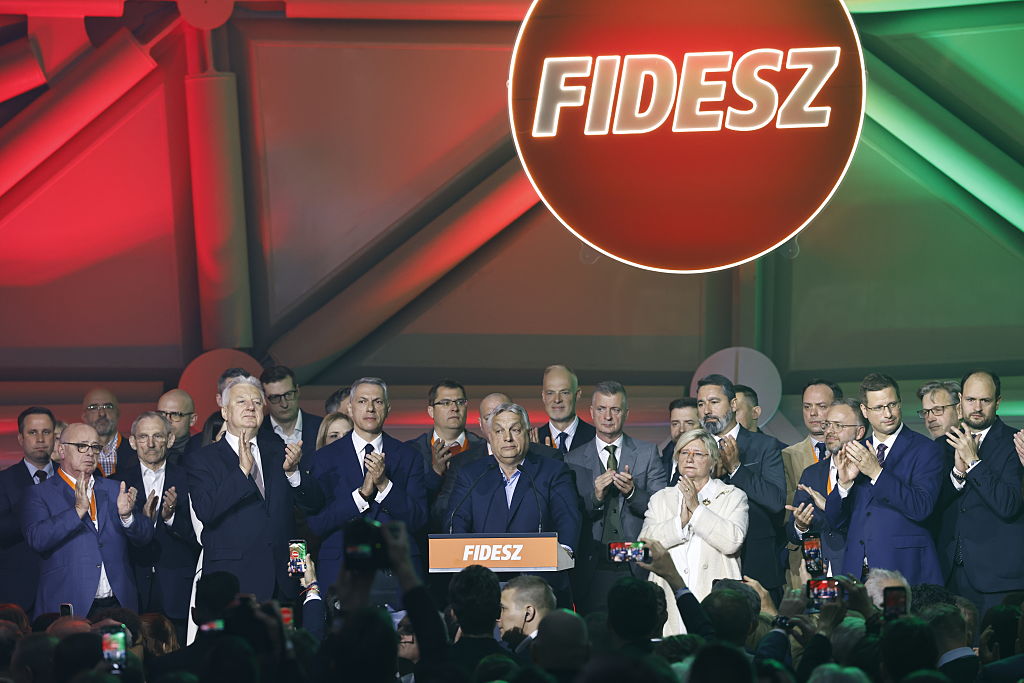
Now that Prime Minister Viktor Orbán has been ousted from power, it is worth examining how Europe arrived at this point.
All the way back in 2020, I can still remember the creeping dread I felt when I learned that Viktor Orbán’s government, along with the conservative Polish government, had agreed to accept the EU sanctions mechanism during a key EU summit. In what proved to be a fatal mistake that has had irrevocable consequences for sovreigntist forces in Europe, Hungary and Poland’s former conservative government at the time broke down under pressure and — in order to agree to the €750 billion EU Recovery Fund during the height of the coronavirus pandemic — both countries agreed to change some key wording in the EU treaties.
This key wording proved to be a poison pill that allowed Brussels to issue “rule-of-law” sanctions against member states going against the status quo, such as immigration. It was a vague and ill-defined tool, that basically stated that if the EU thought you were not doing what they wanted, they could freeze your national budget money.
Remarkably, Polish Prime Minister Mateusz Morawiecki vowed to never sign the EU budget at the time, which required unanimous approval from member states, due to the rule-of-law conditionality sanctions mechanism tied to it. To this day, it remains unclear why Poland backed down, only for Hungary to also back down afterwards, and sign the budget.
The following year, in 2021, it became more and clearer that this new “rule-of-law” sanctions tool was coming, and with it, Brussels had its most powerful sanctions weapon yet against nationalists anyone else they wanted out of power.
Notably, Hungary and Poland, despite their agreement, saw much of the money they were promised “frozen.” With Hungary alone, Brussels was able to freeze €20 billion in EU funds. The same playbook was used on Poland, which helped oust Law and Justice from power. For both countries, which are highly reliant on EU development aid, that missing money definitively allowed the EU to influence national elections.
It is also safe to say this had a major influence on the Hungarian election outcome last night.
At the time the agreement was made, Marcin Romanowski, who served as Polish deputy minister of justice at the time, slammed the agreement between Poland, Hungary, and the EU. He wrote on Twitter that the deal is not a good one: “The adoption of a regulation linking the budget with ideology is a consent to dependence on the political whims of the European establishment. However, the possible conclusions of the European Council are only a political resolution which cannot change the law, which is the regulation.”
Romanowski, who fled to Hungary after PiS lost power in Poland and was granted asylum, now faces extradition back to Poland to face various charges. He may have a long prison sentence ahead of him.
Maybe there is no point in rehashing history here. What is done is done, but it is safe to say that one of the key lessons here is never trust the Brussels liberal elite. It will come back to haunt you. Another lesson, perhaps, is that many of the worst-case scenarios are telegraphed years in advance. Many saw the writing on the wall as soon as Poland and Hungary signed off on those treaty changes, but these processes take years to develop and for the effects to be acutely felt. However, other key changes in Europe are also on the horizon. In terms of where authoritarian censorship is headed, mass immigration, and all these other very important topics, the trendlines are also all very clear unless we are saved by some kind of miracle.
If conservatives and the right cannot fix this EU sanctions mechanism somehow, they remain under a constant threat of Ground Hog Day, where if they even manage to take power, they have the Sword of Damocles hanging over them. Notably, conservative leaders like Giorgia Meloni was threatened with such sanctions before her election victory. EU Commission President Ursula von der Leyen famously said that the EU had “tools’ for dealing with Meloni if she did not do what the EU wants. How many of Meloni’s actions have been colored by this threat? We will never truly know, but it is safe to say, any EU leader has a healthy fear of the EU’s budget-busting sanction tools.
Now, those same tools are likely to be focused on Slovak Prime Minister Robert Fico unless he plays ball on the issue of Ukraine. Fico vowed to block €90 billion in EU loans to Ukraine should Orbán lose power. Fico will now be put to the test.
Many are now looking to France. If Jordan Bardella, of the National Rally, can manage to come to power, it could significantly change the calculus in Europe. With Meloni and Bardella in power, the two may find some common ground on the issue of the conditionality sanctions mechanism. With Italy and France as two of Europe’s largest economies and both net EU budget contributors, they will have a powerful say about what happens in Brussels.
For those opposed to a centralized, unaccountable, and increasingly elitist EU, which wants chat control, catastrophic free trade agreements, mass legal immigration, and seeks to erase national borders and cultures, we can only hope some victories for the right lie ahead — or further dark days will follow.