

A beautiful kaleidoscope of 118 diverse nationalities killing, trafficking women, dealing drugs, and wreaking havoc across Europe? This might not be exactly what the European Union had in mind when it repeated the mantra that “diversity is our strength,” but it is the reality it will have to deal with.
Europe is facing an organized crime landscape more sophisticated, transnational, and resilient than ever before — one that Europol says now resembles a network of “corporations of crime” rather than traditional street gangs. Albanian, Turkish, Moroccan, Balkan and many other foreign gangs dominate drug trafficking, extortion, human smuggling, and street violence.
In its latest report, “Decoding the EU’s Most Threatening Criminal Networks: Issue 2 — The Blueprint of Criminal Opportunism,” Europol identified 731 active criminal networks operating across EU territory, comprising more than 400,000 members from 118 different nationalities. That figure represents a fivefold increase from just two years ago, according to Austrian outlet exxpress — though the jump reflects a shift in Europol’s methodology as much as raw growth in criminal numbers.
The networks are far from static. Of the 821 networks identified in Europol’s first assessment in 2024, 76 percent no longer rank among the bloc’s most threatening groups, but Europol’s leadership was quick to warn against reading that as a victory.
“It reflects merely what the member states are observing in their investigations,” acting Europol Deputy Director Jürgen Ebner said at the Brussels press conference, according to German-language reporting. In other words: dismantled networks are simply being replaced. A core of 198 of the original networks has persisted, while 533 entirely new or newly detected groups have taken their place — bringing the total back up to 731.
“All crime is fueled online, accelerated by AI and technology,” Ebner said. According to him, these networks rely on significant financial resources, increasingly sophisticated methods, and high levels of corruption, functioning as interconnected international cells within the EU and beyond.
Crime hiding in plain sight
Perhaps the most alarming finding: 85 percent of the most threatening networks now use legitimate business structures to mask their activities, according to Europol, which blurs the line between the legal economy and organized crime almost beyond recognition.
European Commissioner for Internal Affairs and Migration Magnus Brunner framed the scale of the problem bluntly. “We’re not talking about street gangs,” he said at the press conference, “but about real multinational crime syndicates.” According to Brunner, criminal organizations increasingly identify profitable markets, invest resources strategically, and expand operations wherever financial opportunity exists — just like legitimate multinational businesses. Lawyers, accountants, and real estate professionals are deliberately recruited to funnel illicit profits into the legal economy.
Drug trafficking remains the dominant criminal market, anchored by cocaine and synthetic drugs, with one in five of the most threatening networks tied directly to Latin America. But the networks’ reach extends into cybercrime, migrant smuggling, human trafficking, fraud, organized property crime, and money laundering — and increasingly into recruiting children. According to Europol, 6 percent of the identified networks actively recruit children between the ages of 8 and 17 for high-risk tasks ranging from drug deliveries to extreme violence.
France’s DZ Mafia: a case study in the new criminal model
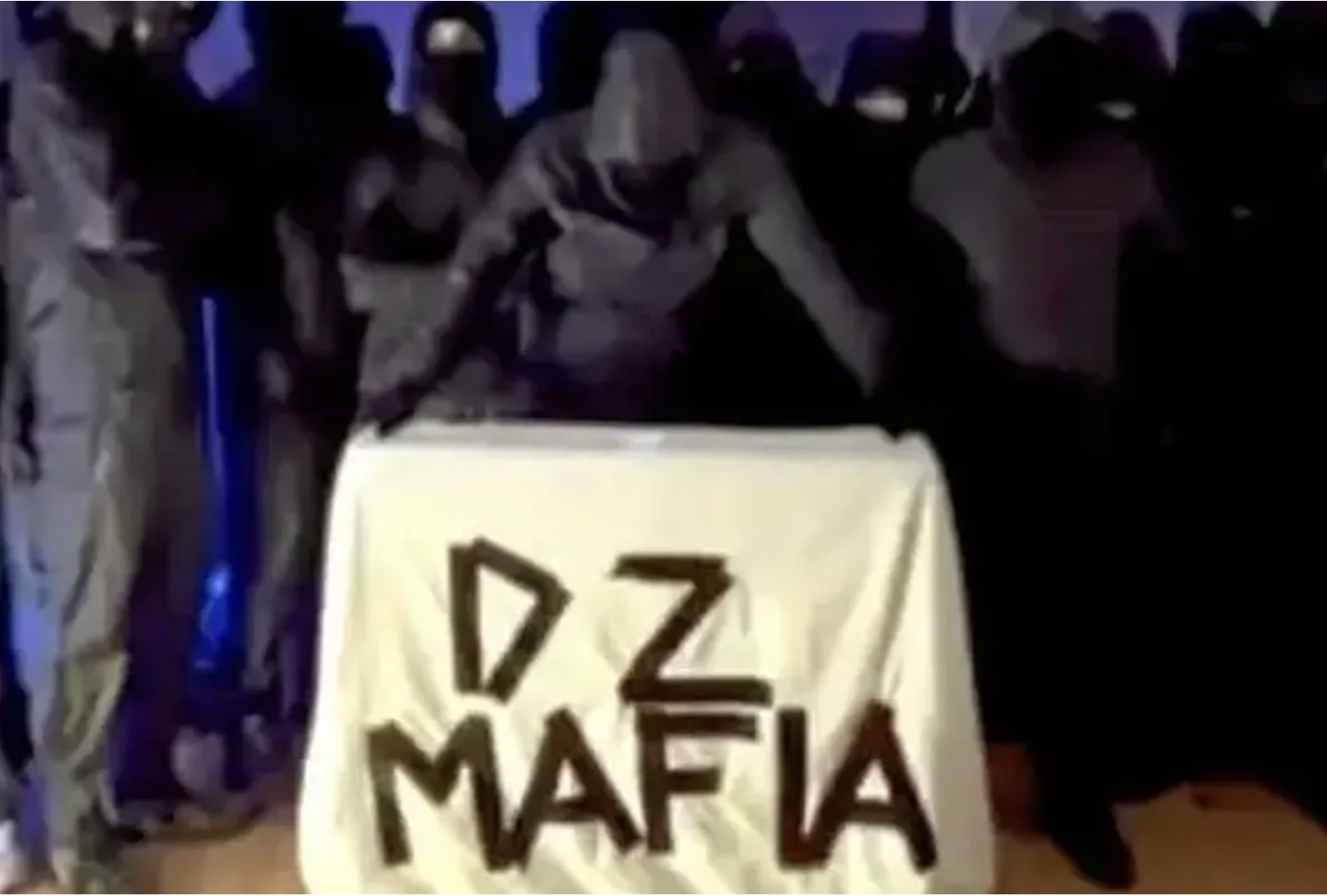
Nowhere is this evolution clearer than in France, where the rise of the so-called “DZ Mafia” — a network born out of Marseille’s drug-trafficking underworld — illustrates exactly the kind of decentralized, adaptive, and transnational criminal enterprise Europol describes.
🇫🇷 Marseilles. France
The French port city is now a major narcotics hub for Europe.
Last year, a 15-year-old was stabbed 50 times and burned alive in the drug violence as murders hit record highs.
This is the "New France." pic.twitter.com/2ueIZ5BKH4
— Remix News & Views (@RMXnews) April 4, 2025Unlike the hierarchical mafias of the past, the DZ Mafia does not control drug production, which remains in the hands of Latin American cartels, nor does it control the drugs’ importation into Europe, which is handled by the Dutch-based Mocro Mafia and Italy’s ‘Ndrangheta. Instead, it operates as a wholesaler — forming alliances with both groups to secure the best shipments arriving in Europe, according to reporting on the network’s structure.
That partnership allowed the DZ Mafia to expand its footprint from Marseille into Avignon, Sète, Valence, and eventually Lyon, Poitiers, Dijon, and even Rennes in Brittany.
When the group needed fast cash to finance a violent turf war in 2024, it diversified into extortion, targeting shops, nightclubs, rappers, and influencers — a shift that led to arson attacks and personal violence against victims who refused to pay. Even with senior figures like leader Amine O., who has nicknamed himself “Escobar” after the Colombian cartel boss, now behind bars, French authorities say the network’s command structure continues to direct operations from prison.
Dismantling networks, not just arresting individuals
Europol’s message is that arrests alone will not solve the problem. When a top criminal target is taken off the street, demand and profit opportunities remain in place, allowing someone else to step in immediately.
“Our goal is not just to arrest individuals, but to dismantle criminal networks, target their command structures and deprive them of their assets and profits,” said Themistos Arnaoutis, the Cypriot police chief.
To meet the threat, Europol is calling for tighter coordination across major European logistics hubs, including through mechanisms like the Port Alliance — a public-private partnership launched in 2024 to combat criminal infiltration of European ports and drug trafficking routes. The agency also wants stronger cross-border police cooperation, greater investment in neutralizing criminal digital infrastructure, and more aggressive monitoring of financial flows to claw back illicit assets.
The European Commission is already moving to back that up with resources: alongside the report’s release, it proposed expanding Europol’s mandate and doubling the agency’s budget to €3 billion under the EU’s 2028–2034 financial framework — part of what Brunner called a “European law enforcement package” designed to close the loopholes criminals have been exploiting.
“The strength of criminal networks lies in their ability to operate across borders,” Arnaoutis said. “Our strength must therefore lie in our ability to work beyond these.”