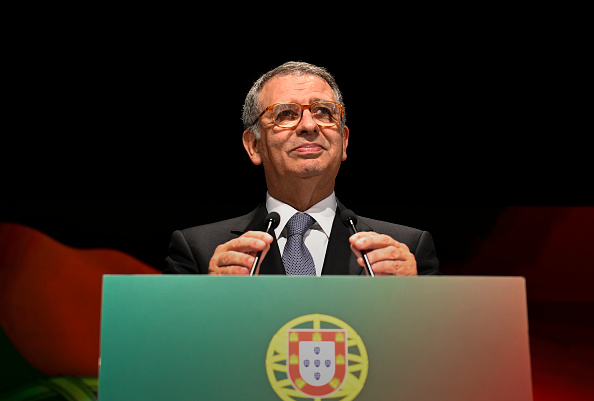
António José Seguro has been elected president of Portugal after winning the second round of the country’s presidential election, defeating right-wing Chega leader André Ventura, who nonetheless declared the result his party’s strongest showing and claimed the Portuguese right is now under his leadership.
At the time of writing, Segura had secured 66.82 percent of the vote with 3,482,481 ballots in his favor. Ventura received 1,729,381 votes (33.18 percent).
Reacting to the result, Ventura said he entered the race “with the goal of winning,” acknowledging defeat but insisting the campaign marked a historic advance for his party.
“We didn’t win, and that should mean, as it always has, recognizing that we must do more and that we have to work harder to convince everyone that change is necessary,” Ventura said, adding that “even without winning, this movement, this party, this force, had its best result ever in our history.”
Ventura confirmed he had already called Seguro to congratulate him, saying the president-elect’s success “will be everyone’s success,” and also spoke with outgoing President Marcelo Rebelo de Sousa, wishing both men a smooth transition of power.
Ventura noted that his party increased its vote total by more than 30 percent compared with the first round and secured roughly 300,000 more votes than in the previous legislative elections. Chega won more than 1.4 million votes in the May 2025 elections, and Ventura received more than 1.7 million votes in Sunday’s runoff.
“We lead the right-wing space in Portugal, and we will soon govern this country,” he said. “We haven’t won yet, but we are on the path to that victory.”
Ventura also argued that voters had chosen continuity by electing a Socialist-backed candidate, saying citizens had opted for “the political system as we have and know it in Portugal.”
Seguro, speaking after his victory, rejected narratives of national decline, stating that Portugal “has already overcome more serious crises in the past” and insisting the country has the capacity for recovery and progress.
“The winners tonight are the Portuguese people and democracy,” Seguro said, adding that political rivalry ends once the election is over.
Addressing Ventura directly, he said, “As a democrat, all those who ran deserve my respect. As the future president of the Republic, we cease to be adversaries and have a shared duty to work for a more developed and fairer Portugal. The majority that elected me is extinguished tonight.”
Despite his socialist background, Seguro stressed his independence, declaring, “I am free, I live without constraints. My freedom is the guarantee of my independence.” He pledged loyalty to the constitution and cooperation with both parliament and government, warning, “I will never be a counter-power, but I will be a President of the Republic who demands results.”
Seguro won nationally across all districts and both autonomous regions but lost among overseas voters, securing victory abroad only in Asia and Oceania. He achieved his strongest margins in Coimbra, Lisbon, and Porto, while Ventura performed better in areas such as Madeira, Faro, and Portalegre.
Seguro also expanded his territorial reach compared with the first round, winning 64 more municipalities and more than a thousand additional parishes, while Ventura saw his municipal and parish victories shrink significantly in the runoff, winning 78 fewer as supporters of first-round candidates sided with the socialist.