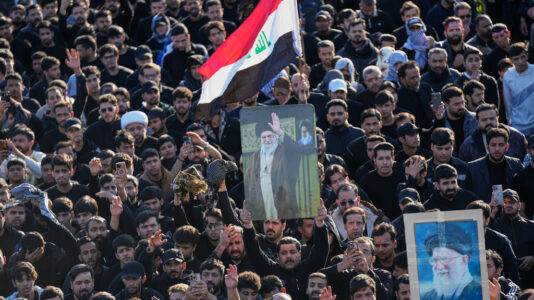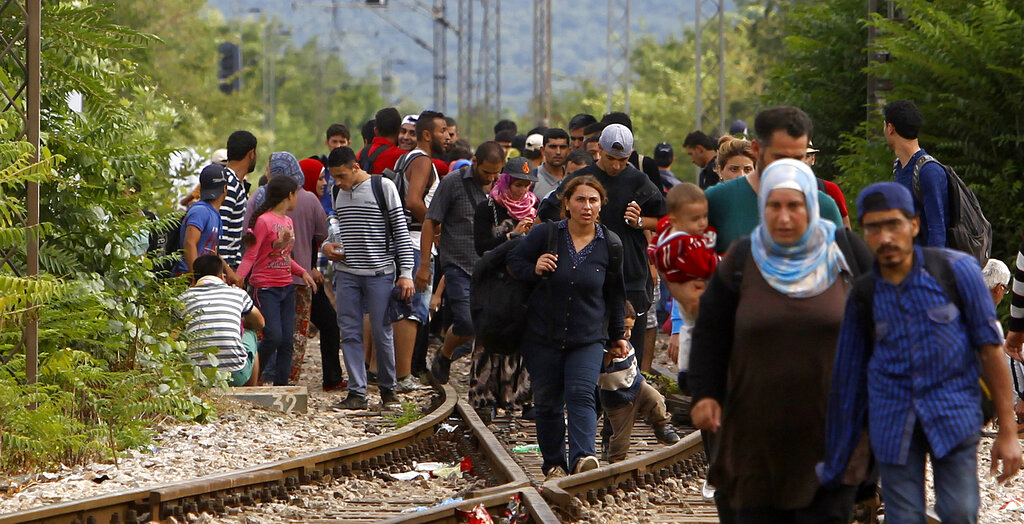
The migration crisis for Europe brought on by the war in Syria could repeat itself with Iran, but with Iran’s population dwarfing Syria’s, the crisis could be much worse, warns Hungarian Prime Minister Viktor Orbán.
Ahead of Hungary’s April elections, Orbán has campaigned on peace, specifically staying out of the war in Ukraine, as well as preserving Hungary’s ability to say no to migration. However, he is now warning of further escalating dangers in the Middle East, including the risk of another wave of mass migration, similar to the masses of migrants seen in the capital of Budapest back in the 2015-2016 refugee crisis.
Speaking at a forum in Sopron, he told those gathered that the world is becoming increasingly unstable, and Hungary must also prepare for the consequences.
“There is also a war in the Middle East now. No one knows what immigration problems the prolonged military conflict will cause. Iran is a country of 90 million. If they start from there, Turkey is next, and they are already here in the Balkans, and they are here at our fence,” the prime minister said in his latest video posted to X. “We need to be sensible. This is not a time for taking risks,” he added.
“War in the Middle East brings rising risks. A prolonged conflict may trigger new waves of mass migration, flowing from Iran to Turkey, through the Balkans, to our border. At the same time, LNG deliveries from Qatar are halted and energy prices are rising. These are testing times. Hungary must prepare and make sure the dam holds,” Orbán captioned his video on X, showing clips from the crisis in 2015.
⚠️ War in the Middle East brings rising risks. A prolonged conflict may trigger new waves of mass migration, flowing from Iran to Turkey, through the Balkans, to our border. At the same time, LNG deliveries from Qatar are halted and energy prices are rising. These are testing… pic.twitter.com/4Iw8jvrG77
— Orbán Viktor (@PM_ViktorOrban) March 2, 2026Another key area of uncertainty is Hungary’s energy supply, already at risk due to Ukrainian President Zelensky’s refusal to reopen the Druzhba pipeline. According to Orbán, in the wake of the attacks on Iran, Qatar has now temporarily stopped the delivery of some of its liquefied natural gas, with prices spiking as much as 50 percent. Similar price moves are foreseen in the oil market as well.
War and its consequences, from mass migration to higher energy prices, is what faces the Hungarian nation today.
“It kills people, it shakes the economy, it can cause big problems, and we need to be there to stop it in its tracks to curb its effects,” Orbán said.
Notably, other European right-wing parties have taken a similar stance, while expressing fears that the Iran war could spark another refugee crisis.
The parliamentary faction of the Alternative for Germany (AfD) published a message on social media, stating that they “share the expectation that de-escalation must now be the top priority. For the danger is great that further military escalation could plunge the country into civil war and increase tensions across the entire region. We are therefore following the current developments with great concern. The federal government must now take all necessary precautions to prevent possible terrorist attacks in Germany and ensure that there is no repeat of uncontrolled migration to Germany. Germany’s primary interest lies in protecting our internal security, preventing further export of terror to Germany, and consistently countering new waves of migration.”