
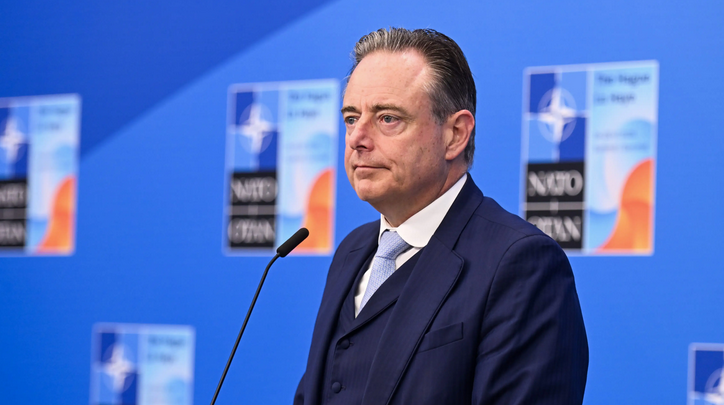
Belgian Prime Minister Bart De Wever is pushing Brussels to negotiate directly with Moscow to end the war in Ukraine, as the current strategy will not bring any success.
The EU, he says, should focus on normalizing relations with Russia, ensuring any eventual deal is in its best interests, and regaining access to cheap energy sources.
“The European Union should give its member states the authority to start negotiations with Russia to end the war in Ukraine,” De Wever said in a recent interview with Belgian newspaper L’Echo, as quoted by Hirado. The prime minister said that current pressure tools are not working and that Europe should look for more pragmatic solutions.
“Since we cannot threaten Vladimir Putin simply by sending weapons to Ukraine, and we cannot economically strangle Russia without the support of the United States, there is only one option left: to make an agreement,” the Belgian prime minister said.
He also said that Russia could only be brought to its knees with full American support, but that level of commitment will not happen under Trump. De Wever noted that at times he feels that Washington is getting closer to Moscow than to Kyiv.
The European Union, the Belgian prime minister continued, should receive a formal mandate from member states to start negotiations with Moscow, as the current U.S.-Russian-Ukrainian negotiations could ultimately lead to an agreement that is unfavorable to Europe.
He also called on all countries of Europe to simultaneously strengthen their military presence on their borders while pragmatically settling relations with Russia.
“We need to rearm and strengthen the military presence on the borders. At the same time, we need to normalize relations with Russia and regain access to cheap energy. This is a matter of common sense,” he told l’Echo.
“In private conversations, European leaders agree with me, but no one dares to say it out loud,” De Wever added.
The Belgian prime minister has already been the subject of a serious debate over European plans to finance the war in Ukraine. In early December last year, he received a standing ovation in the Belgian parliament when he rejected accusations that he was less pro-EU or pro-Ukraine for being critical of a European Commission proposal to unfreeze some €140 billion in frozen Russian assets as collateral for a loan to Ukraine.
De Wever stressed that Belgium would continue to stand by Europe and Ukraine, but that “the impossible cannot be asked” of the country, as the vast majority of Russian assets are held in the Euroclear clearing house near Brussels, so any legal and financial risks would primarily affect Belgium.
During the debate, the Belgian government was also put under serious pressure from the EU. It has even been suggested in EU circles that Belgium could “suffer the fate of Hungary,” that is, face political isolation, if it continues to block plans to use frozen Russian assets.
More than €200 billion worth of Russian assets are currently frozen in the EU, largely in Euroclear accounts.