Remix News has been running an ongoing series contrasting the China, which embraces a deeply restrictionist immigration policy, to Western nations like Germany, which has fully embraced mass immigration. As previously reported, China is pulling ahead in terms of innovation in areas like green technology, machine tools, and importantly for Germany, also automobile production.
Now, in yet another blow to Western carmakers, China’s BYD has introduced a fast charging technology that can charge cars in just 9 minutes, rivaling the refueling time of conventional fuels. The time it takes to recharge the battery of an electric vehicle has been a major issue for many consumers. Now, this barrier is disappearing, at least with cars from this Chinese manufacturer.
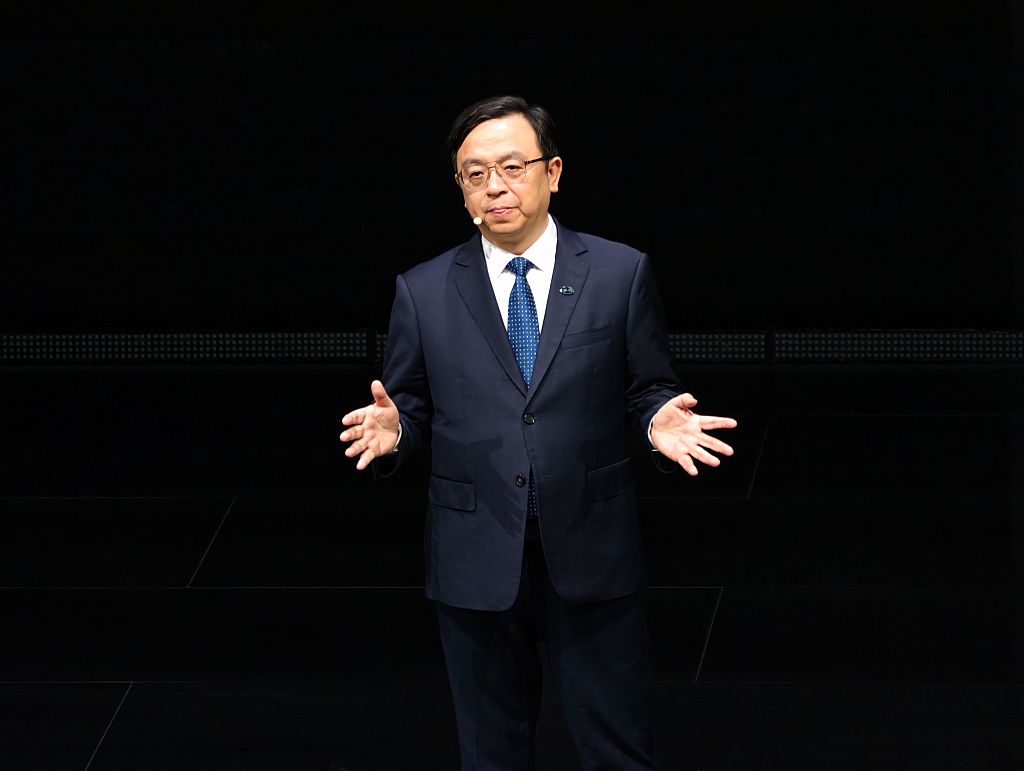
This development comes after Wang Chuanfu, president of BYD, said his company, as well as other big Chinese manufacturers, said they are years ahead of European automobile producers.
“Our advantage currently stands at three to five years compared to other manufacturers”, also referring to Japanese and Americans,” said Chuanfu, who is a chemist and the founder of BYD.
Chanfu is not the only one making such claims. Ford CEO Jim Farley recently asserted that Chinese electric vehicle (EV) technology is up to a decade ahead of Western automobile companies.
How did China do this? Instead of resorting to mass immigration, it turned to its own population, and it is now blowing the West away. Chuanfu credited his company’s engineers.
“We have 110,000 engineers, which is BYD’s biggest asset,” he said.
Notably, BYD did not import those engineers. They are almost all entirely Han Chinese. Those who are not Han Chinese are almost entirely located outside of mainland China, in hubs such as in Hungary. In other words, what engineering experience China needs, it relies on without changing its demographic picture, which would disrupt social cohesion. Instead, China invested in its own people.
As Remix News noted in its extensive report, “The big immigration lie: China smashes the myth that foreigners are needed to secure the West’s economic future,” China has fewer migrants in the entire country than there are foreigners in just one German city, Berlin.
Yet, despite all left-wing propaganda about the benefits of diversity, the headlines from Germany are dire week after week, including the sinking fortunes of flagship automobile producer, Volkswagen, which just announced it was closing plants and cutting 50,000 jobs.
Given Volkswagen’s highly diverse workforce in Germany, the left-liberal “theory” is that this diversity should be the company’s “strength.” Yet, the reality, once again, is that the company is deteriorating rapidly, in what may be a mirror of Germany’s broader society.
BYD’s battery technology
Regarding BYD”s breakthrough, the company introduced its 1,500 kW fast-charging system and improved Blade battery, which allows vehicles to be charged to 97 percent in under 10 minutes, reports Mandiner. Engineers have also increased the energy density of the battery packs by 5 percent, thanks to internal structural innovations. In practice, the new technology can guarantee a range of up to 1,000 kilometers, without compromising the lifespan and safety indicators of the cells.
A peak charging load of 1,500 kW naturally immediately raises the question of the carrying capacity of the electricity grids. One issue is that the current European and Asian infrastructure in most places is not ready to serve a recharging load of 1,500 kW.
However, the vertically integrated Chinese giant has also come up with an in-house solution. To overcome network constraints, BYD has developed charging stations integrated with its own battery energy storage systems, which it is deploying with great speed, mainly in China for now, Mandiner notes.
These buffer systems relieve the load on the basic grid while continuously ensuring the peak power required for lightning charging. Based on the plans and the investments already underway, the company will put 20,000 such integrated stations into operation by the end of the year, albeit primarily in the Chinese market.
European customers will be able to purchase the premium Denza Z9GT model, which will be available with both pure electric and plug-in hybrid drivetrains and will debut on the continent in the coming weeks.
Based on preliminary industry news, the starting price of the vehicle could be between €75,000 and €100,000.
The latest step up in Chinese technological dominance in electromobility highlights the region’s current vulnerability in global industrial competition, notes Mandiner. And while Hungary has become a key hub for electric battery production and has also scored contracts to build BYD cars, the innovation speed of vertically integrated Asian giants permanently leaves those national economies that build their economic model solely on assembly functions and imported capital vulnerable.
The huge leap in Asian battery technology and the in-house development of complete ecosystems clearly demonstrate that high value-added research processes and engineering knowledge continue to be concentrated in the East. Domestic engineering competencies must be channeled into global innovation value chains in an institutionalized and targeted manner, the portal states.
This will require factories in Hungary to produce, as well as conduct research and development with Hungarian experts.