

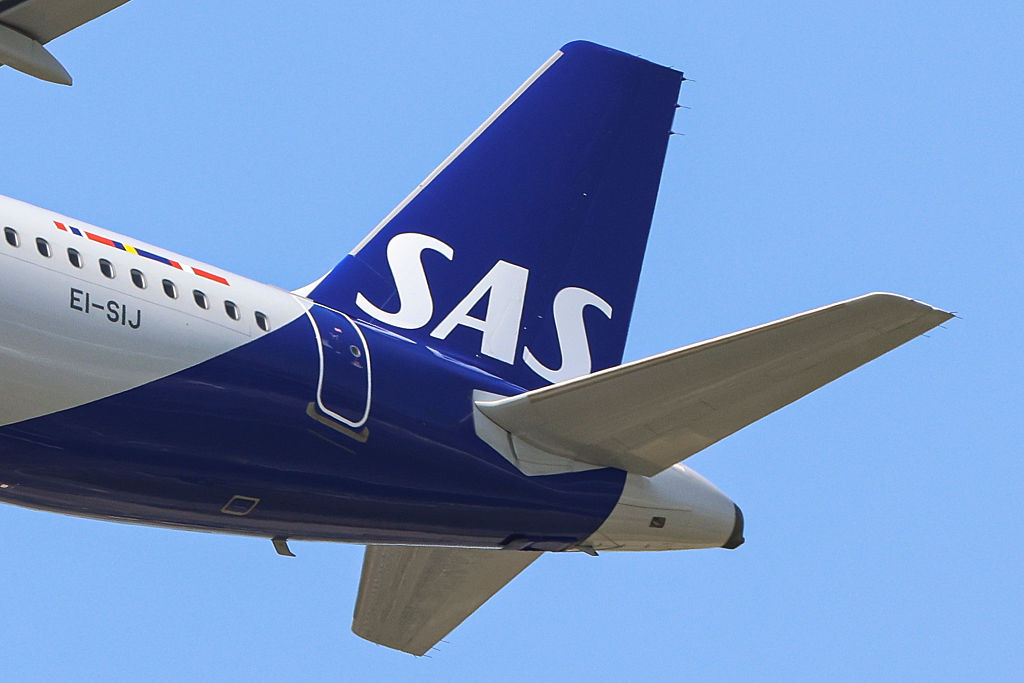
The Scandinavian airline Scandinavian Airlines System (SAS) has become the first carrier in Europe to scrap flights in response to a dramatic spike in fuel costs, with at least 1,000 flights canceled. Serving as the national airline for Denmark, Norway, and Sweden, the company stated that it must scale back operations as jet fuel prices soar due to ongoing instability in the Middle East.
“The price of jet fuel has doubled in ten days,” said CEO Anko van der Werff to Swedish business daily Dagens Industri. “Even if we try to absorb cost increases as much as possible, this is a shock that directly hits the airline industry.”
“We are cancelling a few hundred flights in March, but trying to protect our traffic as much as possible,” said the SAS boss, who stated that more cancellations are possible after Easter.
Although 1,000 flights may seem extraordinary, SAS runs approximately 800 flights every day, which means that cancellations remain limited for now.
Based in Stockholm, the canceled flights are focused primarily on regional Scandinavian routes where travelers have alternative transportation.
A spokesperson for the airline noted that “due to the tensions in the Middle East and the sudden increase in fuel prices, steps are being taken to strengthen the stability of their operations,” and that “part of this is the temporary cancellation of some short-haul flights.”
This move is a landmark decision, as SAS is currently the largest European carrier to take such drastic action during the present fuel crisis. The airline, which services roughly 25 million passengers a year, follows the lead of Air New Zealand, which also previously trimmed its schedule to manage costs. Industry analysts warn that the outlook could darken further if disruptions reach the “Strait of Hormuz, through which about half of European aviation fuel imports come,” particularly affecting supplies from Kuwait and Saudi Arabia.
SAS finds itself in a particularly vulnerable position because it participated in fewer “fuel price hedging transactions” in recent years. These financial arrangements typically allow airlines to lock in fuel at a “pre-fixed price, thus protecting themselves from price fluctuations.”
In contrast, larger groups like International Airlines Group (the parent company of British Airways) and budget carriers like Ryanair remain better insulated for now because a high percentage of their fuel needs were “pre-committed.” Nevertheless, experts caution that even more protected firms may be forced to raise ticket prices once these hedging arrangements expire.
While SAS has already increased its fares to combat rising expenses, other major players like Air France-KLM, Cathay Pacific, and Qantas have implemented similar price hikes without yet resorting to cancellations.
Currently, oil stands at approximately $100 a barrel, but if this rises further, more flight disruptions and even outright flight stoppages could occur due to the closure of the Strait of Hormuz.