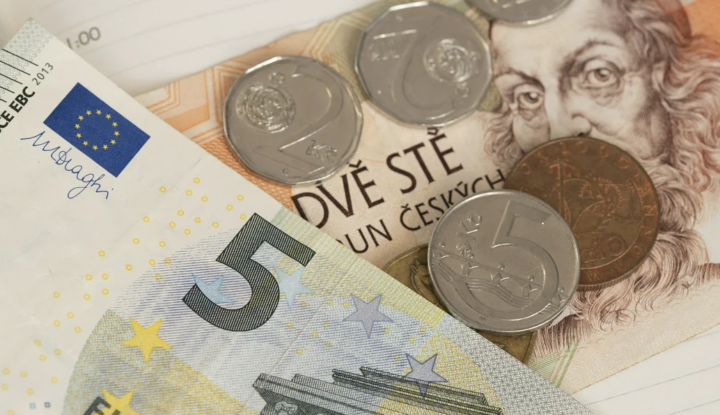
The Czech government will stop preparing an annual report on the country’s readiness to adopt the euro, with Prime Minister Andrej Babiš arguing that the exercise is unnecessary because his cabinet has no intention of joining the single currency.
“It is pointless to discuss the position on the euro every year; we do not want the euro. Let the next government resolve this in the first quarter of 2030, there is no reason to talk about it for us,””Babiš said, as cited by Echo24.
The decision drew criticism from opposition figures, who said the report also provided a regular public assessment of the Czech Republic’s economic condition and compliance with fiscal rules.
Pirates leader Zdeněk Hřib said the move was “not a technicality” but “a political signal,” arguing that the government no longer wants to publicly evaluate whether the country meets economic rules that reveal the state of public finances.
Finance Minister Alena Schillerová rejected the accusation, saying the Ministry of Finance will still prepare the material, but not every year.
“Why, if our government will not adopt the euro and will not take any steps towards it?” she said, adding that the report was never intended primarily to monitor public finances.
The annual assessments had previously been prepared by the Ministry of Finance and the Czech National Bank. They examined whether the Czech Republic met the Maastricht criteria for euro adoption and how closely its economy was aligned with the eurozone.
The dispute comes after the Czech National Bank warned that the country could breach one of those criteria next year, with the public finance deficit forecast to rise to 3.1 percent of GDP, above the 3 percent limit.
Mojmír Hampl, head of the National Budget Council, said the warning should be taken seriously, noting that the central bank “does not believe that the government will manage to keep the deficit below the magical 3 percent.”
Schillerová denied that the deficit would exceed the threshold and said the government remained committed to remaining compliant with the rules.
“The government’s program statement always applies – and I add three exclamation points to this – that we will stay below 3 percent of GDP in order to comply with the Maastricht criteria,” she said.
Babiš also criticized the Czech National Bank for keeping interest rates higher than in the eurozone. The CNB has left its base rate at 3.5 percent, while the eurozone rate is 2 percent.
The Czech Republic pledged to adopt the euro when it joined the EU in 2004, but no date has been set. Public resistance remains strong, with a recent CVVM survey showing two-thirds of Czechs oppose adopting the common currency, while 30 percent support it.