

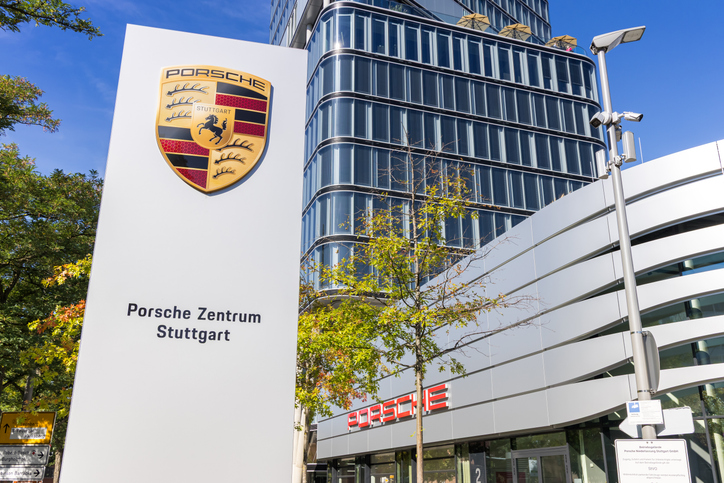
Porsche is preparing to cut more than one in three jobs in Germany under a cost-cutting measure intended to protect its remaining workforce and existing production sites until 2035.
The Stuttgart-based sports car manufacturer will eliminate a further 5,000 positions at its main Zuffenhausen plant and Weissach development center. Combined with reductions already announced, around 8,900 employees are expected to leave the company.
The cuts are due to be carried out without compulsory redundancies, primarily through natural attrition, partial retirement schemes, and voluntary severance agreements, Die Zeit reported.
“This package creates the opportunity to strategically realign our company,” Porsche chief executive Michael Leiters said. “Only if we achieve our goals and are economically successful can we also provide our employees with the necessary security.”
The restructuring will also require significant concessions from staff.
Porsche plans to defer 3.5 percent of current and future collectively agreed pay increases for employees covered by company-specific salary arrangements. Senior managers will forgo part of their planned base-salary increases in 2027 and 2028.
The company-funded portion of employees’ Christmas bonuses will gradually be reduced, cutting the maximum payment from the equivalent of a full month’s salary to 60 percent. Future bonuses will also be tied more closely to Porsche’s profitability and overall performance.
Remote working will be restricted to eight days a month, down from 12, while break arrangements and production cycle times will also be revised.
The package was negotiated with the IG Metall union and the Südwestmetall employers’ association. According to Junge Freiheit, IG Metall members will receive an additional annual day off and a €200 voucher. Regular employees will receive a one-off €1,500 transformation payment in August, rising to €1,911 for union members.
Porsche’s latest measures follow a previous agreement to remove around 1,900 jobs in the Stuttgart region by 2029, as well as the expiry of approximately 2,000 temporary contracts. The manufacturer has also cut positions in Leipzig and announced the closure of three subsidiaries employing more than 500 people.
The company has been hit by collapsing sales in China, U.S. tariffs and costly investments in electric vehicles that have yet to produce the expected returns. The saturation of the European auto market by cheaper Chinese imports has further exacerbated problems within the wider German industry.
Audi recently lowered its revenue and profitability forecasts after second-quarter net profit fell by around 21 percent to €563 million.
Volkswagen is also pursuing a much broader restructuring programme that could reportedly eliminate as many as 100,000 jobs by 2030 and result in factories being reduced in size or closed altogether.
Earlier this month, German Association of the Automotive Industry president Hildegard Müller warned that the crisis had become so severe that some German plants may need to be transferred to foreign manufacturers to prevent their complete closure.
“We will not be able to keep all the factories and suppliers open this way,” Müller said, arguing that Germany and Europe now faced “significant changes” and the end of costly habits and entitlements that the country could no longer afford.