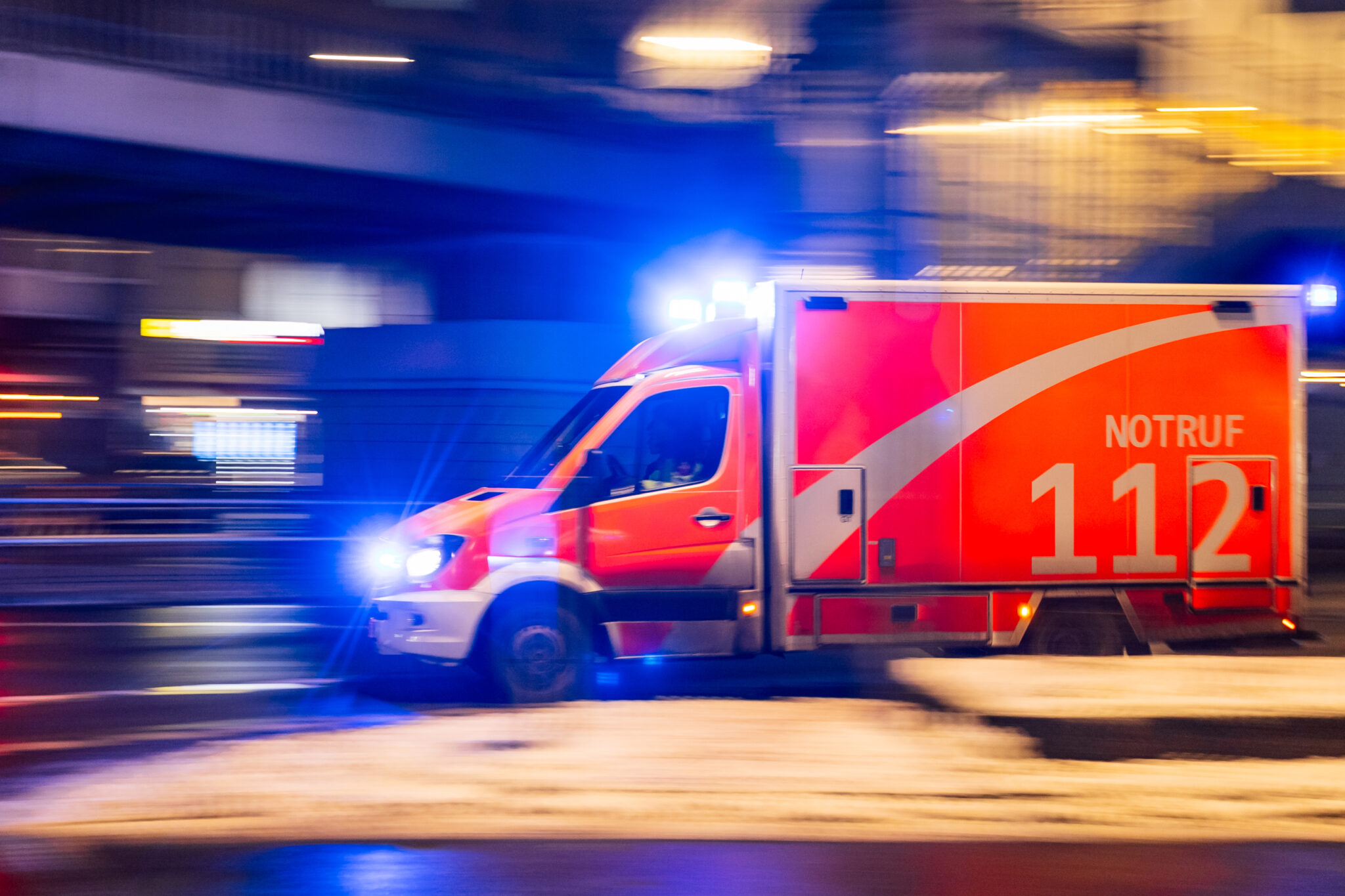
When victims of organized migrant clan violence arrive at emergency rooms in Berlin, the impact extends far beyond the trauma bays. According to Felix Wolf (a pseudonym), a veteran emergency nurse with a decade of experience in a Berlin hospital, treating wounded clan members subjects medical staff to high-pressure security lockdowns, escalating street-level intimidation, and systemic stress.
According to Wolf, who spoke with Welt newspaper, violent incidents involving knives and firearms are becoming routine occurrences that frequently bypass official crime statistics.
“We are increasingly dealing with injuries from shootings and stabbings in the clinics,” Wolf said. “Not all cases become public or end up in the crime statistics, because especially in cases of simple stab wounds, the police are not always called in. We have such cases several times a week.”
The official data already shows a sharp rise in violence not only in Berlin but across all of Germany. Berlin, in particular, has been hard hit by a wave of violent gang warfare, which has seen a record high number of shootings in 2025. Reports indicate that the number of shootings has only intensified in 2026.
Wolf noted a trend toward younger offenders who demonstrate intentional lethality in their attacks: “Not only is the quantity increasing, but also the quality: especially among knife attackers, the perpetrators are getting younger and younger. I often treat 15- or 16-year-olds who know exactly where to aim in order to cause the greatest possible damage.”
The violence does not end on the streets either but often extends into the hospitals. When gunshot or stabbing victims arrive – often unannounced or brought in directly by associates – hospital protocol demands rapid security measures to secure the facility. To reduce the risk of retaliation or targeted harassment if a clan member patient dies, hospital staff adjust their daily routines and assignment distributions:
“This leaves us in nursing with great uncertainty: To what extent can we rely on support when we have to defend ourselves? Up until now, we’ve always been lucky that nothing worse has happened. But perhaps you remember the camera footage from New Year’s Eve when a nurse was knocked unconscious in another hospital? That happens too,” Wolf warned. “I haven’t worn a name tag in the emergency room for years because I don’t want to be identifiable. We take precautions: If two Arab boys need to be cared for, I don’t send in two girls, but at least one man. I also try to keep colleagues with Jewish surnames out of such a case.”
When a gunshot victim from a clan arrives at the hospital, police are immediately informed, according to Wolf, “In most cases, the injured come on foot or are dragged literally by a relative. As soon as certain surnames are mentioned, we’ll call the police.”
The police response often involves large-scale deployments to prevent secondary conflicts on hospital grounds.
“Thankfully, the officers have always arrived faster than the relatives in our country so far. Then 15 to 20 team cars with hundreds of them roll up, and all you hear for five to ten minutes are sirens,” Wolf said. “Everything will be sealed off, not just the hospital grounds, but entire streets up to the nearest subway station. That’s quite impressive. They screen in advance exactly who could drive in where, stop cars and conduct identity checks.”
During these incidents, emergency room operations are regularly halted.
“The injured person is usually already lying with us, accompanied by the two or three guys who brought him here. Then the police arrive and determine the personal details, photograph and confiscate evidence. The procedure often takes several hours – during that time the emergency room is temporarily closed. New emergency patients cannot be admitted during this time.”
In other words, not only have these criminal migrant gangs turned the streets of Berlin into the Wild West, but due to security precautions involved in such cases, entire emergency rooms are shut down, leaving patients unable to enter and receive treatment in their own city.
When family members start arriving, it often means the trouble is only beginning. Wolf described up to 40 family members arriving in some cases, often organized through Telegram channels, where they “want to show a presence in an often aggressive way.”
“In these circles, it is common for mothers and women to shout loudly and dramatically. This high noise level is a stress factor for staff and also for patients. In the clinic, this can still be managed to some extent; at the deployment site, it is significantly more difficult,” said Wolf.
The medical outcome of a patient can dictate the level of immediate danger faced by hospital workers and first responders.
“Thank God no clan member has ever died here. This might sound harsh, but we are always happy when the injured person dies on site and not here,” Wolf stated. “The stress that officers have to put themselves through in such a case is enormous: Because normally no one from the rival clan is there anymore, the police officers and emergency services are then attacked.”
Due to security budget limitations across clinics, staff must rely primarily on municipal police protection while implementing their own personal safety protocols.
“We must rely on the police. Money for one’s own security services isn’t very easy. I know clinics where you’re happy if even one security guard is on site at night,” Wolf observed. “Fortunately, the Berlin police are well-positioned and not hesitant. It is appalling under what conditions the police officers have to cope with such situations – and how, in the following days, individual images are repeatedly taken out of context and used against them.”
Wolf also addresses a German society rapidly trying to adapt to expanding violence, in which the victims are being taught to deal with being a victim, instead of perpetrators, often violent, being held accountable for their actions.
Wolf expressed skepticism toward institutional de-escalation courses, arguing they misplace responsibility onto healthcare workers: “Many clinics offer self-defense or de-escalation training. But I’m not a big fan of that. Many courses attempt to professionalize dangerous situations in such a way that a kind of perpetrator-victim reversal takes place. Why should I adapt to a situation that stems from the fact that the other person hasn’t learned how to behave decently?”
The crisis goes even deeper, threatening the entire health system by contributing to medical staff burnout, which is likely costing lives. The combination of workplace stress and safety concerns has led to high turnover rates among emergency care personnel, with many leaving the field within five to six years.
“Brutalization is a societal issue,” Wolf stated, saying that the amount of time staff are sticking around is dropping to five or six years at the most, with most moving on to other fields
“To a certain extent, this is due to a political failure: the authorities and the health system are being let down. But this brutalization is also a societal question.”
Wolf highlighted the difficulty of discussing specific patient demographics without facing public criticism or accusations of bias:
“Anyone who addresses such topics and clearly identifies the clientele that causes them will immediately get a dressing-down. ‘That’s not how you should say it; that’s too generalizing’, it then says. That may be true – but we simply do not have these difficulties with other groups of people. The fact that we cannot address this is a problem. I constantly get accusations of racism. Colleagues in the medical field and also in the police force understand what I mean. However, in certain Berlin circles, this issue is considered socially unacceptable.”
He claimed that voting for the AfD is not the answer, since he claims the AfD was especially opposed to the medical field during the Covid-19 pandemic.
Responding to political narratives, Wolf rejected the idea that voting for far-right parties like the AfD provides a solution, citing past hostility toward healthcare workers during the Covid-19 pandemic.
“During the pandemic, these very people declared us fair game,” he said.
An exhaustive search was conducted and there is no evidence any AfD member ever called for attacks on medical staff. There was criticism of the way the medical establishment handled the Covid-19 crisis, but there is no evidence there were any efforts to unleash violence on medical staff.
Wolf also stated that not all migrants can be blamed for attacks on medical staff, claiming that AfD members “are welcome to ask themselves if they would want to come and clean in our hospital for that kind of pay. Therefore, I do not want to turn our problems with clan members into a general migration debate.”
Certainly, across the country, there are AfD voters and members in cleaning jobs. In fact, AfD has the largest share of low-income and working-class voters of any party in Germany.