
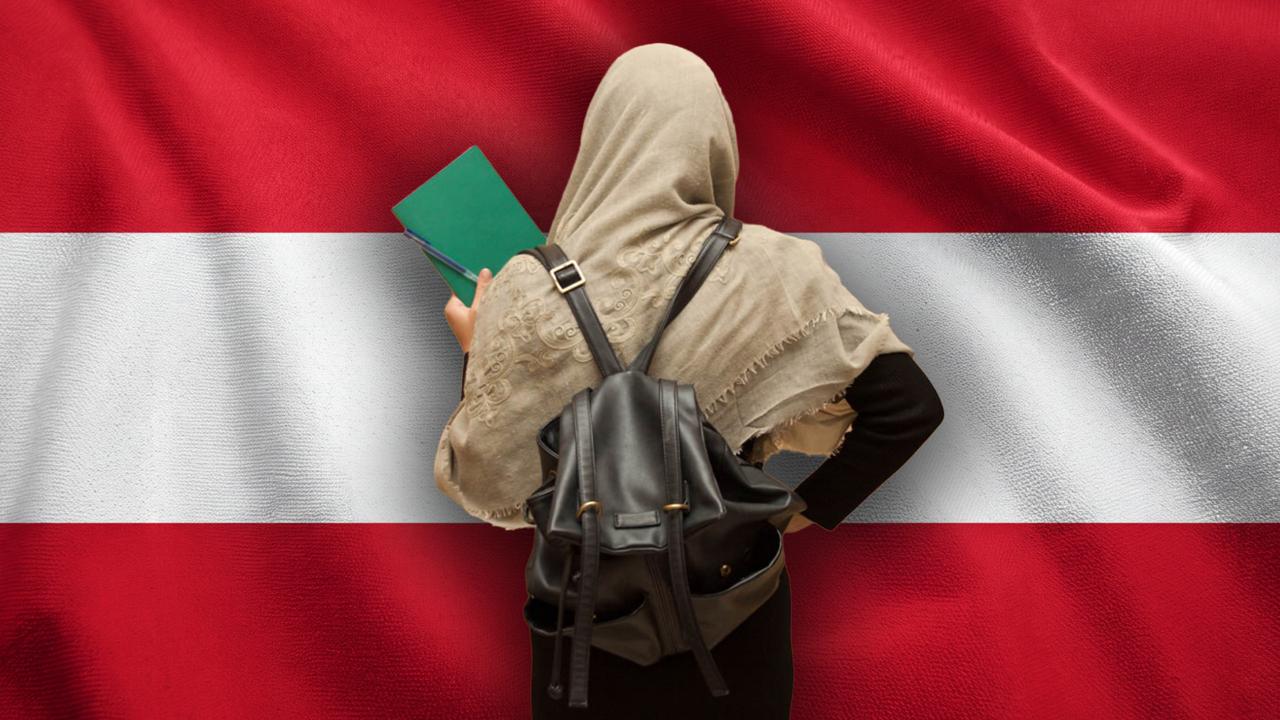
Austria’s new nationwide ban on “traditional Muslim” head coverings, including hijabs and burqas, for girls under 14 in both public and private schools, has now taken effect as of Sept. 7, 2026. in Vienna, Lower Austria, and Burgenland. The start date coincided with the start of the new school year. Austria’s remaining states will follow with a ban next week as well.
The measure, framed by the government as a child-protection and gender-equality policy, immediately faced visible resistance from Muslims and the first formal legal challenge.
At an Islamic primary school in Vienna, reporters from Austrian news outlet Heute observed young girls arriving to school still wearing headscarves accompanied by their mothers. One child wore a pink hijab coordinated with her dress; two slightly older students entered in simple hijabs without parents. School officials did not immediately clarify how they would apply the ban on private Islamic institutions.
The law requires schools to start with conversations involving the student and her legal guardians. Repeated violations trigger involvement of child-protection services, with fines of €150 to €800 possible for parents as a last resort. Teachers, already under strain, must initiate these talks. There are now fears of real conflict arising in the coming months.
Integration Minister Claudia Bauer of the conservative ÖVP described the headscarf as “a sign of oppression and a means of controlling girls from the earliest childhood.” Chancellor Christian Stocker has separately called for a constitutional ban on political Islam, saying he does not “want to live in an Islamic state.”
The right-wing Freedom Party of Austria (FPÖ), the most popular party in the country is known for its even harsher stance toward migrants and Islam in the country. FPÖ politician Ricarda Berger stated there is “no place for political Islam in Austria, and certainly not in our schools.”
The party wants a general ban on all headscarves and face coverings in schools for both students and teachers alike, which would cover all ages.
Education Minister Christoph Wiederkehr of the liberal NEOS acknowledged uncertainty about the law’s fate at the Constitutional Court, stating: “You can never be completely certain.”
He added that the government and education ministry “carried out very intensive consultations” to draft a constitutionally compliant text.
Only the Greens opposed the bill in parliament. Green politician Sigi Maurer accused Wiederkehr of “creating new conflicts and offloading them onto the teachers,” saying the minister wanted to “foist the role of police officers onto them.”
Teachers’ union chairman Paul Kimberger noted that some communities had already announced they would resist and that certain conversations with parents “will probably have limited success.”
The Islamic Religious Community in Austria (IGGÖ), the largest Islamic organization in the country, condemned the ban as discriminatory. Spokesperson Carla Amina Baghajati said, “We believe it unjustifiably restricts the fundamental right to freedom of religion and disproportionately affects Muslim girls. Rather than protecting children, it singles out a specific religious practice and risks excluding the very children it claims to support.”
The IGGÖ has pledged to support families challenging the law at the Constitutional Court. A request for annulment was filed on the first day of school.
A 2020 Constitutional Court ruling had struck down an earlier ban limited to children under 10, finding it violated Austria’s duty of religious neutrality. The court dismissed premature challenges to the new law in July because it had not yet entered force, but that procedural barrier is now gone. Left-wing student groups have called for protests. An 11-year-old girl demonstrated against the ban in February carrying a banner that, translated into English, read, “My headscarf, my decision.”
The Constitutional Court is likely to have the final word on the issue.