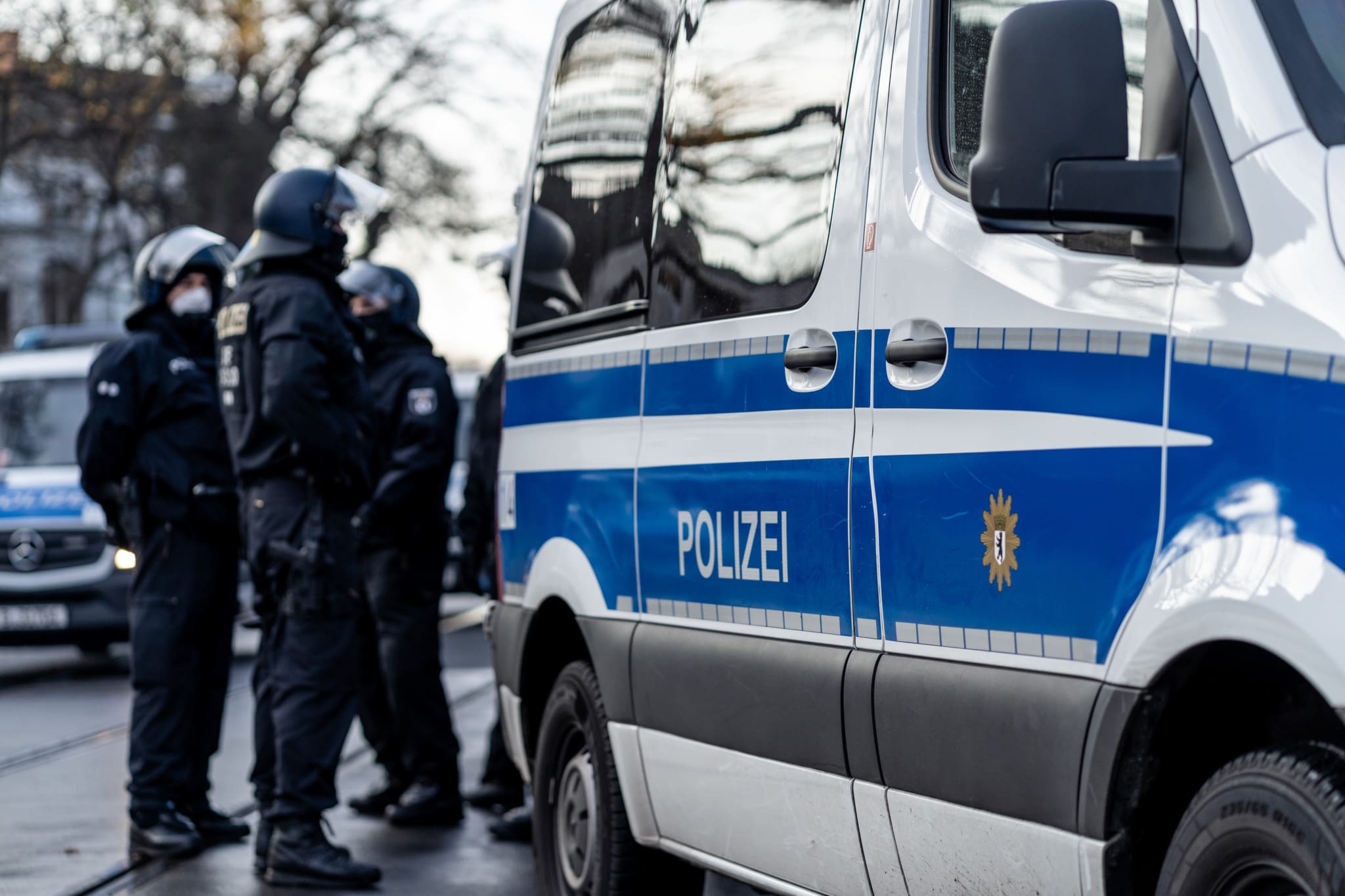
More than 148,000 people remain subject to outstanding arrest warrants in Germany, and only 11.2 percent of them hold exclusively German citizenship, and overall, 87 percent of arrest warrant suspects are foreigners, according to figures the Federal Ministry of the Interior provided in response to a parliamentary inquiry.
Foreign nationals account for 87.3 percent of the total of suspects wanted for arrests, while another 1.5 percent are German citizens who also hold a second nationality. The data is already adding to the debate about mass immigration and criminality, especially in a country where the amount of violence, rape, and serious offenses are disproportionately committed by its foreign population.
Welt newspaper obtained the ministry’s reply to a question from Alternative for Germany (AfD) lawmaker Sebastian Münzenmaier.
Münzenmaier told Welt am Sonntag: “The figures speak for themselves: The overwhelming majority of criminals wanted on arrest warrants do not have a German passport.” He called for a “rigorous change of course” that would include permanent and complete border controls, the immediate termination of the stay of foreign criminals, and the enforcement of prison sentences in the country of origin.
While German citizens form the single largest group, at 16,671, Germany also features a population where 81 percent of people hold exclusively German citizenship. Romanian nationals follow closely with 16,123, then Polish nationals with 12,721, Georgian nationals with 6,869 and Turkish nationals with 6,696.
Alexander Throm, the domestic-policy spokesman for the Christian Democratic Union (CDU) parliamentary group, said: “Every open arrest warrant poses a security risk.”
He added that “the high proportion of foreign offenders, including many from other EU countries, shows that action must be taken.”
Throm also noted that border controls introduced in September 2024 have done more than limit illegal migration: “They have not only curbed illegal migration. Since their start in September 2024, over 17,500 people have also been apprehended at our borders with outstanding arrest warrants.”
Heiko Teggatz, chairman of the German Police Union, called the total worrying and said it “of course, represents a security policy problem.” State police forces, he told the paper, rarely have the staffing to mount dedicated searches; most arrests occur as a “chance hit or bycatch.” The union has long cited personnel shortages as a central obstacle to improved public safety.
Marcel Emmerich, the Greens’ domestic-policy spokesman, agreed that the volume of open warrants constitutes a serious problem, “especially when it comes to dangerous persons, extremists, violent or sex offenders.”
However, Emmerich rejected broader border checks, noting: “Instead of hoping for random hits at border controls, targeted searches are needed, especially for dangerous perpetrators of violence, threats and people from the field of politically motivated crime.”
Sebastian Fiedler, the Social Democratic Party’s domestic-policy spokesman in the Bundestag, cautioned against reading the aggregate figure as evidence of 148,000 undetected dangerous offenders still inside the country. “A significant portion of this is due to substitute prison sentences for unpaid fines. In North Rhine-Westphalia, more than half of all outstanding arrest warrants in total were such cases, he said. Warrants can also remain active against people who have already left Germany or been deported, so that any remaining sentence can be enforced if they return.
“For example, they will continue to be put out to tender for a search so that if they re-enter the country, a remaining prison sentence can be enforced,” Fiedler said.
While the crimes may include many petty offenses, the totals are stark. German nationals represent a minuscule share of the open arrest warrants in a country where 81 percent of the country is made up of German nationals.