

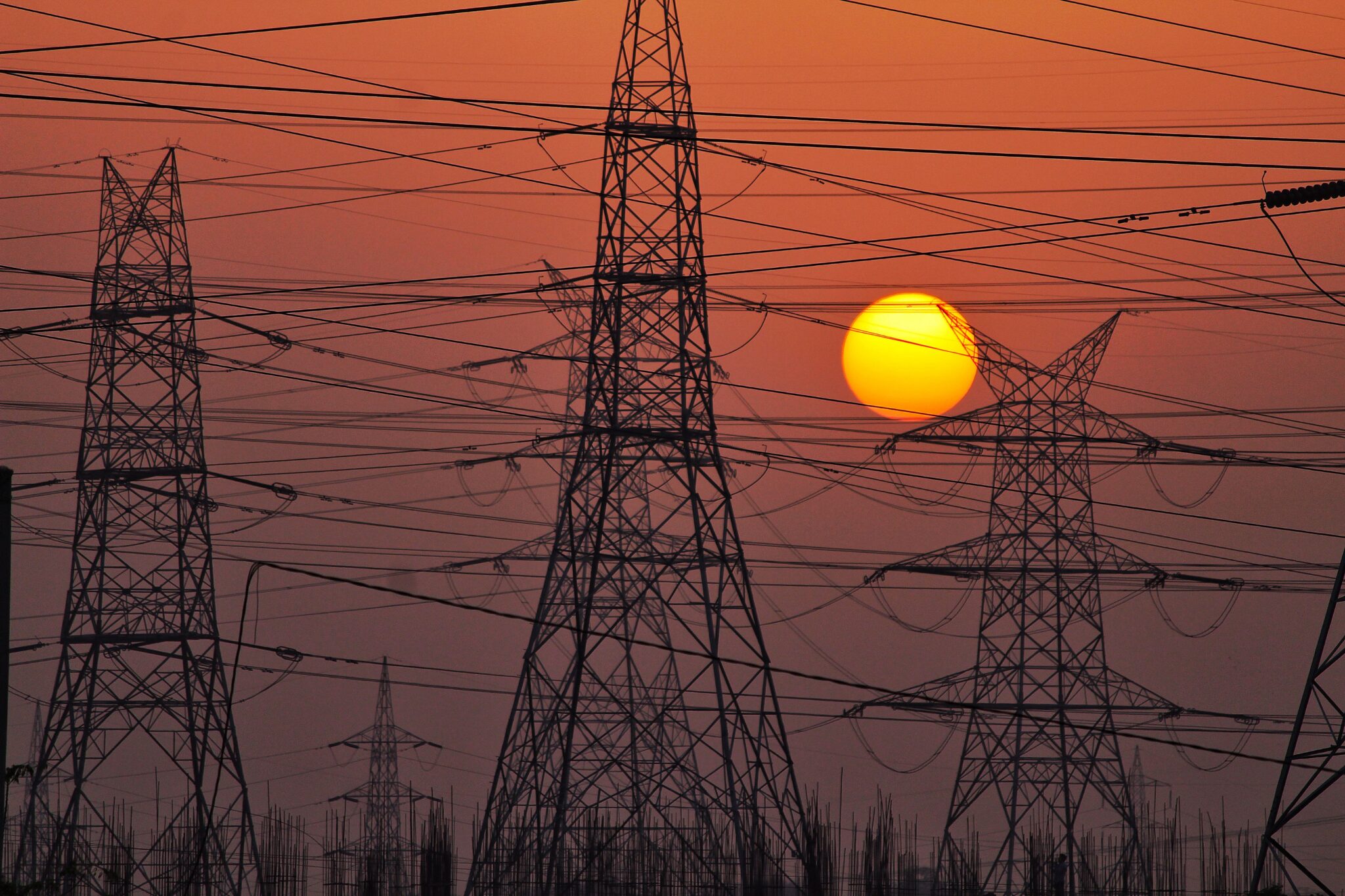
Germany’s electricity grid is approaching a breaking point due to new large-scale demand from data centers and new industrial ventures. Now, grid operators are warning that new connections for everything from electric-vehicle charging parks to new factories may be impossible to bring online in the near-term, and in some cases, there may be delays stretching to at least a decade.
The bottleneck is now threatening to freeze Germany’s industrial expansion and severely hamper digital infrastructure at a time when Germany is already falling behind.
In a letter obtained by Handelsblatt, EWE Netz informed mayors and district administrators in its northern German territory that many requested connections “cannot be realized or only with considerable delays.”
EWE Netz also wrote that building the necessary new capacity would take “at least ten years.” In some cases, there are requests for 15 to 20 times the available connection capacity in its service area.
This is not the only region of Germany facing such constraints. In parts of Baden-Württemberg, new loads above 1 MW are already blocked, while in Hamburg, connections larger than about 1.5 MVA are unavailable.
The demand for electricity is coming primarily from data centers and battery storage projects, with these energy-intensive operations routinely requesting more power than is currently available.
There are also some geographic constraints, with wind generation concentrated in the north, while industrial demand is heaviest in the south and west. Germany has attempted to fix the disconnect between where the power is generated and where it is needed with major north-south high-voltage direct-current projects, including SuedLink and SuedOstLink. However, these projects remain years behind their original schedules, some by nearly a decade. As a result, there are 5,000 kilometers of planned high-voltage lines that remain unfinished.
Adding to the problem was Germany’s decision to shut down all of its nuclear power plants.
The results are clear across the country. Energy-intensive industrial production in Germany has fallen more than 20 percent from levels a decade earlier. Data-center and AI-related infrastructure expansion, which requires rapid, high-capacity connections, faces multi-year backlogs.
Financial and energy commentators have highlighted the risks. Bloomberg energy columnist Javier Blas noted the broader industrial damage:
“Germany’s energy-intensive industrial production revisits the lows… Energy-intensive industrial output is now >20% below what it was a decade ago. For Germany, the European energy crisis isn’t over.”
CHART OF THE DAY: Germany’s energy-intensive industrial production revisits the lows (last data point is June, which came out today). Energy-intensive industrial output is now >20% below what it was a decade ago. For Germany, the European energy crisis isn’t over.
— Javier Blas (@JavierBlas) August 7, 2025He has also reported on calls from utility company CEOs, including the head of E.ON, to slow the pace of new wind and solar additions because the electrical grid cannot keep up.
Market commentator Holger Zschaepitz has repeatedly tracked price surges during periods where renewable energy is at a low, which are known as “dark doldrums” (Dunkelflaute). In the winter, when the sky is overcast and there is little wind, it can lead to massive price surges and grid operators being forced to purchase electricity from other countries.
“Good Morning from Germany, where another Dunkelflaute is sending power prices soaring. Day-ahead electricity has hit €345.64/MWh… As wind & solar output slumps, peak gas-fired generation is the highest since Jan. Expensive gas is filling renewable gap.”
Good Morning from Germany, where another Dunkelflaute is sending power prices soaring. Day-ahead electricity has hit €345.64/MWh, the highest since Dec 2024, w/some evening quarter-hours >€600/MWh. As wind & solar output slumps, peak gas-fired generation is the highest since Jan. Expensive gas is filling renewable gap.
— Holger Zschaepitz (@Schuldensuehner) November 9, 2026Economist Daniel Stelter has argued that the combination of inadequate grid build-out and intermittent generation leaves the system exposed to serious challenges.
“As long as such statements are promoted in serious media, we remain firmly on course for energy poverty and deindustrialization,” he wrote on X.
Solange solche Aussagen in seriösen Medien promotet werden, bleiben wir fest auf Kurs Energiearmut und Deindustrialisierung. Nur mal zur Dimension der Dunkelflaute: “Das gesamte maximale Energiedefizit beträgt 27 TWh… Batterien? Ja, die können Geld verdienen und Spitzen glätten aber nicht das Problem lösen. Es ist so traurig.
— Dr. Daniel Stelter (@thinkBTO) November 11, 2026RWE CEO Markus Krebber also warned that without additional capacity, “distribution battles” over electricity are likely, especially in winter, and that the system should not be run “on the edge.”
He has described recent price spikes during low wind-and-solar periods as more than a warning shot and criticized the slow delivery of both grid reinforcement and new dispatchable plants.
Planning delays, local opposition, lengthy permitting, and the physical challenge of building long-distance lines have all contributed to serious problems for Germany’s digital and industrial future, with no easy solutions available in the future. Meanwhile, countries like China are forging ahead with massive projects to produce electricity, including long-distance transmission capacity, all at a pace that has no close parallel in the world.
China’s installed wind and solar capacity surpassed 2,000 GW by the end of September 2026, roughly 1,310 GW solar and 700 GW of wind. That is more than eight times Germany’s wind capacity and about ten times its solar capacity. In 2025 alone, China added approximately 438 GW of wind and solar—equivalent to a large share of Europe’s total renewable fleet in a single year. Renewables accounted for the bulk of global additions, and additional renewable generation covered China’s electricity demand growth that year.
China has also systematically expanded ultra-high-voltage (UHV) transmission to move power from resource-rich western and northern regions to demand centers in the east. By the end of 2025, it had commissioned around 46 UHV AC and DC projects with a combined line length exceeding 60,000 kilometers. Cross-regional transmission capacity has grown substantially, and further UHV DC projects are planned between 2026 and 2030. West-to-east capacity targets also point toward further large increases by 2030.