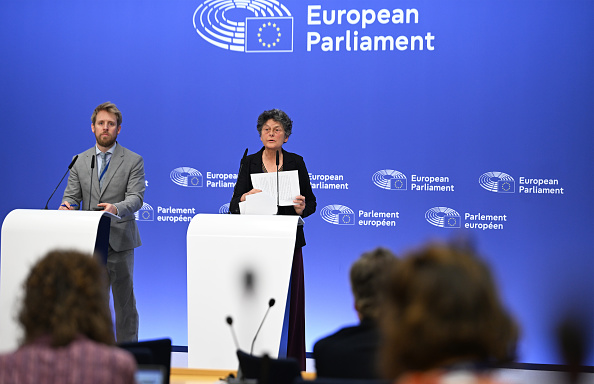
During a briefing on Hungary’s frozen EU funds, left-wing Dutch MEP Tineke Strik indicated that Brussels would not be in any rush to lift the punitive measures. The new Hungarian government, led by Tisza’s Péter Magyar, must first take concrete measures to restore what she claims are democracy, fundamental rights, freedom of speech, and legal certainty.
Strik’s comments were affirmed by German MEP Daniel Freund, also a member of the Greens, who was famously a vocal critic of the Hungarian government under Fidesz. At stake are Hungary’s voting rights, €35 billion, and millions in fines.
To unlock this money, the EU has already issued a 27 demands that Hungary must meet to receive its frozen funds, however, many of these demands already contradict campaign promises made by Magyar during his campaign, including his vow to restrict immigration.
At the press conference, Strik emphasized that it is not yet time to withdraw the punitive measures against Hungary, and she believes that the ongoing Article 7 procedure against Hungary should also not be withdrawn, meaning Hungary’s voting rights in the EU could still be withdrawn.
“We didn’t launch Article 7 because of Orbán, but because of the shortcomings of the system,” she told press.
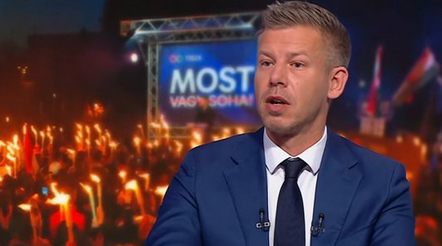
Péter Magyar promised during his campaign to restore the rule of law, respect EU laws, and fight corruption.
“The broad mandate given by the voters will allow him to deliver on his promises. But this is a complex operation that will take time and close cooperation with the EU,” said the Dutch MEP.
While acknowledging the victory of democracy in Hungary and rejection of outgoing Prime Minister Viktor Orbán, she said that the European Union must learn from the past, as it took too long for the EU institutions to act effectively, and Hungary still suffers from a “captive state system” built up over many years by Fidesz.
Strik highlighted that after 16 years, Hungarian voters have clearly decided in favor of restoring the rule of law, a pro-European direction, and fundamental rights, claiming that even “a deeply embedded electoral autocracy” can be ousted.
However, she says Magyar and the Tisza party now face significant work. Strik stated that the new government’s reforms are being closely monitored, with particular attention to the fight against corruption, the independence of the judiciary, and ensuring the primacy of EU law.
In relation to all of this, the council hearing on June 16 will be crucial, she said, as the new Hungarian government can present specific reform proposals and a timetable. Strik also noted the opportunity for constructive cooperation between the European Union and the new Hungarian government.