

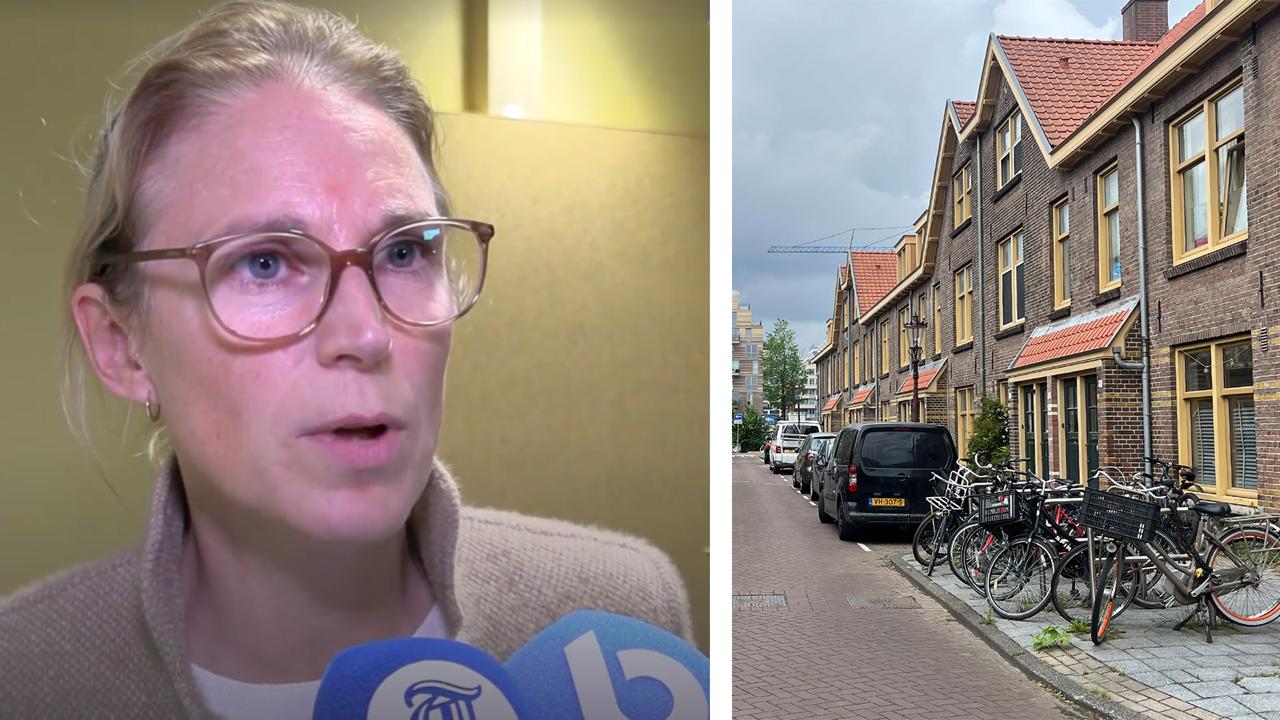
Dutch Housing Minister Elanor Boekholt-O’Sullivan drew sharp criticism this week after defending priority access to scarce social housing for recognized refugees, arguing that many young Dutch first-time home seekers “can still live with their parents.”
In an interview with De Telegraaf, the D66 minister was asked why status holders — asylum seekers granted residence permits — should receive preference for social rental homes while Dutch “starters” face long waiting lists and delayed independence. She responded that “we see that a lot of starters can still, or are allowed to, live with their parents.”
🇳🇱 Migrants get affordable housing before Dutch natives.
When asked why migrants receive access to affordable housing before young Dutch people looking for a "starter" home, the Dutch housing minister said that many Dutch first-time home seekers "can still live with their parents."
Mass migration contributed to 60% of the increase in housing demand in the Netherlands since 2015, yet Minister Elanor Boekholt-O’Sullivan still believes in putting migrants first.
"For me, the fundamental principle is that anyone who is allowed to and wants to live in the Netherlands gets a roof over their head," she said.
In the Netherlands, Dutch natives are increasingly relegated to living with their parents while migrants get to skip massive waiting lists and gain "emergency" access to cheap social housing.
Follow: @RMXnews
— Remix News & Views (@RMXnews) October 14, 2026Dutch commentator and activist Eva Vlaardingerbroek wrote on X that the policy amounted to “systemic racism.”
“And not just the ‘new’ newcomers. A 25-year-old Syrian who came here with his parents years ago jumps the queue for a home when he decides he wants to live on his own. Meaning a 25-year-old white Dutch guy can forget about getting his own place and ends up on waiting lists for 10+ years,” she wrote, adding: “Putting the interests of foreigners above the interests of the native population needs to end.”
Talking about systemic racism: Young Dutch people can barely find a place to live, because migration drove 60% of the housing demand since 2015, regular prices are insane, and migrants get PRIORITY for the affordable social housing.
And not just the “new” newcomers. A 25-year-old Syrian who came here with his parents years ago jumps the queue for a home when he decides he wants to live on his own. Meaning a 25 year-old white Dutch guy can forget about getting his own place and ends up on waiting lists for 10+ years.
But according to our minister of housing that’s fine because they can just continue to “live with their parents.”
Putting the interests of foreigners above the interests of the native population, needs to end.
That’s why with the @SaveEuropeAct, apart from demanding closed borders and Remigration, we also demand
Removing social welfare incentives and benefits that function as pull factors for migration.
— Eva Vlaardingerbroek (@EvaVlaar) October 13, 2026Boekholt-O’Sullivan, an Irish-born former lieutenant general in the Dutch Air Force who took office earlier this year, claims that anyone who wants to live in the Netherlands should get a roof but does not address the major housing crisis brought on by mass immigration.
“For me, the fundamental principle is that anyone who is allowed to and wants to live in the Netherlands gets a roof over their head,” she said. She noted that status holders typically leave asylum reception centers and argued that alternatives such as remaining in centers, homelessness, hotels or cruise ships were unacceptable, so priority allocation should continue until other solutions exist.
The remarks landed amid fresh data underscoring migration’s outsized role in the Netherlands’ housing crunch. A report released this week by the Economic Institute for Construction (EIB) found that migration accounted for about 60 percent of additional housing demand between 2015 and 2024. Migrants who arrived in that period occupied roughly 435,000 homes by 2024, out of nearly 700,000 homes added to the stock.
In addition, data shows that migrants occupy 44 percent of the 2.2 million social housing units in the country.
The 44 percent figure of social housing units occupied by first or second-generation immigrants has doubled from 22 percent in 2000, and is forecast to rise to 51 percent by 2030.
A total of 92 percent of Syrian first-generation immigrants reside in social housing. In addition, 90 percent of those born in Somalia, Afghanistan, and Eritrea reside in social housing.
Asylum-related migration contributes disproportionately to lasting demand because status holders remain permanently at high rates, unlike many labor or student migrants who leave within a decade.
Critics said the minister’s comments minimized the burdens on young Dutch adults who have already spent years on waiting lists for social housing or who face high private rents and purchase prices that lock them out of independent living.
Social housing waiting lists in major cities often stretch many years; priority rules for status holders allow some recent arrivals to bypass ordinary queues. Dutch population growth in recent years has been driven almost entirely by net migration, amplifying pressure on an already constrained housing market marked by strict planning rules, nitrogen regulations and slow construction.
The latest debate about Dutch housing policy and mass immigration is only one aspect of the massive burden foreigners have been on Dutch society, which shows that Dutch taxpayers have spent €400 billion on migrants between 1995 and 2019.
The landmark study, entitled “Borderless Welfare State: The Consequences of Immigration on Public Finances,” shows that net costs of immigration to the Dutch public sector over the period 1995-2019 were an astounding €400 billion, averaging €17 billion a year, with a peak of €32 billion in 2016 due to the 2015 refugee crisis.
However, this is far from the total figure. Since 2019, Dutch taxpayers have paid tens of billions more, with no end in sight.