

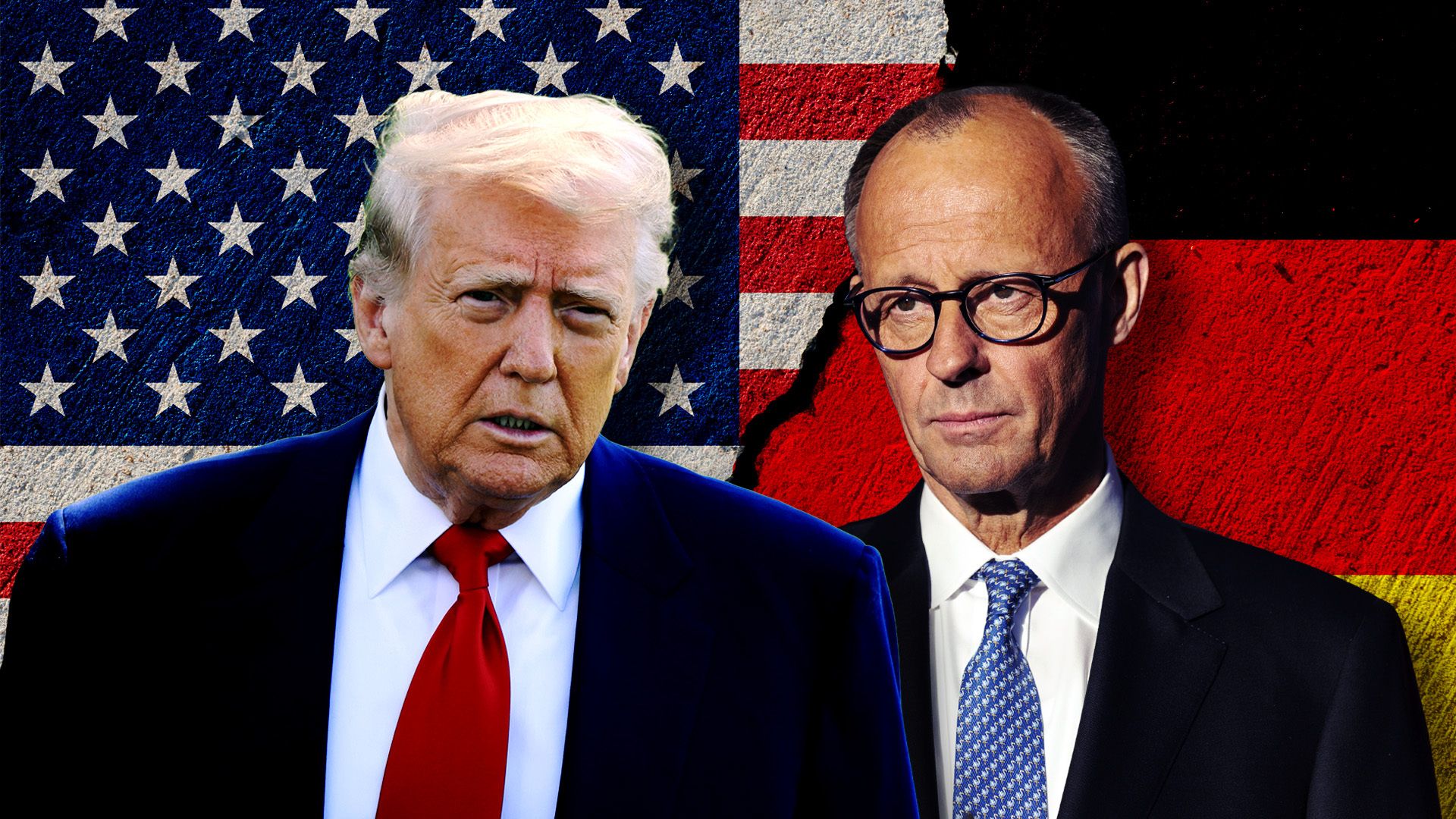
Last Friday, U.S. President Donald Trump further escalated tensions with the European Union by announcing a hike in tariffs to 25 percent on all trucks and cars imported from the EU. The president accused the EU of violating their previous tariff agreement reached last year, but the strong suspicion is that this was in retaliation for Germany’s head of state speaking out on Iran.
The impact of this move will be felt across the Union, and although Germany may be the real target, Europe’s lack of support for his attacks on Iran — and resulting economic and energy crisis — has drawn Trump’s ire in general. Most recently, however, Chancellor Merz took aim at Trump’s war on Iran, saying that Iran’s leadership was humiliating Trump. The American president then said the U.S. would be pulling 5,000 troops from Germany, and more withdrawals may be on the way.
Now, new tariffs have hit the entire EU, with the new rate of 25 percent, up from 15 percent, reportedly taking effect this week. The rate will not apply to any vehicles manufactured in the U.S.
Bernd Lange, chairman of the European Parliament’s trade committee, commented on Donald Trump’s announcement. called the move “unacceptable,” noting that it “shows how unreliable the American side is.”
“This is not the way to treat close partners. We can only respond now with the utmost clarity and decisiveness, leveraging the strength of our position,” he added, as quoted by Do Rzeczy. Lange also indicated that there had been no violation of the agreement reached last year but that the U.S. had repeatedly done so.
The Munich-based Ifo Institute for Economic Research is warning of a new trade war between the European Union and the United States and advising that any further escalation be avoided, according to a Deutsche Welle article, also cited by Do Rzeczy.
Germany, battling layoffs and bankruptcies, has also sounded the alarm. The Federal Association of German Industries (BDI) said in a statement that “Trump’s new tariffs pose another huge challenge to transatlantic economic relations and threaten them not only with regard to the automotive industry.”
“The EU-US trade agreement must be respected by both sides, including the EU,” it added.
Volker Treier, director of foreign trade at the German Chamber of Industry and Commerce (DIHK), also called Trump’s new hike another unnecessary escalation. He noted that while the EU is working to implement a trade agreement with the United States, DC is hindering this process.
Some sectors — and countries — in the EU will feel the impact of the new 25 percent rate more than others. The consequences are sure to be severe for the German automotive industry, as well as Hungary, home to plants for nearly all of Germany’s auto manufacturers and suppliers. Világgazdaság highlights that around 25 percent of Hungarian exports go directly to Germany, with another 10-15 percent indirectly linked to it.
With already weak growth in Hungary, compounded by the impact already felt by previous tariff hikes, the prospects are not good. Hungary has long enjoyed growth due to its exposure to Germany’s auto sector, but now this dependency has become a burden.
Calculations by the Bochum-based Automotive Research Center show that the tariffs could impose an additional burden of around €2.5 billion on German manufacturers, according to Handelsblatt. Ferdinand Dudenhöffer, head of the research center, believes that Trump’s new tariff threats could be interpreted as the start of an economic war specifically against Germany.
He noted, however, that the impact could vary by manufacturer. Mercedes and BMW have U.S. manufacturing plants, so they are protected to a certain extent, as vehicles manufactured there can be exempt from tariffs. These plants primarily produce SUVs, which account for a significant portion of U.S. sales. In contrast, the situation is different for Porsche and Audi.
“This will likely accelerate both companies’ plans to build car factories in the U.S., said Dudenhöffer. He added that overall, the tariffs could give further impetus to the relocation of automotive production — and supply chains — from Germany and the EU. Which is even more bad news for Hungary.