

Blog

  • 14 terrifying cases of migrants raping elderly women in France, French journalist calls it a ‘shocking pattern’ that happens ‘again and again’

    14 terrifying cases of migrants raping elderly women in France, French journalist calls it a ‘shocking pattern’ that happens ‘again and again’

    A French journalist and columnist, Charlotte d’Ornellas, says there is a shocking pattern of foreigners raping elderly women in France. Over the years, Remix News has documented some of the most terrifying of these cases.

    D’Ornellas’ comment came after an especially brutal rape earlier this month involving a Moroccan migrant who was arrested for raping and torturing a 74-year-old woman in Romainville with a telescopic baton.

    “It’s beyond belief, in fact. Obviously, the age of a rape victim doesn’t change the horror much, but there’s something here. You know, the ultimate taboo. She’s raped, a 74-year-old woman, it’s unimaginable. And it happens again and again,” said d’Ornellas during an appearance on French television network CNews. “Our job is to bear witness to reality. And that’s why some people are at war with us. They don’t want us to show this reality. If we don’t talk about it, no one will.”

    However, many other cases have also arisen over the years, which d’Ornellas notes, saying: “We have seen cases in hospitals of women in their 70s, 80s and 90s (being raped)…. If it would be one time, we could be flabbergasted and not really know what to say. When it happens again, we should at least try to find out what to say about it, how to avoid it, because what to say about it means finding ways to prevent it from happening again.”

    It is important to note that cases are just ones from France, with Remix News covering many others in Sweden, Germany, Spain, and Italy.

    1. A 93-year-old woman and a 95-year-old woman were raped in their hospital beds at Victor Dupouy Hospital, Argenteuil, by 44-year-old Samir B. The 93-year-old later died of cardiac arrest.

    2. A 92-year-old nursing home resident was sexually assaulted by Algerian nurse Mohamed D. in Bédarrides. He was sentenced to four years in prison in 2026.

    3. 78- and 68-year-old hospital patients were sexually assaulted at Max-Fourestier Hospital, Nanterre, by 28-year-old Congolese migrant Ali Gandega, who said he was “forced” to rape because he had no girlfriend.

    4. 83-year-old Odette was raped during a daytime burglary in La Penne-sur-Huveaune by an illegal Guinean migrant. The perpetrator was sentenced to 12 years in prison.

    5. A 75-year-old woman was raped on New Year’s morning during a break-in by an African migrant.

    6. An 80-year-old woman was raped to death in Niort by an Afghan man in 2025, sparking widespread fear. The Afghan man was charged with “rape resulting in death without intent to cause it.”

    7. A 102-year-old nursing home resident in Rouen was subjected to attempted rape by 39-year-old Laury Jean-Baptiste from Guadeloupe. She died less than a month later. He was sentenced to 20 years in prison.

    8. In 2025, a 72-year-old woman was assaulted, raped, and robbed inside her own apartment in Paris.

    9. An elderly building caretaker was raped at knifepoint in Paris by 24-year-old migrant Mohammed D., who was sentenced to nine years in prison.

    10. An elderly woman was raped in her Paris apartment after an illegal Algerian migrant offered to help her with her groceries.

    11. A 67-year-old woman was subjected to attempted rape near Gare du Nord, Paris, by a 27-year-old illegal Tunisian migrant. A passerby intervened before the rape could conclude.

    12. Another victim, also 67, suffered an attempted rape in the French town of Tours by an intoxicated Sudanese asylum seeker.

    13. Actu 17 news reported how a 21-year-old illegal migrant of unknown nationality was arrested following the sexual assault of a 51-year-old woman as she returned to her home in Avignon.

    Regarding these type of cases involving rape of the elderly, d’Ornellas states foreigners are very overrepresented, saying: “You asked about the profile. In the case of rapes of elderly women, it is almost always young foreigners. Most of the time in an irregular situation, he has no fixed address, and we are told that he was probably disturbed. It’s absolutely obvious, I can tell you in advance, given what they’re capable of doing. But in this case, there really is a profile that stands out in the rape of our elderly. Perhaps that should engage us a little.”

  • Spain: Illegal Moroccan knifeman arrested after attacking three victims in one night in Almería, leaving teenage girl in the hospital

    Spain: Illegal Moroccan knifeman arrested after attacking three victims in one night in Almería, leaving teenage girl in the hospital

    A Spanish court has ordered the immediate pre-trial detention of a Moroccan national following a trio of attacks across the Vega de Acá district of Almería last Tuesday.

    The ruling came after the suspect was brought before the court on April 24. He faces three counts of attempted robbery with violence and an additional charge of assault after targeting multiple victims within a matter of minutes.

    According to investigators cited by Diario de Almería, the violence began shortly before 9:40 p.m. near Avenida Cabo de Gata, where the suspect allegedly approached two couples at knifepoint as they left a restaurant, forcing them to flee and triggering an initial police response.

    Moments later, the most serious assault unfolded when a 17-year-old student walking home was allegedly chased, grabbed, and thrown to the ground after the suspect demanded her phone. He is accused of pulling her hair, repeatedly kicking her, and stabbing her in the thigh during the struggle.

    Her screams alerted nearby residents, whose intervention forced the attacker to flee.

    A third victim was then targeted shortly afterward near a gym on Vega de Acá Avenue. Police say the suspect kicked a woman off her motorcycle at a traffic light and attempted to intimidate her with the knife before she escaped into a nearby building.

    Police officers later found the suspect hiding in bushes in a nearby vacant lot and arrested him. A knife with a wooden handle was recovered, along with a watch believed to have been stolen during the attacks.

    Witnesses said the suspect pleaded with officers during his arrest, asking to be sent back to his home country rather than prison.

    The injured teenager was taken to Torrecárdenas University Hospital, where she was treated for multiple bruising and a stab wound to her left thigh. Medical reports indicate she required several days to recover and suffered significant psychological distress following the attack.

    In ordering his detention without bail, the investigating judge cited a high risk of flight, noting the suspect had no fixed address and was in Spain without legal status. The court also highlighted the seriousness of the alleged offenses and the likelihood of a substantial prison sentence if convicted.

    The attacker is expected to be sentenced next month.

    The precise immigration history of the suspect is unknown, other than that he is living in Spain illegally. However, had he been living in Spain for six months with no previous criminal conviction, such an individual would have been eligible for Socialist Prime Minister Pedro Sánchez’s mass amnesty.

    The left-wing Spanish government recently approved the regularization of what some say could be up to 1.6 million illegal migrants currently living in Spain. The decision was made by government decree, thus bypassing any parliamentary oversight.

    Last month, a 45-year-old Moroccan migrant was arrested for a violent axe attack in the southern Spanish town of Montefrío that left two women in critical condition and another victim injured.

    La Bandera reported that the suspect made a statement while in custody, claiming he had “heard the call of Allah” and that “all Christians must die,” suggesting a terror motive to the attack.

    Santiago Abascal, leader of the populist Vox party, accused Prime Minister Pedro Sánchez and the state broadcaster Televisión Española (TVE) of suppressing information about the incident.

    In February, a 27-year-old Moroccan migrant was arrested on suspicion of raping and murdering a 54-year-old Spanish woman in Barakaldo, near the city of Bilbao in the Basque region.

  • ‘I no longer feel safe anywhere’ – ‘Talented filmmaker’ Fahd Kabbaj convicted for creeping into 13-year-old girl’s room and sexually assaulting her before fleeing to Morocco

    ‘I no longer feel safe anywhere’ – ‘Talented filmmaker’ Fahd Kabbaj convicted for creeping into 13-year-old girl’s room and sexually assaulting her before fleeing to Morocco

    A 13-year-old French girl woke up in the middle of the night in her own bed in the French city of Riom only to discover an intruder who had broken into the house and proceeded to viciously sexually assault her. The man, 27-year-old Fahd Kabbaj, who fled to Morocco after the heinous assault, has now been convicted for the crime that happened six years ago.

    On April 23, the court in Clermont-Ferrand sentenced him to five years in prison and issued an international arrest warrant, as the man remains on the run.

    The incident began on June 29, 2020, at approximately 3:00 a.m, when Kabbaj snuck into the family home when he saw the door unlocked. He crept up to the sleeping girl’s bed and began to grope her in her sleep, waking her. He grabbed her chest and hips, forced himself on top of her to kiss her, and gripped her hand and placed it on his erect penis. He then tried to insert his fingers into her vagina, and when she resisted, he slapped her, reported French news outlet La Montagne.

    The 13-year-old victim, in total shock, managed to grab her phone and begin filming her attacker. She then warned Kabbaj that her father was coming, causing the man to flee in fear. During the encounter, he managed to obtain her private details and even sent her a message the next day on social media.

    However, the 13-year-old girl had already gone to the police. She then provided the video and the message to officers, which were used to identify the pedophile rapist. Kabbaj disappeared in Paris and is believed to have fled to Morocco.

    It has now been six years since the attempted rape of the girl, who is now 19, and she testified in court: “I no longer feel safe anywhere.”

    She said she suffers from various psychological disorders due to the complete stranger appearing in her room and sexually assaulting her. She has trouble sleeping, does not feel comfortable being intimate with other people, suffers from permanent insecurity, and has dealt with school absenteeism due to her condition.

    If Kabbaj is ever found and extradited to France, he will serve five years in prison automatically. He was also ordered to compensate the victim and her family, and will be registered as a sexual offender. He will also be banned from staying in Puy-de-Dôme for five years.

    Remarkably, the same news outlet that covered his trial, La Montagne, also wrote about Kabbaj before the sexual assault, when he was 16, in a puff piece celebrating his desire to be a filmmaker and covering his two short films.

    “His first video, titled The Metamorphosis, had been viewed nearly 600 times on Youtube. The short ten-minute film traces the adventure of George and Samsa, two friends with opposite personalities, who exchange bodies following the spread of a virus,” wrote the paper.

    “The young director and screenwriter is self-taught and manages his entire project alone: Thanks to the evolution of technologies, shooting a film is now within everyone’s reach. You just have to have a lot of imagination,” the paper continued.

    La Montagne also described Kabbaj as “talented and motivated” and stated he wanted to study film in Paris and become a screenwriter. The paper noted that the moral of his Metamorphosis was “that we cannot change the world, but we can change our world.”

    While he may not have amounted to much of a director or filmmaker during his life, he certainly “changed the world” for one 13-year-old victim, with catastrophic consequences.

  • Le Pen slams ‘unworthy’ Macron after French president criticized rules forcing foreign doctors to pass French exams

    Le Pen slams ‘unworthy’ Macron after French president criticized rules forcing foreign doctors to pass French exams

    Former French presidential candidate Marine Le Pen has accused French President Emmanuel Macron of acting “unworthy” and lashed out over his criticism of rules forcing foreign doctors to pass French exams.

    The row stems from a visit by Macron to Ariège on Monday, during which he criticized France’s system for non-EU medical staff, branding it chaotic and “upside down.”

    The French president’s remarks came after he was pressed by healthcare workers about so-called Padhue doctors — foreign-trained medics who are increasingly being relied upon to plug gaps in France’s overstretched system.

    “The Padhue system is still a mess. It drives me crazy,” Macron said. “They practise medicine, and when the time comes to make them permanent, they have to take another exam. We have a system that is upside down.”

    Foreign-trained doctors working in French hospitals must sit further exams and pass a two-year probation period before being fully recognized.

    But Le Pen hit back hard, defending strict testing requirements and accusing the president of lowering the tone of debate.

    “I find Emmanuel Macron’s indignation over foreign doctors to be utterly unworthy,” she said. “It is entirely natural that in our country, we require foreign doctors to take an exam, just like French doctors, in order to ensure that the care provided is of the highest possible quality.”

    She went further, accusing Macron of imitating the populist tone of U.S. President Donald Trump. “The Trumpization of Emmanuel Macron… means he is taking his cue from the President of the United States, who uses extremely crude language,” she said, calling his stance “outrageous.”

    Macron’s remarks sparked a wider political fight over immigration and France’s relationship with Algeria, the largest country of origin for foreign-trained doctors in France. He attacked nationalists, calling them “madmen who say we should fall out with Algeria.”

    More than 19,000 doctors in France are trained outside the EU, according to the French Medical Council. Of these, 38.8 percent studied in Algeria, 15.1 percent in Tunisia, 8.6 percent in Syria, 7.4 percent in Morocco, and 4 percent in Lebanon.

  • In the name of ‘openness’ and ‘creativity,’ gay education is coming to Hungary

    In the name of ‘openness’ and ‘creativity,’ gay education is coming to Hungary

    Hungary will have a new 24-hour LGBTQI TV channel, and now, incoming PM Péter Magyar (Tisza) has announced some LGBT-friendly figures to serve in his education ministry.

    Judit Lannert will head up the Ministry for Children and Education. Aside from degrees in economics and social policy, she also holds a PhD in sociology and spent time studying in the U.S. Lannert, who displayed the Pride rainbow around her profile photo on Facebook during the protests against Fidesz’s Child Protection Law, was not the first pick. Rita Rubovszky, a Catholic expert and director of the Cistercian School Authority, was widely expected to take up the role.

    But Magyar quickly caved to left-wing outcries and named Lennert to the post, where she will presumably work on a more open-minded and “creative” approach to Hungarian education. Many are wondering what exactly this will entail. She has previously advocated for the closing of small schools to deal with the shortage of teachers in Hungary, saying the country must achieve greater efficiency.

    There is no question that Lennert is distinctly left-leaning, and this goes beyond her support for Pride and opposition to a Hungarian law banning any sort of LGBTQI education in elementary schools.

    This past February, the appointed minister reposted a video by an influencer, pushing the message that wellness is somehow directly linked to fascism. “Many people in Hungary can probably relate to this,” Lennert commented on her repost.

    Perhaps more telling in just how far to the left education will go in Hungary is the choice by Péter Magyar of Kriszta Bódis, who will work within the Prime Minister’s Office, led by Bálint Ruff, coordinating health care, education, social policy, and other areas.

    Bódis, who served as a socio-political consultant for Tisza during its campaign, is well-known as the author of a children’s homosexual-themed book called “Csipke Józsika,” about a little boy who explores his sexual identity and self-awareness. “Csipke Rózsika” is “Sleeping Beauty” in Hungarian, so the name of this book is already a LGBT play on that, as Józsika is a nickname for Joseph.

    According to Kulturpart, the book approaches traditional gender roles and otherness in a unique way, telling the story of a gay prince using fairy tale elements to reflect on social acceptance and difference.

  • ‘The evidence is overwhelming!’ — Taylor Swift concert terror suspect appears in court as trial begins in Austria

    ‘The evidence is overwhelming!’ — Taylor Swift concert terror suspect appears in court as trial begins in Austria

    The trial of a 21-year-old accused of plotting terrorist attacks, including a plan linked to a Taylor Swift concert in Vienna back in August 2024, opened on Tuesday under heavy security at the regional court in Wiener Neustadt.

    Beran A., described by prosecutors as a supporter of the Islamic State, was brought into court in handcuffs, and the media gathered for what has been dubbed one of the country’s most high-profile terrorism trials in recent years.

    He is standing trial alongside another 21-year-old defendant, Arda K., with both men facing charges related to terrorist activity and involvement in a criminal organization.

    Prosecutors allege the pair were involved in planning three separate attacks in Dubai, Istanbul, and Mecca, and accuse them of contributing to an attempted murder carried out by a third associate, identified as Hasan E., who is currently detained in Saudi Arabia after allegedly stabbing security personnel at a religious site.

    According to the prosecution, Beran A. had amassed extensive material linked to extremist ideology, including communications with a senior IS figure. Investigators also reportedly recovered a video on a USB drive in which he claimed responsibility for planned attacks.

    The court heard that after returning from Dubai, the defendant downloaded bomb-making instructions, began assembling explosives, and attempted to acquire weapons, including machine guns and hand grenades. During a search of his home, authorities said they seized materials consistent with the construction of a shrapnel bomb.

    Among the potential targets discussed, prosecutors said, were a town hall square, a gay bar, and a Taylor Swift concert scheduled for Aug. 9. Although the defendant allegedly logged the concert in his calendar, he did not possess a ticket.

    “The evidence for all the accusations is overwhelming,” the prosecutor told the court, outlining what he described as a coordinated extremist plot.

    Defense lawyer Anna Mair acknowledged that her client would not leave the court a free man but sought to portray him as vulnerable and influenced by others. She argued that Beran A. had been bullied in school and later manipulated by Hasan E., whom she described as a dominant figure who introduced him to extremist content online.

    Mair said her client had admitted to some offenses, including elements related to the alleged Swift concert plot, but denied any involvement in the Mecca attack or in encouraging it.

    “He did not participate in any acts in Mecca,” she said, describing the relationship between the men as toxic and one-sided.

    During the hearing, Beran A. entered a partial guilty plea, admitting to some charges related to the Taylor Swift concert but denying others. His co-defendant similarly admitted to planning an attack in Istanbul but denied assisting in other alleged plots.

    Both defendants are now set to be questioned separately as the trial continues.

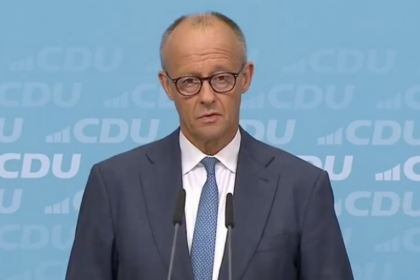
  • Trump’s war in Iran is ‘humiliating’ America, claims German leader Merz after initially supporting the war against Iran

    Trump’s war in Iran is ‘humiliating’ America, claims German leader Merz after initially supporting the war against Iran

    German Chancellor Friedrich Merz took aim at the realities facing the United States in its war against Iran. Speaking to students in Marsberg, the German head of state did not hold back, stating that the “entire nation is being humiliated” by Iran.

    When the war first broke out, Merz backed Trump and his actions in Iran, saying the U.S. was doing the dirty work for the world. Now, with the war dragging on, he is sharply changing his tune as his approval drops to rock-bottom support levels.

    The chancellor specifically noted the role of Islamic Revolutionary Guard Corps in putting the U.S. in its current predicament. He also took issue with having started the war, thinking it would be an easy win. And America, he made clear, should have learned from its own history by now from other failed wars.

    “The problem with conflicts like this is always you don’t just have to get in – you have to get out again. We saw that very painfully in Afghanistan for 20 years. We saw it in Iraq,” he said.

    Merz clearly indicated that he believes U.S. President Trump and his negotiators have underestimated Iranian officials and are being out-negotiated.

    “The Iranians are obviously very skilled ⁠at negotiating, or rather, very skilful at not negotiating, letting the Americans travel to Islamabad ​and then leave again without any result,” he said, according to Reuters, adding that he hopes the conflict can in some way “end as quickly as possible.”

    Notably, Merz may be trying to save face after his initial support for the war.

    On March 3, 2026, four days after the conflict began, Merz visited the White House and stated that Germany was on the “same page” as the U.S. and Israel in wanting to “get rid of this terrible terrorist regime.”

    He described the Iranian government as a threat to Israel’s existence and responsible for decades of oppression. He noted that the military strikes were intended to end the “destructive game” of a weakened regime.

    Nevertheless, his election rivals, the Alternative for Germany (AfD), were quick to condemn Trump. Since then, their lead over Merz’s CDU has only grown, jumping to 28 percent versus 24 percent in the latest Insa poll.

    Germany, and all of Europe, is suffering greatly from the impact of the Iran War, specifically over the closure of the Strait of Hormuz. The narrow passageway extending some 170 kilometers connects the Persian Gulf (or Arabian Gulf) to the west with the Gulf of Oman and the Arabian Sea. Through these waters, ships carry oil, LNG, jet fuel, fertilizers, feedstock, sulfur, and industrial chemicals — all of critical importance for various industrial applications, agriculture (now in planting season), heating, power, and travel.

    The war in Ukraine and high inflation have already proven a challenge for Europe, with Germany still reeling from bankruptcies and layoffs. High gasoline and energy prices, as well as potentially higher food prices due to the disruption to farmers, will now only add fuel to the fire.

    With NATO’s existence, or relevancy, increasingly being questioned — and Trump continuously at odds with members’ lack of financial contributions, not to mention support for his war in Iran — some are wondering if such statements by the leader of Europe’s biggest economy indicate an even more uncertain future for the nearly 80-year-old alliance.

  • Germany: Syrian asylum seeker Fahad A. on trial for murdering 70 people, torturing 115

    Germany: Syrian asylum seeker Fahad A. on trial for murdering 70 people, torturing 115

    The German Federal Prosecutor’s Office is trying 48-year-old Fahad A., charging him with “70 counts of murder, as well as crimes against humanity through killings, torture, and deprivation of liberty.”

    The man was able to apply for asylum in Germany in 2023 as a war refugee, but now, the prosecution alleges that the defendant served as a prison guard and secret service agent who partook in brutal forms of torture while serving the former regime of Bashar al-Assad.

    Fahad A. was initially able to live with his family in Pirmasens, located in Germany’s western Palatinate, until his alleged past came to light and Federal Criminal Police Office arrested him in May 2025.

    Investigators allege that Fahad A. served as a non-commissioned officer within the Syrian secret service, specifically working as a guard at the infamous Al-Khatib prison in Damascus, according to Bild newspaper.

    This prison is widely recognized as a site where thousands of activists, political opposition members, and Syrian citizens were systematically tortured and abused.

    The indictment states that between April 2011 and April 2012, Fahad A. allegedly tortured at least 115 individuals. Despite the charges against him, he entered court holding up a “V” sign with his fingers for victory and smiled as the charges were read out to him.

    The indictment detailed torture methods that involved the use of electric shocks, beatings with cables and blunt objects, and waterboarding to simulate drowning. It is further alleged that prisoners were doused with cold water throughout the night to induce extreme terror.

    It remains unclear how investigators identified the defendant’s role in these alleged crimes.

    The prosecution also highlighted the cruelty of “welcome parties,“ during which new arrivals were reportedly beaten so severely that some succumbed to their injuries the very same day. During the defendant’s tenure at the prison, at least 70 people lost their lives.

    Fahad A.’s attorney, Jamil Azem, stated at the beginning of the court proceedings: “I expect a fair trial, and that at the end it will be determined that he was at the very bottom of the chain of command and not responsible for such atrocities.“

    Some survivors and family members of those murdered are hoping for justice.

    Feras Fayyad, a Syrian filmmaker who was previously detained at the same prison, shared his perspective: “I hope he is confronted with every single act and what he has done to us and our lives. I hope for justice.“

    This trial, which may continue until 2027, is poised to be a landmark case in Germany’s efforts to address Syrian war crimes.

    At the same time, questions are being raised about how a man allegedly involved in so many atrocities was able to enter Europe, travel across the continent, and gain access to German territory. It further highlights the threat of jihadists and war criminals entering Europe with little to no oversight or supervision. It also raises the possibility that others involved in atrocities in the Middle East, North Africa, or other locations are currently residing in Europe undetected.

    With roughly 1 million Syrians currently residing in Germany, the case underscores the ongoing challenge of distinguishing victims from the perpetrators of the conflicts they fled.

    In fact, Fahad A. is not the first person to be tried for similar crimes. In 2024, Anwar R. was sentenced to life in prison in Germany for his role in torturing prisoners to death for Assad. In addition, Eyad A. was sentenced to four years for aiding and abetting Anwar R. In addition, Alaa M. was arrested by German police for torturing detainees in Homs for the Assad regime.

  • France: Far-left mayor present at illegal rap video-turned riot, claims he was only there to calm things down

    France: Far-left mayor present at illegal rap video-turned riot, claims he was only there to calm things down

    Bally Bagayoko has moved on from threatening to disarm the police to questioning their intervention in illegal activities.

    The controversial mayor of Saint-Denis, the second-largest city in Île-de-France, has yet again come under the spotlight despite only being mayor for over a month. This time, the issue was an unauthorized rap video being shot this past Sunday in the Franc-Moisin housing project. The event reportedly drew as many as 250 people to the streets to enjoy music and barbecues, presumably serving as the backdrop to the video.

    The police patrol that first arrived on the scene met a large crowd of locals, extras, and the film crew itself. After finding that the crew had no proper authorization to occupy the public space or shoot a video, the police requested that filming of the rap video stop immediately.

    Unfortunately, tensions escalated quickly, and the officers found themselves amidst a crowd of hundreds on a dead-end street. They were then allegedly targeted with various projectiles and blocked from leaving.

    Mayor Bally Bagayoko, present on site, claims he was only called to the scene to calm the situation. “I was called by residents of the neighborhood. I came because I was nearby,” he said, according to Le Parisien. He also insisted that “the situation could have escalated” had he not been there to calm things down.

    However, a police source indicates that the mayor, in fact, would have supported continuing the shoot.

    Some 80 police officers were ultimately called to the scene, with reports that tear gas was used to disperse the crowd. No injuries were reported.

    Bagayoko still took advantage of the incident to call into question the decision of the first police car to stop and question the filming at all, especially as many families were present. At the same time, the mayor tried to assure critics that he would remind people of the laws in place for such shoots, calling for “a little education and understanding” to avoid such incidents in the future.

    Bagayoko was elected just last month but has since become a highly popular politician, especially on the left. The Odoxa barometer of the most popular political figures has ranked the mayor of the second largest city in Île-de-France in 20th place among the political figures who generate the most support, with 14 percent favorable opinions, writes Le Parisien.

    Just last week, the Ifop-Fiducial barometer for Paris Match and Sud Radio put him at number 22 on their list.

    After being elected, Bagayoko promised to disarm municipal police, telling one news portal that  “those who are not aligned with our political project will leave of their own accord.” His statement raised concerns that the mayor intends to let thugs rule the streets, a worry that will not be abated by this last weekend’s rap video riot.

    Another local councilwoman also resigned in disgust after seeing Bagayoko speaking for several minutes outside the town hall with the man convicted of ordering a violent attack on her two years ago. The two reportedly ended the conversation “with a very warm handshake.”

    Bagayoko is an increasingly popular member of La France Insoumise (LFI), led by the highly controversial Jean-Luc Mélenchon, who has said, “We are destined to be a Creole nation and so much the better.” Bagayoko has also, soon after taking up his post as mayor, referred to Saint-Denis, known as “the city of kings,” (la ville des rois) as “the city of Blacks” (la ville des Noirs).

  • ‘Intervene now or regret it!’ — Berlin youth leader warns German schools are a breeding ground for ‘mini-Islamists’ who force their religion on others

    ‘Intervene now or regret it!’ — Berlin youth leader warns German schools are a breeding ground for ‘mini-Islamists’ who force their religion on others

    A prominent Berlin youth worker has issued a stark warning that Germany’s school system is breeding “mini-Islamists,” claiming that some Muslim students are forcing their strict religious norms on peers and creating a climate of fear in classrooms.

    Wolfgang Büscher, spokesperson for the youth charity Arche, said staff across the organization are increasingly reporting cases of religious bullying linked to the growing influence of political Islam among young people.

    “I want to warn society: The pressure that political Islam exerts on fellow students through Muslim children in our schools is constantly increasing,” he told Focus magazine, adding that educators are seeing the emergence of “little hardcore Muslims, mini-Islamists.”

    According to Büscher, the problem is most visible in disadvantaged areas, where some schools have student populations with up to 90 percent migrant backgrounds. In these environments, he said, pupils who do not follow strict religious practices — including other Muslims — are being ostracized, harassed, and, in some cases, pressured to convert.

    He also pointed to specific communities, saying the issue is not driven by students of Turkish origin but by those with family roots in regions such as Palestine, Gaza, Syria, and Iraq. In these cases, students who do not adhere to rigid interpretations of Islam are labeled “unbelievers” and subjected to intimidation.

    His intervention comes as Berlin authorities await the outcome of a large-scale study into school violence and conflict, commissioned by Education Senator Katharina Günther-Wünsch and covering around 450 schools.

    Previous attempts to address religious tensions have failed due to pressure from Islamic organizations. In 2021, Neukölln mayor Martin Hikel tried to establish a reporting office for confrontational religious behavior, but the initiative was abandoned after criticism that it could stigmatize Muslim students.

    Despite mounting evidence, Büscher said he expects little to change. “No matter what the study reveals, in the end there will be a lack of courage,” he said, arguing that neither the political will nor the funding exists to tackle the problem head-on.

    He suggested redistributing students from heavily affected schools to others with lower concentrations of migrant pupils as a possible solution, supported by subsidized transport. However, he acknowledged that such measures are likely to face strong opposition.

    “Political Islam could develop into a much bigger problem in a few years if countermeasures are not taken now,” Büscher added.

    As Remix News reported last month, a recent study by Germany’s Federal Criminal Police Office found that 45.1 percent of Muslims under 40 exhibit what it described as “latent or manifest Islamist attitudes,” including support for Sharia law over the constitution. Free Democratic Party politician Wolfgang Kubicki called the findings a “societal time bomb.”

    Individual cases have also drawn attention. In Berlin, teacher Oziel Inácio-Stech said he suffered months of abuse and threats from students after revealing he was married to a man. “I’m living in a nightmare,” he said, describing the impact on his mental health.

    Students began spreading rumors, refusing to attend his lessons, and shouting through classroom doors that he was a “family disgrace” and “impure.” One student told him outright, “You gay, get out of here. Islam is the boss here.”

    In July last year, the German Education and Training Association called for expanded Islamic religious education in schools, saying structured teaching could provide balance and reduce the appeal of extremist interpretations. Such a move has been seen in Spain, where last year it was reported that approximately 200 schools across the autonomous community of Andalusia were now teaching Islam as part of the curriculum, sparking outrage from the local branch of the nationalist Vox party, which claimed the state had “succumbed to mass immigration.”

    Similar concerns have been raised elsewhere in Europe. In Austria, long-serving educator Christian Klar warned of rising religious tensions and anti-Semitic incidents in schools, particularly in areas with high migrant populations.

    “Islamic culture has completely different basic values ​​than we have. I believe our basic values, our open, liberal society, are the right and best way of life,” Klar warned. This is a different form of life (…) and concerns, for example, the equality of men and women, dealing with violence, or defending family honor. I think we have to take a massive stand against this.”

    Last month, Remix News reported on a case from Vienna in which a lone Christian student in their class was repeatedly called a “pig” by Muslim students and faced persistent harassment.

    At the school in question, 230 of the 390 students are Muslim, nearly 60 percent. In total, the school features a 99 percent immigrant background. Only five out of the total of 390 students have no migrant background.

  • Czechia eyes major gas deal with Azerbaijan in push for supply diversification

    Czechia eyes major gas deal with Azerbaijan in push for supply diversification

    The Czech Republic is moving closer to a significant new energy agreement with Azerbaijan, aiming to import up to 2 billion cubic meters of natural gas per year as part of efforts to diversify supply sources.

    Industry and Trade Minister Karel Havlíček said during a visit to Azerbaijan that deliveries could begin between 2028 and 2029. Echo24 noted that while the contract has not yet been formally signed, Havlíček indicated that negotiations are advanced and the deal is effectively promised.

    Prime Minister Andrej Babiš also confirmed that the Czech energy group ČEZ is actively seeking additional gas supplies as the government seeks to secure long-term energy stability.

    The planned imports would represent a notable share of Czech demand. According to the Energy Regulatory Office, the country consumed 7.2 billion cubic meters of gas last year, a rise of 6.5 percent compared to the previous year. Currently, Norway remains the Czech Republic’s main supplier, while liquefied natural gas (LNG) shipments are largely sourced from the United States.

    Havlíček said the annual cost of Azerbaijani gas could reach around 20 billion Czech crowns (€821 million), depending on contract terms. He stressed that securing favorable pricing would likely require a long-term agreement lasting between 10 and 15 years.

    If finalized, the Czech Republic would become the eleventh European Union country to import gas from Azerbaijan, reflecting the country’s growing role as a supplier to Europe. Azerbaijani officials have indicated strong demand for their gas exports, though Havlíček described Prague as a key strategic partner, pointing to existing energy ties.

    Around 42 percent of the Czech Republic’s oil imports already come from Azerbaijan, making it one of the country’s most important European customers, second only to Italy.

    According to Azerbaijan’s Ministry of Energy, the country produced 51.5 billion cubic meters of natural gas last year and exported 25.2 billion cubic meters overall. Of that total, 12.8 billion cubic meters were sent to Europe, its largest foreign market, alongside exports to Turkey, Georgia, and Syria.

  • France: Mohamed S., nicknamed ‘The Cat,’ robbed nearly €10 million targeting celebrities, a Chinese communist deputy, and a luxury handbag store

    France: Mohamed S., nicknamed ‘The Cat,’ robbed nearly €10 million targeting celebrities, a Chinese communist deputy, and a luxury handbag store

    Mohamed S., a career criminal known as “The Cat,” was imprisoned in Paris for stealing nearly €10 million during several roof burglaries in Paris that targeted high-profile celebrities, a Chinese Communist Party official, and a luxury handbag store where he absconded with €800,000 worth of goods.

    Among the victims targeted by Mohamed S., who has 30 convictions on his record, are the television host Patrick Sébastien, the rapper Booba, and footballer Thiago Silva.

    The Paris prosecutor’s office confirms that three additional people are also going to trial.

    The 34-year-old man denies that he was involved in the robberies.

    A source speaking to Le Monde said the damage he caused was enormous. The thief, who broke into luxury homes through roofs, gutters, and facades, was indicted for organized gang theft committed with violence and criminal conspiracy, according to the Paris prosecutor’s office.

    The other three people in the case are two accomplices and a receiver of the stolen goods. All three are in pre-trial detention.

    The thief and his crew used the “same procedure” each time they picked out a target, according to a source. The team would sneak through the roof and use a jammer to neutralize the alarms.

    One of the burglaries dates from July 6, 2025, in a company specializing in the resale of luxury leather goods in the 8th arrondissement of Paris. More than €800,000 of luxury bags were stolen there.

    A second robbery was committed with violence against a deputy of the Chinese Communist Party, in the 16th arrondissement, on Jan. 30. The victim, who tried to resist, was injured and was prescribed five days of total incapacity for work.

    Mohamed S. and his crew are suspected of robbing the Chinese victim of €7.8 million, according to prosecutors. It is unclear how they extracted this large sum of money from the Chinese victim.

    Mohamed S. denied this case as well, saying: “I’ve never committed violent theft; I had nothing to do with it.

    When the police confronted him with evidence, he told them, “You know, people climb on roofs every day.”

    France has seen an incredible amount of high-profile home invasions targeting celebrities in recent years, as well as a wave of robberies and kidnappings targeting cryptocurrency firm founders and CEOs.

    The founder of Telegram, Pavel Durov, went so far as to say that the wave of kidnappings is due to French tax officials selling the private data, such as personal addresses, to criminals.

    “41 kidnappings of crypto holders in France in 3.5 months of 2026. Why? French tax officials selling crypto owners’ data to criminals (Ghalia C.) + massive tax database leaks. Now the state also wants IDs and private messages of social media users. More data = More victims,” he wrote.

    Of course, other high-profile crimes like the Louvre robbery have also haunted France as of late, with that case also involving numerous men with a foreign migration background.

  • Germany: Anti-immigration AfD party soars to new record high of 28%

    Germany: Anti-immigration AfD party soars to new record high of 28%

    The anti-immigration Alternative for Germany (AfD) has jumped to a new record high in a recent poll conducted by the opinion research institute Insa. In the poll, the AfD increased its lead over the Christian Democratic Union (CDU) and Christian Social Union (CSU).

    According to the “Sunday trend” poll, which is conducted on a weekly basis for the Bild am Sonntag, the AfD has reached a peak of 28 percent, extending its lead over the CDU/CSU alliance. While the party only jumped one point from the previous week, it not only marked the AfD’s highest value ever, but it also means the AfD is closing in on the psychological 30 percent it has long sought.

    The CDU/CSU remained unchanged at 24 percent, while the Social Democrats (SPD) maintains its position at 14 percent. The Green Party slipped to 12 percent after losing one percentage point, and the Left Party remains steady at 11 percent. Both the Sahra Wagenknecht Alliance (BSW) and the FDP would currently fail to enter the Bundestag, as each sits at three percent.

    Despite the AfD’s high polling, all other parties continue to say they will not form an alliance with the AfD, which means the party is effectively locked out of power. Unless the AfD can find a coalition party that can give it a majority, the party will remain on the sidelines. However, if the AfD can maintain its current support or even increase it further, forming a coalition among the other parties could prove increasingly difficult in the future.

    Insa is not the only polling firm showing the growth of the AfD. In a recent Yougov poll, the AfD reached 27 percent of the vote, while the CDU fell to just 23 percent.

    The AfD’s surge comes at a time when soaring energy prices have left the German economy reeling, especially following the war in Iran, which has sent diesel prices between €2.20 and €2.50 a liter.

    AfD co-leader, Tino Chrupalla, has become increasingly opposed to U.S. government actions. He quickly denounced the U.S. attack on Venezuelan President Nicolas Maduro, labeling it a “violation of international law.” And in February, right after the attack on Iran, he expressed his “disappointment” at Trump’s broken promise to not start wars and blamed Israel for “dragging” the United States into war against Iran.

    In March, Chrupalla also condemned what he said were Israel’s war crimes against Palestinians and Iranians, and just this month, Chrupalla called for the closure of U.S. bases in Germany. Even conservative Germans have long been skeptical of Trump, while the majority of Germans are deeply negative on the U.S. president.

    Polling shows that 65 percent of Germans believe that Israel is committing war crimes in Gaza. According to ARD-DeutschlandTREND in March 2026, 60 percent of Germans consider the military offensive against Iran by the U.S. and Israel to be “not justified.” That result may look even worse now as energy prices have slammed the German economy.

    In other words, Chrupalla may be adopting the positions that are sitting well with the German public.

    At the same time, crime statistics released about a week ago show that migrant violence continues to dominate in Germany, with sexual crimes and serious violence in 2025 growing compared to the record numbers seen in 2024. Overall, crime fell slightly compared to 2024, but serious crimes grew. Most of the decline was due to the legalization of marijuana in late 2024, which resulted in a drop in drug offenses.

    Foreigners account for approximately 42 percent of all violent crimes. The AfD is calling for mass deportations, increased funding for police, an immigration moratorium, cutting pro-migrant NGO funding, and stricter laws to deter criminals.

  • Germany: Berlin and Hamburg spend at least €4 billion on housing asylum seekers since 2022

    Germany: Berlin and Hamburg spend at least €4 billion on housing asylum seekers since 2022

    Two German cities, Berlin and Hamburg, have spent at least €4 billion to house migrants since 2022, with the cost of hotels proving to be especially high.

    In Hamburg, the cost to house asylum seekers alone has amounted to €597 million. In 2025 alone, the costs of hotel accommodation and meals for asylum seekers in Hamburg was €160 million, which does not include security and administrative costs.

    However, that is just for hotels. It costs Hamburg approximately €1 billion per year when other accommodations are factored in, such as container villages, asylum centers, and state-run units.

    The data on hotel costs was released in a Senate response to a parliamentary inquiry by the AfD, according to Nius news outlet.

    The Senate noted that the city first utilized hotels for refugee housing in late February 2022, but the figures are drawing the ire of the AfD. Thomas Reich, the AfD parliamentary group’s budget policy spokesman, pointed out that asylum seekers are creating “ever larger budget holes.”

    The Hamburg Senate cited Russia’s war in Ukraine, which required the rapid and significant creation of asylum seeker spots, but the goal, according to the Senate, is to move them out of hotels and into other forms of housing.

    Notably, hotels are not the only accommodations that taxpayers are paying for, which means the total cost of housing is far higher than the €593 million figure, which only pertains to hotel costs.

    Berlin

    Hotel rentals for asylum seekers are perhaps the most expensive housing solution in all Western countries. While a container village costs approximately €20 per person per day, the average price for a hotel or hostel spot is €60. As a result, Berlin has sought to move away from hotel rentals. As of 2025, Berlin’s State Office for Refugee Affairs (LAF) reported housing between 3,300 and 3,500 people in hotels or hostels.

    The total figures for Berlin regarding only hotel places are not currently available, but the total cost for the accommodation, care, and integration of refugees in the capital between 2022 and 2025 has reached an incredible €2.24 billion. As Remix News reported last year, the cost for housing migrants in the city had reached nearly €1 billion a year.

    Berlin’s senator for integration, Cansel Kiziltepe, confirmed that the city had rented 20 hotels but advocated for a change in strategy: “I have said again and again: It is more cost-effective for the state of Berlin if we accommodate people in decentralized accommodation – whether in containers or in buildings…I fear that accommodation in hotels and hostels could become a case for the State Audit Office.“

    When the Berlin and Hamburg expenses are totaled since 2022, they equal at least €4 billion, but the true cost is actually higher when administrative and security are factored in, not to mention education, welfare transfers, and healthcare.

    In total, Germany spends over €50 billion a year on migrants, including accommodation, education, integration, social welfare, and other costs.

  • ‘She is in a state of total shock’ – 12-year-old French girl collapses after judge releases 2 men arrested for gang raping her in an Airbnb

    ‘She is in a state of total shock’ – 12-year-old French girl collapses after judge releases 2 men arrested for gang raping her in an Airbnb

    Two young men, both adults, suspected of gang rape in an Airbnb in the France’s Décines-Charpieu (Rhône), have been released from custody, shocking the family of one of the victims.

    The victim’s lawyer, David Metaxas, spoke on behalf of the victim’s relatives, who told LyonMag that the judge’s decision was “incomprehensible.” Not only have both men been released to roam freely in the streets, but the judge did not even issue a restriction on contact with the victim, which means the two men could approach her once again.

    Last week, the two men, aged 20 and 21, were arrested for the rape involving the 12-year-old, as well as a 16-year-old girl who had allegedly led the younger victim to the apartment. After reportedly exchanging messages with the two young men via Snapchat, the teen encouraged her younger friend to come with her to the Airbnb. Alcohol and drugs were allegedly consumed, with an excessive amount of hard liquor given to the 12-year-old.

    Falling unconscious, the younger victim recounted waking up “lying on a bed covered in blood,” before realizing what had happened, recounts Lyon Mag. It was when she turned her phone back on that her mother was able to geolocate her, allowing the police to intervene. She is said to have run away from her home in Givors before the incident.

    However, now the perpetrators are free. The family of the 12-year-old says her safety and innocence were tossed aside from the get-go, with police allegedly not even asking her to file a complaint initially.

    “They were very poorly received, as if they were a nuisance,” said David Metaxas, the lawyer representing the 12-year-old. He pointed to a total lack of support and guidance, adding the very obvious and visible signs of rape suffered by the young girl.

    “It is unacceptable that the form to file a complaint was not given to them by the police. It must be remembered that they were dealing with a young girl who had been deflowered, anally and orally penetrated, and who had wounds all over her body.”

    Unfortunately, the 16-year-old girl and the accused men all stated that the girl was consenting. “Everyone agrees that she was consenting, or even that she was provoking, even though she is 12 years old and was completely drunk to the point of losing consciousness,” he said, adding that at the hearing, the girl was in an advanced state of shock.

    “The lack of coercive measures concerning the suspects […] is incomprehensible,” stated Metaxas, the lawyer representing the 12-year-old, as quoted by LyonMag. He added that the court has failed to demand any judicial supervision or even a restraining order on the alleged perpetrators.  

    “They can, if they wish, contact and visit the young girl whenever they want,”  he warns.  “Therefore, there is total incomprehension, not to mention anger, on the part of the family.”

    As for the young victim, she allegedly collapsed in the lawyer’s office upon hearing of the decision and was taken to the hospital. “She is in a state of total shock. She couldn’t utter a single word in my office. The justice system needs to take charge of this case very quickly,” he stated.

    Metaxas insists he will not let the matter be and will be asking the public prosecutor that “a specialized service be put in charge of the investigation with the implementation of coercive measures to ensure the safety of this minor.”

    The two men are still under investigation.

  • Moroccan traffickers train sub-Saharan migrants to paraglide over Ceuta border fence in new aerial assault on Spanish exclave

    Moroccan traffickers train sub-Saharan migrants to paraglide over Ceuta border fence in new aerial assault on Spanish exclave

    Spain’s North African exclave of Ceuta is facing mounting pressure at its borders, with authorities warning that traffickers are now training migrants to use paragliders to fly into the territory in a bid to evade traditional controls.

    According to reporting from La Gaceta, more than 2,000 illegal entries have already been recorded in Ceuta in 2026, roughly four times higher than during the same period last year, with officials warning the situation shows no sign of slowing.

    While mass attempts to scale the border fence and crossings by sea remain common, security sources say a new “aerial route” is gaining traction. Moroccan trafficking networks are allegedly teaching sub-Saharan migrants how to operate paragliders, enabling them to bypass the heavily fortified double fence and land directly into Spanish territory.

    Images obtained by the outlet are said to show training sessions, with footage circulating in large messaging groups numbering tens of thousands of users, suggesting growing interest in the tactic among would-be migrants.

    Spanish authorities have already detected multiple cases. The Civil Guard confirmed that a paraglider was found abandoned near the El Príncipe area of Ceuta, a sensitive zone close to the border. Officials say similar incidents have previously been recorded in Melilla, with at least four cases identified across the two enclaves.

    Although still considered relatively rare, officers warn that the method could spread rapidly. “It’s no longer just a maritime or land problem; now there’s an air component,” one source said.

    Security officials say limited personnel and gaps in surveillance — particularly in deteriorating sections of the border fence — are being exploited by trafficking networks that are constantly adapting their methods.

    In one incident reported in February, a migrant attempting to paraglide into Ceuta failed to clear the border, becoming stranded on the first of the two fences after losing altitude due to poor wind conditions and limited flying experience.

    Authorities say such attempts could become more dangerous if the trend accelerates. Civil Guard sources have warned that paragliding requires a level of skill many of the migrants do not possess, raising fears of serious injuries or fatalities if inexperienced individuals attempt the crossing.

    “We don’t have the resources to monitor the skies as we should. The criminal organizations already know where the agents are deployed, and paragliding is a way to outsmart them. Paragliding also requires a certain level of skill, so we will soon start finding dead bodies,” the source told 20minutos.

  • ‘France is over for me,’ says famous Franco-Algerian writer recently released from Algerian prison

    ‘France is over for me,’ says famous Franco-Algerian writer recently released from Algerian prison

    Boualem Sansal was just recently in an Algerian prison, but now, he says, France is where he is being oppressed.

    “France is over for me. I’ve got a few months left in this country, and then I’m out of here. I have a few years to live in peace. So I’ll go somewhere, I don’t know where, Belgium, if they accept me, or elsewhere,” Boualem Sansal is heard telling a reporter in a video that has now gone viral on social media.

    His comments came on the eve of being accepted into the Royal Academy of French Language and Culture in Belgium. Sansal was also elected to the French Academy (Académie française) in January 2026, receiving 25 out of 26 votes, just after receiving a pardon from President Abdelmadjid Tebboune and being released from prison in November.

    His comments come as a surprise to many, given the lengths to which the French government went to ensure his release.

    Sansal had been arrested at Algiers airport in November 2024 upon a return trip from France due to statements he made on the far-right online channel Frontiers concerning Algeria’s borders. His imprisonment stemmed from his comments being deemed a threat to national unity and territorial integrity. Sansal had maintained that the border between Morocco and Algeria was wrongfully established during the French colonial era, arguing that France artificially altered colonial borders to incorporate territory that historically belonged to Morocco into Algeria. 

    The Franco-Algerian writer also told AFP, “I hate Paris, I don’t think I’m going to stay in France.”

    Media reports cite complaints by Sansal that since his return, he has been targeted with hate over his political views. Long known as being anti-migration, given the very visible situation involving his detention in Algeria, people on the left are now highlighting his right-wing stances.

    Back in 2021, Sansal did not hold back on his prediction for France unless it engineered a “big reversal” to save it from “Lebanonization” or “Algerization.” Sansal, who won the Arab Literature Prize, shared his opinion on the anniversary of the terrorist massacre at the Bataclan Club in Paris.

    Foreseeing a possible civil war in the country, the writer had advised the government to set political correctness aside and strike hard and fast, to avoid “military and Islamist dictatorships.”

    A more specific issue that has also created unwanted tensions for Sansal, who has been receiving treatments for various medical issues in Paris, involves the publisher of his new book, La Légende, which covers his time in detention in Algeria (2024-2025). Management of Grasset, owned by right-wing billionaire Vincent Bolloré via Groupe Hachette Livre, demanded a June 2026 release, while the CEO and publishing heavyweight, Olivier Nora, wanted a November release to align with the literary season.

    In the end, Nora was fired, replaced by Jean-Christophe Thiery, a close associate of Bolloré. In response, more than 130 writers left in protest. A letter claimed that they felt they were “hostages in an ideological war that seeks to impose authoritarianism everywhere within culture and the media.”

    Sansal’s move from the Gallimard publishing house to Grasset itself received a deluge of articles in the French press questioning his motives and essentially accusing him of betraying his publishing house to accept more money and align himself more closely with the ultraconservative Bolloré.

    “Does receiving a significantly larger sum justify betrayal?” wrote Le Monde. “Boualem Sansal’s Move from Gallimard to Grasset: The Behind-the-Scenes Story of a Highly Political Transfer.” Libération entitled their piece. Another Libération piece stated: “Why I No Longer Recognise Myself in Boualem Sansal’s Literature?”

    Long considered a dual French-Algerian citizen who spent time in France and whose works were published there, Sansal in fact became a French citizen in 2024. He was stripped of his Algerian citizenship in February.

  • Dutch town to receive fewer asylum seekers after mass protests

    Dutch town to receive fewer asylum seekers after mass protests

    A Dutch town has forced authorities to scale back plans for an asylum seeker center following days of mass protests, with officials cutting the number of arrivals and delaying the facility’s opening in an attempt to calm tensions.

    The municipality of Wijdemeren confirmed that the planned emergency shelter in Loosdrecht will now house 70 asylum seekers instead of the originally proposed 110, according to NOS. The decision follows several nights of demonstrations in the town of around 8,000 people.

    The site, located in Loosdrecht near Hilversum, was initially due to begin receiving migrants last week, but its opening has now been pushed back until at least May 6, as officials said they couldn’t guarantee the safety of the migrants.

    On Friday, hundreds of female residents hit back at that suggestion, protesting through the main street with a banner that read, “Does our safety not matter anymore?”

    The decision follows sustained unrest, with locals taking to the streets for multiple consecutive nights to oppose the plan. Protesters clashed with police, with officers reportedly targeted with fireworks and stones, while riot police responded with force, including baton charges that left at least one demonstrator unconscious, footage of which circulated widely online.

    Local authorities insist the reduction is not a capitulation, but an acknowledgment that the original plan went too far, too fast. Acting mayor Mark Verheijen said the scale and speed of the proposal had proven unsuitable for the town, adding that officials had to respond to the “high tension” within the community.

    “We have not considered stopping the reception and are not giving in to violence,” he said, while also admitting the unrest had forced a rethink. “We have listened to the genuine concerns of our residents.”

    Demonstrators argue they were never properly consulted and fear the impact of housing large numbers of single male asylum seekers in a small community.

    Images from the protests have fueled further controversy, with critics questioning the police response. Former MEP Robert Roos publicly challenged whether the use of force was proportionate, asking whether officers had crossed a line after footage appeared to show a protester struck unconscious.

    Prominent commentator Eva Vlaardingerbroek voiced support for the demonstrations. “Hundreds of migrants are to be moved to a location in Loosdrecht — a small town close to where I grew up. The locals were not given any say, of course, and took to the streets in protest. Glad to see the true Dutch fighting spirit isn’t gone completely. Go, my fellow countrymen! Enough is enough,” she wrote on X.

    Geert Wilders, leader of the Party for Freedom (PVV), also weighed in, accusing the Dutch government of “force-feeding” asylum seekers to the Dutch people, and calling on the asylum minister to resign.

    “Our country is being completely ruined. The failing Minister of Asylum should resign immediately. The Netherlands is full. Completely full,” he wrote.

    Authorities confirmed that no asylum seekers are currently housed in Wijdemeren, though a court had previously approved the use of the old town hall in Loosdrecht for temporary accommodation for up to six months, a decision that was upheld last week.

  • With migrants clearly overrepresented in German crime statistics, a Turkish association screams ‘racism’ over the data

    With migrants clearly overrepresented in German crime statistics, a Turkish association screams ‘racism’ over the data

    The Turkish community in Germany is growing angry over the publication of crime statistics, which show a vast overrepresentation of migrants in the data. Federal Chairwoman of the Turkish Association Mehtap Çağlar is accusing Interior Minister Alexander Dobrindt (CSU) of weaponizing the latest Police Crime Statistics (PKS) to create a “hostile” atmosphere aimed at migrants.

    Federal Chairwoman Mehtap Çağlar argued in Berlin that Dobrint’s focus ignores what she says are the underlying drivers of illegal activity. 

    “It is known that crime has primarily social causes,“ Çağlar said, adding that police data is often skewed by higher surveillance in certain areas and a greater tendency for the public to report crimes involving “strangers.”

    Despite her claims, Turkish-led crime groups are active in Germany, particularly in drug trafficking, extortion, and weapons trafficking, according to Federal Criminal Police Office (BKA) reports.

    Violent crimes involving Turkish nationals in Germany saw a significant 47.6 percent increase in 2024 compared to the previous year. 

    However, the true crime rate of the Turkish community is not known, and that is largely because millions of Turks are actually German citizens, many of them dual citizens with Turkey. What is known is that Turks are a major driver of organized crime in Germany, and gang wars between Turks in Berlin, for example, are a major factor in the murder and shooting crisis in the city, with bullets discharged hitting a record high in 2024.

    In general, foreigners are responsible for half of all murders in Berlin. However, many of the other half of murders are also committed by German citizens with a migration background.

    Turks are also, by many measures, one of the most poorly integrated groups in all of Germany, despite many of them residing in the country for generations.

    The recent data from the PKS shows that migrants are responsible for 41 percent of all violent crimes and 38 percent of all murders. In the broader “crimes against life” category, which includes manslaughter, migrants are responsible for 47.3 percent of all identified suspects. Among the countries of origin, the number of non-German suspects is dominated by nationals from Turkey, with 79,205 people.

    Furthermore, the statistics show that rape has risen 72 percent since 2018, driven by mass immigration, which has led to a sharp deterioration in the safety of German women. In addition, Afghans are 14 times more likely than Germans to commit a sexual offense, while Syrians are 11 times more likely to commit violence than Germans.

    During the presentation of the PKS, Dobrindt highlighted the clear overrepresentation of foreign nationals in the crime statistics. He singled out individuals from Syria and Afghanistan.

    Çağlar, however, believes he is using this data to attack migrants.

    “The publication of the police activity report is always used to stir up sentiment against people with migration history,” she said. She further emphasized that “darkfield studies prove that migration history no longer plays a role once factors such as educational background or socioeconomic background are comparable.“

    Again, the role of poverty and crime can be called into question. For one thing, Germany has one of the most generous welfare states in the world, and true poverty in the country is rare. Migrants who are not working are entitled to free housing, social benefits, and free healthcare. Studies have also shown that groups like North Africans, even when adjusted for poverty, are incredibly more criminal than Vietnamese migrants.

    The PKS data itself acknowledges that while poverty and education play a role, cultural factors also play a major role, including issues from countries where settling scores with violence are approved of. Middle Eastern and African countries most certainly fall into this category.

    Regarding education, the question is also what the German state can do about students who have no desire to be educated, parents who are disengaged, and classrooms where chaos reigns. The reality is that schools with a large migrant population have major issues across Germany, and it has very little to do with a lack of trying on the part of the state, which has pumped billions into fixing the issue. This trend has been pointed out not only by individual teachers but also by the actual German Teachers’ Association.

    Instead of looking for racism around every corner, Çağlar should take a hard look at her own community. She should be decrying the gangland killings, which often involve Turks killing Turks. She should look at the general trends with poor integration, lack of educational achievement, and parallel communities often still seen amongst the Turkish community, even after decades in the country.

    That is not to say that she cannot celebrate the successes also seen by the Turkish community, or defend her community, but like most ethnic grievance rackets, the leaders of organizations like the Turkish Association only get paid and promoted by attacking externally — instead of looking inward. Holding a mirror to her own community would not win Çağlar or any other ethnic grievance mills any power, or funding.

    This ethnic grievance jockeying should always be examined with a cynical eye, especially when Turks are notorious for voting for left-wing parties in Germany while voting for an authoritarian Recep Tayyip Erdoğan back in Turkey. Millions of Turks in Germany hold dual citizenship, which allows them to take part in both elections.

    Expect these ethnic organizations, many of which would be decried as racist if ethnic Germans formed similar ones, to continue to go on the attack on any unpleasant information or data that paints their communities in a poor light, no matter how accurate that data is.


  • Time for renewal: Orbán returns his parliamentary mandate to focus on rebuilding Fidesz, patriotic movement

    Time for renewal: Orbán returns his parliamentary mandate to focus on rebuilding Fidesz, patriotic movement

    On Sunday, the outgoing prime minister of Hungary, Viktor Orbán, announced that he would not be fulfilling his mandate in parliament as part of the opposition. On April 12, his party coalition, Fidesz-KDNP, lost by a landslide to Péter Magyar’s Tisza Party, after serving as prime minister for 16 years. Orbán also served as prime minister from 1998 to 2002.

    Now, Orbán has other plans, posting a video to social media captioned: “Keep calm and continue. We will renew and protect our patriotic community.”

    “I am now not needed in parliament but in the reorganization of the patriotic movement,” he says in the video. Orbán may remain as Fidesz president, and if the upcoming party congress votes for him to do so, he will accept this task.

    Constitutional lawyer Zoltán Lomnici Jr. tells Magyar Nemzet that the move “is an extremely conscious, statesmanlike step that is in perfect harmony with the spirit of the Hungarian constitutional order, while opening up a strategic perspective for the long-term preservation and strengthening of the national community.”

    “The mandate is not personal property, but the collective authority of the political community, which the leader can return to the community if it is more expedient in terms of the national interest,” Lomnici Jr. explains, with Orbán’s mandate now going to another representative on the Fidesz-KDNP list. This allows perhaps a younger party member to take up the role of representative in Hungary’s National Assembly, a faction that will now be led by Gergely Gulyás, the former head of the Prime Minister’s Office who is himself just 44 years old.

    The expert added that this will allow Orbán to avoid the everyday battles of the minority faction, which would divert energy from strategic reconstruction of his party and movement. “Not a thirst for power, but taking responsibility after defeat, precisely the prudence that classical political philosophy – Aristotle, Machiavelli – considers to be the hallmark of a good leader,” he added regarding Orbán’s decision.

    “Similarly, great conservative leaders have also recognized that after losing power, real strength lies in parallel structures and the re-creation of hegemony, not in the daily struggle in the horseshoe,” Lomnici Jr. told MN.

    Orbán has clearly acknowledged the end of a political era and the need for renewal — for both Fidesz and the patriotic (national) movement. The lawyer indicates that Orbán’s task now will be to build “a broader, grassroots network that is able to resist the pressure of global liberalism and adapt to new challenges.” Referencing Gramsci’s “war of position,” he said this will involve the re-creation of not only parliamentary, but also cultural, intellectual and organizational hegemony.

    Orbán himself has noted that renewal should not be led from above, but built from below: “New movements can be born, new faces, generational change, while the core, such as national sovereignty or the family, remains intact,” Lomnici Jr. said.

    The lawyer predicts that Fidesz will now focus not on defeat but on building a new, stronger national side. “This decision shows Viktor Orbán’s statesmanship: he does not cling to a formal position, but serves the long-term interests of the nation,” he said, adding that Orbán will remain the defining figure of the Hungarian right.

  • Left-wing Italian lawyers accused of profiting from asylum appeals by using claims of homosexuality to block deportations

    Left-wing Italian lawyers accused of profiting from asylum appeals by using claims of homosexuality to block deportations

    Italy is facing a mounting controversy over its asylum system, following claims that a limited network of immigration lawyers is making hundreds of thousands of pounds through legal aid work tied to deportation appeals, often arguing their clients are homosexual in order to trigger European human rights laws and prevent expulsions.

    According to reporting by Il Giornale, a handful of attorneys — many associated with the left-wing pro-migrant Association for Judicial Studies on Immigration (ASGI) — handle a disproportionate share of cases in migrant detention centers across the country.

    These include facilities in Rome, Milan, Turin, Bari, and Caltanissetta, as well as a site in Gjadër, Albania, where one off-site reception center is located.

    The report claims that in some centers, the majority of cases are handed to one or two lawyers, raising concerns about a de facto monopoly over state-funded legal assistance. Critics argue that this system has created strong financial incentives, with the Italian newspaper alleging that lawyers are generating substantial annual earnings through repeat appeals.

    Many of the defenses to deportation rely on the same legal strategy — asserting that a migrant would face persecution in their home country due to their homosexuality, a protected ground under European human rights law that can block deportation. Other appeals reportedly focus on risks such as family abuse or social persecution if returned.

    According to Il Giornale, members of the governing Brothers of Italy (FdI) party have called for an investigation after allegations that lawmakers from left-wing parties advised detained migrants to contact specific lawyers during a parliamentary visit to a facility in Albania.

    MP Sara Kelany said the claims, if confirmed, would be “deeply troubling,” while Augusta Montaruli questioned whether links between legal professionals and oversight bodies could compromise impartiality. Senators Marco Lisei and Raffaele Speranzon also described the allegations as serious and called for clarification.

    Deputy Prime Minister Matteo Salvini’s Lega party has also weighed in, with MEP Anna Maria Cisint accusing the political left of gaming the system in favor of illegal migrants, and MP Andrea Crippa demanding answers over the reported lawyer recommendations.

    Italy isn’t the only European nation where asylum claims based on sexual orientation have often dominated legal battles over deportation.

    In Austria, a Russian-Tajik dual national was granted asylum after stating he would face persecution due to his homosexuality, a claim introduced during an appeal before the Federal Administrative Court in Vienna back in October 2024. It later transpired that the migrant had fathered five children. The ruling sparked backlash from the Freedom Party of Austria (FPÖ), with Vienna party leader Maximilian Krauss calling it a “judicial scandal.”

    In the United Kingdom, a Nigerian asylum seeker who claimed persecution for being gay was later convicted of fraud after being found guilty of being the mastermind behind a €252,000 Facebook and eBay parcel scam. He, too, had fathered three children by three different women, and married a woman in the U.K. after his arrival.

    In the Netherlands, a Syrian national convicted of sexually assaulting four 11-year-old girls in a swimming pool cited his sexual orientation in proceedings linked to his immigration status.

    Most recently, in Germany, the Iraqi killer of 16-year-old Ukrainian refugee Liana K., who was pushed in front of a freight train in Friedland, had made similar claims of homosexuality after arriving in Europe via Lithuania. He claimed he risked execution back home, and further made uncorroborated claims he had been raped at an asylum center in Lithuania before arriving in Germany. He was ultimately found not criminally responsible for Liana’s death and was placed in a psychiatric facility.

  • France: 85-year-old man doused in gasoline, beaten, and shoved inthe trunk of a car during home invasion

    France: 85-year-old man doused in gasoline, beaten, and shoved inthe trunk of a car during home invasion

    On the night of Thursday, April 23, several criminals broke into the home of an 85-year-old man from Seyssuel. Awakened by the noise, the octogenarian was punched in the face before being locked in one of the rooms of his home.

    Demanding money, the home invaders ransacked the house, ripped out the landline telephone socket, and sprayed gasoline throughout all the rooms. Authorities say this was probably to erase any evidence of their presence, although no fire was apparently lit, according to Le Dauphine Libéré.

    The victim was also doused with gasoline and then shoved into the trunk of his car. At some point, he managed to escape and alert the authorities, after which emergency services tended to him.

    DL reports that the gendarmes from Chasse-sur-Rhône in charge of the investigation spent several hours investigating the site. The perpetrators reportedly fled in a stolen vehicle and are still at large.

    In total, they got away with a few hundred euros.

    Crimes against the elderly have been surging across France, and although in this case the identity of the perpetrators is not yet known, many of the crimes involve those of foreign ethnicity, often in France illegally. Horrifically, these have often involved the violent rape of elderly women.

    Remix News has covered these cases extensively, such as here, here, and here.

    Of course, France is not the only country facing this crisis, with Remix News just reporting today on an 85-year-old man beaten to within an inch of his life by a Nigerian man he had fed at a soup kitchen.

    Just two weeks ago, Remix News reported on a 22-year-old man from Mali who was freed from prison over a technicality, after allegedly raping a woman in her seventies inside her home in Pistoia. An Italian court annulled his pre-trial detention on technical grounds because the original custody order had not been translated into his native language of French.

  • Hungary’s going gay? TV channel dedicated to 24-hour LGBTQI programs will soon launch

    Hungary’s going gay? TV channel dedicated to 24-hour LGBTQI programs will soon launch

    Hungary will soon be getting a new government under Tisza’s Péter Magyar, but the landscape is already shifting, with a new LGBTQ-themed online television channel called “Rainbow” (“Szivárvány”) TV in the works to broadcast programs targeting the LGBTQI community 24 hours a day.

    The entrepreneur behind the project, whose identity is being kept secret for now, reports Media1, but they have already submitted the necessary documents to the National Media and Communications Authority.

    The channel will reportedly offer cultural programs, gastronomic content, and other shows about the history of the LGBTQI community. According to the owner, adult, 18+ content would be made available to subscribers exclusively in encrypted form, using appropriate technical protection.

    And “special attention will be paid to the protection of children” and compliance with professional classification principles. This last is important, given Hungary’s child protection law, which has just recently been subject to a ruling by the Court of Justice of the European Union that the law “stigmatises and marginalises LGBTI+ persons.”

    The CJEU essentially finds fault with the measure, not for seeking to protect children from homosexual propaganda but for associating non-cisgender people with convicted pedophiles. Specifically, it has ruled that it violates the Charter of Fundamental Rights of the European Union due to the Charter’s “prohibition on discrimination based on sex or sexual orientation, respect for private
    and family life, and the freedom of expression and information.”

    The court also took issue with Hungary’s pedophile registry, stating that its scope of access was not strict enough to comply with GDPR regulations.

    Brussels has demanded that Hungary drop this law, and with Péter Magyar now set to assume the role of prime minister, many are looking to see how far he will bend to the EU’s will. Having taken a landslide victory, including many conservative voters looking for change, Magyar has many groups of voters to please, leading some to believe many of his electorate are set to be disappointed.

    Whatever the case, this new LGBTQI TV channel is most likely the first in many developments that part ways with the conservative Hungary envisioned by Viktor Orbán.

    Along with a shift on LGBT issues, there are questions how long Magyar will hold out on mass immigration and other key issues, especially of the EU plans to play hardball with Hungary’s billions in frozen funds.

  • Italy: 85-year-old soup kitchen volunteer viciously beaten by Nigerian man he fed every day, now calls for remigration

    Italy: 85-year-old soup kitchen volunteer viciously beaten by Nigerian man he fed every day, now calls for remigration

    An elderly soup kitchen volunteer, Antonio Turrisi, was viciously beaten to the point that he lost his spleen and has been left unable to walk. Incredibly, the suspect is a homeless Nigerian man who the 85-year-old man fed everyday in the soup kitchen. The injuries, which have proven life destroying, have now left Turrisi calling for remigration.

    The attack occurred five months ago on Nov. 14, 2025, in the city of Empoli as Turrisi was headed back home from the Emmaus soup kitchen. However, the victim is far from recovery and can only walk thanks to a walker. Besides having his spleen removed due to the vicious attack, he also has permanent nerve damage to his foot.

    Video surveillance shows the man approaching Turrisi and beating him without mercy or warning, with a flurry of punches and kicks. The beating only stopped when a passerby intervened.

    The Italian news outlet La Nazione Empoli has since interviewed Turrisi.

    “I almost died, they told me that two more kicks would have been enough to send me to the other world,” he told the paper.

    When asked if the attacker said anything to him before the beating, Turrisi responded: “Not even a word. He attacked me for no reason. Even now I can’t explain why this could have happened. They told me he was tracked down, arrested and taken to prison.”

    While the trauma has blurred his memory of the beating, he says the image of his attacker remains. 

    “I can’t explain why this could have happened,” said Turrisi.

    Despite having maybe fed the homeless migrant every day, now that he has been personally affected by an attack, he seems to have less mercy in mind. However, men and women like him, often acting from a Christian or left-wing ideology, have also brought on great suffering to Europe. Countless Italians have been beaten, raped, and maimed throughout the country due to open borders. In fact, foreigners commit 43 percent of sexual assaults in the country, and over 60 percent of robberies and thefts.

    Now, Antonio is calling for remigration from the Italian government.

    “These episodes have become very frequent. Violence must be stopped, and institutions must also work in that direction. In the event that illegal foreign persons are the ones attacking, expulsion measures must be implemented. They can’t stay in our country if they don’t behave well,” he said.

  • The EU ‘Democracy Shield’ is the end of freedom in Europe

    The EU ‘Democracy Shield’ is the end of freedom in Europe

    Mass censorship is coming to Europe, and it is being labeled the “Democracy Shield.” Jerzy Kwaśniewski, head of the board of the Ordo Iuris Institute, writes: “Under the banner of protecting democracy, the European Union is rolling out a web of regulations that critics say will curb free expression, sideline conservative voices, and reshape the public sphere through opaque moderation, labeling, and algorithmic controls,”

    Remix News provides the full article here below:

    The year 2026 will go down in the history of European integration as a special moment. The European Union, under the banner of protecting democracy, has begun systematically restricting freedom of speech and real political pluralism. Thus, it embarks on the well-trodden historical paths of every authoritarian regime, resorting to violence and censorship as public support wanes.

    A report recently published by the Ordo Iuris Institute leaves no doubt: we are dealing with a project for a profound overhaul of the public sphere that will primarily target conservative communities, including Catholics.

    Jerzy Kwasniewski, the head of the conservative institute Ordo Iuris. (AP Photo/Czarek Sokolowski)

    The new EU mechanisms, ironically referred to as the “Democracy Shield,” are not a single piece of legislation. This is a coordinated regulatory system—from the Digital Services Act (DSA), through codes of conduct on “hate speech” and “disinformation,” to the regulation on political advertising. Their common denominator is the now-official departure from the European cult of free speech and its replacement with a system of preventive restrictions, in the name of… true freedom and democracy.

    The European Commission claims that its aim is to create a “safe” information space in which “reliable” messages are meant to dominate, that is, in practice, narratives aligned with the liberal consensus . The problem is that the criteria for the EU’s “credibility,” for what is considered prohibited “disinformation,” and—what is particularly harmful—”divisive speech” are extremely vague and prone to ideological interpretation. As a result, it will not even be independent courts, but online platforms cooperating with non-governmental organizations selected by Brussels that will decide what content may reach citizens of the European Union. Including Polish citizens.

    This system is multi-stage. First—mechanisms for reporting and removing content that, in practice, incentivize rapid takedowns, even at the expense of freedom of expression. Secondly—a labeling system under which statements labeled as “unverified,” “misleading,” or “political” are subject to mandatory restrictions on platforms such as Facebook or X. Thirdly—there is to be algorithmic intervention that limits the reach of content deemed problematic.

    It is worth emphasizing the role of so-called trusted flaggers and fact-checker networks. It is precisely these entities, often financed with public funds from the European Union or the Member States and ideologically uniform, that gain a privileged position in the content moderation process. In practice, this means cleverly delegating censorship to entities that are not subject to any democratic oversight.

    Even more troubling are the regulations concerning political advertising. The definition of “political speech” has been framed so broadly that it encompasses not only the activities of political parties but also public awareness campaigns concerning the protection of life, the family, or national identity. This means that Catholic pro-life organizations or movements defending marriage as the union between a woman and a man may be subjected to restrictive requirements and even sanctions. Even now, our own Ordo Iuris Institute and Center for Life and Family, as well as our friends from Polonia Christiana’s PCH24 news portal and their editorial team should start preparing to implement a “replacement language.” The censorship game, well known here in Poland from the communist era, is making a comeback.

    At the same time, restrictions on the targeting and funding of political messages make it much more difficult to reach voters. In practice, the largest platforms, such as Facebook, have already stopped running “political” ads to avoid legal risk. It is no longer possible to freely promote petitions opposing abortion or same-sex unions there.

    The Polish political context cannot be ignored. The introduction of these instruments specifically in 2026, just before the crucial parliamentary campaign in Poland, is no coincidence. Restricting the reach of conservative speech, making it harder to organize public-interest campaigns, and selectively labeling content as “problematic” will have a real impact on election results.

    From the perspective of socially engaged Catholics, this is particularly dangerous. Unequivocal assessments concerning the protection of life from conception, the indissolubility of marriage, the condemnation of the aberrations of gender ideology, and even clear support for national sovereignty within the European Union will increasingly be classified as “controversial” or “divisive.” In the new regulatory model, such content may be restricted not directly—through a ban—but through invisible mechanisms of reach reduction and stigmatization.

    This does not, of course, mean that the state has no right to combat crimes online or to protect citizens from real threats. The problem is that the European Union has crossed the line between protection and control, between security and social engineering.

    Therefore today, more than ever, courage is needed to defend freedom and the right to publicly proclaim one’s faith. Not as a privilege for the select few, but as the foundation of a healthy society. If we allow, under the pretext of combating “disinformation,” the voices of those who defend life, the family, and sovereignty to be curtailed, democracy will quickly become a grim dictatorship hidden behind a facade of apparent diversity and tolerance.

  • Italy: Deep mourning after a 17-year-old Egyptian stabs 25-year-old Gabriele Vaccaro to death with a screwdriver to the neck

    Italy: Deep mourning after a 17-year-old Egyptian stabs 25-year-old Gabriele Vaccaro to death with a screwdriver to the neck

    A 17-year-old Egyptian migrant has been arrested for fatally stabbing 25-year-old Gabriele Vaccaro with a screwdriver in a parking lot in Pavia, Italy. The argument was reportedly over a girl, with the Egyptian suspect already having a criminal record for illegal possession of a weapon.

    The incident, which occurred on April 19, began with a dispute in a bar over a girl, with the Egyptian later targeting Vaccaro, originally from Sicily, in a nearby parking lot.

    The events occurred at 4:00 a.m. when the suspect stabbed the victim in the abdomen with what investigators believe was a screwdriver.

    The injury was considered to be “deceptive,” as it did not shed excessive amounts of blood but appeared instead as a deep puncture wound. As a result, it may have concealed the severity of the internal damage.

    The stabbing attack occurred in front of a crowd of people, with Vaccaro present with three Italian friends. However, the Egyptian was not alone either, and was with a group of foreigners, according to Italian news outlet Corriere della Sera.

    After the stabbing, the friends of Vaccaro brought their friend home, who was said to be in “agony” from the stomach wound. They eventually called emergency services. Despite the man being rushed to the hospital, he died in the operating room.

    Surveillance footage has been secured, and multiple people have been questioned about the attack at the San Matteo hospital police station.

    Following the man’s death, images began flowing in on social media from friends and family, including travel photos, photos of him hugging his twin sister, and pictures of him at football stadiums.

    Vaccaro, who was an avid football player, was honored by teammates at a match.

    “Your smile will live forever,” read the banner displayed during the match against Gela.

    “We honored him today,” coach Pietro Infantino said. The victory of his team, CastrumFavara, was also dedicated to Gabriele.

    The municipality of the province of Agrigento will observe citizen mourning on the day of the funeral, as announced by Mayor Antonio Palumbo, describing on social networks a “pain so great that it is unimaginable.”

    He said that this pain does not only belong only to the Vaccaro family, but “to every street and every house in our city. The pain leaves us empty, helpless. Faced with violence that finds no justification. It’s not just a life that is interrupted, it’s a young man whose light is stolen. It is our community that is losing a piece of its future.”

    Italy has seen many similar cases, including a case from last year, involving a young Italian man who was murdered in a brutal knife attack after a fight broke out between two groups of young people outside a club. The battle, between Italian-Romanians versus North Africans, took place in the quiet town of Castelfranco Veneto, a province of Treviso.

    The young victim, 20-year-old Lorenzo Cristea, who was born in Romania, lost his life after arriving in the hospital despite attempts by medical staff to revive him. He came to the hospital on his own, but the stab wounds were too deep to save his life.

  • Horror in Austria: 52-year-old Syrian on welfare sentenced for raping 6-year-old girl after luring her into his apartment with candy, police discovered 6,000 child and baby abuse files on his computer

    Horror in Austria: 52-year-old Syrian on welfare sentenced for raping 6-year-old girl after luring her into his apartment with candy, police discovered 6,000 child and baby abuse files on his computer

    A 52-year-old Syrian citizen was sentenced to four and a half years in prison for raping a 6-year-old girl in Austria and various other sexual crimes. The sentence has already been slammed as too light by the anti-immigration Freedom Party of Austria (FPÖ), which is calling for the man’s immediate deportation.

    The court found him guilty of rape, aggravated sexual abuse of a minor, and possession and distribution of child pornography, totaling approximately 6,000 pornographic photos and videos of children. The verdict is final.

    Last July, the convicted man watched a child playing outside in the building’s courtyard and then lured her into his apartment by offering her candy. Once there, the girl was kept against her will and brutally raped.

    According to the prosecutor, “He lured the girl with a lollipop and then pushed her into his apartment.“ 

    During the trial, the Syrian, who needed an interpreter and lives on Austrian welfare payments, initially pleaded not guilty, according to Kronen Zeitung. He claimed there was no rape and that his behavior was limited to “touching.” The man claimed during the trial, “She went along voluntarily because she wanted to help me with the armchairs. She played and laughed. I only touched her briefly when she was standing at the bedside.”

    A breakthrough came after the victim was questioned on camera. The 52-year-old then changed his story and admitted to the charges.

    The child is said to have been raped next to the bed “through an act equivalent to sexual intercourse. Clear DNA traces were found in the girl’s intimate area.”

    During a search of the man’s apartment, police seized between 5,500 and 6,000 files containing child abuse material. It was determined that he not only stored the material but also distributed it via instant messaging. The judge noted that the files contained horrific abuse of “children and babies.”

    During the course of the investigation, police revealed that the man had also approached another girl in the park and showed her a pornographic video on his smartphone; he then proceeded to ask her if she wanted to do the same acts in the video with him. He confessed to this act during the trial as well.

    According to the defense attorney, the Syrian could not be entirely blamed because he had previously taken a “potency drug,“ which allegedly left him “in an uncontrollable state“ of sexual arousal. This drug turned out to be testosterone, which the man was taking for his gym routine.

    Only four years in prison

    The Syrian’s four-year prison sentence is not enough, according to the Austrian Freedom Party’s (FPÖ) Secretary-General Michael Schnedlitz, who calls for a zero-tolerance policy against imported crime and deportation of the Syrian.

    In a statement, Schnedlitz sees the rape of the child as a “terrible result of a completely irresponsible immigration policy” and only happened due to the “welcoming culture of the system parties has brought about in our homeland.“

    Schnedlitz considers it unreasonable that the Austrian population should now also pay for the maintenance and treatment of such criminals: “This man has forfeited his hospitality in the most brutal way imaginable. Instead of discussing whether he will receive therapy in this country, the only logical consequence must be immediate deportation to his homeland of Syria.“ 

    He emphasizes that the Syrian was already living on Austrian social benefits.

    “Every euro that goes into detention, justice and therapy for such perpetrators is one euro too many. It is a perversion of the system that with our hard-earned tax money we also finance ‘full provision‘ for criminal foreigners who deeply despise our society and attack our children,“ stated Schnedlitz. He noted that the huge trove of child abuse material on his computer shows “that we are dealing with a ticking time bomb that was only able to reach Austria thanks to the policy of open borders.”

    The Freedom Party reiterated the FPÖ’s demand for a “Fortress Austria“ that protects its own citizens and children. The party is by far the most popular party in the country, reaching 38 to 40 percent in the majority of polls conducted.

    Europe has been plagued by foreigners and their appetite for sexual crimes, which have often targeted minors. Police are still looking for the suspect below in neighboring Switzerland. Remix News is providing a screenshot since the post on X has been censored and cannot be embedded on our website.

  • ‘Absolutely unacceptable’ – Czech PM slams EU funds reduction that could cost his country billions

    ‘Absolutely unacceptable’ – Czech PM slams EU funds reduction that could cost his country billions

    Prime Minister Andrej Babis says Brussels’ proposed budget is “absolutely unacceptable” for the Czech Republic. His comments came just ahead of an informal meeting of EU heads of government in Cyprus.

    At issue for the Czech head of state is that EU funds allocated for his country in the new budget period for 2028-2034 would be reduced by 228 billion crowns (€9.4 billion) “for no reason,” according to Hirado.

    Babis criticized the proposed changes for distributing budget funds, emphasizing that money should be divided into several packages, not lumped together. “The European Commission has now come forward with a proposal to give us agricultural and cohesion funds in one package, and we should distribute them. We don’t like this,” he told reporters.

    Importantly, just one country in the EU can block the entire seven-year budget, which generally means Brussels has to work to please everyone or can face major roadblocks.

    Agricultural subsidies are a sensitive point for Babis, given his association with the Czech conglomerate Agrofert. During his previous tenure as prime minister, the European Commission found that he had not properly divested control of the company, with auditors advising that Czechia be forced to pay back €10 million in subsidies. Babis called the Commission auditors a “mafia” and denied any wrongdoing. Upon being elected as prime minister again last year, his links to Agrofert again came under scrutiny, with one report indicating he still has influence over the conglomerate.

    The Commission is still reviewing the case, but a Czech agency has just signalled that Agrofert should be allowed to receive subsidies, while opponents are claiming only the EC can give the green light.

    Meanwhile, NATO head Mark Rutte made a surprise visit to Prague last week, with speculation that the alliance head is trying to convince Babis to increase defense spending. The current budget calls for a decrease in the military budget, meaning the Czech Republic would not meet NATO’s 2 percent of GDP spending goal. At a press conference, Rutte praised the country’s commitment over the years, posting to X: “Important to discuss Euro-Atlantic security & how we can continue to keep our citizens in NATO safe. I thanked Czechia for its contributions to our shared security & we discussed priorities for the upcoming Summit in Ankara.”

    Another contentious issue regarding EU funds is that the Czech Republic has consistently received more from the European Union than it has paid into the common coffers. However, Prague analysts estimate this situation may change in the future, given the country’s economic growth. Last year, the Czech Republic received 31.1 billion crowns more from Brussels than it paid into the common coffers, the Czech Ministry of Finance announced.

    Czechia’s GDP per capita is approaching the EU average, and according to a Czech “Prosperity Index,” it is now eighth in the EU’s top ten most advanced economies.

  • ‘My daughter had become the white doll of the blacks’ – Teen French girls turned into prostitutes by grooming gangs

    ‘My daughter had become the white doll of the blacks’ – Teen French girls turned into prostitutes by grooming gangs

    Underage girls working in prostitution is a growing crisis in France, and the victims are not always from poor broken families. In a new book, “Lost Hearts,” it reveals a new crisis of teen prostitution from the small city of Angoulême in the Charente region, revealing the case of local children swept up in the horrifying world of sexual exploitation.

    One 15-year-old girl, Léa, was forced into 10 to 12 sexual encounters per day while being kept under the heavy influence of cocaine.

    Her mother paints a chilling picture, stating, “My daughter had become ‘the white doll of the blacks of the Champ de Mars. She became their thing: they made her do anything and paid with drugs.”

    According to media outlet Charente Libre, the girl lived in a state of terror, “often with a weapon held to her head.”

    The descent into this lifestyle often begins in otherwise stable, middle-class homes. Maya and Léa, both using pseudonyms, were once typical teenagers. Maya’s mother remembers her as “A teenager like all teenagers,” while Léa was known for her dedication to school and athletics.

    For Maya, the turning point was a sexual assault in 2022 that led to a spiral of declining grades and emotional withdrawal. After an intimate photo of Maya was leaked, she was relentlessly bullied. Her mother says, “Everyone had seen her breasts, everyone called her a whore,” an experience her father describes as being “worse than a bullet.”

    This social isolation made her vulnerable to predators. After multiple suicide attempts, Maya began running away, eventually being found by police in a dazed state. Her father compares the ordeal to being “caught in some kind of bad Netflix series.”

    A similar shift occurred for Léa after a sports injury left her feeling aimless. Her mother noted that she became more withdrawn and began spending her afternoons in town. As she explains, “In fact, this is where contacts with what I call ‘the network’ began.”

    Grooming gangs in France

    While the United Kingdom has long been documented to have grooming gangs operating across the country, which exploited, raped, and abused tens of thousands of British girls. The same reality is ongoing in France, as this new book illustrates.

    As Charente Libre describes, the exploitation is driven by a calculated grooming process involving “lover boys,” young men who feign romantic interest to exert control. These predators are supported by logistics experts who handle drugs and bookings for sex. Maya’s father explains the setup: “When guests come, the two men stay in the next room to play protectors.”

    Despite the abuse, the girls often remain emotionally bonded to their pimps. Maya felt responsible for her exploiter’s imprisonment, and Léa’s mother describes the moment when they tried to separate Léa from her abuser: “She was ready to do anything for him. It’s a sick grip. When we picked her up, she had a blank stare… We were everything she rejected, and he was the good man.”

    Drug addiction creates a powerful bond with the men. Similarly, Maya was moved between cities like Nice and the Paris region, where she was kept in a constant state of intoxication. Her parents recount, “What happened there, she doesn’t remember anymore, it was drugs galore. Cocaine and ecstasy were found in her blood test. They were shooting her up only to have her raped. She didn’t get rich, far from it. She had wads of cash in hand, but she had to give 50 percent to pay for the Airbnb and the drugs.”

    For the girls who are rescued, that is just the beginning. Maya has been placed in a specialized care facility far from her hometown, stripped of her phone to break the cycle of influence. Her father admits the trauma remains deep, but finds solace in the fact that she is safe, noting, “There, we’re just happy that she’s still alive.”

    Léa’s family is also navigating the fear of a potential relapse and worry that her daughter could once again turn to her old lifestyle.

    There are many victims, however. Just last year, Remix News reported on the story of Afghan Farhad Kamawal, who was found guilty of targeting young girls at a child welfare center, luring them to his home with alcohol and drugs before selling their bodies to customers. All of these cases are adding up to a crisis.

    Child prostitution crisis

    Child prostitution in France has risen by 43 percent over the past four years. French police are identifying “younger and younger girls” being trafficked.

    Last year, 704 minors were registered as victims, 416 victims of pimping and 288 victims of prostitution, according to newly released figures from the National Observatory of Violence Against Women.

    The vast majority of these minor victims are female, totaling 94 percent. A significant portion of the sex trade involving underage girls is conducted through social media platforms, including Snapchat.

    Convictions for sex crimes — such as pimping, aggravated pimping, soliciting a prostitute, aggravated prostitution, and operating a brothel — doubled between 2017 and 2024. French authorities estimate that there are currently 40,000 people engaged in prostitution across the country.

  • France: After a young woman had her panties ripped off during a sexual assault in a park, she headed back the next day and photographed the suspect

    France: After a young woman had her panties ripped off during a sexual assault in a park, she headed back the next day and photographed the suspect

    Are French women having to take police investigations into their own hands? That was at least the case for one Frenchwoman in her twenties who suffered a sexual assault on April 7, 2026,

    On that day, she was approached by a young man while she was in the Béatrice de Provence garden, located at the foot of the Clock Tower in Draguignan. The encounter escalated rapidly as the individual became aggressive. According to a source close to the investigation, the man “tried to kiss her, put his hands under her clothes at breast level, pulled down her skirt and panties while making pelvic movements against her buttocks.”

    The woman screamed so loud that the attacker backed off. She fled the scene and filed a complaint with the police, with the Draguignan-Trans police station opening an investigation.

    However, the woman decided to get proactive about her case. The clearance rate for sexual crimes in France is a miserable 56 percent, meaning there is a good chance that a crime like this will never be solved.

    The woman decided to head back to the park the following day, accompanied by a friend, where she encountered the man who attacked her, according to French news outlet Van-Matin. She succeeded in taking his photo and sent it directly to the investigator handling her case.

    In response, Commissioner Louis Wintrebert stated that, “Transmitted to the men of the anti-crime squad, this photograph allowed them to identify him and arrest him on the public highway on the afternoon of April 9, before placing him in police custody.”

    The man did not admit to the accusations during a police interrogation, but he made a court appearance on April 11, 2026. This appearance eventually resulted in a referral, and the suspect was remanded in detention while awaiting his trial.

    Overall, the government and authorities are failing at their job of protecting women in France, as the crime of rape has more than doubled since 2016. According to France’s official interior ministry statistics body (SSMSI), sexual violence recorded by police stood at around 122,600 cases in 2024, compared to figures that have risen at an average of 11 percent per year between 2016 and 2023. That sustained rate of growth shows a doubling or more of recorded cases over that period. Recorded rapes and attempted rapes specifically continued rising sharply, up 9 percent in 2024 alone.

    Approximately 65 percent of all sexual assaults in Paris trains and buses are committed by foreigners. Overall, crime suspects in Paris with a foreign background are responsible for two-thirds of all crimes.

  • Netherlands: Dutch riot police beat demonstrators protesting new asylum center in brutal crackdown, one victim left unconscious after baton attack

    Netherlands: Dutch riot police beat demonstrators protesting new asylum center in brutal crackdown, one victim left unconscious after baton attack

    For three consecutive nights, locals in the Dutch city of Loosdrecht have protested against a proposed asylum seekers’ center, resulting in serious police violence targeting the protesters with baton charges, which left at least one protester unconscious on the pavement, which was caught on film.

    The North Holland police response resulted in at least two arrests and left one officer injured, according to the municipality of Wijdemeren. Protesters are fighting against the arrival of 110 asylum seekers in their small town of approximately 8,000 people. However, scenes of violence involving riot police have spread across social media. Former MEP Robert Roos condemned the police violence, writing on X:

    “A baton may only be used in cases of necessity, proportionately, and aimed at less vulnerable areas (arms/legs). Striking someone until they are unconscious raises serious questions: was there really acute danger, or has the boundary been crossed here?”

    Roos also asks. “Also highly concerning, someone who is unconscious should be placed in the stable side position to prevent suffocation. Why does the police just leave him lying there?”

    Commentator and activist Eva Vlaardingerbroek praised the protests when they first got started days ago, writing: “Hundreds of migrants are to be moved to a location in Loosdrecht – a small town close to where I grew up. The locals were not given any say of course and took to the streets in protest. Glad to see the true Dutch fighting spirit isn’t gone completely. Go, my fellow countrymen! Enough is enough.”

    However, since then, police violence has exploded against the protesters as the protests continued, including images recorded yesterday of riot police hitting children forcefully with batons.

    On Wednesday evening, several hundred people also gathered at the vacant town hall intended for asylum accommodation. The municipality reported that heavy fireworks were detonated, and demonstrators threw eggs and projectiles. A manure tank was spotted nearby displaying a poster of Mayor Mark Verheijen that read: “If you don’t care about us, then we have that for you too!!!”

    Police, however, have also targeted what appeared to be peaceful demonstrators, including on side streets away from the main demonstration.

    The municipality of Wijdemeren stated that the demonstration turned grim just after 8:30 p.m., prompting Mayor Verheijen to issue an emergency order. Riot police engaged the crowd, ordering them to disperse under the threat of using police dogs and batons. Demonstrators fled into surrounding neighborhoods and regrouped at a nearby roundabout before officers with dogs forced them to leave the area entirely.

    However, the protests appear to have temporarily slowed down the arrival of the asylum seekers. Due to the unrest and a lack of police capacity, the municipality decided on Wednesday to postpone the arrival of asylum seekers at the town hall. However, authorities are now signaling they will be moved in at the end of May.

    Regarding the arrests made during Tuesday’s protest, police reported that of the eight people detained, two remained in custody as of Wednesday. A 23-year-old man from Loosdrecht is held for open assault after throwing a smoke bomb at the building, while a 49-year-old man is in custody for insult and threat.

    The reception body COA had initially planned to move the first of 110 residents into the facility that same day. However, following consultations with the police and the Public Prosecution Service, officials concluded that security and safety could not be guaranteed.

    During an emergency court hearing, the municipality stated that the capacity shortage is linked to the upcoming King’s Day holiday. “That requires a lot of police. It is not that hundreds of officers are needed at the location at the town hall, but within a municipality, you can only deploy the police once,” the municipality noted.

    Residents say they are angry about the way they are being treated, including one who spoke to De Telegraaf, stating that any time there is a problem with residents, police are slow to respond, but now that residents are protesting against the asylum seekers, whole platoons are showing up.

    “If we call the moment something happens here, no officer will come here. Then they are always busy. As soon as something is going on around asylum seekers, there is suddenly a whole platoon available,” he told the paper.

    In the article, journalist Marcel Vink writes: “The VVD mayor is certainly not popular in Loosdrecht. Mark Verheijen is the head of the local administration, and it’s the place known as a quiet, green and watery that mainly revolves around nature and recreation. This carefree atmosphere is now threatened, and residents fear this will disappear if a large group of young male asylum seekers are indeed housed in the former town hall, which, according to several residents, has secretly received a lot of paint in the past period.”

    Fears of migrant crime backed by data

    In the Netherlands, crimes involving migrants and those with a migration background reach nearly 50 percent of all crime, according to CBS government data. Crimes like murder have also jumped. Over the last decade, the number of homicides fluctuated between 110 and 130 cases per year. However, 2024 and 2025 saw an upward tick, with figures approaching 140 to 150.

    The number of registered sexual offenses has risen by over 35 percent since 2016. In 2024-2025, police registered record numbers of rapes and sexual assaults.

    While people with a migration background make up about 45 percent of all crime suspects, that share rises to 55 percent among adults sentenced to prison and 67 percent among juveniles sentenced to detention, suggesting they are disproportionately involved in the more serious crimes that actually result in custodial sentences.

    In recent years, high-profile murders and rapes involving male asylum seekers have also shaken the Netherlands, including the case of 17-year-old Lisa and many others.

  • EU ministers fail to achieve suspension of EU-Israeli cooperation agreement, with Germany calling the move ‘inappropriate’

    EU ministers fail to achieve suspension of EU-Israeli cooperation agreement, with Germany calling the move ‘inappropriate’

    A move to end the EU-Israel Association Agreement has been struck down, led by objections from Germany, Austria, and Italy. The accord, in existence since 2000, has served as the framework for EU-Israeli relations pertaining to both trade and foreign policy, with a key pillar being Israel’s access to the markets of EU member states.

    Last week, Spain, Ireland and Slovenia wrote a letter to the EU High Representative for Foreign Affairs Kaja Kallas, citing Israel’s decisions by Prime Minister Benjamin Netanyahu, as well as laws passed by its parliament and actions taken by its military.

    It cited, most recently, the death penalty approved by the Israeli parliament as evidence of “systematic persecution, oppression, violence and discrimination exerted against the Palestinian population.”

    “In such a grave situation, we call on the European Union to uphold its moral and political responsibility, and to defend the very core values that have underpinned the European project since its foundation,” they wrote.

    Going even further, the letter highlighted that Israel has essentially broken its agreement with the European Union. “Not only a grave violation of fundamental human rights, but also a step backwards in Israel’s commitment to democratic principles, as underlined by your March 31 statement, and therefore a violation of Article 2 of the EU-Israel Association Agreement.”

    Spain has cited Article 2 for more than two years to take action against Israel and attempt to invalidate the agreement.

    “Bold and immediate action is required, and all actions must remain on the table. The European Union can no longer remain on the sidelines,” the letter concluded.

    However, the ministers gathered at the  Foreign Affairs Council meeting in Luxembourg ultimately rejected the proposal.

    German Foreign Minister Johann Wadephul called any move to suspend the agreement “inappropriate,” reports Politico, joined by his Austrian counterpart in a push for “critical, constructive dialogue.” 

    Before the meeting, Italian Foreign Minister Antonio Tajani told reporters that “There are neither the numerical nor the political conditions” for such a measure to be taken.  

    A partial suspension requiring majority approval would also not have passed, given Italy and Germany’s objections. According to Politico, Kallas did raise the possibility of targeted measures that do not dismantle the wider trade agreement and do not require unanimity, with Tajani reportedly supporting her on this. “I believe it is better to sanction individually those responsible, I am thinking of violent settlers,” he stated.

  • German government moves to mandate storage of IP addresses to combat crime, but past attempts have been rebuked by Constitutional Court

    German government moves to mandate storage of IP addresses to combat crime, but past attempts have been rebuked by Constitutional Court

    German internet providers will now be required to store the IP addresses of all citizens for at least three months, even in the absence of suspicion of a crime. The measure had already been agreed upon by the CDU/CSU and SPD in their coalition agreement, but its actual implementation has raised eyebrows.

    Posting to X, Chancellor Friedrich Merz (CDU) wrote: “Perpetrators on the net get away unpunished far too often – especially in cases of child pornography. To address this, the cabinet decided today: IP addresses will be stored for three months in the future and used for criminal prosecution in cases of reasonable suspicion.”

    There are, however, questions regarding whether such a move complies with EU law, with a community note slapped on Merz’s post pointing out: “The European Court of Justice permits data retention only to combat serious criminality. However, the legislative draft uses the broader term ‘crimes of significant importance.’ Whether blanket IP retention is thereby compliant with EU law is disputed.”

    At the time of their agreement, the CDU/CSU and SPD cites the need to store IP addresses and port numbers “in order to be able to assign them to a specific internet connection owner,” notes Junge Freiheit.

    IP addresses are a kind of identification or address for internet users, with the government essentially making the move part of their campaign to combat “online fraud and hate crime on the internet.” This would, they claim, as cited by JF, “significantly improve the investigative capabilities of law enforcement and security authorities in the fight against cybercrime.”

    The draft legislation is sure to pass in the Bundestag, as the CDU/CSU and SPD hold a majority there.

    Over the past 20 years, the Federal Constitutional Court has struck down all attempts to establish data retention, declaring them incompatible with Germany’s constitution. Earlier proposals, however, involved not only the storage of IP addresses but also communication and telephone data. The European Court of Justice has also opposed such measures.

  • Euthanasia is now 6% of all deaths in the Netherlands, experts urge caution against youths choosing to die

    Euthanasia is now 6% of all deaths in the Netherlands, experts urge caution against youths choosing to die

    Euthanasia is now responsible for 6 percent of all deaths in the Netherlands, and this figure is increasing every year.

    According to a report by the regional euthanasia review committee (RTE), cited by the news portal Hirado, 10,341 people died by euthanasia in 2025, and while three-quarters of the applicants were over 70 years old, one case involved someone between the age of 12 and 18.

    The number of those choosing to die by euthanasia due to mental illnesses decreased by almost a fifth (174 cases), but more than 85 percent suffered from physical diseases such as cancer, nervous system disorders, and lung or cardiovascular diseases.

    There were 499 cases of euthanasia performed on patients with dementia, and the RTE investigated 11 cases where the patient was no longer competent. In addition, 475 cases involved the co-existence of multiple age-related illnesses, and 278 cases involved “other reasons.”

    Pro-life advocates have argued that these “other reasons” often include selfish human interests, such as family members pressuring or emotionally manipulating an older relative to go through with euthanasia in order to obtain inheritance faster. In these cases, euthanasia is often carried out even when, according to supporters, it could not be justified.

    Another seven cases involved doctors who did not fully comply with the required standards of care, and these are under investigation.

    Just recently in Spain, a 25-year-old woman, Noelia Castillo Ramos, ended her life, despite her parents waging a two-year legal battle, fighting until the last minute for their daughter’s life. Although a ruling by the Constitutional Court in Madrid states that euthanasia cannot be used in cases where the source of suffering is mental illness, since “the state has the duty to protect these individuals from the risk of suicide,” Castillo Ramos was nevertheless was allowed to go through with euthanasia.

    According to the Christian Lawyers organization, which represented the woman’s parents at various levels during the legal battle, “this case highlights the failure of the euthanasia law, since it facilitates suicide without the individual having received prior mental health treatment,” meaning that they would have had a chance to recover and live a full and happy life.

    Spain’s Catholic bishops warned that “euthanasia and assisted suicide are not medical acts, but deliberate interruptions of the bond of care, and represent a social defeat when presented as a response to human suffering.”

    In Castillo’s specific case, they added, “we are not dealing with a fatal illness, but with deep wounds that cry out for attention, treatment and hope.” Their call was also significant because it could help prevent further cases that lead to the taking of innocent lives.

    The Spanish bishops also reminded society that “the dignity of the human person does not depend on their state of health, their subjective perception of life or their degree of autonomy,” but rather “is an intrinsic value that must be recognized, protected and helped in all circumstances.” For this reason, the response to human suffering “can never be to cause death, but rather to offer closeness, accompaniment, appropriate care and comprehensive support.”

    “When life hurts, the answer is not to shorten the path, but to walk it together. Only in this way can we build a truly just society, where no one feels alone or excluded,” they concluded.

    A group of Dutch experts in the field of child psychiatry recently called attention to the need to be particularly careful when it comes to cases of young people under the age of 25 requesting euthanasia due to psychological suffering. Their research suggests that the decision-making abilities of members of this age group can be influenced by brain development and a number of external influences.

    According to the professors cited, the condition of those under the age of 25 is less likely to be considered permanent than that of those older than them. In addition, they are more exposed to social pressure and online influences, which can cause significant damage and lead them to make a compulsive and short-sighted decision.

  • With Druzhba repaired and oil flowing, Hungary allows for €90 billion to flow to Ukraine

    With Druzhba repaired and oil flowing, Hungary allows for €90 billion to flow to Ukraine

    It looks like the EU’s €90 billion loan package is finally set to go through, with Hungary’s Viktor Orbán no longer standing in the way. The long-awaited 20th sanctions package will also now take effect.

    The outgoing prime minister had indicated he would withdraw his veto since Kyiv assured the Druzhba pipeline would be reopened, with MOL indicating they expect first deliveries as soon as tomorrow. Slovakia had also withdrawn their threat of opposition.

    Still, the decision must now be approved by the member state governments to be finally accepted, which may happen as early as next Thursday.

    Brussels’ 20th sanctions package will also proceed, notes Do Rzeczy. It includes a complete suspension of seaborne transport of Russian oil and further steps aimed at the so-called “shadow fleet” – old ships used by Russia to bypass Western restrictions. It also envisages a €360 million reduction in exports to Russia. The restrictions will apply to items such as tractors, rubber products, and cybersecurity services.

    Additionally, the ban on imports of metals, chemicals, and critical raw materials from Russia, worth a total of €570 million, will be expanded.

    The European Commission also previously announced the addition of around 20 more Russian regional banks to the sanctions list and action against Russia’s use of cryptocurrencies to circumvent restrictions.

    Of the €90 billion in aid for Ukraine, €30 billion will be allocated for macro-financial assistance or budget support. The remaining amount will be allocated to strengthening Ukraine’s defense capabilities and supporting military equipment purchases, ensuring timely access to key defense products. 

    Weapons will be purchased primarily from defense companies in Ukraine, the EU, and member states of the European Economic Area (EEA)/European Free Trade Association (EFTA).

    As to the source of the €90 billion, the EU commission estimates the debt servicing costs at around €1 billion by 2027 and around €3 billion annually from 2028. Ukraine will be obligated to repay the loan principal after receiving war reparations from Russia. The commission has not explained how it plans to force Moscow to repay the reparations and recover the funds.

    In a post last Sunday, Orbán emphasized that “the disbursement of the loan does not impose a financial burden or obligation on Hungary.”

  • Vox leader stands with ‘millions of Spaniards horrified’ by tidal wave of migrants seeking swift legalization initiated by PM

    Vox leader stands with ‘millions of Spaniards horrified’ by tidal wave of migrants seeking swift legalization initiated by PM

    Spanish Prime Minister Pedro Sánchez has unleashed a tidal wave of applicants to become legal residents in Spain, enabling them to live, work, and collect benefits in Spain. Some estimates have indicated that more than 1.3 million currently illegal migrants could try to collect on the offer. Whatever the final number, the lines of applicants seen in viral videos online are confirming the number is sure to be huge.

    Sánchez framed the move as both a moral duty and an economic necessity, describing it as “an act of justice” and a recognition of “the reality of nearly half a million people” already living in Spain. He insisted the policy would “recognize rights, but also demand obligations,” arguing that bringing those in the country illegally into the system would strengthen social cohesion and economic contribution.

    However, some politicians are fighting back. Santiago Abascal, president of the right-wing, anti-migration VOX party, blasted the decision last week: “The Spanish people have not given permission for this. If the illegals ‘already form part of our daily life,’ it is only because you and the [center-right] PP have let them in against our laws and against our interests.”

    Vox also announced last week it would appeal the passing of the royal decree to the Supreme Court, and effectively ask for an injunction on its implementation while the judicial review is being conducted.

    Meanwhile, the videos continue to pour in.

    On Tuesday, Abascal posted to X: “Millions of Spaniards are horrified by the images they are seeing these days in many consulates and public establishments. Their unease is logical and legitimate, and we stand with them.”

    “To all of them, we say that if they give us sufficient strength, we are going to reverse this. And we are going to make the responsible parties pay. From the first to the last. Spain will not be dissolved by a traitorous government.”

    In neighboring France, some politicians are sounding the alarm as well, as once legal in Spain, these new residents can then freely travel throughout the Schengen Area. National Rally’s Jordan Bardella is now saying that only citizens of EU countries should benefit from this free movement provision.

    “Obtaining a residence permit in Spain should not give you the right to travel to any country in the EU,” Bardella wrote.

  • ‘They were shot at without any reason’ –  25-year-old Efe Y. killed 2 Syrians he thought had pranked him in bizarre double murder in Amsterdam

    ‘They were shot at without any reason’ – 25-year-old Efe Y. killed 2 Syrians he thought had pranked him in bizarre double murder in Amsterdam

    In an extraordinary double murder case, a 25-year-old Dutch-Turkish suspect, Efe. Y., is accused of shooting and killing two Syrian victims. Prosecutors allege the suspect believed the two men insulted him during a phone call that turned out to be a prank phone call from a Youtube channel. In fact, the two victims had nothing to do with the prank and had no prior contact with the suspect before they were shot and killed in Piet Wiedijk Park on New Year’s Day.

    The Public Prosecution Service revealed during the first day of trial that the “joke” was played on Efe Y. at the request of a relative of Efe Y., who requested the prank from the Youtube channel RouandYT.

    According to the prosecutors, RouandYT actually published the prank phone call with Efe Y., in which the pranksters threatened him, resulting in both parties swearing at each other.

    At one point, Efe Y. told the pranksters to “come to the Blue Bridge if you have balls, you son of a whore.”

    After the call was completed, the suspect walked to the park and opened fire on a group of individuals near the Blue Bridge, according to a report from Dutch news outlet De Telegraaf. Two Syrian victims were shot dead at the bridge after the suspect fired ten shots. A third Syrian individual was narrowly missed as he ran from the scene.

    “There was no time for a conversation, argument, or attack from them,” said the prosecutor. “They were shot at without any reason, and it appears that they were really in the wrong place at the wrong time.”

    The victims, 16-year-old Mohammad and 18-year-old Mohammed, were residents of a nearby reception center for minor asylum seekers.

    Efe Y. was arrested nearly three weeks after the murders but did not attend Wednesday’s court proceedings. He has an extensive history of mental health struggles, including schizophrenia and psychosis, and authorities list him as intellectually disabled.

    Until now, the suspect has remained silent regarding the charges of murder and attempted murder. He is scheduled for admission to the Pieter Baan Center for psychiatric observation. The next hearing is set for July 8.

    The suspect’s name, Efe, means “brave” or “strong” in Turkish.

  • Lufthana cuts 20,000 flights as jet fuel prices soar across Europe

    Lufthana cuts 20,000 flights as jet fuel prices soar across Europe

    German airline giant Lufthansa is scaling back its operations in response to skyrocketing fuel prices. Following the closure of its regional subsidiary CityLine, the airline group is canceling thousands of flights to achieve a reduction of 40,000 tons of kerosene, the company announced in Frankfurt.

    With the price of jet fuel doubling since the outbreak of the U.S. and Israeli war against Iran, there are reports that Europe’s supply of jet fuel is down to only weeks if the Strait of Hormuz is not opened. The continent receives between 50 and 75 percent of its jet fuel from countries that must transit fuel via the strait, leaving Europe’s airline industry especially vulnerable due.

    With Lufthansa’s adjustments, the number of uneconomical short-haul flights would decrease. Lufthansa’s offerings are to be optimized over the summer via the six hubs in Frankfurt, Munich, Zurich, Vienna, Brussels, and Rome. Passengers would thus continue to have access to the global route network, assuming the crisis does not worsen.

    The first 120 daily flight cancellations, effective until the end of May, were implemented on Monday, according to Lufthansa. The passengers concerned have been informed.

    The routes from Frankfurt to Bydgoszcz and Rzeszow in Poland and Stavanger in Norway are temporarily cancelled. Ten connections within the group are to run via other airports. Those affected are Heringsdorf, Cork, Gdansk, Ljubljana, Rijeka, Sibiu, Stuttgart, Trondheim, Tivat, and Wroclaw.

    Lufthansa is also revising its medium-term route planning in view of the reduction in its capacity. Details are expected to be published at the end of April and beginning of May. The group expects a “largely stable fuel supply” for the flights now planned in the summer flight schedule.

  • Israeli embassy calls for Polish MP to be removed from parliament after he displayed swastika on Israeli flag while calling Israel’s actions in Gaza genocide

    Israeli embassy calls for Polish MP to be removed from parliament after he displayed swastika on Israeli flag while calling Israel’s actions in Gaza genocide

    In the wake of a vicious exchange between Polish Foreign Minister Radoslaw Sikorski and his Israeli counterpart, Gideon Sa’ar, regarding an IDF soldier taking a sledgehammer to a statue of Jesus in Lebanon, the two countries have found something else to argue about.

    Now, the Israeli embassy in Poland has reposted in Polish a message from Israel’s Foreign Ministry calling for Polish authorities to remove a Confederation MP from the Polish Sejm for his actions of criticizing Israeli military’s campaigns against civilians in Gaza while holding an Israeli flag with a swastika in the middle of the flag.

    During the incident, MP Konrad Berkowicz had given a speech harshly criticizing Israel and its armed forces, even mentioning Israel’s use of banned weapons, such as phosphorus bombs, and the suffering of civilians, including women and children.

    During his speech, Berkowicz emphasized that dozens of times more children died than during the entire war in Ukraine, notes Do Rzeczy.

    “Israel is committing genocide before our eyes with particular cruelty,” the Confederation MP said openly. At the end of his speech, during the formal motion, the parliamentarian held out an Israeli flag, which featured a swastika incorporated into the Israeli flag instead of the Star of David.

    The Israeli Ministry took to X to respond: “Polish MP Konrad Berkowicz’s dubious record includes public support of Nazism. History has shown where racism and antisemitism lead, as Poland knows all too well. Such a person has no place in the parliament of democratic Poland. We expect the Polish authorities to act decisively and swiftly.”

    Berkowicz has also responded to this post, stating on X:

    You won’t believe this. Just a moment ago, the Israeli Ministry of Foreign Affairs and the Israeli embassy in Poland issued a demand to the Polish authorities to respond to my recent speech. They suggested stripping me of my parliamentary mandate. Do you understand? The Israeli Ministry of Foreign Affairs is demanding that the Polish authorities do something to prevent me from sitting in the Polish parliament.

    It won’t be Israel deciding who can sit in the Polish parliament and who cannot. History has shown what Nazism leads to—Poland knows this all too well. That’s why we are not and will not remain indifferent to a repeat of history that is currently unfolding in the Middle East.

    I hope that the brazen lie about my alleged “public support for Nazism” will be met with an appropriate response from the Polish authorities and the justice system. And I advise Israel to deal with the real Nazis it has in its own government, headed by the prime minister—a criminal and genocidal murderer, Benjamin Netanyahu.

    Government spokesperson Maciej Wewiór posted his response to the situation, also reposted by Foreign Minister Sikorski: “MP @KonradBerkowicz is facing the consequences of his behavior. He paid a 500 zł fine, and now the Sejm has imposed the highest possible penalty on him. The prosecutor’s office is examining his statements. As for his fine – it is Poles who elect their MPs, not foreign embassies.”

    The MP will also reportedly receive only half his salary for the next three months, due to his “blatant violation of the dignity of the Sejm.” However, Berkowicz’s violation does not appear to be his criticism of Israel and its military but his use of fascist symbols, i.e., the swastika on the Israeli flag.

    According to Polish law, the public use and display of the swastika, as a symbol of Nazi ideology, is strictly prohibited. 

    Israel and Jewish groups across Europe have long maintained that any parallels drawn between the Holocaust and what critics have labeled the genocide of Palestinians in Gaza (and their treatment in the West Bank) are a strict form of antisemitism. However, critics of Israel, many on the left but also some on the right, maintain that such parallels highlight Israeli actions in their neighborhood.

    In a recent post on X, calling out Facebook for banning his post there, Berkowicz offers alleged details of a weapon he claims Israeli is using against Gazans. “Jews are using the banned phosphorus bomb, which consumes oxygen from the air and leads to their death by suffocation. More. The smoke from this bomb gets into the lungs and burns them from the inside. They suffocate and burn from the inside at the same time. Tens of thousands of women and children. But if some child gets lucky and doesn’t suffocate, the white phosphorus will stick to their cheek, to their little hand, and burn through the tissues down to the bone. It can’t be extinguished, so they cut off the cheek, amputate the hand.”

    Israel’s use of white phosphorous has been documented by multiple organizations, including the UN, Amnesty International, and Human Rights Watch.

  • The EU buys gas from the US, Qatar, and Israel, so why not Russia? AfD co-leader Chrupalla blows up moral argument against buying Russian energy

    The EU buys gas from the US, Qatar, and Israel, so why not Russia? AfD co-leader Chrupalla blows up moral argument against buying Russian energy

    Tino Chrupalla, the leader of the Alternative for Germany (AfD) parliamentary group and the party’s co-leader, left the host of the taxpayer-funded MOMA program temporarily speechless after he tried to make a moral argument against Chrupalla’s call to accept Russian gas and oil.

    Essentially, the claim from the “We are democracy” crowd has been that Russia is a very evil country for invading and bombing another country and we, as the West, should not do business with it or buy its oil. Chrupalla sees it otherwise and is willing to openly challenge an argument that is divorced from reality.

    During the interview, Chrupalla stated: “This means that the harmful economic sanctions against Russia must be reviewed and withdrawn. We need to discuss reopening Nord Stream and repairing the pipeline as quickly as possible in order to get cheap gas from Russia again, to have alternatives, to have more options so that we don’t become dependent on expensive LNG gas and oil from America.”

    At that moment, the host, Andreas Wunn, saw his opening, and decided to attack Chrupalla’s proposal with moral lecturing, asking: “Do you believe that Russia, a country that has invaded and attacked another European country, can be a reliable partner in energy policy?”

    Chrupalla then surprises Wunn, saying: “I think that should be the premise, just as America has invaded and attacked another country, as well as Israel, which is also our partner, where we buy oil and gas…”

    In what appears to be desperation, Wunn interjects, saying: “That cannot be an argument…”

    Chrupalla then shuts him down effectively, saying :”You are the one who just made the argument that, especially on a moral level. When we talk about morality, we can say that when an industrialized country like Germany, that we will no longer buy oil and gas from countries that have started and initiated wars that violate international law. Yes, we can do that, but then we will no longer have a business location and the lights will go out for industry in Germany.”

    The host did not have any retort to this comment and went on to the next question about whether Chrupalla believes Germany should help secure the Strait of Hormuz, as can be seen in the full interview.

    The reason Wunn could not contradict Chrupalla is because there is no effective comeback. The United States has effectively started numerous wars over the last decades, including the invasion of Iraq which led to deaths of tens of thousands of civilians and destabilized the Middle East until this day. Did Europe stop doing business with the United States then, or stop buying U.S. oil and gas? Certainly not.

    Trump’s bombing campaign in Iran has further complicated matters for those posing as moralists. A number of European leaders have certainly condemned Trump’s actions, including left-wing darlings like Prime Minister Pedro Sánchez. However, is anyone seriously talking sanctioning the U.S. or stopping the purchase of liquified natural gas from the Americans? If such a proposal was raised in Brussels, it would be met with the sound of crickets.

    Israel is also currently threatening to occupy Lebanon, and yet, Europe continues to buy LNG from the country as well.

    What basis does Europe really have for saying it rejects Russian oil and gas at this point, at least from a moral perspective, which is what politicians keep selling the European public? Certainly, there are very few in Europe who seriously support the war against Iran, especially as energy costs are soaring and airlines are worrying about running out of jet fuel in just a few weeks. Nevertheless, the Europeans are desperate for U.S. energy after they closed the door on Russia. These people are utter phonies.

    The argument that we have a “moral obligation” to not buy Russian energy and gas after its invasion of Ukraine was already flimsy to begin with. Where did nations like Germany turn to when they wanted to wean themselves off of Russian oil and gas? Not only the U.S., but also nakedly authoritarian nations. Qatar tops the list. Remix News wrote an extensive article on how absurd the liberal German government came off at the time, with its constant moralizing on nearly every issue, only to turn to a repressive, anti-democratic, anti-gay government, to secure LNG supplies.

    Chrupalla has made headlines as of late, sharply criticizing the U.S. and Israel’s war against Iran, even going so far as to say he was convinced “the Americans were drawn into this war by Israel.” He continues to challenge orthodoxies, and his party keeps growing more popular in the polls, hitting 27 percent in the latest YouGov survey. Interviews like this one are only going to boost him in the eyes of the German public.

  • ECB head warns of uncertainty, inflation, global supply chain risks due to Strait of Hormuz closure

    ECB head warns of uncertainty, inflation, global supply chain risks due to Strait of Hormuz closure

    The blockade of the Strait of Hormuz has not just resulted in higher oil prices. It has thrown a wrench in the supply chain of fertilizers and other raw materials, significantly disrupting the production of everything from plastics and food to cars and electronic appliances.

    Companies across the globe are now facing supply shortages, throwing multiple sectors into uncertainty, and the ripple effect could be devastating. However, for the average consumer, as noted recently by the president of the European Central Bank, Christine Lagarde, the price of two things matter most: fuel and food. People have already had to see the price of gasoline at the pump jump, but food may soon be hit, with the price of nitrogen fertilizers more than doubling in some regions right when farmers need them most.

    Experts warn that shutdowns may be imminent, with even deep global famine not being ruled out, even if this more dire scenario still remains remote.

    Speaking at an event hosted by the Association of German Banks, Lagarde noted that “a third of fertilizers are transported through the Strait of Hormuz. If food prices rise significantly, it will lead to an increase in inflation expectations, because we know that people pay particular attention to two things: the price of food, processed and unprocessed, and the price of gas at the petrol stations.”

    Unfortunately, given the extent of damage already incurred, analysts say some shutdowns and food shortages are simply unavoidable even if the war in Iran and the blockade of Hormuz were to end today.

  • Magyar says Hungary will join the euro by 2030, but at what cost?

    Magyar says Hungary will join the euro by 2030, but at what cost?

    Incoming Hungarian Prime Minister Péter Magyar plans to join the eurozone in 2030, but the country may have to undergo some painful austerity measures in the meantime. At the same time, Magyar is touting extensive spending on various programs.

    How much austerity may Hungarian citizens face? At least 3-4 trillion forints, equal to 8-11 billion euros, according to Világgazdaság.

    During Tisza’s campaign, future Finance Minister András Kármán also spoke about Hungary joining the eurozone, calling the move economically rational since it would provide stability and predictability for companies and people, sparing them unpredictable swings in the forint.

    What neither Kármán nor Magyar ever mentioned were the austerity measures required for switching to the euro. Conditions for joining the eurozone include: a 60 percent debt-to-GDP ratio, an inflation rate only 1.5 percentage points higher than the average of the three countries with the lowest inflation, long-term interest rates that are a maximum of 2 percentage points above the average of the three best-performing member states, and a stable exchange rate.

    Hungary’s budget deficit is another major factor. Last year, the Hungarian budget deficit was 4.7 percent of GDP, better than previous years, but still far above the 3 percent Maastricht criterion. This means that without cutting budget expenditures or revenue-raising measures, Hungary is unlikely to enter the Exchange Rate Mechanism II (ERM II), a necessary move before officially entering the eurozone.

    In the midst of a stagnant economy, an energy crisis, and wars, improving the needed criteria seems unlikely. The government already raised the 3.7 percent deficit target planned for this year to 5 percent last December, but according to one analyst who spoke to Világgazdaság, a deficit of some 7 percent cannot be ruled out given the current conditions.

    The Hungarian economy has seen little to no growth over the past three years. Following a drop of 0.8 percent in 2023, GDP grew just 0.6 percent in 2024, with estimates calling for an increase of 0.4 percent to 0.5 percent for 2025. While a lack of EU funds has certainly contributed to this, the eurozone area has itself been stagnant, with growth of 1.5 percent, 0.9 percent, and 1.5 percent for the same three years.

    Concerns abound that to stick to any plan to join the eurozone by the given timetable, cuts will have to be made. And that means chopping Orbán’s multiple family benefits, the Home Start program, the 14th month pension, and possibly other measures such as food and utility price caps.

    There is some room for optimism. Another analyst notes that interest expenses are expected to decrease – if not overnight – so savings can be made here. If there is economic growth and the deficit is low, then reducing the public debt-to-GDP ratio should no longer be a problem. Achieving the inflation target is not an easy task, but it is not impossible either. The past months have shown that Hungarian inflation can be low with appropriate monetary policy.

    It may also be difficult to lower long-term yields – reducing the government debt-to-GDP ratio can certainly help here, but the commitment to the euro may in itself bring yields down. Greater fiscal transparency and credibility will play a big role.

    It’s interesting to note that the biggest supporter of the Hungarian euro in the Orbán government was Mihály Varga, the president of the Hungarian National Bank, who is expected to remain in his post under the Tisza government.

    Notably, certain countries such as Italy and Greece entered the eurozone without meeting the necessary Maastricht criteria, especially Italy, which had a debt-to-GDP ratio of 120 percent, far exceeding the 60 percent normally required. Questionable accounting also arose in numerous countries. Whether Hungary will go down the same path remains to be seen.

    While many citizens have been skeptical of euro adoption, such as Bulgarians, where a majority rejected the currency in polling. Hungarians, on the whole, have been more positive towards the idea. Opposition to the euro has much to do with maintaining sovereignty, economic independence, and keeping exports strong. A weak currency, after all, can help industry, an important factor for Hungary’s automobile sector, for instance.

  • Germany: Polish construction worker on trial for allegedly stabbing his roommate 90 times during morning coffee

    Germany: Polish construction worker on trial for allegedly stabbing his roommate 90 times during morning coffee

    A group of Polish construction workers sharing an apartment in Bavaria turned deadly, with 51-year-old Andrzey P. accused of stabbing his roommate to death with 90 knife blows.

    According to the indictment, the suspect stabbed the victim during their morning coffee on June 23, 2025. Reportedly, an aggressive atmosphere existed in the apartment in Traunstein, with Andrzey P. known for conflicts with his fellow construction workers.

    The defendant, who had a previous criminal record in Poland, is being tried for murder in Traunstein Regional Court, where he faces life in prison. Andrzey P. has argued that the incident was an “accident,” that he suffers from schizophrenia, and that he hears voices.

    The incident started early in the morning, when the four roommates were on the balcony drinking coffee and smoking cigarettes. Andrzey P. went to the kitchen and came back with a knife with a 9-centimeter blade. Artur B. was seated when Andrzey P. returned and began repeatedly stabbing him on his neck, shoulder and chest until the man bled out after crawling into the bathroom, according to Bild newspaper.

    In court, Andrzey P. claimed that the man had provoked him, claiming “that I had impregnated his daughter and should now pay 40,000 zloty in alimony.”

    One witness, Jacek S., said the perpetrator was “in a trance.” As a result, he panicked and fled from the bloody scene. Meanwhile, the other roommate, Piotr P., attempted to intervene but was kicked in the stomach by the perpetrator.

    Police arrived quickly at the apartment and reportedly found Andrzey P. still holding the knife.

    “The blood was still dripping down,” one officer testified in court.

    The defendant already served a year in prison in Poland for tax fraud, with Piotr P. testifying, “He said he was already in prison and wasn’t afraid of jail.”

    Despite his schizophrenia argument in court, a psychiatric expert said he was not addicted to alcohol or had any diminished responsibility.

  • Poland: Ukrainian teen convicted for attempted murder of 12-year-old girl gets sentence upheld

    Poland: Ukrainian teen convicted for attempted murder of 12-year-old girl gets sentence upheld

    The Ukrainian teen convicted for attempted murder of a 12-year-old girl in Poland will serve the sentence he was handed down last June: 11 years.

    Poland’s Court of Appeal in Rzeszów upheld the 11-year prison sentence for Kyrylo H. after the defendant’s defense attorney filed an appeal against the first-instance court’s ruling.

    As recounted by Polish Radio Rzeszów, a 16-year-old Ukrainian citizen stabbed the Ukrainian girl woman several times in the head and neck area. The attack resulted in the victim requiring extensive surgery and losing sight in her left eye.

    The incident took place on Nov. 13, 2023, in Rzeszów’s Baranówka district. The young girl managed to call her mother, who then called the police, who took Kyrylo H. into custody after a raid.

    The Ukrainian perpetrator is also prohibited from approaching the victim within 50 meters for eight years. He must also pay compensation of PLN 60,000. The judgment is now final.

    Poland has become home to some 1 million refugees from the ongoing war in Ukraine, with many in Poland now questioning the ongoing aid and benefits. Last year, President Nawrocki vetoed a bill he felt resulted in Ukrainians being treated better than Poles in need. “The 800+ benefit should only be granted to Ukrainians who make the effort to work. The same applies to healthcare,” he noted at the time.

    Remix News reported last October that both Poland and Germany (where many refugees continue on to) are growing weary of the stream of Ukrainians entering their countries in need of aid. Surveys have mirrored this sentiment, with one Bild survey indicating that only 17 percent of respondents wanted to finance benefits. Estimates as of late 2025 claim Germany has provided more than €36.5 billion in support for Ukrainians fleeing the war.

    Over in Poland, the total cost of free assistance for Ukrainians, including training, logistics, repairs, and medical support, exceeded $4 billion by March 2025. In 2022, it reached $1.6 billion, and in 2023-2024, $1.3 billion. Poland has also donated over 19,500 Starlink terminals to the front.

    In total, aid for Ukraine represented 3.83 percent of Poland’s GDP. 

    In the meantime, headlines have captured an increasing number of crimes committed by Ukrainians across Europe, from organ trafficking to human smuggling and bomb threats. As far away as India, a group of Ukrainians was just recently arrested on suspicion of assisting terrorist insurgents with drone technology.

    As of early 2026, Polish support for accepting Ukrainian refugees has dropped to its lowest level since 2014, with 48% supporting acceptance and 46% opposing it, notes CBOS. Still, for this Ukrainians willing to integrate, work and pay taxes — and follow the law — a majority of Poles support accepting Ukrainians into their society.

  • French MEP blasts French regulator for running nuclear plants at a loss

    French MEP blasts French regulator for running nuclear plants at a loss

    France is often portrayed as a nuclear energy giant, benefitting from cheap and abundant energy wihle countries like Germany, which abandoned nuclear, is facing an energy crisis. However, nuclear energy in France is under threat from a quite unexpected source, renewable energy, which is actually driving up costs for nuclear operators and leading them to run at a loss.

    “The massive nuclear mess they’re hiding from you: EDF is going to get paid to run its reactors at a loss. This isn’t a joke,” Marion Maréchal opens her post on X, referring to France’s state-owned multinational electric utility company.

    The president of Identité Libertés — and niece of right-wing firebrand Marine Le Pen (RN) — goes on to explain that due to the priority being given to renewable energies, any surplus electricity from too much sun or wind “has to be offloaded at any cost.”

    “EDF then has to throttle back its nuclear output to ‘let through’ the green electricity,” which leads to the issue of higher cost per megawatt for nuclear energy. “And above all, without enough spinning machines (nuclear turbines) synchronized to the grid, you risk a blackout à la espagnole,” she adds, referencing the unprecedented power outage that struck Spain and Portugal, cutting electricity for millions for up to 16 hours. While a variety of factors, including poor grid management and other system vulnerabilities, have been blamed for the incident, some have directly cited the inability of renewables to properly handle a voltage surge.

    Now, the IDL MEP explains, France’s energy regulator “has authorized EDF to keep reactors running, even at negative prices, just to stabilize the grid. And of course… it’s you who foots the bill.”

    “This is where an energy policy that sacrifices nuclear power on the altar of green ideology leads us. We subsidize wind and sun, and run nuclear at a loss to patch up their flaws. Common sense would have it the other way around: nuclear as the backbone, renewables as the supplement,” Maréchal writes.

    EDF’s expansion of solar and wind generation has created supply surges during weak demand, leading to massive price swings and tricky grid management. At issue as well is the lack of investment in new nuclear power plants, with the government instead choosing to prioritize continued operation, or “running to failure,” of existing plants, which critics claim compromises safety over output.

    Others have contended that the costs of new plants have ballooned and that focus should remain on more cost-effective renewables and advancing the technologies, such as for better storage.

    Back in 2023, after posting a record loss due to reactor outages, EDF Chairman and CEO Luc Rémont told press: “The 2022 results were significantly affected by the decline in our electricity output, and also by exceptional regulatory measures introduced in France in difficult market conditions.”

    EDF then posted net income of €10 billion in 2023, after slashing debt and boosting nuclear output. Earnings hit €11.4 billion in 2024 and then dipped to €8.4 billion on softer electricity prices, despite a six-year record nuclear output.

  • Germany: Young German father Sebastian stabbed to death in Pulheim, 2 Syrians under arrest but they refuse to speak to police

    Germany: Young German father Sebastian stabbed to death in Pulheim, 2 Syrians under arrest but they refuse to speak to police

    After two Syrians were accused of stabbing a 28-year-old father to death in the German city of Pulheim, police have confirmed the victim was German national Sebastian H., who leaves behind a 4-year-old daughter, but also has a partner who is four months pregnant with what would have been his second child.

    The incident occurred just before midnight in a parking lot at the city park in Pulheim, North Rhine-Westphalia. Five men engaged in a physical confrontation, but three individuals were reportedly armed with baseball bats and knives.

    This encounter proved fatal for Sebastian H., who suffered multiple stab wounds and died at the scene. His 35-year-old companion was transported to a hospital with serious injuries. While the attackers were arrested, they have remained silent.

    According to Bild newspaper sources, two brothers from Syria who were previously known to police are among the three suspects, ages 20, 24, and 28.

    The trio is currently being investigated on suspicion of joint manslaughter and grievous bodily harm. Arrest warrants have been issued, and the men are in pre-trial detention.

    Because the suspects have not commented, the exact motive for the confrontation on April 12, 2026, remains unclear. The Public Prosecutor’s Office received information that indicated the trio arrived at the parking lot armed specifically to meet the two victims. Reportedly, the sum the Syrians killed the man over was as small as €250.

    “There was an immediate physical altercation in the parking lot. It may have been the dispute about outstanding financial claims,” said Cologne’s senior public prosecutor Ulrich Bremer upon request.

    Following the stabbing, Basti H. managed to move through the park despite his critical injuries before collapsing on the lawn, where he died.

    Bild reported that bloodstains are still present at the location, along with objects left by mourners, including photos, candles, and flowers for the murdered father.

    Sebastian, known as “Basti,” leaves behind his young family. Christof Miseré, the lawyer representing the victim’s family, stated, “Relatives and friends are stunned. There is no justification for such acts.”

    The murder came shortly before German federal police (BKA) released PKS statistics this week, highlighting a massive overrepresentation of foreigners in the crime data, including in knife attacks. Germany experienced nearly 30,000 knife-related crimes last year, 2025, equalling 80 per day.

    Despite being only 15 percent of the population, foreigners are responsible for 41 percent of the violent crime in the country. Syrians, in particular, are 10 times more likely to be involved in violent crime than Germans.

    Data released last year found that Syrians committed 135,000 crimes against Germans over a period of 10 years, equaling a crime against a German every 39 minutes for every single day.

  • After IDF soldier takes sledge hammer to Jesus statue, Israeli and Polish diplomats battle it out on X

    After IDF soldier takes sledge hammer to Jesus statue, Israeli and Polish diplomats battle it out on X

    After an image of an Israeli soldier striking a statue of Jesus with a sledgehammer in Lebanon went viral, the Israeli foreign minister has confirmed the image is real and also apologized. However, the attack on the Christian statue has morphed into an international incident, with Poland’s foreign minister wading into the debate, sparking a sharp back-and-forth war of words on X.

    After images of the incident went viral, Israel responded. Calling the damage caused by an IDF soldier to the statue in Lebanon “grave and disgraceful,” Israeli Foreign Minister Gideon Sa’ar added that the “ugly act” was “contrary to our values” and that the soldier responsible would face consequences.

    “Israel is a country that respects the different religions and their sacred symbols, and upholds tolerance and respect among faiths. We apologize for this incident and to every Christian whose feelings were hurt,” he posted.

    Polish Foreign Minister Radoslaw Sikorski was not satisfied. “It’s good that Minister Sa’ar apologized quickly; there was something to apologize for. That soldier should be punished, but lessons should also be drawn regarding the way they are being trained. IDF soldiers themselves admit to war crimes. They killed not only civilian Palestinians but even their own hostages,” he posted on X.

    Sikorski is referring to the three Israeli hostages being held in Gaza who were killed by IDF soldiery by mistake back in 2023, despite the man having hung white flags and a message for help. The Israeli military later admitted the killings were due to the soldiers having broken “rules of engagement” in firing on those who were unarmed and surrendered.

    Sikorski’s comments led to respond, writing: “I strongly reject your unfounded, and defamatory statements against the IDF.”

    In his post, he stated that Israel is a professional and ethical army and no army does not more to minimize civilian casualties. He added that “I suggest that instead of preaching morality to others, you personally condemn the disgraceful antisemitic display we saw in the Polish parliament last week,” referring to a Polish politician unfurling an Israeli flag with a swastika in the middle of it.

    Sikorski then responded: “I condemned the antisemitic incident by a far-right member of our parliament the day it happened. He has been disciplined by the Speaker. As for the rest, if this doesn’t move you to make changes to your soldiers’ training, I cannot help you.”

    Sikorski posted a link to Israeli outlet Haaretz describing firsthand accounts from an Israeli soldier who described brutal war crimes that took place in Gaza.

    In addition to Sikorski, Ayman Odeh, a Palestinian member of the Israeli parliament, wrote: “We’ll wait to hear the police spokesperson claim that ‘the soldier felt threatened by Jesus.’”

    “Those who bomb mosques and churches in Gaza, and those who spit on Christian clergy in the alleys of Jerusalem with impunity, are not afraid to destroy a statue of Jesus Christ and publicize it,” wrote Ahmad Tibi, another Palestinian member of the Knesset, on Facebook. He then noted in another post that the soldier in the photo had posted it to his own Instagram account.

    “The US administration has called for action to be taken because of this heinous act. We reiterate that this is not an isolated incident; it is a recurring pattern of attacks against religious symbols of all faiths. But what about the killing of innocent people?” Tibi asked.

    Al Jazeera noted some disturbing facts about the desecration of Christians and Christian symbols by Jews in Israel. “The Religious Freedom Data Center (RFDC) documented at least 201 incidents of violence against Christians, primarily committed by Orthodox Jews targeting international clergy or individuals displaying Christian symbols, between January 2024 and September 2025.”

    “The majority of these incidents, which included multiple forms of harassment, including spitting, verbal abuse, vandalism and assaults, took place in Jerusalem’s Old City, located in occupied East Jerusalem,” the portal added.

    Despite U.S. Ambassador to israel Mike Huckabee demanding “swift, severe, & public consequences,” the comments below his post on X offered up other incidents of similar anti-Christian and anti-civilian violence by Israel, with one indicating that some IDF soldiers who have committed war crimes can easily flee to America to hide given their dual citizenship.

  • Transylvanian Hungarians may find Orbán’s loss ‘traumatic’ but they must look to the future, says Romanian-Hungarian politician

    Transylvanian Hungarians may find Orbán’s loss ‘traumatic’ but they must look to the future, says Romanian-Hungarian politician

    For ethnic Hungarians living in Transylvania, Romania, the results of the Hungarian parliamentary elections may have been “traumatic,” but they must now look to the future with a new Hungarian government, wrote Barna Botond Bíró, the president of the Harghita county self-government, in a lengthy Facebook post.

    The politician leading the Hungarian-majority Transylvanian county recounted the referendum on dual citizenship back in December 2004, which was opposed by then Prime Minister Ferenc Gyurcsány and failed. Viktor Orbán and Fidesz remedied this after taking power in 2010, passing a landmark law permitting simplified naturalization for ethnic Hungarians living in neighboring countries, allowing dual citizenship without residency. 

    “That is why the relationship with Viktor Orbán in Transylvania is still not the same as in Hungary,” Bíró said. The past 16 years for ethnic Hungarians in this region have been “a defining era of national politics: citizenship, symbolic reparations, institution-building, and a series of church, educational, cultural and community support,” Biró wrote.

    As Remix News wrote before the election, there were ample fears from Romania’s ethnic Hungarian minority of a scenario that saw Péter Magyar victorious.

    “All of this has gone beyond the logic of short-term political cycles and has become a public policy that is difficult to reverse, treating the Hungarian communities of the Carpathian Basin increasingly in a unified space. This has created not only political loyalty, but also a strong emotional bond,” he continued in his post.

    Now, Hungarians in Transylvania, Biró says, are left wondering who will represent their interests, and it is imperative that they work with the new government in Budapest under Péter Magyar.

    “This is not treason. This is duty,” he emphasized.

    “The RMDSZ received its mandate from the Hungarian community in Transylvania, and it is primarily responsible to this community. It would be treason if, out of resentment, party loyalty or past loyalty, it did not sit down with the new Hungarian government, which will make the national policy decisions of the coming years. It would be treason if we subordinated the future of Hungarian schools, churches, cultural institutions and community affairs in Transylvania to momentary emotions,” Bíró wrote in his post.

    He assessed that one of the keys to the political success of the Transylvanian Hungarian community has always been its ability to show unity on vital issues. “As a minority community, we cannot afford the luxury of extreme division. The standard of political action is not ideological purity, but the community interest: preserving identity, maintaining institutions, and ensuring the conditions for demographic and economic strengthening,” he said.

    He believed that the Hungarian representation in Transylvania “will not collapse” because of the change of government in Hungary, as Transylvania has always been a space where different political and cultural logics met, and it has organized its life in a unique way in this environment.

    Biró emphasized the importance of not allowing gratitude to become “political blindness.”

    “You can give thanks for the past and at the same time discuss the future. This is not a cloak-and-dagger, but responsible community service,” said Biró.

  • In an age of rising corruption, new EU anti-corruption chief must show OLAF can do more than bark

    In an age of rising corruption, new EU anti-corruption chief must show OLAF can do more than bark

    The European Anti-Fraud Office, or OLAF, has a new chief, Czech prosecutor Petr Klement, and he has plans to shake up the office and more effectively go after illegal activities.

    OLAF is tasked with investigating perpetrators of fraud, corruption, and serious misconduct involving EU funds, i.e., taxpayer money from the European Union’s 27 member states. However, Klement faces a new era in which the relevance of the EU’s oldest watchdog has been questioned, as well as its efficacy.

    The rise of the European Public Prosecutor’s Office (EPPO), which has been a star player in uncovering fraud on its own is one reason for this new challenge.

    The Czech prosecutor is leaning into greater cooperation. He believes that EU institutions such as OLAF and EPPO, as well as member states’ own bodies, e.g., police, customs authorities, and auditors, must put an end to the turf wars. Using the analogy of a pack of dogs, he told Euractiv: “Dogs… they operate in packs. And we shall make a pack and close the circle and then bite.”

    Of course, the portal notes that Klement must now convince Brussels it “can still bare its teeth and do more than bark.”

    In an era of surging VAT fraud, cross-border abuse, and customs schemes, for Klement, the message is clear: work together to target misuse. “We should get closer without interfering with each other’s business. That’s very much possible. We should share the information, pool it, and make the best analysis of it,” Klement added, emphasizing the urgency and global nature of financial criminals today.

    In just the past few years, the cases have become egregious. In 2022, Greek MEP Eva Kaili (Socialists) came under investigation for her real estate holdings, €1.5 million in stashed cash, and “movie star” lifestyle, all allegedly funded by Qatar. She will stand trial for participation in a criminal organization, corruption and money laundering, although no date has yet been set.

    Even EU darling Manfred Weber, head of the largest grouping in the European Parliament, the European People’s Party (EPP), was targeted in late 2024 for misuse of funds. Politico had published accounts from police summons for witnesses regarding various crimes including “breach of trust,” “forgery of a public document” and “forgery of public documents by a civil servant in the performance of duties.” Allegations of fraud and “public corruption” were also noted.  

    However, in this case, the EPPO ultimately found “no reasonable grounds to believe that a criminal offence has been committed” and dismissed the case.

    The stakes of the game are very apparent: these investigations can ruin careers. But Biró notes that this goes beyond political actors in Brussels.

    “The fraudsters operate not only EU-wide but globally,” he said. He also mentioned the role of organized crime groups that evade customs duties and undervalue goods. “That’s the real danger, which is hidden,” he told the portal, noting the threat to companies involved in legitimate activities.

    Still, it is in Brussels where OLAF holds real power and where it will focus its efforts. Pointing to the fraud uncovered with the Covid recovery fund, Klement says special attention will have to be paid to budgets going forward, as more and more money is being allocated for member states to spend. Someone needs to keep a close eye on this, and this is where OLAF is still unique in its abilities to go after MEPs for conflicts of interest, breach of trust, fraud, and misuse of funds.

    “OLAF is the only one who can enter the buildings of the EU institutions and, without knocking on the door, seize documents, devices, and investigate,” said Klement.

    Now, his job will be to show OLAF can not just investigate but also get results.

  • Austria: Turkish woman suspected of €150,000 health fraud after claiming serious illness, only to be found ‘walking normally’ at Vienna Airport after vacation

    Austria: Turkish woman suspected of €150,000 health fraud after claiming serious illness, only to be found ‘walking normally’ at Vienna Airport after vacation

    A Turkish woman claiming “Level 6 care” appeared to be in perfect health during a check at Vienna’s airport, leading authorities to believe she was able to “walk normally and without assistance” in a brazen case of suspected fraud.

    According to investigators at Vienna’s Schwechat Airport in Lower Austria, the woman was returning from a holiday home in her native country of Turkey when she “strolled into the control check” during a priority check by the Criminal Investigation Department.

    Officers noted that she “showed no walking aids, visible disabilities, or other abnormalities,” which contradicted her official status as someone “seriously ill.”

    The subsequent investigation revealed that the woman had been receiving a Level 6 care allowance of €1,685.40 month a month in Austria.

    Under Austrian law, this level of “aid money is actually reserved for people or caregivers of people who rely on particularly intensive care around the clock and are often no longer able to walk independently.”

    Suspicious of her mobility, the welfare fraud task force (SOLBE) initiated a follow-up medical examination. The results confirmed the officers’ doubts: the recipient was “actually perfectly healthy,” leading to the immediate cancellation of her care allowance.

    The financial impact of this case is significant, with investigators estimating that the woman had, over the course of her fraud, collected €150,000 illegally. As Heute news outlet outlines, this incident highlights a broader trend, as “welfare fraud explodes, and most cases are in Vienna.”

    Vienna also happens to have the largest foreign population in Austria, and the country, like many other European countries, is facing billions in costs linked to mass immigration, including social benefits, housing, and education.

    Notably, nearly all cases of welfare fraud are linked to foreigners, totaling approximately 70 percent.

    “More than 70 percent of the suspects are not Austrian citizens,” Gerald Tatzgern, head of the department for combating welfare fraud, said last year. One common form of fraud is couples registering at different apartments to receive higher benefits, while still living in the same house or apartment.

    Just last month, Remix News reported on another Turkish asylum family that was ordered to repay €66,000 in welfare benefits after an investigation found the father owned a large vineyard, an Istanbul apartment, and €150,000 in Bitcoin.

    Foreigners are vastly overrepresented in welfare statistics overall in Austria. In the small city of St. Pölten, for example, 72 percent of welfare recipients are foreigners.

    At the same time, these same foreign groups are committing an extremely disproportionate amount of crime in the country, committing nearly half of all crimes.

    Brigadier Gerald Tatzgern, head of the welfare fraud task force, recently published its findings, noting that the unit has uncovered damage of around €158 million since its inception.

    Tatzgern and his team attribute the spike in reported crimes to “recently intensified controls.” While the authorities recorded only “472 reports” in 2016, that number “rose significantly to 6,062 by 2025.”

  • Germany: Foreigners vastly overrepresented in violent crimes in 2025 criminal data, 72% increase in rape since 2018

    Germany: Foreigners vastly overrepresented in violent crimes in 2025 criminal data, 72% increase in rape since 2018

    The official crime statistics for Germany have now been released for 2025, and they show a continued “upward trend” in the proportion of non-German suspects, particularly in serious and violent crime categories like murder, rape, and robbery.

    The data, from the PKS 2025, published by the Federal Criminal Police Office (BKA), shows that among the most serious crimes, migrants are vastly overrepresented despite making up 15 percent of the population.

    Violent crimes and murder

    Foreigners are responsible for 41 percent of all violent crimes and 38 percent of all murders. In certain cities like Berlin, a record number of shots were fired in 2025, and the murder rate has been steadily rising, with politicians and experts pointing to a Wild West atmosphere, especially when factoring in the role of foreign clans battling over turf and drug trafficking.

    In addition, the statistics show that 29,000 knife-related crimes are committed every year in Germany, amounting to 80 per day. For murder and manslaughter cases, a knife is used in approximately 4 out of 10 such crimes.

    Sexual crimes

    When it comes to sexual offenses, foreigners are responsible for 36 percent of all such crimes, which includes rape but also less serious crimes such as the distribution of pornography. However, this figure rises to 39.1 percent when only serious sexual crimes are counted, including only rape and sexual assault.

    Furthermore, the statistics show that rape has risen 72 percent since 2018, driven by mass immigration, which has led to a sharp deterioration in the safety of German women. In addition, Afghans are 14 times more likely than Germans to commit a sexual offense, while Syrians are 11 times more likely to commit violence than Germans.

    German journalist Judith Sevinc Basad, in response to the crime figures, writes that “the latest new police crime statistics make it clear that the number of rapes has risen by 72 percent since 2018. Once again: 72 percent. Moreover, group rapes are no longer listed as a separate category of offense. Where is the public outcry with a call for demonstrations?”

    Robbery and theft

    Foreigners also commit 48 percent of all thefts and 48 percent of all robberies. In certain states, like North Rhine-Westphalia (NRW), Germany’s most populous state, the 2025 report specifically noted that foreigners committed 48 percent of robberies in the state despite making up 16 percent of the population, which means they are represented at three times their population share in this category.

    Reporting black hole

    Overall, crime is down 5.2 percent; however, a significant factor was the legalization of cannabis in April of 2024. This has led to a dramatic drop in drug-related arrests. Violent crimes also fell from a record high last year, falling 2.2 percent. However, upon closer look, particularly serious violent crimes are actually rising.

    Murder and manslaughter cases increased by 6.5 percent, while rape and serious sexual assault increased a shocking 8.5 percent. Meanwhile, sexual abuse of children also continued to increase.

    One of the points the Alternative for Germany (AfD) has brought up is that the German crime statistics are more and more irrelevant when it comes to understanding the true share of crime being committed by foreigners. The reason has to do with the mass naturalization of foreigners over the last few decades, including the accelerated number of Syrians and other Middle Easterners in recent years.

    For example, authorities estimate that up to 75 percent of the clan crime members of Berlin have German citizenship. This highly active criminal group commits numerous serious crimes every year; yet whenever they commit a crime, it is simply listed as “German” in the crime statistics, with no reference to their migration background.

    The AfD has advocated a separate category of reporting to indicate the migration background of suspects in order to better understand whether these groups are properly integrating into German society.

    Some states have already made an effort to more transparently report on this issue, including North Rhine-Westphalia, which announced it would publish the foreign citizenship of all individuals with dual citizenship. This figure includes millions of people across Germany. However, this reporting standard has not made its way to the federal level.

    Approximately 30 percent of the German population has a migration background.

    Foreign youth crime

    There have been arguments that the problem is not foreigners, but the problem is that foreigners tend to be young males, who are likelier to turn to crime. This, however, does not explain the high rates of crime from foreigners. As Welt notes, “among male adolescents, the TVBZ of non-Germans is 13,811, and among German comparators it is 6,118. The gap also remains large for male adolescents: 12,297 to 5,762.”

    In other words, when comparing males of the same age, it is apparent that foreigners are vastly overrepresented in violent crimes. Furthermore, many of the male youths charged as Germans have a foreign background, but as noted, it is difficult to ascertain exact figures.

    Researcher notes foreign crime is a generational problem

    Forensic psychiatrist Frank Urbaniok wrote an entire book on crime involving foreigners, where he noted that immigrants from certain countries are characterized by “violent notions of masculinity.”

    However, this tendency does not disappear just because someone’s family has been in the country for generations. Urbaniok, a professor at universities in Zurich and Konstanz, writes that this imprint can often still be observed in the second or third generation. Urbaniok notes the overrepresentation of foreign suspects is due to their “culture-specific character.” 

    This finding is actually supported by the new PKS report, which also touches on the “sociocultural” dimension. In certain cohorts of young men from patriarchal societies, the “threshold for violence” regarding perceived insults or “honor” is lower, writes the BKA.

    Urbaniok notes that the use of violence is socially legitimate in certain countries and is associated with masculinity and strength.

    As Focus Magazine notes: “In his comprehensive study, Urbaniok has shown that immigrants from Eastern Europe, Arab and African states are significantly overrepresented compared to German suspects.”

    The data is also clear that poverty is not the overall major factor.

    Urbaniok pointed out that “among Algerians, Tunisians, Libyans, and Egyptians, for example, 19 percent were considered socially weak, the same number as among Vietnamese. With one difference: the crime rate among Vietnamese is two percent, while that of the other group is 23 percent.”

    So, two groups with equal levels of poverty, both with an immigration background, yet the Vietnamese are far more peaceful than groups from Africa and the Middle East.

  • Polish construction sector falls off a cliff as layoffs, inflation continue

    Polish construction sector falls off a cliff as layoffs, inflation continue

    According to preliminary estimates from Eurostat, construction production in the EU fell by 2 percent in February 2026 compared to February 2025. January had seen a 4.2 percent year-over-year decline, with better weather helping February stats.

    Not so in Poland, however, where the year-over-year figure for February saw construction production plummet 13.7 percent, more than the 11 percent drop in January. Spain also saw a similar drop of 10.2 percent.

    That makes Poland the worst performer in Europe in the sector, notes Business Insider, both for year-over-year figures and month-over-month.

    “Among the member states for which data is available, the largest monthly declines in construction production were recorded in Poland (-3.7%), Belgium and France (-1.4% each), and Germany (-1.2%). The largest increases were recorded in Romania (+8.7%), Slovenia (+5.5%), and Slovakia (+5.4%),” writes Eurostat.

    The largest declines in Poland occurred in the “building construction” segment. Here, the negative growth rate in February was 16.7%. This was still better than the -18.4% year-on-year decline in January, but still very negative.

    In Spain, the situation in this segment was even worse. There, building construction fell by a staggering 35.7% year-on-year in February.

    The Polish version of Business Insider attributes the decline in Poland to the rapidly shrinking residential construction market. While previously a large number of apartments were needed to meet demand from an influx of immigrants, primarily from Ukraine, those arrivals are drying up, and with it demand for housing and any accompanying investment.

    In February, the year-over-year decline in individual construction was a staggering 25.8 percent, with developers reducing the number of new apartment constructions by 11.7 percent. Only the social rental housing segment grew, but this represented only 343 apartments nationwide, compared to nearly 10,000 built by developers. Specialist construction saw a 12.2 percent year-over-year decline, while construction of civil engineering structures, including roads and bridges, fell by 11.8 percent.

    The drop-off news is just more bad news for Poland, as layoffs and inflation continue to hit the economy. Last fall, Bosch announced layoffs that could end up being in the tens of thousands. Just a few weeks ago, mass layoffs were announced in Poland’s key furniture sector. In 2024, Poland was the third-largest furniture exporter in the world, with a 5.7 percent share.

    Back in 2024, Remix News wrote about how a spokesperson for Randstat had acknowledged that many firms are moving their production out of Poland due to rising labor costs, including significant increases in the minimum wage. 

    In the meantime, Poland’s Tusk-led government has ruled out tax cuts, despite the recent surge in energy prices, emphasizing the current spending priorities on defense, security, and healthcare.

  • Spain mass amnesty has French nationalists calling for an end to free movement of non-EU nationals as fears of migration wave grow

    Spain mass amnesty has French nationalists calling for an end to free movement of non-EU nationals as fears of migration wave grow

    Spain’s regularization of hundreds of thousands of illegal migrants has French villages along the border on edge, and for good reason. Due to the free movement allowed within the Schengen Area, France could easily see a massive influx of newly legalized immigrants from Spain who have decided they would rather live and work elsewhere. Now, France’s National Rally, along with right-wing and conservative parties across Europe, are calling for a rethink on how Schengen operates in Europel.

    “I believe that free movement within the Schengen Area should be reserved exclusively for nationals of European countries. Obtaining a residence permit in Spain, for example, should not allow free movement throughout all European Union countries,” wrote National Rally leader Jordan Bardella.

    One village, just four kilometers from the Spanish border, is well known to undocumented migrants from the Iberian Peninsula. David Cerdan, a railway worker, regularly encounters them on the tracks, telling Europe 1, “They prefer to come at night.”

    “We have already seen groups of 50-60 people arrive, mostly Algerians, Moroccans, between 16 and 25 years old most of the time,” he said.

    One undocumented Malian bemoans that he has been unable to get residency in France, so he will be going to Spain in hopes of being granted amnesty and regularization there. “I have been in France since 2008. But I don’t have French papers, and honestly, it’s very difficult to get them. So, I’m going to Spain to try my luck,” he told Europe1.

    Spain’s Socialist Prime Minister Pedro Sánchez last week stated that the move is both a moral duty and an economic necessity, describing it as “an act of justice” and a recognition of “the reality of nearly half a million people” already living in Spain.

    Those applying must prove they were in Spain before Dec. 31, 2025, and have remained for at least five months. They will then be eligible for provisional residence and work permits, provided they have no serious criminal record, although those suspected of fraud will reportedly also be allowed.

    Once an application is filed, deportation proceedings are suspended, and successful applicants will receive a renewable one-year residence permit. The Malian in question above will not have been in Spain for the necessary 5 months, but he says a friend has papers he can use.

    Of primary concern is the number of illegals who will ultimately be granted residency. While the figure used is 500,000, with estimates saying this could, in reality, hit over 1.6 million. A report from Spain’s National Immigration and Borders Center estimated that between 750,000 and 1 million undocumented migrants already in the country are likely to apply, with a further 250,000 to 350,000 asylum seekers also eligible.

    And French villages are worried that many of these will be seeking greener pastures in France.

  • The new Orbán? Pro-Russian, anti-migration party wins landslide victory in Bulgaria

    The new Orbán? Pro-Russian, anti-migration party wins landslide victory in Bulgaria

    Just when the European Union thought they had climbed the summit with the election loss of Viktor Orban, Bulgaria has just swung to the pro-Russian right with the landslide election victory of former president Rumen Radev.

    Results from the Bulgarian election, with nearly all votes votes counted, show the Progressive Bulgaria (PB) coalition, led by former president Rumen Radev, with 44.69 percent of the vote, followed by PP-DB with 14.55 percent and the conservative GERB-SDS with 12.66 percent, a drop of nearly 15 percent.

    Koskovics Zoltán, a geopolitical analyst at the Budapest based Center for Fundamental Rights, wrote on X: “A lot of ‘Well, fucks,’ in Brussels this morning. Turns out all that effort, all that black propaganda, the covert operations and the strategic leaks were for nothing. Radev, in many ways, could be worse than Orbán, for them. And he can certainly delay their war till the French elections. I hope he understands that’s job number 1.”

    This was Bulgaria’s eighth parliamentary election in five years. The early election took place after the government of Rosen Zhelazkov bowed to the pressure of mass social protests at the end of 2025 and resigned.

    Radev is said to oppose mass migration, sanctions on Russia, and funding the war in Ukraine. A former fighter pilot and commander-in-chief of the Bulgarian Air Force, he has been vocal about the need for greater European defense and plans to boost the country’s own ammunition and explosives sector in line with this.

    According to Jan Nowinowski, an analyst at the Center for Eastern Studies, “Progressive Bulgaria is a center-left formation. But this leftism is expressed primarily in social promises; the party is quite traditionalist in its worldview.” The analyst told Newsweek, as quoted by Do Rzeczy, that “promises to fight corruption are key to its message; its slogans are otherwise very general, expressed in populist language.”

    As of now, PB is not part of any grouping in the European Parliament. In January, Bulgaria officially joined the eurozone, initiating its gradual phase-out of the Bulgarian lev. Moving forward, Radev will need coalition partners to form a government back home, which may influence its EP grouping.

    For now, he has promised to ensure stability and “work very seriously” to avoid continuous crises. “We are ready for various options to ensure Bulgaria has a stable government,” he told media.

    After Hungary’s parliamentary elections last week, incoming Hungarian Prime Minister Péter Magyar has indicated that his country will also set a timeline for switching to the euro after a thorough review of the economy. The forint had been strengthening steadily in the lead-up to the election and further spiked after Magyar was elected. Much pressure has also been put on Poland to join; however, there is also a large amount of domestic opposition to such a move.

  • Ukraine sets the goal of using robots to replace combat soldiers, including ‘100% of frontline logistics’

    Ukraine sets the goal of using robots to replace combat soldiers, including ‘100% of frontline logistics’

    A future of drones and robots fully participating in war, absent any humans on the frontlines, is being driven by the war in Ukraine. Now, the Ministry of Defense of Ukraine, which now has millions of drones at its disposal, wants to remove human soldiers entirely from logistic roles and keep humans as far from the front as possible by replacing them with robotics.

    “The primary mission currently is to fully address the front’s need for ground robotic complexes and ensure their rapid integration into combat units,” writes a statement from the ministry on its official website. “These systems have already proven their worth by performing essential logistics and evacuation tasks, with the military completing more than 9,000 missions using such platforms in March alone. The ultimate objective is to convert up to 100% of frontline logistics to robotic solutions.”

    Just today, CNN published an account of what Ukraine alleges to be the first case in which a ground robotics system stormed a position and took prisoners.

    “The position was taken without a single shot being fired,” said Mykola “Makar” Zinkevych, the Ukrainian unit commander who ran the mission, to CNN. “Robots don’t bleed,” he added.

    Now, Ukraine is looking to ramp up production, including a contract for 25,000 units in the first half of 2026, a figure that doubles the total procurement for the entirety of 2025. To date, the defense procurement agency DOT has finalized 19 contracts with manufacturers totaling UAH 11 billion.

    Warfare has continuously evolved over centuries to allow one army to attack another army from a distance. The introduction of aerial and rocket-based warfare allowed for attacks to be conducted sometimes hundreds of kilometers away. However, ground-based combat between soldiers, often still hand-to-hand, as seen in trench warfare in Ukraine, means that soldiers are still very much in harm’s way. A new era of robotics and drones, however, means that the need for soldiers may be greatly reduced, if not one day removed entirely
    .
    Several systemic changes have been implemented to remove obstacles and speed up deliveries. One major shift allows contracting to remain active even when product values fluctuate. Previously, changes in tax legislation regarding VAT applications caused delays for many contracts, but these issues are now being managed through a comprehensive resolution.

    A specialized competence center for ground robotic complexes is also being established under the Ministry of Defense. This center will collaborate with the General Staff and active military personnel to hasten the deployment of these systems and serve as a single point of interaction for all manufacturers.

    The Ministry is also overhauling its approach to long-term planning by allowing manufacturers to receive contracts for the following year, starting immediately. This change provides businesses with the stability needed to forecast production and ensure the timely delivery of necessary volumes.

    The ground robotics sector has become one of the most dynamic areas of defense technology, growing from a nonexistent industry at the start of the full-scale war into a full-fledged market. Through the support of the Brave1 cluster, the market now features more than 280 companies and over 550 distinct solutions, supported by 175 grants for innovation.

    According to the ministry, this growth has spurred the development of adjacent technologies, including engineering complexes for mining and demining, battle platforms for direct engagement, land-based kamikaze drones, and automated turrets designed to counter air targets.

    Mykhailo Fedorov summarized the current trajectory and the administration’s goals by stating, “Focus (is) on creating affordable and effective impact NQFs that can be scaled quickly. Together with the manufacturers, they recorded key challenges: scaling of production, standardization, training, localization of components, training grounds, and integration into combat processes. In each direction, according to the President’s task, we prepare solutions to ensure an uninterrupted supply of technologies to the front.”

    There are plenty of critics regarding the shift towards robotics in warfare, with worries that such systems will make “war too easy.” However, virtually every major army in the world is moving forward with AI, robotics, and autonomous drone systems that are promising to reshape warfare.

    Notably, Ukraine has managed to hold off Russia in large part due to its drone warfare operation, which went from 3,000 drones at the beginning of the war to millions in production now. As a result, despite Russia’s large manpower advantage, Ukraine has been able to inflict incredible casualties on Russian troops and keep Russia’s territorial gains to a minimum.

    Russia has responded with electronic warfare systems and jamming devices, leaving Ukrainian engineers constantly reworking software and electronic defenses to overcome these adaptations.

  • Macron will not be meeting Nawrocki during Polish-French summit

    Macron will not be meeting Nawrocki during Polish-French summit

    French President Emmanuel Macron will be in Gdańsk for the Polish-French summit to discuss defense and security, energy, and culture.

    Intergovernmental consultations will be held between ministers from both countries, and Macron will meet personally with Prime Minister Donald Tusk. There is, however, no planned meeting between Macron and Polish President Karol Nawrocki, reports Do Rzeczy. Polsat News journalist Grzegorz Urbanek has also claimed that Nawrocki’s entourage has been pushing for such a meeting.

    “Donald Tusk was very keen to prevent a meeting between President Karol Nawrocki and Emmanuel Macron. There were no strong efforts, but there was a willingness on the part of the Presidential Palace to ensure such a meeting took place, which is natural since the president of France is visiting and we are discussing treaty issues and mutual guarantees,” Urbanek said on the program “On the Other Side.”

    A source at the Élysée Palace told the Polish Press Agency, quoted by Do Rzeczy, that the French leader will be accompanied by the ministers responsible for defense, foreign affairs, culture, and energy. The delegation will consist of Catherine Vautrin, Jean-Noël Barrot, Catherine Pégard, and Maud Brégeon.

    In the context of security, the Élysée Palace representative recalled that the Treaty of Nancy contains a mutual military support clause, similar to those France has signed with its closest partner countries. Other topics of discussion will include strengthening Europe’s industrial base and defense capabilities, as well as NATO’s role in the current security situation.

  • Ukraine looks to import African migrants to fill labor shortage after hundreds of thousands dead or wounded at the front

    Ukraine looks to import African migrants to fill labor shortage after hundreds of thousands dead or wounded at the front

    Volodymyr Zelensky’s head of his Presidential Office in Ukraine, Kyrylo Budanov, has announced plans to import migrant laborers from Africa. Essentially, this entails Ukraine establishing new laws for the legal entry and residence of foreign workers.

    The government will introduce a new list of “migration-risk” countries to facilitate this plan, according to remarks Budanov made at the CEO Club Ukraine. “They enter, obtain documents, and then move on. This is a problem that creates barriers for business,” Budanov reportedly said, emphasizing that Ukraine will now move to make it easier for migrants to stay and work in Ukraine.

    Last October, rumors swirled that Ukraine was directly recruiting mercenaries from Latin American drug cartels to fight in its war against Russia. Kyiv’s forced conscription policies at home, which often resort to violence, have already raised numerous concerns about the brutal practices of Zelensky’s military as well as the desperate situation Ukraine is in due to loss of life on the frontlines.

    It has long been known that Ukraine faces a serious demographic crisis, now exacerbated by men who have died in the war or fled to other countries. Already, there have been voices pushing for mass immigration in Ukraine since the war began. Last year, Remix News reported that Vasyl Voskobojnik, president of the Ukrainian Association of Foreign Employment Agencies, said the population decline can no longer be offset by simply increasing the birthrate. Instead, immigration from Third-World countries is the only solution.

    Voskobojnik said the Ukrainian government must develop a migration policy by 2026 that focuses on reducing this shortage.

    However, importing foreign workers and foreign warriors (who may or may not have criminal ties) will only add to concerns that Ukraine will ever be a desired member of the European Union, as the EU faces its own crises brought on by mass immigration.

    Last autumn, Ukraine’s former minister of foreign affairs, Dmytro Kuleba, flatly stated that Ukraine may have to open its borders to Asian migrants because of its demographic crisis, with Ukraine already having the worst population growth in Europe, even before the war. 

    Kuleba said Ukraine has to focus on people “who need this country and are ready to rebuild it.” These people exist, he said, although they are in the minority, then indicating that the only solution is to bring in migrants. 

    These migrant newcomers will also need adequate housing, wages and a working environment to make them choose Ukraine. However, it is questionable how a country whose economy and state administration are in ruins as a result of war could handle mass immigration from the Third World. Unlike how migration was marketed, many of the migrants who came to Western Europe have ended up draining state coffers through social welfare, education, housing, and integration. In Germany, for instance, foreigners cost the government nearly €50 billion in 2023.

    Ukraine also does not have as many resources for integrating migrants as Western states, and as already noted, integration has been far from a success story there. Even groups that have lived there for centuries, such as the Hungarians, are actively discriminated against, even at the government level.

    Since Ukraine will mostly be rebuilt using Western funds, it is likely that Americans, Germans, and French people, already hit hard by the costs of mass immigration, will be the ones paying for social welfare and integration for Ukraine’s newly arrived welfare recipients.

    As the Russian-Ukrainian war drags on, the chances that Ukrainian refugees and their children, who have been living and working abroad for three years, will not return to economically devastated Ukraine are increasing. 

  • Poland: Fears persist that Morawiecki wants to split from PiS, while he says his work is meant to create ‘a nightmare for Donald Tusk’

    Poland: Fears persist that Morawiecki wants to split from PiS, while he says his work is meant to create ‘a nightmare for Donald Tusk’

    Tensions are boiling over between the Law and Justice party (PiS) and former Prime Minister Mateusz Morawiecki, after the latter established the Rozwój Plus Association. According to Professor Adam Wielomski, “the disintegration of the Polish neoconservative-Zionist right wing is imminent.”

    PiS leadership issued an ultimatum to members of the Rozwój Plus Association, reports Do Rzeczy. emphasizing that membership in other political entities is prohibited by the party’s statute. Rafał Bochenek announced that anyone who fails to resign from Mateusz Morawiecki’s association will face disciplinary action.

    The party’s spokesperson also announced that the leadership has a compromise offer on the table for the MPs who joined the association.

    However, Morawiecki has again reiterated that his initiative was not aimed at PiS and was not intended to cause a split.

    The internal situation within the Law and Justice party has been widely commented on in the media in recent days. Political scientist and commentator Professor Adam Wielomski believes that Morawiecki is, in fact, making the matter perfectly clear. Meanwhile, Chairman Kaczyński rightly assumes that the potential coalition partner after Tusk’s team is removed from power, the Confederation, will certainly not agree to Morawiecki’s ambitious aspirations. Therefore, in his opinion, the situation is indeed heading towards a split.

    Earlier today, Morawiecki took to X to insist his actions are only meant to strengthen PiS. “I want us to be a nightmare for Donald Tusk’s government, and for all voters – a real, broad alternative,” he wrote.

    “Poland needs a broad camp that will win back voters,” the former prime minister and PiS vice president stated. “That is why the Rozwój Plus association was established. The entire association and its members can, of course, join the PiS expert council and contribute specifics to it: knowledge, experience, solutions. Today, we need credibility, rationality, and effectiveness.”

    PiS MEP Michał Dworczyk attempted to calm the waters. “For the record: just yesterday, Mateusz Morawiecki and Przemysław Czarnek stood shoulder to shoulder next to Chairman Jarosław Kaczyński at a joint press conference. There was no rejection of a joint press conference or any other event,” he posted to X, adding, “more smiles, less tension.”

  • Italy: Nigerian man photographed killing cat and trying to cook it in front of children’s playground, leaving town of Sarzana in shock

    Italy: Nigerian man photographed killing cat and trying to cook it in front of children’s playground, leaving town of Sarzana in shock

    After locals reported a Nigerian man for killing a cat and trying to cook it in the middle of the day, police intervened in the town of Sarzana. A photo of the man has been published by Italian news media, with the blurred remains of the cat still visible in front of a children’s playground.

    Responding to the incident, Councilor for Security in the province of La Spezia, Stefano Torri, called the act “atrocious that cannot and has no place in a civilized society.”

    The man was stopped by Italian police after multiple calls from witnesses in the Crociata neighborhood, in a park dedicated to the Italian partisan commander Flavio “Walter” Bertone, according to Italian news outletIl Messaggero. It remains unclear if the man was arrested.

    Torri stated on social media: “We are working hard to return Crociata Park to its citizens, finalizing the tender process for a management that will finally bring positive community, order, light, and legality to this area.”

    The right-wing League Party also commented on social media. Italian MP Michela Vittoria Brambilla stated on Instagram: “The terrible incident in Sarzana, where a man killed a cat in a public park with the intention of cooking it, is unworthy of a civilized country. Italy is not a no-man’s land: barbarism cannot and must not have any place here. Anyone who tramples on the life of an animal tramples on the values ​​of our community.”

    She further noted that “Italy has put an end to the horrors against animals: it did so by passing the Brambilla law, which recognizes animals as sentient beings and increases penalties for those who commit crimes against them. Those who think they can violate our country’s rules should know that the time for impunity is over.”

    In Nigeria, cat meat is popular, however, it is less common than the consumption of dog meat, which is considered a speciality in the country and nicknamed “404.”. In 2020, Change.org featured a petition to end Nigeria’s “horrific” dog and cat meat trade.

    However, cat meat is even more popular in neighboring countries of Ghana and Liberia.

    This incident of animal abuse in Sarzana comes shortly after the rape of a local cat Rosi in Rome which sparked national headlines. The cat was left with traumatic injuries that nearly killed it. Despite the hope expressed in the video below, her condition has since deteriorated and she is being fed through a tube while remaining in intensive care. The unknown perpetrator has been labeled “the demon Tor Tre Teste” and is actively being sought by police, with many locals fearing that the suspect may be responsible for a number of other cats that have disappeared in the area.

    In addition, last year, an African migrant from Mali was charged for slaughtering a beloved local dog Merlin in front of a pharmacy and then carrying the dog’s body home in Naro, allegedly to eat, according to Italian newspaper La Stampa. The week before, police say he also tortured another dog by pouring boiling oil over the animal; however, the courts released the man, only for him to almost immediately reoffend.

    Animal rights activists also commented on that case, including Enrico Rizzi, who noted that this migrant had already been arrested for pouring boiling oil on a dog just the week before.

    “Seven days ago, this non-EU man had already burned a poor stray dog with boiling oil and even attacked the Italian police who intervened,” said Rizzi, an animal rights activist. “The man had been arrested and immediately released by the judiciary. Back on the street, he took another stray and slaughtered it. He must be sent home.”

    The Hope shelter in Agrigento shared a photo of Merlin as well, writing on Facebook: “He had been living free and looked after with love from the neighborhood for years. As citizens and as animal lovers, we will not remain silent: We will formalize a regular complaint to the competent authorities, asking for justice for Merlin and safety for all.”

    Yesterday, Remix News reported on the case of an Afghan migrant in France who was arrested for raping multiple sheep and goats.

  • Italy: 7 suspects, all with African and Asian foreign backgrounds, arrested for gang raping 23-year-old woman in Cesena

    Italy: 7 suspects, all with African and Asian foreign backgrounds, arrested for gang raping 23-year-old woman in Cesena

    Another harrowing gang rape case has hit Italy, this time with seven suspects, all with foreign backgrounds, charged for raping a 23-year-old victim in the Cesena countryside and filming the crime.

    The victim was allegedly abused and filmed by seven youths during a drug-fueled party in early April. The suspects, described as being “born in the city but of African and Asian origins,” are aged between 19 and 25.

    They reportedly took advantage of the victim’s state of intoxication, but the films they recorded on their phones may now be the deciding piece of evidence in their case.

    Following the ordeal, the young woman – who is described as being “born in Cesena, but of foreign origin” – sought medical attention at an emergency room, where doctors identified injuries that corroborated her account of violence, according to Italian outlet il Resto del Carlino.

    Italian police in Cesena, supported by the Bologna Dog Unit, have arrested suspects in connection with the case and seized 15 cell phones to analyze “hours” of footage that allegedly captured the assault. According to the victim, who was familiar with “her tormentors,” the violence escalated from a single individual to the entire group.

    Investigators believe the footage will be critical in breaking the “cloud of secrecy” surrounding the event.

    In addition to the sexual assault investigation, one 23-year-old suspect, thought to have also been involved in the gang rape, was arrested for “detention for the purpose of dealing in narcotic substances, resisting a public official, illegal possession of weapons and ammunition.”

    When this suspect’s house was raided, police discovered a stash of 530 grams of hashish and 30 grams of cocaine. During the police raid, the young man attempted to dispose of narcotics by throwing them into a river. He is currently being held in detention.

    The Forlì Public Prosecutor’s Office has ordered searches of the residences of the other six suspects. As the investigation continues, authorities have not ruled out the application of further “precautionary measures” against all those involved.

    Remarkably, 43 percent of all sexual crimes in Italy are committed by foreigners despite making up a much smaller portion of the population.

  • EU officials head to Budapest to make demands, and €90 billion for Zelensky is a priority

    EU officials head to Budapest to make demands, and €90 billion for Zelensky is a priority

    European Commission officials have come to meet incoming prime minister Péter Magyar in Budapest, and the €90 billion loan package that Viktor Orbán vetoed is high on their list.

    “The clock is ticking for several topics, whether we’re talking about the Ukraine loan, whether we’re talking about Next Generation EU funds. It is in the interest of Hungary, it is in the interests of the EU, that we make progress as soon as possible,” Commission Spokesperson Paula Pinho said, as quoted by Euronews.

    At stake over the billions awaited by Kyiv is the opening of the Druzhba pipeline, which has not been transiting oil to Hungary and Slovakia since January. Magyar is hoping that Orbán will rescind his veto before he leaves office.

    “In the next 30 days, the Orbán government is still operating as an executive government. So I think, if Druzhba restarts, Viktor Orbán will release his technical veto,” Magyar told Hungary’s public broadcaster on Wednesday.

    Slovak Prime Minister Robert Fico has indicated that he will not block the loan money, despite previous claims that if Orbán lost power, that he would take over the rule of vetoing the money.

    EU High Representative Kaja Kallas posted yesterday on X about the need to get Kyiv aid. “On the EU side, it is high time to unblock the €90-billion loan and move forward with the 20th sanctions package. The Foreign Affairs Council will take this up next week,” she wrote.

    After a night of aggressive Russian attacks on Tuesday, involving some 700 drones and 19 ballistic missiles, Zelensky posted: “There can be no normalization of Russia as it is today. Pressure on Russia must work. And it is important to fulfill every promise of assistance to Ukraine on time.”

  • Hungary: Orbán speaks for the first time after election defeat, talks of renewal, patriots, and his future role in opposition

    Hungary: Orbán speaks for the first time after election defeat, talks of renewal, patriots, and his future role in opposition

    Outgoing Prime Minister Viktor Orbán gave a lengthy interview on the Patrióta channel, his first after his election defeat last Sunday.

    Addressing the most pressing issue of what Fidesz needs to change, Orbán stated, as quoted by Magyar Nemzet: “This situation is more than just a matter of changing one or two positions.”

    “A complete reewal is needed,” Orbán continued. “We cannot continue as we have been doing so far. As for the extent of the defeat, the numbers speak clearly: the national side received 2.3 million, and the opposing side 3.1 million, so the extent of the defeat is great. A complete renewal is needed; this applies not only to Fidesz, but to the entire national side,” he said, adding that a lot of people will now resign and change positions. 

    Regarding some things Orbán wished could have happened, he highlighted Hungary’s nuclear energy sector. “Paks II should have been built faster. If this had been possible, the Hungarian economy would be in a better position, and we would have more and cheaper energy now,” he said.

    Orbán also addressed election day and how he saw it unravel early on. “After the first turnout results, I saw that there would be trouble, because they showed a different trajectory than we had imagined. We saw that our campaign was not working. Our election calculations assumed a lower turnout; the increase was all protest votes,” he said. 

    “After that, I went on an emotional roller coaster. An era has ended, and a lot of changes are needed,” he said.

    As to disappointed voters, the Fidesz head said they “understand the challenges that Hungary faces. We know that we are familiar with challenges of this magnitude and that we can protect the country against war, energy crisis and migration.” However, he noted that it is not known whether Tisza will be able to protect the country in the same way as they did.

    He stressed that there was another uncertainty among people about whether they had voted correctly, to which he responded: “We made the right decision, and we should be proud of our decision.”

    “The many tear-stained people on the national side should try to overcome their pain and be proud of everything that has been achieved as national achievements in the past 16 years, and be determined to protect these achievements if they were to be destroyed. Be proud!” he told viewers. 

    The Fidesz president also spoke about the need to bear defeat with dignity, because they know they made the right decision. “We know that we will have the strength to defend what we have built,” he added. Regarding the teasing and threats from the other side, he emphasized that the most important task is to be able to handle them with dignity. 

    Orbán made it clear that he hopes the 3.1 million people who voted for the Tisza Party will “have their wishes fulfilled.” He added: “We will never cheer against our own country. We are rooting for our country to survive, to defend its independence, its sovereignty and to find answers to the questions we face.”

    “The campaign was about what the offer was, of which there were two, one of which was ours. We said that big troubles were coming, that change was dangerous. The other said that change was needed because the current leadership was causing the trouble,” the outgoing prime minister continued.

    “We must admit that the second message was the stronger one,” he stated. “I would not change what Fidesz’s message was, because it was honest, it came from the heart, and I spoke directly to everyone. However, I must have said something wrong, because they still chose the other side,” he stated.

    “I am responsible for the election defeat, because I am the party chairman. I owe thanks to everyone who worked on this; they are not responsible at all. But politics is such that one person has to take responsibility, and that is me,” the prime minister explained when asked if he could name who was responsible for the election defeat. 

    While acknowledging mistakes were made, Orbán also asked that achievements of the last 16 years not be overlooked. “Let’s not pretend that the whole country has said it’s had enough of the government. There are many achievements that weren’t there before, such as support for families or the elderly. People didn’t vote for this, but for the future, they said they saw more opportunities in the Tisza Party, but that doesn’t mean that everything has been bad so far.”

    The Fidesz president believed that by the end of June, they will have passed the first phase of a complete renewal, including new party officials. “There is still a lot of work ahead of us,” he emphasized. 

    When asked if he had foreseen the result, Orbán said that if he had foreseen it, he would not have run such a campaign. He himself thought that they would win, as a lot of people gathered at the locations he visited. Orbán said that it would be necessary to analyze carefully why so many people voted against him, but this will take time. 

    Regarding the corruption allegations, he said that they certainly played a role in the Tisza Party’s victory, adding that “now we need to build. What is needed is to analyze the situation and get rid of the bad things.”

    The Fidesz president also stated that he has never tolerated corruption, and in every case where suspicion arose, the authorities have always acted, and he has always supported this. 

    “All laws must be complied with,” said Orbán, and from this he concluded that there is no corruption if this is complied with. If there was a suspicion that seemed to be worthwhile, it was investigated in all areas, and he said that the Hungarian authorities had done a good job in this regard.  

    As to how Fidesz will stand in opposition, he stated: “I stand with the new government to carry out its message, I support the country so that it does not go badly. We will support all good things. If we experience destruction, we will not accept it and we will vote against it.”

    However, Orbán also said he found some of Péter Magyar’s early announcements and rhetoric “worrying.”

    “It is not right to call on the President of the Republic elected by the parliament to resign, and it is not right to call on the elected leaders of other state institutions to resign. Persons holding constitutional positions cannot be threatened; if they want to remove them, they should seek legal recourse,” he said.

    “We have national achievements that, if destroyed, will make people worse off, not better off, and the new government promises that it will make people better off,” he pointed out. He added that he does not want to assume bad intentions from the government that has not yet been formed, and only based on their decisions, will he be able to see what they seek to achieve.

    “We have the strength to protect our achievements if we can renew ourselves. The essence of renewal is that it is not controlled from the center, it must be wanted by the people in the system,” he pointed out.

    He emphasized that he in no way has given up on organizing the national side. “If I am authorized, I will do this work not only with pleasure, but also with happiness,” he stated, adding, “I can tell you where the future lies. The future belongs to the patriots.”

    As to his role in Fidesz, Orbán said he is ready to do as told. “Whatever they say, I will do it. If necessary, I will stay in the dugout, if necessary, I will take the team back out onto the field,” he explained. 

    Fidesz has called an extraordinary caucus for April 28, and according to Viktor Orbán, there will also be a congress to renew the party’s leadership. 

  • Hungary: Magyar targets conservative think tanks for elimination but they plan on sticking around

    Hungary: Magyar targets conservative think tanks for elimination but they plan on sticking around

    Incoming Hungarian Prime Minister Péter Magyar is going to war with various right-wing think tanks that have received state funding under Viktor Orbán, and today, he said he will be getting brutal about it in relation to the conservative institute Mathias Corvinus Collegium (MCC).

    “Today, I will hold talks with Zsolt Hernádi, Chairman-CEO of @MOL_Group. I will request information from him regarding Hungary’s fuel supply security. I expect MOL not to pay the 25 billion forint dividend to @MCC_Budapest,” Magyar posted on X.

    At issue is the 10 percent stake MCC owns in Hungary’s energy conglomerate MOL. U.S. Vice President JD Vance recently spoke at MCC in Budapest during the same visit he stumped for Viktor Orbán ahead of last Sunday’s election.

    “Without a doubt, they’ll try and shut it down,” Frank Furedi, its executive director, said at an MCC Brussels event, as quoted by Politico.

    But experts and insiders say the think tank has no intention of simply going away, and it reportedly has enough funds to run “for the next couple of years.”

    Still, Magyar is deadset on trying, announcing at his first presser on Monday that no more state money will be going to institutions such as CPAC and MCC, going so far as to call their state financing — and ownership in companies such as MOL presumably — “a criminal offense.”

    Yesterday, Magyar clashed repeatedly with presenters during a couple of interviews, at one point telling the M1 and Kossuth Radio hosts that he would be shutting the stations down as a first order of business until they were revamped per his standards of objectivity.

    Magyar also met with President Tamás Sulyok, but not before stating that the head of state was “unworthy of representing the unity of the Hungarian nation” and “unfit” to serve in office.

  • Hammer Gang MEP wants Antifa co-perpetrator in violent 2023 Budapest attacks released from Hungarian prison

    Hammer Gang MEP wants Antifa co-perpetrator in violent 2023 Budapest attacks released from Hungarian prison

    Italian MEP Ilaria Salis, of the Green and Left Alliance, hopes that her co-perpetrator in the 2023 violent Hammer Gang attacks in Budapest will be released from her eight-year sentence under a Péter Magyar government. German national Maja T., a convicted far-left extremist, was handed down the sentence by a first-instance Budapest court early this past February.

    As to herself, Salis was granted immunity as an MEP, which many critics say allowed her to escape being tried for the brutal and heinous attacks in Budapest, that left victims with crippling injuries.

    “A thought of solidarity for Maja T., still in prison in Budapest. I hope that, with the change of government in Hungary, the vendetta against anti-fascists will end, restoring full centrality to the rule of law and respect for democratic and procedural guarantees, as well as the fundamental rights of all prisoners. We will continue to fight for this,” she posted on Facebook after the Tisza Party’s election victory.

    The attacks shocked Hungary, with one particularly brutal assault captured on surveillance video.

    Salis also expects that the judicial purge promised by Magyar will have a positive impact on the proceedings against her, which had to be suspended due to her immunity.

    Ilaria Salis and Maja T. were both members of the far-left criminal organization Hammerbande (“Hammer Gang”) that attacked eight passersby in four locations in Budapest, brutally beating them, leaving some seriously injured. The victims were randomly selected based on their clothing. All of them were targeted for their camouflage clothes, black boots and jackets, with the gang erroneously assuming they were part of a fascist demonstration.

    Among the weapons used were plastic-covered hammers, lead-lined rubber gloves, a Viper, and gas spray. Several of them have already been brought to trial, including Maja T. The transnational network of far-left extremists has also been tried for similar crimes in Germany.

    Later, more attackers were identified, including the now convicted Maja T. The prosecution charged her with attempted assault causing life-threatening bodily harm within a criminal organization and attempted aggravated assault within a criminal organization for nefarious reasons. A top German court had ruled that as a non-binary person would not be treated fairly in a Hungarian prison and should not have been extradited.

    Several other members of the notorious far-left gang have been convicted or are facing trial for their involvement in the attacks. 

    Ilaria Salis hopes not only for her accomplice to be released, but also for the criminal proceedings against her to be reviewed, she wrote in another post. Salis is confident that she has a good chance of doing so after the judicial purge announced by Péter Magyar. In her post, she specifically stated that the departure of the judges Magyar wants to remove could have a positive impact on the proceedings.

    In October 2025, the European Parliament voted on the immunity of both Péter Magyar and Ilaria Salis, who were suspected of theft, but neither lost their immunity.

  • Critical shortage of jet fuel, European airline market has 6 weeks of supply remaining

    Critical shortage of jet fuel, European airline market has 6 weeks of supply remaining

    The European market is facing a critical shortage of kerosene, with only six weeks of supply remaining, and the war in Iran is threatening the continent with a major aviation crisis. Since the war broke out, jet fuel prices have jumped 70 percent, threatening the financial health of European airlines.

    The International Energy Agency (IEA) has warned that this scarcity may soon lead to widespread flight cancellations across Europe. To combat the dwindling supply, the EU is reportedly developing an emergency plan to maximize refinery output and stabilize fuel distribution.

    Fatih Birol, the director of the IEA, stated that these disruptions are a direct consequence of the ongoing blockade in the Strait of Hormuz. He emphasized the gravity of the situation, warning: “The longer the blockade lasts, the worse it will be for world economic growth and inflation.”

    The crisis is expected to move from logistical warnings to direct impacts on travelers, according to Berliner Zeitung. Birol told the AP news agency, “We’ll soon hear that flights from City A to City B are being canceled due to kerosene shortages.”

    Describing this as the most severe energy crisis of his career, he predicted rising costs for gasoline, gas, and electricity globally. He noted that the primary victims would be poorer nations in Asia, Africa, and Latin America—the states “whose voices are least heard.” Subsequently, before the crisis hits Europe and the Americas. He specifically cited countries like Japan, South Korea, India, China, Pakistan, and Bangladesh as being particularly vulnerable.

    The industry is already seeing significant fallout from these rising costs. Lufthansa has announced that, with immediate effect, it will terminate the flight offer of its regional subsidiary, Cityline, and from Saturday, it will stop 27 older aircraft.

    CFO Till Streichert explained that the current emergency is forcing the airline to accelerate restructuring plans that were already in the works. According to the Berliner Zeitung, the airline cited skyrocketing kerosene prices and recent strikes as the primary drivers behind these drastic measures.

    While only 10 percent of Europe’s oil comes through the Strait of Hormuz, 50 percent of its kerosene arrives from the region, meaning airlines are especially vulnerable. Other authorities put this figure even higher, with the International Energy Agency (IEA) stating that the Persian Gulf normally accounts for approximately 75 percent of Europe’s net kerosene imports. 

    Airport operators are already calling the EU to take emergency measures, including a suspension of aviation taxes to ease the financial burden on airlines.

  • Spain’s last chance: Could far-left government’s mass legalization of migrants be blocked by the Supreme Court?

    Spain’s last chance: Could far-left government’s mass legalization of migrants be blocked by the Supreme Court?

    Spanish Prime Minister Pedro Sánchez and his far-left government are not over the finish line yet when it comes to their plan to legalize hundreds of thousands of illegal migrants. Now, the Spanish legal group Hazte Oír have made the first successful step in challenging the far-left government’s “Royal Decree,” which was used to pass the legislation without a vote from parliament.

    After Hazte Oír’s application was accepted for processing by the Spanish Supreme Court, the government now has a non-extendable 20-day deadline to hand over the complete administrative file regarding mass legalization.

    While it does not guarantee a reversal, it places the decree in a state of significant legal uncertainty. By admitting the case, Spain’s top court has found sufficient legal grounds to examine the merits of the lawsuit rather than dismissing it outright.

    The Supreme Court will verify whether the government followed correct legal procedures and whether it possessed the constitutional authority to use a Royal Decree for a mass regularization, according to La Razon.

    The legal risk for the government currently remains high. The plaintiffs argue that such a measure requires a formal law passed by Parliament rather than a simple cabinet decree. Crucially, Hazte Oír has requested a precautionary suspension of the law. If the Supreme Court grants this, the legalization process would be frozen immediately while the judges deliberate on a final ruling.

    Hazte Oír argues that if the decree is allowed to proceed, it will create “irreparable damage” by granting legal status to hundreds of thousands of people — a situation that would be extremely difficult, if not impossible, to reverse even if the decree is later found to be illegal.

    Already, scenes showcasing thousands of migrants across the country lining up at different embassies to receive the proper paperwork to apply for legalization have spread across social media. The law, which went into effect on April 15, has proven controversial and been fiercely opposed by conservative and right-wing parties.

    “These are the lines to manage mass regularization in each municipality of Spain. Tomorrow this chaos will move to the health centers, to the social services, to the real estate agencies… It’s called thirdworldization. It’s already happening. Our priority is to reverse it, radically,” wrote Vox party leader Santiago Abascal.

    In contrast, Sánchez has been active promoting his Royal Decree, writing: “Thanks to civil society, institutions, the Church, social agents, and the Plataforma Regularización Ya for making it possible. Regularizing is not just necessary: it is just. It is recognizing a reality that already exists. It is guaranteeing rights and obligations, dignity and social cohesion.”

    The law is expected to have not only a dramatic effect on Spain, including its public services, but all of Europe, as these legalized migrants will have the right to travel freely across borders within the EU.

    The lawyer of Hazte Oír is pointing out the irreversible nature of the decree to argue that it is most certainly a law that should have been passed by parliament. The appellant association, Javier María Pérez-Roldán, refers specifically to the transformative aspect of the law on the Spanish system, noting “the granting of residence and work authorizations; registration with Social Security; access to benefits; and the suspension of final expulsion orders.”

    Hazte Oír indicates that the Royal Decree “structurally alters the State’s immigration policy, with direct and lasting effects” on the labor market, the public benefits system, the municipal registry, “and, in the medium term, the electoral roll.”

    As many critics of the law have also pointed out, the mass amnesty will have profound effects on public services, which are already buckling under the pressure of mass immigration.

    “Massive regularization without planning directly impacts the saturation of essential public services (educational and social), affecting the collective interests that this association defends,” said Pérez-Roldán.

    While the Supreme Court did not grant an immediate suspension, that suspension could still arrive once the court reviews the documentation justifying the law. In such a case, the process of legalization could be frozen, creating a legal limbo for all migrant applicants.

    Royal Decrees are also legally reserved for situations of “extraordinary and urgent need.”

    Hazte Oír argues there is no “sudden emergency” that justifies bypassing the normal legislative process. They argue the government is using a “shortcut” to avoid political friction in Congress.

    In contrast, the government argues the situation is urgent because of labor shortages in key sectors like agriculture and hospitality, and the humanitarian need to bring “invisible” people into the social security system to fund future pensions.

    It is unclear if the Supreme Court will buy this argument from the government.

    While the Royal Decree was used to bypass parliament, which allowed the government to fast-track the process of legalization, it may also still prove the decree’s downfall.

  • Will Ukraine end up forcibly conscripting women to fight on the frontline?

    Will Ukraine end up forcibly conscripting women to fight on the frontline?

    Since Ukraine’s population has shrunk dramatically, the army’s number one problem is no longer the lack of weapons, such as ballistic missiles and air defense systems, but the lack of soldiers to operate them, writes Világgazdaság.

    The competent authorities in Kyiv, however, must bring the army size required by Commander-in-Chief Zelensky (800,000 active soldiers), and since the number of men eligible for military service (between the ages of 18 and 60) is slowly running out, the Ukrainian leadership is now trying to fill the gaps by conscripting women. 

    As of early 2024, approximately 5 million men are considered to be of conscription age in Ukraine, reduced from about 8.7 million before the February 2022 invasion due to death and emigration. And yet, many of these 5 million are exempt, unfit for service, or already serving.

    Ukraine has long been shown to use forced conscription methods, with increasing violence, leading men to attempt to leave the country, often at the risk of their lives. Last year, Hungarian channel M1-Hirado recently ran a special compiling some of the latest footage of Ukrainians being beaten and shoved into vans in forced mobilization operations.

    Citizens across the country have fought back since the war began, especially in areas populated by ethnic Hungarians, who feel they have been targeted.

    As of now, there is no full mobilization of women. According to lawyer Rostislav Kravec, the fact that women can also be included in the list of those who refuse military service or deserters could be a kind of “test” by the authorities. This way, they can gauge how public opinion would react to the general, mandatory mobilization of women.

    Meanwhile, although both sides have contended claims of territorial gains or losses, Russian armed forces are slowly pushing Ukrainians out of the fortified towns in Donbas. 

  • Combat zone France: Video shows masked gang members armed with rifles and pistols shoot victim twice in attempted execution

    Combat zone France: Video shows masked gang members armed with rifles and pistols shoot victim twice in attempted execution

    In what looks like footage from a conflict zone, four masked gunmen armed with rifles and pistols cornered and shot another masked individual in front of a building in the dangerous Vénissieux neighborhood in the city of Lyon.

    In a shocking video from a witness, one individual armed with a pistol opened fire on the victim, who fled for his life.

    The attack, on April 11 at 1:00 p.m., has been followed by a range of shootings in the multicultural neighborhood, to the point that the postal service has suspended service to the area.

    The victim, who was shot in front of the 129 Joliot-Curie Boulevard high-rise building, is a known drug trafficking hotspot.

    After the shooting, an individual armed with a long rifle began opening fire on the building.

    According to police reports, at least one individual was shot twice and injured during the incident. An investigation remains ongoing but news reports indicate that a suspected gangland shooting linked to the drug trade could be a factor behind the shooting, according to Lyon Mag.

    Since March 29, there have been four shootings in just this one area of Joliot-Curie, involving an ongoing turf war over the drug trade.

    Despite police flooding the area to suppress the violence, postal workers have grown so concerned that the central post office took the exceptional decision to suspend deliveries to the area. A poster was placed in numerous buildings in the area indicating that normal postal deliveries could not occur due to the violence.

    Bullet holes are spread throughout the area, in car windows, as well as the facade and windows of numerous buildings.

    Since April 3, 2026, residents must now go directly to the main post office in Vénissieux to collect their mail and packages.

    “We will resume distribution as soon as the safety conditions for our postmen are met,” stated the post office.

    The area in Lyon is known for Immigrant-related violence, which has exploded here since the 1980s. The area is now run by far-left LFI mayor, Idir Boumertit, of Algerian descent, who is known for routinely filing complaints with the prosecutor’s office for “police violence.” The area was also the site of the famous 1981 riots that led to the first major national “urban policy” (politique de la ville).

  • Poland: Morawiecki’s new association raises fears of a split in the conservative Law and Justice party

    Poland: Morawiecki’s new association raises fears of a split in the conservative Law and Justice party

    In a recent interview with Wirtualna Polska, Law & Justice (PiS) vice president Mateusz Morawiecki announced the formation of his own association. Although he assured that it was not intended to compete with PiS, his words sparked a flurry of speculation about a supposed split within PiS.

    As Wirtualna Polska reports, cited by Do Rzeczy, the former prime minister established the Rozwój Plus Association this week.

    “Yes, I confirm the Rozwój Plus Association has been established. Our goal is to create additional space for dialogue, exchange of experiences, and initiating activities supporting Poland’s social and economic development,” Morawiecki told journalists.

    Law and Justice (PiS) officials have made no secret of their dislike for Morawiecki’s initiative, fearing a split within the party. Party spokesman Rafał Bochenek emphasized that while PiS officials do not deny anyone the right to establish associations, “an association formed in this format would certainly be detrimental to the entire community, leading to its disintegration.”

    Bochenek added that during yesterday’s meeting of the PiS Political Committee, most members expressed concern about the former prime minister’s initiative. According to the spokesman, “participation in this endeavor does not serve the good of the party.”

    Meanwhile, former PiS Prime Minister Beata Szydło told Radio Zet: “First of all, there’s no ban on establishing associations, and from what I know, many of our colleagues and PiS members are either members of various associations or collaborate with them. It’s natural.”

    She added that she sees nothing wrong with PiS politicians engaging in various activities, but stated that “these activities must be consistent with and support our political work, not be in opposition.”

    Szydło also added that she does not believe Morawiecki has any intention of leaving the party. “I’ve spoken with Mateusz Morawiecki several times recently, and I don’t think he has any plans to leave PiS. I don’t see any reason at this point to expel him from PiS,” she said.

  • Italy: Former pro-migrant NGO president prepares to marry Libyan people smuggler convicted of killing 49 people

    Italy: Former pro-migrant NGO president prepares to marry Libyan people smuggler convicted of killing 49 people

    A convicted smuggler and former university student, 31-year-old Alaa Faraj, is set to marry Alessandra Sciurba, the former president of a pro-migrant NGO that focused on rescuing migrants in the Mediterranean Sea, according to Italian media.

    Faraj, a Libyan national, has served 10 years in Palermo’s Ucciardone prison following his conviction for multiple manslaughter and aiding and abetting illegal immigration. Authorities identified him as one of the smugglers responsible for a tragic August 2015 shipwreck that claimed 49 lives.

    Despite his conviction, Faraj has “always maintained his innocence.” In a significant legal development last December, Italian President Sergio Mattarella granted Faraj a partial pardon, resulting in a “sentence reduction of 11 years and 4 months.” While he currently has nine years remaining on his term, further reductions could see his detention end even sooner.

    The relationship began within the prison walls during an educational laboratory conducted by Sciurba, a human rights professor and prominent activist who used to lead the NGO Mediterranea Saving Humans. She subsequently became the “voice of his fight for the truth,” according to Italian news outlet Imola Oggi.

    Their collaboration led to the publication of the book “Because I was a Boy” (Perché ero ragazzo), published by Sellerio in September of last year, which Sciurba compiled from the letters Faraj sent to her from prison.

    The book has gained critical acclaim, and Faraj is currently listed among the five finalists for the “22nd edition of the Tiziano Terzani International Literary Prize.”

    The wedding is scheduled for June and is expected to be a notable interfaith event. According to the Italian outlet, “The Imam and the Archbishop of Palermo will celebrate the wedding in the church of San Gaetano in Brancaccio Corrado Lorefice.“

    Before his arrest, Faraj was a 20-year-old engineering student in Benghazi. He reportedly fled the Libyan civil war to “pursue his dream of playing football in Europe“ before being intercepted and charged as a smuggler upon his arrival in Italy.

    In addition, seven members of the NGO Mediterranea Saving Humans, including Luca Casarini, are on trial for the crime of facilitation of illegal immigration, including profiting from it.

  • A model for Europe? Switzerland moves to further protect country against foreign property owners and migration

    A model for Europe? Switzerland moves to further protect country against foreign property owners and migration

    Foreign property owners will see their access to Swiss housing significantly reduced, as the Federal Council has decided to require authorization for their purchases. With foreigners accounting for more and more real estate transactions in the Western world, Switzerland’s tough measures may be a template for other nations.

    The new measure aims to combat the housing shortage, especially as the population is set to vote in two months on the Swiss People’s Party’s (SVP) initiative “No 10 Million Swiss Francs,” reports Blick, based on a statement from the ATS Swiss Telegraphic Agency.

    The Federal Council intends to require authorization for the purchase of primary residences by nationals of countries outside the European Union and the European Free Trade Association (EFTA), it stated in a press release. If these owners relocate, they will have to resell their property within two years.

    Foreign owners will also no longer be able to acquire commercial properties for the purpose of renting them out. The aim is to prevent purchases made solely for investment purposes. The purchase of shares in publicly traded residential real estate companies and units in real estate funds will also no longer be systematically permitted.

    The government also plans to tighten regulations on holiday homes. The annual quotas that cantons have to authorize purchases by foreign owners will be reduced. Sales between foreign nationals will again require authorization. Any acquisition of holiday homes by non-Swiss buyers will reduce the cantonal quota by one unit.

    “These proposals aim to refocus the Koller Law on its primary objective,” the Federal Council writes. The draft bill is open for consultation until July 15. This series of measures was decided in response to the Swiss People’s Party (SVP/UDC) initiative “No Switzerland with 10 million inhabitants.” The agrarian party wants to curb population growth by capping the resident population at 10 million.

    The Swiss People’s Party (UDC) behind the proposal stated that rising immigration had resulted in “housing shortages and rising rents, traffic jams on the roads, crowded trains and buses, falling standards of schools, increasing violence and crime, electricity shortages, income stagnating per capita, ever-higher health insurance premiums, indebted social services, and increased pressure on the beauty of the landscape and the preservation of nature.”

    If the new limit is exceeded, measures regarding asylum will have to be taken. And the free movement of persons agreement concluded with the EU could be terminated.

    The Federal Council is clearly opposed to this text, which would jeopardize the agreements with Brussels reached at the end of 2024 after years of negotiations. The package still needs to be approved by the Swiss and European Parliaments. The Swiss people will then have their say.

    With the amendment to the Lex Koller, “the Federal Council is closing a loophole in the stock market exploited by foreign investors,” the Socialist Party emphasized in a statement on Wednesday. According to the parliamentary group, this decision “sends a strong signal.” 

    Filling this gap “is a long-awaited step forward for tenants and those wishing to acquire home ownership,” said the co-president of the Socialist Group, National Councillor Samuel Bendahan (VD), quoted in the press release. According to him, “foreign investors could easily enter the Swiss housing market via the stock exchange, circumventing the Lex Koller, without authorization or oversight.”

    “It was high time to reverse the relaxations of the Lex Koller that have driven up prices, and thus rents, over the past few decades,” adds National Councillor Christian Dandrès (GE).

    Across Europe, housing affordability has become a major issue. On one end, mass immigration has fueled tight housing markets, driving up housing prices and rent. At the same time, foreign investors are increasingly buying up more and more property, pricing out natives. In cities like Paris, foreigners own nearly 4 percent of residential housing stock. In other countries like Germany, foreigners buying up property is also an issue, but it is difficult to ascertain how much of the housing stock is owned by foreigners, as they often buy the property through a company registered in Germany and through numerous layers of shell companies.

  • France: Afghan man arrested for series of rapes of goats and sheep, animal protection organization vows to ‘take this barbarian to court’

    France: Afghan man arrested for series of rapes of goats and sheep, animal protection organization vows to ‘take this barbarian to court’

    A 19-year-old Afghan national has been arrested and charged following a series of brutal sexual attacks on goats and sheep in Pennes-Mirabeau, a municipality in Bouches-du-Rhône, near Marseille.

    The suspect was taken into custody by the anti-crime brigade (BAC) on the night of April 9-10, 2026, after local sheep and goat owners alerted police. Since early 2026, several owners had discovered their animals injured, with incidents reported in both February and March. The animals had their legs tied and showed clear signs of rape, according to French newspaper La Provence.

    After multiple similar episodes, the owners installed motion-sensor cameras on their properties in an attempt to identify the perpetrator. The footage revealed the silhouette of a young man visiting their livestock at night, and the images were handed over to police, who were eventually able to identify a matching suspect.

    The man appeared before a judge on Saturday, April 11, who ordered his placement in pre-trial detention. He was set to appear in court on Monday, April 13. He faces up to three years in prison and a €45,000 fine for acts of cruelty toward domesticated animals.

    The case has drawn the attention of the Animal Protection Association (SPA), which announced it would pursue civil action in the matter.

    “[We] are going to take this barbarian to court,” the SPA declared. “Thank you to the national police for their essential intervention.”

    Previous cases

    Last year in Germany, a shocking case has emerged from the beautiful town of Oberneufnach in Bavaria, which involved a 52-year-old Turkish asylum seeker allegedly breaking into a stable and sexually abusing ponies.

    The man, who is from a refugee shelter in the nearby town of Anhofen, was arrested after he was caught on surveillance video.

    The man broke into the horse farm at 6:45 p.m. while the family was having dinner. They heard the dog barking and then looked on surveillance monitors, where they saw the man in the stable with his pants down on top of one of the animals.

    The boyfriend then ran to the stables to chase down the man, but he had already fled the scene. He continued his pursuit of the suspect though and eventually caught him. Police arrived and placed the man under arrest.

    In 2023, a 27-year-old suspect was arrested after he was caught on a surveillance camera raping a pony at a stable south of Hamburg. The 18-year-old pony, which is named “Carrie,” was abused by the man at 1 a.m., with footage showing the man calmly walking onto the property and starting to attack the defenseless animal.

    Steffi B. released the footage to German newspaper Bild, which posted stills of the perpetrator on its web publication.

    The attack happened in Birkenmoor, which is in Harburg, just a few kilometers from the Hamburg city center.

    Even the petting zoo at the park has not been safe. In 2017, a Syrian migrant raped a pony there in front of children.

    “My babysitter was out with our son in Görlitzer Park. They witnessed the man sexually assault the pony,” one woman told Berliner Morgenpost at the time. The babysitter took a photo of the man as he raped the pony and provided it to police. The migrant was banned from the petting zoo in response, but it is unclear if he was ever charged by police.

  • Germany: Anti-immigration AfD party jumps to 27%, 4 points ahead of CDU

    Germany: Anti-immigration AfD party jumps to 27%, 4 points ahead of CDU

    In a new poll from YouGov, the Alternative for Germany (AfD0 party jumped to 27 percent, now four points ahead of the rival Christian Democrats (CDU), in a sign that the AfD continues to distance itself as the most popular party in Germany.

    AfD co-leader Alice Weidel was quick to publish the poll results on X, writing: “4 percentage points ahead of the Union, 4 out of 5 citizens dissatisfied with Merz: We no longer have time for undemocratic firewalls. The political turnaround must happen now.”


    The governing parties that make up the federal government are seeing their fortunes quickly fall.

    The CDU/CSU fell by three percentage points to 23 percent, which was the lowest figure measured by YouGov since December 2021. The SPD figure is at 13 percent, which fell one point from 14 percent. Meanwhile, the Greens and the Left each gained one point, jumping to 14 percent and 10 percent respectively.

    According to the poll, more and more Germans are dissatisfied, totaling 79 percent, with the work of the federal government led by Friedrich Merz. In comparison, in June 2025, this value was only at 55 percent.

    Most threatening for Merz, CDU voters are increasingly turning on his government, with only 34 percent saying they are satisfied, falling from 48 percent in March.

    Other polls have shown AfD at the top, but with a narrower margin, averaging between 25 and 26 percent of the vote.

    Despite the AfD leading, the CDU has vowed to never form a coalition with the party. If the AfD’s values hold into the next national election, it may become increasingly difficult to form a coalition without the party’s support.

  • As Polish consumers face moderate inflation, the government rules out tax cuts

    As Polish consumers face moderate inflation, the government rules out tax cuts

    Poland’s Central Statistical Office (GUS) is out with the latest inflation data, and it shows that consumer prices rose 3 percent year-over-year in March. This marks an eight-month high but a vast improvement from the double-digit rates in 2023.

    “Prices of consumer goods and services in March 2026 increased by 3.0% compared to the same month of the previous year (with prices of services increasing by 5.0% and goods by 2.2%). Compared to the previous month, prices of goods and services increased by 1.1% (including goods by 1.4% and services by 0.2%),” the GUS press release reads, as cited by Do Rzezcy.

    The data is in line with expectations.

    Meanwhile, Finance Minister Andrzej Domański has ruled out the possibility of tax cuts. The politician stated that he personally would like to lower taxes, but the enormous spending on defense and the National Health Fund (NFZ) prevents him from doing so.

    “I would like taxes in Poland to be lower, but we have massive spending on security and defense, and healthcare spending is increasing by 200 billion złoty (€47 billion) annually (…). Of course, all of this costs money; I’m responsible for the state’s finances. This proposal would mean a loss of approximately 11 billion złoty. That’s twice as much as we spend on, for example, emergency medical services, so I believe tax proposals must be responsible. The thresholds remain unchanged for 2026,” he stated.

    Domański also suggested that there will be no room for any changes to the tax system in 2027. “Of course, there will be discussions, but military spending will certainly be high, the situation in the Middle East shows that security must be our priority, so for now the thresholds remain unchanged,” he said.

    Poland has faced a tough time due to inflation and a weaker economy, with its unemployment rate climbing to its highest level since 2021 just last month.

    Poland has been highly favored in recent years for its strong growth. However, it has been overtaken by Switzerland in the IMF’s latest ranking of countries by GDP, dropping to 21st place, notes Do Rzezcy. The difference in nominal GDP between the two countries is expected to reach $13 billion, favoring the Swiss, but by 2031, Poland is expected to overtake Switzerland again. By the end of this year, the IMF forecast sees Poland overtaking New Zealand, Israel, Japan, and Spain in terms of GDP per capita.

  • Tusk’s Poland 2.0? Magyar tells Hungary’s public broadcaster live on air he’s shutting it down, refuses to recognize head of state, and tells president to resign

    Tusk’s Poland 2.0? Magyar tells Hungary’s public broadcaster live on air he’s shutting it down, refuses to recognize head of state, and tells president to resign

    Péter Magyar made his first appearance on Hungary’s state broadcaster channels as prime minister-elect on Wednesday, giving back-to-back interviews on Kossuth Rádió and M1 television. In both, he said that suspending the operations of the news outlets would be among his government’s first acts once in office.

    “It’s not about revenge,” Magyar said, arguing that Hungarians “deserve public media that shows reality.” He framed the election result as a political earthquake, telling the radio host that “a revolution has taken place” and accusing the broadcaster of spreading falsehoods.

    Magyar clashed repeatedly with the presenters, accused the broadcasters of propaganda, and refused to engage with several questions. At one point, he claimed suggestions from the broadcaster that his plans were unlawful were akin to “a thief in a store starting to yell at the policeman.”

    Alongside the media crackdown, Magyar outlined plans to reclaim assets transferred under the previous government. He singled out the Matthias Corvinus Collegium, which had received major shareholdings in Hungarian companies such as MOL and Gedeon Richter. Magyar said these stakes, along with other assets allocated to politically linked organizations, would be taken back by the state — raising questions over the legality of reversing transfers that were approved under prior legislation.

    His remarks escalated further when asked about Hungary’s president, Tamás Sulyok. Magyar said he did not regard him as the legitimate head of state and suggested he should step down.

    Magyar also met with the president on Wednesday. Under Hungary’s constitution, Sulyok is required to nominate the election winner as prime minister, and confirmed he would put Magyar forward at the inaugural parliamentary session.

    Magyar, however, responded with a public statement attacking the president’s legitimacy and calling for his immediate removal, saying he was “unworthy of representing the unity of the Hungarian nation” and “unfit” to serve in office.

    Magyar’s approach mirrors developments in Poland following the return to power of liberal Prime Minister Donald Tusk in 2023. Tusk’s government moved quickly to take control of public broadcasting, suspending operations at state outlets and replacing leadership, arguing they had become politically compromised.

    Critics at the time said the measures bypassed legal procedures. Jan Pospieszalski, a long-serving presenter at public broadcaster TVP, told Remix News at the time that the hostile takeover had been an unprecedented use of force, claiming it showed the authorities knew they were acting outside normal legal frameworks.

    “I experienced a lot of things at TVP. I saw many CEOs being replaced. I also remember various more or less turbulent changes among directors. But I had never seen such jostling and pushing, with some outside people coming to forcibly lead people out of their offices, slamming and locking doors, jumping over people, and pushing MPs. Frankly, I had never seen such a use of force there,” he said.

    “I started working at TVP in 1994. We were a new team, and we were not welcome there either. The post-communist establishment, to which the television personnel mostly belonged back then, treated us as a foreign body. But even those communists behaved much more decently towards us than what we see today on those cell phone video recordings in Warsaw,” he added.

  • Left-wing Dutch MEP: EU must demand change under Péter Magyar before releasing billions in frozen funds

    Left-wing Dutch MEP: EU must demand change under Péter Magyar before releasing billions in frozen funds

    During a briefing on Hungary’s frozen EU funds, left-wing Dutch MEP Tineke Strik indicated that Brussels would not be in any rush to lift the punitive measures. The new Hungarian government, led by Tisza’s Péter Magyar, must first take concrete measures to restore what she claims are democracy, fundamental rights, freedom of speech, and legal certainty.

    Strik’s comments were affirmed by German MEP Daniel Freund, also a member of the Greens, who was famously a vocal critic of the Hungarian government under Fidesz. At stake are Hungary’s voting rights, €35 billion, and millions in fines.

    To unlock this money, the EU has already issued a 27 demands that Hungary must meet to receive its frozen funds, however, many of these demands already contradict campaign promises made by Magyar during his campaign, including his vow to restrict immigration.

    At the press conference, Strik emphasized that it is not yet time to withdraw the punitive measures against Hungary, and she believes that the ongoing Article 7 procedure against Hungary should also not be withdrawn, meaning Hungary’s voting rights in the EU could still be withdrawn. 

    “We didn’t launch Article 7 because of Orbán, but because of the shortcomings of the system,” she told press.

    Péter Magyar promised during his campaign to restore the rule of law, respect EU laws, and fight corruption.

    “The broad mandate given by the voters will allow him to deliver on his promises. But this is a complex operation that will take time and close cooperation with the EU,” said the Dutch MEP.

    While acknowledging the victory of democracy in Hungary and rejection of outgoing Prime Minister Viktor Orbán, she said that the European Union must learn from the past, as it took too long for the EU institutions to act effectively, and Hungary still suffers from a “captive state system” built up over many years by Fidesz.

    Strik highlighted that after 16 years, Hungarian voters have clearly decided in favor of restoring the rule of law, a pro-European direction, and fundamental rights, claiming that even “a deeply embedded electoral autocracy” can be ousted.

    However, she says Magyar and the Tisza party now face significant work. Strik stated that the new government’s reforms are being closely monitored, with particular attention to the fight against corruption, the independence of the judiciary, and ensuring the primacy of EU law.

    In relation to all of this, the council hearing on June 16 will be crucial, she said, as the new Hungarian government can present specific reform proposals and a timetable. Strik also noted the opportunity for constructive cooperation between the European Union and the new Hungarian government.

  • Germany: Two left-wing activists under criminal investigation after showing gay porn to students during classroom presentation

    Germany: Two left-wing activists under criminal investigation after showing gay porn to students during classroom presentation

    German police in the city of Görlitz in Saxony are investigating two left-wing activists, who identified themselves as non-binary, for showing homosexual pornographic images to 14- to 15-year-old students during a project week in March.

    The criminal investigation centers around violations of paragraph 184 in the German criminal code. A police spokeswoman told German news outlet Junge Freiheit, which first broke the story, that the “two female suspects in adulthood” are suspected of distributing pornographic content to minors, which can result in a fine or up to one year in prison. What Junge Freiheit does not mention, but which might also be relevant, is that a conviction under this code can prevent or severely hinder individuals from becoming teachers or working with children in the future.

    The project reportedly began with the activists asking students to introduce themselves by a “pronoun“ rather than their real names. When one female student resisted, stating, “My name is Leonie and I want to be called that too,“ she was met with hostility. According to a parent, one of the project managers allegedly insulted the student, remarking that in this “Nazi Saxony“ they expected nothing else.

    Notably, Saxony is considered one of the most right-wing German states in the country, where the Alternative for Germany (AfD) is leading in the polls by a wide margin.

    The activists, who refused to provide their legal names to avoid identification with a specific gender, reportedly spread various materials on the classroom floor. A student photographed these materials and provided these photos to Junge Freiheit. The images revealed included aggressive anti-AfD flyers alongside pornographic images of men performing oral sex.

    In response to the report, a spokesperson for the Ministry of Education informed the dpa that the State Office for Schools and Education has contacted the school to clarify what occurred with the activists.

    The identity and origin of the two women remain unclear. Although school administration referred to them as „leaders of the theater project “Courage,” in a letter to parents, the artistic director of a theater with the same name in Hamburg, Mahmut Canbay, stated his theater group was not involved “in any way“ in the Schleife project. Canbay clarified that his organization’s activities “take place exclusively in Hamburg.“

    The school administration has not yet responded to inquiries regarding who was hired to conduct the project.

    The topic of sex coupled with schools and daycares has proven controversial in Germany. For example, in 2024, the local government in the German capital of Berlin had ruled out introducing “sex rooms” for toddlers in state-run daycare facilities despite the recommendation having been included in an unpublished draft of the city’s new educational program.

    The U-turn was announced by State Secretary for Youth and Family Falko Liecke in a statement at the time.

    “In Berlin daycare centers, there will expressly be no separate rooms for educational sexual explorations for children among themselves, nor any guided or free other sexual-educational concepts,” he said.

    “We are aware that the recommendations for action given to us from the scientific field represent a different perspective. However, we expressly do not share these views and will not include these recommendations in the Berlin educational program for daycare centers and daycare,” Liecke added.

    In the draft of the new program, educational experts advising the local government had called for the establishment of sex rooms for three to six-year-olds to experience “feelings of pleasure” in privacy.

    Several other states, including daycare centers in North Rhine-Westphalia, had already adopted the policy with at least two nurseries in the state entertaining the idea of safe spaces where young children can retreat to masturbate, or as one daycare center in Kerpen put it, “discover and satisfy themselves physically.”

    The idea was to allow children to learn that “masturbation is something normal” and that sexual self-gratification is “of great importance.”

    The German state government immediately moved in and shut down these rooms, indicating they were prohibited. However, the cases underline that there are individuals present in German society who are advocating for highly sexualized environments for young children, thus posing a threat to child safety that must be closely monitored by authorities.

  • Germany: Syrians 11 times as violent as Germans, Afghans 14 times more likely to commit sexual offenses as Germans

    Germany: Syrians 11 times as violent as Germans, Afghans 14 times more likely to commit sexual offenses as Germans

    German data shows that Syrians are 11 times as violent as Germans, while Afghans are 14 times as likely to be perpetrators of serious sexual offenses as Germans. Overall, foreign suspects in violent crimes, at 41.1 percent, and serious sexual offenses, at 39.6 percent, are unfathomably massively overrepresented, that is raising massive issues for German society.

    The PKS data from 2025 shows that non-German suspects remain significantly overrepresented in violent crimes across Germany, with a particular focus on suspects from Syria and Afghanistan.

    According to Christoph de Vries (CDU), the parliamentary state secretary in the Federal Ministry of the Interior, the is clear from the so-called suspect burden figures (TVBZ). 

    “The TVBZ in the area of violent crime is almost eleven times higher among Syrian citizens than among German citizens,” de Vries told Bild. “In serious sexual offenses, Afghans lead the way with a burden figure that is around 14 times higher than among German citizens.” 

    The CDU politician further noted that “asylum migration from the Arab world over the past decade has made our country more unsafe, especially for women.” 

    While total recorded violent crimes saw a slight decrease from the record levels of 2024, the demographic breakdown of suspects presents a starkly different trend according to individual state reports.

    While foreigners make up 15 percent of the general population, they are massively overrepresented in serious crimes. In states including Bavaria, Berlin, and Baden-Württemberg, the survey on violent crimes indicates that nearly one in two suspects is now non-German. These figures originate from the Police Crime Statistics (PKS), which, while not accounting for final judicial convictions, serves as the primary “benchmark for assessing the security situation.”

    What also cannot be denied is that after decades of mass immigration, many of the German suspects are German citizens with a foreign background, a topic Remix News has routinely reported on. For example, many of the most criminal groups in Germany, clan gangs, which are frequently Turkish, Kurdish, and Lebanese groups, often feature a membership that has 75 percent German citizenship, despite all of these groups having a migration background in the Middle East. Every time one fo these members commits a crime, it is listed as a “German” in the crime statistics, creating a highly misleading picture.

    Despite this reality, foreigners without German citizenship are so criminal, that their share of crime is still extraordinarily overrepresented in the statistics.

    Bavaria

    In Bavaria, overall violent crime decreased by 4.5 percent last year, yet the proportion of non-German suspects continued its upward trajectory. Interior Minister Joachim Herrmann (CSU) highlighted the role of “suspected immigrants,” a category including asylum seekers, protected persons, and those without a right of residence. Herrmann noted that there is a “clear connection with the high immigration in recent years.”

    Federal Criminal Police Office data, which calculates suspects per 100,000 inhabitants, shows that the statistical burden of non-German suspects in Bavaria is roughly four times higher than that of German nationals overall.

    Remix News reported last year that foreigners are responsible for nearly half of sexual assaults, robberies and violent crimes.

    The disparity becomes even more pronounced when examining specific nationalities. According to the PKS data, Syrians have a statistical burden approximately 16 times higher than Germans, while for Afghans, it is 14 times higher. Turkish nationals also show a significantly higher rate of suspicion compared to German suspects.

    These findings have sparked sharp debate within the German government. Alexander Throm (CDU), the domestic policy spokesman for the Union parliamentary group, argued that the high proportion of foreign suspects highlights a critical “need for further action,” asserting that the deportation of serious or habitual offenders “must be a priority.”

    Clara Bünger of the Left Party argued that factors such as age, gender, and the social situation of the suspects must be taken into account. However, as Remix News has reported in the past, when broken down by age, it shows that foreigners are also vastly more violent and capable for serious crimes than German youths of a similar age. In fact, the data shows that Germans are becoming more peaceful with each passing year. Meanwhile, foreigners are becoming more and more violent.

    Other left-wing parties attempted to generalize the issue away, citing overall violent trends in society. Irene Mihalic of the Greens called for a strategy focused on a “comprehensive fight against the causes of violence.” Due to the Greens policy of mass immigration over the previous years, many voters, however, are starting to see the situation differently. A recent poll found that

  • Will Magyar continue Hungary’s push for nuclear to ensure the country’s energy security?

    Will Magyar continue Hungary’s push for nuclear to ensure the country’s energy security?

    The head of Rosatom, Alexey Likhachev, is “cautiously optimistic” that the construction of two new units of the Paks Nuclear Power Plant will continue in Hungary in the wake of Fidesz’s loss to Tisza. However, according to the Tisza head, Péter Magyar, “all contracts” will come under review.

    Magyar noted the price tag of Paks at his first presser, writes Telex, where he called for constructive dialogue with Moscow while also pushing for an end to the war Russia started in Ukraine.

    “I am glad that the Kremlin spokesman said what he said, that they respect the results of the Hungarian elections, that they heard that both I and the new government are ready for a pragmatic relationship. I can confirm this. As many European countries have a pragmatic relationship with Russia, since geography cannot be overridden,” Magyar said.

    “We are also striving for this, since we are exposed to Russia in energy resources, (and) since there is also an incredibly overpriced expansion of the Paks nuclear power plant. I can say that we will review all contracts, renegotiate them if necessary, terminate them if necessary, and improve the financial conditions if necessary.”

    In response, Likhachev said during an interview with Russian state television: “We assume that the new government, led by Péter Magyar, will be pro-Hungarian and will act in the interests of the Hungarian people, including the projects to be implemented. This naturally includes the Paks project. There have been decades of cooperation in this area, and the results are the reactors already in operation and the two new blocks, of which Hungarian and Russian nuclear industry experts are rightly proud. The two new reactors are at a very advanced stage, and spectacular work began at the beginning of the year with the first concrete pouring. The construction has reached a turning point. All joint decisions to continue the construction have been accepted by the Hungarian side.”

    “We maintain our moderate optimism that the development of nuclear energy is indispensable for Hungary. Starting from this purely Hungarian need, I believe that the government should develop its first steps taking this into account,” concluded the head of Rosatom.

    Meanwhile, Russian press secretary Dimitry Peskov told TASS: “For now, we have noted with satisfaction that, to our knowledge, (Magyar) is willing to engage in a pragmatic dialogue. In this case, there is mutual will on our part, and we will then proceed from the concrete steps taken by the new Hungarian government.”

  • New Slovenian parliament speaker and kingmaker calls for NATO referendum after deadlocked election

    New Slovenian parliament speaker and kingmaker calls for NATO referendum after deadlocked election

    Slovenia’s new parliament speaker Zoran Stevanović has said his party will push ahead with a referendum on NATO membership, bringing a major foreign policy question into the center of coalition talks after the country’s deadlocked election.

    In an interview with public broadcaster RTV Slovenia, Stevanović said,” We promised the people a referendum on leaving NATO and that we will also hold this referendum.”

    The comments come after March’s election left parliament split, with no party close to a majority and smaller groups holding the balance of power. The two main blocs of liberal Prime Minister Robert Golob’s Freedom Movement and Janez Janša’s populist SDS are almost tied, and while Stevanović’s anti-establishment party, Resni.ca, has just five seats, the election effectively made him a kingmaker. His election as speaker with 48 votes shows both sides are vying to win his support.

    He has tried to position himself outside the main political divide, repeating that his party will not join a government led by either side. “We are not going to a government led by Janša or Golob. We are sticking to that,” he said.

    At the same time, he confirmed his party will support a prime minister candidate who agrees with its core policies, including anti-corruption measures, improving living standards, and what he described as a more transparent system.

    Stevanović also rejected claims that his stance on NATO reflects a pro-Russian position. “I have no pro-Russian views, only pro-Slovenian ones,” he said.

    “We argue that Slovenia must conduct its policy independently, sovereignly. We must cooperate with all countries in this world, especially with great powers, but this cooperation must never mean subordination,” he added. “Good relations with everyone, but in the interest of Slovenia. We will absolutely oppose interference in foreign military and diplomatic disputes, because Slovenia never benefits from this.”

    Alongside the NATO referendum pledge, Stevanović also called for more use of referendums in general, arguing that “people should always have the last word” and that greater public involvement would increase trust in politicians.

    “Politics should not be afraid of referendums, because referendums are not a problem, they are a corrective to politics, and more people’s involvement actually means more trust in the system,” he said.

    With coalition talks ongoing and no government in place, his position means that a party with a small number of seats is now influencing both domestic and foreign policy debates, and could have a major say on Slovenia’s future involvement in the defense alliance.

  • Germany’s knife crime crisis: 2 Syrians arrested for stabbing 28-year-old German victim in Pulheim

    Germany’s knife crime crisis: 2 Syrians arrested for stabbing 28-year-old German victim in Pulheim

    German authorities have arrested two Syrian nationals following a fatal knife attack in Pulheim, North Rhine-Westphalia, during the early hours of Sunday, April 12, 2026. The incident occurred in the local city park after a physical altercation broke out between several individuals.

    A 28-year-old German man was killed in the assault, while a 35-year-old Bosnian-Herzegovinian national sustained serious stab wounds and was transported to a nearby hospital. The suspects, aged 20 and 24, were apprehended by police in the vicinity of the crime scene shortly after the attack.

    Emergency services were alerted to the scene at approximately 12:10 a.m. by witnesses reporting a disturbance. Officers arriving at the intersection of Johannisstrasse and Am Stadtgarten discovered both victims; despite medical workers attempting to save the younger victim, he was pronounced dead at the scene.

    Cologne police are leading the investigation, but have so far declined to release specific details regarding the motive or the exact sequence of events leading up to the stabbing.

    The case was initially reported by local media, but no information was released about the perpetrators’ backgrounds. However, citizen journalist Yvonne Kussmann contacted the local police, who readily gave her the information. While the initial poster complained that this information was not released, Kussmann wrote that she believes that the police are often more than willing to give this information; it is just that media outlets do not publish or request it.

    “The arrested suspects are two Syrians, the deceased was German, and the injured person holds Bosnian-Herzegovinian nationality. I inquired with the Cologne police and received very friendly information. Sometimes I think it’s less the police who don’t release information, but rather the media don’t even ask for it in the first place,” wrote Kussmann on X.

    The stabbing comes yet again after the debate about migrant crime rages in Germany, including a recent statement from Chancellor Friedrich Merz addressing the topic.

    “We must also address the fact that a considerable proportion of this violence comes to the Federal Republic of Germany from immigrant groups,” said the chancellor earlier this month.

    According to BKA statistics, the foreign share among criminal offenders rose from 29 percent in 2014 to 41.8 percent in 2024.

    Data from last year found that there was a 50 percent increase in knife attack victims requiring emergency care in 4 years, according to data from hospitals.

    “It’s alarming to see that knives are being used as weapons with increasing frequency in Germany,” Andreas Seekamp, ​​who has worked for 20 years as a senior trauma surgeon at the University Hospital Schleswig-Holstein, Kiel Campus, told Der Spiegel

    German doctors have also noted that, besides a higher number of reported knife attacks, their brutality is also increasing. “We have the impression that the attacks are being carried out more deliberately,” said Dietmar Pennig, Secretary General of the German Society for Orthopedics and Trauma Surgery. 

    “We are definitely seeing an increase in stab wounds to the neck or chest, precisely where it is particularly dangerous.”

    As Remix News previously reported, migrants are particularly overrepresented in violent crimes, including knife attacks.

    “We have imported knife violence. In other cultures, the knife is a kind of status symbol. This is changing the social climate here in the country,” stated criminal attorney Udo Vetter in 2024. He further noted that “knives have become an everyday companion for many people. And the barrier to using them is low.”

  • Spain: Socialist Sánchez presses on with mass amnesty for illegal migrants by decree, describing move as ‘act of justice’

    Spain: Socialist Sánchez presses on with mass amnesty for illegal migrants by decree, describing move as ‘act of justice’

    Spain’s Socialist Prime Minister Pedro Sánchez is pressing ahead with one of the most controversial migration measures in the country’s recent history, confirming that his government will approve a royal decree to begin the extraordinary regularization of hundreds of thousands of illegal immigrants.

    In a letter published on Tuesday, Sánchez framed the move as both a moral duty and an economic necessity, describing it as “an act of justice” and a recognition of “the reality of nearly half a million people” already living in Spain. He insisted the policy would “recognize rights, but also demand obligations,” arguing that bringing those in the country illegally into the system would strengthen social cohesion and economic contribution.

    But the decision has triggered fierce criticism, not only for its substance but for the way it is being imposed. The regularization, first announced in January, was negotiated between Sánchez’s Socialist Party and the far-left Podemos and will be pushed through by royal decree, allowing the government to bypass a binding vote in parliament — despite the fact that similar proposals have stalled in Congress for over a year due to a lack of support.

    Under the scheme, illegal migrants who can prove they were in Spain before Dec. 31, 2025, and have remained for at least five months will be eligible for provisional residence and work permits, provided they have no serious criminal record. Once an application is filed, deportation proceedings are suspended. Successful applicants receive a renewable one-year residence permit.

    While the government continues to cite around 500,000 beneficiaries, internal police analysis suggests the true figure of regularizations could be more than triple that.

    A report from Spain’s National Immigration and Borders Center estimated that between 750,000 and 1 million undocumented migrants already in the country are likely to apply, with a further 250,000 to 350,000 asylum seekers also eligible — bringing the total to between 1 million and 1.35 million people.

    Separate reporting from Spain’s General Commissariat last month suggested the figure could climb even higher, with up to 1.6 million potential applicants.

    These figures come against the backdrop of a sharp rise in illegal immigration. According to estimates cited from the Funcas think tank, the number of undocumented migrants in Spain has surged from around 107,000 in 2017 to nearly 840,000 in 2025 — an increase of almost 685 percent. Funcas also estimates that illegal migrants now account for 17.2 percent of the non-EU foreign population.

    Within days of the amnesty announcement, pressure intensified at Spain’s external borders, particularly in Ceuta, where the Civil Guard warned that sections of the border fence were in a state of “collapse,” with migrants able to breach it in less than 30 seconds following storm damage that had not been repaired.

    Opposition figures say the policy sends a clear message that illegal entry will eventually be rewarded.

    Santiago Abascal, leader of Vox, said, “The Spanish people have not given permission for this. If the illegals ‘already form part of our daily life,’ it is only because you and the [center-right] PP have let them in against our laws and against our interests.”

    On Tuesday, Vox announced it would appeal the passing of the royal decree to the Supreme Court, and effectively ask for an injunction on its implementation while the judicial review is being conducted.

    The controversy has been further inflamed by statements from Podemos figures. Former equality minister Irene Montero described the amnesty as an “urgent measure of social justice” and pushed for the process to be made “swift,” while also calling for migrants to eventually gain full political rights. She expressed her desire for illegal immigrants to “replace” the “fascists and racists” who opposed the move, prompting U.S. billionaire Elon Musk to accuse her of “advocating genocide.”

    The far-left Spanish government appears to ignore the fact that foreign nationals in the country are vastly disproportionately represented in crime stats and the prison population. A report from the CEU-CEFAS Demographic Observatory in December found that foreign nationals make up 31 percent of Spain’s prison population and, on a per capita basis, commit significantly higher rates of certain serious crimes, including 500 percent more rapes and 414 percent more murders than Spanish citizens.

  • German student group to boycott any partnerships with Israeli universities, saying they promote and profit from genocide

    German student group to boycott any partnerships with Israeli universities, saying they promote and profit from genocide

    The student parliament of the Heinrich Heine University in Düsseldorf passed a resolution supporting the Boycott, Divestment and Sanctions (BDS) campaign against Israel, including an academic boycott of Israel.

    Similar BDS-related resolutions have appeared at other German universities (e.g., in Berlin), sometimes triggering strong backlash and even political consequences. The university in Düsseldorf currently has multiple partnerships and joint research projects with Israeli institutions, including medical and scientific collaborations. 

    The resolution argues that cooperation with Israeli universities makes the university “complicit” in alleged actions of Israel in Gaza, and calls for ending academic partnerships, stopping exchange programs, and reviewing and potentially cutting research collaborations, writes Welt

    The University of Düsseldorf maintains various partnerships with Israeli educational institutions. As a partner university, it organizes, for example, the nationwide Israel exchange program, in which both students and faculty can participate. 

    However, a student BDS group claims Israeli universities are linked to the military and contribute to weapons development, justifying the boycott of institutions — not individuals.

    Welt notes that the university’s Faculty of Law maintains close ties with the Radzyner Law School at Reichman University in Herzliya and is named after Holocaust survivor Harry Radzyner, who supported the University of Düsseldorf after the Nazi era. 

    Out of the 17 elected student representatives, 11 voted in favor of the BDS resolution, 7 of which are members of the Socialist-Democratic Students’ Association (SDS), a university group affiliated with the Left Party. Three Green members and one from “Die Liste” also voted in favor, while the two representatives from the Ring of Christian-Democratic Students (RCDS) and one member of the Liberal University Group reportedly voted against it.

    SDS seeks “a boycott of Israeli institutions that profit from the genocide and the apartheid regime in Palestine.” Their post on Instagram states: “Israel occupies and colonizes Palestinian land, discriminates against Palestinian citizens of Israel, and denies Palestinian refugees the right to return to their homeland.”

    The group further explains that Israeli universities are not independent from state activities but train soldiers, research military technology, and “ideologically educate people with a Zionist mindset.” 

    Max Fockenberg of the RCDS (Ring Christlich-Demokratischer Studenten – Association of Christian Democratic Students) counters that Germany has “a historical obligation to Israel. Research collaborations allow us to strengthen partnerships and promote democracy in the Middle East.” 

    “Excluding researchers and students simply because they work at an Israeli university is nothing short of antisemitism. The university administration must make it clear that boycotting Israel has no place on campus,” Fockenberg told Welt.

    Michael Ilyaev, chairman of the Jewish University Group (JHG) Düsseldorf, agrees. “Boycotts divide people and promote hatred and ignorance,” Ilyaev told the portal. “The university should foster academic exchange and bring together people with differing opinions,” he added, emphasizing that these interactions “break down prejudices.”

    Ilyaev also asked: “Why are you boycotting Tel Aviv University in Israel – but not the partnership with Isfahan University in Iran or Peking University in China?”

  • ‘Subjugate everything and everyone’ – Polish MEP says after Orbán loss, von der Leyen is quickly moving to abolish veto power

    ‘Subjugate everything and everyone’ – Polish MEP says after Orbán loss, von der Leyen is quickly moving to abolish veto power

    On the back of Péter Magyar’s victory in Hungary, European Commission President Ursula von der Leyen says the EU needs to work on getting rid of member states’ veto powers. For many who backed Viktor Orbán, one of their greatest fears was exactly what von der Leyen is now advancing: an unconstrained EU able to take action on foreign policy, health, and migration without the threat of a veto.

    It is widely assumed that the incoming prime minister of Hungary will seek a fast resolution of Brussels’ key issues with Hungary in order to unlock some €35 billion in funding. While Magyar is still seen as right of center and has already insisted border protection will remain a top priority, he has also made it clear that he will work to build a more constructive relationship with Brussels and make Hungary more a part of the European community.

    One way Viktor Orbán previously served as a constant thorn in the side of other member states was via use of the veto power, namely to block aid to Ukraine and sanctions on Russia. Over the past four years, Hungary’s constant blocking of EU measures drove many to suggest a move to qualified majority voting. Now, with Magyar’s win and Orbán gone, von der Leyen says the “momentum” is here to make that move.

    “Moving to qualified majority voting in foreign policy is an important way to avoid systemic blockages, as we have seen in the past,” she said. She urged governments, which would have to agree to any change, to “use the momentum now,” she told press yesterday.

    She also made it clear that “Hungary is coming back to the European path.”

    One conservative Polish MEP from the New Hope party posted her reaction that the Commission president was losing no time in burying member state rights to oppose EU initiatives.

    “For the EU’s pseudo-elites, it’s secondary whether the new Hungarian government of Orbán will buy fewer raw materials from Russia or quickly rubber-stamp the next sanctions. The main goals of the Eurocrats are different—barely have the elections wrapped up, and the EC President is already champing at the bit to push the topic of abolishing the veto right for Poland in foreign policy matters,” wrote Ewa Zajączkowska-Hernik.

    “Subjugate everything and everyone, create mechanisms that turn countries like Poland into just another insignificant province. All wrapped in the sweet packaging of delightful slogans about unity with everyone,” she added, emphasizing the importance of future member state elections.

  • Brussels piles the conditions on Hungary to unlock EU funds — could Magyar’s honeymoon be over before it’s even started?

    Brussels piles the conditions on Hungary to unlock EU funds — could Magyar’s honeymoon be over before it’s even started?

    The incoming Hungarian government faces an immediate challenge to its election pledges, with Brussels making clear that unlocking billions in EU funds will require sweeping changes that contradict much of Péter Magyar’s campaign promises.

    According to the Financial Times, Hungary must meet 27 separate conditions to access roughly €35 billion in frozen EU funding — including the lifting of its veto on Russian sanctions and rolling back policies on asylum. These demands directly challenge Magyar’s pledges to prioritize national sovereignty and maintain tight border controls.

    The scale of the task has quickly become a political reality check. While Magyar campaigned on improving relations with Brussels and unlocking funds withheld under Viktor Orbán, who remained defiant in his protection of national sovereignty in the face of Brussels’ demands, the terms attached to that money remain unchanged — and leave little room to maneuver.

    The European Commission has already begun “immediate engagement” with Budapest, signaling both urgency and expectation. Commission President Ursula von der Leyen said Brussels was ready to work with the new government but stressed that Hungary must return to what she described as the “European path,” underlining that reforms will come first, funding later.

    The U.K. broadsheet cited EU officials who said Magyar’s landslide victory — which has likely resulted in a two-thirds majority enabling his party to more easily amend the constitution — has raised expectations further. Diplomats indicate that early signals of alignment will be closely watched, particularly on Ukraine. Key tests include lifting Hungary’s veto on new Russia sanctions and backing a €90 billion EU loan package for Kyiv, both of which were blocked under Orbán.

    At home, the Commission expects structural reforms across the judiciary, public institutions, and state-controlled sectors. Around €18 billion of EU budget funds remain frozen over rule-of-law concerns, while a further €17 billion in defense-related financing is also being withheld.

    Another major sticking point is Hungary’s refusal to comply with a European Court of Justice ruling on asylum policy, a dispute that is already costing Budapest €1 million per day in fines, with the total approaching €900 million.

    On Monday, Magyar signaled he will not fully abandon positions that helped deliver his victory, but how long this stance can be upheld remains to be seen.

    He has backed the Ukraine loan in principle, but only if Hungary keeps an opt-out from contributing financially, secured by Orbán last year. He has also indicated the country will continue purchasing Russian energy where it is cheapest, maintaining that “geography is geography,” and has suggested sanctions on Moscow should eventually be reconsidered to avoid economic damage. He expressed a similar line to Orbán, stating, “I understand the moral issues … but let’s not shoot ourselves in the leg.”

    On EU expansion, he has ruled out supporting Ukraine’s accession in the near future, arguing membership is unrealistic while the country remains at war and unlikely within the next decade.

    Magyar has also reiterated that Hungary will retain control over its borders, pointing to continued resistance to elements of the EU’s migration framework — another area where Brussels is demanding changes.

    During the election campaign, the Tisza leader said, “There will be a much more constructive dialogue between Hungary and the European Union, but it will always serve the Hungarian interests.” That balancing act now appears far more constrained.

    The FT noted that Brussels remains wary after its experience with Poland — where funds withheld from the previous conservative administration were released to liberal Prime Minister Donald Tusk quickly, only for some reforms to be thwarted by President Karol Nawrocki — and it is now taking a harder line.

    “The mindset is: let’s double down on him. If they deliver, we deliver,” one EU official told the broadsheet.

    The result is a stark early test for Magyar. While he benefited from being seen as a break from Orbán, the response from Brussels suggests the underlying disputes remain unchanged. If he wants to deliver on his central promise of unlocking EU money and boosting the economy, he will have to comply with conditions that sit uneasily with many of his own positions — a double-edged sword that could see his honeymoon period over before it has even started.

  • Rapes in Germany soar to nearly 14,000 cases in 2025, migrants vastly overrepresented

    Rapes in Germany soar to nearly 14,000 cases in 2025, migrants vastly overrepresented

    German police statistics for 2025 reveal that the number of reported rapes in Germany has reached its highest level in several years, reaching approximately 13,920 cases under the specific legal paragraphs. What is driving this explosive number of rapes? According to a number of experts and foreigners and people with a migration background are one of the primary perpetrators of such acts.

    This represents an increase of 9 percent compared to the previous year and continues a long-term upward trend. In 2018, there were 8,106 such cases, showing an increase, an increase of 71.72 percent.

    “Sexualized violence against women is a serious problem in Germany. Rape is a horrific crime and a particularly serious form of sexual violence,” said Federal Justice Minister Stefanie Hubig (SPD) to Welt, which obtained the data.

    Hesse’s Interior Minister Roman Poseck (CDU) said that while most perpetrators of rape have German citizenship, “the truth is that perpetrators with a migration background are overrepresented.”

    While the exact percentage of migrants involved in rape has not yet been disclosed, as the official federal Interior Minsitry data will not be available until April 15, previous years have revealed the outsized role of migrants in such cases.

    In 2024, approximately 41 percent of suspects for crimes against sexual self-determination, which includes rape, were non-German nationals.

    A specific sub-category in German statistics refers to “Zuwanderer,” covering asylum seekers, refugees, and those with tolerated stay. In 2024, around 15 to 18 percent of rape suspects fell into this category, despite them making up roughly 2 to 3 percent of the total population.

    “Among the immigrants are people who are characterized by a completely wrong understanding of roles and who therefore disregard women’s rights of self-determination,” said Poseck.

    Individual states have begun publishing their 2025 findings, which confirm the trend cited by Welt. In North Rhine-Westphalia, Interior Minister Herbert Reul recently reported that sexual offenses in the state rose by 5.2 percent in 2025. The proportion of non-German suspects in violent crime and sexual offenses remains disproportionately high, reaching nearly 50 percent in some violent crime categories.

    Similar briefings from Bavaria and Hesse indicated that non-German suspects are overrepresented by a factor of roughly three to four relative to their share of the population in the serious sexual offense category.

  • ‘The fire was small’ – 4 migrants arrested for arson in Italian deportation center in Turin, judge releases them almost immediately

    ‘The fire was small’ – 4 migrants arrested for arson in Italian deportation center in Turin, judge releases them almost immediately

    Four men, Tunisians and Egyptians, are accused of setting fires inside a deportation center in Turin, Italy. However, after their arrest, they were released by the judge, who said that it was not legally a “fire” because it was not destructive enough, despite numerous people suffering injuries and toxic smoke inhalation. In addition, the migrants in question reportedly blocked staff from trying to put out the fire.

    The ruling has caused shock due to the fact that one of the men directly warned before he set the fire with a ligher, reportedly announcing: “Now, I am going to set everything on fire.”

    The main suspect reportedly lit a flame that started a fire in the bathroom of room 2 in the Yellow Wing of the deportation center (CRS) in Corso Brunelleschi in Turin. After the fire spread, a cloud of smoke “invaded the entire area, endangering the safety of all operators.”

    The news outlet La Stampa describes a “riot” in the deportation center, one of many that have occurred in recent months.

    However, after four arrests during these riots, all of the suspects were released after just two nights in prison at the Vallette facility, after an order from investigating judge Francesca Morelli ruled that the charge against them could not be “fire” but rather “damage followed by fire.” This lesser charge allowed for the “immediate release” of the suspects.

    The judge noted that it was not legally a “fire,” because it did not become a “a destructive fire of notable proportions” as “criminal legislation provides.”

    The judge questioned the plan to start a riot between the four men, saying it was “outdated in light of their statements.” The fire, she reiterated, was neither “an event voluntarily carried out” nor “a combustion of large proportions.”

    However, police presented a different picture, and prosecutor Elisa Buffa charged the men with arson, aggravated injury, and threats.

    Her court document stated: “The fire also spread and contaminated rooms occupied by others, generating toxic smoke that made it impossible to breathe, even though the fire had been extinguished with fire hydrants, also thanks to the intervention of the firefighters.”

    Reportedly, the incident began with a 40-year-old Tunisian who was in the center for 40 days and was increasingly desperate to return home. He grew angry that his passport had not arrived yet and told other detainees that he was growing nervous before telling them he was going to start a fire.

    Police say he worked with three other migrants to start a fire in the center and carry out a riot.

    When the fire started, the group attacked one staff member who attempted to put it out, including by throwing a plastic bottle. Another staff member was threatened.

    Firefighters arrived and had difficulty controlling the flames, which spread smoke due to a strong wind that “caused smoke to spread throughout the area and endangered the safety of the workers who intervened.”

    The assaulted staff member was taken to Martini Hospital while the four suspects were arrested.

    One arrested man said, “I’ve been in Italy for 16 years, and yet they put me in the CPR. My document expired, and they didn’t renew it because I didn’t show up on the right day. My friend keeps promising that he will return to Tunisia, and yet he too is forced to stay there. What’s the point?”

    There is a long history of migrants setting fire to their own reception and deportation centers in Europe, often out of protest or in the hope that they will be transferred to a new country or facility.

  • Trial for Socialist Spanish PM’s wife expected to proceed on four charges including embezzlement and corruption

    Trial for Socialist Spanish PM’s wife expected to proceed on four charges including embezzlement and corruption

    Spanish Prime Minister Pedro Sánchez’s wife, Begoña Gómez, has moved a step nearer to trial after a judge ordered the next procedural step in the case against her, while at the same time throwing out one of the five allegations against her.

    According to the ruling, reported on by El País on Monday, Gómez will no longer face the allegation of practicing a profession without the required qualifications due to a lack of evidence. She is, however, expected to face trial for embezzlement, influence peddling, business corruption, and misappropriation.

    The decision follows a hearing held earlier this month.

    The case has drawn significant attention in Spain because it focuses not on a traditional political role, but on Gómez’s work with the Complutense University of Madrid — and whether her position as the prime minister’s wife gave her unfair influence.

    Gómez was not a professor or a formal holder of a university chair. Instead, she helped run a university-linked program built around what is known in Spain as an “extraordinary chair.” These are typically partnerships between universities and private companies, set up to run projects, courses, or research initiatives. They are often funded externally and can involve people from outside academia in leadership or promotional roles.

    In this case, Gómez co-directed a master’s program and a related project. The legal question is whether she used her connections to help that initiative secure backing or advantages it would not otherwise have received.

    The investigation began in April 2024 after a complaint by the activist group Manos Limpias and was later expanded with legal actions from the right-wing Vox party. It has since focused on two main issues: Gómez’s dealings with business figures connected to the university project, and the role of a government adviser assigned to assist her.

    That adviser, Cristina Álvarez, has also been ordered to face prosecution, along with businessman Juan Carlos Barrabés. According to Judge Juan Carlos Peinado, who has been leading the investigation for two years, Álvarez was involved in tasks such as fundraising and liaising with companies, which may have given the project the appearance of official government backing, as she was officially employed by the prime minister’s office.

    The judge argues there are signs that decisions taken after Sánchez rose to power may have benefited Gómez’s university-linked initiative, possibly through her personal influence. He also rejected the defense’s claim that the arrangement was harmless because it was unpaid, stating that any advantage could still count even if it was indirect or benefited third parties rather than Gómez personally.

    Gómez’s legal team strongly disputes the case. Her lawyer has argued there is no factual basis for any of the allegations and has criticized the investigation as repetitive and lacking proper legal safeguards.

    For now, the case is moving into its next phase. Prosecutors and other parties must decide whether to formally push for a trial — which would likely be heard before a jury.

  • Will Péter Magyar crack down on immigration and shun Ukraine? Social media erupts into debate about how Magyar will rule Hungary

    Will Péter Magyar crack down on immigration and shun Ukraine? Social media erupts into debate about how Magyar will rule Hungary

    When Ursula von der Leyen, Alex Soros, Emmanuel Macron, and Friedrich Merz are taking a victory lap, the right should probably be fearful. All of these figures have expressed joy at the removal of Viktor Orbán and heralded the victory of Péter Magyar. However, there already seems to be genuine believers who are trying to portray Péter Magyar as a future champion of the right and a foe of mass immigration. Is this really possible?

    Journalists, commentators, and politicians are noting that Magyar comes from within Viktor Orbán’s Fidesz party and that he campaigned on an even stricter immigration policy than Fidesz. For example, he promised to expel guest workers invited under Orbán’s administration.

    Eric Zemmour, the right-wing firebrand from France, has long been a backer of Orbán, praising his rule and criticizing an EU that has been dedicated to removing him. Now, he is claiming that Magyar’s victory is not a repudiation of Orbán’s ideology.

    “Orban’s defeat is neither an ideological defeat nor a political defeat. His victorious rival comes from the same party. He is neither left-wing nor centrist. All those in France who try to claim him for themselves only cover themselves in ridicule.

    During his campaign, he never challenged Orbán’s refusal to accept any immigration. He announced that he would reject, just like him, the European pacts that seek to impose migrants on Hungarian soil.

    The future will tell us whether he keeps his campaign promises and whether he continues to be the defender of his country’s sovereignty.

    Peter Magyar won by opposing the ruling power on cronyism and corruption. But he confirms all of Orbán’s positions on the defense of European civilization. Orbán has certainly saved his country from migrant invasion and the woke delusions of the European Commission.

    While this sentiment is being echoed by some on the right, most anti-immigration activists are skeptical. On the whole, they are lamenting the loss of Orbán and noting the EU’s tactics used against him. Austrian activist, Marin Sellner, for example, wrote:

    “The EU is acting toward non-compliant states much like the US treats adversaries:

    1. Sanctions and isolation to create instability and poverty.
    2. Propaganda and funding of the opposition; constant activity by regime-change actors.

    3. Accusations of corruption (while corruption in compliant states is ignored).
    4. When the isolated nation desperately turns to outside partners: accusations of “treason” and ties to “evil forces.” 

    This “treatment” wears the non-compliant nation down until it can be toppled in a rapid final push. This happened in Hungary today.”

    Sellner goes on to note that Orban was “not perfect,” but nevertheless, the pattern that was used to remove him can be implemented again and again.

    While it may be nice to fantasize about Magyar becoming a champion of immigration restriction, his European People’s Party (EPP) in the EU parliament is notorious for promoting mass legal immigration. This is, in the end, the far greater threat to Europe than even illegal immigration, as it accounts for the lion’s share of immigration into the continent. In reality, Magyar may have just been acting like a politician, making promises that he has no intention of keeping, including on immigration restriction. After all, he wanted to win in a conservative country, so this would indeed make sense.

    Certainly, exceptions may be carved out for Magyar, just as they were for Donald Tusk in Poland. The EU knows that Hungary and Poland are far more conservative countries than Germany and Sweden. That means they cannot just begin a process of mass migration into these countries or impose too many liberal positions without weakening the stability of their preferred candidates. Meanwhile, when it comes to the most important votes, only time will tell where Magyar falls.

    How will Magyar deal with Ukraine?

    In addition, it is not so clear how Magyar will proceed with Ukraine. According to Politico, “Magyar wants to have good relations with Brussels and will likely unblock the loan. But it is a bittersweet victory for Zelensky, as the incoming prime minister has said he opposes sending Hungarian weapons or cash to Kyiv, and he opposes fast-tracking Ukraine’s EU accession. Magyar vowed to put that issue to a referendum, which would effectively mean stalling the process given the large anti-Ukrainian sentiment in Hungarian society, which he needs to cater to in order to maintain support.”

    In the same article, Politico acknowledges that the loss of Orbán is a major loss for the right-wing of Europe, the driving force behind stopping mass immigration. This fact alone means that any claims that Magyar sincerely wants to restrict immigration run up against the desires of his own party allies at the European level.

    Notably, many social media accounts have been pointing to Magyar’s statements about Russia following his victory.

    “We will meet with the Russian president… because geography will not change, and our dependence on energy will continue temporarily. We will work on diversification, but not quickly… and if necessary, we will negotiate — but we will not become friends,” Magyar said.

    In a column for UnHerd, Aris Roussinos wrote:

    “Tisza’s leader, a Right-wing nationalist with a far more restrictive stance on legal immigration than Orbán, is hardly the radical liberal Fidesz and its army of MAGA influencers made him out to be. The crowd’s most animated and vehement chant was ‘Russians Go Home’,’ a relic of the 1956 revolution latterly applied to Fidesz.

    But Péter Magyar has already signaled he won’t be unplugging the country from Russia’s cheap and plentiful energy bounty any time soon. Hungary has moved from one version of personalist conservative rule to another, this time round led by a former Fidesz insider with a European focus, ready to unlock Brussels’ long-withheld and sorely-missed financial bounty.”

    Nevertheless, Magyar is expected to back the EU’s overall trend towards centralization. That means key votes in the future, such as on issues surrounding the creation of an EU army, a more centralized law enforcement system in Europe, and policies designed to take more control away from European nations and hand them to Brussels, could be backed by a Magyar government.

    While Magyar could defy expectations, Magyar cannot stray too far from what the EU wants. After all, the EU has set another example by successfully ousting Orbán. He faced rule-of-law sanctions and those frozen billions left him vulnerable. Magyar will have to appeal to a broad coalition, including the far left, which backed his campaign. That means when it comes to key right-wing and conservative issues, Magyar will have a strong incentive to take the liberal path.

    For many conservatives, immigration is and remains the key issue. Russia and Ukraine play second fiddle. Even a centralized Europe, for some on the right, can be stomached as long as that is a “Fortress Europe,” one that eschews mass immigration.

    “The only question I have for the new leader of Hungary is this: Will he make the country look more like the current state of Western Europe, or will he not? Nothing else matters. (video from Brussels),” wrote Nioh Berg, known for her pro-Israel and anti-immigration content.

    While all ends of the political spectrum are racing to claim Magyar as their own, his path is likely to zig-zag while trying to placate the broad coalition that backed him. In the end, his term will almost certainly be negative for the right, and as a result, hopes of him cracking down on immigration are most likely misplaced.

  • Afghan man accused of trying to drown teenage partner in Frankfurt river attack

    Afghan man accused of trying to drown teenage partner in Frankfurt river attack

    A 34-year-old Afghan national has been arrested in Frankfurt after allegedly attempting to kill his 18-year-old partner by pushing her into the Main River during a late-night argument.

    According to a joint statement from police and prosecutors, the man is facing charges of attempted murder and aggravated assault following the incident, which unfolded shortly before midnight on April 8.

    As reported by Tagesspiegel, the couple had been walking along the river when a dispute escalated into violence. The suspect is alleged to have deliberately pushed the teenager into the water despite knowing she could not swim, effectively leaving her to drown.

    The victim’s cries for help alerted passersby, while a nearby police patrol also responded to the scene.

    Officers and civilians were able to pull the woman from the water before it was too late, and she was checked over by medical responders.

    A spokesperson for the Frankfurt public prosecutor’s office confirmed to the German Press Agency that both the suspect and the victim are Afghan nationals.

    Officials have so far withheld further details about the precise location of the attack or the wider circumstances leading up to it.

    The suspect remains in custody as the investigation continues, with prosecutors emphasizing that he is under suspicion of attempted homicide.

    The case comes amid ongoing concerns about crime and public safety in Frankfurt, widely seen as a multicultural hub. Its population of 776,000 comprises 32 percent of residents who are foreign-born, while around 58 percent have a migration background.

    Crime figures show a clear increase in violent offenses over the past decade. Official data indicates that non-German suspects account for a significant share of serious crimes, including a majority in some categories.

    Since 2015, the number of brutality cases has gone from 9,115 to 14,258 in 2024. At the same time, rapes have nearly quadrupled, going from 436 to 1,623.

    Police data shows that non-German suspects dominate in the crime data. They are responsible for 64.1 percent of all rapes and 100 percent of cases of serious sexual assault.

    The Bahnhofsviertel district, around the main train station, has become a focus for drug-related activity and repeated police operations. Authorities estimate that around 5,000 addicts are supplied by roughly 300 dealers in the area, with dozens of major raids carried out in recent years.

  • Magyar’s victory leaves him trapped between his promises to voters and the expectations of Brussels

    Magyar’s victory leaves him trapped between his promises to voters and the expectations of Brussels

    The election victory of Péter Magyar was, on its face, a political earthquake. After 16 years, Viktor Orbán was finally ousted — the perennial thorn in the side of the Brussels elite.

    It will end one of Europe’s longest-standing political eras, but for all the symbolism of that moment, the harder reality is only now beginning to emerge: Magyar may have won power, but governing Hungary could prove an almost impossible balancing act.

    The paradox at the heart of his victory is clear. Magyar ran on a broadly conservative platform — tough on migration, resistant to deeper involvement in Ukraine, and critical of aspects of EU overreach. Yet he was swept into office not by a purely conservative base, but by a fragmented coalition of voters united by a single objective: removing Orbán.

    That coalition included centrists, liberals, and left-wing voters who, under normal circumstances, would not align behind a figure with Magyar’s political instincts or background as a former member of Fidesz. He became the vessel for opposition unity precisely because he was the “anyone but Orbán” candidate.

    That is an effective electoral message to take power, but it makes for an incredibly fragile formula to keep everyone happy once you get it.

    Nowhere is this tension more visible than in Magyar’s economic and foreign policy commitments. Hungary’s stagnant economic performance in recent years was a decisive factor in Orbán’s downfall. But that stagnation was not purely domestic. It was intertwined with Hungary’s fractious relationship with Brussels and Orbán’s commitment to sovereignty. For years, Orbán made the conscious decision to oppose Brussels’ overreach, knowing full well it may cost him electorally when the Eurocrats put the squeeze on funds owed to the country following his refusal to cooperate on migration and Ukraine.

    Magyar has promised to unlock those funds quickly, signaling a reset in relations with the European Union. But that pledge comes with an unavoidable implication: Brussels does not release billions without conditions.

    When European leaders speak of “welcoming Hungary back to Europe,” they are not referring to geography. They are referring to alignment — political, legal, and ideological. The expectation is clear: compliance with Brussels’ demands on migration policy, support for the €90 billion loan to Kyiv, and adherence to the institutional framework that Orbán frequently challenged.

    This is the dilemma. Magyar cannot simultaneously deliver on his campaign promises of preserving sovereignty and secure the financial lifeline that voters expect him to restore. To unlock EU funds, he must engage with the system that Orbán resisted. Something has to give.

    This dynamic is not unique to Hungary. In Poland, the fall of the Law and Justice government and the return of Donald Tusk was followed by a rapid normalization of relations with Brussels — and, crucially, the release of previously withheld funds. The pattern is clear. It is a quid pro quo.

    Magyar now stands in the middle of an impossible balancing act. Voters will judge him quickly on growth, on wages, on whether life feels better. And that brings him back to Brussels.

    There is a growing insistence among some commentators that this was not a victory for the left — that Magyar remains a conservative figure who is “Orbán without the corruption.” The political reality is often less accommodating.

    There will likely be an attempt to bridge the gap — to project toughness domestically while negotiating pragmatically behind closed doors. That is the familiar choreography of European politics. But it is also a difficult illusion to sustain over time.

    Orbán, for all the controversy surrounding him, maintained a consistent line: national sovereignty first, even at economic cost. Magyar has inherited the consequences of that stance — and the opportunity to reverse it. The question is whether he can do so without unraveling the coalition that put him in power.

    Because in the end, his victory was not built on ideological clarity. It was built on opposition unity.

    To those unsure of what to expect from Magyar, you only need to look at the political figures praising his electoral victory, from Alex Soros to Hillary Clinton, from Ursula von der Leyen to Barack Obama. Any notion that Magyar will play hardball and still take the warchest back from Brussels is for the birds.

    Make no mistake, this is a win for the liberal elite who have finally throttled an adversary into submission. The man who, by the way, they claimed for years was akin to a dictator, an autocrat — the first autocrat in history to graciously accept defeat on the night of the election, congratulate his opponent, vow to serve his country from opposition, and promise a smooth transition of power.

  • The seeds for Orbán’s loss were already sowed in 2020: How the EU weaponized rule-of-law sanctions and why it continues to haunt the Right

    The seeds for Orbán’s loss were already sowed in 2020: How the EU weaponized rule-of-law sanctions and why it continues to haunt the Right

    Now that Prime Minister Viktor Orbán has been ousted from power, it is worth examining how Europe arrived at this point.

    All the way back in 2020, I can still remember the creeping dread I felt when I learned that Viktor Orbán’s government, along with the conservative Polish government, had agreed to accept the EU sanctions mechanism during a key EU summit. In what proved to be a fatal mistake that has had irrevocable consequences for sovreigntist forces in Europe, Hungary and Poland’s former conservative government at the time broke down under pressure and — in order to agree to the €750 billion EU Recovery Fund during the height of the coronavirus pandemic — both countries agreed to change some key wording in the EU treaties.

    This key wording proved to be a poison pill that allowed Brussels to issue “rule-of-law” sanctions against member states going against the status quo, such as immigration. It was a vague and ill-defined tool, that basically stated that if the EU thought you were not doing what they wanted, they could freeze your national budget money.

    Remarkably, Polish Prime Minister Mateusz Morawiecki vowed to never sign the EU budget at the time, which required unanimous approval from member states, due to the rule-of-law conditionality sanctions mechanism tied to it. To this day, it remains unclear why Poland backed down, only for Hungary to also back down afterwards, and sign the budget.

    The following year, in 2021, it became more and clearer that this new “rule-of-law” sanctions tool was coming, and with it, Brussels had its most powerful sanctions weapon yet against nationalists anyone else they wanted out of power.

    Notably, Hungary and Poland, despite their agreement, saw much of the money they were promised “frozen.” With Hungary alone, Brussels was able to freeze €20 billion in EU funds. The same playbook was used on Poland, which helped oust Law and Justice from power. For both countries, which are highly reliant on EU development aid, that missing money definitively allowed the EU to influence national elections.

    It is also safe to say this had a major influence on the Hungarian election outcome last night.

    At the time the agreement was made, Marcin Romanowski, who served as Polish deputy minister of justice at the time, slammed the agreement between Poland, Hungary, and the EU. He wrote on Twitter that the deal is not a good one: “The adoption of a regulation linking the budget with ideology is a consent to dependence on the political whims of the European establishment. However, the possible conclusions of the European Council are only a political resolution which cannot change the law, which is the regulation.”

    Romanowski, who fled to Hungary after PiS lost power in Poland and was granted asylum, now faces extradition back to Poland to face various charges. He may have a long prison sentence ahead of him.

    Maybe there is no point in rehashing history here. What is done is done, but it is safe to say that one of the key lessons here is never trust the Brussels liberal elite. It will come back to haunt you. Another lesson, perhaps, is that many of the worst-case scenarios are telegraphed years in advance. Many saw the writing on the wall as soon as Poland and Hungary signed off on those treaty changes, but these processes take years to develop and for the effects to be acutely felt. However, other key changes in Europe are also on the horizon. In terms of where authoritarian censorship is headed, mass immigration, and all these other very important topics, the trendlines are also all very clear unless we are saved by some kind of miracle.

    If conservatives and the right cannot fix this EU sanctions mechanism somehow, they remain under a constant threat of Ground Hog Day, where if they even manage to take power, they have the Sword of Damocles hanging over them. Notably, conservative leaders like Giorgia Meloni was threatened with such sanctions before her election victory. EU Commission President Ursula von der Leyen famously said that the EU had “tools’ for dealing with Meloni if she did not do what the EU wants. How many of Meloni’s actions have been colored by this threat? We will never truly know, but it is safe to say, any EU leader has a healthy fear of the EU’s budget-busting sanction tools.

    Now, those same tools are likely to be focused on Slovak Prime Minister Robert Fico unless he plays ball on the issue of Ukraine. Fico vowed to block €90 billion in EU loans to Ukraine should Orbán lose power. Fico will now be put to the test.

    Many are now looking to France. If Jordan Bardella, of the National Rally, can manage to come to power, it could significantly change the calculus in Europe. With Meloni and Bardella in power, the two may find some common ground on the issue of the conditionality sanctions mechanism. With Italy and France as two of Europe’s largest economies and both net EU budget contributors, they will have a powerful say about what happens in Brussels.

    For those opposed to a centralized, unaccountable, and increasingly elitist EU, which wants chat control, catastrophic free trade agreements, mass legal immigration, and seeks to erase national borders and cultures, we can only hope some victories for the right lie ahead — or further dark days will follow.

  • Hungarian leader of right-wing party Our Homeland congratulates Meta on opposition win

    Hungarian leader of right-wing party Our Homeland congratulates Meta on opposition win

    Hungary will face major blows to its democracy and suffer greatly at the hands of globalists after the victory of the opposition Tisza party in Hungary’s national elections, said the Our Homeland party (Mi Hazánk) leader, László Toroczkai.

    “Since we already have experience with a government backed by the same circles — after all, Gordon Bajnai also sat there as an invited guest at the Bilderberg Group’s meetings — we know what to expect. The deterioration of the state of democracy, the establishment of a liberal-globalist dictatorship,” said Toroczkai.

    Toroczkai’s party is considered even farther to the right than Viktor Orbán’s Fidesz party, with his party promoting a stricter immigration line, blaming Orbán for an increase in legal immigration in recent years.

    The right-wing leader also blames social media giants and censorship on the victory of Péter Magyar, and went on to congratulate Meta for his victory.

    Posting an image of French President Emanuel Macron’s congratulations to Magyar in Hungarian, the Our Homeland leader commented: “Congratulations to Facebook, or more precisely to the global corporate giant behind it, Meta, and to the bankers for their victory! They’ve made their first Hungarian prime minister. Rothschild Bank’s former banker, France’s current president, Emmanuel Macron, was among the first to congratulate Péter Magyar.”

    The right-wing leader is probably referring to allegations that Facebook highly promoted opposition content and censored or limited the reach of posts from Fidesz and Our Homeland. A Tisza MEP, Dóra Dávid, also served as a legal advisor to Meta before becoming a Tisza representative in Brussels.

    There was speculation that Toroczkai could play kingmaker after the election, but Toroczkai said last Sunday the he swore to never cave to either Tisza or Fidesz if it went against his party’s interests. Now, with Tisza having won a landslide two-thirds majority and Our Homeland just barely crossing the threshold to enter parliament with 5.9 percent, Toroczkai has offered his congratulations, or rather criticism.

    “The Momentum project that also came from Macron’s Parisian court didn’t work out, but they managed to achieve the goal with the former Fidesz member,” he continued, referencing the fact that Péter Magyar was formerly a member of Fidesz.

    He then assured his supporters that “Mi Hazánk will be stronger than ever. At the next elections, we will be the alternative party. We won’t give up our country!”

  • Conservatives have suffered a ‘breakdown’ after Orbán loss, says Polish MP who was granted asylum in Hungary

    Conservatives have suffered a ‘breakdown’ after Orbán loss, says Polish MP who was granted asylum in Hungary

    After the landslide victory of opposition leader Péter Magyar, Marcin Romanowski, a Polish Law and Justice (PiS) MP granted political asylum in Hungary by the Fidesz government, says simply voting for change is not always a good thing. The MP also now faces extradition to Poland to face prosecution.

    “This conservative wave that has been sweeping across Europe in recent months — and I hope it will continue — has suffered a certain breakdown,” the former deputy justice minister told Telewizja Republika, as quoted by Do Rzeczy. The PiS politician added that most voters might not necessarily have voted for a specific party, but simply for change.

    Hungary offered Romanowski asylum in 2024, arguing that he faced politically motivated charges of corruption and misuse of public funds in Poland, marking the first time an EU member state has offered asylum to a Polish politician since the fall of communism.

    “The Polish example may not have taught them enough that change for the sake of change is not good,” he said.

    “I think the main conclusion from this defeat of Fidesz and the victory of the globalists is that Poland and conservative Europe have lost a very important bastion,” Romanowski continued, adding that he hoped France’s National Rally can still win next spring.

    He also expressed concerns that Tisza’s party “may apply, with double force, the same level of aggression, hatred and lawlessness” that – in his opinion – “we are dealing with in Poland.”

    Both Romanowski and his boss, former Minister of Justice Zbigniew Ziobro, were granted asylum by Prime Minister Viktor Orbán, the latter in January 2026. Hungary also believes the case against Ziobro, including charges of leading an organized criminal group, embezzlement, abuse of power, obstructing justice, and misusing public funds, was purely a political vendetta by Prime Minister Donald Tusk.

    Now, however, the Orbán-led Fidesz party will be handing over power to the Tisza Party, led by Péter Magyar. Notably, one of the first things Magyar has said he will do is extradite both Romanowski and Ziobro back to Poland to face prosecution. However, he also said he believes they will flee to Russia or Belarus in the meantime. He also notes cryptically that “there might be someone else on the plane,” likely referencing FM Péter Szijjártó, who Magyar has vowed to investigate for treason due to his alleged illegal sharing of information with his Russian counterpart.

  • Poland’s political exiles face extradition threat after Magyar election victory in Hungary

    Poland’s political exiles face extradition threat after Magyar election victory in Hungary

    Polish conservative politicians granted refuge in Hungary are facing the prospect of extradition after Péter Magyar secured a decisive election victory, immediately raising tensions over the fate of high-profile exiles.

    During the campaign, Magyar made clear that individuals such as Zbigniew Ziobro and his deputy Marcin Romanowski — both of whom had been granted asylum under the outgoing government — could be handed over to Polish authorities.

    “If they’re still here when the Tisza government is formed, we will extradite them on the first day,” Magyar said in a widely shared interview clip from the election campaign, a remark now taking on a real threat following his victory.

    He also suggested the pair might preemptively leave Hungary, speculating they could head to “Minsk or Moscow,” before adding a pointed jibe, suggesting that someone else might join them on the plane, most likely referencing FM Péter Szijjártó, who Magyar has vowed to investigate for treason due to his alleged illegal sharing of information with his Russian counterpart.

    The comments have sparked alarm among allies of the former Polish government, who view the pledge as a direct threat to political exiles, while supporters of Magyar argue it reflects a commitment to restoring legal cooperation with Warsaw.

    Poland’s Prime Minister Donald Tusk was quick to celebrate the result, posting, “Hungary, Poland, and Europe back together! Glorious victory, dear friends! Ruszkik haza! [Go home, Russians].”

    Magyar has announced that his first visit as prime minister will be to Warsaw in an attempt to reset relations with Poland after years of friction between Tusk and Orbán’s administration, which had been more aligned with Poland’s previous conservative government.

    Ziobro and Romanowski had turned to Hungary after Tusk’s return to power. Tusk’s government pursued a sweeping overhaul of Poland’s judicial system. Supporters of the Law and Justice (PiS) politicians argue that these moves have gone beyond reform, amounting instead to a politically motivated effort to dismantle the legacy of the previous administration and target its key figures.

    They point to a series of legal actions launched against former members of the PiS government, claiming these cases are designed to sideline political opponents rather than deliver impartial justice. Within this context, Orbán’s Hungary was seen as one of the few European countries willing to offer protection to those who feared prosecution at home.

    Despite the rhetoric, any extradition process is likely to face legal hurdles. In Hungary, courts — not the executive — ultimately decide on extradition requests, and asylum protections can significantly complicate proceedings.

  • European liberals and Ukraine hail Tisza victory in Hungarian election as sovereigntists claim Orbán ousting leaves the EU in ‘danger’

    European liberals and Ukraine hail Tisza victory in Hungarian election as sovereigntists claim Orbán ousting leaves the EU in ‘danger’

    European leaders have reacted overnight to the election defeat of Hungarian Prime Minister Viktor Orbán, with liberal figures celebrating a decisive shift toward Brussels while nationalist and sovereigntist voices warn the result leaves the bloc with “weaklings” in charge.

    Orbán conceded defeat late on election night after early results showed a clear trajectory in favor of the opposition Tisza party led by Péter Magyar.

    “I congratulate the winning party,” Orbán said, acknowledging that “the responsibility of governance was not given to us this time,” while vowing, “We will never, never, never give up!”

    A bloc of liberal leaders moved quickly to welcome the result, framing it as a turning point for Hungary’s relationship with the European Union.

    European Commission President Ursula von der Leyen wrote, “Hungary has chosen Europe. Europe has always chosen Hungary. A country returns to its European path. The Union grows stronger.”

    Ukrainian President Volodymyr Zelensky congratulated Tisza on its “resounding victory,” adding, “It is important when a constructive approach prevails. Ukraine has always sought good-neighbourly relations with everyone in Europe, and we are ready to advance our cooperation with Hungary.”

    French President Emmanuel Macron revealed he had already met with Péter Magyar and offered his congratulations. “France salutes a victory of democratic participation, of the Hungarian people’s attachment to the values of the European Union, and for Hungary in Europe. Together, let us advance a more sovereign Europe, for the security of our continent, our competitiveness, and our democracy.”

    Spain’s Socialist Prime Minister Pedro Sánchez struck a similar tone, declaring, “Today, Europe wins and European values win. Congratulations to all Hungarian citizens on the historic elections. Looking forward to working together, Péter Magyar, for a better future for all Europeans.”

    Germany’s conservative leader Friedrich Merz also welcomed the outcome, saying, “Hungary has decided. Congratulations on the won election, dear Péter Magyar. I look forward to the cooperation for a strong, secure, and above all united Europe.”

    Dutch liberal politician Rob Jetten described the result as a democratic reset. “The Hungarian people have spoken. This marks a new step for Hungary and the EU, with hope for the restoration of democracy, the rule of law, and European cooperation.”

    European Council President António Costa added, “Record turnout shows the democratic spirit of the Hungarian people. They have spoken—and their will is clear. I look forward to working closely with Péter Magyar to make Europe stronger and more prosperous.”

    U.K. Prime Minister Keir Starmer called the result “an historic moment, not only for Hungary, but for European democracy,” adding he looked forward to cooperation “for the security and prosperity of both our countries.”

    Reactions from Central European and center-right leaders were more measured, balancing acknowledgment of the result with praise for Orbán’s legacy.

    Slovak President Peter Pellegrini said, “The people of Hungary decided in democratic elections on the composition of their parliament. I believe that relations between Slovakia and Hungary will maintain the excellent level they have had in recent years.”

    Italian Prime Minister Giorgia Meloni congratulated Magyar while thanking Orbán for past cooperation, stating, “I thank my friend Viktor Orbán for the intense collaboration of these years, and I know that even from the opposition he will continue to serve his Nation.”

    Across Europe’s nationalist and sovereigntist movements, the reaction was far more critical, with several figures warning that Orbán’s defeat could expose Hungary to the same challenges facing Western Europe.

    Dutch politician Geert Wilders said, “Orbán was the only leader with balls in the EU. Tough on migration and anti-woke. Budapest is, thanks to him, an oasis of safety compared to Amsterdam, Brussels, or Paris. Now we’re stuck with weaklings like Jetten, Macron, Sánchez, and Merz. A sad day. But we’ll keep fighting!”

    Spain’s Vox leader Santiago Abascal warned. “Hungary was the only nation in Europe safe from Islamist invasion. The defeat of Viktor Orbán puts it in danger.”

    France’s National Rally president Jordan Bardella praised Orbán’s record, saying, “Viktor Orbán is a great patriot, who will have completed during his term the economic catch-up of Hungary… and defended the borders of his country and of Europe against migratory flows.”

    With Tisza projected to secure a two-thirds parliamentary majority, the result marks a dramatic political shift after years of Orbán’s dominance. While liberal leaders framed the outcome as Hungary “returning” to Europe’s mainstream, nationalist figures cast it as the loss of one of the bloc’s strongest advocates of sovereignty and strict migration controls.

    Orbán, for his part, struck a defiant tone despite the loss, emphasizing that “2.5 million voters trusted us” and pledging continued political resistance as Hungary enters a new era under Magyar’s leadership.

    The reality is that a two-thirds majority will enable Magyar’s Tisza party to pass constitutional amendments in the Hungarian parliament, effectively reversing much of the legislation passed by the outgoing Fidesz government related to sovereignty, cultural and gender issues, and legal reform.

    On foreign policy, many expect Magyar to be far more amenable to Brussels’ desire for greater financial and military assistance to Ukraine, and he is likely to revoke Hungary’s veto on the stalled €90 billion loan earmarked for Kyiv.

    Having said that, Orbán’s long-time ally in Slovakia, Robert Fico, vowed last month to keep his veto in place should his Hungarian counterpart lose power, which could see the ire of Brussels pivot toward Bratislava.

  • Hungary: PM Orbán concedes election, opposition Tisza set for two-thirds majority in major blow to the European right

    Hungary: PM Orbán concedes election, opposition Tisza set for two-thirds majority in major blow to the European right

    Hungarian Prime Minister Viktor Orbán has conceded the election in Hungary, with the opposition Tisza party now set to win a two-thirds majority in parliament. His 16-year-long rule has now come to an end.

    “I congratulate the winning party,” said Orbán. “The responsibility of governance was not given to us this time. Although the election results are not yet complete, it’s quite clear and understandable.”

    “We do not know now what this election means for the fate of our country and the nation, but no matter how it turns out, we will serve our country,” he continued. “The task before us is clear; our job now is to strengthen our communities. 2.5 million voters trusted us, we will never let them down,” he said.

    “We will never, never, never give up!” he added.

    Pro-Brussels forces are already taking a victory lap and expressing their joy on social media, with European Commission President Ursula von der Leyen hailing the results.

    “Hungary has chosen Europe… A country returns to its European path. The Union grows stronger,” she stated, adding: “Europe’s heart is beating stronger in Hungary tonight.”

    Others aligned against Orbán, such as French President Emmanuel Macron, also celebrated the results.

    Although only 60 percent of the votes are counted, the trendline is clear, with Orbán’s Fidesz party currently at approximately 38 percent of the vote versus Tisza’s 52 percent. The right-wing Our Homeland party is at 6 percent.

    Peter Magyar also noted that Orbán had already called him.

    “Prime Minister Viktor Orban congratulated us on our victory over the phone,” said Magyar.

    The victory of Magyar is expected to have profound consequences not only for Hungary but for all of Europe. With his Tisza party associated with the European People’s Party (EPP) in the EU parliament, Magyar is expected to gain access to €20 billion in frozen EU funds. However, this money may come at a cost to Hungary’s sovereignty, with the country expected to be more deeply integrated into the European Union. Furthermore, despite campaign rhetoric, Magyar will be under pressure to adopt many of the pro-migration policies pursued by Brussels.

    While the final vote has not been delivered, Magyar is on track for a two-thirds majority, which will give him the power to rewrite the constitution and reverse many of Orbán’s reforms over the years.

    A Magyar-led Hungary is also expected to firmly place itself behind Ukraine, including allowing the multi-billion euro loan earmarked for Kyiv.

    Orbán has been a vital conservative and populist force not only in Europe but also at the global level. His fierce resistance to mass migration, support for Christian values, and opposition to the war in Ukraine made him a black sheep, often at odds with far more powerful countries within the EU. There is now little doubt that with Orbán removed from power, the EU has a clearer path towards centralization moving forward.

    Much of the conservative and anti-immigration faction in Europe is already reeling from the results.

    “Looks like the last bastion is gone. The Hungarians are about to learn the true meaning of ‘you don’t know what you’ve got ’til it’s gone.’ And the rest of us in Europe have just lost our only real stronghold against the EU. Devastating,” wrote Dutch conservative activist and commentator Eva Vlaardingerbroek.

  • Orbán praises US-Hungarian Western alliance as Trump promises ‘full economic might of the United States’ ahead of key election

    Orbán praises US-Hungarian Western alliance as Trump promises ‘full economic might of the United States’ ahead of key election

    Ahead of today’s parliamentary election in Hungary, U.S. President Donald Trump took to his Truth Social platform to express his excitement “to invest in the future prosperity that will be generated by Orbán’s continued leadership.”

    “My Administration stands ready to use the full economic might of the United States to strengthen Hungary’s economy, as we have done for our great allies in the past, if Prime Minister Viktor Orbán and the Hungarian people ever need it,” Trump wrote.

    Yesterday, Hungarian FM Péter Szijjártó pointed out the “unique importance” of this offer for all Hungarians.

    “”In today’s conditions, when we live in extremely complex international relations, this is uniquely important support, given that in today’s world order, only a country can be successful and secure that can be on good terms with the four world power political centers at the same time, and one of these is the world’s number one superpower, the United States,” read his statement to MTI, as quoted by Origo.

    “This stance, even on behalf of the Prime Minister, clearly shows how strong, loyalty-based friendship there is between Donald Trump and Viktor Orbán , and this is a friendship from which every Hungarian person, every Hungarian family benefits. If the Prime Minister were not on such good terms with Donald Trump, we would have been unable to buy cheap energy long ago, we would have had to pay three times as much for utilities long ago, and there would have been no protected gasoline prices long ago,” it continued.

    Szijjártó added that the stakes of the election are greater than ever and the future of Hungary cannot be left to “greenhorns,” referring to opposition leader Péter Magyar, “because people like that get eaten for breakfast.”

    At his last rally of the campaign, PM Orbán noted the importance of the renewed friendship between Hungary and the United States, saying: “It’s important because the U.S. is the most powerful country in the world today, accounting for more than 70% of NATO’s military power, and if you have a friend like that, your security is guaranteed.”

    Orbán also pointed to the importance of shared values between the two countries, namely, “family, nation, and peace,” and that America today is “fighting the same battles” as Hungary in its effort to preserve the West against immigration, war and societal decline. The prime minister highlighted that the West is not just what Brussels dictates, and America today stands with Hungary.

  • Anti-Orbán Polish FM in DC to take part in secretive Bilderberg meeting of influential power players

    Anti-Orbán Polish FM in DC to take part in secretive Bilderberg meeting of influential power players

    Deputy Prime Minister and Minister of Foreign Affairs Radosław Sikorski is in D.C. to take part in the Bilderberg Meeting, along with his wife, journalist Anne Applebaum. Both are known for their vocal anti-Trump and anti-Orbán stances.

    The 72nd Bilderberg Meeting, which started back in 1954 to discuss the “communist threat” posed by the Soviet Union, begins today in Washington, D.C. Known for being a gathering of prime ministers, ministers, bankers, businessmen, and leaders from public administration, technology, labor, civil society, and academia. This year will also see Dario Amodei, co-founder of Anthropic, in attendance, writes wPolityce.

    Foreign Ministry spokesman Maciej Wewiór confirmed to PAP that the Polish foreign minister will participate in this year’s meeting in Washington. Sikorski will be a speaker on one of the thematic panels and will moderate a discussion with the participation of a “high representative of the United States government.”

    A fervent supporter of Ukraine, Sikorski has continuously attacked Hungarian Prime Minister Viktor Orbán for wanting to stay out of the war and vetoing various Russian sanctions packages as well as aid for Ukraine. His wife, Anne Applebaum, has also been an adamant supporter of defeating Putin, not to mention ousting fellow “authoritarian” Orbán from power.

    According to the Bilderberg website, participants discuss but do not make any binding decisions or vote, and the group “does not endorse any political party or viewpoint.” However, in the more than seven decades since Bilderberg’s first meeting, much controversy has surrounded it, including some conspiracy theories.

    However, it is clear that many of the participants are there to push their agenda. With the war in Ukraine raging and elections in Hungary this weekend, it is worth noting Poland’s recent alleged involvement in an opposition journalist’s illegal wiretapping of Sikorski’s counterpart, Hungarian Foreign Minister Péter Szijjártó. Brussels and the Tusk-led Polish government have accused Szijjártó of treason for allegedly sharing confidential documents with Moscow.

    The aim of the entire wiretapping op was to discredit the Fidesz government. After all, removing Orbán is the best way for Brussels to help Ukraine, and, as Sikorski posted, “Fighting Ukraine is defending us against Putin’s mad imperialism.”

    So, the question is, what will be said or pushed regarding this topic at the ever-secretive and yet supposedly highly influential Bilderberg gathering? The group’s aura of secrecy is further deepened by its information policy. As a result, notes wPolityce, even the New York Times wrote in 2019 that Bilderberg is a “secret version” of Davos, the annual global economic conference in Switzerland.

    Another issue that raises some controversy is the fact that the group’s meetings are closed to journalists, even though guests include CEOs of major media companies such as Warner Bros. Discovery and Axel Springer SE. Bilderberg explains that this is to ensure “the highest level of openness and dialogue” and to encourage honest conversations between politicians and experts.

    Participants are bound by the so-called Chatham House Rule of Silence, developed in 1927. While guests may tell the public what was discussed at the meeting, they are not allowed to reveal who specifically commented on a given topic and how.

    Other Poles attending this year include Wojciech Kostrzewa, president of the Polish Business Council, vice-president of the WB Group, Adam Bartosiewicz, and president of Mediacap SA, Jacek Olechowski.

  • Netanyahu slams Spanish PM for ‘hypocrisy and hostility’ as Sánchez calls for action against Israel for ‘criminal acts’

    Netanyahu slams Spanish PM for ‘hypocrisy and hostility’ as Sánchez calls for action against Israel for ‘criminal acts’

    Israel has removed Spain from a U.S.-led Civil-Military Coordination Center (CMCC) in Kiryat Gat, accusing Spain of “hostility” and supporting “terrorist regimes” by opposing US-Israeli actions against Iran.

    Taking to X, Israeli Prime Minister Benjamin Netanyahu posted a video message along with text stating: “Israel will not remain silent in the face of those who attack us. Spain has defamed our heroes, the soldiers of the IDF, the soldiers of the most moral army in the world.”

    He added that Israel will not be partners with countries that “attack the State of Israel instead of terrorist regimes.”

    “I am not willing to tolerate this hypocrisy and hostility. I do not intend to allow any country to wage a diplomatic war against us without paying an immediate price,” Netanyahu wrote.

    On Wednesday, Spanish PM Pedro Sánchez posted on X in the wake of Israel’s most brutal bombardment of Lebanon yet, despite an apparent ceasefire announced by U.S. President Trump: “His contempt for life and international law is intolerable,” Sánchez wrote, calling for condemnation from the international community and the EU and presumably the arrest of Netanyahu for war crimes.

    “The European Union must suspend its Association Agreement with Israel. And there must be no impunity for these criminal acts,” he wrote.

    Relations between Spain and Israel have been crumbling for some time. Madrid permanently withdrew its ambassador to Israel in March 2026, downgrading diplomatic representation to the chargé d’affaires level, while Israel had already recalled its own ambassador in May 2024. Spain has implemented an arms embargo on Israel and denied docking permissions in 2024 to ships believed to be carrying weapons to Israel.

    This is also not the first time that Sánchez has called out Netanyahu’s violation of international law, as Madrid has heavily criticized Israeli attacks on both Gaza and Lebanon.

    Meanwhile, Netanyahu will have support from D.C., as Trump has been angered by NATO allies who have not fully backed his war in Iran, especially in helping to get the Strait of Hormuz reopened.

    Secretary of State Marco Rubio expressed his disappointment over Spain’s refusal to allow the U.S. to use its military bases and airspace for strikes against Iran. He then suggested that the U.S. may re-examine its military footprint in Spain, as well as what value NATO overall brings to America.