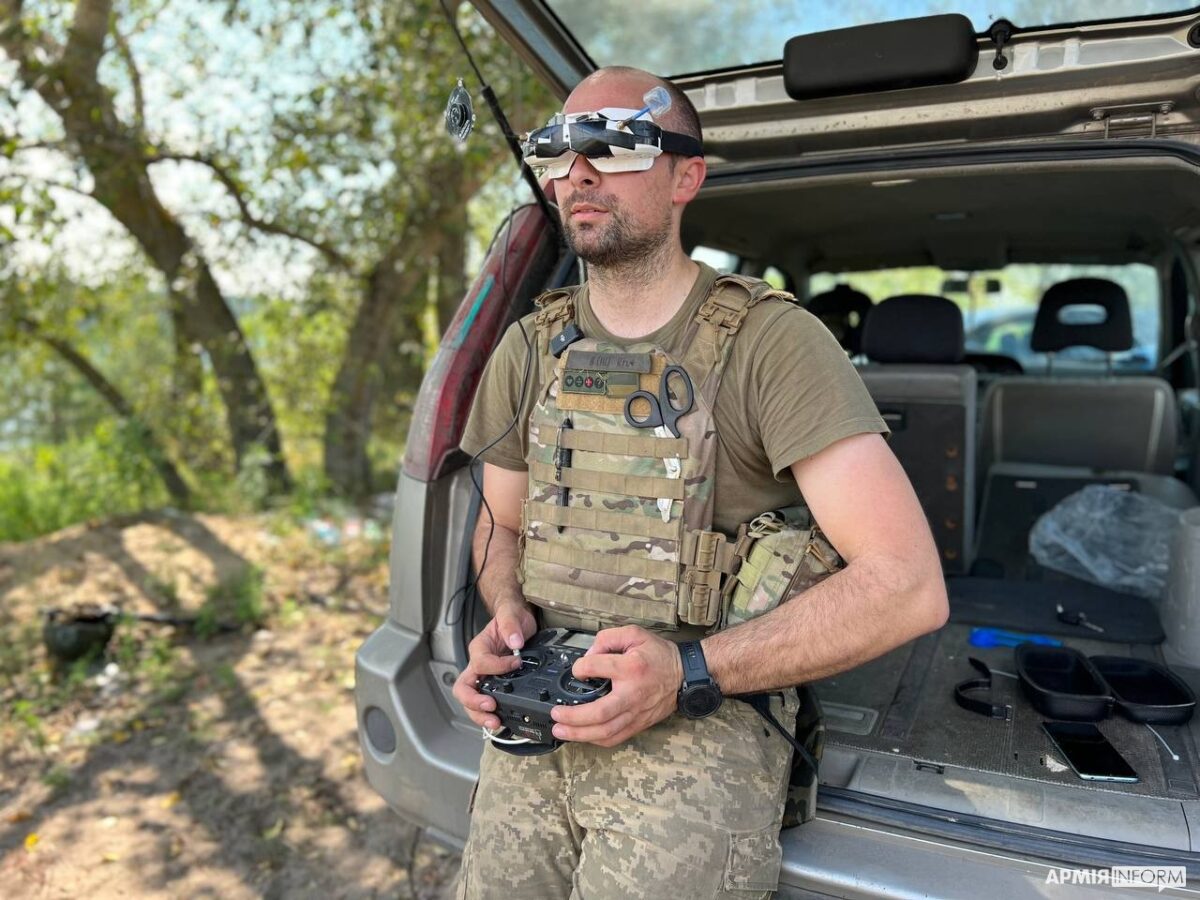
The battle between Ukraine and Russia has long come down to drone warfare, but now, drone warfare is even replacing highly-trained snipers on the battlefield, as proven by Ukrainian special forces soldier Vyacheslav Kovalsky.
“I used to be the sniper and everyone danced around me. Now everyone dances around the drone pilot, including me,” Kovalsky told the Wall Street Journal, as cited by Mandiner:
Kovalsky is known for his world-record shot back in 2023, when he shot a Russian officer from a distance of almost four kilometers. However, nowadays, he mainly assists drone operators.
“Drones are simply more efficient and cheaper,” he said.
Unmanned devices carrying explosives are small and maneuverable. They see further and react faster. And when destroyed, they cost thousands of dollars in equipment, not human lives.
Drones have also replaced snipers as scouts, as they can easily obtain and pass along the required coordinates for artillery targets. Yet another issue for snipers is the fact that enemy drones are outfitted with thermal imaging, nearly eliminating their previous advantage of stealth.
“In contrast, a young pilot sits in a bunker, takes out his drone, and is ready to take off,” one source told the journal. Kowalski also revealed that during his five tours in the firing line in 2024, he did not score a single sure hit.
The rise of unmanned warfare does not stop at drones either, with Ukraine leading the way in robotic warfare as well. “Robots don’t bleed,” noted one Ukrainian commander.
The U.S. military does still train snipers, but has now added training to address current challenges posed by drones. The Pentagon says the human sniper is still “an unobtrusive and critical tool on the modern battlefield,” reports WSJ, especially when bad weather hits or in urban warfare scenarios.
The dominant role of drones was made clear back during NATO’s Hedgehog 2025 exercises, with British and Estonian units outmaneuvered and destroyed by Ukrainian drone specialists.
“In 2025, 85 percent of Russian targets at the front were reportedly neutralized by drones and roughly 70 to 80 percent of all Russian dead and wounded are estimated to have come from drone strikes,” wrote Rob de Wijk this week for GIS Report. Wijk is the founder of The Hague Centre for Strategic Studies (HCSS) and Professor of International Relations and Security at the Institute of Security and Global Affairs at Leiden University.
“Drones, combined with border fortifications and minefields, make it possible to force Russia into a static war,” he says. While that is a win for Europe, the rise of drone warfare may portend an increasingly dystopian future ruled by autonomous killer drones.
In the meantime, drones and missiles also continued be be lobbed between Russia and Ukraine. Early on Thursday, Moscow launched 675 attack drones and 56 missiles, primarily at Kyiv, resulting in nearly 20 dead and dozens injured.
President Zelensky stated that approximately 1,560 drones had been unleashed on Ukraine since the start of Wednesday, amounting to the longest continuous drone attack ever. The country’s air force reported that it had downed 652 of the drones and 41 missiles. In fact, Ukraine has become the top player in counter-drone tech, with even the previously hesitant United States recently “turning to Ukraine” for its drone expertise to help it in its war in Iran.
Last June, Zelensky even boasted how 117 of its attack drones had taken out more than 40 Russian strategic military aircraft. The covert drone op, dubbed “Operation Spiderweb,” attacked five Russian air bases.