After years of German authorities prosecuting and terrorizing citizens who “insult” politicians on social media, one Alternative for Germany (AfD) politician is testing how far authorities will go in prosecuting such speech.
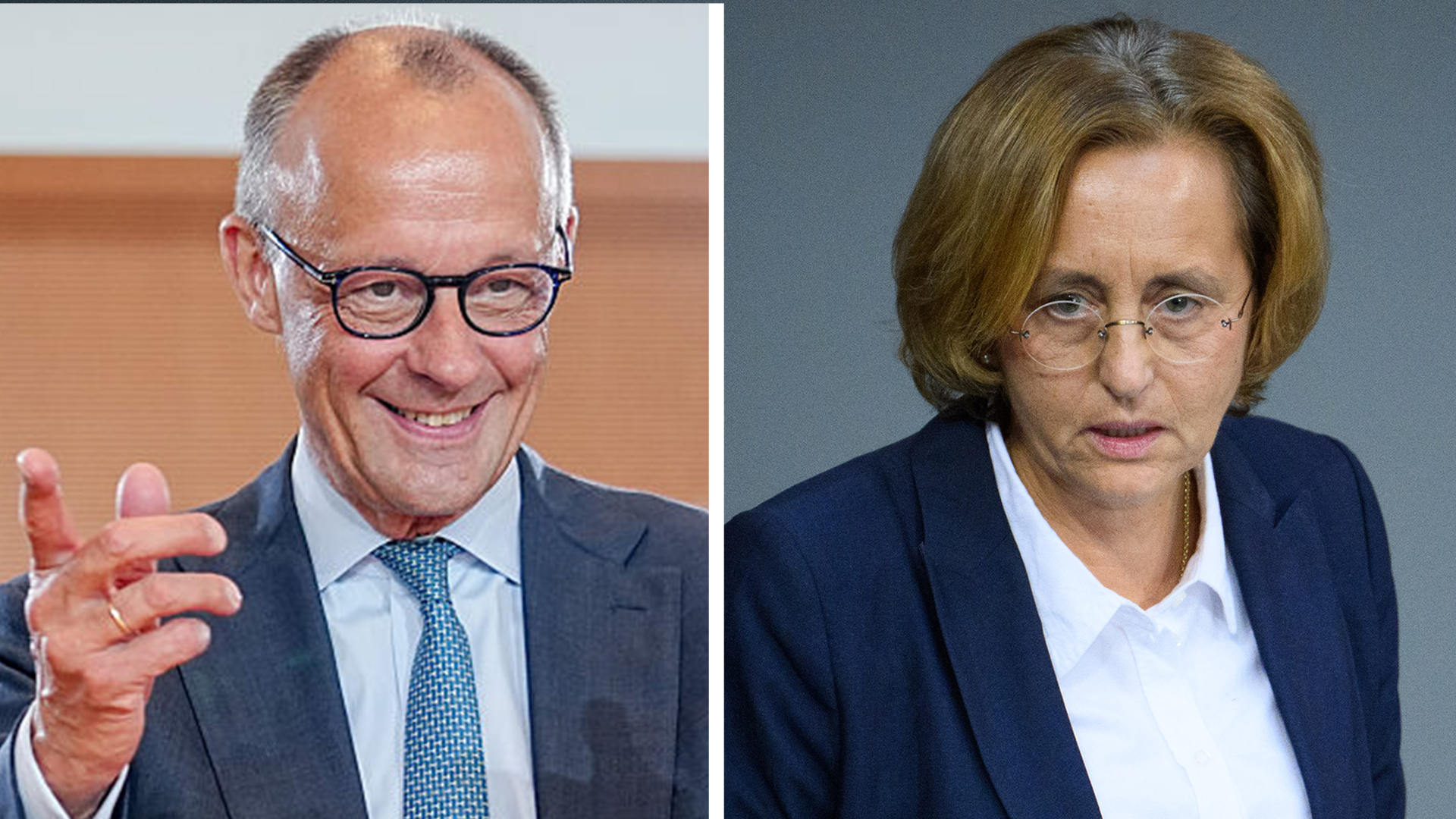
MP Beatrix von Storch took to X to call Chancellor Friedrich Merz as “lying Fritz,” with Fritz routinely used as a nickname for Friedrich, the chancellor’s first name. She made this move after it was revealed that German authorities have fined an individual a month’s salary, €5,000, after he called Merz “lying Fritz” on Facebook.
“Chancellor Merz is a lying Fritz. To the competent public prosecutor’s office: Please investigate me now. Or do you only secretly investigate and target citizens who can’t defend themselves? I’ll drag this into the glaring light of the public eye—where it belongs. And I’ll defend myself, that’s a promise,” she wrote.
Bundeskanzler Merz ist ein Lügenfritz.
An die zuständige Staatsanwaltschaft: Bitte ermitteln Sie jetzt gegen mich. Oder ermitteln Sie nur klammheimlich und gegen Bürger, die sich nicht wehren können?
Ich zerre das ins grelle Licht der Öffentlichkeit- wo es hingehört. Und ich…
— Beatrix von Storch (@Beatrix_vStorch) June 3, 2026Von Storch was then joined by other, including prominent attorney Markus Haintz, who runs a well-trafficked legal commentary site and has represented a number of clients involved in high-profile freedom of speech cases in recent years.
“Hello @bundeskanzler Lying Fritz, I fully endorse the statement by @Beatrix_vStorch. I may therefore ask you not to object to a criminal prosecution pursuant to § 194 para. 1 sentence 4 of the German Criminal Code, which you otherwise would not do, so that citizens can be prosecuted,” he wrote.
The involvement of an AfD politician and a high-profile attorney who are now both calling Merz “lying Fritz” may not actually result in criminal charges, as it is unlikely authorities will pursue cases against these two individuals out of fear of media coverage. However, it does create the perception of a two-tier legal system where only powerless citizens are persecuted for exercising freedom of speech.
The Heilbronn public prosecutor’s office in Germany has been pursuing criminal cases against citizens who posted insults about Chancellor Friedrich Merz (CDU) on Facebook — including the individual who was fined 30 daily rates for calling him “Lügenfritz” (Lying Fritz). However, another also paid at least €100 after an investigation into the term “Lackaffe” (fop/dandy). This comes after years of similar cases involving “insults” against other German politicians, including “idiot,” and “Pinocchio.“
The cases stem from a wave of critical comments posted beneath a Heilbronn police Facebook announcement about a drone flight ban ahead of a Merz visit last October. Among the comments flagged by investigators were “Pinocchio,” “Lügen-Kasper” (Lying Clown), and various other insults — some of which resulted in penalty orders, while others were dropped or remain open.
However, the prosecutor’s office clarified that the words themselves are not necessarily criminal. Instead, it is the “potential consequences of the insults” that make them prosecutable, according to Welt newspaper.
“Regarding the statements you mentioned, the personal comments under a Facebook post have continued to escalate,” a spokeswoman for the prosecutor’s office told Welt. “In any case, according to the public prosecutor’s office, the statements ‘Lügenfritz’ and ‘Lackaffe’ were therefore likely to shake confidence in the integrity of the victim, because they were likely to incite further negative reservations or aggression among like-minded people.”
In other words, the prosecution is not treating the insults as harmful in isolation, but argues they could encourage others to pile on, escalating criticism of the chancellor within the group or within broader society.
“This fulfills the element of suitability to make public activity considerably more difficult,” the spokeswoman added, citing Section 188, Paragraph 1 of the German Criminal Code, which offers enhanced protections for public officials against defamation,” the office added. “Therefore, in the cases brought to court, the particular public interest in prosecution was assumed.”
However, Merz is on record lying in numerous instances, including his vow before his election that he would not lift the debt brake. His decision to proceed with lifting the debt brake was seen as a flagrant violation of his promise.
It is unclear how calling him a liar, when he is on record lying, is a punishable speech offense.
Welt newspaper even pressed the prosecutor’s office on whether investigators also examined whether the accusations of lying had any factual basis, pointing to Merz’s pre-election promise not to touch the constitutional debt brake, which he effectively circumvented after the election by approving a “special fund.”
Welt also cited a Tagesschau fact-check of a 2024 Merz claim about refugee numbers from Afghanistan and Syria. The ARD editorial team had concluded: “At a press conference, CDU leader Merz claimed that Germany had taken in the most refugees from Syria and Afghanistan in the world in relation to its size. But that’s not true.”
The prosecutor’s response was unambiguous: the office examines “any potential criminal liability solely on the basis of the legal text and the comments thereon.” Whether the accusations of dishonesty against Merz have any merit is, according to investigators, entirely irrelevant to the prosecution.
Notably, a prominent politician from Merz’s party, Jens Spahn, had called for abolishing the “insult paragraph” in the legal code for politicians before his party came to power. The “insult” law, which was introduced under Angela Merkel, allows politicians to hire out legal firms who scan the web looking for social media commentators who criticize them or call them insulting names. The legal firm takes a cut of the money if they win and so does the target of the insult.
Many of the original comments remain visible on the police Facebook post. Most are relatively harmless, including remarks like “security precautions for our best politician ever,” and “Fritz is coming.”