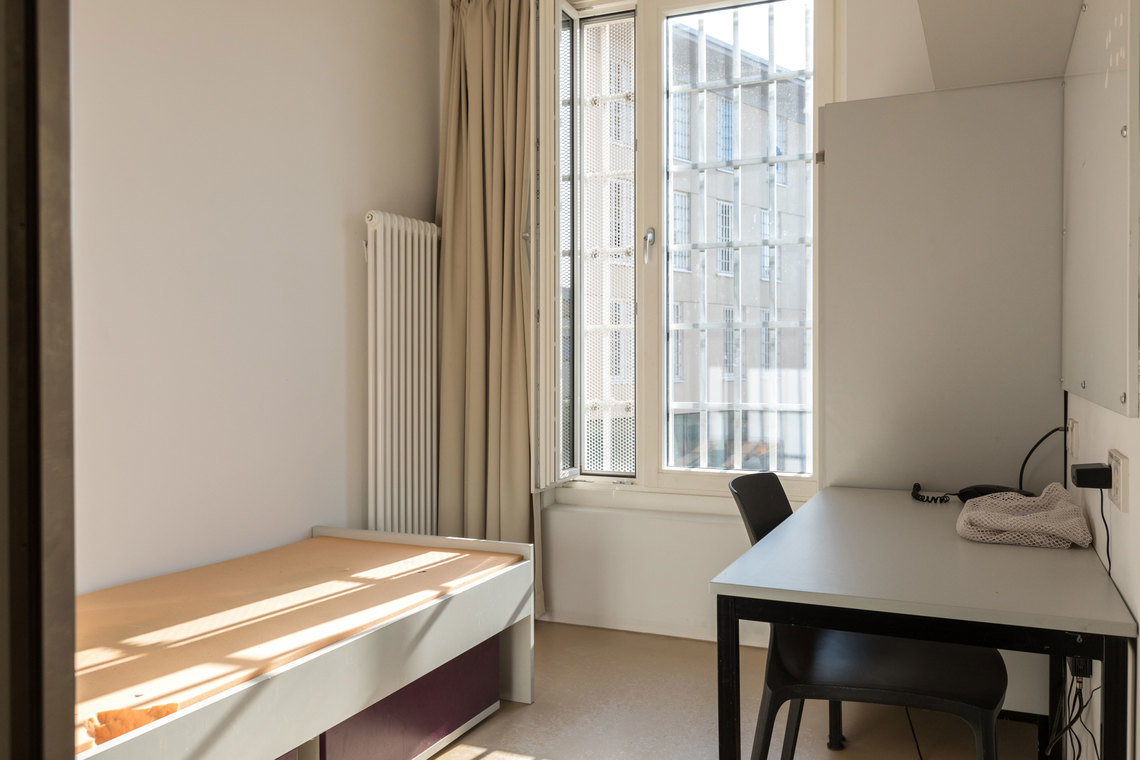
Foreign nationals now account for almost 45 percent of Germany’s prison population, with the proportion approaching 60 percent in Berlin and Hamburg, according to figures obtained from all 16 state justice ministries.
An analysis by the Neue Osnabrücker Zeitung found that 27,000 of the 60,408 people held in German prisons or pretrial detention as of March 2026 did not possess German citizenship. That puts the nationwide foreign-prisoner rate at a record 44.8 percent, up from roughly 30 percent in 2015.
The figures count dual nationals and foreign-born individuals with German citizenship as Germans, meaning the true number of foreign-born prisoners is likely to be far higher.
The highest rates were recorded in the city-states. Foreign nationals made up 59 percent of Berlin’s inmates and 58 percent of Hamburg’s. More than half of prisoners in Bavaria, Baden-Württemberg, and Hesse were also non-German citizens.
Rates were considerably lower in eastern Germany, where approximately one in four prisoners in Mecklenburg-Western Pomerania, Saxony-Anhalt, and Thuringia lacked German citizenship.
The German newspaper reported that foreign prisoners most commonly came from Eastern Europe and Arab nations. Their share of the prison population is disproportionately above the number of foreign nationals in Germany’s general population, which stands at just under 17 percent.
The German Association of Prison Officers warned that the changing prison population is placing growing pressure on an already strained correctional system.
“Language barriers are a major problem,” association chairman René Müller told the newspaper, explaining that interpreters are not always available and translation technology cannot replace the direct communication needed to address prisoners’ problems and prepare them for release.
“Our officers are finding it increasingly difficult to rehabilitate inmates and are struggling to connect with them,” Müller said.
He warned that communication failures can increase aggression, encourage prisoners to retreat into isolated subcultures, and raise the risk of Muslim inmates being radicalized behind bars.
Bavaria’s Justice Ministry similarly cited language difficulties and “culturally determined behaviors” that can produce serious conflicts between prisoners and staff.
Remix News reported on this back in 2024, when it was estimated that German prisons cost taxpayers approximately €4.14 billion annually, with around €1.82 billion spent incarcerating foreign nationals. At the time, foreign prisoners already made up more than half of the inmate population in several states.
Alternative for Germany lawmaker Martin Hess said those figures demonstrated the consequences of the country’s migration policies.
“Around 15 percent of people living in Germany are foreigners. However, their share of suspects, convicted persons, and prisoners is disproportionately high,” Hess said at the time.
The former police officer called for stricter deportations and a complete reversal of Germany’s migration policy, arguing that foreign criminality imposes both a security risk and a major financial burden on taxpayers.