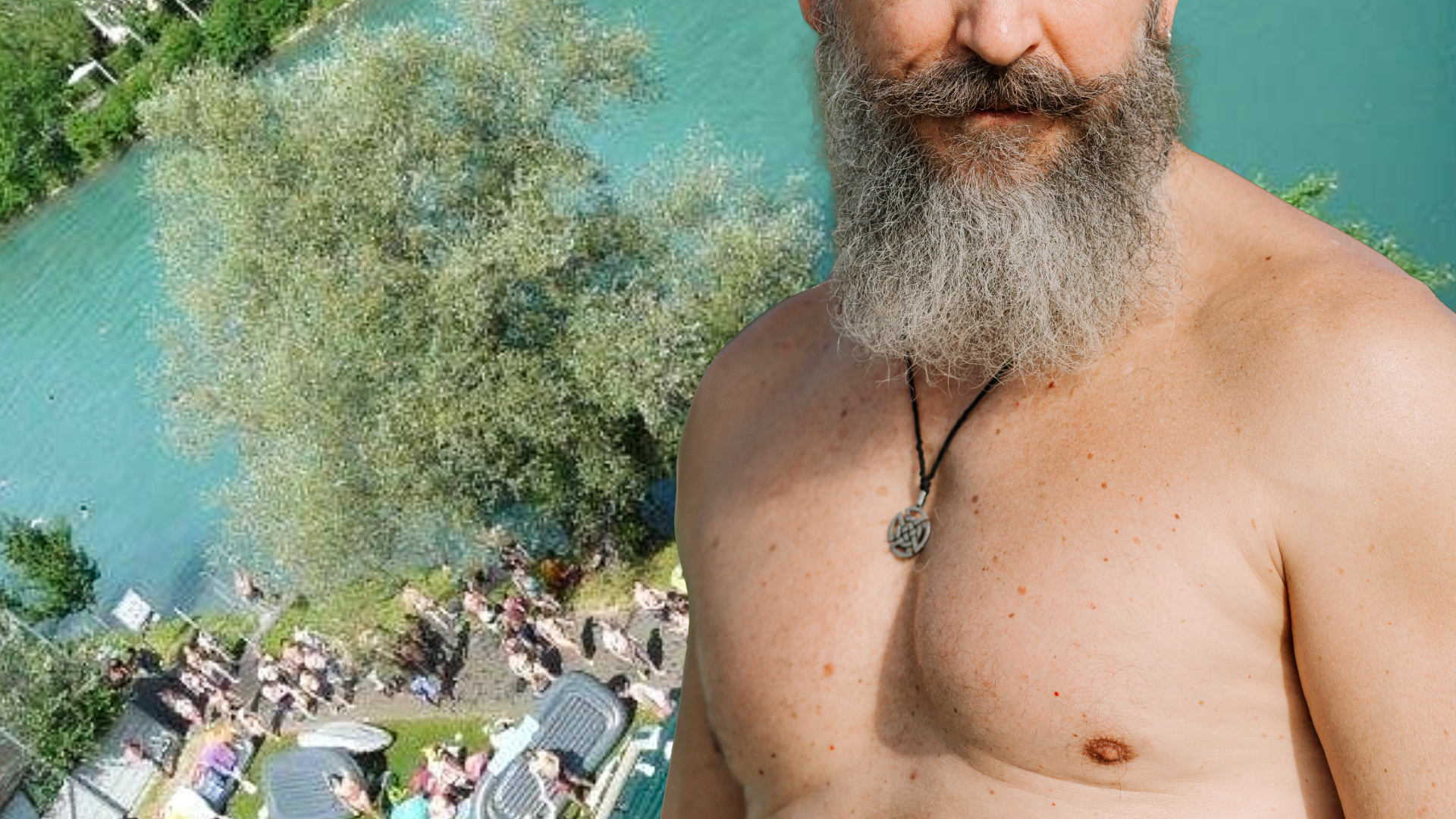
In the women-only nudist section of the Marzilibad swimming pool, several women reported the presence of a 27-year-old bearded trans person, whom the media described as a woman who had “visible male characteristics.” However, once this individual was ejected from the area due to the discomfort of the women, the city government was quick to react in support of the trans person.
The incident took place on a Sunday evening in late June 2026 within the “Paradiesli,” a physically separated voluntary nude-bathing zone reserved exclusively for women along the Aare River. Multiple Swiss media reports and the city’s official statements indicated that several female patrons felt disturbed by the presence of the individual, who was described as possessing visible male physical characteristics, including a beard and body hair.
The confrontation began when pool staff approached the individual and requested that they vacate the women’s section. Following a refusal, a security and prevention team attempted to mediate the dispute but failed to de-escalate the situation as tensions rose among the surrounding bathers. Consequently, facility management contacted the police for assistance.
When the individual remained uncooperative and refused to leave, staff invoked house rules to order the individual to leave the entire facility. The individual actively resisted the order, while some nearby bathers reportedly supported the trans person and interfered with the police operation. During the ensuing confrontation, one female police officer sustained minor injuries. The individual was subsequently handcuffed, transported to a police station for further verification, and later released.
Bern authorities release apology
The following day, Bern’s Directorate for Education, Social Affairs and Sport released a statement expressing regret over the decision to involve law enforcement and remove the patron. The city explicitly apologized to the individual, stating that the eviction “proved to be incorrect in retrospect” and resulted from a “misjudgment” amid the tense atmosphere.
The directorate’s statement clarified the exact access policy for the restricted area, noting that “All persons who identify as women and live as such are granted access to the voluntary nude area… the official gender stated in an ID document applies.”
Since the individual is a Bern resident registered as female on official documents, the bearded trans woman met the criteria established under the city’s internal guidelines, which had been developed with input from both the Sports Office and the Gender Equality Office.
In response to the event, city authorities announced plans to improve communication by creating a public guide explaining access rules and providing additional training for pool staff on handling gender-specific spaces in a queer-sensitive manner.
Cantonal police firmly defended their actions during the incident, noting that officers responded directly to the pool operator’s explicit request to enforce house rules.
A senior security official criticized the city administration for appearing to shift blame onto the responding officers, highlighting the injuries sustained by the female officer during the struggle. “What should the police do if called because women feel harassed?” the official asked. “Do nothing?”
The episode has intensified an ongoing debate across Switzerland regarding access to single-sex spaces, particularly in settings involving nudity or vulnerability. Critics argue that policies prioritizing self-identification and legal gender markers can undermine the fundamental purpose of women-only areas when individuals with male physical traits are present. However, the prevailing legal approach appears to be heading in another direction, setting the stage for an ideological and cultural clash for years to come.
In Bern, the matter has already reached the city council, with various political groups proposing solutions ranging from clearer signage to potential policy reviews, including at the Marzilibad swimming area.