

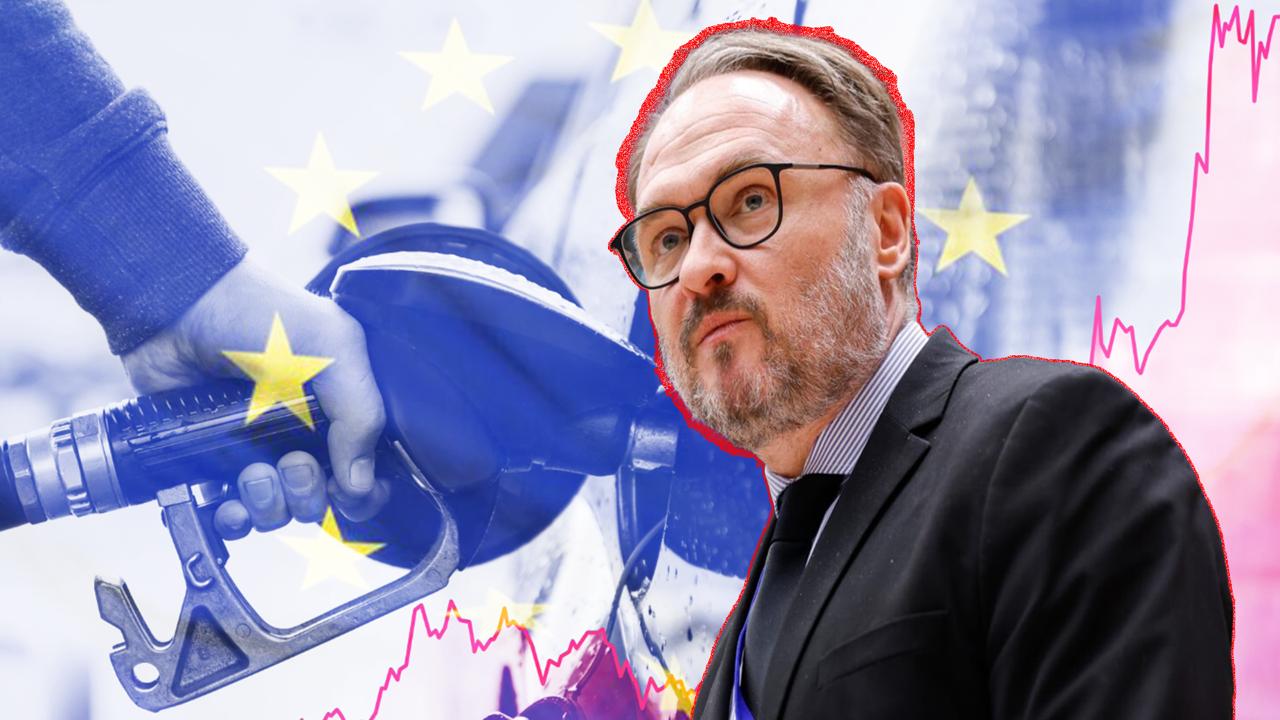
Wholesale natural gas prices in Europe have climbed above €100 per megawatt-hour for the first time since late 2022, raising the prospect of sharply higher household bills next year. The EU is already issuing serious warnings about an energy crisis and difficult economy for the winter ahead, which Hungarian MEP Balázs Orbán has labeled an example of European Union “idiocracy.”
Energy Commissioner Dan Jørgensen said on Oct. 28: “Once again, due to geopolitical turbulence, Europe faces another energy crisis. We know that this winter will be difficult for European citizens and for our economy in general.”
Europe faces a difficult winter.
We must ensure reliable fuel supplies for our citizens, businesses, & defense.
And we must ensure that these supplies are affordable.
Today we started our dialogue with European refineries.
Looking at short-term & long-term.
Press point ↓ https://t.co/suM6zfkYfn
— Dan Jørgensen (@DanJoergensen) October 28, 2026“And fuel bills in the EU are skyrocketing. This is putting a strain on our companies and on our households. In spite of the difficult situation, markets have shown remarkable resilience over the past months. Refineries have played a vital role in ensuring security of supply by producing the fuels that the market needs, including jet fuel,” he added.
He has noted that nearly 50 million Europeans are already unable to heat their homes adequately in a typical year and warned the number could rise.
The news was met with disdain from MEP Balázs Orbán, who served as the former political director of Viktor Orbán during his tenure as Hungary’s prime minister.
“This is idiocracy. You are financing a war that involves restricting Europe’s energy supply through sanctions and destroying infrastructure that produces and transports oil, gas, and fuel accessible to Europe by land. On top of that, you have imposed, through regulation, an energy transition that makes energy more expensive for European businesses and households alike,” wrote Balázs Orbán.
“And what do we get in response? Another press conference and, as attributed to Politico, the conclusion that ‘neither governments nor the European Commission have many – if any – good ideas left.’ You created the problem. You have no idea how to solve it. And now you are trying to cover it up with political messaging.”
This is idiocracy.
You are financing a war that involves restricting Europe’s energy supply through sanctions and destroying infrastructure that produces and transports oil, gas, and fuel accessible to Europe by land.
On top of that, you have imposed, through regulation, an energy transition that makes energy more expensive for European businesses and households alike.
And what do we get in response? Another press conference and, as attributed to Politico, the conclusion that “neither governments nor the European Commission have many – if any – good ideas left.”
You created the problem. You have no idea how to solve it. And now you are trying to cover it up with political messaging.
Politics is not an obligation of means, but an obligation of result.
— Balázs Orbán (@BalazsOrban_HU) October 29, 2026EU gas storage crisis
The Dutch TTF front-month contract, the European benchmark, crossed the €100/MWh threshold on Oct. 28 after rising more than 4 percent on the day. Prices have roughly tripled since the start of the year and from levels around €32 before conflict escalated in the Middle East earlier in 2026. They remain well below the August 2022 peak near €340 during the initial fallout from Russia’s full-scale invasion of Ukraine, but the direction and the timing ahead of winter have unsettled markets.
EU gas storage stood at about 75 percent in late October, a record low for the period and well short of the bloc’s usual 90 percent target by Nov. 1. Facilities ended the previous winter at just 28 percent full, below the multi-year average, and refilling has been slow and expensive amid disrupted LNG flows, particularly from Qatar, and higher summer demand for power generation.
Austria, Slovakia and the Czech Republic have already begun drawing on storage as temperatures fall.
Poland’s response
In Poland, Finance and Economy Minister Andrzej Domański said on Oct. 29 that the government is working on measures to shield households from significant bill increases. Speaking on Polsat News, he stated: “I can say today that work is underway. There are several solutions on the table and in the coming weeks ministers will inform about this… I think that still in November solutions regarding the situation on the gas market will be known.”
He noted that the details fall primarily under the competence of the Ministry of Energy.
The current regulated household gas tariff stands at 197.29 złoty (€176) per MWh and has been extended through the end of 2026. Analysts, including Michał Kozak of DM Trigon, have estimated that full pass-through of higher wholesale costs could push the 2027 tariff up by around 35 percent, potentially into the 230–300 złoty range.
According to reporting in Polish news outlet Rzeczpospolita, the Polish Energy Ministry is considering a return to mechanisms used in 2022–2024: statutory price freezes paired with compensations to sellers for the difference between the frozen price and the tariff approved by the Energy Regulatory Office (URE). Financing options, including the existing “Fund for Payment of the Price Difference,” remain under discussion.
Poland enters the season in a stronger storage position than most of the EU, with domestic facilities reported near 99 percent full — above its own long-term average. Immediate pressure is expected more on industrial users, while household protection is the focus of the November package.
Separately, legislation supporting energy-intensive industries for 2027–2030 has advanced through parliament.
Europe better positioned than 2022
Jørgensen has stressed that Europe is better prepared than in 2022: gas consumption is about 18 percent lower, and the share of Russian supplies has fallen sharply from around 45 percent.
Supplies are now more diversified, with U.S. LNG playing a larger role. At the same time, he and others have described the current situation as more complex because it also involves oil and refined products amid conflicts affecting the Middle East, the Red Sea, the Black Sea and the Strait of Hormuz. Higher fossil-fuel costs since late February have added an estimated €100 billion to the EU’s import bill, with €18–33 billion attributed to gas.
EU energy ministers met in Luxembourg on Oct. 29 to discuss security of supply and affordability. Officials have acknowledged limited short-term tools remaining after earlier subsidies, demand measures and releases of emergency oil stocks. Goldman Sachs has also projected prices could reach €150/MWh in a scenario combining a cold winter with continued supply constraints.