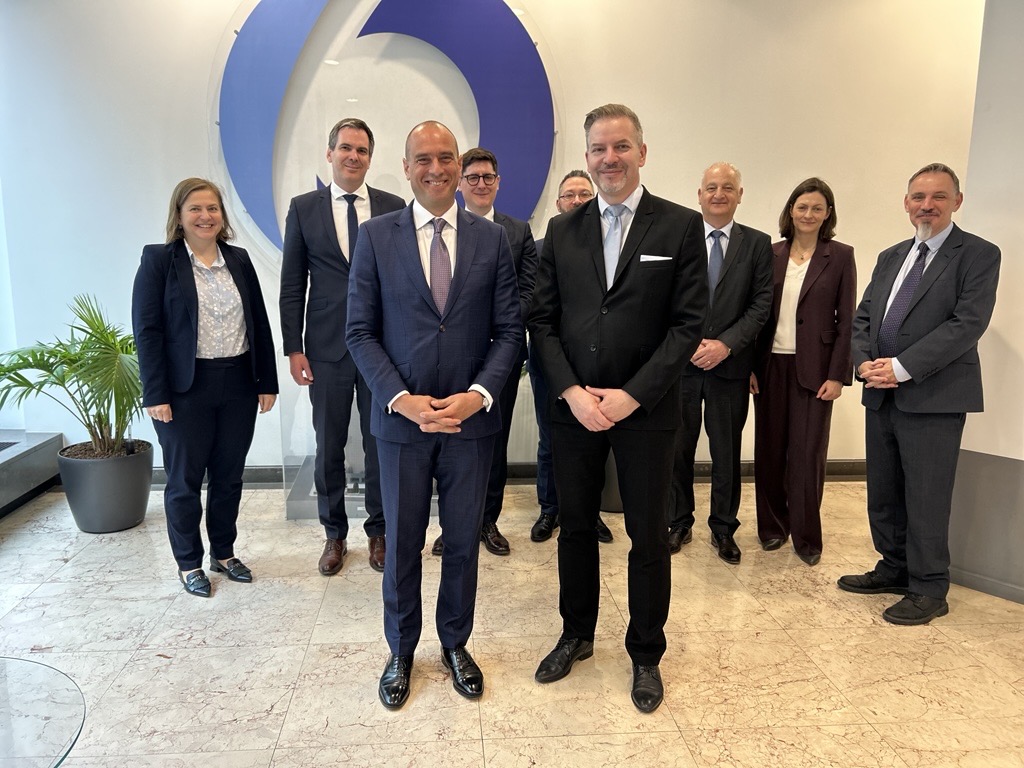
The European Anti-Fraud Office, or OLAF, has a new chief, Czech prosecutor Petr Klement, and he has plans to shake up the office and more effectively go after illegal activities.
OLAF is tasked with investigating perpetrators of fraud, corruption, and serious misconduct involving EU funds, i.e., taxpayer money from the European Union’s 27 member states. However, Klement faces a new era in which the relevance of the EU’s oldest watchdog has been questioned, as well as its efficacy.
The rise of the European Public Prosecutor’s Office (EPPO), which has been a star player in uncovering fraud on its own is one reason for this new challenge.
The Czech prosecutor is leaning into greater cooperation. He believes that EU institutions such as OLAF and EPPO, as well as member states’ own bodies, e.g., police, customs authorities, and auditors, must put an end to the turf wars. Using the analogy of a pack of dogs, he told Euractiv: “Dogs… they operate in packs. And we shall make a pack and close the circle and then bite.”
Of course, the portal notes that Klement must now convince Brussels it “can still bare its teeth and do more than bark.”
In an era of surging VAT fraud, cross-border abuse, and customs schemes, for Klement, the message is clear: work together to target misuse. “We should get closer without interfering with each other’s business. That’s very much possible. We should share the information, pool it, and make the best analysis of it,” Klement added, emphasizing the urgency and global nature of financial criminals today.
In just the past few years, the cases have become egregious. In 2022, Greek MEP Eva Kaili (Socialists) came under investigation for her real estate holdings, €1.5 million in stashed cash, and “movie star” lifestyle, all allegedly funded by Qatar. She will stand trial for participation in a criminal organization, corruption and money laundering, although no date has yet been set.
Even EU darling Manfred Weber, head of the largest grouping in the European Parliament, the European People’s Party (EPP), was targeted in late 2024 for misuse of funds. Politico had published accounts from police summons for witnesses regarding various crimes including “breach of trust,” “forgery of a public document” and “forgery of public documents by a civil servant in the performance of duties.” Allegations of fraud and “public corruption” were also noted.
However, in this case, the EPPO ultimately found “no reasonable grounds to believe that a criminal offence has been committed” and dismissed the case.
The stakes of the game are very apparent: these investigations can ruin careers. But Biró notes that this goes beyond political actors in Brussels.
“The fraudsters operate not only EU-wide but globally,” he said. He also mentioned the role of organized crime groups that evade customs duties and undervalue goods. “That’s the real danger, which is hidden,” he told the portal, noting the threat to companies involved in legitimate activities.
Still, it is in Brussels where OLAF holds real power and where it will focus its efforts. Pointing to the fraud uncovered with the Covid recovery fund, Klement says special attention will have to be paid to budgets going forward, as more and more money is being allocated for member states to spend. Someone needs to keep a close eye on this, and this is where OLAF is still unique in its abilities to go after MEPs for conflicts of interest, breach of trust, fraud, and misuse of funds.
“OLAF is the only one who can enter the buildings of the EU institutions and, without knocking on the door, seize documents, devices, and investigate,” said Klement.
Now, his job will be to show OLAF can not just investigate but also get results.