If the National Rally (RN) candidate wins in the French presidential election next spring, far-left mayor Bally Bagayoko of multi-cultural Saint-Denis has said it will be invalid, calling for a “popular insurrection” if this were to occur.
One social commentator on X, Alain Weber, posted frankly about the reality France is facing: “Contrary to what the Democrats of this country thought, the danger will not come from Jean-Luc Mélenchon but from Bally Bagayoko, who is the calm face of the civil war being prepared in the suburbs.”
Attached to his post was an interview of Bagayoko with Jean-Michel Aphatie on LCI Direct in which he tells the shocked host that if RN wins the election next year, they will never have “popular legitimacy,” only what he calls “institutional legitimacy.”
The mayor also said that those who attempt to “normalize the far right” are “dangerous,” adding that “if the far right comes to power, which we do not want, we will do everything so that it cannot happen.”
During another interview on Oumma.com, a Muslim community media outlet, the mayor of Saint-Denis also attacked President Emmanuel Macron, the Bolloré group’s media outlets, and even certain left-wing parties, according to Le Figaro.
Blaming Macron for the rise of the far right, Bagayoko stated: “Under Macron, the far right has never been so strong. We’re now at almost 140 racist members of parliament,” calling them all “guardians” of RN’s history and doctrine, according to the portal.
Returning to the theme of inevitable insurrection, Bagayoko told the host: “It’s either us or them… that is to say, the far right,” adding later that he was “firmly convinced that the people will rise up” if RN wins next spring, while ignoring the fact that an RN victory would indicate voters exercised their democratic will.
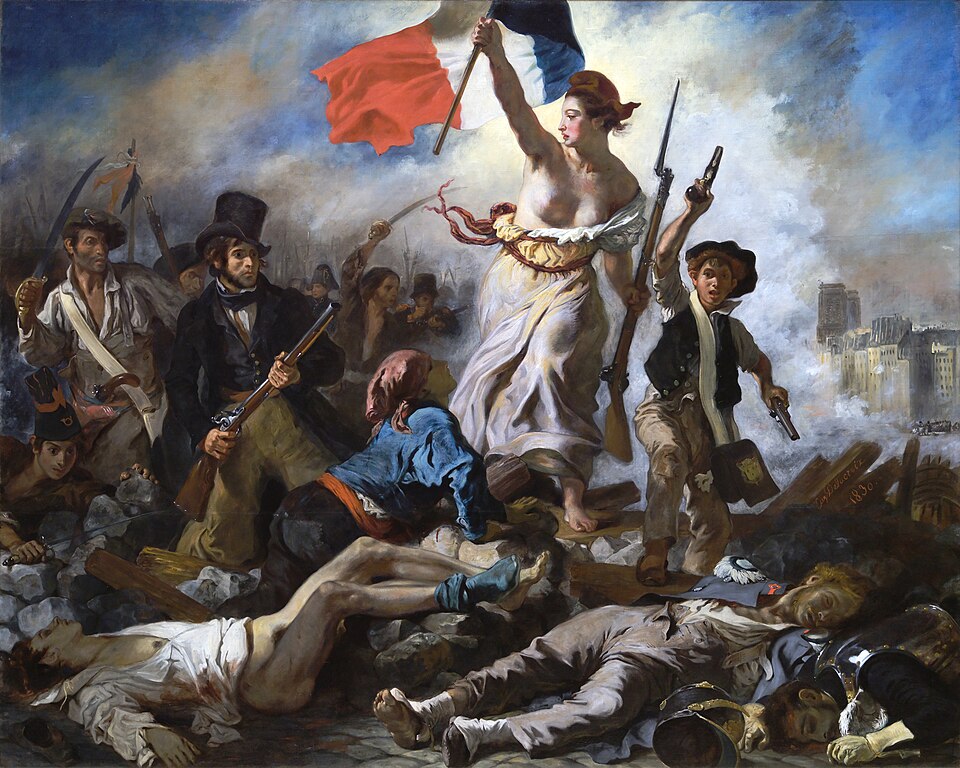
Warned to “be careful” by the host, lest he “be accused of inciting insurrection,” the Saint-Denis mayor doubled down: “All the important reforms in this country have been achieved through popular uprisings,” he said, citing the storming of the Bastille and the Yellow Vest movement.
As noted by Weber, the danger of Bagayoko is real. “He is manufacturing the psychological conditions for a refusal of alternation, that is to say, quite simply, the conditions for a cold civil war, then hot.”
It is shocking to witness the rise of the far-left LFI mayor and the influence he now wields, when, in fact, he received just 13,506 votes out of approximately 64,000 registered voters in Saint-Denis. However, his voice calling for justice for the wrongs committed against those he sees as having been oppressed by France for centuries has been capturing headlines since his election in March.
In a recent example, Bagayoko drew ire from the local state prefect when it was revealed he had removed a photo of Macron, traditionally on display as a sign of respect, relegating it to a corner of his office and, by some accounts, turning it upside down.
“The portrait will remain in its place until the state fulfils its obligations under the Republican Pact, particularly toward the residents of our territory,” he said, presumably referencing Saint-Denis, a town with a population of some 150,000, as their territory.
Whose territory? That, we can suppose, would be of the Blacks and other minorities, as he has called the city “la ville de Noirs.”
We know that when Bagayoko speaks of “eliminating inequality,” any past colonial oppression and slavery are high up on his list, as he sees these as part of today’s problems. However, as pointed out point-blank by Marion Maréchal, president of Identité Libertés, in a recent interview, “Monsieur Bagayoko has a greater chance of being a descendant of slave traders than I do.”
Her comments came in the wake of the cancellation of an event commemorating the abolition of slavery in Vierzon, an RN stronghold. The town, which has only been holding the event since 2006, says the move is due to budget cuts, while many are predictably calling out RN for refusing to honor the importance of ending slavery.
In fact, the issue for many on the right is more complex. “The memory of slavery must not concern only Europeans. The Arab-Muslim slave trade: 17 million victims. The intra-African slave trade: 14 million victims,” Maréchal noted to viewers. She and many others would prefer a commemoration that addressed all wrongdoers, not simply Whites and Westerners.
In March, the UN General Assembly adopted a resolution that designated the Atlantic slave trade and its involvement in the slavery of Africans as “the most serious crime against humanity.” According to a UN statement, it seeks an order that “confronts historical truth while building mechanisms for equitable futures.”
But many want to know why the issue of African enablers, middlemen, and traders is never called out. “Since the beginnings of the trans-Saharan slave trade in the 7th century, Africans had been selling slaves to Arab Muslims,” and as demand grew from the New World centuries later, ethnic Africans happily met it, wrote Marie-Claude Mosimann-Barbier for Le Figaro last month, in a piece covered by Remix News.
“Long before the arrival of Europeans and the development of the Atlantic slave trade, internal slavery was a structural reality in most African societies,” she wrote.
The question for today is why anyone is welcoming the cries for insurrection from an activist mayor who has shown zero respect for the existing Republic of France — and zero interest in its continuation?