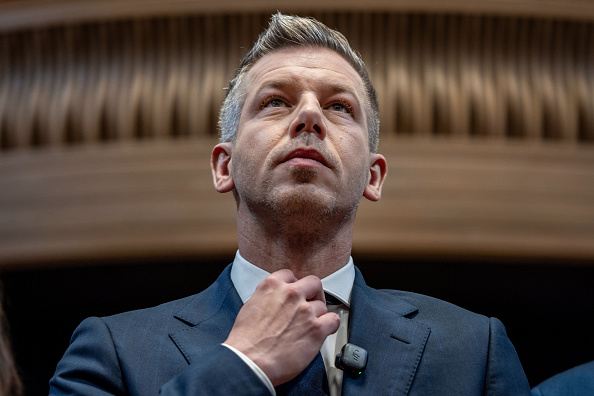
A major political standoff is developing in Hungary after Péter Magyar proposed a constitutional amendment to remove President of the Republic Tamás Sulyok from his office.
“This process will take about a month, we are trying to adopt the necessary legislation as quickly as possible, and yes, there will be talk of removing all puppets,” Magyar told reporters while describing the extraordinary efforts to oust Sulyok, who was appointed during Viktor Orbán’s term as prime minister.
President Sulyok confirmed on his Facebook page that he has no intention of stepping down.
Commenting on the situation, the president stated, “On the basis of the Prime Minister’s statement in the presence of the Minister of Justice, the Government plans to amend the Basic Law with personalized legislation in order to remove me from my legally held position. Constitutional law calls this process political bootlegging. The resulting constitutional crisis deepens social divisions and damages the international perception of Hungarian democracy, which can affect, for example, also the mobilization of EU funds subject to rule of law conditions.”
The growing severity of the conflict has drawn immediate attention from Brussels, with even the Brussels mouthpiece Politico reporting on the events unfolding at the Sándor Palace.
Politico highlighted that the European Commission has previously promised billions of euros in EU funds to Hungary, provided that the country successfully implements comprehensive reforms across its judicial system, anti-corruption frameworks, and public procurement sectors.
However, in its analysis of the situation, the paper mirrored the conclusions drawn by the president of Hungary.
“Magyar’s move to alter the country’s constitution to oust Sulyok could spark a constitutional crisis, and potentially complicate a final settlement,” wrote the paper.
On Friday, Magyar announced that Hungary would now have access to over €16 billion in frozen funds but the EU commission has offered a more cautious assessment, noting that Hungary would have to prove reforms were being made. So far, the deal has been very short on details.
While Magyar may come under fire from some for ousting Sulyok, there are many among the Brussels power bloc who want to see all traces of the Fidesz party wiped from power in Hungary. With Fidesz ruling for nearly 16 years and serving as a major thorn in the side of Brussels, they want to empower Magyar to implement EU-led reforms.
If Sulyok were to manage to hang on to power, his term would end in March 2029.