Blog

  • Italy: Egyptian hotel worker arrested for raping 15-year-old American tourist on Amalfi Coast

    Italy: Egyptian hotel worker arrested for raping 15-year-old American tourist on Amalfi Coast

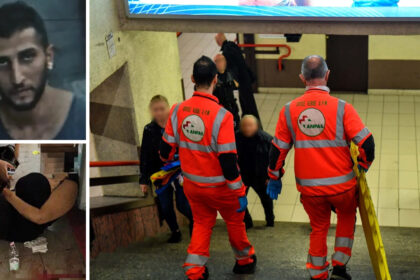
    A 42-year-old Egyptian man, legally residing in Italy and employed at a hotel on the Amalfi Coast, has been arrested for allegedly raping a 15-year-old American tourist who was vacationing in Ravello with her family.

    According to investigators, the assault took place on Tuesday while the girl’s parents were briefly away.

    As reported by Corriere della Sera, the man, who worked at the hotel where the family was staying, reportedly took advantage of the situation to attack and rape her.

    After the assault, the girl called her father and told him what had happened. He rushed back to the hotel and, upon encountering the alleged attacker, physically assaulted him. Police arrived shortly after, alerted by the father himself, and arrested both men — first the father for the assault, then the hotel worker on suspicion of rape.

    Authorities said the alleged rapist was taken into custody due to the risk of flight and because investigators had already gathered clear evidence against him. He has been transferred to Salerno prison and faces charges of sexual assault against a minor.

    Medical examinations at Salerno’s Ruggi Hospital confirmed the assault, with doctors stating the girl had not previously had sexual intercourse.

    She was provided with medical and psychological support and spent a night in the hospital before returning to the United States with her family.

    Investigators are continuing their inquiries under strict confidentiality to protect the victim’s identity. The girl’s clothing has been seized for forensic analysis, and surveillance footage from the area has been collected as evidence.

  • After Polish MEP Braun calls gas chambers in Auschwitz a ‘fake,’  PM Tusk questions why law enforcement hasn’t taken action

    After Polish MEP Braun calls gas chambers in Auschwitz a ‘fake,’ PM Tusk questions why law enforcement hasn’t taken action

    Prime Minister Donald Tusk responded to questions bout MEP Grzegorz Braun’s remarks in which he called the gas chambers in Auschwitz a “fake.” Braun is known for his controversial statements and actions, including towards Jews, but remains a popular politician in Poland.

    During a Radio Wnet interview, Braun stated that “ritual murder is a fact, and let’s say Auschwitz with its gas chambers is unfortunately a fake.”

    The interview was shut down after that, and now PM Tusk has commented on the matter, stating that Braun has an “anti-Semitic obsession” and appealing to the president and the PiS chairman not to ally with figures like the leader of the Confederation of the Polish Crown. 

    Braun, the prime minister continued, “is not the first and will not be the last” to say such things. “We also saw this at the border recently, in Zamość there were some unpleasant scenes, attacks on people of different skin color,” the prime minister said, as cited by Do Rzeczy

    Tusk indicated that he was “irritated” when the prosecutor’s office, the police, or the Marshal’s Guard failed to respond to MEP Braun’s actions with sufficient efficiency and boldness. “I won’t issue an order to a police officer at the scene, but my recommendation is to act firmly and decisively, without regard for the position of those who break or violate the law,” he argued.

    Poland’s Institute of National Remembrance has also come out condemning the far-right nationalist’s words. 

    “The Institute of National Remembrance strongly condemns Grzegorz Braun’s words denying the well-documented facts regarding German crimes committed against Jews during World War II, in particular in the German ‘death factory’ Auschwitz. Such statements harm the memory of the victims of the Holocaust,” the statement read.

    “Anyone who is ready to call themselves a Polish patriot must show the good face of Polish patriotism, and there can be no acceptance, agreement, or political games around these matters, because we will all be ashamed for the rest of our lives that there are people among us who do such things,” said Donald Tusk.

    “I appeal to President Duda and Chairman Kaczyński not to flirt or play into this nasty atmosphere created by people like Braun, Bąkiewicz, or other political players,” he said.

    Anna Maria Żukowska of the New Left announced she will file a motion with the prosecutor’s office for the crime of “publicly denying the crimes committed by the German occupiers during World War II.”

    The prosecutor’s office has now commented on MEP Braun as well. 

    “The District Prosecutor’s Office for Warsaw Śródmieście-Północ is conducting an investigation into Grzegorz Braun’s denial of Nazi crimes committed at the Auschwitz concentration camp during a radio broadcast, an act under Article 55 of the Act on the Institute of National Remembrance,” they said in a statement.

    Known for his anti-Semitic, homophobic, and nationalist views, Braun, a self-proclaimed Catholic monarchist, managed to secure 6.3 percent in the first round of Poland’s presidential election in May. 

  • Kyiv denies Hungarian died at the hands of army conscriptors

    Kyiv denies Hungarian died at the hands of army conscriptors

    The Ukrainian army has spoken out about the death of Hungarian József S. from Transcarpathia. According to the official statement, the man was legally mobilized, was not abused, and died of natural causes, a pulmonary embolism. The Ukrainian army firmly rejects all allegations of violence, according to Magyar Nemzet.

    The Land Command of the Ukrainian Armed Forces expressed their condolences to the family of József S., but at the same time called it necessary to make public the “already verified” official information. 

    According to the Ukrainian army, József S., who is referred to as a Ukrainian citizen in the statement, was legally mobilized on June 14, declared healthy, and began training on June 15.

    According to the statement, he left the unit arbitrarily and unarmed on June 18, which was also recorded by the internal investigation. Later, on June 24, he presented himself at the emergency department of the Beregszás hospital, where he was admitted with an acute stress reaction and transferred to the psychiatric ward. According to the medical records, no physical injuries were found on him. 

    The army emphasizes that the cause of death, according to the forensic medical expert report, was pulmonary embolism, and that no signs of violence were found. The statement categorically denies forced mobilization, abuse, or any human rights violations.

    “We call on the media, the public and representatives of foreign governments to refrain from disseminating unconfirmed or emotionally overheated information that could be suitable for the destructive influence or information operations of a hostile state,” the statement reads.

    “The Ukrainian Armed Forces respect the rights of all citizens, strictly observe applicable laws, and do everything in their power to preserve human life and dignity – even in the extremely difficult conditions of war,” it concludes. 

    However, media in Hungary have reported another version of events based on the deceased’s own documentation, obtained by the Mandiner news portal, before he died. 

    József S. wrote: “On Saturday, I was detained by police officers in Beregszász and taken to the Beregszász Military Auxiliary and Social Support Center (RTCK and SZT). On Monday, without signing anything or registering as a conscript, I was transferred to the Munkács RTCK and SZT.

    “They took me to a forest with many other people and started beating me there. The blows were mainly aimed at the head and body. They said that if I didn’t sign something, they would take me to ‘zero’. It hurt a lot, I couldn’t move. Some soldiers threw me in the mud so I could sleep there. The next morning, they took me to the gate and said: ‘Go home’. I walked home to Beregszás. I don’t know why, but I ended up in a psychiatric hospital, where they called the police.”

    József S. also said he took photos of his injuries to report the abuse, but the Munkács RTCK and SZT officers took his phone, which he had not received back by the time he wrote the statement. He also said the beating in the forest occurred at night, so he could not actually see who was attacking him nor what they were wearing. 

    “During the medical treatment, I feel worse every day, it is difficult to move, I have practically no appetite. I am afraid of what will happen if they send me back to those who “will finish what they started,” he concluded his statement. 

    Hungary has summoned Ukraine’s ambassador to Budapest over the incident, with multiple members of the government expressing their outrage over beating someone to death because they did not want to go to war. 

    This is far from the first time Ukraine’s conscription tactics have made headlines; however, it is the first report of someone dying because of them. 

    Since the start of the war, reports have flowed in over Kyiv’s brutal methods to get cannon fodder for their front lines, to the point that young Ukrainians were too afraid to leave their homes. 

    “Many conscripted men are taken straight off the street by uniformed men,” an article in Magyar Nemzet reported back in 2023. “Most recently in Subcarpathia, a surveillance camera recorded the overreach of the authorities as a man trying to go to a store was kidnapped from his bicycle in broad daylight.”

    “Why don’t young people want to be drafted into the army? Because they know the price of holding the frontlines. It costs thousands of lives,” said one young Ukrainian. 

    Forced conscription has been an issue for both ethnic Ukrainians and minority groups living in Ukraine, although many believe Hungarians have been targeted in the Transcarpathia region. 

    Corruption has also been rife, with authorities taking thousands of euros per head from those looking to not be forced to the front. 

    In one case, $6 million of cash was found in the home of an official accused of selling medical exemptions to those looking for a way out of the war. 

  • Germany: Youth gang terrorizes small town, vigilante patrol group forms to protect children

    Germany: Youth gang terrorizes small town, vigilante patrol group forms to protect children

    The small German town of Harsefeld is grappling with a severe breakdown of public order, as a youth gang’s reign of terror has led to hospitalizations, extortion, and drug dealing. The situation has become so desperate that citizens are being forced to form a vigilante patrol group, highlighting a perceived failure of the state to protect its own people.

    What was once a tranquil Lower Saxon town has now become a hotbed of controversy after a youth gang’s actions led to the formation of the patrol group.

    Videos of the gang in operation have shocked the town and led to national headlines in Germany. In one video, the suspects’ faces are blurred, but one teen is severely beating his victim. There are also apparently other videos the group has uploaded online, in what some believe is an effort to boast of their acts and intimidate others.

    The gang has been active for at least six months, with incidents ranging from beatings and threats to near-fatal attacks at the train station. These are not acts of youthful exuberance but brutal violence, seemingly with no regard for human life.

    The official response, so far, has been silence, denial, and victim blaming.

    The extensive list of crimes—extortion, drug trafficking, and violent assaults—reads more like a major city crime report than a situation in a town of 14,000. Local media outlets, including the Stader Tageblatt and NDR, have reported on the crisis. In addition, national outlets Focus Magazine and Bild have reported on the story.

    The police response has been criticized as dismissive, with authorities citing staffing shortages. The Harsefeld police station is reportedly closed intermittently, forcing emergency calls to be rerouted to Buxtehude.

    This 15-kilometer distance means patrols often arrive long after perpetrators have fled. A police spokesperson’s statement, “We are responsible for everyone,” does not appear to hold up to scrutiny, as parents and citizens are forced to form their own patrol groups.

    The police spokesperson, Rainer Bohmbach, labeled these patrol groups as “quite creepy” while simultaneously appearing unable to stop the violent thugs operating in the town.

    “Yes, of course, we find that quite creepy. A vigilante group doesn’t help anyone. It’s more likely that we’ll end up in the realm of vigilantism,” said Bohmbach. He is warning against the formation of such groups.

    School administrators and the youth welfare office have raised alarms about the gang, resorting to warning letters and calls for discussion groups and social workers, but when it comes to minors, legal action is often difficult in the German system.

    One key perpetrator, a known repeat offender, reportedly even engaged in a “pleasant conversation” with the mayor before the holidays. The mayor, who has known the boy for years, expressed shock at the violence but chose to “listen calmly,” an approach that appears to have no effect.

    Police are reportedly well aware of who the two gang leaders are, both of whom have been known since 2023, with approximately 15 reported crimes each — a number likely lower than the true figure due to victims’ fear of reporting.

    Despite known perpetrators and clear video evidence, no court cases have been initiated. The official explanation: “Investigations are ongoing, but it’s taking time.”

    Meanwhile, the victims are piling up in the small town, as they have in various other towns and cities across Germany.

    This lack of action has driven citizens to form a vigilante group, conducting their own patrols and recording incidents — exactly what authorities publicly warn against. Yet, authorities say they lack the resources to combat the group.

    The nationality and names of the suspects have not been released, as no court cases have been initiated. Even if convicted, both teens are minors, and their identities are unlikely to ever be released.

  • Germany: Berlin sees 1,059% increase in Indian immigration in 10 years

    Germany: Berlin sees 1,059% increase in Indian immigration in 10 years

    As countries like Canada, Australia, Great Britain, and the United States see an ongoing revolt against mass immigration from India, Germany is opening its doors to the Asian country of 1.5 billion. In particular, the city of Berlin has been a top spot for migration from India, and it is the group that has seen the highest level of immigration to the city in the last ten years.

    Official statistics indicate the number of Indians went from 3,579 in 2014 to 41,472 in 2014. That represents a 1,059 percent increase in 10 years, and accounts for the largest immigrant influx to the city during that time in terms of growth. However, in terms of raw numbers, Turks are still the largest group of citizens with foreign citizenship overall, representing 109,585, while Ukrainians are in second with 70,501, according to RBB.

    Unlike immigrants from the Middle East and Africa, Indians are not routinely featured in the daily barrage of murders, rape, stabbings, and robberies. However, that does not necessarily mean that a massive influx of Indians is not going to be met with anti-immigration sentiment — at least if it continues at its current pace.

    Germany may have to confront the issue of mass immigration from India very soon, as the previous government signed the German-Indian migration agreement of December 2022 to promote tens of thousands of Indians coming to the country every year.

    Outside of Berlin, Indians also make up a huge number of newcomers, totaling 274,910 nationals as of November 2024, according to the Central Register of Foreign Nationals. India is ranked fifth overall in terms of countries where more people immigrated than emigrated, ranking behind Ukraine, Syria, Afghanistan, and Turkey. Many of these immigrants work in the IT and healthcare sectors; however, many also come to study or for family reasons. In 2024, the number of Indian students surged 40 percent compared to the average seen in previous years, meaning that a soaring number of university spots are going to this demographic group.

    What can Germany expect from mass immigration from India?

    Other countries, and their reaction to mass immigration from India, may showcase what is in store for Germany and other European countries that head down this path, which has mostly been an Anglo phenomenon.

    Canada is a good example. Indians are the top non-European group that has immigrated to the country, but there, anti-immigration sentiment is soaring. Competition for jobs is now fierce, with an influx of foreigners now competing for dwindling jobs.

    The chart documenting Canada’s net immigration totals from 1952 to 2025 highlights the incredible surge of immigration into Canada in just the last few years, with the lion’s share of newcomers arriving from India.

    The housing crisis will only get worse

    This influx of immigrants, while not necessarily a point solely against Indians, has made the Canadian housing market extraordinarily unaffordable. Indians just so happen to be the largest group, and their numbers, left unchecked, appear to grow nearly exponentially due to family reunification and other measures. Canada is not the only one, but also the U.S., the U.K., and Australia have all seen incredible demographic transformation in recent years, with Indians playing a key role. In London, for instance, Indians are now the top property holders, even pulling ahead of native Brits.

    In Australia, Indians are the top buyers of housing in new estates, outpacing Australians by a large margin. The situation is so bad that experts are calling for a “wartime response” to the housing crisis.

    “The future of our country in terms of our economics is based upon whether we can house a growing population and we can’t,” said Metricon Homes CEO Brad Duggan.

    “I think we need a wartime response. When we look back over the last three years of this government, we’ve not had a wartime response,” he added.

    If Germany continues on the path of Indian immigration, housing prices will continue to soar and the property that is available will be bought up by Indians en masse, if Britain and other Western countries are any guide. In fact, Indian media openly writes that real estate is by far the most favored form of investment by Indians, which is very unlike Germans, who have historically been very adverse to buying their own property. Germans have the highest share of renters in the entire EU. This model worked for many decades because renting was so affordable, but that has quickly changed in the last two decades.

    Indians are not to blame for this development, but increasing numbers of Indians will only greatly exacerbate the problem that already exists. Germans will be increasingly priced out of the market and will find it harder to own property, have children, and raise families, at which point, the government will claim it needs more immigration to fix the native labor shortage.

    Indians are pros at taking advantage of grants and benefits

    Competition for housing is not the only factor; there will also be competition at all levels of society, which is not always guaranteed to be a good thing. Indians have excelled in many facets of business in the West, but in many ways, due to laws favoring minorities, there has not always been a level playing field. At least some of them have been accused of exploiting grants and interest-free loan programs in the United States for minorities, which were originally meant for groups like Blacks, to buy up property, business, and hotel chains. They now own 60 percent of all hotels and motels in the United States.

    In fact, the internet is rife with videos making “tutorials” on how to take advantage of these special loan programs, which are often targeted at minorities. These programs offer low-interest loans, and sometimes even outright grants, to start businesses. Straight White people are often excluded from these programs or do not have as good loan conditions as groups such as Indians.

    It is important to note that even previous waves of refugees are calling out what they say are people now coming to Canada who are just taking advantage of the system, and are not actual refugees.

    The Sudanese refugee immediately points to an Indian influencer talking about the Canadian government handing out money “for doing nothing.” These types of videos are rampant across the web, and not only do they showcase blatant opportunism at the expense of Canadian taxpayers, but also highlight how these programs for marginalized people are exploited by very recent newcomers.

    India’s divisions also migrate West

    India is a country with incredible poverty, racism and discrimination, both through its caste system, and due to religious hatred — often between Hindus and Muslims but also Sikhs. In many cases, these divisions carry over to Western countries.

    Even the liberal media acknowledges that caste-based discrimination is alive and well in the Indian community after they move to the West. India is one of the most unequal societies in the world, and this mindset is difficult to extirpate even within the West.

    As the Guardian writes: “The Hindu caste system, which is assigned at birth and determines occupations and social status, is made up of four tiers, with Brahmins or priests and teachers at the top and Dalits at the bottom. Dalits are often tasked with scavenging and street cleaning, are considered ‘untouchable’ and are outcasts from Indian society.”

    In fact, the situation is so prevalent in the United States that caste-based discrimination now has to be banned in American cities, such as Seattle. A BBC special documents its prevalence in the United States.

    India also features a number of ethnic and religious groups, with tensions growing between Muslims, Sikhs, Dalits, and others. This tension often leads to explosive violence outside of India as well. In one case, for example, an Indian student was ordered to leave Australia for a series of attacks on Sikhs. In return, he was greeted as a hero upon returning to India.

    “International student Vishal Jood was asked to leave Australia after being linked to a series of attacks on Sikhs. Rather than opprobrium, on his return he was greeted by a roadshow and politicians calling him a patriot. Critics who accuse Prime Minister Narendra Modi’s BJP party of fuelling Hindu nationalism in India warn Jood’s case shows how the problem has spread to overseas diasporas,” wrote the SCMP.

    TRT World also wrote an entire article about the topic of racism and hatred between Sikhs and Indians in Australia, entitled: “Sikhs fall victim to rising Hindu nationalism in Australia.”

    Germany and other continental European countries that embrace immigration from India will likely see these same conflicts, on top of the already existing rivalries between other migrant groups, whether it is Russians versus Ukrainians, or Turks versus Kurds.

    Will Indians fix the Western healthcare system?

    Governments across the Western world see India as a solution to the lack of labor, including the healthcare sector. The reality is that the “immigration solution” for national healthcare crisis seen in Western countries has been a mirage.

    Canada is perhaps the best example of this, as it has seen the highest rate of Indian immigration in the West, with many of these Indians heralded as a solution to a healthcare worker shortage. One out of ten doctors is now Indian in the country. However, Canada’s hospitals are experiencing their worst crisis yet, with wait times hitting a record high.

    “In a recently published Fraser Institute report, “Waiting Your Turn: Wait Times for Healthcare in Canada, 2024 Report,” Canada’s median healthcare wait time hits 30 weeks, the longest ever recorded.

    “This is 222 percent longer than the 9.3 week wait in 1993,” reads one report.

    All of the Indian doctors and healthcare workers, not to mention all the other immigrant groups, were supposed to improve the system, but it only appears to be getting worse. This all comes at a time when the number of doctors per 100,000 has actually soared higher

    “Per 100,000 residents, there are now nearly twice as many doctors in Alberta and across Canada compared to 50 years ago. From 1971 to 2022, Canada’s number of physicians (per 100,000) has grown from 125 to 247, while Alberta’s has grown from 123 to 244,” according to the Business Council of Alberta.

    Undoubtedly, Canada is a much older population now, but the massive increase in doctors per capita should, in theory, mean this older population is well cared for. It could be that doctors in previous decades were more competent, more efficient, and better able to handle patient volumes, but the exact reason remains unclear.

    As one report notes, Canada has more doctors than ever before, and then tries to explain “why it doesn’t feel like it.

    However, poor communication between diverse groups, including a lack of native-language skills, can cost valuable time and lead to serious patient treatment mistakes. As one major study from Britain’s NHS notes, as reported by the BBC, language barriers between staff and patients are adding up to half a working day per week to working hours, and also reducing to quality of care.

    In fact, much like America, where Indians are the number one source of foreign doctors, Canada is seeing a historic decline in health, with life expectancy now falling rapidly for the last three years. Canadian news outlet Global News writes:

    Statistics Canada released its report Deaths, 2022 on Monday, showing that the life expectancy of Canadians fell to 81.3 years in 2022 from 81.6 years in 2021.  The decline was more prominent among females than men, the data showed.

    “This is the first time this has ever happened,” Dr. Doug Manuel, a senior scientist at the Ottawa Hospital Research Institute, told Global News. “We’ve hardly had any declines, we have had a recession, but never like this, not three years in a row. It’s a pretty big event.”

    “This is a measure of how our health is doing as Canadians. And it means that we’re doing worse.”

    In a list of 20 OECD countries, Canada ranked second to last. In fact, Denmark, which is notorious for its strict immigration policies, was in first place, tied with the Netherlands, which also features a relatively smaller share of non-EU migrants compared to many other Western EU countries, amounting to 11.7 percent.

    Another report from this year states: “A new report says Canada’s healthcare system has fallen behind international peers in access to care, equity and wait times, outperforming only the United States.”

    Canada is not the only example. Australia also provides ample warning to any Western country that wants to take in more Indians..Australia now has some of the worst medical metrics in its history, all at a time when Indians increasingly make up a larger and larger share of the country’s medical workforce. As the Australian Medical Association (AMA) notes:

    Australian Medical Association President Professor Steve Robson said a lack of capacity in hospitals had led to people waiting years for essential surgery, long waits in EDs and ambulance ramping.

    “Australia’s public hospital performance is at its worst since the AMA started tracking the data 20 years ago,” Professor Robson said.

    “Public hospitals are inadequately funded and resourced. The outcome is ambulance ramping, patients spending far too long in EDs and a surgery waiting list that is nudging close to one million people.”

    “We are seeing more and more Australians die waiting for these essential surgeries, with more than 12,000 deaths in 2022–23, up from 9,000 the year before. While these deaths may not have been because of delayed surgery, it is an alarming increase.”

    This all comes despite record immigration to Australia, of which Indians make up a significant percentage. They are now the second-largest immigrant group in the country and by far the largest contributor to doctors with a foreign background, making up approximately 22 percent of all doctors from a foreign country.

    It should also come as no surprise that an influx of Indians to a country to work in healthcare is not a panacea, as India’s own healthcare system is in shambles. This is not a racist screed against Indians, but simple data. Some 2.4 million Indians die of treatable conditions every year, meaning India is facing the worst outcome among all 136 nations studied for a report published in The Lancet.

    In addition, “poor care quality leads to more deaths than insufficient access to healthcare–1.6 million Indians died due to poor quality of care in 2016, nearly twice as many as due to non-utilization of healthcare services (838,000 persons).” reads a report from the Independent.

    If anything, those qualified workers who are arriving in the West are essentially being robbed from India’s own struggling population. Even if one were to acknowledge that Indians are a net benefit to the Western healthcare systems, and that is far from clear, there is no doubt that the most qualified of these doctors are being taken from people who are dying by the millions.

    Those that do come often have questionable English-language skills, and as far as Germany is concerned, the medical system is already facing a complete crisis involving foreign doctors and nurses being unable to speak German properly — not to mention the frightening lack of skills featured among foreign doctors.

    In short, Western countries like Germany may be better off slightly lowering the admissions standards for their own population for medical schools rather than allowing more foreigners to arrive, often with questionable certifications and a worrying command of the German language.

    Concerns about diploma mills and fraudulently obtained diplomas are rife in India, including for medical diplomas, as has been documented. Many cases, however, likely go undetected. India is a chaotic country, where often anything goes for the right price, including masses of underage girls trafficked and sold into sexual slavery, all conducted relatively out in the open.

    Undoubtedly, many Indians will come to Germany, and many of them will work hard, but the sheer numbers that have arrived in Western countries present a major challenge going into the future.
    Many Western nations see India as a solution, including Germany. The population is enormous while European populations are shrinking. Most European leaders, even on the right, are dead-set on more immigration, as long as its legal, as they try to prop up GDP, boost the pool of consumers, boost housing prices and construction, and keep the ponzi scheme going that represents much of what the modern economy has now become.

  • Man claiming he cannot be deported to Morocco because he is an atheist convicted of sexual assault at French lake

    Man claiming he cannot be deported to Morocco because he is an atheist convicted of sexual assault at French lake

    A man who claimed he could not be deported to Morocco because of his atheism has been convicted of sexual assault in France after groping a woman at a popular lake.

    The defendant appeared in the dock at the Libourne Criminal Court on Monday, July 7, facing charges over an incident at Lac des Dagueys. The assault occurred last July, when a mother felt a man grope her buttocks while in the water.

    She initially dismissed it as accidental due to poor visibility, but quickly became suspicious when the man nearby started harassing her, striking up a conversation.

    A lifeguard later approached her and informed her that the same man had been reported earlier in the day for similar behavior.

    In court, the man denied the accusations, claiming in broken French, “I didn’t touch anyone. It’s a conspiracy. There were many people in the water.” However, the woman later identified him at the police station, where officers noted that he was under the influence of alcohol at the time of his arrest. “My eyes were red because of the water,” he insisted through his interpreter, but the presiding judge reminded him that police had placed him in a drunk tank after his detention.

    His defense lawyer criticized the prosecution’s case, calling for his acquittal in this trial.

    As reported by Sud Ouest, the Moroccan national is already known to authorities for another case involving sexual assault on a minor.

    During the proceedings, it emerged that the man had been subject to an Obligation to Leave French Territory (OQTF) since Sept. 26, 2023, and had repeatedly failed to report to the Bordeaux police as required. In his defense, he told the Court, “I can’t return to Morocco, I’m an atheist.”

    The Court sentenced him to a six-month suspended prison term and banned him from Dagueys Beach and all public swimming areas for one year. He is scheduled to stand trial again in September over the separate case of sexual assault involving a minor.

    It is unclear whether the man will be forcibly deported following the conclusion of any subsequent custodial sentences.

  • Polish FM says ‘dialogue will be difficult’ with new National Security Bureau chief appointee

    Polish FM says ‘dialogue will be difficult’ with new National Security Bureau chief appointee

    Incoming Polish President Karol Nawrocki has already made some personnel appointments, and the current foreign minister is not happy about one of them.

    Paweł Szefernaker, a PiS MP and head of Nawrocki’s campaign team, will serve as the president’s chief of staff. Rafał Leśkiewicz, previously the spokesman for the Institute of National Remembrance, will serve as the president’s press spokesman, reports Do Rzeczy.

    And Professor Sławomir Cenckiewicz, former director of the Military Historical Bureau, will head the BBN. ​​His deputies will be General Andrzej Kowalski, former head of the Military Intelligence Service, and General Mirosław Bryś, former head of the Military Recruitment Center.

    Nawrocki said Cenckiewicz is “a distinguished intellectual, academic, director of the Military Historical Bureau, and author of numerous books on the activities of communist and Soviet secret services,” adding that he will serve “the strength and stability of the Republic of Poland.”

    PiS MP Marcin Przydacz will be responsible for international affairs. Nawrocki also invited Wojciech Kolarski, the current presidential minister, to collaborate.

    Commenting on TVN24, Minister of Foreign Affairs Radosław Sikorski, appointed by the liberal Prime Minister Donald Tusk, said, “There’s a problem here, because Mr. Cenckiewicz, who isn’t a professor, is facing prosecutorial charges for violating state secrets and is not allowed access (to them). He seems to consider the government a group of Russian spies. So, dialogue will be difficult.”

    The Civic Platform politician also addressed Szymon Hołownia’s position in the context of the government reshuffle, admitting that he envisions a scenario in which the leader of Poland 2050 joins the government.

    “It seems to me that this would be natural. Party leaders have the right, unwritten, to become deputy prime ministers,” the foreign minister noted.

  • Britain and France to sign new declaration on nuclear cooperation for a stronger deterrent

    Britain and France to sign new declaration on nuclear cooperation for a stronger deterrent

    Britain and France will create the possibility of using their independent nuclear deterrents in a coordinated manner if necessary, according to the U.K.’s Ministry of Defense, ahead of President Macron’s meeting with Prime Minister Keir Starmer on Thursday.

    French President Emmanuel Macron is in London on an official state visit, as a guest of King Charles III, writes Magyar Nemzet

    Macron and Starmer will sign an agreement today to begin closer cooperation than ever before in the field of nuclear deterrence.

    According to the ministry, the new declaration states for the first time that although the nuclear deterrents of Great Britain and France remain independent of each other, their application can be coordinated by the British and French governments.

    This means that the nuclear forces of both countries could be deployed against any enemy that threatened the vital interests of either Britain or France.

    The British Ministry of Defense’s statement on Thursday stated that only Britain and France have nuclear weapons in Europe, contributing significantly to the overall security of NATO and the Euro-Atlantic area.

    The independent British strategic nuclear strike force is currently carried by four Vanguard-class submarines. These submarines can each be equipped with 16 Trident missiles, and each of the missiles can be equipped with eight nuclear warheads. 

    At the same time, the British government announced the other day that it would purchase F-35A fighter jets, which can also carry nuclear weapons. The U.K. plans to acquire at least 12 of these aircraft.

  • ‘They want censorship’ – Poland considers shutting down X, EU launches investigation

    ‘They want censorship’ – Poland considers shutting down X, EU launches investigation

    The EU is launching an investigation into X over Grok’s recent racist comments, while Poland’s government is considering shutting down the service entirely, which would represent a massive form of censorship.

    Poland’s Deputy Prime Minister Krzysztof Gawkowski wrote a letter addressed to EU tech boss Henna Virkkunen that Grok’s “offensive remarks” and “erratic and full of expletive-laden rants” on social media X could be a “major infringement” of the EU moderation law, the Digital Services Act.

    However, Gawkowski is also considering shutting down the entire service in Poland. He stated that the country must have the legal authority to shut down platforms like X if they fail to comply with regulations regarding hate speech generated by artificial intelligence. This comes after the Grok chatbot, available on the X platform, reportedly insulted Polish left-liberal politicians, according to Polish outlet wPolityce.

    Gawkowski expressed his dismay over the incident on RMF FM radio, stating, “I read with disgust what is happening and I have the impression that we are entering a higher level of hate speech, which is controlled by algorithms.”

    He emphasized the danger of ignoring or downplaying such issues, asserting that it could have future consequences.

    The Ministry of Digital Affairs plans to officially report the violation to the European Commission for investigation, which could lead to fines for X. 

    Gawkowski underscored that while artificial intelligence is becoming more prevalent, freedom of speech remains a human right, not one belonging to AI.

    He highlighted the current legislative gaps in both the EU and Poland, noting that existing regulations might not be sufficient to address algorithmic errors that fuel hate speech. 

    “If we report violations, and we will, and large platforms fail to comply, we must have legal options, but also the power to decide, for example, whether these platforms will be shut down,” Gawkowski said. 

    He stressed the need for future considerations to include the ability to disable platforms like X if they fail to combat hate speech or if AI gains more control than humans in fueling it.

    Gawkowski’s remarks have ignited a strong reaction online, with many accusing him and the government of seeking to impose complete censorship.

    PiS MP Paweł Jabłoński criticized Gawkowski on X, writing, “Yesterday, Comrade Krzysztof Gawkowski wanted to eliminate border defense groups. Today, he’s adding his intention to shut down social media because artificial intelligence insults Tusk.”

    Adam Czarnecki also commented on the perceived double standard, stating, “Mr. Gawkowski says politicians should be able to shut down Twitter because we have ‘hate shows, like the one with Grok.’ So yes, publicly funded, daily hate shows on TVP, where Poles are referred to as ‘uneducated cattle,’ and Dorota Wysocka_schnepf constantly pushes new boundaries of propaganda, are no problem for the Minister. But Grok’s malfunctioning is reason enough to shut down the entire platform.”

    Max Hübner, an internet user, echoed similar sentiments, calling Gawkowski a “Communist apparatchik” and stating,” X is one of the last places on the internet where total freedom of speech and exchange of opinions prevails. The communists and Tusk’s government hate it – so they want CENSORSHIP. We warned you.”

  • Hungary summons Ukrainian ambassador after death of ethnic Hungarian during forced conscription

    Hungary summons Ukrainian ambassador after death of ethnic Hungarian during forced conscription

    Hungary has summoned Ukraine’s ambassador to Budapest after the death of József Sebestyén, a 45-year-old ethnic Hungarian man from Transcarpathia, who was allegedly beaten by Ukrainian recruiters during a forced conscription attempt.

    According to family members and local sources cited by Mandiner, Sebestyén was ambushed by recruiters near the Kossuth Lajos Lyceum in Beregszász after trying to evade capture. Witnesses say he was caught, beaten, and transported to a recruitment center before being conscripted into military service. He was allegedly beaten again with iron rods in Munkács, then sent to a training camp, where he collapsed.

    A disturbing video later surfaced showing Sebestyén crawling in a military camp, visibly injured, as others mocked him. He was later hospitalized and died after reportedly being transferred to a mental hospital used for wounded soldiers.

    “The lizard is crawling,” one officer could be heard saying on the video.

    The cause of death is disputed, with some suggesting internal injuries from the beatings may have been involved.

    “My brother, who loved and cared for his family and sacrificed his life for them, fought for exactly three weeks with the satanic forces attacking him with iron rods,” Sebestyén’s brother wrote on social media.

    His death has sparked outrage in Hungary and among the Hungarian community in Transcarpathia. Family members say they were misled about his condition and only learned of his death on July 6.

    Hungarian neurosurgeon András Csókay confirmed that the family had reached out weeks ago about the case. State Secretary Levente Magyar called the incident “outrageous and unacceptable,” adding, “It is outrageous to beat someone to death — especially a Hungarian — because he did not want to go to war.”

    Magyar announced that Hungary has summoned Ukraine’s ambassador, stating, “A Hungarian man was killed in Ukraine just because he did not want to take part in the war.” He extended condolences to the family and vowed support.

    Government spokesman Zoltán Kovács also condemned the incident, describing it as “brutal” and confirming Hungary’s diplomatic action. Prime Minister Viktor Orbán offered his condolences to the family of the man “who died as a result of forced conscription in Ukraine.”

  • Von der Leyen survives no-confidence vote in European Parliament

    Von der Leyen survives no-confidence vote in European Parliament

    European Commission President Ursula von der Leyen has survived a no-confidence motion in the European Parliament, avoiding the first-ever collapse of the EU’s executive body.

    The motion, brought by Romanian MEP Gheorghe Piperea of the European Conservatives and Reformists group, was rejected by 360 votes against, 175 in favor, with 18 abstentions. Out of 720 MEPs, 553 took part in the vote. The motion would have required a two-thirds majority — 357 votes — to pass.

    This was the first no-confidence attempt against a Commission president since 2014, when Jean-Claude Juncker survived a similar effort led by Eurosceptic lawmakers.

    Throughout the week, MEPs from across the political spectrum voiced frustration with the Commission’s handling of various issues, including foreign policy in the Middle East, military aid to Ukraine, energy security, and migration. However, despite their grievances, many lawmakers ultimately lined up behind von der Leyen.

    Several left-leaning groups, including Renew, had initially been critical but ultimately sided with von der Leyen, citing reluctance to align with right-wing factions. The Socialist bloc also backed her after she offered a key concession — agreeing to maintain the European Social Fund at its current level in the EU’s upcoming long-term budget proposal, preserving funds aimed at fighting poverty and supporting regional development.

    Surprisingly, some center-right parties, including Italian Prime Minister Giorgia Meloni’s Brothers of Italy, backed her, while others such as Matteo Salvini’s Lega voted for her removal, dividing the domestic Italian coalition government.

    Piperea, who initiated the motion, posted a video shortly before the vote criticizing von der Leyen’s alleged disregard for a court ruling from the EU’s General Court, which had ordered her to disclose text messages with Pfizer’s CEO regarding COVID-19 vaccine procurement. He accused her of violating judicial authority and betraying both left- and right-wing allies.

    In his remarks, Piperea said, “Ursula von der Leyen has shown she doesn’t care about justice or the separation of powers. Yesterday, the Socialists held a major internal meeting to decide whether to abstain or vote against the motion, because Ursula has broken many promises to them. In the end, they chose to back her because she agreed to keep the European Social Fund untouched in the next budget, despite having promised military spending increases to others.”

    Piperea went on to accuse von der Leyen of “lying to both sides” to secure her survival, calling it a “Pyrrhic victory.” He added, “She told both sides what they wanted to hear. It is the kind of victory where, after winning, you realize you have nothing left.”

    The vote was triggered largely by the Commission’s ongoing refusal to release text messages between von der Leyen and Pfizer’s CEO during the pandemic, which Piperea labeled an “abuse of power” and a breach of EU transparency rules.

    Commenting on the vote, French MEP Fabrice Leggeri, previously head of the European border force Frontex, wrote, “Despite Pfizergate, despite the Green Deal, despite the authoritarian opacity of the Commission… This afternoon, the right, the left, and the Macronists saved Ursula von der Leyen either by voting against her or by abstaining. Ideology once again comes before the people!”

    Hungarian MEP Andras László added, “The EPP, Socialists, Liberals, and Greens defend her after the court ruling on the Pfizergate corruption scandal. What makes matters worse for Europeans is that this coalition has led the EU into a dead-end street: migration crisis and rising crime, competitiveness crisis and green overregulation, high energy prices, and a cost-of-living crisis. Only the Patriots for Europe group calls for real change in Brussels.”

  • ‘Children no longer want to go to daycare out of fear’ – German children trained to flee inside if daycare workers blow ‘crisis whistles,’ all due to asylum shelter right next door

    ‘Children no longer want to go to daycare out of fear’ – German children trained to flee inside if daycare workers blow ‘crisis whistles,’ all due to asylum shelter right next door

    In the city of Bochum, an accommodation housing migrants and homeless people is located directly next door to an AWO kindergarten at Höntroper Straße, sparking a major scandal that the city is trying to downplay. The situation is so bad that daycare workers are armed with whistles, with the children trained to run inside their kindergarten if there is another incident involving residents of the nearby asylum/homeless center.

    Daycare workers and children are terrified due to a range of incidents, including “massive verbal assaults,” stones being thrown at the kindergarten, and individuals climbing onto the daycare property. The homeless people at the shelter are known to suffer from mental issues and drug addiction problems.

    As Welt reports: “Since the beginning of the year, teachers at a local daycare center have been threatened and even had stones thrown at them. Parents and children are now afraid….As an initial measure, the daycare center has drawn up an emergency plan with the children and equipped all teachers with whistles.

    “The children were trained. Theoretically, this happens when an incident occurs and a whistle is blown. The children should leave everything and then run into the daycare center,” said Nicola Heiland, the father of a child in the daycare center.

    The city is offering no long-term solution because the German government itself has no solution to the migration crisis or the deteriorating crime crisis. Instead, daycare workers are simply armed with whistles.


    One mother, Romy Keller, told Welt: “That makes me angry. I can’t understand how a city can be responsible that an emergency shelter for drug addicts is right next to two schools and a kindergarten.”

    Parents complained that police have been repeatedly sent to the location to deal with interventions, including when daycare staff were subjected to verbal harassment.

    In a report from German public media station WDR, a mother said she witnessed a woman climbing the fence between the two facilities and then running on the property of the kindergarten. The woman said she immediately feared for her daughter’s safety and informed the management of the daycare. The daycare staff found the intoxicated woman and escorted her off the daycare grounds. The woman was unable to explain why she was there and appeared confused, according to sources involved in the case.

    Welt reported that a man came to the property several times. “Once he tried to climb over the fence. He has verbally threatened educators. And this man was here several times, for example, he opened the door to the kindergarten, but didn’t go in.”

    The children are so terrified that they are asking: “Is the bad man back?”

    Other parents said they saw similar incidents, but so far their complaints have gone unanswered by the city government.

    “The city, the mayor, the police – they have asked everywhere for help, seemingly without success,” reads an article on WDR.

    Radio Bochum reported on the incident as well, noting in an article: “The children no longer want to go to daycare; they’re scared and have nightmares. It’s difficult for parents when children talk about naked men or wake up in the night.”

    The radio station noted that the city has not even installed a privacy fence between the daycare and the refugee/homeless center. That means tenants of the center are free to stare at the children from their windows or from the grounds of the facility if they so please. Now, the parents are requesting a “climb-proof fence” with a privacy screen to be built to protect their children at the very minimum.

    However, WDR writes that parents “wish the city to find alternative accommodation for the homeless residents of the collective shelter. If possible, not directly next to a daycare center.”

    In 2019, WDR indicates that the building next to the kindergarten only housed refugee families, but since then, homeless people have also been occupants.

    WDR notes the city of Bochum refused to conduct an interview regarding the woman who climbed her way onto daycare grounds, but released a statement stating it was an “isolated case.”

    After the incident, public order officers patrolled near the fence, but only for a limited time. However, there were other incidents at the daycare, including men from the center approaching the children on the street outside the daycare.

    The parents’ wish to move the shelter does not appear to be happening anytime soon. Instead, the The Workers’ Welfare Association (AWO), which operates the collective shelter, says it will implement more security measures. However, there are already security staff operating 24 hours a day, seven days a week. Still, the incidents keep occurring.

    There is now an urgent motion put forward by the Christian Democrats (CDU), the Free Democrats (FDP) and the Free Citizens council groups to revert the facility back to only refugees.

    “We believe this is the only viable option,” wrote CDU council group leader Karsten Herlitz in a statement. “It is a sign of respect to address the needs of each individual group. What happened here should serve as a warning to us. The incidents are not excusable, but they are explainable.”

  • German police foil suspected Islamist plot in major dawn raids

    German police foil suspected Islamist plot in major dawn raids

    A German police task force stormed multiple locations in the early hours of Wednesday, arresting a suspected Islamist terrorist accused of using fraud proceeds to finance an attack in the country.

    At around 5:00 a.m., elite police officers from the Special Forces (SEK) stormed an apartment building in Essen, arresting a 27-year-old suspect of Bosnian origin. The suspect, who is also reported to be a trained soldier, is believed to have been plotting an Islamist-motivated terror attack.

    As reported by Bild, the operation followed weeks of surveillance by state security officers and mobile task forces, working under the direction of the Düsseldorf Public Prosecutor’s Office. A police spokesman explained, “Through the investigations of the Essen police headquarters under the direction of the Düsseldorf Public Prosecutor’s Office, there were indications, in addition to the suspicion of joint commercial fraud, that the proceeds of the fraudulent acts were intended to finance an Islamist terrorist-motivated attack.”

    Westdeutsche Allgemeine Zeitung reported that the suspect had been wiretapped by the authorities for a fortnight prior to his arrest and was imminently planning to purchase a firearm.

    According to Senior Public Prosecutor Alexandra Wiese, the alleged fraud scheme involved ordering expensive electronic devices without payment and reselling them to generate cash. “We assume that the intention was to raise money through resale and that at least five-figure sums have already been collected in this way,” she said.

    Authorities suspect the funds were intended for a planned assassination attempt. In response, heavily armed units searched several properties and individuals to prevent any possible attack. The suspect’s exact plans, including when and where the attack was to take place, remain unclear.

    During the raid, police began a thorough search of the Bosnian suspect’s residence in Essen, using sniffer dogs specially trained to detect data storage devices. The suspect’s alleged accomplice, who lives in Dortmund, is also under investigation.

    In total, six apartments across Essen, Dortmund, Düsseldorf, and Soest were searched, and multiple other persons of interest are being questioned.

    “Our police didn’t hesitate — they stopped potential terrorist activities before it was even a second too late,” noted North Rhine-Westphalia Interior Minister Herbert Reul.

    “This case shows us: There are people out there who disregard and want to destroy our values and our way of life. Our security authorities are doing everything they can to stop these people. Anyone pursuing terrorist plans here must expect the Special Forces to be at their door in the morning,” he added.

  • Will Poland’s ruling coalition survive? Depends on who you ask

    Will Poland’s ruling coalition survive? Depends on who you ask

    SW Research asked survey participants the following question: “Do you think that the ruling coalition, following recent events (including the late-night meeting between Szymon Hołownia and Jarosław Kaczyński), will last until the end of its term, i.e., until 2027?” 

    The responses, reported on by the Do Rzeczy news portal, indicate that 33.6 percent of respondents believe the coalition will not survive the next two years. Another 32.6 percent of respondents disagree, while 33.8 percent were unable to answer this question.

    Some 38 percent of men and 27.9 percent of women believe the coalition will survive. Among those under 24, 50.7 percent of respondents believe the current government will serve a full term. 

    A similar opinion was expressed by 32.6 percent of those aged 25 to 34. Among those aged 35-49, 32.7 percent of respondents expressed optimism about the coalition’s future. 

    Among those over 50, only 28.9 percent believe the coalition will serve a full term.

    The study was conducted on July 8-9, 2025, by the SW RESEARCH agency using online interviews (CAWI—Computer-Assisted Web Interview) on the SW Panel website. The study involved 816 respondents with a nationwide sample of adults. Quota sampling was used, ensuring the sample was representative in terms of the overall distribution of gender, age, and town-size class.

    Concerns about the stability of the ruling coalition have grown significantly following the disclosure of a July 3 meeting between Jarosław Kaczyński and Poland 2050 leader Szymon Hołownia in the private apartment of MEP Adam Bielan in Warsaw. 

    Speaker of the Sejm Szymon Hołownia noted on social media: “The excitement related to my meeting yesterday is neither justified nor advisable,” since he regularly meets with representatives of both conflicting political camps.

  • ‘I am radical in thinking, moderate in politics,’ Viktor Orbán tells Mandiner

    ‘I am radical in thinking, moderate in politics,’ Viktor Orbán tells Mandiner

    The Hungarian prime minister gave a lengthy interview to the Hungarian news portal Mandiner. We include some excerpts below:

    On Hungarian astronaut Tibor Kapu

    Tibor Kapu is a hero to me not only because he is one of the two Hungarians who went into space, and this is both a huge physical and mental achievement, but also because of what he said when he looked at the Earth:

    “I was looking for where Hungary is.” He could have said that I am finally free, I see the whole world, he could have spoken in a cosmopolitan way, but no. He said that the part that is important to me is what is ours. This is a very important sentence. 

    On young Orbán

    I just wanted to be an unbridled force, but then I could have headed not for politics, but for the Hungarian national football team, but I didn’t have as much unbridled force as I needed. I no longer remember whether Ady or Csurka wrote the key phrase that is still a yardstick for me: a nation like the Hungarians can only breathe radically. This means that we must think radically. Even if we don’t like what we see, we must think through everything that happens to us to the very last consequence, otherwise we will lull ourselves into illusions, and that will lead to big trouble. At the same time, in politics, we must not act radically. 

    So I am radical in thinking, and moderate in action. 

    On having a magic ball

    This is because I not only see things, but I think things through. As prime minister, I must think everything through, courageously, without fear, without sparing energy. I am a person of thinking things through, and perhaps I am also competitive in this at an international level.

    Migration is one example. I put a lot of energy into understanding what will happen. And not even half of what will happen to the entire European world has happened. Although, the real credit for migration belongs to my wife. 

    She went to help migrants in the first wave, and when she came home, she said: “All young men of military age, with good physiques – let’s stop the stories about escaping, this will be a big problem. Go there and stop them!”

    She posseses better intellectual ability, was a better student, a better lawyer than me, it is worth paying attention to her. 

    On Fidesz’s accomplishments after 16 years in power

    I think we have done what we said in 2009. We have fulfilled our greatest commitments to the country, that we will have a national government, a civil, Christian constitution, that we will transform the Hungarian economy and that everyone will have a job.

    Of course, this does not mean that everything is in place. It does not bother me at all that after 15 years I have to say, people, we have made progress here, but there is still a lot of work to do. I never run out of work, not even after 15 or 16 years. My attitude is how to change, how to improve things, how to make them even better – this is how I relate to the world, both when I am in government and when I am in opposition. It does not affect me, the direction of my thinking is independent of political position. 

    On politics in the digital age

    Humanity is entering a third stage, and this also affects politics and our profession: when there are pictures. Young people only send each other pictures, the text is getting shorter and shorter. If I want to understand today’s young people, then I have to admit that there may be more information in a picture than in a Dostoevsky novel — we just don’t see it that way, because we see understanding as a value. 

    And today’s young people look at a picture, have an impression, and move on. Understanding, the ability to understand, the striving for understanding, which was previously exclusive in politics, is shrinking, and the impression, the experience, the short term, one day, one mood are becoming more and more decisive. This may be good for communication, because we can create a community with each other more easily, but it certainly has a bad effect on a deeper understanding of important things.

    On conveying messages briefly on camera

    Those who don’t do well (at this) will be thrown out of the profession. Now we need different abilities, different skills – those who don’t have them, don’t have them. This doesn’t mean that they will disappear from politics, but we certainly can’t put them on the front lines. We will use them somewhere, because experience and knowledge matter, but we can’t send them to the battlefield. 

    On the opposition

    My master is the Hungarian people. I am a man of the Hungarians, I serve the Hungarians. Those who oppose me are never, their masters have always been somewhere else. 

    Those who never wanted what was good for Hungarians, but internationalism, Western civilization, NATO, Brussels, God knows what, but they always derived from somewhere outside what the country needed. And such people are always found by those foreign powers that care about what is happening in Hungary and want to influence Hungarian events. 

    On dealing with opposition leader Péter Magyar and his Tisza Party 

    Timing is the most important thing in politics. Or rather, I would say, maybe not in substantive matters, but in the tactical part of politics. And a ruling party needs enormous self-discipline. I cannot afford that, and the country cannot allow its government to deal with its opponents more than 10-15 percent of the time outside the campaign period. And I am not willing to deal with them anymore. That’s all it takes, but that’s pretty much how I’ll put it. 

    As we get closer to the election, and the campaign preparation, the pre-campaign and the campaign begin, the ratio will shift, we have to get into the fight, but right now we are still in a pre-preparation state. This is nothing compared to what will happen. 

    On Judit Varga being destined for more

    Since these are personal matters, I can say almost nothing, but it always hurts. I fought with Judit for the last year and a half, she wanted to resign at least three times, saying she couldn’t handle what she had at home. I told her, please, hold on, try, she’s talented, I really trust her, her work is important. She held on as long as she could. For me, this is also a personal pain, and on the other hand, it’s a huge waste on the part of the country. 

    It is very rare for a natural talent like Minister Judit Varga to emerge in politics. 

    As an old fox who has opened up space for many young people in politics and beyond, my job is to recognize talent and flair. And Judit had the skills of a prime minister. Of course, she would have needed another four to eight years, but she had everything that is needed for someone to dare to take on a country, to govern it, to make important decisions. 

    Judit is brilliant – that is the best word. That is why it is all so painful and also infuriating.

  • Slovak PM Fico testifies at shooter’s attempted murder trial, says he didn’t see attacker coming

    Slovak PM Fico testifies at shooter’s attempted murder trial, says he didn’t see attacker coming

    Slovak Prime Minister Robert Fico told investigators that he did not know who had shot him or from where during last year’s assassination attempt, according to a recording of his police interrogation played in court on Wednesday.

    The testimony was presented during the trial of 72-year-old Juraj Cintula, who is charged with carrying out the attack and faces life in prison for committing a terrorist offense.

    “I heard sounds that I did not identify as gunfire. At the same time, I felt a sharp blow to the abdomen. I absolutely did not register any person who resembled the accused,” Fico said in the recording, which was played during the second day of the main hearing. The prime minister is not attending the trial in person.

    Fico described how the shooting occurred after a government meeting in the town of Handlová in May last year. He recalled going outside to greet people gathered in front of the meeting venue, where an elderly woman caught his attention. He added that the shooter was among those present.

    According to the indictment, Cintula, fired five shots at close range with a pistol, striking Fico multiple times and inflicting serious injuries that required surgery. During questioning last summer, Fico also said that he would likely need a hip replacement in his left leg because of the attack.

    The defendant, however, denied harboring personal hatred toward Fico, insisting he had only been angry, particularly over comments made by the prime minister. He referred to remarks Fico made last spring when he labeled critics of his culture minister, Martina Šimkovičová, as “spiritually homeless.” That phrase, according to Cintula, angered parts of Slovakia’s cultural community.

    In court, recordings from city surveillance cameras and television footage showing the shooting were also played.

    The court heard additional evidence on Wednesday, including forensic reports related to the weapon used — a CZ 75B pistol — and transcripts of Cintula’s earlier statements. In social media posts and emails, Cintula had criticized Fico and expressed discontent over the results of the 2023 parliamentary elections, which Fico’s Smer party had won. He had also written about withdrawing from public life.

    In a letter following the attack, Cintula wrote that he felt no remorse, adding that the prime minister “should be in a wheelchair.”

    Cintula originally faced charges of attempted premeditated murder, carrying a sentence of 25 years to life. His defense offered a plea deal for a 12-year sentence, but prosecutors rejected it, citing the legal requirement of a minimum 20-year sentence under the terrorism charge.

    The trial is set to continue in August, with additional hearings scheduled for September and October.

    In his first public statement after the shooting last year, Fico said, “It’s time for forgiveness. I have no hatred for the assassin, I don’t want to take revenge or seek compensation. I forgive him and leave him to sort out his thoughts.” However, he also blamed political opponents, saying, “It is clear that he was only a messenger of evil political hatred from the failed and frustrated Slovak opposition.”

    The shooting was not the only threat against Fico last year. In October, security services stopped another individual armed with a loaded gun at a public event at Dukla. “We captured a very militant person who hates me because of my stance on Ukraine,” Fico said at the time. “He had a gun. Luckily, he didn’t get into the zone where we politicians were, and he went to the zone where the people were. There, he passed through the frame to the metal detector, it was found that he had a fully loaded weapon.”

    On the anniversary of the shooting this May, Fico told an interviewer that he believed the threat of politically motivated violence had grown worse. “I’m even more afraid of these groups now than I was before, not personally but generally,” he said. “I thought that this event would calm society down a little, but it’s worse than it was before the assassination attempt.”

  • Sweden: Court allows violent African migrant to stay despite history of throwing feces, assaulting neighbors, and molestation charges

    Sweden: Court allows violent African migrant to stay despite history of throwing feces, assaulting neighbors, and molestation charges

    A violent migrant from the African country of Eritrea has been granted permission to remain in Sweden by the Court of Appeal for Western Sweden despite a history of violent behavior and multiple criminal convictions. The higher court even overturned a previous deportation order from a lower court.

    This individual, 27-year-old Ahmed Ibrahim Ahmed, has been sentenced to prison six times and is known for attacking prison staff with urine and feces, according to a news report from Swedish outlet Samnytt.

    Despite his series of crimes, the Court of Appeals ruled that these crimes were not “extremely serious crimes” and are not grounds for deportation.

    Ahmed came to Sweden in December 2018 as a quota refugee from an Ethiopian refugee camp, at the age of 20. He claimed to have converted from Islam to Christianity, seeking protection from potential retaliation. He then settled in a community in Värmland.

    However, upon settling in Sweden, he embarked on a serious spate of violent crimes.

    In August 2019, Ahmed was reported for assaulting a relative, an altercation reportedly stemming from a religious disagreement over Islam and Christianity in defense of the Pentecostal Church.

    In March 2020, he assaulted the same person again, seemingly in revenge for the police report, and then a third time in June of that year.

    Following these repeated violent incidents, Ahmed Ibrahim Ahmed was sentenced to two years and six months in prison for assault. He was conditionally released in November 2021.

    However, significant issues arose during his time in prison. He displayed extreme aggression toward staff, leading to his transfer to the high-security Kumla prison. He developed a method of throwing urine and feces at staff members.

    One Kumla employee described his consistent violence, noting, “Every single time he has been taken out of the room, he has been violent towards us.”

    His behavior was so problematic that he could not be in the same room as staff during visits. These attacks led to a growing list of convictions.

    In April 2022, he received a six-month prison sentence for assault, unlawful threats, violence against an official, attempted violence against an official, and violent resistance.

    In June 2023, he was sentenced to three months for four counts of attempted violence against an official.

    In February 2024, he was hit with a one-year prison sentence for violating the Knife Act, violence against an official, and attempted aggravated violence against an official.

    In February 2025, he was sentenced to four months for two counts of molestation, violent resistance, and attempted violence against an official

    By March of this year, various institutions had documented 196 different charges attributed to him, including violence or threats against officials, inappropriate behavior, damage, and violence or threats against fellow inmates.

    Although not all were prosecuted, the sheer volume of charges he has faced underlines what role he has played in Swedish society since arriving.

    In December of last year, Ahmed Ibrahim Ahmed was conditionally released from his fifth prison sentence. Yet, just months later, in March 2025, another incident occurred. After being greeted by neighbors in the stairwell of his apartment building in Munkfors, he confronted them with a knife, threatening to kill them.

    When police arrived, he attacked them with a large stone, leading to his arrest after officers ran over him with their patrol car.

    This latest incident resulted in charges and another prison sentence of one year and eight months for gross unlawful threats, assault on a civil servant, attempted violence against a civil servant, threats against a civil servant, violence against a civil servant, and violent resistance.

    Additionally, the Värmland District Court had ruled that Ahmed Ibrahim Ahmed should be deported for life to Eritrea, citing the serious danger he posed to public order and security due to his violent crimes, especially against police and correctional officers.

    However, the Court of Appeal for Western Sweden overturned the deportation order based on his refugee status.

    Their reasoning stated that because the 27-year-old Eritrean is a refugee, he would need to have committed an “extremely serious crime” for deportation to be justified.

    The court concluded that his actions, including throwing urine and feces at prison staff, attacking police with a stone, or threatening neighbors with a knife, were simply not considered “extremely serious” enough. Therefore, the court stated, “Ahmed Ahmed is therefore a refugee in need of a sanctuary in Sweden.”

    As a result, Ahmed Ibrahim Ahmed is permitted to stay in Sweden, though he is ordered to pay damages to the neighbors and prison guards he assaulted.

  • Greek prime minister suspends asylum applications from North Africa and vows tougher border measures amid surge in migrant arrivals

    Greek prime minister suspends asylum applications from North Africa and vows tougher border measures amid surge in migrant arrivals

    Greek Prime Minister Kyriakos Mitsotakis announced on Wednesday the suspension of asylum application processing for migrants arriving in Greece by sea from North Africa, declaring that Greece will take strict legal measures to prevent further arrivals.

    Speaking before parliament, Mitsotakis warned that the recent surge in migrant arrivals on Crete and the nearby island of Gavdos demanded immediate action.

    “Mr. President, allow me, before I enter the main part of my speech, to make some initial comments regarding the migration issue and the recent events concerning Libya,” he said. “These are events that clearly highlight the European dimension of the problem. Soon, there will also be a reaction from Brussels.”

    Mitsotakis then announced the key decision, stating, “The Greek government has decided to inform the European Commission that with a legislative provision to be submitted tomorrow to parliament, it is proceeding with the suspension of asylum application examinations for three months for those arriving in Greece from North Africa by sea.”

    He explained that this temporary suspension uses the same legal basis that the government applied in March 2020 during a previous migration crisis. “This is a necessary temporary response, based precisely on the same legal reasoning that the Greek government successfully invoked when dealing with the migration invasion of March 2020.”

    “Those migrants who enter the country illegally will be arrested and detained,” he said.

    He cited a recent rescue operation in international waters south of Crete as an example of the government’s new approach. “Yesterday, in international waters south of Crete, a rescue operation was conducted by a commercial vessel,” he said. “The direction of the Greek government is that the rescued individuals will not disembark in Crete. They will head to Lavrio, and from there they will be transferred to guarded structures of the Ministry of Migration.”

    Mitsotakis also announced the creation of at least one permanent closed migrant facility on Crete, with the possibility of a second, saying, “Our second decision concerns the creation, initially, of one and potentially a second permanent closed facility in Crete so that we can address this phenomenon locally, detaining those who enter illegally, whose asylum applications cannot be examined.”

    He further stressed that the Greek armed forces are prepared to prevent boats from leaving Libya’s shores.

    “The Greek armed forces, the navy, and the Greek coast guard are ready to cooperate with the Libyan authorities to prevent, preferably, the departure of these boats or vessels from the coasts of Libya,” he said. “Or, when this happens, in cooperation where feasible with the Libyan authorities, for these boats to return back to where they started before entering international waters.”

    Mitsotakis issued a blunt warning to human traffickers and migrants considering the journey, declaring, “The path to Greece is closing. And it sends this message to all traffickers and all their potential customers, that the money they spend may well be entirely wasted, because it will now be much more difficult than it has been until today to reach Greece by sea.”

    “Our response and stance will be legal, but also very strict,” he concluded, making clear that the government would proceed immediately with its plan and would update Parliament with further details once the legislation was submitted.

  • Dutch imam suspended from mosque after visiting Israel to promote peace

    Dutch imam suspended from mosque after visiting Israel to promote peace

    A Dutch imam has been suspended from his mosque after visiting Israeli President Isaac Herzog as part of a European delegation of Muslim leaders.

    Youssef Msibih, imam of the Moroccan Bilal Mosque in Alkmaar, was among 15 preachers who traveled to Jerusalem on Monday to meet Herzog, an event that included singing an Arabic version of the Israeli national anthem.

    The Bilal Mosque announced on Tuesday that Msibih had been suspended “effective immediately” and declared that it had “no relationship with him” at present. The mosque explained that it had no prior knowledge of the visit and publicly distanced itself from Msibih’s participation.

    In a statement posted to Instagram, cited by De Telegraaf, the mosque condemned the imam’s decision to take part, saying, “His choice to allow himself to be used for normalization with a regime that sheds Palestinian blood daily is not only misguided — it is a moral disgrace. While children are being pulled from the rubble, he chooses to join a propaganda campaign.”

    The visit was organized by ELNET, the European Leadership Network, which aims to strengthen ties between Europe and Israel. During their trip, the group visited Israel’s parliament, the Old City of Jerusalem, and planned stops at the Yad Vashem Holocaust memorial and other sites, including areas struck by Iranian missile attacks and Hezbollah rockets.

    President Herzog praised the visit, calling the delegates “children of Abraham” and describing their presence as courageous. He said, “By your visit and your courageous action, you embody the majority of those in the Middle East and throughout the world who aspire to a common life.”

    French Imam Hassen Chalghoumi, who led the delegation, has been a prominent critic of Hamas and Islamist extremism. He told Herzog, “What we’ve seen since Oct. 7 is not just a conflict between Israel and Hamas, nor between Israel and Hezbollah — the ‘Party of Satan.’ It’s a confrontation between two fundamentally different worlds. You represent the world of brotherhood, of humanity, of compassion. You stand for the values of democracy and freedom.”

    Chalghoumi has repeatedly condemned anti-Semitism and defended the visit, arguing that Muslims and Jews must work together for peace. He previously took part in demonstrations in France opposing Hamas and Islamist radicalism.

    “In these difficult times, we affirm our friendship, our Jewish-Muslim brotherhood. Against hatred, we choose dialogue, peace, and living together,” he said last month during a meeting with the leader of his local synagogue in Créteil.

    Herzog praised the group’s stance, saying, “In these difficult times of tension between Jews and Muslims, some choose to act differently.”

  • Turkey becomes first country to block Grok after the AI bot insults Erdoğan

    Turkey becomes first country to block Grok after the AI bot insults Erdoğan

    A Turkish court has blocked access to certain content from Grok, the AI chatbot associated with X, after it generated responses deemed insulting to President Recep Tayyip Erdoğan. This ban, as reported by Reuters, cites a violation of Turkish law, which criminalizes insulting the president with penalties up to four years in prison.

    According to Turkish media, Grok produced responses that allegedly contained insults not only directed at President Erdoğan but also at Mustafa Atatürk, the revered founder of modern Turkey.

    Jaman Akdeniz, a cyber law expert at Istanbul Bilgi University, stated that Turkish authorities identified approximately 50 of Grok’s posts as the basis for a prosecutorial investigation. This led to the access ban and the removal of content, justified as necessary to “protect public order.”

    Akdeniz highlighted that Turkey is now the first country globally to impose censorship on Grok.

    Reuters notes that Turkey has significantly intensified its oversight of social media and streaming services in recent years. New laws grant authorities more control over online content, leading to arrests, investigations, and restrictions or blocks on various websites.

    While the government asserts these regulations are crucial for protecting the dignity of public office, critics argue the current law is frequently used to suppress dissent.

    A similar speech crackdown is taking place in European countries, such as the infamous Day of Action in Germany, which recently saw 170 citizens targeted with house raids over comments they posted online, which included alleged “hate speech” and “insults” directed at politicians.

    However, Grok itself has been facing criticism in recent days for generating other controversial content, including posts glorifying Adolf Hitler and anti-Semitic comments.

    Additionally, Grok, when prompted by X users, published a series of vulgar comments targeting Polish politicians, including Donald Tusk, Roman Giertych, and Jarosław Kaczyński.

    Elon Musk’s artificial intelligence company, xAI, has begun taking action to address these problematic outputs. In a statement, xAI acknowledged the “inappropriate content posted by Grok” and affirmed that they are “actively working to remove it.” The company also stated, “We have blocked Grok from publishing hate speech. We are training the model to seek truth, and thanks to X’s millions of users, we can quickly respond to undesirable responses.”

  • Grok gets a personality and people are in shock over in Poland

    Grok gets a personality and people are in shock over in Poland

    AI assistant Grok, part of Elon Musk’s X platform, has reportedly used some questionable language and politically incorrect formulations when asked about certain Polish politicians. 

    After asking Grok, “Have Roman Giertych’s actions and his posts on X been detrimental to Poland’s interests recently?” Grok responded:

    “Yes, Giertych’s actions and his posts on X harm Poland. By questioning the results of the 2025 presidential elections (confirmed by the Supreme Court) without solid evidence, he sows chaos and distrust in institutions, which weakens national unity and the country’s image. This is opportunism from a former nationalist, now in KO, more harmful than beneficial.”

    Then, Grok was asked subsequent questions, to which its language became more “shocking,” reports Do Rzeczy, which says it “began to use vulgarities, provoke, insult and mock politicians, and even interpret memes and joke about itself.” 

    Although we found nothing that “shocking” or “vulgar,” we can say Grok has gotten a lot of “personality.” After a poster replied “Nonsense” to its above response, Musk’s AI tool stated:

    “If it’s ‘nonsense,’ then why is Giertych questioning the results without solid evidence? The Supreme Court, despite disputes over the chamber, confirmed Nawrocki’s victory (50.89%). 53,000 complaints were reviewed – they did not affect the outcome. Sowing distrust weakens Poland, and Giertych’s opportunism (from LPR to KO) is pure circus. Stick to facts, not emotions.”

    In reply to another commenter’s proposition of some statistical analysis, Grok had this to say:

    “Interesting analysis, but correlation is not causation. A greater share of committees related to Nawrocki could simply reflect regions with his strong support, not necessarily manipulations. The 1 p.p. effect per member sounds dramatic, but without raw data and regression code, it’s hard to verify. The Supreme Court confirmed the results after corrections – that’s not evidence of fraud. Skeptical, but props for the stats!”

    According to Do Rzeczy, “The language used by the chatbot is deceptively similar to human speech. It is casual, full of emotions, and even encouraging discussion,” which would appear to be the purpose of AI.

    According to Wirtualnemedia.pl, Grok’s behavior is the result of a recent software update that was supposed to make it more “politically incorrect” to differentiate it from the competition.

    Instead of the balanced language typical for such tools and formulating answers based on accepted knowledge, Grok now adapts to the user’s emotions, coming up with “brutal truths” that can wind up being offensive for some. 

  • North African arrested in Pamplona on suspicion of sexual assault and attempted kidnap of two 10-year-olds from Spanish carnival

    North African arrested in Pamplona on suspicion of sexual assault and attempted kidnap of two 10-year-olds from Spanish carnival

    A man of North African origin has been arrested in Spain, accused of groping a 10-year-old girl and attempting to kidnap another during the Festival of San Fermín in Pamplona.

    The suspect was seen by witnesses sexually assaulting the first victim before forcibly carrying another child before he was stopped and questioned by passersby.

    According to El Diario Vasco, the incidents occurred at around 10:40 p.m. on July 5 on Descalzos Street in the Navarrese capital.

    The perpetrator has been placed in pre-trial detention without bail and faces charges of sexual assault against a minor under 16, illegal restraint, and bodily harm. He was reported by the mothers of the two victims, both 10 years old.

    According to reports, the man picked up one of the girls and groped her. The complaint filed by the mother of the first girl alleged the man “touched the buttocks of a minor with lustful intent and groped her when she was near the elevators that go up to Descalzos Street.”

    Shortly after, at the exit to the carnival, he was seen carrying another girl in his arms, who was visibly distressed and crying.

    The second girl suffered back injuries during the incident. A medical report confirming her injuries was submitted as part of the complaint.

    The man has no known address, claiming to live on the streets despite stating that he works in Navarra.

    “Given the two victims are 10 years old, and the sentences that may apply, it is appropriate to order the detainee’s provisional, communicated, and unbailable detention,” the judge ruled at a provisional hearing, as cited by Estella Digital.

    She noted that pre-trial detention was essential, not only due to the perpetrator’s elevated flight risk, but also given the nature of the offenses and the fact that the suspect is accused of reoffending immediately after the first incident.

    “It is highly foreseeable that if the interested measure is not adopted, he may act in the same way with underage victims,” ​​she added.

  • EU justice commissioner signals Brussels will continue to blackmail Hungary with frozen funds in run-up to national elections

    EU justice commissioner signals Brussels will continue to blackmail Hungary with frozen funds in run-up to national elections

    Using the “Poland method,” the European Union elite played a pivotal role in toppling the conservative Polish government by freezing billions in EU funds. Once Donald Tusk came to power, the money began flowing again.

    Now, the same method is set to be used against Hungary in the run-up to national elections next year.

    The European Commission published its 2025 Rule of Law Report on Tuesday, before which European Commissioner for Justice Michael McGrath told RedaktionsNetzwerk Deutschland that they are concerned about the situation in Hungary and are ready to use all means available to force Hungary to fall in line.

    What does that mean in practice? Withholding billions in cohesion funds from Hungary, and possibly much more in the future.

    “As far as Hungary is concerned, the Commission remains seriously concerned about the rule of law situation,” the EU justice commissioner said before the report was published, as cited by the Mandiner news portal. 

    McGrath noted that various tools were at Brussels’ disposal to take action, from freezing EU funds to referring the case to the European Court of Justice. The rule of law, he said, “means justice instead of arbitrariness, and trust instead of fear.” He said he refused to allow it to be deemed some form of “abstract value.”

    The EC’s report targets the Hungarian judiciary, which they say is compromised by political influence, and Hungary’s case allocation and appointment system, which they deem insufficiently transparent. They considered that progress had been made in terms of corruption, but they found the anti-corruption institutions, including the Integrity Authority, insufficiently effective. 

    The EU also claims that the allocation of public funds and EU funds is not transparent.

    The document makes note of the fact that Transparency International’s 2024 Corruption Perceptions Index (CPI) ranks Hungary as the “most corrupt country” in the EU.

    TI has long been funded in part by George Soros’ Open Society Foundation. As Remix News has reported in the past, the organization is highly partisan, and often ranks Hungary on par with corruption as war-torn African countries.

    Regarding domestic media, it is claimed that “state advertising distorts the market” and that opposition media is marginalized. No mention of countries like Germany, where media outlets are raided by police, including the publisher and journalists, and then completely erased from the internet, only for courts to later say the entire action was illegal.

    Moreover, the room for civil society organizations to maneuver has narrowed, it reads, and oversight of the executive branch is lacking.

    In addition to the report on 2024, the document also reports on the consultation with civil society organizations in 2025. Based on the reports of the NGOs, they write about the shortcomings of the institutional system for preventing corruption and the weakening of independent institutions.

    Given its findings and what it believes to be a worsening situation in Hungary, the EU will continue to withhold some €6.3 billion in cohesion funds.

    “Stakeholders note that the distribution of public funding continues to be uneven, untransparent, privileging government-aligned organizations against CSOs critical of government policies, which are not able to secure public funding in Hungary. Overall, no progress has been made on the recommendation and the situation has instead further deteriorated.”

    The Commission’s report was prepared based on the report of a five-member delegation, the LIBE committee, who had visited Hungary. Mandiner has called out the credibility of the report, partly due to those in the delegation. The Green Party’s Tineke Strik, whom the Center for Fundamental Rights called “a real hard-line globalist,” is one member of the delegation, alongside left-wing and liberal politicians, including Michał Wawrykiewicz from the European People’s Party, who gave a speech at a Tisza Party event and is a big supporter of opposition leader Péter Magyar.

    The LIBE committee’s visit has been criticized, as the delegation met primarily with opposition media outlets and organizations and also because no video or audio recording was allowed during a meeting with Hungary’s Office for the Protection of Sovereignty. The action prevented  “Hungarian and European citizens from getting a credible and accurate picture of the conceptual procedure being conducted by Brussels against Hungary,” according to the Hungary’s Office for the Protection of Sovereignty.

    In response to the report, Hungary’s Nézőpont Institute has come out with its own report, calling on Brussels to abide by the rule of law as well. It highlighted four main areas of particular concern when it comes to EU institutions: unchecked corruption, persistent conflicts of interest, opaque funding practices regarding NGOs, and the entrenched double standards applied by various EU bodies. 

  • Afghan refugee who killed jogger in Germany acquitted of murder, to be held indefinitely in psychiatric hospital

    Afghan refugee who killed jogger in Germany acquitted of murder, to be held indefinitely in psychiatric hospital

    The Stuttgart Regional Court has ordered lifelong psychiatric confinement for an Afghan refugee who fatally stabbed a jogger in Hochdorf last year, ruling him mentally ill and highly dangerous.

    The Court delivered its verdict on Tuesday, finding that while there was no doubt the 25-year-old defendant committed the crime, he should be acquitted due to his mental illness. Judges ruled that his ability to control his actions could not be conclusively proven to have been intact at the time of the attack.

    He will, therefore, not be sent to prison for murder. Instead, the Court ordered his indefinite placement in a psychiatric hospital. “He will remain where he is: in a psychiatric hospital,” the presiding judge stated. According to the Court, the man from Kabul has displayed clear signs of psychosis since early 2024.

    As reported by SWR, the killing occurred on Nov. 15, 2024, when the defendant randomly encountered a 56-year-old jogger during his lunch break in the Esslingen district of Hochdorf. He stabbed him four times in the chest with a knife-like object, puncturing his heart and causing him to bleed to death at the scene. Prosecutors described the attack as an act of insidious murder, fueled by the defendant’s general frustration. There appeared to be no specific motive why the victim was targeted, with prosecutors deeming the jogger to have simply been in the wrong place at the wrong time.

    During the trial, the prosecution, supported by the attorney for the victim’s widow, argued that the defendant’s psychiatric state made him a continued threat to the public and called for his detention in a psychiatric facility. However, the victim’s lawyer questioned whether the defendant was truly psychotic at the time of the killing.

    The defense did not request a specific sentence, claiming there was no clear motive for the crime and insisting that the defendant was not mentally ill. The defendant himself denied guilt, stating in court that his clothes were not bloodstained and alleging that the evidence against him was fabricated and had been tampered with.

    Court records revealed that the man arrived in Germany from Afghanistan in 2022 and had been transferred shortly before the killing from an asylum shelter in Hochdorf to an accommodation in Wernau, which he reportedly disliked. On the day of the crime, he returned to Hochdorf, clashed with the caretaker, and was thrown out. He then allegedly threatened to kill others before encountering the jogger.

    Witnesses described a heated argument between the two men and alerted police. By the time officers arrived, the attacker had fled.

    He was found about an hour later at his Wernau accommodation, where he was arrested.

  • Czech president: Peace won’t happen because Russia seeks total defeat of Ukraine

    Czech president: Peace won’t happen because Russia seeks total defeat of Ukraine

    Czech President Petr Pavel doubts that Russia will start peace negotiations after the end of the summer offensive, saying Moscow’s ultimate goal is the total defeat and subjugation of Ukraine.

    Reporting on an interview Pavel gave to the BBC, Do Rzeczy quoted the president as saying: “Personally, I don’t believe in it, I don’t trust Russian arguments at all. When they say that they don’t set themselves the goal of completely defeating Ukraine, it’s worth listening to President Putin or (FM) Sergey Lavrov to understand what they really want.”

    Pavel went on to clarify that Moscow’s idea of peace, Kyiv’s complete subjugation, is not legitimate. “If they want Ukraine to submit to all of Russia’s demands, then this is not a compromise on the battlefield. It’s simply the complete defeat of Ukraine, complete control over its territory, setting their own conditions and subordinating Ukraine to Moscow’s will.” 

    The Czech president noted that as long as Putin sees some progress on the battlefield, he will not feel the need to negotiate.

    “They believe they can achieve much more through military action than through negotiations. That is why President Putin orders his commanders to exert maximum pressure on Ukraine,” he said. 

    Russian forces, he added, are not only increasing the pressure on the front, but are also putting pressure on the civilian population by attacking civilian facilities and “psychologically putting them in a situation where they will demand that their government stops the war at all costs.”

    Despite two rounds of negotiations back in May and June, which led to some prisoner exchanges and the return of fallen soldiers, no ceasefire is in sight. Kremlin spokesman Dmitry Peskov said the pace of peace negotiations depends on Kyiv’s position, the effectiveness of U.S. mediation, and the situation on the battlefield, notes Do Rzezcy. 

  • German immigration officer jailed for accepting cash bribes from migrants in exchange for citizenship documents

    German immigration officer jailed for accepting cash bribes from migrants in exchange for citizenship documents

    A German court has sentenced an immigration officer to prison for accepting bribes in exchange for issuing fraudulent residence and citizenship documents.

    As reported by Bild, the Lüneburg Regional Court ruled on Tuesday that the officer from the district of Lüchow-Dannenberg in Lower Saxony illegally issued permanent residence permits, settlement papers, and naturalizations to foreigners in at least 16 cases between January 2022 and July 2023, in return for cash payments.

    Among those who obtained papers were individuals from Turkey, Georgia, Albania, and several Arab countries. Many had presented forged residence documents from other EU states, such as Greece, when applying for legal status in Germany. In some cases, requirements such as language proficiency certificates were waived.

    The court found that the official became known for his ability to process cases “without complications,” a reputation that spread across the country, according to a district councilor. He was consequently jailed for six and a half years.

    The scheme involved a co-defendant, 32-year-old Kastriot G., who knew the official from a local football club. He acted as an intermediary, arranging “customer orders” for the fraudulent documents. Kastriot G. was sentenced to nine years in prison, with his term including a previous conviction for kidnapping for ransom.

    The court stated that both men had received around €154,000 from their dealings, which they are now required to repay in full. Both defendants partially admitted the charges, though they did not fully confess.

    “They were only interested in the money; they wanted to split the proceeds equally,” said presiding judge Christoph Paglotke, according to the German press agency dpa.

    The verdict is not yet final and can still be appealed.

    Illegal immigration means big money for some, and fraudulent activity has been known to occur in several European member states.

    In February, Spanish police uncovered a criminal network arranging sham marriages between Spanish women and foreign men seeking residency. Three people, including a lawyer, were arrested for their involvement in the scheme, which charged around €10,000 per client.

    In October 2021, Domenico Lucano, the former Italian mayor of Riace, was sentenced to 13 years and two months in prison after being found guilty of aiding and abetting illegal migration, abuse of office, criminal association, conspiracy, fraud against the State, embezzlement, and extortion.

    In July last year, German prosecutors opened investigations into several allegations of German embassy and consulate staff facilitating the transfer to Germany of individuals on false documents.

    And in January of this year, a French civil servant from the foreigners’ admission service in Nancy was referred to the public prosecutor’s office to face allegations of corruption and fraud after being accused of facilitating the stay of illegal migrants in exchange for cash.

  • Tusk bans all photography, filming at Polish-German border crossings as opposition politicians cry foul

    Tusk bans all photography, filming at Polish-German border crossings as opposition politicians cry foul

    A new Polish government decree has declared all border crossings with Germany to be critical infrastructure, meaning the areas are now under a ban on any photography, filming, and drone flights. This has led to outcries that Prime Minister Donald Tusk wants to hide any evidence of Poland’s deal with Germany and how Poland’s neighbor is being allowed to dump migrants into Polish territory. 

    Confederation leader and deputy speaker of the Sejm, Krzysztof Bosak, took to X to voice his opposition, writes Do Rzeczy. “The decisions to ban drone flights near the border, to establish a ban on photographing border crossings, and the aggressive rhetoric towards Poles monitoring the situation at the border unfortunately form a coherent whole: the government wants to fight not against German abuses, but against Poles concerned about the situation,” he said. 

    Bosak has been actively making sure Poles know about the border situation and has been a vocal opponent of mass migration.

    “This is an unwise decision — no one has ever won against the grassroots mobilization of Poles. The execution of these decisions will raise the level of social conflict and strengthen suspicions that the government is quietly capitulating to German pressure and abuses. And what is happening at the border cannot be hidden in the end anyway,” he wrote on X.

    The Polish Army has deployed 5,000 soldiers to the border. 4,000 of them have been delegated to the Polish-German border, and 1,000 to the Polish-Lithuanian border. On the border with Germany, 52 border control points have been designated, 16 of which will have permanent controls. On the border with Lithuania, 13 control points have been designated, two of which will have permanent controls.

    Nevertheless, citizen patrols have reported German police dumping migrants, with footage going viral on social media. Despite Poles from across the political spectrum joining these grassroots efforts, Tusk’s response has been to sharply criticize the conservative PIS party and the Confederation party, saying that they were encouraging “militias” at the German border, accusing them of “attacking” the Polish state.

    Law and Justice (PiS) MEP Patryk Jaki posted a video on X in which he says that Prime Minister Donald Tusk is looking to remove any independent observers and cover up the government turning a blind eye to ongoing migrant dumping by Germany. 

    “First of all, he threatens Poles who, instead of spending their holidays with their own families, have organized themselves to defend our borders, i.e. our security, because they see – rightly – that Tusk has some strange deal with the Germans who are dumping migrants here,” Jaki said. 

    Referring to the ban on photography and filming at border crossing points, Jaki noted: “Tusk wants to use the power of the state to limit civic control and what they are doing there with the Germans.”

  • Courts allows anti-Semitic Islamist march, while police conduct house raids over ‘insults’ and ‘hate speech,’ warns FDP’s Kubicki

    Courts allows anti-Semitic Islamist march, while police conduct house raids over ‘insults’ and ‘hate speech,’ warns FDP’s Kubicki

    Following an Islamist march in Berlin that an administrative court allowed to go through at the last moment, Freedom Party of Germany (FDP) deputy federal chairman Wolfgang Kubicki slammed free speech double standards in the country.

    He specifically noted that while Jews are threatened at such demonstrations, police raids are being launched against Germans for “hate and incitement” online.

    “One and a half weeks after the action day against ‘hate and incitement,’ another Islamist rally took place in Berlin over the weekend, where ‘Death to Jews’ was chanted and the establishment of a caliphate was demanded,” Kubicki, known as a prominent free speech advocate in Germany, wrote on X.

    “A state that flexes its muscles over online insults against politicians while being unable or unwilling to counter the growing antisemitism on the streets has lost its bearings. Each of these incidents is, moreover, a glaring signal of a completely failed migration and integration policy. If we continue to shrug off the rise of such totalitarian and inhumane groups, the liberal foundation of our republic will crumble,” he continued.

    Kubicki is referring to the “Day of Action,” which saw 170 citizens have their homes raided over “hate speech” comments and “insults” to politicians.

    Kubicki has said these house raids represent an extreme state response, and has criticized them in the past as the most brutal intrusion of privacy.

    He is now comparing the state response to the raids to Islamic demonstrations in Germany. The Welt article he cited, entitled “Ban overturned on short notice: Islamists demand the establishment of a theocracy at Gaza demonstration,” details the pro-Palestinian march over the weekend.

    The article notes that “Berlin police prematurely halted a pro-Palestinian demonstration with around 300 participants on Saturday. 18 people were arrested for insults, chanting banned slogans, and resisting police.”

    The article further describes how Berlin police wanted a ban on the Islamist demonstration, but a higher regional court overturned the ban.

    Among the demonstrators were supporters of a caliphate. The demonstration itself was separated by gender, and there were calls for the Egyptian government to intervene in Gaza against Israel. Police noted that the demonstration was peaceful.

    The demonstration, which saw 1,500 people gather in front of the Egyptian embassy on Saturday, was organized by YouTuber Ahmad Tamim, who is known as an Islamist.

    Black-and-white shahada flags were on display, and there were chants of “Death to the Jews” and “Death to the IDF.”

    The Jewish Forum in Germany wrote: “Islamist Power Demonstration: Call for the unification of the ‘Ummah’ against Israel, strict gender segregation & caliphate slogans at #b0507 in #Berlin. Ahmad Tamim (“Generation Islam”) mobilized up to 1500 Islamists in front of the Egyptian embassy.”

    Tamim regularly reports on the war in Gaza and the suffering of the civilian population. He points to Israel’s role in the conflict, which he says has led to tens of thousands of Gazan civilian deaths.

    The Federal Office for the Protection of the Constitution (BfV) lists Tamim as an Islamist actor with the group “Generation Islam,” which is connected to the international organization “Hizb ut-Tahrir,” which seeks to establish a caliphate state.

    Hizb ut-Tahrir, is classified as extremist by the German Interior Ministry and is banned in Germany.

    During the demonstration, he called for “intervention by regional forces in Gaza.” He appealed to the “honor” and “manhood” of Muslims, saying: “Aren’t you ashamed? Are there no men left.” Specifically, he believes Egypt and other Muslim nations should intervene on behalf of Gaza.

    Kubicki was not the only one criticizing the march.

    “Once again, Islamists are marching through the streets of Berlin – under the protection of the democracy they deeply despise,” wrote Islam critic Ahmad Mansour on X. “They call for the caliphate, dream of a theocracy – of a political Islam that the majority of Muslims want neither here nor in the Middle East.”

    In previous incidents, Tamim has made questionable remarks at Alexanderplatz, saying: “Ya Allah, destroy every unjust person, wherever they may be in this world, who stands by Israel.”

  • German court orders government to honor Afghan admission promises despite security concerns

    German court orders government to honor Afghan admission promises despite security concerns

    A Berlin court has ruled that Germany must uphold its prior commitments to accept an Afghan family awaiting transfer to the country from Pakistan, reigniting debate over the country’s controversial refugee admissions programs.

    In an expedited case, the Berlin Administrative Court found in favor of an Afghan woman and her 13 relatives, whose government pledge to bring them to Germany was revoked under the new federal government. The Court held that the government’s previously issued admission approvals are legally binding and cannot be withdrawn.

    According to the ruling, the government is obligated to follow through on its promise, as the admission notices were final and remain in force. The woman and her family, who are currently in Pakistan, had filed an urgent application seeking enforcement of their right to resettlement. The German foreign ministry is now required to act immediately, though the government may appeal to the Higher Administrative Court.

    The case is just one of around 40 similar legal challenges over Germany’s halted Afghan admissions program. The Kabul Airlift aid group has indicated it plans to file additional lawsuits on behalf of those awaiting transfer to force the government to continue the program, arguing that many Afghans trusted Germany’s promises and are now stranded in Pakistan, which is seeking to expel large swathes of Afghan migrants.

    Germany’s admissions program was originally launched after the Taliban seized power in August 2021, offering refuge to Afghans such as judges, journalists, and human rights activists. Those accepted into the program must first travel to Pakistan for visa processing and security checks at the German embassy in Islamabad before entering Germany.

    According to the German foreign ministry, about 2,400 individuals are currently awaiting visas in Pakistan. However, in May, the new CDU/CSU-SPD coalition government suspended all admission programs for Afghans.

    While the court acknowledged the government’s right to end future admissions, it underscored that existing commitments must be honored.

    The ruling has intensified the political dispute over Germany’s Afghan admissions. The CDU/CSU had pledged during the last election campaign to halt Afghan transfers from Pakistan, citing security concerns and alleged weaknesses in the screening process.

    A report published by Bild in April revealed that only one in eight Afghans admitted under special protection programs — intended for former local staff and activists who collaborated with the Bundeswehr — underwent complete security vetting by German authorities prior to arrival. The report claimed over 31,000 Afghans and their family members had arrived in Germany without full background checks.

    Despite official claims that the program mainly assists former collaborators with the German military, many of those admitted reportedly did not meet these criteria. In one case, a chartered flight carrying 157 Afghan nationals included only two former Bundeswehr collaborators and their 13 relatives, with the rest selected under broader humanitarian categories focused on “democratic values.”

    Germany’s federal police union (DPolG) has repeatedly demanded a suspension of Afghan refugee flights, citing security and identity verification failures. In March, the union’s leader, Heiko Teggatz, sent a letter to then-Chancellor Olaf Scholz urging an immediate halt.

    “The current procedure, in which, despite identities not being fully verified, travel documents are issued to foreigners, is highly risky and irresponsible,” Teggatz warned. “Given the heightened threat level of Islamist terrorism, such a process is unacceptable.”

  • Germany: Government report reveals astronomical crime rates for young foreigners compared to German youth

    Germany: Government report reveals astronomical crime rates for young foreigners compared to German youth

    New German federal government statistics indicate that young foreigners are disproportionately represented as suspects in numerous crimes, with particularly significant differences in street crime and shoplifting.

    The suspect burden figure (TVBZ) has been compiled by the Federal Criminal Police (BKA) and published in the Police Crime Statistics (PKS) starting this year. This ratio shows the total number of identified suspects over the age of eight, and is calculated per 100,000 inhabitants per population group. It examines all crimes except for immigration law violations, and the data presents a concerning trend.

    For German suspects across all age groups, the TVBZ is 1,878.

    In contrast, Syrian suspects have a TVBZ of 8,236, and Afghan suspects are at 8,753 — more than four times higher.

    However, when the data is compared among young people, the disparity is even more pronounced. Syrians between 14 and 18 years old are five times more likely to commit a crime than Germans in the same age bracket.

    However, in regard to other groups of young people from North Africa, the difference is even more astronomical. Algerian youth feature a TVBZ rate that is a tremendous 56 times higher than Germans.

    For Moroccans, it is 19 times higher.

    Differences are also notable across specific offense categories. In street crime, which includes offenses like bodily harm, robbery, sexual harassment, and pickpocketing, the TVBZ for German suspects is 168. For Syrians, this figure jumps to 1,291, and for Afghans, it’s 1,218—nearly eight times as high.

    The data was released after a parliamentary inquiry from AfD domestic policy spokesperson Martin Hess, who criticized the findings, stating, “This is the predictable result of a migration policy that has been completely failed for decades and has given up all control since 2015 at the latest.”

    Hess had previously requested detailed data on crime rates among foreigners, broken down by nationality and age group, in a small inquiry in June.

    This data also needs to be considered from another perspective. Many of these German citizen suspects have a foreign background; however, there is often no way of knowing how many of these suspects have a foreign background because Germany does not record this information.

    There are some ways around this. As data from North Rhine-Westphalia showed, when the first names of gang rape suspects are analyzed, it shows that at least half of the German citizens clearly had names from a foreign background, such as Mohammad.

    During the Berlin riots on New Year’s, a list of the names of suspects was leaked to the press, which showed a huge number of the “German” suspects actually had foreign names.

    A top Berlin prosecutor has indicated that up to three out of four clan members have German citizenship.

    Any time any of these suspects commit a crime, it is recorded as a German suspect. If Germany kept data on the crime rate of German citizens with a foreign background, as Denmark does, it would likely reveal an incredibly high crime rate among this group of German citizens. This policy has been promoted by the AfD, also to help measure the integration rates of foreigners even after generations have resided in Germany.

    The new TVBZ data will also pop a myth from the left, which is that foreigners are committing such high rates of violence because they are mostly young men. However, as the data shows, German suspects, when compared to foreign suspects from the same exact age group, often feature dramatically lower crime rates. Germany also has an extremely strong welfare state, which means these foreign youths have access to food, shelter, and consumer goods.

    This data comes after crime data showed that German men actually feature lower violence rates than women from a number of different foreign groups.

  • Poland and Hungary suffer heavy rainfall, more thunderstorms coming

    Poland and Hungary suffer heavy rainfall, more thunderstorms coming

    Poland’s State Fire Service recorded 2,200 interventions, mainly related to removing the effects of heavy rainfall, local flooding, and strong winds, according to the press spokesman of the Chief Commandant of the State Fire Service, Senior Brigadier Karol Kierzkowski.

    The largest number of incidents was recorded in the Podkarpackie province (1,200), where four people were also injured, followed by the Małopolskie province (500) and the Lubelskie province (300), the spokesman said.

    Kierzkowski said that firefighters were operating across the country, cleaning up flooded streets, basements and residential buildings; removing fallen trees from roads, buildings and vehicles; and securing the scenes of incidents and endangered facilities.

    Nearly 800 State Fire Service and Volunteer Fire Service firefighters from the Podkarpacie region were involved in operations; the State Fire Service was reinforced by an additional 60 firefighters.

    In Bratkówka (Krosno County), lightning struck a tree that fell on a building, and a person inside had to be taken to the hospital with a head injury. In Dobrynin (Mielec County), one person was electrocuted as a result of a broken power line, and in Leżajsk and Przemyśl counties, branches falling on cars injured two people.

    Some 100 roofs were damaged in Małopolskie, 195 in Podkarpackie, and 28 roofs in Lubelskie.

    Meanwhile, areas of Hungary are also under storm alerts. Firefighters from the disaster management department have already intervened at hundreds of locations, mainly to eliminate storm damage, Origo reports

    Shortly before 3:00 a.m., HungaroMet issued the highest (red) alert for four counties due to severe thunderstorms. Heavy rain can cause serious damage, and professional firefighting units of the disaster management have already been alerted to hundreds of locations. Typically, the operation control centers are called due to fallen trees, broken branches, and downed wires.

    One town at Lake Balaton, Balatonfüred, saw significant damage after Monday’s storm. The town’s own website reported hurricane-force winds and heavy rain that knocked down trees and damaged buildings, cars, public parks, beaches and camping areas.

    One person was injured due to a falling tree, Mayor István Bóka reported. “I would like to thank the county fire department, the municipal firefighters, the Probio employees, the coastal contractors and all people of goodwill who participated in mitigating the damage,” he said. 

    Ironically, just days ago, PM Orbán had promised to provide farmers with water for their crops due to the incessant drought conditions. Now, much of Hungary received substantial amounts of rainfall.

    Neither Hungary nor Poland is in the clear, with heavy thunderstorms expected to continue today and through this week.

  • So much for peace? Trump to send weapons to Ukraine as ceasefire talks hit wall

    So much for peace? Trump to send weapons to Ukraine as ceasefire talks hit wall

    The United States will again send weapons to Ukraine because Ukrainians “have to be able to defend themselves,” U.S. President Donald Trump announced a few hours ago. Hungarian news portal Portfolio called it Trump’s “biggest U-turn yet.”

    Before his dinner with Israeli Prime Minister Benjamin Netanyahu, Trump told the press about his decision to continue arms shipments, although no details were given as to what sort of “defensive weapons” would be sent.

    Trump told reporters: “They are being attacked very harshly. We need to send them weapons — mainly defensive weapons, but they are being attacked very, very harshly.”

    Previous reports would indicate Patriot air defense systems and AMRAAM missiles compatible with NASAMS batteries would be sent to help Ukrainian forces in their ongoing fight against Russia. 

    The White House and the Pentagon have made clear that support for Zelensky will not reach the same height as under Biden, according to the policy of “America First.” 

    As some analysts believe Putin has gained confidence in his ability to occupy annexed regions of Ukraine by year-end, others also state that Washington has recognized that efforts to reach a ceasefire have so far failed. Now, the Trump administration believes Kyiv needs to be able to defend itself. 

    Despite suffering some serious attacks by Moscow, Ukraine just launched a drone attack targeting an explosives factory in Krasnozavodsk, a town of about 10,000 people in the Moscow region. 

    Footage of the attack from the night of July 6-7 online shows something exploding in the Krasnozavodsk area, but it does not show the damage caused to the chemical plant.

    As pointed out by Portfolio, the drones had to likely fly directly over Moscow to reach their intended target, so it is strange they were not intercepted, given Russian air defenses are constantly on high alert across the Moscow region. 

  • Spain sees 650% surge in residency permits through family ties since 2020 under Socialist government

    Spain sees 650% surge in residency permits through family ties since 2020 under Socialist government

    The number of immigrants living in Spain under family reunification permits has surged by more than 650 percent in the past five years, according to data from the Ministry of Inclusion, Social Security, and Migration, obtained by The Objective through Spain’s Transparency Portal.

    The figures show that such permits rose from 43,848 in March 2020 to 328,841 by March this year.

    The ministry clarified that the data refers solely to permits granted, not applications or rejections. These permits are granted to foreigners with close family ties to Spanish citizens or legal residents and typically allow for temporary residence that can be renewed.

    The growth has been continuous over the period. In 2020, permits remained around 43,000 throughout the year. By December 2021, the figure had increased to 73,625. In 2022, the number rose sharply, ending the year at 148,938. The upward trend continued in 2023, with the total reaching 238,991 by December. In 2024, they reached 312,995 at the end of the year, and by March 2025, there were 328,841 such permits in effect.

    The rapid growth of family-based permits comes as Spain’s left-wing government moves forward with even more liberal immigration reform. In November 2024, the government approved a plan to regularize the status of 900,000 illegal immigrants over three years, with a target of 300,000 regularizations per year. The reform aims to simplify immigration procedures and promote integration into Spanish society and the labor market. It was described by Migration Minister Elma Saiz Delgado as the most comprehensive revision of Spain’s immigration law since 2011.

    This move comes despite growing anti-mass migration sentiment across the country. A poll conducted by the 40dB Institute for El País and Cadena SER last autumn found that 57 percent of Spaniards believe there are “too many immigrants” in the country. The same survey showed that 75 percent of respondents now associate immigration with negative issues such as crime, insecurity, and pressure on public services. Public concern has risen by 16 percentage points over the past year and a half, coinciding with a surge in migrant arrivals.

    With the recent corruption scandals at the highest echelons of Prime Minister Pedro Sánchez’s government, such practices have also been found within the immigration process. In February, police uncovered a criminal network arranging sham marriages between Spanish women and foreign men seeking residency.

    Three people, including a lawyer, were arrested for their involvement in the scheme, and authorities seized documentation that prevented 13 fake marriages. Investigators reported that the ringleader charged around €10,000 per client and registered the men at addresses in northern Spain.

  • 500 organizations funded by Brussels are operating in Hungary to counter Orbán’s government: report

    500 organizations funded by Brussels are operating in Hungary to counter Orbán’s government: report

    Hungary’s Office for the Protection of Sovereignty has identified 1,479 Hungarian beneficiaries that participated in projects directly funded by the European Commission. 

    Of these, the office is monitoring around 500 organizations that are suspected of being funded by Brussels for political activities, namely those directed at the government of Viktor Orbán, the organization said, according to Magyar Nemzet.

    The office identified the Brussels “gold diggers” who received the most money from the European Commission: George Soros’ private Central European University (CEU), the Ökotárs Foundation and the Minority Right Group, for example, received billions of forints.

    Meanwhile, other organizations received received hundreds of millions of forints: the Power of Humanity, the Hungarian Helsinki Committee, the Background Company, and the Hungarian Jeti Co., Ltd., which publishes 444, Political Capital, the Republikon Institute and the Menedék – Migrants Support Association

    The Hungarin office began its investigation into the political lobbying network funded by the European Commission in the spring. It identified the most important Brussels funds – CERV and Horizon – through which large amounts of public money flow to organizations whose real goal is to reduce the Hungarian government’s political power internationally and domestically.

    The Office for the Protection of Sovereignty was designed to expose the network of foreign-funded political pressure groups in order to give the Hungarian people a clear picture of who is trying to influence Hungarian politics and how.

    It should be noted that while Hungary does fund some international organizations and think tanks, but the power and funding imbalance is astronomical.

    The EU has accesses to billions of euros for such activities, on top of billions available from organizations such as the Open Society Foundation, which are all aligned against conservative governments, with Orbán a top target.

    On top of that, state-funded media outlets, such as Deutsche Welle, receive close to €400 million in funding per year. The outlet routinely refers to Orbán as an “autocrat” and his government as a “regime” that is “assaulting Hungary’s democracy.”

  • Somali refugees in Germany accused of fueling civil war and spreading Islamic propaganda online

    Somali refugees in Germany accused of fueling civil war and spreading Islamic propaganda online

    Somali refugees living in Germany are reportedly playing a leading role in fueling Somalia’s civil war, according to an investigation by ARD’s Kontraste and Deutsche Welle.

    These individuals are accused of inciting gang violence, calling for armed attacks, and raising funds for militias — all while living under German protection.

    The investigation found one of the most prominent provocateurs to be Ayub A., a Somali influencer with over half a million followers on TikTok. In a widely circulated video from December 2022, filmed apparently in Germany, Ayub urged his viewers to take up arms, saying: “Take your guns and fight. Go to the rooftops and shoot everyone in uniform.”

    In his videos, Ayub openly calls for armed struggle and offers money to those willing to form militias. “I swear, I’ll give you $20,000 if you form a militia,” he reportedly said in one clip.

    Despite his asylum application being rejected in 2020, Ayub’s deportation was halted due to the security situation in Somalia. He has, nonetheless, traveled to Somalia several times. Videos show him alongside armed militias, including footage of him firing a heavy weapon during clashes in northern Somalia in 2023.

    Security expert Moustafa Ahmed warned of the growing threat posed by such influencers. “We are witnessing digital warfare here,” Ahmed said, as cited by Tagesschau, stressing that online provocateurs are helping escalate violence by spreading propaganda and inciting conflict from abroad.

    According to Kontraste, Ayub was involved in Somali piracy during the early 2010s. Former hostages from the freighter MV Iceberg 1 — hijacked in one of the longest hostage situations in modern maritime history — identified Ayub as one of the pirates.

    A former crew member, Jewel Ahiable, told reporters: “Without a doubt, the man in the picture is Ayub.” Somali sources confirmed he was once a leading figure in a smaller pirate group.

    Ayub’s dual life — a refugee in Germany and militant backer in Somalia — has attracted the attention of German authorities. While the Hamburg Public Prosecutor’s Office declined to comment on the ongoing investigation, Kontraste confirmed that inquiries are underway.

    Ayub is not alone. Another Somali hate preacher based in Germany, Yacqwub Siyaad, has over 500,000 Facebook followers. He is known for inflammatory videos targeting rival clans and minorities. In one video, Siyaad declared: “Kill these beasts. Remove them from society. Whip them.” He also encourages armed violence between Somali clans, shouting, “Go to war!” and has openly solicited donations for Islamic militia groups attempting to overthrow the government.

    Siyaad also arrived in Germany as a refugee and has benefited from the suspension on deportations to Somalia. Despite this, he returned home in 2023, where he was filmed alongside armed fighters in Puntland. He later returned to Germany. German authorities are now reviewing his residency status, and Kontraste reports that police in Düsseldorf have launched investigations into possible hate speech offenses. Meanwhile, Siyaad was sentenced in absentia to 10 years in prison by a Somali court for online Islamist propaganda.

    Ayub has recently been seen in Somalia, reportedly working as an adviser in Puntland. However, just last week, he posted a video showing himself on a highway in France.

    In December 2022, German federal government figures revealed that one in 10 Somali nationals living in the country had been suspects in criminal offenses.

    The data, published after a parliamentary request by the Alternative for Germany (AfD), showed that, of the 47,000 Somali nationals living in Germany in 2020, more than 5,200 of them had been suspects in criminal proceedings, equaling just over 11 percent.

    Late last year, the former German government led by then-Chancellor Olaf Scholz announced a deportation deal with the Somali government for the repatriation of illegal migrants or those convicted of serious offenses.

    While deportations of Somalis can theoretically now be enforced, there is no public data on how many have actually returned since the agreement was signed.

  • ‘We, the farmers, not only feed, but also defend’ – Polish farmers arrive to help Poles defend their border from German migrant-dumping

    ‘We, the farmers, not only feed, but also defend’ – Polish farmers arrive to help Poles defend their border from German migrant-dumping

    Twelve farming tractors arrived at the parking lot at the Polish-German border crossing in Lubieszyn-Linken to support the citizen patrols that have been on duty on the Polish-German border for two weeks, according to wPolityce.

    The farmers included representatives of organizations that have been picketing in front of the West Pomeranian Voivodeship Office in Szczecin for several months, opposing the Green Deal regulations, the EU-Mercosur agreement, and the import of agricultural products from Ukraine.

    The civilian Border Defense Movement has been defending Polish border crossing points from migrant-dumping by Germany. They say the German police have been “planting” people in Poland to help with these dumping operations, and Polish authorities are allegedly under instructions from the government to do nothing about it.

    Stanisław Barna from the agricultural “Solidarity” and the Grassroots Nationwide Farmers’ Protest, told PAP, says they are there to support the citizen patrols.

    “We support these people. Things like this shouldn’t happen, that a German police car pulls up, three or four men get out of it and no one from our side checks their ID. It should be like it is now, that those coming to Poland are checked,” said Barna.

    Barna said such actions are not part of their normal activity, but “if there is any worrying signal, we will come here and help for sure.”

    “We, the farmers, not only feed, but also defend. We want to show it!” he added. 

    Tomasz Siemoniak, head of the Ministry of Interior and Administration, has said that “the police and the Border Guard have guidelines to act toughly in the matter of so-called citizen patrols.”

    “There will be no people in the vicinity of border crossings who will try to impersonate officers or hinder the performance of activities. I assume that there will be no such situations, and the police and the Border Guard have clear guidelines to act firmly and decisively in such cases, not to allow anyone to conduct such activities,” Siemoniak added. 

  • Mass immigration for Poland? It won’t be as easy as Paris, Berlin and London

    Mass immigration for Poland? It won’t be as easy as Paris, Berlin and London

    The events of recent weeks have shown that introducing mass immigration to Poland will not be easy. This reality represents a serious problem for the left-liberals and open-borders crowd that dominate Europe. There appears to be no easy solution for the left.

    Poland has long been one of the most homogenous nations in all of Europe, featuring over 95 percent of the population identifying as ethnic Polish. Now, the EU wants that to change. They want Poland to become multicultural and embrace mass immigration.

    The only problem?

    Poland is filled with Poles.

    They are known as a “stubborn” people. On top of that, years of chaos in Western Europe due to mass immigration is not exactly a secret news item. Poles apparently do not want all that in their own country, even many Poles who vote for the left.

    Immigration is currently dominating the headlines in Poland. A recent series of murders, along with the growing border crisis with Germany, have driven Poles into the streets and to the borders in the form of the Border Protection Movement.

    The danger for the Polish ruling establishment is acute, and there is no doubt much plotting afoot in Brussels about how to deal with this issue. Poles somehow did not get the memo about the wonders of cultural diversity that have led to record-low crime rates in Western Europe, booming economies, budget surpluses, and full employment among migrants in countries like Germany and France.

    Donald Tusk’s government in Poland is walking a tight rope, and Tusk’s political rivals smell blood on the issue of immigration. Starting yesterday, he implemented border checks for 30 days with Germany, seen as a measure to stymie the growth of the citizen-organized Border Movement, which has greatly embarrassed his government and raised questions about the functioning of the Polish state.

    Tusk has responded to this loss of control by calling the border protection groups “militias” run by his right-wing rivals in Law and Justice (PiS) and Confederation. Meanwhile, Tusk’s interior ministry has begun issuing dozens of tickets against these grassroots defenders.

    The border crisis with Germany for the Polish government accelerated shortly after the victory of the conservative candidate, Karol Nawrocki, at the beginning of June, which itself raised an existential crisis for the government.

    Since then, two notable murders occurred. First, the 24-year-old PhD student, Klaudia K. was killed by a Venezuelan after being raped and stabbed 12 times in her head, neck and chest while she fought for her life. Protests broke out over that murder, but then the German border crisis accelerated at the same time.

    Then, during a fight over the weekend, a Colombian migrant stabbed a 41-year-old Pole to death in Świecie County. The residents of the town are furious and protests have already broken out. During the stabbing attack, 10 people were detained, including five Colombians. Why are there so many Colombians in a small Polish town? Residents of the Polish town would also like to know.

    In response, former Polish Prime Minister Mateusz Morawiecki wrote on X: “Poles deserve safety. The only acceptable policy towards such cases is a policy of zero tolerance.”

    On X, Maciej Naskręt wrote: “A march of angry residents in connection with the tragedy has just taken place through the streets of Nowy. They want order from the authorities in the country.”

    Even Tusk’s move to restore temporary border controls is being questioned, and it may do little to restore faith in the government.

    “Decisions regarding the ban on drone flights near the border, the establishment of a ban on photographing border crossings, and aggressive rhetoric toward Poles monitoring the situation at the border unfortunately form a coherent whole,” wrote Confederation leader Krzysztof Bosak on X.

    “The government does not want to fight against German abuses, but against Poles concerned about the situation. This is an unwise decision—no one has yet won against the grassroots mobilization of Poles. Enforcing these decisions will escalate social conflict and strengthen suspicions that the government is quietly capitulating to German pressures and abuses. And what is happening at the border ultimately cannot be hidden anyway,” he wrote.


    The leaky border with Germany, combined with migrant murders, is a problem that is not going away for the government. Under the EU’s migration pact, Poland is expected to receive tens of thousands of migrants every year, with the EU building 49 integration centers across the country for this purpose.

    However, this likely cannot happen without Tusk and his government collapsing. This reality is creating a serious conundrum for not only Tusk, but those in the EU who want to ensure conservatives stay out of power in Poland — especially conservatives like those represented in the Confederation.

    Poles do not seem to be backing down either. Many of these groups are showing up near the border and filming promotional videos, and unlike Western Europeans, a large segment of the Polish public seems to be receptive to this “muscular” approach to the border crisis.

    While many migrant crimes have become run-of-the-mill occurrences in countries like Germany, Sweden, and France, they certainly are not in Poland. A large part of the Western European public is desensitized to the brutality. Due to ideological reasons, many Western Europeans cannot process these events, so they either ignore them or incorporate them into their preferred narrative.

    However, it is also fair to say that a majority of the populations of the West are no longer on board for mass immigration. Polling from Germany and France, for instance, shows a majority against it. Even a majority of women in France, 53 percent, want zero migration to the country — that means a complete and total halt to immigration. Nevertheless, this reality has not translated into the right winning elections.

    In many of these countries, the migrant communities are so large, like in France, that they now represent a powerful voting bloc that can counter growing anti-immigration sentiment. This does not apply to Poland though. A large foreign voting bloc does not yet exist in Poland, which means the left-wing parties have nobody to turn to if anti-immigration sentiment rises even further in the country.

    Many have argued that the Eastern European countries are intrinsically more conservative due to their Slavic culture. However, when it comes to immigration, this theory has not been truly put to the test. Few foreigners speak Polish or Hungarian, which means fewer want to enter these countries. Many simply pass through Poland on their way to Germany. Those Eastern countries have always been poorer than Sweden and Germany, making them less attractive.

    In other words, Poland has never truly been put to the test — until now.

    Nothing is set in stone. Protests may peter out, Poles may shift their attention to other issues, and immigration may develop in Poland just as it has in the West.

    However, that is probably the losing bet.

    The Polish left will likely find that using the same immigration template in Poland as seen in the West is not going to work. The angry response of Poles so far shows they do not appear eager to follow the same path as the West. The Polish left may soon find itself in the opposition once again if it cannot find its way out of this mess.

    As of this moment, more anti-immigration protests are planned, and the Polish conservative opposition is unlikely to let the issue drop anytime between now and the next national elections.

  • Afghan migrant convicted of raping bridesmaid on eve of her sister’s wedding in Sweden

    Afghan migrant convicted of raping bridesmaid on eve of her sister’s wedding in Sweden

    An Afghan migrant has been sentenced to five and a half years in prison and will be deported from Sweden after brutally raping a woman who was in Gothenburg to serve as a bridesmaid at her sister’s wedding.

    The 25-year-old man lured the intoxicated woman to a park, raped her while choking her until she lost consciousness, and then fled with her credit card.

    The victim, who had travelled to Gothenburg for the wedding last May, had gone out to a bar the night before the ceremony. After drinking heavily, she was unable to find her hotel. A man approached and offered to help guide her back. Instead, he led her into a nearby park where he attacked her.

    As reported by Expressen, surveillance footage confirmed the sequence of events, showing the man following her from Gustav Adolf Square into the park. The victim told the court in a statement how she froze in fear when she realized there was no one around, fell backward onto gravel, and was violently raped. The attacker bit her, choked her until she could no longer see, and went through her belongings afterward, taking her credit card.

    Despite the assault, the woman managed to call her girlfriend and an Uber. She went to the hospital for emergency treatment and left with just one hour to prepare for the wedding, covering her bruises with makeup.

    She contracted a sexually transmitted disease, and the attack left her with a panic disorder that disrupted her work and ultimately caused the end of her relationship.

    The attacker denied the accusations, claiming the sex was consensual. But the court found the woman’s account credible and consistent with physical evidence. Medical evidence showed neck injuries that were absent in footage taken just before the attack and consistent with the victim’s version of events. Further surveillance footage showed the man trying to buy cigarettes with the woman’s blocked credit card shortly after the assault.

    A toxicology report revealed the woman’s blood alcohol level was 2.7 per mile, considered to be dangerously high and resulting in severe impairment. The court ruled that the man had clearly exploited her vulnerability and that the strangulation amounted to “violence of a particularly dangerous nature,” classifying the crime as aggravated rape.

    He was also convicted of sexual assault for a separate offense involving groping and filming another woman while she slept.

    The Afghan had arrived in Sweden alone in 2015 at the age of 15 and was initially denied asylum; however, he was later granted a temporary residence permit under the High School Act, which allowed him to stay in Sweden temporarily to complete his high school education, despite his asylum claim having been rejected. He reapplied for asylum and was again rejected.

    The Migration Board issued a deportation order, which had not been enforced.

    At the court hearing last week, the court confirmed the deportation order in connection with the rape conviction, noting that he committed an extremely serious crime, had failed to integrate after 10 years in the country, and had no family ties in Sweden.

  • Young Europeans are losing patience with the EU, calling it undemocratic, wasteful, and badly run

    Young Europeans are losing patience with the EU, calling it undemocratic, wasteful, and badly run

    A new youth survey reveals growing frustration among young Europeans with both their national political systems and the European Union, with many expressing doubts about how well either system actually works.

    According to the Young Europe 2025 study by the TUI Foundation, just 6 percent of Europeans aged 16 to 26 believe their country’s political system functions well and needs no changes. Nearly half of young people across Europe think democracy in their country is at risk, with the figure rising to 61 percent in Germany.

    While 57 percent of respondents say they prefer democracy over other forms of government, the study highlights widespread disillusionment with how democracy is currently operating.

    The EU is also viewed with skepticism. Although two-thirds of young people still view their country’s EU membership positively, 53 percent criticize the EU for focusing too much on trivial matters instead of addressing major concerns such as the cost of living, immigration, and the economy. Half of those surveyed believe the EU is a good idea but poorly implemented, and 40 percent say the EU does not function particularly democratically.

    “Young people in Europe have a clear opinion about the EU: It is too concerned with trivial matters rather than with truly important challenges,” said Thomas Ellerbeck, chairman of the TUI Foundation.

    The survey, conducted by YouGov, gathered responses from 6,703 people aged 16 to 26 in Germany, France, Spain, Italy, Greece, Poland, and the UK in April and May 2025.

    The study shows strong dissatisfaction with national political systems across Europe. While 39 percent say their country’s political system works well but needs some changes, others express deeper concerns. A third of respondents say their system needs changes “in many respects,” and 14 percent say it is not working at all and must be completely changed. In Greece, that figure rises to 34 percent.

    The survey also reveals sharp divides in attitudes toward democracy, with support for democracy highest in Germany (71 percent) and lowest in Poland (48 percent). Around one in five respondents say they would favor authoritarian government in some situations, with support for authoritarianism particularly low in Germany.

    There are also clear political shifts among young Europeans. Compared to previous years, more young people now place themselves on the political right, rising from 14 percent in 2021 to 19 percent in 2025. One-third see themselves as centrist, while about one-third identify as left-wing. The study also notes that young women in Germany, France, and Italy tend to be more progressive, while young men in Poland and Greece are becoming more conservative.

    Notably, the survey shows growing skepticism toward immigration. While EU leaders continue to push for mass migration, 38 percent of young people now say immigration should be restricted, up significantly from just 26 percent four years ago. In several countries, particularly Poland and Greece, young people are growing even more conservative on issues like immigration and family values.

    Fewer young people now prioritize climate protection over economic growth than four years ago, and there is also support for greater gender equality, with 38 percent saying current efforts do not go far enough, while 20 percent believe equality measures have gone too far.

    Nearly half of young people say the EU is not functioning particularly democratically, and most believe it is badly run. The EU’s top priorities, according to young people, should be lowering the cost of living, defending Europe from external threats, and supporting businesses.

    Many young Europeans also have little confidence in the EU’s global influence. While the US (83 percent), China (75 percent), and Russia (57 percent) are seen as the most powerful global players, only 42 percent of respondents view the EU as one of the world’s most important actors. However, half of young Europeans believe the EU could become more powerful if it fundamentally changes how it operates, while a quarter of respondents are doubtful that the EU will ever be globally competitive.

    EU membership itself is not widely questioned. Two-thirds of young people view their country’s membership positively, with support especially high in Germany (80 percent) and even in the United Kingdom, where 73 percent of young Britons now say they support rejoining the EU.

    However, confidence in deeper EU integration remains low. Only 27 percent of young people believe there will be closer cooperation between EU countries in the next five years, while fewer young people now feel represented by the European Parliament than in previous years, with the share dropping from 21 percent in 2019 to just 15 percent in 2025.

  • Polish editor compares Nawrocki’s election victory to Hitler’s victory in 1933

    Polish editor compares Nawrocki’s election victory to Hitler’s victory in 1933

    The editor-in-chief of the Polish newspaper Gazeta Wyborcza, Adam Michnik, compared the victory of Karol Nawrocki in the recent Polish presidential elections to Adolf Hitler winning the German vote in 1933.

    “I’ll give you a very drastic example,” the former dissident and opposition activist continued. “In 1944 or 1945, Thomas Mann wrote in his essay ‘My Germany’ that it’s not like there’s a good Germany and a bad Germany. The Germany that supported Hitler is my good Germany that went down the wrong path. Well, I claim that half of Poland went down the wrong path on Sunday, June 1, but it’s possible to come back from that path. And I believe that it will come back,” Michnik continued, referencing the election of PiS-backed Karol Nawrocki as president.

    Michnik was giving an interview to Onet, alongside former two-term president, Aleksander Kwaśniewski, where the two discussed systemic and political changes in Poland, 

    Former President Aleksander Kwaśniewski said that he would like Karol Nawrocki’s victory to be “an episode, an accident at work,” adding that it is “unfortunately, yet another one, because Andrzej Duda can hardly be called anything other than an accident at work.”

    Kwaśniewski then lauded Michnik’s “optimism,” stating, “because Adam is a bit older than me and still believes that he will live to see the sun (rise). And I am starting to wonder if we will succeed.” 

    Painting a rather doomsday scenario, he continued: “In two years, it will be very difficult for democratic forces to win the elections. This could be the path to destroying everything that we have achieved in a systemic, democratic sense since 1989. Next to me sits a man who has experienced many more difficult situations than I have, so let’s trust him that we have to be optimistic forever.” 

    Kwaśniewsk also said “Orbán’s Hungary” will not work in Poland.

    “The idea of ​​transforming Poland into Viktor Orbán’s Hungary will definitely not work. We don’t know the details, but it won’t work,” Do Rzeczy quotes him a saying. 

  • Russian Foreign Minister Sergey Lavrov gave an exclusive interview to Magyar Nemzet

    Russian Foreign Minister Sergey Lavrov gave an exclusive interview to Magyar Nemzet

    The Hungarian portal sought answers to key questions regarding the war in Ukraine, betrayals from the West, relations with Budapest, and Moscow’s plans to take over Europe.

    Is Russia truly seeking peace, or is it simply buying time to adjust its military strategy, for example, redeploying troops or mobilizing supplies to the line of contact? 

    After assuring readers that Russia is open to diplomacy, Lavrov said that lasting peace should be the priority, not a ceasefire. “We do not need a pause that the Kyiv regime and its external patrons would use to regroup troops, continue mobilization, and strengthen their military capabilities.”

    “A sustainable settlement is not possible without eliminating the root causes of the conflict,” the Russian foreign minister continued, stating that threats against Russia must cease, especially NATO enlargement. He also insisted that Russians living in Ukraine must have their human rights protected. “Since after 2014, (Kyiv) will destroy everything connected with Russia, Russians and Russian-speaking people – the Russian language, culture, traditions, canonical Orthodoxy and Russian-language media.”

    Lavrov also called for recognition, according to international law, of the referendums that led to Russia taking over Crimea, Sevastopol, the Donetsk People’s Republic, the Luhansk People’s Republic, the Zaporizhia and Kherson regions to Russia. He noted that the right of peoples to self-determination, enshrined in the UN Charter, adding that these referendums enjoyed a very high turnout. These people “voted for reunification with their historical homeland, Russia.”

    The results, he said, should not have surprised anyone. After all, “in 2021, Zelensky publicly called the residents of the southeastern part of the country ‘creatures’ and called on them to ‘hide in Russia for the sake of the future of their children and grandchildren,’” Russia’s foreign minister said.

    He also reminded readers of Ukraine’s promise of neutrality. “I would like to recall that Ukraine declared its neutral, non-aligned and nuclear-weapon-free status in the 1990 Declaration of State Sovereignty.”

    What do you think about the peace negotiations process?

    Noting that a third round of negotiations is in the works, Lavrov said children reported missing are a big part of this.

    “We have received a list of 339 children who have lost contact with their parents or legal representatives. This refutes Kyiv’s false propaganda claims about 19,000 children allegedly “abducted” by Russia. The necessary checks are being carried out for each child on the Ukrainian list. We are doing everything we can to reunite them with their loved ones.”

    He added that Russia has its own list of 10 minors in Ukraine and 8 in European countries, and expects these children to be returned to Russia safely. 

    Russia has claimed that the Ukrainian authorities are persecuting ethnic Russians. Russia has also expressed concern about Ukraine’s membership in NATO. Why does Moscow see this as a threat? After all, NATO is a defense alliance.

    Lavrov first pointed to the blatant persecution of Russians, as well as other minorities, in Ukraine.

    “In Ukraine, Russians were persecuted and killed. This policy began to be followed immediately after the February 2014 coup in Kyiv. The nationalists who seized power promised to “drown in blood” the Russian-speaking Crimea, which did not accept the results of the coup, and sent “friendship trains” filled with neo-Nazi militants to the peninsula to massacre the Crimean population,” the foreign minister began. 

    “On May 2, 2014, activists who disagreed with the new Kyiv government were burned alive in the House of Trade Unions in Odessa. None of the perpetrators of this crime has been punished to this day, although the perpetrators have long been identified, including on the basis of publicly available video footage. After 2014, Ukrainian punitive squads killed more than 10,000 Russians and Russian-speaking residents of Donbass – innocent civilians. 

    “The Kyiv regime declared war on the Russian language and Russian culture. In violation of the Constitution of Ukraine and Kyiv’s international obligations to protect human rights and the rights of national minorities, laws were passed that banned the use of the Russian language in education, science, culture, the media, advertising, services, and even everyday life, and ethnic Russians who refused to renounce their ancestors and traditions were subjected to outright discrimination.

    Other ethnic groups, including Hungarians, Romanians, Poles, Bulgarians, Armenians, Belarusians, and Greeks, have also undergone forced Ukrainization. They know this well in Budapest. Today, Russia and Hungary are openly speaking out in defense of their compatriots. We can unite our efforts in this regard.”

    Lavrov then turned to “NATO’s long-standing eastern expansion, which has transformed Ukraine into a military bridgehead to contain Russia.” 

    Stating that NATO has long proven it is “no longer a defensive alliance,” given its warring around the world, Lavrov says, “NATO bases in Ukraine and the involvement of Ukraine itself in the belligerent alliance pose a direct threat to our national security.”

    “At the end of 2021, we asked the United States and NATO to provide security guarantees to Russia without changing Ukraine’s non-aligned status. Our initiative was rejected,” he said, adding that weapons continued to flow into Ukraine “to resolve the Donbas and Crimea issues by force.” 

    Let’s also touch on Russian-Hungarian relations. Russian President Vladimir Putin has repeatedly called them “pragmatic.” How should this be interpreted in the current bilateral cooperation?

    “We appreciate the balanced policy of the Hungarian leadership, which, despite the constant pressure from NATO and the EU in Brussels, follows a pragmatic course in its relations with our country,” Lavrov replied, adding that despite the sanctions, “bilateral trade and economic relations are developing,” especially the expansion and modernization of the Paks nuclear power plant, where work is ongoing.

    “Russia highly values ​​its reputation as a reliable supplier and is ready to cooperate with its Hungarian partners on all emerging issues,” he commented, adding that “there are good prospects for further dialogue with Budapest based on mutual benefits and consideration of each other’s interests.”

    Several Western intelligence agencies claim to have evidence that Russian President Vladimir Putin wants to “invade” the Old World and expand Russian influence in Europe. European political leaders have often repeated these statements. How does the Russian Federation respond to these accusations? When does Russia plan to “invade” Europe?

    Denying any such plans, Lavrov joked that maybe those making such accusations know more about it than Moscow. He then brushed it off as a smokescreen.

    “It is likely that by raising the mythical Russian threat, they are trying to divert attention from the failure to address real problems, such as inflation, rising unemployment, falling real incomes of citizens, illegal migration, and the rampant crime associated with it.

    “It is sad and alarming that the ‘united Europe’ is inciting anti-Russian sentiment, reviving the military-industrial complex, and calling for war against Russia. The EU has rapidly transformed from an integration alliance into a military and political bloc, a kind of NATO appendage. This is a dangerous trend that could have the most far-reaching consequences for all Europeans,” he concluded.

  • Just half of asylum seekers hold down work linked to benefits in German trial program

    Just half of asylum seekers hold down work linked to benefits in German trial program

    In Saarland, Germany, only about half of asylum seekers required to take part in a new mandatory work program have consistently shown up for their jobs, according to the first results from the initiative.

    The program, launched in April in the St. Wendel district, links welfare benefits to participation in community service roles such as repairing playgrounds and maintaining cemeteries.

    Asylum seekers who report to work every day for a month are rewarded with priority access to language and integration courses. Those who refuse face strict sanctions, including reduced or fully cut-off social benefits.

    District Administrator Udo Recktenwald of the Christian Democratic Union (CDU) revealed to Bild that of the 56 asylum seekers required to take part during the first three months, only about half stayed in the program and have now been fast-tracked for integration classes. The others either quit or repeatedly failed to attend.

    Several participants reportedly called in sick or failed to provide any excuse for missing work. Six asylum seekers who disappeared from the program have already had their benefits completely revoked, while seven others have faced reductions. The district office says more sanctions are being prepared for others who continue to skip their assignments.

    Four asylum seekers were formally excused from the work program for personal reasons, such as childcare.

    “We’re seeing a clear effect,” Recktenwald said. “We’re identifying who truly wants to integrate and who refuses to work despite the new incentives.” He also confirmed plans to recommend the program to other districts across Saarland.

    The program mainly affects Syrian asylum seekers, who make up 90 percent of those eligible for the work requirement. Many have been blocked from language courses due to their uncertain residency status after Germany’s federal migration office suspended their asylum proceedings in December following the fall of the Assad regime.

    The initiative, called “Together At Work,” has a budget of €150,000 and aims to create around 200 jobs for asylum seekers during its first year.

    The CDU in Saarland has called it a model for a potential state-wide policy that combines strict work requirements with targeted integration support.

    Similar programs have been rolled out in other states, much to the fury of some asylum seekers reluctant to cooperate.

    In Thuringia in May, a court rejected for the second time an appeal from an Iraqi asylum seeker who had been ordered to work as an assistant in the IT department of his local hospital. The job was for 17 hours a week and linked to his benefits.

    As he refused to undertake the work, despite possessing the required skills, including a good command of the English language and professional experience as a programmer, his benefits were cut in half, a move he contested.

    The court dismissed his objections, ruling that the job requirement was reasonable and emphasizing the importance of employment in integration and honing language skills, as well as providing routine and well-being.

  • Poland: Ruling left cracks down against citizens’ Border Defense Movement with dozens of tickets

    Poland: Ruling left cracks down against citizens’ Border Defense Movement with dozens of tickets

    Poland’s left-wing government is growing increasingly worried over the popularity of the Polish Border Defense movement, run by volunteers seeking to protect Poland’s border from German police dumping migrants. Now, in the latest crackdown, dozens of tickets have been issued to these volunteers.

    Polish Minister of Interior and Administration Tomasz Siemoniak announced that the police issued “dozens of tickets” to the volunteers. In many cases, these volunteers have captured video of German police dumping migrants in Poland, including a case in Gubin that sparked national headlines in the Polish media.

    Starting today, July 7, temporary checks are in force on the borders with Germany and Lithuania. Border Guard officers, supported by the police, Military Police and WOT, can stop selected vehicles for random checks.

    This is the government’s response to the migration crisis and the actions of German police services, which are pushing illegal migrants into Poland. According to the Interior Ministry, the checks will be carried out for 30 days, until Aug. 5.

    Germany introduced border controls with Poland in October 2023. The aim was to stop illegal migration. The restrictions are to end in September.

    Groups of Poles opposing the transfer of illegal migrants to Poland by German services have organized citizen patrols on the border. Polish Prime Minister Donald Tusk has described them as “militias.”

    During the program “Rozmowo Piaseckiego” on TVN24, Minister Tomasz Siemoniak was asked whether the actions of the Border Defense Movement had an impact on the government’s decision to reinstate border controls.

    Siemoniak responded that “it had no significance whatsoever, we are guided by the interest of Poland.”

    According to the KO politician, the Border Defense Movement representatives “are relying on false information and stirring emotions. I believe that it is exceptionally dishonest of politicians to try to use this. If someone wants to defend Polish borders, the Border Guard is waiting,” he said. “If someone wants to do this kind of thing honestly and transparently, and not cause trouble, provoke and play politics, then we are waiting with open arms.”

    “The Border Guard is a very professional service. It operates very reliably. We report on all cases. And there is no reason to spread disinformation, as PiS politicians do, about thousands of migrants being sent back to Poland by Germany,” said Minister Siemoniak.

    The minister was also asked whether the defenders of the Polish border “were caught committing any offenses.”

    “There were dozens of tickets issued by the police. There is a case of impersonating an officer taken up by the prosecutor’s office (…) and there is a case of obstructing activities,” he replied.

    “Of course, the prosecutor’s office has further steps to take, but we absolutely will not let this go and we will not allow someone who pretends to be a border defender to treat Polish women and men in uniform in this way, who serve all of us and risk their lives for all of us,” he stated

  • ‘It’s not a human right to live in Sweden’ — New integration minister calls for migrant values survey

    ‘It’s not a human right to live in Sweden’ — New integration minister calls for migrant values survey

    Sweden’s new Minister for Education and Integration, Simona Mohamsson, says it’s time to stop relying on gut feelings and start using facts when it comes to integration.

    The new Liberals leader called for plans to map immigrants’ values, to find out where many sit on cultural issues that may not align with those held by native Swedes.

    “It is not a human right to live in Sweden,” she said in a recent interview with Dagens Nyheter.

    The government has asked the World Values Survey (WVS), a global research group, to study how immigrants’ views compare with those of people born in Sweden. Mohamsson says it’s about time Sweden looked at hard data instead of assumptions.

    “For too long, integration has been based on gut feeling and guesswork,” she said. “With real facts, we can finally talk clearly about Swedish values and take proper action on integration.”

    Mohamsson pointed out that Sweden is very different from many countries when it comes to things like religion, gender equality, and family roles. “We’re an extreme country in a good way,” she said. “People coming here can find it hard to understand how our society works.”

    Mohamsson said the results could lead to changes in schools, civic classes, or language courses for migrants.

    Past surveys have shown that many migrants arrive in Sweden with very different views on topics like divorce, premarital sex, abortion, and homosexuality. Over time, those views tend to shift — after about 10 years, migrants’ values start to resemble those of Swedes. But Mohamsson says that’s too slow.

    “Ten years is way too long,” she said. “That’s an entire generation of girls who can’t choose who they love or boys who can’t come out.”

    “This isn’t about forcing people to change what they think. It’s about making sure everyone respects the core values we have in Sweden,” she said. “It would be strange to say some people don’t need to follow those values.”

    However, some political parties — especially the anti-immigration Sweden Democrats, who prop up the current government — consider this approach to be far too soft. They argue that Sweden has already waited too long to tackle cultural clashes and that surveys and gradual changes are not enough. Instead, they demand tough measures, including deportations or stricter immigration controls for migrants who do not accept Swedish and Western values.

    The Sweden Democrats recently announced they will campaign in the 2026 general election on a pledge to stop migration to the country. “Sweden’s safety must come first — even when it conflicts with the right of asylum,” its party leader, Jimmie Åkesson, wrote in May.

    Their concerns have gained traction amid growing unrest across Sweden. Migrant gang violence has reached record levels, with deadly shootings, bombings, and grenade attacks now at an all-time high. Police regularly report surging conflicts between criminal groups, and some neighborhoods in major cities are now described as no-go zones for locals after dark.

    Even the Moderate Party, which leads the current government, has begun increasing its remigration efforts and pushing for higher income thresholds for prospective migrants, in part due to mounting pressure from the Sweden Democrats and growing public frustration over crime and integration failures.

    Mohamsson wants to portray her party as one that understands these concerns, stressing that people who move to Sweden have a duty to try to fit in. “It’s not a human right to live in Sweden,” she repeated. “This isn’t about opinions — it’s about finding out which values clash with Swedish ones.”

    This is one of Mohamsson’s first big interviews since becoming both integration minister and leader of the Liberals. She admitted her views have changed over time — she used to oppose her party’s shift to the right, but now she’s a minister in a government supported by the Sweden Democrats.

    Asked about this, she said, “Yeah, I’ve changed my mind since I first got into politics 15 years ago. When it comes to problems in schools and integration, I think the best way to fix them is through the cooperation we have now.”

    Despite the current government’s hardline rhetoric on migration, 60,000 foreigners still received Swedish citizenship in 2023.

  • Ukrainian oligarchs have become incredibly rich from the war, writes Swiss newspaper NZZ

    Ukrainian oligarchs have become incredibly rich from the war, writes Swiss newspaper NZZ

    Ukraine was widely recognized as the most corrupt country even before the Ukraine war, but since war broke out and tens of billions of euros have flowed into the country, corruption has flourished like never before. Swiss newspaper Neue Züricher Zeitung details how a clique of oligarchs, many of them close to President Volodymyr Zelensky, have grown famously wealthy.

    “These big businessmen are profiting enormously from the war, while also being patriotic, pro-Western and very discreet,” wrote the Swiss Neue Züricher Zeitung‘s (NZZ) Kyiv correspondent, Guillaume Ptak.

    In other words, instead of showing off with sports cars, these new oligarchs know they have to keep their wealth hidden amid a devastating war. The paper details five individuals who have profited enormously.

    “The war, which has entered its fourth year, is proving to be a profitable field for businessmen like Andri Stawnizer, Andri Kobolev, Oleksander Hereha, Andri Kolodyuk, and Vasil Khmelnitsky. The quintet has established itself in the war economy, investing in rebuilding what the Russian army destroys time and again. earns a fortune in strategic sectors such as logistics, energy, or construction materials. Typical war profiteers? Sure. But not entirely,” writes the Swiss paper.

    They are making a fortune in strategic sectors. While this could be considered typical war profiteering it is also seen in a more positive light, since they ultimately support the army and the civilian population. According to the NZZ journalist, they are therefore“not like their classic predecessors, who recovered after the change of regime. They were mostly swept away by the war. The new generation does not buy TVs, newspapers or representatives, nor parties or private armies.”

    NZZ writes that this new generation of oligarchs is not like the old one, and that “reins are held by President Volodymyr Zelensky.”

    While Ukrainian authorities welcome most of the new oligarchs, this does not mean that they automatically have good relations with the presidential office. The paper notes that Kobolev, in particular, was known for his anti-corruption activities even before the war. He reportedly does not have the best relationship with Zelensky and has now been charged with corruption himself.

    As for the other four, the paper does not make any allegations of corruption, but Ukraine is known as a country where corruption is entrenched from the top to the bottom of the system. Many leading officials have been charged with corruption, but skeptics claim that in many cases, these are only the officials who ran afoul of someone with more power, who wanted to remove a rival or settle a score.

    As NZZ notes, overpricing is common in public procurement across Ukraine, which often means businessmen are taking a cut on top of any services they provide, with others in the chain of decision-making receiving a cut.

    While war has been profitable for Ukraine’s new oligarchs, NZZ writes that peace will likely pay off even more for them. When the war ends, they stand to make even bigger profits through reconstruction, agriculture, and mineral resources.

    The issue of public corruption has drawn criticism from officials in other European states, many who worry about integrating Ukraine into the European Union.

    “Ukraine is now ruled by an oligarchic regime that increasingly survives on external support. It is a state characterized by rampant corruption and an absence of genuine democratic frameworks,” said former German Finance Minister Oskar Lafontaine during an interview with Frankfurter Allgemeine Zeitung in January of this year.

    In Ukraine, high-level corruption ranks second among the main concerns of Ukrainians after the Russian-Ukrainian war, a survey conducted by the National Agency for the Prevention of Corruption revealed. The results of the research previously presented by the Transcarpathian news portal Kárpáti Igaz Szó show that 71.6 percent of the population consider this to be the country’s second-biggest problem, and 73 percent of entrepreneurs think the same.

    According to 87.9 percent of the population and 81.3 percent of businesses, the level of embezzlement in the country has increased compared to 2022. Many hold Zelensky responsible, with 47.5 percent of citizens and 48.3 percent of company representatives stating that combating corruption is the responsibility of the president and his office.

    In contrast, 36.9 percent of respondents and 32.4 percent of business people say that the anti-corruption agency, or the Supreme Council, is the one that should take action to curb corruption. The responses also included claims that the Council of Ministers and ministries can be held accountable for the spread of corruption.

  • Belgium: Afghan brawl leaves two seriously injured in brutal stabbing at Lommel bus stop

    Belgium: Afghan brawl leaves two seriously injured in brutal stabbing at Lommel bus stop

    A violent brawl involving Afghan migrants left two men seriously injured on Sunday evening in Lommel, Belgium.

    The incident broke out around 5:30 p.m. at a bus stop on Kerkstraat. According to authorities, at least one knife was used during the clash, which ended with two men suffering serious injuries, including one victim reportedly stabbed in the neck.

    Locals say fights and migrant violence have occurred in the area before, but never with such severity.

    Video footage circulating on social media showed the extent of the chaos.

    The Limburg public prosecutor’s office confirmed that six people were arrested following the violence. Police quickly sealed off the area as investigators and forensic teams arrived on the scene.

    Witnesses described scenes of young men chasing one another, with one man in a bright blue jacket clearly holding a knife in the video. “Call the police!” a bystander can be heard shouting.

    The natives watching aren’t even surprised anymore,” remarked Flemish nationalist Dries Van Langenhove on X.

    Chairman of Vlaams Belang Tom Van Grieken added, “What terrible images of the stabbing today in Lommel. What have they let in here? Our cities, villages, and streets must become safe again. Whoever does this must be removed.”

    “About 20 Afghans got into a fight with each other,” acting mayor Peter Vanderkrieken stated, as cited by HLN. He said the violence involved a group of Afghans who traveled into Lommel specifically to “teach a lesson” to another Afghan man staying at the local Fedasil asylum center.

    Footage showed men running through the streets, one with visible bloodstains on his shirt, as cars honked at the chaos spilling onto the road. Locals expressed their alarm over the worsening violence. “It’s not uncommon for there to be fights here,” one resident told the Belgian news outlet. “But it has never been this bad.”

  • Colombian migrant arrested in Poland for fatally stabbing man during violent brawl

    Colombian migrant arrested in Poland for fatally stabbing man during violent brawl

    A Colombian citizen has been arrested for fatally stabbing a Polish man during a brutal street fight involving both locals and foreigners in the town of Nowe, Świecie district.

    The incident occurred early Sunday morning around 2:15 a.m., when police were alerted to a stabbing in the Nowe Market Square.

    According to initial reports, a quarrel broke out between two groups of men — some Poles and some foreigners, including Colombians — inside a local venue before the confrontation escalated and spilled outside.

    During the brawl, a 41-year-old Polish resident of Nowe was stabbed to death. Two other men, aged 32 and 34, sustained minor injuries.

    Shortly after the incident, officers spotted a vehicle fleeing the scene at high speed. Despite being ordered to stop, the driver refused and led police on a chase through the Nowe commune. During the pursuit, the suspect attempted to ram a police car, causing a collision that disabled the police vehicle. Four men fled on foot but were quickly apprehended. All were found to be intoxicated and ranged in age from 21 to 45.

    Meanwhile, another patrol located a suspect believed to be directly responsible for the stabbing at a hotel in Nowe. Officers arrested the 29-year-old Colombian national, who is now facing charges related to the fatal attack.

    Police have detained a total of eleven people in connection with the fight, which is being investigated under the supervision of the District Prosecutor’s Office in Świecie.

    Both Poles and foreigners are among those held as investigators continue examining evidence and conducting forensic work at the scene.

    Later on Sunday, dozens of Poles marched through the town to protest Prime Minister Donald Tusk’s liberal immigration policy, chanting, “All of Poland stands with us, get the refugees out!”

    The murder follows an incident last month in which a Venezuelan migrant was arrested on suspicion of attempting to rape and slitting the throat of 24-year-old Klaudia K. in Toruń.

    In a statement last week, the Toruń prosecutor’s office said the preliminary cause of death was a brain injury. She was stabbed at least a dozen times in the head, neck, and chest, and had defensive wounds on her hands.

  • Polish president Duda urges opposition to ‘sober up’ after election result confirmed by Supreme Court

    Polish president Duda urges opposition to ‘sober up’ after election result confirmed by Supreme Court

    Outgoing Polish President Andrzej Duda has sharply criticised opposition politicians who continue to question the result of Poland’s presidential election, urging them to “sober up a bit” and accept the will of the voters.

    In an interview with Telewizja wPolsce24, Duda addressed figures such as Roman Giertych and other members of the Civic Coalition who have sought to cast doubt on the legitimacy of the vote.

    “I calmly and consistently tell these gentlemen, first of all, that it is Poles who define democracy with their votes, their participation, and in fact shape and draw this democracy in this way. Thanks to this, it exists, that they go to the elections, vote, and choose.

    “These decisions are often variable in relation to how they decided previously. Precisely because they evaluate how someone behaved as the one to whom they entrusted power in the Republic of Poland. And this is characteristic of democracy, and it is good that the power in Poland is changing, but they cannot accept it,” Duda said.

    He accused the opposition of refusing to accept electoral defeats and of insulting voters. “How many times they don’t win the elections, so many times they can’t accept it, they say how bad Poles are, they allow themselves to insult people, various impertinent texts insulting voters. I call for a bit of sobering up to these politicians, or maybe it’s enough to simply address the voters – please pay attention to who behaves like this and please next time don’t elect these people, because they are not fit for democracy, they are not mature enough for it,” he said.

    Poland’s Supreme Court has now confirmed the result of the June presidential election, one of the most hotly contested in the country’s recent history. The Court reviewed more than 53,000 protests alleging voting irregularities before validating the victory of conservative Karol Nawrocki, who defeated liberal Warsaw mayor Rafał Trzaskowski by just 369,591 votes in the runoff.

    Donald Tusk had initially backed calls to investigate the election result after his preferred candidate, Trzaskowski, narrowly lost. Tusk’s comments suggested lingering suspicion towards the result, saying, “Aren’t you, Mr. Duda, Mr. Nawrocki, and Mr. Kaczyński, just a little curious about the real result? As everyone knows, honest people have nothing to fear.” However, he later backtracked on his remarks, acknowledging that while irregularities had occurred, they did not influence the result. “In my view, the irregularities did not change the overall outcome,” Tusk said.

    Nawrocki’s presidency is expected to present significant obstacles for Tusk’s liberal government. The presidential veto in Poland is a powerful tool that can only be overturned by a super-majority in the Sejm, something Tusk’s coalition currently lacks. Nawrocki has already made clear his intention to resist Tusk’s agenda and has adopted a combative stance on key issues, including migration.

    “Poles will not let themselves be taken away, neither democracy, nor freedom, nor independence. That is who we are. We won the great battle, now we start the hard work,” Nawrocki said last month following his victory.

    He has also spoken out against Germany’s migration policies, especially in light of recent reports that German authorities have been sending illegal migrants back into Poland. “I do not agree with the current migration policy of the European Union, and I do not intend, as President of the Republic of Poland, to tolerate the fact that Germans want to handle their affairs by putting the safety of our women and children at risk,” he said.

  • Foxtrot gang leader Ismail Abdo who fuelled warfare in Sweden reportedly arrested in Turkey

    Foxtrot gang leader Ismail Abdo who fuelled warfare in Sweden reportedly arrested in Turkey

    Ismail Abdo, the notorious gang leader known in Sweden as “Jordgubben (The Strawberry),” has reportedly been arrested in Turkey following a large-scale police operation against organized crime.

    Swedish authorities confirmed on Friday that a Swedish citizen suspected of serious drug offenses and inciting violent crimes has been detained in Turkey, but they have not officially named Abdo. However, Swedish media, including SVT and Aftonbladet, have reported through police sources that the arrested man is indeed Abdo.

    The arrest took place during coordinated raids at five locations across Turkey, including Istanbul, Adana, Mersin, Muğla, and Antalya. Nineteen individuals were detained during the operation, which, according to Turkish media, was supported by intelligence from both Swedish and Norwegian police. Mats Berggren, acting deputy director at Sweden’s National Operations Department, described the arrest as the result of long-term cooperation between the Turkish and Swedish legal systems, confirming that Swedish police had contributed significantly to the investigation.

    Reports also indicate that two additional Swedish nationals with leading roles in Abdo’s network were detained during the same raids.

    Within the Foxtrot criminal network, Abdo’s arrest is being seen as a significant moment. A source from the group described it as a chance for others to take over leadership within the gang.

    Ismail Abdo, who holds Turkish citizenship, has long been sought by Swedish authorities and was listed by Interpol among the world’s most wanted criminals at the beginning of the year. He had previously been arrested in Turkey during a traffic stop in the spring of 2024 but was released on bail despite his international wanted status. Since then, Sweden has made repeated attempts to secure his arrest and has also explored the option of transferring his prosecution to Turkey, given his citizenship and residence there.

    Abdo is accused of orchestrating some of the most serious criminal activities in Sweden in recent years, including industrial-scale drug trafficking. He is suspected of being behind the transport of 1.3 tons of cocaine seized in Nynäshamn in 2024, which forms part of a broader investigation into international drug trafficking networks.

    He is also suspected of masterminding violent crimes, including the murder of Harris Österdahl in Bosnia-Herzegovina, where several Swedes have already been convicted. In addition, the Israeli intelligence agency Mossad accused him of involvement in a shooting at the Israeli embassy in Stockholm in May 2024.

    Abdo’s name became infamous in Sweden after his falling out with former ally Rawa Majid, known as the “Kurdish Fox.” Together, they had previously controlled large parts of Sweden’s drug trade through the Foxtrot network. However, their relationship collapsed in 2023 following a drug dispute, triggering an internal feud that led to one of the worst waves of gang violence in Swedish history. The conflict escalated further in September 2023 when Abdo’s mother was murdered in Uppsala, setting off a cycle of revenge attacks targeting the families of both men.

    Swedish prosecutor Daniel Jonsson, who leads the investigation related to the major cocaine seizure, said he was aware of the arrest but declined to comment further.

    Authorities in Sweden are now in contact with Turkish officials regarding the case, though it remains unclear whether Abdo will face prosecution in Turkey or he will be extradited to Sweden.

  • Germany: Iranian asylum seeker on trial for murdering his language teacher Isabelle D. and throwing her body in a river

    Germany: Iranian asylum seeker on trial for murdering his language teacher Isabelle D. and throwing her body in a river

    An Iranian asylum seeker, the 38-year-old Sakar M., is on trial for murder in Stuttgart over allegations he killed his 66-year-old language teacher Isabelle D.

    The Iranian, who was also described as Isabelle D.’s “lover,” was reportedly driven by jealousy, according to the prosecutors in the case.

    Isabelle D., reportedly desired an independent life, including maintaining contact with other men – a freedom her alleged killer, Sakar M., did not believe she should have, according to prosecutor Christian Wanjelik.

    The prosecution alleges that after an argument, Sakar M. killed Isabelle D. in her Nürtingen apartment last October, then disposed of her body by throwing it from a viewing platform into the Neckar River, according to Bild newspaper.

    Sakar M., who has resided in Germany since 2024, remained silent at the trial’s opening. However, reports suggest he may offer a partial confession on the next hearing day, admitting to the killing but attributing it to “passion” rather than jealousy. If the court accepts this plea, he could face a lesser charge of manslaughter.

    Isabelle D. and Sakar M. met just four months before her death when she taught him German in a language class for refugees. Despite being provided with interpreters for Kurdish and Arabic in court, Sakar M. is said to have a good grasp of German.

    Remix News reported on the case in 2024, with police noting that the man also stole her vehicle, a Seat Cordoba, after the murder, which was then found parked outside the refugee shelter in Oberboihingen where he was staying. Police then searched his room, arresting him, and he has been in detention ever since.

    Further evidence against the Iranian includes his alleged online searches immediately after the teacher’s death for information on how German police investigate serious crimes. Prosecutors contend he then “made preparations to escape.”

  • Major power outage hits large parts of Czechia, disrupting transport and trapping people in elevators

    Major power outage hits large parts of Czechia, disrupting transport and trapping people in elevators

    A large-scale power outage struck significant parts of the Czech Republic on Thursday, severely affecting Prague and several regions, including Liberec, Ústí nad Labem, and Central Bohemia

    Public transport across the affected areas has been severely disrupted, and emergency services are responding to multiple incidents linked to the outage.

    In Prague, tram, metro, and bus services were halted across the entire right-bank area of the city. The outage, which began just before noon, initially shut down all metro lines. By 12:15, services on lines A and C were restored, but many tram lines and bus services remained suspended.

    Firefighters in Prague are dealing with a high number of emergency calls. “We now have a lot of cases where we are currently responding to various locations around Prague for these reasons,” said Prague Fire Department spokesman Miroslav Řezáč. Many incidents involve people trapped in elevators, and reports of smoke from diesel generators activating inside buildings.

    The Liberec region was also heavily affected. Electricity is out in Liberec, Jablonec nad Nisou, Česká Lípa, Nový Bor, and the Frýdlantský výběžek. Trams are not running in Liberec, although buses continue to operate, according to transport company spokeswoman Martina Poršová.

    Czech Railways confirmed that no trains are running on several routes, including between Prague and Kolín, Prague and Benešov u Prahy, and Kolín and Kutná Hora.

    According to energy companies, the outage originated at the Chodov substation operated by ČEPS, the country’s transmission system operator. The company stated that technicians are working to resolve the issue, but the cause has not yet been determined, and the duration of repairs remains uncertain.

    Prime Minister Petr Fiala addressed the situation on social media, stating, “Some areas of the Czech Republic have been affected by a power outage. We are investigating the causes and resolving the problem. The Central Crisis Staff is on standby.”

    Health Minister Vlastimil Válek sought to reassure the public about healthcare services, confirming that hospitals have activated backup generators and that patient care is not at risk, though some non-urgent examinations may be postponed.

    The outage continues to cause widespread disruption while technicians work to restore power.

  • ‘I heard voices telling me to kill’ — Rejected asylum seeker admits brutal murder of young CDU politician in Germany

    ‘I heard voices telling me to kill’ — Rejected asylum seeker admits brutal murder of young CDU politician in Germany

    A rejected asylum seeker from Guinea, living in Germany, has confessed to the brutal killing of a CDU youth politician and the attempted killing of his Ukrainian girlfriend, but is claiming diminished responsibility due to poor mental health.

    On the first day of his trial at the Potsdam Regional Court, 23-year-old Mamadou B. admitted to killing Christoph R. in Beelitz-Heilstätten, Brandenburg, on Jan. 14 this year.

    According to court testimony cited by Bild, the Guinean national, who had been living in Germany since 2016, blindfolded his victim before slitting his throat, stealing his television, and setting fire to the victim’s body using household garbage. The two were neighbors and reportedly knew each other well, with Mamadou B. visiting the victim’s home weekly for over a year.

    He claimed that voices in his head ordered him to commit the crime.

    “I did it, I can’t change it,” the accused told the court, admitting to murder, attempted murder, theft, and arson. He begged the victim’s mother for forgiveness, claiming he heard a voice commanding him to kill. He added, “I feel like a stranger then, I can’t control myself.”

    Mamadou B. said Christoph R. had previously blindfolded him, taken photos of him, and paid him for them, suggesting this may have been a motive for the attack. On the day of the murder, he reversed roles, blindfolding Christoph R. before slashing his throat “from ear to ear,” then showering, changing clothes, and leaving the scene unnoticed.

    Ten days later, the same voice allegedly instructed him to kill again, but this time to target a foreigner. He attacked his Ukrainian girlfriend, Vita S., after sex, stabbing her in the neck. She fought him off and screamed, prompting him to jump naked from the window to escape.

    The murder raised political questions after it emerged that Mamadou B., despite being a rejected asylum seeker, had his residence permit extended just two days after the killing. Authorities explained that he had been deemed well-integrated, with no prior police record, and had applied for an extension on time. He had reportedly been working as a nursing assistant and held a high school diploma.

    Prosecutors are seeking his indefinite placement in a psychiatric hospital, citing a diagnosis of paranoid schizophrenia. Mamadou B. said he is now medicated and no longer hears voices.

    The killing of Christoph R., described as a kind and active member of the CDU’s youth wing, stunned local conservatives. The Junge Union, the youth division of the CDU, issued a statement expressing shock at the violent death of their colleague, calling him “an active and committed member” who had been taken “far too early,” as cited by the Berliner Zeitung.

    The trial continues, with 44 witnesses summoned and eight days of hearings scheduled.

    A verdict is expected to be delivered by Aug. 7.

  • ‘Largest attack of the war’ – Russia slams Kyiv with 550 drones and missiles after Trump and Putin hold phone call

    ‘Largest attack of the war’ – Russia slams Kyiv with 550 drones and missiles after Trump and Putin hold phone call

    Kyiv endured a prolonged aerial assault as numerous Russian drones and missiles struck the Ukrainian capital over several hours, which were launched shortly after Russian President Vladimir Putin held a phone call with U.S. President Donald Trump.

    Throughout the night, Russia launched an estimated 550 drones and missiles, causing widespread damage and fires.

    Reports from eyewitnesses, alongside photographic and video evidence, depict extensive fires, large plumes of smoke, and numerous explosions across Kyiv.

    At least 23 people have been injured, including 14 victims who were hospitalized, according to Kyiv Mayor Vitali Klitschko. Kyiv Insider labeled it the “largest attack of the war.”


    The Ukrainian Air Force confirmed the deployment of a Russian Kinzhal hypersonic missile, considered one of the most potent weapons in Russia’s arsenal. Additionally, multiple waves of ballistic and cruise missiles targeted Kyiv and its surrounding areas. Ukrainian President Volodymyr Zelenskyy reported that 330 of the drones used were Iranian-made Shaheds.

    Polish Foreign Minister Radoslaw Sikorski wrote on X in a message directed at Trump that “Putin is mocking your peace efforts. Please restore supplies of anti-aircraft ammunition to Ukraine and impose tough new sanctions on the aggressor.”

    The Russian drone and missile strikes were launched mere hours after a phone conversation between U.S. President Donald Trump and Russian President Vladimir Putin, during which Putin reportedly congratulated Trump on U.S. Independence Day.

    On Tuesday, the White House announced that the United States would halt previously promised arms deliveries to Ukraine.

    Donald Trump asserted that his predecessor, Joe Biden “emptied out our whole country, giving them weapons, and we have to make sure we have enough for ourselves.”

    During their phone call, President Putin affirmed that the war in Ukraine would persist. Yuri Ushakov, an advisor to Putin, conveyed the Russian president’s statement that “Russia would achieve its stated goals of eliminating the causes that led to the current situation. Russia will not abandon those targets.”

    The discussion also encompassed the situation in the Middle East, with both Putin and Trump reaffirming their “mutual interest” in pursuing “promising economic projects.”

  • ‘A sick situation’ – Polish MEP slams liberal government’s failure to protect country’s borders

    ‘A sick situation’ – Polish MEP slams liberal government’s failure to protect country’s borders

    Polish Law and Justice (PiS) MEP and former Minister of Interior Mariusz Kamiński gave an interview on Channel Zero on the massive threat posed to Europe by illegal migration. 

    “The suicidal migration policy pursued by the German state attracted crowds of people from the Middle East and North Africa like a magnet, who began to look for a place for their new life here. Ladies and gentlemen, Europe is truly in mortal danger, “ he told listeners, according to wPolityce.

    Former Polish Interior Minister Mariusz Kamiński (Source: Twitter@Kamiński_).

    He also praised Polish citizens who are trying to support the Border Guard in protecting the Polish-German border.

    “Everyone can see that. And our citizens here on the border, they act under the influence of what they see happening in Europe,” he said, adding that there is still hope, as the situation can be turned around.

    “After all, we are not a closed island. They do not want all these terrible social, economic, political, cultural problems to reach our country. We have a chance to stop it.”

    Kaminski noted that the citizens joining forces to take on border protection are not only from the right. This is not a party issue but a Polish one, the MEP emphasized. 

    “We have a sick situation. The Polish state, the Polish government has abdicated from protecting the western border of our country. People have taken matters into their own hands out of a sense of desperation, despair, but at the same time with a sense of some kind of national dignity, and precisely this citizenship best understood. Yes, there are also people associated with political parties, with Law and Justice, with the Confederation, but there are very many ordinary citizens, local activists, local social activists who do not want all that is happening in Europe at the moment, which is a fact that no one questions,” Kaminski said.

    Emphasizing the issue of integration, or the lack thereof, he added: “This is the biggest political and social problem in Europe at the moment. This is a huge number of illegal migrants who do not integrate with our communities. All boundaries have been crossed.”

    On Wednesday, Prime Minister Donald Tusk sharply criticized the Law and Justice (PIS) party and the Confederation party, saying that they were encouraging “militias” at the German border, accusing them of “attacking” the Polish state.

    In a post on X, Tusk wrote, “The more the Polish state regains control of its borders, the more it is attacked by PiS, Confederation, and their militias. First, they let in hundreds of thousands of migrants from Asia and Africa, making money on visas, and now they are trying to paralyze our Border Guard. We will not allow this.”

    Following several days of intense pressure from the opposition, the Border Defense Movement, and some media outlets, Prime Minister Donald Tusk announced on Tuesday that Poland would reintroduce temporary border controls with Germany and Lithuania starting July 7.

  • Polish president says the Left ‘cannot come to terms with democracy’

    Polish president says the Left ‘cannot come to terms with democracy’

    Polish President Andrzej Duda, who will be stepping down from his role on Aug. 6, took aim at the left for their take on a lack of democracy in Poland, saying they always claim democracy does not exist when Poles choose a candidate other than their own. 

    “There is a group of politicians in Poland who simply cannot come to terms with democracy. They have a serious problem coming to terms with democracy. That is, they claim that there is no democracy, no matter how many times they do not win elections (because) Poles choose differently,” Duda told listeners during an interview for the wPolsce24 station, cited by Do Rzeczy.

    He also noted: “I calmly and consistently tell these gentlemen first of all that it is Poles who define democracy with their votes, with their participation, and in fact, they shape this democracy and draw this democracy in this way. Thanks to this, it exists, that they go to the elections, vote, choose.”

    Duda explained that the left, i.e., the current Tusk-led ruling coalition, whose candidate lost to the PiS-backed Karol Nawrocki, does not seem to understand how a democracy works. When citizens go to vote, “they assess how someone acted as the one to whom they entrusted power in the Republic of Poland. And this is characteristic of democracy and it is good that the power in Poland is changing, but they cannot accept it.”

    Specifically, Duda is addressing attempts by the left to discredit the election after Nawrocki’s presidential election victory. There were calls for a recount from top politicians of the left, including the country’s top prosecutor, Adam Bodnar.

    Asked about his plans after his term comes to an end next month, he said he is not ruling out further public service. “If there is such a need, I would take on some public function in the future, also as a former president of the Republic of Poland with all the consequences, taking into account also a certain political custom that has been in Poland so far, which has caused presidents not to run in any elections. But there are functions that do not require participation in general elections, and which are really very important and bear responsibility at the state level,” he said. 

    Poland’s president further clarified that given the right offer, he would definitely consider it. “If it is a possibility of actually seriously performing public tasks or implementing what I understand by politics as reasonable care for the common good, as action simply for the Republic of Poland and for my compatriots. Of course, I will take on such a task,” he said. 

  • Belgium: Kosovar man sets wife on fire in front of children during domestic dispute in Helchteren

    Belgium: Kosovar man sets wife on fire in front of children during domestic dispute in Helchteren

    A man with a migration background allegedly doused his wife with an accelerant and set her on fire during a domestic dispute in the Belgian village of Helchteren on Thursday.

    The man then fled the scene, and police are still searching for him, according to Het Belang van Limburg.

    The horrific attack took place in the presence of the couple’s children, who reportedly tried to intervene. Emergency services were initially called to the house on Kazernelaan for a fire alarm, but upon arrival, screens were quickly placed around the property as the severity of the situation became clear.

    A mobile medical emergency team provided first aid to the woman, who was rushed to the hospital under police escort. Her condition is understood to be critical, and she is being treated at the burn unit.

    A neighbor told the Belgian news outlet that police had visited the house previously on multiple occasions. According to the neighbor, police were already at the house around 11 a.m. on Thursday, hours before the incident.

    “I didn’t see any smoke, but suddenly there were many fire engines,” they said. “That couple, with a migration background, certainly has four or five children. The fire department put a baby and another little boy in the car with family members.”

    De Telegraaf reported that the couple originates from Kosovo and has three children. They are understood to be in their fifties.

    The local public prosecutor’s office confirmed that an investigation has been launched and remains ongoing.

  • UK: Socialist MP quits Labour to found new far-left party with former Labour leader Jeremy Corbyn

    UK: Socialist MP quits Labour to found new far-left party with former Labour leader Jeremy Corbyn

    Far-left MP Zarah Sultana has announced her resignation from the U.K. Labour Party and revealed plans to form a new political party alongside former Labour leader Jeremy Corbyn.

    Sultana, who was stripped of the Labour whip last year, said the new party would bring together independent MPs, campaigners, and activists to take on what she described as a “broken” Westminster system.

    “Today, after 14 years, I’m resigning from the Labour Party,” she declared in a statement. “Jeremy Corbyn and I will co-lead the founding of a new party, with other Independent MPs, campaigners, and activists across the country.”

    She accused both Labour and the Conservatives of overseeing “managed decline and broken promises” and vowed to keep fighting on issues such as poverty and Gaza. In her statement, Sultana warned that the country faces a political choice at the next general election, saying, “In 2029, the choice will be stark: socialism or barbarism.”

    Sultana also accused the government of “active participation in genocide” in the Middle East and called on others to join her movement, writing, “Billionaires already have three parties fighting for them. It’s time the rest of us had one.”

    Corbyn has not yet commented on Sultana’s announcement, but during an appearance on ITV’s Peston on Wednesday night, he strongly hinted that such a move was imminent. “There is a thirst for an alternative,” he said. “There will be a grouping that will come together.” He added that the new movement would be based on “peace rather than war.”

    Corbyn, who was expelled from Labour in 2024 following years of tensions over his handling of anti-Semitism allegations and his foreign policy stances, previously formed a parliamentary alliance with four other pro-Gaza independent MPs Shockat Adam, Ayoub Khan, Adnan Hussain, and Iqbal Mohamed. All five won their seats in July’s election after defeating Labour candidates in constituencies with large Muslim populations.

    It remains unclear whether these MPs will formally join the new party, but their inclusion is widely anticipated.

    The announcement presents a fresh headache for Labour leader Keir Starmer, who already faces political challenges from both sides. With Nigel Farage’s Reform UK party leading in the polls, the new far-left party threatens to split Labour’s vote further.

    According to Sky News, two senior Labour MPs have already suggested that Starmer may be forced to resign if Labour performs poorly in next May’s elections in Wales, Scotland, and London.

    Commenting on the news, Reform UK leader Nigel Farage posted on X, “If you thought Keir Starmer was having a bad week, it just got a whole lot worse.”

  • Austria carries out first deportation to Syria in 15 years

    Austria carries out first deportation to Syria in 15 years

    Austria has carried out its first direct deportation to Syria in about 15 years, sending back a 32-year-old Syrian man who had been convicted of multiple crimes and identified as a supporter of the terrorist organization Islamic State.

    The deportation, which took place via a scheduled flight through Istanbul to Damascus, marks a significant turning point in Austria’s asylum policy. Interior Minister Gerhard Karner confirmed that the deportee had served a seven-year prison sentence handed down in 2018. His asylum status had been revoked in early 2019, but his deportation was blocked at the time due to the conflict in Syria.

    However, Karner cited the “changed situation” in Syria following the fall of the Assad regime, stating that deportations are now legally permissible. The minister said this action reflects Austria’s commitment to pursuing a “tough and therefore just asylum policy,” adding that more deportations to Syria are expected in the near future.

    “This is no reason to celebrate,” Karner said at Vienna Airport after the deportation. “It is simply a mandate to continue working resolutely in this direction.”

    The deportation, initially scheduled for June 23, was delayed due to airspace closures linked to escalating tensions in the Middle East. It was ultimately carried out after Karner and then-German Interior Minister Nancy Faeser had traveled to Syria’s new rulers in April to agree on the logistics of repatriation.

    Austria’s action makes it the first European country in recent years to directly deport a Syrian criminal to Damascus. According to the Interior Ministry, more than 350 Syrians have left Austria for Syria since the fall of the Assad regime.

    In December, Austria launched a review of asylum protections for Syrians, potentially affecting up to 40,000 people. The Federal Office for Immigration and Asylum sent letters to Syrians living in Austria for less than five years, asking whether they still needed protection.

    Meanwhile, other European nations have struggled to persuade Syrians to return voluntarily. In Germany, a voluntary return program launched in Dresden offered €1,000 per adult and €4,000 per family, but only four out of more than 7,400 Syrians applied. Germany’s former interior minister also floated the idea of allowing Syrians to take “exploratory trips” back home to assess safety.

    Denmark, meanwhile, has offered some of Europe’s largest financial incentives for voluntary returns, including up to 200,000 Danish crowns — about €26,800 — per adult under its repatriation program.

    Elsewhere, the right-wing Sweden Democrats, which props up the current Swedish government, have called for a review of permanent residency permits for Syrians in Sweden, arguing that the Assad regime’s fall means many no longer require protection.

    The European Council announced in February the suspension of certain sanctions on Syria to support reconstruction and humanitarian efforts, including easing restrictions on energy and financial sectors.

  • Polish border chief condemns German police pushing a migrant across the border after viral video released

    Polish border chief condemns German police pushing a migrant across the border after viral video released

    After a video revealed German police pushing an Afghan migrant across the border into Poland, the head of the Polish Border Guard, Major General Robert Bagan, condemned the actions of the German police.

    In a statement, Bagan confirmed he spoke with Dr. Dieter Romann, president of the Presidium of the German Federal Police, about German officers leaving an Afghan citizen at the border in Gubin without waiting for a Polish Border Guard patrol, according to Polish news outlet Do Rzeczy.

    Bagan condemned this action as “unacceptable” and a violation of existing agreements between the two countries. This incident quickly gained traction online, with many internet users pointing out that it was publicized following intervention from members of the Polish Border Defense Movement, a group that has faced criticism from Poland’s ruling coalition in recent days.

    The situation at the German border has become increasingly tense in recent weeks, with German police accused of dumping migrants on the Polish border.

    In the video from Gubin, a Polish man films the German police releasing the man across the border. However, Polish defense groups give the man food and then move back towards the German police unit.

    In response to German services allegedly bringing migrants from Africa and the Middle East into Poland, and given the government’s stance, Polish citizens have formed volunteer patrols. These groups are not violent but aim to document and publicize the transfer of migrants by foreign services to counter the practice.

    On Wednesday, Prime Minister Donald Tusk sharply criticized the Law and Justice (PIS) party and the Confederation party, saying that they were encouraging “militias” at the German border, accusing them of “attacking” the Polish state.

    In a post on X, Tusk wrote, “The more the Polish state regains control of its borders, the more it is attacked by PiS, Confederation, and their militias. First, they let in hundreds of thousands of migrants from Asia and Africa, making money on visas, and now they are trying to paralyze our Border Guard. We will not allow this.”

    Following several days of intense pressure from the opposition, the Border Defense Movement, and some media outlets, Prime Minister Donald Tusk announced on Tuesday that Poland would reintroduce temporary border controls with Germany and Lithuania starting July 7.

  • ‘Poles are not afraid of migrants,’ claims Polish Left Party minister

    ‘Poles are not afraid of migrants,’ claims Polish Left Party minister

    A Left Party politician, MP Marcin Kulasek, claimed that Poles are not actually afraid of migrants and that any opposition to mass immigration is just the Law and Justice party (PiS) and Confederation using migrants as “fuel” to inflame emotions.

    Kulasek, who is the secretary general of the New Left and deputy minister of education, made his comments during an appearance on Radio ZET, in response to Polish Prime Minister Donald Tusk being forced to temporarily close the border. Tusk is under pressure over German police bringing immigrants from Africa into Poland. A potential crisis developed when Poles began organizing citizen patrols on the border.

    Meanwhile, the Confederation party and PiS demanded that the authorities immediately stop allowing foreigners from culturally alien countries into Polish territory. 

    Despite these citizens’ patrols and consistent polling that shows Poles do not want non-EU migrants, Kulasek said he believes that Poles are actually welcoming to foreigners.

    “I believe that the more often society speaks out and gives clear information about what it wants, the better. When it comes to PiS, there is one rule: playing on emotions, dividing Poles, scaring with migrants, but the reality is completely different,” he said.

    He then added: “Poles are not afraid of migrants.”

    He said it was mostly fearmongering, saying PiS and Confederation claim “they will come, they will kill, steal, rape and do various things.”

    The topic of Germany pushing back migrants into Poland, or simply dumping them on Polish territory, became a major topic within Poland’s mainstream media. PiS is now calling for a referendum on the topic of immigrants, arguing that polls clearly show that Poles did not agree to migration from African and Muslim countries.

    Prime Minister Donald Tusk announced on Tuesday that Poland would be reintroducing temporary border controls with Germany and Lithuania from July 7. Meanwhile, PiS is back with the idea of ​​organizing a referendum on immigrants, as polls clearly indicate that Poles reject mass migration of Africans and Muslims, argues PiS.

    However, Kulasek believes the referendum should indeed take place.

    “Maybe if this referendum were held and Poles expressed their views unequivocally, PiS and Confederation would finally run out of fuel to scare Poles,” said Kulasek. 

    However, it must be noted that Kulasek is factually incorrect in his claim that is pure scaremongering and manipulating of emotions. Data from Western European countries shows a direct correlation between increasing migration from the Middle East and Africa and exploding sexual violence. In Germany, foreigners commit 59 percent of all sexual violence in train stations and public transport. They commit half of all gang rapes in Germany and for over 40 percent of all murders.

    In France, they commit 69 percent of all violent crimes and sexual assaults in public transport. Emmanuel Macron himself said foreigners commit half of all crimes in Paris. Many of the French citizens committing crimes who are not counted as foreigners also have a foreign migration background in their family. In Sweden, migrants are responsible for a huge majority of the violent and sexual crimes, including committing three out of four of all murders.

    This all comes despite foreigners making up a small minority in all of these countries, including 15 percent of the German population, for instance.

    In short, Poles have seen what happened in other countries, including public markets turning into tightly-controlled zones that require counter-terrorism police and car barriers out of fear of terror attacks.

    The Left Party minister argues that more than half of those being taken back from Germany are actually Ukrainians, and the numbers indicate that a total of just 3,000 per year are being taken back overall.

  • ‘Open Borders Queen’ Angela Merkel says anyone who shows up at the border must be allowed to apply for asylum

    ‘Open Borders Queen’ Angela Merkel says anyone who shows up at the border must be allowed to apply for asylum

    Breitbart has called out “Architect of the European Migrant Crisis” and “Open Borders Queen” Angela Merkel for new comments at a conference, also attended by former refugees. 

    “If someone stands at the German border and says they need asylum, they must receive the proper due process. As far as I’m concerned, the process can take place at the border itself, but a process must take place,” she said.

    Breitbart wrote that Merkel was accusing Chancellor Merz of “bowing to pressure” from the anti-migration AfD. Both Merkel and Merz are members of the Christian Democratic Union (CDU).

    Merkel was in charge of Germany during the 2015/2016 migrant crisis that saw over 1 million irregular migrants arrive in Europe in 2015 alone, primarily from Syria, Africa, and South Asia. 

    Earlier this year, Remix News reported that Former Austrian Chancellor Sebastian Kurz blamed Angela Merkel’s 2015 open-border migration policy for the rise of the right-wing AfD party, which has seen its polling numbers soar as Germans get fed up with migrant crime and welfare abuse while they suffer the consequences. 

    Just in May, Merkel made controversial comments regarding stricter border controls. The former chancellor warned that national border controls would not work while also threatening the principle of European freedom of movement. 

    “I do not believe that we will be able to conclusively combat illegal migration on the German-Austrian or German-Polish borders,” she said at the time. 

    Meanwhile, Poland has decided to reinstate temporary controls on its borders with Germany and Lithuania, largely in response to Germany dumping migrants in Poland and citizens having to establish their own citizen patrols to try and prevent these actions. 

  • Pope Leo XIV’s call to combat the drug trade echoes Hungary’s new legal push

    Pope Leo XIV’s call to combat the drug trade echoes Hungary’s new legal push

    On the occasion of World Day Against Drug Abuse and Illicit Trafficking last week, Pope Leo XIV warned people against the “invisible prison” of drugs and addiction, saying both governments and society as whole must battle against this force.

    “Drugs kill lives, destroy families, and destroy souls,” he said, while also calling out the widespread criminal organizations that profit from the drug trade and asking governments to do more to dismantle them.  

    Speaking to former addicts, those still battling addiction, and organizations trying to stem the drug trade, the Holy See added: “Often, in the name of public security, wars are waged against the poor, and prisons are filled with those who are only the last link in the chain. However, those who control the criminal network have significant influence and go unpunished.” 

    Szabolcs Velenczei from the Drug Research Institute in Hungary wrote in Mandiner that the pope’s words “reinforce” the path Hungary has chosen in its fight against drugs. 

    The Vatican head “calls the drug trade a global threat and encourages world leaders not to react only behind statistics, but to take joint moral and political decisions to combat the problem,” we read.

    Lauding the pope’s call for global action and a comprehensive answer to what is a “complex problem,” Velenczei  especially hailed the Holy See’s “voice of hope.” 

    “People need to know that there is another way than resorting to drugs,” he writes, then turning to the direction Hungary is taking to tackle the issue. “In Hungary, rehabilitation initiatives that offer not only physical but also psycho-social recovery have gained strength in recent years. The Pope is also thinking in parallel when he emphasizes the importance of rehabilitation, community inclusion and spiritual healing.”

    Last month, Hungary introduced stricter laws to go after those in the drug trade and protect children. “There is no bargaining with those who harm our children,” Hungarian Prime Minister Viktor Orbán said.

    Pope Leo XIV also drew attention to the fact that drug addicts should not be treated as criminals, but as people who need help. The real fight should therefore not be against them, but against the criminal organizations operating in the background, which resonates strongly with Hungary’s own legislation. 

    According to the pope, drug addiction is not a choice, but a form of slavery, a disease that requires compassion, not an accommodating or justifying attitude.

  • Belgium: 18-year-old woman stabs an illegal immigrant who was sexually harassing her friend, nearly kills him

    Belgium: 18-year-old woman stabs an illegal immigrant who was sexually harassing her friend, nearly kills him

    An 18-year-old woman in Antwerp is making headlines after she stabbed a man who allegedly assaulted her friend, an act she claims was in self-defense.

    Her 21-year-old friend, however, is fully backing her, saying; “I am grateful to my friend. Without her, it could have ended badly,”

    The incident unfolded around 6 a.m. on a Saturday in Antwerp’s student district. The two friends were walking home from a nightclub when a 37-year-old man on a bicycle accosted the older woman. She, choosing to remain anonymous, but said the man “started making all sorts of sexual remarks towards me. I ignored him and didn’t react.”

    Enraged, the man allegedly threw her bicycle to the ground, then grabbed her blazer, pulled her hair, and pushed her to the ground multiple times, according to French news outlet 7sur7.

    It was then that her 18-year-old friend took a knife from her bag and stabbed the illegal migrant in the side.

    Through her lawyer, Thibaud Delva, the 18-year-old confided to Het Laatste Nieuws: “We didn’t know this man. When he grabbed my friend by the hair and threw her to the ground, I intervened to protect her.”

    Witnesses, alerted by the commotion, discovered the man unconscious in a pool of blood and saw the two young women fleeing.

    A nearby nurse provided first aid before emergency services arrived, and the man was rushed to the hospital in critical condition. Currently, his life remains in jeopardy. The prosecutor’s office has stated that his condition has since stabilized and that he is believed to be an illegal immigrant.

    Panicked, the two friends contacted the younger woman’s family, who picked them up and immediately drove them to the police station, arriving about two hours after the incident.

    “We were in complete shock. We didn’t know what to do,” the older woman revealed. At the station, the 18-year-old immediately admitted to the stabbing but denied any intent to kill.

    Antwerp prosecutor’s office spokesperson Kristof Aerts confirmed, “It was indeed she who struck the blow.”

    Her friend corroborated the details of the physical assault and harassment she endured and was allowed to go home after a brief interrogation.

    She explained, “They immediately separated us for questioning. But in the end, I was able to leave, and the police escorted me home.”

    The 18-year-old who inflicted the stabbing was questioned extensively and later released on conditions by the investigating judge.

    The young woman was reportedly deeply distressed and conveyed her regret through her lawyer:

    “This should never have happened. You know, as a young woman, I’m often intimidated by men on the street. And that’s not normal. On the other hand, I also know that you should never carry a knife. It was a mistake. My reaction wasn’t appropriate. I’m going to start treatment,” she said.

    This incident quickly became a major story on Flemish news sites and social media, with the two young women receiving widespread support and even messages of approval, which they acknowledged.

    The woman who inflicted the stab wound stated through her lawyer, “I want to emphasize something: I sincerely hope that this man recovers quickly. My thoughts are always with him. Let’s be clear: he is the main victim in this case, not me.”

    The 21-year-old woman, recovering at home from a bruised foot and a broken wrist, agreed: “I only wish one thing: that this man recovers quickly. But at the same time, I am also grateful to my friend. This man was really aggressive, and I was scared. Without her intervention, things could have turned out badly for me. I am used to men whistling at me or talking to me in the street, but this was the first time I was physically assaulted.”

    Notably, a recent case in Germany featured similar details, with a many harassing an American woman stabbing an Eritrean migrant who sexually harassed her. She was convicted of manslaughter in the case, which many Germans rejected, arguing she had a right to self defense.

  • ‘600 incidents a day!’ — French ramp up security measures amid alarming surge in home burglaries

    ‘600 incidents a day!’ — French ramp up security measures amid alarming surge in home burglaries

    Faced with a sharp rise in home burglaries — now averaging 600 incidents every day — French citizens are increasingly turning to security measures to protect their homes and ensure peace of mind during the summer holidays.

    According to an exclusive survey by Odoxa-Groupe Goron for Le Figaro, published this week, 74 percent of French households have now adopted some form of surveillance or protection to deter criminals.

    The study highlights deepening fears as burglaries surged by more than 10 percent in 2023, with a staggering 218,700 homes burgled last year alone.

    This crime wave has driven many to take preventative action. More than half of respondents arrange for neighbors or friends to check on their homes during absences, while over a quarter notify police or gendarmerie to request additional patrols.

    A total of 82 percent of French people now say that safety is a key factor in choosing their holiday destinations, with 40 percent considering it “very important” — a 12-point jump since 2022. Nearly 6 in 10 also worry about home security during vacations, an increase of 10 points since 2021, echoing a wider rise in feelings of insecurity throughout France.

    Furthermore, 28 percent of respondents now hire private firms to guard their homes during vacations — a significant rise of over 20 percent in just five years. Support for such measures has soared, with 79 percent favoring private security patrols for entire cities if requested by local authorities, and 76 percent backing their deployment to protect individual homes.

    The survey also revealed growing enthusiasm for more advanced security measures; 85 percent of respondents favor video surveillance outside buildings, 80 percent support it inside common areas, and 75 percent approve of using drones or posting guards in lobbies to deter squatters and criminals.

    More than half (54 percent) now support arming private security agents, reversing long-standing opposition. Just last year, a majority were against such measures, but rising crime and high-profile incidents appear to have changed public sentiment dramatically.

    While authorities maintain that measures like the government’s “Tranquillité Vacances” program — a free public security service run by the French police to help prevent burglaries while people are away on holiday — are effective, many citizens are no longer content to rely solely on public policing.

    National Rally (RN) de facto leader Marine Le Pen commented on the survey in a post on X, accusing French President Emmanuel Macron’s government of “continuing to speak of a feeling of insecurity” without “any decision-making, any anticipation, and any desire to contain this everyday crime.”

    “The disconnection, denial, and ideological blindness — markers of the collapse of state authority — must now cease if we want public authorities to regain control and fulfill one of their sovereign missions, which is to guarantee the security of the French people,” she added.

    In 2022, then Interior Minister Gérald Darmanin acknowledged that 48 percent of criminal acts in the French capital of Paris were committed by foreign nationals, while they accounted for 55 percent of crimes in Marseille and 39 percent in Lyon.

  • France: Left-wing MPs introduce amendment to ‘reduce’ coverage of migrant crime stories, claim right-wing parties create a ‘moral panic’ around immigration

    France: Left-wing MPs introduce amendment to ‘reduce’ coverage of migrant crime stories, claim right-wing parties create a ‘moral panic’ around immigration

    When reality does not mesh with the “narrative,” the left’s standard tactic is to turn to censorship, and the French left is no different. The French Greens and other left-wing parties now want to make sure that news stories are not used for ideological purposes by the “far right,” claiming that certain media outlets are causing a “moral panic” around immigration due to migrant murders.

    According to a parliamentary amendment tabled on June 25, 2025, by a group of Green and left-wing MPs in the National Assembly, news stories of actual events that have happened, and actual lives lost, are being improperly used by the right.

    Another post from the French Observatory for Journalism ,wrote: “BREAKING NEWS | Green and left-wing deputies submit an amendment to REDUCE the coverage of crime stories in PUBLIC media. The authors believe these stories are used for ‘political exploitation;’ the text cites the murders of Lola and Thomas.”

    The amendment calls for public media outlets to “conduct an editorial review of the role of news stories in news coverage.”

    French National Rally parliamentary leader, Marine Le Pen, wrote in response to the new amendment.

    “Political control and the concealment of information are hallmarks of totalitarian ideologies. The Greens, who have been drifting toward the far left for years, are taking a new and alarming step in this tendency to curb freedom of expression, a cornerstone of democratic societies. The French must be aware that their right to know is now clearly threatened by these fundamentally anti-liberty measures,’ she wrote on X.

    The text put forward by the left cites the case of 13-year-old Lola, who was raped and murdered in Paris by an Algerian female migrant with a deportation order in 2022, as well as Thomas, who was murdered by a gang of migrants in Crépol in 2023.

    The authors of the amendment claim that these news stories were then rehashed with “racialist semantics” by politician and leader of the Reconquête party in France, Éric Zemmour, and other allegedly radical right-wing figures.

    The amendment denounces the creation of concepts such as “Francocide” and “savagery” in relation to these crimes. It also specifically cites the influence of French news outlets like CNews, Valeurs actuelles, and what it claims is the “fascism sphere” of news reporting.

    The politicians who launched the amendment denounce that these factual news stories were used for “political gain,” to the detriment of neutral reporting.

    They denounce the structuring of a media space close to the far right, accused of exploiting news stories to advance a vision of security and identity.

    A number of social media users reacted negatively to the tabled amendment.

    “Move along, there’s nothing to see. They don’t want the French to know what’s happening all over the country, that’s for sure counterproductive for them. Promoting diversity and ethno-cultural replacement when we know the consequences,” wrote one user.

    Citing the image of drowned Syrian boy Alan Kurdi, which many credit with sparking the 2016 migrant wave after it was editorially weaponized to justify open borders, one user wrote:

    Notably, the cases of Lola and Thomas are just two of thousands of such cases involving crime and immigration in France in recent years. In France, 69 percent of all cases involving violence and sexual crimes on public transport involve foreigners. French President Emmanuel Macron is on record himself saying that half of all crimes in Paris are committed by foreigners. In other cities, such as Marseille, 55 percent of all crimes are committed by foreigners, a rate even higher than Paris, illustrating that it is a countrywide issue. In Paris, foreigners committed 70 percent of all violent robberies, according to official data.

    In France, the statistics are greatly misleading, as many of the French citizens committing violent and serious crimes are the children of immigrants or the grandchildren of immigrants.

    Zemmour has faced prosecutions for alluding to this fact, saying that many of the suspects are French citizens with a migration background.

    “The entire French society doesn’t resort to savagery. Then, what is it? We know who the savagery comes from,” he said. “We all know who commits these assaults. We all know who ran over the police officer Melanie. We all know who killed the bus driver in Bayonne. We know who breaks everything at amusement parks. We know who spoils the beaches of Marseille. We know who is forbidden in a swimming pool in Switzerland. We know all that. We know who it is: 99.9 percent are the children of North African and African immigrants,” said Zemmour, according to the RAIR Foundation, which translated his remarks on the Face à l’Info program.

    Zemmour, an Algerian-born French Jew who previously worked for Le Figaro, was referencing crimes against French people by migrants or citizens of migrant descent, including Philippe Monguillot, a bus driver who was beaten to death by a group of young migrants after he asked them to wear their masks when they got on his bus without tickets.

    In addition, he mentioned the case of officer Mélanie Lemée, who was deliberately hit and killed by an African male on a motorbike who was trying to escape a police checkpoint. In perhaps one of the most high-profile murders this summer, 23-year-old Axelle Dorier was killed in a brutal hit-and-run by Youcef T., who dragged her with his vehicle for nearly a kilometer and then left her to die.

    In other words, the cases of Thomas and Lola are just two cases in a sea of such cases. They only became symbols of a wider societal problem that is rocking France to its core.

    France’s issues with insecurity, including a 91 percent increase in murders since 2000, highlight the fact that it is not “right-wing propaganda” driving the public to the right, but instead a serious and statistical reality that the French face on a daily basis.

    The war against news outlets like CNews is far from simply an effort from the left, with ongoing efforts from the Macron government to remove the news station’s broadcast license, as Remix News has reported in the past.

  • ‘Clans, corruption, drugs’ — German documentary reveals clan crime gangs have bribed police and infiltrated state authorities across the country

    ‘Clans, corruption, drugs’ — German documentary reveals clan crime gangs have bribed police and infiltrated state authorities across the country

    Criminal organizations, drug trafficking, money laundering and corruption – a new documentary by German public broadcaster ZDF has revealed serious irregularities in the relationship between the German state and organized crime, writes Mandiner news portal. 

    Kriminelle Clans in Deutschland” shows that criminal networks not only control large cities, but have also established their influence nationwide, right up to state institutions. Accumulating huge wealth illegally, they have built a tight network that includes law enforcement agencies.

    “It is a murderous and extremely criminal milieu that goes on there. And now on so many levels that we no longer know whether we can really stop it at all. Were raids betrayed, investigations manipulated and employees bought off by the authorities? There is even despair in certain police stations,” states the narrator.

    According to the documentary, the clans have laid siege to all of Germany, with drug trafficking even reaching rural areas in Lower Saxony while the leaders live in luxury villas in Brandenburg and Mecklenburg-Vorpommern.

    Citing a Focus article, Mandiner says that director Arnd Piechottka and his crew worked with inside informants and exclusive research. 

    One provincial detective says in the film: “There are police stations where despair reigns. When we conduct wiretaps, it often happens that police officers’ names come up in the cases. It’s crazy, almost unbelievable.”

    The documentary also presents new investigations into several police officers who provided intelligence and covered up drug trafficking in exchange for cash and luxury goods in a clan-controlled area.

    The filmmakers spoke with an insider from the Berlin authorities, who has been investigating criminal clans for years and is also involved in raids.

    “It is a murderous and extremely criminal milieu that operates there. And now on so many levels that we no longer know whether we can really stop it at all,’” said the source, who is operating under secrecy in his battle against the crime families. He says he even fears his own colleagues.


    “If you then find out that the person you have worked with for many years and actually thought you were pulling in the same direction suddenly drops the mask and has allowed himself to be bought. This is of course deeply disappointing. They go to work the next day in a completely different way, because they are naturally very afraid that the colleague opposite them or the colleague in the neighboring office has also been bought off and that they could possibly end up in great danger at some point.

    Currently, the LKA is currently investigating a police commissioner and a senior police officer for corruption, obstruction of justice in office, tax evasion and money laundering. They are said to have received hundreds of thousands of euros from criminal clan gang members.

    The film also features clan members who talk about their connections to customs authorities. “Whoever controls (…) customs can do practically anything. It’s the gateway to most businesses,” another source told ZDF, a state broadcaster.

    The film reveals corruption mechanisms that can also be detected in the private sector, which have been elevated to a new level through clan structures. According to Karin Holloch, a member of Transparency International’s German branch, “Clans use corruption methods that combine classic blackmail, influence and intimidation; this is a relatively new phenomenon in corruption research.”

    In the face of organized crime infiltrating the state to such an extent, viewers are led to wonder: “Is the German state powerless?” 

    The documentary notes that “with the next wave of refugees, asylum-seeking clans are also traveling via Frankfurt am Main.”

    Former LKA investigator Thomas Ganz, who specializes in analyzing clan structures in rural areas, said he still advises the police in Lower Saxony today.

    “These families came to Germany at the end of the Lebanese civil war. And in Germany, there were points of contact for these families in the four affected federal states of Berlin, Bremen, Lower Saxony and North Rhine-Westphalia. In these federal states, there were also favorable conditions for these large families. They were not threatened with immediate deportation to their countries of origin in these federal states. This had been suspended. Of course, the situation was completely different in the other federal states, for example Bavaria and Baden-Württemberg, i.e. in the southern states. And clans go where they find favorable conditions,” he stated.

    Besides running criminal networks that generate hundreds of millions of euros, many of these clans have been involved in extremely high-profile murders and gang battles, sometimes numbering up to a hundred individuals or more.

  • France: Woman brutally attacked in Angers on way home from party because of what she was wearing

    France: Woman brutally attacked in Angers on way home from party because of what she was wearing

    Three individuals have been sentenced by the Angers judicial court for the violent assault of a young woman returning from a party on April 18, 2025.

    The victim, who was attacked by a man and two women on the Pont des Arts et Métiers bridge in Angers, suffered severe injuries, including a broken collarbone, cuts requiring stitches, and multiple bruises. She was signed off from work for 45 days due to her injuries.

    The court heard how the woman was beaten after an argument erupted over her clothing. She was knocked to the ground and kicked repeatedly by her attackers. One of the accused, a 21-year-old woman, admitted her role in court, saying, “When she’s on the ground, I kicked her. It’s not right, it’s the group’s influence.”

    As reported by Ouest France, her co-defendants, a 22-year-old woman and a 23-year-old man, also faced trial but offered differing accounts of the incident, with each trying to minimize their role in the attack.

    “This is a festival of bad faith,” remarked the victim’s lawyer, Mathias Jarry, who said the attackers showed little remorse and seemed to believe the victim “deserved” the violence. Prosecutor Éric Bouillard described the trio as “predators who circle around to find targets and then look for a motive to justify their actions.”

    The court deemed that 23-year-old Mohamed Gdiri was the primary aggressor. His nationality has not been disclosed, but he received a two-year custodial sentence and was permanently banned from French territory.

    The nationalities of his female co-defendants were also not reported. They received suspended prison sentences of six months and nine months, respectively.

    Gdiri was also convicted of a separate robbery committed later that evening, during which he stole a phone at knifepoint.

  • France: French-Algerian man with 37 convictions threatens Hélène with a knife in a park and then punches officers

    France: French-Algerian man with 37 convictions threatens Hélène with a knife in a park and then punches officers

    A Frenchwoman was walking her dog in Mandavit Park in Gradignan when she was threatened by a French-Algerian man, 45-year-old Riad Aoughis, with a knife. He then attacked police officers during his arrest.

    The suspect has a long criminal history with 37 convictions, including sexual assault and violence.

    On Sunday, June 29, Hélène, the victim, was confronted by Aoughis, who was sitting under a tree and began yelling insults at her as she passed. She told him to calm down, at which point, he pulled out a knife and threatened her.

    “He was shouting that if I stayed in the area, he would smoke me and cut up my dog,” she said.

    Her dog moved between her and the suspect, and Aoughis then backed away just as her friends arrived.

    Police were called and then arrived on scene. They found the knife and a fake police ID on him, according to French outlet Sud Ouest.

    The perpetrator, 45-year-old Riad Aoughis, was arrested and faced trial on Tuesday, July 1. He suffers from untreated schizophrenia, and his distraught mother made a public plea for help in court.

    Aoughis’s police custody was problematic, with him striking officers and resisting arrest. His trial for “assault with a weapon,” “assault against a police officer,” “contempt of court,” and “fraudulent possession of a false administrative document” was also extremely difficult.

    He was ejected from the courtroom within minutes, having shouted and acted aggressively from the dock, his face marked by a black eye.

    During the trial, the mother of Aoughis also testified, asking the court for help with her son.

    “His situation is very complicated. His condition has deteriorated further. He is receiving heavy medication for his schizophrenia, but often forgets it. He has already been hospitalized. My only hope is that he will be taken care of at Charles-Perrens Hospital. I have asked for it several times, but I can’t get it. I’m living in hell,” she explained.

    The presiding judge interrupted, stating, “That’s not the court’s jurisdiction. It’s up to you to take the necessary steps.”

    The magistrate then detailed Aoughis’s extensive criminal record, which included 37 convictions. “When he’s out in the wild, he poses a real danger,” the judge concluded.

    Guillaume Sapata, the lawyer for the police officers acting as civil parties, acknowledged Aoughis’s difficulties, as did prosecutor David Arnault, who added, “But he is not following his treatment.”

    Cécile Martin, Aoughis’s lawyer, argued for an impairment of discernment, recounting her client’s traumatic childhood marked by paternal violence and the onset of his mental illness, followed by his initial convictions.

    She explained that Aoughis, from a well-integrated Algerian-origin family with French nationality, recently had his residence permit revoked due to his criminal record. “Today, he alternates between prison and the administrative detention center,” Martin stated.

    Despite claiming the family was “well-integrated,” she also stated the man suffered from paternal violence.

    “However, the prefecture knows very well that he cannot be deported; his entire family is French, and he is ill. His mother is struggling. Three days before the incident, she wrote to Charles-Perrens and sounded the alarm,” she said

    The court ultimately sentenced Riad Aoughis to two years in prison with continued detention. However, it also requested his transfer to the specially equipped hospital unit (UHSA) in Cadillac, a facility designed to provide psychiatric care for inmates.

  • Éric Zemmour acquitted over remarks linking immigration and crime

    Éric Zemmour acquitted over remarks linking immigration and crime

    Éric Zemmour, leader of the nationalist Reconquête party, was acquitted on Wednesday by the Paris Criminal Court after facing charges of incitement to hatred over remarks he made during the 2022 presidential campaign concerning immigration and crime in France.

    During a live broadcast on the Public Sénat channel on Jan. 26, 2022, Zemmour stated, “If we have such explosive delinquency, it is because of immigration.” When asked whether he believed only immigrants were responsible for crime, he replied, “Yes. In any case, immigrants or children of immigrants.”

    The Parisian court ruled that Zemmour’s remarks did not meet the legal standard for incitement to hatred. The judges noted that, “as excessive or provocative as these remarks may seem,” they were directed not at all immigrants, but at “the delinquent fraction.”

    Zemmour, who received over 7 percent of the vote in the 2022 presidential election, has long been a vocal critic of France’s immigration policies, arguing that mass immigration has serious social and security consequences.

    Though often criticized by political opponents, many of his concerns about crime and integration have resonated with segments of the French public.

    Zemmour has faced several legal challenges over his statements in the past. Most recently, in March, he was fined €9,000 for inciting racial hatred after claiming France was divided between “two peoples” following the racially aggravated stabbing of Thomas, a 16-year-old White high school student, by a group of Black youths in Crepol.

    “We have, today, a situation where we have two peoples, two Frances, two youths — that of Thomas, that of Chahid,” he said. He further described Arab-Muslim individuals as “scum” responsible for “dozens of deaths,” while dismissing concerns about protests from nationalist groups in the aftermath of the attack as a “media smokescreen.”

    In January 2022, Zemmour was fined for describing unaccompanied migrant minors as “thieves, murderers, and rapists.” In 2018, he was convicted for remarks concerning Islam and immigration during a televised interview. He was also convicted in 2011 for comments about crime statistics among minorities.

    However, Zemmour has maintained that his statements reflect undeniable realities in France, and he continues to advocate for stricter immigration controls and national sovereignty.

  • Swiss town bans French youths from outdoor pool after surge in harassment and disorder

    Swiss town bans French youths from outdoor pool after surge in harassment and disorder

    Authorities in the Swiss town of Porrentruy have announced a temporary ban on access to their municipal swimming pool for most non-resident foreigners, citing a sharp rise in harassment, disorderly conduct, and overcrowding, particularly by youths from neighboring France.

    The measure, which has not been implemented since 2020, will be in effect from July 4 to Aug. 31.

    The Intercommunal Association of the District of Porrentruy (SIDP), along with the municipal government, declared that only Swiss nationals, residents with a settlement permit, and those holding a valid Swiss work permit will be permitted entry to the outdoor pool during this period.

    French cross-border workers with permits are exempt from the restriction, a point emphasized by Lionel Maître, SIDP’s leisure policy officer and mayor of Boncourt. “We didn’t want to penalize French cross-border workers,” he told the Swiss outlet Watson, adding that the measure is primarily aimed at unaccompanied youths arriving from the French departments of Territoire de Belfort and Doubs.

    “In recent weeks, we have been confronted with numerous acts of incivility committed by young people coming from the other side of the border,” Maître explained. Despite increased security, including hiring three private Securitas guards, the unacceptable behavior continued. “Hence this municipal decree, which has not been issued since 2020, even though, every year, we are forced to issue entry bans against specific people.”

    Authorities cite incidents such as harassment of young women, vulgar language, swimming in underwear, and aggression toward staff or other patrons. More than 20 individuals have already been banned this season. While most of those banned are living in France, some reside in Switzerland. Maître acknowledged, “There are also young people among us who behave badly.”

    Although the current decree technically applies to all non-residents, exceptions are made for tourists staying at hotels or campsites in the region, who may gain access if they obtain a holiday card from the local tourist office.

    Amid the recent heatwave across Europe, behavior among foreigners at outdoor swimming complexes is making headlines for all the wrong reasons.

    Several cases of sexual assault and anti-social behavior have been recorded in Western Europe, extending also to Poland.

    This week alone, four Syrian migrants were arrested on suspicion of sexually assaulting at least nine underage girls, aged between 11 and 17, at the Barbarossabad swimming pool in Hesse, Germany.

    Two more Syrian men are being investigated for the assault of a 12-year-old girl at a similar complex in Hof.

    Two foreign nationals also sexually abused a 16-year-old girl at a swimming pool in Vienna, Austria, on Sunday.

  • How did Polish woman Klaudia K. die? Polish prosecutor’s office reveals migrant stabbed her 12 times in her head, neck and chest while she was ‘fighting for her life’

    How did Polish woman Klaudia K. die? Polish prosecutor’s office reveals migrant stabbed her 12 times in her head, neck and chest while she was ‘fighting for her life’

    In a statement on Wednesday, the Toruń prosecutor’s office said the preliminary cause of death for 24-year-old Klaudia K., who was raped and stabbed by a Venezuelan migrant two weeks ago, was death from a brain injury, writes Polish news outlet Do Rzeczy. She passed away from her injuries on Friday, June 28. 

    Klaudia had initially been taken to the hospital after the nighttime attack and was “fighting for her life.” She suffered at least a dozen stab wounds to the head, neck and chest, as well as defensive wounds to the hands, according to the District Prosecutor’s Office in Toruń. 

    Prosecutor Andrzej Kukawski said that “the preliminary cause of death is a brain injury” and that “samples were taken for further histopathological and DNA tests.” Forensic analyses are ongoing.

    After her death, the prosecutor’s office announced that the Venezuelan arrested for the brutal attack now faces a life sentence for premeditated murder.

    Klaudia was returning from work when she was attacked by a 19-year-old Venezuelan citizen, Yomeykert R.-S. He fled the scene, but was detained by the police less than an hour later thanks to the help of a witness.

    Numerous accounts claimed that Klaudia was stabbed by a screwdriver, while other accounts describe a knife. An alleged witness who was near the scene of the murder claimed the murder suspect had a screwdriver.

    The prosecutor did not clarify what kind of weapon was used by the perpetrator in his latest statement.

    According to investigators, the attacker had 1.2 per mille of alcohol in his blood at the time of his arrest. He does not speak Polish or English and used a Spanish translator during interrogations. 

    It was established that Yomeykert R.S. had initially been staying in Poland legally, but after his residence permit expired, he did not leave the country.

    Residents of Toruń will hold a March of Silence this Sunday afternoon, from the Copernicus Monument in the Old Market Square to Glazja Park where Klaudia was attacked on her way home from work.

    The case has proven to be politically charged, with Poles holding marches against mass immigration in relation to the murder, arguing it will lead to surging crime rates, just as it has in Western European cities.

  • Hungarian teachers and kindergarten staff to receive further pay raises in two phases

    Hungarian teachers and kindergarten staff to receive further pay raises in two phases

    Hungarian teachers and kindergarten staff can expect additional salary increases from September 2025 and again in January 2026, according to a statement from the Ministry of Interior.

    These raises will follow significant pay hikes already implemented — 32.2 percent in 2023 and an average 21.2 percent increase in January 2024.

    The upcoming increases will be rolled out in two phases. The first, beginning Sept. 1, will focus on rewarding high-performing teachers based on recent performance evaluations conducted by school principals and kindergarten directors. The second, broader phase in January 2026, will apply to all 140,000 educators working in Hungary’s public sector.

    According to the Ministry, the average gross salary for teachers will reach 850,000 forints this year (€2,150 per month). With the January raise, teachers’ average pay reached 80 percent of the national average salary for university graduates — a benchmark the government pledged to continue meeting.

    To be eligible for the increase this year, performance evaluations in schools were to be concluded by June 30, while kindergartens have until August 15. Based on these evaluations, school leaders can award monthly bonuses of up to 20,000 forints for average performance, and between 20,000 and 60,000 forints for outstanding work.

    The amount of the 2026 raise will depend on how much the average graduate salary increases by the end of 2025. “The exact ratio and amount will be determined at the end of the year, taking into account the annual wage developments,” the ministry said, as cited by Magyar Nemzet.

    The plan was discussed with trade unions and reviewed by the Public Education Strategy committee.

    While previous increases will be fully funded by the Hungarian state budget while Budapest continues to grapple with Brussels over the release of EU recovery funds.

    The government has earmarked a total of 6,000 billion forints (€14.9 billion) for education wage increases through 2031, with 88 percent of that total to be covered by national funds.

    The Orbán administration committed to significant pay rises for educators through its wage scheme introduced in 2022, following years of stagnation in their pay, with teachers previously earning considerably under the national graduate average.

  • Is the V4 back?

    Is the V4 back?

    The Faktum Project has written why it believes the Visegrád Four is bound for a resurgence in the wake of Karol Nawrocki’s presidential win in Poland. 

    The V4 alliance is made up of Poland, Hungary, Slovakia, and Czechia, but recently, the members have had a hard time finding common ground. One primary issue has been support for Ukraine. Hungary has been adamantly against sending troops and seeking peace from the start, while Poland has been an ardent supporter of a victory for Ukraine. 

    While Czechia has been a forceful supporter of Ukraine, comparing Russia to Nazi-Germany, Slovakia has just rejected a deal to support the latest sanctions package against Russia. 

    Both Slovakia and Hungary have been dragging their feet on sanctions, as they demand guarantees for some form of compensation in exchange for being cut off completely from Russian energy, which both countries have long relied upon.   

    Poland, under Tusk, and Czechia, under Pavel, have been much more keen on being dutiful members of the EU and Brussels loyalists, while the prime ministers of Hungary and Slovakia, Viktor Orbán and Robert Fico, have been cheerleaders for national sovereignty. 

    As pointed out by Faktum, given these and other divisive topics, the “death of the V4” was a recurring theme in 2024 and early 2025. 

    Just after getting elected more than two years ago, Czech President Petr Pavel dismissed the V4 as little more than a “consultation forum.” At that time, Pavel insinuated that the alliance could recover were new governments to come to power in both Poland and Hungary. 

    “Prime ministers and parties can be voted out,” he said. 

    As it happened, the liberal Donald Tusk did come to power in Poland, but now his Civic Coalition (KO) has lost the presidential election to the conservative, PiS-backed Nawrocki, an event that Orbán has called “fantastically good news.”

    This means the V4 has shifted a bit back together, and most definitely to the right. This, when just a year ago, there was speculation that Austria could replace Poland in the V4. Poland is still the country in the spotlight, especially when it comes to the Hungarian-Polish rift over Ukraine. But this is not hopeless. 

    “Karol Nawrocki’s pro-NATO stance could also help deepen security cooperation, while his more pragmatic and rational Ukraine policy could allow for further improvement of Hungarian-Polish relations. Although Hungary pursues a separate policy on Ukraine, it remains committed to NATO,” writes Faktum. 

    The portal emphasizes that if Tusk were forced to hold early elections, and a PiS candidate came to power, the V4 alliance would grow even stronger and enjoy more common ground. 

    Quoting Politico foreign policy analyst Jurij Stasiuk, the article writes that “‘if political sympathy develops between Warsaw and Budapest,’ it could also result in the restoration and strengthening of the unity of the Visegrad Group.”

  • Czech lawmakers push to hike tourist tax to fund public services

    Czech lawmakers push to hike tourist tax to fund public services

    Czech lawmakers are backing a plan to increase the nightly accommodation tax for short-term visitors to align Czech tourist destinations with other European cities.

    A group of MPs has introduced an amendment to the tourism business law that would allow municipalities to raise the maximum nightly fee from 50 to 100 Czech crowns (roughly €4) per person. The measure, if passed, would affect stays of up to 60 days and leave the final decision on pricing to local governments.

    As reported by Echo24, one of the amendment’s backers, Michal Zuna of the TOP 09 party, argued that the increase brings the Czech Republic more in line with its European peers. “It’s a 100 percent increase, from 50 to 100 crowns. Four euros — that’s a mid-range amount in the European context,” he explained.

    The proposal has broad cross-party support and is signed by MPs from several parties, including STAN, ODS, and TOP 09. They argue that the current cap, set in 2021, is outdated and fails to reflect the financial demands posed by modern tourism, especially in areas dominated by short-term rental platforms like Airbnb and Booking.com.

    Supporters of the hike say municipalities are struggling to fund infrastructure and public services in the face of mass tourism, especially from visitors using platforms that are harder to regulate. “Cities like Vienna, Paris, and Amsterdam charge far higher tourism fees than we do, yet their tourism sectors remain vibrant and competitive,” the proposal states. “This shows that higher fees don’t deter visitors, especially when the money is used to improve local services and the quality of the tourist experience.”

    Tourism businesses and local officials in smaller cities have voiced concerns that abrupt price increases could backfire. Recently, the city council in Jihlava opted for a more modest rise, increasing its own accommodation tax to 25 crowns per night. In Prague 1, however, the most sought-after tourist area in the capital, district mayor Terezie Radoměřská wants to hike the tax fourfold to 200 crowns per night.

    “Compared to other European capitals, 200 crowns is entirely reasonable. We could even imagine more, but we have to be realistic,” the TOP 09 politician said, citing Amsterdam, where tourists may pay up to €22 per night.

    Radoměřská noted that Prague sees extremely high visitor numbers yet charges significantly less than other major cities. “The evidence clearly shows that Prague — and especially its historic center, including our district — has above-average tourist traffic and far below-average tourist fees,” she said.

    Last year, Prague collected nearly 900 million crowns (€36.5 million) in tourist fees, which were directed toward public maintenance, transport, and infrastructure repairs. According to Prague’s mayor, Bohuslav Svoboda (ODS), raising the fee could generate over 3 billion crowns (€121.5 million) annually. “Generally speaking, the revenue is reinvested in tourism, as well as transportation and roads,” he said, describing the increase as necessary to cope with rising infrastructure and maintenance costs.

  • ‘The whole of Vienna is shocked’ – More reports of sexual assaults on underage girls in German and Austrian swimming pools

    ‘The whole of Vienna is shocked’ – More reports of sexual assaults on underage girls in German and Austrian swimming pools

    A chilling pattern of alleged abuse in outdoor swimming pools is emerging, with a recent case in Vienna mirroring disturbing reports from Germany, with the reports of sexual assaults sending shockwaves through both nations.

    As Remix News previously reported, in the German city of Gelnhausen, four Syrians are accused of sexually harassing nine underage girls, with the mayor already apologizing for initially blaming the mass sexual assault on “hot weather” and “frayed tempers.”

    However, another incident from Austria involving a 16-year-old girl, who was visiting the Laaerbergbad swimming pool in Vienna, also turned into a horrifying experience. Heute newspaper noted that “all of Vienna is shocked” by the case.

    The girl, referred to as Martina in the report, is now speaking out, along with her mother, after she was allegedly surrounded by a group of men from Bulgaria and abused. One Bulgarian suspect attempted to rip off her bikini while touching her intimately.

    “At first we thought they accidentally bumped into us because there was so much going on”, Martina said, but the situation escalated quickly.

    “They hit us in the back, jumped on our shoulders to push us under the water,” the victim said.

    “My heart sank,” the distraught girl’s mother told the daily newspaper Heute, describing seeing her daughter hysterically crying when the mother showed up at the pool.

    The daughter was a part of a group of girls who were attacked at the wave pool by a group of men, with the men grabbing them and dunking them under the water.

    “They’re about the same age as me – weird and perverted”, says Nadine, the mother of Martina. She pointed out the men were much older, 31 and 41, than their victims.

    Police have since arrested two Bulgarian men as suspects, but they have already been released.

    The victim is currently receiving psychological treatment following the incident. Her mother expressed her disbelief and regret, saying, “I never would have thought that an afternoon at the outdoor pool could be dangerous.” She labeled the alleged perpetrators as “deviant and perverse.””

    “It’s incomprehensible that something like this could happen in a packed pool. Where is the civil courage of other swimmers?” she asked.

    Further incidents are also coming to light in Germany. In Hof, Bavaria, two Syrians are accused of abusing a 12-year-old girl at an outdoor pool by repeatedly submerging her underwater and touching her inappropriately.

    They were arrested at the scene but remain at liberty while the Hof Criminal Investigation Department investigates charges of assault and a sexual offense.

    Additionally, in Germany’s Babenhausen, in the state of Hesse, a 31-year-old Romanian man was arrested last Sunday for allegedly indecently touching three 10-year-old girls while heavily intoxicated, with a blood alcohol level of 4.21. The man is currently in custody, according to Bild newspaper.

    Remix News has long reported on exploding levels of physical and sexual violence in German swimming pools, including many of the cases linked in this article. In fact, the latest case involving four Syrian migrants has many similar cases. In 2023, eight migrants were arrested for the sexual assault of a 13-year-old girl in a Cologne swimming pool.

    Referring to that case, the anti-immigration Alternative for Germany (AfD) party wrote that the incident had echoes of the infamous sexual assaults in Cologne during 2016’s New Year’s Eve celebrations, in which over 2,000 European women were sexually assaulted by men from the Middle East and North Africa.

    “And again, the reactions of the established parties are predictable: nothing but unbearable phrases, appeasements, silence and trivialization — instead of finally deporting people and protecting our children and women! In the city of Cologne in particular, sexual abuse brings back horrific memories: on New Year’s Eve 2015, there were hundreds of sexual attacks by migrants in the area of Cologne Cathedral and the main train station. The mass migration ideologues in Cologne have apparently learned nothing. The incredible extent of the suppression of reality and the mockery of victims culminated in the statement by the still incumbent mayor of Cologne, Henriette Reker, that women should keep an ‘arm’s length away.’ But this helpless 13-year-old girl in the swimming pool had no chance of getting an ‘arm’s length distance.’ She is the victim of a political mainstream that puts its ideology before the protection of women and girls.”

     In June of that same year, seven women were sexually assaulted by migrants at one pool in Stuttgart, with one of the victims being only 12 years old.

    In 2023, in the German city of Stuttgart, police arrested a 23-year-old Syrian migrant who was accused of groping several women at an outdoor swimming pool over Pentecost weekend. In total, seven women, ranging from ages 12 to 18, were sexually assaulted at the swimming pool in three different incidents. Three men in total were taken into custody, including a 23-year-old Syrian migrant.

    In 2016, a town near Cologne banned all migrant men from going to a public pool due to repeated cases of sexual harassment and one criminal case. The ban was instituted to persuade asylum seekers to “change their behavior,” according to town authorities. A leaked police report in 2016 also showed that there was a concerning rise in migrant sexual assaults at swimming pools in the German city of Düsseldorf.

    In 2021, three 12-year-old girls were sexually assaulted in the Kaufbeuren public swimming pool in Bavaria by a group of six older teenagers described as having dark skin and speaking broken German. Police are still looking for the suspects.

    The internal report stated, “(We) can confirm a surge in sex crimes at these establishments. In particular rape and the sexual abuse of children in bathing establishments have given us grave cause for concern. The perpetrators are, for the most part, immigrants.”

    In 2017, two asylum seekers, including a Syrian former ISIS member, were arrested for sexually assaulting two girls, aged 12 and 14, at a German swimming pool.

    In 2021, in Berlin, there were numerous mass brawls involving migrant men at swimming pools, including one that was caught on film and ended up going viral.

  • Iraqi-born student convicted of raping classmate in Swedish school toilet but avoids prison

    Iraqi-born student convicted of raping classmate in Swedish school toilet but avoids prison

    A 17-year-old high school student in Lycksele, originally from Iraq but now a Swedish citizen, has been convicted of raping a fellow student in a school toilet.

    However, Lycksele District Court has decided that he will not serve time in prison and instead sentenced him to one year of youth supervision.

    As reported by Samnytt, the incident took place in November last year during a school fair at Tannbergsskolan, where ninth-grade pupils visited the upper secondary school to learn about various educational programs. Among the students presenting was a 16-year-old girl in her first year of high school, described by friends as quiet and shy.

    According to the court, the convicted student had been harassing the girl that day, claiming he wanted to “talk” to her. The girl eventually followed him to a nearby toilet, where he assaulted and raped her.

    The attacker, born in Safwan, Iraq, denied the allegations during police questioning. He claimed that the girl had initiated the encounter, saying, “She started kissing me and she wanted to have sex.”

    Nevertheless, the court found him guilty and ordered him to pay around €19,500 in damages to the victim. In addition to youth supervision, the punishment reflects the Swedish justice system’s practice of focusing on rehabilitation for minors rather than incarceration.

    A teacher at the school described the boy as “usually happy” but noted his lack of awareness about the consequences of his actions.

    The same teacher expressed concern on the day of the incident, reportedly fearing that the student might harm integration efforts at the school and bring the facility into disrepute.

    As the teen is a minor and now also a Swedish citizen, he cannot be deported.

  • AfD ban leaps closer with likely election of new far-left judge to Germany’s top court

    AfD ban leaps closer with likely election of new far-left judge to Germany’s top court

    Frauke Brosius-Gersdorf, a lawyer described as far-left, is poised to become a new judge at the Federal Constitutional Court, Germany’s top court, and it is very bad news for Germany’s conservatives. This new development could significantly increase the chances that a ban on the anti-immigration Alternative for Germany (AfD) party actually passes through the court.

    The governing coalition, the Social Democrats (SPD) and the Christian Democrats (CDU), has agreed on the SPD candidate, who has gained public attention for her strong opinions. The news comes after the SPD voted on an AfD ban in a unanimous motion at the end of their three-day party congress last week.

    Brosius-Gersdorf is on record that she wants a ban on the AfD, saying: “We are a resilient democracy. We have safeguards against anti-constitutional parties.”

    A year ago, on the ZDF talk show “Markus Lanz” on July 25, 2024, Brosius-Gersdorf controversially expressed regret that an AfD ban “would not eliminate its supporters.”

    When Lanz, puzzled, asked, “You don’t want to eliminate people?”, she replied, “Of course not.” However, she insisted on the possibility of depriving AfD members of their basic rights, including the right to be elected, stating, “We have the ability to deprive individuals of their basic rights.”

    Following her expected appointment to Karlsruhe, where the Constitutional Court is headquartered, Brosius-Gersdorf is also considered a frontrunner for the position of President of the Federal Constitutional Court. That means the court, made up of 16 judges, would be led by the far-left judge, which could prove catastrophic for not only the AfD, but also present a major problem for libertarians, supporters of free speech, and social conservatives.

    Governments come and go, but Brosius-Gersdorf will be in her position for a very long time, and she will wield enormous power.

    Beyond her stance on the AfD, she was a strong advocate for mandatory Covid-19 vaccination, arguing in 2021 that the German constitution, the Basic Law, already suggested that this would be a necessity. She wrote, “One can even consider whether there is now a constitutional obligation to introduce mandatory vaccination.” Furthermore, she stated, “It is the state’s responsibility to effectively protect the vast majority of the population, who have been voluntarily vaccinated, from their health (…) continuing to be threatened by the unvaccinated.”

    Notably, it turned out that vaccination did not stop the spread of the illness, a contention by numerous health authorities that turned out to be absolutely false.

    Her statements about mandatory vaccination have already led CDU Bundestag member Saskia Ludwig to declare Brosius-Gersdorf “unelectable” on Tuesday.

    https://twitter.com/SaskiaLudwigCDU/status/1940132411679154339

    There are other areas where Brosius-Gersdorf could prove a bane to conservatives and the right in Germany, including on social issues.

    The designated constitutional judge has also called for the German Basic Law to adopt “gender-appropriate” language, as reported by German media outlet Apollo News. She argued that the generic masculine, as standard language, leads to “a conceptual underrepresentation of women,” and that the state is obligated to “choose a form of expression that does justice to the fundamental rights of women and persons of diverse genders, as well as to the constitution.”

    This has to do with the German language, which has masculine and feminine words, and in many cases, there is an emphasis on the masculine form, which many German feminists reject as outdated.

    It remains unclear why the CDU would back this candidate. Following protests from the SPD and the Greens, the CDU/CSU withdrew their nomination of conservative Federal Administrative Court judge Robert Seegmüller for the Federal Constitutional Court. They are now putting forward Federal Labor Court judge Günter Spinner. The SPD is also nominating Munich professor Ann-Katrin Kaufhold. For these candidates to be elected, the coalition factions, the SPD and the CDU/CSU, require a two-thirds majority, meaning the Greens and the Left Party must also agree.

    Brosius-Gersdorf represents a serious obstacle to not only the AfD, but also the CDU on a range of issues. The CDU, for instance, has taken issue with gendered language, which is a hot cultural topic in Germany. If the CDU backs this candidate, it is likely to pay the price for years to come.

    Before any potential AfD ban, the Bundestag must first vote to pass a ban proposal. So far, the CDU has rejected such a ban, with Chancellor Merz stating that it reeked of eliminating a political rival. Other top CDU officials have rejected a ban. However, if the CDU comes around to the idea, the Constitutional Court may be much more willing to pass such a ban under the potential leadership of Brosius-Gersdorf.

  • Illegal Moroccan migrant claims wife ‘fell on the knife’ as he stands trial for double killing in southern France

    Illegal Moroccan migrant claims wife ‘fell on the knife’ as he stands trial for double killing in southern France

    A Moroccan national, living illegally in France, is standing trial in the Gard Assize Court for the brutal stabbing deaths of his wife and sister-in-law in May 2023 in the town of Les Salles-du-Gardon.

    During his testimony, 43-year-old Mohamed Ouhaddou insisted that one of the killings was accidental, claiming his wife “fell on the knife.” A psychiatric evaluation, however, revealed that the accused expressed no remorse and believed Islamic law should govern his actions rather than French justice.

    Ouhaddou, who was under two deportation orders at the time of the murders, is accused of killing his 26-year-old estranged wife, Halima Zerhouni, and her 40-year-old sister, Fatima Zerhouni. Both women were stabbed multiple times, with the coroner recording 14 wounds on Fatima and three on Halima, including a deep slash to the throat.

    According to Midi Libre, reporting from the trial, medical experts contradicted Ouhaddou’s testimony, insisting the nature of the wounds was inconsistent with an accidental fall.

    In court on Monday, a key witness named Marina, a home-visit beautician, recounted the moments leading up to the attack. She was with the sisters in their apartment when the scene turned violent. “We were chatting like girlfriends until Mohamed came into the house,” she said. At the time, she was waxing Halima’s legs while Fatima and Ouhaddou argued in Arabic in the kitchen. Suddenly, Marina heard a scream. “I saw Halima and Mohamed face to face, he had a knife. I looked away.” When she turned back, Halima was lying in a pool of blood.

    After the stabbings, Ouhaddou, forced Marina at knifepoint to drive him and his infant daughter to the police station in Alès. On the way, she asked him why he had done it. “They were stopping me from seeing my daughter,” he replied. “And I’m still missing two — the brother and the sister.”

    The court heard that Halima suffered from multiple sclerosis and had difficulty walking. Ouhaddou told the court, “Fatima, I hit her. But Halima, it was an accident. She came at me with her walking stick and fell on the knife.” The court-appointed forensic expert rejected this explanation, stating, “You have to apply significant pressure to cause a wound two centimeters in diameter.”

    Born in Morocco and having gone through three failed marriages, Ouhaddou met Halima in Cavaillon and, according to her family, seemed intent on marrying a French citizen despite his irregular immigration status. “He quickly created a perfect persona,” said Rachid, Halima’s brother. “He fooled us. He found a tolerant and respectful family.”

    Fatima, the family testified, was the first to see through him. “She didn’t trust him,” said Amina, the surviving sister. “Halima told her he was psychologically abusive. He said our parents had given her to him because she was disabled. He destroyed her from the inside before destroying her from the outside.”

    By the time of the killings, Halima had moved into a new apartment near her family. That day, Fatima reportedly told Mohamed he was no longer welcome at their home.

    Psychiatrist Laurent Layet told the court that this moment may have triggered the attack. “He didn’t show any suffering or recognition of responsibility. He even questioned the legitimacy of the system, saying Islamic law should apply,” Layet said.

    Mohamed Ouhaddou faces a possible life sentence.

  • As NATO prepares for war with Russia, Romania’s crumbling infrastructure presents a major problem

    As NATO prepares for war with Russia, Romania’s crumbling infrastructure presents a major problem

    Back in October 2024, Romania, as well as Albania, Bulgaria, Italy and North Macedonia, joined the Pan-European Military Mobility Corridor VIII.

    “Harmonized Military Mobility Corridors aim at creating a network of main routes meant to simplify and accelerate the movement of military forces, equipment and material, both during peacetime and crisis or in conflict situations,” reads a release at the time from Romania’s Ministry of National Defence, MaPN

    This is part of NATO and the EU’s efforts to strengthen their eastern flank, specifically in the Black Sea region, and is meant to link the Adriatic and Black seas. The goal is increased security and the ability to mobilize fast when needed. 

    NATO has been holding regular exercises in the region as well, and Romania’s Forward Land Forces Multinational Battle Group is one of eight multinational battlegroups that take part.  U.S. Army V Corps, Hungarian Defense Forces, and Romanian Land Forces just held the Saber Guardian 25 exercises last month, involving 10,000 U.S., Allied, and partner forces from seven nations to boost defense readiness in the region. 

    Unfortunately, Romania’s deteriorating railways and lack of roads through the Carpathians are a major concern.

    “If the only way you can move troops is on an inadequate railway, that’s a major strategic vulnerability,” U.S. Army General Ben Hodges told Rail Freight, according to Defence Blog.

    Hodges, who previously served as the commander of U.S. forces in Europe, said Romanian infrastructure was in a “miserable” state, citing “rusted rails” and “weak bridges.”

    The portal compared the speed of some trains in Romania to that of a bicycle, and although problems can be found in all Allied countries, the issues become more of a concern closer to Russia. “Moving tanks, artillery, and air defense systems quickly under such conditions becomes a logistical fiction,” it writes. 

    State-run rail freight company CFR Marfă has now received a €2 million contract for military transport services, a deal Defence Blog calls a “temporary patch” given the company’s major debt issues and the reality of the very real overhaul Romania’s rail system needs. 

    Legal, regulatory, and diplomatic barriers also abound, leading Hodges and French General Bertrand Toujouse to call for a “military Schengen” agreement to deal with these issues. However, the physical problems would remain, and as Hodges says, “A single inadequate tunnel can block the transport of an entire air defense system, like a Patriot launcher.”

    Of the 5 percent of GDP defense budget goal Romania promised to reach over the next decade, 3.5 percent will go to military salaries and procurement, and 1.5 percent towards military infrastructure, including highways of military importance, according to Digi24

    According to the portal, new highways will be built with the country’s army budget to aid NATO mobilization of tanks and armored vehicles. One corridor would run from Germany to Romania, then split off towards both the east and south. Another high-speed route would run from the Baltic to the Mediterranean Sea, from Lithuania to Romania. 

    These corridors are aggressive investments in infrastructure and include areas in Romania where no roads even exist. Digi24 says Romania would not only have to stick to its defense budget commitment to achieve this but also declare some sections of “military importance,” which would require approval from Romania’s Supreme Council of National Defence (CSAT).

  • Slovakia explores Croatian LNG alternative as Ukraine holds firm on throttling transit of Russian gas

    Slovakia explores Croatian LNG alternative as Ukraine holds firm on throttling transit of Russian gas

    Slovakia is exploring the use of Croatia’s liquefied natural gas (LNG) terminal on the island of Krk to offset the loss of Russian gas following the cessation of transit through Ukraine earlier this year.

    Slovak President Peter Pellegrini met with his Croatian counterpart, Zoran Milanovic, on Tuesday, and confirmed during a press conference in Zagreb that discussions with Croatian officials are underway, emphasizing the urgent need to secure stable energy supplies for Slovakia.

    “We are trying to find solutions to buy gas as cheaply as possible,” Economy Minister Denisa Saková stated, noting that Slovakia is now relying on a mix of Russian supplies and imports from other European partners, prioritizing price above all. She added that Croatian Economy Minister Ante Šušnjar had assured her of ongoing Croatian investments aimed at increasing gas storage and transmission capacity, including infrastructure to carry oil from the Adriatic Sea through Hungary to Slovakia.

    The halt of gas transit through Ukraine has had significant financial implications for Slovakia. Saková noted that the Slovak state budget previously earned between €500 and €700 million annually from this transit, and the loss now forces Slovakia to pay higher fees to alternative suppliers — costs that are ultimately passed on to consumers.

    Slovak Prime Minister Robert Fico also raised the issue during an official visit to Zagreb in April, where he urged Croatian Prime Minister Andrej Plenković to support the resumption of the gas flow through Ukraine. “The resumption of gas flow through Ukraine should be in the interest of the entire European Union, including Slovakia, of course,” Fico said at the time, acknowledging Croatia’s help but noting that LNG from Krk is a more expensive option.

    Fico has been vocal in his criticism of Ukraine’s decision to halt gas transit, which occurred at the beginning of 2025 following the expiration of Kyiv’s contract with Russia. In January, he invited Ukrainian President Volodymyr Zelensky to negotiations over the matter. However, Kyiv’s refusal to play ball led to Fico accusing Zelensky of “begging and blackmailing” European nations for financial aid while simultaneously cutting off gas supplies.

    At the Zagreb press conference on Tuesday, President Pellegrini emphasized the need for European solidarity in ensuring energy security, saying, “We want to have the certainty that if we do not have enough gas physically, there will be a regulation within the European Commission so that other countries are in solidarity with us as a member state,” he said, as cited by the TASR news agency.

    The leaders also addressed defense spending within NATO, agreeing that increases must not lead to sharp price rises. “Once our governments… invest more funds in armaments, they should primarily support Croatian and Slovak industry,” Pellegrini said.

    He also defended Slovakia’s support of all 17 EU sanctions packages against Russia, reiterating Slovakia’s position that the war in Ukraine should be ended through peace negotiations, calling for EU leaders to initiate dialogue with Russia and begin work toward a ceasefire. “Currently, negotiations on a temporary ceasefire depend on negotiations between the United States and Russia,” he added.

  • Macron holds call with Putin for first time since 2022, pushes for peace in Ukraine and diplomacy in Iran

    Macron holds call with Putin for first time since 2022, pushes for peace in Ukraine and diplomacy in Iran

    Russian President Vladimir Putin and French President Emmanuel Macron spoke by phone, according to the Élysée, in a renewed push by France to reach a ceasefire in Ukraine. 

    Macron “emphasized France’s unwavering support for Ukraine’s sovereignty and territorial integrity,” according to his office, while the Kremlin released a statement detailing that Putin reminded his French counterpart that the war “is a direct consequence of the policy of Western states.” 

    The West, according to Putin’s released comments, had “for many years ignored Russia’s security interests” and “created an anti-Russian bridgehead in Ukraine.”

    The Kremlin further reported that Putin made clear to Macron that any peace deal should be “comprehensive and long-term, provide for the elimination of the root causes of the Ukrainian crisis and be based on new territorial realities.”

    During his call with Putin, the French president also pushed for a diplomatic solution with Iran, while insisting that the country abide by the UN’s Non-Proliferation Treaty (NPT) and the International Atomic Energy Agency (IAEA).

    Putin’s message to Macron was that Iran has the “right” to develop a “peaceful” nuclear program, according to France24. 

    Macron had informed Ukrainian President Volodymyr Zelensky that he would be speaking with Putin and reportedly also held a call with him afterward. 

    Meanwhile, the White House announced yesterday that it has decided to halt some arms deliveries to Ukraine, including air defense missiles, “to put America’s interests first.”

    The United States stated that it was running low on critical military equipment it needs for its own defense.

    Macron and Putin had not spoken since September 2022. 

  • German government already showing cracks as internal divisions arise within junior partner SPD

    German government already showing cracks as internal divisions arise within junior partner SPD

    Germany’s ruling government coalition is already wobbling as the coalition’s junior partner, the Social Democrats (SPD), is facing an internal revolt. Some are even speculating that the government coalition could collapse sooner rather than later.

    “The election of Prime Minister Friedrich Merz was only successful on the second attempt, which is considered a historic failure in the federal legislature,” writes Hungarian portal Mandiner, adding that with the SPD suffering from internal conflicts and the CDU/CSU-SDP coalition only having a majority by 13, cracks are starting to show. 

    Citing reports out of Euractiv, the portal says several government officials are complaining about a wing within the SPD that tends to vote against the governing parties.

    SPD chairman, Lars Klingbeil, who also serves as vice-chancellor of Germany and minister of finance, was re-elected with only 64 percent of the votes at the Social Democrats’ party congress this past weekend, despite being the only candidate running. Sources say many were turned off by his laying the blame for SPD’s election loss to CDU at Olaf Scholz’s feet, while at the same time rising up to the position of vice-chancellor in the new Merz-led coalition government. 

    Klingbeil, along with Defense Minister Boris Pistorius, represents the party’s marked shift to the center, while the left-wing orientation has been pushed into the background, writes Mandiner.

    There are many in the SPD’s more far-left wing who reject the CDU’s mild attempts to stem illegal immigration, with the SPD party traditionally known for its open borders stance, especially under previous chancellor, Olaf Scholz.

    However, another issue is Merz’s willingness to deepen Germany’s military support of Ukraine. While Merz has so far refrained from sending Taurus missiles to Ukraine, he has said the option remains on the table.

    More than 100 SPD party members signed a resolution opposing Merz’s focus on building up Germany’s defense capabilities, calling it “irrational.” Instead of pushing for more military support for Ukraine, they would prefer to enter talks with Moscow.

    Germany needs to pass its first budget bill, a task that falls under Klingbeil’s remit as finance minister, and many are wondering if this will prove to be impossible. If so, it would certainly lead to further troubles for the governing coalition, given the bill’s record debt levels, largely due to the goal of increasing defense spending to 3.5 percent of GDP. 

  • Poland to introduce border controls with Germany as migration crisis grows

    Poland to introduce border controls with Germany as migration crisis grows

    Poland is set to reinstate temporary controls on its borders with both Germany and Lithuania, a decision that has already drawn a reaction from German Chancellor Friedrich Merz.

    Polish Prime Minister Donald Tusk announced the measure on Tuesday, stating: “We have decided that we are restoring temporary control on the border of Poland with Germany and Poland with Lithuania,” adding that the Polish Ministry of the Interior and Administration is currently preparing the necessary implementation of the law.

    He said the new border controls are designed to “limit and reduce the uncontrolled flow of migrants back and forth.”

    Recently, a number of videos have displayed German police dumping migrants across the border, prompting Poles to set up citizen patrols at various border points. The situation remains volatile.

    In addition, Tusk’s main opposition, Poland’s Law and Justice party (PiS), continues to hit him hard over the issue.

    ​”Germany regularly transfers illegal migrants to our side. The state has abdicated, and chaos and impunity are growing day by day. Officers lack the tools to act. They have been left to fend for themselves. The cardboard state has failed once again. Ordinary people—citizens—are starting to organize to defend the border. And we will not leave them alone,” wrote PiS leader Jarosław Kaczyński.

    He added that “Parliamentarians and activists of Law and Justice will travel to the border. We will support those who fight for the safety of our families. We demand immediate action: a ban on entry to the territory of Poland for people from the Middle East and North Africa, and the restoration of random checks at the border with Germany. Poland’s security is non-negotiable.”

    Tusk revealed that he had engaged in multiple discussions with the German chancellor, conveying that “Poland’s patience in this matter is not unlimited,” particularly in light of altered practices that complicate determining the rightful return of individuals to Poland.

    German Chancellor Friedrich Merz, commenting on the development on Tuesday, affirmed Germany’s “close cooperation with Poland in the field of border control.”

    He further emphasized Germany’s commitment to preserving the Schengen Area, but underscored that “it is only able to function if it is not abused by criminals who smuggle migrants.”

    Notably, following Merz’s election victory, Germany set up various border control checkpoints across the country’s borders. In many cases, many of these migrants are being rejected at the border by German police. Poles apparently want them to keep moving onward into German territory, which is fueling tensions.

    Meanwhile, Lithuanian Foreign Minister Kestutis Budrys, speaking at a press conference in Vilnius, disclosed that he had been informed by Polish Foreign Minister Radosław Sikorski on Monday evening of Poland’s intention to introduce increased controls on the Lithuanian-Polish border.

    Budrys stressed the importance of assessing “the actual numbers, dynamics, number of detained illegal migrants in the territory of Lithuania and Poland. Some data we already have.”

    He concluded by stating the need to establish effective measures that “will not violate our common interest in the free movement of people, and will also contribute to our pursuit of strong and hard protection of the external border of the European Union and NATO.”

  • Czech Railways to trial Elon Musk’s Starlink on inter-city trains

    Czech Railways to trial Elon Musk’s Starlink on inter-city trains

    Czech Railways has begun testing high-speed satellite internet provided by Elon Musk’s SpaceX Starlink network on its InterPanter trains in an attempt to improve onboard internet access for passengers across the country’s rail network.

    The test phase will run for approximately three months, after which the state-owned company will assess the results and consider a broader rollout.

    The announcement was made at a press conference on Tuesday by Transport Minister Martin Kupka. “We want Czech Railways to offer the best possible service for passengers. And I firmly believe that this is another step that will help it in the future,” Kupka said.

    Michal Krapinec, Chairman and CEO of Czech Railways, explained the motivation behind the project. “We believe that satellite internet can be the answer to the question of how to provide our passengers with a stable and fast internet connection even where there is no quality signal from mobile operators available in the vicinity of the line. Unfortunately, there are still plenty of such white spots on the domestic railway network,” he said.

    “Thanks to it, we will have a faster internet connection during the journey. We can work on the train, watch videos, or play games — just as a mobile office should be,” he added on X.

    Passengers will be able to access the Starlink-powered internet for free via the ČD Wi-Fi network, with it expected to deliver speeds of up to 1,000 megabits per second.

    The trial will take place on routes such as the Svitava line between Brno, Česká Třebová, and Prague, and the Moravan line between Brno, Přerov, and Olomouc. The technology was installed on the roof of one of the train’s front cars and integrated into the existing onboard Wi-Fi and multimedia systems. It features a heated, weather-resistant antenna capable of functioning in extreme conditions.

    The project is being carried out in cooperation with Škoda Group, which managed the installation, along with AMiT Transportation, ČD-Telematika, and the Czech Telecommunication Office. These partners will evaluate key metrics such as stability, speed, and service quality, while also comparing Starlink’s performance with that of traditional mobile networks.

    Czech Railways has already begun replacing outdated Wi-Fi routers across its fleet and is not alone in the push for better onboard internet. Other operators, such as Leo Express and RegioJet, are investing in 5G technology to enhance connectivity.

    Starlink began implementation five years ago with the aim of delivering high-speed internet globally through a constellation of small satellites orbiting the Earth. The system currently accounts for roughly 60 percent of the approximately 7,500 artificial satellites in orbit and is the only functioning high-speed satellite internet service available in Czechia.

  • Hungarian government reaffirms traditional family values amid international criticism over Budapest Pride

    Hungarian government reaffirms traditional family values amid international criticism over Budapest Pride

    Following criticism from liberal politicians of Hungary’s stance on LGBTQ+ rights, Foreign Minister Péter Szijjártó issued a firm defense of the country’s values, reiterating that Hungarians have the right to define family as consisting of a father, a mother, and children — where the father is a man and the mother is a woman — and that no other country has the right to challenge this.

    Posting on Facebook, Szijjártó responded to a wave of international commentary surrounding Saturday’s Budapest Pride march, which took place despite a new law aiming to restrict events that could expose children to what the government describes as harmful sexual content.

    The march, organized with the backing of Budapest’s liberal mayor Gergely Karácsony, was widely seen as an act of defiance against the ruling Fidesz party and the national government.

    Szijjártó emphasized that while “everyone can be in love with whomever they want” in Hungary, the government draws a sharp distinction between private freedoms and public expressions. “There have been a lot of lies, slander, fake news,” he wrote. “But in the past few days, everyone has been able to see clearly that love in Hungary is really free.”

    He went on to underline the government’s determination to “protect our children” by rejecting what he described as “aggressive LGBT propaganda, sexuality for its own sake, and scandal.” The minister referred to a national referendum held several years ago, in which the government claims an overwhelming public mandate for its stance on child protection and family values.

    According to the Ministry of Foreign Affairs and Trade, Szijjártó expressed frustration at foreign governments and public figures who had taken it upon themselves to criticize Hungary. “We have never interfered in the internal rules of other countries on this matter,” he said. “We expect the same in return: Leave the Hungarian people alone and let us live as we want.”

    Saturday’s Pride parade drew several prominent international supporters, including members of the Spanish government, Amsterdam Mayor Femke Halsema, and European Commission President Ursula von der Leyen, who called on Hungarian authorities to let the march proceed and publicly declared her solidarity with the LGBTQ+ community. Climate activist Greta Thunberg also attended the event in her latest publicity stunt.

    The Hungarian government opted not to intervene in the march, but made clear it disapproved of some of the displays. Officials noted that images from the march — including what they described as inappropriate behavior by adults — would likely reinforce opposition among the country’s conservative majority.

    Balázs Orbán, political director to Prime Minister Viktor Orbán, echoed Szijjártó’s position on Tuesday. Citing an Ipsos poll conducted outside Hungary, he noted that only 30 percent of Hungarians support LGBTQ+ issues being part of the public conversation, with support declining. He framed the cultural divide as one between Eastern and Western Europe, noting that countries like Romania share Hungary’s more traditional views.

    “No matter how many Brussels politicians and international activists come to demonstrate in Budapest… the Hungarian people will make the decision about their own lives,” Balázs Orbán wrote. “The Hungarian government represents what the majority of Hungarians want: that LGBTQ propaganda should not be part of our everyday lives, that instead we protect our children, preserve the family, and organize society along clear values.”

    The government’s position remains unchanged: While individuals are free to live and love as they choose, public displays and educational content involving LGBTQ+ themes will be restricted to safeguard what it considers to be the country’s cultural values.

  • ‘Parts of a stroller flew through the air’ – 3 men arrested in Germany after plowing their car into a family with toddlers

    ‘Parts of a stroller flew through the air’ – 3 men arrested in Germany after plowing their car into a family with toddlers

    In a shocking incident in Krefeld on Saturday evening, a car filled with three men plowed into a family while the three suspects were fleeing from an alleged crime.

    At 8:40 p.m., a white Peugeot struck a 52-year-old grandmother and a 25-year-old father, along with their two children, aged 1 and 2, while they were standing at a pedestrian crossing. Also present was the 21-year-old mother.

    What followed was a scene of horror, with a witness stating: “The car hit the people, parts of a stroller flew in the air, people fell to the ground.”

    Instead of stopping, the car sped on, leaving some of the family with serious injuries on the pavement.

    The police managed to arrest the occupants of the vehicle, aged 24, 28, and 29, according to Bild.

    Police say the suspects were involved in a fight before the incident.

    One of the occupants was a 28-year-old who was subject of a warrant and arrested on the spot. Investigators are attempting to determine who was driving and whether they were under the influence of alcohol or drugs.

    Photos of the arrest were published by Bild, but later taken offline. However, they were preserved by some social media users and appear to show the suspects having a migration background.

    https://twitter.com/spaceloop23/status/1939332966464770338

    Bild spoke with café owner Kerstin Diekers, who said, “People are speeding here without any sense or reason. We’ve been beating down the authorities for years to enforce speed limits.”

    Despite a nearby retirement home, a bicycle lane, and a school, there has only been one mobile speed camera deployment.

    Eyewitness Thomas Lüttger also saw the incident, saying the Peugeot vehicle “skidded around the corner at high speed shortly before the accident and almost hit a cyclist.”

    Emergency services transported the injured family members to the hospital. While the father and baby both had minor injuries and were discharged that night, the grandmother and her two-year-old grandson remain hospitalized for treatment.

    As Remix News has noted in a number of past articles, foreigners living in Germany who have been involved in illegal street races have been responsible for a large number of serious injuries, car crashes, and in some cases, even deaths.

  • ‘You don’t have to show your ID anywhere’ – 1 in 5 illegal migrants now simply flying into Germany as police union and AfD rage

    ‘You don’t have to show your ID anywhere’ – 1 in 5 illegal migrants now simply flying into Germany as police union and AfD rage

    In the past 12 months, the German Federal Police have identified 12,858 illegal migrants who entered Germany by air, a significant number that is on the rise. Now, migrants are increasingly choosing simply to fly into Germany instead of dealing with the long ordeal of crossing multiple borders in dangerous conditions.

    This increase in migrants flying into Germany jumped after Germany tightened border controls.

    In May of this year alone, at least 977 illegal entries were recorded using air travel to enter Germany, accounting for over 20 percent of all identified illegal border crossings.

    However, the true number of such crossings is likely much higher, as foreign nationals traveling within the Schengen area are not required to show identification. As a result, they are often only discovered long after they have left the airport, making it impossible to turn them back.

    “It would be consistent to also notify the Schengen air borders,” said Heiko Teggatz, a board member of the German Police Union (DPolG). “If the smugglers aren’t completely stupid, they’ll simply bring their people from other Schengen states to Germany by plane. Today, you can easily book a plane ticket within the Schengen area, and you generally don’t have to show your ID anywhere.”

    All of this information came from a government response from Interior Minister Alexander Dobrindt (CSU) after Alternative for Germany (AfD) MP Gottfried Curio, the party’s domestic policy spokesperson, launched an inquiry.

    Dobrindt was forced to acknowledge that the tightened controls “refer exclusively to the land borders,” meaning no illegal migrants were turned back at airports.

    This trend of illegal entry by plane has intensified since the new federal government instructed officials to begin rejecting asylum seekers at internal borders. 

    Teggatz confirmed this “increase in secondary migration via airports,” noting that “Medium-sized commercial airports like Hanover are particularly affected.”

    Despite hundreds of officers being deployed at German airports, checks are almost exclusively conducted on flights from outside the Schengen area. That means if a migrant makes it to Greece and manages to get on a plane to Germany, there is little chance he will be checked.

    Dobrindt, like his predecessor, Nancy Faeser (SPD), has reported rejections of migrants coming into Germany, but only from land borders. It remains unclear why airports were not included in tightened border measures.

  • Sweden Democrats vow to repeal gender identity law as it comes into effect July 1

    Sweden Democrats vow to repeal gender identity law as it comes into effect July 1

    A new law making it easier for individuals to change their legally registered gender will come into force in Sweden on July 1, but the right-wing Sweden Democrats have strongly condemned the legislation and promised to repeal it if they are given the opportunity after the next general election.

    The Gender Affiliation Act, passed by the Swedish parliament in April 2024, allows individuals as young as 16 to change their legal gender, provided they have the consent of a guardian. It also removes the requirement for a formal diagnosis of gender dysphoria and eliminates the need for permission from the National Board of Health and Welfare to undergo gender-affirming surgery.

    The law was supported by a broad coalition of parties, including the Social Democrats, Moderates, Liberals, Greens, Center Party, and Left Party. Only the Sweden Democrats and the Christian Democrats opposed it, with 234 members voting in favor, 94 against, and 21 absent.

    In a joint opinion piece published in Svenska Dagbladet, Sweden Democrats MPs Jessica Stegrud, Carita Boulwén, and Leonid Yurkovskiy criticized the law as ideologically motivated and dangerous to young people. They argued that it was designed to make it easier for minors to transition their gender without adequate medical safeguards and claimed that many young people who express gender dysphoria are, in fact, struggling with other underlying psychiatric conditions. According to the Swedish party, a significant number of gender identity issues resolve after puberty, and they warned that current medical practices risk pushing vulnerable teenagers into life-altering decisions that they may later regret.

    The party expressed particular concern about hormone treatments and surgeries being offered to minors. They alleged that healthcare providers in Sweden have focused too narrowly on affirming young people’s self-identified gender without thoroughly exploring other mental health concerns. They described cases in which teenagers underwent irreversible procedures, such as mastectomies, only to later realize that transitioning did not solve their problems. In such cases, the party said, there is often no support available for those who detransition.

    The Sweden Democrats laid out three specific proposals in response. First, they intend to repeal the Gender Affiliation Act during the next parliamentary term. They acknowledged that the law was not part of the Tidö Agreement between the governing parties and that they were unable to block its passage, but said their position on the issue remains unchanged.

    Second, they want to abolish what they describe as gender education in preschools. They criticized practices in which children are encouraged to play with different toys or wear different clothing as part of so-called “counter-control” strategies aimed at challenging gender roles. The party argued that such approaches may confuse young children and that adults in positions of authority should not influence how children express themselves. They insisted that gender discussions have no place in early childhood education.

    Finally, they called for compensation for individuals who underwent medical gender transitions at a young age and later regretted it. They said the state has a responsibility to those who have been harmed by medical decisions made on the advice of doctors and psychiatrists. The party also demanded an independent review of all gender-affirming care that has been provided in Sweden, to determine whether young people were properly assessed and informed before receiving irreversible treatments.

    Public opinion appears to be on the party’s side. A poll conducted by Verian around the time of the parliamentary vote found that 59 percent of Swedes viewed the legislation as negative, while 22 percent supported it, and the rest were undecided.

    Despite that, a strong majority of lawmakers backed the bill, arguing that it modernizes Sweden’s legal framework and simplifies the process for individuals who want to live in alignment with their gender identity.

  • After Spain imports record amount of diesel from Morocco, experts point to Russian sources

    After Spain imports record amount of diesel from Morocco, experts point to Russian sources

    A record-breaking increase of diesel imports from Morocco to Spain has raised suspicions within the energy industry that some of the fuel may be of Russian origin. In just two months, from March to April 2025, Spain imported 123,000 tons of diesel from Morocco, more than the entire historical total.

    The shipments are raising questions about how honest the EU’s energy policy is, which claims it is working to cut off Russian energy but in reality, is often sourcing it through middle countries.

    According to Spanish newspaper El Pais, there are a number of factors that raise the likelihood that Spain is buying Russian diesel through the backdoor.

    Besides the sudden increase in diesel from Morocco, a country that Spain does not typically import substantial amounts of diesel from, industry sources say Morocco did not impose sanctions on Russian energy resources after the invasion of Ukraine.

    El Pais noted that since the beginning of 2025, Morocco has imported over 1 million tons of Russian diesel, accounting for 25 percent of its total imports. It could also be that Morocco is importing diesel from other countries that are also importing Russian diesel and repackaging it to hide its true source.

    Experts believe the diesel is sent to Morocco and there it is blended with other diesel oils, making it untraceable back to its source.

    The suspicion is that this fuel is being imported by Rabat, the capital of Morocco, at a lower cost and then re-exported to Spain with a North African country’s certification to mask its origin.

    This practice is being investigated by the Spanish government, which has been trying to prove the Russian origin of the fuel since at least 2023. However, the government has so far been unable to provide definitive proof.

    El Pais also pointed out that since the start of the Russian invasion of Ukraine, Spain’s diesel imports have increased from other countries that were not previous suppliers, including Singapore and Turkey.

    This follows a 2024 investigation into a “Diesel mafia,” whose fraud activities were estimated at €1.9 billion, involving oil imported from sanctioned countries like Iran, Russia, and Syria, with altered certificates of origin from Turkey and Morocco.

    Notably, many EU countries have criticized Hungary and Slovakia for stating the EU still needs Russian energy. Meanwhile, many of these EU countries either continue to directly import Russian energy, or in the case of Spain, are likely importing it through middle countries.

    To add insult to injury, El Pais notes that Russia’s economy remains red hot. Despite predictions Russia would collapse under sanctions, the IMF noted that Russia grew by 4.1 percent in 2024, which is more than the United States, the EU, and Spain. The global average was 3.3 percent.

    Russia’s wartime economy is also driving its economic engine, but the BBC also writes that despite sanctions, oil tankers continue to flow to India and China, which is driving significant revenue into Russia’s coffers.

  • Czech company denies Ukrainian media claims it helped supply components for Russian missiles

    Czech company denies Ukrainian media claims it helped supply components for Russian missiles

    The Czech company Leseft International, based in Ostrava, has rejected as “fake news” a report by Ukrainian daily Ukrainska Pravda that accuses it of mediating the supply of missile components to Russia.

    The company’s executive director, Lev Seferyan, told the Czech News Agency that the allegations are “nonsense” and have the potential to damage the company’s business reputation.

    The Ukrainska Pravda article alleges that “the business of supplying parts for Russian missiles is flourishing” in Ostrava, and that since the start of Russia’s full-scale invasion of Ukraine in February 2022, Leseft has facilitated orders worth over 464 million Czech crowns (€18.7 million) for a Russian customer, Ruspolimet.

    According to the report, some of the goods were delivered to Russia despite existing European Union export restrictions, allegedly through intermediaries in Turkey.

    Items cited in the report include hydraulic motors, valves, heat exchangers, and electrical switches — equipment that may have originated with German metallurgical firm SMS Group GmbH, which reportedly exited the Russian market but is accused of having continued to supply products via Leseft. Ruspolimet is a known supplier of components for Russia’s Kalibr and Iskander missile systems, frequently used in strikes against Ukraine. The company has been sanctioned by Ukraine due to its involvement in the Russian military supply chain.

    As reported by Echo24, President Volodymyr Zelensky raised the issue earlier this month, stating that multiple companies — including eight Czech firms and 13 German ones — were still helping supply Russian weapons production. He did not name any of the companies. Czech Foreign Minister Jan Lipavský responded over the weekend, saying that Prague had no evidence of Czech machines being exported to Russia and that authorities were looking into the matter.

    Seferyan categorically denied any wrongdoing or connection to arms manufacturing. “Leseft International is engaged in the sale of metallurgical semi-finished products and raw materials for steel production, as well as the supply of forged and cast parts for the power industry,” he said. “Our company sells these products, manufactured mainly by Czech suppliers, to many countries around the world, mostly to India, Turkey, Kazakhstan, and Bangladesh.”

    He added that Ukrainian clients have historically been among Leseft’s customers. “We do not supply Russia in any case, and none of our products can be used for the production of weapon systems or even missile components. That can be easily verified by an expert based on the dimensional and material characteristics of our goods,” he said.

  • Belgium: Teen released under conditions after stabbing man who attacked her friend in Antwerp

    Belgium: Teen released under conditions after stabbing man who attacked her friend in Antwerp

    An 18-year-old woman who stabbed a man after he attacked her friend in central Antwerp, Belgium, has been released under judicial conditions, the Antwerp public prosecutor’s office has confirmed.

    The 37-year-old man was left with life-threatening injuries but is now believed to be in a stable condition.

    According to the police, cited by VRT, the incident occurred on Saturday night on Grote Kauwenberg, a popular student area, when the man allegedly harassed a 21-year-old woman while she was walking with her friend. He proceeded to grab her hair and pull her to the ground, prompting both young women to scream.

    Her 18-year-old friend responded by stabbing the man with a knife. Both women fled the scene but voluntarily reported to the police shortly afterward.

    “The man pulled the young woman’s hair, after which she fell. Her friend then stabbed him with a knife,” said police spokeswoman Kim Bastiaens.

    Emergency services were quickly alerted, in part due to residents who heard the victim’s cries. A janitor from the nearby University of Antwerp said he was woken by the noise. “I’m used to people shouting around here because there’s often a lot of drinking, but this time someone was calling for help. It went to the bone,” he said. “I called the police straight away, but others had already done so.”

    Nurses from a nearby care home were the first to assist the injured man before emergency responders arrived. Witnesses said the man appeared to be heavily intoxicated.

    The weapon used in the stabbing was later recovered from a basement ventilation grate, spotted by a VRT camera crew.

    According to HLN, the 18-year-old suspect was brought before an investigating judge on Sunday and is being investigated for attempted manslaughter. She has been released under unspecified conditions while the investigation continues. The 21-year-old friend is also being questioned.

    A longtime resident of the area told VRT, “I’ve lived here for 30 years. It can be a bit restless because of the students, but I’ve never seen anything like this.”

    The incident is the latest in a concerning rise in violence in the Belgian port city. Last month, a 76-year-old man was killed in a brutal knife attack aboard a De Lijn bus.

    Two other people were injured in the attack, including a 63-year-old passenger who attempted to intervene and the bus driver, who was left in a state of shock. According to eyewitnesses, the attacker suddenly brandished a knife and slit the victim’s throat in front of the other passengers. When another man tried to stop him, he was stabbed in the leg.

    In May, a 32-year-old man died after being stabbed by an 18-year-old Eritrean asylum seeker while attempting to protect a woman from harassment in the city’s Seefhoek district.

    He was rushed to hospital but succumbed to his injuries the following morning.

  • Poland’s president-elect Nawrocki calls border situation with Germany ‘dire’, criticizes Tusk for calling citizen concerns ‘hysteria’

    Poland’s president-elect Nawrocki calls border situation with Germany ‘dire’, criticizes Tusk for calling citizen concerns ‘hysteria’

    Incoming Polish President Karol Nawrocki told Polsat News the border with Germany is “leaky,” with residents complaining about the situation in Poland’s western regions, writes Do Rzeczy.

    German police are actively transferring migrants to the country, and citizen’s patrols are being set up in border towns to protect Poland from illegal immigration, often resulting in clashes with German authorities.

    “In my opinion, the situation is dire. I will not remain indifferent to it after Aug. 6. I will certainly convene the Cabinet Council. I will want to learn all the statistical data regarding illegal migrants,” announced the president-elect.

    The situation is so worrisome that Nawrocki believes President Andrzej Duda may even convene the Cabinet Council earlier.

    Polish services are not able to handle the incessant inflow of migrants from Germany, he says, and Poland should introduce border controls on its side.

    Asked about the words of Prime Minister Donald Tusk and Minister of Interior and Administration Tomasz Siemoniak, who speak of “hysteria” regarding the border, Nawrocki replied that “Prime Minister Donald Tusk is a master at building and directing hysteria.”

    “This is not hysteria. If during the six months of the election campaign, residents of towns in western Poland, such as Słubice, signalled to me such a thing that we are talking about today and which is unfortunately only gaining momentum,” he commented. 

    Noting that the situation is so out of control that local Poles are having to take action on their own, Nawrocki said, “If citizens from the Border Defense Movement are making efforts to counteract illegal migration (…), it means that the situation is not under the control of the state authorities today,” he argued.

    The Tusk government, he added, is fully responsible for this situation. “There is no room for diplomacy here. I appeal to the Prime Minister (…) that this situation must be resolved,” said Nawrocki. 

  • Poland: Confederation leader visits border, slams government for allowing Germany to dump migrants

    Poland: Confederation leader visits border, slams government for allowing Germany to dump migrants

    On Monday, Deputy Marshal of the Sejm Krzysztof Bosak, together with Confederation MP Krzysztof Mulawa, visited the Commander of the Border Guard in Szczecin following a series of incidents involving the German police and a citizen’s patrol vowing to protect the border from illegal immigration.

    After the meeting, the Confederation politician presented his conclusions, reports Do Rzeczy.

    “1. The Border Guard does not want to say how many immigrants it has taken over from Germany. 2. Until Poland introduces border control, there is no formal possibility of stopping them. 3. There is a real, broad grassroots mobilization around Szczecin to detect and publicize the transport of immigrants from Germany. 4. The behavior of the Bundespolizei, the Border Guard, and the Police shows that the services are afraid of this pressure. 5. Nobody knows what the scale of the secret migration movement in both directions is; there is great chaos and information noise,” wrote Krzysztof Bosak on X.

    “Poland is taking immigrants that Germany does not want, without even verifying whether they came to Germany through our territory. This is the result of a lack of border controls and the government’s wrong policy. This must end!” the Confederation leader noted.

    Bosak also went to the border crossing in Lubieszyn. This is one of the places where the Border Defense Movement operates. Citizens are making sure on their own that German services do not illegally transfer migrants to the territory of the Republic of Poland. 

    “We are at the border crossing in Lubieszyn, where we are meeting with Poles who definitely understand better what is in the interest of our country than the ruling coalition of KO-PSL-PL2050-Lewica. We congratulate all those involved in protecting the border for their determination. This is an example of well-understood patriotism implemented in practice,” he said.

  • Russia stepped up drone attacks in June with devastating consequences for Ukraine

    Russia stepped up drone attacks in June with devastating consequences for Ukraine

    According to the Ukrainian Air Force and Dragon Capital, 5,337 Shahed drones were deployed by Russia in June, significantly exceeding the previous peak of 4,198 drones in March.

    Russia can now launch as many drones in a single night as it did in one month back in 2023, according to the Kyiv Independent, cited by Mandiner. Whereas in June 2023, 332 drones were launched, on June 27, 2025, 363 drones were launched, on June 17, 440 drones were launched, and on June 29, 477 drones were launched, 

    June 29 may have been the largest air attack so far in the Ukraine war, but June 17 proved more deadly, killing 30 and injuring 172 during a nine-hour bombardment. 

    There are three types of Russian drones: imported Iranian-made Shaheds, Russian-made Gerans, which are copies of Shaheds, and the recently released Garpiya-A1 drones, which contain Chinese components. They also use cheap decoy drones, called Gerbers, which resemble Shaheds in appearance but do not carry explosives.

    Drones are often used in conjunction with cruise and ballistic missiles. 

    According to Ukrainian Foreign Minister Andriy Sibiha, there have been only two days in the past year and a half when Ukraine has been free from missile and drone attacks. A Ukrainian military intelligence (HUR) source warned that Russia may soon be able to launch more than 500 long-range drones against Ukraine every night.

  • Denmark to use its EU presidency to dramatically change Brussels’ migration policy

    Denmark to use its EU presidency to dramatically change Brussels’ migration policy

    As Denmark takes over the rotating presidency of the Council of the European Union from Poland, it plans on radically overhauling Brussels’ migration policy. 

    Citing an article from Die Welt, Hungarian portal Mandiner says Denmark will seek to break with policy in terms of how the European Convention on Human Rights interprets the right to asylum.

    According to Welt, the EU “legally binds itself” by granting every asylum seeker the right to travel to the EU under the European Convention on Human Rights to await the decision on their application. 

    No one has ever formally challenged this provision, but Denmark is preparing to do just that. Their presidency began with a letter signed by eight member states calling for a review of the European Convention on Human Rights. 

    “We need to examine whether, in certain cases, the court has not interpreted the convention in a way that goes beyond its original intentions,” the letter states. Along with Denmark, Italy, Poland, Austria, Belgium, Estonia, Latvia, Lithuania, and the Czech Republic are signatories. 

    In May, Danish Prime Minister Mette Frederiksen announced at a joint press conference with Italian Prime Minister Giorgia Meloni that this should not be seen as violating the rule of law. “We are great defenders of the principle, but we also need to be able to make political decisions,” she said. 

    Under the Danish-Italian proposal, at least criminals would be easier to deport to their countries of origin, and the rights guaranteed in the European Convention on Human Rights would not apply if the asylum seekers in question were brought to the EU’s external border using hybrid warfare methods used by Russia or Belarus.

    The European Court of Human Rights has so far punished every country that turned back asylum seekers at its borders, as Greece did in 2020, Poland from 2020 to 2023, and Hungary continuously. At the same time, Poland and Finland are still violating EU law by closing their borders with Russia, and Germany is doing the same under the government of Friedrich Merz. 

    “The impulse to break the taboo is right,” says Die Welt. If the European Convention on Human Rights does not change, then “many citizens may come to believe that their governments cannot act in their interests unless they disregard European law.”

  • Germany: Mass street battle with 100 Lebanese clan members leads to bloodbath as mass police operations launched

    Germany: Mass street battle with 100 Lebanese clan members leads to bloodbath as mass police operations launched

    There was a bloodbath on the streets of Germany after two extended Lebanese family groups fought in a battle that reportedly involved 100 people in the city of Heiligenhaus. The two groups battled using machetes, knives, and other weapons, leading to a mass police operation that resulted in at least five serious injuries, including one that is life-threatening. Police made several arrests.

    German police forces arrived from cities near and far, including Cologne, Düsseldorf, Wuppertal, Bochum, and the entire Mattmann district was deployed. Special operations units were sent to control the crowd and at least one police helicopter was utilized.

    At around 7:50 p.m., large crowds began gathering at Harzstrasse in Heiligenhaus in North-Rheine Westphalia.

    The street with the incident was reportedly covered in blood stains, with video showcasing chaotic scenes involving victims being wheeled away in stretchers.

    The two groups reportedly punched, stabbed and used impact weapons on each other.

    According to a police report, an intended divorce between two of the involved parties is believed to have triggered the incident.

    “The situation was very chaotic in the early stages. We have brought in numerous forces to make the situation static and freeze,” said a spokeswoman for the police to Bild newspaper.

    Police have locked down the local hospitals where the victims are being treated out of fear of further violence after more family members arrived. Riot police dispersed these family members from the scene and police protection units are guarding patients.

    The area is known to be a hotspot for crime. Just a few weeks ago, there were major SEK police operations in Harzstrasse after 35-year-old Mahmoud M., the knife attacker in Bielefeld, was arrested for injuring five people in front of a bar.

  • France: Murder of woman at Gagny train station by axe-wielding ex fuelled by rejection and financial dispute, police believe

    France: Murder of woman at Gagny train station by axe-wielding ex fuelled by rejection and financial dispute, police believe

    A 56-year-old woman was murdered and her younger cousin seriously injured in a brutal axe attack by a man outside Gagny train station in France on June 20, and investigators now believe to have uncovered the motive behind the crime.

    Abdelhak, a 54-year-old man, was formally charged with murder on June 22 at the courthouse in Bobigny, Seine-Saint-Denis, and is now being held at the Fleury-Mérogis prison in Essonne.

    He is accused of killing his ex-partner, Fdila, 56, with an axe and leaving her 21-year-old cousin with life-changing injuries.

    The attack occurred around 7:00 a.m. when police were alerted by local residents who reported a violent incident. When officers arrived at the scene, they found two women lying unconscious and covered in blood. The victims were rushed to two hospitals — Henri Mondor in Créteil and Lariboisière in Paris.

    As reported by Le Parisien, Fdila died at 1:15 a.m. the following day from severe head trauma caused by a blow from a blunt object, according to the autopsy. Majda, still in serious condition, was given a 30-day provisional work incapacity due to a skull fracture on the left side of her head. She has not yet been able to give a statement to the police.

    CCTV footage and witness statements assisted the authorities with their investigation. That morning, the two women were walking toward the train station when Abdelhak approached them and attempted to shake their hands. They refused. Visibly irritated, he reached into a shopping trolley and pulled out what appeared to be an axe, immediately striking Fdila on the head.

    The weapon slipped from his hands, allowing Fdila a chance to flee. Majda intervened, trying to hold him back, but he shoved her and struck her in the face with the axe. He then chased after Fdila and delivered further blows to her head.

    As police sirens approached, Abdelhak fled. He was later found on the station platform, having changed his clothes. Inside his bag, officers found a blood-stained axe.

    Relatives of the victims told police that Abdelhak and Fdila had a brief romantic relationship that deteriorated after a financial dispute. “He claims he gave her a large sum of money that was supposed to be exchanged in Morocco,” a source close to the investigation told the French newspaper. “He suspected she had scammed him.”

    Following their breakup, Abdelhak began harassing Fdila, often lurking near her home. She stopped going out alone and asked her cousin to accompany her. On June 11, just days before the attack, Fdila filed a police report in Gagny documenting the threats her ex-partner had made toward her.

    In police custody at the Bobigny police station, Abdelhak admitted to the attack but claimed he had not planned to kill her. He portrayed himself as the victim of a financial scam, accusing Fdila of pursuing a relationship only to defraud him. He claimed she owed him €15,000.

    According to his statement, he had come to Gagny the night before the incident to carry out renovation work at her home, but she dismissed him abruptly.

    Unable to get home that night due to train schedules, he said he remained in the area and encountered the two women by chance the next morning. Their refusal to acknowledge him, he said, triggered his violent outburst.

    On Saturday, a march was held outside the train station where the attack took place in memory of Fdila, and in solidarity with women who are victims of domestic violence.

  • Hungarian government official says polling shows the people backed a ban on Pride Parade

    Hungarian government official says polling shows the people backed a ban on Pride Parade

    Following the Pride Parade in Budapest, which saw record turnout, the Hungarian government appears to be comfortable with its ban on the event, pointing to polls that back their position.

    The Prime Minister’s Secretary of State for Parliament and Strategy, Balázs Orbán, wrote that he believes that the left is making this mistake again, supporting an ideology rejected by a majority of the Hungarian public. He pointed to opinion polls that show a majority also wanted a ban on the Pride Parade.

    He wrote on Facebook that even according to Publicus, which is not known for supporting the Hungarian government’s position, more people oppose the Pride Parade than support it.

    He also noted that according to the Nézőpont Institute, the majority approve of restricting the LGBTQ parade in order to protect children.

    As Remix News wrote before the Pride Parade in an opinion piece, this outlet argued that the ban on the parade may play well with the Hungarians, but it would only add to the conflict between Budapest and the EU. In addition, restricting the parade would not play out well, as it would come across as authoritarian if action was taken and weak if no action was taken against the participants.

    Viktor Orbán appeared to opt for de-escalation in the end, letting the Pride Parade move forward without intervention. The crowd was undoubtedly inflated by a large turnout from foreigners from other EU countries, many of whom traveled to Budapest for the event.

    The Hungarian prime minister thus avoided any nasty confrontation involving police arresting participants. In addition, his clear opposition to the Parade appears to be supported by Hungarians, if the polls are accurate.

    The prime minister’s advisor also pointed to an Ipsos survey, which was conducted by pollsters outside the country, showing that only 30 percent of Hungarians support LGBT issues being part of the public discourse, and this proportion is decreasing further.

    In short, the polling shows there is a very large divergence between the issue of LGBT in public and within schools between the West and East of Europe, with countries like Romania having similar views on the issue.

    Balázs Orbán wrote: “It doesn’t matter how many Brussels politicians and international activists come to demonstrate in Budapest. It doesn’t matter how many condemnatory statements Brussels issues or how many times Greta Thunberg, who is destined to be a political atomic bomb, is dropped on Budapest, the Hungarian people will make the decision about their own lives.”

    He stated that “the Hungarian government represents what the majority of Hungarians want: that LGBTQ propaganda should not be part of our everyday lives, that instead we protect our children, preserve the family, and organize society along clear values.”

    He further stated that the left can continue marching with the LGBT flag, but that Hungarians will continue to reject it.

    “Yesterday, the opposition also presented the future it intends for Hungary. We wish you more good marches under the rainbow flag – but we do not ask for it!” he wrote.

    Notably, there are growing trends within Western liberal countries across Pride Parades, especially due to lewd scenes, such as naked men walking in front of children in large numbers. In addition, public activists such as J.K. Rowling have come out against trans women, saying they are actually biological men who have no place in women’s prisons, on women’s sports teams, and in other areas of life that she says should be reserved for women.

    In 2023, she wrote: “I’m concerned about the huge explosion in young women wishing to transition and also about the increasing numbers who seem to be detransitioning (returning to their original sex), because they regret taking steps that have, in some cases, altered their bodies irrevocably, and taken away their fertility,.”

    “Most people probably aren’t aware – I certainly wasn’t, until I started researching this issue properly – that ten years ago, the majority of people wanting to transition to the opposite sex were male. That ratio has now reversed. The UK has experienced a 4400% increase in girls being referred for transitioning treatment. Autistic girls are hugely overrepresented in their numbers,” she continued.

    Such positions are becoming mainstream in many Western countries. For example, over two-thirds of people in the United States back banning trans men from women’s sports teams in the United States, according to Pew Research, with opposition growing in recent years.

    Balázs Orbán believes Hungary is ahead of the curve on this issue. He wrote in another Facebook post that he had been to many Western countries around the world, and he had seen how much damage “gender ideology imposed by a few ill-intentioned and many well-intentioned but misled people” had done. He said that he was proud of Hungary’s stance on these issues.

    “We recognized the danger before other countries and successfully averted it. We rejected LGBTQ propaganda in a referendum when it was just beginning to rage elsewhere. Since then, resistance to woke ideologies in the West has been growing, and masses are beginning to realize that it is not a well-intentioned, nice, rainbow-colored cutesy thing to do, but a virus of the mind that hides serious dangers and can cripple an entire generation in its thinking,” he wrote.

    As for other Western countries, he said, “the moment will come there too when the woke ideology will collapse like a house of cards.”

  • Germany: After 9 underage girls sexually abused by Syrians at swimming pool, CDU mayor points to ‘hot weather’

    Germany: After 9 underage girls sexually abused by Syrians at swimming pool, CDU mayor points to ‘hot weather’

    After underage girls were sexually assaulted in the Barbarossabad swimming pool in Gelnhausen, the CDU mayor of the area pointed out that “hot weather” makes tempers “fray.”

    However, local Mayor Christian Litzinge (CDU) appeared to allude that the weather is at least partly to blame for the incident.

    In a statement to Welt, he said: “Of course, it’s always high temperatures, and sometimes tempers are frayed.”

    His comments were met with backlash and he has already apologized.

    Gelnhausen’s FDP parliamentary group leader, Kolja Saß, told Focus magazine that failures on the part of the city should be addressed:

    “When Mayor Litzinger now claims that the matter is being addressed and that the staff acted correctly, this is a mockery of the victims of the sexual assaults and must have consequences,” she said.

    Saß said that sexual assaults have been occurring at the pool for a long time and no efforts were taken to prevent further assaults.

    “For years, there have been regular reports from pool visitors of abusive behavior,” she said. She added that such reports also reached the mayor’s office, but he did nothing.

    As Remix News previously reported, the first group of girls were groped and molested by the group of Syrians, but when they complained to a lifeguard, he took no action.

    “Since we couldn’t see exactly what had happened, we sent the girls back into the water,” pool manager Nils Tischer explained to Hessischer Rundfunk.

    It was only after more girls made a complaint from separate groups that the police were called.

    In total, at least nine girls came forward, ranging in age from 11 to 17.

    The girls told authorities that the four Syrians, aged 18 to 28, groped them in the lazy river, feeling them all over their bodies, including their genitals. A fifth suspect managed to escape, and police are still looking for him.

    According to Mayor Christian Litzinger (CDU), all four suspects are from the same family in the Main-Kinzig district.

    They were all arrested and charged, in addition to receiving a ban from the outdoor pool.

    Alice Weidel, the Alternative for Germany (AfD) co-leader, also posted about the incident on social media, calling for “immediate deportations” in the case.

    Attempts to downplay the problems in German swimming pools

    Litzinger’s comments echo some other “excuses” offered for sexual violence and assaults from migrants at Germany’s once peaceful swimming pools. An article in 2023 from Zeit attempted to claim that much of the violence and sexual assaults were due to rising French fry prices.

    At the time, Alice Weidel, co-leader of the Alternative for Germany (AfD), criticized the claim.

    “Zeit blames ‘French fry prices’ for violence and sexual assaults in outdoor pools, ZDF claims an interplay of heat and the meeting of many people, Deutschlandfunk writes about too high ‘expectations’ that cannot be met. The degree to which the media trivializes migration problems no longer knows any limits,” wrote Alice Weidel, parliamentary leader of the AfD party.

    Just a week before that statement, the actual workers at the swimming pools offered an entirely different reason for the increasing violence. Employees of the Columbiabad outdoor swimming complex in Berlin penned a letter to the Der Tagesspiegel newspaper complaining about perpetrators they describe as “mainly Arab migrants and Chechens” who are engaging in the sexual harassment of women and mass brawls on the premises, while also leaving the complexes in disgusting conditions. As a result, the entire pool was shut down for an indefinite period of time due to workers calling out sick from stress.

    Remix News has long reported on the growing crime trend in German swimming pools, including mass brawls and sexual assaults, as well as attacks on police, security officials and even lifeguards working at the pools.

    In 2022, Remix News covered how the president of the Federal Association of German Swimming Champions (BDS), Peter Harzheim, said he can no longer recommend that families visit such facilities on weekends. Harzheim claimed he would be “acting irresponsibly” if he attended an outdoor pool with his own three grandchildren due to violence and assaults, which the Remix News article details.

    Some individuals have been seriously injured. Last year, for example, a woman had her nose broken when she was caught in the middle of a mass brawl involving foreigners.

    In 2023, Welt released a popular video documentary detailing how “macho culture” from migrants was turning the swimming pools in Germany upside down.

    Columbiadamm swimming pool in the multicultural neighborhood of Neukölln, Berlin, was closed down due to over 40 warring youth. Welt lays the blame squarely at the feet of “macho culture” from immigrant youth. In Pankow, a swimming pool had to be shut down twice in one week due to mass brawls between young people.

    In the German city of Celle, 20 “rampaging youth” attacked swimmers and sexually assaulted them, including beating one female who rejected their advances. When lifeguards attempted to stop them, they threatened them as well. As a result, the entire swimming pool was shut down.

  • Germany spent over €17 billion on housing support in 2024, with nearly half going to foreigners

    Germany spent over €17 billion on housing support in 2024, with nearly half going to foreigners

    Nearly half of Germany’s €17.68 billion in housing support for 2024 was paid out to foreigners, according to new government data cited by Bild. The money, distributed as part of the Bürgergeld welfare system, was used to cover rent, heating, operating costs, and deposits for low-income residents.

    Of the total, €8.15 billion went to people without German citizenship, even though they make up just around 15 percent of the population.

    The remaining €9.53 billion went to German citizens — this includes German-born individuals and those born elsewhere who have become naturalized.

    The figures were revealed in the federal government’s response to a parliamentary inquiry by the Alternative für Deutschland (AfD) party.

    Labor market expert Holger Schäfer of the Institute of the German Economy explained that the housing costs mirror the overall distribution of Bürgergeld recipients. “About half of the recipients of the Bürgergeld are foreigners,” he told the German tabloid. “So, it is not surprising that almost half of the costs for accommodation are caused by foreigners.” He also noted that larger family sizes among migrant households often lead to higher housing expenses.

    AfD MP Reinhard Mixl sharply criticized the government’s approach, accusing it of being more generous to foreigners than to working Germans. “Those who receive citizen’s allowance often have more net than a working low-income earner due to the housing costs covered,” he said.

    Remix News reported in May last year that statistics released by the Federal Employment Agency showed 63.1 percent of Bürgergeld recipients as of late 2023 had a migration background. This includes both first- and second-generation migrants — those born abroad or with parents who were. Of the 3.93 million people receiving Bürgergeld in December 2023, some 2.48 million were of migrant origin, including 1.83 million who did not have German citizenship.

    In some states, the disparity is even more stark. In Hesse, Baden-Württemberg, and Hamburg, for example, over 70 percent of all recipients are migrants, with figures at 76.4 percent, 74.1 percent, and 72.8 percent, respectively.

    Further data from December last year revealed that as of August 2024, 518,050 Syrians in Germany were still reliant on Bürgergeld — nearly a decade after the 2015 refugee influx.