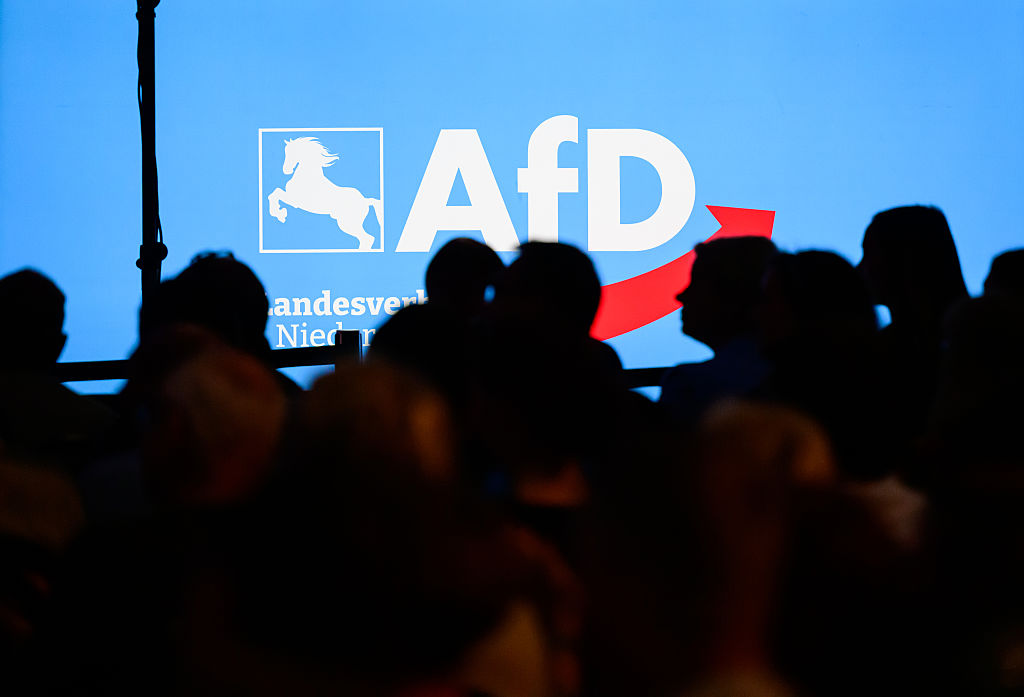
After decisively winning the state election in Saxony-Anhalt, the Alternative for Germany (AfD) and its lead candidate Ulrich Siegmund invited other parties represented in the state parliament to discuss forming a new government. Until now those invitations had produced only refusals, but one party has now said yes.
The left-wing BSW state executive committee voted unanimously on Wednesday evening to meet with the AfD, a spokesman confirmed. The federal executive committee and party founder Sahra Wagenknecht had already ruled out a coalition in advance.
The spokesman said: “At the meeting with the AfD, we will discuss the topics of energy supply, education and peace policy.”
The date and location of the meeting have not been disclosed.
Even before the decisive internal vote, BSW state chairman Thomas Schulze had stated: “We are generally prepared to speak with all parties.” He called the other parties’ refusal to talk a “bad political approach” and “not a good sign for the democratic culture in our country.”
Representatives of the center-left Christian Democrats (CDU), far-left Social Democrats (SPD), far-left Greens and ultra-left Left Party had already categorically rejected any talks with the AfD despite the party winning 43.8 percent of the vote, giving it close to an absolute majority. However, the AfD is still three votes shy of a majority in the 83-seat parliament.
If the AfD and BSW fail to form a coalition, the AfD has one remaining option to govern, which would be to peel off individual lawmakers from other parties. The AfD may have an opening with the CDU. Notably, Minister-President Sven Schulze has sparked outrage among some CDU politicians in the state after he successfully seized the chairmanship of the parliamentary group in a highly-contested vote. This has led to rumors that some CDU members may rebel and join the AfD, but so far, no CDU politician has taken this step.
If these rogue CDU members were to actually help the AfD govern, they would almost certainly be expelled from the CDU and become independents or outright join the AfD. More importantly, such a move would spark a crisis in Merz’s federal government. The optics of CDU politicians handing the keys of power to the AfD would amount to a political earthquake.