
A parliamentary inquiry by Alternative for Germany (AfD) lawmakers in the German state of Baden-Württemberg has brought to light official data showing that authorities have recorded 358 so-called child marriages since April 2012, with courts formally annulling only eight of them between 2018 and 2024.
The figures, released in early October 2026 in response to questions from state parliament members Nikolaos Boutakoglou and Emely Knorr, have drawn sharp attention to the prevalence of underage marriages — overwhelmingly involving people from migrant backgrounds — and the limited number of legal interventions.
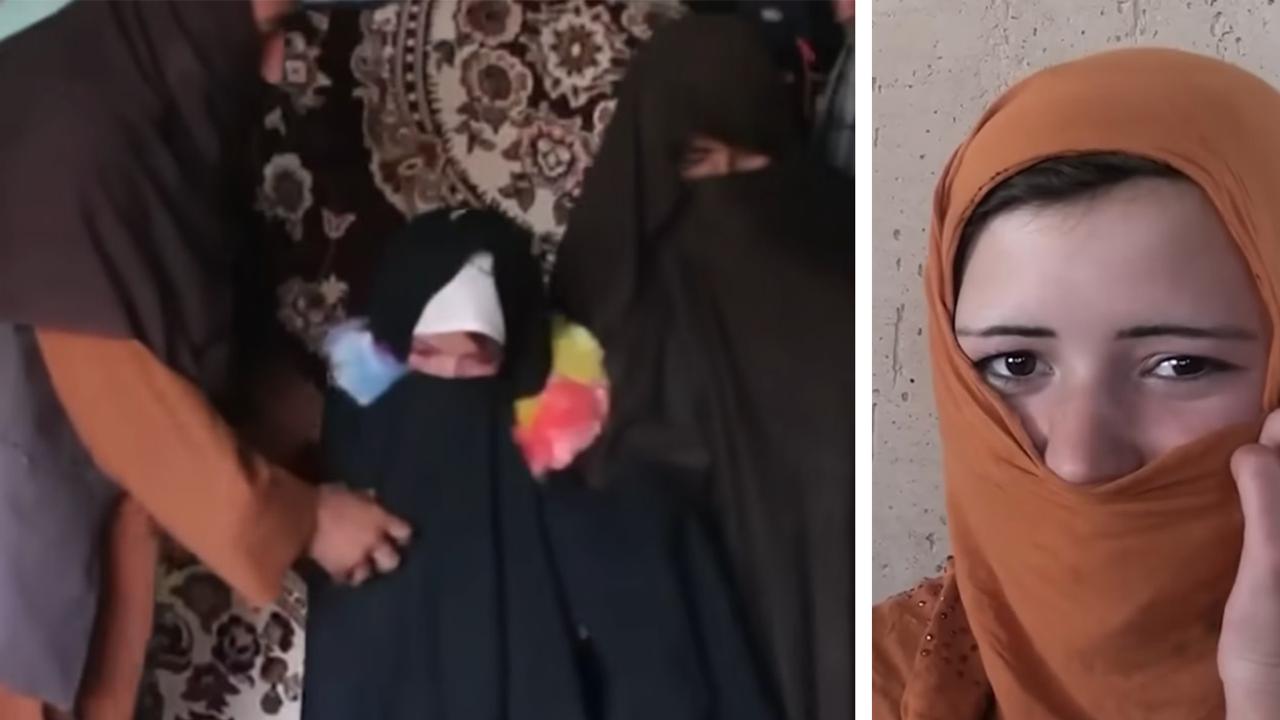
Among the annulled cases was the 2020 marriage of an 11-year-old Iraqi girl to a 17-year-old Iraqi boy. In 2018, authorities annulled the marriage of a 14-year-old Afghan girl to a 30-year-old Afghan man. Two further annulments occurred in 2024: one involving a 16-year-old German girl and a 25-year-old Pakistani man, and another between a 16-year-old Syrian girl and a 27-year-old Syrian man, according to Welt newspaper.
The other annulled marriages involved individuals from Afghanistan, Romania, Moldova, Croatia, Serbia, and elsewhere. The state Interior Ministry stated that no court proceedings for annulment were pending at the time of its reply.
The remaining approximately 350 cases, documented by the government of Tübingen were closed under the category of “other resolutions.” Possible reasons cited by the government include the death of a partner, a decision to forgo annulment, or a subsequent marriage abroad.
These files still include striking examples of very young brides. In 2020, a 12-year-old Afghan girl was recorded as married to an 18-year-old man. In 2022, a 12-year-old Syrian girl was married to a 28-year-old Syrian man, and in 2023 a 12-year-old Afghan girl to a 21-year-old Afghan man. Multiple cases involving 13- and 14-year-old girls also appear in the data, and some reports note nine marriages in which the girl was under the age of 14 at the time of the union.
The demographic pattern is pronounced. Men from Syria accounted for 132 of the recorded cases, nearly 40 percent, followed by nationals of Bulgaria, Turkey, Afghanistan, and Iraq.
Child marriages between two German citizens made up only about 0.3 percent of the total. It is also unclear if these German citizens have a migration background, but given the pattern seen among foreigners, it is very probable.
Most of the 358 cases date from 2015 onward when the migration crisis truly began to grow in Germany. Boutakoglou highlighted the figures on social media, stating: “Almost without exception, every child marriage in Baden-Württemberg since 2017 can be traced back to mass migration! Nearly 40% of the child marriages were contracted between Syrians, while child marriages between two Germans account for only 0.3%.”
Fast ausnahmslos jede Kinderehe in Baden-Württemberg seit 2017 ist auf die Massenmigration zurückzuführen!
Das ergab meine Kleine Anfrage an die Landesregierung.
Fast 40 % der Kinderehen wurden zwischen Syrern geschlossen, Kinderehen unter zwei Deutschen machen nur 0,3 % aus! https://t.co/BeJ4wS3CJL
— Nikolaos Boutakoglou (@Nik_Boutakoglou) October 5, 2026Emely Knorr, co-author of the government inquiry, wrote: “Child marriages are incompatible with our values. Children have a right to safety, education, and a self-determined future. That is why we need effective protection, early intervention, and decisive action against forced marriages.”
Germany raised the minimum marriage age to 18 in 2017 and generally does not recognize foreign marriages involving minors under certain conditions. The Tübingen authority deals exclusively with marriages contracted abroad that come to the attention of German registry offices.
The AfD inquiry was prompted in part by a Terre des Femmes leaflet warning of the risk of forced marriage during school holidays, but the state government said it had no financial involvement in the leaflet.
As Remix News has reported in the past, the issue is not just child marriages. Mass migration has brought new backward cultural norms to Europe that are completely incompatible with European human rights. For example, already in 2020, the German government admitted that there were at least 68,000 female genital mutilation victims in the country, rising 44 percent since 2017.
According to then German Minister for Family Affairs Franziska Giffey, mainly migration is to blame for the massive increase as many migrants coming to Germany commonly practice FGM in their own home countries. The practice, which is a human rights violation, involves the ritual cutting off some or all of the external female genitalia.
Germany is far from the only country dealing with this trend. Remix News reported this year that a female genital mutilation crisis had hit Paris, with over 140,000 such cases seen across the country.