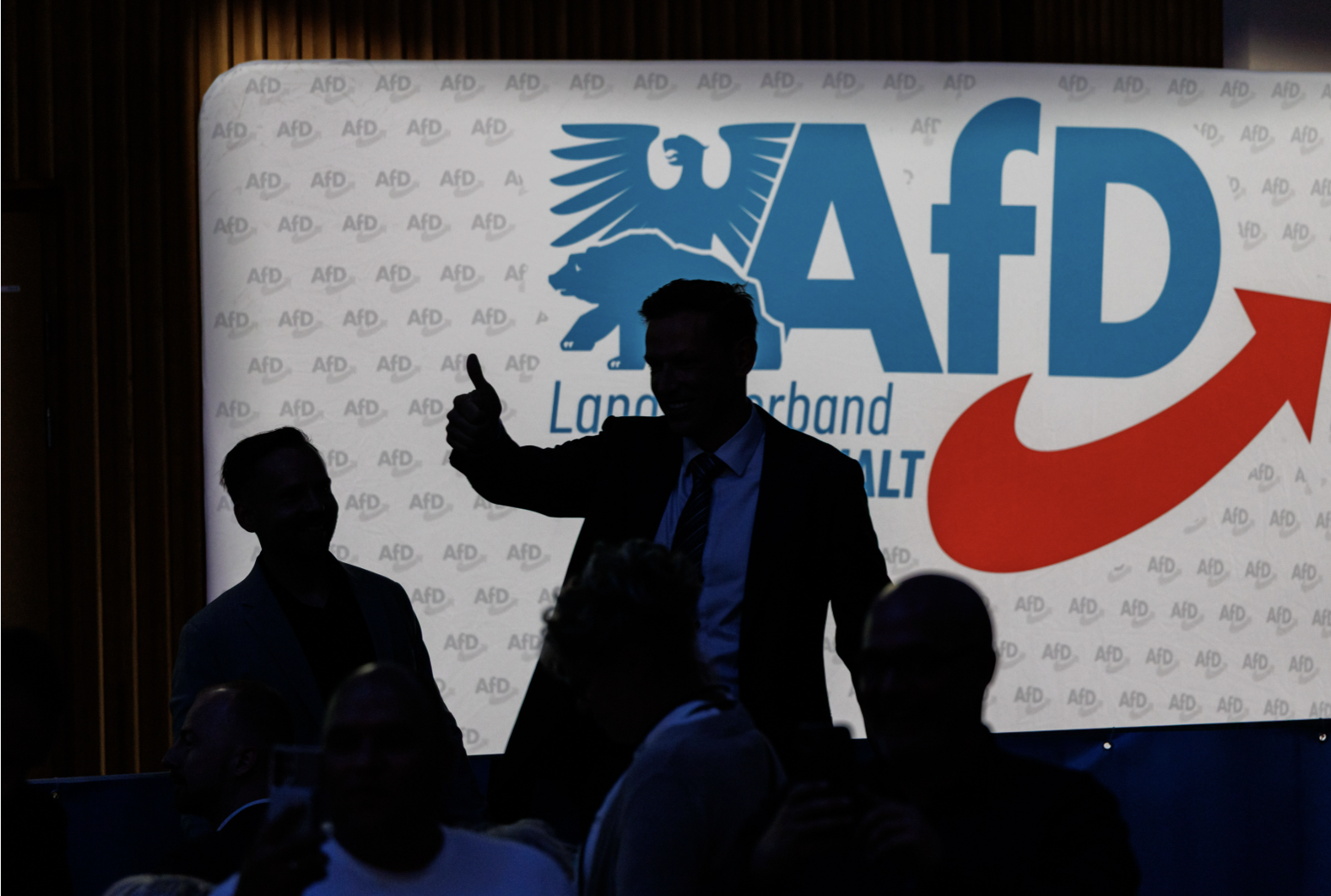
A new poll in Germany has delivered yet another shocking blow to the political establishment. The Alternative for Germany (AfD) has reached 30 percent for the first time while stretching its lead over the Christian Democrats (CDU/CSU) to 10 points, with the Union reaching a historic low of just 20 percent. In addition, another poll has also put the CDU even lower, at 18 percent.
According to the GMS poll, the governing black-red coalition of Chancellor Friedrich Merz’s conservatives and the far-left SPD would no longer command a majority. Compared with GMS’s mid-July survey, the Union lost three points and the AfD gained two.
“Important milestone cracked: With 30%, our AfD is now already 10 percentage points ahead of the Union! The citizens want the political change – and they will get it. Time for the AfD!” wrote AfD co-leader Alice Weidel on X.
Wichtige Marke geknackt: Mit 30% liegt unsere AfD nun bereits 10 Prozentpunkte vor der Union! Die Bürger wollen den politischen Wechsel – und sie werden ihn bekommen. Zeit für die AfD! pic.twitter.com/I2MHeUMCZr
— Alice Weidel (@Alice_Weidel) September 14, 2026A new YouGov poll released today has the AfD at 29 percent but the CDU is even lower, at 18 percent, an absolutely abysmal result for the paryt.
The numbers arrive days after the CDU’s heavy defeat in Saxony-Anhalt, where the AfD won 43.8 percent. Merz himself described the result as a shock for his party.
“We are all deeply shocked; we did not expect such a result,” he said.
Personal ratings for the chancellor are equally grim. In a recent Insa survey, 78 percent of respondents answered “no” when asked, “Is Friedrich Merz (still) the right chancellor?”
Only 14 percent said yes; 8 percent offered no opinion. Even among CDU voters, the picture is bleak for Merz: 58 percent opposed him and just 36 percent supported him.
Pressure inside the CDU is growing. Speculation about a possible change at the top has circulated for weeks, with North Rhine-Westphalia Minister-President Hendrik Wüst and Bavaria’s Markus Söder frequently named as potential successors. Söder, for his part, said the long-standing “firewall” against the AfD is not working.
🇩🇪🔴 After AfD's victory in Saxony-Anhalt, Alice Weidel takes Chancellor Merz to task during a raucous debate.
"Because [Germans] have to deal daily with the consequences of mass migration, with the hatred of foreign groups toward their own, with hatred of Christians, with… pic.twitter.com/lBjLNPt9hM
— Remix News & Views (@RMXnews) September 9, 2026“This ‘firewall model’ has failed,” he said.
“This ‘firewall model’ has failed,” he said. Instead, he offered a different image: “We in Bavaria see ourselves as a protective wall.” He argued that simply isolating the AfD without confronting its arguments no longer works. Instead, he wants to confront the AfD on issues such as immigration.It remains to be seen how that is possible if the CDU keeps allying with left-wing parties.
However, it is important to note that Söder continues to rule out a cooperation or coalition with the AfD.
“Not talking about the content at all, putting them in a corner and cobbling together some majorities around them without addressing the issues. That is the wrong path,” he said.
AfD co-leader Alice Weidel, speaking after the Saxony-Anhalt vote, engaged in an intense debate with Merz in the Bundestag, saying, “The voters in Saxony-Anhalt have told you in the language of the democratic sovereign with all clarity: black-red is over.”
Merz has countered by calling the AfD a “destructive force” that “wants to destabilize our country.”
State elections in Mecklenburg-Western Pomerania and Berlin on Sept. 20 will put Merz’s CDU further to the test. Speculation is growing that if the CDU falters during those elections, enormous pressure will be placed on Merz and his role as chancellor could become untenable.