
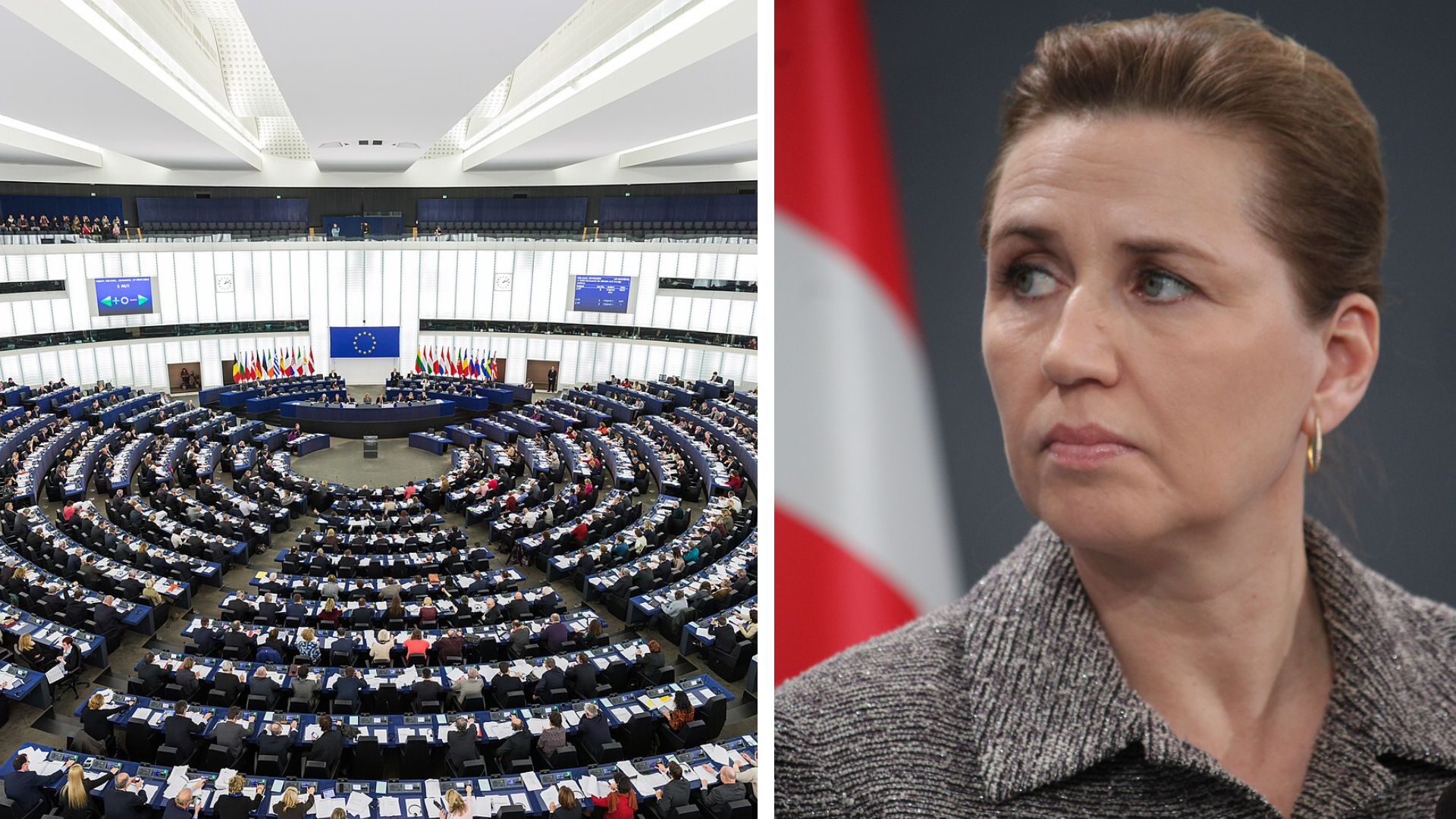
The Socialists and Democrats (S&D) group in the European Parliament will hold a formal internal discussion on Danish Prime Minister Mette Frederiksen’s remarks about mass immigration and the Great Replacement after MEPs raised concerns at a Strasbourg meeting on Nov. 23. Meanwhile, Frederiksen released a statement that appears to downplay her comments. She affirms that while she welcomes the immigrants that have arrived in peace, she will continue to pursue a strict immigration policy.
On Nov. 17r, in an interview on the Danish podcast Borgerlig Tabloid, Frederiksen said: She added: “I am European, Danish and from Aalborg. And I am also not in favor of a large population replacement. I believe there needs to be a strong majority culture.” When pressed on what “Danish” meant, she pointed to the existence of a clear majority culture and described Danes as “an original tribe that is ethnically Danish.”
“There must also in the future be a Denmark where there is a strong majority culture,” she stated.
🇩🇰🔴 The left-wing PM of Denmark rejects “population replacement.”
“I am opposed to population replacement. I am not a moral relativist. I want a Denmark that is Danish.”
“We are the original stock of ethnic Danes. There must continue to be a Denmark in the future.”
“I do not support a multicultural society in which all cultures are treated as equal.”
“We do not have religious equality. We are a Christian country. We shall continue to be so.”
Many on the Danish right complain about PM Mette Frederiksen. While she has managed to drastically reduce asylum cases under her tenure, immigration overall has slightly increased in the last two years, with about half of those immigrants coming from European countries.
At the very least, even acknowledging that there is an ethnic Danish people who deserve to remain the majority is a far cry from the weakness seen from many conservative politicians across the West on this topic.
Follow: @RMXnews https://t.co/XS29eh3eHB
— Remix News & Views (@RMXnews) November 18, 2026Frederiksen singled out immigration from the Middle East, North Africa, Pakistan and Turkey (MENAPT countries), arguing that a “dominance culture” among some arrivals rejects homosexuality, opposes equal rights for women, and seeks to place Islam above national law. She called this culture “dangerous” and incompatible with the society Denmark has built, speaking both as a Social Democrat and as prime minister.
She also added: “We do not have religious equality. We are a Christian country. We shall continue to be so.”
Critics in the S&D argued that her language falls into the category of the far right, according to a report from Politico. Frederiksen has rejected any link that she is parroting the right. In a subsequent social-media post, she elaborated on the demographic changes facing Denmark and her position:
“For many years we have been a very homogeneous country. It is changing. Some Danes have left. Many people have come. And that is good. Because you have become our friends, family, colleagues and neighbors. You have taken Denmark to yourself – and thank you for that.”
She continued by distinguishing between those who integrate and those who do not:
“Unfortunately, people have also come here who don’t want us to be happy. Too much crime, radicalization, and a culture of dominance.”
On the question of values and continuity, she wrote:
“Denmark is not just a place. It is a community based on some very clear values refined through generations. These are values that, in my opinion, must also apply in the future. And the prerequisite for that is, all other things being equal, that there is a majority culture that others can adopt and integrate into.”
Danish PM Frederiksen: "The problem is that a great enemy has begun to grow from within."
"There are foreigners who have come to Europe, there are Hamas supporters, there are people who commit terror against European societies, there are people who do not recognize our fundamental European values, there are people who sympathize with some of the darkest forces in this world."
"So Europe is threatened. The problem is that we are threatened both from outside and now from within."
PM Mette Frederiksen explained why she is against Spain’s decision to legalize hundreds of thousands of migrants, who can now enter Danish territory,
Follow: @RMXnews
— Remix News & Views (@RMXnews) August 17, 2026She also reaffirmed her policy stance while acknowledging those who have integrated:
“I am therefore in favor of a strict immigration policy, but that does not mean that I do not recognize all of you who have embraced Denmark and who would never cause harm to others… And I would certainly like to avoid being lumped in with conspiracy theorists, far-right extremists, or fascist movements – none of which I have anything good to say about, by the way.”
The planned S&D discussion was brought about due to objections from Portuguese and German lawmakers, among others, to both the podcast comments and Denmark’s support for a “return hub” in Rwanda involving Denmark and four other EU countries.
Group chair Iratxe García proposed scheduling the formal discussion at a future meeting. An S&D official indicated it is expected in the coming weeks. García has stated that the group already holds a position against return hubs, which it views as lacking legal basis and inconsistent with international law, and that a majority of the group opposes the Danish line on migration.
Danish Social Democrat MEP Christel Schaldemose welcomed the opportunity to discuss the Danish position. No disciplinary measures have been announced yet. While such measures could be possible, they also threaten to shake the stability of the S&D group.
The entire incident highlights a growing rift in Europe, even among the left, about mass immigration. It remains unclear what the final outcome of Frederiksen’s remarks will be, but as Remix News wrote last week, she has made a series of remarkable comments in opposition to mass immigration over the years that even many on the right fear making.
Due to a unique combination of factors, Frederiksen has been able to remain virtually immune to criticism despite her comments on the dangers of mass immigration in Europe, in part due to her general popularity, her framing of protecting liberal values and Denmark’s social welfare system, and the Danish population’s overwhelming support for restricting immigration. The fact that she won a third term in summer of this year only highlights her continued success promoting a strong anti-immigration policy from the camp of the political left.