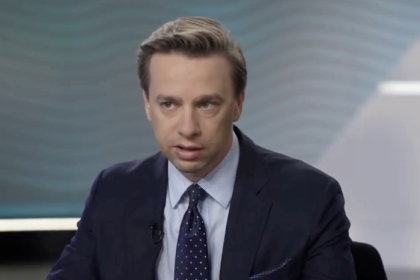

Roger Köppel, editor-in-chief of the Swiss newspaper Die Weltwoche, sharply criticized the EU during a panel discussion at CPAC Hungary with Anders Vistisen, MEP for the Danish People’s Party and Ernő Schaller-Baross, MEP for Hungary’s ruling Fidesz party.
The discussion, according to Mandiner, focused on migration and the functioning of the European Union (EU), reflecting key issues of the patriotic movement.
Vistisen called migration a fundamental issue for the patriot movement, stressing that opening borders could bring irreversible changes to the composition of societies. For example, major cities could become no-go zones for children and women, which he said was a consequence of the presence of too many Islamists being allowed in.
Köppel, for his part, has been a vocal critic of the EU, calling it an intellectual delusion and unfit to function. EU decision-makers, he said, are a group of elitists making decisions on migration, welfare and security that are contrary to the interests of citizens of member states. He says people must start simply saying “no.”:
Turning to Hungary as an example of the right path forward, he said, “From a Swiss perspective, Hungary is the center of resistance and common sense in the European Union.”
Schaller-Baross, meanwhile, reinforced the Hungarian government’s patriotic stance. “As members of the Patriots, we’ve worked to ensure that the voices of Hungarians and Europeans aren’t lost in the political deals of the Brussels leftist elite,” he posted on X.
Back in 2023, Köppel visited Orbán for a lengthy interview. At the time, he asked the prime minister about his Calvinist roots, to which Orbán replied: “We Calvinists are Protestants. Many people think that to protest is to be against something. That’s wrong. Properly interpreted, it means to stand up for something. And that’s what I do.”
More recently, this past February, Köppel interviewed both Orbán and AfD chairwoman Alice Weidel in Budapest.
New data showing the percentage of people not speaking German at home in Austria underlines just how massive the demographic transformation has been in the country, according to a Hungarian economist.
“Ominous winds are blowing in the West,” economist Géza Sebestyén posted on his Facebook page, along with some astonishing data.
“According to the latest Austrian statistics, one-third (32.8%) of primary school pupils in Austria are non-native German speakers. In cities, the proportion is even higher: in Salzburg, for example, one in two children (51.8%) do not speak German at home,” he noted.
The post featured a map breaking down each region of Austria, showing the huge share of children not speaking German at home as their first language.
Sebestyén, the head of the MCC Economic Policy Workshop, showed that Hungary could have ended up like Austria if it had not followed the policies of Viktor Orbán, who sealed the border and rejected mass immigration. He warned that Hungary could feature a multiculturalism that Austrians increasingly find alienating and fraught with crime.
🇦🇹‼️ 534,193 criminal cases were reported in Austria last year.
“In some districts of Vienna,” his post continues, “the situation is already dramatic: in Brigittenau and Margareten, the proportion of people who do not speak German in the family environment is over 80%.”
Sebestyén called the latest data “signs of social transformation that are shaping the future of Europe,” a trend that, if continued, will lead to Austria losing its character as a nation-state. It will, he says, “become one of the EU member states for whom a ‘Europe of nations’ is a nightmare.”
Sebestyén then pointed out that statistics like these are why Hungary continues to combat “excessive immigration.”
As Remix News has reported in the past, three out of four students in Vienna’s middle school do not speak German at home.
🇦🇹 Great Replacement in Austria's school system
More than 3 quarters of students in Vienna’s middle schools do not speak German at home, according to new statistics.
According to Statistics Austria's STATcube, only 8,479 of Vienna’s 26,816 middle school students use German as… pic.twitter.com/4Vf20aaLLt
The data comes at the same time as Austrian politician, Herbert Kickl, the leader of the Austrian Freedom Party (FPÖ), spoke at CPAC Hungary. He warned of the massive demographic transformation taking place in his country and across Europe, with poll after poll showing a majority of Europeans are opposed to this transformation — yet remain nearly powerless to stop it.
“What is happening in Europe is no coincidence. It is the result of an agenda, a consciously controlled ethnic and cultural transformation. Because migration is not being stopped, no, it is being organized, promoted and glorified. NGOs are not noble aid organizations, they are part of smuggling networks with a political and ideological mission,” said Kickl.
"What is happening in Europe is no coincidence. It is the result of an agenda, a consciously controlled ethnic and cultural transformation. Migration is not being stopped, it is being organized, promoted, and glorified." pic.twitter.com/RHbYaMn1oG
“Integration is a lie because it means that the majority should adapt to the minority. And our welfare state is serving less and less those who have taken responsibility for themselves, for their families, for their homeland. It is being turned into an all-inclusive club for people who travel thousands of kilometers to take advantage of our achievements,” he added.
🇦🇹 Syrian knife attack suspects under the age of 14 have risen by 700% in just 4 years in Austria.
The anti-immigration FPÖ is currently the most popular party in the country by a wide margin, scoring between 34 percent and 36 percent of the vote. However, shifting demographics could harm the party in the long run, as foreigners become voting age and shift the electorate towards pro-migration, left-wing parties, a trend the left across Europe is betting on.
Sławomir Mentzen, leader of the Confederation who placed third in the first round of Poland’s presidential election, posted a video on Youtube to discuss the conversations he had with the two candidates going into the second round on Sunday: Rafał Trzaskowski, backed by the Civic Coalition (KO), and Karol Nawrocki, backed by Law and Justice (PiS).
At stake was who Mentzen may tell his voters to support on June 1.
“The conversation with Karol Nawrocki was exceptionally non-confrontational. He adopted this tactic to show the audience that his views were very similar to mine. No matter what topic I started, Karol Nawrocki stated that he agreed with me,” said Mentzen.
He then said he was happy to see that Nawrocki would not simply toe the line for PiS and “basically distanced himself from basically the entire PiS policy of the last eight years.”
“And that’s good. If it turned out that he was following the PiS line on these issues, it would mean that there is no hope for us and nothing good awaits us,” Mentzen said.
Regarding the eight points Mentzen had presented to be signed by both candidates, he said, “No matter what point I started to discuss, Nawrocki agreed with me,” Mentzen said, adding that there was some discussion on taxes and Poles’ right to bear arms.
The discussion with Rafał Trzaskowski went very differently.
“Nawrocki wanted to show that he agreed with us, and Trzaskowski wanted to show that he disagreed with us on many issues, that he had his own views and was ready to defend them.”
The Confederation leader emphasized that Trzaskowski did not agree with most of them, and for those he agreed with, it was not 100 percent alignment.
Most prominently, they disagree about Ukraine, both in terms of NATO membership and Polish troops in that country.
“Trzaskowski lives in some world where Ukraine can be accepted into NATO and then we are practically certain that Russia will not attack Ukraine and we do not have to get involved in this war. And even if it does attack, it does not mean that the Polish army has to be sent to Ukraine,” said Mentzen.
“I don’t understand it at all. In my opinion, it looks completely different. Ukraine’s inclusion in NATO is a huge increase in the risk that Poland will be at war with Russia, which we wouldn’t want,” he added.
He also noted that the KO candidate saying that Polish troops would not have to be sent to Ukraine, were it a member of NATO, “undermines the credibility of Article 5. Undermines the credibility of NATO.”
Mentzen said Polish FM Sikorski had to explain the problem with this to Trzaskowski: “My opinion is that Trzaskowski is not aware of the consequences of Ukraine’s accession to NATO and, overall, it does not reflect well on him.”
The Civic Coalition candidate did not sign Mentzen’s 8-point declaration, while Nawrocki did.
“To sum up. I see no reason to vote for Rafał Trzaskowski. This is a man who represents the leftist agenda that I do not agree with,” said the leader of the Confederation.
“This is a man who is in favor of limiting freedom of speech. This is a man who supports all these climate transformations, who supports the direction of the European Union, who will be able to agree to transfer further competencies to the European Union. This is a man with whom I simply disagree on the most important issues,” Mentzen said.
In a message to his base, he then said: “I am deeply convinced that you have your own minds. Really, no one has to tell you who to vote for. You know perfectly well who you are closer to and vote the way your conscience tells you.”
He did, however, urge them to vote on Sunday.
“If you do not choose your president, others will choose him for you,” Mentzen told them.
A German man must now pay a fine for publicly questioning on the X platform why one slogan is banned in the country while another is permitted.
In an X post responding to a left-wing account, he wrote: “I have a question: Why is ‘Germany, die!’ legal and ‘Everything for Germany’ forbidden?”
The phrase “Germany, die!” is shouted at left-wing Antifa demonstrations, but the slogan is not banned in Germany or deemed a punishable offense.
However, the phrase “Everything for Germany,” is indeed banned, as the German state deems it to be a pro-Nazi “symbol of unconstitutional organizations.” Perhaps the most famous case involving the phrase in recent years involved Alternative for Germany (AfD) leader Björn Höcke, who was sentenced with a fine of €13,000 for an election campaign speech where he said: “Everything for our homeland, everything for Saxony-Anhalt, everything for Germany.”
Höcke denied that he knew the phrase had anything to do with the Nazi era, but the court disagreed.
NIUS reports that the X user Reinhard R. now has to pay €2,250 for even questioning why he cannot utter the phrase while the left calls for the death of Germany with impunity. In total, Reinhard R. ended up paying €4,000 in legal fees. The fine will produce a criminal record for the German man.
The man was responding to the left-wing X account of “querdenkerRAUS.”
“‘We give everything for Thuringia, everything for Germany.’ If that’s punishable just because the last three words were also used by the National Socialists, what else would have to be on the list of LEFT-WING vocabulary?” asked Reinhard R.
In another question, he asked: “I have a question: Why is ‘Germany, die’ legal and ‘Everything for Germany’ forbidden?”
The tweet was then forwarded by the Central Reporting Office for Hate Postings (ZMI), located at the Federal Criminal Police Office. The reporting office was established in 2022 to monitor citizens’ speech and seek criminal and civil penalties against those targeted by the office.
The court determined that the man was aware that the “that the slogan ‘Everything for Germany’ was used by the Sturmabteilung (SA), the paramilitary combat organization of the NSDAP.”
Reinhard R. said he does not understand why he was fined.
“I asked an open-ended question,” he told NIUS, saying he did not support the statement, only quoted it. However, his attorney told him to close the matter as quickly as possible by paying the fine.
Germany has gone on a massive free speech crackdown in recent years, including raiding the houses of those deemed to be “insulting” politicians. Former Economic Minister Robert Habeck filed 800 complaints against citizens who “insulted” him, often for something as simple as calling him an “idiot,” which led to house raids and searches against many of the targets.
The problem has become so dire that even publications such as the Economist, not normally known for challenging left-liberal governments, is calling Germany out in a piece entitled: The threat to free speech in Germany: One of the freest countries in the world takes a hammer to its own reputation.”
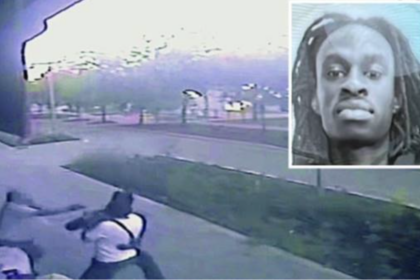
Three Black migrants in their twenties have been convicted and sentenced after launching a racially charged attack on White French residents celebrating Neighbours’ Day in Tarbes.
During their arrest, one of the attackers shouted, “Dirty Whites, we are going to come and colonize you and rape your women.”
The attack took place on Sunday, May 25, when a gang of five drunken migrants approached a small barbecue being held by local residents in the courtyard of their building. When the residents made it clear the unfamiliar group was not welcome, the men became aggressive and violent.
One young man from the neighborhood was struck repeatedly, and one of the attackers pulled a knife, threatening the gathering.
The three main perpetrators fled as police arrived. One was found hiding behind a car and was discovered to have earlier removed his electronic ankle tag, violating the terms of his house arrest. His disappearance had already triggered a police alert. Officers also found an Opinel knife on him.
Two other men were located and apprehended minutes later on nearby streets. During processing at the police station, one of them verbally assaulted a municipal officer. “Your words shocked me deeply,” the presiding judge stated during the trial, before reading aloud the man’s threats: “Dirty Whites, we are going to come and colonize you and rape your women.”
This defendant, originally from Mayotte, claimed to have no memory of the incident due to heavy alcohol consumption. The same defense was used by the man already known to authorities. A third attacker admitted to striking a resident, but insisted he had been provoked — a claim refuted by both the victim and his partner, who testified that the men were visibly drunk and possibly on drugs.
All three were brought before the Tarbes Criminal Court on May 28. The presiding judge read the racist statements aloud in court and condemned the behavior. The prosecutor called for significant custodial sentences, noting the men’s prior records of violence.
The man who had removed his ankle monitor was sentenced to 12 months in prison. The other two received lesser sentences: One was handed six months in prison, convertible to house arrest with electronic surveillance, and the other eight months, suspended.
Slovak Prime Minister Robert Fico delivered a stark warning to fellow European leaders during his speech at CPAC Hungary in Budapest on Thursday, declaring that the European Union’s attempt to impose a “mandatory political opinion” on its member states signals the collapse of the European project and a departure from democratic values.
“The imposition of a mandatory political opinion, the abolition of the veto, the punishment of the sovereign and the brave, the new Iron Curtain, the preference for war over peace. This is the end of the common European project. This is a departure from democracy. This is the precursor of a huge military conflict,” he warned.
Fico’s remarks came as he revealed both he and Hungarian Prime Minister Viktor Orbán had received threats from “a particularly nervous new German chancellor,” who warned them that if they did not fall in line with Brussels’ uniform view on military support for Ukraine and sanctioning Russia, “‘You will be punished.’”
“No one in a peaceful and democratic project should have the right to treat other EU member states in this way, regardless of their size and economic strength,” he said.
🇸🇰🇭🇺 @RobertFicoSVK: "A particularly nervous new German chancellor recently told Hungary and Slovakia that if we do not obey and abandon our sovereign positions, we will be punished.
"The imposition of a mandatory political opinion is the end of the common European project." pic.twitter.com/l9T1COU0YQ
Fico, a veteran of Slovak politics who survived an assassination attempt last year, framed his overall remarks as a defense of national sovereignty in the face of what he described as increasing aggression from Brussels and major EU powers. “I do not want to see our sovereignty and the national identity melt away in the generalist supranational, international structures, especially those in Brussels,” he said.
While acknowledging his left-wing roots, Fico distanced himself from what he called the “Brussels kind” of social democracy, instead describing himself as a “rural socialist” focused on defending Slovakia’s traditions, Christian heritage, and national interests. “As a strong leftist, I have no problem spending the night with the people on the production line to support higher night shift allowances or wage increases,” he said.
Fico’s appearance at CPAC Hungary — and his warm praise for host Viktor Orbán — highlighted the growing alignment between parts of Europe’s left-wing populism and the nationalist right in opposition to Brussels orthodoxy.
The Slovak prime minister repeatedly returned to the idea that the EU is moving away from its founding principles. He warned against abolishing the veto rights of member states and moving toward qualified majority voting on key issues such as foreign policy and defense, which he said would further erode national sovereignty.
“We may have to expect unprecedented decisions such as, for example, the abolition of the right of veto of EU member states,” he said. “The time may indeed come when there will be punishments for having a sovereign opinion.”
On Ukraine, Fico reiterated his government’s refusal to send military aid, criticizing the European Commission’s strategy of isolating Russia as economically self-defeating and geopolitically reckless. “If they have no realistic response to the war in Ukraine today… they cannot continue in their nervousness by suppressing the sovereignty of individual member states on legitimate issues.”
He ended his speech with a call to preserve diversity and sovereign decision-making within the EU. “Let our diversity, sovereignty, and national identity be our strength and not weakness,” he said.
Hungary has set up a working group aimed at stopping cyberattacks and Ukrainian organized crime, writes Magyar Nemzet. Stolen customer data of private individuals has resulted in HUF 8 billion of losses, HUF 1.5 billion of which has so far been recovered.
Gergely Gulyás, the minister heading the Prime Minister’s Office, told press at a Government Info session that Ukrainian organized crime groups are behind 80 percent of bank fraud in the country. He also indicated that even with rapid police and banking cooperation, the chance of recovering all losses is slim, basing his data on a report from Hungary’s national security advisor.
Magyar Nemzet’s “Rapid” podcast also highlighted the issue with Ukrainian cybercrime, as fraudsters can take someone’s entire savings if they simply respond to a strange text message or e-mail. Financial crimes have deprived Hungarian families of HUF 1 billion per year, the host said, adding that one network has already been shut down.
It was also brought up whether or not the Ukrainian government itself is encouraging such crimes.
Cybercrime is on the rise everywhere, not just in Hungary and not just by Ukrainian criminals. Portfolio.hu recently reported on a surge in bank fraud in the U.K., specifically, the government’s efforts to combat so-called “approved” payment fraud, where victims are tricked into transferring their money.
Awareness campaigns and fraud detection technologies have helped to curb the fraud, which first surged during the COVID-19 pandemic. Financial fraud accounts for 41 percent of reported crimes in the U.K., posing a serious risk to the country’s financial stability, according to the country’s banks and regulators.
According to a report out of UK Finance, cited by Portfolio, back in 2024, criminals focused more on so-called remote purchase fraud, often hacking one-time passwords to make fraudulent purchases on e-commerce sites.
The group says that 3.31 million fraud cases were recorded in the U.K. financial sector last year, 12 percent more than in 2023. Meanwhile, given tougher security policies and protection mechanisms, criminals have shifted their focus to lower-value but higher-volume attacks. This resulted in more cases but the same amount of total damage, €1.4 billion.
Another issue is getting people to report fraud. On this front, Portfolio quoted Jim Winters, head of economic crime at U.K.’s Nationwide, the world’s largest building society. His research shows that some 14 percent of U.K. consumers encounter potentially fraudulent emails every day, but 43 percent would not report it if they were a victim or witness of fraud.
Given their often elusive nature in the realm of cyberspace or involving criminals “beyond the reach of our own criminal justice system,” UK Finance emphasizes the need for “proactive prevention.” The threat should be a national security issue, they say, demanding “layers of defence spanning the technology, telecommunications, financial services, and public sectors.
The sales revenue of Mercedes-Benz Manufacturing Hungary Kft. decreased by nearly 16 percent, from €5 billion to €4.2 billion while its after-tax profit decreased by 40 percent compared to 2023, €57.6 million instead of €95.6 million.
In its press release, the company said that the results reflect normalizing raw material prices and the continued focus on manufacturing cost efficiency.
Domestic suppliers saw a boost, with the percentage of raw materials, services and non-production investments from Hungarian suppliers increasing to close to 44 percent.
The Mercedes-Benz plant in Kecskemét produced 146,000 vehicles last year; its 2 millionth car in the second half of the year was a purely electric EQB. The expansion of the Hungarian site, the transformation of the plant’s production portfolio, and the flexibility of production provide a solid foundation for profitable growth going forward.
An investment of more than €1 billion “represents a clear commitment to the Kecskemét site,” which with the development will increase the size of the factory to 400 hectares.
Highlights from 2024 include: A new medical clinic and fire department, new production lines, a paint shop modernization, and a new battery assembly plant for the final assembly of high-voltage batteries for purely electric models.
Production of models based on the new MMA platform (Mercedes-Benz Modular Architecture) is planned to start at the beginning of 2026, and production of purely electric models based on the MB.EA platform (Mercedes-Benz Electric Architecture) will begin in the same year. This will create around 3,000 new, valuable jobs in the medium term.
Construction of a solar park will also commence in 2025. The Mercedes-Benz factory in Kecskemét has been carbon-neutral since 2022 and plans to cover more than 70 percent of its production energy needs with renewable energy by 2030. The goal of the group’s global production network is to use exclusively renewable energy by 2039.
Mass immigration to Europe is an agenda that is organized as, “a consciously controlled ethnic and cultural transformation,” warned Freedom Party of Austria (FPÖ) leader Herbert Kickl during a speech at CPAC Hungary.
“What is happening in Europe is no coincidence. It is the result of an agenda, a consciously controlled ethnic and cultural transformation. Because migration is not being stopped, no, it is being organized, promoted and glorified. NGOs are not noble aid organizations, they are part of smuggling networks with a political and ideological mission,” said Kickl.
"What is happening in Europe is no coincidence. It is the result of an agenda, a consciously controlled ethnic and cultural transformation. Migration is not being stopped, it is being organized, promoted, and glorified." pic.twitter.com/RHbYaMn1oG
Kickl’s party, the most popular in Austria and currently polling between 34 and 36 percent, almost came to power during last year’s national elections. Although rival parties shut his party out once again, this does not appear to have deterred Kickl’s messaging on an issue that remains core to his party’s program.
“Integration is a lie because it means that the majority should adapt to the minority. And our welfare state is serving less and less those who have taken responsibility for themselves, for their families, for their homeland. It is being turned into an all-inclusive club for people who travel thousands of kilometers to take advantage of our achievements,” said Kickl.
Kickl’s party, which has promoted the remigration of migrants across Europe, has long advocated a policy known as “Fortress Austria.”
🇦🇹🚨AUSTRIA: FPÖ PARTY PREDICTED TO WIN NATIONAL ELECTIONS WITH 29.1% OF THE VOTE.
Lead candidate Herbert Kickl openly says he supports remigration.
“As liberal Austrian patriots, we say that Austria is not a country of immigration and must never become one. Illegality must never be rewarded, neither through the right of residence nor through cash benefits. Asylum centers do not have their place within Europe, but outside our continent. Criminal foreigners must be consistently deported, and the welfare state belongs to our citizens and does not have to serve migrants,” he said at CPAC.
Kickl reserved some strong words for those who support open borders and mass immigration, labeling those who betray citizens as “traitors.”
“All that means fairness, and fairness means that your own people are at the center and in first place for political decisions. That is not xenophobia, that is justice, and that means taking responsibility for your own country. Those who love their country protect its citizens. Anyone who betrays the citizens is a traitor.”
Kickl also reflected on not only his party’s soaring popularity, but also the growth of similar parties across Europe.
“People are waking up, more and more and more often, and they find themselves with their worries, needs, wishes and hopes in what we criticize, what we plan and what we push forward. A great wave of freedom is currently building up across Europe.
Resistance is growing everywhere. Resistance is growing everywhere against this perverted form of Brussels imperialism, which is directed against its own member states and their citizens, and the repression of the system against this wave of freedom, the structural violence that is being used. It is not an expression of strength, it is a sign of despair and helplessness. The wind has shifted and turned into a storm, and it is blowing right in the face of the globalists. The age of the patriots has dawned. Everywhere in Europe. That’s good.”
“But my friends have stolen that dream. Brussels has kidnapped it. It has derailed our future. Instead of the European dream, we are now getting a nightmare. European people do not feel safe in their own country, in their own city, on their own streets. They have become strangers where they were at home 20 years ago,” said Orbán. “What is happening in our cities is simple math. This is not integration, it is organized population exchange,” Orbán told the audience at CPAC:
Germany’s economy is seeing red, with a recent, extensive survey of 23,000 businesses forecasting a record third year in a row of economic contraction, which would be a historic low since the federal republic was founded in the aftermath of the Second World War.
The survey, conducted by the German Chamber of Industry and Commerce (DIHK) paints a grim picture. Despite a surprisingly robust start to the year, experts announced on Tuesday that Germany’s GDP is projected to shrink by 0.3 percent.
“The economic recovery that we all desire and that our country needs is not yet in sight,” stated Helena Melnikov, DIHK Executive Director.
The prospect of Germany’s economy contracting for three straight years in its post-war history is a serious concern, prompting Melnikov’s plea: “We must do everything we can to ensure that this is not a lost year.”
As an export-driven nation, Germany is reeling from the trade war with the United States. A stark 29 percent of companies foresee fewer exports, with only 19 percent anticipating growth in international trade.
Although these are only predictions from businesses, and the trade situation is still in flux, negative sentiment can be self-manifesting, which can help feed into a real contraction.
The German export forecast has worsened since February, now predicting a 2.5% decline compared to 1.8 percent in 2024).
President Donald Trump’s tariffs are the primary reason, with Trump citing he sought for them to go as high as 50 percent on EU countries. Although Trump has delayed or suspended some tariffs temporarily, uncertainty is widespread for businesses. The German Bundesbank has described it as the “new normal” in regard to trade policy with Washington.
German news outlet Wirtschafts Woche describes that the domestic situation in Germany is not much better, with most companies holding back on spending and some scaling back.
Only 19 percent plan to expand production capacity—a record low. Job growth is also stagnant: Merely 13 percent of companies plan new hires in the coming months, while 22 percent intend to cut jobs. Adding to the distress, almost half of all German businesses (43 percent) are grappling with financial difficulties.
While the new federal government has promised relief measures, including cheaper energy, increased public investment, and enhanced depreciation options for businesses, 59 percent of companies view the current economic policy environment as their biggest risk.
Common complaints include high labor costs, excessive bureaucracy, and the emergence of new trade barriers; however, those complaints predate the current government. Many businesses view German Chancellor Friedrich Merz and his Christian Democrats (CDU) as business-friendly, but only time will tell if they can turn the ship around for Germany.
A French juvenile court sentenced a 16-year-old Afghan migrant to eight years in prison on Wednesday for the fatal stabbing of Matisse Marchais, a 15-year-old French boy, in a case that sparked national outrage and intensified public scrutiny of France’s immigration policies.
Rahman M., who was also 15 at the time of the attack in April 2024, was convicted by the Châteauroux juvenile criminal court following a three-day closed-door trial. The court also imposed an additional 15 years of socio-judicial monitoring after his release.
The teenager faced a maximum sentence of 15 years under French juvenile law, but the court ruled that he had a “significant impairment of discernment,” leading to a reduced prison term.
The attack occurred on April 27, 2024, in the Saint-Denis district of Châteauroux. According to police and media reports at the time, Rahman M. had previously been in an altercation with Matisse earlier in the day. He then returned to the area carrying a knife and stabbed Matisse multiple times, inflicting a fatal wound to the heart. A police source confirmed the boy was left lying unresponsive in the street and later died in hospital. Rahman’s mother, a 37-year-old Afghan woman, was also alleged to have struck Matisse as he lay bleeding.
Video evidence showed Rahman M. roaming the neighborhood with a knife before the killing. He had previously been under judicial supervision in connection with an aggravated theft case but had not been convicted.
Dans cette vidéo, publiée sur ses réseaux sociaux et antérieure au drame , le meurtrier présumé de Matisse se balade dans la rue, couteau en main déja en quête de violence contre quelqu'un #mathis#chateaurouxpic.twitter.com/gV5pSqJSkg
— Fdesouche.com est une revue de presse (@F_Desouche) April 29, 2024
Court president David Marcat described the sentence as “very balanced” and “well understood by Matisse’s family,” noting that it served the dual purpose of protecting society and allowing for the possibility of rehabilitation.
The prosecution had requested a 10-year sentence and 10 years of follow-up monitoring, but the court adjusted the terms in light of the defendant’s age and mental state. Rahman M. has 10 days to appeal the ruling.
Matisse’s family, who had largely avoided public commentary during the trial, previously expressed deep disillusionment with the process, saying they “did not expect anything at all from this trial” and “certainly not explanations that will not arrive.” However, they have since vowed to turn their grief into a broader fight against youth violence. On April 30, 2025, they held a public tribute titled “The Otter Against Violence,” pledging to transform their son’s death into a campaign for a more humane and safe society.
The case drew intense national attention from the outset, with many conservative politicians linking the killing to France’s immigration policies. Marine Le Pen described Matisse as “the latest victim of a crazy migration policy,” while Jordan Bardella of the National Rally called him a “new victim of a senseless migration policy that endangers the French people.” Reconquête President Éric Zemmour went further, calling the murder an act of “Francocide.”
🇫🇷‼️ "Every day, young French people are the new victims of an uncontrolled and senseless immigration policy that brings predators into our country who endanger our security and our freedoms."
Local mayor Gil Avérous, however, emphasized the family’s desire not to politicize the tragedy. “They do not want us to talk about the origin of the attacker, they do not want the subject of immigration to be exposed,” he said at the time, quoting the family’s own words.
Despite that appeal, Matisse’s murder became a symbol for many in France of what they see as the failures of the justice system and the dangers of unchecked immigration. A silent “White march” held in Matisse’s memory last year drew large crowds.
Former Czech prime minister and current opposition leader Andrej Babiš delivered a blistering speech at the Conservative Political Action Conference (CPAC) in Hungary on Thursday, accusing the European Union’s ruling class of betraying its founding values and urging European nations to reclaim sovereignty and common sense from what he called a failing liberal global order.
Speaking just months before a general election in which he is widely expected to return to power, Babiš portrayed the EU as a decaying institution ruled by unelected bureaucrats, ideologues, and activist networks who have imposed censorship, economic sabotage, and uncontrolled migration on member states. He warned that the Brussels establishment has replaced cooperation among sovereign nations with a coercive, centralized system that punishes dissent and erodes national identity.
“We are standing at the historic crossroads in a time marked by deep divisions and mounting tensions,” Babiš declared. “The elites who built and profited from this system now look on in disbelief, confusion, and anger as it falls apart. But they have only themselves to blame. They betrayed the citizens who trusted them.”
"We need a renaissance, not just of policy but of principle. A Europe that forgets its people is a Europe without a future!"@AndrejBabis, widely tipped to be the next prime minister of Czechia, calls for Europe to reject the supranational entity of Brussels and return to its… pic.twitter.com/7CEk0FZVju
In a wide-ranging speech, Babiš accused EU leaders of undermining the very foundations of European civilization. He denounced Brussels for replacing love of country with “hollow globalism,” burying common sense under “endless layers of bureaucracy,” and attempting to substitute the natural population growth with “mass migration.”
He reserved specific criticism for three key EU initiatives: the Digital Services Act, the Green Deal, and the new Migration Pact. He accused the first of ushering in online censorship, the second of sabotaging Europe’s economy under the guise of environmentalism, and the third of forcing nations to accept migrant quotas in violation of their sovereignty.
“Under this law, dissent can become a punishable offense,” Babiš said of the Digital Services Act. “This isn’t about safety. It’s about silencing.”
On the Green Deal, he argued that while China is expanding coal and nuclear power, Europe is deliberately impoverishing itself for symbolic environmental virtue. “This is not sustainability,” he said. “It’s economic self-sabotage dressed up as an environmental virtue.”
Turning to migration, he described the EU’s new asylum system as “coercion,” not solidarity, and said it “undermines cohesion, public safety, and national identity.”
Babiš framed these developments as part of a broader ideological drift in Brussels, where he said freedom is being replaced with surveillance, culture with identity politics, and values with apology. “They no longer defend our heritage, they apologize for it,” he said. “Instead of protecting Europe, they deconstruct it.”
Calling for a “renaissance, not just of policy, but of principle,” Babiš urged the EU to return to its original form: a voluntary community of nations rooted in mutual respect, diversity, and national self-determination.
“Europe is not Brussels. It is Prague, Warsaw, Budapest, Rome, Paris, Madrid,” he declared. “It is the voices of citizens who want to be heard. It is the right of nations to govern themselves.”
“The age of patriots has begun,” Babiš concluded. “Not because we want to divide Europe, but because we want to save it.”
His appearance at CPAC Hungary — an event known for bringing together conservative leaders from across Europe and the United States — further cemented his alignment with other nationalist voices in the region, including Hungary’s Viktor Orbán, Germany’s Alice Weidel, and Austrian Freedom Party leader Herbert Kickl.
Budapest is currently hosting the fourth annual CPAC Hungary and once again, and this year, Hungarian Prime Minister Viktor Orbán spoke from a position of cautious optimism. The Hungarian prime minister took an expected victory lap over the election of Donald Trump, who he vigorously backed throughout Trump’s campaign. However, he also warned of the extreme danger the right is facing from a hostile European Union and from rapidly shifting demographics within Europe due to mass immigration.
“My friends, what a change in a year! A real turnaround in civilization. Donald Trump has won, the Trump tornado has swept across the world and completely changed it. He gave hope back to the world,” said Orbán. “There are many people who have helped him. Congratulations to those who were there for the fantastic American victory. It’s the biggest comeback the Western world has ever seen — One Big Beautiful comeback.”
Orbán then went over Trump’s first 100 days as president, outlining what he saw as his key accomplishments.
🇭🇺🇺🇸 This is what Hungary's Viktor Orbán had to say about Donald Trump at CPAC Hungary this year and his first 100 days in office. pic.twitter.com/munu1wJOru
“Are you here illegally? Go home! He abolished gender regulations, banished critical race theory, banned woke ideology from the army. He tackled the Deep State,” said Orbán.
The Hungarian prime minister also noted expressed gratitude that Trump, and Elon Musk, exposed the various liberal networks operating throughout the world, often with billions of U.S. taxpayer dollars through USAID. The organization and others like it funded everything from pro-migration NGOs to liberal news networks. This shadow money funded shadow networks and organizations, many dedicated to overthrowing conservative governments, spreading misinformation, and funding an open borders agenda.
“It turns out everything we thought was true. Covert agents, shadow institutions, money laundering machines, funding of politicians and politicians in foreign countries, including Hungary. Here we see the whole Soros empire naked, the king naked, it’s a pretty ugly sight,” said Orbán.
The Hungarian prime minister also expressed hope that Trump can finally end the war in Ukraine, despite various setbacks the White House faced at the negotiating table.
“And the hope of peace has returned. Let’s hope that soon hundreds will no longer have to die on the front line every day. Let’s hope we don’t have to shoot up cities, and let’s hope we don’t have to pour billions of dollars into an unwinnable war. Donald Trump’s victory and the liberals’ fall is like a dream,” he added.
“Instead of the European dream, we are now getting a nightmare”
Orbán continued by stating that while the American dream could be coming back, the European nightmare is in full swing.
“But what about us? What will happen to the dream of Europeans? We had a dream too. Our European dream was that if we European peoples united, there would be no more wars, and we could live in prosperity and security. Let’s work together! Let the sovereign states join together to create the safest and most advanced continent in the world. That would be the European Union, European integration.
But my friends have stolen that dream. Brussels has kidnapped it. It has derailed our future. Instead of the European dream, we are now getting a nightmare. European people do not feel safe in their own country, in their own city, on their own streets. They have become strangers where they were at home 20 years ago.”
Orbán then warned about the incredible demographic transformation taking place in Europe, which is a theme he has warned about numerous times in the past, but which many Europeans only now seem to be heeding, as evidenced by the soaring popularity of parties like the Alternative for Germany (AfD).
“What is happening in our cities is simple math. This is not integration, it is organized population exchange,” said Orbán.
🇭🇺 Viktor Orbán at CPAC Hungary addresses the Great Replacement.
“What is happening to their cities is simple math. This is not integration, it is organized population exchange."
“Instead of the European dream, we are now getting a nightmare. European people do not feel safe in… pic.twitter.com/Gfhd59Elcm
He then listed a variety of other areas that showcase how Europe is almost entirely headed down the wrong path.
“Instead of European prosperity, companies are going bust. We pay between two and four times as much for electricity and gas as in the U.S. The Green Deal, the green transition, is killing our economies. It is slowly becoming a parody. And now, when we’re supposed to be negotiating trade and tariffs with a heavyweight US president, it turns out we only have featherweight leaders?” he stated
The right under pressure
Orbán noted that the European left is taking unprecedented anti-democratic actions to silence and even imprison those on the right, which only supports the speech delivered by J.D. Vance at the Munich Security Conference earlier in the year.
“In Europe, things are getting rough. The fiercest power struggle is underway. They know neither God nor man. (France’s Marine) Le Pen is disqualified from the presidential race by a court ruling. (Italy’s Matteo) Salvini is dragged to court. The AfD is under a national security investigation. Patriot events are violently disrupted. Communist left-wing thugs attacking right-wingers,” said Orbán.
🇭🇺‼️ "The mission is clear. We have to go home, and everyone has to win their own election.
Orbán warned that liberals present enough problems for Europe, but pro-war liberals represent a whole new level of threat. He said that while the United States has finally become pro-peace, Brussels is stuck in war.
“The liberal plan is to centralize Europe on the pretext of war. If there is war, then more Brussels, even less sovereignty,” he warned. “According to the liberal plan, Europe must build a new economic model, a war economy model, on the basis of war. War is the engine of the economy in their minds. Joint indebtedness, central control and war chest. The key to this liberal plan is Ukraine.”
He said that Ukraine’s accelerated membership of the EU i”s the pretext for a warlike reorganization of Europe. The liberal plan leads to a war-torn, centralized and indebted Europe, where there is no freedom but there is obedience. Now, that’s the problem with Hungary. The Hungarian free-range breed is freedom-loving, and it is difficult to bend the knee. Rather than obedience and submission, he goes after his own head, we have a plan.”
🇭🇺‼️ "The mission is clear. We have to go home, and everyone has to win their own election.
He then presented a four-point plan. Firstly, peace on the eastern front, and second, sovereignty for European nations that eschews common taxes and joint borrowing, and rejects central economic control. Thirdly, the Hungarian prime minister called for freedom, including freedom of expression and freedom of thought. And fourthly, he called for Europe to be taken back from migrants.
“We want a Christian culture, nationalist schools, streets and neighborhoods without fear. We want to be proud of our nations. This is the patriotic plan,” he said.
“This battle must be won first by everyone at home and then together in Brussels. Last year’s European Parliament elections were a resounding success. If I add up the three right-wing groups, we are bigger than the EPP. Of course, politics is not just mathematics, but the perspective is clear. We need to work together slowly, step by step, surely. By the time the decisive battle comes, we must be united,” Hungary’s leader said.
Right-wing populist party Chega has surged into second place in Portugal’s parliament after overseas ballots were tallied to become the official opposition, securing 60 seats and overtaking the center-left Socialist Party (PS).
The result marks the first time since the 1974 Carnation Revolution that a party outside the mainstream PS and center-right Democratic Alliance has broken into the top two.
Chega’s rise was propelled by an overwhelming victory among Portuguese citizens living abroad. While the governing Democratic Alliance (AD) led the overall election and will form a minority government with 91 seats, Chega received 38.8 percent of the diaspora vote, well ahead of AD’s 23.8 percent and PS’s 20.1 percent. The result pushed Chega past the Socialists in total seat count, reversing the domestic result where both parties had been neck and neck.
Chega leader André Ventura hailed the result as a turning point. “Chega is becoming the leader of the opposition in Portugal. The alternative to the Government. The voice of change. Nothing will be the same as before — the Portuguese will have their country back!” he wrote on social media. “What a great victory! Thank you to all the Portuguese who trusted us! This historic victory is also yours, it is Portugal’s!”
Que grande vitória!!! Obrigado a todos os portugueses que confiaram em nós! Esta vitória histórica também é vossa, é de Portugal! pic.twitter.com/tzfMJeaZ2r
The final seat distribution in the 230-member parliament places AD on top with 91 seats, followed by Chega with 60 and the Socialists with 58. The Liberal Initiative secured 9 seats, while smaller parties such as the Left Bloc, Communist-Green CDU, and various Green and liberal formations make up the remainder.
Despite Chega’s rise, Prime Minister Montenegro has repeatedly ruled out any formal alliance with Ventura’s party, echoing a broader European trend in which mainstream conservatives refuse to work with right-wing populists. This includes Germany’s CDU distancing itself from the AfD, France’s cordon sanitaire around the National Rally, and Austria’s ÖVP shunning the FPÖ. One of the few exceptions has been in the Netherlands, where Geert Wilders’ Party for Freedom formed a government with center-right allies.
Ventura warned Montenegro against turning to the left to pass legislation. “Montenegro will have to choose between maintaining the status quo — that is, keeping everything the same despite the vote, which would be the same arrangement between the PS and AD we’ve seen for the past 50 years — or enabling a qualitative leap in the political dynamics,” he said.
Turnout among voters abroad was low at just 22.2 percent, with more than 32 percent of ballots excluded due to being blank or invalid. Nonetheless, the impact of these votes has altered the balance of power in Lisbon, cementing Chega’s transformation from a fringe force to a dominant player in Portuguese politics.
A 25-year-old man, Faraz A., killed a woman in an illegal street race and has been sentenced to life in prison for the offense.
The race occured on the morning of July 19, 2024, and resulted in the death of 22-year-old Janine W.
During a dangerous overtaking maneuver, Faraz A.’s BMW collided head-on with Janine W.’s vehicle. Janine W. was on her way to work when the accident occurred on a blind curve in Oppurg. Despite the woman braking, she had no chance of avoiding the impact.
The Gera public prosecutor’s office initially estimated A.’s speed at 140 to 170 kilometers per hour, but later determined it was around 90 kilometers per hour at the time of the crash, according to Bild newspaper.
Faraz A. and a work colleague began their illegal street race right after Faraz got off of work on the night shift at a pallet manufacturer in Thuringia’s Saale-Orla district.
The judges sided with the prosecution, concluding that Faraz A. acted intentionally and knowingly accepted the “death of a random victim.”
The prosecutor argued that A. was aware neither he nor oncoming traffic in the dip could have prevented an accident.
Janine W.’s parents attended the trial as joint plaintiffs. Faraz A.’s passenger also suffered serious injuries in the collision.
A.’s defense attorney argued for negligent homicide and negligent bodily harm, and A. repeatedly expressed remorse throughout the approximately six-week trial. However, witnesses consistently testified about his reckless driving history, despite him having held a driver’s license for only a year.
Illegal street races plague Germany, with many of the suspects described as young migrant males.
In 2019, Berlin prosecutor at the time, Andreas Winkelmann, was interviewed by Welt after a deadly illegal street race and the introduction of a new law to combat the growing wave of such deadly accidents.
“Most of the perpetrators are male, in their early 20s, and have a migration background,” he said.
Five years later, Faraz A. fits this description to a tee.
A woman was beaten and raped by a Bulgarian-Turkish suspect for refusing to swear on the Quran that she was not cheating. In a previous incident, he also beat the victim with a baseball bat that had a nail embedded inside it.
The 24-year-old suspect, Ilia K., who came to Germany as a refugee in 2015, is standing trial in the Frankfurt Regional Court for the previous incidents. He has been charged with rape, bodily harm, and other violations.
His 19-year-old ex-girlfriend, Yildiz G., whose name has been changed to protect her identity, had already separated from the suspect in 2023 because he had beaten her with a baseball bat. He allegedly assaulted her at that time due to jealousy, and was sentenced to ten months of probation.
They both lived in the troubled high-crime neighborhood of Nordweststadt in the city of Frankfurt, which features a number of high-rise buildings.
Ilia K. continued to stalk and harass the woman, according to Bild newspaper.
“He had repeatedly threatened to kill and stab the victim and also threatened family members,” said public prosecutor Luisa Mende. He was also issued with a restraining order against the victim.
Prosecutors say that on June 25, 2024, Ilia K. lured the victim to a park where he confronted her.
“He asked her to place her hand on the Quran and swear that she hadn’t cheated on him,” said the prosecutor in court.
However, Yildiz refused, saying she had her period and was not permitted to swear on the Quran during that time.
He then threatened her with death and proceeded to beat her, including pulling her hair and kicking her. Afterwards, he dragged her into a bush and then raped her.
The victim alleges that he told her, “I will kill you with five stabs, one in your a**hole, one in your pu**y, and three in your breasts,”as reported by the women’s group Lucreta.
He told his victim he would rape her again and film the rape in order for all of Frankfurt to see it.
In the courtroom, Bild newspaper described Ilia K. as “impassive” as the charges were read out. Photos of the woman’s severely bruised and battered face were also shown to the court.
“Today, he is to remain silent; he will not make any submissions, neither about the crime nor about his personal circumstances,” said the suspect’s attorney, Ivo Hänel.
After the day of trial, he requested to kiss and hug his mother, but the court refused his request. The family of the victim also claims the father of the suspect made two death threats preceding the trial over the phone.
Slovak President Peter Pellegrini used his first address to the National Council on Wednesday to deliver a strong message in support of Slovakia’s Western alignment, warning lawmakers not to allow domestic division to weaken the country’s longstanding commitment to the European Union and NATO.
“The West is not only one of the four cardinal points, but also the most important party for Slovak interests,” Pellegrini declared from the parliamentary chamber.
He stressed that Slovakia’s prosperity and security are deeply tied to its Western partners, stating that “89 percent of all investments come to Slovakia from the European Union, and 78 percent of all Slovak exports go to EU member states.
“The European Union is our economic, foreign policy, values, and increasingly, security area, which we must not leave under any circumstances!” he added.
Pellegrini, who took office in June last year, positioned himself as a non-partisan figure seeking to unite the country beyond political rivalry. “I was elected president with the second-strongest mandate in the history of the Slovak Republic,” he said. “Therefore, my primary task will be to represent the interests of the people, not politicians or political parties.”
He pledged that the presidential palace would not become “another coalition partner, nor a nest of opposition resistance,” but would instead serve as a place to “create a long-term vision of Slovakia… available to experts across the political spectrum.”
The president warned that Slovak society is suffering from deep emotional and political fatigue. “Uncertainty, disappointment, frustration, anger, fear, and sometimes despair prevail among people today as dominant feelings,” he said. “And that is because instead of solving real problems, politicians offer substitute and irrelevant topics — topics that arouse emotions, bring anger, intolerance, and often outright hatred into politics.”
Turning to current government policy, Pellegrini criticized the proposed blanket amnesty for Covid-19 pandemic-related rule-breakers, calling it “a dangerous experiment” that risked undermining the rule of law and the credibility of future public health measures. “The state must not send a signal that there is no need to comply with measures and that it is ready to compensate all offenders at any time,” he said. “Please make your final decision so that you can always look the bereaved of thousands of victims of the pandemic straight in the eye.”
He acknowledged the achievements of the current government, including record-low unemployment and infrastructure improvements, but warned that Slovakia still lacked a shared, coherent vision for the future. “Slovakia has drawers full of concepts, visions, or strategies — more than 150 documents — that are not connected in any way,” he said. “If we continue this trend of governing for one term, we will get nowhere.”
Pellegrini also returned to the political consequences of last year’s attempted assassination of Prime Minister Robert Fico. “I sincerely believed — and I was certainly not alone — that last year’s unprecedented assassination would shake the Slovak political scene. But the situation in society is even worse and even more dangerous,” he said.
His remarks echo the sentiment shared by Fico himself earlier this month, who told the Slovak public broadcaster, “I thought that this event would calm down society a little, but it’s even worse than before the assassination attempt.”
NEW: 🇸🇰 "I'm even more afraid now than I was before."
A year ago today, Slovak Prime Minister Robert Fico was the subject of an assassination attempt by an opposition activist.
The Slovak president called on politicians and citizens alike to reject hate and embrace reconciliation. “Let’s not look down on others for any reason… not for their political views, race, creed, or orientation. Politics must not divide the family at the common table,” he said.
In a personal moment, Pellegrini recalled his conversations with Pope Francis, describing him as “a modest, humane, and incredibly good person,” and cited the Pope’s final message to the Slovak people: “Sometimes we don’t look down on others — only when we are bending down to help them.”
The president concluded with a direct appeal to lawmakers: “Before every decision you make here in parliament or during a government meeting, ask yourself whether your decision will lead to a better, calmer, safer, and healthier life for people in Slovakia.”
He ended on a hopeful note. “Let’s not look back anymore. This will not help us in any way. Today is the time when we must look forward together and act in such a way that a better future draws nearer and not further away.”
The Hungarian National Bank (MNB) on Tuesday left interest rates unchanged at 6.50 percent for the eighth time, in line with analyst expectations.
“The maintenance of tight monetary conditions is justified,” Portfolio quoted the bank as giving for their decision and forward guidance. The risks surrounding the inflation environment, as well as trade and geopolitical tensions, continue to necessitate a cautious and patient monetary policy, the portal further explained.
In September 2024, cut by 0.25 percentage points after it was decided in August to stabilize at 6.75 percent. But rates have since remained at 6.50 percent.
Rates had been as high as 13 percent back in 2022 when Hungary sought to curb one of the highest inflation rates in the European Union (at times reaching 26 percent).
Regarding the most recent decision, PKO BP economists wrote: “We expect the current level of interest rates to be maintained. Despite the recent decline in inflation, it still remains well above the target, and the market environment is too unstable to allow for further cuts. The next one can only be expected in the second half of this year.”
MNB’s new management also announced it would be selling one of its properties, home of the Balatonakarattyai Education and Conference Center. “Since the nature and maintenance of the property are not part of the central bank’s core tasks, the MNB’s board of directors decided to terminate the use of the building and subsequently sell the complex,” the release read. This is expected to save the bank some HUF 2.4 billion a year and result in 60 layoffs.
The German train network, Deutsche Bahn, is investigating allegations of racism after a train employee allegedly insulted passengers over an intercom during a stop. Reportedly, a group of people were blocking the doors, thus preventing the train from moving.
The incident happened at a stop in Darmstadt on a regional express train running between Mannheim to Frankfurt.
Witnesses said they heard a number of terms, including “illiterates,” “idiot,” and the most controversial of all, “headscarf squadron,” an apparent slur against Muslims.
However, on this train, there happened to be an “anti-racism coach,” Moaad B., who took the alleged comments public on his Instagram account, according to Welt newspaper.
Deutsche Bahn released a statement saying the alleged behavior does not align with the company’s standards.
If the case turns out to be confirmed, the employee will receive the appropriate employment law consequences, according to a Deutsche Bahn spokeswoman.
The incident has sparked a national debate, with social media users warring over the details of the case.
The passenger who went public with the complaint said that the train was delayed and that people blocking the doors further delayed the train from moving on.
The details of this case remain unclear, but there is no doubt that mass immigration has made Germany’s public transport less safe, with sexual assaults and violent incidents soaring in recent years. For example, foreigners commit 59 percent of all sexual assaults in trains and train stations, with sexual crimes doubling since 2019.
As for train delays, it is unclear exactly what occurred in this incident that may have delayed the train, but Deutsche Bahn has seen the number of delays and late trains soar, reaching a record high in 2024. The train network also paid a record amount of compensation to passengers due to late trains.
Deutsche Bahn cited poor train infrastructure as the reason behind 80 percent of cases. However, other incidents, such as police operations against perpetrators, weather-related delays, and accidents, also consistently lead to late train service.
Poland’s public finances are under severe strain, as evidenced by the rising deficit and public debt relative to GDP; the election is also making it difficult to increase fiscal discipline, according to S&P Global Ratings.
The ratings agency has Poland’s outlook as stable, given its “solid growth prospects and a very solid external position. Poland also has a very credible monetary framework.” However, challenges remain, analyst Karen Vartapetov said during the S&P CEE Capital Markets Conference 2025 in Warsaw, as cited by Polska Business Insider.
“In the medium term, fiscal challenges may put pressure on Poland’s rating,” she said, adding, “For now, we are in no hurry to adjust Poland’s rating, we want to see the “direction of travel” and the potential announcement of a new fiscal consolidation package, which the government has committed to in the medium term.”
The deficit of the general government sector, calculated according to the EU methodology, amounted to 6.6 percent of GDP in 2024. This is forecast to drop to 6.3 percent this year, 0.8 percentage points higher than assumed six months ago.
Given the ongoing election campaign, significant spending cuts or tax increases are unlikely. In addition, the high deficit translates into increasingly higher financing costs, which will make savings even more difficult in the absence of fiscal tightening.
Vartapetov said that Poland’s “fiscal weakness” is mitigated by other factors.
“It’s not just defense spending, but also the legacy of the pandemic. Very generous social transfers to households and businesses are still present, especially when we talk about wages and pensions. So the increase in spending on these obligations was quite exceptional, quite high. Governments are very reluctant to withdraw these support measures,” the analyst pointed out.
She added that normal market forces should stimulate a correction in the medium term. That is, if they maintain the deficit-to-GDP ratio at this level for too long, investors will question the government’s fiscal sustainability.
S&P Global Ratings forecasts that Poland’s general government deficit will fall to 3.9 percent of GDP in 2028 (from an expected 6.1 percent in 2025 and 5.1 percent in 2026, without providing a forecast for 2027), although these estimates may be complicated by the prospect of parliamentary elections in 2027.
Economists at Citi Handlowy also pointed to challenges ahead. “Since the outbreak of the war in Ukraine, the deficit has begun to grow significantly, and fiscal policy has entered a path that may be unsustainable in the long term. Correcting the current course may require increases in some taxes or reductions in spending, which are actions that will require the president’s consent.”
They added that Poland could eventually face a budget scenario in which they have limited room to maneuver, making it impossible to conduct an active fiscal policy.
Poland’s deficit-to-GDP ratio has already triggered the EU’s excessive deficit procedure, as Brussels mandates member states to maintain a ratio under 3 percent. Poland has submitted an “escape clause” to avoid this procedure, largely due to its high defense spending as a ratio to its GDP.
Two weeks ago, S&P carried out a half-year review of Poland’s rating, leaving it at “A-” and its outlook is stable.
The political elite in Brussels is increasingly trying to achieve that Ukraine’s planned EU accession takes place as soon as possible, preferably before 2030. Ursula von der Leyen, president of the European Commission, stated in early May that the accession process must be accelerated.
Von der Leyen previously stated in Kyiv that if the process continues at this pace and quality, accession could occur even earlier than 2030.
The EU often does what it wants now and simply bypasses all the old treaty rules. The EU migration pact, which basically amounts to migrant quotas, was supposed to be the type of law that passes with the unanimous consent of the member states. In other words, countries like Hungary and Poland should have had a veto. Instead, Brussels snuck it through the backdoor and passed this “pact” with a qualified majority of the EU’s interior ministers.
Something similar is bound to happen with Ukraine. They will bypass Hungary’s veto in violation of all treaty rules because they have the power — at least for the foreseeable future.
However, it is worth noting that this will not only harm Hungarians, but all of Europe. Mandiner news outlet compiled five reasons it will hit Hungary hard, but many of these reasons apply to a broad swathe of Europe’s population.
1. The wages of Hungarian workers would decrease
With Ukraine’s accession, at least 30 million Ukrainians would have the opportunity to work in any country in the European Union. This would expand the European labor market by about 7 percent. In Hungary, the average net salary is currently about three times that of Ukraine. It is clear that many people would decide that it is worth moving to neighboring Hungary, as well as other EU nations.
Ukrainian workers arriving with lower wage demands would create a competitive situation in Hungarian sectors already struggling with labor shortages (construction, hospitality, agriculture), and this could result in a real wage decrease of up to 10-20 percent.
It is the classic example of cheap labor flooding the market, which while good for owners of capital and big business, can decimate labor markets and undercut labor power.
This would be most prevalent among lower-skilled workers, but jobs requiring secondary education would not necessarily be secure either. The proportion of Ukrainian guest workers in Hungary reached 5 percent in the agricultural and construction sectors by early 2025. Now, 30-40 percent of commuters working in this sector are Ukrainian citizens. After accession, this number would increase dramatically, turning into permanent commuting and settlement in Hungary and other EU nations, which would further drive down basic wages and long-term unemployment in rural regions, further increasing social tensions.
Hungary is spending a fortune on families and social programs for its population. Suddenly, financing family benefits, child-rearing benefits and the 13th month pension would also face serious difficulties, and the cost of the system would increase by 200–300 billion forints annually with Ukraine’s EU accession. This amount can only be raised in the government budget at the expense of public services, healthcare and education. According to analysts, if wages were to fall by 5-10 percent, consumption would also fall by 3-4 percent, and this could mean an additional loss of 0.5-1 percent of Hungarian GDP growth on an annual basis, the compilation highlights.
2. The rapid accession of Ukrainians could cause a new migration crisis
With Ukraine’s accession to the EU, the immigration crisis that has plagued the European Union since 2015 would reach a new level, and this would put Hungary in a very difficult situation. In its study previously published on Mandiner, the Hungarian Institute of Foreign Affairs cites data from the 2023 research of the Ukrainian Future Institute, according to which 6.5 million people have left Ukraine, which had a population of 41-44 million before the war, in recent years, and there are also 3.5 million internal refugees.
With Ukraine’s accession, at least 30 million Ukrainians would have the opportunity to work in any country in the European Union, and a good number of them would understandably leave the collapsed country in the hope of a better life.
This internal, legal migration would significantly burden the EU – and since Hungary is a neighboring country, this would also affect the Hungarian healthcare system.
In addition, illegal migration could also gain momentum. It is currently unknown where Ukraine’s borders will be after the settlement of the Russian-Ukrainian war, but a new, currently unknown and unsettled border section of several hundred – perhaps a thousand – kilometers long will certainly be created.
If the Ukrainians are admitted, this line will separate the European Union and Russia. Controlling it is a task that neither the European Border and Coast Guard Agency (FRONTEX) nor the Ukrainian authorities would be able to cope with.
New migration routes could open up from Asia, and the EU would have to deal with new waves of migration coming from the east through Ukrainian soil. More people would try to enter the EU from Central Asia and Afghanistan through the new external borders. Some of the incoming migrants would try to reach the territory of the Western member states via Hungary. If Ukraine were also allowed to join the Schengen area, migrants would be able to travel across Europe at will, easily avoiding controls.
3. It would ruin Hungarian farmers
Ukraine’s accession to the EU would significantly increase the size of the EU’s 157 million hectares of agriculture by 41 million hectares.
Ukraine would become the largest beneficiary of the Common Agricultural Policy (CAP), pocketing about a third of the total budget, thereby undercutting farmers who comply with strict EU regulations, including Hungarian producers.
A large part of the budget’s agricultural subsidies are currently distributed on a regional basis, and due to money given to Ukraine, farmers in other member states would receive less of this amount. This reallocation of agricultural subsidies would mean Hungarian farmers would also receive orders of magnitude less EU funding than before, according to calculations by the Hungarian Institute of Foreign Affairs.
With Ukraine’s accession, the Hungarian agricultural sector is expected to suffer an annual loss of 672 billion forints (€1.68 billion) due to the loss of Common Agricultural Policy (CAP) funds.
A loss of resources of this magnitude, in addition to the aforementioned competitive disadvantage, would likely destroy the entire sector and could certainly bankrupt small and medium-sized family farms, Mandiner emphasizes.
Ukraine is one of the world’s largest grain producers and exporters, with vast acreage and excellent resources, but our eastern neighbor has much looser regulations than the European Union, and labor is much cheaper, which is why their production costs are much lower. If they were to enter the EU market, farmers from other European member states would be at a huge competitive disadvantage.
If Ukraine joins the EU, it would account for 15 percent of European wheat production, 49 percent of corn production, and 20 percent of overall grain production. This dumping would result in depressed prices, and Hungarian farmers would be unable to compete with cheap, often inferior-quality Ukrainian products.
4. The European Union would also import war by admitting Ukraine
According to a study by the Hungarian Institute of Foreign Affairs, Ukraine’s accession to the EU would necessitate the introduction of new coordination mechanisms, but it is clear that the European Union is currently unable to guarantee Ukraine’s security. Realistically, Ukraine’s accession to NATO has practically zero chance, so the security guarantees of the Ukrainian state could only be resolved through bilateral agreements.
The European Union’s mutual assistance clause is very similar to NATO’s famous Article 5. If a country is attacked, it can activate it independently, i.e., without the consensus of the European Council, and in this cas,e the other member states must come to its aid.
This means that if Ukraine were an EU member, it could activate the article, which would – at least legally – automatically make all EU member states belligerents.
This is probably what Hungarian Prime Minister Viktor Orbán meant when he said, “If the European Union admits Ukraine, it will also be admitting war.” The aforementioned article has no implementing regulations, so it would cause an unprecedented debate on its interpretation, which would lead to divisions among the member states. On the other hand, the adversary could automatically consider the European Union a belligerent party, and if this were to happen, NATO would also have to deal with the issue.
It is unprecedented in the history of the European Union for a country at war to join the community, but even if peace were to be concluded, the aftermath of a legally closed conflict would pose dangers that the Union would be unable to deal with. The Russian-Ukrainian war will almost certainly end with a peace treaty that would change Ukraine’s current internationally recognized borders.
If the European Union were to include Ukraine as a member, it would be adding a conflict zone with a constant threat of war, with the associated tasks and costs. This step would eliminate the buffer zone between the European Union and Russia, which Ukraine has so far represented, with the two directly bordering each other. This would also drastically change the security situation of the European community.
5. We would allow the Ukrainian mafia into the EU
Ukraine is one of the most corrupt countries in Europe, where organized crime was very strong even before the war, but the situation is even worse now. A lot of weapons from the arms shipments that have flowed into the country have ended up on the black market and then in the hands of criminal groups. The Ukrainian mafia will not have HR problems either.
The rehabilitation of demobilized soldiers is currently unresolved, and many of them are likely to be unemployed and traumatized, but there is one area in which they have gained serious expertise in recent years, and this is very useful knowledge if someone wants to join organized crime.
If Ukraine were to join the EU at an accelerated pace, as the European Commission envisions, this problem would also affect Hungarians. With the possibility of free movement in the European Union and the avoidance of border controls, Ukrainian organized crime groups would be able to conduct their business much more easily in the territory of other member states, and due to our geographical proximity, this would definitely be felt in Hungary.
The domestic drug situation is already very serious, and it seems to be getting worse with the spread of synthetic drugs, and the Ukrainians’ “entry into the market” would not help this, just as Hungarian society does not want clashes between expanding criminal gangs back in their everyday lives.
Of course, the state of public security would not be improved by the fact that Ukraine’s accession to the EU would certainly lead to an increase in the intensity of migration and the number of migrants residing in Hungary. This in itself carries a serious public security threat. The examples of England, Germany, Sweden and France all show that integration attempts, which are impossible in the short term anyway, almost always fail, and the number of crimes increases in direct proportion to the increase in the number of immigrants, and in many cases new organized criminal networks are created in migrant communities.
Hungary’s opposition pushes for Ukraine’s EU membership
Charles Michel, the former president of the European Council, and Manfred Weber, the president of the European People’s Party (EPP), which has the largest faction in the European Parliament, both support the EU’s push for Ukrainian membership. The party of Hungarian opposition leader Péter Magyar has also joined the EPP.
It is no coincidence that the German politician, Weber, made it clear to Magyar before the Tisza Party could join his faction that he only works with those who are pro-Ukraine, pro-Europe, and pro-rule of law, and he expects the same from Péter Magyar’s party.
The Tisza Party is apparently trying to comply with this, as in April, in line with the People’s Party line, they voted for a proposal that urges Ukraine to become an EU member, and would even provide a large amount of support (approximately €35 billion) to the war-torn country to facilitate this.
Apparently, the majority of their supporters expect this from Péter Magyar’s party: in the Voice of the Nation poll, the majority of Tisza respondents support Ukraine’s accession to the EU (58.18 percent yes, 41.82 percent no).
Manfred Weber stated in relation to Ukraine’s EU accession that Ukrainians have the same right to belong to the European Union as we Hungarians.
The Hungarian government, on the other hand, takes the position that accelerating Ukraine’s EU accession would have a catastrophic impact on Hungary and the surrounding countries, as in addition to the fact that there is currently a war in the country and the process itself would cost an incredible amount of money, this step would bring serious long-term negative changes in many areas of life, affecting the lives of European people.
Politically motivated crimes in Austria have surged dramatically, with left-wing extremist offenses rising by 120 percent in the past year, according to the 2024 Constitutional Protection Report (Verfassungsschutzbericht) published by the Ministry of the Interior.
The sharp increase in leftist violence eclipses already significant rises in Islamist and right-wing extremist activity, which rose by 40 percent and 44 percent, respectively.
Left-wing extremist crime in Austria rose from 61 cases in 2023 to 134 in 2024. In Vienna alone, cases rose from 20 to 98 in a year. These incidents include vandalism, arson, and clashes with police, often linked to anarchist and anti-authority groups operating in cities.
“Left-wing extremist groups are increasingly using language that accepts violence and agitate against security forces,” the report states. It also notes that many of these groups are trying to recruit younger people through online platforms, using social media to organize and spread their messages.
Islamist extremist crimes rose by 40 percent, with authorities maintaining an elevated terror threat level since the Hamas attack on Israel in October 2023. Officials are particularly concerned about the radicalization of young people online and the continued spread of Islamist propaganda. The report warns that “young people in particular are endangered by radical Islamist content online.”
“In 2024, Islamists in Austria were still pursuing the long-term goal of establishing a social and state order based on Islamic law,” it adds. “In their ideal state, basic principles such as freedom of expression, the separation of state and religion, the separation of powers, and gender equality would not be guaranteed.
“The spectrum of Islamism in Austria ranges from strictly hierarchical and centrally organized structures to non-hierarchical scenes and loose networks.”
When it comes to right-wing extremism, the report classifies those opposing mass immigration and highlighting the refugee crisis as extremist ideology.
“Attempts are being made to exploit social challenges, such as the asylum and refugee issues, to win over people from different milieus to their ideologies.
It talks of two right-wing movements — an old and a new. Describing the old movement, it discusses involvement with neo-Nazi groups and hooliganism with recruitment to such associations taking place both online and offline.
The “new” movement, it alleges, “specifically relies on active media work in order to enforce its ideology and to pursue political goals.
The ambiguous definition typically results in a higher number of cases of right-wing extremist incidents, at 1,486 nationwide. Interestingly, however, the report classifies anti-Semitic incidents as right-wing, despite the rise in pro-Palestinian demonstrations and attacks on Jews initiated by left-wing activists following the Hamas terror attack on Israel, which could lead to a significant distortion of the figures.
“The increasing threat from cybercrime and the spread of disinformation poses a serious challenge to our national security,” wrote Interior Minister Gerhard Karner and Interior Ministry security director Franz Ruf in a joint foreword.
“Security is not a static condition but a dynamic process requiring constant vigilance, adaptability, and innovation,” added Omar Haijawi-Pirchner, head of the Austrian Directorate of State Security and Intelligence (DSN).
NATO leaders are saying Putin could attack the Suwalki Corridor, also called the Suwalki Gap, an area just 65 kilometers wide that connects Lithuania with Poland, Germany’s Bild claims, as cited by Hungary’s Portfolio.hu. Bordered by the Russian exclave of Kaliningrad to the west and Belarus to the east, this would allow Russia to encircle the Baltic states,
“The Suwalki Corridor is not just a geographical area, but a narrow strategic cross-section of NATO’s entire eastern flank,” Carsten Breuer, Commander-in-Chief of the Bundeswehr, told Bild.
He added that having control over the corridor is crucial for the protection of the Baltic Sea and the Baltic states.
In the event of war, this area could be squeezed by Moscow’s forces from two directions. In addition, Russian (and Belarusian) weapons could cover the entire region with 30-kilometer artillery. And if Russian troops were to invade the area and manage to capture the corridor, they would cut off all land connections between the Baltic states and their NATO allies.
According to the German news portal, people in the area are already prepared; they expect Russia to come, the only question is when.
NATO leaders also sense the threat to the Suwalki Corridor, with Germany deploying a 5,000-strong brigade to Lithuania (by the end of 2027), one of whose explicit tasks will be to protect the corridor. The units that have arrived so far are holding military exercises in an attempt to prepare for and repel a Russian attack.
Germany is not alone. Lithuania has also already started laying mines on its borders with Belarus and Russia, in addition to barbed wire. In addition, neighboring Poland, as well as Estonia and Latvia, have announced their withdrawal from the Ottawa Convention banning anti-personnel mines.
Meanwhile, Russia is organizing a military exercise on the Belarusian border, called Zapad ’25.
The second round of Poland’s presidential election is right around the corner, and despite a new poll showing the liberal candidate still in the lead, there is also some exciting news for conservatives.
According to respondents to the latest Opinia24 poll for RMF FM, 47.5 percent will vote for Rafał Trzaskowski in the second round and 45.9 percent will vote for Karol Nawrocki. Some 6.6 percent of the survey participants say they do not know who they will vote for.
As RMF FM points out, cited by wPolityce, this is Trzaskowski’s worst result in seven surveys. Meanwhile, Nawrocki saw his best result yet.
This poll is also not an outlier. Most of the polls as of late have both candidates nearly tied or within just two points of one another. Some even have Nawrocki ahead by a slim margin.
The biggest question going into the June 1 election is who Sławomir Mentzen’s voters will get behind after the Confederation candidate came in third in the first round.
As many as 83 percent of those who voted for Mentzen in the first round say they will vote for Nawrocki, backed by the right-wing Law & Justice (PiS), while just 13 percent say they intend to vote for Trzaskowski, backed by liberal PM Tusk’s Civic Coalition (KO).
Nawrocki was seen as losing in most polls just weeks ago. If he can pull off a win, it will not only be a major upset victory in Poland, but it could be a threat to the left-liberal establishment in Brussels as well.
Several senior members of the U.S. House of Representatives have written to European Commission President Ursula von der Leyen demanding answers over what they describe as possible foreign interference in Poland’s presidential election campaign.
The letter, led by Foreign Affairs Committee Chairman Brian Mast, calls on the European Commission to investigate a wave of political advertisements that allegedly violated Polish election law by promoting opposition candidate Rafał Trzaskowski and discrediting his rivals, PiS-backed Karol Nawrocki and Confederation-backed Sławomir Mentzen.
The letter was also signed by Keith Self, chairman of the House Subcommittee on Europe, and five other Republican lawmakers. The group cites investigative reporting by Wirtualna Polska, which linked the online ads to Estratos, an Austrian company reportedly backed by Americans with ties to the Democratic Party, as well as a Polish NGO that has received funding from “organizations funded by U.S. Democratic Party megadonor George Soros’ Open Society Foundations.”
“Estratos is the same organization that reportedly played a key role backing the anti-Viktor Orban opposition in Hungary’s 2022 elections,” the letter adds.
According to the Polish media outlet, the Facebook pages “Wiesz Jak Nie Jest” (You Know How It Is Not) and “Stół Dorosłych” (Adult Table) spent more on ads than any official election committee. These ads, appearing just before the second round of voting, encouraged support for Trzaskowski while attacking right-wing candidates Karol Nawrocki and Sławomir Mentzen.
The ads’ origin has raised alarm because, under Polish electoral law, only official committees and voters are allowed to conduct campaign activity — foreign-funded organizations and companies are strictly barred. Wirtualna Polska reports that 80 percent of Estratos is owned by “Higher Ground Labs, a U.S. fund operated by major Democratic Party operatives who helped run the U.S. presidential campaigns of Barack Obama, Hillary Clinton, and Kamala Harris.”
The remaining 20 percent is controlled by Hungarian liberals — a key figure in the company is Ádám Ficsor, who once served as Hungary’s minister for special services under former Prime Minister Gordon Bajnai.
The letter claims that “approximately 420,000 PLN ($105,000)” has been spent in “allegedly ‘illegal political ads’ posted by the Polish NGO on Facebook since April 10, 2025, in support of Trzaskowski.”
“The integrity of democratic processes may have been undermined,” it adds.
The congressmen also criticize what they see as political bias in the treatment of Poland’s governing Law and Justice (PiS) party.
“Equally disturbing are reports of the Tusk government’s monthslong refusal to release tens of millions of dollars in public campaign funding that PiS is legally entitled to receive, defying a ruling by the Supervisory Chamber of Poland’s Supreme Court, a payment demand from Poland’s National Electoral Commission, and an opinion by Poland’s Ombudsman (Human Rights Commissioner) Marcin Wiące to release the money,” it reads.
As a result, U.S. lawmakers are demanding answers to the following questions from the European Commission, which it claims is potentially guilty of “double standards” in its crackdown on alleged rule of law violations under the previous conservative government, yet turning a blind eye to those conducted by organizations favorable to the liberal Prime Minister Donald Tusk, a former president of the European Council and leader of the European People’s Party:
1. What entities provided the $105,000 (420,000 PLN) used for the Facebook advertisements promoting Rafał Trzaskowski, and did any of these funds originate from foreign sources in violation of Polish electoral law?
2. What role, if any, did Estratos Digital GmbH and its U.S.-based owner, Higher Ground Labs, play in coordinating or financing these advertisements, and to what extent were U.S. Democratic Party operatives directly involved?
3. How does the Commission justify its failure to address the Tusk government’s refusal to release millions of dollars in court-ordered funding to PiS, given its prior sanctions against the prior PiS government for rule-of-law violations?
4. Why has the Commission remained silent on Finance Minister Andrzej Domański’s defiance of Poland’s Supreme Court, National Electoral Commission, and Ombudsman rulings, given its previous vocal criticism and aggressive actions against the PiS government?
5. What oversight mechanisms, if any, has the Commission implemented to prevent foreign-funded NGOs, such as those linked to George Soros’ Open Society Foundations, from influencing Poland’s 2025 presidential election?
The signatories urged von der Leyen to launch a full investigation.
The second round of the Polish presidential election is scheduled to take place on June 1, with a run-off between the liberal Warsaw mayor Rafał Trzaskowski and conservative Karol Nawrocki.
Polish MEP Grzegorz Braun is known for making headlines — including for putting out Chanukah candles with a fire extinguisher, burning the EU flag, and holding an abortion doctor hostage for an hour — but a lot of Poles seem to love him. In fact, he exceeded all expectations during the first round of the presidential election, scoring 6.34 percent of the vote.
Now, he is backing Karol Nawrocki in the second round against Warsaw Mayor Rafał Trzaskowski, saying that Trzaskowski is the candidate of the “united left.”
“Green, rainbow, the candidate of the Euro-federalists and deviants, the candidate of the camp of open national treason,” said MEP Braun.
Braun’s voters will matter, as the majority of polls have the race in a dead heat, with the vote on June 1 just four days away. Braun came in fourth place, with the Confederation party’s Sławomir Mentzen coming in third with 14.8 percent of the vote. Most voters from both of these parties are expected to swing their support behind Nawrocki.
As Remix News previously reported, Braun put forward a questionnaire for all candidates to answer, which he said he would use to assess who he would support. Nawrocki’s team, unlike Trzaskowski’s team, sent answers to questions asked by Braun.
During the press conference on the second round broadcast on the YouTube channel of Braun’s party, the Confederation of the Polish Crown, Braun admitted that it might have been better that Trzaskowski did not respond to his demands because the Civic Platform (KO) candidate’s answers would have to be extremely convoluted.
He also did not spare words of criticism towards the political camp that put forward the candidacy of Nawrocki – who is not a member of the party.
“We remember too well from our own experience the rule of the United False Right. We remember the Covid terror, we remember the destruction of literally, not only figuratively, human life, health, and also the property of Poles because it was not only excess deaths but also businesses liquidated, companies, economic activities closed by hundreds of thousands — a hecatomb. A Hecatomb of Polishness in all dimensions under the pretext of fighting the alleged pandemic,” Braun said.
Braun also pointed to the repressive methods used by PiS against those who did not agree to the policy of restrictions introduced under the pretext of Covid.
Braun is also pushing for Nawrocki to take part in the exhumation of graves in Jedwabne, where Poles were accused of murdering Jews during the Second World War. Braun and many others in Poland argue that Poles were actually killed along with Jews at the mass grave and that an exhumation will clear what he says are false allegations against Poland.
“I address my advice to the staff and candidate Karol Nawrocki himself. You, Mr. President of the Institute of National Remembrance, if I count correctly, have 60-something hours, not more, 70-something hours more, to go to Jedwabne and drive the first spade into the ground there. You have 70-something hours to resume the exhumation in Jedwabne,” he said. “Of course, then hell will break loose. Hell will break loose, but the Polish nation will be with you.”
Braun said that if Poland fails to push the truth about the crime in Jedwabne on the international stage, it will have a very negative impact on Poland.
“If this exhumation is not resumed, the image of Poles as descendants of Jewish murderers and robbers will be perpetuated. Then Jewish claims and demands against the Polish nation will be enforced. This will therefore be a critically important and mortally dangerous omission for the Polish nation,” he said.
A 32-year-old man has died after being stabbed by an 18-year-old Eritrean asylum seeker while attempting to protect a woman from harassment in Antwerp’s Seefhoek district.
The incident occurred on Sunday afternoon on Duinstraat, where the victim stepped in after witnessing the woman being harassed. He was stabbed during the confrontation and succumbed to his injuries the following morning.
“On Sunday, around 4 p.m., the victim intervened when the suspect was harassing a woman. Then it came to a skirmish in which the suspect stabbed the victim,” said Wouter Bruyns of the Antwerp police, as cited by HLN.
Emergency services arrived shortly after CPR was initiated by a bystander and continued by police. The victim was transported to hospital in a life-threatening condition but died on Monday, according to Kristof Aerts, spokesperson for the Antwerp public prosecutor’s office.
The suspect, identified as an 18-year-old Eritrean residing in a reception center in Deurne, was arrested shortly after the attack. “The cycling team recognized the suspect based on the description. They were able to arrest the suspect. His involvement is being investigated further,” said the public prosecutor’s office.
He is scheduled to appear before an investigating judge.
A video shared on social media shows another bystander attempting to de-escalate the situation and keep the attacker calm and contained until police arrived.
🇧🇪‼️ Yesterday, in Antwerp, Belgium, an 18-year-old Eritrean migrant stabbed a man to death who had been trying to help a woman being harassed by the teen.
This video shows the aftermath as another man tried to keep the knifeman calm and contained until the police arrived.
“Put that knife down, listen to me. No one will come closer,” the man told the suspect. “I swear to you, no one will approach you,” he added, prompting the accused to put the knife in his pocket.
The stabbing has sparked political outrage, particularly from members of the right-wing Vlaams Belang party. MEP Tom Vandendriessche wrote on X: “This black illegal murdered a man in Antwerp with a gigantic knife. He should never have been here. Who let him in and didn’t throw him out?”
Flemish MP Filip Dewinter added: “Respect for this brave man who in Antwerp-North keeps this 18-year-old illegal black man, who just before killed another man with his knife, in check until the police arrive. Knife fights are now part of the new multicultural ‘normal’ in Antwerp!”
Authorities have not publicly commented on the suspect’s legal status beyond confirming his residence in the Deurne reception center.
After a man was beaten to death in the Austrian capital of Vienna, police have now managed to arrest a Pakistani suspect on Sunday, with police saying the random attack appeared to have been conducted out of “bloodlust.”
The 27-year-old man was found severely beaten with head injuries in Vienna’s tenth district in Grenzackerstrasse in the Favoriten neighborhood. He was transported to the hospital but died shortly afterwards.
Now a 21-year-old Pakistani man has been arrested who police say has already confessed. Police said the man “felt persecuted” and attacked his victim out of “bloodlust.” The victim, a native of Bangladesh, was reportedly in the wrong place at the wrong time, with investigators telling Austrian newspaper Kronen Zeitung they believe it was a random attack.
Not only has the Pakistani man confessed, but police recovered a video from the suspect’s phone which allegedly showed him beating the victim to death.
🇦🇹 Syrian knife attack suspects under the age of 14 have risen by 700% in just 4 years in Austria.
Following German Chancellor Friedrich Merz’s announcement that Ukraine can now strike Russian territory with Western-supplied weapons, including German weapons, one Hungarian analysts says he believe it could lead to the “mass death” of German soldiers.
In a special broadcast from Sárbogárd, the popular Hungarian news channel Ultrahang interviewed security policy expert György Nógrádi, who warned that this decision carries severe military, economic, and political consequences.
Nógrádi stated that Merz’s announcement “takes the war to a new level,” explaining that Germany and other Western allies will no longer impose range limitations on weapons provided to Ukraine. This means that Ukrainian forces could potentially target cities like Moscow.
The Hungarian expert highlighted this as a pivotal shift in German policy, asserting that “the only weapon that the previous government refused to hand over—the Taurus missiles—is now being handed over.” However, he expressed concern that these advanced systems are too complex for Ukrainian military personnel, potentially necessitating the deployment of German specialists, which “could lead to mass German deaths.”
Former German Chancellor Olaf Scholz notably refused to hand over Taurus missiles to Ukraine, also citing that German military personnel would have to be deployed with these missiles, which would have been a sharp escalation to the war.
Ultimately, if Ukraine does indeed have access to Taurus missiles, it remains unclear whether German troops will indeed be deployed with these systems. Ukrainian soldiers may have already been covertly trained. In addition, the long-range nature of these missile systems makes them difficult targets for Russian strikes. However, there is little doubt that these German-made missiles could mark a sharp escalation in the war.
According to Nógrádi, the conflict has only been getting worse in recent days, with Russia on the offensive and record numbers of drone and missile strikes. He noted a significant drop in the effectiveness of Ukrainian air defenses, which previously intercepted 80 to 90 percent of drones.
Notably, Russia is stepping up its production of drones and missiles, leaving Ukraine without enough missile interceptors to shoot them out of the sky. Russia’s cheaper missiles are going up against missile interceptors, which are more sophisticated and expensive, making for a poor mismatch in the conflict.
The West appears to be reacting to this by upping the ante against Russia, allowing Ukraine to, in turn, use missiles against Russian targets on Russian territory.
Of course, the risk of nuclear war always looms large in the background. Nógrádi said Merz’s statement implies a prolonged conflict, with German weapons and equipment continuing to flow into Ukraine. The Hungarian observed that NATO remains committed to avoiding direct confrontation with Russia, acknowledging the catastrophic potential of a nuclear conflict given that “Russia and the USA have approximately 6,000 nuclear warheads.”
There are numerous conflicting reports in regard to Russia’s capabilities in the war, but Nógrádi falls into the camp that believes Russia holds the advantage.
“There are 200,000 Russian-trained reservists behind the front lines. Ukraine has no significant reservists,” he said.
In conclusion, Nógrádi delivered a grim assessment: “This war is not coming to an end, it’s just starting to get really rough.”
Beyond the war, Nógrádi addressed the severe economic impacts, particularly for Germany. He argued that the foundation of German economic policy—cheap Russian raw materials combined with advanced German high-tech—has been “blown up.”
He suggested that Germany has “knocked itself out” economically by now purchasing Russian raw materials at significantly inflated prices through intermediaries like India or Norway.
Nigel Farage has promised sweeping reforms to Britain’s welfare and tax system aimed at reversing plummeting birth rates, scrapping the two-child benefit cap, and offering tax breaks to married couples as part of a bid to strengthen the traditional family and reduce dependence on mass immigration.
In a major policy speech on Tuesday, the Reform U.K. leader said Britain is facing an “existential crisis” due to collapsing fertility rates and argued that the country’s tax system needs to be restructured to make it easier for people to afford children and to reward marriage.
“The Tories and Labour have sought to solve it with open borders,” Farage said. “A Reform government will cut net immigration to zero and do everything in its power to encourage British people who are able and want kids to have them.”
“Scrapping the two-child benefit cap is just the start,” he added. “We will, as soon as finances allow, introduce a UK 25 percent transferable marriage tax allowance.”
The U.K.’s fertility rate fell to 1.4 in 2023, the lowest level since World War II. A total of 591,072 live births were recorded for the year.
Farage has linked the demographic decline to an overreliance on immigration, arguing that boosting the birth rate would create a stronger domestic workforce.
“We need to encourage people to have families and ensure they feel financially able to have them,” the Reform U.K. leader said.
Asked how the proposed tax breaks and benefits would be funded, Farage pointed to cuts to what he called wasteful spending on “illegal immigration accommodation, DEI policies, and Net Zero” as areas where he said over £300 billion could be saved over the next parliamentary term.
“If you add all that up, you have got a pretty eye-watering number of £350 billion. And whilst that may be, I accept, slightly optimistic because it is difficult always to cut everything, I think you can see very clearly the direction that we are going in,” he said.
“We want to try and make the family a more important element in British life,” Farage told reporters. He added: “There is lots and lots of evidence to suggest that children growing up into adulthood in a stable family background do better in life. Don’t we deserve to try and help create the framework for young people to succeed?”
Farage’s proposals draw comparisons with Hungary, where Prime Minister Viktor Orbán’s government has pursued a long-term strategy of increasing the national birth rate through family-friendly policies. On Sunday, Hungary’s state secretary for families, Zsófia Koncz, said the 2026 budget would include “Europe’s largest tax reduction program for families.”
Hungary plans to spend 5 percent of GDP on family support next year — around €12 billion — with measures such as exemptions from social security tax for mothers, expanded family tax benefits, and permanent personal income tax exemptions for women raising children.
France’s state audit office, the Court of Auditors, has issued a stark warning regarding the country’s welfare spending, projecting an impending “liquidity crisis.”
The auditors’ report reviewed by Politico indicates that welfare expenditures are “out of control” and could leave France running out of money as early as 2027.
“We need to take back control. Over the past years, especially in 2023 and 2024, we have lost control of our public finances,” the court’s president, Pierre Moscovici, said in an interview with RTL.
The government forecasts a social budget deficit of €15.3 billion for 2024, expected to escalate to €22.1 billion in 2025. However, the Court of Auditors deems even this substantial projection overly optimistic, citing the government’s overestimation of economic growth and the impact of tax cuts.
Pierre Moscovici, president of the Court of Auditors, emphasized the urgency of the situation in an interview with RTL on Monday. “We need to take back control. In recent years, especially in 2023 and 2024, we have lost control of our public finances,” he stated.
However, what Politico and the court both do not mention is that tens of billions of this spending is going to France’s exploding immigrant population.
France’s budget deficit has significantly expanded as of late, reaching 5.8 percent of GDP last year, far exceeding the European Union’s 3 percent ceiling.
Despite the French government’s deficit reduction pledges, the situation is not expected to improve substantially in the near term. The deficit is projected to decrease to only 5.4 percent by 2025, with the 3 percent target not anticipated until 2029.
Both the EU and the International Monetary Fund (IMF) have expressed concern over France’s escalating spending. Last week, the IMF advised France to curtail welfare spending and proceed with pension reform.
Dutch right-wing leader Geert Wilders has issued a stark ultimatum to the country’s ruling coalition, threatening to withdraw support from the government within weeks if it does not impose a strict asylum freeze.
“Otherwise we will get out,” the Party for Freedom (PVV) leader declared at a press conference on Monday, during which he presented a hardline 10-point plan aimed at radically curbing migration and dismantling existing asylum policies.
Wilders’ proposals include closing the borders to all asylum seekers, deploying the military to enforce border controls, halting family reunification for recognized refugees, and deporting tens of thousands of Syrians with temporary protection status. He also called for the closure of asylum seekers’ centers, the fast repeal of the Dispersion Act, which distributes asylum seekers across municipalities, and the withdrawal of housing priority for status holders.
“Our patience has run out now,” said Wilders, claiming his party has been “very reasonable and very patient” over the past year while waiting for tougher migration policies. He invoked Article 72 of the Treaty on the Functioning of the European Union (TFEU), which allows member states to act unilaterally on matters of internal security, to justify a total border closure for asylum seekers.
🇳🇱 @GeertWildersPVV, leader of the Netherlands' largest party in government, has run out of patience with the coalition's progress on restricting asylum.
"My limit, and the limit of a lot of Dutch people, has been reached. We did not sign up to a cabinet where only asylum… pic.twitter.com/jRWGbJYh78
“My limit, and the limit of a lot of Dutch people, has been reached,” he told journalists, as cited by TPO. “Holland must become Holland again. The PVV will wait no longer.”
One of the more radical proposals is the forced return of around 60,000 Syrians to what Wilders claims are now “safe” areas of Syria following the fall of deposed former Syrian president Bashar al-Assad. “The EU and the U.S. recently lifted the sanctions on Syria. So, it’s time to go back!” he said.
The plan further demands the immediate deportation of asylum seekers and dual nationals convicted of violent or sexual crimes. For dual citizens, Wilders proposes stripping them of Dutch nationality and removing them from the country, even if this means unilaterally exiting the European Convention on Nationality.
He also criticized Dutch police leadership and local authorities for what he sees as a failure to maintain order during public unrest. Citing riots in Scheveningen and pro-Palestinian demonstrations, Wilders demanded tougher police intervention and said mayors who stand in the way should be suspended. “If a mayor fails to let the police do their job, and when necessary use violence, they should pack their bags,” he said.
Wilders’ ultimatum puts further strain on the fragile four-party coalition government, led by independent Prime Minister Dick Schoof. Although the PVV achieved a historic victory in the 2023 parliamentary elections to become the largest party in the Netherlands, Wilders was blocked from becoming prime minister by New Social Contract (NSC) former leader Pieter Omtzigt and VVD leader Dilan Yeşilgöz.
“Omtzigt and Dilan did not allow me to become prime minister, so there was a Schoof I cabinet,” Wilders said. “But if that cabinet behaves like Rutte V, and does not change or does not change sufficiently, we are gone.”
The NSC, one of the coalition parties, downplayed Wilders’ threats and emphasized that the coalition agreement already contains robust migration measures awaiting implementation by parliament.
As reported by VRT, Opposition parties also dismissed Wilders’ plan, describing it as a “political show” and a “diversionary tactic.” The Dutch defense union VBM criticized the call to deploy the military at borders, stating this is the responsibility of the Royal Netherlands Marechaussee, which already lacks sufficient personnel to monitor all 840 border crossings.
Despite criticism, Wilders insists that the PVV is simply demanding that the government act on what voters mandated in the 2023 election. “The streetscape of our cities and neighborhoods has changed beyond recognition due to mass migration and Islamization,” he said. “We have too many foreigners, too much Islam, there is a lack of respect for our culture and our people.”
With the second round of Poland’s presidential election just days away, Onet has broken a story that the conservative, PiS-backed Karol Nawrocki helped bring prostitutes to guests at the five-star Grand Hotel in the seaside town of Sopot while working there as a security guard.
The paper’s sources are supposedly Nawrocki’s colleagues at the time, who wish to remain anonymous but claim they are willing to testify in court.
Calling the report “a pack of lies,” Nawrocki announced that he would be suing Onet in a civil procedure for violating his personal rights and file a separate indictment for a criminal procedure.
Editor-in-chief of Do Rzeczy, Paweł Lisicki, commented on the matter on the portal’s weekly Youtube program, saying, “I am surprised by one thing. After all, Onet, Gazeta Wyborcza and other progressive media have been trying for a long time to promote the category of sex workers, or prostitutes (…) and explain to Poles that it is a profession like any other and that there is nothing to be ashamed of,” he said.
Gazeta Wyborcza and Wysokie Obcasy both published a series of texts and interviews in the past, in which “women talked about how great a success it was that they could be prostitutes,” he said, adding that these portals felt society should appreciate them more.
Lisicki then concluded that Onet and other left-wing portals should not be attacking Nawrocki but praising him. “He was a pioneer of progress, and they are outraged. (…) Either these media are in the vanguard of progress, or they condemn it,” he said, adding that Nawrocki should be Gazeta Wyborcza’s Person of the Year.
The chief editor then commented that the release of such private information is simply a desperate move by Rafał Trzaskowski’s camp. “Seriously speaking, I think the ground is burning under their feet. Because releasing this type of information five days before the elections, based on unidentified ‘witnesses’ shows a huge fear, that they are simply in a state of despair,” he said.
“The general Polish society reacts very badly to such pseudo-revelations. They don’t even investigate whether it is true or not. We simply don’t like it when someone fouls, and this is an obvious foul,” said Lisicki.
Meanwhile, Prime Minister Donald Tusk, whose party is backing Trzaskowski, has waded into the saga, telling Polsat News that this story clearly ties Nawrocki to criminals: “From all sides we hear accounts of events from Karol Nawrocki’s life, but also from Karol Nawrocki’s present, which indicate his close ties to the hard criminal world.”
He also told Nawrocki to go to court to defend himself now before possibly being elected president if he knows he can clear his name.
After indicating that the “anonymous” sources have already given sworn testimony, Tusk seems to indicate MMA fighter Jacek Murański is one of them, quoting part of a statement given by “Murański”: “I know about the so-called kompromats, hooks that Patryk Masiak – Big Boo – boasted about, and about the influence he has on Karol Nawrocki,” Tusk quoted.
According to Murański’s statement, Masiak, who is a cage fighter, said: “I have him by the throat and he will do anything for me,” the prime minister read from a piece of paper transferred to the studio.
The prime minister added some background on Patryk Masiak. “People may not know who Big Boo is, an acquaintance of Mr. Nawrocki (…), Big Boo – who kidnaped a woman, was sentenced to two years of imprisonment, tied her to a radiator, held her down to force her to sign a contract, participation in a criminal group profiting from other people’s prostitution via threats and extortion, a trial is underway,” indicating that the man is facing more prison time.
Poland’s recent suspension of asylum rights at its border with Belarus has significantly reduced illegal immigration, according to a report from Polish newspaper Rzeczpospolita. The number of attempts to cross the border illegally has been cut in half, while asylum applications have crashed nearly 97 percent, or roughly 30-fold.
The report from Rzeczpospolita highlights that the restrictions, implemented by Donald Tusk’s government in late March, have successfully deterred irregular migrants. This is evidenced by a record-low number of protection applications since the onset of the hybrid war launched by Belarus in May 2021, which has involved sending migrants to the Polish border en masse, many of whom move on to other EU countries.
Data from the Border Guard Headquarters, obtained by Rzeczpospolita, reveals that in the first two months following the policy change, only 29 foreigners from “sensitive groups” (exempted from the ban) were granted international protection. These cases included a 77-year-old Russian citizen, two 17-year-olds from Yemen and Syria, and two pregnant women from Cameroon.
In contrast, only 23 illegal immigrants filed asylum applications under the new regulations. This figure starkly contrasts with the same period last year (March 27 to May 22, 2024), when nearly 800 applications covering over 860 individuals were filed in the Podlaskie and Nadbużański Border Guard Divisions.
Lieutenant Colonel Andrzej Juźwiak, spokesman for the Commander-in-Chief of the Border Guard, stated that from March 27 to May 22, 2025, over 6,100 attempts to illegally cross the Polish-Belarusian border were recorded. This marks a significant decrease from the over 11,700 attempts observed during the corresponding period last year.
Rzeczpospolita points out that Poland is only the second EU country, after Finland, to suspend asylum rights, citing the “instrumentalization of migration” as justification. This approach allows the state to potentially override aspects of international law, including the Geneva Convention.
As Remix News previously reported, it has been revealed by French newspaper Le Monde that the EU has been holding back criticism of the Tusk government on the issue of migration at the moment due to the Polish presidential elections. Ursula von der Leyen and others want to ensure the left-liberal candidate wins, which will cement the left’s power in Poland.
Dutch police have arrested three young men in connection with the theft of stuffed animals from a memorial site for two murdered children, Jeffrey and Emma, in the town of Winschoten.
The suspects are described only as a 20-year-old man from Leeuwarden and a 20-year-old man and a minor, both from Winschoten. They were detained after videos circulated online showing the gang laughing and throwing the toys into the back of a car.
The cuddly toys had been left at the memorial by mourners as a tribute to the children, who drowned last week after being kidnapped by their father, Klaas Bijl. He drove the car carrying them into a canal amid a custody dispute with their mother. The tragic case shocked the country and prompted a flood of public sympathy, with thousands of people leaving flowers, candles, cards, and soft toys at the site.
In the Snapchat footage published online, the suspects can be heard urging each other to hurry while laughing and making light of the children’s deaths. “Take this one, bro. Quick,” one says. “They are dead and we are working here,” another adds, as cheering can be heard in the background. Police say the videos appear to have been posted by the perpetrators themselves.
🇳🇱‼️ Absolutely disgusting video from the Netherlands.
Migrant youths steal stuffed animals from a memorial created to pay tribute to Jeffrey and Emma, two children who died.
After identifying the individuals, police arrested the 20-year-old first, an event that was itself recorded and met with anger from bystanders. All three suspects are expected to be charged with theft.
Officers recovered the stolen toys and returned them to the memorial site on Monday afternoon.
“This video has had a huge emotional impact,” police said in a statement, urging the public not to take matters into their own hands and to share any information directly with authorities. Mayor Cora-Yfke Sikkema of Oldambt echoed that appeal, saying, “We all saw the sad images of people removing cuddles from the quay. That makes us all very sad.”
As reported by Algemeen Dagblad, the family of the victims described the theft as “horrible,” with a spokesperson for a support group adding, “They can’t imagine what possessed the young people. They hope that people treat each other and the memorial site with respect.”
A crowdfunding campaign for the children’s funeral raised over €116,000 in just a day and a half from around 6,000 donors. “No, it won’t take away the pain. No, it doesn’t bring back our sweet miracles, but it does feel super good that there are still people with a warm heart,” wrote their half-brother Rubertus in a post on Facebook.
A Syrian migrant family living in Vienna is receiving a net monthly allowance of €9,000, in addition to other benefits and housing assistance.
The couple, who are raising 11 children, receive €6,000 in basic benefits and €3,000 in family support, writes Mandiner, citing data from Kronen Zeitung. These sums represent monetary figures that would be hard to earn on the job market for many Austrians. Further data also revealed that Austria’s capital spent more than €1 billion on basic welfare income last year.
Peter Hacker, councilor of the Social Democratic (SPÖ) city government, called such payments a “marginal phenomenon,” stating that 58.1 percent of families receiving basic income have just one or two children; however, the city still supports three 11-child families and six 10-child families.
The Austrian People’s Party (ÖVP), which governs at the federal level, wants to put an end to migrants coming to the city to benefit from such high benefits and would thus like Vienna’s social benefits to be aligned with the national average.
ÖVP says it is untenable for people who have never paid into the common fund and who are not even motivated to look for work to receive benefits, especially as the country is trying to keep its budget under control.
Yet, ÖVP has been in power off and on for decades, and currently, has a chancellor leading the country, leading many critics to note that their claims are mostly hollow.
The Austrian Freedom Party (FPÖ), Austria’s strongest party according to polls, says it is outrageous and a slap in the face for every Austrian to provide €9,000 a month to a Syrian migrant family with no employment.
FPÖ general secretary Michael Schnedlitz criticized the ÖVP in a broadcast, stating the party “rolled out the red carpet for thousands of illegal immigrants that came into country and into our social system.” He said that they made Austria, together with the other parties, the “World Social Office.” Once again, Schnedlitz promoted his party’s demand that social benefits be linked to Austrian citizenship.
🇦🇹‼️ 534,193 criminal cases were reported in Austria last year.
Vienna’s FPÖ boss Dominik Nepp said that Vienna’s SPÖ party, which runs the city, would “continue to throw up social asylum seekers’ banknotes for doing nothing.”
His party colleague from Lower Austria, deputy governor Udo Landbauer, described the incredible levels of welfare money flowing to non-working foreigners as a “strike in the face of hard-working people”.
The news also comes as data shows that 72 percent of all welfare fraud that has been discovered in Austria since 2018, has been committed by foreigners.
The government is investigating how to correct the situation that has caused public outrage but says that tying the payment of social assistance to a minimum period of time spent in the country would likely conflict with international law. Changes would also have to be made to various provincial regulations within Austria to create a uniform system across the country.
🇦🇹 BREAKING: Austria's right-wing FPÖ party has TRIPLED its support in Vienna.
It is now the 2nd-strong party after city-wide elections, but the left still dominates.
German Chancellor Friedrich Merz has warned that the European Union could withhold even greater funds from Hungary and Slovakia if they refuse to adhere to the values imposed upon member states by Brussels.
Speaking at the WDR Europaforum on Monday, Merz said, “Member states that violate the rule of law can face infringement procedures, and there is always the possibility of withdrawing European funds. If necessary, we will take care of it.”
“We cannot allow the decisions of the entire EU to depend on a small minority,” he added, in a thinly veiled attack on the nationalist-led governments in Bratislava and Budapest. Both countries have already seen parts of their EU funding frozen over legal and political disputes with Brussels.
His remarks come as Hungary faces renewed criticism over a bill targeting foreign-funded NGOs and media, while Slovakia, under Prime Minister Robert Fico, has raised alarm in Brussels following his recent visit to Moscow and long-held opposition to further European intervention in the Russo-Ukrainian conflict.
Following the trip, Brussels ramped up pressure on Slovakia with the arrival of a delegation of Members of the European Parliament from the Committee on Budgetary Control (CONT), led by Czech MEP Tomáš Zdechovský, to investigate alleged misuse of European subsidies.
Slovak Interior Minister Matúš Šutaj Eštok has dismissed the delegation’s visit as a politically motivated “punitive expedition” orchestrated by Brussels, accusing Eurocrats of defamation. “A carefully selected group is coming here with the aim of presenting Slovakia in Brussels as a black hole on the map of Europe,” he claimed.
Skepticism over Brussels’ approach to the war in Ukraine has been a point of contention in Hungary and Slovakia for the duration of the conflict, and Merz expressed his intention to advocate for punitive measures against the two member states should they seek to block European support to Kyiv.
“We will not be able to avoid this conflict with Hungary and Slovakia if we continue on this course,” Merz said.
Last month, Hungarian Prime Minister Viktor Orbán accused Brussels of conspiring with his country’s political opposition to bring about a change in government, remarks made after Hungarian left-wing MEP Kinga Kollár acknowledged the devastating effect that the withholding of EU funds for Hungary has caused, caveating her remarks by stating that “the deteriorating standard of living has actually strengthened the opposition and I am very positive about the ’26 elections.”
“They agreed to destroy the Hungarian economy, the Hungarian healthcare system, and to destroy the living standards of Hungarians, in order to help the Tisza party come to power,” Orbán said of the European Commission.
In response to Merz’s remarks, Hungarian Economy Minister Márton Nagy said on Monday that Budapest should reconsider its overdependence on trade with Berlin.
German Chancellor Friedrich Merz has now authorized the use of German missiles for strikes against Russian territory, in a move that signals a dramatic escalation against Moscow.
He also signaled that this will not only apply to German weapons, but also other weapons systems from countries like France and the United States.
Posting to X, Merz wrote: “We will do everything in our power to continue supporting Ukraine. This also means no longer having any range restrictions on the weapons we supply. Ukraine can now also defend itself by attacking military positions in Russia.”
Wir werden alles tun, was in unseren Kräften steht, um die Ukraine weiter zu unterstützen. Das bedeutet auch keinerlei Reichweitenbeschränkungen mehr für Waffen, die wir liefern. Die Ukraine kann sich jetzt auch verteidigen, indem sie militärische Stellungen in Russland angreift.
— Bundeskanzler Friedrich Merz (@bundeskanzler) May 26, 2025
Previously, Kyiv was permitted to use these weapons only against Russian forces in occupied Ukrainian territories.
Speaking at the “WDR Europaforum 2025” at the re:publica digital conference in Berlin, Merz stated, “There are no longer any range restrictions for weapons that have been delivered to Ukraine, neither by the British, nor by the French, nor by us, nor by the Americans.”
Two years ago, Remix News ran a video from Hungarian Prime Minister Viktor Orbán, outlining how the conflict started with countries sending helmets and then tanks to illustrate how deeply the West was involving itself in the war.
The conflict appears to only be escalating more and more since Orbán issued his warning.
As the war has progressed, nations like Great Britain and France supplied advanced weapons systems, including Storm Shadow and Scalp cruise missiles. Germany has been debating the delivery of its Taurus cruise missiles, which have a 500-kilometer range, a move Moscow has warned would make Germany a direct party to the conflict.
Merz did not explicitly mention Taurus missiles in his statement, but his predecessor, Olaf Scholz, refused to provide Ukraine with such weapons, fearing a sharp escalation of the war.
This policy change comes against a backdrop of continued Russian attacks on Ukrainian cities and stalled peace efforts. While Merz emphasized that Ukraine does not target civilian areas — and should maintain that distinction — he stressed that a country unable to retaliate within the aggressor’s territory cannot adequately defend itself.
However, it appears that Western countries are already actively targeting Russian forces. Reports from November indicated that Ukraine had already used long-range ATACMS missiles from the U.S. and British Storm Shadow cruise missiles against military targets in Russia.
Merz also cautioned that the West must prepare for a prolonged war, even as diplomatic channels remain open. He suggested that Russian President Vladimir Putin views Western offers of dialogue as a sign of weakness, asserting that “Nobody can now seriously blame us for not having exhausted all the diplomatic means that exist.”
At the same time, President Donald Trump has reportedly become increasingly disillusioned with Putin following Russia’s recent attacks on Ukraine. Trump recently launched an unusually sharp criticism of Putin on his Truth Social platform, describing the Kremlin chief as “absolutely crazy.”
Over 100 schools across Germany were hit with a wave of bomb threats on Monday, May 26, 2025. The threats primarily arrived via email, causing disruptions to lessons and, in some cases, delaying or canceling exams. In at least one school, there was a reference to Islamic State, but there is no evidence anyone associated with the organization actually sent this threat.
The Eastern German state of Thuringia was significantly affected, with 35 regular schools receiving bomb threats — initially reported as 36. These threats were particularly disruptive, as students were scheduled to take their final math exams.
Patrick Martin, spokesman for the State Police Directorate, confirmed to Bild newspaper that the threatening emails, all with identical content, were sent on Sunday and reached schools nationwide, with 12 schools targeted in the German city of Erfurt alone.
Rhineland-Palatinate experienced a “threatening wave” of such threats, with at least 39 schools receiving emails identical to those sent across Germany on Friday. The Eastern state of Saxony reported 25 affected schools, and isolated threats were also reported in North Rhine-Westphalia, Bavaria, Mecklenburg-Western Pomerania, and Baden-Württemberg
German police say they are taking the threats seriously, despite assessing the risk of actual harm as low. Officers conducted searches at some of the affected schools, looking for any signs that objects could have been placed in the buildings, but so far, no actual bomb has turned up.
While the threats led to immediate responses, 31 schools were quickly given the all-clear. Only four schools experienced delays, interruptions, or cancellations of lessons. At two schools, 10th-grade classes were unable to take their exams, which will now be rescheduled.
The Rhineland-Palatinate State Criminal Police Office stated that their experts do not currently deem the threats credible, but investigations have been launched to carefully examine each one. Sven Teuber (SPD), Rhineland-Palatinate’s Minister of Education, condemned the threats as “hideous attacks on places that are supposed to offer protection, education and cohesion.”
The German Ministry of Education reported no school closures on Monday.
In Neubrandenburg, Mecklenburg-Western Pomerania, one school received a threatening email with “typical references to the terrorist organization Islamic State,” although police did not confirm if these references were present in other emails.
In Germany, bomb threats are classified as “disruption of public peace through the threat of crime” under Section 126 of the Criminal Code. Those convicted can face fines or up to five years in prison for serious offenses.
This wave of threats follows a pattern seen in recent months, with schools nationwide receiving similar threatening emails.
A trial is currently underway in Stuttgart against a 20-year-old accused of sending 51 emails to schools, authorities, and religious communities with an accomplice in autumn 2023.
Neighboring countries have also been dealing with such threats, including Hungary, which has dealt with a wave of bomb threats on and off over the last few years.
In addition, Serbia was “paralyzed” when 100 fake bomb threats were sent to schools and even the building housing the official presidency in 2022.
There are now calls from within Germany’s Social Democrats (SPD) to place an arms embargo on Israel in light of the ongoing conflict in Gaza, with claims that Germany could be supporting war crimes.
Several SPD members of the Bundestag want to end German weapon flows to Israel. Adis Ahmetovic, foreign policy spokesman for the SPD parliamentary group, told Stern magazine, “German weapons must not be used to spread humanitarian disasters and violate international law. Therefore, we call on (Benjamin) Netanyahu’s government to be willing to agree to a ceasefire and return to the negotiating table.”
Recent international criticism regarding Israel’s actions in the Gaza Strip has intensified at the same time that reports suggest Israel is accelerating plans to occupy and potentially annex a portion of the Gaza Strip within weeks.
🇭🇺🇮🇱 Is Hungary the only real ally Israel has left in Europe?
Orbán: "I will invite the Israeli PM Netanyahu to visit Hungary later today, and I will guarantee him in the invitation that if he comes, the ICC’s verdict will have no effect in Hungary." pic.twitter.com/Z16gO3xfWP
However, other SPD politicians have also spoken out against German weapons being sent to Israel, according to Welt newspaper. Ralf Stegner echoed this sentiment, stating, “The humanitarian catastrophe for the Palestinian civilian population and the violation of international law by the Netanyahu government must end immediately and must not be prolonged with German weapons.”
He argued that while Germany previously made an exception for Israel in its policy of not supplying weapons to conflict zones for security and defense, this reasoning no longer applies to actions in the Gaza Strip and the West Bank.
SPD MP Isabel Cademartori took these warnings a step further, stating that Germany could face prosecution by international courts for complicity in war crimes if it continues to supply arms to Israel. She urged the German government to limit arms exports, specifically by halting the supply of tank ammunition and spare parts.
🇮🇹🇮🇱 Meloni comes out against Israel
"We've blocked everything," she said in parliament.
She added that her country has the "strictest" rules against weapons for Israel of any EU country. pic.twitter.com/zcEhznQzoA
Rolf Mützenich, an SPD Bundestag member and former chairman of the SPD parliamentary group, also advocated for stronger condemnation of Israel’s actions. He expressed his support for Germany joining numerous other European governments in reviewing the Association Agreement with Israel by the EU Commission. Seventeen foreign ministers endorsed this step last week due to reports from human rights organizations and the UN indicating that the Israeli military offensive could lead to the permanent displacement of hundreds of thousands of Palestinians.
Mützenich cited statements by some Israeli politicians who believe their country’s security necessitates expelling the majority of the Palestinian population from the Gaza Strip.
Mützenich further criticized the German government’s “inadequate” response to last week’s shelling of a group of EU diplomats in the West Bank, suggesting that summoning the Israeli ambassador would have been appropriate. He also defended the United Nations Relief and Works Agency (UNRWA) amidst allegations of employing Hamas members, emphasizing its critical role in addressing the catastrophic supply situation in Gaza.
However, SPD politicians are not the only ones plying the pressure on Israel. Chancellor Friedrich Merz criticized Israel within hours of becoming chancellor and accused the country of refusing to allow humanitarian aid into the Gaza Strip. However, the CDU, his party, is split on the issue, as well as the Alternative for Germany (AfD). The AfD’s co-leader Tino Chrupalla has criticized Germany’s “one-sided” support” of Israel and called for Germany to stop sending the country weapons.
However, the CDU carries the most weight in this debate, and they are also piling the pressure on Israel.
Armin Laschet, a CDU foreign policy expert and chairman of the Bundestag’s Foreign Affairs Committee, described Israel’s actions, particularly the slow pace of aid deliveries, as a violation of international law. He asserted on ZDF’s “Berlin Direkt” that “withholding food supplies, aid deliveries, and medicine deliveries for the population is not fighting Hamas” and violates international rules requiring protection and provision for civilian populations in wartime.
Foreign Minister Johann Wadephul (CDU) described the situation in Gaza as “unbearable” on ARD’s “Report from Berlin.” He acknowledged Germany’s dual commitment to Israel’s security and the fundamental value of humanity, stressing the urgent need for rapid and effective aid delivery.
Other EU countries have gone much farther than Germany in terms of criticism. Spain, at the beginning of the week, called for an international arms embargo against Israel to address the humanitarian crisis and end the conflict in the Gaza Strip.
Spanish Foreign Minister José Manuel Albares stated, “The last thing the Middle East needs right now is weapons.”
Meanwhile, consistent media reports indicate that Israel’s military plans to capture three-quarters of the Gaza Strip within weeks. The Times of Israel reported that the military aims to control 75 percent of the coastal territory in just two months. The Wall Street Journal further reported that the plan involves concentrating the Palestinian civilian population into one-quarter of the sealed-off coastal territory to “liberate Gaza from the Islamist Hamas.”
Approximately a week ago, Israel’s armed forces launched a significant new offensive, deploying all of their regular infantry and armored brigades to the Gaza Strip, according to Israeli media. Chief of Staff Eyal Zamir stated on Sunday during a troop visit to Khan Yunis that Hamas is under “enormous pressure,” with the intensified fighting aiming to achieve the declared war goals of completely defeating Hamas and freeing the remaining hostages.
The 2026 budget will be the budget of families raising children, as Hungarian families have never received such a level of support as they will next year, said Zsófia Koncz, the state secretary for families at the Ministry of Culture and Innovation, on Kossuth radio this past Sunday.
Koncz was invited to speak on the occasion of Children’s Day in Hungary. She also posted a video on social media with the caption: “We are introducing Europe’s largest tax reduction program for families. Happy Children’s Day!”
According to Koncz, 5 percent of GDP will be spent on family support in the 2026 budget, writes the Hirado news portal, meaning some HUF 4.8 trillion (€12 billion), or five times as much as was in the 2010 budget and nearly 1 trillion more than this year.
Various mother/baby allowances will also be exempt from social security tax from July, while on Oct. 1, mothers with three children – even working as grandparents – will become exempt from social security tax. Meanwhile, the family tax benefit will be doubled in two steps: from July and next January 1. All in all, those raising one child will be able to count on HUF 20,000 per month, those with two children HUF 80,000, and those with three children HUF 200,000 from.
Next year, mothers under 30 raising children born before 2023 will also be exempt from personal income tax. From January, mothers with two children under 40 will be exempt, from 2027, those under 50 will be, and from 2028, those under 60 will not have to pay personal income tax.
Accordingly, half a million mothers will be exempt from social security tax from January 1, 2026, and one million from January 2029, Koncz noted, adding that ax exemption will be provided not only until the children turn 18, but for life.
He said that the social security exemption means an average of HUF 129,000 per month for mothers under 30 with one child, HUF 189,000 per month for those under 40 with two children, and HUF 307,000 per month for those with three children.
Koncz reminded listeners that family tax relief had been almost completely abolished by left-wing governments before 2010. Furthermore, Orbán governments have introduced a childcare benefit, home construction grants, new nurseries and kindergartens, free or nominally subsidized camps, and free textbooks.
The government website, csalad.hu, lists some 30 different forms of family support according to different life situations.
A third of Germans would say goodbye to their homeland over migration and a weak economy, according to a new YouGov survey.
The survey found that 31 percent of respondents would definitely move abroad if work, personal or financial factors did not stand in their way. Another 27 percent would be very likely to emigrate, while 22 percent would probably not and 15 percent would definitely not plan to move.
Of those who think emigration is a possibility, 36 percent said that the idea had been on their minds more often in recent months, with 61 percent of these naming the migration situation as the main reason and 41 percent blaming Germany’s difficult economic situation and poverty.
The proportion of right-wing AfD voters is particularly high: 55 percent would definitely emigrate and 24 percent would most likely emigrate, notes Die Welt.
NEW: 🇩🇪‼️ There were 734,000 fewer native Germans living in Germany last year than in 2023, while those of a migration background* soared by 873,000.
Of those aged 20-38, 1 in 3 living in Germany is now of a migration background.
However, at the same time, many of that 36 percent, about 29 percent, were also frightened by the strengthening of the AfD, while 22 percent by the threat from Russia.
Another 12 percent believe that the United States’ role in protecting Europe could decrease because of Donald Trump, while 36 percent cited “other reasons.”
Those considering emigration would most likely choose German-speaking countries: Switzerland is the most popular with 30 percent, followed by Austria (23 percent), Spain (22 percent) and Canada (17 percent).
Die Welt also interviewed Oliver Nachtwey, a German sociologist at the University of Basel. He believes that those who want to leave are looking for the Germany of the 80s and 90s in Switzerland, when the infrastructure was still in order and politics still worked relatively well. Many simply do not think the German government will be able to improve the situation and are this looking for an “individual exit.”
According to a recent INSA poll conducted for Bild in mid-May, only 23 percent of Germans are satisfied with the work of Chancellor Friedrich Merz, the paper further notes.
Commenting on the “dream destination” of Switzerland, including right-wing AfD voters, Nachtwey noted the irony of this, as the country actually has a higher percentage of foreigners than Germany (40 percent of residents have a migrant background). Notably, AfD co-leader Alice Weidel, reportedly loves in Switzerland herself. Nevertheless, Switzerland, he says, offers “the Germany of the 1980s and 1990s, when the infrastructure was still in working order and politics still functioned reasonably well—at least in a nostalgic retrospective,” the paper summarizes.
One important caveat which Nachtway does not mention is that most of those foreigners are other Europeans, with a large share of French and Italians. In addition, the German-speaking regions of Switzerland have a relatively low rate of foreigners, and many of them who are foreigners, are Germans and Austrians. In other words, non-EU immigration is very low in Switzerland, and certainly lower in many parts of Germany.
As for the new German government now in place, “There are no real expectations for the new government because people do not trust it,” says INSA head Hermann Binkert. And making Germans see any differently will “require action, not just words.”
Hungarians overwhelmingly reject Ukraine being admitted into the EU, and this could hurt the anti-Orbán opposition, which is backing Ukraine and its aspirations to join the EU.
A recent survey by Hungary’s Nézőpont Institute indicates a growing rejection of Ukraine’s potential European Union membership among the Hungarian populace. The proportion of those opposing accession has risen from 62 percent in April to 67 percent, while support has declined from 29 percent to 23 percent.
This trend persists despite efforts by Péter Magyar, chairman of the Tisza Party, which is affiliated with the European People’s Party (EPP) in the EU parliament, who has initiated a signature collection campaign advocating for Ukraine’s EU accession. Pro-Ukrainian sentiment has also seen increased promotion in Hungary recently. Magyar is widely expected to face off against Hungarian Prime Minister Viktor Orbán in national elections next year.
However, Hungarians have long been one of the most skeptical nations of Ukraine. For one, the cost of integrating Ukraine would be enormous. At the same time, Brussels has also locked Hungary out of billions in funding, while sending tens of billions to Ukraine, which is not an EU member.
There are also worries that cheap agricultural products from Ukraine would flood the European market if Ukraine gains membership, which would not only cripple many Hungarian farmers but also farmers across the EU. There are also concerns about a reduction in agricultural subsidies for Hungarian farmers, and the influx of genetically modified goods, according to Hungarian news outlet Mandiner.
There is also the long history of Ukraine discriminating against its Hungarian minority population, including restricting language rights.
In short, the debate surrounding Ukraine’s EU membership is polarizing Hungarian public opinion, but generally in the direction of opposition to Ukraine joining. Prime Minister Viktor Orbán asserts that while he would support Ukraine’s membership if it benefited Hungarians, he argues that the current terms would be detrimental to Hungary.
In contrast, Péter Magyar actively champions Ukraine’s accession.
This appears to be a losing issue for Magyar, but his support may be more geared towards Brussels than Hungary. With his continued support for Ukraine, he is signaling to his backers that he will abandon Orbán’s stance on Ukraine, which, in turn, could mean more money for Magyar from international donors and assure continued pressure on Orbán from Brussels.
In early March, Orbán announced a national consultation (referendum) allowing Hungarian citizens to express their views on Ukraine’s EU membership, which will run until June 20. As of mid-May, data from the Nézőpont Institute shows that approximately 5.2 million Hungarian respondents indicated their rejection of Ukraine’s EU accession, an increase of over 300,000 from the previous month. This signifies that the group opposing accession now represents over two-thirds of the voting-age population.
One of the biggest risks of Ukraine’s EU accession and pro-Ukrainian policy in Brussels is that the utility bill reduction, which the government wants to protect, would be abolished in Hungary, said Tamás Menczer, the communications director of Fidesz-KDNP, on Kossuth Radio’s Sunday program.
During the interview, as cited by Hirado, Menczer stressed that Brussels wants to help Ukraine by cutting off Europe from Russian raw materials, natural gas and oil. But if this happens, he said Hungary will have to abolish its cap utility bills, resulting in people’s electricity bills doubling and gas bills quadrupling.
To avoid this, he urged all Hungarians to take part in the Voks 2025, a survey sent out for people to express their opinion on allowing Ukraine into the EU.
According to Menczer, it is in both Europe’s and Hungary’s interest that the country be allowed to buy natural gas and oil from as many places and routes as possible for the sake of energy security and cheap prices.
“Our interest is therefore not to exclude Russian raw materials from the European energy supply, but to import and channel them, but now Brussels, led by Manfred Weber and Ursula von der Leyen, is acting in the opposite direction,” he said.
Menczer called it absurd that instead of acting in the interests of the members already in the “club,” Brussels is representing a country that is not part of the community. He further called on current leaders to resign given their poor decisions on the war in Ukraine, sanctions, and the €150 billion given to the war-torn country.
The Fidesz-KDNP communications director indicated that the war has so far cost every Hungarian family – according to conservative estimates – HUF 2.5 million (€6,100), and the continuation of the war, together with Ukraine’s accession to the EU, would cost every Hungarian family millions more.
“That is why we say that we should say no to Ukraine’s EU membership, and Voks 2025 now gives us the opportunity to do so,” he added.
Touching upon the topic of ballots not being received by all voters, the Fidesz rep said the government is seeking to remedy the situation soon. He also commented on Ukrainian spies in Hungary, saying that their goal is to get Hungarians to support Ukraine’s EU membership.
“The collusion between the Ukrainian intelligence service and the Tisza Party is clear,” he told the program host. He also claimed that opposition leader Péter Magyar is working directly with Kyiv, “thereby threatening all of Hungary and directly threatening Prime Minister Viktor Orbán.” Magyar has stated that his visit to Kyiv, during which he, and others, were photographed with one of the suspected spies, was to bring humanitarian aid to a children’s hospital.
Fidesz has been busy putting together their “Fight Club” of warriors to help with the campaign ahead of the 2026 elections, including an army of “digital warriors.” PM Orbán has said this group will soon double from 10,000 to 20,000,
Russia has attacked Kyiv and other regions of Ukraine with drones and missiles over the weekend, forcing residents to take shelter and resulting in 11 people injured. The attacks came as Kyiv was celebrating a holiday, reports Magyar Nemzet.
The Ukrainian Air Force warned the population late on May 24 that Russia had launched drone attacks on several regions and also warned of a missile attack before midnight. Footage on social media shows drones striking near shelters, and air raid alerts were in effect throughout the country.
Local authorities reported explosions in Kyiv, Odessa, Dnipro, Mykolaiv, Sumy, Konyotop, Chernihiv and Kharkiv.
“A crashing drone caused a fire in a student dormitory building, injuring four people. A business center was also damaged in the Shevchenkivskyi district.
“The ages of the injured ranged from 18 to 62 years,” said Kyiv’s military administration.
The mayor of Kharkiv reported that an office building was hit and several residential buildings had their windows broken. A child was also injured by glass fragments.
In response to the attacks, Poland sent fighter jets to secure its airspace.
The previous night, Russia carried out a large-scale drone and missile attack on Kyiv, resulting in at least 15 injuries and damaging residential buildings.
In response to the escalation, which came as Russia and Ukraine completed a prisoner swap, German Foreign Minister Johann Wadephul told ARD’s Bericht aus Berlin program that “President Vladimir Putin is not interested in peace, he wants the war to continue, which we must not allow, and for which the European Union will impose further sanctions.”
The minister also held out hope for further punitive measures from the U.S. that would force Putin to the negotiating table.
Some are vocal about Putin’s last desperate attempts at victory. The Washington Post has a U.S. Defense Intelligence Agency assessment presented to Congress, which stated that the conflict will “slowly trend in Russia’s favor through 2025,” albeit “at the expense of high personnel and equipment losses.”
It also cited Richard Barrons, the former head of Britain’s Joint Forces Command, who said: “Russia is very gradually taking bits of territory still, but at an unsustainably high cost.”
Meanwhile, Zelensky has taken the opportunity to come out swinging at Putin: “With every such strike, the world sees more clearly that it is Moscow that’s prolonging this war,” he said, calling for increased pressure via sanctions to disable Putin’s war chest.
While WaPo claims D.C. is in denial, bipartisan legislation has been introduced in the U.S. Senate to impose massive sanctions against Putin, including a 500 percent tariff on goods imported from countries that buy Russian products, including oil and gas.
Social media has been abuzz with U.S. President Trump’s post calling Putin “absolutely crazy,” and the American leader has said he is “absolutely” considering increased sanctions.
Remix News has dedicated ample coverage to the deteriorating German school system, including the rise of extreme violence. Yesterday highlighted this trend, with two students brutally stabbed hours apart in different locations.
In Berlin’s multicultural Spandau neighborhood, a 13-year-old Arab student stabbed his German classmate yesterday and remains on the run.
Identified as Alan-Said Ibrahim, the youth stabbed his victim with a kitchen knife multiple times at around 11;30 a.m. at the Weinmeisterhorn elementary school, after they became engaged in an argument in the school’s locker room, according to Berlin Kurier.
The victim was bleeding from his neck and nearly lost his life. He ran from the locker room covered in blood, with one hand pressed to his throat. The knife suspect fled and remains on the run, with police warning he is potentially armed and dangerous.
The victim was treated at an emergency room and his condition is now stable.
There is a large-scale manhunt underway, including in other German states such as Lower Saxony, where the boy has family. A homicide squad is investigating as well.
The suspect has dual U.S. and German citizenship, but numerous reports indicate he is Arab, which is confirmed by his Arab name.
Police have released two photos of the suspect. He is 1.70 meters tall, has short brown hair, and a strong build. He was last seen wearing a white T-shirt, light blue jeans, and black shoes.
JUST IN: German police are searching for a 13-year-old suspect Alan-Said Ibrahim who stabbed his 12-year-old classmate nearly to death in Berlin.
The 12-year-old was saved due to emergency surgery.
Alternative for Germany politician Kurt Klaus Kleinschmidt wrote on Facebook:
Bloodshed at elementary school: a 13-year-old Arab boy stabs 12-year-old schoolmate!
The seriously injured boy is in critical condition. The suspected perpetrator: known to the police, with a migrant background, once again,
What else needs to happen before politics and society finally wake up? Violence, disrespect, and the deliberate bringing of weapons to schools are no longer ‘isolated incidents’ – they are symptoms of a deeper problem: the failure of integration, the lack of enforcement of our values, and an overwhelmed school system.”
He then lists a number of demands, including, “zero tolerance for violence in schools and clear consequences even for minors,” as well as “repatriation of conspicuous repeat offenders who are denied the right to remain.”
Since the alleged perpetrator and the victim are both German citizens, this knife attack will be counted as a German perpetrator in the crime statistics.
Iraqi stabbing attack
That was not the only school stabbing attack in Germany yesterday. In downtown Remscheid, an 11-year-old Iraqi child stabbed a 13-year-old German boy with a kitchen knife after they argued in school.
The two had earlier argued and arranged a fight after school. The migrant, however, did not use fists, After the 13-year-old punched him, the Iraqi pulled out a kitchen knife. He stabbed his opponent twice in the leg with full force and then fled the scene.
🇩🇪 Germans say they're "shocked" about the mass stabbing by a Syrian national at the "Festival of Diversity" in Solingen.
But there is nothing to be shocked about. Knife crime in Germany is soaring, predominately due to mass immigration.
The seriously injured victim was transported to the hospital and treated but did not suffer from life-threatening injuries.
The Iraqi student was arrested near his parent’s home, and since he is only 11, he will not face any criminal charges. Only those over 14 can be prosecuted.
In fact, he is already back with his parents, with the Youth Welfare Office deciding to release him after deciding against placing him in a juvenile detention facility. The parents have also been watched by the Youth Welfare Service for incidents in the past.
The German economy grew more than estimated in the first quarter, primarily due to an early recovery in exports and industrial production. Although this may have been solely due to the surge ahead of tariffs announced by the U.S., the downward trend in revisions may finally be over.
GDP rose by 0.4 percent on a quarterly basis, writes Portfolio.hu, compared to a 0.2 percent decline in the fourth quarter of last year and the initial estimate of 0.2 percent. In annual terms, the economy still contracted by 0.2 percent; however, this is still the best quarterly performance since Q3 of 2022.
This is largely due to U.S. President Trump’s announced tariffs, driving a surge in German industrial production and exports in March. Economic activity in the first quarter was driven by net exports and household consumption, while government spending and inventories were a drag.
Looking ahead, the positive performance in the first quarter could soon turn out to be a one-off positive swing, writes the business portal. “The German economy is at the intersection of two major changes: on the one hand, a new government that appears to have little commitment to structural reforms but has unprecedented budgetary room for infrastructure and defense investments; and on the other hand, fundamental changes are taking place in trade and geopolitics – including U.S. tariffs,” it read.
ING analysts believe that in the short term, the negative factors outweigh the positive ones. This is despite the turnaround in the inventory cycle, which is a positive leading indicator for industrial production.
Also, American tariffs, even with the current 90-day break, are still higher than at the start of the year and alone lead to lower confidence and higher uncertainty — both negatives.
Longer term, there may be reason for optimism. Investments in infrastructure can lead to a cyclical recovery, but these will not stimulate innovation, sector transformation, or new growth opportunities on their own, writes Portfolio.
Questions remain as to whether the new government will do what is necessary to move beyond a mere cyclical rebound in the economy.
Former priest Michał W. was convicted and sentenced to two months in prison, suspended for three years, for insulting President Andrzej Duda, Prime Minister Donald Tusk, and Speaker of the Sejm Szymon Hołownia in Baranów at the end of February 2024. He also insulted Duda on another occasion in December 2023.
The District Court in Poznań stated, according to wPolityce, that the accused “used words commonly considered offensive to describe the indicated persons during a sermon.” He will be supervised by a probation officer for his three years of suspension. However, the judgment is not final, meaning Michał W. can appeal.
Judge Karolina Siwierska stated that despite being excommunicated by Pope Francis, the former Salesian leads a religious community where he celebrates “masses” and delivers sermons touching on the political and social situation in the country. These sermons are published on a website.
The judge’s ruling noted his sermon from December 2023, in which the accused called Duda “a buffoon,” “a scoundrel,” “a Pharisee,” and “a stinker.” In February 2024, he called both Duda and Tusk “traitors” and “scum,” while labeling Hołownia “a wimp.”
“These terms do not fall within the limits of permissible criticism,” the judge said, calling them “clearly offensive and contemptuous in nature.”
“The accused’s actions exhausted the elements of the crime with which he was charged,” she added.
“It is not that freedom of speech is unlimited and that you can say whatever you want and wherever you want, because words have a lot of power. Words can hurt, mislead people. Words can also encourage evil, to commit crimes. That is why words must be weighed, used carefully and be responsible for them. Meanwhile, the accused has already been punished five times for his statements in which he humiliated, insulted, insulted and defamed other people. His sermons are filled with aggression, hate and so-called hate speech. And if God is love, then there was no God in the accused’s sermons. And I say this with regret and great sadness,” her judgment read.
Noting that his previous crimes were punished only with lesser restrictions of liberty and fines, which “did not have any effect,” the court now believes the threat of prison is required.
“If the accused does not commit a crime and respects the legal order within the next three years, the prison sentence will never be executed, so we can say that the further fate of this sentence depends on the attitude of the accused, on his behavior,” the judge noted.
The Warmia-Masuria Border Guard reported the arrests of migrants entering Poland through the Suwałki Gap.
The foreigners were transported by couriers from Latvia and Lithuania, and their destination country was Germany, the Border Guard informed the Polish News Agency (PAP), cited by wPolityce.
Migrants are trying to get to European Union countries not only through the Polish-Belarusian border, as they are also trying to enter Western Europe by crossing the external border of the European Union between Belarus and Lithuania or Belarus and Latvia, and then entering Poland via the Suwałki Gap.
The area also lies between Belarus and the Kaliningrad Oblast, a Russian exclave.
As the commander of the Warmia-Masuria Border Guard unit (WMOSG), Colonel Daniel Wojtaszkiewicz, told PAP, his officers, supporting the Podlaski border guards, are detaining illegal migrants near the Suwałki Gap.
In May, they stopped cars in Gołdap, near Ełk, in Pisz, and in the Suwałki district, with a total of 28 migrants from Africa: 22 Somalis and 4 Ethiopians, as well as an Algerian and a Sudanese. The migrants were being transported in buses, as well as passenger cars. Some of the foreigners were even hidden in trunks. The couriers were a Latvian, a Ukrainian, and a stateless person with documents issued by Latvia.
Although the area has no official controls for the EU’s internal border, border guards can carry out road checks.
“We always react when the situation requires it. Through risk analysis, we know which communication routes to send officers to check cars,” said Colonel Wojtaszkiewicz.
He added that in connection with the disclosed cases, additional patrols were sent to the Suwałki Gap area.
Detained migrants report that they pay smugglers from $2,500 to $4,000 to enter Belarus from Lithuania or Latvia and continue their journey to Germany.
As WMOSG spokeswoman Major Mirosława Aleksandrowicz told PAP, foreigners were already illegally entering Poland through the Suwałki Gap two years ago. In 2023, border guards in that region of Warmia and Mazury discovered 134 migrants during car checks.
In 2024, 11 migrants in cars stopped near Suwałki. Another 50 foreigners traveling from Lithuania and Latvia were stopped in Poland by other services, following information received from WMOSG.
In accordance with the readmission agreement, Poland sends migrants back to Lithuania. Couriers are detained and, after being charged, await criminal proceedings. Organizing foreigners to cross the state border illegally is punishable by imprisonment from 6 months to 8 years.
Czech Prime Minister Petr Fiala has joined a growing bloc of European leaders demanding greater national authority to deport foreign nationals who commit crimes, aligning with an initiative led by Italian Prime Minister Giorgia Meloni and Danish Prime Minister Mette Frederiksen.
In a post on X on Thursday, Fiala wrote, “The safety of our people must come first. We need to be able to expel dangerous foreigners and defend ourselves against the abuse of migration by hostile regimes.” He described the joint appeal as “an invitation to an open debate on how courts interpret human rights in today’s difficult times.”
The initiative comes as European governments increasingly clash with judicial constraints they argue prevent effective responses to illegal migration and threats to public safety. The letter has also been signed by leaders from Austria, Belgium, Estonia, Lithuania, Latvia, and Poland.
Together, the group is calling for a reassessment of how the European Convention on Human Rights (ECHR) is interpreted, especially by the European Court of Human Rights (ECtHR), particularly with regard to deportation powers and national sovereignty.
As Remix News reported last week, the move is timed to coincide with the 75th anniversary of the Convention, signed on Nov. 4, 1950. Instead of a celebratory gesture, however, the signatories reportedly aim to “launch a debate” about whether the Convention remains fit for purpose.
The joint declaration argues that “what was right yesterday may not be right today.”
The core of the complaint centers on cases in which national governments have had their deportation efforts blocked by courts citing human rights protections, particularly Article 3 of the ECHR, which prohibits torture and inhuman or degrading treatment. Critics argue this has led to a de facto immunity from expulsion for foreign nationals convicted of serious crimes.
“We have seen cases concerning the expulsion of criminal foreign nationals, where the interpretation of the Convention has resulted in the protection of the wrong people and posed too many limitations on the states’ ability to decide whom to expel from their territories,” the letter said.
It further called for member states to “have more room nationally to decide on when to expel criminal foreign nationals.”
Speaking at a joint press conference with Danish Prime Minister Mette Frederiksen in Rome on Thursday, Italian premier Giorgia Meloni said, “We must ask ourselves whether the tests we are referring to and their interpretations are actually capable of responding to the needs that are felt by citizens and also to the values that we want to defend.”
“This initiative is open to everyone’s contribution and subscription, and with the launch of a debate, we want to seriously reflect and reason with new schemes without being afraid to tackle problems where we see them.”
“The reality in which we now operate as European democratic leaders is simply too difficult for us to expel criminal foreigners from our societies,” added Frederiksen. “And I am quite sure that I speak for the majority of Europeans in saying that this situation cannot continue. Because of this, we also have to see how the European Convention on Human Rights then materialises in reality, how it is ultimately implemented.”
The Slovak Chamber of Agriculture and Food (SPPK) has issued a strong call for the European Union to restore pre-war trade conditions with Ukraine once the current suspension of customs duties expires on June 5, 2025.
At its board meeting on Thursday, the chamber unanimously adopted a position urging an end to the so-called “customs holidays” that have allowed Ukrainian agricultural products tariff-free access to EU markets since June 2022.
According to the SPPK, the relaxation of trade rules following Russia’s invasion of Ukraine has had a deeply disruptive effect on EU agricultural markets. The group claims that Ukrainian products have flooded the market, undercutting domestic and other European producers, particularly in cereals and oilseeds, and driving down prices.
Ukrainian farmers have effectively had preferential access to the EU single market without needing to adhere to the regulations and standards that often drive up production costs for EU farmers, making it difficult for them to compete on price.
“For us, the best alternative in terms of tariffs is for trade rules to apply as they were before the outbreak of the war in Ukraine,” said SPKK chairman Andrej Gajdoš. “There is really a lot at stake, including price turbulence, loss of markets, and imports of food produced under different production and safety rules.”
Gajdoš emphasized the need for a “systemic European solution” to regulate Ukrainian commodity imports in a way that maintains market balance and avoids the need for individual member states to take unilateral action against perceived Ukrainian dumping.
“We would like to see lower market turbulence, stability, and certainty that would allow our producers to establish their business plans reliably,” he added.
The board also took a firm stance on Ukraine’s future membership bid, insisting that Kyiv should fulfill all EU pre-accession criteria without exception. “Ukraine should unequivocally, without concessions and 100 percent, meet all pre-accession criteria in the same way as today’s EU member states, including the Slovak Republic, had to do so,” the SPPK stated.
Former German Chancellor Angela Merkel has warned that the federal government’s tightened border controls are putting the principle of European freedom of movement at risk, despite figures showing they have sharply reduced the number of illegal entries into Germany.
Speaking on Wednesday evening at an event in Neu-Ulm organized by the Südwest Presse, Merkel, who led Germany during the 2015 migrant crisis and welcomed over a million foreign nationals to the country, insisted that national measures to control migration were ultimately ineffective and endangered the broader European project.
“I do not believe that we will be able to conclusively combat illegal migration on the German-Austrian or German-Polish borders,” Merkel said during a discussion with Südwest Presse editor-in-chief Ulrich Becker.
Merkel, who read excerpts from her book “Freedom,” stressed her long-standing preference for European-level solutions. “The truth is, it takes forever and a very long time, but we must focus on external border protection. Anything else will ultimately cost us Schengen, i.e., freedom of movement in the European Union, if it becomes permanent.”
The former chancellor added that current internal controls were already having an effect. “Border controls are already very annoying in some cases,” she said, claiming that she personally knows many people who no longer travel to Szczecin in Poland because of the inconvenience. “I plead for European solutions because otherwise we could see Europe being destroyed for us, and I don’t want that. And I hope that the new federal government doesn’t want that either.”
Germany’s border regime has grown steadily stricter in recent years, with stationary border checks with Austria having been in place since 2015, and extended to Poland, Czechia, and Switzerland in October 2023. Interior controls were further expanded during the summer of 2024 to include all other land borders.
Federal police data obtained by Welt suggests the government’s newfound interest in border control is working. From January to mid-May this year, 22,170 illegal entries were registered, down from 83,572 during the same period in 2024 and 127,549 in 2023.
The new CDU-led federal government vowed during the election campaign in February to crack down on illegal immigration, and Federal Interior Minister Alexander Dobrindt (CSU) recently announced that most asylum seekers would be turned away at the German border, citing EU law provisions that allow border measures in cases of public emergency. Children and pregnant women are exempt from the rule.
Dobrindt said that in the first week alone, the number of rejections increased by nearly 50 percent.
Many remain skeptical of the government’s genuine ambition to consistently tackle mass immigration into the country, including the right-wing Alternative for Germany (AfD) party, which warned Chancellor Friedrich Merz was preparing to row back on election pledges after agreeing to a coalition with the Social Democrats (SPD).
In January, Merkel also publicly criticized her former CDU party and its leader Friedrich Merz after he sought to pass immigration reforms when in opposition with AfD support.
The pair have a fractious relationship, with Merz previously berating his former boss for opening the floodgates into Germany back in 2015.
With a number of polls showing Polish conservative presidential candidate Karol Nawrocki edging out liberal Rafal Trzakowski, Prime Minister Donald Tusk is warning the election could be lost if not enough voters mobilize.
In a survey conducted by the Opinia24 studio for TVN24, 47 percent of respondents who say they will definitely take part in the second round of elections would vote for PiS-backed Nawrocki, while 45 percent said they would vote for the KO-backed candidate Trzaskowski. Another 8 percent of survey participants did not know who they would vote for.
Commenting on the poll on TVN24, Prime Minister Donald Tusk (KO) said, “Regardless of how hard the candidates try, the commitments they make, in the end it will be a real test for voters. In fact, today it will depend less on the mobilization of the candidates themselves, and much more on the mobilization of all of us,” he assessed.
“In 2023, our side wanted more. It had more reasons. The other side — PiS voters — was demobilized because it had had enough,” Tusk continued.
In reply to the host’s statement that “someone has to mobilize all of these people,” the prime minister replied, “Yes. Everyone is trying and doing what they can best. We have to regain the awareness that accompanied us in October 2023. The stakes are very high. They are always very high, but sometimes it is more visible. We feel it more strongly. I will say something very sincere and brutal: If this democratic side is not as mobilized as in October 2023, Rafał Trzaskowski will lose, if it is so mobilized, he will win,” said the PO leader.
“This 50/50 division is not just a Polish phenomenon. This division, in which there are two fundamentally different approaches to politics, to understanding patriotism, is present in many countries. I am not saying that this is a division into ‘worse’ and ‘better,’ only into different political attitudes,” he said.
George Simion, leader of Romania’s nationalist Alliance for the Union of Romanians (AUR), has denounced the country’s Constitutional Court (CCR) after it rejected his challenge to the presidential election result, claiming the judges have “continued the coup d’état” and urging his supporters to prepare for further political battles.
“The CCR has continued the coup d’état! All we have to do is fight! I call on you to stand by me, today and in the coming weeks!” Simion posted on Facebook on Thursday. “Very soon we will have elections again and we will have to be much more prepared!”
Simion’s complaint, submitted after losing the second-round runoff to Bucharest mayor Nicușor Dan, was dismissed unanimously by the Constitutional Court within minutes. The AUR had alleged widespread electoral fraud, including claims that dead voters cast ballots for Dan in Moldova and that there had been foreign interference in the party’s communications on the messaging platform Telegram.
Telegram CEO Pavel Durov appeared to support claims of attempted censorship, writing in a post on Sunday: “A Western European government (guess which [baguette emoji]) approached Telegram asking us to silence conservative voices in Romania ahead of today’s presidential elections. I flatly refused. Telegram will not restrict the freedoms of Romanian users or block their political channels.”
He added, “You can’t ‘defend democracy’ by destroying democracy. You can’t ‘fight election interference’ by interfering with elections. You either have freedom of speech and fair elections — or you don’t. And the Romanian people deserve both.” Durov also said he was willing to testify in any legal proceeding “if it helps Romanian democracy.”
Simion pointed to the precedent set in December, when the same Constitutional Court annulled the first round of a previous presidential vote after Russian interference was alleged in the victory of Calin Georgescu. “For these very reasons, the December elections were annulled: external interferences by state and non-state actors. This time, (it is) proven with evidence!” he claimed. “Neither France nor Moldova, nor anyone else, has the right to interfere in the elections of another state.”
Vague rumors of Russian meddling? Enough to ban a candidate Brussels dislikes and nullify an election.
Solid proof of foreign interference? Ignored in minutes—so long as it helps crown the elites' favorite.
Ever wonder why trust in politics is gone? They don’t. Because they… https://t.co/hJ3qZwz6Oe
Simion stormed to victory in the first round of the presidential election with 40.96 percent of the vote, nearly twice that of Dan (20.99 percent), but only managed to pick up an extra five percentage points in the second-round run-off as Dan secured the win with 53.6 percent.
An extra 2 million votes were cast in the second round (11.6 million) compared to the first (9.6 million).
Dozens of mini mobile phones have been seized in French prisons. Convicted criminals were using them to conduct their business from behind bars, local police and the Paris prosecutor’s office said on Thursday.
In a nationwide raid codenamed “Prison Break,” authorities targeted mini mobile phones from China whose French distributor had deliberately advertised that they would not be detected during security checks at prisons. According to French authorities, as cited by Magyar Nemzet, the company’s website has been blocked and customer identification data was analyzed.
A total of 164 mobile phones were seized in the raids carried out in 66 prisons, including 88 mini mobile phones. Another 500 of the small devices were found waiting for delivery in a warehouse, as well as €70,000 euros in cash. The dealer was investigated for illegal transactions and two suspects were taken into custody.
“Here you can find our mini mobile phones and accessories that do not trigger an alarm when entering,” the website of the distribution company reads, with an image of a lighter-sized mobile phone.
According to the police report, the devices were specifically designed to be undetectable and many have been used to commit crimes from prison, including drug crimes, fraud, arson, money laundering, and to order contract killings.
Experts are now analyzing the seized mini-phones, and the users have been identified by the French intelligence service’s penitentiary department. French investigators estimate that around 5,000 of these devices may have been used to commit crimes behind bars.
MTI reports that Eurojust, the European Union agency responsible for judicial cooperation between the European Union member states, reported on Thursday that French investigators had discovered that the mini mobile phones were being sold worldwide. Eurojust is now passing on the relevant information to EU member states. It also pointed out that these phones contain only a few metal parts and have special settings that make them easy to hide during security checks.
Germany is facing a looming labor shortage as immigration from Eastern Europe, a traditionally strong source of workers, has drastically declined. This significant drop, amounting to 138,000 fewer immigrants annually compared to peak periods, has prompted the German government to explore new recruitment strategies.
Historically, immigrants from the countries that joined the EU’s eastern expansion played a crucial role in mitigating demographic shifts and securing skilled labor in Germany. However, the German Economic Institute (IW) reports a staggering 66.5 percent decline in annual immigration from these regions.
During peak years (2011-2015), Germany welcomed an average of 207,000 people annually from all EU eastern countries. This number has now fallen to just 69,000 per year, according to German newspaper Welt.
At the same time, migration from countries from the Middle East, Africa, and India, have soared higher. Migrants from the Middle East and Africa, in particular, feature low labor participation rates and when employed, are often in lower-skilled positions.
According to IW economist Alexander Burstedde, there is no relief in sight in terms of the slowdown in Eastern European migrants, as the “potential population willing to migrate has already been significantly exhausted in these countries.”
Impact on the German labor market
The Institute for Employment Research (IAB) highlights the critical importance of foreign workers in filling the labor market gaps left by Germany’s aging population. Between 2015 and 2024, skilled employment in Germany increased by 600,000, while the number of German employees decreased. The rise in unskilled jobs, exceeding 1 million, is also almost entirely attributable to foreign workers.
The Federal Statistical Office indicates that foreign workers now constitute over 18 percent of the total workforce in Germany, a proportion that is clearly rising. However, immigration from Eastern and Southern Europe is growing only marginally.
Shifting migration patterns
IW economist Burstedde’s analysis of migration flows from Eastern and Southern Europe, including EU eastern enlargement countries (EU-8, Bulgaria, Romania, Croatia) and the Western Balkans, between 1999 and 2023 reveals a dramatic shift.
The EU-8 states, which include Estonia, Latvia, Lithuania, Poland, Slovakia, Slovenia, Czech Republic, and Hungary, and most importantly, Poland, were once major sources of immigrants for Germany.
However, by 2023, only around 17,000 people annually came from the EU-8 states, an 84 percent drop from peak times. Similarly, immigration from Bulgaria and Romania fell by 53 percent to 47,000 people, and from Croatia by 82 percent to just 5,000 people annually.
Burstedde notes that the initial high levels of immigration post-EU enlargement were not sustainable and that “skilled workers from the countries of the EU’s eastern expansion are unlikely to make as significant a contribution to securing skilled workers in the future as they have in the past.”
Many of the EU’s eastern countries that came to Germany had professional qualifications, amounting to two-thirds of immigrants, while 75 percent of Germans have such qualifications.
Eastern Europe lost out
This flow of migrants, however, presented problems for the countries they were leaving. Nations like Hungary, Czechia, and Poland, for instance, saw some of their youngest and smartest citizens leave for nations like Germany and many others, amounting to a brain and labor drain. It has also greatly exacerbated the demographic situation in many of these eastern countries, where population decline has greatly accelerated in recent years.
However, many young people in these nations are now increasingly deciding to stay home. For one, wages still remain below Western European standards, but they have rapidly caught up. In addition, the standard of living in a country like Poland not only has greatly improved, but in many instances, it exceeds what nations like Great Britain, a top destination for Poles, had to offer.
Poland and other Eastern European countries also remain homogenous countries with vastly lower crime rates than many Western European countries. For many of these Europeans, it does not make sense to pack up and leave anymore.
An Egyptian man has been convicted for 12 sexual assaults committed in the French cities of Nice and Cagnes-sur-Mer between September 2024 and January 2025, including against eight minors. Despite the conviction and a long history of such offenses, he will receive no prison sentence, unless he reoffends. After five years, he will also be allowed to work with children again.
At the trial of 46-year-old Arnaud Y. in the Nice Criminal Court, the courtroom was packed with his victims and their parents, with most of the victims aged 11, 13, 14, and 16 years old.
The man was born in Cairo, Egypt, and is known to the police as a foot fetishist and a serial offender, with a criminal record that features 12 convictions for similar offenses, as well as six prison sentences.
He is known as a “sexual assault nomad,” wandering to different parts of France to molest and sexually assault young girls, but his favorite “hunting ground” is the French Riviera, according to media outlet Nice Matin. This “hunting ground” is rich with his main target, young girls in the summer who are spending their time on the beaches.
🇫🇷👩🦰 "Do you want to f**k me?"
This French woman can't even enjoy a morning on the beach without being sexually harassed.
This migrant man was arrested shortly after this incident for choking and assaulting another woman. pic.twitter.com/4PONWl4PR9
One of his main tactics is to pose as a foot reflexologist in order to massage women’s feet without raising as much suspicion.
Now, he is on trial for his actions in Nice, but he is also known to be active in Cagnes-sur-Mar.
Parts of the hearing were closed due to the number of minors who were sexually assaulted, and a video of the man sexually assaulting one of his victims was played for the court.
“This will help us understand how this gentleman operates,” said the defendant’s counsel, before the audience and press were removed from the courtroom.
Arnaud Y. is accused of accosting people passing by, often minors, and asking them to take off their shoes. He then examines them, using the opportunity to “caress the arches of the feet.”
The man admitted to the charges during the case. A psychiatrist examined the patient and stated he exhibited “schizoid behavior with perverse tendencies.”
After many of his victims testified, he was ordered to serve three years in prison with a suspended sentence. If he offends again, he will be given an automatic three-year prison sentence, but he will not have to serve any time in prison if he keeps a clean record. He will also have 10 years of social and judicial supervision.
“And if he doesn’t comply, three years in prison,” stated prosecutor Maître Jennifer Salles.
Arnaud Y. is banned from working with children and from residing in the Alpes-Maritimes region for five years. After five years, he can start working with children again.
“It is a really serious profile, a serious pathology. All his convictions were for sexual assault, and it just got worse and worse. He really had to be prevented from doing any more harm,” notes the lawyer who represented two victims: one 13 years old, the other 17 when they were sexually assaulted.
“At 13, my first little victim understood the sexual nature of what was happening to her. She read a text in court, with great courage; she was very strong,” stated Salles.
“The second one couldn’t come. She’s an adult now, and this assault was very hard on her. A few days later, she attempted suicide,” she added.
Germany’s migrant population is surging, with new data from the Federal Statistical Office (Destatis) revealing that more than one in four people now living in the country has a migration background.
In 2024, the number of residents with an immigration background rose by 4 percent, or 873,000 people, compared to the previous year, reaching a record 21.2 million. This represents 25.6 percent of the total population, up from 24.7 percent in 2023.
The term “migration background” includes both those who have immigrated themselves (first-generation migrants) and those born in Germany to two immigrant parents (second-generation). Nearly 16.1 million people — 19.4 percent of the population — were immigrants themselves, while an additional 5.2 million, or 6.3 percent, were born in Germany to two foreign-born parents.
In contrast, the native-born population without any migration history fell by 1 percent (734,000 people) to 57.4 million, now comprising 69.3 percent of the country.
The youth of Germany’s migrant population stands out. Among people aged 20 to 39, more than one in three (34 percent) had a migration background in 2024. Among those over 65, that figure drops to 14 percent. The average age of someone with a migration background is 38.2 years, nearly a decade younger than those without one, who average 47.4 years. Those with only one immigrant parent had the youngest average age of all groups at 25.1.
Migration since 2015 has played a major role in these shifts, with nearly 6.5 million people living in Germany in 2024 immigrating after 2015.
Between 2015 and 2021, the largest groups came from Syria (716,000), Romania (300,000), and Poland (230,000). From 2022 to 2024, Ukraine dominated the figures, with 843,000 arrivals, followed by Syria (124,000) and Turkey (112,000).
The main reasons cited for migrating to Germany since 2015 were to seek asylum (31 percent), employment (23 percent), and family reunification (21 percent). Among women, family reunification was especially significant, cited by 26 percent alongside 30 percent who cited flight. Among men, 32 percent cited flight and 28 percent employment.
The new figures confirm that Germany’s migrant population is growing rapidly, leading to demographic pressures and concerns over integration.
Furthermore, the common claim among left-wing politicians that migration is fuelling Germany’s workforce does not stand up to scrutiny, with fewer than a quarter of newcomers citing employment as their reason for the move.
The constant refrain is that men in general are behind Germany’s crime problem and that foreign origin is secondary. However, current data shows the opposite is true.
Last year, Syrian women had higher rates, per 100,000 people suspected of violence, than German men.
The data shows that for 100,000 German men, 272 were suspected of a violent offense. For Syrian women, this figure per 100,00 was 336. Clearly, Syrian women were more violent than German men.
However, they are not the only group. Afghan women are also more violent, with a rate of 359, even more violent than Syrian women.
Iraqi women have an incredible rate of 394, which is considerably more than German men.
BREAKING: ‼️🇩🇪 Germany's worst-kept secret is out — straight from the horse's mouth.
"This year, we have to talk about non-German suspects," says Interior Minister Nancy Faeser, who admits that foreigners are significantly disproportionately represented in the country's crime… pic.twitter.com/KLZpwz6vH5
Even Serbian women are more violent than German men, with a rate of 371.
Bulgarian women are at 359.
For German women, only 60 are suspected of a violent crime per 100,000.
All of this data makes the left’s generalized argument about the “violent male” questionable at best. Although, German police, in the name of the left’s precious mantra of gender equality, did somehow manage to confiscate knives from elderly German women at Christmas markets.
🇩🇪🎄 German police are now confiscating pocket knives from elderly women at Christmas markets.
Exploding knife crime in Germany, which the police openly says is tied to mass immigration, has led to a security state at German Christmas markets. pic.twitter.com/nRTQRIOr2d
There is no doubt that males are behind the violent crime surge overall, but as the data shows, this has a lot to do with only males from certain countries. These males are in the headlines every single day in Germany, including for a recent wave of knife crimes that have shocked the country.
If we compare Syrian men to German men, the figures are truly astounding. There are 2,608 violent suspects per 100,000 Syrian men. Again, German men are only at 272. That means Syrian men are approximately nine times more likely to commit a serious crime than German men.
Turkish men, with 904 suspects per 100,000 inhabitants, are more than three times as likely as German men to commit a violent crime.
🇩🇪🚨German Green MP Katrin Göring-Eckardt often celebrates changing demographics in Germany, despite years of terror and soaring crime.
"We are talking about what our country will look like in 20 or 30 years’ time. It will become younger. How great is that? How long have we been… pic.twitter.com/bEFXoZ3X38
Afghans have a rate of 2,409. Iraqis are at 2,479, Bulgarians at 1,353, and Serbians at 1,246.
However, the crown goes to Moroccan men, who have a rate of 3,388 suspects in the category of violent crime per 100,000.
This data was obtained from the Police Criminal Statistics (PKS) 2024 shows data for the so-called “suspect exposure number” (TVBZ) with regard to the age, gender and origin of suspects. This data describes how many suspects there were per 100,000 inhabitants of a certain group per crime, such as assault, based on criteria such as gender and foreign status, for specific years.
The data was released in response to a request from the federal government from AfD MP Martin Hess.
BREAKING: ‼️🇩🇪 Germany's worst-kept secret is out — straight from the horse's mouth.
"This year, we have to talk about non-German suspects," says Interior Minister Nancy Faeser, who admits that foreigners are significantly disproportionately represented in the country's crime… pic.twitter.com/KLZpwz6vH5
The ANO movement, Czechia’s largest opposition party and currently leading in the polls, has vowed to honor the results of the international tender that awarded South Korea’s KHNP the contract to construct new nuclear reactors at Dukovany, should it return to power.
The pledge comes amid mounting frustration over the Fiala government’s failure to finalize the deal, which has been blocked by a preliminary injunction from the Regional Court in Brno and further complicated by scrutiny from the European Commission.
Karel Havlíček, the shadow prime minister and former industry and trade minister in ANO leader Andrej Babiš’s previous government, stated on Wednesday that the delay, originally caused by a court-ordered pause in early May, was “a disgrace” and accused the current administration of botching relations with both South Korea and France.
He stressed that ANO would proceed with the project, but with a firmer diplomatic and legal footing.
“We respect the results of the tender, but we do not understand why the risks were underestimated in this way,” Havlíček said. “Either the government should have signed the contract immediately after the April decision by the Office for the Protection of Competition, or it should have waited for the court ruling,” he told Echo24.
The project, valued in the billions of euros, was awarded to KHNP after a competitive tender in which France’s EDF was unsuccessful. However, the French company initiated legal proceedings that led to the Regional Court in Brno blocking the contract’s signing with a preliminary measure.
This further led last week to the European Commission formally asking Czechia to postpone finalizing the contract with KHNP, citing concerns over foreign subsidies that could violate EU internal market rules.
Havlíček criticized the government for failing to engage seriously with France after EDF launched legal action. “There should have been negotiations with the French at the government level — by the minister or prime minister — and diplomatic efforts to prevent what has happened now,” he said. “EDF’s approach may not suit us, but it is certainly not unexpected.”
While ANO has pledged to follow through on the KHNP deal if elected, Havlíček said the process must also involve closer coordination with Czech courts and EU institutions, particularly the European Commission, which has begun an in-depth investigation into whether KHNP benefited from prohibited foreign subsidies.
Daniel Beneš, CEO of ČEZ, which oversees the Dukovany project, warned that while KHNP’s bid remains valid through June, the delay adds risk. “We have no indications from the Korean side that they do not want to extend their offer, and we will certainly ask for an extension. At the moment, we can see their determination not to give up. However, it will not last forever,” Beneš told Czech Radio.
Prime Minister Petr Fiala has maintained that the courts will resolve the dispute swiftly. Meanwhile, Agriculture Minister Marek Výborný, of the Christian Democrats, insisted that KHNP’s offer was “clearly more advantageous in all parameters” and that every effort was being made to sign the contract as soon as legally possible.
“The French competitor receives all its contracts on the basis of government-to-government deals, so it was probably a slightly different role for it in the competition,” Výborný said. “But I don’t see any disadvantage in the competition. On the contrary, we got the best final price for Czech consumers.”
Despite broad agreement among the governing Czech coalition that the KHNP deal should go ahead, the legal block imposed by the court and the Commission’s intervention have fueled speculation in Prague that France is trying to reverse its tender defeat through backdoor means.
Energy expert Martin Jirušek of Masaryk University cautioned against jumping to conclusions, though he acknowledged the timing of the Commission’s letter, sent by French Vice-President Stéphane Séjourné, raised questions. “The fact that EDF has strong support from French state officials is nothing new or surprising,” he said. “But we should only speak to what is provable.”
Speaking at the “reVize Česka” (ReVision Czechia) conference in Prague on Monday, Czech President Petr Pavel spoke candidly about the delay, warning that meddling from the European Commission and ongoing legal action risked derailing the project.
“The efforts of France, not only EDF, but the whole of France to intervene very significantly in the process may lead not only to a relatively large delay, but in the worst case to the freezing and paralysis of the entire project,” he warned. He said such a scenario would not only cause billions in losses but also raise “existential problems as to where to get energy from in the future.”
The Sweden Democrats have announced they will campaign in the 2026 general election on a pledge to stop migration to the country.
In an op-ed for Svenska Dagbladet published on Wednesday, party leader Jimmie Åkesson and migration policy spokesperson Ludvig Aspling said Sweden’s national security must take precedence over the right to asylum, marking a hardening of the party’s already tough stance on immigration.
“Sweden’s safety must come first — even when it conflicts with the right of asylum,” Åkesson wrote in a Facebook post linking to the article. “Before the 2026 election, we will therefore demand that Sweden be given the opportunity to completely stop migration.”
The article itself proceeds to criticize the foundation of the European Union’s asylum system, calling it flawed because it deprives individual member states of the right to determine how many asylum seekers they admit.
The nationalist duo suggests that the current rights-based asylum regime, which sets no theoretical upper limit on the number of people who can be granted protection so long as they meet the legal criteria, is not fit for purpose.
According to the party, this legal framework has created a “strange situation,” where countries like Greece, Poland, and Finland have effectively sealed their borders to asylum seekers, yet received approval from Brussels. Åkesson noted that European Commission President Ursula von der Leyen even praised Greece for previously closing its border with Turkey, calling it “Europe’s shield.”
“We see it as completely obvious that migration from certain countries is a direct threat to national security here in our country as well,” Åkesson and Aspling stated. “It is time for Sweden to start adapting its actions to reality and stop treating EU rules as if they were Swedish law.”
While Åkesson initially vowed to give Swedish voters the chance to “completely stop migration,” the article suggests a Sweden Democrats administration would initially clamp down on asylum policy and pause migration from specific regions, reserving the right to halt migration in its entirety should the deteriorating security situation in Sweden not improve.
The duo cited an increase in bombings, shootings, religious extremism, and criminal networks as justification for exceptional measures, arguing that these conditions meet the threshold of an extraordinary situation, comparable to those that once allowed the Swedish government to temporarily override ordinary immigration laws. That provision was abolished in 1976, but the Sweden Democrats now want it reinstated.
“If public security does not improve significantly before [the election], we will then demand that the ordinary immigration law be put out of play during the term of office,” the party stated. This would involve pausing migration from Africa, the Middle East, and Central Asia, with limited exceptions, and expelling the roughly 6,000 foreign nationals identified by Swedish police as having links to gang crime.
The party also hinted that “other unconventional measures may also be relevant” depending on the security situation.
The Sweden Democrats have helped to prop up the current center-right administration in the country, lending it the votes it needs to govern effectively in exchange for pledges to tighten asylum and immigration rules and bolster law and order.
But, according to Åkesson and Aspling, steering immigration policy toward the EU’s minimum legal standards is no longer sufficient, and Stockholm must go further to preserve the Swedish way of life.
“It is time for Sweden to also become part of Europe’s shield,” they concluded.
Åkesson has previously called for a ban on new citizenship applications into Sweden under the current government, criticizing what he claims is the “completely crazy policy” of allowing applications by “individuals from deeply dysfunctional countries where there are often completely different values than those that characterize our Swedish culture.”
“It is not a right to come to our country and build monuments to a foreign and imperialist ideology,” Åkesson told his party’s faithful, also demanding a ban on the construction of new mosques.
Russian authorities stated that they have sent approximately 20,000 migrants to fight in the war against Ukraine after they obtained citizenship.
Russian authorities have conducted raids against Russian citizens who were recently naturalized on a regular basis. However, many of these men have refused to register for military service, according to Welt.
“We have singled out 80,000 and registered them for military service, and 20,000 of these ‘young’ Russian citizens, who for some reason don’t like living in Uzbekistan, Tajikistan, or Kyrgyzstan, are already at the front, said the head of the Investigative Committee, Alexander Bastrykin, according to the state news agency Tass.
Russia has taken in many immigrants from former satellite countries of the Soviet Union, which includes many nations from Central Asia. Now, these migrants are expected to serve in combat like all other Russian citizens.
In countries like Uzbekistan and Tajikistan, the standard of living is far lower than in Russia. Many young men from these countries enter Russia as guest workers and then work to obtain Russian citizenship.
Russia has sought to boost its ranks both through drafts and volunteers, especially from Russia’s poorer regions. However, many of these Central Asian countries have far higher birthrates and a larger pool of young men to choose from, making Russia eager to also tap into these resources.
In some videos posted by Ukrainian sources, even migrants who appear to have come from African countries have been seen fighting for Russia. In addition, North Korea sent approximately 10,000 troops to fight in Kharkiv.
While Russia faces less of a manpower shortage than Ukraine due to its larger population, Moscow is reluctant to implement drafts, both due to public perception and the subsequent labor shortages that can arise by taking working-age men and sending them to the front.
Russia appears to see migrants as a useful stopgap measure, but how enthusiastic these migrants are to be sent is probably most evident by the fact that Russia acknowledges many of these men failed to register for military duty. In essence, Russia is hunting down these new citizens and sending them to the front, often against their will.
It should be noted that if the 20,000 figure is true, this still makes up a small fraction of Russia’s overall armed forces. Furthermore, it is not uncommon for recently naturalized foreigners to fight in national armed forces, as it is also often seen in other countries. One notable difference is that Russia is currently at war and suffering from extremely high casualty rates at the frontline.
In April, the National Bank of Poland bought 400,000 ounces, or almost 12.5 tons of gold, according to data cited by Polish Insider released by Poland’s central bank. In total, at the end of April, the NBP held almost 16.4 million ounces of gold worth almost PLN 203 billion (€47.81 billion).
At the end of March, Poland held less than 16 million ounces, meaning the central bank purchased 400,000 ounces, or almost 12.5 tons of gold, in April.
At the beginning of May, NBP President Adam Glapiński announced that the central bank had 509.3 tons of gold, constituting 22 percent of the entire NBP reserves.
Gold, an investor favorite during times of uncertainty, inflation, and turmoil, has seen its price hit all-time highs. It came close to $3,500 an ounce back in April and is still above $3,300 as of this writing.
Poland ranks eighth in the world for its gold reserves. According to recent data, in first place is the U.S. (8,133 tons), followed by Germany (3,351), Italy (2,452), France (2,437), Russia (2,333), China (2,292), Switzerland (1,040), India (880), Japan (846), Turkey (624), and Netherlands (612).
The next European country listed is Portugal at 383 tons, while the U.K. holds some 310 tons.
MEP Grzegorz Braun, who walked away with a stunning 6.3 percent support in the first round of Poland’s presidential election, is making waves due to his outperformance in the polls. Now, the politician, known for his anti-Semitism, conservatism, and immigration restrictionist policies, could play kingmaker in the second round of presidential elections.
Braun now says he has a list of questions for the remaining two candidates before he decides who he’ll tell his voters to support.
“The Confederation of the Polish Crown supports transparency and honesty in public life. For this reason, we expect the candidates for the President of the Republic of Poland to provide urgent, clear and complete answers to the following questions relating to the most serious threats to national security caused by the actions and omissions of governments and presidents in recent years and decades,” he posted.
KO candidate Rafał Trzaskowski and PiS candidate Karol Nawrocki will face off on June 1. Confederation’s Sławomir Mentzen, who placed third in the first round, has invited the two candidates to a live YouTube broadcast this Saturday evening to answer a list of his own demands before saying who he will ask his electorate (amounting to nearly 15 percent in the first round) to get behind.
Meanwhile, Braun, leader of the Confederation of the Polish Crown, expects the eventual Polish president to be guided “solely by the Polish national interest,” writes the Onet new portal, and commit to “not sending Polish soldiers to Ukraine and not to transfer military equipment to Ukraine.”
Other expectations include “decisive actions to maintain the uniformity and national identity of the Polish state (…) stopping the Ukrainization of Poland, firmly condemning Banderism, and enforcing the exhumation of the victims of the Ukrainian genocide against Poles.”
The EU migration pact must be firmly rejected as well as the Green Deal, abortion (which Braun called “legal infanticide”), and compulsory vaccinations.
He then also targets the “institutional lawlessness” perpetrated by the state between 2020 and 2022 in healthcare, the military and the economy, including a demand to “punish” the guilty parties and “compensate the injured parties and the families of the victims.”
Lastly, the politician, known for his ultra-Catholic and anti-Semitic sentiments, demands that any presidential candidate address the exhumation in Jedwabne, “reject Jewish claims, and cease Hanukkah celebrations in the Presidential Palace.”
The Jedwabne pogrom of hundreds of Polish Jews took place early in WW II, 1941, and while an investigation, including exhuming some of the bodies, pointed to Polish perpetrators, leading to an official apology from the Polish president in 2001 and in 2011, many Poles, including President Duda, have criticized the apology, claiming the act was essentially ordered or forced by the German police in the area.
The ruling by Poland’s Institute of National Remembrance that the pogrom was carried out by local Poles is seen to have damaged Poland’s reputation, and Braun and others want more bodies to be exhumed to prove that Poles were also killed. A previous exhumation had been abruptly ended due to Orthodox Jews overseeing it who did not want the bodies disturbed.
Despite the IPN saying they would be open to exhuming the rest of the bodies in 2019, Poland’s National Prosecutor’s Office decided against this, stating there were “no grounds,” according to Times of Israel.
Overall industrial production in Poland increased by 1.2 percent year-over-year in April, exceeding economists’ forecasts of 0.7 percent. Food production contributed the most, up by 8.9 percent year-over-year, while automotive production was up 3.4 percent and metal products by 0.4 percent, reports Polish Insider.
Compared to March, April production fell by 3.5 percent, while the year-over-year figure for March was up 2.4 percent.
mBank analysts say this production data “is definitely a good sign for the future,” especially regarding the state of Polish industry; however; they also warned that some of the upside could have been from increased imports from the U.S. ahead of possible tariffs. “Poland could also have indirectly benefited from this by exporting goods to Germany, for example,” they say, adding that next month’s data will give a clearer picture.
The highest level of growth was recorded by “repair, maintenance and installation of machinery and equipment” (+38.6% y/y), which may suggest an increase in investments, and “production of other transport equipment,” i.e., for railways, (+13.5%).
On the negative side, production decreased in the “water collection, treatment and supply” sector (-63.4% y/y) and in the clothing industry (-20.2% y/y).
“Industries related to the planned boom in public investments are growing, in the arms sector (repairs) and export industries. The latter is a reflection of a slight improvement in German industry, related to buying “in advance” before the introduction of customs duties. Poland is laboriously ‘breaking away’ from the stagnation of industry in the region,” said Rafał Benecki, chief economist of ING Bank Śląski.
The Federal Police had actually issued several Identitarians with a travel ban, but they still flew to the “Remigration Summit 2025” in Italy. Upon their return, officers were waiting to place them in handcuffs. Are those affected facing prison sentences?
German police armed with machine guns stopped German Identitarian Movementh (IB) activists after they landed back in Germany at Munich Airport, and they now face a year in prison simply for leaving the country to attend a conference.
The activists also shot video of the heavily armed police officers stopping them.
The conference in question, the “Remigration Summit 2025,” was hosted in Milan, Italy, and attended by a wide range of Europeans, including Austria’s Martin Sellner, Eva Vlaardingerbroek and French MEP Jean-Yves Le Gallou. They delivered speeches and shared ideas on why they believe Europe needs remigration.
In a video, three of the activists stated that they were met by “15 heavily armed federal police officers who had printouts of our faces in front of them so they could immediately identify us as serious criminals.”
However, five of these activists chose to ignore the ban and travel to the summit despite the potential consequences.
The X account of the Identitarian Movement wrote that the activists “did not allow themselves to be intimidated,” and further wrote: “There is only one correct response to a travel ban: civil disobedience.”
Upon arriving at the airport on their return flight, the activists were detained once again. This time, their phones were also seized and not returned.
Due to their violation of the two-day travel ban and the reporting requirements, which ordered them to check in with a police station twice a day, they now face a criminal case, along with administrative offense proceedings. If convicted, they could be sentenced to a maximum of one year in prison.
An initial urgent application to rescind the travel ban was rejected by the Munich Administrative Court.
The Munich Federal Police Directorate justified the travel ban with the reasoning that the “right-wing extremists” would “promote the transnational networking of the right-wing extremist scene, actively promote the inhumane ideology, and give it greater reach.” It further argued there was “significant risk of damage to the reputation of the Federal Republic of Germany.”
During the conference, one of the activists, “Annie,” was interviewed by AfD MP Lena Kotré, who also attended the conference but had no issues with the police.
“They must have been watching you for a while beforehand, so they must have known that you were traveling here. But how do you actually feel when you, as a German, are not allowed to leave your own country, but the whole world is allowed to enter Germany?” asked Kotré.
“I find this comparison a bit dangerous, this GDR (communist East Germany) comparison. But I think it could hardly be more appropriate in this case. It is an absolutely absurd situation and can hardly be surpassed in terms of ridiculousness. I think that was also a moment for many people when it clicked a bit how totalitarian this state can be. And that they are not shy when it comes to setting an example. That will probably be the case for us too. A pretty ridiculous situation overall,” responded Annie.
Ausreiseverbot für Deutsche: Einige haben es trotz Auflagen zur Remigrationskonferenz in Mailand geschafft – unter anderem @AnnieBayern. Ich sprach mit ihr auf der Konferenz darüber, was sie und ihre Freunde erlebt haben – im „besten Deutschland, das es jemals gegeben hat“. https://t.co/IscY0t3HwKpic.twitter.com/fzwCgBG5mu
As nationalist parties surge across Europe, the Spanish Socialist-led government is doubling down on its ideological agenda — plowing over €140 million of taxpayer money into a nationwide equality plan aimed, in part, at combating what it labels “far-right” narratives among young men.
The move comes just days after significant gains for right-wing forces across the continent, including in neighboring Portugal, where the populist Chega party enjoyed electoral success to compete with the two dominant legacy parties, and in Poland, where the presidential race saw a majority of voters supporting conservative candidates.
Yet while many European electorates turn toward nationalist, traditionalist platforms, Spain’s Ministry of Equality has announced the distribution of €142.5 million to the country’s autonomous communities as part of its 2025 Co-Responsible Plan.
As reported by El Debate, the funding, which is 75 percent covered by the central government and 25 percent by regional administrations, will finance projects aimed at enforcing gender parity, redefining family life, and promoting what the government terms “co-responsible masculinities.”
Speaking after the Council of Ministers approved the latest round of funding, Equality Minister Ana Redondo explained that the Spanish government’s focus is “social transformation.”
The timing of the announcement has raised eyebrows, especially given Redondo’s remarks about the growing popularity of nationalist parties among young men. “It’s a concern of this government, in Europe, and a concern of society as a whole,” she said, describing online platforms as an environment where “hate, denialism, and anti-equality messages” are allegedly radicalizing young people against parties like hers and into the hands of populists.
Redondo warned that pornography and social media were fuelling “a misogynistic, sexist conception that devalues women,” which she claimed undermines both equality and democracy. “All the policies of the Ministry are also aimed at facing this new reality,” she added.
Critics accuse the government of responding to rising disillusionment with its social agenda by funneling state money into programs that stigmatize dissenting views as extremism.
Tensions are mounting in northern France following the brutal killing of a 17-year-old Turkish boy, identified as Hassène, who was fatally struck in the neck with an axe in a Lidl parking lot in the town of Nogent-sur-Oise on Tuesday.
The gruesome nature of the crime, captured in a widely circulated video showing his mother screaming in horror, has sparked fears of violent unrest.
Authorities say Hassène, a student at the local Marie-Curie high school, was attacked by three individuals, described as “youths,” in what is being treated as a premeditated act that has significantly escalated the wave of violence plaguing the local community of Creil.
Oise Hebdo reported on Wednesday that a crisis unit had been deployed at the headquarters of the Creil Sud Oise local government building in preparation for potential riots. A force of 50 officers, including anti-terror units, was deployed to maintain order, particularly after fights broke out at the local hospital where Hassène’s body was taken.
Police also patrolled neighborhoods throughout the night to prevent further violence.
BREAKING: 🇫🇷Fears of riots in France are growing after the 17-year-old killed in a brutal axe attack has been identified as Turkish.
Video of the incident has shocked France. It shows the mother screaming in agony after her son was chopped in the neck by 3 "youths" in a Lidl… pic.twitter.com/dtv21y3Wj6
The public prosecutor, Loïc Abrial, confirmed that while rumors of additional casualties were circulating immediately after the attack, they were unfounded. However, he acknowledged the extraordinary level of violence involved and the deeply unsettling impact it has had on the region.
“This murder is everyone’s business,” said Mokhtar Allouache, deputy for emergency situations. “We must all be aware that young people are in trouble, lose their bearings and do not hesitate to take the plunge into horror.”
The motive for the killing is still under investigation, with initial leads pointing to a conflict between rival youth gangs. Several of the suspected perpetrators are reportedly from the nearby town of Montataire.
It is unclear whether the killing was racially motivated.
Former city officials were quick to lament the community’s demise following the attack. “At no time did barbarism reign. It was still good to live in this city,” former councillor Benoît Lamy told local media.
Djamal Benkherouf, another former elected official, called the attack “a summit of horror, a wake-up call.”
Remix News has reported on other disturbing incidents within the community in recent years, including the brutal murder of 15-year-old Shaïna Hansye, who was stabbed, doused with gasoline, and burned alive by her Muslim boyfriend while pregnant with his baby.
Her killer was sentenced to 18 years in prison, a sentence heavily criticized by Shaïna’s family, who expressed their outrage at the prosecution for opting not to appeal its leniency.
A victory for Karol Nawrocki, the conservative Law and Justice (PIS) presidential candidate, would be a huge problem for the European Union and Germany. Nawrocki is expected to block the EU migration pact, the Green Deal and the Mercosur free trade agreement, believes MP Zbigniew Ziobro, the former Polish minister of justice.
The Civic Coalition (KO) candidate Rafał Trzaskowski and the PiS candidate Karol Nawrocki advanced to the second round of the presidential elections, which will be held on June 1, and the race is expected to be extremely tight.
In the first round, held last Sunday, Trzaskowski won 31.36 percent of the votes (6,147,797), while Nawrocki won 29.54 percent (5,790,804). According to the National Electoral Commission data, 356,993 more people voted for Trzaskowski than for Nawrocki.
However, some election experts are now predicting a slim victory for Nawrocki in the second round, in large part due to voters from the right-wing Confederation switching their vote to Nawrocki, along with voters who previously chose smaller right-wing candidates.
Polling is also showing Nawrocki eking out a victory in the second round.
Former Minister of Justice and PiS MP Zbigniew Ziobro wrote on social media that if Nawrocki wins and becomes president, he will block solutions that are unfavorable for Poland and are being pushed through by the European Commission.
“The Migration Pact, the Green Deal, the Mercosur agreement – Donald Tusk agreed to all of this. In Brussels they know that even against Polish interests, Tusk and Trzaskowski will implement it,” Ziobro said on the X portal.
Pakt Migracyjny, Zielony Ład, umowa Mercosur – na to wszystko @donaldtusk się zgodził. W Brukseli wiedzą, że nawet wbrew polskim interesom Tusk i @trzaskowski_ będą to realizować. Potężnym problemem dla Niemców byłoby zwycięstwo @NawrockiKn, bo on to zablokuje. Dlatego unijni… https://t.co/Oz4gwSyOJ8
“A victory for Nawrocki would be a huge problem for the Germans because he will block it. That is why EU commissioners will do everything to ensure that their candidate wins,” added the former head of the Ministry of Justice.
Von der Leyen backs Tusk, says everything will change after Polish elections
Ziobro’s post is a reference to a report by French newspaper Le Monde describing how the President of the European Commission, Ursula von der Leyen, supports Prime Minister Donald Tusk ahead of the presidential elections in Poland.
According to Le Monde, the head of the European Commission is avoiding controversial topics so as not to harm the KO candidate. As the French daily writes, there is an informal agreement between von der Leyen and Tusk, under which the EU commission president supports the government in Poland by turning a blind eye to the prime minister’s statements or even postponing the publication dates of reports that are offensive to Poland, including the one regarding the CO2 emission reduction target.
“Tusk is now allowed to make statements that would not be accepted from other leaders,” the newspaper notes, pointing out that this concerns issues such as the migration pact, the Green Deal or the Mercosur agreement, which hits the interests of Polish farmers.
This may tie into some of Tusk’s critical comments on immigration, including his claims that Poland will not have to accept migrants under the EU Migrant Pact, a claim that has been clearly refuted by experts. Notably, the EU itself, including von der Leyen, has not commented on Tusk’s claims about the EU Migration Pact so as not to harm his chances in securing the presidency for the left. All of these comments have been building up to this presidential election. Once the liberals win, Tusk will have broad power to implement the EU’s agenda, and in turn, can comfortably take a pro-migration course without the threat of vetoes from a conservative president.
Czech President Petr Pavel has halted the criminal prosecution of four special forces soldiers accused in connection with the 2018 death of an Afghan detainee following an interrogation at a military base in Herat province.
As reported by Echo24, the announcement was made in a statement from Prague Castle on Wednesday and was countersigned by Prime Minister Petr Fiala.
The case has drawn sustained public attention and international scrutiny since it emerged that the detainee, Vahidullah Khan, had died shortly after being returned to Afghan custody. Khan, a member of the Afghan armed forces, had earlier shot and killed Czech dog handler Tomáš Procházka and seriously wounded two other soldiers during a deployment at the Sindand base in western Afghanistan.
Khan was arrested by Western forces and interrogated by both Czech and U.S. troops. According to investigators, his interrogation included serious mistreatment. An Afghan interpreter reportedly described hearing “screams of pain” during the session, which lasted about 20 minutes. He died shortly afterward in the hospital.
The four Czech soldiers — members of the 601st Special Forces Group — were charged in April with extortion, disobedience, breach of guard duty, and failure to render assistance. These charges, due to their severity, could have carried sentences of up to life in prison.
According to earlier reports, the men had filmed the interrogation, then deleted the footage. Investigators were later able to recover the recordings, which became central to the prosecution’s case.
Six U.S. soldiers involved in the same incident were previously disciplined by the American military. They received formal reprimands, were barred from promotion, and lost access to future military benefits.
In his decision to stop the prosecution, President Pavel cited the extreme circumstances under which the incident took place and the nature of the soldiers’ service. “After a careful assessment of all the circumstances of this case, the President of the Republic took into account, in particular, the extraordinary war situation in which the investigated incident occurred and the fact that the soldiers are not primarily charged with violent crimes,” the statement from the president’s office read.
It also noted “the complex international context of the entire case and the length of the investigation to date, which has been going on for almost seven years.”
The Regional Court in Brno had only recently confirmed the formal indictment of the soldiers, and the case was proceeding under a special judicial regime due to its classified and sensitive nature.
No further legal action will be taken against the four soldiers, and they will not face a court trial.
Rafał Trzaskowski has said he will meet with Confederation’s Sławomir Mentzen, who came in third place in the first round of Poland’s presidential election. The mayor of Warsaw and KO candidate came in first, with 31.4 percent of the vote. He will go up against independent Karol Nawrocki, backed by the ruling Law and Justice (PiS) party, who got 29.5 percent.
Trzaskowski says he will not promise anything, referring to hopes from Mentzen that he would sign a proposal during a joint discussion with Nawrocki to be broadcast on YouTube this Saturday at 7 p.m., according to Wydarzenia.
On that broadcast, the two politicians are set to discuss their program as well as possibly sign a declaration that they would, as president, fulfill several demands important for Confederation voters.
The declaration Mentzen is asking the two presidential candidates to sign includes the following, according to Do Rzeczy:
1. I will not sign any bill that increases existing taxes, contributions and fees for Poles or introduces new fiscal burdens.
2. I will not sign any law restricting cash circulation and I will protect the Polish zloty.
3. I will not sign any law restricting the freedom of expression of views consistent with the Polish Constitution.
4. I will not allow Polish soldiers to be sent to the territory of Ukraine
5. I will not sign the law on ratification of Ukraine’s accession to NATO.
6. I will not sign any law restricting Poles’ access to weapons.
7. I will not agree to transfer any competencies of the authorities of the Republic of Poland to the bodies of the European Union.
8. I will not sign or ratify any new EU treaties that weaken Poland’s role, for example by weakening its voting power or taking away Poland’s right of veto.
Confederation MP Przemysław Wipler suggested on social media that not accepting the invitation to talk to Sławomir Mentzen could be crucial for Poles’ voting in the second round.
“Whoever refuses to talk to Sławomir Mentzen will lose. Just like Bronisław Komorowski and Paweł Kukiz debates with Andrzej Duda. These conversations, if they take place, will have greater viewership than any debate in this campaign and will change more than these debates,” he wrote.
“Sławomir Mentzen invited me to his YouTube channel, for a discussion. Yes, I’ll come, we’ll talk,” he said.
“My competitor, Karol Nawrocki, announced that he will sign the declaration prepared by Sławomir Mentzen. I don’t know what they have in PiS with this signing quickly and blindly. We already have one such president. Therefore, Mr. Sławomir, I can’t guarantee you that I will sign anything, but I can guarantee that we will talk honestly,” he added.
Trzaskowski admitted that he would not agree with some of the postulates, but “an open debate is something that we all need.” At the same time, he added that during the discussion “he will look for something that unites, not divides.”
“I also promise all my competitors, all my friends that if I win the presidential election, I will meet with you, I will listen to you because every vote counts. Unlike my competitor, I say this seriously,” he emphasized.
The Civic Coalition candidate also said electing Nawrocki would mean “Poland’s return to the periphery.”
“My rival does not hide the fact that the aim of his presidency is to lead to a government crisis — quarrels, problems,” he argued.
He also claimed that the Nawrocki, supported by the ruling conservative Law & Justice (PiS), would work hand in hand with ultra-nationalist and extreme Catholic Grzegorz Braun. “Have no illusions, this is an extreme, radical politician. This is a politician who would most like to march with Grzegorz Braun on the streets of Poland. Let’s not allow this, go vote, choose wisely, because then all of Poland will win,” he appealed.
Meanwhile, over in the PiS camp, MEP and former PM Beata Szydło told journalist Bogdan Rymanowski that it is “clear” that Sławomir Mentzen’s voters are “really people for whom values, economic development, the future and sovereignty of Poland are important.”
Two people were killed and two police officers injured during a violent incident in a house on Fanny Blankers-Koenlaan in Hoofddorp early Wednesday morning.
The police confirmed that force, including the use of firearms, was used during the response. The National Criminal Investigation Department has launched a standard investigation into the police deployment due to the fatal outcome.
Authorities were alerted to reports of a quarrel in the house at around 6:05 a.m. Upon arrival, police officers found two people involved in what authorities described as a violent confrontation.
Following an altercation, both were pronounced dead. Two officers sustained injuries and were transported to the hospital.
“The police, who responded to the report, used violence on the spot,” the authorities confirmed in a statement.
🔴🇳🇱 ALERTE INFO | ATTAQUE à COUTEAU à Hoofddorp, près d'Amsterdam, aux Pays-Bas. Plusieurs victimes sont à déplorer, dont un policier. pic.twitter.com/3hAejfuFsF
According to Algemeen Dagblad, traces of blood could be seen outside the property on the street and on a responding police car, with photos showing one of the injured officers wearing bandages around his head.
The identities of the deceased have not yet been confirmed or released by the authorities. The police cordoned off the area, and forensic investigators remain at the scene. An officer on site stated that the investigation would likely take at least two days.
A local resident told De Telegraaf that disturbances at the house were not unusual. “There was a fight in the house, but that was often the case there,” he said. According to residents, the property was known in the neighborhood for frequent nuisance complaints, the presence of young men on bikes, and suspicions of drug trafficking. The police have not confirmed whether they had visited the location earlier that night.
One emotional woman at the scene said she recognized the victims. “There must have been a fight – it’s bizarre that they are both dead in the house now. Of course, strange things happened there, but you don’t wish this on anyone. Not even the officer. I’ve heard that he’s in the hospital.”
Another bystander expressed frustration about the decline of the area. “Hoofddorp is completely ruined by violence and drugs. This is not the first incident,” he said.
Authorities have released no further details about the victims, the suspect, or what exactly led to the confrontation.
As Germany makes corporate operations more difficult with increasingly higher taxes and stricter regulations, large German car manufacturers are choosing Hungary as the location for their investments, according to Austrian newspaper Exxpress. However, not everyone in Germany is happy about this, especially left-wing politicians.
BMW, Mercedes and Audi are making significant investments in Hungary, taking advantage of the predictable regulatory environment, according to Exxpress. Mercedes is investing more than €1 billion in the expansion of its Kecskemét factory by 2026, building new assembly halls, digitizing operations, and creating flexible production lines.
BMW is also sending a clear signal: the new, fully electric iX3 model will be produced in the Debrecen plant using advanced, carbon-neutral technology.
Audi has already been manufacturing in Győr for more than 30 years, producing 180,000 vehicles and more than 1.5 million powertrains last year alone.
Although it was the Greens who chased these companies out of Germany, Green politicians are not happy that Viktor Orbán is seen as the answer for many of them.
Green Party MP Anton Hofreiter, chairman of the Bundestag’s European Affairs Committee, recently lamented that so many German car companies have chosen Hungary in an interview with car magazine Auto Motor and Sport
“German corporations have a naive approach to autocracies,” Hofreiter said.
Hofreiter also sees China’s role as problematic, calling Hungary a “bridgehead for the leakage of technical knowledge.” However, these claims have so far left German car manufacturers indifferent, as Hungary is an EU member, economically stable and closely tied to German supply chains. It also offers skilled labor at affordable prices, without the constant left-wing ideology that denigrates automobile culture and manufacturing.
The German location, on the other hand, is expensive, unattractive and unstable. Due to high energy prices, overregulation and the uncertain future of internal combustion engines, Mercedes, for example, plans to produce 100,000 fewer vehicles in Germany alone over the next three years. Industry is going where it can be planned and a skilled workforce awaits – and that is not Germany at the moment.
The green energy transition is driving out German industry. The relocation of car production to Hungary is not an isolated case, but part of a trend: Industry is fleeing Germany, mainly due to high production costs and economic policy uncertainty. And green politicians are futile in their rage, as the Hungarian prime minister has said countless times, they cannot override the laws of the economy with ideology.
The Afghan failed asylum seeker who stabbed to death a two-year-old boy and a 41-year-old man in a brutal knife attack targeting a daycare group in Aschaffenburg earlier this year will likely not stand trial after being declared mentally unfit.
A medical expert concluded that the 28-year-old suspect, Enamullah O., was suffering from a psychiatric illness so severe at the time of the crime that he could not comprehend the wrongfulness of his actions.
As a result, prosecutors announced on Tuesday evening that Enamullah O. will likely face no prison time. Instead, they have filed for a precautionary procedure that would lead to his permanent placement in a psychiatric hospital.
“The expert assumes that from a medical point of view, the accused lacked the ability to see the injustice of the act as a result of a psychiatric illness,” the public prosecutor’s office stated in response to a press inquiry.
“The psychiatric illness of the accused is not only temporary and, if it cannot be permanently reduced, it is very likely that further, even highly aggressive acts, can be expected,” it added.
The attack occurred on Jan. 22, 2025, in Schöntal Park, where a group of daycare children were on a walk with kindergarten staff. According to investigators, Enamullah O. approached the group and targeted a 2-year-old boy. Without warning, he removed the child’s hat and scarf and stabbed him repeatedly with a 32-centimeter kitchen knife. The child died of his wounds.
A 41-year-old passerby who tried to intervene was also fatally stabbed. Three other people, including another young child and a daycare worker, were seriously injured.
The suspect, who was under a deportation order at the time of the attack, had arrived in Germany in November 2022 after traveling through Bulgaria, Austria, and France. He claimed asylum and was housed in Alzenau, Lower Franconia. Authorities were aware of his presence and criminal record, which included multiple offenses such as drug possession and involvement in violent incidents. He had also been admitted to psychiatric hospitals on several occasions.
Despite being scheduled for deportation to Bulgaria by the end of 2024, Enamullah O. remained in Germany. In December, he wrote to immigration authorities stating he would voluntarily leave, but he failed to attend follow-up appointments and was not removed from the country.
While the prosecution initially laid out charges including murder and attempted murder, the proceedings now focus solely on ensuring the suspect remains confined in a secure psychiatric facility to prevent further harm.
Authorities have not disclosed the specific psychiatric diagnosis for privacy reasons. Until the court rules on the application for his indefinite confinement, the suspect remains provisionally held in a psychiatric institution.
A French youth has lost his life after three youths attacked him with in an axe in a Lidl parking lot yesterday in Nogent-sur-Oise, with video of the incident quickly spreading across social media.
The 17-year-old victim was reportedly hit in the neck with the axe, and despite the efforts of emergency medics, was declared dead at the scene at 8:00 p.m.
“Wounded by a knife, the type of which remains to be determined, the minor quickly lost a lot of blood,” Senlis public prosecutor Loïc Abrial said in a statement. “Treated on the scene by emergency services, he underwent numerous resuscitation procedures. He was taken to the hospital, where he was pronounced dead that evening.”
In the video of the attack, a woman can be heard screaming, with reports claiming that the woman is the murder victim’s mother.
So far, three youths have been arrested, aged 19, 17, and 16, according to Abrial.
The judicial police service of the Creil police station has initiated a criminal investigation into the murder, according to Le Parisien.
Moktar Allouache, deputy mayor of Nogent-sur-Oise, arrived at the scene of the murder.
“He was apparently hit by an axe on the road before collapsing in the parking lot and losing all his blood,” said the deputy mayor. “It’s so shocking, just talking about it gives me chills.”
While it remains unclear who committed the attack, crime has soared in France in recent years. The situation has deteriorated to the point that 76 percent of French want the military deployed to disadvantaged neighborhoods to deal with the crime crisis.
A 24-year-old man was assaulted in Berlin’s Wedding district late Monday night after telling a group of men that he was a Christian, police confirmed on Tuesday.
The state security division of the Berlin police is now handling the investigation, treating the attack as a religiously motivated hate crime.
According to the police report, passers-by found the victim collapsed on the roadway at the intersection of Müllerstraße and Seestraße around 10:45 p.m.
Emergency services were called to the scene and transported the man to hospital for treatment of a facial injury, which was later handled on an outpatient basis.
During questioning, the victim stated that he had been approached by five unknown men who asked about his religious affiliation. When he told them that he had been baptized Christian, the men allegedly responded by beating him. The suspects then fled the scene and remain at large.
A police spokesperson said, “The 24-year-old later stated that he had been asked by five unknown persons about his religious affiliation. After he replied that he had been baptized as a Christian, the unknown persons are said to have hit him several times on the head.”
The case has now been handed over to the State Security Police of the Berlin State Criminal Police Office due to the suspected anti-Christian motive behind the attack.
No arrests have been made so far.
Wedding is a diverse district in the borough of Mitte, described by the Berlin tourist board as a “cultural melting pot.” A former working-class hub, the locality is now dominated by foreigners — 55.4 percent of residents have a migration background, with Turks, North Africans, and Arabs comprising the largest share.
The Budapest Chief Prosecutor’s Office has filed a motion for the arrest of a Ukrainian man suspected of espionage to prevent him from fleeing abroad and destroying evidence.
A ruling is expected today on the requested warrant.
According to Magyar Nemzet, the man is suspected of working on behalf of Ukrainian military intelligence, tasked with carrying out data collection and information gathering in Hungary.
The National Security Committee met last week to discuss the issue of Ukrainian spies on the ground in Hungary. Máté Kocsis, leader of the Fidesz group in Hungary’s National Assembly, told the press that “Hungarian services have long been aware of intensive counter-intelligence activities on the part of Ukrainian services,” although this does not explain why action was only taken now.
Koscis named three Ukrainians who were expelled from Hungary for publishing sensitive information without prior consultation: Yuroj Kenychi, Dmytro Kisfalusi, and Serhiy Alexandrov.
Since then, the National Security Committee has met again, with Kocsis, telling the press that new reports had been requested on the roles of Roland Tseber and István Holló in Hungary.
“Roland Tseber, who was a Ukrainian-Hungarian citizen until 2017, renounced his Hungarian citizenship, justified by his political ambitions in Ukraine. He is currently a representative of the Transcarpathian County Council, who has been under surveillance by Hungarian national security agencies for a long time, and identified as an illegal officer of the Ukrainian intelligence service,” he said.
They believe Roland, who seeks to change Hungary’s stance on the war in Ukraine, “has probably been building contacts with members of the Hungarian opposition for many years, meeting with several leading politicians and parliamentary party representatives.” He also helped to organize a visit for opposition politicians to Ukraine and sought a meeting with Péter Szijjártó, who sent his deputy, Levente Magyar. After warnings from counterintelligence, no further meetings took place.
“But what is more important, and the information that poses a greater risk to national security, is that Tseber organized a meeting with the former high-ranking leader of the domestic military leadership, actors involved in arms production, and foreign investors,” Koscis said. This is why Hungary imposed an entry and residence ban on Roland Tseber.
“The other person, István Holló, a Ukrainian citizen, has never been a Hungarian citizen and has been in the sights of Hungarian counter-terrorism for a very long time. The man was placed in pre-trial detention by the immigration police on May 9, with the assistance of TEK. However, following the criminal complaint filed against Holló by the Office for the Protection of the Constitution, the National Bureau of Investigation is now conducting proceedings against him on suspicion of the crime of espionage,” he said.
Holló allegedly worked in cooperation with Ukrainian military intelligence to learn about Hungary’s army and energy system. “Numerous relevant individuals in the Ukrainian intelligence service and the Hungarian defense and energy sectors have been identified in his network of contacts,” he noted.
Romulusz Ruszin-Szendi, the former chief of staff of Hungary’s armed forces, denies being involved in any spy network but has now joined the opposition Tisza Party, which is known for its pro-Ukraine stance. Ruszin-Szendi further asked, according to Telex, if he had been under suspicion for working against Hungary for the past two years, then why were proceedings never initiated against him until now.
One explanation, however, could be that Hungarian services were collecting intelligence during that time without alerting their target that they knew he was being watched.
Péter Magyar, leader of Tisza, has also been implicated in the spy ring, with photos emerging of him with Roland Tseber. Magyar says the photo was taken on a trip to bring aid to a children’s hospital in Ukraine and that Szijjártó’s deputy, Levente Magyar, also had an official photo taken with him after his meeting with Tseber, but Levente claims he had not yet received any warning about him.
Péter Magyar continues to be a thorn in the side of Fidesz, with things escalating back on May 9, when his party released an audio recording of Defense Minister Kristóf Szalay-Bobrovniczky speaking in April 2023, more than a year after the start of the war. The opposition has made baseless claims that PM Orbán had expected Putin to declare victory far sooner, paving the way for Hungary to move in on territories of “Old Hungary” in western Ukraine, still home to large populations of ethnic Hungarians. In the recording, Szalay-Bobrovniczky said he is “building an army ready and capable of defending Hungary with arms, because peace requires strength.”
In the wake of this leak, two Hungarians were arrested by Ukraine on charges of espionage, and Hungary then expelled the Ukrainian diplomats noted above.
Nevertheless, the recording in question may have also been taken out of context. Back in March 2023, just prior to this recording, Szalay-Bobrovniczky spoke at the initial operational capability ceremony of Hungary’s Headquarters Multinational Division Centre (HQ MND-C), noting the significance of the center to protect all of Europe due to Russia’s aggression and the vulnerability of NATO’s eastern front. He also proudly cited a survey showing that Hungarians supported NATO 7 percent more than the average level of support across the alliance.
A recent release from NATO this past February announced the full operational capability of this center in Székesfehérvár. “Since its activation on May 3, 2022, HQ MND-C has played a crucial role in integrating NATO-assigned forces and capabilities into a higher tactical unit. This command element is designed to lead Multinational forces across the full spectrum of land operations, ensuring both Allied and regional security,” it reads.
After Russia invaded Ukraine, Hungary moved to diversify its energy sources away from Moscow, and Azerbaijan has played a big role in this effort.
“Without the Turkic countries, Hungary would not have a secure energy supply,” Prime Minister Viktor Orbán said after talks with President of the Republic of Azerbaijan Ilham Aliyev.
“Families would be paying two to three times higher prices for energy than they are now without the Turkic countries,” Orbán said at a press conference following their meeting.
“Without our Turkish friends, the reduction of utility bills would not be possible in Hungary,” said Viktor Orbán. He added that the first shipment of natural gas from Azerbaijan arrived last year, and Aliyev promised that this would be the case this year as well.
Orbán emphasized that no matter what difficulties Hungary has had in recent decades – whether of a foreign policy, financial or energy nature – Azerbaijan could always be counted on.
He also pointed out that we live in “an age of danger,” with global security continuously being tested by challenges. “At such times, it is important for friendly countries to meet and review bilateral relations as well as the international situation,” he said.
The Hungarian prime minister also emphasized that for the first time in the history of the Organization of Turkic States, its summit is being held in Hungary.
He said that Hungary has been living in a war-torn neighborhood for three years, and the Hungarian economy has already suffered losses of more than €20 billion due to the war and sanctions.
🕊️ Peace is not just a military matter, it is the most important economic issue of our time. Wars destroy, diplomacy builds. Hungary stands with all who work for peace, including our ally, President @presidentaz. Every step counts. pic.twitter.com/aYlo5lomPZ
“Between isolating the war and expanding the war, the EU sided with war instead of peace, and this caused serious damage,” Orbán said.
“The European economy is also in a difficult situation because the war and sanctions have shattered the strategic foundations of what had been successful economic growth,” he said.
The Hungarian prime minister highlighted Europe’s continuous energy crisis and its impact on the economy, saying, “We pay three to four times as much for gas and electricity in Europe as in America, and this makes it impossible to build a competitive economy.”
Orbán also mentioned that Hungary fought to maintain energy relations with Russia, but in response to the Ukrainians closing the Ukrainian pipeline, they had to turn elsewhere. “Then, we agreed with our Turkish friends that we would supply Hungary from the south,” he recalled.
He further made clear how much Hungary greatly appreciates that Azerbaijan has made it possible for MVM and MOL to purchase shares in Azerbaijani oil and gas fields and pipelines.
“This means that we have hundreds of millions of cubic meters of natural gas and hundreds of thousands of barrels of oil on the international energy market every year,” he said.
The two countries also agreed to expand their cooperation to renewable energy.
Highlighting the importance of peace to both countries, Orbán also congratulated Aliyev on finalizing the text of the Azerbaijani-Armenian peace agreement. According to him, the agreement is a good example of how a war can be ended diplomatically.
“In this turbulent international world, every peace success is extremely important for Hungary,” the prime minister stated.
For his part, President Aliyev said that Hungarian-Azerbaijani relations are developing successfully and that the two are allies.
“The fact that Hungary can host the summit of the Turkic States Organization as an observer state proves that Hungary is closely connected to its historical roots,” he said, while also congratulating Hungary on its achievement of being “one of the few countries that has pursued an independent foreign policy.”
He further thanked Orbán for upholding his country’s national interests-“We appreciate this greatly and even pay tribute to it,” he said.
In keeping with Viktor Orbán’s history of intervening in the market, the Hungarian government may now put a profit cap on medicines.to reduce the price of pharmaceutical products for Hungarians.
Hungary’s economic minister, Márton Nagy, posted on Facebook that he held talks with Dávid Greskovits, president of the Hungarian Pharmaceutical Manufacturers’ Association (MAGYOSZ) regarding recent price increases of non-subsidized medicines.
According to Portfolio, this could mean that the government will now turn to pharmaceuticals to introduce their margin caps, as they have with food items, hygiene products, and bank fees.
According to the latest statistics from the Central Statistical Office (KSH), the price of medicines increased by 5 percent year-over-year in April, a significant jump from the price increase rate of under 3 percent at the beginning of the year. In April, pharmaceutical prices increased by 3.6 percent compared to the previous month, which is the highest month-on-month growth rate since 2007.
It is not known by how much the price of non-subsidized medicines increased, but the government probably considers this trend unfavorable.
Portfolio explains that the subsidized circle includes medicines that the state health insurance company (NEAK, as a buyer) has included in the social security subsidy (these are prescription-only), meaning the patient encounters a price lower than the real “commercial price” in the pharmacy and the difference is paid by the state in the form of a subsidy. However, there are strict conditions for inclusion in the TB subsidy and a very serious price regulation mechanism makes it practically impossible to raise prices in that circle. However, pharmaceutical manufacturers can significantly change prices for non-prescription products.
For this reason, any direct intervention in this market can trigger a chain reaction with quite serious consequences. If a manufacturer perceives that there is no potential return on investment for a given product or group of products, it may decide to withdraw its medicine from the Hungarian market, which (if there is no direct substitute product in the subsidized circle) may directly harm the affected patients. In other words, any market intervention must be carefully considered by the ministry acting with the intention of price regulation, as any measures may affect the well-being of patients.
The portal also points out that the Ministry of Health has now negotiated with MAGYOSZ, but the Association of Innovative Pharmaceutical Manufacturers (AIPM) represents at least as much manufacturing weight, so it remains to be seen whether the ministry will continue negotiations with these companies. The other important question is whether the ministry will focus only on pharmaceuticals, or will it broaden its scope and pay attention to dietary supplements, vitamins, and medicinal products as well.
A 49-year-old Congolese illegal migrant in France, accused of sexually assaulting a police officer at the Mesnil-Amelot detention center, appeared before the Meaux Criminal Court on Monday. He reportedly told the authorities while in police custody, “I want to fuck, I wanted to fuck.”
The defendant, who is subject to an obligation to leave French territory (OQTF), was arrested on May 13 following the alleged assault and has been held in pre-trial detention since. He had previously been placed in the Mesnil-Amelot detention center on April 5 after serving time in prison.
As reported by Le Parisien, the Congolese national smiled in the courtroom but refused to speak and ignored all questions put to him, prompting judges to postpone the trial until June 27.
The court heard how the defendant had stripped naked in a courthouse holding cell on Friday, forcing a magistrate to reprimand him.
Deputy prosecutor Myriam Khouas described him as a danger to public safety, citing a criminal record that includes six prior convictions, among them a previous sexual assault. “Obviously, he is dangerous,” she said.
The victim, a police officer working at the detention center, attended the hearing but could not bring herself to testify. “It’s just the fact of seeing him,” she said from the back of the courtroom.
Defense attorney Caroline Desré requested that the court order a psychiatric evaluation, arguing that the accused had previously been declared criminally irresponsible due to a mental disorder in a 2018 case heard by the Paris Criminal Court. At that time, he was involuntarily committed to a psychiatric unit.
Desré also criticized an earlier police psychiatric report, which concluded the defendant was fit to stand trial, claiming the expert had not even heard her client speak. “The psychiatrist who met him in police custody says that everything is fine, while he didn’t even hear my client’s voice,” she said.
According to the defense, the only words the man has uttered since his arrest were during custody, when he reportedly stated: “I want to fuck, I wanted to fuck.”
The court granted the request for a psychiatric assessment.
The man will remain in custody until his rescheduled trial in late June.
Another wave of knife attacks has hit Germany, showing that not much has changed despite the many lost lives and Germans maimed in knife attacks. In fact, the statistics show that these crimes are even getting worse, with 79 knife attacks per day now recorded. A German criminal lawyer warns that Germany has “imported knife violence,” in response to growing blade crimes.
However, thousands of such headlines have run in the German press in recent years, with Remix News reporting on many of them. The overwhelming number of perpetrators are foreigners or those with a foreign background, yet despite promises to crack down and enact deportations of migrant criminals, the bloodshed not only continues but appears to be getting worse.
His daughter was murdered by an illegal Palestinian migrant, stabbed 38 times, along with her boyfriend.
17-year-old Ann-Marie is gone, but her father won't let her memory die. He delivered a message to Olaf Scholz's face:
“We have imported knife violence. In other cultures, the knife is a kind of status symbol. This is changing the social climate here in the country,” stated criminal attorney Udo Vetter. He further notes that “knives have become an everyday companion for many people. And the barrier to using them is low.”
Notably, he warns that due to the rise of knives and knife crimes, it is creating a problem that is expected to only grow exponentially, with more and more people arming themselves with knives out of fear.
“Because if some people deliberately pack a knife as a murder weapon, more and more people will also resort to knives, supposedly to defend themselves,” stated Vetter.“Young people in particular have knives in their pockets just like their cell phones.”
However, this problem has been warned about nearly every week, including from the German police themselves.
Manuel Ostermann, deputy head of the Federal Police Union, stated that “the knife as a means of committing a crime always immediately poses a concrete threat to life and limb. Politicians must now take all possible measures to curb this phenomenon.” Ostermann is the same police union head who said that Germany’s crime problem is actually an immigration problem during a viral speech last year.
🇩🇪‼️ "Germany is no longer a safe country… The migration crisis is first and foremost a crime crisis."
German police union (DPoIG) chairman Manuel Ostermann makes a major statement following the Solingen terror attack by a Syrian Islamist. pic.twitter.com/ZolmrLnMHa
The head of the German Police Union, Rainer Wendt, also spoke out about the knife crime problem, saying: “The threshold for violence is getting lower and lower. And the fuse is getting shorter. Knives are being drawn even for trivial reasons and seemingly harmless disputes.”
As Remix News previously reported, violent crime reached a record high in Germany last year, with foreigners responsible for nearly half of crimes. There were 29,014 cases in total involving a crime where a knife was used, of which, 15,741 were knife attacks. Serious and dangerous bodily harm with a knife increased by 10.8 percent in 2024 compared to 2023.
🇩🇪 For every well-integrated Middle Eastern migrant, you have so many of these guys causing terror across Europe.
Knife crime has skyrocketed in Germany, with nearly 30,000 knife-related crimes taking place last year.
The Alternative for Germany (AfD) is going on the offensive under the new Christian Democrat-led government, with security and immigration still top concerns. Alice Weidel, AfD party co-leader, mocked the new government’s “five-point plan” to fix the immigration crisis, saying that the border is not secured despite promises.
“Failed border controls and broken promises are what remains of the ‘5-Point Plan.’ This is demonstrated not least by the violent incidents in Bielefeld and Halle. In North Rhine-Westphalia and Saxony-Anhalt, the CDU state governments show no willingness to initiate a migration turnaround,” wrote Weidel on X.
Gescheiterte Grenzkontrollen & gebrochene Versprechen sind das, was vom "5-Punkte-Plan" geblieben ist. Das zeigen nicht zuletzt die Gewalttaten in Bielefeld & Halle. In NRW & Sachsen-Anhalt zeigen die CDU-Landesregierungen keinerlei Willen zur Einleitung einer Migrationswende. pic.twitter.com/upQcik1l4N
The leader of the AfD parliamentary group in the Baden-Württemberg state parliament, Anton Baron MdL, has accused Christian Socialist Union (CDU) parliamentary group leader Manuel Hagel of hypocrisy regarding knife crimes in Germany.
“Although the proportion of people without German passports is significantly lower in the population, there is a significantly higher crime rate here,” he told SWR. He said he considered the increased number of knife attacks by foreigners “alarming.”
“Such ‘unpleasant truths’ must be spoken. It couldn’t be more hypocritical: The CDU, above all, has caused this situation since 2015. Has the party distanced himself from it to this day? On the contrary: Hegel has rejected all our draft laws and motions to limit migration and defamed us as more right-wing than right-wing. Hagel can point his bigoted finger at others as much as he wants: his party, under Interior Minister Strobl, believes it can tackle the rampant problem of migrant knife-wielding men with pseudo-solutions like gun-free zones. But this problem no longer needs to be ‘debated in our country’ – it must finally be solved. But apart from the AfD, no one wants or can do that.”
New details have emerged about Mahmoud M., the Syrian asylum seeker arrested in connection with Sunday’s knife attack in Bielefeld, with investigators continuing to examine whether his actions were ideologically motivated.
After a day-long manhunt by the German authorities, the suspect — accused of indiscriminately stabbing several young people celebrating Arminia Bielefeld’s promotion to the 2. Bundesliga outside Cutie’s bar in the city — was arrested at an apartment in Heiligenhaus, around a two-hour drive away, believed to be occupied by a relative.
According to reporting from Welt, investigators found several items in the suspect’s accommodation that have raised suspicions. These include books on Islam, a photograph of a Hezbollah leader, and an image of Abdullah Öcalan, the leader of the Kurdistan Workers’ Party (PKK). Security services say the material does not amount to jihadist propaganda and does not point to a coherent extremist ideology.
In addition, police recovered a backpack near the scene of the crime containing several knives and a bottle filled with a gasoline-smelling liquid. The bag also included identity documents tying the suspect to the attack. Mahmoud M. had reportedly been living in an asylum center in Harsewinkel after arriving in Germany in 2023 and was granted subsidiary protection status last December. He is believed to have traveled through Turkey, Bulgaria, Serbia, Hungary, Slovakia, and Czechia, where he first applied for asylum.
Security sources cited by Welt say the Syrian national had been in contact with a man from the Gütersloh area known to the authorities as an Islamist. The nature of their relationship is not yet clear. In the course of their investigation, officers also learned that Mahmoud M. had exchanged messages on TikTok with individuals in Syria, Iraq, and Egypt.
🇩🇪‼️ In Germany on Sunday…
▶️ A Kosovar national was arrested for a knife attack in Halle, injuring at least three people, including a 12-year-old girl.
Reports suggest he had taken issue with how loudly a group of children were playing outside his apartment bloc.
A former roommate told Welt that Mahmoud “constantly talked about war, killing, political, and religious topics,” and that he regularly spoke to people he believed were affiliated with IS.
Despite this, authorities say no evidence has yet emerged of a planned terrorist operation or direct ties to an organized group. The suspect’s conduct before and after the attack has further complicated attempts to determine a motive. He reportedly traveled through several towns in North Rhine-Westphalia after the attack but did not commit further violence. Some witnesses said they heard him shout “Allahu akbar” during the stabbing, while others reported hearing no such utterance.
Officials also noted that the suspect appeared to have been intoxicated at the time of the attack, and psychological impairment has not been ruled out. A mobile phone that could shed more light on the case has not yet been found, leading investigators to speculate that Mahmoud M. may have discarded it to avoid detection.
“The indications of a possible religious-extremist background are obvious,” one security source told Welt, “but this was not someone with a clearly developed Islamist worldview.”
In March 2025, the gross average salary of full-time employees was HUF 714,400 ($1,996), and the net average salary was HUF 490,400 ($1,370). The gross average salary was up 8.5 percent, or HUF 56,000, while the net average salary increased 8.4 percent, and the real salary was 3.5 percent higher than a year earlier, the Central Statistical Office (KSH) announced on Tuesday, as reported by Mandiner.
The median gross salary was HUF 550,000, and the median net salary was HUF 381,700, exceeding the same periods of the previous year by 8.6 percent and 8.3 percent, respectively. In March, the regular average gross salary (without bonuses, rewards, and monthly special allowances) can be estimated at HUF 648,700, which is 8.4 percent more than in the same period of the previous year.
Real wages rose by 3.5 percent, while consumer prices rose by 4.7 percent compared to the same period last year.
In January-March 2025, the average gross salary of full-time employees was HUF 680,400, and the average net salary was HUF 467,600. The average gross salary increased by 9.2 percent, while the net salary increased by 9.1 percent compared to the same period of the previous year.
The Ministry of National Economy responded to the latest news in a statement: “Despite the continuous pressure from Brussels, the government is not spending Hungary’s resources on Ukraine, but rather on supporting the Hungarian population, especially families with children. The government is constantly fighting to expand the financial room for maneuver of families, which is why it is implementing the largest tax reduction program in Europe. The government’s goal is for Hungarian families to feel the impact of rising wages and tax cuts in their pockets, which is why it is continuously fighting against unjustified price increases with the extended margin reduction.”
Real wages have been growing continuously for more than a year and a half, significantly improving the financial situation of families.
Sándor Czomba, state secretary responsible for employment policy, highlighted that compared to 2010, the average wage has more than tripled, while the minimum wage has quadrupled. He noted that families have more and more money to spend. The government is committed to further strengthening the financial security of families, which is why it is implementing the largest tax reduction program in Europe.
Within this framework, the infant care fee, childcare fee and adoption fee will be fully exempt from personal income tax starting this July, and from Oct. 1, mothers with three children, and then from Jan. 1, 2026, mothers with two children will also receive a lifetime personal income tax exemption in four stages; mothers under 30 will also receive a full income tax exemption.
Germany’s Federal Foreign Office is planning a secret operation to evacuate Palestinians from the Gaza Strip today or tomorrow, according to a report from Focus Magazine, which learned the information from Berlin security circles.
The action has been coordinated with the Israeli army, which has agreed to the measure to evacuate Palestinians. According to Focus, the evacuation should primarily benefit Palestinians with a German passport, as well as their family members. However, it is unclear if those family members will also have German passports or not.
In addition, Palestinians who need urgent medical help may also be transported to Germany; however, it remains unclear how many could come. There are tens of thousands of wounded in Palestine, many of them with serious injuries after non-stop bombardment.
It remains unclear how many people will be flown out, and the Federal Foreign Office refuses to comment on the evacuation plan.
Israel officials, as well as surrogates, have long pushed for Gazans to be resettled in other countries, including European nations. Some European politicians have also been open to the idea.
However, this does not appear to be a widespread evacuation, and it remains unclear how many non-German citizens could be transported to Germany.
As Remix News reported in April, Israeli Interior Minister Moshe Arbel stated that Germany would partake in a “voluntary departure” of Palestinians to Europe, with hundreds of Gaza residents being flown to Leipzig. Germany said that only 19 German citizens, along with close family members, were going to be flown out.
🇩🇪🚨 Israel says Germany is partaking in "voluntary departures" of Palestinians to Europe.
Israel said hundreds of Gaza residents were flown to Leipzig.
Germany rejects the claim, saying 19 German citizens and close family members were evacuated.
According to Focus sources, 28 Palestinians with a German passport and their families were brought to Germany in April.
During the upcoming operation, France or Great Britain may also evacuate citizens and others.
German Chancellor Friedrich Merz made headlines after criticizing Israel shortly after coming to power, saying “humanitarian aid in the Gaza Strip must be provided.”
“We are also following the developments of recent days with great concern,” the 69-year-old Christian Democrat noted. Merz did not deny that Israel “has the right to defend itself” after the brutal attack by Hamas terrorists on Oct. 7, 2023.
“But Israel must remain a country that fulfills its humanitarian obligations – precisely where this terrible war is now raging in the Gaza Strip,” he added.
A gay Jewish teacher in Berlin has spoken out about enduring months of abuse, harassment, and threats from elementary school students, most of whom have a migration background, driving him into post-traumatic stress disorder and forcing him to take medical leave.
Oziel Inácio-Stech told the Süddeutsche Zeitung that he had been the target of persistent insults and threats after revealing to his pupils that he is married to a man. “I’m living in a nightmare,” he said. “I never expected to experience something like this in Germany.”
Inácio-Stech said he had long hesitated to come out to his students due to their family backgrounds. “The parents of many students are very religious and come from traditional cultures,” he explained. In fact, as Remix News has previously reported, more than 80 percent of students at some schools in Berlin are from a migration background and do not speak German at home.
Eventually, five years ago, just before the outbreak of the Covid-19 pandemic, he decided to speak openly about his marriage, a decision supported at the time by his colleagues and the teachers’ union GEW.
The backlash began almost immediately. One 12-year-old student shouted, “What, you’re gay? I’ll tell the whole school.” From there, the abuse spread quickly. In a fifth-grade class in May 2023, a student from a Lebanese family became verbally and physically aggressive. According to a statement by a colleague, the student made “jokes about homosexuals,” physically threatened Inácio-Stech, and insulted him in front of the class. “The class was out of control,” the colleague noted, and another teacher had to remove the student.
Inácio-Stech contacted the boy’s mother, who pleaded with him not to file a formal complaint, citing concerns over custody due to her separation. Though he agreed at the time, the same student returned just two weeks later to publicly hurl further insults in the schoolyard, calling him “disgusting” and “not a man” in front of hundreds of pupils.
In another incident, he was asked graphic questions about his sex life, including whether he is “the man or the woman” during sexual intercourse. “You’re sure to be the one to get fucked,” one foreign student quipped.
The harassment did not stop there. Students began spreading rumors, refusing to attend his lessons, and shouting through classroom doors that he was a “family disgrace” and “impure.” One student told him outright, “You gay, get out of here. Islam is the boss here.”
Inácio-Stech also recounted an incident where a pupil said Christians would soon be “destroyed.”
Other teachers at the school have reported similar difficulties. One described a rising influence of religious conservatism: “Islam is drawing wider and wider circles at our school,” she said. “We Germans are drowning here.” She also described a pupil telling her, “You can go, we don’t need you here.” Another staff member reported parents attempting to impose modesty rules on female teachers.
The school environment has left Inácio-Stech with panic attacks and in psychotherapeutic treatment. One former Israeli colleague reportedly left the school entirely after Muslim students boycotted his lessons due to his Jewish background.
Despite the constant attacks on his way of life, Inácio-Stech says he is resisting changing his political allegiance to the right. “I want to remain tolerant and not become an AfD voter now.”
In October last year, Remix News reported on another interview given by a longstanding teacher in a migrant-dominated school in Germany, where she described everyday life as “absolute hell.”
“At our comprehensive school, 80 to 90 percent of the students had a migrant background. Many come from predominantly Islamic countries such as Iraq, Syria, Turkey, Algeria, Bosnia, Chechnya, Afghanistan, or Pakistan, but also from Russia and North Africa,” she told Focus magazine.
“When students insult us or want to offend, they usually do so in sexualized, fecal language,” she warned.
She told Focus that she was routinely insulted with incredibly brutal language, including students saying: “You old whore’s daughter,” “I’ll fuck your head,” “whore,” “slut,” “cunt,” and threats like “I’ll give you AIDS,” while others told her, “Shut up, you Jewish whore!”
Numerous members of Germany’s Christian Democrats (CDU) have been lobbying for a ban of the Alternative for Germany (AfD) party, but CDU’s leadership is calling for an end to such discussions. Now, against the expectations of many, a ban of the party may not be going forward, at least not anytime soon.
Currently, CDU General-Secretary Carsten Linnemann and Markus Söder, the head of the Christian Socialists (CSU), the sister party of the CDU, have both called on top officials at the federal and state level to stop discussions of an AfD ban.
This call comes as some in the party ranks keep pressing for a ban. Recently, Schleswig-Holstein’s head of government, Daniel Günther (CDU), requested Chancellor Friedrich Merz support a motion to ban the AfD in the Bundestag, despite the party now polling in first place in some polls and representing the second-largest party in the country.
Last month, the Office of the Protection of the Constitution designated the AfD “confirmed right-wing extremist,” in a 1,110-page report, which set the stage for a potential ban. However, the BfV has since withdrawn this designation due to a court appeal. In addition, Linnemann stated that he is waiting on an assessment from Interior Minister Alexander Dobrindt of the CSU regarding the BfV report.
Linnemann said that “hopefully the debate will be over at some point,” saying that an end to the discussion “would do us good, these debates don’t help us at all.”
However, Linnemann appears to be keeping a door to ban open pending an assessment of the BfV report by the interior ministry, stating that an AfD ban would be “very much an executive decision.”
Söder against a ban
However, Söder, a powerful voice and the head of the CSU, seems to be closing the door on a ban, at least from his perspective. He said that a ban would “hardly be legally enforceable.” He also said that a ban would give the AfD “martyr status,” making it the wrong path forward.
Söder is now calling for a discussion of banning the AfD to end “at least within the CDU/CSU family.”
Without the support of the CDU and CSU, a ban of the party in the Bundestag is currently impossible. Dobrindt himself said that he had already ruled out such a motion.
In a recent interview, Merz also rejected the idea, stating that “it smells too much like the elimination of political rivals to me.”
He told Die Zeit that it would be unlikely to be proven that the AfD was working “aggressively and militantly” against the free democratic order.
None of this is settled, and a ban could rear its head once again, especially after the interior ministry is finished with its review. Nonetheless, a ban is looking more and more distant by the day.
Sławomir Mentzen, head of the libertarian New Hope party and a leader of Poland’s right-wing Confederation political alliance, came in third in the first round of the presidential elections, and now people are wondering who he’ll be voting for in the second round. The choice is between Law and Justice-backed (PiS) Karol Nawrocki or Mayor of Warsaw Rafał Trzaskowski, backed by Prime Minister Donald Tusk’s liberal Civic Coalition (KO)?
“As far as I know Sławomir Mentzen, I expect tough negotiations. If I were him, I would invite both gentlemen to a meeting,” said Confederation MEP Ewa Zajączkowska-Hernik in an interview with Radio Zet, as cited by wPolityce.
The MEP further said that she did not think Mentzen would choose the KO candidate. “I will not vote for Rafał Trzaskowski either. This man does not convince me because he is a fake man. He puts on a mask depending on the results of public opinion polls,” said the MEP, adding, “the masks have worn out and the masks have fallen.”
Zajączkowska-Hernik believes that Mentzen is encouraging support for Trzaskowski, who she called a “downright leftist.” However, the Confederation politician may have an answer as soon as tomorrow after the alliance’s official conference.
As to Poland 2050’s Szymon Hołownia’s result, she said: “Focusing on the rival candidates does not help the candidates. Hołownia attacked Mentzen repeatedly, ruthlessly, rudely and ended up the way he ended up – far, far, far, far behind the Confederation.”
Zajączkowska-Hernik also stressed that both candidates need support from the Confederation.
“Without the Confederation, it will not be possible to form a government if we maintain support, and I hope we will increase it,” she said.
Only one-third of Slovakia’s medical students intend to stay in the country after graduating, according to the results of a new survey presented at the KonMED 2025 medical education conference in Žilina on Monday.
The data, collected by the Slovak Association of Medical Students (SloMSA), highlights a growing willingness among future doctors to pursue careers abroad, most commonly in neighboring Czechia or other European countries.
As cited by the TASR news agency, Barbora Bôžeková, president of SloMSA, said the findings were based on 98 responses, mainly from general medicine students studying in Slovakia. “The questionnaire showed that only one-third of medical students plan to stay in Slovakia, and the remaining two-thirds are determined to go to work elsewhere,” she said.
The survey revealed that the most common reason for leaving was dissatisfaction with the working environment in Slovakia, cited by 40 respondents. Other significant factors included overall quality of life and the country’s political situation. Bôžeková noted that pay was relatively less important, ranking only sixth in the list of concerns, on par with the perceived lack of support for young doctors.
Responding to the findings, Monika Jankechová, director of the Department of Health Education at the Slovak Ministry of Health, said the lower emphasis on salary may reflect the fact that doctors’ wages have been increased in recent years. However, she acknowledged the weight students placed on broader quality-of-life issues.
“I have to confirm whether they are students of secondary medical schools, university students, nurses, midwives, or radiologists with whom we have talked recently, their preferences in terms of the development of the social situation are not decisive for them to stay working in Slovakia,” she said.
Jankechová added that retaining young doctors will require the state to offer concrete benefits, especially housing and career development opportunities. “First of all, it should be an offer of career growth, and secondly, they should be offered benefits. The most significant is accommodation, and thus the creation of facilities that will allow them to live in good quality in Slovakia,” she said.
The KonMED 2025 conference, organized by SloMSA and the Žilina Self-Governing Region, also featured discussions on reforms to medical education and steps to better prepare students for clinical practice.
The brain drain of graduates has long been an issue in Slovakia and neighboring countries, as shown by a 2023 OECD report highlighting the below-average number of practicing doctors and nurses that remain in the country.
“The number of active doctors in Slovakia is challenged by aging and migration issues,” the report stated. “The moderately rising number of new medical graduates in recent years has had some impact in increasing the number of doctors, but further increases are not expected.”
“The low density of nurses is caused by workforce migration and reduced numbers of new nursing graduates. Both issues are related to a lack of attractiveness of nursing due to low wages, high numbers of overtime hours, and low professional recognition,” it added.
Despite a net migration increase in recent years, the country still struggles to retain its top talent, with at least 20 percent of graduates heading abroad, according to the OECD.
“The young generation no longer believes in Slovakia,” Michal Vašečka, president of the Bratislava Policy Institute, said recently. “Once they leave, there is nothing for them to come back to. They consider the country a backwater.”
Czechia is a notable beneficiary of Slovakia’s next-generation intelligentsia, with Vašečka claiming that Prague receives “the crème de la crème of Slovak society.”
The Hungarian National Assembly voted for Hungary’s exit from the International Criminal Court (ICC), and as a result, the government will soon notify the UN Secretary-General today in Budapest.
Orbán’s government made headlines when it announced its decision to leave the ICC on April 3, shortly after Netanyahu arrived in Hungary for a state visit despite the ICC arrest warrant. At the time, Orbán criticized the court, stating that the ICC was “no longer an impartial court, a rule-of-law court, but rather a political court.”
Now, Hungary has made its exit official after parliament voted on the move, according to Hungarian news outlet Hirado.
According to the Hungarian Foreign Minister Péter Szijjártó, the ICC had provoked significant debates in the international political space in recent weeks after the judiciary had done “nonsense things.” He cited the “politically unacceptable” decision to issue an arrest warrant for Prime Minister of Israel Benjamin Netanyahu for alleged war crimes in Gaza.
🇭🇺🇮🇱 Is Hungary the only real ally Israel has left in Europe?
Orbán: "I will invite the Israeli PM Netanyahu to visit Hungary later today, and I will guarantee him in the invitation that if he comes, the ICC’s verdict will have no effect in Hungary." pic.twitter.com/Z16gO3xfWP
“Obviously, this has become not only a frivolous but also a politically motivated judicial organization, and it is unacceptable for us to have a court motivated by politics,” said Szijjártó.
“Therefore, it is clear that Hungary has nothing to gain in this organization. We do not give our name to such a frivolous and politically motivated court operation, which is why we submitted to the Parliament that Hungary should leave the ICC,” added the Hungarian foreign minister.
Hungarian lawmakers voted to leave the ICC on Tuesday, with 134 members voting in favor and 37 against.
Netanyahu called Hungary’s move to leave the ICC a “bold and principled decision.”
Germany’s AfD party leadership is against sending weapons to Israel and calling for an end to the “one-sided partisanship” in support of the country. https://t.co/SU4uDIPGVr
“Now that Parliament has voted on this, my job is to notify the UN Secretary-General of this move. Of course, the list has already been prepared, and as soon as its decision enters into force for the Parliament, it will be signed and promulgated by the President, I will send the letter to the UN Secretary-General immediately,” said Szijjártó.
Czech President Petr Pavel launched a sharp critique of Prime Minister Petr Fiala’s government during remarks at the “reVize Česka” (ReVision Czechia) summit, accusing it of contributing to some of the country’s most pressing problems through poor planning and a lack of strategic direction.
Pavel focused particular ire on the government’s attempt to digitize construction proceedings, referring to the rollout of a digital system for handling building permit applications and related administrative processes.
The Czech president claimed the rollout was premature despite widespread warnings. “It turned out to be a great disgrace,” he said. “Although the government was warned from a number of sides that it was not ripe to be launched, it eventually resulted in great confusion, which led to the fact that the building authorities are now overwhelmed, but also created great chaos both on the part of individual builders and on the part of companies that still do not know how to get out of it.”
As reported by Echo24, Pavel warned that the consequences are far-reaching, including a slowdown in construction, especially in transport infrastructure, a rise in housing prices that hits the younger generation hardest, and a measurable drop in economic efficiency. “The productivity of the construction sector has decreased by a quarter over the last 10 years, which certainly cannot be described as an acceptable situation,” he said.
The president also criticized the government’s failure to update the State Energy Policy, calling it a source of growing uncertainty. “We are talking about moving away from fossil fuels, especially coal, but we do not have clear steps to take until we are able to achieve most of the energy from nuclear or renewable sources,” Pavel said. He suggested that gas-fired power plants may be needed as a transitional solution, but noted that they are “practically not being discussed.”
Turning to the Dukovany nuclear power plant expansion, Pavel voiced concern over foreign interference, particularly from France. As Remix News reported last week, the European Commission has formally asked Czechia to postpone finalizing a contract with South Korea’s KHNP for the construction of two nuclear reactors at the power plant, citing concerns over foreign subsidies that could violate EU internal market rules.
Some Czech officials, however, believe the move is motivated by the fact that the competing French company, EDF, lost the bid.
“The efforts of France, not only EDF, but the whole of France to intervene very significantly in the process may lead not only to a relatively large delay, but in the worst case to the freezing and paralysis of the entire project,” he warned. He said such a scenario would not only cause billions in losses but also raise “existential problems as to where to get energy from in the future.”
On fiscal matters, Pavel condemned the abolition of the super-gross wage tax as fiscally reckless. “It was canceled without saying how the hundred billion that flowed out of the budget would flow back into it. And we are still struggling with these consequences today,” he said, adding that the next government will need to find the political courage to take unpopular decisions.
Pavel concluded by noting broader challenges for the Czech business environment, stating that the country has not done enough to support the creation and growth of domestic companies. He proposed reforms such as changes to employee share ownership schemes as one way to foster a more dynamic economy.
Polish political scientist Marcin Palade predicts conservative-backed Karol Nawrocki will win the second round of the presidential election by a slim margin.
The second round will take place on June 1 and see Rafał Trzaskowski, mayor of Warsaw and supported by PM Donald Tusk’s liberal KO, and Karol Nawrocki, an independent supported by PiS, vying for the post.
Palade says you need to take into account voters of who did not vote in the first round, but will vote in the second, according to Polsat News. In 2020, he says, this amounted to 1.2 million Poles.
“According to the declarations we have from the latest polls, about 65 percent of Sławomir Mentzen’s voters are considering voting for Karol Nawrocki, about 15 percent for Rafał Trzaskowski, he told the portal. In the case of Grzegorz Braun’s voters, 65 percent will vote for Nawrocki, and 0 percent will support Trzaskowski.
Palade further noted that these groups equal more than 21 percent of voters, giving Nawrocki at least a tie with Trzaskowski, as Nawrocki can expect no more than 15 percent from Szymon Hołownia’s base. His analysis also shows that 75 percent of supporters of the centrist party led by Hołownia, Poland 2050, will go to Trzaskowski.
For Adrian Zandberg and Magdalena Biejat, who both got under 5 percent in the first round, Nawrocki will attract no more than 10 percent of voters from each of them, while Trzaskowski should gain 70 percent from the leader of Razem and 85 percent from Biejat.
Nawrocki would also get 50 percent from the other candidates, and 33 percent would go to Trzaskowski.
In total, according to the sociologist’s forecast, Karol Nawrocki collects 9.237 million votes. Rafał Trzaskowski 8.985 million. This result gives Nawrocki victory in the ratio of 50.7 percent to 49.3 percent, writes Polsat News.
Turkish fans gathered to celebrate in Berlin on Sunday evening following the Turkish football club Galatasaray-Istanbul’s early title victory, but the celebrations quickly turned to rioting.
Around 2,500 supporters of the Turkish club gathered at Kurfürstendamm, a central shopping district in Berlin, to celebrate the club’s 25th championship title. However, the mood quickly soured.
Fans began pelting police officers with bottles, fireworks, and stones, resulting in 33 officers being injured.
🇹🇷🇩🇪Turkish football fans riot in Berlin, 33 police officers injured.
Thousands of Galatasaray Istanbul fans celebrated the championship on Berlin's Ku'damm. Riots quickly followed, included firework attacks and violence against the police. pic.twitter.com/i0XZOWxmxe
Video of the riots were widely shared on social media, with the busy shopping area descending into chaos.
Authorities are investigating a series of crimes, including breach of peace, violations of the Explosives Act, assaults, and dangerous bodily harm.
A police chief told Bild newspaper that it was unacceptable “that events in Turkey such as sporting victories or political elections are celebrated on our streets, traffic collapses and our colleagues are attacked and injured.”
Not only does Germany have to deal with its own hooligans, who have grown relatively mild in recent years, but now has to deal with the aftermath of foreign matches, which spark riots on the streets of Germany.
In other European countries, such the Netherlands and Belgium, football matches involving teams like Morocco and Algeria have sparked widespread riots that caused millions of euros in property damage and led to national headlines.
The Berlin police union also complained about the carnage on Sunday night, with Stephen Weh, the Berlin GdP regional leader, stating: “It was unacceptable that an ordinary Sunday evening had turned into such an excess of violence. He called on politicians to take action: the CDU and SPD must now swiftly implement legislative measures to restrict freedom of assembly on public transport routes”
Due to France’s drug trafficking crisis, a large majority of French are in favor of the army being deployed into disadvantaged neighborhoods in problematic neighborhoods in France, including 80 percent of women.
According to a CSA poll conducted for CNews, Europe 1 and JDD, 76 percent of French people overall want the army called in to battle drug trafficking in “disadvantaged neighborhoods.”
In fact, women are more supportive of troops being deployed than men, with 80 percent of women saying yes to the question: “Should the army be called in to combat drug trafficking in troubled neighborhoods?” In turn, only 72 percent of men supported such an action.
🇫🇷 Marseilles. France
The French port city is now a major narcotics hub for Europe.
Last year, a 15-year-old was stabbed 50 times and burned alive in the drug violence as murders hit record highs.
This may have to do with the fact that French women feel increasingly unsafe in their own country. As Remix News has reported, France has seen an incredible 86 percent increase in sexual violence in the last 10 years, with mass immigration fueling this trend.
🇫🇷 Young French woman stalked by Black male
She says that maybe he'll leave in a moment, but quickly realizes he's still pacing right behind her.
Many women immediately start livestreaming when they're being stalked now, so there will be evidence if something happens. pic.twitter.com/PdGWzKPfKF
Although the troops on the streets in French cities would be dramatic, 66 percent were in favor of such a move two years ago when they were last surveyed, and 33 percent were against it. Apparently, the idea has only grown in popularity since then. Now, only 23 percent are against French troops being deployed.
In this latest CSA poll, opinions on the issue of sending in troops did not differ much by age either. For example, 70 percent of French people under 35 want the army to be sent in, which includes 73 percent of those aged 18 to 24 and 68 percent of those 25 to 34.
In this regard, the French youth also buck the trends seen in other Western European countries, with a desire for law and order, even if it is through military force. The youth, in turn, voted for Marine Le Pen in higher numbers than older voters (65+) during the last election national election.
However, older voters are even more in favor of military force. Among those 35 to 49 and those 50 to 64, 80 percent support the military being called in. The 50-and-over cohort supports such a move at a rate of 78 percent.
National Rally voters are the most supportive, with 90 percent in favor, however, even supporters of Macron’s party, Renaissance, want the military deployed at 81 percent. For left-wing voters, a majority still supports such a move, at 54 percent. The poll finds that 67 percent of Socialist voters want the army deployed, however, the real shocker is that 52 percent of the far-left La France Insoumise (LFI) also want the army deployed to these neighborhoods.
In fact, these “disadvantaged” neighborhoods are almost universally filled with migrants from Africa and the Middle East.
The French CSA poll was conducted a few days after a German Youtuber conducted a “ghetto tour” in the city of Nimes. He showed himself in drug-dealing hotspots, with the video going viral, receiving millions of views. The drug dealers displayed weapons and even built a stand for customers featuring drinks and food, with the police nowhere to be seen.
The video has been used to highlight the complete breakdown in law and order in the French republic and is putting pressure on the government to take action — or at least claim they are taking action.
Nîmes (30) : les dealers du Mas de Mingue font découvrir leur quartier à un youtubeur allemand. pic.twitter.com/TaqebgwOeq
— Fdesouche.com est une revue de presse (@F_Desouche) May 12, 2025
French Interior Minister Bruno Retailleau is attempting to show strength in the face of growing drug gangs, saying it is his top priority. However, it appears the French want far more, including troops on the streets.
🇫🇷🚨 BREAKING: Three prison officers have been shot dead in France after a van transporting inmate Mohamed A. was ambushed at the Incarville tollbooth by several heavily armed men who opened fire.
The detainee escaped and fled with the men. He was known to the courts for drug… pic.twitter.com/3pLv48EYqa
The United Kingdom and the European Union have reached a wide-ranging agreement aimed at expanding cooperation across key areas such as defense, energy, migration, law enforcement, and youth mobility — a deal that critics argue is a flagrant rowback on Brexit.
Announced following the U.K.–EU summit on Monday, the so-called Common Understanding outlines both sides’ intention to build on existing post-Brexit frameworks, including the Withdrawal Agreement and the Trade and Cooperation Agreement.
While the agreement does not constitute a new treaty, it signals a shift toward closer integration in several sectors that effectively bring the U.K. back into alignment with EU rules and institutions, undermining national sovereignty.
The agreement reconfirms reciprocal access to fishing waters until June 2038 and extends bilateral cooperation on energy. It also launches a new Security and Defense Partnership covering topics such as support for Ukraine, cyber defense, military mobility, peacekeeping, and space security. Dialogue is also planned in areas like maritime safety and international disaster response.
Access to fishing waters has been a bone of contention since the 2016 Brexit vote and is seen as a major concession by the U.K. Ahead of the news breaking, rumors had been swirling in Westminster that fishing rights were on the table, leading Reform UK leader Nigel Farage to warn, “If true, that will be the end of the fishing industry.”
Leader of the Opposition Kemi Badenoch also remarked, “Twelve years’ access to British waters is three times longer than the government wanted. We’re becoming a rule-taker from Brussels once again. And with no details on any cap or time limits on Youth Mobility, fears of free movement returning will only increase. This is very concerning.”
The new mobility framework proposed is for young people, allowing limited-duration travel between the U.K. and EU for work, study, volunteering, and other cultural purposes. In parallel, the U.K. and EU will begin discussions about associating the UK with the EU’s Erasmus+ program, including negotiation over financial terms. These discussions are framed as promoting “people-to-people” ties, especially among younger generations.
Why would a Labour Brexit deal be hard to agree?
Usually when two sides negotiate, they have different priorities & aims.
With Keir Starmer's negotiations with the EU, both sides have exactly the SAME priorities and aim: the total surrender of British sovereignty to Brussels. pic.twitter.com/zpIB2gUwDN
In the area of internal security, both sides committed to strengthening cooperation under the Trade and Cooperation Agreement. This includes information-sharing with Europol, improved coordination on terrorism and serious crime, and the potential expansion of biometric and vehicle data exchange. There is also intent to address difficulties faced by law enforcement in accessing electronic communications data across jurisdictions.
In economic and environmental matters, the agreement outlines plans to explore U.K. participation in the EU’s internal electricity market and to establish a link between the U.K. and EU emissions trading systems. Both initiatives would require the U.K. to align with EU rules in relevant areas, such as state aid, environmental protections, and trading mechanisms. This alignment would be monitored through dispute mechanisms, with the European Court of Justice acting as the final authority on EU law. The move effectively reintroduces the ECJ as the supreme arbiter in such areas.
This has been an amateur negotiation from the start, ending in a total sellout. pic.twitter.com/BwbhqiiGWE
On agri-food trade, the two sides agreed to work toward a Sanitary and Phytosanitary (SPS) Agreement that would remove many current barriers to the movement of animals and plants between Great Britain and the EU. However, this too would involve dynamic alignment with EU regulations and limited exceptions subject to EU approval. The agreement specifies that the U.K. would be consulted during the EU policy-making process but would have no vote or participation in formal decision-making bodies. Again, issues of sovereignty arise, with the United Kingdom signing up to align with regulations without having a seat at the table.
The deal also includes plans to deepen cooperation on illegal migration. Areas of focus include upstream control efforts, information-sharing on visa abuse and migrant smuggling, and coordination with EU agencies such as Frontex and the EU Agency for Asylum. Practical measures to prevent Channel crossings and improve return mechanisms are also under discussion.
Though the agreement repeatedly emphasizes mutual benefit and respect for each side’s legal framework, many of its proposals rely on U.K. adherence to EU rules and oversight structures. The European Commission is explicit in its expectation that the U.K. will align dynamically with changing EU legislation in areas covered by the agreements, while contributing financially to relevant EU programs and databases.
Former Conservative Home Secretary Suella Braverman called the deal a surrender. “The government has let down our fishing community. This capitulation is unforgivable for our coastal communities and fishermen. The British people won’t forget this. The beginning of the end for Brexit.”
Starmer, however, took to social media to defend the deal, telling Brits they “deserve better than the last government’s deal. It wasn’t working for anyone.”
He claimed that while previous governments had “dithered and delayed,” his was “getting on with the job and delivering in the national interest.”
Slovakia has fallen from first to tenth place in Czech public opinion, marking a dramatic shift in sentiment toward a country long considered Czechia’s closest partner.
According to a new survey by the STEM research institute, only 61 percent of Czechs now give Slovakia top marks, down 10 percentage points from last year, while negative ratings have increased notably.
This is the first time since the survey began in the 1990s that Slovakia has not held the top spot in Czech perceptions of foreign countries. Switzerland now occupies first place, with countries such as Canada, Italy, Poland, Sweden, Norway, the Netherlands, and Denmark also ranking higher than Slovakia.
As reported by the TASR news agency, the deterioration in Slovakia’s standing is widely attributed to recent political developments, particularly the return of Robert Fico as prime minister and the replacement of former president Zuzana Čaputová with Peter Pellegrini.
STEM noted that Czech attitudes toward Slovaks as people have remained stable, suggesting the shift is political rather than cultural.
Peter Pellegrini, who took office in June 2024, is viewed positively by only 38 percent of Czech respondents, compared to 68 percent for Čaputová during the final year of her presidency. STEM analysts observed that many Czechs had not formed an opinion of Pellegrini at the time of his election, but over the past year, negative views of him have risen by 10 percentage points.
“The significant decline in the positive assessment following the downward trend of the previous two years is primarily related to the current political events in the country, where relations with the Czech Republic have cooled down after the fourth government of Robert Fico took office in the autumn of 2023,” said STEM analyst Silvia Petty.
“In June 2024, the long-popular president Zuzana Čaputová was replaced by Peter Pellegrini, who does not enjoy much favor in our country even after a year in office.”
The survey, which asks Czechs to rate countries and foreign leaders using school grades, found growing polarization in perceptions of Slovakia. While a clear majority still view the country positively, the drop in top ratings and the rise in negative ones mark a significant departure from previous years.
Pope Francis was the highest-rated international figure in the poll, which was conducted shortly before his death. He was followed by outgoing Polish President Andrzej Duda, who improved by seven points over the previous year. Russian President Vladimir Putin remained the least favorably viewed.
A daycare center was supposed to be built inside a historic villa at Beuerberger Straße 9 in the Solln district, but after the neighborhood protested against this kindergarten, including with legal actions, the villa could now be an asylum center.
The villa, which formerly housed a publishing house and residential space, was set to be converted to a kindergarten in the spring of 2024, but a court decision is now pending after locals sued against the kindergarten space.
The local district committee was reviewing an application to convert the space to a private daycare last year in May 2024, but did not issue a decision. Now, the Federal Employment Agency (BA) has received an application to convert it to an asylum center, which was put forward by the Green Party’s Alexander Aichwalder, chairman of the subcommittee on construction and planning.
According to German media outlet Hallo München, he cites the Federal Employment Agency’s opinion that from a building law perspective, there is nothing that would keep the house from being converted to social housing for refugees, as no renovations are needed and no trees would need to be removed.
The Federal Employment Agency said that Aichwalder’s proposal might be viewed as an “act of revenge” after residents protested against a daycare, as a home for housing for asylum seekers is expected to be viewed even more harshly than a daycare.
However, the agency acknowledges that Munich needs more accommodations for refugees. As Remix News has reported in the past, Bavaria, where Munich is located, is facing a refugee housing crisis.
There are also other considerations for the villa, including a shelter for homeless women. A final assessment will be issued once an operating concept and information on occupancy figures is finalized.
A manhunt is still underway in Bielefeld, Germany, after a 35-year-old Syrian asylum seeker allegedly stabbed several young people in a brutal knife attack outside a popular student bar early on Sunday morning.
Five people were injured, with two initially reported to be in critical condition, though police confirmed on Monday that all victims are now out of danger.
The attack took place around 4:20 a.m. outside the Cutie bar in central Bielefeld, where a group of young people had gathered to celebrate Arminia Bielefeld’s promotion to the 2. Bundesliga — German football’s second division.
The suspect, identified by authorities as Mahmoud M., a Syrian national residing in a municipal asylum center in Harsewinkel, is said to have approached the group before suddenly stabbing multiple people indiscriminately.
Eyewitnesses reported scenes of chaos as victims, aged between 23 and 27, collapsed bleeding on the street. Emergency services arrived quickly and transported the injured to nearby hospitals.
The attacker fled the scene but is believed to have dropped a backpack containing additional weapons and a PET bottle filled with a gasoline-smelling liquid, which investigators say points to a broader attack plan. The backpack also contained a residence permit identifying Mahmoud M., who arrived in Germany in 2023 and has temporary asylum status.
According to information reported by NIUS, the weapon used may have been a “Stockvine” — a knife concealed within what appears to be a walking stick. Police have not officially confirmed this detail, but did not deny it when asked. “We are working at full speed on the case, putting all the puzzle pieces together,” said a police spokeswoman. “Unfortunately, the perpetrator is still on the run.”
On Sunday, a Special Operations Command unit raided Mahmoud Mhemed’s apartment at the municipal accommodation in Harsewinkel. According to BILD, neighbors had reported seeing the man there earlier in the day, but by the time officers arrived, he had already fled.
BREAKING NIUS: Das ist Mahmoud Mhemed aus Syrien, der Messer-Terrorist von Bielefeld. Mitten in der Nacht hat er versucht, fünf Menschen abzuschlachten, die arglos in einer Bar feierten. Es sind viel zu viele zu uns gekommen, die uns hassen. https://t.co/O9f1rEiPaupic.twitter.com/oiSdciny4H
Police have issued a public warning describing the suspect as approximately 1.65 to 1.70 meters tall with a “southern appearance.” He was last seen wearing black trousers, a white T-shirt, a dark North Face jacket, and a baseball cap. Authorities stressed that he may still be armed and dangerous and urged anyone who sees him not to approach but to immediately call emergency services.
The motive for the attack remains unclear. “The background to the crime and a motive of the suspect are currently unknown,” said police spokeswoman Katja Küster. “According to current knowledge, the suspect attacked people indiscriminately. It is currently being investigated at full speed in all directions.”
Police confirmed on Monday that they have received tips about the suspect’s whereabouts but have not yet apprehended him.
“The failure of migration policy in North Rhine-Westphalia, governed by the CDU, is once again evident, as Merz refuses to deport Syrian citizens whose reason for fleeing no longer applies,” remarked Alternative for Germany (AfD) co-leader Alice Weidel on X.
The attack occurred on the same day as several other offenses involving migrants across Germany.
🇩🇪‼️ In Germany on Sunday…
▶️ A Kosovar national was arrested for a knife attack in Halle, injuring at least three people, including a 12-year-old girl.
Reports suggest he had taken issue with how loudly a group of children were playing outside his apartment bloc.
On Sunday evening, a Kosovar national was arrested after three people were injured during a knife attack in a residential area of Halle.
One adult victim suffered serious injuries, while another and a 12-year-old girl were also hurt in the attack. All three victims were taken to the hospital.
The attack occurred shortly before 6:30 p.m. near an apartment building on An der Magistrale in the Halle-Neustadt district. A police spokesman confirmed that a dispute had taken place before the stabbing, reportedly concerning the volume of children playing outside the building.
“Syrian stabs five people in Bielefeld, Kosovar stabs three people in Halle, including a 12-year-old child. In Reinbek, an Afghan man attacks a child. There is a shooting going on in Berlin right now. A day that will go down in German history as Colorful Sunday,” remarked Julian Reichelt, former editor-in-chief of BILD, on X.
The Democratic Alliance (AD), a center-right coalition led by the Social Democratic Party (PSD), has emerged as the winner of Portugal’s snap legislative election, securing 89 of the 230 parliamentary seats, with four still to be allocated from overseas constituencies. The result marks a significant gain over the 80 seats AD held in the previous legislature.
But the biggest political earthquake of the night came from the populist Chega party, which surged to a historic 58 seats — matching the number won by the Socialist Party (PS), the traditional left-wing force that has dominated Portuguese politics for decades. Both parties are now in a dead heat for second place, pending final results from voters abroad.
Chega’s leader, André Ventura, celebrated what he called a historic result. “We did what no party had done in Portugal: Today we can officially declare before the whole country and with certainty that bipartisanship is over,” he told supporters, declaring the election the end of the two-party system.
“Portugal is ours,” he concluded. Ventura also promised that “nothing will be the same as before in Portugal” and reaffirmed his ambition, saying, “I will not stop until I am prime minister of Portugal.”
Portugal, preliminary final results (excluding voters abroad):
Chega, founded in 2019, has grown from just 1.3 percent of the vote in its first election to more than 23 percent in this contest. It now holds seats in four districts and has established itself as one of the dominant political forces in the country. Ventura said the next government “depends on Chega and only on Chega,” though he did not specify whether his party would support or oppose AD’s program in Parliament.
The rise of Chega drew praise from nationalist leaders across Europe. “Great success for the friends of Chega, allies of the League in Europe, in the parliamentary elections in Portugal: best result ever!” wrote Italian Deputy Prime Minister Matteo Salvini on X. “The family of Patriots for Europe is stronger and stronger,” he added.
France’s Marine Le Pen said Chega had delivered a “remarkable performance” and commended Ventura for his “tenacity, determination, and commitment,” while Dutch PVV leader Geert Wilders also congratulated Ventura, calling him a “dear friend.”
Meanwhile, the Socialist Party suffered a crushing blow. With just 23.38 percent of the vote, it fell from first place to a tie with Chega. The party’s leader, Pedro Nuno Santos, announced his resignation. “I will ask for internal elections in which I will not be a candidate,” he said. “But as Mário Soares said, only those who give up fighting are defeated, and I will not give up fighting.”
Santos acknowledged that “it was not enough” and said that the parties “that caused the instability were rewarded.” He declined to offer a full evaluation of the loss but emphasized that he was no longer the right person to lead the party.
Despite its win, the AD remains short of the 116 seats needed for a majority. Its leader, Luís Montenegro, insisted that the election result gives him a legitimate mandate to govern. “The people want this government and they don’t want another,” he said. “A sense of responsibility, respect, and safeguarding of the national interest is expected.”
Asked whether he would consider forming a coalition, Montenegro declined to name possible partners but emphasized that “there is no other government solution than the one that emanates from the free, democratic, and convinced will of the Portuguese people.”
The results also reshuffled the lower ranks of parliament. The Liberal Initiative grew slightly to nine seats. Livre became the fifth-largest party with six seats, overtaking both the Left Bloc and the CDU (Communist-Green alliance), which won three seats. PAN and the newcomer JPP each gained one seat.
After years of failed negotiations and bureaucratic hurdles, Poles finally have their direct train to sunny Croatia.
“We finally have a direct train connection from Poland to Croatia! We are starting in June, four days a week. Details on Tuesday,” PM Donald Tusk wrote on the social media portal.
According to earlier announcements, the price of a ticket from Warsaw to Rijeka could start at PLN 200 (€47), and the journey itself would take less than 19 hours, writes Onet. Until this time, Poles have had to transfer in Prague to reach the Adriatic.
Minister of Infrastructure Dariusz Klimczak had recently said an announcement would be coming, noting the need for international agreements to make such a route a reality.
“Our ambassador in Austria also had a personal conversation. The key is the consent of not only the Austrians but also the Slovenians. (…) We need to know this by the end of May, because I have submitted a request to launch this connection from July 1,” Klimczak had said.
Although the new rail connection is set to arrive in Rijeka, a seaside city on the Adriatic Sea, plans are now calling for it to continue on to Split, a top holiday spot for Poles as well as many other Europeans.
At the meeting of the Sejm Infrastructure Committee in April, PKP Intercity said the travel time for the Warsaw–Rijeka route would be just under 19 hours.
The train would leave Warsaw at around 2:05 p.m., stop at Opoczno Południe, Włoszczowa Północ, and Katowice before crossing the Polish border, then also stop at Ostrava and Břeclav in the Czech Republic, followed by Vienna and Graz in Austria, and Maribor and Ljubljana in Slovenia. It would finally arrive in Rijeka at around 8:45 a.m.
“PKP Intercity is not talking about it yet, but I can unofficially reveal it, noting that this is just the beginning of calculations, but it might be possible to travel from Warsaw to Croatia for PLN 200. This would be the cheapest ticket,” the minister announced in April.
Final pricing will depend on negotiations with partners from transit countries, primarily Austria.
Despite ultra-nationalist George Simion, of the AUR party, claiming victory earlier on, Nicusor Dan, the progressive mayor of Bucharest who ran as an independent, looks set to be Romania’s next president, taking 53.82 percent of the second-round vote. Simion came in at 46.18 percent.
“Russia, don’t forget that Romania is not yours!” shouted thousands, chanting Nicușor Dan’s name outside his campaign headquarters, according to the Transtelex news portal.
Dan told his supporters: “Today’s election was won by a community of Romanians who want profound change in Romania, the functioning of state institutions, the reduction of corruption, a thriving economic environment, a community that wants a society of dialogue and not hatred.”
Prominent Fidesz politician Zsolt Németh posted the result on his Facebook with the text “All’s well that ends well!” Hungarian security policy expert and writer Attila Demko posted “Thank God!” while also warning: “Simion is 39 years old, this is just the beginning for him.”
“Romania is not only not bankrupt, but it is in a very bad economic situation, much worse than Hungary’s. Whatever new government comes, it will be in a bad situation, severe austerity will follow,” Demko added.
Meanwhile, Hunor Kelemen, president of the Hungarian Democratic Alliance in Romania (RMDSZ), wrote on Facebook: “I congratulate Nicușor Dan from the bottom of my heart! Hungarians voted for the new president of Romania in very large numbers, both here and across the border. I am delighted with the result and very proud of our community! We have proven once again: In difficult times we come together, we can count on each other.”
Kelemen said the high turnout of Transylvanian Hungarians in Sunday’s final round demonstrated just how significant this election was for Hungarians in Romania. The Hungarian people of Transylvania felt the significance, weight, dangers, and opportunities of this election, he told HírTV.
The leader of the Hungarian ethnic party added that he believes the majority of them voted for Dan, in line with the recommendation of the RMDSZ.
In Háromszék, Gyergyó, Csík, and Udvarhelyszék, turnout was even higher than in the parliamentary elections last December, Kelemen said, noting that this will give great legitimacy to the next president.