
In the aftermath of a deadly shooting in Trappes, the left, including the mayor of Trappes, is pushing to criminalize discussions of demographic change, the “Great Replacement” theory, or “remigration.” If they succeed, French people and politicians could face up to three years in prison for describing the Great Replacement.
🇫🇷🔴 The French could face prison for mentioning the Great Replacement under a new proposal.
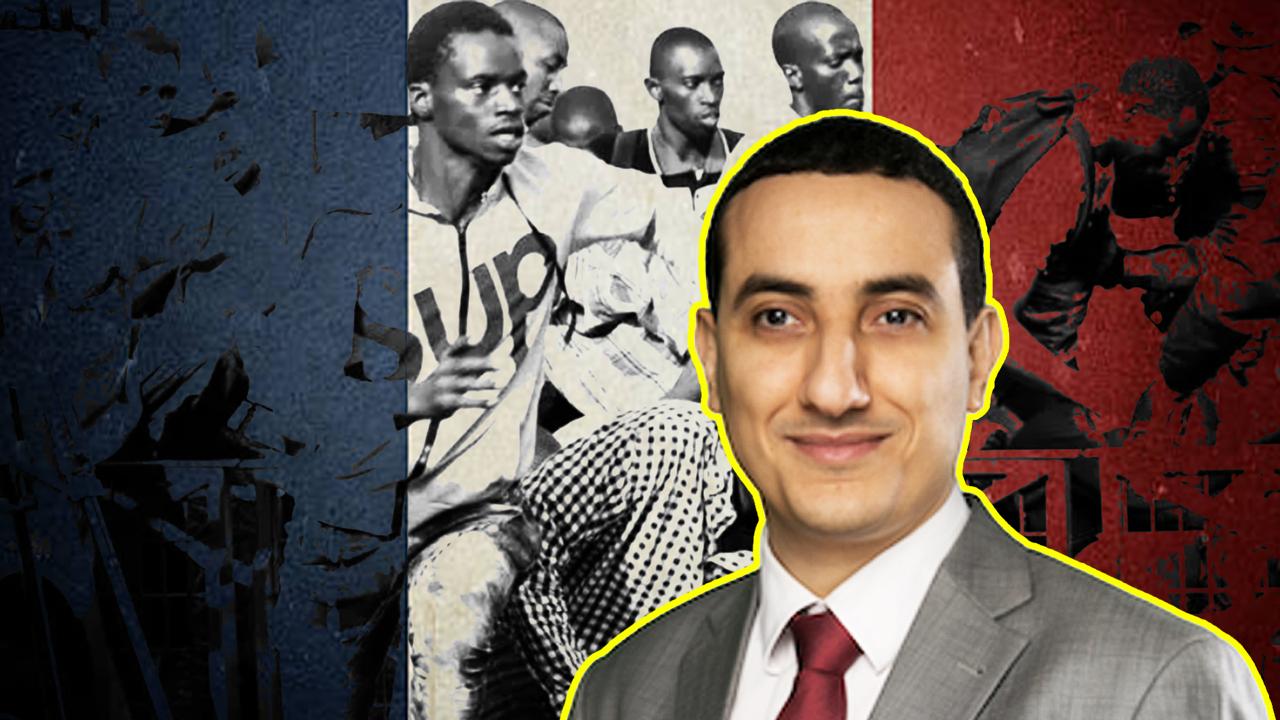
The mayor of Trappes, Ali Rabeh, is calling for a change in the law to criminalize those who claim that replacement immigration is occurring against the ethnic French population.
Rabeh, who holds dual Moroccan and French citizenship, suggests that the Constitution could even be amended to pass the draconian speech law.
On the same day he made this proposal, Green (EELV) parliamentarians, including deputies Sabrina Sebaihi and Steevy Gustave, filed related legislative proposals to strengthen sanctions against those discussing the Great Replacement or remigration.
Follow: @RMXnews
— Remix News & Views (@RMXnews) November 3, 2026Critics, including Reconquête party leader Éric Zemmour and others, call the measures an authoritarian assault on free expression that seeks to ban observation of well-documented population shifts rather than conspiracy theories alone.
The left is trying to capitalize on a shooting from Oct. 23, 2026, in Trappes and nearby La Verrière. Kevin T. killed Pengo Bossio Wangi and wounded seven others, reportedly targeting people of Muslim, African, or North African appearance. He told investigators he could no longer stand being “invaded.”
Prison for mentioning the Great Replacement
Mayor Ali Rabeh – of the Génération.s party and who holds dual Moroccan-French citizenship – responded on France Inter by arguing that existing hate-speech rules under the 1881 press law are insufficient. He proposed amending Article 24 to punish those who present groups, “by reason of their origin or belonging to a religion, an ethnicity or a supposed race,” as agents of a process of replacement of an “alleged native white French people” by immigration or the descendants of immigration.
Rabeh explicitly linked the shooter’s language to the Great Replacement, which was first described by Renaud Camus. He said the National Rally had “ideologically armed” the attacker. He suggested that, if necessary, the Constitution itself should be amended.
The same day, Green deputies Sabrina Sebaihi and Steevy Gustave deposited a bill in the National Assembly, and a parallel text was filed in the Senate by Akli Mellouli. The proposals would specify that provocation to discrimination, hatred, or violence can arise from remarks invoking “the replacement of one population by another or the necessity of a remigration” when they designate a group as a threat because of origin or real or supposed ethnic or national belonging.
Penalties would be aggravated for elected officials or candidates, resulting in up to three years’ imprisonment and a €75,000 fine.
Sebaihi framed the move on X:
Les mots tuent.
À Trappes, ils ont tué.
Avec Akli Mellouli et Steevy Gustave, nous déposons une proposition de loi contre les discours de haine raciste.
« Grand remplacement », « remigration » : ce ne sont pas des opinions, ce sont des munitions.
Leurs promoteurs doivent en répondre devant la loi.
— Sabrina Sebaihi (@SabrinaSebaihi) October 30, 2026The reaction from the right was pointed, with Éric Zemmour writing:
Le goulag est en marche. Voilà le projet de leur République socialo-islamique.
— Eric Zemmour (@ZemmourEric) October 30, 2026Other voices argued the proposals criminalize demographic reality rather than a supposed “conspiracy.”
Commentators noted that INSEE data show substantial foreign-national and immigrant shares in Trappes, at approximately 30 percent. However, the proportion of ethnic French is far lower than the data suggests, with INSEE refusing to publish statistics on second-generation migrants with French citizenship. In reality, most reports indicate that ethnic French are very much in the minority in the city.
Constitutionalists such as Benjamin Morel and Anne-Charlène Bezzina warned that the texts risk a disproportionate restriction on free expression, that existing incitement-to-hatred provisions already cover clear cases. Morel also writes that the Constitutional Council or European Court of Human Rights would likely strike down such a measure due to freedom of speech in Europe.
Camus says the Great Replacement is “not a theory”
Renaud Camus, the writer who coined the phrase, has continued to insist the underlying phenomenon is real and observable, distinguishing it from unfounded conspiracy claims.
In an interview released last week in the German newspaper Welt, he stated that the Great Replacement “is not a theory, but the name for a phenomenon that I consider the most important of our time. With this chrononym we can describe our era of the beginning of the 21st century to characterize the century as that of the Great Population Exchange, comparable to the Great War, the Great Depression, and the Great Plague.”
He further stated: “My opponents may reject the term, but they admit the fact. Even Jean-Luc Mélenchon speaks of creolization. Everyone admits that the composition of the population in France has changed.”
🇫🇷🚨 French far-left leader calls for the Great Replacement
Jean-Luc Mélenchon: “France is destined to be a Creole (mixed Black and French) nation and so much the better! Let the young generation do the replacement of the old… Each generation is a new people!"
— Remix News & Views (@RMXnews) February 7, 2025Remigration advocates view the legislative push as confirmation that authorities prefer to suppress discussion of the scale and consequences of post-war migration rather than address integration failures, security issues, or public opinion. They point out that the same political forces have, on other occasions, spoken positively of demographic “créolisation” or the “new France.”
The Great Replacement is also not merely a “lofty theory” discussed among a niche group of right-wingers, but a mainstream and recognized development by the French public. Polling shows that 60 percent of the French believe the Great Replacement is occurring, which involves the replacement of ethnic French people with people from Africa, Asia, and other countries.
Under such a law, even France’s most famed author, Michel Houellebecq, could face prison time if he were to call the Great Replacement a “fact” again, as he did in 2022.
Whether the proposals to criminalize discussions of the Great Replacement actually advance in a fragmented National Assembly remains uncertain. What is clear is that the left is actively preparing such measures, and should they gain power, many citizens, including politicians, could be headed to prison for simply describing a clear and undeniable statistical reality taking place across Europe.