Author: admin

  • Germany loses over 340,000 industrial jobs since 2019 but the trouble may only just be getting started

    Germany loses over 340,000 industrial jobs since 2019 but the trouble may only just be getting started

    The economic outlook for the German metal and electrical industries has grown increasingly critical, with employer groups warning that the current environment is not only “dramatic“ but that 300,000 jobs are at risk of disappearing. That enormous figure already comes after 300,000 jobs were lost since 2019, leaving employment in these industrial sectors at 3.8 million workers.

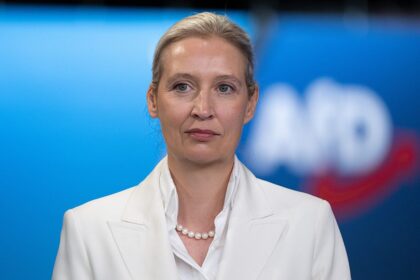
    Alternative for Germany (AfD) co-leader Alice Weidel has used the disastrous economic data to go on the offensive against the government of Friedrich Merz

    “According to a study by the consulting firm EY, more than 341,000 industrial jobs have been eliminated in Germany since 2019. Alone in the first quarter of 2026, employment fell by 2.3 percent. The relief measures and structural reforms announced by Federal Chancellor Friedrich Merz have thus failed to materialize,” she posted on X.

    “The ongoing loss of now over 341,000 industrial jobs is not a marginal cyclical phenomenon, but an expression of a profound failure of structural policy. While other economies are deliberately strengthening their industrial base and benefiting from global growth, Germany under the leadership of Friedrich Merz has further decoupled itself from the international upswing,” she continued.

    Weidel said there were no effective reforms in the works, but instead, “growth-hostile” frameworks are in place, which are accelerating production fleeing abroad.

    “While our own industrial location erodes, billions in funds are being misappropriated for projects abroad. A systematic misallocation of public resources at the expense of our own economy, which has nothing whatsoever to do with responsible economic policy anymore,” she concluded.

    However, the problems may only be beginning for Merz, with his government approval rating at rock-bottom levels and the AfD polling between 28 and 29 percent, making it the most popular party in the country by far.

    Gesamtmetall President Udo Dinglreiter indicated that the industrial sector is on the verge of significant workforce reductions and that hundreds of thousands more positions are at risk of being lost.

    “We are in danger of losing another 300,000,” he told German newspaper Handelsblatt.

    If that were to happen, it would represent the lowest employment levels in the electric and metal industrial sectors since Germany was reunited. Furthermore, these are well-paid jobs that are also fundamental to many other sectors, which could produce a domino effect.

    Dinglreiter is particularly focused on China, with the labor leader describing Chinese financial investments within the European Union as “worrying“ for the domestic economy.

    He noted that the bulk of these funds is being directed toward other EU member states rather than Germany, which does not foster local job creation but instead establishes new competitors operating with more favorable conditions and market access.

    To address this, the Gesamtmetall leader is urging the federal government to quickly execute a policy package aimed at restoring the nation’s economic competitiveness. Without such measures, he warned that jobs will continue to be cut, more processes will be relocated, and less taxes and social security contributions will be paid, initiating a severe downward spiral.

    Simultaneously, German mechanical engineering representatives are pressuring Economic Affairs Minister Katherina Reiche to adopt a firm position during her upcoming diplomatic mission to China. VDMA Chief Executive Thilo Brodtmann stated ahead of her departure that Reiche must make it unmistakably clear that Europe will no longer tolerate systematic distortions of competition.

    A similar mission to China, at the EU level, ended with little to show for it, as Remix News covered in an X post. During that trip, French President Emmanuel Macron essentially begged China for help, stating that European industry is facing a “life or death” struggle to survive.

    While Remix News has run numerous articles showcasing how China is pulling ahead in terms of innovation and competitiveness, German industry and labor leaders also point to unfair practices from Chinese companies.

    “An artificially low currency, excessive subsidies and politically motivated export controls are not trivial offenses. They endanger Europe’s industry,” said Brodtmann.

    However, these claims are not the full story. Germany and Europe also abandoned cheap energy from Russia, whereas China has had no such qualms about who its energy suppliers are. Perhaps even most importantly, China chooses to invest in its own citizens instead of importing mass amounts of mostly unskilled labor, which is the path Germany has chosen.

    The head of BYD, the automobile giant in China, has stated that they are so far ahead of European and other Western automakers because of their over 100,000 engineers, who are nearly all Chinese.

    “If we were to name our assets, I believe BYD’s greatest asset is its engineering team. We have 110,000 engineers, and that is BYD’s greatest asset,” Wang Chuanfu told Sina.com.

    “My company’s new energy vehicles, both in terms of technology and industrial chain, are approximately three to five years ahead of the world. We should seize this window, adhere to open innovation, promote higher levels of opening up with higher-level green technologies and products, and expand overseas through complementary advantages and open cooperation,” he said, as quoted by BJNews.

    Regardless of the reasons behind Germany’s ongoing industrial collapse, Merz has no easy solutions, and besides the AfD, he is also taking flak from left-wing parties.

    Political figures from the Green Party have similarly demanded robust action from the government. This political pressure is arising amid intensifying competition for domestic manufacturers, a trend underscored by recent bilateral trade statistics.

    During the first quarter, German imports originating from China climbed by 6.4 percent to reach €43.5 billion compared to the previous year, whereas German exports heading to China dropped by 12.5 percent to €18 billion.

    “China is attacking German industry, mechanical engineering and small and medium-sized businesses head-on,” said Green Party parliamentary group deputy Andreas Audretsch.

  • Italy: Woman kidnapped for 3 days and gang raped non-stop, 5 African migrants arrested in Rome

    Italy: Woman kidnapped for 3 days and gang raped non-stop, 5 African migrants arrested in Rome

    A 32-year-old Colombian woman was kidnapped, threatened with death, drugged, and gang raped for three days in a building occupied by undocumented non-EU migrants, with five migrants now under arrest in Rome, Italy. The woman only managed to escape on the third day after running half-naked from the abandoned building.

    Rome police say the woman was held captive for three days in an abandoned building on Via Tallone, during which she was reportedly subjected to multiple gang rapes under the threat of death.

    According to Secolo d’Italia, authorities arrested five migrants and charged them with kidnapping, gang rape, and other offenses. They have all been named by Italian media: 43-year-old Malian Harouna Traore, 29-year-old Gambian Saidykhan Lamin, 38-year-old Gambian Karamba Kanteh, 29-year-old Nigerian Isibor Wisdom, and 39-year-old Nigerian Paul Nwabueze.

    During a raid on the building, police released images of various men who were arrested and detained in the building, which is covered in trash.

    Additionally, 11 other individuals from non-EU countries who were found inside the same property have received deportation orders. They are being detained at repatriation centers in Ponte Galeria, Palazzo San Gervasio, and Bari.

    According to findings detailed by the Flying Squad’s IV Section, the victim is a 32-year-old Colombian national who had arrived in Rome roughly 10 days prior to the incident. A statement from police headquarters notes that on the evening of May 19, the young woman was outside a restaurant when a man approached her, and she indicated to him that she wished to purchase hashish.

    The man convinced her to go with him to pick up the drugs, leading her on a 30-minute walk to a van where she was forced inside and driven to Via Cesare Tallone.

    This marked the beginning of her horrifying ordeal, as she was imprisoned against her will in the abandoned property and subjected to repeated sexual assaults by multiple perpetrators.

    Investigators state that five specific suspects took turns assaulting her over a 36-hour period while threatening and terrorizing the woman.

    Furthermore, the victim was allegedly incapacitated by narcotics that were provided by the men in the building, which severely restricted her ability to resist or flee. Her captivity ended on the third day when, following another assault, she managed to break free, run into the street half-naked, and seek help from a pedestrian who contacted emergency services.

    Emergency responders transported her to Casilino hospital, where medical examinations revealed physical injuries consistent with sexual assault, alongside evidence of narcotic substances in her system.

    The investigation, overseen by the Public Prosecutor’s Office at the Court of Rome, then worked to find the building. Officers executed a raid on the abandoned complex to gather evidence and perform identity checks.

    A total of 22 undocumented non-EU citizens were detained and taken to the police facility on Via Patini.

    Following background checks, 11 of these individuals received deportation orders and were transferred to detention facilities in Ponte Galeria, Palazzo San Gervasio, and Bari. The five primary suspects were among this group and were positively identified by the victim through a photographic lineup.

    The investigation continues; however, it is far from the only such case in recent years in Italy.

    Just last month, another harrowing gang rape case hit Italy, with seven suspects, all with foreign backgrounds, charged for raping a 23-year-old victim in the Cesena countryside and filming the crime.

    The victim was allegedly abused and filmed by the seven youths during a drug-fueled party in early April. The suspects, described as being “born in the city but of African and Asian origins,” are aged between 19 and 25.

    They reportedly took advantage of the victim’s state of intoxication, and the films they recorded on their phones may now be the deciding piece of evidence in their case.

    Another case about six months ago also sparked international headlines. Rome police arrested three Moroccan men accused of dragging an 18-year-old girl out of her boyfriend’s car and gang raping her while restraining her partner and forcing him to watch.

    Investigators say the woman was attacked on the evening of Oct. 25 after a migrant gang surrounded the parked car where she and her 24-year-old boyfriend had stopped late at night in Tor Tre Teste park in the Italian capital.

    However, these are only two additional examples among many in recent years. Remarkably, 43 percent of all sexual crimes in Italy are committed by foreigners despite making up a much smaller portion of the population.

  • Germany: Left Party wants voting rights for all foreigners who have lived in the country for 5 years

    Germany: Left Party wants voting rights for all foreigners who have lived in the country for 5 years

    Germany’s Left Party is pushing for a major overhaul of the German electoral system by proposing that foreign residents without a German passport be granted voting rights after five years of legal residency.

    To achieve this, the Left faction in the Bundestag has submitted a formal application demanding that anyone residing legally in the country for at least five years be permitted to vote in federal elections, irrespective of their nationality.

    The move would serve as a major electoral boost for left-wing parties, with foreigners overwhelmingly voting for these parties when given the opportunity. Data from the Federal Statistical Office cited in the motion reveals that over 14 million people living in Germany in 2025 lacked German citizenship, a figure that includes roughly 5 million EU citizens. This foreign population has resided in the country for an average of 15 years. In other words, this pool of potential voters for the left is massive.

    The initiative also urges the federal government to collaborate with individual states to implement identical changes for state and municipal elections, according to German news outlet Tagesspiegel. The party argues that the current system suffers from an expanding democratic deficit due to the fact that non-German nationals are systematically blocked from participating in federal, state, and most local elections.

    The Left finds this exclusion “intolerable, “ given the democratic principles outlined in the Basic Law, arguing that it ignores the reality of Germany as an “immigration society.”

    Addressing potential legal hurdles, the Left Party points out that while the Federal Constitutional Court blocked voting rights for foreigners back in 1990, this stance deserves reconsideration due to shifting global dynamics and the fact that EU citizens have since gained local voting rights. They also highlight a linguistic nuance in the constitution, observing that the Basic Law uses the word “people“ in critical sections rather than explicitly restricting terms to “the German people.”

    The proposal, which is officially titled “Introduce voting rights for foreigners,” was initiated by a group of lawmakers including Ferat Koçak and the wider Left Party parliamentary group, with signatures from group leaders Heidi Reichinnek and Sören Pellmann.

    This motion continues a long-standing political campaign by the Left Party, which references its own 2014 draft legislation as part of a multi-year effort to expand suffrage. Recently, Elif Eralp, the party’s top candidate in Berlin, echoed these demands.

    This has not even been the most radical demand from the Left. In 2023, then German Interior Minister Nancy Faeser proposed to give asylum seekers the right to vote in local state elections after just six months in Germany. The program, if implemented, would have translated into millions of new voters overnight.

    At the time, the Alternative for Germany (AfD) party was immediately critical of what it described as an attempt to stack the vote with migrants, releasing a statement that read: “Interior Minister Faeser (SPD), as the top candidate in the Hessian state elections, is campaigning for local voting rights for all people who have lived in Germany for ‘longer than six months.’ This means that supposed ‘refugees’ from Afghanistan, Syria or Turkey would also be allowed to vote – even without German citizenship.

    “The German passport is thus turned into a piece of junk. But above all: Faeser and the SPD want to attract people who have no connection to Germany at all as new groups of voters. This is not surprising, because the locals who are ridiculed as ‘non-migrants’ are running away from (Chanceller Olaf) Scholz’s SPD.”

    Under current constitutional rules, federal voting rights are restricted to German citizens aged 18 and older, while Berlin state elections require voters to be at least 16. The only current exception exists at the municipal level, where EU citizens can vote for district parliaments.

    In response to such demands, the Federal Ministry of the Interior website states that “Migrants living in the Federal Republic of Germany for many years have the opportunity to become naturalized citizens under German citizenship law. In doing so, they also acquire the right to vote.”

    However, the Left faction argues this pathway is insufficient and the requirements for citizenship are too burdensome.

    The right has long contended that the left is using mass immigration as a tool to solidify political power. Foreigners are notoriously prone to voting for left-wing parties, with the logic being that more left-wing policies means more immigration for their fellow countrymen and more social welfare benefits for them and their families.

    Many of these foreign groups often tend to vote quite conservatively in their own nations while shifting to the left in Western nations, such as the case of the Turkish community in Germany, which has approximately 1.5 million individuals with dual citizenship between Turkey and Germany. Half of these Turks vote for strongman Islamist leader Recep Tayyip Erdoğan in Turkish elections and then shift their vote to the left in Germany.

  • Vox leader calls for Spain’s ‘mafia’ socialist government to be arrested as Civil Guard searches governing party’s headquarters

    Vox leader calls for Spain’s ‘mafia’ socialist government to be arrested as Civil Guard searches governing party’s headquarters

    Vox leader Santiago Abascal has called for Spain’s Socialist leadership to be arrested and brought before the courts after Civil Guard officers returned to the party’s national headquarters in Madrid as part of a National Court investigation linked to former Socialist Party activist Leire Díez.

    “The Central Operational Unit of the Civil Guard has returned to the Ferraz headquarters, that is, the headquarters of the Socialist Party. Not a week goes by, not a day goes by, not even an hour goes by, without us learning new details about the Sánchez and Zapatero mafia, the Zapatero and Sánchez mafia, that has governed Spain for eight years,” Abascal said.

    “They must be arrested and brought to justice, and the Spanish people must know that all those who are still defending and justifying them from various national and international positions are doing so only because they are part of the same mafia,” he added.

    The intervention at the Socialist Party’s headquarters on Ferraz Street was ordered by a National Court judge as part of a separate investigation into the so-called Leire case. The case centers on Leire Díez, a former Socialist activist described in Spanish media as a fixer linked to the party, and also involves Vicente Fernández Guerrero, the former president of the State Society of Industrial Holdings, known as SEPI.

    As part of the same proceedings, Civil Guard officers also carried out searches and seizures at the Madrid homes of former Socialist Party figures Gaspar Zarrías and Santos Cerdán, as well as businessman Javier Pérez Dolset. The Socialist Party’s manager, Ana María Fuentes, has also been charged.

    The developments came as Prime Minister Pedro Sánchez was in Rome for a meeting with the Pope, an engagement that was quickly overshadowed by the deepening judicial pressure on his party and on former Socialist prime minister José Luis Rodríguez Zapatero, who last week became the first former head of government in Spain’s democratic era to face criminal charges. These pertain to allegedly misusing funds to bail out an airline during the Covid-19 pandemic, in addition to alleged ties to criminal organizations, including a money-laundering network.

    Sánchez used his press conference at the Spanish Embassy to the Holy See to repeat his support for Zapatero.

    “Full cooperation with the justice system, full respect for Mr. Zapatero’s presumption of innocence, and my full support for President Zapatero,” Sánchez said.

    “After what I have read, and what I have been able to discuss with people who know much more about the law than I do, there is no reason to change that position,” he added. “I have had the opportunity to review the court order, and through the media, the extensive summary, and frankly, I said it in the Spanish Parliament, and I reaffirm it here today.”

    Sánchez said he had learned about the Civil Guard’s presence at Socialist Party headquarters only after leaving the Vatican. “It’s not a search, it’s a request, and I think it’s important for citizens to know this. The Civil Guard makes many such requests to institutions,” he told reporters.

    The prime minister insisted he was not minimizing the investigation, while arguing that his party would cooperate with the courts and respond if wrongdoing was established.

    “I also want to say that, if we are ultimately talking about this case of former activist Leire Díez, decisions were obviously made immediately when this case came to light more than a year ago,” he continued. “If there is any wrongdoing, we will act with the same forcefulness as we have before.”

    Asked about the indictment of party manager Ana Fuentes, Sánchez described her as “a woman who has meticulously managed the PSOE’s accounts. There has been a lot of speculation, a lot of fake news … I insist, I’m not downplaying its importance or seriousness, but I want to make it equally clear that the moment new information comes to light, the PSOE will act decisively.”

    “We are a party that has nothing to hide, and when we have to act, we act, and of course, we don’t tolerate these kinds of situations,” Sánchez added, as cited by El País.

    Despite the escalating pressure, Sánchez again ruled out calling early elections, saying he intended to remain in office until the end of the parliamentary term.

    “I cannot call elections for partisan interests; what is important is the general interest of the citizens,” he said.

  • Poland: 3 Uzbeks arrested in Lubin for kidnapping and beating victim before abandoning him in a forest

    Poland: 3 Uzbeks arrested in Lubin for kidnapping and beating victim before abandoning him in a forest

    Police officers from the Lubin district police station have detained three citizens of Uzbekistan who allegedly threatened an acquaintance with a knife, forced him into a vehicle, and drove him out of the city to a forest.

    The victim, a 22-year-old citizen of Tajikistan, was beaten and left wounded in the forest before he managed to return to the city on his own, covered in blood. Law enforcement authorities arrested the three suspects, aged 22 and 23, on the same day the incident was reported.

    The investigation began last week when the young Tajik citizen reported the assault and unlawful deprivation of liberty to the District Police Headquarters in Lubin. The victim explained that he was accosted by the perpetrators while he was at work, according to TVP3.

    Junior Assistant Renata Ślęk provided details on the sequence of events, stating: “The perpetrators threatened him with a knife, forced him into a car with them, and then drove him out of town. There, the 22-year-old was beaten. He returned to the city on his own.”

    Following the report, Lubin police officers quickly located and detained the three Uzbek citizens suspected of orchestrating the attack. The detainees were processed into a police cell and subsequently transferred to the prosecutor’s office to face formal charges.

    The three suspects now face legal proceedings for unlawful deprivation of liberty, forcing another person to take a specific action, participating in a fight, and making criminal threats.

    Under current legal guidelines for the crimes they are suspected of committing, the men could face up to five years in prison.

  • First Black Czech MP released after serving 2 years for raping two women and attempted rape of a third, but another trial awaits

    First Black Czech MP released after serving 2 years for raping two women and attempted rape of a third, but another trial awaits

    Once a rising star of the Czech political scene and hailed as a sign of diversity, the rape cases of former MP Dominik Feri involving young women shocked the country in 2021. Now, Feri has been released after serving two years in prison, but his legal troubles may not be entirely over.

    The Teplice District Court granted the conditional release of former TOP 09 MP Feri, allowing him to walk free from Teplice prison. The decision follows a successful appeal to the Ústí nad Labem Regional Court, which had previously overturned a lower court’s refusal to grant him parole.

    The release was made against the protests from the deputy representative of the victims, who strongly opposed Feri’s release, citing the ongoing trauma of the women involved, according to Czech news outlet SZ.

    “They are afraid that he will continue to hurt them, mainly through social networks,” said lawyer Adéla Hořejší, who represents the victims.

    Feri, who entered prison at the end of May 2024 to serve a three-year sentence for two rapes and one attempted rape, was released with the consent of both the state prosecutor and a prison psychologist. The psychologist evaluated Feri’s personality as balanced and determined that he poses no danger to society.

    The three rape cases

    In 2016, as a law student, Feri groped a 17-year-old girl in his Prague apartment and demanded sex. The victim subsequently lost consciousness for unknown reasons, during which Feri had sex with her. In a separate incident that same year, Feri threw a 20-year-old woman onto a bed, pulled down her pants, and forced sexual intercourse despite her explicit refusal.

    At a February 2018 event while working as an MP, a young woman seeking an internship met Feri at the Chamber of Deputies. Feri proceeded to grope and attempt to kiss her inside a building elevator and the Chamber kitchen.

    Throughout his trial, Feri maintained that the encounters were consensual and accused the victims of fabrication. The judiciary firmly rejected his defense. Libor Vávra, chairman of the Prague Municipal Court’s senate during the appeal, emphasized that the former lawmaker deliberately abused his authority, alongside the vulnerability and defenselessness of the young women.

    Rising political star

    The former politician was once named eighth out of 28 politicians in Politico’s Class of 2019, but the details of the various rape cases scuttled his political career.

    As Remix News previously reported, Feri had over 700,000 followers on Instagram at one time, and in 2016, he described himself as “crown sunshine man” in the media and supported the admission of refugees to Czechia. However, at the time, he insisted he would offer no compromises toward refugees who come to Czechia and are found guilty of rape.

    Politico gushed over Feri in 2019, naming him a “dreamer” and one of the “28 people who will shape Europe in the year ahead,” with the publication writing: “Feri isn’t just the youngest parliamentarian in the country’s history. He’s the first black one — and conspicuously so. He wears his hair in a bushy afro and enjoys playing Fats Waller-style jazz piano in local clubs.”

    Politico also wrote about the alleged troubles he faced as a Black Czech politician, writing: “It’s not easy being young and black in the Czech Republic, where the number of residents of African descent remains minuscule and racial intolerance is widespread.”

    Feri also told Politico that he faces “constant mockery and threats by some people. Or, even worse, many people won’t even take you seriously.”

    Feri says he learned his lesson

    When addressing the court, Feri stated that considerable time had passed since his actions and that his priorities have changed. He expressed a desire to focus on starting a family rather than pursuing random encounters.

    “Lessons from punishment were essential,“ he said. However, during the actual trial, Feri was known for his combative defense and lack of remorse, according to the judge at the time.

    Feri, a trained lawyer holding a JUDr. degree, built his defense on the assertion that all sexual encounters in his Žižkov apartment were entirely consensual and devoid of violence. He routinely disputed the consistency of the victims’ statements, noting minor discrepancies in their descriptions of his apartment layout and the Chamber of Deputies’ kitchen, where he assaulted a congressional intern. Feri went as far as to argue that one victim was in “synergistic contact” with him and publicly questioned the state’s case:

    “Where was the violence I supposedly used?“ Feri asked two years ago during his speech before the court.

    Throughout the legal proceedings, the prosecution criticized Feri’s treatment of the victims, which included exposing the name of one witness and laughing loudly from an adjoining room while another testified.

    “He laughed so loudly that it could be heard in the courtroom. Two victims mentioned this as a significantly unpleasant circumstance during their testimony. The defendant has the right to a defense, but not in such a blunt and insensitive way,” stated Judge Lenka Hájková of the District Court for Prague 3, who found Feri guilty along with two other colleagues.

    Prosecutor Aleš Cimbala condemned these actions before the sentencing court:

    “If he explained it with indiscretion from his youth. But we don’t see any self-reflection here, no reaction to the fact that the criminal proceedings had any educational effects,“ said Cimbala, labeling Feri’s courtroom behavior as a “manifestation of theatrical demeanor.”

    Feri additionally claimed that the victims were lying to avenge unrequited love:

    “They lie repeatedly and intentionally, even in court, all with a straight face,” claimed Feri at the time.

    The appeals panel, led by Prague Municipal Court Senate President Libor Vávra, systematically rejected Feri’s defense strategy. The court validated the credibility of the victims, noting that expert opinions confirmed they suffered severe psychological trauma and had confided in loved ones immediately following the assaults.

    Further legal problems

    Despite his release from the primary three-year sentence, Feri recently faced a separate trial at the District Court for Prague 3 regarding a 2015 incident. A woman alleged that when she was 17, Feri removed his condom during consensual intercourse without her permission – an act commonly referred to as “stealthing.”

    The case was initially closed by police, but the Constitutional Court intervened, ruling that non-consensual condom removal could be legally classified as rape. However, the District Court for Prague 3 acquitted Feri in this matter, ruling that the actions described in the indictment did not constitute a criminal offense. The judgment is not final and the prosecutor may still appeal the case.

    Feri has consistently maintained his innocence regarding this second allegation:

    “I am announcing that the accusation is not based on the truth. I feel innocent,“ Feri said in court.

    Feri entered the Czech political landscape in 2014 as an 18-year-old student running for TOP 09 in the Teplice municipal elections. He quickly ascended to become a city representative, a municipal councilor, and eventually an MP.

    His political career collapsed in May 2021 when investigative reports by Deník N and A2larm published the compiled testimonies of multiple women alleging sexual assault. Following the expose, Feri resigned his parliamentary seat and withdrew from the upcoming legislative elections.

  • Slovaks fear Hungary’s political shift will strain relations between the two countries

    Slovaks fear Hungary’s political shift will strain relations between the two countries

    More Slovaks expect Hungary’s post-election political shift to damage relations with Slovakia than improve them, according to a new representative survey conducted by the AKO agency for TASR.

    The poll found that 40.2 percent believe the change in Hungary will have a negative effect on ties between the two neighboring countries. That includes 5.8 percent who expect a very negative impact and 34.4 percent who expect a somewhat negative one.

    By contrast, 34.9 percent of respondents said they believe the political change in Hungary will improve relations with Slovakia. Of those, 3.1 percent expect a very positive effect and 31.8 percent expect a somewhat positive one.

    Among Slovak respondents, 39 percent expected relations to worsen, while 35 percent expected them to improve. Among respondents of Hungarian nationality, 41 percent predicted a worsening of relations and 39 percent expected an improvement. The most pessimistic group was respondents of other nationalities, among whom 46 percent expected a negative impact and only 25 percent expected a positive one.

    The most pessimistic voters were supporters of the nationalist right-wing Slovak National Party, with 63 percent expecting relations to deteriorate and 20 percent expecting them to improve. They were followed by voters of the populist conservative We Are Family movement, where 61 percent expected a negative impact and 21 percent a positive one.

    Among supporters of the right-wing Republika party, 53 percent expected relations to worsen and 30 percent expected them to improve. Voters of Prime Minister Robert Fico’s left-wing nationalist Smer-SD were also more pessimistic, with 51 percent expecting a negative impact and 28 percent expecting a positive one.

    Negative expectations also slightly prevailed among voters of the ethnic Hungarian Hungarian Alliance, at 45 percent to 37 percent, as well as among voters of the conservative Slovakia Movement, at 44 percent to 40 percent. Supporters of the liberal SaS party were also more negative than positive, at 44 percent to 36 percent.

    The expectation of an improvement in relations was stronger among voters of several centrist, conservative, and liberal opposition parties. Among supporters of the centrist pro-Western Democrats, 57 percent expected a positive impact and 36 percent expected a negative one. Voters of the Christian democratic KDH were also optimistic, with 50 percent expecting relations to improve and 32 percent expecting them to worsen.

    Supporters of the liberal, pro-European Progressive Slovakia party were narrowly positive, with 47 percent expecting an improvement and 42 percent expecting a deterioration. Voters of the center-left Hlas-SD party, a Smer breakaway that is now part of Slovakia’s governing coalition, were also more optimistic, with 47 percent expecting a positive impact and 32 percent expecting a negative one.

    Following Péter Magyar’s electoral victory in Hungary, ending 16 years of a Viktor Orbán-led government, Slovak Prime Minister Robert Fico called for a continued alliance with Budapest and a strengthening of the Visegrád Group.

    “I want us to have good neighborly relations with our neighbors. We have a proverb that says that a bad neighbor is worse than a house on fire,” he said earlier this month. “I don’t know Péter Magyar personally yet, but we must strive to understand each other so that relations between Hungary and Slovakia are at the same level as during the time of Orbán.”

    “We can only congratulate the winner of the Hungarian elections. We will be happy about the cooperation,” he added.

  • Will Chancellor Merz fall soon? The winds of change are coming to Germany as AfD soars higher

    Will Chancellor Merz fall soon? The winds of change are coming to Germany as AfD soars higher

    The Alternative for Germany (AfD) is at an all-time high: The party is already polling at 29 percent in Germany, while Friedrich Merz’s government is in a deeper and deeper crisis. According to Bence Bauer, the director of the German-Hungarian Institute for European Cooperation, the German political “firewall” may even collapse in the fall, and it is also possible that the AfD will achieve a federal breakthrough after taking power at the state level. This means Germany may be saying goodbye to Friedrich Merz sooner rather than later.

    Bauer, who spoke to Hungarian news outlet Mandiner, referenced several recent polls, all showing a similar trend: Support for AfD, which rose to an all-time high. Measurements by INSA and Forsa both indicated record high figures, with one institute measuring the party at 29 percent and the other at 28 percent. At the same time, research also shows that support for the government coalition led by Friedrich Merz is weakening week by week.

    Not only is the AfD growing, but disappointed Social Democrat (SPD) and CDU voters are sharply distancing themselves from their old party, according to the expert.

    “The government was shown a red card, the radical right is advancing,” said Bence Bauer.

    Bauer said that an early parliamentary election was held in the Federal Republic of Germany on Feb. 23, 2025, in which the CDU/CSU party alliance still achieved 28 percent, while the AfD won 20 percent at the time. The latter was considered a record even at that time, but since then, the political mood has changed significantly.

    According to Bauer, the poor performance of the federal government led by Friedrich Merz is behind the current processes. As he put it, only 15 percent of Germans consider the work of the federal government to be good, while 84 percent think things are going in the wrong direction.

    In his opinion, as a result, the AfD has strengthened significantly, which some surveys already put at 29 percent, nine percentage points higher than what the party achieved during the elections. At the same time, support for the CDU fell from 28 percent to 22 percent.

    The expert emphasized that all of this is still poll data and not actual election results. As he said, elections must be won, not polls. However, he added that if the German government continues to perform so poorly, the AfD may even continue to strengthen. 

    In German politics, he said, many believe that the traditional political order can be completely overturned if the AfD reaches 30 percent support, while the CDU/CSU sinks to around 20 percent.

    The AfD is united

    Bence Bauer also spoke about the fact that the unity within the AfD is currently clearly strengthened by its success. As an example, he mentioned Saxony-Anhalt, where the party’s support already stands at 42 percent. According to him, in addition to such results, few people question the policy of the current party leadership. At the same time, he believes that if the AfD really wants to govern, it will be forced to move to the center, to represent a more moderate tone and politics.

    He emphasized that it is easy to make radical or even unfeasible proposals in opposition, and more radical actors can still be found in the AfD. He claimed Björn Höcke from Thuringia fit this category, but noted that the party is extremely heterogeneous, stating that its supporters include those with more conservative values as well as those with more liberal and far-right tendencies. 

    He said that these politicians are held together by success and growing support.

    According to Bauer, the situation would change radically if the party were to take a government position. Then it would no longer be possible to pursue “wish politics,” but would have to adapt to administrative and political realities. He believes that if, for example, in Saxony-Anhalt, the AfD were to enter the government or even form a state cabinet alone, then in practice it would have to pursue a much more traditional, pragmatic policy. According to him, the party’s current popularity stems in part from being in opposition everywhere and rejecting many of the things that the German political mainstream has represented in recent years.

    He described the situation as the AfD currently being in political quarantine, which means that for many, it plays the role of “forbidden fruit.”

    Weidel is becoming increasingly popular in Germany

    The expert also addressed AfD co-leader Alice Weidel’s personal popularity. He recalled that according to one survey, 33 percent of voters would choose her as chancellor, while only 22 percent would support Friedrich Merz.

    Bauer called this a special situation. According to him, Merz’s support is practically the same as the current support of the CDU/CSU, which he believes is a particularly weak figure for an incumbent chancellor.

    In the case of Weidel, on the other hand, she personally seems more moderate than her party itself. According to Bauer, Weidel represents a more middle-of-the-road policy, which is why she is not only acceptable to AfD voters but is also able to appeal to supporters of other conservative or smaller parties.

    Bauer believes that she can even get voters from supporters of the FDP or other smaller conservative formations, and there may even be those from the Sahra Wagenknecht Alliance who would consider her acceptable as chancellor under the circumstances.

    Fateful state elections are coming

    Voting will be held in Saxony-Anhalt on Sept. 6, and after that, there will be elections in Berlin and Mecklenburg-Vorpommern. According to Bauer, these elections may even shake the stability of federal politics.

    He pointed out that in Saxony-Anhalt, the AfD currently stands at 42 percent, while the CDU enjoys 24 percent, the Left 13 percent, and the SPD only 6 percent. This would give a total of 43 percent to the three other parties combined, compared to 42 percent for the AfD.

    Bauer emphasized that in a proportional election system, a party can obtain an absolute majority if it is stronger than all other parties that enter the parliament combined. In his view, the AfD is already very close to this situation.

    He added that if the SPD were to drop out of the state parliament, it would further ease the situation of the AfD. Moreover, according to him, it is not even impossible for the party to obtain an absolute majority, but even if this did not happen, he sees that the AfD could form a minority government with the support of some CDU representatives or through ad hoc voting.

    Bauer said he believes an AfD-led or fully AfD government will be formed in Magdeburg from September. He adds that with the current political balance of power, it is no longer a realistic scenario for all parties to unite against the AfD with the CDU leadership.

    The federal government may fall

    According to Bauer, an AfD victory in Saxony-Anhalt would have serious consequences at the federal level as well. He said that in this case the so-called “firewall policy,” that is, the strategy that excludes cooperation with the AfD, would collapse.

    Bauer also noted that in September 2024, the AfD already achieved strong results in Saxony with 30 percent and Thuringia with 33 percent. Even then, this seriously shook the traffic light coalition led by Olaf Scholz, which collapsed two months later.

    Now, however, Bauer stressed: “We are talking about an even stronger AfD and even weaker government support than under Olaf Scholz.”

    Therefore, according to Bauer, it is easy to imagine that after a possible breakthrough in Saxony-Anhalt, there will also be a “tabula rasa” in federal politics. According to him, either the CDU will try to continue governing alone without the SPD, or early elections may take place, as a result of which a completely new federal government may be formed in Germany by the spring of 2027.

    When asked whether Merz’s government could take measures to reverse the current trend by autumn, Bauer replied that he does not consider this realistic. 

    According to him, while Merz sees Germany’s problems accurately and diagnoses the country’s situation correctly, recognition alone is not enough.

    Bauer said it may be enough for a political analyst to understand the problems, but a chancellor must also act. However, according to the expert, there is currently neither the political will nor an adequate majority for this. According to him, the CDU/CSU coalition partner, the SPD, does not support the deep reforms that are needed.

    He cited the issues of the labor market, the social welfare system, infrastructure, and migration as examples. In his opinion, only a wider parliamentary majority, even including the AfD, would be able to bring real changes in these matters. However, as he emphasized, the Catch-22 trap is present, with other parties still not willing to cooperate with the AfD.

    Bauer finally mentioned that “Friedrich Merz also tied his own political future to the fact that he does not cooperate with the AfD in any way. Therefore, if another political constellation were to emerge in Germany in the future, the new decisions would probably no longer be implemented under the chancellorship of Merz, but under the leadership of another CDU or even a completely different political actor.”

  • German taxpayers bled dry: Mass migration cost €40 billion in 2025

    German taxpayers bled dry: Mass migration cost €40 billion in 2025

    Migrants cost German taxpayers — just at the federal level — €24.8 billion in 2025, according to new data in the “refugee costs report” from the German Federal Ministry of Finance. However, the true sum is much higher.

    The €24.8 billion is strictly the federal bill. The actual, combined national cost of migration for Germany is that €24.8 billion plus the massive, separate billions that the individual states and municipalities had to pull from their own local tax revenues to cover their own deficits brought on by mass immigration.

    Welt notes that the total figure is indeed much higher, since it does not include states and local communes, but Welt does not provide this combined data.

    Nevertheless, previous years indicate that this number is at least €15 to €20 billion. That means any total figure is likely well over €40 billion, but as in previous years, it may actually go as high as €50 billion.

    The total costs cover several areas, including the federal government’s contribution to the refugee and integration costs of states and municipalities. One controversial issue is exactly how much money the federal government is transferring to the states and municipalities, which they argue is not enough to cover all their costs.

    Essentially, the federal government only pays out a flat rate per initial asylum application, amounting to €7,500 from the federal government, allocated via a modification in the VAT distribution. This advance payment reached €1.25 billion for 2025. Additionally, the report assumes that the federal government holds a claim for repayment from the states totaling €250 million for 2025.

    However, this only covers a fraction of the cost. The states indicate that the total costs in the area of flight and migration are significantly higher than the VAT resources available to them on the basis of the flat rate.

    Of course, all of these expenses only cover specific areas like housing, direct social benefits, and integration courses. The true cost is still far higher than €40 billion to €50 billion.

    The costs, for instance, do not cover expenses associated with the substantial foreign prison population. They also do not cover the need for the vastly increased police forces and counter-terrorism efforts. There are also “gray areas” that lead to other hidden taxes on Germans brought on by mass immigration. For instance, mass immigration has led to vastly higher housing prices, more road traffic, crowded hospitals, and longer wait times for medical treatments.

    Germans are even paying higher health insurance premiums now due to mass immigration.

    The head of the National Association of Statutory Health Insurance Funds (GKV-Spitzenverband) has repeatedly criticized the federal government for creating a massive multi-billion-euro deficit that forces them to raise premiums, with the core of the complaint revolving around “non-insurance benefits.” These are social welfare benefits mandated by the government that are paid out to people who have not paid regular insurance contributions into the system. This includes long-term unemployed citizens and refugees.

    When asylum seekers first arrive in Germany, they are not members of the statutory health insurance system. Under the Asylum Seekers Benefits Act, their healthcare costs are covered, with local municipalities and state social offices paying their bills. 

    The financial friction begins once a migrant’s asylum application is approved, or if they have been in the country for 36 months without a final decision. At this point, they transition into the standard welfare system, known as citizen’s money.

    Once on welfare, they are fully integrated into the statutory health insurance system. This is where the GKV-Spitzenverband argues the math breaks down, with the government only paying €108 per person per month for welfare recipients, the majority of which are migrants and those with a migration background, when the care actually costs between €300 and €350 a month.

    This has resulted in a multi-billion euro deficit, which the insurance companies say now needs to be passed on to Germans actually paying for their health insurance.

    In short, Germans are being squeezed from all sides due to mass immigration, and despite claims that foreigners would pay the pensions of Germany’s aging population, this is clearly unrealistic. Instead, Germany’s elderly may now be expected to work even longer, with a strong movement in the government to raise the retirement age to 73.

  • Great Replacement fears in Belgium: 56% of Flemings are afraid they are being slowly replaced by foreigners

    Great Replacement fears in Belgium: 56% of Flemings are afraid they are being slowly replaced by foreigners

    A major social study commissioned by VRT, known as the “Photo of Flanders,” reveals that a majority of Flemish people are afraid they are being slowly replaced by migrants, with this study now joining similar ones in France and Germany, which reveal serious fear across Europe about the ongoing Great Replacement.

    The VRT survey shows that 56 percent of respondents agree with the statement: “I am afraid that Flemish people are slowly being replaced by migrants/people from abroad.”

    Within this category, individuals aged 45 to 64 score at 58 percent, while those over 65 score at 59 percent. Teenagers between 12 and 17 years old also show a high level of agreement at 58 percent.

    The study also showed that 52 percent of Flemish people are afraid of a mosque being built in their neighborhood. Only 23 percent of Flemish people explicitly say they would be open to a mosque where they live.

    Notably, 22 percent of people who say they have no fear of being replaced by migrants also say they would not like to have a mosque in their neighborhood.

    According to VRT, the study shows that the fear that “Flemish people will be replaced by migrants” remains great.

    Belgium has also been actively erasing traditional signs of Christianity, such as renaming Christmas markets into “winter markets,” which the VRT study indicates has led to divisions in society, especially between older and younger generations.

    Discussions surrounding inclusive naming conventions also generate pushback. A majority of Flemish people, at 57 percent, maintain that a Christmas market should simply remain a Christmas market. Resistance to neutral terms like winter market is highest among older demographics, with 64 percent of 45-to-64-year-olds and 67 percent of those over 65 opposing the change. This opposition drops among younger populations, with 41 percent of 18-to-24-year-olds and 45 percent of 25-to-44-year-olds objecting to the replacement of the traditional name.

    The Photo of Flanders is an ongoing tracking study that VRT has conducted since 2009 to observe the social themes that concern Flemish residents.

    Regarding specific statistics on Islam, 60 percent of Flemish people report feeling concerned about Islam’s presence in Flanders.

    This concern peaks among individuals aged 45 to 64 at 65 percent, and among those over 65 at 67 percent, though these percentages have decreased slightly compared to 2023 and 2024.

    For youth between the ages of 12 and 17, the figure stands slightly lower at 61 percent, though researchers note an upward trend in this youngest bracket.

    Patrick Loobuyck, an ethical philosopher of the University of Antwerp/UGent, states that these anti-diversity figures are “quite high” and Flemish people are struggling with “rapid social changes.”

    “They are concerned about themes that are important to our society: who we are, what the future is of Flanders and what is the place of the population that is there today,” said Loobuyck.

    “The population has actually changed a lot in recent decades. That diversity is no longer limited to cities, but is felt almost everywhere. People see and feel that, and also notice consequences in education and society.”

    Is there a “plan” behind population replacement?

    Nevertheless, despite this clear demographic replacement, which is quantifiable and observable, Loobuyck says that “theories” put out by the identitarian right, like the Great Replacement, should not be embraced.

    “There is sometimes a pretense that there is a plan behind it, as if elites are consciously allowing mass migration to destroy us. That adds to the uncertainty that is already there,” he said.

    Often, this is how the left and the mainstream try to “debunk” the Great Replacement, attaching all kinds of meanings to it that were not behind the original meaning, as articulated by the man behind the original term. For example, claims that Jews are behind the replacement, or that a cabal of elites is behind the replacement, are not actually what Renaud Camus articulated. However, if those opposed to the term can assign extraordinary meanings to it, they can more easily “debunk” whatever it is they say the term is actually supposed to mean.

    Nevertheless, in many ways, this has been a “plan.” A UN think tank, for example, has promoted 60 million migrants for Europe by 2050. The UN, which has long advocated for “replacement migration” as a solution to Europe’s aging population, is now warning that Europe will not gain these migrants “if it does not stop being a fortress against immigration.”

    Europe’s top leader, Commission President Ursula von der Leyen, is calling for more legal migration after already record numbers of immigrants arriving. If anyone is an “elite,” it is most certainly von der Leyen, who wields an enormous amount of power within the EU.

    Even for those elites who have routinely been the target of conspiracy theories, such as George Soros, there are also quotes on record where he openly promotes and supports mass immigration.

    Speaking about former Hungarian Prime Minister Viktor Orbán’s effort to control migration, Soros stated that:“[Orbán’s) plan treats the protection of national borders as the objective and the refugees as an obstacle. Our plan treats the protection of refugees as the objective and national borders as the obstacle.”

    During the height of the migration crisis, Soros stated: “[Europe] has to accept at least a million asylum-seekers annually for the foreseeable future.”

    Soros even proposed in a column he wrote for MarketWatch in 2015 that Europe should take on debt to pay for “surge funding” for refugees and migrants, suggesting that EU member states implement a massive €45 billion spending package. Soros even says in the article that might not be enough, and that spending more would be “justified.”

    In the piece, Soros wrote that paying extra money for migrants upfront “would allow us to address the most dangerous consequences of the crisis — including anti-immigrant sentiment in receiving countries and despondency and marginalization among refugees — more effectively.”

    Soros also wrote that a large influx of refugees results in panic, which can lead to “expensive and counter-productive measures, like erecting fences and walls.”

    There have also been numerous top left-wing politicians who have long promoted mass immigration as a means to gaining more power, while journalists have promoted this very trend as well in thousands of articles and publications.

    Notably, poll after poll from across Europe shows that a majority of Europeans want an end to mass immigration, and yet, it continues unabated.

    A majority or near majority of Europeans feel they are being replaced in their home countries. For example, nearly half of Germans also agree with the statement: “I believe that Europeans are gradually being replaced by immigrants from Africa and the Middle East.”

    Meanwhile, in France, 60 percent of voters believe France is witnessing “a replacement of the French population by non-European populations” at a time when immigration has reached record levels.

    In Belgium itself, Brussels has already seen massive population replacement, with 72 percent of children and teens in Brussels now having a non-EU migration background, while only 10.5 percent are Belgians of Belgian origin

    It can be openly debated what the motive for this mass immigration is, but the reality is that there are many players behind it, all the way from business interests to radical ideologues, which means there is no “single” reason for mass immigration. There are, in short, many motives and many actors, and they are not necessarily all working in concert.

    Nevertheless, the demographic change behind the Great Replacement, which simply states that non-Europeans are replacing Europeans in their native countries, is a statistical reality. There does not have to be a “nefarious” elite that conspires in a room with the blinds drawn, but there is undoubtedly an elite that wants more immigration and they are quite open about this desire.

    At the same time, the term Great Replacement will continue to be promoted by the right because it is a term that is remarkably apt for the situation that is unfolding. Europe, which values free speech, must allow for an open discussion about the motives, players, and ideological movements behind this demographic development, along with why it is happening, who benefits, and even how it can be reversed. Otherwise, we are quite simply not living in the liberal democracy that the most powerful politicians and journalists in Europe continuously tell us we are living in.

  • Germany: Anti-immigration AfD soars to record high 42% in state of Saxony, nears absolute majority

    Germany: Anti-immigration AfD soars to record high 42% in state of Saxony, nears absolute majority

    The Alternative for Germany (AfD) continues to soar in popularity across Germany, and in the east of the country, it is now approaching an absolute majority in two major states: Saxony and Saxony-Anhalt. In the latest Insa poll for Saxony, the party has jumped to 42 percent, double the support of the second-place Christian Democrats (CDU).

    The poll, which was conducted on behalf of the Nius outlet, shows the AfD gained seven points since the poll was last conducted in June 2025, nearly a year ago. The CDU now stands at 21 percent, which is a drop of five points, the weakest results the party has ever recorded in a poll. The AfD has exactly double the amount of the CDU, which is in second place.

    If the AfD can achieve 46 percent in Saxony, it would likely have an absolute majority to rule the state without any other party. AfD co-leader Alice Weidel celebrated the results on X, writing: “The AfD in Saxony is now at 42% and twice as strong as the CDU! Whoever writes leftist screeds against the AfD and slanders volunteer work and large swaths of the population, instead of solving this country’s problems, shouldn’t be surprised by poll numbers like these.”

    In September 2024, the CDU won the state with 31.9 percent of the vote, just ahead of the AfD, which achieved 30.6 percent of the vote.

    Just last week, the AfD reached 42 percent in the neighboring state of Saxony-Anhalt, also in the east. There, elections will be held in September. This comes after the AfD achieved significant growth not only in other eastern German states, but also on a national level, reaching a record high of 29 percent.

    If the AfD were to achieve the same results on election day in Saxony, it could form a coalition with any other party. However, all parties say they remain committed to never working with the right-wing party, including the CDU.

    However, the math may be exceedingly difficult. For the CDU to form a coalition without the AfD, it would need the support of every other party in the parliament.

    Notably, the left has completely crashed in Saxony and other eastern German states. If the left-wing parties were added up, they would only score 28 percent of the vote, but only if the BSW is factored in, which scored seven points. The BSW has a number of anti-immigration and pro-Russian policies that have led other left-wing parties to scorn it.

    For the AfD, there is also further potential to grow. The poll found that 49 percent of Saxons said they have either voted for the party already or can imagine voting for it. Only 39 percent ruled out voting for the AfD entirely. Meanwhile, only 36 percent of voters could ever imagine voting for the CDU.

    Meanwhile, 35 percent of voters said they were satisfied with the current government, whereas 58 percent said they were dissatisfied.

  • German police track down murder suspect in Turkey after he allegedly killed a restaurant owner in Hamburg

    German police track down murder suspect in Turkey after he allegedly killed a restaurant owner in Hamburg

    Following a manhunt by German police that lasted for months, the suspect in the fatal stabbing of 41-year-old restaurant owner Mortsa S. has been apprehended in Turkey. Hamburg police discovered that the suspect, Thamer Hassan Ali B., is a Turkish national and had been residing there under a false identity.

    The suspect is currently detained and set for deportation, but he has lodged an objection against deportation proceedings.

    The Turkish judicial system must now determine if the alleged killer will be transferred to the authorities in Hamburg. The man was found after Hamburg police successfully tracked down his location in Turkey.

    The victim, Mortsa S., ran the Persian restaurant “Sepideh“ on Hammer Straße, a name meaning “dawn.”

    In February 2026, the victim was stabbed following a dispute that took place behind the establishment. The two had reportedly long been in conflict before the fatal attack, according to Bild newspaper.

    Even though Mortsa S. was mortally wounded, the 41-year-old managed to pull himself back inside his restaurant. His workers then rushed him in a Mercedes-Maybach to the Asklepios Clinic in Wandsbek, but medical professionals were unable to save his life.

    Mortsa S. left behind two young children, a son and a daughter.

    Months prior to the incident, Thamer Hassan Ali B. had behaved poorly inside the restaurant and was banned from entering the property. In the wake of the ban, the relatives were reportedly terrorized with threatening phone calls.

    On the exact day of the crime, the suspect returned to the premises once more and told the victim, “I want to talk.“

    When they went behind the restaurant, the stabbing attack reportedly occurred.

  • As contaminated beef from Brazil flows into Europe, Austrian farmers launch a strike over expensive state inspections

    As contaminated beef from Brazil flows into Europe, Austrian farmers launch a strike over expensive state inspections

    Beef contaminated with illegal growth hormones have been flowing from Brazil into the EU’s supermarket shelves, just as opponents of the Mercosur free trade agreement warned, including politicians, farmers, environmentalists, and activists. This reality underpins a new protest from Austrian farmers against the incredibly stringent inspections they are required to undergo, all while cheap and unregulated meat flows into their home markets.

    These Austrian farmers are conducting a “compliance strike” against further inspections of their properties, which adds to the farmers’ cost burden.

    Politicians from the Freedom Party of Austria (FPÖ), the most popular party in the country, are backing this farmer’s compliance strike while slamming the ruling government of the ÖVP and its decision to back the Mercosur agreement at the expense of European farmers and consumers.

    “While our domestic farmers—despite adhering to the highest quality standards and facing an avalanche of red tape—are being literally regulated to death, unchecked food products posing health risks are flooding our market from abroad,” stated FPÖ agricultural spokesperson Peter Schmiedlechner on May 18.

    “It is absolutely understandable that many family-run farms are now considering going on a ‘compliance strike’ and refusing to allow any further inspections until ÖVP Minister of Agriculture Norbert Totschnig finally puts an end to these abuses,” he added. “The ‘Loser Traffic Light’ coalition—and the ÖVP in particular—is therefore not only putting the pedal to the metal regarding the demise of family farms through the Mercosur agreement, but is also, through gross negligence, exposing the entire population to unacceptable health risks.”

    He stated that the FPÖ and many others warned that South American food exports presented a food hazard, and this warning “has now become a sad reality.” Remarkably, Remix News just reported yesterday on yet another contaminated shipment, this time of soybeans, from the Mercosur countries.

    Schmiedlechner stated that “carcinogenic, hormone-treated meat from abroad has no place on our shelves.”

    He pointed out that approximately 44,000 domestic farms are participating in the AMA Quality Seal program which leaves them subjected to around 20,000 inspections annually.

    “At the same time, the EU, the government, and the ÖVP are exposing our domestic farmers to competition from cheap meat imports – products produced in South America under dubious standards that are detrimental to consumer health. This is not fair competition; it is a destructive course of action directed against our domestic farmers,” he stated.

    The FPÖ politician says his party is demanding “clear origin labeling,” which is aimed both at introducing origin labeling and at halting the import of food products that do not meet Austrian standards. He wants every product, including meat, eggs, and other products, to state exactly where it came from, whether Brazil, Ukraine or Argentina.

    Tainted meat

    An inquiry by the Netherlands Food and Consumer Product Safety Authority stated that 5,000 kilograms of imported Brazilian beef that contained the banned hormone oestradiol, which is known to cause cancer, were consumed in the Netherlands last year.

    Last November, the EU’s Rapid Alert System for Food and Feed (RASFF) alerted member states that oestradiol had been detected in shipments of beef originating from Brazil. While EU controls and audits triggered an official recall in November, a portion of the consignment had already made its way into the EU food chain through the Netherlands.

    The food safety implications extended beyond the Netherlands. On Dec. 12, the Food Safety Authority of Ireland (FSAI) was notified by the Food Standards Agency Northern Ireland that a batch of beef with an expiry date of Oct. 31, 2025, was all sourced from animals treated with oestradiol. This beef was distributed from Northern Ireland to three food businesses in the Republic of Ireland back in September.

    The FSAI confirmed that 128 kilograms of Brazilian beef containing the banned growth-promoting hormone had successfully entered the Irish market.

    Farmers and environmental organizations across Europe had fiercely protested the Mercosur agreement, which was rammed through by the EU without a vote in the European Parliament, showing the massive democratic deficit that underpins the entire EU superstructure.

    The EU’s free trade agreement with South America will harm animal welfare, accelerate the destruction of the South American rainforest, worsen climate change, destroy local European farmers, and lead to products contaminated with illegal hormones and pesticides

  • Germany: Political candidate Ashwani Tuwari is arrested for witness intimidation during trial for illegally aiding Indian migrants obtain residency permits

    Germany: Political candidate Ashwani Tuwari is arrested for witness intimidation during trial for illegally aiding Indian migrants obtain residency permits

    There has been an endless stream of scandals in Germany involving illegally obtained residency permits and language requirement tests, and now there is yet another case in Frankfurt involving local independent politician Ashwani Tuwari.

    The 68-year-old defendant, who runs hotels, is accused of illegally aiding migrants obtain residency permits, and remarkably, he was arrested by police directly inside a district courtroom for witness intimidation.

    Four witnesses have complained to the presiding judge that Tuwari had personally visited them at their homes to pressure their testimony, according to German outlet Hessischer Rundfunk. He reportedly wanted these witnesses to retract their statements.

    The public prosecutor alleges Tuwari enabled individuals from India and Bangladesh to secure residency using forged leases, which enabled him to earn €22,700 across a total of nine suspected cases.

    In response, the judge filed a motion for detention due to the risk of obstruction of justice, though its execution was suspended later in the session.

    Tuwari has ties to the German left. He recently ran for the city council on the list of former Social Democrat (SPD) mayor Peter Feldmann, titled “Frankfurt – social!“ In Germany, much of the voting is centered around lists, which list candidates in order of importance. The number of votes a list receives determines how many individuals on the list actually make it into office, with those listed at the top receiving priority.

    The defendant, who operates two hotels in the district and rents out several apartments, had promised during his candidacy to advocate for “affordable rents.”

    Notably, he advocated for “qualified immigrants (who) can help address labour shortages and strengthen our economy. I support practical initiatives that enable certified professionals to work here and contribute meaningfully to our city’s growth. Through proactive and people-focused policies, we aim to make Frankfurt an attractive and inclusive city for all.”

    Once the allegations against him came to light in February, Feldmann’s association distanced itself from Tuwari. A spokesman told the local portal Journal Frankfurt that the association knew nothing of the situation at the time the political list was compiled.

    The list ultimately failed to enter the city council, securing just 0.4 percent of the vote in the March election.

    Their top candidate, Feldmann, had previously been voted out of office as mayor in November 2022. In that referendum, 95 percent of participants voted to remove him following allegations of nepotism involving the Workers’ Welfare Association.

    Europe is plagued with vast schemes involving language requirement tests, naturalizations, residency permits, fake marriages, and various legal loopholes that allow foreigners to obtain residency and later citizenship.

  • Spain: 75% of families in Madrid cannot find a daycare spot and illegal migrants are skipping to the front of the line

    Spain: 75% of families in Madrid cannot find a daycare spot and illegal migrants are skipping to the front of the line


    In the Spanish city of Madrid, 75 percent of families are unable to find a daycare place for their children, a fact that a Spanish left-wing politician Rita Maestre is now complaining about despite years of promoting open borders.

    Maestre, a councilor for far-left Más Madrid, says her daughter is unable to secure a daycare spot, but what she does not mention is that the children of illegal immigrants actually receive a distinct advantage when it comes to securing their own spots.

    In fact, illegal migrants receive extra “points” when applying to daycare simply because they are illegal migrants. They receive so many placement points that it amounts to the equivalent of their child having the same rights as a disabled child, according to Vox politician Isabel Pérez Moñino.

    “In Madrid, we Spanish parents fund the daycare centers, and the illegals take the spots. Yes, yes—you heard that right. And it’s not VOX saying this; it’s stated in the official rating data published this week in Madrid,” she said, adding: “So everyone understands: being illegal scores the same as having a child with a disability. They laugh in our faces while thousands of working Spanish families wait months for a daycare spot.”

    In some of Madrid’s central and densely populated districts – such as Arganzuela, Chamartín, and Chamberí – the admission rate plummets to a mere 10 percent, meaning 9 out of 10 children are rejected.

    Remarkably, the left-wing Maestre has also been criticized for seeking a publicly subsidized daycare spot when she earns over €100,000 a year in her political role, according to El Diario. Critics are calling her another member of the “wealthy left” complaining about the conditions she has brought on her own country.

    “Rita Maestre has collected 870,000 euros of public money since 2015. It must be that it seems little to her and that is why she has asked that we pay for her daughter’s daycare,” read one comment on social media.

    El Diario also writes about how her policy has directly contributed to the crisis, stating: “Some have recalled that leaders like Rita Maestre have been going on for years defending open-door immigration policies and constant expansion of public services to newcomers… and now they collide with a quite simple mathematical reality: if demand increases enormously and resources are limited, competition for places also skyrockets. In some Madrid districts, according to data from reports they themselves published, more than 50 percent of the places awarded in public nursery schools have been for foreign families.”

    In general, 30 percent of Madrid’s population is born abroad, but for those children ages six and under, the share of foreign-born as well as children with a foreign background is significantly higher.

    It is not just daycare spots though, as Madrid is dealing with a wave of foreigners overloading the healthcare system. Madrid hospitals have treated a record number of illegal migrants, while Spaniards face worsening healthcare delays. Health authorities in Madrid report a 44 percent rise in undocumented patients in one year, while the Canary Islands prepare to receive children from Gaza despite long waiting lists for local residents

  • Spain: North African migrant breaks elderly woman’s collarbone and strangles her husband after they asked him to turn down his music

    Spain: North African migrant breaks elderly woman’s collarbone and strangles her husband after they asked him to turn down his music

    As countless news stories and viral clips have revealed, asking someone to turn down their music in Europe is an increasingly dangerous proposition.

    One of the latest cases involved a North African migrant who unleashed extreme violence against a 74-year-old woman and her husband in the Spanish city of Bilbao.

    On Friday afternoon last week at 3:50 p.m., the young man who has a North African background and an extensive police record was reportedly blasting music inside a public elevator at Plaza de la Encarnación and Zabalbide Street in the Santutxu neighborhood. The couple asked him to turn down his stereo, to which he replied: “You are a woman and you cannot give me orders,” and began insulting the woman.

    When the victim’s husband stepped in to protect his wife, the attacker escalated his aggression, according to El Correo news outlet.

    He pushed the woman in the elevator and then pushed her out of elevator and on to the ground, breaking the woman’s collarbone.

    He then turned his attention to the husband, putting him in a rear naked chokehold, which cut off the man’s air supply and nearly led him to losing consciousness.

    The woman tried to call the police from the ground when the North African allegedly grabbed her phone and threw it into nearby bushes before she could connect with emergency services.

    Local residents quickly contacted the Ertzaintza and the Bilbao municipal police, with officers discovering the couple laying on the ground with severe injuries.

    The husband suffered injuries to his mouth, nose, and arm, while his wife was left barely able to speak due to the intense pain from her fall.

    Both victims were urgently transported to Basurto Hospital, where medical staff confirmed the woman’s fracture and ran tests on the husband to assess internal damage from the choking and beating.

    Officers located and arrested the suspect not far from the crime scene and quickly ascertained he is a suspect with a high rate of criminal activity, including cases involving violent assault. Just last month, he assaulted a man who declined to provide him with a cigarette.

    However, despite his history and the severe assault, the man was provisionally released after appearing before a judge.

    This legal decision has sparked anger among local residents and social media users, and illustrates the growing insecurity brought on by lax judicial decisions across Europe. Local residents are calling for stricter legal consequences for repeat offenders, especially those targeting vulnerable victims.

    Remix News has covered numerous cases involving individuals facing severe assault and threats due to asking people to turn down their music. The trend has coincided with increasing insecurity in European and Western trains and buses.

    Popular YouTuber Asmongold has called for people, or “animals,” who “crash out” over being told to turn down their music to simply be arrested and institutionalized.

  • ‘You Christian bastards. You and your Jesus, I’ll burn him’ – Italy car ram attacker Salim El Koudri threatened university staff with violent emails 5 years ago

    ‘You Christian bastards. You and your Jesus, I’ll burn him’ – Italy car ram attacker Salim El Koudri threatened university staff with violent emails 5 years ago

    The second-generation Moroccan migrant Salim El Koudri, who reportedly rammed multiple people in Modena, Italy, on Sunday, wrote a sent a series of violent emails to the University of Modena in 2021. The emails contained hostile messages such as “You Christian bastards… You and your Jesus Christ, I’ll burn him.”

    The extra threat layer will only increase pressure on Italian authorities, who failed to prevent the attack. Koudri was arrested after allegedly driving a Citroen C3 through the city center, where he hit seven people and left two victims with such catastrophic injuries that they required amputations of their lower limbs. One of the victims remains in a life-threatening condition.

    Rinaldo Frignani reports that the Modena attacker, who is currently in prison, had reached out to the top administration of the university where he previously completed his degree in business administration to request employment.

    The investigation has focused heavily on these shocking messages, including one where he wrote, “You Christian bastards… you and your Jesus Christ (written in lowercase) on the cross, I’ll burn him.”

    This email was sent on April 27, five years ago, as part of a series of emails directed at the university, according to Italian news outlet Corriere.

    Investigators are analyzing four of these messages to reconstruct his psychological profile. They are trying to establish if the recent attack in the center of the Emilian city was an act of emulation, mimicking similar European massacres carried out by individuals. In some cases, these were individuals with mental health problems, but many of the attacks have involved Islamist extremists.

    The email was reportedly sent over the man’s desire to work at the university. On that same evening, he clearly stated, “I want to work.”

    He demanded a position that matched his qualifications, writing, “You have to hire me as an office clerk, not as a warehouse worker—got it? And right here in Modena, not out in the middle of nowhere where you’re left with €500 a month in your pocket if you’re lucky,” before repeating, “I want to work.”

    Despite the hate-filled threats, he later followed up his emails with apologies to the administration.

    “I apologize for my rudeness,” he wrote in one follow-up email.

    His final message appeared to take a more civil tone, writing: “I can’t find a job consistent with my studies, and I don’t know what to do. I’m all alone; I’m 27 years old and living with my immigrant parents. What do you advise me to do? Thanks.”

    Authorities are currently examining this aspect of his personality alongside the data recovered from his mobile phone. They are investigating various factors like his chronic unemployment, while also waiting for a response from Meta regarding social media posts that the platform had removed over the previous months for policy violations. The digital communication giant subsequently chose to permanently deactivate his account on Saturday evening.

    According to Il Giornale, El Koudri told investigators, “I’m bullied, marginalized, and I live in a racist country.”

    El Koudri was born in Seriate, near Bergamo, to Moroccan parents and lived alone in Ravarino, in the province of Modena. He is unemployed, has a degree in economics, and has no criminal record. He had previously received psychiatric treatment in 2022 for schizoid personality disorder.

  • Spain: Syrian migrant arrested for allegedly trying to kidnap a child and threatening woman with sexual assault in Malaga

    Spain: Syrian migrant arrested for allegedly trying to kidnap a child and threatening woman with sexual assault in Malaga

    Authorities in the Miraflores de los Ángeles neighborhood of Málaga have taken a man of Syrian origin into custody after he allegedly sexually assaulted a woman and attempted to kidnap a child.

    Two mothers, Coraima and Jasmine, were sitting in Malaga park yesterday with their children when the Syrian, in a drunken state, approached them and tried to grab one of the children. Initial news reports indicated that man was Moroccan, but Cuatro news outlet, which interviewed the mothers, indicates the man is a Syrian with a long criminal record.

    Both mothers said they were sitting calmly with their children when the man approached.

    “He looks at me, laughs and I was very scared and told the girls to take the boys because the man made a gesture like he wanted to pick up the children… This man, he went to grab Coraima’s child, but she got in the way and the man backed up. He didn’t open his mouth, he looked at us with a crazy face and laughing, laughing… He was carrying a carton of white wine and a backpack.”

    “When I saw this man, I got up to protect the children. He rushed to grab the children. At that moment, he began to corner us, we stayed cornered until he decided to leave… He didn’t speak to me,” said Jasmine.

    The man fled from there, and the arrest took place on a public street after a crowd of bystanders intercepted the suspect. Witnesses reportedly began to “reproach the suspect,” accusing him of having “restrained a minor with the apparent intention of taking him away.”

    Police units, who were already in the area following a prior alert, arrived on the scene during this confrontation and successfully “managed to locate him at that moment and proceeded to arrest him.”

    However, this was not the only crime the man allegedly committed that day. The suspect allegedly tried to sexually assault a woman earlier, where he “cornered her inside a doorway.”

    The situation was interrupted by the “arrival of a neighbor,” which forced the man to flee. He also harassed a number of other women, according to the media report.

    The Syrian has numerous convictions on his record for theft and assault.

  • Austria: 41% of Muslim youth in Vienna believe their religious laws take precedence over Austrian laws

    Austria: 41% of Muslim youth in Vienna believe their religious laws take precedence over Austrian laws

    A recent study conducted on behalf of the city of Vienna highlights a concerning trend among young Muslims regarding their religious and political views. This follows the recent announcement that Muslim children now comprise nearly 41 percent of the population in Vienna’s compulsory schools, making them the largest religious group.

    The study, published on May 12, 2026, was led by Kenan Güngör. He classifies the results as “very worrying,” noting that religion occupies a much larger space in the lives of Muslim youth compared to their peers.

    One of the most significant findings involves the hierarchy of legal and religious authority. Forty-one percent of Muslim youth agree with the statement that their religious laws take precedence over the laws in Austria, compared to 21 percent of Christian youth, as reported in Austrian news outlet Der Standard.

    Furthermore, 46 percent of Muslim respondents believe that one must be prepared to “fight and die in defense of one’s faith,” a view shared by 24 percent of Christians.

    Specifically, 73 percent of Shiite and 68 percent of Sunni Muslims identify as religious, while only 41 percent of Catholic and 38 percent of Orthodox Christian youth say the same.

    The study also delves into social and everyday religious expectations, showing that 36 percent of Muslim youth believe that all people should follow the rules of their religion, and more than half believe Muslim women should wear headscarves in public.

    Additionally, 65 percent say Islamic regulations apply to all areas of everyday life and must be strictly observed. Regarding these figures, Güngör speaks of social pressure within these communities.

    Views on governance and social equality also show a distinct divide. While 82 percent of Austrians view democracy as the best form of government, support drops to 47 percent for Syrians, 50 percent for Chechens, and 61 percent for Afghans.

    Conservative gender roles are also prevalent among these groups, where almost half think men should make important decisions and a quarter do not want a woman as a boss. Only around a third consider homosexuality to be okay.

    The research, which surveyed 1,200 individuals between the ages of 14 and 21 across 10 different ethnic backgrounds, indicates that a third of Muslim youth have become more religious recently. Their identity is shaped much more by religion than for Christians, manifesting in higher rates of praying, fasting, and mosque attendance.

    However, the study authors state that religion alone was not the only factor. They suggest that lower education levels, authoritarian upbringing, social isolation, and the influence of radical content on the internet also play a role in shaping these perspectives.

    Austria is not the only European country dealing with the troubling views seen within a worrying number of Muslims. In Germany and France, a majority of young Muslims also put their religion above the laws of the state, as two recent studies illustrate (here and here).

    The contrasting belief systems have also led to tension. For example, a majority of Germans now believe that the country should generally stop taking in more Muslim immigrants.

  • ‘My son no longer dares to go to school’ – 14-year-old boy is beaten on video outside his school because he is homosexual

    ‘My son no longer dares to go to school’ – 14-year-old boy is beaten on video outside his school because he is homosexual

    A 14-year-old Belgian boy was violently assaulted due to his sexual orientation after school in Turnhout, Antwerp, on Friday. In the disturbing footage, he is surrounded, forced to kneel on the ground, and then is kneed and punched in the face.

    The mother told Belgian media that her son was targeted because he is bisexual.

    “Twenty children were waiting for Maro,” the victim’s mother stated. “A boy forced my son to get down on his knees. He had to say sorry because he is bisexual. Then, the images speak for themselves.”

    In the footage, the perpetrator clearly knew he was being filmed and even laughed at the camera.

    Maro, the 14-year-old victim, walked out of the school gate of the Holy Sepulchre in Apostoliekenstraat in Turnhout on Friday afternoon. There, he was met by a group of children around his age who had previously targeted him online.

    “My son was first targeted online in a group chat. Apparently, it was agreed in that chat to tackle him. When my son walked outside the school gate on Friday, he was met by about 20 children from different schools,” his mother stated.

    “He has a bruised jaw, his nose was cut open, and he also complains of a headache. But the mental consequences are especially great. My son no longer dares to go to school. He has been home from school for at least 14 days,” the mom of the victim explains.

    According to the statements made to the police, Maro was forced by the group to go to another location. The violence then occurred in a street near the Sint-Jozefcollege in Turnhout.

    The mother wants to tell her story to address the senseless violence, but in the interest of the investigation, she asks that the people involved be made unrecognizable on screen.

    According to the victim’s mother, the minor aggressor was a student at the Talent School in Turnhout, but was said to have already been suspended there for other misconduct at the time of the incident.

    “On Monday, we were able to contact the police to file a complaint. An investigation has been started, but we have to wait and see what that will yield. We fear that the perpetrator will get away without punishment,” she says. “There had been talk about his orientation before, but it never got out of hand as it has now happened. Maro has always remained himself. He’s not ashamed of it either.”

    The prosecutor’s office confirms that an investigation is underway, but does not wish to comment for the time being.

    Although the background of the perpetrators has not been released, the crowd targeting the bisexual youth appears to be non-White, with a Black teen youth also spotted in the background.

    Other incidents involving violence from foreigners have been filmed in the same neighborhood, including this large-scale brawl from last year.

    Migrant gangs have also targeted foreigners in Belgium before.

    In 2020, a migrant gang called “Criminal Justice” beat numerous LGBT victims in Leuven, Belgium.

    In the video, they forced a White teenage boy to apologize and lick their shoes. In the video, the word ‘Zemmel’ is heard, which is a slur that Moroccans commonly use for gay people. 

    An investigation by Het Laatste Nieuws found that the video was connected to a gang of youths called “Criminal Justice“ or “Criminal System,” which the paper says is hunting young LGBT people in Belgium.

    Incredibly, the news network also found one of the victims, who was also targeted in Antwerp, just like in this latest case. He was also forced to get on his knees under threat of a beating.

    There is remarkably little willingness to speak out among the young victims, yet HLN recorded testimony from one young man from Antwerp. The victim said that he was chased and threatened together with a friend at Groenplaats in Antwerp.

    “A little further down the road from us, two men were playing loud music. When we left, they suddenly started to chase us. And a little later, I was threatened via Instagram. I agreed to talk to them, which I shouldn’t have done. They threatened me badly. I had to get on my knees and apologize. What if I hadn’t? Then I would have been beaten badly.”

    Criminal Justice also reportedly had an Instagram page, but the Telegram group had the most members. About 400 videos and photos were shared among 600 members, and explicit violence was central to all of them.

    The group was mostly made up of Chechens, and they explicitly glorified violence against gay people and called for their slaughter.


  • Failed justice system: German comedian Nikita Miller says the migrant who stabbed him 5 times received citizenship

    Failed justice system: German comedian Nikita Miller says the migrant who stabbed him 5 times received citizenship

    A migrant was awarded German citizenship after stabbing German comedian Nikita Miller five times inside the Bremen central train station in an attack that Miller nearly did not survive, according to a German media interview with Miller.

    During the interview with Express newspaper, Miller conveyed disbelief that the migrant who nearly killed him not only received German citizenship but was also released the same night as the bloody stabbing attack.

    “He was released that same night and now has German citizenship. The justice system is kind of strange,” said Miller.

    The stabbing attack occurred on Nov. 11, 2023, but Miller has opened up about the attack since then, including an interview with German public news outlet SWR.

    “Nothing has been done so far. The perpetrator was released the same night with the statement: ‘He no longer poses any danger,’” Miller told SWR.

    During the interview, Miller describes the incredible logic deployed by the German justice system, which argued that since Miller did not die, it was not attempted murder. Miller told the court that he only survived because he successfully fought back during the random attack. The suspect’s charge was dropped to the less serious charge of bodily harm.

    During the 20-second fight, Miller suffered 5 serious stab wounds, including a head stab wound that was 15 cm (6 inches) long and required 12 stitches.

    “It escalated. He pulled out the blade. We’re standing on a narrow staircase, I’m trying to flip him back, throw him down the stairs. When he came to me, I could still kick at him. It was a 20-second fight and he gave up, but he got me with the knife five times in those 20 seconds. He wanted to get to my throat and got me in that area four times…and I was stabbed in the back of the head because I was still crouching,” he said during the Express interview.

    The suspect’s nationality has never been released, but now he has German citizenship.

    He psychologically dealt with the knife attack through therapy, but could not stand the thought of something happening to his family.

    In addition, he also stated that he has left Germany due to the attack, moving from the city of Cologne to Norway, because he said he could not deal with the justice system a second time, especially if something happened to his family.

    “I thought, if something happens to my wife or my family and I have to struggle with this justice system again, I won’t survive it a second time. And then I said, ‘We have to move.’”

    Since his move, he said he is extremely happy.

    “I always wanted to live in Scandinavia. I like this weather, unlike Germany, where it’s way too hot in summer. Twenty-five degrees is my pain threshold. After that, I pull down the roller shutters, eat ice cream, and watch mafia movies until fall begins. And the knife and justice thing accelerated that. Then, my tax statement came, and I asked myself: What am I paying taxes for if the justice system doesn’t ensure justice?” he told Express.

    However, Miller is far from the only one who has expressed a desire to leave Germany as of late, with famed Youtuber “Radical Living” telling his 2 million subscribers why he was leaving Germany, which also included concerns over insecurity and mass immigration.

    Miller has worked as a stage comedian since 2016 and has won the Cabaret Prize in 2023. He has made appearances on NDR Comedy Contest, “NightWash,” and on Dieter Nuhr’s show.

  • Netherlands: Syrian asylum seeker Mohamed K., who stole stuffed animals from memorial site of child murder victims Jeffrey and Emma, now also suspected of stabbing attack

    Netherlands: Syrian asylum seeker Mohamed K., who stole stuffed animals from memorial site of child murder victims Jeffrey and Emma, now also suspected of stabbing attack

    Syrian asylum seeker Mohamed K., who stole stuffed animals from the memorial site of two dead children, Jeffrey and Emma, is now also suspected of a stabbing attack in the Dutch city of Winschoten.

    Of the eight suspects in the violent conflict in Winschoten at the beginning of this month, two are still in custody. One of them is the 21-year-old Syrian, who sparked outrage in the Netherlands when he dishonored the memorial site of the murdered children Jeffrey and Emma. A video of the horrific moment was captured on video and went viral.

    In the latest incident, three people were injured with stab wounds during an intense clash in the Lekstraat in Winschoten a week ago.

    Police deployed at least four vehicles in response to the mass brawl and stabbing attack. In addition to 21-year-old Mohamed K., who officially lives in Leeuwarden but often stays with his parents in Winschoten, seven more people were arrested from Winschoten, Leeuwarden and Oude Pekela. Among them are the three injured, including one minor.

    Besides Mohamed K., only a 52-year-old man from Winschoten is in jail. A spokesperson for the Public Prosecution Service does not want to say what this person is suspected of, while the others have been released, according to Dutch news outlet De Telegraaf.

    In May last year, Mohamed K. stole stuffed animals from the memorial site of the murdered 10-year-old Jeffrey and 8-year-old Emma with two Syrian companions from the asylum seeker center in Winschoten. The young victims’ father, from Beerta, had deliberately driven himself and his two children into the canal with both of them in the car in Winschoten, killing all three victims.

    Flowers and cuddly toys were left on the quay in Winschoten where the all three lost their lives. When the children went missing, it made national news, and hundreds of officers and volunteers searched for the victims. When the public learned what happened, there was an outpouring of sympathy for the murdered children, and the site of the tragedy became a large memorial for the two victims.

    However, Mohamed K. filmed himself picking up stuffed animals and tossing them with the other two thieves. They stuffed many of the stuffed animals in their vehicle and uploaded the video to Snapchat.

    In the Snapchat footage published online, the suspects can be heard urging each other to hurry while laughing and making light of the children’s deaths. “Take this one, bro. Quick,” one says. “They are dead and we are working here,” another adds, as cheering can be heard in the background. 

    The horrific theft sparked public outrage.

    “This video has had a huge emotional impact,” police said in a statement at the time, urging the public not to take matters into their own hands and to share any information directly with authorities. Mayor Cora-Yfke Sikkema of Oldambt echoed that appeal, saying, “We all saw the sad images of people removing cuddles from the quay. That makes us all very sad.”

    As reported by Algemeen Dagblad, the family of the victims described the theft as “horrible,” with a spokesperson for a support group adding, “They can’t imagine what possessed the young people. They hope that people treat each other and the memorial site with respect.”

    Mohamed K. and the other three suspects were sentenced to community service for their actions. However, now Mohamed K. may be facing more serious charges for his role in the latest stabbing attack.

  • ‘I’m leaving Germany’ – Famed Youtuber with 2 million followers cites crime, immigration, and crumbling economy for his decision to leave his country

    ‘I’m leaving Germany’ – Famed Youtuber with 2 million followers cites crime, immigration, and crumbling economy for his decision to leave his country

    Massively popular German Youtuber “Radical Living,” known for his comedic shorts about expat life and European countries, has opened up in a video about his decision to leave Germany, with crime and immigration playing a major role in his decision.

    Incredibly, “Radical Living” even addresses the idea that Germany is not a democracy anymore, due to its efforts to ban the Alternative for Germany (AfD) party and exclude it at all levels of government participation.

    The video has already garnered 1.7 million views.

    “Once you have children, you also think about where you want to raise them, especially if you have a daughter. I don’t think Germany is a good place to raise a daughter anymore because women, in general, don’t feel safe walking down the street at night,” he said in the 36-minute video, which was published for his 2 million followers.

    “You don’t have to take it from me; there are public petitions in all major German cities. Women want vouchers for free taxi rides at night, and in Berlin, they want women-only subway wagons. The stories you hear about what women have to endure in Berlin public transport are just messed up.”

    What he does not mention is that 59 percent of all crimes involving sexual violence at train stations and trains involve migrants. There are now 90 violent crimes per day in German train stations and on trains, as trains increasingly become “no-go zones” that are a threat to women.

    “If a woman can’t walk down the street at night and feel safe, you have failed as a society. It’s ridiculous that every time something happens, politicians just say we have a ‘knife problem’ or suggest women should dress differently.”

    However, “Radical Living” is far from the only German feeling this way. Polling from the prestigious Allensbach Institute showed last year that 81 percent of Germans say there are too many refugees and that 58 percent of Germans believe there are too many foreigners in general. The survey also showed that the number of Germans who feel safe in their own country has dropped by one point since last year, falling to 60 percent, a new record low.

    “Radical Living” points to the general feeling of insecurity felt, even in wealthier neighborhoods like Prenzlauer Berg.

    “You can also see the decline in small things. You can’t go to the supermarket anymore without feeling like we’re living in a crime-polluted society.”

    “Even in Prenzlauer Berg, one of the best neighborhoods in Berlin, you go into a drugstore like DM and have to ask the cashier to unlock basic products like shampoo or cream because they get stolen so much. Even in a normal supermarket like Edeka, they are locking up alcohol and Red Bulls—things that cost only €1.50—with security tags. What kind of society is this becoming?” he asks.

    “Radical Living” also cites Christmas markets, which have become militarized due to the threat of Islamic terror suspects.

    “Last year, several were canceled because they couldn’t afford the ‘terror defense’ anymore. It costs millions of euros to put those barriers up. If Christmas markets—a place of joy that people look forward to in December—get canceled because they can’t afford terror defense, many things have gone wrong in this country.”

    However, he appears to try to soften the blow of his statements, saying: “Don’t get me wrong; I don’t want to blame this solely on migration. Migration isn’t a bad thing per se, but there are always going to be a few people who do stupid things, and you have to filter them out. Germany is doing an extremely bad job at that.”

    Still, the comments section reveals what his real opinion is. He “hearts” two comments in particular, which indicate that he was trying to self-censor in order to avoid being censored or canceled.

    One comment he liked was from user @92Vucgy, who wrote: “The sentence ‘We have a problem with knives in Germany’ just means we aren’t allowed to criticise the people carrying those knives cause of political reasons.”

    The other comment he liked is: “I don’t want to blame it on migration ” TRANSLATING —> ‘if i say the truth I’ll get cancelled and possibly sent to jail for hate speech so I’m going to keep a low profile without being controversial even though I can’t express my real opinion on an obvious problem ‘ Man Europe really is falling apart… sending much love to you and your family.”

    Despite his video touching on numerous topics, such as the country’s worsening economy, exploding welfare costs, and better options elsewhere, the most popular comments in the comments section appear to focus on mass immigration.

    This comment received 701 replies, nearly all of them in agreement.

    “Radical Living” discusses the AfD and freedom of speech

    “Radical Living” also touches on the Alternative for Germany (AfD). He starts by addressing Germany’s crumbling infrastructure, coupled with the fact that Germany sends billions overseas every year in aid, including for foreign infrastructure projects.

    “Just last year, a major bridge collapsed in the city of Dresden. So infrastructure in Germany is falling apart. They don’t have enough money, but they’re supporting other countries, which is a good thing. If you have the money, you should support other countries to your living standards. But if that comes at a cost of your own living standards, I’m not sure if that’s a good idea anymore. You should be only financing what you can afford. You shouldn’t spend money you don’t have.”

    “Despite all this, people keep voting for the same two parties over and over again. For decades, two parties have been ruling this country CDU and SPD. They decided the future of Germany. That’s what we got from it. And apparently people don’t want to learn, especially for those two parties. Most people voting for them are over 60. They’re retirees, they have voted for those parties their whole lives and they’re not going to change it, most of them. And because Germany is such an aging country, the majority of people are actually above 60. They’re the biggest voter group, apart from people voting for the same parties over and over again,

    Germany itself is not really a democracy anymore. I wouldn’t call it that because there’s this other party, AfD, and they are the second biggest party right now. But no other party will talk to them, vote with them, or discuss anything with them. They are just pretending they don’t exist, they have always done that. And they’re even trying to ban this other party, which doesn’t sound very democratic to me. They’re always accusing the AfD party of being undemocratic, but by not even talking to them, not letting them be part of the conversation, basically, they are being the undemocratic parties.”

    “Radical Living” then makes a call for “discourse.”

    “And in Germany, there is no discourse, not between the parties. And if you say anything that stands in the view of what this party represents, people will exclude you from society, or at least they will try to. And this is also a very dangerous situation because it’s creating an isolation for different groups of people in a society. And if certain groups of people feel isolated, they become more radicalized in both directions. And that is not good for a democracy. So Germany saying, ‘Oh, we are the most democratic country in the world.’ It’s absolute bullshit. It’s just not true.”

    He says he believes other European countries have more democracy, such as Austria and the Netherlands, which have also had right-wing parties in parliament.

    “You know, they are in talks with other parties, and sometimes it works and sometimes it doesn’t, but that’s what a democracy is. So I would say Germany calls itself a democracy, but it doesn’t act like one. That’s also the reason why the AfD has become so popular among a fifth or more of German voters, because there are old parties, and they won’t address the issues that have arisen in the last two decades. So that’s why the party was formed, right? Because people are unhappy with politics,” he said.

    He goes on to note that Germany’s left has promoted violence against the right instead of compromise or debate.

    “But in Germany, things are so divided between the people that the left is calling for violence against the right. The most absurd thing about this is that political actors from the left spectrum are encouraging this and saying, ‘Yeah, this is a good thing.’ Neither side should choose violence just to silence the opposition. That’s stuff from authoritarian countries.”

    He also addresses the many house raids directed at people who have posted political memes or insulted politicians.

    “And in general, I don’t see Germany heading in a good way when it comes to free speech. People are getting arrested for posting memes on the internet, literally. Five years ago, you could have only imagined this from authoritarian countries in Africa or the Middle East or something like that. That would have been unimaginable in Europe. But now the UK is mass-arresting people. Germany is following suit. Comedy is over. Memes are over. Critical thinking is not allowed on the internet anymore. Nowadays, people even get arrested for stating facts. It’s kind of ridiculous.”

    Are there really better options?

    Other comments focused on what many users say is a problem across the West, with users from Sweden, the United Kingdom, and Belgium all saying the problems are the same in their own countries.

    As for his own choice, “Radical Living” states that he is currently living in Cyprus in his full 36-minute video and describes how it is now filled with German entrepreneurs and young people — all trying to escape the German system.

    “From all the people I know, and I know a lot of freelancers and people who have small businesses. None of them wants to stay in Germany. They either have already left, are about to leave, or are planning to leave. I am here right now in Cyprus. I’ve gone to some meetups here, and it’s like full of German entrepreneurs that have all left, and they’re all leaving to not just here. You know, there’s tens of thousands of entrepreneurs living here with businesses. They just can’t take it anymore. The system in Germany, they come here, they go to Spain, they go to other places, you know, anywhere but Germany to do business.”

    “Radical Living” has amassed millions of followers through his comedic takes, which are also popular with young people and left-wing viewers. As a result, this video, which has 1.7 million views, is sure to reach a wide audience. Many of his shorts have well over 100 million views.

    His honest face-to-face monologue on his own channel also represents how the German media establishment in the country is increasingly unable to control the narrative, with podcasters, comedians, and influencers outside of the state-backed media complex speaking about the untouchable issues of immigration and the corruption of the current establishment parties. Many Germans are choosing to turn off their televisions and are turning to these alternative voices by the millions, which has only increased calls from the EU to censor platforms like X where these voices thrive.

    As for Radical Living, he does not see a rosy future for Germany anytime soon, stating: “I’d love to help fix it, you know, but then you would have to go into politics and then you have to deal with all the people that are already there, which will drive you mad for the rest of your life. So the only option you have left is to leave. In the end, it all comes down to quality of life, and quality of life in Germany is degrading every year more and the pace seems to be accelerating. So I don’t think that country will be a good place to live in the foreseeable future.”

  • Surge of Indian students in Germany faces scrutiny over placement scams and private degree programs

    Surge of Indian students in Germany faces scrutiny over placement scams and private degree programs

    As Indian enrollment at German universities reaches record highs, educational authorities and university representatives are sounding the alarm. Recent reports highlight a growing trend of “questionable business models” and deceptive placement agencies that are increasingly exploiting international students, as reported by Zeit.

    Joybrato Mukherjee, president of the German Academic Exchange Service (DAAD), warned in Zeit about “freeloaders” seeking to capitalize on the student boom. He specifically pointed to commercial brokerage firms in India that have turned university admissions into a lucrative, yet opaque, industry.

    “These so-called placement agencies in India are a gray market—and a core of the problem,” Mukherjee stated. “In India, agency business has so far been unregulated, opaque, and characterized by many dubious providers.”

    Remix News already last year that there has been a 1,059 percent increase in Indians in Berlin between 2015 and 2025, which mirrors the explosive growth of Indians in Western countries across the world. The article also explores many of the numerous negative effects this development has brought to the West.

    The growth in Indian students is staggering

    The statistical rise of Indian students is massive, with nearly 60,000 Indians currently enrolled in German higher education, a fivefold increase from the 12,000 recorded just a decade ago.

    According to the DAAD, Indiain intermediaries often operate without transparency, leaving students with high expectations that are frequently unmet upon arrival in Germany. Both the German Embassy in New Delhi and Indian authorities have reportedly begun monitoring these developments more strictly.

    However, Mukherjee notes that German authorities have been aggressively recruiting Indian students in recent years, “also in connection with the shortage of skilled workers and demographic developments.”

    These Indian students are primarily attracted to STEM subjects (Science, Technology, Engineering, and Mathematics), with many of these students entering the labor market. However, at the same time, these newcomers are hurting an already reeling labor market in many areas, including programming. Silicon Valley, for instance, is cutting tens of thousands of positions as artificial intelligence and offshoring contribute to a sea change in employment.

    The scrutiny is also turning toward Germany’s private education sector. Currently, about one in five Indian students is enrolled at a private institution, with IU International University hosting the largest share.

    While Mukherjee acknowledged that there are “very reputable, high-quality private universities,” he raised serious concerns regarding state recognition and the quality of certain accredited programs. He noted that in some cases, there are “very questionable offers.”

    The DAAD is now calling for more decisive action to protect the country’s academic standing, including stricter control and enhanced oversight of private university accreditation as well as a crackdown on providers with problematic business models.

    In addition, Germany has to look out for its own educational reputation, which relies on it being a credible and prestigious “center of science.”

  • EU threatens to cut €700 million in funding from 6 Balkan countries

    EU threatens to cut €700 million in funding from 6 Balkan countries

    Six countries could lose more than €700 million from the European Union’s growth plan for the Western Balkans if they do not meet the reform conditions necessary to draw on subsidies by June 30, according to the Croatian daily Jutarnji List.

    The newspaper reported on Monday that Albania, Bosnia and Herzegovina, North Macedonia, Kosovo, Montenegro, and Serbia risk losing a total of €710.8 million, which represents nearly 12 percent of the €6 billion EU growth plan for the 2024-2027 period.

    Among the nations involved, Bosnia and Herzegovina stands to lose the most significant amount, totaling €373.9 million. Serbia follows, potentially losing “at least €108.7 million, or even €135.8 million in support. Other potential losses include €97.7 million for Albania, €68.8 million for Kosovo, €49.2 million for North Macedonia, and €15.1 million for Montenegro.

    The Jutarnji List emphasized that “the European Commission has warned that the payment of subsidies depends on the fulfillment of the undertaken reforms.” These mandatory conditions involve the “implementation of public administration reforms, respect for the rule of law and control of the use of EU funds.”

    The report noted varying levels of success among the candidates, according to Hungarian outlet Hirado.

    “Albania, Montenegro and North Macedonia have so far been the most successful in drawing money,” whereas “Bosnia and Herzegovina has not even met the minimum conditions.”

    Additionally, the European Commission is currently investigating whether Serbia has met the necessary benchmarks for new payments. Any funds that remain unutilized by the deadline can be redirected to countries that successfully fulfill their reform commitments.

    Warning of the high stakes, Luigi Soreca, the EU Ambassador and Special Representative in Bosnia and Herzegovina, stated that the country could lose a significant portion of its allocated resources “if the authorities did not take urgent steps to implement the reform programme.”

    Meanwhile, Serbian Minister of European Integration Nemanja Starović addressed local reports regarding the freezing of funds, clarifying that “the European Commission is investigating the fulfillment of the conditions for payments.”

    Notably, the EU has been accused of wielding funds as a weapon against governments it wants to see out of power, as was recently seen in the case of both Hungary and Poland.

  • ‘I saw my kid dying’ – Racism row follows after 9-year-old Matthéo beaten by five rival football players

    ‘I saw my kid dying’ – Racism row follows after 9-year-old Matthéo beaten by five rival football players

    A French youth, 9-year-old Matthéo, was severely beaten by five players on an opposing team, with video footage showing the youth being wheeled away by emergency medical workers to an ambulance. Given that Matthéo’s team was predominantly made up of White players while the opposing team featured minorities, the case has also taken on a racial element.

    In the photos being released of Matthéo, he is seen proudly wearing the green and white jersey of AS Auchy-les-Mines. However, a day of what was supposed to be competitive sport turned into tragedy on Friday when his team played the final round of a tournament against AFC Creil.

    After the final whistle blew, there was a minor clash, and Matthieu was knocked down. Once on the ground, five opposing players kicked him repeatedly in the chest and head. On the ground, the little boy lay motionless.

    When emergency responders arrived to take him to the hospital, footage showed his jersey was stained with blood and his face swollen.

    The incident led the father and head coach of the team, Matthieu, to directly intervene to remove his son from the beating.

    “During the final whistle, I was going to shake the other coach’s hand across the field, and I saw my kid curled up. They were hitting him, they pushed him. Five of them came at him, attacked him, beat him, knocked him to the ground, kicked him… So I ran to try to save my son because I saw my kid dying,” he said while speaking with RMC.

    The aggression came about despite Creil having already won the game.

    “An altercation like that at the end of the match, when they had won the tournament… I didn’t understand,” said Matthéo’s father.

    While Matthéo suffered no fractures, he remains covered in bruises on his body, reports BFMTV. According to his father, the psychological impact has been severe, as his father explained that the previous two nights he woke up three to four times saying: “No, leave me alone, leave me, don’t hit me.”

    In the aftermath, Matthieu has criticized the management of the opposing club for their perceived passivity and a lack of cooperation in identifying the specific attackers. He expressed his pain regarding the lack of empathy shown immediately after the assault, noting that the worst part is that “when my son was in the ambulance, they celebrated the victory.”

    The president of AFC Creil, Sliman Layadi, has since condemned the event, telling BFMTV that “we condemn any form of violence that has no place on a football field.”

    Given that the Creil team has a number of Muslim and minority players, many social media users pointed this fact out, which Creil did not appreciate.

    “We also wish to firmly denounce the many hateful, insulting, and racist comments circulated for several hours on social networks. Nothing can justify such excesses. Responding to violence with hatred or racism is unacceptable and goes against the human and sporting values we defend,” wrote the club on Facebook.

    In response, French commentator Pierre Sautarel wrote on X: “Matthéo’s club thanks Creil’s club and condemns the remarks targeting the latter, even as the supervisor of the attackers refused to communicate their identities. Thus, through the magical mechanism of anti-white anti-racism, the guilty parties end up being presented as victims.”

    Matthéo’s father said the incident was not about racism, but emphasized that his pursuit of justice is about safety and accountability. Determined to prevent future tragedies, he announced his intention to file a complaint against the players and management of the other football club.

    “I want this story to make noise. There must not be a child killed for us to act,” said the father.

    AFC Creil has since issued a formal apology on Facebook, promising an internal investigation and stating that they condemn without reservation any form of violence, whether physical, verbal or behavioral, on and around football fields.

    The club said it will take all necessary disciplinary measures against the persons concerned.

  • Germany: Judge drops attempted murder charge despite Moroccan migrant stabbing his victim in the chest and stomach multiple times during pre-arranged fist fight

    Germany: Judge drops attempted murder charge despite Moroccan migrant stabbing his victim in the chest and stomach multiple times during pre-arranged fist fight

    A 22-year-old Moroccan migrant, Aboubaker B., has been convicted of grievous bodily harm after stabbing a Tunisian migrant in his stomach and chest multiple times during a pre-arranged fist fight in Zwickau. However, Aboubaker B. faced a far lower sentence than expected after the judge determined that since the man stopped stabbing his victim at some point, the act did not amount to attempted murder.

    The incident began as a physical fight on Oct. 26, 2025, at Schuhmannplatz when Aboubaker B. agreed with the Tunisian to meet for a fist fight. However, the incident ended in a life-threatening stabbing, with Aboubaker B. stabbing his victim multiple times once he fell on the ground, according to Tag24 outlet.

    The incident escalated from a fistfight into a brutal attack when Aboubaker B. drew a knife on his 25-year-old opponent after the man had fallen. According to the indictment, he stabbed the victim “multiple times into the chest and abdominal cavity.” The court noted that “the injured party was seriously injured as a result,” requiring immediate surgery and leaving the victim with lasting physical consequences.

    Predictably, the prosecutors charged Aboubaker B. with attempted murder due to the severity of the crime. However, despite the serious injuries the judge dropped the attempted murder charge, stating that “according to the testimony of the witnesses examined, the defendant voluntarily stopped stabbing him further, even though he could have easily done so – up to and including killing him.”

    The judge argued that because the defendant chose to cease the attack of his own accord, he became eligible for a conviction on the lesser charge of grievous bodily harm.

    With the lesser charge in place, the prosecution pushed for a sentence of three years and six months, and the defense argued for two years and six months. Judge Jörg Burmeister ultimately settled on a three-year prison term.

    Several factors influenced the judge’s final sentencing. The defendant offered a full apology to the victim and admitted to the crime in court, allegedly showing significant remorse.

    Furthermore, the court highlighted that “the defendant had no criminal record” prior to this incident.

    However, the Zwickau Regional Court had to weigh these mitigating factors against the fact that the 25-year-old victim still suffers from the physical effects of the assault today. Aboubaker B. remains in pre-trial detention as the judgment is not yet final.

    The case has some parallels with a case from last year, in which SPD Mayor Iris Stalzer was stabbed and tortured by her 17-year-old adopted daughter Zoe for hours inside their house. The case made national headlines, including for the prosecutor’s initial decision to not even pursue an arrest. Not only was the daughter not charged with attempted murder, but she was not even charged with bodily harm, despite nearly killing her mother. The argument was that although she could have killed Stalzer, she did not do so. Eventually, weeks after the incident, she was arrested and charged with grievous bodily harm.

  • Is the Socialist-Islamist alliance finally over?

    Is the Socialist-Islamist alliance finally over?

    Khalid Al-Hail is a defector from the Qatari ruling establishment, the president of the Qatar National Democratic Party, and the countrys most prominent opposition spokesman. Now living in exile in the United Kingdom, he is a successful international businessman and the leading advocate for democratic reform in Qatar, known for exposing the regimes state-backed influence operations and media manipulation abroad.

    I can’t believe how petty this sounds, but I really think western socialists are frightened that the fall of the Ayatollahs will split their vote base. Why on earth else would people whose hearts bled for Palestine be back out in the streets supporting a regime which has matched the death toll of Gaza in just a few months? The clue is in the prevailing ideology of the Western intelligentsia. The signs have been visible for years.

    In 2022, a socialist political network within the European Union became embroiled in the so called ‘Qatargate’ scandal, involving cash bribes to close down debate about Qatar’s Human Rights abuses.

    As Qatar’s democratic opposition in political exile, I was encouraged by a recent campaign to call the European Union’s attention to this and other abuses of Qatar’s governance in the West. Billboards decried the Al Jazeera Propaganda network, the human rights violations of Qatar’s indentured foreign workforce and Qatar’s constant support for proscribed terrorist organisations including the Taliban, Hamas and Al Qaeda – all of which has been going on for decades.

    But the synergy between borderless, European socialism and Qatar’s radical Wahhabi Islamism runs deep.

    The reason left liberals stand shoulder to shoulder with Islamist causes is that both ideologies create the same problems for themselves, which can be explained away with the same PR.

    Both respect ideology more than nationhood, so they naturally collaborate to attack any society with a strong cultural identity. Both share a Tabula Rasa concept of humanity, resenting freedom of the individuals to express Petit Bourgeoisie or Haram political values. Both interpret justice through the lens of doctrine and revelation, so neither can accept equality under the law. Both are therefore incapable of building or sustaining societal contracts and wealth. Both are in denial about that fact and cover their failures by taking what free societies have built and pretending that they created it themselves. Finally, they both have to silence anybody who exposes the obvious failures of their ideologies. The natural enemy of both is the individualist, independent, thinker who does not wish the state to interfere with his life.

    What is unusual about Qatar is that it has a lot of money (I shall avoid saying ‘wealth’ – their resource of natural gas was handed to them by the British along with their state in 1971) so, unlike other Islamist regimes, they can buy strategic influence in the West. I’m not just talking about celebrities and broadcasters like Tucker Carlson. Qatar, a radical Wahhabi State and among the most extreme Islamist societies on Earth, sees that socialist political movements are equipped with idealistic students, newspapers and think tanks – so they have become a generous benefactors of universities, media networks and think tanks – their proteges forming a united front against Israel. 

    Qatar also backs terrorist groups, colludes with the Muslim Brotherhood and houses Hamas operatives in Doha while securing exclusive reportage rights for Al Jazeera from the Gaza Strip. Al Jazeera’s Arabic language channel, which meets all the criteria under which RIA Novosti and Russia Today are banned, enjoys the same immunity in the EU as it appears to in the USA. That’s what expensive lobbying can do in democratic societies.

    Recent events, however, threaten to break this uneasy Islamist-socialist alliance.

    The 1979 revolution in Iran marked the first and only time an ancient, civilised and educated, country was totally subverted by radical Islam. When the Ayatollahs fall and the whole story of the long dark decades which followed is told in the West, it will strike a shattering blow to the marriage of convenience between the liberal left and Islamism.

    I suspect that some more cynical Western political actors always knew this day was coming but just kept hoping that it wouldn’t arrive on their watch. Some are determined to ride the alliance into the ground and are now mobilising in full support of the Iranian Islamic regime which has killed tens of thousands of its own citizens in the last few months.

    Spotted among a recent pro-Iranian regime march in London were Jeremy Corbyn – the former leader of the UK Labour Party – and Mothin Ali, the deputy leader of the Greens. Meanwhile Zohran Mamdani, the Mayor of New York who appealed to Brooklyn LGBTQ liberals on a pro Palestine platform, has also expressed his disgust at the shaking of the Ayatollahs – as has the Spanish PM Pedro Sánchez who recently naturalised 800,000 illegals. When people complained that the foreigners bring crime to Spain, the far-left Más Madrid spokeswoman Tesh Sidi breezily retorted that they are no longer foreigners but now Spaniards.

    Would these figures of the radical left ever apply their own logic to the new arrivals in Israel in 1947? No – obviously they couldn’t – which is to say that the union between those who are all giving of the shared Western inheritance and those who are all taking for Political Islam is now openly inconsistent with its own values.

    The shaking of the Ayatollahs in Tehran will be an informative moment in the history of Western self-determination as well as Iran’s. As we saw with East European Communism, as we will see in Gender theory and much of the Net-Zero green agenda, an ideology truly collapses not because of its military defeat or political sabotage but because of its inability to justify its own excesses any further. A recent comment made by Qatar’s ex Prime Minister makes me realise how desperate the game is getting to keep the radical left and Islamists together.

    ‘As soon as we declare war on Iran, America will withdraw from the conflict, sell weapons to both sides and use our resources to defeat both sides and expand the Greater Israel Project.’

    This level of paranoid insanity will always appeal to a few lunatics – but is surely too much, even for the socialist Eurocrats, academics and journalists who take Qatari cash bribes.

  • ‘Massive violence’ – 93-year-old German man beaten to death in Cologne

    ‘Massive violence’ – 93-year-old German man beaten to death in Cologne

    The residents of a peaceful neighborhood in Cologne are currently reeling from a horrific discovery made over the weekend. A 93-year-old man was found beaten to death in his bungalow in Neubrück on Sunday by his adult children, an event that authorities later characterized as a fatal robbery.

    According to a joint statement released by the police and public prosecutor on Tuesday, investigators believe that unidentified attackers entered the home on Böhmweg sometime between Friday and Sunday, according to the police report.

    The crime apparently went unnoticed by neighbors until the discovery of the body, which showed serious injuries that indicated “massive violence.”

    Following the assault, the perpetrators are believed to have fled the scene with stolen goods. An autopsy has since confirmed that the victim succumbed to these specific injuries.

    A homicide squad is now searching for suspects in the case.

    So far, no potential information has been released about the background of the suspects.

    Home burglaries increased by 5.7 percent in 2025, but cases involving a burglary that turns into a murder are very rare. In 2025, there were 2,453 recorded cases of murder and manslaughter across Germany. This represents a 6.5 percent increase compared to 2024. 

    When it comes to homicides, nearly all cases are solved, reaching 94 percent in 2026. This compares extremely favorably to the United States, which is only at 61 percent.

  • Famed French photographer’s pro-diversity ‘Living Together’ exhibit destroyed by rampaging football fans during Paris riots

    Famed French photographer’s pro-diversity ‘Living Together’ exhibit destroyed by rampaging football fans during Paris riots

    The night between Wednesday and Thursday saw another round of riots from predominantly multicultural youths, who also happened to target a famed French photographer’s exhibit celebrating diversity. The irony of the incident, however, appears to be lost on the photographer, Yann Arthus-Bertrand.

    Bertrand’s “Living Together” exhibition was located at the Place de la Concorde, which, according to Le Parisien, was designed to “celebrate the fraternity and diversity of France.”

    However, following the victory against Bayern, rampaging PSG supporters attacked police, destroyed property, and set a number of vehicles on fire. The PSG supporters during these routine riots are predominantly non-White individuals with a migration background, as countless videos have shown year after year.

    This also happens to be the very demographic the exhibition sought to honor and integrate into the collective portrait of “contemporary France.”

    On Thursday morning, Arthus-Bertrand took to Instagram and his over 137,000 followers to lament what occurred to his work.

    “I was warned last night, and when I saw all that, it was rather sad,” he said.

    “This is how I discovered my exhibition on living together in the Place de la Concorde. Clearly, the PSG fans loved the exhibition,” he said, with “irony tinged with bitterness.”

    In an interview, he stated: “It was something meant to bring people together, to show the beauty of our diversity. Seeing it destroyed like this is heartbreaking. We wanted to celebrate unity, but instead, we are faced with this. I hope we can understand that respect for art and for each other is fundamental.”

    He complained that the “perpetrators pounced” on his photographs. While the photos were battered, he remained defiant: “They’re still visible; they’ll be fixed, but they’re still there. What’s important is that the meaning of the exhibition is still there.”

    Arthus-Bertrand said that of the 180 photos on display, about 100 were damaged.

    The damage represents “three years of work wiped out in one night.” Arthus-Bertrand said the project involved nearly 90 photo studios across the country to create a “vast collective portrait of contemporary France.”

    Notably, unlike many of the people who were injured in this riot and past ones, or the storefronts and cars burned or vandalized, Arthus-Bertrand has access to thousands of followers that he can leverage on social media in just a moment.

    Bertrand used his Instagram account to call on these followers, describing “an unexpected surge of solidarity.”

    The response was immediate. “There are 30 or 40 people who arrived immediately to give us a hand. In my opinion, we’ll reach 300 given the calls we’re receiving. People are a little shocked to see this, but above all they want to help us,” the photographer said.

    He even ended up crying.

    “In the end, I was crying last night, and now I’m very happy. It’s a beautiful moment of solidarity, and the very meaning of this exhibition is all the stronger for it. Everyone is arriving, little old ladies from everywhere.”

    He then posted: “Long live football… long live photography and above all, long live ‘Living Together.’ We invite you to come and restore this exhibition with all the help of willing volunteers. Join us now, with your gloves and screwdrivers!”

    While past riots have led to many injured and many storefronts destroyed, those small business owners and residents cannot simply hop on Instagram and have 300 people come to fix their property or donate money. Unlike a world-famous photographer, these individuals often have no social media reach whatsoever and are left to pick up the pieces in anonymity.

    The human cost of the evening was significant. According to the report delivered by the Minister of the Interior, there have been “127 arrests in the Paris metropolitan area and 34 injured, including 23 police officers slightly injured.”

    Journalists were also attacked from the conservative CNews station, leaving one cameraman in a neck brace.

    Given the context of the violence at the event, Arthus-Bertrand represents the undying religious belief in diversity that has gripped the West, especially his boomer generation in France. Notably, in previous elections, the anti-immigration National Rally dominated among the 25-49 age group, while the 65+ demographic has consistently acted as the “firewall” for the French establishment. While more and more older voters are flipping to a National Rally led by Jordan Bardella, this trend of older voters supporting pro-migration parties has been a trend for the last decade.

    As for Arthus-Bertrand and his celebration of “contemporary France,” what is contemporary France anyway? Of course, it is not just propagandistic photos that represent a frozen moment of “diversity.”

    It is sexual assaults rising 86 percent on French public transit over the last 10 years, fueled by mass immigration.

    It is the reality that two out of three crimes in Paris are committed by migrants or those with a migration background.

    It is the testimony of French women who point out the fact that migrants are the ones predominantly harassing them, catcalling them, and even trying to sexually assault them.

    It is parents, even from liberal backgrounds, racing to send their children to private schools to escape the violence and educational breakdown seen in multicultural schools.

    Bertrand makes his living producing propaganda, but the majority of the French public has a decidedly different view on what “Living Together” means. In fact, polling from this month showed that 60 percent of voters believe France is witnessing “a replacement of the French population by non-European populations.” The majority also see this as a bad development.

    Polling has found that 48 percent of French people want zero immigration, including an even higher number of women (53 percent). Much higher rates of French are against non-European immigration, rising to 65 percent in polling. Other polling firms have given even more shocking numbers, with 74 percent of French people saying there are too many migrants in the country and 72 percent saying they backed a referendum on immigration.

  • Germany: Poll shows AfD on verge of absolute majority in eastern Saxony-Anhalt just 4 months before election

    Germany: Poll shows AfD on verge of absolute majority in eastern Saxony-Anhalt just 4 months before election

    With just one more point on election day, the Alternative for Germany (AfD) is closing in on producing a political earthquake.

    According to a recent poll by Infratest dimap, the AfD in Saxony-Anhalt is pushing its lead even further, now at 41 percent.

    The poll also shows that for the CDU, establishing a government is becoming more difficult, especially since any realistic option besides the AfD appears to be a minority government.

    There are just four months until election day, and much could change until then, but the AfD appears to be only gaining momentum, not only in the state, but also nationwide, where it just hit a record of 28 percent in the latest Insa survey.

    In the “Sachsen-AnhaltTREND” survey, which was conducted by Infratest dimap on behalf of the Magdeburger Volksstimme, the Mitteldeutsche Zeitung, and Mitteldeutscher Rundfunk, the AfD hit 41 percent. Meanwhile, its closest rival, the CDU, lost 1 percentage point compared to the previous week and sits at 26 percent.

    Compared to an Infratest poll from last September, the AfD has increased its support by 2 percentage points. Following the CDU are Die Linke at 12 percent and the SPD at 7 percent.

    Both the Greens and the BSW are polling at 4 percent. These two parties, along with the FDP, would currently fail to enter the state parliament. The FDP, a current member of the state government with the CDU and SPD, was not listed individually in the results because of its low figures. All other parties combined represent 6 percent of the total.

    If all the current values of the other parties held, then just one point more for the AfD would allow the party to rule with an absolute majority. However, if other parties, such as the Greens, were to pass the 5 percent threshold on election day, this would complicate the math for the AfD.

    In addition, a majority of respondents are unhappy with the state government, with 62 percent stating they are only slightly or not at all satisfied. Only 33 percent expressed that they are very satisfied or satisfied with the government’s performance. Furthermore, 82 percent of people have little to no confidence that the state is generally fulfilling its duties, and the same number, 82 percent, assess the current economic situation as “less than good” or “poor.”

    Only 14 percent rate the economy as “very good” or “good.”

  • Italian family sued government after it failed to deport African migrant 7 times who later went on to stab young father to death

    Italian family sued government after it failed to deport African migrant 7 times who later went on to stab young father to death

    An African migrant with an incredible seven deportation orders stabbed Italian father Santo Re to death last year, but the family is now opening up to the media about the horror they have to live with and the fact that they feel the state has failed them. In fact, they went so far as to sue the Italian government over negligence in the case.

    The 30-year-old Santo, who was headed to work on May 30, 2025, as a pastry chef at Quaranta bar on Catania’s Ognina seafront, had parked in front of the highly popular pastry shop when he was approached by 37-year-old undocumented migrant Akbahue Innocent, from Zimbabwe. Innocent was working as an unauthorized parking attendant. The foreigner stabbed the victim six times after the pastry chef refused to pay for parking.

    Remarkably, it was revealed after the murder, that the two men knew each other and Santo had reportedly offered the man assistance on several previous occasions.

    Santo leaves behind a 4-month-old baby girl.

    “Santo was a father. Many times when I see dads accompanying their daughters, taking a walk together, or going to get ice cream, I know that she will never be able to do that,” said Santo’s partner.

    Santo’s sister also spoke out, saying: “It is something I cannot and do not want to accept, because my brother died because of a person who should not have been in Italy. He had seven orders, seven! Not one, but seven! Seven deportation orders from the national territory, three of which with forced accompaniment to the border, but not a single one was ever executed.”

    In fact, due to the extraordinary nature of the case, in which the illegal migrant suspect had seven deportation orders, the family sued the Italian government, which is run by Prime Minister Giorgia Meloni. Specifically, they targeted the Italian Interior Ministry, arguing that the government failed to take action against Innocent, which directly led to the death of Santo.

    The legal team argued that the Interior Ministry was responsible, stating that “if Akbahue had been expelled, Santo would not have died.” They contended that because the ministry “allowed and tolerated the permanence on national territory of a subject qualified as dangerous,” the ministry is liable.

    Despite the legal action, the courts found that the interior ministry was not liable to compensate the family of Santo. The Catania Assize Court issued this ruling, rejecting a request from the legal representatives of the victim’s widow and relatives.

    The lawyers had sought to summon the ministry as civilly responsible in the murder trial of Santo R, reported Italian newspaper il Giornale.

    In its decision, the court ruled that “The responsibility of the public administration is not covered by legislation.” This ruling is considered a significant precedent as it establishes in writing that the ministry cannot be held responsible in such cases, even when the government fails to protect its own citizens. The court specifically determined that the public administration is not liable for criminal actions committed by an illegal immigrant even when the government has failed to expel that migrant a total of seven times.

    However, the courts have ruled exactly the opposite in other cases when the plaintiff is a migrant. For example, previous cases ordered the Interior Ministry to compensate migrants for delays in authorizing disembarkation from NGO vessels, or for the transfer and detention of individuals in facilities in Albania.

    The criminal record of Innocent shows he had seven deportation orders in Italy between 2007 and the present day, three of which were issued in Catania starting in 2017. He was also banned from accessing the city’s downtown. In July 2019, when Innocent worked as an illegal parking attendant on Ognina’s seafront promenade, in Piazza Mancini Battaglia, he attacked two police officers who were trying to fine him and punched and kicked them before being stopped by the Carabinieri. He was arrested for intentional bodily harm and resisting and insulting a public official.

    One of the two officers was hit in the face and taken to the emergency room for treatment. He was imprisoned for this crime.

  • Germany: 75% of tuberculosis cases are from foreign-born people

    Germany: 75% of tuberculosis cases are from foreign-born people

    Three out of four tuberculosis patients in Germany were born abroad, according to data from the Robert Koch Institute as of March 1, 2026. This information was released in response to a parliamentary question from Alternative for Germany (AfD) MP Martin Sichert.

    In 2025, a total of 4,070 cases were reported, with 3,036 of those involving individuals born in a foreign country, which represents 74.6 percent of all cases. Furthermore, 2,718 cases involved a combination of a foreign country of birth and a foreign nationality, reported Nius news outlet.

    This has been an ongoing issue for years. In 2015, the rate of tuberculosis patients with a foreign background was 70 percent, and by 2023, it reached 75.6 percent. The figure has remained above 69.8 percent since 2015 and has consistently exceeded 74 percent since 2022.

    It is also unclear how many of the other approximately 25 percent are German citizens with a foreign background.

    However, this is far from the only disease suffered by high rates of foreigners.

    Here’s what the RKI and related data show on diseases in Germany where foreigners or people born abroad are heavily overrepresented:

    Diphtheria: Virtually 100% linked to refugees and migrants in recent outbreaks

    Diphtheria had been extremely rare in Germany for decades, but the picture “changed abruptly” in July 2022, when a significant number of imported cases appeared among refugees primarily from Afghanistan and Syria.

    As of March 2023, at least 167 confirmed cases among recently arrived refugees had been reported to the RKI. The outbreak continued through 2025, with 125 confirmed cases in Germany within a single strain cluster alone — the vast majority linked to newly arrived migrants.

    Hepatitis B: Over half of infections among migrants

    An RKI-affiliated study estimated that more than half of hepatitis B-infected individuals in Germany were migrants. The RKI’s 2022 annual report noted a significant increase in reported hepatitis B and C cases.

    HIV: Significant share linked to migration

    The number of new HIV diagnoses reported in Germany rose significantly in 2022, primarily due to Ukrainian refugees entering the country. Neighboring countries like Poland have also suffered from soaring HIV rates, tripling in five years due to Ukrainian migration.

    Beyond these diseases, German health authorities also report that approximately 30 percent of asylum seekers have mental illness. Many of these individuals have gone on to attack Germans, including murdering them, in high-profile attacks.

  • Diversity is our strength: German man’s face pounded to a pulp for trying to stop Roma family from grilling in their Berlin apartment courtyard

    Diversity is our strength: German man’s face pounded to a pulp for trying to stop Roma family from grilling in their Berlin apartment courtyard

    A 36-year-old German father, Steven K., was left with severe facial injuries, hospitalized, and may require further surgery after telling a Romanian family they could not grill in the Friedrichsfelde district of Berlin on Sunday afternoon.

    The victim, whose daughter is only three months old, was reportedly attacked after attempting to enforce a building-wide ban on grilling in the communal courtyard.

    According to Steven K., several tenants had been frustrated since last year by the persistent smell of unauthorized barbecues in the yard, namely with one family consistently violating the rule. He explained the impact on his family to reporters:

    “The plumes of smoke go straight into the children’s room window. We can’t open that anymore,” he told Bild newspaper.

    On the morning of the attack, Steven K. observed a family from Romania setting up tables and chairs in the courtyard as early as 8:00 a.m. He intervened three separate times to point out the barbecue ban. While the items were initially removed, they were repeatedly brought back out. After the third attempt, K. contacted the police.

    Responding officers listened to the complaint and advised Steven K. to return to his apartment, telling him it was “for your own safety.”

    Shortly after, the situation escalated when a tenant allegedly issued a direct threat: “Watch out, my family is coming soon.”

    The assault began when an Opel Corsa arrived at the scene. Steven K. described the sudden violence:

    “An Opel Corsa pulled up. A man jumped out, with a woman and a child behind him.“

    One man immediately sprayed pepper spray into K.’s face. Two men then proceeded to beat him with their fists and continued to kick him in the head and body even as he lay on the ground.

    The victim was transported to the hospital. As the photos of his face reveal, he was beaten to a pulp, all for asking the foreign family to simply abide by the rules everyone else has to follow.

    Steven K. suffered from a broken and swollen nose, multiple hematomas across his face, a dislocated shoulder, and suspected tendon damage. His injuries are so severe that he may require future surgeries.

    “I never thought that people could be so insidious and brutal because of something so trivial,” he said about the incident.

    The beating comes at a time when data shows that foreigners make up a record share of violent crime in Germany.

    Meanwhile, despite investigators reportedly knowing the names of the suspects, they remain on the run and no arrests have yet been made.

    The beating comes at a time when the issue of large foreign families grilling in public parks has become a sign of the demographic and societal upheaval brought on by mass immigration. Although just one aspect of the bigger picture, which involves chaotic schools, massive growing public debt, soaring crime rates, and burdened public services, it is an element that symbolizes the new “cityscape.”

    Public parks, trains, buses, dance clubs, and streets have now become places where Germans feel insecure and threatened.

    Just days ago, on May 1, a large family grilling in Berlin’s Volkspark Friedrichshain refused police officer orders to disperse due to a grill ban in the park, according to BZ.

    It is unclear if this is the same incident, but a video involving police officers breaking up an unauthorized grill party was recorded in Berlin on May 1 as well.

    The incident resulted in a police chief inspector being beaten, kicked in the head, and bitten after he and his colleague asked the group to extinguish an unauthorized grill. The group was approximately ten people, but one of them even tried to steal the officer’s pepper spray.

    One participant even used a walking stick as a weapon.

    Reinforcements arrived on the scene and managed to arrest three suspects. These included two men, aged 40 and 41, and a 76-year-old woman who “allegedly beat the officer with her walking stick.” As the arrests were being made, the situation grew more tense as a nearby crowd showed solidarity with the group and began to harass the responding officers. This required the police to call for further support to maintain order.

  • Sweden: Migrant charged with gang raping 15-year-old disabled girl in 4 separate bathrooms, but he cannot be deported

    Sweden: Migrant charged with gang raping 15-year-old disabled girl in 4 separate bathrooms, but he cannot be deported

    A 17-year-old dual citizen of Sweden and Syria has been charged with aggravated rape of a child, while a 14-year-old is also being investigated for violently raping a 15-year-old girl with a disability.

    The abuse, which was filmed by the perpetrators, reportedly occurred last November. According to prosecutor Karin Persson, “the crime scene is four different public toilets in a shopping center in Uppsala.”

    The investigation reveals that the 17-year-old and the 14-year-old allegedly acted “together and in concert,” using violence and threats to force the victim into vaginal and oral intercourse.

    The girl, who was 15 at the time of the attack, is considered a child under the law because her disability resulted in a “reduced ability to protect their sexual integrity.”

    The lawsuit provides harrowing details of how the suspects forcibly raped the young girl. One passage reads: “The violence has consisted of blows to the plaintiff’s back and butt, as well as restraints on her head and body that caused the plaintiff pain. The threat has consisted of them threatening to spread filmed material of the abuse.”

    The incident only came to light more than a week later when the victim sought medical care, at which point a police report was filed, according to Swedish newspaper Expressen.

    While the 17-year-old faces criminal charges, the 14-year-old is subject to an “evidence action” because he is under the age of criminal responsibility. This process allows the court to determine guilt without imposing a formal punishment. Notably, the older individual has both Swedish and Syrian citizenship, meaning he cannot be deported even if convicted due to being a Swedish citizen.

    In addition to the rape, the 17-year-old is charged with offensive photography and child pornography for filming the assault. While he admits to the photography and pornography offenses, he “denies aggravated rape of children.”

    The 14-year-old “admits the course of events in some parts but denies wrongdoing.”

    The 17-year-old suspect has a prior criminal history, including a conviction just months ago for aggravated assault involving a group attack on a man. For that crime, he received 70 hours of youth service. He also has a previous sentence for assault and unlawful threats.

  • Stunning plot twist in German arson case: Antisemitism commissioner’s inner left-wing circle now top suspects after police raids

    Stunning plot twist in German arson case: Antisemitism commissioner’s inner left-wing circle now top suspects after police raids

    The investigation into the early 2026 firebombing of Brandenburg Antisemitism Commissioner Andreas Büttner’s home is nearing a conclusion, but the results have stunned the public.

    In a dramatic reversal of the initial narrative, the Brandenburg State Criminal Police Office has executed a series of raids across Lower Saxony, Baden-Württemberg, and Mecklenburg-Western Pomerania targeting the commissioner’s own close associates.

    While the case was initially treated as an Islamist or antisemitic hate crime, the German Public Prosecutor General’s Office now identifies two men from Büttner’s “own circle,” which belongs to the left, as the primary suspects, reveals Tagesspiegel in a new exclusive report.

    Initially believed to be a pro-Palestinian terror arson attack

    On the night of Jan. 4, 2026, a shed on Büttner’s Templin estate was incinerated, and a red Hamas triangle – a mark of the Palestinian terrorist group – was found defaced on his front door. The attack, which caused approximately €20,000 euros in damage, triggered a massive increase in the commissioner’s personal security.

    However, the “antisemitic or Islamist motive” is now being questioned following several key investigative breakthroughs.

    The first has to do with DNA evidence. Forensic teams reportedly matched DNA from Lukas S. to threatening letters sent to the Brandenburg State Parliament, which branded Büttner a “Zionist pig” and a “traitor,” and expressed a clear intent to “kill” him.

    One letter addressed to Büttner contained a mysterious “gray substance” and “granular substance,” which prompted an emergency response by police specialists at the parliament’s mailroom.

    The second point of evidence has to do with the specific arson attack. Police discovered by chance a smoldering fire 20 kilometers from the crime scene containing gloves and barbecue lighter fluid. When investigators connected them to the arson, the items were traced back to a purchase at a hardware store in Lower Saxony that involved a debit card belonging to one of the suspects, the same one who is a business partner of Büttner.

    Suspects are two Germans with deep ties to left-wing causes and combating antisemitism

    The suspects, identified as Daniel R. and Lucas S., are not strangers to the commissioner; they are his “friends and business partners,” according to Tagesspiegel.

    All three men are linked through a “management consulting” firm established in 2023, where Büttner is the majority shareholder and Daniel R. serves as the managing director. Furthermore, the suspects are active in a non-profit initiative for “political education and commemorative work” for which Büttner is the “sole patron.”

    Despite the violent nature of the charges — which include arson and the use of “symbols associated with unconstitutional and terrorist organizations” — the trio appeared to maintain an amicable relationship after the attack.

    Reports indicate they met in Berlin and Potsdam and even attended a performance of “The Flying Dutchman” at the Leipzig Opera in February.

    When confronted with the news that his business partners were under investigation, Andreas Büttner maintained his distance, stating: “I had—and still have—absolutely no knowledge of this matter. Naturally not.”

    He also noted he is cooperating with police, noting, “The police are investigating. I cannot say anything about this. I have confidence in the police investigation.”

    The revelation complicates the wave of international support Büttner received following the fire.

    At the time, Israel’s Ambassador Ron Prosor condemned the act as terrorism, stating that the Hamas triangle represented attacks on those with different views “in Gaza just as in Brandenburg.”

    Federal Antisemitism Commissioner Felix Klein similarly labeled the event a “direct attack on our democracy.”

    The German Public Prosecutor continues to investigate, with more details of why the attack occurred potentially coming to light in the future.

    Meanwhile, commentators are addressing the remarkable details of the case and the suspects allegedly behind the firebombing.

    Jan Karon, a journalist and author, wrote on X:

    “Daniel R. and Lucas S., who are suspected of carrying out the arson attack (complete with Hamas triangles) on the antisemitism commissioner Andreas Büttner, practically embody the epitome of the progressive NGO complex.

    The two, as the text states citing a source, had “made a business model out of mediating funding to people and organizations.” The article reconstructs their activities: nationwide courses and projects, €98,000 in funding from the Federal Ministry for Family Affairs, the “German Engagement Award,” the fight against racism, and an explanatory channel on YouTube.

    The two men posed in 2019 at the Chancellery next to Merkel—as young people “committed to democracy.”

    This was followed by invitations to the EU Parliament, the Bundestag, and the Federal Press Ball. In 2020, they founded a foundation for educational work, from which a company later emerged that sought to commemorate the child victims of National Socialism (!) —and to this end collected donations to produce 5,000 pairs of fiberglass shoes (!!).

    R. and S. also planned to rebuild the destroyed synagogue in Prenzlau with donations.

    They are said to have pressed the antisemitism commissioner Büttner to “fly to Israel” with Federal President Frank-Walter Steinmeier. Büttner founded a company with them that is dedicated to that (federally funded) fight.

    One is left speechless.

    Previous hate hoaxes

    If proven that this was indeed a staged hate attack, it would not be the first time that a hate hoax occurred in recent years.

    In 2022, famed German-Israeli musician Gil Ofarim was accused of lying about an alleged antisemitic incident inside the Leipzig Hotel Westin after video footage and other evidence led police to doubt his claims, but not before the case sparked national headlines in Germany.

    According to the singer Ofarim, who was born in Israel but found success as a musician in Germany, an employee at the check-in counter asked him to remove his Star of David chain from sight if he wanted to be checked in. Ofarim made the claim in an emotional Instagram video entitled “Antisemitism in Germany 2021,” where he ended his story by holding up the necklace chain in question. The viral video sparked protests involving thousands of people in front of the hotel, and the claims were spread widely by antisemitism watchdogs.

    After Ofarim’s claims, video footage obtained by Bild newspaper is calling into question Ofarim’s version of events, leading the case to fall apart and for the hotel employee to be completely cleared of wrongdoing after an independent investigation.

    In a commentary piece on Germany’s Junge Freiheit, the Ofarim case was presented as a clear example of previous hate hoaxes that have plagued Germany in the past. Like many other cases later identified as false or misleading, the Ofarim antisemitism claim was widely reported in world media outlets, including the Guardian and CNN.

    Junge Freiheit pointed to the Sebnitz case, where a mob of skinheads supposedly drowned a toddler, only for it to turn into one of the biggest debacles in Germany’s modern history. There is also the case of Mittweide, where nobody had actually carved a swastika on her forehead (police later proved she did it herself). In Müglen, foreigners were not hunted on the streets, and in Chemnitz, the same accusation that sparked a nationwide outcry has never been proven. And in Dresden, an Eritrean asylum seeker was not murdered by right-wing extremists from the Pegida movement, but killed by a fellow Eritrean.

  • Another stabbing in Spain: Moroccan arrested for stabbing Nigerian man in Madrid park over drug-related dispute, police find suspect covered in blood

    Another stabbing in Spain: Moroccan arrested for stabbing Nigerian man in Madrid park over drug-related dispute, police find suspect covered in blood

    Following a “Black Weekend” in Barcelona, where two people were murdered in knife attacks, a 20-year-old Nigerian man has now been murdered in a public park in Madrid, with police having already arrested a Moroccan suspect.

    This stabbing happened early in the morning, today, at around 7:15 a.m., after the victim was stabbed twice in the chest in Paraíso Park in the San Blas district.

    According to multiple witnesses, the victim and the assailant engaged in an argument, after which the attacker drew a knife and assaulted the young man. The deceased has been identified as a 20-year-old Nigerian man, D. O., while the perpetrator is a 38-year-old Moroccan man who was apprehended a few streets away from the scene.

    Video of the incident shows rescue workers trying to save the victim’s life.

    Madrid Emergencies reported that the stabbing occurred at the park located on Alberique Street. National Police officers were the first to arrive and began resuscitation maneuvers (CPR) on the victim, who was “bleeding profusely.”

    Medics from Samur-Protección Civil arrived shortly after to continue cardiopulmonary resuscitation. After 30 minutes, medical staff determined that “nothing could be done to save his life” and confirmed the victim’s death.

    Eyewitnesses, who identified the suspect “without a doubt,” described the perpetrator as a homeless individual and a drug user.

    After the stabbing, the 38-year-old man fled on foot and was located an hour later on Emilio Ferrari Street. Although he was “covered in blood,” he was no longer in possession of the murder weapon.

    Investigators believe the stabbing occurred after the two “argued over a matter related to narcotics,” according to El Pais newspaper. Forensic teams are working at the scene.

    El Pais reports that the area has been the site of several violent episodes in recent years and is known as a location “frequently visited by people with drug dependency problems.”

    The stabbing murder comes after a “Black Weekend” in Madrid, in which two people were murdered in separate stabbing attacks.

  • Germany: Man repeatedly stabs grandmother with scissors while trying to kidnap 3-year-old child on playground, police refuse to release suspect’s nationality

    Germany: Man repeatedly stabs grandmother with scissors while trying to kidnap 3-year-old child on playground, police refuse to release suspect’s nationality

    A terrifying scene unfolded at a playground on Ostafrikastraße in Hanover-Badenstedt, Germany, on Friday, May 1, 2026, when a 46-year-old man attempted to kidnap a three-year-old child and violently assaulted his grandmother with scissors. According to citizen journalist Yvonne Kussman, the police have refused to disclose the man’s nationality.

    Before the attack occurred around 5:35 p.m., the 58-year-old grandmother had observed the man acting suspiciously and lurking near the playground area. Once the other families present had departed, the assailant suddenly lunged at the toddler while he was playing in the sandbox, making it clear that “his intention was to kidnap the boy from the playground”.

    As the grandmother desperately fought to keep hold of her grandson, the attacker produced a pair of scissors and stabbed her repeatedly. Despite sustaining multiple cuts and puncture wounds, the woman refused to surrender the child and “managed to lie protectively over the boy on the ground” to shield him.

    Neighbors who heard her screams contacted police, but they “kept their distance” until help arrived because the suspect was still “threateningly holding the scissors.”

    Responding officers were forced to use “gas” to subdue the man, who was taken into custody and has since been placed in pre-trial detention.

    While the young boy escaped with minor abrasions, his grandmother required professional medical care for her injuries.

    Police confirmed that the attacker and the victims were total strangers and that “they did not know each other.”

    Legal proceedings are now underway for dangerous bodily harm and the attempted deprivation of the liberty of a minor.

    Yvonne Kussmann, a well-known citizen journalist in Germany, wrote on X:

    “The police did respond to my inquiry about prior convictions and any potential previous mental breakdowns, but they refused to disclose the suspect’s nationality. This is the opposite of transparency and unnecessarily fuels rumors. In my view, the nationality should always and without exception—whether German or non-German—be disclosed, especially in cases of violent crimes in public spaces,” she wrote, while linking to her news report on the incident.

    Her report indicates the Hanover Police Department stated that the suspect had no prior criminal record in Lower Saxony, noting: “Even under criminal law, no other knowledge from other federal states can be identified.”

    Although tests for alcohol and drugs came back negative, the suspect’s “lack of willingness to communicate” prevented officials from determining if he was suffering from a mental health crisis.

    Regarding the nationality of the suspect, the police told Kussman that they “communicate nationalities only in those cases where the act is directly related to origin. In the present case, this connection does not exist.”

    The incident is very similar to a recent incident in Switzerland. In that case, an “African type” male was on the run from Swiss police after he allegedly dragged a 5-year-old child inside a playground bathroom in Basel and sexually assaulted her.

    Directly before the sexual assault, he had beaten her 69-year-old female caregiver, according to the Basel public prosecutor’s office.

    The man, described as “African,” fled when the door to the bathroom facility was opened, where he was found performing sexual acts on the toddler. Police and medical services arrived on the playground and treated the two injured victims. The suspect still has not been caught, and the case was censored on X, which means this post cannot be embedded — only linked — into WordPress.

  • Spain’s ‘Black weekend’ – 4 knife victims in Barcelona, 1 shooting, and 2 dead

    Spain’s ‘Black weekend’ – 4 knife victims in Barcelona, 1 shooting, and 2 dead

    Barcelona has experienced four stabbings in 24 hours, with two of the victims dying during the attacks. Viral video of some of the incidents has spread throughout social media and fueled the debate around insecurity and mass immigration due to the role of foreigners in at least two of the incidents.

    Woman stabbed to death by North African

    The first shocking death occurred on May 2 at the Esplugues de Llobregat where a North African man was arrested on suspicion of having killed an Asian woman with a “large knife” on Joan Miró Street, located near the Sant Joan de Déu Hospital. During the attack, a 59-year-old man was also stabbed by the North African attacker after the elderly man intervened, including by throwing rocks at the attacker, although the older man survived his injuries.

    There are suspicions that the attack may have an Islamist motive, since the attacker was screaming “Allahu Akbar,” but so far police reports indicate that the attacker is being treated for psychiatric evaluation. The investigation is ongoing and according to El Caso news outlet, the details of the investigation are tightly sealed.

    North African stabbed to death by robbery victim

    The second fatal knife attack saw the arrest of a minor by the Mossos d’Esquadra for the stabbing death of a man in the Raval neighborhood. This incident occurred just hours after the death of a woman in Esplugues de Llobregat, while authorities also investigate another stabbing at the Forum that left a minor injured.

    The Catalan police received a report at 11:55 p.m. regarding an incident on Wax Street in the Raval neighborhood where a man had been seriously injured.

    Medical Emergency System (SEM) workers treated the man at the scene and transported him in critical condition to a hospital, where he finally died. Reports indicate that the man was a part of a North African gang who targeted a group of people with robbery, according to El Caso. The group fought back and chased one of the North Africans, catching him, and stabbing him to death.

    The Mossos d’Esquadra stated that the alleged perpetrator was later located and arrested by agents of the Urban Guard. The Criminal Investigation Division (DIC) is currently leading an investigation that remains under judicial secrecy.

    Various stabbing attacks

    According to Spanish newspaper El Debate, on Friday evening into Saturday, a fight between two groups of people in L’Hospitalet de Llobregat with knives left two injured, one of them seriously. The fourth stabbing occurred in the Forum area of Barcelona, where a minor was attacked at the exit of the April Fair by a group of people armed with knives. The Spanish police are investigating.

    Shooting

    On Monday, at 6:30 a.m., there was at shooting in L’Hospitalet, at the intersection of Rambla Catalana and Santiago Apóstol street. It was, according to El Caso, at the exit of a bar: at least five shots were heard in the middle of the street, although there were no injuries.

    The perpetrators of the shooting took refuge in the aforementioned establishment, which led to a deployment of the Mossos, including ARRO troops, to get everyone out onto the streets. There are no arrests at the moment, and the investigation remains open.

    On Friday night, although not involving a knife, a shooting was recorded in which a man was seriously injured, adding to the sense of insecurity felt throughout the weekend, as reported by El Debate.

  • ‘I’ve sent you an invitation to my funeral’ – Merz fact checked after claiming woman dying of stage IV cancer gave ‘false’ information

    ‘I’ve sent you an invitation to my funeral’ – Merz fact checked after claiming woman dying of stage IV cancer gave ‘false’ information

    German Chancellor Friedrich Merz has come under fire from several media outlets following a citizens’ dialogue in Salzwedel, Saxony-Anhalt, where he was accused of lecturing a terminally ill woman.

    There, a woman had spoken out and told the chancellor that she had terminal stage IV skin cancer, saying that the looming public health cuts amount to austerity measures that would deny citizens essential funding.

    “I sent you an invitation to my funeral“ she told Merz. She said she has massive financial difficulties in even being able to afford her burial.

    She then went on to say she had no understanding that the federal government wants to make major cuts to the healthcare system, but at the same time tried to increase their own salaries.

    “Why are we cutting costs, but not in politics?” she asked the chancellor.


    Merz reacted harshly to the senior citizen, saying: “At no time, at no time has anyone considered raising the salaries of members of the federal government. At no time. Not from me either. Anything else is a false claim.“ He then addressed the dying woman, saying: “And I would simply be grateful if you would not simply repeat this without checking.”

    In fact, the elderly dying woman’s claims were accurate, as media outlets across Germany are reporting. Approximately two weeks ago, Bild newspaper reported on a draft law federal law to boost the salaries of state secretaries by almost €40,000, however, the chancellor’s salary would have been linked to this increase. In fact, if the draft law went through, Merz’s own salary would have increased by approximately €65,000 per year.

    The law was only stopped after the plan sparked massive public outrage, especially on the back of looming public health cuts. Bild called it “shameless self-serving actions from the goverment.”

    It should be noted that Germany is planning on cutting essential health services to its seniors, even as public spending on migrants is soaring. Germany spends approximately €50 billion in costs per year on foreigners, including social benefits, education, and housing, however, experts say many billions more are spent that are not directly included, such as on housing Germany’s massive foreign population in the prison.

    In addition, Germany continues to funnel tens of billions to Ukraine, with another €19 billion directly from Germany planned. While some of this money is loans, many experts believe that Ukraine will never be able to pay this money back.

  • France: New real estate browser extension provides data on immigration levels, insecurity, and Islamization rates directly on real estate listings

    France: New real estate browser extension provides data on immigration levels, insecurity, and Islamization rates directly on real estate listings

    A French website and real estate browser extension for Chrome is promoting an unusual data offering, which includes information on immigration levels, insecurity, and Islamization rates — all factors that real estate buyers may want to take into consideration before they make an investment.

    The OVMF assigns various scores “automatically in real estate ad photos,” according to the company behind the extension, which is free and collects no data from its users, according to the website.

    The OVMF also promises to highlight certain facilities in the area or neighborhood, which some real estate buyers may want to be aware of, such as asylum accommodations, troubled QPV districts, and the number of mosques in an area.

    The OVMF site appears to have an enormous amount of data, such as the number of migrants in accommodation facilities, the number of different religious groups, and immigration levels for each neighborhood.

    In extremely multicultural cities, the site tracks granular data such as the evolution of first names, which it uses to point out the categories of “African names,” “Traditional French names,” “Modern French names,” and “Muslim names,” as well as other categories.

    Paris also features data on scam rates and other detailed information, including the share of foreigners living in specific neighborhoods, political leadership, and even trending news stories that may be relevant to security-focused real estate buyers.

    Outside of the browser extension, users can also access a map of France showing known locations such as asylum accommodations and mosques across the entire country.

    The site’s data on QPV districts refers to “Quartier Prioritaire de la Politique de la Ville,” which are specifically designated urban areas that receive targeted government support to reduce social and economic inequalities. Typically, they feature high rates of immigration, crime, and poverty.

    The French government uses the QPV label to implement the “Politique de la Ville” (Urban Policy). The objective is to “bridge the gap” between these poorer areas and the rest of France. There are approximately 1,500 QPV districts across France, including overseas territories, and roughly 5 million people living in them.

    The website and the real estate extension are likely to be geared towards individuals or families oriented to the right; however, polling may show that this information appeals to a broad swathe of the French public.

    Polling has found that 48 percent of French people want zero immigration, including an even higher number of women (53 percent). Much higher rates of French are against non-European immigration, rising to 65 percent in polling. Other polling firms have given even more shocking numbers, with 74 percent of French people saying there are too many migrants in the country and 72 percent saying they backed a referendum on immigration.

    Public intellectual and famed author Michel Houellebecq may have summed up the general sentiment felt by many French during his explosive interview in 2023 when he said: “The wish of the native French population, as they say, is not that Muslims assimilate, but that they stop stealing from them and attacking them — or else, another solution, that they go.”

    For those French people looking to live in traditional settings with lower rates of immigration and crime, they may find this is increasingly difficult. For one, the French immigrant population continues to hit record highs year after year, while the government is actively promoting mass immigration into the rural countryside as the cities begin to overflow and social ills explode.

    Many of the regions of France with the lowest immigration levels also feature more isolated communities, which may appeal to some, but for jobseekers and those looking for specific careers, often the cities are the only option.

    The data from OVMF on the location of migrant centers may be especially interesting for potential real estate buyers. The issue of migrant accommodation centers is socially explosive across Europe, with locals in cities and towns protesting whenever governments announce the construction of such centers in their neighborhoods. Just last week, protests broke out in the Netherlands, which saw incredible police violence against protesting youths in Loosdrecht — all due to plans to create a new asylum center in the small town.

    In France, entire communities have organized and successfully blocked asylum centers, sometimes under extreme pressure from politicians.

    Europe’s beautiful cities, which were created over centuries primarily by European labor and designers, also happen to be the same locales where foreigners want to live, which has been a major factor in exploding real estate prices. There are often various hidden costs to immigration for buyers, besides high crime rates, such as the fact that many White families, including liberals, are being forced to send their children to private schools to avoid racism and deteriorating classroom conditions.

    French real estate buyers can now make an informed decision about where they want to rent or buy property.

  • ‘I was raped by 5 Syrians in the school toilet’ – German youth says he was traumatized but judge threw out the case despite DNA evidence

    ‘I was raped by 5 Syrians in the school toilet’ – German youth says he was traumatized but judge threw out the case despite DNA evidence

    A German youth said he was raped in a school toilet by five Syrians while he was just 13 years old, but that the case was thrown out by a judge, despite the fact that DNA was reportedly collected after the rape.

    “I was raped by five Syrians in the school toilet,” the youth told German commentator and media presenter eingollan during a street interview at Berlin’s Alexanderplatz. When she asked him how he was raped, he said: “Just like that.. Carried by five people. I was like a plank in the air, so to speak, and they all carried me into (the toilet).”

    He also detailed further abuse and bullying at the hands of the youths, stating: “They poured Tabasco sauce in my eyes, threw me in the organic waste trash can, and so on.

    The story, which involved all minors, was not covered in the German media, likely due to the ages of the perpetrators and the victim.

    She seems taken aback by the story, stating: “All of a sudden, you throw something like that out. I wasn’t prepared at all… Wow, I’m so sorry that we probably won’t be able to get any sympathy. But it’s amazing that you can talk about it so openly, that it happened to you.”

    He then reassures her that the incident happened a long time ago, that he was 13 at the time, and that the alleged perpetrators were in the 10th grade.

    When he asked if they were punished in court, he said: “Nothing at all. So I was in court, and they were completely acquitted. Lack of evidence, allegedly. Although samples were taken from me and everything turned out positive, the judge didn’t really care much.”

    In the full video, he went further, stating that he could not understand how they could have done that to him, regardless of what kind of background or experiences they had in life. Furthermore, he says that since his political opinion is different from others, he has lost friends over his views.

    “Yes, I don’t understand that either. But I also find it relatively sad that every time something happens, people always say, ‘He has his problems, he has his bad experiences and so on.’ And I don’t think you should use that as an excuse for committing such acts, whether they are supposed to be psychological problems. I also have many friends who disagree with me. I’ve also lost a lot of friends because of it.”

    The man is dressed in many ways like a typical hipster, normally associated with left-wing views, but during the interview, he says that he is on the side of the right “even if I don’t look like it.”

    They then discuss the cases of judges letting criminals loose with no consequences or very little consequences, which has been a hot topic across Europe.

    The youth said that “no matter what your problems are, you shouldn’t make excuses for them. So no matter what the problems are, how big the problems are, the child will still be traumatized and is perhaps afraid of experiencing such situations or similar situations again. For example, let’s take my case now, where a child becomes afraid to go to the school toilet or something like that. And this child will be traumatized for the rest of its life. It stays in that little child’s head forever. And it is simply excused because the gentleman has some kind of problem. I don’t think that should happen.”

    In one famous case, a rape victim received more jail time than the man who raped her because she had insulted them during her trial.

    The 20-year-old woman had been forced to serve a longer prison sentence than the actual gang rapists in the Wandsbek district court for “insult and threat” due to a message she left one of the rapists. She called him a “dishonorable rapist pig” and a “disgusting miscarriage,” and also asked him: “Aren’t you ashamed when you look in the mirror?”

    The woman did not know the perpetrator but saw his number circulating on the web after it was leaked by internet sleuths trying to mete out extrajudicial justice in the wake of the lenient verdict.

    Syrians are known to be especially overrepresented in violence and sexual crimes in Germany. For example, new data showed they are 11 times more likely to commit violence than Germans.

  • EU crime report: Rape reports in Spain surge by 322% over the last decade, EU sees 150% increase

    EU crime report: Rape reports in Spain surge by 322% over the last decade, EU sees 150% increase

    New data released by Eurostat on Wednesday reveals a staggering rise in reported sexual crimes across the European Union, with Spain showing an increase far beyond the continental average.

    Spain has seen one of the most significant shifts in reporting, according to Spain’s La Razon outlet. In 2024, the country registered “5,222 violations” compared to only “1,239 in 2014.” This represents a “322 percent increase,” a figure that sits “well above the 150 percent average in the EU.”

    What Eurostat does not provide is data on who is committing these crimes. However, other sources have explored this issue. As Remix News reported last year, a CEU-CEFAS Demographic Observatory report titled “Demography of Crime in Spain” showed that foreigners, who make up 31 percent of Spain’s prison population and commit per capita 500 percent more rapes and 414 percent more murders than Spanish citizens. The highest rates are seen among Arabs and Latinos, with many of them hailing from countries in South America known for their extremely high crime rates.

    While the murder numbers are stable in Spain at 300 per year, there has been explosive growth in attempted murders. Over the course of just four years, between 2019 and 2023, attempted murder cases nearly doubled, going from 836 to 1,507.

    In just five years, penetrative rape cases also soared 143 percent, going from 2,143 in 2019 to 5,206 in 2024.

    As Remix News has reported on in the past, in many Spanish states, the crime statistics show massive overrepresentation of foreigners in serious crimes like sexual assault, including in the Basque region.

    In cases of robbery with violence, foreigners are 440 percent more likely to commit such a crime. Many such cases have made headlines in the Spanish media.

    The study heads indicated that Spain’s aging population should have led to a decrease in crime rates, but the influx of migrants, amounting to 3.8 million per decade, has led to an “imported crime” problem.

    The report confirmed a consistent pattern that violent crime is predominantly committed by young men. Specifically concerning nationality, the study indicates that foreigners have much higher crime rates than Spaniards, particularly for the most serious offenses against persons, such as homicide, rape, and robbery. This overrepresentation is noted to be especially pronounced among individuals of African and Latin American origin.

    Data on the prison population supports this finding: in 2024, 31 percent of the prison population was foreign-born (excluding naturalized or second-generation immigrants). This proportion is more than double their share of the general population in the 20-69 age group, with North Africans and Latin Americans showing significant overrepresentation.

    Rape and sexual crimes jump across Europe

    According to the report, police forces across EU member states registered “more than 250,000 crimes of sexual violence” in 2024. Of these recorded offenses, “almost 100,000 (38 percent) were rapes,” marking a “150 percent more than a decade ago” increase.

    The Eurostat statistical office highlighted a “sustained upward trend over the last ten years, with an average growth of almost 10 percent annually in sexual violence and 7 percent in rape”. In total, cases of sexual violence nearly doubled in the EU, seeing “124,350 more cases than in 2014,” while the number of rapes added “nearly 59,000 additional crimes in that period.”

    However, Eurostat suggests these numbers may not reflect a simple increase in crime alone. The office noted that the surge “could be linked to greater social awareness, which would have impacted reporting rates.”

  • Could Germany see snap elections? Merz warns ‘no one can guarantee’ coalition will hold

    Could Germany see snap elections? Merz warns ‘no one can guarantee’ coalition will hold

    In what would be a monumental turn of events in German politics, the governing coalition is beginning to show some serious cracks, with German Chancellor Friedrich Merz hinting that snap elections could come in the future.

    While touting Germany’s planned healthcare reforms and a deal on the 2027 budget on Wednesday, seemingly assuring those present that his volatile coalition could still govern, he also raised doubts when he was asked about his coalition’s ability to survive to the end of its term, stating that “no one can guarantee anything.”

    During the press conference, Merz said the government’s healthcare reform, approved by the Berlin cabinet following months of intense debate, was “one of the most significant social welfare reforms of recent decades.”

    Merz is under intense pressure, with the rival Alternative for Germany (AfD) party pulling ahead as the most popular party in the country, reaching a record of 28 percent of support in the latest Insa poll, a record high. Merz’s own approval is at rock-bottom levels, with data showing that 83 percent of Germans are dissatisfied with his performance. Germany’s economic problems are one of the major factors driving resentment, with the latest energy shock not helping matters.

    Addressing the AfD’s growth, along with the Left Party, he stated: “The rise of the fringes is a direct symptom of a center that is seen as indecisive.”

    Citing the crisis his government is facing, Merz claimed in a quote that has been widely panned since he uttered it: “No chancellor before me has had to endure something like this,” while responding to a question about his plummeting approval ratings.

    He cited various factors that have led to political instability, including the rise of populism, the neglect of infrastructure for 20 years, and crises like the war in Iran.

    Following the cabinet meeting, Merz told reporters that the deal “demonstrates that this coalition is willing and able to make decisions.” He further noted, “We can compromise and we negotiate, even if things get a little shaky at times,” adding, “That is simply part of the process.”

    Despite his claims, the junior far-left Social Democrats and Merz’s CDU are coming into open conflict. Now, given the CDU’s desire for deep cuts to social programs, the SPD is pushing back.

    Merz argues that the healthcare system is heading for a crisis, and that without reform, the budget deficit could grow to €40 billion by 2030.

    The SPD is not Merz’s only problem, as a significant right-leaning faction of the CDU is increasingly unhappy with his performance and what they feel is the CDU’s inability to pass laws and reforms with the far-left SPD as its partner.

    CDU MP Christian von Stetten, for example, reportedly told a business event recently that the coalition would “definitely not” last the full four years of its term.

    Among the other proposals the coalition is attempting to pass is an income tax law, which Finance Minister Lars Klingbeil (SPD) said would cut the tax burden “several hundred euros per year” for low-income households while raising taxes on the wealthy. The draft budget framework shows that spending will amount to €543.3 billion, with €105.8 billion earmarked for Germany’s military.

    Klingbeil acknowledged “passionate discussions” and “conflicting positions” between the coalition partners. Among the right-leaning CDU politicians, there has been sharp criticisms of government spending, with many desiring to put a lid on welfare payments, among other areas.

    There was much speculation that the last Olaf Scholz government would fall apart before its term ended, but in that case, all the parties hung on until near the very end. A similar scenario could play out here, where both the CDU and SPD remain at loggerheads, but fear losing power, especially to a surging AfD.

    There are also rumors that the CDU may pursue ruling with a minority government. There are discussions about calling a vote of no-confidence. A Welt article published today, which interviews dozens of insiders, explores the fact that Merz has “exhausted” his number of close confidantes and that anger is growing in CDU ranks.

    “In recent days, the possibility of a vote of confidence has been circulating in Union circles.
    This means that the Chancellor would have to ask the question in the Bundestag whether the majority of the members of parliament who elected him to office still support him. In the Union, this is seen as an instrument to push through major reform against all odds by directly linking it to the fate of the government. Or, in case of failure, to pave the way to a minority government,” writes Welt.

    In Germany, a chancellor can call a vote of no-confidence and lose but still govern with a minority government. In such a case, the CDU may require a shift to working with the AfD to pass major legislation. However, German governments, unlike other national European governments, are not designed to run as minorities for long, with the political economy of the country geared towards stable coalitions.

  • Germany: The 23-year-old Syrian accused of trying to rape 15-year-old girl on high-speed train, quickly freed despite similar past offenses

    Germany: The 23-year-old Syrian accused of trying to rape 15-year-old girl on high-speed train, quickly freed despite similar past offenses

    An asylum seeker from Syria, a 23-year-old known to the police, allegedly attempted to rape a 15-year-old girl during a horrific act at night on an ICE night train on April 22 at 1:00 a.m.

    The teenager resisted and managed to escape the train toilet, only for the perpetrator to follow her and attack her again in the gangway.

    A brave traveler and fellow passengers raised the alarm, alerting the train crew of ICE 921, who rushed to help.

    A police spokesman confirmed that, “according to an initial assessment by the Dortmund public prosecutor’s office, there is initial suspicion of sexual harassment in connection with bodily harm.“

    The suspect, identified as Bashar A., reportedly lives in the Netherlands but maintains a long criminal record in Germany, including for sexual offenses, according to Bild newspaper.

    The police confirmed his criminal history, stating, “The man is known for similar offenses.“

    His record also reportedly includes aggravated robbery and violations of gun laws.

    Despite the nature of the attack, a police spokesman noted, “Initial findings indicate a relationship between the suspect and the 15-year-old.“

    Railway employees managed to restrain Bashar A. until the train reached Dortmund main station, where the Federal Police took him into custody. However, the suspect is now free again.

    Explaining the release, a police spokesman stated, “The special requirements for pre-trial detention were not met.“

    This indicates that a judge apparently did not find a sufficient risk of escape or repetition to justify continued detention.

    Alternative for Germany (AfD) politician Martin Hess wrote about the incident on X, stating: “In an ICE train to Dortmund, a 23-year-old Syrian is said to have attempted to rape a 15-year-old girl in the train toilet…The judge apparently saw no risk of flight or repetition.”

    He then stated that a “real change can only come with the AfD.”

    As Remix News reported in 2024, there are now approximately 90 violent crimes per day in German trains and train stations. Foreigners commit 59 percent of all sexual violence crimes on German trains and in train stations.

  • German intelligence was paying a Hamas informant who allegedly helped support a foiled terror attack on Jews

    German intelligence was paying a Hamas informant who allegedly helped support a foiled terror attack on Jews

    It has now been revealed that a suspected Hamas operative, who was arrested for helping plan a terrorist attack in Germany, was actually on the payroll of the powerful Office of the Protection of the Constitution (BfV), the country’s powerful domestic spy agency.

    An Alternative for Germany (AfD) politician, Rene Springer, is now directing sharp criticism toward the German government following reports that a suspected terrorist was on the state payroll.

    “How does an informant working for the German state come to supply Hamas with weapons and ammunition?” Springer argued that the public “must ask the question of why the state leaders of the Federal Republic have turned our nation into such an experimental laboratory, where terrorists can come and go freely—and why the Federal Republic’s domestic intelligence service even employs terrorists as agents.”

    According to Springer, the informant Mohammad S. was well-provisioned by the state, alleging he “is alleged to have received cell phones, laptops, fake passports, and certainly good pay for his services on behalf of the domestic intelligence agency.”

    Consequently, Springer claimed that “the BfV is involved when a Hamas terrorist attack on German soil is being organized.”

    He contrasted this with the agency’s treatment of his own party, noting that “the same domestic intelligence agency, however, labels the AfD as ‘extremist’ because we want to deport these individuals and keep them out of the country permanently.”

    He further accused the service of providing “templates to exclude migration-critical opposition figures from social life—not to mention the disproportionate surveillance and defamation.”

    The Hamas plot

    This political fallout stems from a foiled plot in Berlin involving a group of Palestinians who investigators believe planned an assassination attempt on Jewish or Israeli institutions. The suspects referred to ammunition for their pistols as “dates” during intercepted phone calls, according to German newspaper Die Zeit.

    While several suspects were arrested in October, it was later revealed that a central figure in the logistics was Mohammad S., a 37-year-old Lebanese man living in Berlin. He had been an informant for the Federal Office for the Protection of the Constitution (BfV) since at least 2019, primarily due to his connections with Islamists in Lebanon and his history of transferring large sums of money to Syria.

    The investigation detailed a series of events where Mohammad S. allegedly stepped in to provide 300 rounds of ammunition for €1,050 after a previous courier thought he would be arrested and, in a panic, threw 80 rounds of ammunition into the Spree River.

    When the Federal Criminal Police Office (BKA) eventually searched his home, Mohammad S. was reportedly not intimidated, telling officers that he worked “as an informant for a German secret service.” He identified a brand-new iPhone, a laptop, and a Bulgarian passport in the name “Vladimir Georgiev” found in his apartment as items “related to his intelligence work.”

    The shocking case shows that the BfV may have come very close to actually helping fund a terror attack on German soil.

    The BfV has since confirmed to the Federal Prosecutor General that Mohammad S. was an active source until December 2025, but they insist he was never “at any time” controlled by the agency regarding the specific attack plan.

    Despite the agency’s internal guidelines stating that informants “may not commit serious crimes,” Mohammad S. is now “strongly suspected” of having been a member of Hamas. He was arrested at a Berlin airport in January 2026 and currently remains in custody, facing charges of membership in a terrorist organization and trafficking in ammunition.

    It must also be noted that it is not clear how much the BfV had to do with foiling the attack. Apparently, Mossad was actively surveilling these individuals on German soil and sent a warning to German authorities about the attack.

    The AfD’s Springer concluded by mocking the BfV, which is known for actively surveilling AfD members and politicians. He noted that “as amateurishly as the BfV’s desk heroes may conduct themselves in their countless reports, the entanglement of this agency with genuinely dangerous, violence-prone groups is just as perilous,” ultimately asking, “How long can German democracy afford such an intelligence service?”

  • 14 terrifying cases of migrants raping elderly women in France, French journalist calls it a ‘shocking pattern’ that happens ‘again and again’

    14 terrifying cases of migrants raping elderly women in France, French journalist calls it a ‘shocking pattern’ that happens ‘again and again’

    A French journalist and columnist, Charlotte d’Ornellas, says there is a shocking pattern of foreigners raping elderly women in France. Over the years, Remix News has documented some of the most terrifying of these cases.

    D’Ornellas’ comment came after an especially brutal rape earlier this month involving a Moroccan migrant who was arrested for raping and torturing a 74-year-old woman in Romainville with a telescopic baton.

    “It’s beyond belief, in fact. Obviously, the age of a rape victim doesn’t change the horror much, but there’s something here. You know, the ultimate taboo. She’s raped, a 74-year-old woman, it’s unimaginable. And it happens again and again,” said d’Ornellas during an appearance on French television network CNews. “Our job is to bear witness to reality. And that’s why some people are at war with us. They don’t want us to show this reality. If we don’t talk about it, no one will.”

    However, many other cases have also arisen over the years, which d’Ornellas notes, saying: “We have seen cases in hospitals of women in their 70s, 80s and 90s (being raped)…. If it would be one time, we could be flabbergasted and not really know what to say. When it happens again, we should at least try to find out what to say about it, how to avoid it, because what to say about it means finding ways to prevent it from happening again.”

    It is important to note that cases are just ones from France, with Remix News covering many others in Sweden, Germany, Spain, and Italy.

    1. A 93-year-old woman and a 95-year-old woman were raped in their hospital beds at Victor Dupouy Hospital, Argenteuil, by 44-year-old Samir B. The 93-year-old later died of cardiac arrest.

    2. A 92-year-old nursing home resident was sexually assaulted by Algerian nurse Mohamed D. in Bédarrides. He was sentenced to four years in prison in 2026.

    3. 78- and 68-year-old hospital patients were sexually assaulted at Max-Fourestier Hospital, Nanterre, by 28-year-old Congolese migrant Ali Gandega, who said he was “forced” to rape because he had no girlfriend.

    4. 83-year-old Odette was raped during a daytime burglary in La Penne-sur-Huveaune by an illegal Guinean migrant. The perpetrator was sentenced to 12 years in prison.

    5. A 75-year-old woman was raped on New Year’s morning during a break-in by an African migrant.

    6. An 80-year-old woman was raped to death in Niort by an Afghan man in 2025, sparking widespread fear. The Afghan man was charged with “rape resulting in death without intent to cause it.”

    7. A 102-year-old nursing home resident in Rouen was subjected to attempted rape by 39-year-old Laury Jean-Baptiste from Guadeloupe. She died less than a month later. He was sentenced to 20 years in prison.

    8. In 2025, a 72-year-old woman was assaulted, raped, and robbed inside her own apartment in Paris.

    9. An elderly building caretaker was raped at knifepoint in Paris by 24-year-old migrant Mohammed D., who was sentenced to nine years in prison.

    10. An elderly woman was raped in her Paris apartment after an illegal Algerian migrant offered to help her with her groceries.

    11. A 67-year-old woman was subjected to attempted rape near Gare du Nord, Paris, by a 27-year-old illegal Tunisian migrant. A passerby intervened before the rape could conclude.

    12. Another victim, also 67, suffered an attempted rape in the French town of Tours by an intoxicated Sudanese asylum seeker.

    13. Actu 17 news reported how a 21-year-old illegal migrant of unknown nationality was arrested following the sexual assault of a 51-year-old woman as she returned to her home in Avignon.

    Regarding these type of cases involving rape of the elderly, d’Ornellas states foreigners are very overrepresented, saying: “You asked about the profile. In the case of rapes of elderly women, it is almost always young foreigners. Most of the time in an irregular situation, he has no fixed address, and we are told that he was probably disturbed. It’s absolutely obvious, I can tell you in advance, given what they’re capable of doing. But in this case, there really is a profile that stands out in the rape of our elderly. Perhaps that should engage us a little.”

  • ‘I no longer feel safe anywhere’ – ‘Talented filmmaker’ Fahd Kabbaj convicted for creeping into 13-year-old girl’s room and sexually assaulting her before fleeing to Morocco

    ‘I no longer feel safe anywhere’ – ‘Talented filmmaker’ Fahd Kabbaj convicted for creeping into 13-year-old girl’s room and sexually assaulting her before fleeing to Morocco

    A 13-year-old French girl woke up in the middle of the night in her own bed in the French city of Riom only to discover an intruder who had broken into the house and proceeded to viciously sexually assault her. The man, 27-year-old Fahd Kabbaj, who fled to Morocco after the heinous assault, has now been convicted for the crime that happened six years ago.

    On April 23, the court in Clermont-Ferrand sentenced him to five years in prison and issued an international arrest warrant, as the man remains on the run.

    The incident began on June 29, 2020, at approximately 3:00 a.m, when Kabbaj snuck into the family home when he saw the door unlocked. He crept up to the sleeping girl’s bed and began to grope her in her sleep, waking her. He grabbed her chest and hips, forced himself on top of her to kiss her, and gripped her hand and placed it on his erect penis. He then tried to insert his fingers into her vagina, and when she resisted, he slapped her, reported French news outlet La Montagne.

    The 13-year-old victim, in total shock, managed to grab her phone and begin filming her attacker. She then warned Kabbaj that her father was coming, causing the man to flee in fear. During the encounter, he managed to obtain her private details and even sent her a message the next day on social media.

    However, the 13-year-old girl had already gone to the police. She then provided the video and the message to officers, which were used to identify the pedophile rapist. Kabbaj disappeared in Paris and is believed to have fled to Morocco.

    It has now been six years since the attempted rape of the girl, who is now 19, and she testified in court: “I no longer feel safe anywhere.”

    She said she suffers from various psychological disorders due to the complete stranger appearing in her room and sexually assaulting her. She has trouble sleeping, does not feel comfortable being intimate with other people, suffers from permanent insecurity, and has dealt with school absenteeism due to her condition.

    If Kabbaj is ever found and extradited to France, he will serve five years in prison automatically. He was also ordered to compensate the victim and her family, and will be registered as a sexual offender. He will also be banned from staying in Puy-de-Dôme for five years.

    Remarkably, the same news outlet that covered his trial, La Montagne, also wrote about Kabbaj before the sexual assault, when he was 16, in a puff piece celebrating his desire to be a filmmaker and covering his two short films.

    “His first video, titled The Metamorphosis, had been viewed nearly 600 times on Youtube. The short ten-minute film traces the adventure of George and Samsa, two friends with opposite personalities, who exchange bodies following the spread of a virus,” wrote the paper.

    “The young director and screenwriter is self-taught and manages his entire project alone: Thanks to the evolution of technologies, shooting a film is now within everyone’s reach. You just have to have a lot of imagination,” the paper continued.

    La Montagne also described Kabbaj as “talented and motivated” and stated he wanted to study film in Paris and become a screenwriter. The paper noted that the moral of his Metamorphosis was “that we cannot change the world, but we can change our world.”

    While he may not have amounted to much of a director or filmmaker during his life, he certainly “changed the world” for one 13-year-old victim, with catastrophic consequences.

  • Germany: Syrian asylum seeker Fahad A. on trial for murdering 70 people, torturing 115

    Germany: Syrian asylum seeker Fahad A. on trial for murdering 70 people, torturing 115

    The German Federal Prosecutor’s Office is trying 48-year-old Fahad A., charging him with “70 counts of murder, as well as crimes against humanity through killings, torture, and deprivation of liberty.”

    The man was able to apply for asylum in Germany in 2023 as a war refugee, but now, the prosecution alleges that the defendant served as a prison guard and secret service agent who partook in brutal forms of torture while serving the former regime of Bashar al-Assad.

    Fahad A. was initially able to live with his family in Pirmasens, located in Germany’s western Palatinate, until his alleged past came to light and Federal Criminal Police Office arrested him in May 2025.

    Investigators allege that Fahad A. served as a non-commissioned officer within the Syrian secret service, specifically working as a guard at the infamous Al-Khatib prison in Damascus, according to Bild newspaper.

    This prison is widely recognized as a site where thousands of activists, political opposition members, and Syrian citizens were systematically tortured and abused.

    The indictment states that between April 2011 and April 2012, Fahad A. allegedly tortured at least 115 individuals. Despite the charges against him, he entered court holding up a “V” sign with his fingers for victory and smiled as the charges were read out to him.

    The indictment detailed torture methods that involved the use of electric shocks, beatings with cables and blunt objects, and waterboarding to simulate drowning. It is further alleged that prisoners were doused with cold water throughout the night to induce extreme terror.

    It remains unclear how investigators identified the defendant’s role in these alleged crimes.

    The prosecution also highlighted the cruelty of “welcome parties,“ during which new arrivals were reportedly beaten so severely that some succumbed to their injuries the very same day. During the defendant’s tenure at the prison, at least 70 people lost their lives.

    Fahad A.’s attorney, Jamil Azem, stated at the beginning of the court proceedings: “I expect a fair trial, and that at the end it will be determined that he was at the very bottom of the chain of command and not responsible for such atrocities.“

    Some survivors and family members of those murdered are hoping for justice.

    Feras Fayyad, a Syrian filmmaker who was previously detained at the same prison, shared his perspective: “I hope he is confronted with every single act and what he has done to us and our lives. I hope for justice.“

    This trial, which may continue until 2027, is poised to be a landmark case in Germany’s efforts to address Syrian war crimes.

    At the same time, questions are being raised about how a man allegedly involved in so many atrocities was able to enter Europe, travel across the continent, and gain access to German territory. It further highlights the threat of jihadists and war criminals entering Europe with little to no oversight or supervision. It also raises the possibility that others involved in atrocities in the Middle East, North Africa, or other locations are currently residing in Europe undetected.

    With roughly 1 million Syrians currently residing in Germany, the case underscores the ongoing challenge of distinguishing victims from the perpetrators of the conflicts they fled.

    In fact, Fahad A. is not the first person to be tried for similar crimes. In 2024, Anwar R. was sentenced to life in prison in Germany for his role in torturing prisoners to death for Assad. In addition, Eyad A. was sentenced to four years for aiding and abetting Anwar R. In addition, Alaa M. was arrested by German police for torturing detainees in Homs for the Assad regime.

  • France: Mohamed S., nicknamed ‘The Cat,’ robbed nearly €10 million targeting celebrities, a Chinese communist deputy, and a luxury handbag store

    France: Mohamed S., nicknamed ‘The Cat,’ robbed nearly €10 million targeting celebrities, a Chinese communist deputy, and a luxury handbag store

    Mohamed S., a career criminal known as “The Cat,” was imprisoned in Paris for stealing nearly €10 million during several roof burglaries in Paris that targeted high-profile celebrities, a Chinese Communist Party official, and a luxury handbag store where he absconded with €800,000 worth of goods.

    Among the victims targeted by Mohamed S., who has 30 convictions on his record, are the television host Patrick Sébastien, the rapper Booba, and footballer Thiago Silva.

    The Paris prosecutor’s office confirms that three additional people are also going to trial.

    The 34-year-old man denies that he was involved in the robberies.

    A source speaking to Le Monde said the damage he caused was enormous. The thief, who broke into luxury homes through roofs, gutters, and facades, was indicted for organized gang theft committed with violence and criminal conspiracy, according to the Paris prosecutor’s office.

    The other three people in the case are two accomplices and a receiver of the stolen goods. All three are in pre-trial detention.

    The thief and his crew used the “same procedure” each time they picked out a target, according to a source. The team would sneak through the roof and use a jammer to neutralize the alarms.

    One of the burglaries dates from July 6, 2025, in a company specializing in the resale of luxury leather goods in the 8th arrondissement of Paris. More than €800,000 of luxury bags were stolen there.

    A second robbery was committed with violence against a deputy of the Chinese Communist Party, in the 16th arrondissement, on Jan. 30. The victim, who tried to resist, was injured and was prescribed five days of total incapacity for work.

    Mohamed S. and his crew are suspected of robbing the Chinese victim of €7.8 million, according to prosecutors. It is unclear how they extracted this large sum of money from the Chinese victim.

    Mohamed S. denied this case as well, saying: “I’ve never committed violent theft; I had nothing to do with it.

    When the police confronted him with evidence, he told them, “You know, people climb on roofs every day.”

    France has seen an incredible amount of high-profile home invasions targeting celebrities in recent years, as well as a wave of robberies and kidnappings targeting cryptocurrency firm founders and CEOs.

    The founder of Telegram, Pavel Durov, went so far as to say that the wave of kidnappings is due to French tax officials selling the private data, such as personal addresses, to criminals.

    “41 kidnappings of crypto holders in France in 3.5 months of 2026. Why? French tax officials selling crypto owners’ data to criminals (Ghalia C.) + massive tax database leaks. Now the state also wants IDs and private messages of social media users. More data = More victims,” he wrote.

    Of course, other high-profile crimes like the Louvre robbery have also haunted France as of late, with that case also involving numerous men with a foreign migration background.

  • Germany: Anti-immigration AfD party soars to new record high of 28%

    Germany: Anti-immigration AfD party soars to new record high of 28%

    The anti-immigration Alternative for Germany (AfD) has jumped to a new record high in a recent poll conducted by the opinion research institute Insa. In the poll, the AfD increased its lead over the Christian Democratic Union (CDU) and Christian Social Union (CSU).

    According to the “Sunday trend” poll, which is conducted on a weekly basis for the Bild am Sonntag, the AfD has reached a peak of 28 percent, extending its lead over the CDU/CSU alliance. While the party only jumped one point from the previous week, it not only marked the AfD’s highest value ever, but it also means the AfD is closing in on the psychological 30 percent it has long sought.

    The CDU/CSU remained unchanged at 24 percent, while the Social Democrats (SPD) maintains its position at 14 percent. The Green Party slipped to 12 percent after losing one percentage point, and the Left Party remains steady at 11 percent. Both the Sahra Wagenknecht Alliance (BSW) and the FDP would currently fail to enter the Bundestag, as each sits at three percent.

    Despite the AfD’s high polling, all other parties continue to say they will not form an alliance with the AfD, which means the party is effectively locked out of power. Unless the AfD can find a coalition party that can give it a majority, the party will remain on the sidelines. However, if the AfD can maintain its current support or even increase it further, forming a coalition among the other parties could prove increasingly difficult in the future.

    Insa is not the only polling firm showing the growth of the AfD. In a recent Yougov poll, the AfD reached 27 percent of the vote, while the CDU fell to just 23 percent.

    The AfD’s surge comes at a time when soaring energy prices have left the German economy reeling, especially following the war in Iran, which has sent diesel prices between €2.20 and €2.50 a liter.

    AfD co-leader, Tino Chrupalla, has become increasingly opposed to U.S. government actions. He quickly denounced the U.S. attack on Venezuelan President Nicolas Maduro, labeling it a “violation of international law.” And in February, right after the attack on Iran, he expressed his “disappointment” at Trump’s broken promise to not start wars and blamed Israel for “dragging” the United States into war against Iran.

    In March, Chrupalla also condemned what he said were Israel’s war crimes against Palestinians and Iranians, and just this month, Chrupalla called for the closure of U.S. bases in Germany. Even conservative Germans have long been skeptical of Trump, while the majority of Germans are deeply negative on the U.S. president.

    Polling shows that 65 percent of Germans believe that Israel is committing war crimes in Gaza. According to ARD-DeutschlandTREND in March 2026, 60 percent of Germans consider the military offensive against Iran by the U.S. and Israel to be “not justified.” That result may look even worse now as energy prices have slammed the German economy.

    In other words, Chrupalla may be adopting the positions that are sitting well with the German public.

    At the same time, crime statistics released about a week ago show that migrant violence continues to dominate in Germany, with sexual crimes and serious violence in 2025 growing compared to the record numbers seen in 2024. Overall, crime fell slightly compared to 2024, but serious crimes grew. Most of the decline was due to the legalization of marijuana in late 2024, which resulted in a drop in drug offenses.

    Foreigners account for approximately 42 percent of all violent crimes. The AfD is calling for mass deportations, increased funding for police, an immigration moratorium, cutting pro-migrant NGO funding, and stricter laws to deter criminals.

  • Germany: Berlin and Hamburg spend at least €4 billion on housing asylum seekers since 2022

    Germany: Berlin and Hamburg spend at least €4 billion on housing asylum seekers since 2022

    Two German cities, Berlin and Hamburg, have spent at least €4 billion to house migrants since 2022, with the cost of hotels proving to be especially high.

    In Hamburg, the cost to house asylum seekers alone has amounted to €597 million. In 2025 alone, the costs of hotel accommodation and meals for asylum seekers in Hamburg was €160 million, which does not include security and administrative costs.

    However, that is just for hotels. It costs Hamburg approximately €1 billion per year when other accommodations are factored in, such as container villages, asylum centers, and state-run units.

    The data on hotel costs was released in a Senate response to a parliamentary inquiry by the AfD, according to Nius news outlet.

    The Senate noted that the city first utilized hotels for refugee housing in late February 2022, but the figures are drawing the ire of the AfD. Thomas Reich, the AfD parliamentary group’s budget policy spokesman, pointed out that asylum seekers are creating “ever larger budget holes.”

    The Hamburg Senate cited Russia’s war in Ukraine, which required the rapid and significant creation of asylum seeker spots, but the goal, according to the Senate, is to move them out of hotels and into other forms of housing.

    Notably, hotels are not the only accommodations that taxpayers are paying for, which means the total cost of housing is far higher than the €593 million figure, which only pertains to hotel costs.

    Berlin

    Hotel rentals for asylum seekers are perhaps the most expensive housing solution in all Western countries. While a container village costs approximately €20 per person per day, the average price for a hotel or hostel spot is €60. As a result, Berlin has sought to move away from hotel rentals. As of 2025, Berlin’s State Office for Refugee Affairs (LAF) reported housing between 3,300 and 3,500 people in hotels or hostels.

    The total figures for Berlin regarding only hotel places are not currently available, but the total cost for the accommodation, care, and integration of refugees in the capital between 2022 and 2025 has reached an incredible €2.24 billion. As Remix News reported last year, the cost for housing migrants in the city had reached nearly €1 billion a year.

    Berlin’s senator for integration, Cansel Kiziltepe, confirmed that the city had rented 20 hotels but advocated for a change in strategy: “I have said again and again: It is more cost-effective for the state of Berlin if we accommodate people in decentralized accommodation – whether in containers or in buildings…I fear that accommodation in hotels and hostels could become a case for the State Audit Office.“

    When the Berlin and Hamburg expenses are totaled since 2022, they equal at least €4 billion, but the true cost is actually higher when administrative and security are factored in, not to mention education, welfare transfers, and healthcare.

    In total, Germany spends over €50 billion a year on migrants, including accommodation, education, integration, social welfare, and other costs.

  • With migrants clearly overrepresented in German crime statistics, a Turkish association screams ‘racism’ over the data

    With migrants clearly overrepresented in German crime statistics, a Turkish association screams ‘racism’ over the data

    The Turkish community in Germany is growing angry over the publication of crime statistics, which show a vast overrepresentation of migrants in the data. Federal Chairwoman of the Turkish Association Mehtap Çağlar is accusing Interior Minister Alexander Dobrindt (CSU) of weaponizing the latest Police Crime Statistics (PKS) to create a “hostile” atmosphere aimed at migrants.

    Federal Chairwoman Mehtap Çağlar argued in Berlin that Dobrint’s focus ignores what she says are the underlying drivers of illegal activity. 

    “It is known that crime has primarily social causes,“ Çağlar said, adding that police data is often skewed by higher surveillance in certain areas and a greater tendency for the public to report crimes involving “strangers.”

    Despite her claims, Turkish-led crime groups are active in Germany, particularly in drug trafficking, extortion, and weapons trafficking, according to Federal Criminal Police Office (BKA) reports.

    Violent crimes involving Turkish nationals in Germany saw a significant 47.6 percent increase in 2024 compared to the previous year. 

    However, the true crime rate of the Turkish community is not known, and that is largely because millions of Turks are actually German citizens, many of them dual citizens with Turkey. What is known is that Turks are a major driver of organized crime in Germany, and gang wars between Turks in Berlin, for example, are a major factor in the murder and shooting crisis in the city, with bullets discharged hitting a record high in 2024.

    In general, foreigners are responsible for half of all murders in Berlin. However, many of the other half of murders are also committed by German citizens with a migration background.

    Turks are also, by many measures, one of the most poorly integrated groups in all of Germany, despite many of them residing in the country for generations.

    The recent data from the PKS shows that migrants are responsible for 41 percent of all violent crimes and 38 percent of all murders. In the broader “crimes against life” category, which includes manslaughter, migrants are responsible for 47.3 percent of all identified suspects. Among the countries of origin, the number of non-German suspects is dominated by nationals from Turkey, with 79,205 people.

    Furthermore, the statistics show that rape has risen 72 percent since 2018, driven by mass immigration, which has led to a sharp deterioration in the safety of German women. In addition, Afghans are 14 times more likely than Germans to commit a sexual offense, while Syrians are 11 times more likely to commit violence than Germans.

    During the presentation of the PKS, Dobrindt highlighted the clear overrepresentation of foreign nationals in the crime statistics. He singled out individuals from Syria and Afghanistan.

    Çağlar, however, believes he is using this data to attack migrants.

    “The publication of the police activity report is always used to stir up sentiment against people with migration history,” she said. She further emphasized that “darkfield studies prove that migration history no longer plays a role once factors such as educational background or socioeconomic background are comparable.“

    Again, the role of poverty and crime can be called into question. For one thing, Germany has one of the most generous welfare states in the world, and true poverty in the country is rare. Migrants who are not working are entitled to free housing, social benefits, and free healthcare. Studies have also shown that groups like North Africans, even when adjusted for poverty, are incredibly more criminal than Vietnamese migrants.

    The PKS data itself acknowledges that while poverty and education play a role, cultural factors also play a major role, including issues from countries where settling scores with violence are approved of. Middle Eastern and African countries most certainly fall into this category.

    Regarding education, the question is also what the German state can do about students who have no desire to be educated, parents who are disengaged, and classrooms where chaos reigns. The reality is that schools with a large migrant population have major issues across Germany, and it has very little to do with a lack of trying on the part of the state, which has pumped billions into fixing the issue. This trend has been pointed out not only by individual teachers but also by the actual German Teachers’ Association.

    Instead of looking for racism around every corner, Çağlar should take a hard look at her own community. She should be decrying the gangland killings, which often involve Turks killing Turks. She should look at the general trends with poor integration, lack of educational achievement, and parallel communities often still seen amongst the Turkish community, even after decades in the country.

    That is not to say that she cannot celebrate the successes also seen by the Turkish community, or defend her community, but like most ethnic grievance rackets, the leaders of organizations like the Turkish Association only get paid and promoted by attacking externally — instead of looking inward. Holding a mirror to her own community would not win Çağlar or any other ethnic grievance mills any power, or funding.

    This ethnic grievance jockeying should always be examined with a cynical eye, especially when Turks are notorious for voting for left-wing parties in Germany while voting for an authoritarian Recep Tayyip Erdoğan back in Turkey. Millions of Turks in Germany hold dual citizenship, which allows them to take part in both elections.

    Expect these ethnic organizations, many of which would be decried as racist if ethnic Germans formed similar ones, to continue to go on the attack on any unpleasant information or data that paints their communities in a poor light, no matter how accurate that data is.


  • Italy: 85-year-old soup kitchen volunteer viciously beaten by Nigerian man he fed every day, now calls for remigration

    Italy: 85-year-old soup kitchen volunteer viciously beaten by Nigerian man he fed every day, now calls for remigration

    An elderly soup kitchen volunteer, Antonio Turrisi, was viciously beaten to the point that he lost his spleen and has been left unable to walk. Incredibly, the suspect is a homeless Nigerian man who the 85-year-old man fed everyday in the soup kitchen. The injuries, which have proven life destroying, have now left Turrisi calling for remigration.

    The attack occurred five months ago on Nov. 14, 2025, in the city of Empoli as Turrisi was headed back home from the Emmaus soup kitchen. However, the victim is far from recovery and can only walk thanks to a walker. Besides having his spleen removed due to the vicious attack, he also has permanent nerve damage to his foot.

    Video surveillance shows the man approaching Turrisi and beating him without mercy or warning, with a flurry of punches and kicks. The beating only stopped when a passerby intervened.

    The Italian news outlet La Nazione Empoli has since interviewed Turrisi.

    “I almost died, they told me that two more kicks would have been enough to send me to the other world,” he told the paper.

    When asked if the attacker said anything to him before the beating, Turrisi responded: “Not even a word. He attacked me for no reason. Even now I can’t explain why this could have happened. They told me he was tracked down, arrested and taken to prison.”

    While the trauma has blurred his memory of the beating, he says the image of his attacker remains. 

    “I can’t explain why this could have happened,” said Turrisi.

    Despite having maybe fed the homeless migrant every day, now that he has been personally affected by an attack, he seems to have less mercy in mind. However, men and women like him, often acting from a Christian or left-wing ideology, have also brought on great suffering to Europe. Countless Italians have been beaten, raped, and maimed throughout the country due to open borders. In fact, foreigners commit 43 percent of sexual assaults in the country, and over 60 percent of robberies and thefts.

    Now, Antonio is calling for remigration from the Italian government.

    “These episodes have become very frequent. Violence must be stopped, and institutions must also work in that direction. In the event that illegal foreign persons are the ones attacking, expulsion measures must be implemented. They can’t stay in our country if they don’t behave well,” he said.

  • Italy: Deep mourning after a 17-year-old Egyptian stabs 25-year-old Gabriele Vaccaro to death with a screwdriver to the neck

    Italy: Deep mourning after a 17-year-old Egyptian stabs 25-year-old Gabriele Vaccaro to death with a screwdriver to the neck

    A 17-year-old Egyptian migrant has been arrested for fatally stabbing 25-year-old Gabriele Vaccaro with a screwdriver in a parking lot in Pavia, Italy. The argument was reportedly over a girl, with the Egyptian suspect already having a criminal record for illegal possession of a weapon.

    The incident, which occurred on April 19, began with a dispute in a bar over a girl, with the Egyptian later targeting Vaccaro, originally from Sicily, in a nearby parking lot.

    The events occurred at 4:00 a.m. when the suspect stabbed the victim in the abdomen with what investigators believe was a screwdriver.

    The injury was considered to be “deceptive,” as it did not shed excessive amounts of blood but appeared instead as a deep puncture wound. As a result, it may have concealed the severity of the internal damage.

    The stabbing attack occurred in front of a crowd of people, with Vaccaro present with three Italian friends. However, the Egyptian was not alone either, and was with a group of foreigners, according to Italian news outlet Corriere della Sera.

    After the stabbing, the friends of Vaccaro brought their friend home, who was said to be in “agony” from the stomach wound. They eventually called emergency services. Despite the man being rushed to the hospital, he died in the operating room.

    Surveillance footage has been secured, and multiple people have been questioned about the attack at the San Matteo hospital police station.

    Following the man’s death, images began flowing in on social media from friends and family, including travel photos, photos of him hugging his twin sister, and pictures of him at football stadiums.

    Vaccaro, who was an avid football player, was honored by teammates at a match.

    “Your smile will live forever,” read the banner displayed during the match against Gela.

    “We honored him today,” coach Pietro Infantino said. The victory of his team, CastrumFavara, was also dedicated to Gabriele.

    The municipality of the province of Agrigento will observe citizen mourning on the day of the funeral, as announced by Mayor Antonio Palumbo, describing on social networks a “pain so great that it is unimaginable.”

    He said that this pain does not only belong only to the Vaccaro family, but “to every street and every house in our city. The pain leaves us empty, helpless. Faced with violence that finds no justification. It’s not just a life that is interrupted, it’s a young man whose light is stolen. It is our community that is losing a piece of its future.”

    Italy has seen many similar cases, including a case from last year, involving a young Italian man who was murdered in a brutal knife attack after a fight broke out between two groups of young people outside a club. The battle, between Italian-Romanians versus North Africans, took place in the quiet town of Castelfranco Veneto, a province of Treviso.

    The young victim, 20-year-old Lorenzo Cristea, who was born in Romania, lost his life after arriving in the hospital despite attempts by medical staff to revive him. He came to the hospital on his own, but the stab wounds were too deep to save his life.

  • ‘My daughter had become the white doll of the blacks’ – Teen French girls turned into prostitutes by grooming gangs

    ‘My daughter had become the white doll of the blacks’ – Teen French girls turned into prostitutes by grooming gangs

    Underage girls working in prostitution is a growing crisis in France, and the victims are not always from poor broken families. In a new book, “Lost Hearts,” it reveals a new crisis of teen prostitution from the small city of Angoulême in the Charente region, revealing the case of local children swept up in the horrifying world of sexual exploitation.

    One 15-year-old girl, Léa, was forced into 10 to 12 sexual encounters per day while being kept under the heavy influence of cocaine.

    Her mother paints a chilling picture, stating, “My daughter had become ‘the white doll of the blacks of the Champ de Mars. She became their thing: they made her do anything and paid with drugs.”

    According to media outlet Charente Libre, the girl lived in a state of terror, “often with a weapon held to her head.”

    The descent into this lifestyle often begins in otherwise stable, middle-class homes. Maya and Léa, both using pseudonyms, were once typical teenagers. Maya’s mother remembers her as “A teenager like all teenagers,” while Léa was known for her dedication to school and athletics.

    For Maya, the turning point was a sexual assault in 2022 that led to a spiral of declining grades and emotional withdrawal. After an intimate photo of Maya was leaked, she was relentlessly bullied. Her mother says, “Everyone had seen her breasts, everyone called her a whore,” an experience her father describes as being “worse than a bullet.”

    This social isolation made her vulnerable to predators. After multiple suicide attempts, Maya began running away, eventually being found by police in a dazed state. Her father compares the ordeal to being “caught in some kind of bad Netflix series.”

    A similar shift occurred for Léa after a sports injury left her feeling aimless. Her mother noted that she became more withdrawn and began spending her afternoons in town. As she explains, “In fact, this is where contacts with what I call ‘the network’ began.”

    Grooming gangs in France

    While the United Kingdom has long been documented to have grooming gangs operating across the country, which exploited, raped, and abused tens of thousands of British girls. The same reality is ongoing in France, as this new book illustrates.

    As Charente Libre describes, the exploitation is driven by a calculated grooming process involving “lover boys,” young men who feign romantic interest to exert control. These predators are supported by logistics experts who handle drugs and bookings for sex. Maya’s father explains the setup: “When guests come, the two men stay in the next room to play protectors.”

    Despite the abuse, the girls often remain emotionally bonded to their pimps. Maya felt responsible for her exploiter’s imprisonment, and Léa’s mother describes the moment when they tried to separate Léa from her abuser: “She was ready to do anything for him. It’s a sick grip. When we picked her up, she had a blank stare… We were everything she rejected, and he was the good man.”

    Drug addiction creates a powerful bond with the men. Similarly, Maya was moved between cities like Nice and the Paris region, where she was kept in a constant state of intoxication. Her parents recount, “What happened there, she doesn’t remember anymore, it was drugs galore. Cocaine and ecstasy were found in her blood test. They were shooting her up only to have her raped. She didn’t get rich, far from it. She had wads of cash in hand, but she had to give 50 percent to pay for the Airbnb and the drugs.”

    For the girls who are rescued, that is just the beginning. Maya has been placed in a specialized care facility far from her hometown, stripped of her phone to break the cycle of influence. Her father admits the trauma remains deep, but finds solace in the fact that she is safe, noting, “There, we’re just happy that she’s still alive.”

    Léa’s family is also navigating the fear of a potential relapse and worry that her daughter could once again turn to her old lifestyle.

    There are many victims, however. Just last year, Remix News reported on the story of Afghan Farhad Kamawal, who was found guilty of targeting young girls at a child welfare center, luring them to his home with alcohol and drugs before selling their bodies to customers. All of these cases are adding up to a crisis.

    Child prostitution crisis

    Child prostitution in France has risen by 43 percent over the past four years. French police are identifying “younger and younger girls” being trafficked.

    Last year, 704 minors were registered as victims, 416 victims of pimping and 288 victims of prostitution, according to newly released figures from the National Observatory of Violence Against Women.

    The vast majority of these minor victims are female, totaling 94 percent. A significant portion of the sex trade involving underage girls is conducted through social media platforms, including Snapchat.

    Convictions for sex crimes — such as pimping, aggravated pimping, soliciting a prostitute, aggravated prostitution, and operating a brothel — doubled between 2017 and 2024. French authorities estimate that there are currently 40,000 people engaged in prostitution across the country.

  • France: After a young woman had her panties ripped off during a sexual assault in a park, she headed back the next day and photographed the suspect

    France: After a young woman had her panties ripped off during a sexual assault in a park, she headed back the next day and photographed the suspect

    Are French women having to take police investigations into their own hands? That was at least the case for one Frenchwoman in her twenties who suffered a sexual assault on April 7, 2026,

    On that day, she was approached by a young man while she was in the Béatrice de Provence garden, located at the foot of the Clock Tower in Draguignan. The encounter escalated rapidly as the individual became aggressive. According to a source close to the investigation, the man “tried to kiss her, put his hands under her clothes at breast level, pulled down her skirt and panties while making pelvic movements against her buttocks.”

    The woman screamed so loud that the attacker backed off. She fled the scene and filed a complaint with the police, with the Draguignan-Trans police station opening an investigation.

    However, the woman decided to get proactive about her case. The clearance rate for sexual crimes in France is a miserable 56 percent, meaning there is a good chance that a crime like this will never be solved.

    The woman decided to head back to the park the following day, accompanied by a friend, where she encountered the man who attacked her, according to French news outlet Van-Matin. She succeeded in taking his photo and sent it directly to the investigator handling her case.

    In response, Commissioner Louis Wintrebert stated that, “Transmitted to the men of the anti-crime squad, this photograph allowed them to identify him and arrest him on the public highway on the afternoon of April 9, before placing him in police custody.”

    The man did not admit to the accusations during a police interrogation, but he made a court appearance on April 11, 2026. This appearance eventually resulted in a referral, and the suspect was remanded in detention while awaiting his trial.

    Overall, the government and authorities are failing at their job of protecting women in France, as the crime of rape has more than doubled since 2016. According to France’s official interior ministry statistics body (SSMSI), sexual violence recorded by police stood at around 122,600 cases in 2024, compared to figures that have risen at an average of 11 percent per year between 2016 and 2023. That sustained rate of growth shows a doubling or more of recorded cases over that period. Recorded rapes and attempted rapes specifically continued rising sharply, up 9 percent in 2024 alone.

    Approximately 65 percent of all sexual assaults in Paris trains and buses are committed by foreigners. Overall, crime suspects in Paris with a foreign background are responsible for two-thirds of all crimes.

  • Netherlands: Dutch riot police beat demonstrators protesting new asylum center in brutal crackdown, one victim left unconscious after baton attack

    Netherlands: Dutch riot police beat demonstrators protesting new asylum center in brutal crackdown, one victim left unconscious after baton attack

    For three consecutive nights, locals in the Dutch city of Loosdrecht have protested against a proposed asylum seekers’ center, resulting in serious police violence targeting the protesters with baton charges, which left at least one protester unconscious on the pavement, which was caught on film.

    The North Holland police response resulted in at least two arrests and left one officer injured, according to the municipality of Wijdemeren. Protesters are fighting against the arrival of 110 asylum seekers in their small town of approximately 8,000 people. However, scenes of violence involving riot police have spread across social media. Former MEP Robert Roos condemned the police violence, writing on X:

    “A baton may only be used in cases of necessity, proportionately, and aimed at less vulnerable areas (arms/legs). Striking someone until they are unconscious raises serious questions: was there really acute danger, or has the boundary been crossed here?”

    Roos also asks. “Also highly concerning, someone who is unconscious should be placed in the stable side position to prevent suffocation. Why does the police just leave him lying there?”

    Commentator and activist Eva Vlaardingerbroek praised the protests when they first got started days ago, writing: “Hundreds of migrants are to be moved to a location in Loosdrecht – a small town close to where I grew up. The locals were not given any say of course and took to the streets in protest. Glad to see the true Dutch fighting spirit isn’t gone completely. Go, my fellow countrymen! Enough is enough.”

    However, since then, police violence has exploded against the protesters as the protests continued, including images recorded yesterday of riot police hitting children forcefully with batons.

    On Wednesday evening, several hundred people also gathered at the vacant town hall intended for asylum accommodation. The municipality reported that heavy fireworks were detonated, and demonstrators threw eggs and projectiles. A manure tank was spotted nearby displaying a poster of Mayor Mark Verheijen that read: “If you don’t care about us, then we have that for you too!!!”

    Police, however, have also targeted what appeared to be peaceful demonstrators, including on side streets away from the main demonstration.

    The municipality of Wijdemeren stated that the demonstration turned grim just after 8:30 p.m., prompting Mayor Verheijen to issue an emergency order. Riot police engaged the crowd, ordering them to disperse under the threat of using police dogs and batons. Demonstrators fled into surrounding neighborhoods and regrouped at a nearby roundabout before officers with dogs forced them to leave the area entirely.

    However, the protests appear to have temporarily slowed down the arrival of the asylum seekers. Due to the unrest and a lack of police capacity, the municipality decided on Wednesday to postpone the arrival of asylum seekers at the town hall. However, authorities are now signaling they will be moved in at the end of May.

    Regarding the arrests made during Tuesday’s protest, police reported that of the eight people detained, two remained in custody as of Wednesday. A 23-year-old man from Loosdrecht is held for open assault after throwing a smoke bomb at the building, while a 49-year-old man is in custody for insult and threat.

    The reception body COA had initially planned to move the first of 110 residents into the facility that same day. However, following consultations with the police and the Public Prosecution Service, officials concluded that security and safety could not be guaranteed.

    During an emergency court hearing, the municipality stated that the capacity shortage is linked to the upcoming King’s Day holiday. “That requires a lot of police. It is not that hundreds of officers are needed at the location at the town hall, but within a municipality, you can only deploy the police once,” the municipality noted.

    Residents say they are angry about the way they are being treated, including one who spoke to De Telegraaf, stating that any time there is a problem with residents, police are slow to respond, but now that residents are protesting against the asylum seekers, whole platoons are showing up.

    “If we call the moment something happens here, no officer will come here. Then they are always busy. As soon as something is going on around asylum seekers, there is suddenly a whole platoon available,” he told the paper.

    In the article, journalist Marcel Vink writes: “The VVD mayor is certainly not popular in Loosdrecht. Mark Verheijen is the head of the local administration, and it’s the place known as a quiet, green and watery that mainly revolves around nature and recreation. This carefree atmosphere is now threatened, and residents fear this will disappear if a large group of young male asylum seekers are indeed housed in the former town hall, which, according to several residents, has secretly received a lot of paint in the past period.”

    Fears of migrant crime backed by data

    In the Netherlands, crimes involving migrants and those with a migration background reach nearly 50 percent of all crime, according to CBS government data. Crimes like murder have also jumped. Over the last decade, the number of homicides fluctuated between 110 and 130 cases per year. However, 2024 and 2025 saw an upward tick, with figures approaching 140 to 150.

    The number of registered sexual offenses has risen by over 35 percent since 2016. In 2024-2025, police registered record numbers of rapes and sexual assaults.

    While people with a migration background make up about 45 percent of all crime suspects, that share rises to 55 percent among adults sentenced to prison and 67 percent among juveniles sentenced to detention, suggesting they are disproportionately involved in the more serious crimes that actually result in custodial sentences.

    In recent years, high-profile murders and rapes involving male asylum seekers have also shaken the Netherlands, including the case of 17-year-old Lisa and many others.

  • ‘They were shot at without any reason’ –  25-year-old Efe Y. killed 2 Syrians he thought had pranked him in bizarre double murder in Amsterdam

    ‘They were shot at without any reason’ – 25-year-old Efe Y. killed 2 Syrians he thought had pranked him in bizarre double murder in Amsterdam

    In an extraordinary double murder case, a 25-year-old Dutch-Turkish suspect, Efe. Y., is accused of shooting and killing two Syrian victims. Prosecutors allege the suspect believed the two men insulted him during a phone call that turned out to be a prank phone call from a Youtube channel. In fact, the two victims had nothing to do with the prank and had no prior contact with the suspect before they were shot and killed in Piet Wiedijk Park on New Year’s Day.

    The Public Prosecution Service revealed during the first day of trial that the “joke” was played on Efe Y. at the request of a relative of Efe Y., who requested the prank from the Youtube channel RouandYT.

    According to the prosecutors, RouandYT actually published the prank phone call with Efe Y., in which the pranksters threatened him, resulting in both parties swearing at each other.

    At one point, Efe Y. told the pranksters to “come to the Blue Bridge if you have balls, you son of a whore.”

    After the call was completed, the suspect walked to the park and opened fire on a group of individuals near the Blue Bridge, according to a report from Dutch news outlet De Telegraaf. Two Syrian victims were shot dead at the bridge after the suspect fired ten shots. A third Syrian individual was narrowly missed as he ran from the scene.

    “There was no time for a conversation, argument, or attack from them,” said the prosecutor. “They were shot at without any reason, and it appears that they were really in the wrong place at the wrong time.”

    The victims, 16-year-old Mohammad and 18-year-old Mohammed, were residents of a nearby reception center for minor asylum seekers.

    Efe Y. was arrested nearly three weeks after the murders but did not attend Wednesday’s court proceedings. He has an extensive history of mental health struggles, including schizophrenia and psychosis, and authorities list him as intellectually disabled.

    Until now, the suspect has remained silent regarding the charges of murder and attempted murder. He is scheduled for admission to the Pieter Baan Center for psychiatric observation. The next hearing is set for July 8.

    The suspect’s name, Efe, means “brave” or “strong” in Turkish.

  • Lufthana cuts 20,000 flights as jet fuel prices soar across Europe

    Lufthana cuts 20,000 flights as jet fuel prices soar across Europe

    German airline giant Lufthansa is scaling back its operations in response to skyrocketing fuel prices. Following the closure of its regional subsidiary CityLine, the airline group is canceling thousands of flights to achieve a reduction of 40,000 tons of kerosene, the company announced in Frankfurt.

    With the price of jet fuel doubling since the outbreak of the U.S. and Israeli war against Iran, there are reports that Europe’s supply of jet fuel is down to only weeks if the Strait of Hormuz is not opened. The continent receives between 50 and 75 percent of its jet fuel from countries that must transit fuel via the strait, leaving Europe’s airline industry especially vulnerable due.

    With Lufthansa’s adjustments, the number of uneconomical short-haul flights would decrease. Lufthansa’s offerings are to be optimized over the summer via the six hubs in Frankfurt, Munich, Zurich, Vienna, Brussels, and Rome. Passengers would thus continue to have access to the global route network, assuming the crisis does not worsen.

    The first 120 daily flight cancellations, effective until the end of May, were implemented on Monday, according to Lufthansa. The passengers concerned have been informed.

    The routes from Frankfurt to Bydgoszcz and Rzeszow in Poland and Stavanger in Norway are temporarily cancelled. Ten connections within the group are to run via other airports. Those affected are Heringsdorf, Cork, Gdansk, Ljubljana, Rijeka, Sibiu, Stuttgart, Trondheim, Tivat, and Wroclaw.

    Lufthansa is also revising its medium-term route planning in view of the reduction in its capacity. Details are expected to be published at the end of April and beginning of May. The group expects a “largely stable fuel supply” for the flights now planned in the summer flight schedule.

  • The EU buys gas from the US, Qatar, and Israel, so why not Russia? AfD co-leader Chrupalla blows up moral argument against buying Russian energy

    The EU buys gas from the US, Qatar, and Israel, so why not Russia? AfD co-leader Chrupalla blows up moral argument against buying Russian energy

    Tino Chrupalla, the leader of the Alternative for Germany (AfD) parliamentary group and the party’s co-leader, left the host of the taxpayer-funded MOMA program temporarily speechless after he tried to make a moral argument against Chrupalla’s call to accept Russian gas and oil.

    Essentially, the claim from the “We are democracy” crowd has been that Russia is a very evil country for invading and bombing another country and we, as the West, should not do business with it or buy its oil. Chrupalla sees it otherwise and is willing to openly challenge an argument that is divorced from reality.

    During the interview, Chrupalla stated: “This means that the harmful economic sanctions against Russia must be reviewed and withdrawn. We need to discuss reopening Nord Stream and repairing the pipeline as quickly as possible in order to get cheap gas from Russia again, to have alternatives, to have more options so that we don’t become dependent on expensive LNG gas and oil from America.”

    At that moment, the host, Andreas Wunn, saw his opening, and decided to attack Chrupalla’s proposal with moral lecturing, asking: “Do you believe that Russia, a country that has invaded and attacked another European country, can be a reliable partner in energy policy?”

    Chrupalla then surprises Wunn, saying: “I think that should be the premise, just as America has invaded and attacked another country, as well as Israel, which is also our partner, where we buy oil and gas…”

    In what appears to be desperation, Wunn interjects, saying: “That cannot be an argument…”

    Chrupalla then shuts him down effectively, saying :”You are the one who just made the argument that, especially on a moral level. When we talk about morality, we can say that when an industrialized country like Germany, that we will no longer buy oil and gas from countries that have started and initiated wars that violate international law. Yes, we can do that, but then we will no longer have a business location and the lights will go out for industry in Germany.”

    The host did not have any retort to this comment and went on to the next question about whether Chrupalla believes Germany should help secure the Strait of Hormuz, as can be seen in the full interview.

    The reason Wunn could not contradict Chrupalla is because there is no effective comeback. The United States has effectively started numerous wars over the last decades, including the invasion of Iraq which led to deaths of tens of thousands of civilians and destabilized the Middle East until this day. Did Europe stop doing business with the United States then, or stop buying U.S. oil and gas? Certainly not.

    Trump’s bombing campaign in Iran has further complicated matters for those posing as moralists. A number of European leaders have certainly condemned Trump’s actions, including left-wing darlings like Prime Minister Pedro Sánchez. However, is anyone seriously talking sanctioning the U.S. or stopping the purchase of liquified natural gas from the Americans? If such a proposal was raised in Brussels, it would be met with the sound of crickets.

    Israel is also currently threatening to occupy Lebanon, and yet, Europe continues to buy LNG from the country as well.

    What basis does Europe really have for saying it rejects Russian oil and gas at this point, at least from a moral perspective, which is what politicians keep selling the European public? Certainly, there are very few in Europe who seriously support the war against Iran, especially as energy costs are soaring and airlines are worrying about running out of jet fuel in just a few weeks. Nevertheless, the Europeans are desperate for U.S. energy after they closed the door on Russia. These people are utter phonies.

    The argument that we have a “moral obligation” to not buy Russian energy and gas after its invasion of Ukraine was already flimsy to begin with. Where did nations like Germany turn to when they wanted to wean themselves off of Russian oil and gas? Not only the U.S., but also nakedly authoritarian nations. Qatar tops the list. Remix News wrote an extensive article on how absurd the liberal German government came off at the time, with its constant moralizing on nearly every issue, only to turn to a repressive, anti-democratic, anti-gay government, to secure LNG supplies.

    Chrupalla has made headlines as of late, sharply criticizing the U.S. and Israel’s war against Iran, even going so far as to say he was convinced “the Americans were drawn into this war by Israel.” He continues to challenge orthodoxies, and his party keeps growing more popular in the polls, hitting 27 percent in the latest YouGov survey. Interviews like this one are only going to boost him in the eyes of the German public.

  • Germany: Polish construction worker on trial for allegedly stabbing his roommate 90 times during morning coffee

    Germany: Polish construction worker on trial for allegedly stabbing his roommate 90 times during morning coffee

    A group of Polish construction workers sharing an apartment in Bavaria turned deadly, with 51-year-old Andrzey P. accused of stabbing his roommate to death with 90 knife blows.

    According to the indictment, the suspect stabbed the victim during their morning coffee on June 23, 2025. Reportedly, an aggressive atmosphere existed in the apartment in Traunstein, with Andrzey P. known for conflicts with his fellow construction workers.

    The defendant, who had a previous criminal record in Poland, is being tried for murder in Traunstein Regional Court, where he faces life in prison. Andrzey P. has argued that the incident was an “accident,” that he suffers from schizophrenia, and that he hears voices.

    The incident started early in the morning, when the four roommates were on the balcony drinking coffee and smoking cigarettes. Andrzey P. went to the kitchen and came back with a knife with a 9-centimeter blade. Artur B. was seated when Andrzey P. returned and began repeatedly stabbing him on his neck, shoulder and chest until the man bled out after crawling into the bathroom, according to Bild newspaper.

    In court, Andrzey P. claimed that the man had provoked him, claiming “that I had impregnated his daughter and should now pay 40,000 zloty in alimony.”

    One witness, Jacek S., said the perpetrator was “in a trance.” As a result, he panicked and fled from the bloody scene. Meanwhile, the other roommate, Piotr P., attempted to intervene but was kicked in the stomach by the perpetrator.

    Police arrived quickly at the apartment and reportedly found Andrzey P. still holding the knife.

    “The blood was still dripping down,” one officer testified in court.

    The defendant already served a year in prison in Poland for tax fraud, with Piotr P. testifying, “He said he was already in prison and wasn’t afraid of jail.”

    Despite his schizophrenia argument in court, a psychiatric expert said he was not addicted to alcohol or had any diminished responsibility.

  • Germany: Young German father Sebastian stabbed to death in Pulheim, 2 Syrians under arrest but they refuse to speak to police

    Germany: Young German father Sebastian stabbed to death in Pulheim, 2 Syrians under arrest but they refuse to speak to police

    After two Syrians were accused of stabbing a 28-year-old father to death in the German city of Pulheim, police have confirmed the victim was German national Sebastian H., who leaves behind a 4-year-old daughter, but also has a partner who is four months pregnant with what would have been his second child.

    The incident occurred just before midnight in a parking lot at the city park in Pulheim, North Rhine-Westphalia. Five men engaged in a physical confrontation, but three individuals were reportedly armed with baseball bats and knives.

    This encounter proved fatal for Sebastian H., who suffered multiple stab wounds and died at the scene. His 35-year-old companion was transported to a hospital with serious injuries. While the attackers were arrested, they have remained silent.

    According to Bild newspaper sources, two brothers from Syria who were previously known to police are among the three suspects, ages 20, 24, and 28.

    The trio is currently being investigated on suspicion of joint manslaughter and grievous bodily harm. Arrest warrants have been issued, and the men are in pre-trial detention.

    Because the suspects have not commented, the exact motive for the confrontation on April 12, 2026, remains unclear. The Public Prosecutor’s Office received information that indicated the trio arrived at the parking lot armed specifically to meet the two victims. Reportedly, the sum the Syrians killed the man over was as small as €250.

    “There was an immediate physical altercation in the parking lot. It may have been the dispute about outstanding financial claims,” said Cologne’s senior public prosecutor Ulrich Bremer upon request.

    Following the stabbing, Basti H. managed to move through the park despite his critical injuries before collapsing on the lawn, where he died.

    Bild reported that bloodstains are still present at the location, along with objects left by mourners, including photos, candles, and flowers for the murdered father.

    Sebastian, known as “Basti,” leaves behind his young family. Christof Miseré, the lawyer representing the victim’s family, stated, “Relatives and friends are stunned. There is no justification for such acts.”

    The murder came shortly before German federal police (BKA) released PKS statistics this week, highlighting a massive overrepresentation of foreigners in the crime data, including in knife attacks. Germany experienced nearly 30,000 knife-related crimes last year, 2025, equalling 80 per day.

    Despite being only 15 percent of the population, foreigners are responsible for 41 percent of the violent crime in the country. Syrians, in particular, are 10 times more likely to be involved in violent crime than Germans.

    Data released last year found that Syrians committed 135,000 crimes against Germans over a period of 10 years, equaling a crime against a German every 39 minutes for every single day.

  • Austria: Turkish woman suspected of €150,000 health fraud after claiming serious illness, only to be found ‘walking normally’ at Vienna Airport after vacation

    Austria: Turkish woman suspected of €150,000 health fraud after claiming serious illness, only to be found ‘walking normally’ at Vienna Airport after vacation

    A Turkish woman claiming “Level 6 care” appeared to be in perfect health during a check at Vienna’s airport, leading authorities to believe she was able to “walk normally and without assistance” in a brazen case of suspected fraud.

    According to investigators at Vienna’s Schwechat Airport in Lower Austria, the woman was returning from a holiday home in her native country of Turkey when she “strolled into the control check” during a priority check by the Criminal Investigation Department.

    Officers noted that she “showed no walking aids, visible disabilities, or other abnormalities,” which contradicted her official status as someone “seriously ill.”

    The subsequent investigation revealed that the woman had been receiving a Level 6 care allowance of €1,685.40 month a month in Austria.

    Under Austrian law, this level of “aid money is actually reserved for people or caregivers of people who rely on particularly intensive care around the clock and are often no longer able to walk independently.”

    Suspicious of her mobility, the welfare fraud task force (SOLBE) initiated a follow-up medical examination. The results confirmed the officers’ doubts: the recipient was “actually perfectly healthy,” leading to the immediate cancellation of her care allowance.

    The financial impact of this case is significant, with investigators estimating that the woman had, over the course of her fraud, collected €150,000 illegally. As Heute news outlet outlines, this incident highlights a broader trend, as “welfare fraud explodes, and most cases are in Vienna.”

    Vienna also happens to have the largest foreign population in Austria, and the country, like many other European countries, is facing billions in costs linked to mass immigration, including social benefits, housing, and education.

    Notably, nearly all cases of welfare fraud are linked to foreigners, totaling approximately 70 percent.

    “More than 70 percent of the suspects are not Austrian citizens,” Gerald Tatzgern, head of the department for combating welfare fraud, said last year. One common form of fraud is couples registering at different apartments to receive higher benefits, while still living in the same house or apartment.

    Just last month, Remix News reported on another Turkish asylum family that was ordered to repay €66,000 in welfare benefits after an investigation found the father owned a large vineyard, an Istanbul apartment, and €150,000 in Bitcoin.

    Foreigners are vastly overrepresented in welfare statistics overall in Austria. In the small city of St. Pölten, for example, 72 percent of welfare recipients are foreigners.

    At the same time, these same foreign groups are committing an extremely disproportionate amount of crime in the country, committing nearly half of all crimes.

    Brigadier Gerald Tatzgern, head of the welfare fraud task force, recently published its findings, noting that the unit has uncovered damage of around €158 million since its inception.

    Tatzgern and his team attribute the spike in reported crimes to “recently intensified controls.” While the authorities recorded only “472 reports” in 2016, that number “rose significantly to 6,062 by 2025.”

  • Germany: Foreigners vastly overrepresented in violent crimes in 2025 criminal data, 72% increase in rape since 2018

    Germany: Foreigners vastly overrepresented in violent crimes in 2025 criminal data, 72% increase in rape since 2018

    The official crime statistics for Germany have now been released for 2025, and they show a continued “upward trend” in the proportion of non-German suspects, particularly in serious and violent crime categories like murder, rape, and robbery.

    The data, from the PKS 2025, published by the Federal Criminal Police Office (BKA), shows that among the most serious crimes, migrants are vastly overrepresented despite making up 15 percent of the population.

    Violent crimes and murder

    Foreigners are responsible for 41 percent of all violent crimes and 38 percent of all murders. In certain cities like Berlin, a record number of shots were fired in 2025, and the murder rate has been steadily rising, with politicians and experts pointing to a Wild West atmosphere, especially when factoring in the role of foreign clans battling over turf and drug trafficking.

    In addition, the statistics show that 29,000 knife-related crimes are committed every year in Germany, amounting to 80 per day. For murder and manslaughter cases, a knife is used in approximately 4 out of 10 such crimes.

    Sexual crimes

    When it comes to sexual offenses, foreigners are responsible for 36 percent of all such crimes, which includes rape but also less serious crimes such as the distribution of pornography. However, this figure rises to 39.1 percent when only serious sexual crimes are counted, including only rape and sexual assault.

    Furthermore, the statistics show that rape has risen 72 percent since 2018, driven by mass immigration, which has led to a sharp deterioration in the safety of German women. In addition, Afghans are 14 times more likely than Germans to commit a sexual offense, while Syrians are 11 times more likely to commit violence than Germans.

    German journalist Judith Sevinc Basad, in response to the crime figures, writes that “the latest new police crime statistics make it clear that the number of rapes has risen by 72 percent since 2018. Once again: 72 percent. Moreover, group rapes are no longer listed as a separate category of offense. Where is the public outcry with a call for demonstrations?”

    Robbery and theft

    Foreigners also commit 48 percent of all thefts and 48 percent of all robberies. In certain states, like North Rhine-Westphalia (NRW), Germany’s most populous state, the 2025 report specifically noted that foreigners committed 48 percent of robberies in the state despite making up 16 percent of the population, which means they are represented at three times their population share in this category.

    Reporting black hole

    Overall, crime is down 5.2 percent; however, a significant factor was the legalization of cannabis in April of 2024. This has led to a dramatic drop in drug-related arrests. Violent crimes also fell from a record high last year, falling 2.2 percent. However, upon closer look, particularly serious violent crimes are actually rising.

    Murder and manslaughter cases increased by 6.5 percent, while rape and serious sexual assault increased a shocking 8.5 percent. Meanwhile, sexual abuse of children also continued to increase.

    One of the points the Alternative for Germany (AfD) has brought up is that the German crime statistics are more and more irrelevant when it comes to understanding the true share of crime being committed by foreigners. The reason has to do with the mass naturalization of foreigners over the last few decades, including the accelerated number of Syrians and other Middle Easterners in recent years.

    For example, authorities estimate that up to 75 percent of the clan crime members of Berlin have German citizenship. This highly active criminal group commits numerous serious crimes every year; yet whenever they commit a crime, it is simply listed as “German” in the crime statistics, with no reference to their migration background.

    The AfD has advocated a separate category of reporting to indicate the migration background of suspects in order to better understand whether these groups are properly integrating into German society.

    Some states have already made an effort to more transparently report on this issue, including North Rhine-Westphalia, which announced it would publish the foreign citizenship of all individuals with dual citizenship. This figure includes millions of people across Germany. However, this reporting standard has not made its way to the federal level.

    Approximately 30 percent of the German population has a migration background.

    Foreign youth crime

    There have been arguments that the problem is not foreigners, but the problem is that foreigners tend to be young males, who are likelier to turn to crime. This, however, does not explain the high rates of crime from foreigners. As Welt notes, “among male adolescents, the TVBZ of non-Germans is 13,811, and among German comparators it is 6,118. The gap also remains large for male adolescents: 12,297 to 5,762.”

    In other words, when comparing males of the same age, it is apparent that foreigners are vastly overrepresented in violent crimes. Furthermore, many of the male youths charged as Germans have a foreign background, but as noted, it is difficult to ascertain exact figures.

    Researcher notes foreign crime is a generational problem

    Forensic psychiatrist Frank Urbaniok wrote an entire book on crime involving foreigners, where he noted that immigrants from certain countries are characterized by “violent notions of masculinity.”

    However, this tendency does not disappear just because someone’s family has been in the country for generations. Urbaniok, a professor at universities in Zurich and Konstanz, writes that this imprint can often still be observed in the second or third generation. Urbaniok notes the overrepresentation of foreign suspects is due to their “culture-specific character.” 

    This finding is actually supported by the new PKS report, which also touches on the “sociocultural” dimension. In certain cohorts of young men from patriarchal societies, the “threshold for violence” regarding perceived insults or “honor” is lower, writes the BKA.

    Urbaniok notes that the use of violence is socially legitimate in certain countries and is associated with masculinity and strength.

    As Focus Magazine notes: “In his comprehensive study, Urbaniok has shown that immigrants from Eastern Europe, Arab and African states are significantly overrepresented compared to German suspects.”

    The data is also clear that poverty is not the overall major factor.

    Urbaniok pointed out that “among Algerians, Tunisians, Libyans, and Egyptians, for example, 19 percent were considered socially weak, the same number as among Vietnamese. With one difference: the crime rate among Vietnamese is two percent, while that of the other group is 23 percent.”

    So, two groups with equal levels of poverty, both with an immigration background, yet the Vietnamese are far more peaceful than groups from Africa and the Middle East.

  • Ukraine sets the goal of using robots to replace combat soldiers, including ‘100% of frontline logistics’

    Ukraine sets the goal of using robots to replace combat soldiers, including ‘100% of frontline logistics’

    A future of drones and robots fully participating in war, absent any humans on the frontlines, is being driven by the war in Ukraine. Now, the Ministry of Defense of Ukraine, which now has millions of drones at its disposal, wants to remove human soldiers entirely from logistic roles and keep humans as far from the front as possible by replacing them with robotics.

    “The primary mission currently is to fully address the front’s need for ground robotic complexes and ensure their rapid integration into combat units,” writes a statement from the ministry on its official website. “These systems have already proven their worth by performing essential logistics and evacuation tasks, with the military completing more than 9,000 missions using such platforms in March alone. The ultimate objective is to convert up to 100% of frontline logistics to robotic solutions.”

    Just today, CNN published an account of what Ukraine alleges to be the first case in which a ground robotics system stormed a position and took prisoners.

    “The position was taken without a single shot being fired,” said Mykola “Makar” Zinkevych, the Ukrainian unit commander who ran the mission, to CNN. “Robots don’t bleed,” he added.

    Now, Ukraine is looking to ramp up production, including a contract for 25,000 units in the first half of 2026, a figure that doubles the total procurement for the entirety of 2025. To date, the defense procurement agency DOT has finalized 19 contracts with manufacturers totaling UAH 11 billion.

    Warfare has continuously evolved over centuries to allow one army to attack another army from a distance. The introduction of aerial and rocket-based warfare allowed for attacks to be conducted sometimes hundreds of kilometers away. However, ground-based combat between soldiers, often still hand-to-hand, as seen in trench warfare in Ukraine, means that soldiers are still very much in harm’s way. A new era of robotics and drones, however, means that the need for soldiers may be greatly reduced, if not one day removed entirely
    .
    Several systemic changes have been implemented to remove obstacles and speed up deliveries. One major shift allows contracting to remain active even when product values fluctuate. Previously, changes in tax legislation regarding VAT applications caused delays for many contracts, but these issues are now being managed through a comprehensive resolution.

    A specialized competence center for ground robotic complexes is also being established under the Ministry of Defense. This center will collaborate with the General Staff and active military personnel to hasten the deployment of these systems and serve as a single point of interaction for all manufacturers.

    The Ministry is also overhauling its approach to long-term planning by allowing manufacturers to receive contracts for the following year, starting immediately. This change provides businesses with the stability needed to forecast production and ensure the timely delivery of necessary volumes.

    The ground robotics sector has become one of the most dynamic areas of defense technology, growing from a nonexistent industry at the start of the full-scale war into a full-fledged market. Through the support of the Brave1 cluster, the market now features more than 280 companies and over 550 distinct solutions, supported by 175 grants for innovation.

    According to the ministry, this growth has spurred the development of adjacent technologies, including engineering complexes for mining and demining, battle platforms for direct engagement, land-based kamikaze drones, and automated turrets designed to counter air targets.

    Mykhailo Fedorov summarized the current trajectory and the administration’s goals by stating, “Focus (is) on creating affordable and effective impact NQFs that can be scaled quickly. Together with the manufacturers, they recorded key challenges: scaling of production, standardization, training, localization of components, training grounds, and integration into combat processes. In each direction, according to the President’s task, we prepare solutions to ensure an uninterrupted supply of technologies to the front.”

    There are plenty of critics regarding the shift towards robotics in warfare, with worries that such systems will make “war too easy.” However, virtually every major army in the world is moving forward with AI, robotics, and autonomous drone systems that are promising to reshape warfare.

    Notably, Ukraine has managed to hold off Russia in large part due to its drone warfare operation, which went from 3,000 drones at the beginning of the war to millions in production now. As a result, despite Russia’s large manpower advantage, Ukraine has been able to inflict incredible casualties on Russian troops and keep Russia’s territorial gains to a minimum.

    Russia has responded with electronic warfare systems and jamming devices, leaving Ukrainian engineers constantly reworking software and electronic defenses to overcome these adaptations.

  • Italy: Nigerian man photographed killing cat and trying to cook it in front of children’s playground, leaving town of Sarzana in shock

    Italy: Nigerian man photographed killing cat and trying to cook it in front of children’s playground, leaving town of Sarzana in shock

    After locals reported a Nigerian man for killing a cat and trying to cook it in the middle of the day, police intervened in the town of Sarzana. A photo of the man has been published by Italian news media, with the blurred remains of the cat still visible in front of a children’s playground.

    Responding to the incident, Councilor for Security in the province of La Spezia, Stefano Torri, called the act “atrocious that cannot and has no place in a civilized society.”

    The man was stopped by Italian police after multiple calls from witnesses in the Crociata neighborhood, in a park dedicated to the Italian partisan commander Flavio “Walter” Bertone, according to Italian news outletIl Messaggero. It remains unclear if the man was arrested.

    Torri stated on social media: “We are working hard to return Crociata Park to its citizens, finalizing the tender process for a management that will finally bring positive community, order, light, and legality to this area.”

    The right-wing League Party also commented on social media. Italian MP Michela Vittoria Brambilla stated on Instagram: “The terrible incident in Sarzana, where a man killed a cat in a public park with the intention of cooking it, is unworthy of a civilized country. Italy is not a no-man’s land: barbarism cannot and must not have any place here. Anyone who tramples on the life of an animal tramples on the values ​​of our community.”

    She further noted that “Italy has put an end to the horrors against animals: it did so by passing the Brambilla law, which recognizes animals as sentient beings and increases penalties for those who commit crimes against them. Those who think they can violate our country’s rules should know that the time for impunity is over.”

    In Nigeria, cat meat is popular, however, it is less common than the consumption of dog meat, which is considered a speciality in the country and nicknamed “404.”. In 2020, Change.org featured a petition to end Nigeria’s “horrific” dog and cat meat trade.

    However, cat meat is even more popular in neighboring countries of Ghana and Liberia.

    This incident of animal abuse in Sarzana comes shortly after the rape of a local cat Rosi in Rome which sparked national headlines. The cat was left with traumatic injuries that nearly killed it. Despite the hope expressed in the video below, her condition has since deteriorated and she is being fed through a tube while remaining in intensive care. The unknown perpetrator has been labeled “the demon Tor Tre Teste” and is actively being sought by police, with many locals fearing that the suspect may be responsible for a number of other cats that have disappeared in the area.

    In addition, last year, an African migrant from Mali was charged for slaughtering a beloved local dog Merlin in front of a pharmacy and then carrying the dog’s body home in Naro, allegedly to eat, according to Italian newspaper La Stampa. The week before, police say he also tortured another dog by pouring boiling oil over the animal; however, the courts released the man, only for him to almost immediately reoffend.

    Animal rights activists also commented on that case, including Enrico Rizzi, who noted that this migrant had already been arrested for pouring boiling oil on a dog just the week before.

    “Seven days ago, this non-EU man had already burned a poor stray dog with boiling oil and even attacked the Italian police who intervened,” said Rizzi, an animal rights activist. “The man had been arrested and immediately released by the judiciary. Back on the street, he took another stray and slaughtered it. He must be sent home.”

    The Hope shelter in Agrigento shared a photo of Merlin as well, writing on Facebook: “He had been living free and looked after with love from the neighborhood for years. As citizens and as animal lovers, we will not remain silent: We will formalize a regular complaint to the competent authorities, asking for justice for Merlin and safety for all.”

    Yesterday, Remix News reported on the case of an Afghan migrant in France who was arrested for raping multiple sheep and goats.

  • Italy: 7 suspects, all with African and Asian foreign backgrounds, arrested for gang raping 23-year-old woman in Cesena

    Italy: 7 suspects, all with African and Asian foreign backgrounds, arrested for gang raping 23-year-old woman in Cesena

    Another harrowing gang rape case has hit Italy, this time with seven suspects, all with foreign backgrounds, charged for raping a 23-year-old victim in the Cesena countryside and filming the crime.

    The victim was allegedly abused and filmed by seven youths during a drug-fueled party in early April. The suspects, described as being “born in the city but of African and Asian origins,” are aged between 19 and 25.

    They reportedly took advantage of the victim’s state of intoxication, but the films they recorded on their phones may now be the deciding piece of evidence in their case.

    Following the ordeal, the young woman – who is described as being “born in Cesena, but of foreign origin” – sought medical attention at an emergency room, where doctors identified injuries that corroborated her account of violence, according to Italian outlet il Resto del Carlino.

    Italian police in Cesena, supported by the Bologna Dog Unit, have arrested suspects in connection with the case and seized 15 cell phones to analyze “hours” of footage that allegedly captured the assault. According to the victim, who was familiar with “her tormentors,” the violence escalated from a single individual to the entire group.

    Investigators believe the footage will be critical in breaking the “cloud of secrecy” surrounding the event.

    In addition to the sexual assault investigation, one 23-year-old suspect, thought to have also been involved in the gang rape, was arrested for “detention for the purpose of dealing in narcotic substances, resisting a public official, illegal possession of weapons and ammunition.”

    When this suspect’s house was raided, police discovered a stash of 530 grams of hashish and 30 grams of cocaine. During the police raid, the young man attempted to dispose of narcotics by throwing them into a river. He is currently being held in detention.

    The Forlì Public Prosecutor’s Office has ordered searches of the residences of the other six suspects. As the investigation continues, authorities have not ruled out the application of further “precautionary measures” against all those involved.

    Remarkably, 43 percent of all sexual crimes in Italy are committed by foreigners despite making up a much smaller portion of the population.

  • Critical shortage of jet fuel, European airline market has 6 weeks of supply remaining

    Critical shortage of jet fuel, European airline market has 6 weeks of supply remaining

    The European market is facing a critical shortage of kerosene, with only six weeks of supply remaining, and the war in Iran is threatening the continent with a major aviation crisis. Since the war broke out, jet fuel prices have jumped 70 percent, threatening the financial health of European airlines.

    The International Energy Agency (IEA) has warned that this scarcity may soon lead to widespread flight cancellations across Europe. To combat the dwindling supply, the EU is reportedly developing an emergency plan to maximize refinery output and stabilize fuel distribution.

    Fatih Birol, the director of the IEA, stated that these disruptions are a direct consequence of the ongoing blockade in the Strait of Hormuz. He emphasized the gravity of the situation, warning: “The longer the blockade lasts, the worse it will be for world economic growth and inflation.”

    The crisis is expected to move from logistical warnings to direct impacts on travelers, according to Berliner Zeitung. Birol told the AP news agency, “We’ll soon hear that flights from City A to City B are being canceled due to kerosene shortages.”

    Describing this as the most severe energy crisis of his career, he predicted rising costs for gasoline, gas, and electricity globally. He noted that the primary victims would be poorer nations in Asia, Africa, and Latin America—the states “whose voices are least heard.” Subsequently, before the crisis hits Europe and the Americas. He specifically cited countries like Japan, South Korea, India, China, Pakistan, and Bangladesh as being particularly vulnerable.

    The industry is already seeing significant fallout from these rising costs. Lufthansa has announced that, with immediate effect, it will terminate the flight offer of its regional subsidiary, Cityline, and from Saturday, it will stop 27 older aircraft.

    CFO Till Streichert explained that the current emergency is forcing the airline to accelerate restructuring plans that were already in the works. According to the Berliner Zeitung, the airline cited skyrocketing kerosene prices and recent strikes as the primary drivers behind these drastic measures.

    While only 10 percent of Europe’s oil comes through the Strait of Hormuz, 50 percent of its kerosene arrives from the region, meaning airlines are especially vulnerable. Other authorities put this figure even higher, with the International Energy Agency (IEA) stating that the Persian Gulf normally accounts for approximately 75 percent of Europe’s net kerosene imports. 

    Airport operators are already calling the EU to take emergency measures, including a suspension of aviation taxes to ease the financial burden on airlines.

  • Spain’s last chance: Could far-left government’s mass legalization of migrants be blocked by the Supreme Court?

    Spain’s last chance: Could far-left government’s mass legalization of migrants be blocked by the Supreme Court?

    Spanish Prime Minister Pedro Sánchez and his far-left government are not over the finish line yet when it comes to their plan to legalize hundreds of thousands of illegal migrants. Now, the Spanish legal group Hazte Oír have made the first successful step in challenging the far-left government’s “Royal Decree,” which was used to pass the legislation without a vote from parliament.

    After Hazte Oír’s application was accepted for processing by the Spanish Supreme Court, the government now has a non-extendable 20-day deadline to hand over the complete administrative file regarding mass legalization.

    While it does not guarantee a reversal, it places the decree in a state of significant legal uncertainty. By admitting the case, Spain’s top court has found sufficient legal grounds to examine the merits of the lawsuit rather than dismissing it outright.

    The Supreme Court will verify whether the government followed correct legal procedures and whether it possessed the constitutional authority to use a Royal Decree for a mass regularization, according to La Razon.

    The legal risk for the government currently remains high. The plaintiffs argue that such a measure requires a formal law passed by Parliament rather than a simple cabinet decree. Crucially, Hazte Oír has requested a precautionary suspension of the law. If the Supreme Court grants this, the legalization process would be frozen immediately while the judges deliberate on a final ruling.

    Hazte Oír argues that if the decree is allowed to proceed, it will create “irreparable damage” by granting legal status to hundreds of thousands of people — a situation that would be extremely difficult, if not impossible, to reverse even if the decree is later found to be illegal.

    Already, scenes showcasing thousands of migrants across the country lining up at different embassies to receive the proper paperwork to apply for legalization have spread across social media. The law, which went into effect on April 15, has proven controversial and been fiercely opposed by conservative and right-wing parties.

    “These are the lines to manage mass regularization in each municipality of Spain. Tomorrow this chaos will move to the health centers, to the social services, to the real estate agencies… It’s called thirdworldization. It’s already happening. Our priority is to reverse it, radically,” wrote Vox party leader Santiago Abascal.

    In contrast, Sánchez has been active promoting his Royal Decree, writing: “Thanks to civil society, institutions, the Church, social agents, and the Plataforma Regularización Ya for making it possible. Regularizing is not just necessary: it is just. It is recognizing a reality that already exists. It is guaranteeing rights and obligations, dignity and social cohesion.”

    The law is expected to have not only a dramatic effect on Spain, including its public services, but all of Europe, as these legalized migrants will have the right to travel freely across borders within the EU.

    The lawyer of Hazte Oír is pointing out the irreversible nature of the decree to argue that it is most certainly a law that should have been passed by parliament. The appellant association, Javier María Pérez-Roldán, refers specifically to the transformative aspect of the law on the Spanish system, noting “the granting of residence and work authorizations; registration with Social Security; access to benefits; and the suspension of final expulsion orders.”

    Hazte Oír indicates that the Royal Decree “structurally alters the State’s immigration policy, with direct and lasting effects” on the labor market, the public benefits system, the municipal registry, “and, in the medium term, the electoral roll.”

    As many critics of the law have also pointed out, the mass amnesty will have profound effects on public services, which are already buckling under the pressure of mass immigration.

    “Massive regularization without planning directly impacts the saturation of essential public services (educational and social), affecting the collective interests that this association defends,” said Pérez-Roldán.

    While the Supreme Court did not grant an immediate suspension, that suspension could still arrive once the court reviews the documentation justifying the law. In such a case, the process of legalization could be frozen, creating a legal limbo for all migrant applicants.

    Royal Decrees are also legally reserved for situations of “extraordinary and urgent need.”

    Hazte Oír argues there is no “sudden emergency” that justifies bypassing the normal legislative process. They argue the government is using a “shortcut” to avoid political friction in Congress.

    In contrast, the government argues the situation is urgent because of labor shortages in key sectors like agriculture and hospitality, and the humanitarian need to bring “invisible” people into the social security system to fund future pensions.

    It is unclear if the Supreme Court will buy this argument from the government.

    While the Royal Decree was used to bypass parliament, which allowed the government to fast-track the process of legalization, it may also still prove the decree’s downfall.

  • Combat zone France: Video shows masked gang members armed with rifles and pistols shoot victim twice in attempted execution

    Combat zone France: Video shows masked gang members armed with rifles and pistols shoot victim twice in attempted execution

    In what looks like footage from a conflict zone, four masked gunmen armed with rifles and pistols cornered and shot another masked individual in front of a building in the dangerous Vénissieux neighborhood in the city of Lyon.

    In a shocking video from a witness, one individual armed with a pistol opened fire on the victim, who fled for his life.

    The attack, on April 11 at 1:00 p.m., has been followed by a range of shootings in the multicultural neighborhood, to the point that the postal service has suspended service to the area.

    The victim, who was shot in front of the 129 Joliot-Curie Boulevard high-rise building, is a known drug trafficking hotspot.

    After the shooting, an individual armed with a long rifle began opening fire on the building.

    According to police reports, at least one individual was shot twice and injured during the incident. An investigation remains ongoing but news reports indicate that a suspected gangland shooting linked to the drug trade could be a factor behind the shooting, according to Lyon Mag.

    Since March 29, there have been four shootings in just this one area of Joliot-Curie, involving an ongoing turf war over the drug trade.

    Despite police flooding the area to suppress the violence, postal workers have grown so concerned that the central post office took the exceptional decision to suspend deliveries to the area. A poster was placed in numerous buildings in the area indicating that normal postal deliveries could not occur due to the violence.

    Bullet holes are spread throughout the area, in car windows, as well as the facade and windows of numerous buildings.

    Since April 3, 2026, residents must now go directly to the main post office in Vénissieux to collect their mail and packages.

    “We will resume distribution as soon as the safety conditions for our postmen are met,” stated the post office.

    The area in Lyon is known for Immigrant-related violence, which has exploded here since the 1980s. The area is now run by far-left LFI mayor, Idir Boumertit, of Algerian descent, who is known for routinely filing complaints with the prosecutor’s office for “police violence.” The area was also the site of the famous 1981 riots that led to the first major national “urban policy” (politique de la ville).

  • Italy: Former pro-migrant NGO president prepares to marry Libyan people smuggler convicted of killing 49 people

    Italy: Former pro-migrant NGO president prepares to marry Libyan people smuggler convicted of killing 49 people

    A convicted smuggler and former university student, 31-year-old Alaa Faraj, is set to marry Alessandra Sciurba, the former president of a pro-migrant NGO that focused on rescuing migrants in the Mediterranean Sea, according to Italian media.

    Faraj, a Libyan national, has served 10 years in Palermo’s Ucciardone prison following his conviction for multiple manslaughter and aiding and abetting illegal immigration. Authorities identified him as one of the smugglers responsible for a tragic August 2015 shipwreck that claimed 49 lives.

    Despite his conviction, Faraj has “always maintained his innocence.” In a significant legal development last December, Italian President Sergio Mattarella granted Faraj a partial pardon, resulting in a “sentence reduction of 11 years and 4 months.” While he currently has nine years remaining on his term, further reductions could see his detention end even sooner.

    The relationship began within the prison walls during an educational laboratory conducted by Sciurba, a human rights professor and prominent activist who used to lead the NGO Mediterranea Saving Humans. She subsequently became the “voice of his fight for the truth,” according to Italian news outlet Imola Oggi.

    Their collaboration led to the publication of the book “Because I was a Boy” (Perché ero ragazzo), published by Sellerio in September of last year, which Sciurba compiled from the letters Faraj sent to her from prison.

    The book has gained critical acclaim, and Faraj is currently listed among the five finalists for the “22nd edition of the Tiziano Terzani International Literary Prize.”

    The wedding is scheduled for June and is expected to be a notable interfaith event. According to the Italian outlet, “The Imam and the Archbishop of Palermo will celebrate the wedding in the church of San Gaetano in Brancaccio Corrado Lorefice.“

    Before his arrest, Faraj was a 20-year-old engineering student in Benghazi. He reportedly fled the Libyan civil war to “pursue his dream of playing football in Europe“ before being intercepted and charged as a smuggler upon his arrival in Italy.

    In addition, seven members of the NGO Mediterranea Saving Humans, including Luca Casarini, are on trial for the crime of facilitation of illegal immigration, including profiting from it.

  • France: Afghan man arrested for series of rapes of goats and sheep, animal protection organization vows to ‘take this barbarian to court’

    France: Afghan man arrested for series of rapes of goats and sheep, animal protection organization vows to ‘take this barbarian to court’

    A 19-year-old Afghan national has been arrested and charged following a series of brutal sexual attacks on goats and sheep in Pennes-Mirabeau, a municipality in Bouches-du-Rhône, near Marseille.

    The suspect was taken into custody by the anti-crime brigade (BAC) on the night of April 9-10, 2026, after local sheep and goat owners alerted police. Since early 2026, several owners had discovered their animals injured, with incidents reported in both February and March. The animals had their legs tied and showed clear signs of rape, according to French newspaper La Provence.

    After multiple similar episodes, the owners installed motion-sensor cameras on their properties in an attempt to identify the perpetrator. The footage revealed the silhouette of a young man visiting their livestock at night, and the images were handed over to police, who were eventually able to identify a matching suspect.

    The man appeared before a judge on Saturday, April 11, who ordered his placement in pre-trial detention. He was set to appear in court on Monday, April 13. He faces up to three years in prison and a €45,000 fine for acts of cruelty toward domesticated animals.

    The case has drawn the attention of the Animal Protection Association (SPA), which announced it would pursue civil action in the matter.

    “[We] are going to take this barbarian to court,” the SPA declared. “Thank you to the national police for their essential intervention.”

    Previous cases

    Last year in Germany, a shocking case has emerged from the beautiful town of Oberneufnach in Bavaria, which involved a 52-year-old Turkish asylum seeker allegedly breaking into a stable and sexually abusing ponies.

    The man, who is from a refugee shelter in the nearby town of Anhofen, was arrested after he was caught on surveillance video.

    The man broke into the horse farm at 6:45 p.m. while the family was having dinner. They heard the dog barking and then looked on surveillance monitors, where they saw the man in the stable with his pants down on top of one of the animals.

    The boyfriend then ran to the stables to chase down the man, but he had already fled the scene. He continued his pursuit of the suspect though and eventually caught him. Police arrived and placed the man under arrest.

    In 2023, a 27-year-old suspect was arrested after he was caught on a surveillance camera raping a pony at a stable south of Hamburg. The 18-year-old pony, which is named “Carrie,” was abused by the man at 1 a.m., with footage showing the man calmly walking onto the property and starting to attack the defenseless animal.

    Steffi B. released the footage to German newspaper Bild, which posted stills of the perpetrator on its web publication.

    The attack happened in Birkenmoor, which is in Harburg, just a few kilometers from the Hamburg city center.

    Even the petting zoo at the park has not been safe. In 2017, a Syrian migrant raped a pony there in front of children.

    “My babysitter was out with our son in Görlitzer Park. They witnessed the man sexually assault the pony,” one woman told Berliner Morgenpost at the time. The babysitter took a photo of the man as he raped the pony and provided it to police. The migrant was banned from the petting zoo in response, but it is unclear if he was ever charged by police.

  • Germany: Anti-immigration AfD party jumps to 27%, 4 points ahead of CDU

    Germany: Anti-immigration AfD party jumps to 27%, 4 points ahead of CDU

    In a new poll from YouGov, the Alternative for Germany (AfD0 party jumped to 27 percent, now four points ahead of the rival Christian Democrats (CDU), in a sign that the AfD continues to distance itself as the most popular party in Germany.

    AfD co-leader Alice Weidel was quick to publish the poll results on X, writing: “4 percentage points ahead of the Union, 4 out of 5 citizens dissatisfied with Merz: We no longer have time for undemocratic firewalls. The political turnaround must happen now.”


    The governing parties that make up the federal government are seeing their fortunes quickly fall.

    The CDU/CSU fell by three percentage points to 23 percent, which was the lowest figure measured by YouGov since December 2021. The SPD figure is at 13 percent, which fell one point from 14 percent. Meanwhile, the Greens and the Left each gained one point, jumping to 14 percent and 10 percent respectively.

    According to the poll, more and more Germans are dissatisfied, totaling 79 percent, with the work of the federal government led by Friedrich Merz. In comparison, in June 2025, this value was only at 55 percent.

    Most threatening for Merz, CDU voters are increasingly turning on his government, with only 34 percent saying they are satisfied, falling from 48 percent in March.

    Other polls have shown AfD at the top, but with a narrower margin, averaging between 25 and 26 percent of the vote.

    Despite the AfD leading, the CDU has vowed to never form a coalition with the party. If the AfD’s values hold into the next national election, it may become increasingly difficult to form a coalition without the party’s support.

  • Germany: Two left-wing activists under criminal investigation after showing gay porn to students during classroom presentation

    Germany: Two left-wing activists under criminal investigation after showing gay porn to students during classroom presentation

    German police in the city of Görlitz in Saxony are investigating two left-wing activists, who identified themselves as non-binary, for showing homosexual pornographic images to 14- to 15-year-old students during a project week in March.

    The criminal investigation centers around violations of paragraph 184 in the German criminal code. A police spokeswoman told German news outlet Junge Freiheit, which first broke the story, that the “two female suspects in adulthood” are suspected of distributing pornographic content to minors, which can result in a fine or up to one year in prison. What Junge Freiheit does not mention, but which might also be relevant, is that a conviction under this code can prevent or severely hinder individuals from becoming teachers or working with children in the future.

    The project reportedly began with the activists asking students to introduce themselves by a “pronoun“ rather than their real names. When one female student resisted, stating, “My name is Leonie and I want to be called that too,“ she was met with hostility. According to a parent, one of the project managers allegedly insulted the student, remarking that in this “Nazi Saxony“ they expected nothing else.

    Notably, Saxony is considered one of the most right-wing German states in the country, where the Alternative for Germany (AfD) is leading in the polls by a wide margin.

    The activists, who refused to provide their legal names to avoid identification with a specific gender, reportedly spread various materials on the classroom floor. A student photographed these materials and provided these photos to Junge Freiheit. The images revealed included aggressive anti-AfD flyers alongside pornographic images of men performing oral sex.

    In response to the report, a spokesperson for the Ministry of Education informed the dpa that the State Office for Schools and Education has contacted the school to clarify what occurred with the activists.

    The identity and origin of the two women remain unclear. Although school administration referred to them as „leaders of the theater project “Courage,” in a letter to parents, the artistic director of a theater with the same name in Hamburg, Mahmut Canbay, stated his theater group was not involved “in any way“ in the Schleife project. Canbay clarified that his organization’s activities “take place exclusively in Hamburg.“

    The school administration has not yet responded to inquiries regarding who was hired to conduct the project.

    The topic of sex coupled with schools and daycares has proven controversial in Germany. For example, in 2024, the local government in the German capital of Berlin had ruled out introducing “sex rooms” for toddlers in state-run daycare facilities despite the recommendation having been included in an unpublished draft of the city’s new educational program.

    The U-turn was announced by State Secretary for Youth and Family Falko Liecke in a statement at the time.

    “In Berlin daycare centers, there will expressly be no separate rooms for educational sexual explorations for children among themselves, nor any guided or free other sexual-educational concepts,” he said.

    “We are aware that the recommendations for action given to us from the scientific field represent a different perspective. However, we expressly do not share these views and will not include these recommendations in the Berlin educational program for daycare centers and daycare,” Liecke added.

    In the draft of the new program, educational experts advising the local government had called for the establishment of sex rooms for three to six-year-olds to experience “feelings of pleasure” in privacy.

    Several other states, including daycare centers in North Rhine-Westphalia, had already adopted the policy with at least two nurseries in the state entertaining the idea of safe spaces where young children can retreat to masturbate, or as one daycare center in Kerpen put it, “discover and satisfy themselves physically.”

    The idea was to allow children to learn that “masturbation is something normal” and that sexual self-gratification is “of great importance.”

    The German state government immediately moved in and shut down these rooms, indicating they were prohibited. However, the cases underline that there are individuals present in German society who are advocating for highly sexualized environments for young children, thus posing a threat to child safety that must be closely monitored by authorities.

  • Germany: Syrians 11 times as violent as Germans, Afghans 14 times more likely to commit sexual offenses as Germans

    Germany: Syrians 11 times as violent as Germans, Afghans 14 times more likely to commit sexual offenses as Germans

    German data shows that Syrians are 11 times as violent as Germans, while Afghans are 14 times as likely to be perpetrators of serious sexual offenses as Germans. Overall, foreign suspects in violent crimes, at 41.1 percent, and serious sexual offenses, at 39.6 percent, are unfathomably massively overrepresented, that is raising massive issues for German society.

    The PKS data from 2025 shows that non-German suspects remain significantly overrepresented in violent crimes across Germany, with a particular focus on suspects from Syria and Afghanistan.

    According to Christoph de Vries (CDU), the parliamentary state secretary in the Federal Ministry of the Interior, the is clear from the so-called suspect burden figures (TVBZ). 

    “The TVBZ in the area of violent crime is almost eleven times higher among Syrian citizens than among German citizens,” de Vries told Bild. “In serious sexual offenses, Afghans lead the way with a burden figure that is around 14 times higher than among German citizens.” 

    The CDU politician further noted that “asylum migration from the Arab world over the past decade has made our country more unsafe, especially for women.” 

    While total recorded violent crimes saw a slight decrease from the record levels of 2024, the demographic breakdown of suspects presents a starkly different trend according to individual state reports.

    While foreigners make up 15 percent of the general population, they are massively overrepresented in serious crimes. In states including Bavaria, Berlin, and Baden-Württemberg, the survey on violent crimes indicates that nearly one in two suspects is now non-German. These figures originate from the Police Crime Statistics (PKS), which, while not accounting for final judicial convictions, serves as the primary “benchmark for assessing the security situation.”

    What also cannot be denied is that after decades of mass immigration, many of the German suspects are German citizens with a foreign background, a topic Remix News has routinely reported on. For example, many of the most criminal groups in Germany, clan gangs, which are frequently Turkish, Kurdish, and Lebanese groups, often feature a membership that has 75 percent German citizenship, despite all of these groups having a migration background in the Middle East. Every time one fo these members commits a crime, it is listed as a “German” in the crime statistics, creating a highly misleading picture.

    Despite this reality, foreigners without German citizenship are so criminal, that their share of crime is still extraordinarily overrepresented in the statistics.

    Bavaria

    In Bavaria, overall violent crime decreased by 4.5 percent last year, yet the proportion of non-German suspects continued its upward trajectory. Interior Minister Joachim Herrmann (CSU) highlighted the role of “suspected immigrants,” a category including asylum seekers, protected persons, and those without a right of residence. Herrmann noted that there is a “clear connection with the high immigration in recent years.”

    Federal Criminal Police Office data, which calculates suspects per 100,000 inhabitants, shows that the statistical burden of non-German suspects in Bavaria is roughly four times higher than that of German nationals overall.

    Remix News reported last year that foreigners are responsible for nearly half of sexual assaults, robberies and violent crimes.

    The disparity becomes even more pronounced when examining specific nationalities. According to the PKS data, Syrians have a statistical burden approximately 16 times higher than Germans, while for Afghans, it is 14 times higher. Turkish nationals also show a significantly higher rate of suspicion compared to German suspects.

    These findings have sparked sharp debate within the German government. Alexander Throm (CDU), the domestic policy spokesman for the Union parliamentary group, argued that the high proportion of foreign suspects highlights a critical “need for further action,” asserting that the deportation of serious or habitual offenders “must be a priority.”

    Clara Bünger of the Left Party argued that factors such as age, gender, and the social situation of the suspects must be taken into account. However, as Remix News has reported in the past, when broken down by age, it shows that foreigners are also vastly more violent and capable for serious crimes than German youths of a similar age. In fact, the data shows that Germans are becoming more peaceful with each passing year. Meanwhile, foreigners are becoming more and more violent.

    Other left-wing parties attempted to generalize the issue away, citing overall violent trends in society. Irene Mihalic of the Greens called for a strategy focused on a “comprehensive fight against the causes of violence.” Due to the Greens policy of mass immigration over the previous years, many voters, however, are starting to see the situation differently. A recent poll found that

  • Germany’s knife crime crisis: 2 Syrians arrested for stabbing 28-year-old German victim in Pulheim

    Germany’s knife crime crisis: 2 Syrians arrested for stabbing 28-year-old German victim in Pulheim

    German authorities have arrested two Syrian nationals following a fatal knife attack in Pulheim, North Rhine-Westphalia, during the early hours of Sunday, April 12, 2026. The incident occurred in the local city park after a physical altercation broke out between several individuals.

    A 28-year-old German man was killed in the assault, while a 35-year-old Bosnian-Herzegovinian national sustained serious stab wounds and was transported to a nearby hospital. The suspects, aged 20 and 24, were apprehended by police in the vicinity of the crime scene shortly after the attack.

    Emergency services were alerted to the scene at approximately 12:10 a.m. by witnesses reporting a disturbance. Officers arriving at the intersection of Johannisstrasse and Am Stadtgarten discovered both victims; despite medical workers attempting to save the younger victim, he was pronounced dead at the scene.

    Cologne police are leading the investigation, but have so far declined to release specific details regarding the motive or the exact sequence of events leading up to the stabbing.

    The case was initially reported by local media, but no information was released about the perpetrators’ backgrounds. However, citizen journalist Yvonne Kussmann contacted the local police, who readily gave her the information. While the initial poster complained that this information was not released, Kussmann wrote that she believes that the police are often more than willing to give this information; it is just that media outlets do not publish or request it.

    “The arrested suspects are two Syrians, the deceased was German, and the injured person holds Bosnian-Herzegovinian nationality. I inquired with the Cologne police and received very friendly information. Sometimes I think it’s less the police who don’t release information, but rather the media don’t even ask for it in the first place,” wrote Kussmann on X.

    The stabbing comes yet again after the debate about migrant crime rages in Germany, including a recent statement from Chancellor Friedrich Merz addressing the topic.

    “We must also address the fact that a considerable proportion of this violence comes to the Federal Republic of Germany from immigrant groups,” said the chancellor earlier this month.

    According to BKA statistics, the foreign share among criminal offenders rose from 29 percent in 2014 to 41.8 percent in 2024.

    Data from last year found that there was a 50 percent increase in knife attack victims requiring emergency care in 4 years, according to data from hospitals.

    “It’s alarming to see that knives are being used as weapons with increasing frequency in Germany,” Andreas Seekamp, ​​who has worked for 20 years as a senior trauma surgeon at the University Hospital Schleswig-Holstein, Kiel Campus, told Der Spiegel

    German doctors have also noted that, besides a higher number of reported knife attacks, their brutality is also increasing. “We have the impression that the attacks are being carried out more deliberately,” said Dietmar Pennig, Secretary General of the German Society for Orthopedics and Trauma Surgery. 

    “We are definitely seeing an increase in stab wounds to the neck or chest, precisely where it is particularly dangerous.”

    As Remix News previously reported, migrants are particularly overrepresented in violent crimes, including knife attacks.

    “We have imported knife violence. In other cultures, the knife is a kind of status symbol. This is changing the social climate here in the country,” stated criminal attorney Udo Vetter in 2024. He further noted that “knives have become an everyday companion for many people. And the barrier to using them is low.”

  • Rapes in Germany soar to nearly 14,000 cases in 2025, migrants vastly overrepresented

    Rapes in Germany soar to nearly 14,000 cases in 2025, migrants vastly overrepresented

    German police statistics for 2025 reveal that the number of reported rapes in Germany has reached its highest level in several years, reaching approximately 13,920 cases under the specific legal paragraphs. What is driving this explosive number of rapes? According to a number of experts and foreigners and people with a migration background are one of the primary perpetrators of such acts.

    This represents an increase of 9 percent compared to the previous year and continues a long-term upward trend. In 2018, there were 8,106 such cases, showing an increase, an increase of 71.72 percent.

    “Sexualized violence against women is a serious problem in Germany. Rape is a horrific crime and a particularly serious form of sexual violence,” said Federal Justice Minister Stefanie Hubig (SPD) to Welt, which obtained the data.

    Hesse’s Interior Minister Roman Poseck (CDU) said that while most perpetrators of rape have German citizenship, “the truth is that perpetrators with a migration background are overrepresented.”

    While the exact percentage of migrants involved in rape has not yet been disclosed, as the official federal Interior Minsitry data will not be available until April 15, previous years have revealed the outsized role of migrants in such cases.

    In 2024, approximately 41 percent of suspects for crimes against sexual self-determination, which includes rape, were non-German nationals.

    A specific sub-category in German statistics refers to “Zuwanderer,” covering asylum seekers, refugees, and those with tolerated stay. In 2024, around 15 to 18 percent of rape suspects fell into this category, despite them making up roughly 2 to 3 percent of the total population.

    “Among the immigrants are people who are characterized by a completely wrong understanding of roles and who therefore disregard women’s rights of self-determination,” said Poseck.

    Individual states have begun publishing their 2025 findings, which confirm the trend cited by Welt. In North Rhine-Westphalia, Interior Minister Herbert Reul recently reported that sexual offenses in the state rose by 5.2 percent in 2025. The proportion of non-German suspects in violent crime and sexual offenses remains disproportionately high, reaching nearly 50 percent in some violent crime categories.

    Similar briefings from Bavaria and Hesse indicated that non-German suspects are overrepresented by a factor of roughly three to four relative to their share of the population in the serious sexual offense category.

  • ‘The fire was small’ – 4 migrants arrested for arson in Italian deportation center in Turin, judge releases them almost immediately

    ‘The fire was small’ – 4 migrants arrested for arson in Italian deportation center in Turin, judge releases them almost immediately

    Four men, Tunisians and Egyptians, are accused of setting fires inside a deportation center in Turin, Italy. However, after their arrest, they were released by the judge, who said that it was not legally a “fire” because it was not destructive enough, despite numerous people suffering injuries and toxic smoke inhalation. In addition, the migrants in question reportedly blocked staff from trying to put out the fire.

    The ruling has caused shock due to the fact that one of the men directly warned before he set the fire with a ligher, reportedly announcing: “Now, I am going to set everything on fire.”

    The main suspect reportedly lit a flame that started a fire in the bathroom of room 2 in the Yellow Wing of the deportation center (CRS) in Corso Brunelleschi in Turin. After the fire spread, a cloud of smoke “invaded the entire area, endangering the safety of all operators.”

    The news outlet La Stampa describes a “riot” in the deportation center, one of many that have occurred in recent months.

    However, after four arrests during these riots, all of the suspects were released after just two nights in prison at the Vallette facility, after an order from investigating judge Francesca Morelli ruled that the charge against them could not be “fire” but rather “damage followed by fire.” This lesser charge allowed for the “immediate release” of the suspects.

    The judge noted that it was not legally a “fire,” because it did not become a “a destructive fire of notable proportions” as “criminal legislation provides.”

    The judge questioned the plan to start a riot between the four men, saying it was “outdated in light of their statements.” The fire, she reiterated, was neither “an event voluntarily carried out” nor “a combustion of large proportions.”

    However, police presented a different picture, and prosecutor Elisa Buffa charged the men with arson, aggravated injury, and threats.

    Her court document stated: “The fire also spread and contaminated rooms occupied by others, generating toxic smoke that made it impossible to breathe, even though the fire had been extinguished with fire hydrants, also thanks to the intervention of the firefighters.”

    Reportedly, the incident began with a 40-year-old Tunisian who was in the center for 40 days and was increasingly desperate to return home. He grew angry that his passport had not arrived yet and told other detainees that he was growing nervous before telling them he was going to start a fire.

    Police say he worked with three other migrants to start a fire in the center and carry out a riot.

    When the fire started, the group attacked one staff member who attempted to put it out, including by throwing a plastic bottle. Another staff member was threatened.

    Firefighters arrived and had difficulty controlling the flames, which spread smoke due to a strong wind that “caused smoke to spread throughout the area and endangered the safety of the workers who intervened.”

    The assaulted staff member was taken to Martini Hospital while the four suspects were arrested.

    One arrested man said, “I’ve been in Italy for 16 years, and yet they put me in the CPR. My document expired, and they didn’t renew it because I didn’t show up on the right day. My friend keeps promising that he will return to Tunisia, and yet he too is forced to stay there. What’s the point?”

    There is a long history of migrants setting fire to their own reception and deportation centers in Europe, often out of protest or in the hope that they will be transferred to a new country or facility.

  • Will Péter Magyar crack down on immigration and shun Ukraine? Social media erupts into debate about how Magyar will rule Hungary

    Will Péter Magyar crack down on immigration and shun Ukraine? Social media erupts into debate about how Magyar will rule Hungary

    When Ursula von der Leyen, Alex Soros, Emmanuel Macron, and Friedrich Merz are taking a victory lap, the right should probably be fearful. All of these figures have expressed joy at the removal of Viktor Orbán and heralded the victory of Péter Magyar. However, there already seems to be genuine believers who are trying to portray Péter Magyar as a future champion of the right and a foe of mass immigration. Is this really possible?

    Journalists, commentators, and politicians are noting that Magyar comes from within Viktor Orbán’s Fidesz party and that he campaigned on an even stricter immigration policy than Fidesz. For example, he promised to expel guest workers invited under Orbán’s administration.

    Eric Zemmour, the right-wing firebrand from France, has long been a backer of Orbán, praising his rule and criticizing an EU that has been dedicated to removing him. Now, he is claiming that Magyar’s victory is not a repudiation of Orbán’s ideology.

    “Orban’s defeat is neither an ideological defeat nor a political defeat. His victorious rival comes from the same party. He is neither left-wing nor centrist. All those in France who try to claim him for themselves only cover themselves in ridicule.

    During his campaign, he never challenged Orbán’s refusal to accept any immigration. He announced that he would reject, just like him, the European pacts that seek to impose migrants on Hungarian soil.

    The future will tell us whether he keeps his campaign promises and whether he continues to be the defender of his country’s sovereignty.

    Peter Magyar won by opposing the ruling power on cronyism and corruption. But he confirms all of Orbán’s positions on the defense of European civilization. Orbán has certainly saved his country from migrant invasion and the woke delusions of the European Commission.

    While this sentiment is being echoed by some on the right, most anti-immigration activists are skeptical. On the whole, they are lamenting the loss of Orbán and noting the EU’s tactics used against him. Austrian activist, Marin Sellner, for example, wrote:

    “The EU is acting toward non-compliant states much like the US treats adversaries:

    1. Sanctions and isolation to create instability and poverty.
    2. Propaganda and funding of the opposition; constant activity by regime-change actors.

    3. Accusations of corruption (while corruption in compliant states is ignored).
    4. When the isolated nation desperately turns to outside partners: accusations of “treason” and ties to “evil forces.” 

    This “treatment” wears the non-compliant nation down until it can be toppled in a rapid final push. This happened in Hungary today.”

    Sellner goes on to note that Orban was “not perfect,” but nevertheless, the pattern that was used to remove him can be implemented again and again.

    While it may be nice to fantasize about Magyar becoming a champion of immigration restriction, his European People’s Party (EPP) in the EU parliament is notorious for promoting mass legal immigration. This is, in the end, the far greater threat to Europe than even illegal immigration, as it accounts for the lion’s share of immigration into the continent. In reality, Magyar may have just been acting like a politician, making promises that he has no intention of keeping, including on immigration restriction. After all, he wanted to win in a conservative country, so this would indeed make sense.

    Certainly, exceptions may be carved out for Magyar, just as they were for Donald Tusk in Poland. The EU knows that Hungary and Poland are far more conservative countries than Germany and Sweden. That means they cannot just begin a process of mass migration into these countries or impose too many liberal positions without weakening the stability of their preferred candidates. Meanwhile, when it comes to the most important votes, only time will tell where Magyar falls.

    How will Magyar deal with Ukraine?

    In addition, it is not so clear how Magyar will proceed with Ukraine. According to Politico, “Magyar wants to have good relations with Brussels and will likely unblock the loan. But it is a bittersweet victory for Zelensky, as the incoming prime minister has said he opposes sending Hungarian weapons or cash to Kyiv, and he opposes fast-tracking Ukraine’s EU accession. Magyar vowed to put that issue to a referendum, which would effectively mean stalling the process given the large anti-Ukrainian sentiment in Hungarian society, which he needs to cater to in order to maintain support.”

    In the same article, Politico acknowledges that the loss of Orbán is a major loss for the right-wing of Europe, the driving force behind stopping mass immigration. This fact alone means that any claims that Magyar sincerely wants to restrict immigration run up against the desires of his own party allies at the European level.

    Notably, many social media accounts have been pointing to Magyar’s statements about Russia following his victory.

    “We will meet with the Russian president… because geography will not change, and our dependence on energy will continue temporarily. We will work on diversification, but not quickly… and if necessary, we will negotiate — but we will not become friends,” Magyar said.

    In a column for UnHerd, Aris Roussinos wrote:

    “Tisza’s leader, a Right-wing nationalist with a far more restrictive stance on legal immigration than Orbán, is hardly the radical liberal Fidesz and its army of MAGA influencers made him out to be. The crowd’s most animated and vehement chant was ‘Russians Go Home’,’ a relic of the 1956 revolution latterly applied to Fidesz.

    But Péter Magyar has already signaled he won’t be unplugging the country from Russia’s cheap and plentiful energy bounty any time soon. Hungary has moved from one version of personalist conservative rule to another, this time round led by a former Fidesz insider with a European focus, ready to unlock Brussels’ long-withheld and sorely-missed financial bounty.”

    Nevertheless, Magyar is expected to back the EU’s overall trend towards centralization. That means key votes in the future, such as on issues surrounding the creation of an EU army, a more centralized law enforcement system in Europe, and policies designed to take more control away from European nations and hand them to Brussels, could be backed by a Magyar government.

    While Magyar could defy expectations, Magyar cannot stray too far from what the EU wants. After all, the EU has set another example by successfully ousting Orbán. He faced rule-of-law sanctions and those frozen billions left him vulnerable. Magyar will have to appeal to a broad coalition, including the far left, which backed his campaign. That means when it comes to key right-wing and conservative issues, Magyar will have a strong incentive to take the liberal path.

    For many conservatives, immigration is and remains the key issue. Russia and Ukraine play second fiddle. Even a centralized Europe, for some on the right, can be stomached as long as that is a “Fortress Europe,” one that eschews mass immigration.

    “The only question I have for the new leader of Hungary is this: Will he make the country look more like the current state of Western Europe, or will he not? Nothing else matters. (video from Brussels),” wrote Nioh Berg, known for her pro-Israel and anti-immigration content.

    While all ends of the political spectrum are racing to claim Magyar as their own, his path is likely to zig-zag while trying to placate the broad coalition that backed him. In the end, his term will almost certainly be negative for the right, and as a result, hopes of him cracking down on immigration are most likely misplaced.

  • The seeds for Orbán’s loss were already sowed in 2020: How the EU weaponized rule-of-law sanctions and why it continues to haunt the Right

    The seeds for Orbán’s loss were already sowed in 2020: How the EU weaponized rule-of-law sanctions and why it continues to haunt the Right

    Now that Prime Minister Viktor Orbán has been ousted from power, it is worth examining how Europe arrived at this point.

    All the way back in 2020, I can still remember the creeping dread I felt when I learned that Viktor Orbán’s government, along with the conservative Polish government, had agreed to accept the EU sanctions mechanism during a key EU summit. In what proved to be a fatal mistake that has had irrevocable consequences for sovreigntist forces in Europe, Hungary and Poland’s former conservative government at the time broke down under pressure and — in order to agree to the €750 billion EU Recovery Fund during the height of the coronavirus pandemic — both countries agreed to change some key wording in the EU treaties.

    This key wording proved to be a poison pill that allowed Brussels to issue “rule-of-law” sanctions against member states going against the status quo, such as immigration. It was a vague and ill-defined tool, that basically stated that if the EU thought you were not doing what they wanted, they could freeze your national budget money.

    Remarkably, Polish Prime Minister Mateusz Morawiecki vowed to never sign the EU budget at the time, which required unanimous approval from member states, due to the rule-of-law conditionality sanctions mechanism tied to it. To this day, it remains unclear why Poland backed down, only for Hungary to also back down afterwards, and sign the budget.

    The following year, in 2021, it became more and clearer that this new “rule-of-law” sanctions tool was coming, and with it, Brussels had its most powerful sanctions weapon yet against nationalists anyone else they wanted out of power.

    Notably, Hungary and Poland, despite their agreement, saw much of the money they were promised “frozen.” With Hungary alone, Brussels was able to freeze €20 billion in EU funds. The same playbook was used on Poland, which helped oust Law and Justice from power. For both countries, which are highly reliant on EU development aid, that missing money definitively allowed the EU to influence national elections.

    It is also safe to say this had a major influence on the Hungarian election outcome last night.

    At the time the agreement was made, Marcin Romanowski, who served as Polish deputy minister of justice at the time, slammed the agreement between Poland, Hungary, and the EU. He wrote on Twitter that the deal is not a good one: “The adoption of a regulation linking the budget with ideology is a consent to dependence on the political whims of the European establishment. However, the possible conclusions of the European Council are only a political resolution which cannot change the law, which is the regulation.”

    Romanowski, who fled to Hungary after PiS lost power in Poland and was granted asylum, now faces extradition back to Poland to face various charges. He may have a long prison sentence ahead of him.

    Maybe there is no point in rehashing history here. What is done is done, but it is safe to say that one of the key lessons here is never trust the Brussels liberal elite. It will come back to haunt you. Another lesson, perhaps, is that many of the worst-case scenarios are telegraphed years in advance. Many saw the writing on the wall as soon as Poland and Hungary signed off on those treaty changes, but these processes take years to develop and for the effects to be acutely felt. However, other key changes in Europe are also on the horizon. In terms of where authoritarian censorship is headed, mass immigration, and all these other very important topics, the trendlines are also all very clear unless we are saved by some kind of miracle.

    If conservatives and the right cannot fix this EU sanctions mechanism somehow, they remain under a constant threat of Ground Hog Day, where if they even manage to take power, they have the Sword of Damocles hanging over them. Notably, conservative leaders like Giorgia Meloni was threatened with such sanctions before her election victory. EU Commission President Ursula von der Leyen famously said that the EU had “tools’ for dealing with Meloni if she did not do what the EU wants. How many of Meloni’s actions have been colored by this threat? We will never truly know, but it is safe to say, any EU leader has a healthy fear of the EU’s budget-busting sanction tools.

    Now, those same tools are likely to be focused on Slovak Prime Minister Robert Fico unless he plays ball on the issue of Ukraine. Fico vowed to block €90 billion in EU loans to Ukraine should Orbán lose power. Fico will now be put to the test.

    Many are now looking to France. If Jordan Bardella, of the National Rally, can manage to come to power, it could significantly change the calculus in Europe. With Meloni and Bardella in power, the two may find some common ground on the issue of the conditionality sanctions mechanism. With Italy and France as two of Europe’s largest economies and both net EU budget contributors, they will have a powerful say about what happens in Brussels.

    For those opposed to a centralized, unaccountable, and increasingly elitist EU, which wants chat control, catastrophic free trade agreements, mass legal immigration, and seeks to erase national borders and cultures, we can only hope some victories for the right lie ahead — or further dark days will follow.

  • Hungary: PM Orbán concedes election, opposition Tisza set for two-thirds majority in major blow to the European right

    Hungary: PM Orbán concedes election, opposition Tisza set for two-thirds majority in major blow to the European right

    Hungarian Prime Minister Viktor Orbán has conceded the election in Hungary, with the opposition Tisza party now set to win a two-thirds majority in parliament. His 16-year-long rule has now come to an end.

    “I congratulate the winning party,” said Orbán. “The responsibility of governance was not given to us this time. Although the election results are not yet complete, it’s quite clear and understandable.”

    “We do not know now what this election means for the fate of our country and the nation, but no matter how it turns out, we will serve our country,” he continued. “The task before us is clear; our job now is to strengthen our communities. 2.5 million voters trusted us, we will never let them down,” he said.

    “We will never, never, never give up!” he added.

    Pro-Brussels forces are already taking a victory lap and expressing their joy on social media, with European Commission President Ursula von der Leyen hailing the results.

    “Hungary has chosen Europe… A country returns to its European path. The Union grows stronger,” she stated, adding: “Europe’s heart is beating stronger in Hungary tonight.”

    Others aligned against Orbán, such as French President Emmanuel Macron, also celebrated the results.

    Although only 60 percent of the votes are counted, the trendline is clear, with Orbán’s Fidesz party currently at approximately 38 percent of the vote versus Tisza’s 52 percent. The right-wing Our Homeland party is at 6 percent.

    Peter Magyar also noted that Orbán had already called him.

    “Prime Minister Viktor Orban congratulated us on our victory over the phone,” said Magyar.

    The victory of Magyar is expected to have profound consequences not only for Hungary but for all of Europe. With his Tisza party associated with the European People’s Party (EPP) in the EU parliament, Magyar is expected to gain access to €20 billion in frozen EU funds. However, this money may come at a cost to Hungary’s sovereignty, with the country expected to be more deeply integrated into the European Union. Furthermore, despite campaign rhetoric, Magyar will be under pressure to adopt many of the pro-migration policies pursued by Brussels.

    While the final vote has not been delivered, Magyar is on track for a two-thirds majority, which will give him the power to rewrite the constitution and reverse many of Orbán’s reforms over the years.

    A Magyar-led Hungary is also expected to firmly place itself behind Ukraine, including allowing the multi-billion euro loan earmarked for Kyiv.

    Orbán has been a vital conservative and populist force not only in Europe but also at the global level. His fierce resistance to mass migration, support for Christian values, and opposition to the war in Ukraine made him a black sheep, often at odds with far more powerful countries within the EU. There is now little doubt that with Orbán removed from power, the EU has a clearer path towards centralization moving forward.

    Much of the conservative and anti-immigration faction in Europe is already reeling from the results.

    “Looks like the last bastion is gone. The Hungarians are about to learn the true meaning of ‘you don’t know what you’ve got ’til it’s gone.’ And the rest of us in Europe have just lost our only real stronghold against the EU. Devastating,” wrote Dutch conservative activist and commentator Eva Vlaardingerbroek.

  • France: Knife-point rape of mother in Vannes leads to arrest of 19-year-old Malian migrant

    France: Knife-point rape of mother in Vannes leads to arrest of 19-year-old Malian migrant

    A 19-year-old Malian national has been arrested in connection with the rape of a young mother in Vannes, France, on the afternoon of Sunday, April 5, 2026.

    Prosecutors state that the two had been in contact over social media when the suspect showed up at her apartment uninvited. Once he had the woman alone, he pulled out a knife and forcibly raped her.

    After the woman contacted police, firefighters transported the woman, who was in a state of shock, to the Vannes hospital center.

    Following the incident, anti-crime officers found the individual at the Vannes train station, where he was attempting to board a Paris-bound TGV train. Police arrested him before he could board the train.

    Vannes public prosecutor’s office declined to specify what legal proceedings it intended to pursue.

    The case is a stark illustration of a broader trend that has alarmed French authorities and the public alike. Crime rates in France soared in 2024, with an average of three murders, 600 burglaries, and 330 sexual assaults and armed robberies every day. In total, there were 1,186 victims of homicide — a 28 percent increase since 2016. Sexual violence surged to 123,210 offenses in 2024, a figure that has skyrocketed by 137 percent since 2016.

    According to Statista, violent crimes more broadly rose to around 384,100 offenses in 2023, a large increase of more than 30,000 compared with the previous year — and nearly double the 225,500 recorded in 2016.

    Last year, Astrid Mae, a spokeswoman for the French feminist group Collectif Némésis, placed the blame on mass immigration. “There is a problem of massive, uncontrolled immigration. We know that today, 62 percent of sexual assaults on public transport in the Ile-de-France region are committed by foreigners.”

    France’s High Council for Equality’s 2024 annual report stated that recorded sexual violence incidents doubled between 2017 and 2022. There are also concerns that the French authorities are not taking the issue seriously. The Institute for Public Policy Studies has reported that between 2012 and 2021, the French court system dismissed 94 percent of rape complaints and 86 percent of sexual violence complaints. Critics believe this reflects a systemic failure to hold perpetrators accountable, and one that does little to deter crimes of the kind that unfolded in Vannes on that April afternoon.

    Similar knife-point-style rapes are commonplace in France. In January of this year, 24-year-old Mohammed D. was sentenced to nine years in prison after he snuck through a window and raped a building caretaker at knife point in a case that dates back to the summer of 2023. In some cases, outright violence is meted out, such as in the broomstick rape case of Mégan, which left her in a coma and with permanent and horrific injuries. Oumar Ndiaye is on trial for the case.

  • ‘No way to buy anything’ – New EU sanctions ban credit cards, freeze bank accounts, and hit targets with travel ban

    ‘No way to buy anything’ – New EU sanctions ban credit cards, freeze bank accounts, and hit targets with travel ban

    What if your bank account vanished overnight because of something you wrote? No trial. No crime. Just a decree. That is what happened to author Jacques Baud, a former Swiss colonel and intelligence analyst. Today, he can’t buy food or return home to Switzerland, but he has committed no crime and broken no law.

    “All my credit cards were canceled; all my bank cards were blocked. That means there is no way to buy anything,” he told AUF1, which interviewed Baud.

    In addition to his bank accounts and credit cards being frozen or canceled, he cannot be paid and therefore cannot work.

    Baud cannot even accept gifts from friends or family, including food. He is also currently trapped in Brussels, as he is under a travel ban, meaning he cannot leave the country to return home to his family in Switzerland.

    “I have not been allowed to travel within the EU since mid-December 2025. This means that I am not allowed to travel back to my home country. And if I were in my home country, which is Switzerland, I wouldn’t be able to go back to my house because I’m not allowed to. According to the sanctions, I am not allowed on EU territory. I cannot enter EU territory,” said Baud.

    In essence, the EU can now financially execute dissenters with this sanctions tool. It was only after months that Baud won an exemption from the Belgian Ministry of Finance that allowed him access to the bare essentials, such as food.

    Baud warns these same sanctions may be coming for dissidents across Europe in the coming years.

    “What happens to me can happen to anyone tomorrow because there is no rule of law here. I have not committed a crime or violated any law, yet the sanctions were still imposed,” he said.

    Notably, these sanctions have also been applied to German citizen and pro-Palestinian journalist Hüseyin Doğru, which has sparked intense political debate in Germany. Critics are describing the case as a “socio-economic death sentence” and a dangerous precedent for press freedom. He cannot buy diapers for his children and is facing eviction from his apartment due to the sanctions, which the German government has defended in its fight against “disinformation.”

    Perhaps most notably, the Frankfurt am Main District Court in Germany has recently upheld a German bank’s decision to maintain the suspension of his accounts, meaning he has little legal recourse left in Germany.


    In both cases, the unelected Council of the EU was behind the sanctions on Baud and Doğru. The Council accused Baud of “implementing or supporting actions or policies attributable to the Government of the Russian Federation which undermine or threaten stability or security in a third country (Ukraine) by engaging in the use of information manipulation and interference.”

    Again, it is important to note that no criminal offense was alleged, and no judicial process was initiated. Baud and Doğru were simply punished by decree.

    Baud says that since mid-December, he has been unable to go shopping and has survived only on food given to him by friends—an act that likely puts those friends in criminal jeopardy. Baud notes that even if he had engaged in propaganda — which he denies — there is “no law against propaganda.”

    He maintains that he has no contact with Russia, has never received money from the Kremlin, and does not support Russian propaganda. Baud’s case is a worrying sign of where the EU is headed.

    However, Baud has written and spoken about his belief that Ukraine brought about the Russian invasion itself in order to join NATO. He also questioned Russian responsibility in the Bucha massacre, asserting that it “could have been planned by the British intelligence services and implemented by the Ukrainian SBU.”

    “That’s the crazy thing. People say I make Russian propaganda, but the majority, that is, 95 percent of my sources are from the West,” said Baud during his interview with AUF1 while referring to the books he has written on Russia and Ukraine.

    Such opinions are also normally protected under freedom of expression laws built into the EU and its member states

    As for claims that he is participating in “destabilization,” Baud contends that he has never done any such thing: “I have never done anything that could actually destabilize a country. By the way, imagine if one man could destabilize Europe. What then is the value of Europe? If that depends on one man.”

  • German corporate bankruptcies hit 20-year high in the first quarter of 2026, while high energy prices could only add to the despair

    German corporate bankruptcies hit 20-year high in the first quarter of 2026, while high energy prices could only add to the despair

    Germany has not seen corporate bankruptcies reach this high since 2005 in yet another worrying sign for Europe’s largest economy, according to the Leibniz Institute for Economic Research Halle (IWH).

    Construction and retail are coming under increasing pressure in Germany, while the IWH is warning of persistently high insolvency figures in the future as well.

    The number of corporate bankruptcies rose in the first quarter to its highest level in more than 20 years. According to the Leibniz Institute for Economic Research Halle (IWH), 4,573 insolvencies of partnerships and corporations were recorded in the first three months of the year — a figure that surpasses the levels seen during the 2009 financial crisis.

    The last time values were higher was in the third quarter of 2005, when 4,771 insolvencies were registered, according to data from the Federal Statistical Office.

    The increase was particularly sharp in March, with insolvency figures running 71 percent above the average for the same month in the years 2016 to 2019. Record highs were recorded above all in the construction sector and in retail.

    Regionally, Bavaria, Baden-Württemberg, and North Rhine-Westphalia were the hardest hit.

    According to the institute, the rise is concentrated primarily among smaller companies. As a result, fewer employees were affected in March than in February or in the same month of the previous year. Nevertheless, the IWH does not expect a rapid easing of the situation, as leading indicators continue to point toward high insolvency numbers.

    “It is possible that the very high figures from March will repeat themselves,” said Steffen Müller, head of insolvency research at the IWH.

    At the same time that companies are facing soaring rates of bankruptcy, Germany’s fiscal picture is also darkening, with municipalities and cities reporting record levels of debt. This reality limits the government’s freedom to provide more financial stimulus to an economy that is quickly souring.

    This 20-year-high for the first quarter in Germany comes after a 20-year-high for the entirety of 2025. The wave of insolvencies grew significantly toward the end of 2025, affecting the lives of thousands of employees. According to the Leibniz Institute for Economic Research Halle, the annual total reached a historically high 17,604 bankruptcies. This translates to an average of 48 partnerships and corporations going out of business every day in Germany, according to Bild newspaper.

    Jonas Eckhardt, an economic expert from the transformation consultancy Falkensteg, told Bild just three months ago that “the German economy is no longer just struggling with headaches. She’s got a fever. That won’t change anytime soon.“

    With energy prices exploding, Germany has been hit with additional economic pressure at a time when the economy has already proven extremely weak. Earlier this year, Chancellor Friedrich Merz stated that parts of the German economy are in a “very critical state.” In the article from Bloomberg, it notes that while Merz did not specify which sectors, the car industry is seen as especially hard hit. This is due in large part to Chinese competition slowly crushing German companies, a topic Remix News has written extensively on.

    Germany is not the only country struggling in Europe. In December of last year, French President Emmanuel Macron went to China essentially to beg for help, saying, according to Politico, that “European industry is facing a ‘life or death’ moment.”

    “I am trying to explain to the Chinese that their trade surplus is untenable and that they are killing their own customers, mainly by not importing much from us,” Macron said, according to Politico.

    Now, after Europeans complained about Trump issuing tariffs against China and Europe, Europe is considering pursuing the same tactic. At least, that is the threat Macron just issued to China if the country does not refrain from relentlessly outcompeting the EU on trade, exports, and innovation.

    Following the meeting in China, notably, no major business deals were signed, and on most key points, analysts say Macron walked away mostly empty-handed in regard to the major issues.


  • German government proposes blocking home and real estate sales based on political views in new threat to free speech

    German government proposes blocking home and real estate sales based on political views in new threat to free speech

    A new bill could block property purchases, including for homebuyers, if the potential buyer is suspected of “anti-constitutional activities” — even without any criminal conviction. The new dystopian bill, pushed by Construction Minister Verena Hubertz of the far-left Social Democrats (SPD), could mean those who hold the wrong political views are blocked from real estate purchases.

    Under the proposal, first reported by Nius news outlet, local authorities would gain a right of first refusal over real estate transactions if authorities believe the person is suspected of vaguely defined “anti-constitutional” views.

    To make this possible, the government also plans to amend the Federal Office for the Protection of the Constitution Act, allowing the domestic intelligence agency to share personal data with municipalities for the purpose of reviewing prospective buyers. The Office of the Protection of the Constitution (BfV) is Germany’s powerful domestic spy agency, which has been tasked with surveilling Alternative for Germany (AfD) members in certain federal states and has been implicated in a number of scandals, including the creation of hundreds of right-wing extremist fake accounts.

    The draft bill is framing the measures as an effort at “strengthening the orientation towards the common good” and to “prevent social injustices.”

    Its stated aim is to stop the “spatial impact of organized crime as well as right-wing, left-wing or religiously motivated extremist activities.”

    In other words, those deemed to be “extremist” within the German political spectrum could have housing denied to them. Although, in practice, repressive efforts may focus on those on the right due to the backer of the bill, the SPD, being notorious for supporting left-wing extremist causes.

    The bill explicitly cites right-wing extremist settlement strategies as a key motivation, noting that civil society responses alone are insufficient:

    Most notably, both the right and left often buy up property or in the case of the left, even squat property, to create politically-oriented housing projects. However, while the case of the far-right or the right-wing attracts significant negative media attention and government oversight, many left-wing projects are actually supported by NGOs and other government initiatives. Some of the more far-left extremist projects, however, do face significant police pressure and surveillance.

    However, the SPD points to some of the right-wing projects in particular, citing prominent examples in Dortmund-Dorstfeld and the village of Jamel.

    “Dominance in these areas is not a coincidence, but part of a far-right strategy. Handouts on prevention against right-wing extremism always refer to the involvement and activation of the local population. However, at a certain point, a counterweight of civil society initiatives can no longer be achieved, which can further promote segregation of the resident population,” write the backers of the bill.

    Perhaps the most controversial element of the bill is that it does not require a buyer to have broken any law, setting the stage for arbitrary and retaliatory measures against political rivals.

    Anti-constitutional efforts are defined as being “characterized by an active, not necessarily combative-aggressive or illegal approach to the realization of their goals. They must be objectively capable of producing political effects sooner or later.”

    A municipality could act if it believes a buyer “strongly supports the realization of these efforts” and that the purchase threatens the “socially stable resident structure” or “the suitability of the area to meet the social and cultural needs of the population.”

    To enable this, authorities would be permitted to request information from both the BfV and the Federal Criminal Police Office. The draft states that “in order to examine whether the buyer meets the subjective elements of the right of first refusal, the municipality must rely on information from the security authorities.”

    Critics warn the law could be used far beyond its stated targets. The Federal Criminal Police Office has previously investigated individuals for offenses such as the “use of symbols of unconstitutional and terrorist organizations” — a charge that has been applied to ordinary government critics. As Nius notes, one such case involved pensioner Stefan Niehoff, who had “criticized the traffic light government online using comparisons to National Socialism, which earned him a fine of €825.”

    There is also concern about the political independence of the bodies involved. Germany’s constitutional protection offices “are departments of the respective interior ministries,” making them subject to party-political influence. Past cases show the offices have already provided assessments used to exclude AfD candidates from elections and revoke gun licenses.

    NIUS columnist Alexander Kissler was blunt in his condemnation, calling the bill intolerable: “This whole bill is unbearable. If he comes, then liberal democracy will have little say.”

    He added that what the bill labels “segregation of residential areas” is in reality “freedom of establishment,” and warned: “The campaign against freedom has overflowed its banks,” describing the proposal as an “entry into the arbitrary state.”

    Notably, the bill has some parallels with sanction powers already being utilized in Germany and the entire European Union. Just last month, a Frankfurt am Main District Court in Germany upheld a German bank’s decision to maintain the suspension of accounts belonging to Berlin-based journalist Hüseyin Doğru, who is known for his pro-Palestinian news coverage. The ruling rejected an urgent application by the journalist, who is currently facing the threat of homelessness due to EU sanctions. The court’s decision means Dogru remains without the necessary funds for rent or basic daily needs.

    The legal battle surrounding Hüseyin Doğru has sparked intense political debate in Germany, with critics describing the case as a “socio-economic death sentence” and a dangerous precedent for press freedom.

    Notably, these sanctions were enacted with no trial or judicial oversight, which means, just like the new bill being pushed by the SPD, extremely punitive sanctions can be issued in cases outside of typical legal channels, with extreme consequences for those who end up targets.

  • Germany: Bremen police search for two Turks accused of 5 separate shootings, 1 murder

    Germany: Bremen police search for two Turks accused of 5 separate shootings, 1 murder

    Bremen has a problem with public violence, and it just got worse. Two Turkish suspects are now on the run for five separate shooting attacks, which targeted the legs of each victim.

    The small city-state — which holds the unwanted distinction of having the highest crime rate of any German federal state, recording nearly 15,000 offenses per 100,000 residents in 2024 according to Federal Criminal Police Office data — is now grappling with a wave of targeted shootings that have left one man dead and four others injured since the beginning of March.

    Police have established a special commission called “Focus” to investigate what has become an alarming pattern: five separate shooting attacks in public spaces, all following the same method. In each case, the alleged perpetrators approached their victims on the street and deliberately shot them in the legs. One victim, a 32-year-old man, did not survive. The others ranged in age from 25 to 60.

    Two suspects are now the subject of public arrest warrants: 35-year-old Osman Sönmez and 39-year-old Ferhat Kokakelci, both Turkish nationals. Police believe them to be responsible for the attacks across the Neustadt, Walle, and Obervieland districts — areas that already struggle with elevated rates of drug-related crime and street violence.

    What is driving the shootings remains unclear. According to Apollo News, citing a police spokesman, investigators have not ruled out either a personal dispute or a connection to organized crime. Both possibilities are being actively pursued.

    The case lands in a city that has long wrestled with serious crime challenges. Bremen’s case clearance rate sits at just 44.5 percent — one of the lowest in Germany — and the city leads the country in predatory crimes such as muggings, with 194 cases per 100,000 residents. Drug dealing, property crime, and violence in outlying districts such as Gröpelingen have been persistent concerns for local authorities for years.

    Bremen’s crime wave is primarily driven by foreigners. In fact, an incredible 73 percent of all crime suspects are foreigners.

    Bremen’s Senator for the Interior, Eva Högl of the SPD, attempted to project a tough-on-crime approach. She said she had made clear from the outset that such crimes would be “prosecuted with the full force of the law,” thanking both the public prosecutor’s office and the police for their cooperation. “We will not tolerate violence on the streets,” she said.

    Whether the arrests of the two named suspects will bring the shootings to an end — or whether they are part of a deeper conflict yet to surface — remains to be seen.

    Bremen’s crime crisis tied to immigration

    However, other SPD members have been more open about the root causes of the city’s crisis.

    Bremen’s former Interior Senator Ulrich Mäurer of the SPD, who served until 2025, even stated that the city’s immigration policy has been a disaster and is contributing to housing and social problems, including an exploding crime rate.

    The city is “completely overwhelmed with taking in so many people,” said Mäurer while speaking with German newspaper Weser-Kurier, adding that the problems have “worsened.”

    Mäurer had been there since the start, helping guide the city’s radical policy towards immigration. The 73-year-old had been in office for 16 years. Only at the very end of his tenure did he blame “massive immigration” for the housing shortage and “enormous difficulties” in daycares, schools, and at job sites.

    Bremen has been one of the most open cities to mass immigration over the last decade. In 2018, the city declared itself a “safe haven,” and that designation is still in place. The declaration signed at the time states: “We welcome refugees – and are ready to take more people.”

    “If the problems are not solved,” said Mäurer, “it is no wonder that more and more people are turning away from our democratic community.”

    Mäurer also spoke of a spiraling crime crisis in his liberal bastion of a city.

    “We have seen a massive increase in robberies since the summer of 2023, which we can clearly attribute to migration,” said Mäurer: “The majority of these crimes are committed by young men from North Africa.”

    In fact, the problem had grown so serious by the end of 2024 that Bremen’s police initiated a special force called “Young Robbers” to target these foreigners. The new force has opened 1,000 investigations and identified 350 suspects.

  • Spain: Moroccan migrant stabbed to death after trying to steal a gold chain from a wheelchair-bound man

    Spain: Moroccan migrant stabbed to death after trying to steal a gold chain from a wheelchair-bound man

    Barcelona police are investigating the death of a man in Barcelona’s Bon Pastor neighborhood following a violent incident on a public street on Sunday, April 5, that left one Moroccan migrant dead and another person under arrest.

    The incident, first reported by El Caso, took place at around 2:00 p.m. when a call to emergency services alerted police to a man with serious stab wounds on Paseo de Mollerussa, at number 10, at the junction with Calle de Sas in the Sant Andreu district.

    Several units of the Medical Emergency System (SEM) responded, but paramedics were unable to revive the man, who died at the scene.

    According to initial information, the deceased man, of Moroccan origin, had allegedly attempted to steal a gold chain from the 66-year-old, who was moving in a wheelchair, thus taking advantage of his vulnerable situation. The wheelchair user, upon realizing what was happening, reportedly used a knife to defend himself, inflicting the injuries that proved fatal.

    Officers from the Mossos d’Esquadra attended simultaneously and arrested a 66-year-old man believed to be responsible for the fatal attack. The Criminal Investigation Division (DIC) has taken over the case, and the 66-year-old is under investigation for homicide. It remains unclear whether a self-defense legal protection will prevail in his case.

    It also remains unclear if the Moroccan man had prior criminal arrests on his record.

    Footage of the aftermath of the incident was widely shared on social media, which showed emergency services attempting to resuscitate the victim. The man died at the scene.

  • ‘Exceptionally savage acts’ – Algerian man accused of raping and torturing 74-year-old Frenchwoman with a stick inside her home outside Paris

    ‘Exceptionally savage acts’ – Algerian man accused of raping and torturing 74-year-old Frenchwoman with a stick inside her home outside Paris

    A 74-year-old woman has been subjected to an extreme attack, which involved the suspect reportedly torturing and raping the victim in her own home in Romainville, in the Seine-Saint-Denis department outside Paris.

    According to police, a hooded man broke into her apartment in the middle of the night and raped her with a stick before subjecting her to prolonged torture. A 25-year-old suspect who identified himself as Algerian was arrested shortly after the rape.

    The victim was asleep when the masked suspect entered her home, apparently without forced entry — possibly through an unlocked window.

    He then subjected her to “exceptionally savage acts,” according to French news outlet Actu17. Police report the attacker used a stick to carry out the rape, followed by further beatings, humiliations, and prolonged abuse. The elderly woman sustained serious physical and psychological injuries requiring extensive medical and psychological care.

    Neighbors alerted police after hearing unusual sounds or muffled cries, but by the time the police arrived, the suspect had already concluded the assault.

    Investigators went to work collecting evidence, including DNA, fingerprints, and other materials. Based on this evidence, investigators quickly identified the suspect in the case.

    The police arrested the 25-year-old suspect, who told investigators he was Algerian. It appears the police were not yet able to identify the man’s nation of origin independently, which may point to the man being in the country illegally.

    The man has been placed in pre-trial detention and charged with rape, torture, and acts of barbarity.

    “These attacks on vulnerable elderly people reveal a disturbing drift in violence within our society,” said one source close to the investigation.

    Could he be connected to other crimes?

    So far, the police have not released any information about the man’s criminal history, but investigators are looking into the possibility that previous similar crimes may be tied to him. In fact, Remix News reported on a very similar case in the nearby neighborhood last year. In that case, an elderly French woman was simply trying to close the window to her apartment when an unidentified individual slipped into her home to rape and rob her in the “sensitive” Mureaux district in Yvelines, outside Paris. The neighborhood is known for its extremely high number of North African residents. So far, no suspect has been arrested in this case, but the police will certainly be examining whether the Algerian in this case has any connection.

    Remarkably, Remix News also reported on a number of similar cases from last year. In Paris, 24-year-old migrant Mohammed D. snuck through a window and raped an elderly building caretaker at knifepoint and was sentenced to nine years in prison.

    Also last year, an illegal Algerian migrant was arrested for raping an elderly woman in her Paris apartment after offering to help her with her groceries. In addition, an Afghan man was charged with raping an 80-year-old woman to death in the city of Niort in a crime that shocked the entire region.

    The elderly being targeted for rape by foreigners in France is nothing new in previous years either, with a wave of such attacks occurring in recent years. In many cases, the victims have been in their 80s, but some have also been in their 90s, and in one case, the victim was 102.

    This latest rape case and others have reignited debates about immigration and public safety in Seine-Saint-Denis and in broader France as well. Seine-Saint-Denis is one of France’s most densely populated and multicultural departments. Recently, a new controversial far-left mayor in the department was elected, Bally Bagayoko, who has promised to disarm municipal police despite continued public safety threats.

  • Germany: 13-year-old Iraqi repeat offender beats elderly bus driver into a coma after the driver asked his group to be quiet

    Germany: 13-year-old Iraqi repeat offender beats elderly bus driver into a coma after the driver asked his group to be quiet

    A 13-year-old Iraqi-born youth and repeat offender has been arrested for beating a 62-year-old bus driver into a coma following a brutal confrontation in Leipzig. The bus driver allegedly told a group of disruptive youths to be quiet. Due to the youth’s age, he cannot be held criminally responsible.

    The incident occurred on April 1 around 7:00 p.m. on bus route 90, with the initial police report providing sparse details: “There was a physical altercation with the 13-year-old, in which the bus driver was injured. Due to his injuries, he had to go to a hospital and treated as an inpatient.”

    However, as more details came out, it became clear the incident was far more serious. Police sources indicated the Iraqi-born youth struck the driver with at least three headbutts near the Sophienstraße stop.

    The driver collapsed and began to bleed, and a subsequent hospital diagnosis revealed he had suffered a stroke during the attack.

    The bus driver was rushed to the hospital, where he underwent emergency surgery. He remains in a comatose state.

    Medical experts are now tasked with determining if the head trauma directly caused the stroke or simply contributed to it, though it is noted that the victim had no prior symptoms before the attack.

    The suspect was “quickly identified“ by police after fleeing the scene, but he likely faces no significant legal consequences. In Germany, children under 14 cannot be held criminally responsible, shifting the matter to youth welfare offices.

    The 13-year-old, who reportedly does not attend school, is unlikely to be institutionalized due to high legal barriers and a lack of available placement facilities.

    Speaking to Bild, Silko Kamphausen, head of the Leipzig Youth Welfare Office, said he has faced similar challenges before, having used “immediate measures of intervention and repression“ to handle a youth gang responsible for over 150 crimes.

    The attack on the bus driver comes at a time when public transport workers are facing soaring risks in Germany. Earlier this year, a ticket collector on the Deutsche Bahn rail system was beaten to death by a Greek national.

    Based on data received from the Federal Ministry of the Interior in response to an inquiry from the Left Party, for the first 10 months of 2025, on average, five employees of Deutsche Bahn are physically assaulted on duty every day. In addition, there are four cases of threats per day.

    In total, 1,231 Deutsche Bahn employees were victims of physical assault, and 324 were victims of aggravated assault during this period.

    In 2024, German train conductors in the state of Thuringia were given permission not to check the tickets of foreign passengers after an increase in threatening behavior from asylum seekers towards staff.

    Foreigners have been implicated in numerous incidents targeting train staff, including brutal assaults. As noted in previous articles, European train conductors, ticket controllers, and other staff are bearing the brunt of mass immigration in Europe.

    Data has shown that foreigners are vastly overrepresented in serious crimes at German train stations and on German trains. Foreigners only make up about 15 percent of the German population, but these same suspects account for a tremendous 59 percent of all sexual crimes at German train stations, according to federal police data obtained by the NIUS outlet.

    These serious crimes include everything from migrants masturbating on rail lines, resulting in regional traffic shutdowns, to German staff being terrorized to the point that they are not showing up for work, including due to physical assaults and sexual violence. There is now even a policy in place to not check train tickets for people who look to be foreign out of fear of assault.

  • Germany: Macedonian man on trial for suffocation-murder of 81-year-old German pensioner Michael P., who rented the murder suspect a room

    Germany: Macedonian man on trial for suffocation-murder of 81-year-old German pensioner Michael P., who rented the murder suspect a room

    A Macedonian male is standing trial for the murder of 81-year-old victim Michael P., who was spending a quiet evening at home when he was bound, gagged, and died in agony.

    The retired florist lived alone in a large house and rented out rooms to seasonal workers to make ends meet. However, 35-year-old Demirali Z. happened to be one of these tenants, who is now on trial for murder at Darmstadt Regional Court.

    According to the indictment, the Macedonian national had no permanent residence in Germany. He had entered the country with two compatriots in search of work, and the three men rented rooms in Michael P.’s house in Biblis, Hesse.

    Prosecutors say they knew the pensioner kept cash at home, according to Bild.

    On Feb. 9, 2025, Z. and an accomplice allegedly gained access to the victim’s apartment and “bound and gagged him using massive force” in order to rob the victim, according to the public prosecutor’s office.

    The pair tore apart the apartment and discovered €26,000 in cash, a debit card, and a gold chain before fleeing by car toward their home country.

    Michael lay on the floor fighting for his life, as he was still gagged. When his daughter Angelika arrived at his house hours later, she discovered his lifeless body, still bound and gagged. The 81-year-old has died in “hours-long death throes,” according to prosecutors, as the gag had smothered his mouth and left him without enough oxygen.

    Defendant blames his accomplices

    In court, Demirali Z. denied all the charges, saying the perpetrators were Z. and S., who he said had brought him to Germany with a promise of work. However, no work was available. Nevertheless, the trio had already paid rent to the pensioner.

    Demirali Z. said that on the day of the murder, it was S. and Z. who demanded the rent back from the pensioner and forced him into the living room. They then instructed Demirali Z. to help restrain him.

    “Unfortunately, I did that,” his lawyer read out on his behalf.

    However, he insisted: “I didn’t want the man to die and ran out of the room.”

    He also denied having received any share of the stolen money.

    The trial is ongoing.

    Michael P. was the victim of another robbery

    The February killing mirrors an earlier home invasion. In 2016, Michael P. and his wife were robbed in their home by two unmasked, unknown men who demanded €30,000. Unable to pay, Michael offered to withdraw the money from the bank the following day.

    The intruders agreed to the arrangement — but his wife called the police instead. That case has never been solved.

  • Foreigners now commit nearly half of all rapes in Austria, Syrians largest foreign group of suspects

    Foreigners now commit nearly half of all rapes in Austria, Syrians largest foreign group of suspects

    The number of rape suspects in Austria has more than doubled since 2015, with foreign nationals — and Syrians in particular — driving a disproportionate share of the increase. In addition, foreigners nare now responsible for nearly half of all rapes, a major increase from 2015 as well.

    The figures, provided by Austria’s Interior Ministry in response to a request by Austrian newspaper exxpress, paint a striking picture of a decade-long trend.

    The composition of those suspects has shifted markedly. In 2015, 250 of the 688 suspects were foreign nationals — 36.3 percent of the total. By 2025, that number had risen to 538, representing 46.9 percent of all suspects, despite foreign nationals making up only 20.5 percent of Austria’s population.

    Reported rapes under section 201 of the Austrian criminal code rose from 826 cases in 2015 to 1,359 in 2024 — an increase of roughly 64.5 percent. The number of suspects rose in parallel, from 688 to 1,196.

    Preliminary figures for 2025 show a slight decline to 1,147 suspects, but that still represents an increase of around 66.7 percent compared to 2015.

    Austrian suspects also increased over the same period, from 438 to 609 — a rise of 39 percent. Foreign suspects, however, rose by 115 percent, more than doubling. The gap between the two trends has widened significantly over the decade.

    Approximately 7 to 8 percent of Austrian citizens have a foreign background. It remains unclear what percentage of this population has committed crimes like rape since Austria does not release that statistical information. Austrian suspects are recorded simply as “Austrian” regardless of migration background — country of birth and parental origin are not captured.

    Syrians now the largest group

    Syrians are at the top of the list in terms of rape suspects. In 2015, just three Syrian suspects were registered for rape. By 2024, that number had reached 92, and in 2025 it climbed further to 101 — making Syrians by far the largest single group among foreign suspects. Roughly one in five foreign rape suspects is now Syrian.

    Other nationalities with consistently elevated figures include Afghanistan, which has registered around 50 cases annually for several years, as well as Turkey and Romania.

    The Freedom Party of Austria (FPÖ) has voiced concern about the limitations of Austria’s data collection. The data also does not break down perpetrators with full asylum and those with subsidiary protection status. As mentioned, the status of those Austrians with a migration background is also not captured.

    FPÖ parliamentarian Christian Lausch, who has spent decades working as a prison guard at Vienna’s Josefstadt prison, notes that the absence of this vital data makes it harder to assess the true reality of rape in Austria

    “Then you cannot work on the problems,” he said.

  • Murder of Sara Centelleghe: Psychiatrists determine Indian-born suspect who stabbed Italian teen 67 times with scissors can stand trial

    Murder of Sara Centelleghe: Psychiatrists determine Indian-born suspect who stabbed Italian teen 67 times with scissors can stand trial

    Jashandeep Badhan, a 20-year-old of Indian origin, was mentally competent when he killed 18-year-old Sara Centelleghe with 67 scissor stabs on the night of October 25-26, 2024. That is the conclusion reached by psychiatric experts appointed by both the court and the prosecution — a finding that clears the way for a life sentence.

    The Assize Court, presided over by Judge Patrizia Ingrasci with colleague Roberto Palermo, had commissioned a psychiatric evaluation from expert Filippo Tancredi. Prosecutor Raffaella Latorraca’s own consultant, Sergio Monchieri, independently reached the same conclusion.

    Jashandeep Badhan was known to be obsessed with hashish.

    While the evaluation identified a range of psychological issues — including a personality disorder without further specification and moderate use of narcotics such as cocaine and cannabinoids — none were found to have impaired Badhan’s mental capacity at the time of the killing, according to Il Giorno news outlet.

    Tancredi pointed to “anger management difficulties” and a “borderline narcissistic aspect.”

    The murder

    Sara lived with her mother in an apartment on Via Nazionale in Costa Volpino. On the night of the murder, her classmates threw a party for her. A friend of Sara’s had arranged a drug trade with Badhan — cocaine for hashish. The friend went downstairs to wait for him outside, but Badhan did not show up at the agreed meeting point. Instead, he waited for the right moment and slipped into the apartment, believing he would find more drugs inside that he could steal instead of trading.

    While searching the apartment, he made enough noise while searching through a bag to wake Sara, who began screaming.

    The brutality that came next was unbelievable. He first began punching her, but then he stabbed her dozens of times with a pair of scissors. Experts determined that Sara fought back and tried to defend herself before being strangled and dying on the floor of her own home.

    Badhan fled through the garage. Sara’s friend returned shortly afterward, found the body, and raised the alarm.

    From the earliest stages of the investigation, Badhan admitted his role in the killing. However, he claimed to have been heavily intoxicated at the time, saying he had consumed cocaine, opiates, and hashish that night specifically to “calm down.” The psychiatric evaluation has now rejected the drug consumption as a mitigating factor.

    The trial is coming to a conclusion, and a verdict is expected on April 22. Badhan faces life imprisonment.

    When asked about the psychiatric evaluation findings – which confirmed Badhan was mentally competent at the time of the killing – she offered a quietly heartbreaking response. “It changes little, because my daughter will never come back. She was my only child,”

    At one of the early court hearings, upon seeing the defendant in the courtroom, she broke down in tears and was unable to hold them back.

    The case has drawn criticism from Italian journalist Francesco Totolo, who wrote on X: “Does anyone remember 18-year-old Sara Centelleghe, killed in October 2024 with 67 scissor stabs in her home by a neighbor? No, right? The 20-year-old Jashandeep Badhan is not a ‘healthy son of the Italian patriarchy.’

    The murder of the young girl has left her family, friends and community in deep mourning.

    At a ceremony commemorating her life and the installation of a memorial, the 18-year-old’s classmates and friends displayed a white banner with the words: “Sara is always one of us”. 

    One of the speakers said: “Sara was our special friend, a young student who was approaching life full of dreams and hopes. She dreamed of being a surgeon.”

    For Sara, this would have been the year of growing up; what happened to her is not right.”

  • Germany: He wanted to burn down an AfD office, but instead he set fire to a plumber’s workshop, causing €300,000 in damage

    Germany: He wanted to burn down an AfD office, but instead he set fire to a plumber’s workshop, causing €300,000 in damage

    German suspect Julian J. wanted to burn down the Alternative for Germany (AfD), or at least one of their local offices. Instead, the 21-year-old retail clerk torched a plumber’s workshop, caused €300,000 in damage, and is now sitting in the dock at Munich District Court facing several years in prison.

    The case, which opened Tuesday, lays bare the gap between J.’s revolutionary ambitions and his actual abilities. He still lived with his mother. He paid for his getaway gasoline with a bank card. Investigators also found evidence of the arson attack in his childhood bedroom.

    J. told the court he had set out to strike a blow against “inhumane parties like the AfD” and “ever-increasing fascism.” His stated goal was to fight in “the working class” struggle against the “oppressive state” and ultimately “bring down the system.”

    His primary target was the AfD district office in the Munich neighborhood of Ramersdorf, according to Bild newspaper.

    The AfD office is located on the first floor of a residential building. On the ground floor sits a plumbing and construction supplies shop — a craftsman’s business with no connection to the AfD or any political party.

    J. needed two attempts to carry out the attack. During the first, a smoke flare burned out without causing significant damage. Four days later, he returned at night with a gasoline canister, smashed the workshop window, poured gasoline on the floor, and ignited it.

    Emergency services brought the fire under control before it reached the upper floor, and there was virtually no damage to the AfD office. Instead, the plumbing shop suffered fire damage totaling €300,000.

    “It was not clear to me that there was a workshop there,” J. told the court.

    Two days after the Ramersdorf attack, J. also targeted CSU headquarters in Munich, pouring gasoline on the exterior. In that case, only the facade of the building was damaged.

    J. reportedly left a trail that investigators had little trouble following. A gas station security camera recorded him purchasing fuel shortly before the attack, and he used his own bank card for the purchase. When criminal investigators searched his home, they found arson materials and singed clothing in his childhood bedroom.

    He has been in pre-trial detention since October.

    J. admitted in court to the acts described in the indictment. His defense lawyers — Gerald Assner and Mathes Breuer — faced an awkward start to the proceedings when Assner resigned as public defender at the very outset, citing irreconcilable differences with his own client.

    The court debated whether a suspended sentence might be possible despite J.’s multiple prior convictions, including for violent offenses. Judge Kathrin Lohmöller left the door open.

    “It cannot be ruled out. It depends on personal impression,” she said.

    J. himself showed little remorse for his actions. He told the court he hoped to continue working toward a “resistance movement” to bring down the “system.”

    If convicted, J. faces not only juvenile detention but also a civil damages claim of €300,000, which under German law could leave him on the hook for payments over the course of 30 years.

    The AfD has long been targeted by left-wing arsonists, with suspects targeting businesses, automobiles, and even homes. AfD politicians and political supporters are also targeted with violence more than any other party in Germany, according to official interior ministry documents.

  • Should 80% of Syrians really leave Germany and return to Syria? Merz and al-Sharaa both appear to backpedal

    Should 80% of Syrians really leave Germany and return to Syria? Merz and al-Sharaa both appear to backpedal

    A major diplomatic and political debate has erupted following statements regarding the potential repatriation of Syrians currently residing in Germany. While Chancellor Friedrich Merz initially said 80 percent would return home, he is now backpedaling by saying that was not exactly his stated goal, but the figure that Syrian interim President Ahmed al-Sharaa presented him. However, al-Sharaa appears to be backing away from that figure as well.

    The initial quote that set off the debate followed a meeting between Merz and al-Sharaa in Berlin, with Merz stating: “In the longer perspective of the next three years – this was President Sharaa’s wish – around 80 percent of Syrians currently in Germany should return to their homeland.“

    Following pushback from labor experts and political opponents, Merz framed his statement differently on Tuesday. He emphasized that the widely discussed figure did not originate as a German government mandate but as a stated goal from Damascus.

    “The Syrian president has mentioned the number of 80 percent of returnees within three years,” the CDU politician emphasized. “We have noted this number, but are aware of the dimension of the task.“

    On Tuesday evening, during a visit to the United Kingdom, al-Sharaa, a former jihadist who rose to power after the ousting of Bashar al-Assad in late 202, addressed the figures during a talk at the think tank Chatham House. When asked how such a massive repatriation would be possible, involving 80 percent of Germany’s 1.3 million Syrians, he said the figure was “exaggerated.”

    “In truth, the statement is a bit exaggerated. I didn’t say that; it was attributed to me. It was the chancellor who said these words, and this happened during a conversation,” he said.

    He added that Syrians have “new lives” in Germany, and it would be hard “to start their life from zero.” However, with enough money from the West, he said that 80 percent of Syrians would return.

    Al-Sharaa noted that any return of Syrians was only possible with a reconstruction of Syria. He said that investment was needed, and if German companies were involved, they could “prioritize returning, German-speaking Syrians for hiring,” at which point the 80 percent figure could become real.

    “This charity should not end in an unpleasant way. The refugee has the right to return with freedom and his own will“, al-Sharaa stated.

    The Alternative for Germany (AfD) is already lambasting Merz’s backpedaling on the issue.

    “Less than 24 hours after his announcement to deport 80% of Syrians, Merz is already backpedaling – that was a figure that the Syrian strongman Al-Julani had mentioned. A real deportation offensive will only come with the AfD,” wrote Alice Weidel on X.

    After Merz first cited the 80 percent figure, a number of left-wing parties, including the Left Party, accused Merz of fueling “the AfD’s mass deportation fantasies.”

    The Chancellor’s Office minister, Thorsten Frei, emphasized that Syria’s leader did indeed mention the 80 percent figure.

    “As far as I can see, he did it again in London,” Frei remarked on Wednesday.

  • Germany: Two 15-year-olds stab a 13-year-old boy in Hamburg, one Syrian arrested

    Germany: Two 15-year-olds stab a 13-year-old boy in Hamburg, one Syrian arrested

    A 13-year-old boy is in critical condition after being stabbed multiple times during an altercation at a Hamburg school in Germany, with at least one Syrian suspect now under arrest.

    German police say he was attacked by at least one other teenager. He was rushed to the hospital accompanied by an emergency doctor, and had to be resuscitated en route. According to NDR, at least one of the stab wounds struck him in the stomach.

    Two 15-year-olds were arrested following a large-scale manhunt involving around two dozen patrol cars, a police helicopter, a service dog, and a specialist unit for high-risk situations.

    One of the suspects holds Syrian nationality; the citizenship of the second remains unclear. The homicide squad has taken over the investigation.

    According to the ntv outlet, “a dispute had previously broken out between several participants, the background of which is still unclear,” during which the stabbing occurred. NDR reports that “one of those involved suddenly pulled out a knife and stabbed the 13-year-old at least twice.”

    As Remix News has reported in the past, 40 percent of all violence in German schools is perpetrated by foreigners in 2024, with Syrians at the top of the charts.

    In total, there were 4,254 foreign suspects and 7,309 suspects with German citizenship, the German government announced in response to a parliamentary inquiry from Alternative for Germany (AfD) MP Martin Hess.

    Of the 11,558 suspects in total, 1,236 had Syrian passports, representing one in ten violent incidents, according to the data, making Syrians a major factor in violence in German schools.

    Last week, the debate over violence in German society and schools reached a boiling point in the Bundestag, pitting Chancellor Friedrich Merz and his supporters against critics who accuse him of racism.

    The controversy intensified following a session where Merz addressed the issue of digital and analog violence, particularly against women.

    “We have exploding violence in our society, both in the analog and digital space, and we must do something about it together,” said Merz. However, he said that one must then also talk about where this violence comes from, he said to applause from members of the CDU/CSU and the AfD.

    “And then we must also address the fact that a considerable proportion of this violence comes to the Federal Republic of Germany from immigrant groups,” he added.

    According to a study released last year, youth violence has not only doubled overall, but violent crimes committed by seventh graders of foreign origin soared nearly 400 percent in just a little over a decade.

    The study, from the State Criminal Police Office of North Rhine-Westphalia and the University of Cologne, shows that in North Rhine-Westphalia, violent incidents among those under 14 have doubled since 2013, according to Bild.

    Meanwhile, back in 2013, there were 408 violent crimes by 7th graders who were born in a foreign country, a figure that rose 383 percent to 1,972. Yet, the number of foreigners during that same period only rose 135 percent, from 40,000 to 94,000.

  • AfD politician ditches the party over remigration stance, leaving only 2 foreigners and 1 person with a migration background to serve on the local board

    AfD politician ditches the party over remigration stance, leaving only 2 foreigners and 1 person with a migration background to serve on the local board

    German city councilor Ulrich Holzner has resigned from his position from the Alterntive for Germany (AfD), where he served as Freising city councilor, leaving only foreigners and a citizen with a migration background on the local board.

    Holzner said he was unable to build or lead a local branch with two Vietnamese women without German citizenship and a German citizen of Turkish origin, which include Thi Lam Hong Nguyen, Murat Demir and Phuong Lan Tran Thi.

    Holzner appeared to lay the majority of his reason for leaving the party on the party’s stance on remigration, which calls for large-scale deportations of foreigners. Remarkably, he only joined the party in March 2024, when it was already clear that the AfD had been pursuing a strict stance on immigration for years, making it perhaps the party’s core issue.

    “Always remigration, they don’t have any other topic anymore. I couldn’t hear that anymore,” says Holzner, who runs a riding stable in Altenhausen. Holzner said he employed a Syrian refugee as a self-employed car mechatronics engineer, someone he describes as perfectly integrated. He said that the Syrian being deported was unaccpetable.

    However, his frustrations go beyond the remigration debate. The AfD is “against everything and for nothing,” he says. It is, according to him, opposing wind power, open-space solar energy, and failing to deliver on its promises to farmers despite its rhetoric, writes German newspaper Merkur.

    He also criticized the party’s new youth organization, “Generation Deutschland,” founded in November 2025 as the successor to the banned Young Alternative, which he accused of having young men dressed in traditional outfits, which he appears to hint alludes to a sinister viewpoint.

    “What is being brought up are the guys who embody what the AfD is accused of,” Holzner says bluntly.

    Holzner joined the AfD on March 23, 2024. He was tasked with founding a Freising local branch in April 2025, a job he says he felt he had no choice but to take on. But he quickly ran into a fundamental problem: the only other members available to build the branch with him were two Vietnamese women without German citizenship and a German citizen of Turkish origin.

    This situation highlights a growing paradox within the AfD. While the party has actively courted voters and members with migration backgrounds — launching initiatives like “With Migration Background for Germany” and deploying migrant-background influencers on TikTok — there are still strong elements in the party that simultaneously campaign on ethnic nationalist principles.

    There is a hard legal ceiling on how far any foreigner can go — for any German party. Under Germany’s Basic Law, only German citizens can stand for election to the Bundestag or any state parliament, meaning the two Vietnamese women in the Freising branch could never run for the offices the party is competing for.

    It was a final board meeting — the details of which Holzner declines to share — that proved to be the last straw. Since his departure, the reaction within the party has been muted. Only Richard Paukner has stopped speaking to him. One consolation came from Moosburg city councilor Gerhard-Michael Welter, who told him simply: “I can understand you well.”

    Holzner’s parting statement was characteristically direct: “I will continue to direct my political work independently and exclusively towards the well-being of the citizens of Freising.”

  • France approves record number of asylum applications in 2025, overall immigration numbers break records year after year

    France approves record number of asylum applications in 2025, overall immigration numbers break records year after year

    The latest data released by the National Court of Asylum reveals a historic statistical milestone: asylum grants in France have reached an unprecedented peak.

    In 2025, a record 78,782 individuals were granted asylum, marking a 12 percent increase over the previous year. The recognition rate has also climbed to an all-time high of 52.1 percent – or 47.1 percent when excluding unaccompanied minors.

    The initial stage of the asylum process is managed by the French Office for the Protection of Refugees and Stateless Persons (OFPRA). If a claim is denied, applicants may appeal to the National Court of Asylum. While various forms of protection exist, the ultimate goal for many is the status of “refugee,” as it opens rights similar to those of the French in most areas, including social welfare, education, and housing.

    The asylum system remains highly accessible, despite President Emmanuel Macron saying year after year that France needs to reduce immigration, just as he did in 2023.

    “Are we flooded with immigration? No. You cannot say that. But the current situation is not sustainable, and we need to reduce immigration significantly, starting with illegal immigration. We have a duty to deliver,” the French president said at the time.

    Polling shows the vast majority of French want a reduction in immigration, and even a majority of women want zero immigration, both legal and illegal.

    France already has the largest Muslim population in Europe, leading to serious cultural, societal, and even security problems. Unlike policies debated or implemented in nations like Italy or Denmark, which seek to reduce the ability for individuals to apply for asylum, France has very generous laws, including allowing those already present on French soil to apply for asylum directly. This creates a significant challenge for the state, as even when applications are denied, authorities have an extremely difficult time removing people. Macron, for instance, stated his goal was a 100 percent deportation rate. France’s actual deportation rate has remained in the teens since then, averaging around 15 percent.

    In fact, France has gone from record to record in terms of overall immigration every single year. Last year, Remix News reported that a record 6 million foreigners live in France, after a record 400,000 migrants arrived in the country in 2024. Earlier this year, Remix News reported that a record number of first-time residency permits were issued in 2025.

    Nevertheless, despite soaring public pressure, more asylum applications are being approved than ever. Even during the peak of the 2015 migration crisis, France did not grant asylum at these levels. Wars continue to be a major factor. For the second consecutive year, Ukrainians represent the largest group of asylum seekers, followed closely by nationals from the Democratic Republic of the Congo and Afghanistan.

    Beyond geopolitics, the increasingly broad jurisprudence of the National Court of Asylum plays a pivotal role. In 2025, the court recognized automatic refugee status for all people from the Gaza Strip, then from the West Bank. In other words, Palestinians have almost virtually unlimited access to French territory.

    The court also recognized an automatic right to women from Iran and Somalia, which are deemed unfriendly states for women.

    Similar protections were extended to homosexual individuals from Egypt, Guatemala, and, as of late 2024, Sri Lanka.

    Once again, this liberal attitude towards asylum is not backed by the French public, with polling showing that 61 percent of the French want the right of asylum restricted in the country.

    According to the BVoltaire publication, there is an “urgent call to reform. Proponents argue that France must consider renegotiating international conventions and amending the Constitution, asserting that both the efficiency of the State and the preservation of French identity are currently at risk.”

  • Germany: Merz says he expects 80% of Syrians to return home within 3 years

    Germany: Merz says he expects 80% of Syrians to return home within 3 years

    Chancellor Friedrich Merz (CDU) met with controversial Syrian leader Ahmed al-Sharaa, a former jihadi terrorist, in Berlin on Monday afternoon. Among the topics discussed, one of the most prominent was the fact that Merz wants 80 percent of the Syrians currently living in Germany to return home.

    “In the longer perspective of the next three years, it is the wish of President al-Sharaa that around 80 percent of the Syrians in Germany should go back into their homeland,” said Merz, before adding: “We need a reliable repatriation option, cooperation with Syria.”

    Merz said he supported that, saying many of them “are needed at home.”

    The chancellor also made clear that protection statuses would be reassessed. “Those who have no claim will leave Germany again,” he said — particularly those who “abuse our hospitality.” He balanced this with an acknowledgment that “we are pleased about the many Syrian skilled workers who have integrated.”

    Merz reflected on how, roughly a year ago, the dictatorship in Syria “was shaken off,” and reaffirmed that Germany had always stood by the Syrian people, despite the new government being accused of a number of atrocities against minorities, including Christians and Druze.

    Merz described reconstruction as an “enormous effort,” stressing that stability and economic performance would be essential for it to succeed. A German delegation is set to travel to Syria “in a few days” to advance cooperation on that front.

    The Syrian head of state opened by expressing his “deep gratitude” to Germany, declaring that “Syria is an important country for Europe” and that the country could “come back stronger,” adding: “We want to rebuild our country.”

    He noted that 1.3 million Syrians currently live in Germany, including 6,000 doctors who could make a significant contribution to Syria’s recovering economy.

    As Remix News has reported in the past, Syria lost many of its doctors due to the war, with many of them ending up in Germany and other countries in the West. However, many of them have expressed little interest in returning home.

    Al-Sharaa outlined a vision for a “cycle” allowing Syrians to return home, while those who wish to remain in Germany would be able to work there. He described the new Syria as a constitutional state “for all Syrians — without exception,” emphasizing that the country is “very diverse” and committed to deepening the “rule of law,” pledging to work with Germany “in great transparency.”

    Despite what al-Sharaa said and what Merz may desire, there is little evidence that most Syrians have any incentive or motivation to return home.

    For one, many of them have already become German citizens, and more are being naturalized each month. Even if the German government wanted to return them, they would have no legal mechanism for doing so unless the entire constitution were rewritten. There have been some extremely isolated instances where German authorities have attempted to strip citizenship, but only for extreme violations of German law, such as terrorism offenses.

    Syrians also have little financial basis to return to a war-torn country — one that remains unstable. In Germany, they have access to free healthcare, housing, social welfare, and a host of other benefits not available in Syria. However, German conservatives have been pushing for a return of hundreds of thousands of Syrians who have not yet obtained citizenship, arguing that, overall, the migrant group has been a net drain on welfare and society. Furthermore, since the fall of Assad, the basis for their asylum is generally no longer present.

    Syrian migrants have been responsible for an enormous amount of crime in Germany since their arrival, including 135,000 Syrian crimes against Germans since 2015.

    Merz announced that Germany would help “stabilise Syria” with €200 million directed toward expanding water supplies, hospitals and vocational schools, assuring al-Sharaa: “You can count on Germany’s support.”

    Merz closed with a direct appeal to his Syrian counterpart: “Create a space for everyone in the new Syria!” He tied future joint projects to the rule of law taking hold in Syria, expressing confidence that this goal was within reach.

  • Knife attacker who stabbed 4 Germans told court she ‘did not like Germans’

    Knife attacker who stabbed 4 Germans told court she ‘did not like Germans’

    A 39-year-old suspect was arrested after reportedly stabbing four German citizens in the center of Sofia, Bulgaria, with the woman apparently citing her dislike of Germans as a motive for the bloody attack.

    Before entering the courtroom, the suspect reportedly stated that she “did not like Germans.” She also asked the court to take into consideration that she is a “conscientious citizen“ and had committed the act “in the interest of society.“

    According to the BGNES Agency, the motive provided by the alleged perpetrator has stunned local authorities and the public.

    The attacks took place on the evening of Thursday, March 26. Emergency services were first alerted to the Vasil Levski Stadium metro station near Dragan Tsankov Boulevard around 7:30 p.m.

    At that location, two German men, aged 63 and 65, suffered stab wounds.

    The Pirogov University Hospital later confirmed their condition was stable and there was no danger to life. Only minutes later, a second attack occurred at a bus stop on Cherni Vrah Boulevard, where two 27-year-old German women were also stabbed. Both women were treated, but both were released from the hospital that same evening.

    As part of the ongoing investigation, a forensic psychiatric assessment has been ordered for the suspect. Experts stated there is evidence of paranoid schizophrenia, though no prior medical records for the woman are currently available.

    Consequently, she is expected to be moved to the prison psychiatric hospital in Lovech for further observation and investigation. Interior Minister Emil Dechev stated that the woman most likely suffered from a mental illness.

    The suspect was apprehended following a swift manhunt. After fleeing the scenes of the attacks, she was captured on surveillance cameras, and the Interior Ministry released a mug shot that night. Police took the woman into custody shortly thereafter.